


Disclaimer: This post may contain Amazon affiliate links. Sudachi earns a small percentage from qualifying purchases at no extra cost to you. See disclaimer for more info.
The most common question I get on my website and social media channels like YouTube is: “What can I substitute for this ingredient?” It makes perfect sense.
Japanese cuisine uses many unique (or potentially intimidating) ingredients that can be difficult to find outside of Japan. So, I created this comprehensive guide to serve as a one-stop solution for those facing this challenge.
If you’re looking for reliable substitutes, this is your go-to resource and I will continue to built it up over time. If something is missing, leave a comment and I’ll add it to the list!
Japanese Soy Sauce (Koikuchi Shoyu)
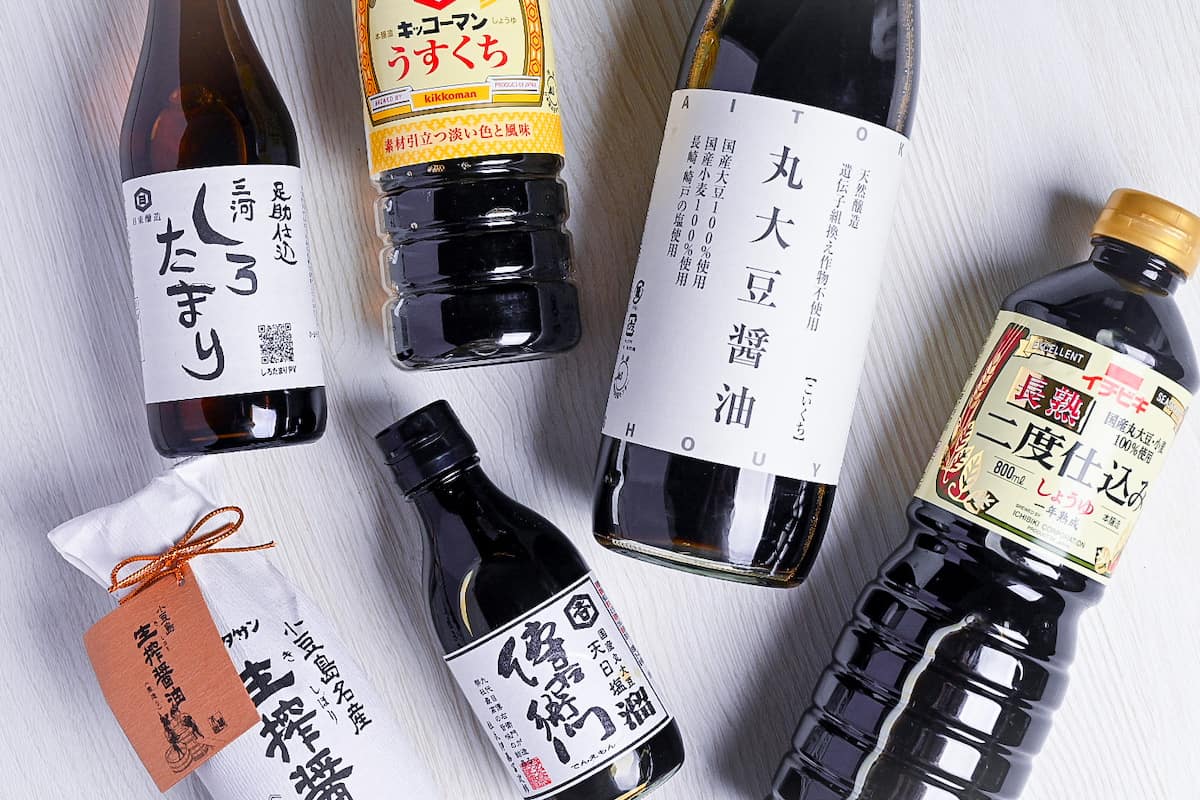
Japanese dark soy sauce is the backbone of Japanese cuisine. You’ll find it in almost everything. Made from fermented soybeans and wheat, it provides the perfect balance of saltiness, umami, and aromatic depth that gives Japanese dishes their authentic flavor.
Alternative 1: Chinese Light Soy Sauce (生抽)
It’s lighter in color and has a slightly higher salt content, but is very similar to the Japanese variety. When I lived in England and was on a tight budget, I used this as my go-to substitute for economic reasons. Outside of Japan, it’s usually much cheaper than Japanese soy sauce, which is a major advantage.
- Taste impact: Cleaner, more straightforward soy flavor, less complexity but totally functional
- Use exactly: 1:1 ratio
- Perfect when: Your Asian market only carries Chinese brands
- Watch out for: The flavor difference shows in delicate dishes like clear soups. Use less or skip it there.
- My take: Personally, I find this the most versatile substitute
Alternative 2: Tamari (as GF option)
Thicker and slightly sweeter than regular soy sauce, tamari really shines in dishes where you want that extra richness.
- Taste impact: Richer, more viscous with pronounced sweetness.
- Use exactly: 1:1 ratio.
- Perfect when: You need gluten-free alternative.
- Watch out for: The thickness and sweetness can overwhelm lighter dishes.
- My take: Skip this unless you specifically need gluten-free. While it’s fantastic for teriyaki and sashimi, the extra sweetness can throw off other recipes.
Not Recommended Alternatives
- Chinese dark soy sauce (老抽): Way too thick and sweet. If you’re going for a Chinese alternative, it has to be Chinese light soy sauce.
- Oyster sauce: Completely different flavor profile with seafood notes.
- Worcestershire sauce: Too acidic and fruity for a substitute.
- Fish sauce: The fishy aroma doesn’t match Japanese flavor profiles.
Bottom Line
Stick to these two: Chinese light soy sauce if availability is your issue, tamari if you need gluten-free. That said, Kikkoman and other Japanese brands are widely available now, so unless you have specific dietary constraints, I recommend grabbing the real thing.
For those wanting to learn more about Japanese soy sauce or discover recommended brands, check out my detailed soy sauce guide.
Hon Mirin
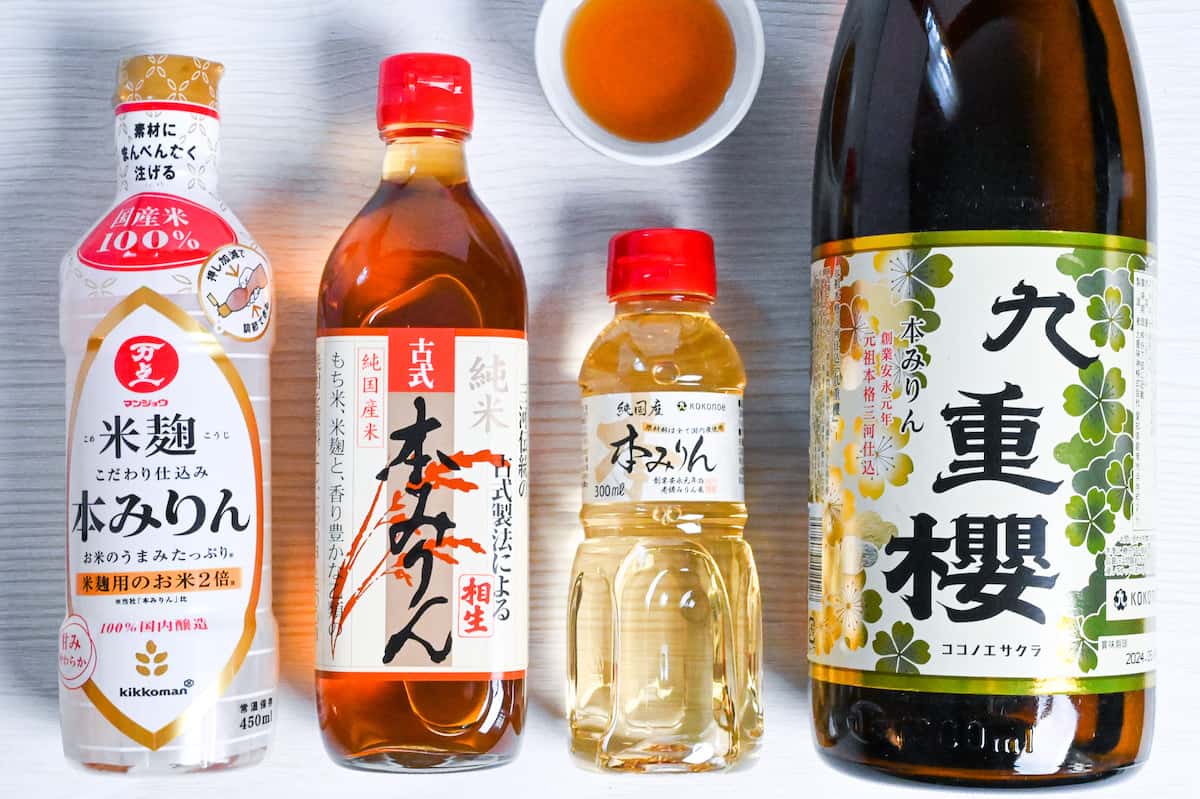
Hon mirin is an important Japanese ingredient with many uses. Made from glutinous rice, rice malt, and brewing alcohol, mirin contains about 14% alcohol, 50% sugar, and amino acids and aromatic compounds that provide a complexity not found in plain sugar.
Alternative 1: Mirin-Style Seasoning
Many bottles labeled “mirin” at your grocery store outside Japan are this stuff. With less than 1% alcohol versus real mirin’s 14%, it’s made with corn syrup and additives instead of fermentation. But plenty of Japanese home cooks use it too, so you don’t need to stress about it.
- Taste impact: Less complex, missing that fermented depth, but gets the job done.
- Use exactly: 1:1 ratio.
- Perfect when: You can’t find real mirin or want to save money.
- Watch out for: Often sweeter than real mirin; burns easier in long-cooking dishes due to higher sugar content.
- My take: Works fine for most home cooking. Don’t overthink it.
Alternative 2: Sugar + Alcohol
This is your DIY approach: combine sweetness with alcohol to mimic what mirin does. Best option is sake + sugar, but dry white wine + sugar works too if that’s what you have.
- Taste impact: You get the sweet-alcohol combo, but miss mirin’s unique umami depth. Flavors stay more separated rather than harmonized.
- Use exactly: For 1 tbsp mirin → 1 tbsp sake + 1 tsp sugar (or 1 tbsp sake + 1 tsp honey)
- Perfect when: You don’t want to buy a whole bottle just for occasional Japanese cooking.
- Watch out for: Mix the sugar in completely before using. Undissolved sugar burns easily. Choose slightly sweet white wine over bone-dry versions.
- My take: Solid backup when you already have sake or white wine around.
Alternative 3: Cola
I know this sounds crazy, but cola actually can work with certain dishes. For example, I’ve made teriyaki chicken with it, and it was genuinely delicious. Its sweetness, slight spiciness, and caramel notes can mimic some of the effects of mirin.

- Taste impact: Adds cola’s distinctive sweetness and subtle spice blend.
- Use exactly: 1:1 ratio.
- Perfect when: You need alcohol-free and don’t want to buy specialty ingredients.
- Watch out for: Only works for small amounts. Cola flavor gets overwhelming in recipes calling for lots of mirin.
- My take: Surprisingly good for teriyaki, but definitely a “fun experiment” substitute.
Not Recommended Alternatives
- Plain sugar: Gives sweetness but zero complexity or glaze.
- Apple juice: Too acidic and fruity for Japanese flavors.
- Sake alone: Missing the sweetness entirely.
- Rice vinegar + sugar: The acidity completely ruins the flavor profile. Vinegar has no place in mirin substitutes.
Bottom Line
If it’s available, get mirin-style seasoning. It’s specifically designed for this job. If you’re making it yourself, sake and sugar are your best bet.
If you want to learn more about mirin or find out which brands are recommended, check out my mirin guide.
Sake
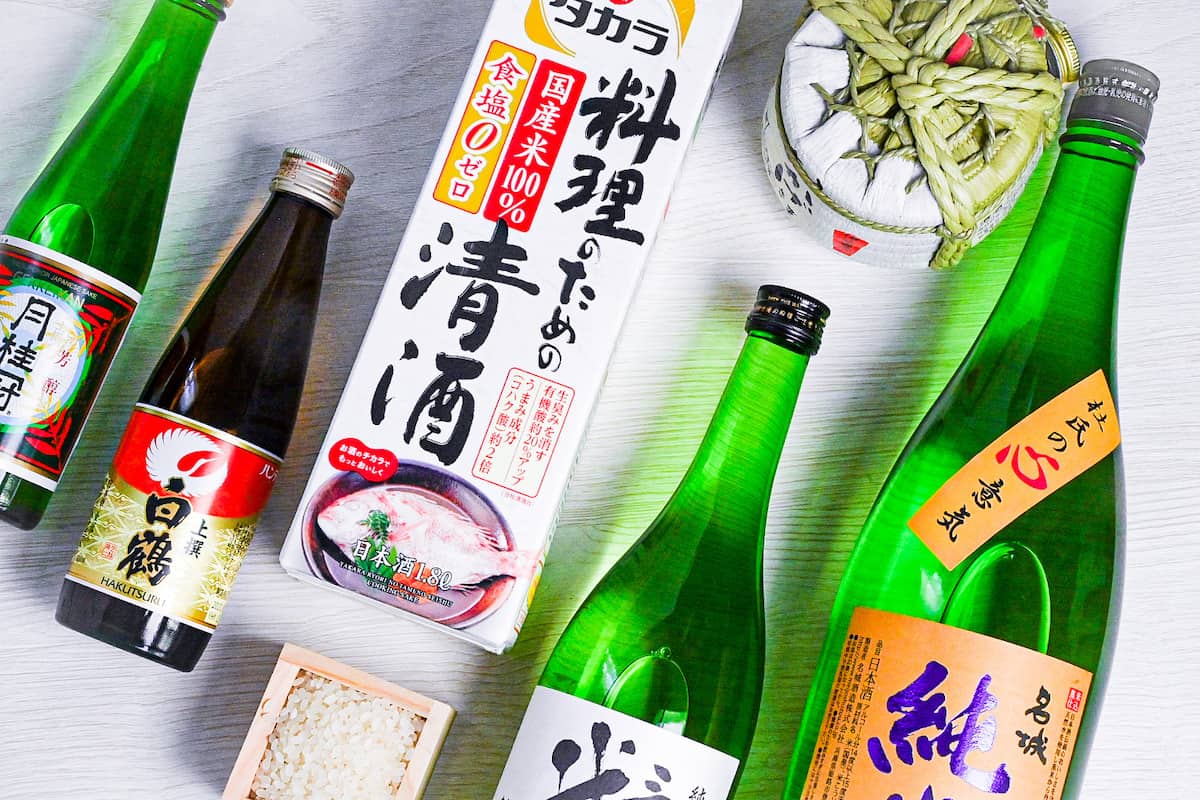
Sake, a Japanese rice wine with an alcohol content of 14-16%, is a cornerstone of Japanese cooking. It contains amino acids that eliminate odors while enhancing the flavors of ingredients.
Before we dive in, I recommend skipping “cooking sake” if possible. It contains added salt purely to avoid alcohol taxes, and I’d rather use the cheapest drinkable sake you can find. Even the cheapest junmai sake will produce cleaner, better results than salted cooking sake.
Alternative 1: Cooking Sake
Despite what I just said, most Japanese households actually use this, so don’t feel bad about it. It’s essentially sake with about 2% salt added to avoid alcohol taxes. It’s similar to the difference between real mirin and mirin-style seasoning.
- Taste impact: Saltier overall with less finesse than pure sake, but similar odor-eliminating effects.
- Use exactly: 1:1 ratio.
- Perfect when: You want the most economical option.
- Watch out for: The added salt concentrates during long cooking, so reduce other salt in your recipe accordingly.
- My take: Works fine for most dishes, but the salt addition can throw off delicate soups and clear broths.
Alternative 2: Dry White Wine (Or Dry Sherry)
For heartier dishes (think beef bowls, not delicate fish), dry white wine actually works well. It’s more acidic than sake, which changes how it affects proteins, but in robust dishes you won’t notice.
- Taste impact: Adds wine’s acidity and fruit notes-noticeable in quick-cooking dishes, less so in long braises.
- Use exactly: 80% dry white wine + 20% water.
- Perfect when: You don’t want to buy cooking sake and have wine around.
- Watch out for: Choose dry, not sweet wine. Avoid heavily oaked wines that clash with Japanese flavors. Add a pinch of sugar if too acidic.
- My take: Great for teriyaki and braised dishes, but skip it for delicate preparations like clear soups.
Alternative 3: Kombu Dashi + Salt
Kombu dashi with a pinch of salt gives you umami without alcohol. Add ginger if you need odor-eliminating effects.
- Taste impact: Adds umami but misses alcohol’s tenderizing and deodorizing properties.
- Use exactly: 1:1 ratio.
- Perfect when: You absolutely cannot use alcohol.
- Watch out for: Won’t tenderize proteins or eliminate fishy odors like alcohol does. So use ginger or other techniques for that.
- My take: Only recommend if alcohol is completely off-limits.
Not Recommended Alternatives
- Distilled spirits: Way too strong (40% alcohol) and wrong flavor profile.
- Any vinegar: Completely destroys the flavor balance, never do this.
Bottom Line
If you can find sake at a liquor store, grab the cheapest drinkable one. It’ll beat everything, including cooking sake. But no sake available? Cooking sake is your next best bet, followed by dry white wine for heartier dishes.
If you would like to learn more about alcohol in cooking, check out my sake 101 post.
Rice Vinegar
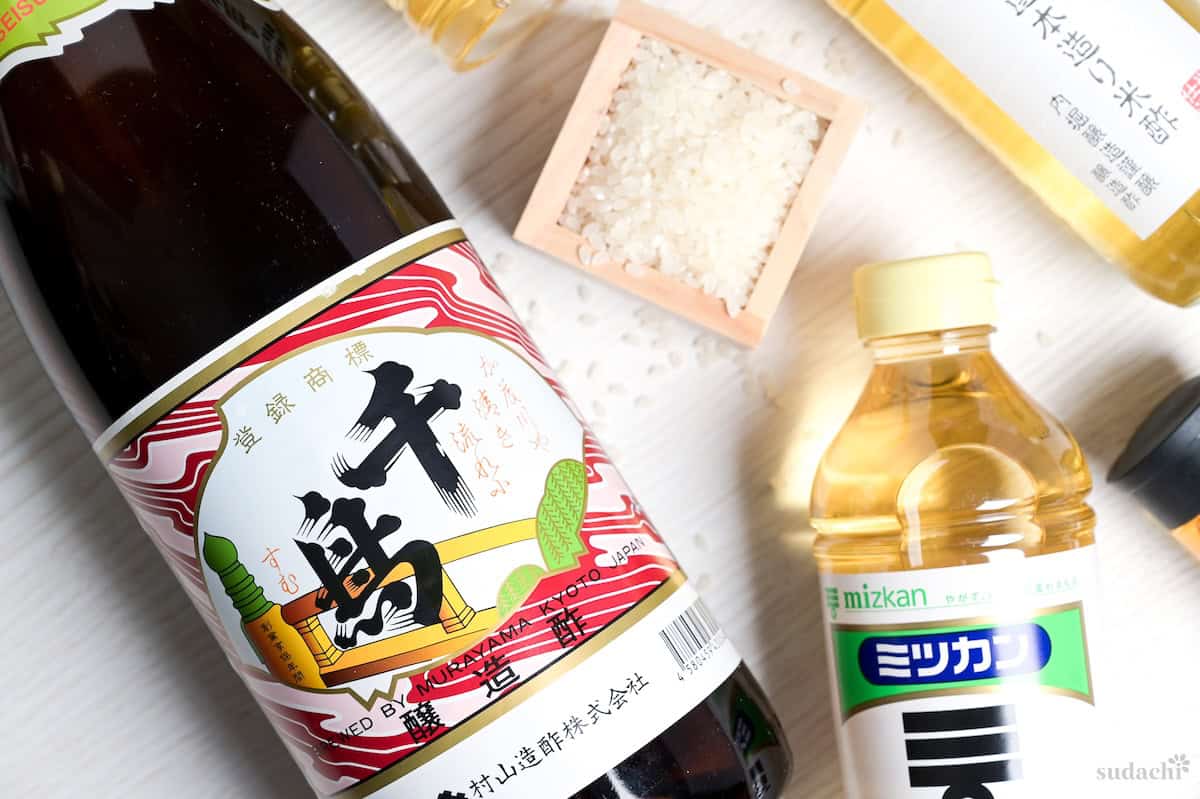
Rice vinegar is the gentle giant of the vinegar world, hailing from Japan. It is made from fermented rice and has a mild acidity of 4-5% and a subtle sweetness. Its delicate, amber-colored profile makes it ideal for sushi rice, sunomono (vinegar salad), and dressings when a tangy flavor is needed without harshness.
Alternative 1: Apple Cider Vinegar
This is the closest match to rice vinegar’s gentle personality. Apple cider vinegar has similar acidity (around 5%) with natural sweetness and less bite than other vinegars.
- Taste impact: Subtle apple sweetness and fruitiness, slightly sharper than rice vinegar but in the same ballpark.
- Use exactly: 1:1 ratio for most uses; add 5% sugar if you need more mellow sweetness.
- Perfect when: You want the most versatile, widely available substitute.
- Watch out for: Brings a hint of apple flavor, usually okay but worth noting.
Alternative 2: White Wine Vinegar
White wine vinegar packs more punch at 6-7% acidity, with wine-derived complexity that can be interesting. But it needs diluting and sweetening to match rice vinegar’s gentle nature.
- Taste impact: Sharper acidity with wine complexity, more aggressive than rice vinegar.
- Use exactly: Mix 2/3 white wine vinegar + 1/3 water, then add a touch of sugar or honey.
- Perfect when: Apple cider vinegar isn’t available and this is what you’ve got.
- Watch out for: Must dilute and sweeten, too harsh otherwise.
- My take: Workable but requires more effort than apple cider vinegar.
Alternative 3: Distilled White Vinegar
The cheapest vinegar around with 5% acidity, but harsh tasting.
- Taste impact: Much harsher and more pungent than rice vinegar, actually quite noticeable difference.
- Use exactly: Mix 4/5 white vinegar + 1/5 water, then add sugar or honey to taste.
- Perfect when: It’s literally all you have and you’re making something forgiving.
- Watch out for: Sharp, aggressive flavor that needs serious mellowing.
- My take: Only use if apple cider vinegar isn’t an option.
Not Recommended Alternatives
Most other vinegars are too aggressive or have wrong flavor profiles for Japanese cooking. Also, I’d avoid pre-seasoned “sushi vinegar” blends for general rice vinegar substitution too. They already have sugar and salt added, which will throw off your cooking if you use them as a straight rice vinegar replacement.
Bottom Line
Apple cider vinegar is your best friend here with similar acidity, natural sweetness. If you’re serious about Japanese cooking, just grab a bottle of unseasoned rice vinegar.
Japanese Rice
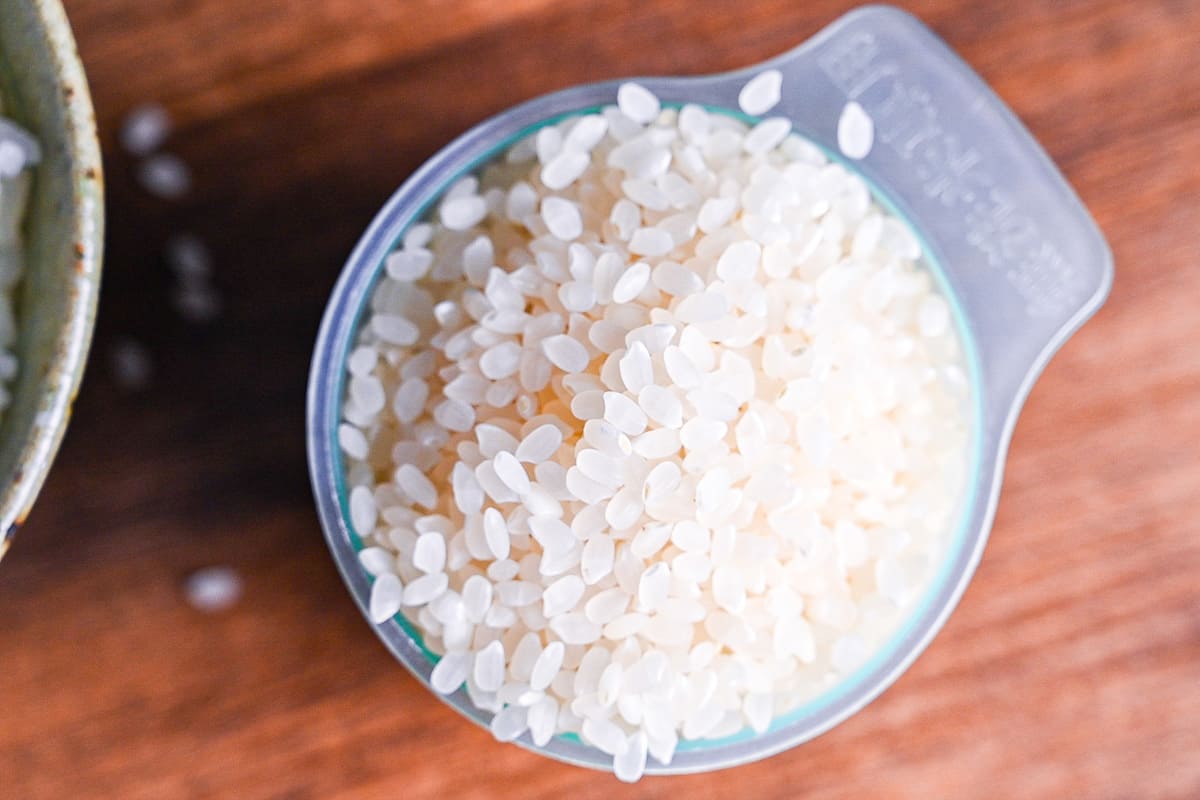
Japanese rice primarily refers to short-grain japonica rice (uruchimai), which becomes sticky, sweet, and pleasantly chewy when cooked. It is essential for sushi, rice bowls, and Japanese meals in general. By the way, Koshihikari rice is grown in the US too.
Alternative 1: California Rice (Calrose)
When Japanese rice isn’t available, Calrose rice from California is the go-to substitute. Calrose is a medium-grain japonica variety that gets you maybe 80% of the way to authentic Japanese rice texture. It has similar starch content but slightly higher protein, which means it’s a bit less sticky and the grains separate more when it cools down.
- Taste impact: Lighter, less aromatic than Japanese rice with less of that signature stickiness.
- Use exactly: Same method but dial back the water slightly.
- Perfect when: You want decent results without paying premium prices for imported rice.
- Watch out for: Separates more when cold, so not perfect for onigiri or sushi.
- My take: Funnily enough, Japan’s recent rice shortage actually had Calrose showing up in Japanese supermarkets.
Alternative 2: Korean Rice or Chinese Short-Grain
Both are japonica varieties like Japanese rice, but Korean rice is your better bet. It’s remarkably close to Japanese rice in both texture and flavor. Chinese short-grain can vary more depending on the specific variety and how it’s processed.
- Taste impact: Korean rice is very close; Chinese short-grain might have slight flavor and aroma differences.
- Perfect when: You live somewhere with good Korean or Chinese markets.
- Watch out for: Nothing in particular.
- My take: If you see Korean rice, grab it. It’s often the closest thing to Japanese rice you can find.
Not Recommended Alternatives
Long-grain rice like jasmine or basmati won’t work. Instant rice is also a no-go. Arborio rice might work for casual dishes, but you cannot make sushi or onigiri with it.
Bottom Line
If you’re making sushi, onigiri, or any dish where rice texture really matters, spend the extra money on proper short-grain Japanese rice. But for everyday rice bowls and casual Japanese cooking? Calrose will do the job without breaking the bank!
Japanese Mayonnaise (Kewpie Style)
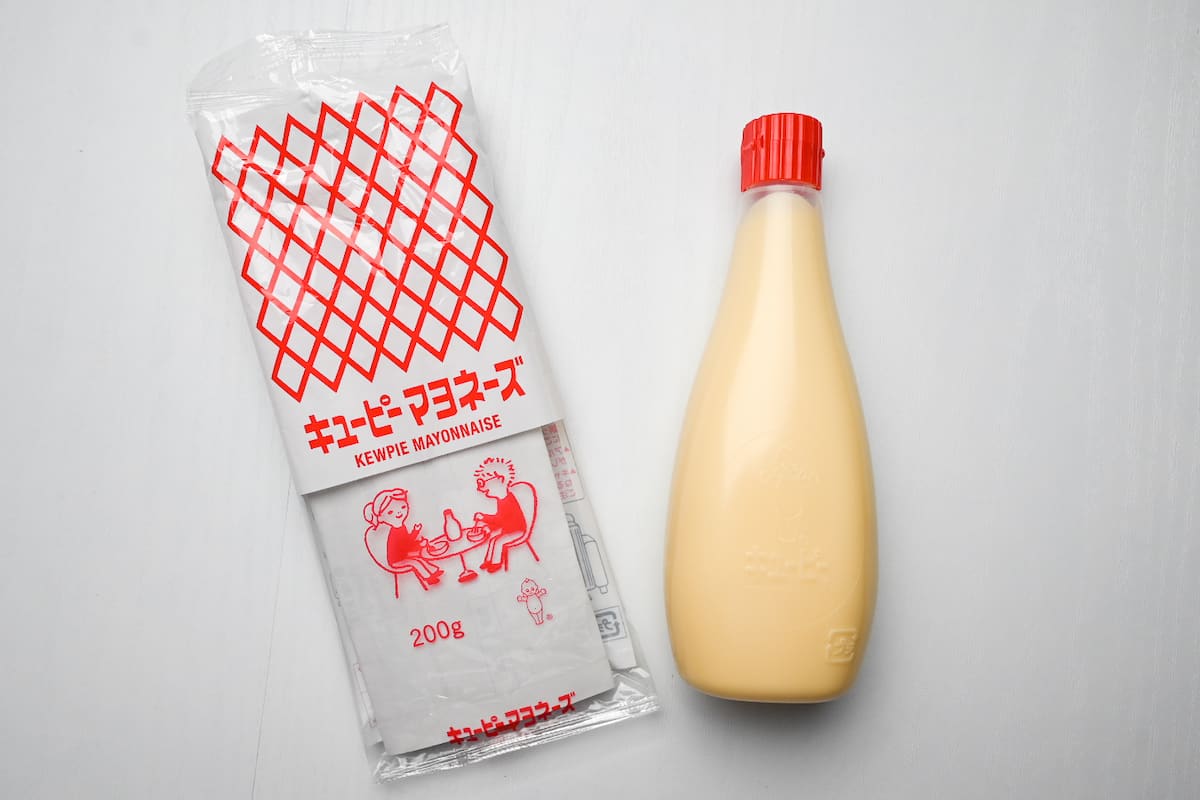
Japanese mayonnaise, like Kewpie, is in a league of its own. It’s usually tangier, richer, and more complex than other mayonnaises. There’s an American version of Kewpie that’s slightly different from the original Japanese recipe, but it’s still worth seeking out.
Alternative 1: Regular Mayo + Rice Vinegar & Sugar
This is your emergency workaround when you need something Kewpie-ish right now. Add rice vinegar for tang, sugar for balance, and a tiny pinch of dashi granules for that umami kick. It’s not going to fool anyone who knows real Kewpie, but it gets you in the ballpark.
- Taste impact: You’ll get some of the tanginess and umami, but I wouldn’t say it’s close enough.
- Use exactly: To 100g regular mayo, add ½ tsp rice vinegar + pinch of sugar + small pinch of dashi granules.
- Perfect when: You don’t want to buy a whole bottle of Kewpie.
- Watch out for: No matter how much you tweak it, it won’t taste exactly like Kewpie.
- My take: Just buy the Kewpie if you can, the difference is worth it.
Alternative 2: Homemade Option

If you’ve got time and want to make your own Kewpie-style mayo from scratch, it’s totally doable. I’ve actually developed a Japanese-style mayo recipe! Check it out if you’re feeling ambitious.
Potato Starch
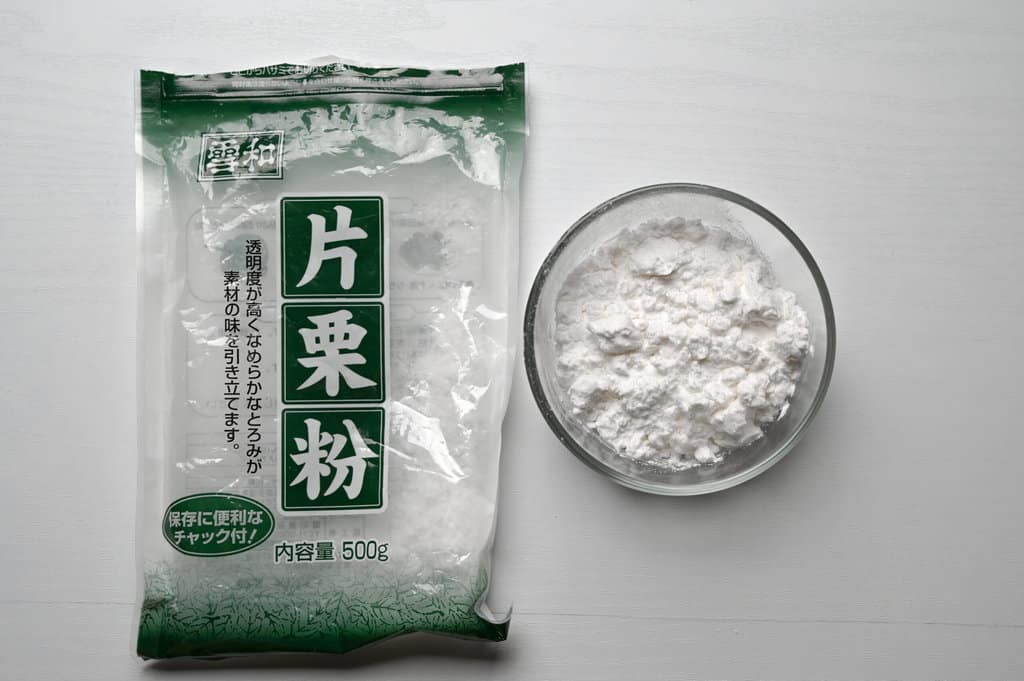
Potato starch (katakuriko) is Japan’s go-to thickening agent and coating for fried foods. It’s basically in every Japanese pantry.
When mixed with water and heated, it creates a glossy, transparent thickening that loosens when cooled. For frying, it gives that incredibly light, crunchy texture that’s different from flour-based coatings.
Alternative 1: Cornstarch (Not Corn Flour)
This is your most reliable swap when potato starch isn’t available. Cornstarch comes from corn but behaves very similarly to potato starch. It thickens sauces and works for frying coatings. The results are about 80-90% as good.
- Taste impact: Slightly finer texture, holds up better when cooled but with less glossy finish.
- Use exactly: 1:1 for frying; for thickening use 1.2x the amount (so if recipe calls for 1 tbsp potato starch, use 1.2 tbsp cornstarch).
- Perfect when: Potato starch is hard to find but cornstarch is everywhere.
- Watch out for: For thickening, you need slightly more to get the same viscosity.
- My take: Works great for both uses, though fried foods absorb slightly more oil and aren’t quite as crunchy.
Alternative 2: Tapioca Starch
Tapioca starch creates strong, stretchy textures with high transparency and good freeze-thaw stability. But it behaves differently when heated and can turn hard and jelly-like when cooled, making it trickier for thickening usages.
- Taste impact: More chewy, elastic texture; can get hard and jelly-like when cooled.
- Use exactly: Start with about 80% of the potato starch amount for thickening purposes.
- Perfect when: You have tapioca starch but no cornstarch available.
- Watch out for: Great for frying, but be careful with sauce thickening.
- My take: Cornstarch is more predictable and user-friendly.
Not Recommended Alternatives
Other starches have unpredictable behaviors that make them hard to recommend. And don’t try to substitute flour for potato starch in Japanese cooking, completely different properties and results.
Bottom Line
Cornstarch is your reliable backup when potato starch isn’t available. It handles both thickening and frying duties well, just remember to use a bit more for thickening. Tapioca starch can work but requires more finesse.
Kombu (Dried Kelp)
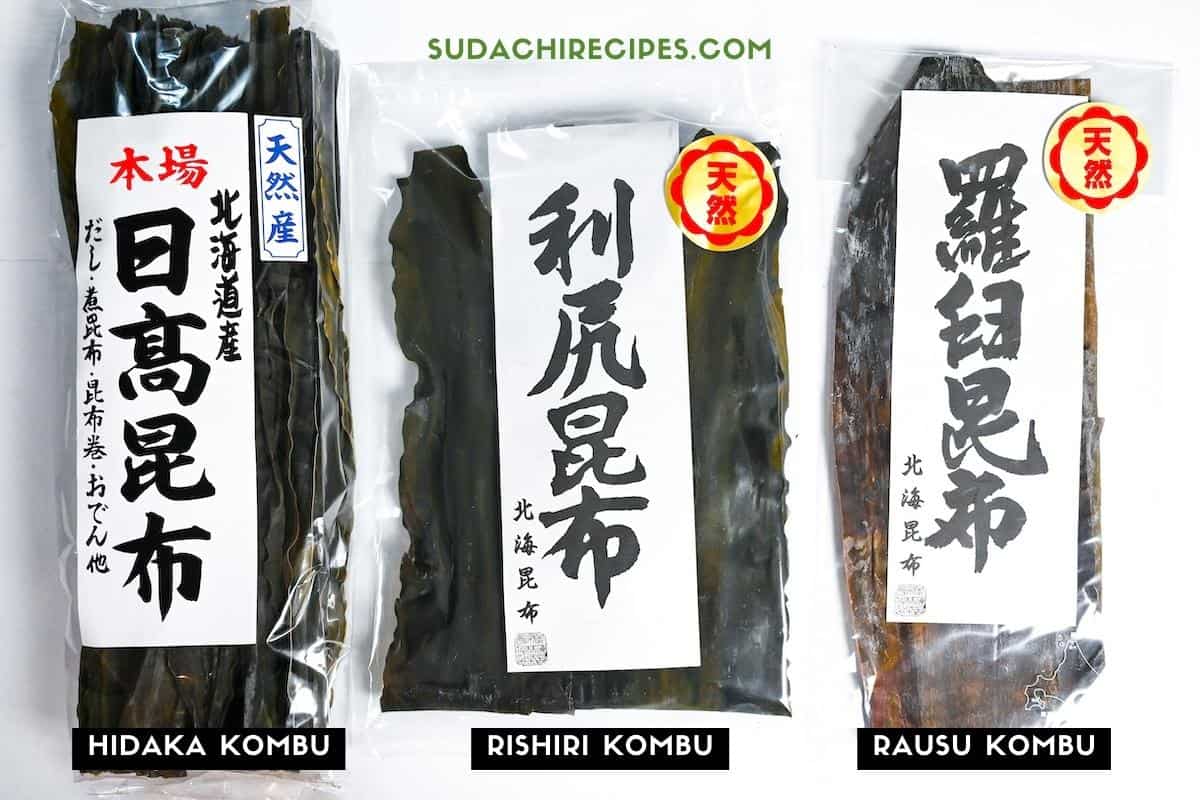
Kombu (昆布) is the foundation of Japanese cuisine’s signature flavor. This dried kelp is packed with glutamic acid, the compound responsible for that subtle but deep umami. It’s essential for making authentic dashi stock, the stock that forms the backbone of miso soup, simmered dishes, hot pots, and countless other Japanese recipes.
Alternative 1: Korean Dried Kelp (Dashima)
Korean dashima (다시마) is essentially the same seaweed as Japanese kombu, just sourced from different waters, making this the closest substitute you’ll find.
- Taste impact: Nearly identical to Japanese kombu. Same glutamic acid content, same depth of flavor.
- Use exactly: 1:1 ratio.
- Perfect when: You have access to Korean grocery stores but not Japanese ones.
- Watch out for: Korean dashima tends to be thinner, so it releases flavor faster. Check if it’s unsalted, salted varieties need rinsing first.
- My take: This is essentially the same product with a different label. If you can find it, grab it without hesitation.
Alternative 2: Powdered Kombu
Powdered kombu products come in two main forms: kombu powder (or granulated kombu dashi) and kombu tea (not the fermented kombucha drink!). Both dissolve instantly and deliver that umami punch without the soaking time.
- Taste impact: Clean umami very close to real kombu dashi. Granulated versions may have slight saltiness depending on brand.
- Use exactly: Check the packaging labels.
- Perfect when: You want kombu flavor without added seasonings getting in the way.
- Watch out for: Check the ingredient list. Some “dashi” products contain bonito or other fish-based ingredients.
- My take: For maximum flexibility, I prefer kombu powder/granulated kombu dashi. But kombu tea powder is still convenient for quick weeknight cooking.
Alternative 3: Shiro-dashi (White Dashi)
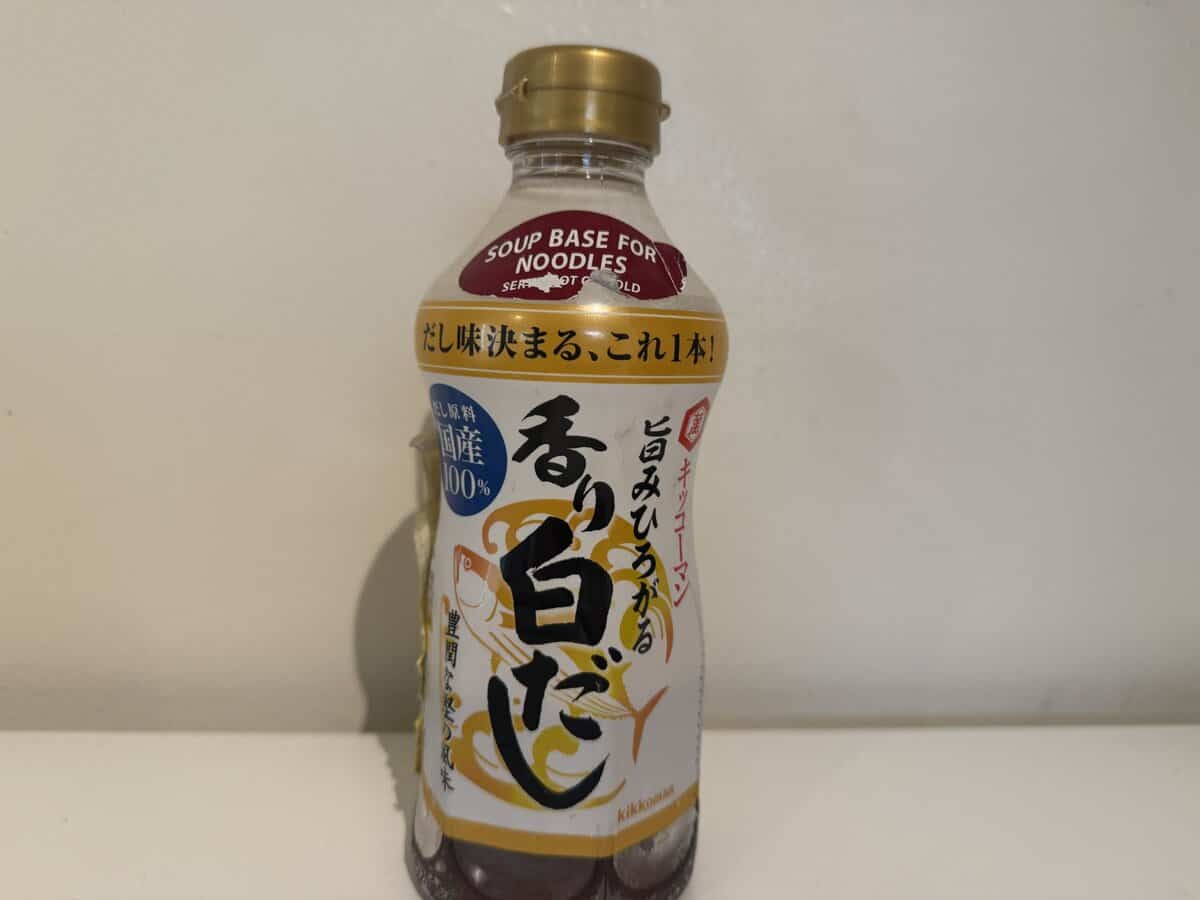
Shiro dashi combines kombu and bonito dashi with light soy sauce and mirin. It’s a ready-made seasoning that gives you umami depth while keeping dishes light in color.
- Taste impact: Balanced umami from kombu plus soy sauce richness. More complex than pure kombu dashi.
- Use: Follow package directions as concentration varies.
- Perfect when: You want a one-bottle solution that handles both dashi and seasoning.
- Watch out for: Already contains soy sauce and mirin, so it’s not “just dashi.” Reduce other seasonings accordingly.
- My take: Great for beginners or quick weeknight cooking. Just remember it’s a seasoning, not pure stock, so reduce the salt elsewhere.
Alternative 4: Kombu Tsuyu or Mentsuyu
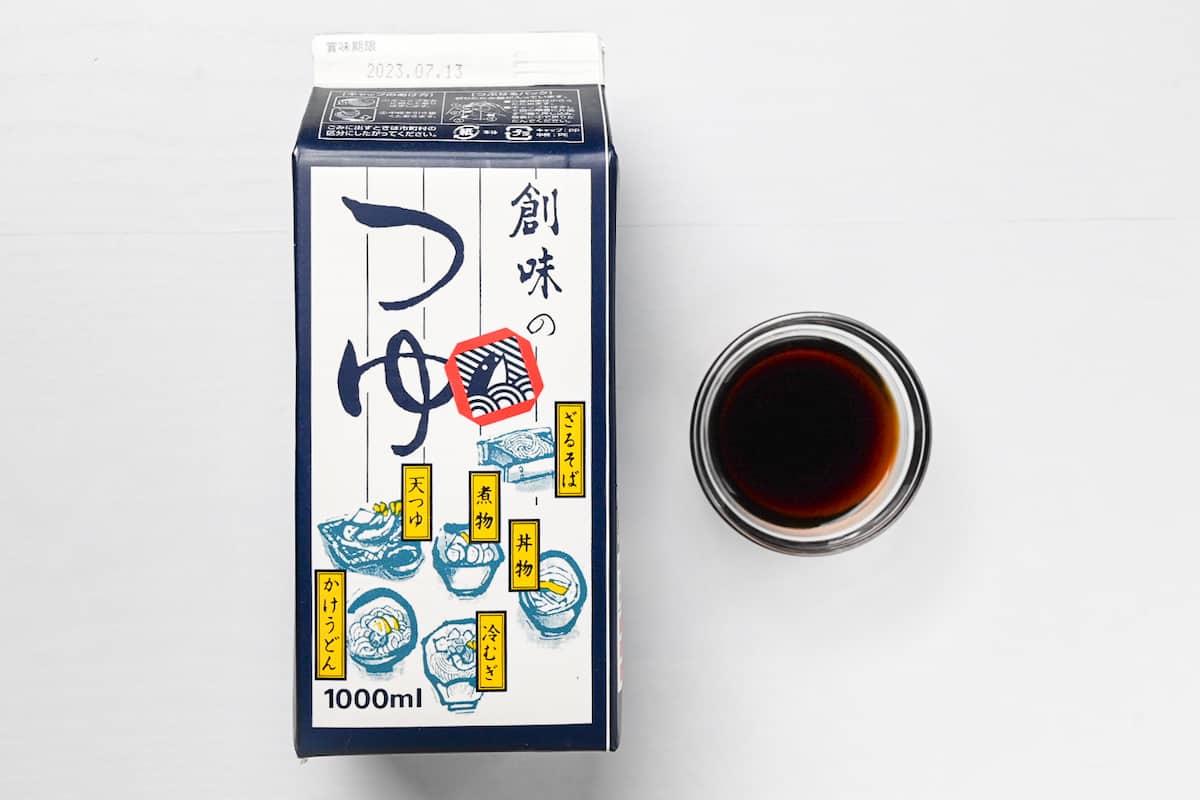
These concentrated Japanese noodle dipping sauces contain kombu extract along with soy sauce, mirin, and sugar. They’re fully seasoned products that can add quick umami to dishes.
- Taste impact: Sweet-savory with kombu undertones. More like a complete seasoning than a dashi substitute.
- Use: Dilute according to package. Use sparingly as it’s quite flavorful.
- Perfect when: You need a shortcut for nimono (simmered dishes) or noodle soups.
- Watch out for: Again, it already contains soy sauce, mirin, sugar…etc, so you really need to reduce other seasonings accordingly. The sweetness and saltiness can overpower delicate dishes depending on what you use it for.
- My take: Works well for casual/forgiving cooking, but don’t expect subtle, refined flavors.
Not Recommended Alternatives
- Wakame or nori boiled for stock: I’ve seen some people try this, but wakame doesn’t release meaningful umami when simmered. You’ll get seaweed aroma but none of the depth. Nori adds fragrance but not substance. Use these as ingredients, not dashi base.
- Extra salt or soy sauce: Adding more salt to compensate for missing dashi just makes food salty, not flavorful. Soy sauce helps slightly, but overdoing it throws off the entire balance. Dashi serves a unique role that seasonings can’t replace.
Bottom Line
If you have access to Korean markets, dashima is your best bet since it’s literally the same product. For convenience, powdered kombu products are incredibly practical. Shiro-dashi and mentsuyu can work for casual cooking but remember they’re complete seasonings, not pure stock, so you really need to keep tasting and reduce the other seasonings accordingly.
That said, kombu is a dried good that’s easy to find online. It lasts for a long time and you won’t need to restock often, so if you plan on cooking Japanese food even occasionally, I’d recommend just grabbing the real thing.
Naganegi
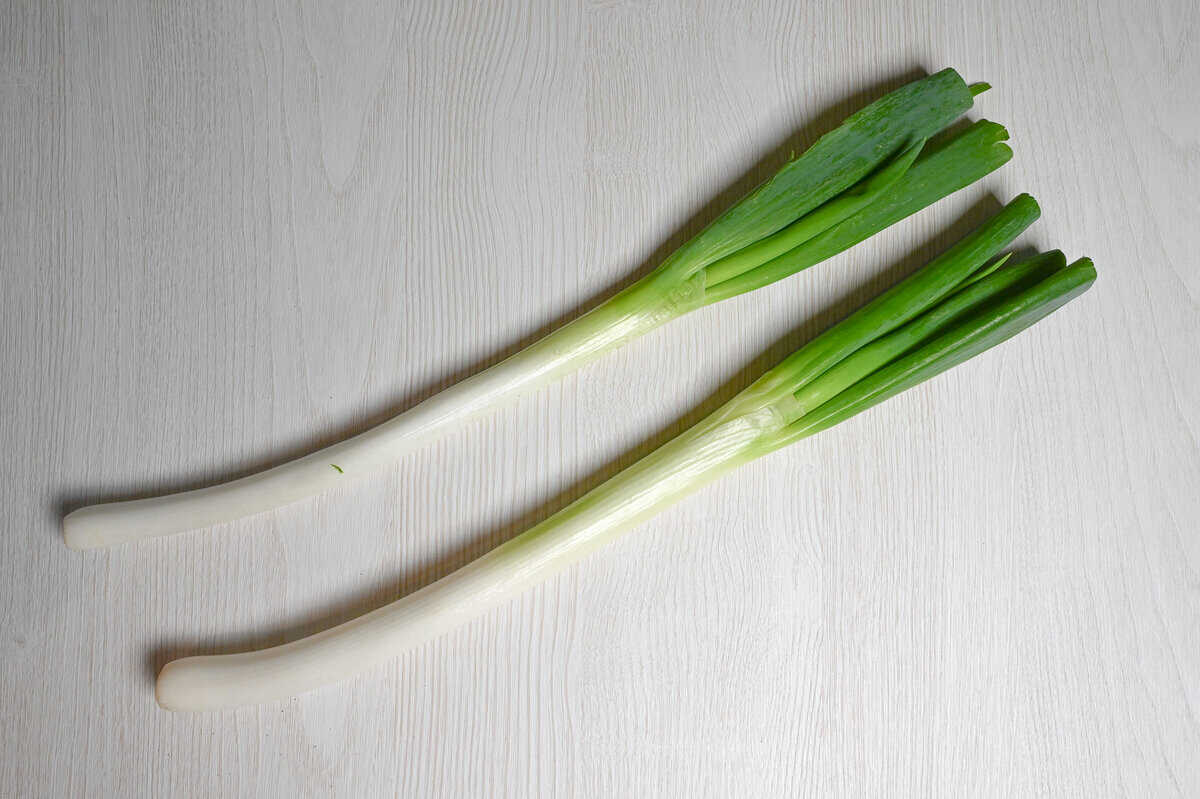
The Japanese word “negi” can be incredibly confusing because it covers everything from thin scallion-like onions to thick leek-like varieties. Among these, naganegi (long onion) is the thick type that you simply cannot substitute with scallions. It’s much closer to a leek, which is why I label it as “Japanese leek” in my recipes to avoid confusion.
Alternative 1: Regular Leek
When you’re outside Japan, regular leeks are your closest match for naganegi. Leeks actually look very similar to shimonita negi (one of Japanese negi variety) and have that same thick white shaft that works well in braised dishes and grilling.
Taste impact: Thicker and sweeter than naganegi, but the green sections are quite fibrous.
- Use exactly: 80% of the naganegi amount (full amounts can be overpowering).
- Perfect when: You’re making hot pot dishes or simmered recipes where you need substantial cooking.
- Watch out for: Takes about 1.5x longer to cook than naganegi. Remove the tough outer leaves and use only the tender inner parts.
- My take: Great for dishes that require long heating.
Alternative 2: Onion
This won’t work for every dish, but when you need finely chopped naganegi white parts for stir-frying, like in my miso ramen recipe, regular onion can step in
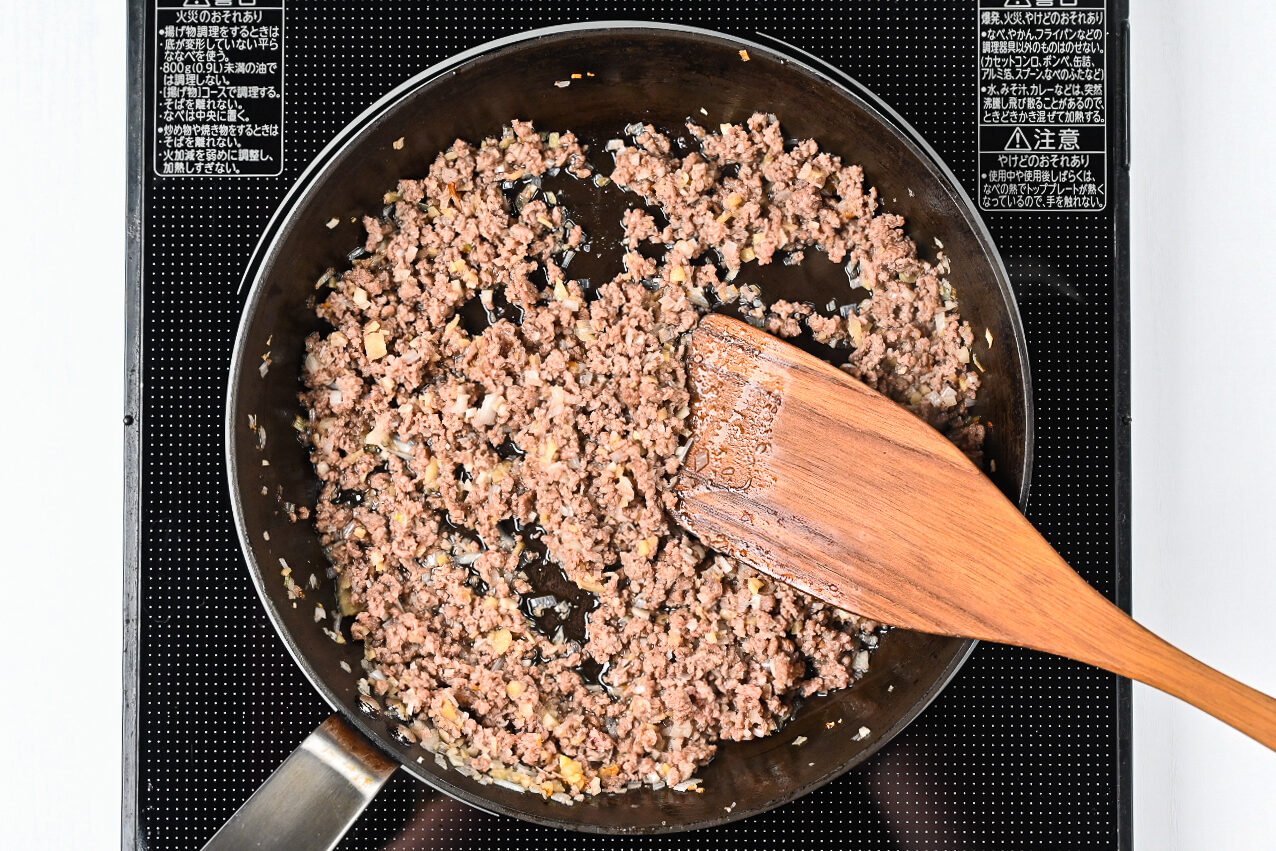
However, please note that it is difficult to substitute hot pot dishes or stews.
Shiso Leaves (Ooba / Japanese Perilla)
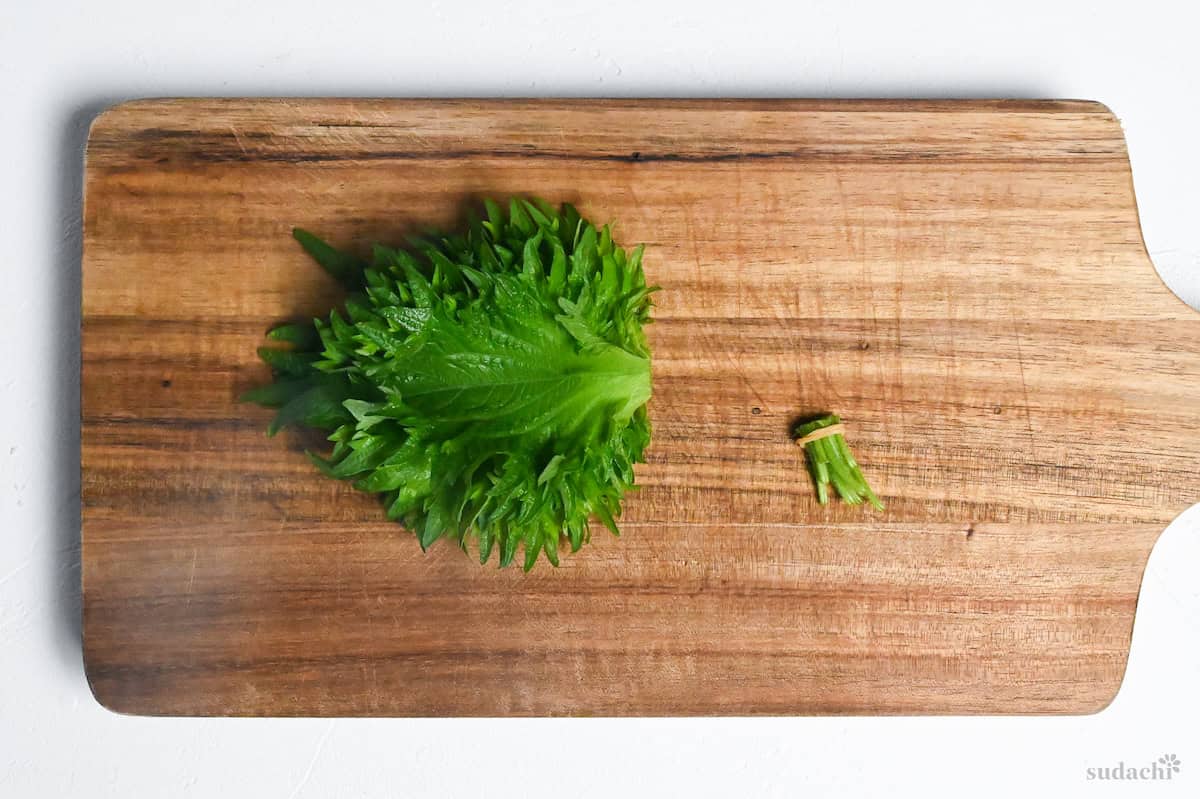
Shiso leaves (青じそ / 大葉) add a uniquely bright, cooling, slightly spicy aroma that instantly “lifts” a dish. The tricky part is that shiso’s signature fragrance comes largely from perillaldehyde, and many other mint-family herbs (even close relatives) contain much less of it, so a perfect 1:1 substitute is rare.
Alternative 1: Korean Perilla Leaves (Kkaennip / “Egoma leaves”)
Korean perilla leaves are the closest structural match: same plant genus, similar size, and a shiso-like shape. You’ll often find them at Korean markets.
- Taste impact: Similar “fresh-herb lift,” but milder and less “sharp” than shiso. Some people notice a slightly sweet, licorice-like note and a faint peppery finish.
- Use exactly: Use 1.25× the amount you would use for shiso (especially for cold dishes).
- Perfect when: You need a whole leaf (wrapping, garnishing, under sashimi), you’re pairing with rich/fatty foods (grilled meat, fried foods, oily fish) where that herbal freshness really shines.
- Watch out for: Raw, large quantities can read as more “herbal/medicinal” than shiso for some palates. For very delicate, purely Japanese profiles, the difference may stand out.
- My take: Best overall visual + functional substitute. We use these leaves as a sub in Japan too.
Alternative 2: Vietnamese Perilla (Tía Tô)
Tía tô is extremely close in aromatic direction and works as a shiso stand-in, especially for raw applications. Often sold in big bunches at Vietnamese/Chinese groceries.
- Taste impact: Very shiso-adjacent but again gentler, with minty freshness and a subtle sweet/spicy complexity.
- Use exactly: Use 1.25× the amount (it’s usually less punchy than shiso).
- Perfect when: You want a shiso-like effect without the “stinging” intensity
- Watch out for: The underside is often purple, which can show up visually if you use whole leaves.
- My take: Best flavor match for many, especially if you mostly use shiso as a fresh garnish or herb topping.
Alternative 3: Basil + Spearmint (or Peppermint) Blend
If you’re chasing shiso’s “cooling” feel, mint helps, but mint alone is usually too one-note. Combining it with basil creates a more complexity.
- Taste impact: Closer “fresh lift.” Mint supplies cooling brightness, basil supplies sweet-spicy depth.
- Use exactly: 50/50 chopped basil + spearmint (spearmint is usually less toothpaste-like than peppermint), but use a little less total volume than shiso.
- Perfect when: You only have mainstream supermarket herbs, you’re topping cold noodles, cold tofu, or salads.
- Watch out for: Too much mint can turn minty fast. Add mint in small amounts, then taste.
- My take: Best “at-home hack” when you can’t access Asian markets.
Alternative 4: Chopped Green Onions (Only For Color)
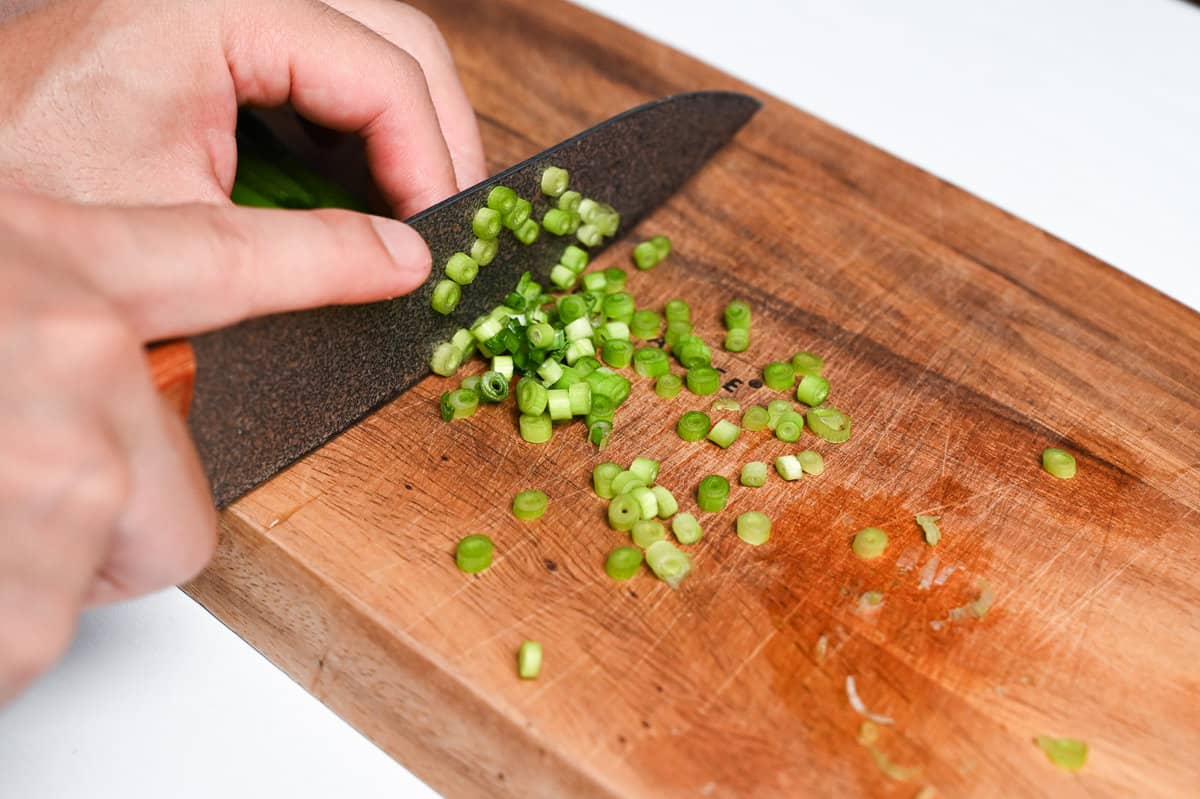
This isn’t a flavor replacement for shiso, but if your main goal is “green freshness” on top, green onions/scallions can work as a visual/texture stand-in.
- Taste impact: No shiso aroma.
- Use exactly: Use as you would for garnish.
- Perfect when: You mostly need a finishing garnish.
- Watch out for: Won’t deliver the herbal fragrance that makes shiso special.
- My take: A backup for “something green,” not a true substitute.
Not Recommended Alternatives
Flavor goes too far off-course (especially for Japanese “yakumi (condiment)” use):
- Cilantro: Turns the dish distinctly Southeast Asian.
- Mint alone: Especially peppermint-heavy.
- Celery leaves: Bitter/green and can overpower delicate dishes.
Looks green, but doesn’t do the job (aroma is missing):
- Baby greens, spinach, lettuce mixes
Has shiso vibes but can’t use as a substitute:
- Yukari (red shiso furikake): Adds significant amount of salt that you can’t take away and can’t wrap/line/garnish like a leaf.
Bottom Line
If you want the closest overall substitute, start with Korean perilla leaves (kkaennip) for the best look + function, or Vietnamese tía tô for the most shiso-like aroma (especially raw). If you’re limited to standard supermarkets, basil + spearmint is the most reliable “flavor-engineering” workaround, just keep mint restrained so it doesn’t dominate.
Japanese Cucumber
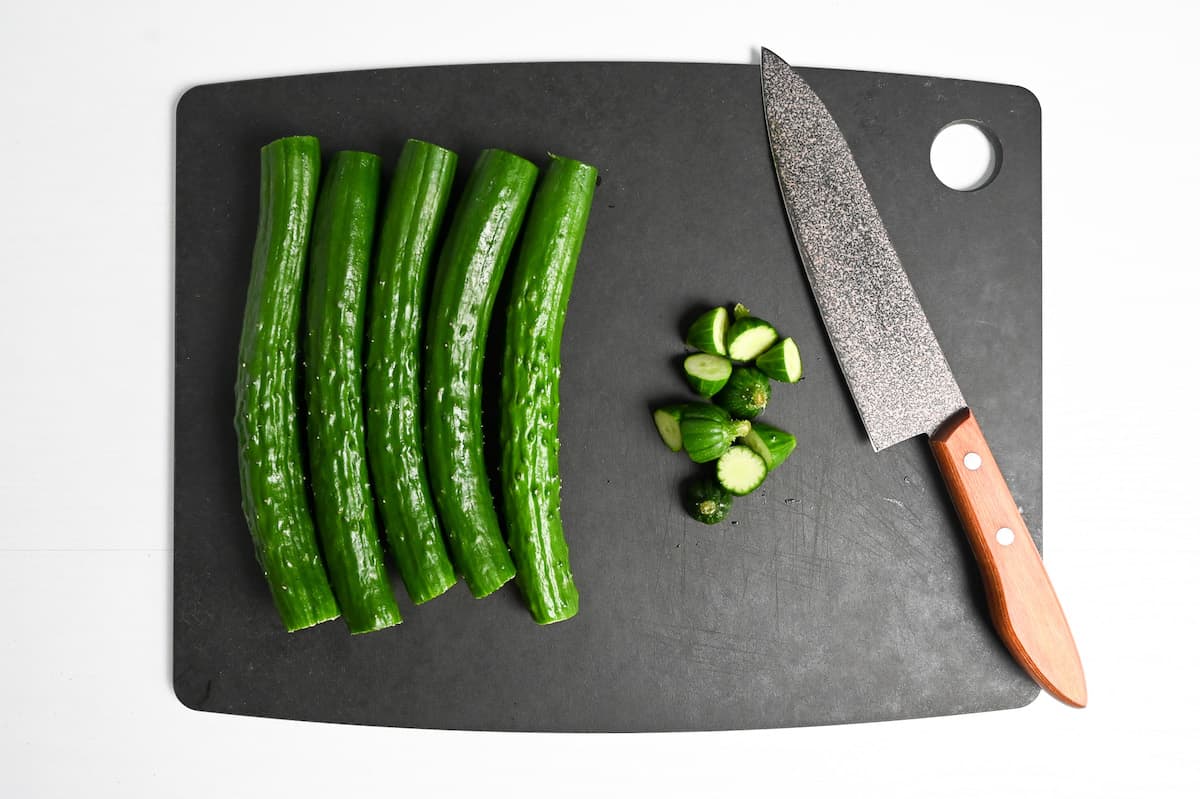
Japanese cucumbers are slim, crisp vegetables with thin skins and minimal seeds. What makes them special is their clean, refreshing taste without the bitter bite you get from many other varieties. They’re perfect for eating raw in salads, quick pickles, and sunomono.
Alternative 1: Persian Cucumber
Persian cucumbers are your closest match to Japanese cucumbers. Both have thin, edible skins and that same crisp-without-being-watery texture. The flavor profile is remarkably similar, clean and refreshing without any harsh bitterness.
- Taste impact: Clean, crisp bite with thin skin and tiny seeds.
- Use exactly: 1:1 ratio.
- Perfect when: You can’t find Japanese cucumbers but Persian ones are stocked at your store.
- Watch out for: Slightly more watery than Japanese cucumbers.
- My take: This is as close as you’ll get.
Alternative 2: English Cucumber
English cucumbers are decent but not a perfect substitute. They’re much thicker and have a softer texture with more water content. There’s also a bit more bitterness, though still way better than other cucumbers.
- Taste impact: Thicker and more watery with softer flesh. Mild bitterness but still relatively clean flavor.
- Use exactly: Use about half the amount since they’re much bigger.
- Perfect when: English cucumbers are your only option at regular supermarkets.
- Watch out for: Cut them into quarters lengthwise to match Japanese cucumber proportions. Scoop out seeds if there are too many, and consider peeling if the skin tastes bitter.
- My take: Workable but requires more prep than Persian cucumbers.
Not Recommended Alternatives
Other thick-skinned varieties are just too different, thick, bitter skins and watery centers that throw off Japanese dishes.
Karashi (Japanese Mustard)
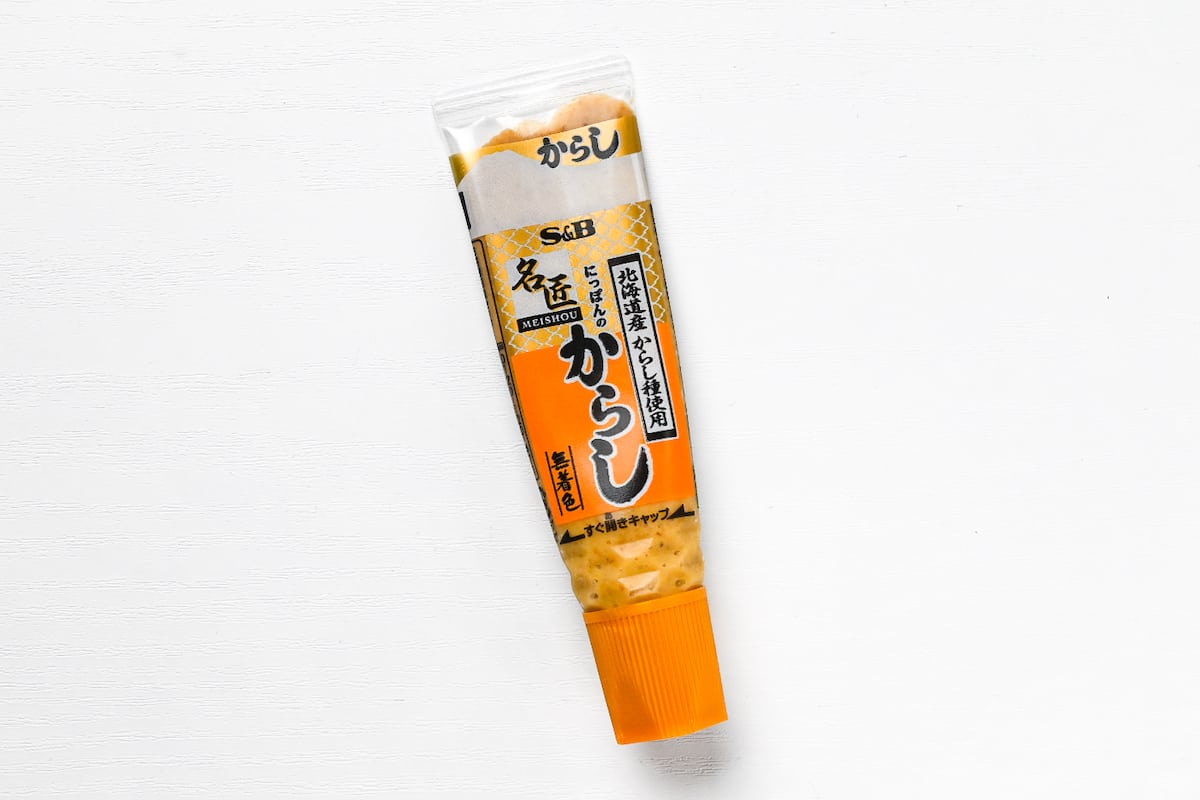
Karashi mustard is a powerhouse condiment that delivers intense, nose-clearing heat. Made from brown/oriental mustard seeds mixed with just water (no vinegar, no sugar), it packs that sharp, wasabi-like punch you’ll find alongside dishes like oden, tonkatsu, and chicken tempura.
Alternative 1: Chinese Hot Mustard Powder
This is your closest match to Japanese karashi. Chinese hot mustard powder uses the same brown mustard seeds and water-only preparation method, giving you simialr results.
- Taste impact: Sharp, pungent heat that hits the nose like karashi. Minimal sweetness or acidity.
- Use exactly: Mix powder and water 1:1.
- Perfect when: You want the most authentic substitute without hunting down specialty Japanese ingredients.
- Watch out for: The heat intensity can vary by brand. Start with less and adjust.
- My take: This is the gold standard substitute. Many Asian grocery stores carry it labeled as “Hot Mustard Powder” or “Oriental Mustard Powder.”
Alternative 2: English Mustard Powder (Colman’s)
English mustard powder is also made primarily from brown mustard seeds and delivers that nose-piercing heat karashi is known for. It’s slightly more aromatic with a hint of salt, but close.
- Taste impact: Very similar sharp heat, though with slightly more European spice notes and minimal salt content.
- Use exactly: Mix powder and water 1:1, just like karashi. Use about 80-90% of the amount if the flavor seems too strong.
- Perfect when: Chinese mustard powder isn’t available but Colman’s is easy to find at regular supermarkets.
- Watch out for: The flavor is slightly more complex than pure karashi.
- My take: Excellent accessible backup option.
Alternative 3: English Mustard (Prepared/Tube)
The jarred version of Colman’s and similar brands contain the same base ingredients but with added salt, sugar, and turmeric. It’s more of a condiment than pure mustard powder.
- Taste impact: Still quite hot compared to other Western mustards, but with noticeable saltiness and slight acidity.
- Use exactly: Use about 70-80% of the amount called for in recipes.
- Perfect when: You need something ready-to-use.
- Watch out for: The added salt and vinegar can throw off traditional Japanese dishes.
- My take: Works in a pinch, but powder versions give you more control.
Not Recommended Alternatives
- American yellow mustard: Way too sweet and tangy compared to karashi.
- Honey mustard or sweet mustards: These are designed to be mild and sweet, the opposite direction from karashi.
- Whole grain mustard: The added vinegar, herbs, and texture make this unsuitable as a karashi alternative.
- Wasabi or horseradish: While these share that nose-clearing heat sensation, the distinct aromatic profiles will completely change the character of your dish.
Bottom Line
Chinese hot mustard powder is your best bet for authentic results. English mustard powder (Colman’s) comes in a close second and is easier to find at regular stores.
Chili Bean Paste (Toban Djan)
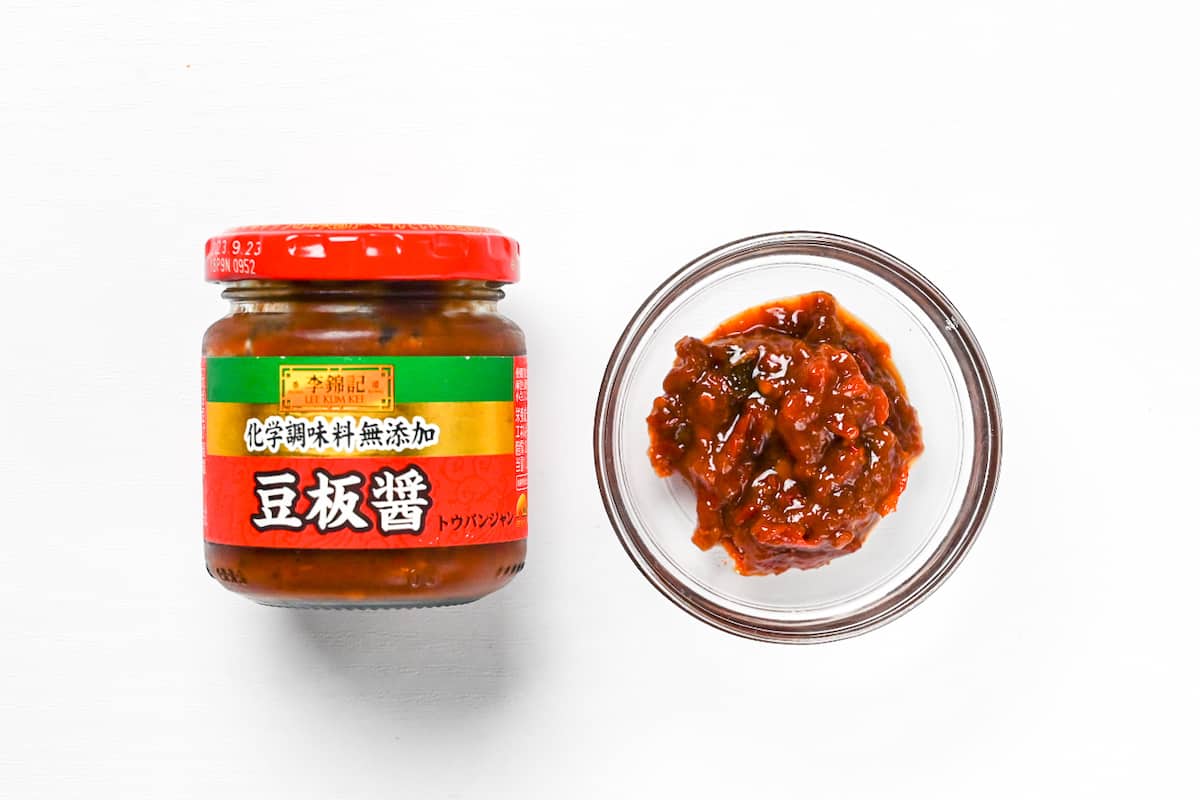
Chili bean paste, known as doubanjiang in Chinese or toban djan in Japanese, is often called the “soul of Sichuan cuisine.” Made from fermented broad beans and chilies, it delivers a complex combination of deep umami, saltiness, and heat that’s essential for chuka dishes like mabo dofu in Japan.
The authentic stuff undergoes months or even years of fermentation in the Sichuan region, developing flavors that are genuinely difficult to replicate.
Alternative 1: Chinese Soybean Paste + Asian Chili Oil
This combination is probably the closest match. Non-spicy Chinese bean paste provides the fermented umami and saltiness, while Asian chili oil adds the heat and red color.
- Taste impact: Remarkably close to the original. You get the deep fermented soybean umami and the right level of heat.
- Use exactly: 1 tsp soybean paste + 1 tsp chili oil for every 1 tsp chili bean paste.
- Perfect when: You can find Chinese soybean paste at Asian markets.
- Watch out for: Make sure you’re using the non-spicy paste.
- My take: If you already have the ingredients, this is your winner. The flavor profile is incredibly accurate.
Alternative 2: Miso + Chili Powder + Soy Sauce + Sesame Oil
This is the most widely recommended “go-to” in Japan, offering the great accessibility if you already have Japanese pantry items.
- Taste impact: Red miso or hatcho miso gives you that fermented depth, while chili powder brings the heat. The sesame oil adds richness, and soy sauce balances the saltiness.
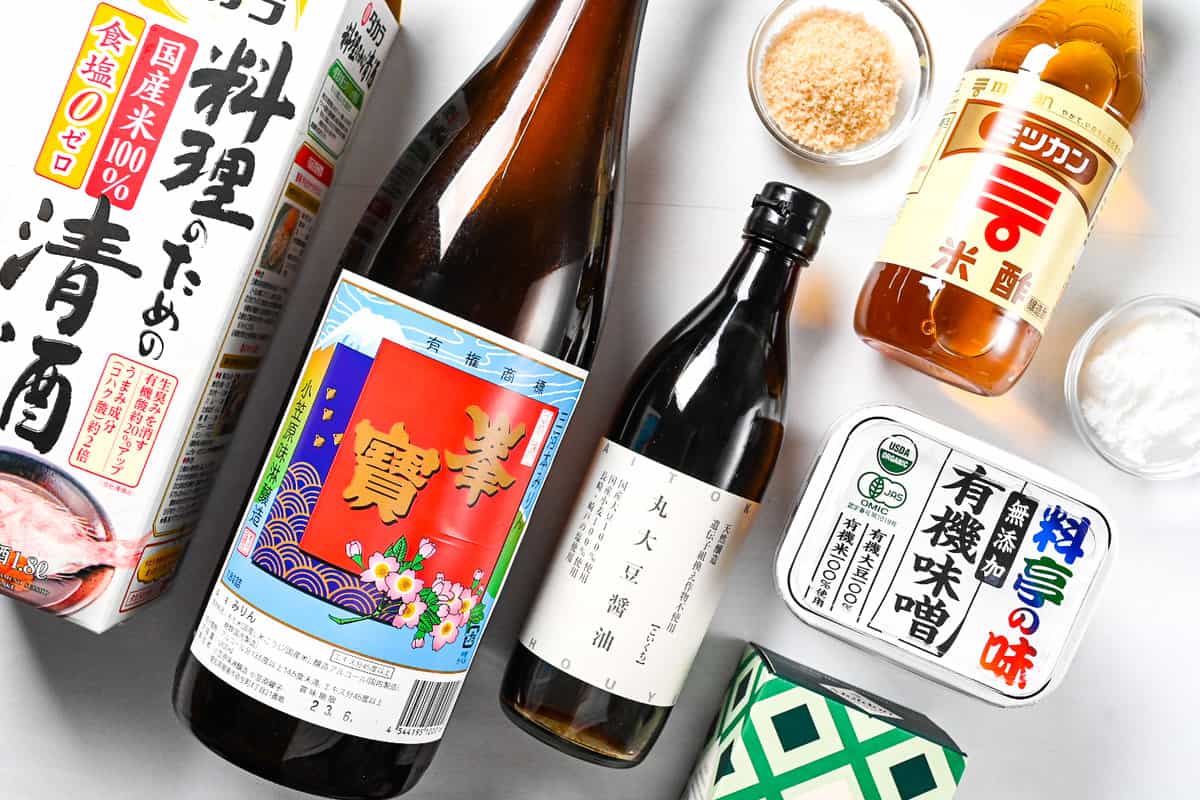
- Use exactly: For 1 tbsp chili bean paste: 1 tbsp red miso + 1 tsp soy sauce + 1 tsp chili powder + ½ tsp sesame oil.
- Perfect when: You already have these Japanese pantry staples and don’t want to buy specialty ingredients.
- Watch out for: Avoid white miso, it’s too sweet. Red miso or hatcho miso work best for that deeper fermented flavor.
- My take: This would be my practical everyday substitute if I don’t live in Japan.
Not Recommended Alternatives
- Gochujang (last resort only): Gochujang is grain-based (rice/wheat) with sweetness as a primary flavor, while doubanjiang is bean-based with saltiness. They move in opposite flavor directions. In the worst case, a small amount can still work in forgiving dishes like braises or marinades. Cut any added sugar and add extra chili for heat.
- Douchi (fermented black beans): These have a completely different aromatic profile. While both are fermented bean products, douchi provides a distinctive black bean fragrance that doesn’t match chili bean paste’s role.
- Chili oil alone: Missing all the umami and fermented complexity. The texture is also completely different.
Bottom Line
Doubanjiang is irreplaceable if you’re serious about Sichuan/Chinese/Chuka cooking (Japanese chuka is actually hugely influenced by Sichuan cuisine).
That said, for everyday cooking, the miso-based substitute (Alternative 2) is your most practical option. If you frequently cook Sichuan or Chinese food, just buy a jar of the real thing online. It’s not expensive and lasts forever in the fridge. It’s really worth it.
Japanese (Oriental) Spinach

Japanese spinach has rounded leaves with thin, tender stems that are much more delicate than Western varieties. The leaves are thinner with a gentle texture and natural sweetness that works beautifully in traditional dishes like goma-ae (sesame dressed spinach), ohitashi (blanched spinach), and stir-fries.
Alternative 1: Baby Spinach
Baby spinach is your best bet here. It’s got less oxalic acid than mature spinach, which means less bitterness and more of that sweet, delicate flavor that’s closer to Japanese spinach. The tender leaves work great both raw and cooked.
- Use exactly: 1.25-1.5x the amount since it shrinks dramatically when cooked.
- Perfect when: Japanese spinach isn’t available but baby spinach is easy to find.
- Watch out for: Cooks down fast, so reduce your cooking time to avoid mushy results.
Alternative 2: Bok Choy Leaves
Bok choy leaves (just the leafy parts, not the stems) can work in a pinch. While it’s a different plant family entirely, the leaves are soft and have a mild flavor that won’t overpower delicate Japanese preparations.
- Perfect when: You can’t find any type of spinach but bok choy is available.
- Watch out for: Works better in heartier cooked dishes than delicate preparations due to the different flavor profile.
Not Recommended Alternatives
Arugula has too much peppery bite and completely wrong flavor profile. Kale is way too tough and bitter.
Pork Belly (Slab/Thinly Sliced)
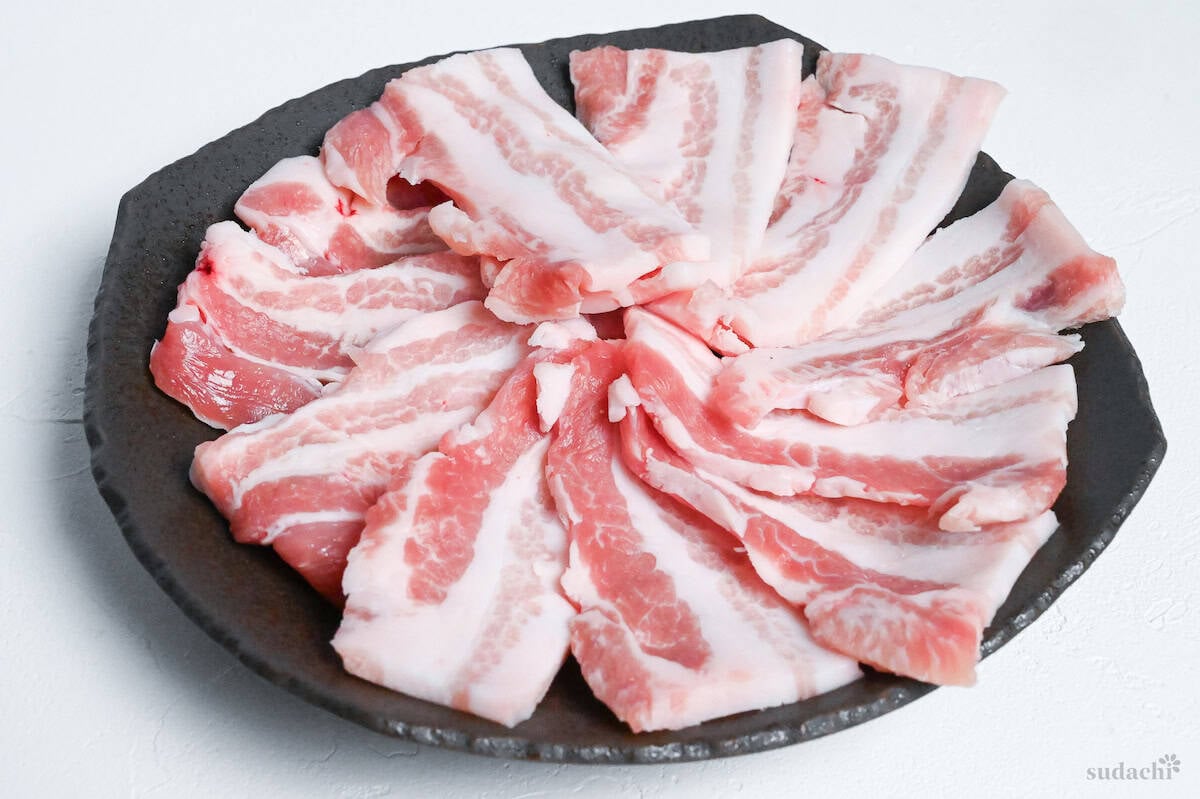
Pork belly is one of the most versatile cuts in Japanese cooking. Its distinctive layers of fat and lean meat make it essential for slow-braised dishes like kakuni and chashu, while thin slices are staples in stir-fries, soups, and hotpots. Outside of Japan, finding the right form can be tricky. Slab cuts are not always stocked at regular supermarkets, and thinly sliced cuts are almost never found outside Asian grocery stores.
Before diving into substitutes, it’s worth knowing your options: Asian grocery stores are the most reliable source for both slab and thinly sliced pork belly in North America.
Alternative 1: Pork Shoulder / Boston Butt
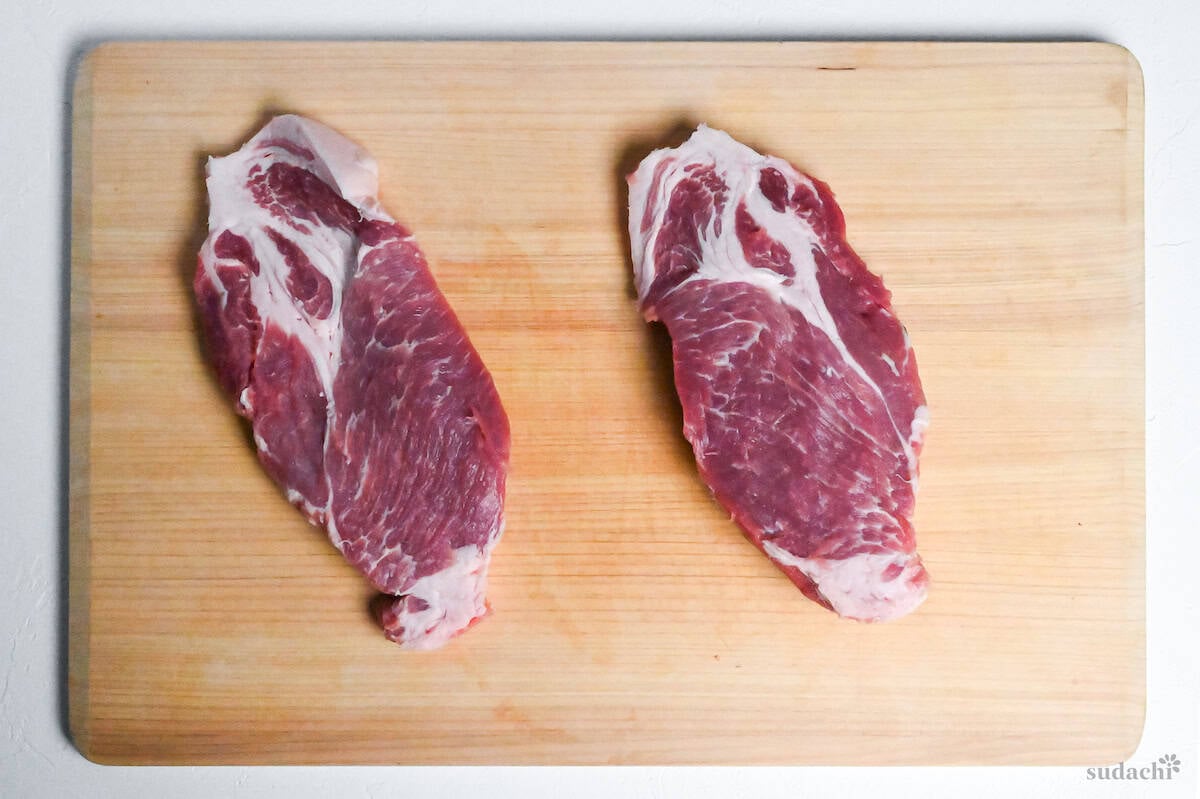
Pork shoulder is the most widely recommended substitute for pork belly, and for good reason. It has a reasonable balance of fat and lean meat, holds up well to long braising, and is available at many of the regular supermarkets.
- Taste impact: Meatier and less buttery than pork belly. You lose the signature “melting” fat layers, but the result is still tender and flavorful.
- Use exactly: Same weight as the recipe calls for.
- Perfect when: You need a slab for kakuni or chashu and can’t find pork belly.
- Watch out for: It can dry out if you cook it the same way as belly. The fat content is lower, so reduce the braising time slightly and check for tenderness earlier.
- My take: Not a perfect swap, but it’s the closest thing at a regular supermarket. For thin-sliced dishes (stir-fries, soups, hotpots), you can also ask a butcher to slice it thin, more on that below.
Alternative 2: Slice It Yourself (or Ask Your Butcher)
If you’re looking for thinly sliced pork belly, the kind used in shabu-shabu, tonjiru, okonomiyaki, or stir-fries, your best move is to buy a slab and slice it yourself, or have a butcher do it for you.
Slice it yourself: Buy a pork belly slab (or pork shoulder if belly isn’t available), partially freeze it for about 1-2 hours until firm but not fully frozen, then slice it as thin as you like with a sharp knife. If you cook a lot of Asian food, a home meat slicer can be a worthwhile investment. Some Japanese expats living in North America swear by it for this exact reason.
Ask your butcher: Most butcher counters at grocery stores or specialty meat shops can slice a block to your specification. You can simply ask them to slice the pork belly / pork shoulder as thin as possible. About 2-3mm thick, like bacon slices but without the cure.
- Taste impact: With pork belly slab: identical to what you’d find in Japan. With pork shoulder: slightly leaner but functional for most dishes.
- Perfect when: You need thin slices for everyday cooking.
- Watch out for: Partially freezing is key, room-temperature meat is too soft to slice evenly by hand.
- My take: This is the real solution for anyone cooking Japanese food regularly outside Japan. A little upfront effort saves a lot of future frustration.
Not Recommended Alternatives
- Pork loin (for braised dishes): Fine for thin-sliced stir-fries, but avoid it for kakuni, chashu, or any long braising recipe. With no fat layers to render down, it dries out badly over long cooking times and won’t give you that melt-in-your-mouth texture. The fat is what makes pork belly special in slow-cooked dishes, without it, you just end up with tough, dry pork.
- Bacon: Technically comes from the same cut, but the smoking and curing process adds a strong smoky flavor and significantly more salt that will throw off the seasoning balance of Japanese dishes. It can work in a pinch for stir-fries if you reduce other salt accordingly, but for anything where pork belly is the star, the smoky flavor is just too overpowering.
Bottom Line
For braised dishes, pork shoulder is your best realistic option at a regular supermarket. Just expect a meatier, less unctuous result. For thin-sliced dishes, the real answer is to get a slab and slice it yourself, or ask a butcher to do it. Asian (Japanese/Chinese/Korean) grocery stores are your best bet for finding the actual thing, so if one is nearby, it’s worth the trip.
Gobo (Burdock Root)
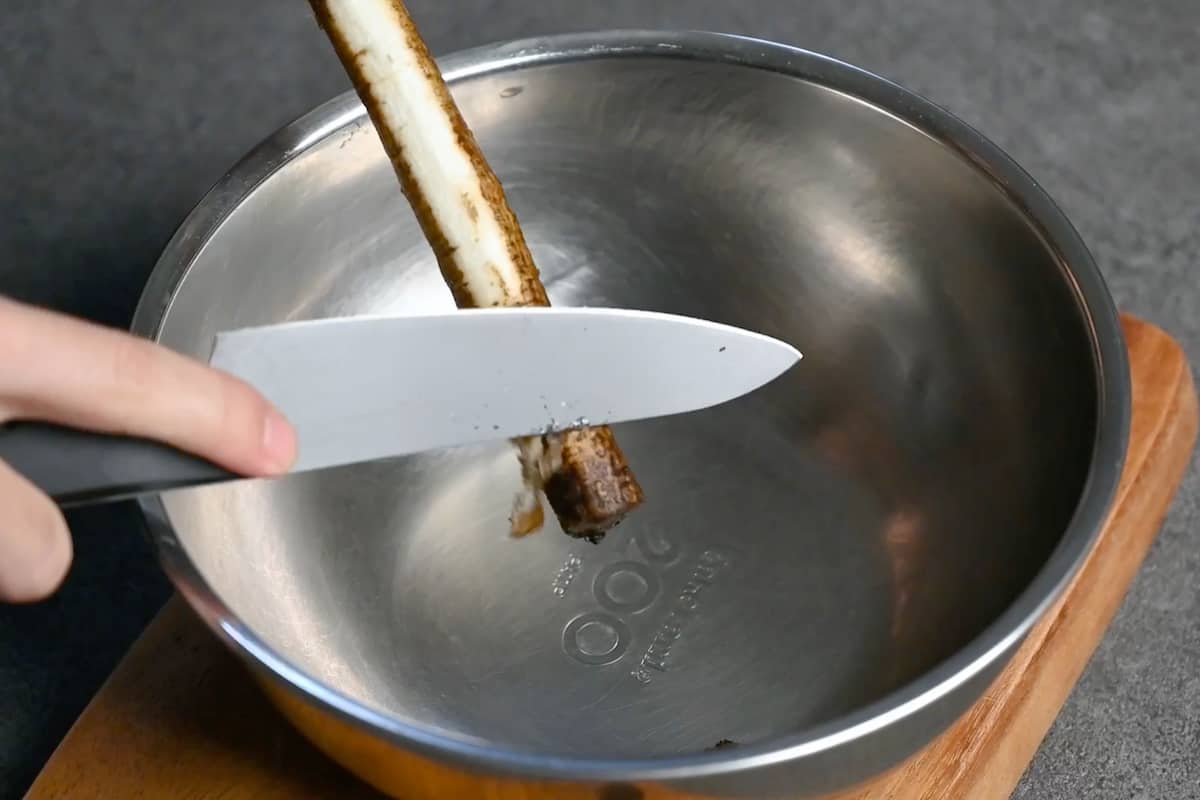
Gobo is a long, slender root vegetable with a distinctive earthy flavor and satisfying crunch. It’s a staple in Japanese home cooking, appearing in dishes like kinpira gobo, tonjiru, takikomi gohan, and simmered dishes like chikuzen-ni. Interestingly, while burdock root grows wild across Europe and Asia and is used for tea and herbal remedies in many countries.
Here’s the thing: gobo is genuinely hard to replace. Its unique combination of earthiness, slight bitterness, and fibrous crunch doesn’t exist in any other single ingredient. That said, these alternatives can get you close enough to enjoy the dishes.
Alternative 1: Parsnip
Parsnips are probably the most accessible substitute for gobo, and they actually hold up surprisingly well when stir-fried into matchsticks. The texture when julienned is convincingly similar, and the sweetness adds its own charm.
- Taste impact: Sweeter and nuttier than gobo, missing that distinctive earthy bitterness, but pleasant in its own way.
- Use exactly: Cut slightly thicker than you would gobo. Use about 80-90% of the gobo amount, as parsnip flavor is more assertive.
- Perfect when: You’re making kinpira or other stir-fried dishes and want the closest texture match from a regular supermarket.
- Watch out for: Parsnips cook faster than gobo, so reduce your cooking time. They can also go from crisp to mushy quickly if you’re not paying attention.
- My take: This is my top recommendation for anyone at a regular Western supermarket. The texture is convincingly close, and while the flavor is different, it works well with the same sauces and seasonings.
Alternative 2: Salsify Root (Oyster Plant)
Salsify is the dark horse of gobo substitutes. It looks remarkably similar to burdock, has a comparable crunchy texture, and even needs the same kind of water-soaking treatment to prevent discoloration after cutting.
- Taste impact: Milder and slightly more delicate than gobo, with a subtle oyster-like or artichoke-like flavor. Less earthy bitterness.
- Use exactly: 1:1 ratio. Handle it the same way as gobo: peel, julienne, and soak in water immediately.
- Perfect when: You happen to find it at a farmers’ market or specialty store.
- Watch out for: It’s not widely available, which is the main drawback. If you can find it though, it’s the closest match in both appearance and handling.
- My take: If salsify is available to you, grab it without hesitation. The cooking experience is almost identical to working with gobo.
Alternative 3: Lotus Root (Renkon)
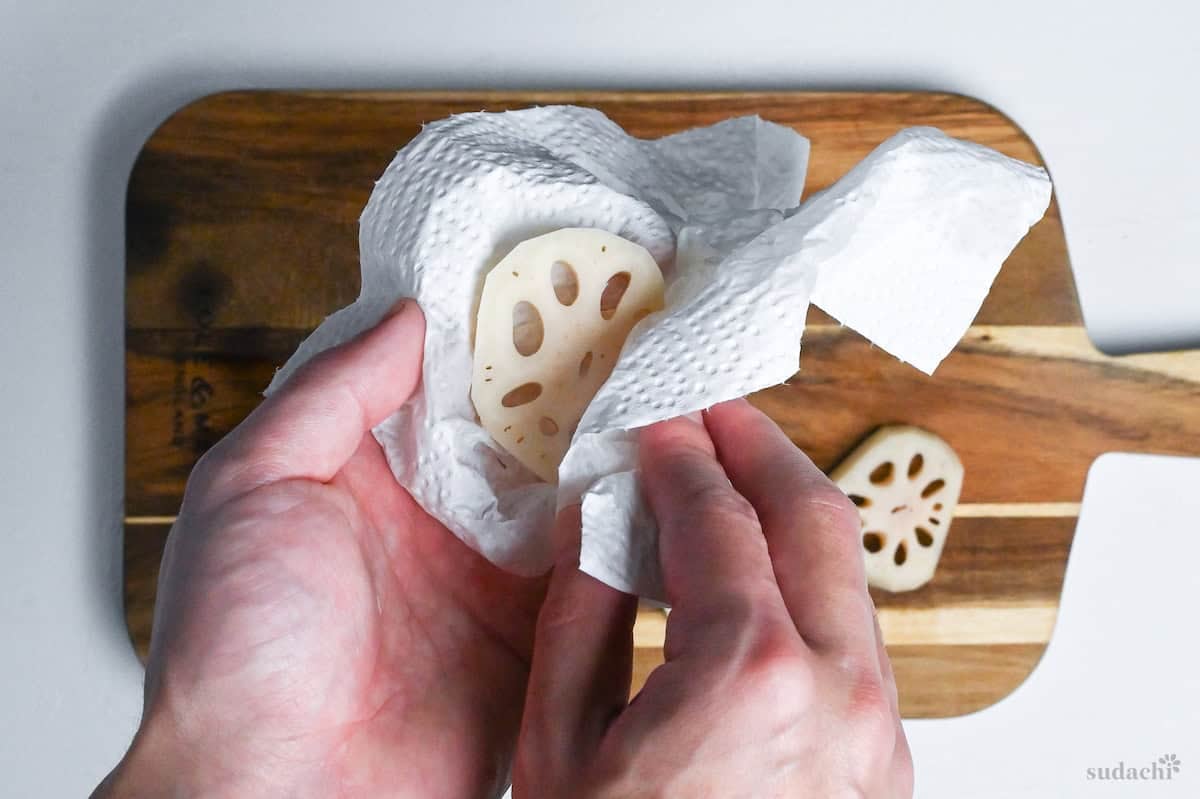
Lotus root brings a completely different visual (those beautiful holes!) but shares gobo’s ability to stay crunchy even after cooking. It’s actually used alongside gobo in many traditional Japanese dishes, so it feels like a natural swap.
- Taste impact: Mild, slightly sweet, and starchy. Less complex than gobo but with excellent crunch.
- Use exactly: Slice thinner than you would gobo since lotus root is denser and harder.
- Perfect when: You’re making simmered dishes like chikuzen-ni or tonjiru where crunch matters more than gobo’s specific earthy flavor.
- Watch out for: The texture and flavor are different enough that this won’t fool anyone in a kinpira. But it works beautifully in soups and simmered dishes.
- My take: If you can find lotus root at an Asian grocery, it’s a solid choice for simmered dishes. Just don’t expect it to taste like gobo.
Alternative 4: Jerusalem Artichoke (Sunchoke)
Jerusalem artichokes have a crisp, almost water chestnut-like bite and a nutty, slightly sweet flavor. They’re knobby and ginger-looking, but once peeled and julienned, they work reasonably well in stir-fries.
- Taste impact: Nutty and sweet with a crisp bite. Closer to water chestnut territory than burdock.
- Use exactly: Cut into thick matchsticks. Reduce cooking time significantly as they soften quickly.
- Perfect when: You see them at a farmers’ market and want to try something different.
- Watch out for: They cook fast and can turn soft before you know it. Keep the heat high and the cook time short.
- My take: An interesting option but the least gobo-like of the four. If parsnip or salsify is available, go with those first.
Key Differences to Note
All of these alternatives lack gobo’s signature earthy, slightly bitter flavor profile. The final result will generally be milder and sweeter. To compensate, consider adding a touch more chili or increasing the soy sauce slightly to bring back some complexity. Also, most alternatives cook faster than gobo, so start checking the texture earlier to avoid overcooking.
Not Recommended Alternatives
- Carrot: Way too sweet and soft. Yes, it’s already in kinpira alongside gobo, but it can’t carry the dish on its own.
- Celery root: Too watery and the flavor is completely wrong.
- Turnip: Becomes mushy too quickly and lacks any of gobo’s fibrous character.
- Daikon: Melts down when cooked and has a completely different flavor and texture.
Bottom Line
Parsnip is your most practical option at a regular supermarket, while salsify is the closest overall match if you can find it. For simmered dishes, lotus root is a natural fit. That said, gobo is worth seeking out at Asian grocery stores if you can.
Shishito Peppers
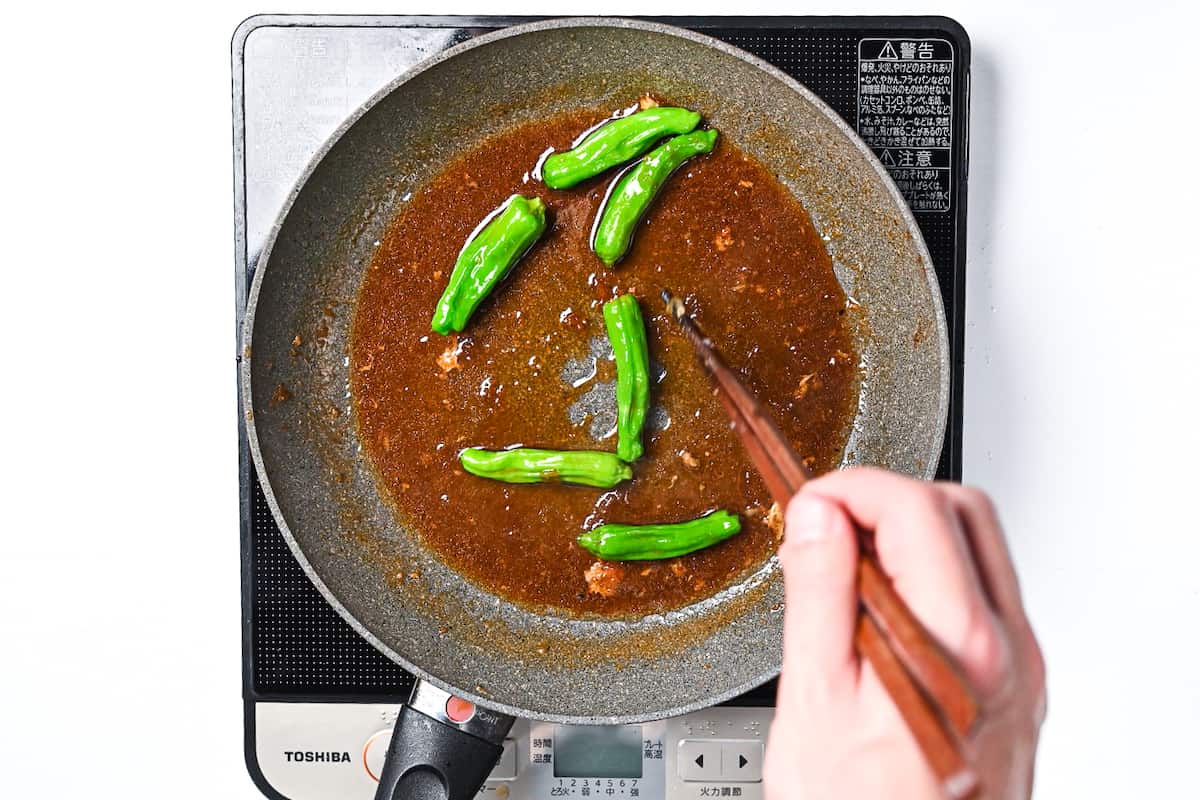
Shishito peppers (ししとう) are small, thin-walled Japanese peppers that are mostly mild and sweet with an occasional spicy surprise. The name comes from the Japanese word “shishi” (lion), because the tip of the pepper is said to resemble a lion’s head.
What makes shishito fun is the Russian roulette factor: about one in every ten peppers will hit you with unexpected heat. They’re generally rated at just 50-200 Scoville heat units (barely a blip), but those random hot ones can catch you off guard.
Alternative 1: Padron Peppers
Padron peppers from Spain are shishito’s closest relative in the pepper world. They share the same thin walls, similar size, and even that same “most are mild but one will surprise you” characteristic. Many people can’t tell the two apart just by looking.
- Taste impact: Very similar mild, sweet pepper flavor with that same fun element of surprise. Slightly earthier than shishito.
- Use exactly: 1:1 ratio.
- Perfect when: You’re making blistered peppers, tempura, or any dish where the whole pepper is cooked intact.
- Watch out for: Padrons run hotter overall (500-2,500 Scoville vs shishito’s 50-200), so the “surprise” peppers pack significantly more punch. If you’re sensitive to heat, be prepared.
- My take: This is the substitute. If your store carries Padron peppers, you’re set. The cooking experience is virtually identical.
Alternative 2: Baby Sweet Peppers (Mini Sweet Peppers)
Those small, multicolored sweet peppers you see in bags at most supermarkets can work in a pinch. They’re sweet, mild, and widely available.
- Taste impact: Sweet and mild with zero heat. You lose the “spicy roulette” aspect entirely.
- Use exactly: 1:1 by count, though you may need to halve larger ones lengthwise.
- Perfect when: You want something mild and sweet, and heat isn’t important to your dish.
- Watch out for: The walls are thicker than shishito, so they take longer to blister and won’t get that same charred, collapsed texture as easily. They also lack any hint of heat.
- My take: A decent option for when you just need a mild pepper side dish, but it won’t replicate the shishito experience. The thicker walls change the eating experience quite a bit.
Alternative 3: Green Bell Pepper (Cut Down)
Not a glamorous choice, but a green bell pepper cut into strips or chunks is the easiest backup when you have zero specialty options. The grassy, slightly bitter flavor of a green bell is actually in the same neighborhood as shishito, just much larger and thicker.
- Taste impact: Similar grassiness to shishito but without any heat. Crunchier and meatier texture.
- Use exactly: Cut into strips roughly shishito-sized. For blistering, cut into quarters or thick strips.
- Perfect when: It’s literally all you can find and you need something green and pepper-like.
- Watch out for: You lose the fun of eating a whole small pepper. The thicker walls won’t blister the same way. And obviously, no heat at all.
- My take: Functional but not exciting. Works better in stir-fries and tempura than as a standalone blistered dish.
Alternative 4: Banana Peppers (Fresh, Not Pickled)
Fresh banana peppers have a mild heat profile (0-500 Scoville) and a slightly tangy-sweet flavor. They’re widely available and closer to shishito’s heat level than most other common peppers.
- Taste impact: Tangy-sweet with mild heat. Different flavor profile from shishito but in a similar heat range.
- Use exactly: 1:1 ratio. Slice into rings or use whole if they’re small enough.
- Perfect when: You want mild heat and your store doesn’t carry Padrons.
- Watch out for: Make sure you’re getting fresh banana peppers, not pickled. The pickled version has a completely different tangy flavor from the brine that won’t work. The flesh is also thicker than shishito, which affects texture.
- My take: Decent for stir-fries and roasting, but not ideal for the classic “blistered shishito” preparation because of the thicker walls.
Not Recommended Alternatives
- Jalapenos: Way too hot (2,500-8,000 Scoville) even with seeds removed. The heat will completely overpower the dish.
- Serrano peppers: Even hotter than jalapenos. Not even close.
- Anaheim peppers: The size and thickness are completely off. They work for stuffing but not as a shishito stand-in.
- Pickled peppers (any kind): The vinegar brine flavor has no place in dishes calling for fresh shishito.
Bottom Line
Padron peppers are your clear winner here, no question. They’re the closest thing to shishito you’ll find, and they even share that signature “will this one be spicy?” excitement. If Padrons aren’t available, baby sweet peppers or fresh banana peppers can work depending on the dish, but you’ll be losing the key characteristics that make shishito special.
That said, shishito peppers are becoming increasingly available outside Japan. If you see them, stock up. They also grow well in containers if you’re into gardening, and seeds are easy to find online.
Flours in Japan (Hakurikiko, Churikiko, Kyorikiko)
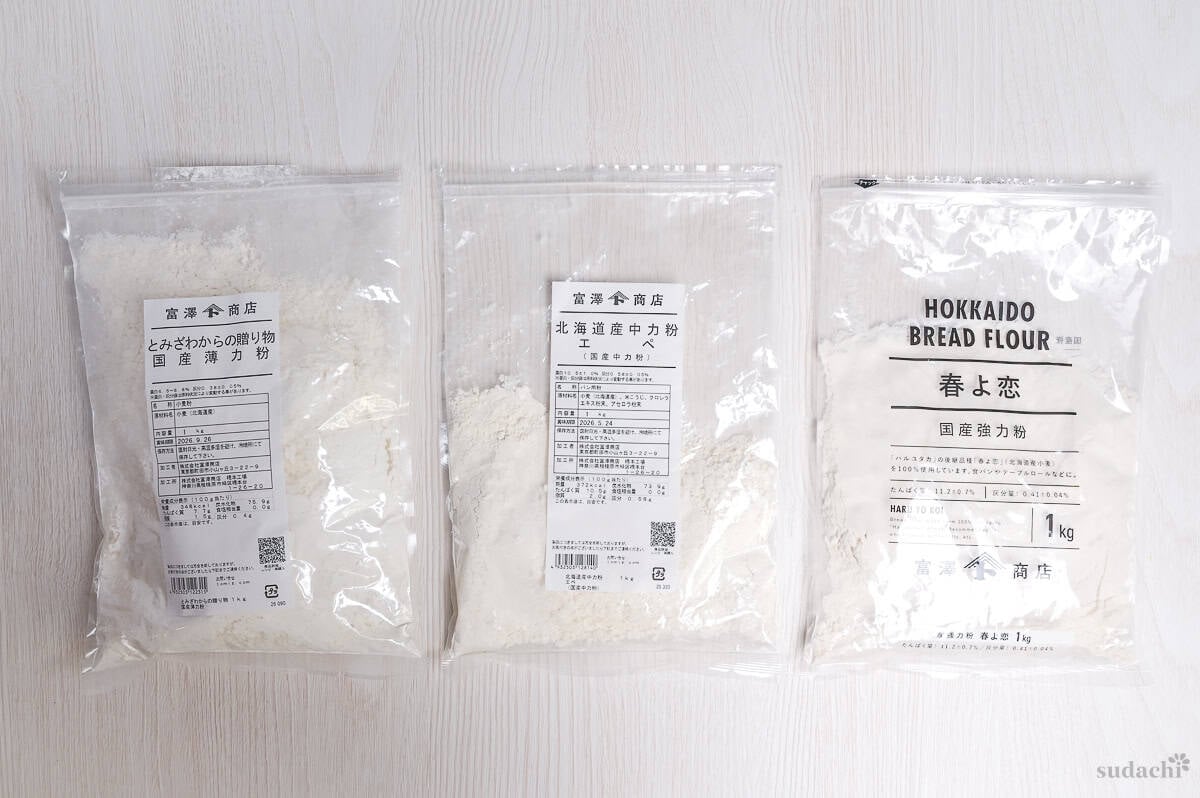
Japanese wheat flour is sold under 3 names that correspond to gluten strength:
- Hakurikiko (薄力粉) at 6.5-8.5% protein for tempura, sponge cake, and light cookies
- Churikiko (中力粉) at 8.5-10.5% protein, used mainly for homemade udon
- Kyorikiko (強力粉) at 11.5-13.5% protein for shokupan, ramen noodles, and gyoza skins
The numbers line up neatly with Western flours on paper, but there is one hidden variable that protein percentage cannot show: chlorination. Most US cake flour is chlorinated, which weakens the gluten and makes the starch hold water more tightly.
Japanese flours are not chlorinated. That difference is why a tempura made with chlorinated cake flour can come out heavier than expected, even when the protein number looks right.
For a deeper dive into how each flour behaves, see my full guide to Japanese flours.
Substituting for Hakurikiko (Soft / Low-Protein Flour)
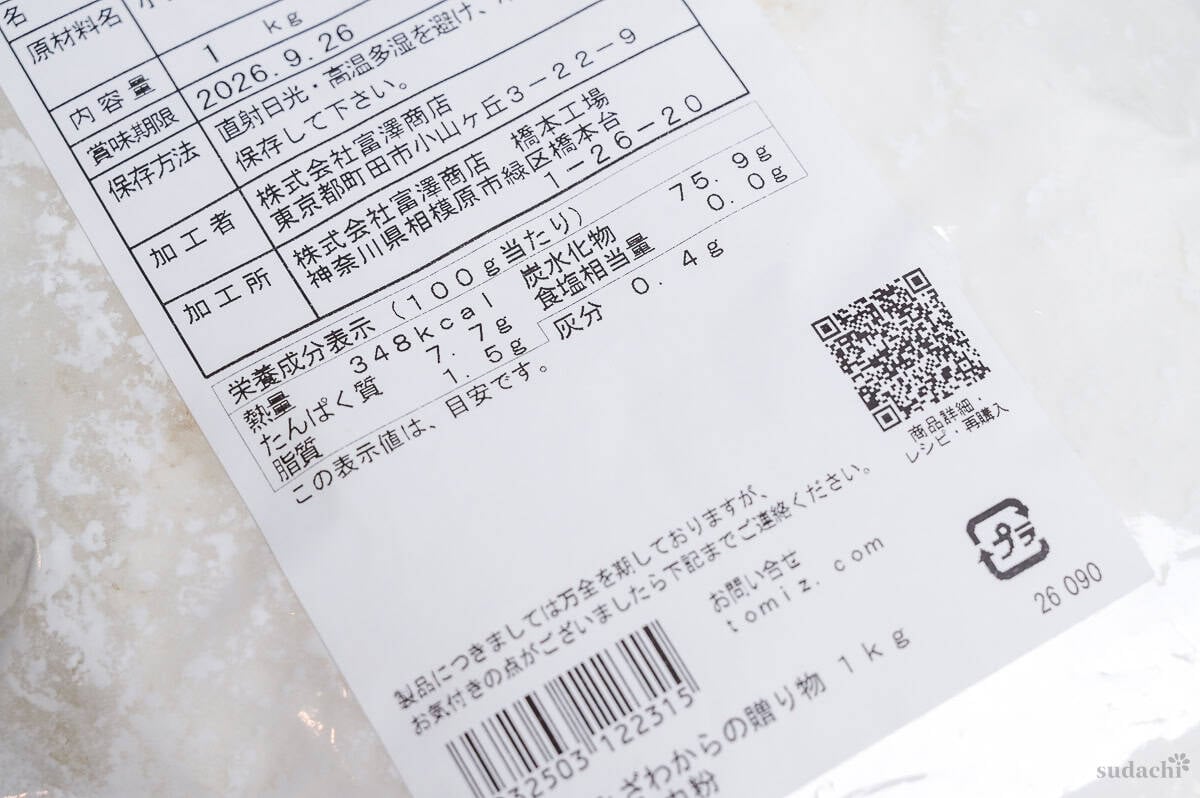
This is where the chlorination wall actually matters. Hakurikiko sits in the same protein band as US cake flour but behaves differently because it is unchlorinated.
Alternative 1: UK Plain Flour or Australian Plain Flour
UK Bread and Flour Regulations have prohibited chlorinated flour since 1998, and FSANZ rules out chlorine bleaching in Australia. Both sit at 8-10% protein, slightly higher than hakurikiko but on the right side of the chlorination wall.
- Taste impact: Very close to hakurikiko in finished dishes. Slightly more body in tempura batter, barely noticeable in cookies or okonomiyaki.
- Use exactly: 1:1 ratio.
- Perfect when: You are in the UK, Australia, New Zealand, or Ireland.
- Watch out for: Nothing significant.
- My take: This is the easiest/cleanest swap for hakurikiko outside Japan. When I lived in England, plain flour was my default.
Alternative 2: Korean Beksul Cake Flour (박력분) or Taiwanese 低筋麵粉
Korean Beksul cake flour sits at about 8% protein, matches hakurikiko’s profile almost exactly, and is unchlorinated. Taiwanese low-gluten flour (低筋麵粉) is another strong option in Asian markets.
- Taste impact: Essentially identical to hakurikiko.
- Use exactly: 1:1 ratio.
- Perfect when: You have a Korean or Taiwanese grocer nearby.
- Watch out for: Make sure the bag says cake flour or 박력분, not all-purpose.
- My take: Beksul runs about half the price of imported Japanese hakurikiko and behaves the same way in the pan. If you cook Japanese food regularly and don’t live near a Japanese grocer, this is the smart move.
Alternative 3: US Cake Flour
US cake flour reads the same on the protein line (around 7-9%) but most brands are chlorinated, so I strongly recommend getting unchlorinated one.
Alternative 4: US All-Purpose Flour (with Cornstarch Dilution)
US AP flour sits at 10-12% protein, too high for hakurikiko on its own. Cutting it with cornstarch drops the effective protein into the right range.
- Taste impact: Workable but not exact. Tempura comes out crispier than with straight AP, sponge cake stays reasonably tender.
- Use exactly: 4 parts AP flour + 1 part cornstarch (80g AP + 20g cornstarch per 100g hakurikiko called for).
- Perfect when: You only have AP flour and no specialty options nearby.
- Watch out for: Whisk thoroughly to distribute the cornstarch evenly. Clumps will show up as patches in the finished texture.
- My take: A reasonable backup for everyday cooking.
Not Recommended Alternatives
- Self-raising flour: The added baking powder will throw off any recipe that does not call for it.
- Whole wheat or whole grain flour: Wrong texture, wrong color, wrong flavor for Japanese applications.
- Gluten-free flour blends: Behave nothing like hakurikiko. The starch ratios and binders move the dish in a completely different direction.
Bottom Line
If you are in the UK or Australia, plain flour is your everyday swap. In North America, Korean Beksul cake flour from an Asian grocer or unchlorinated cake flour are the best price-to-performance swaps.
Substituting for Churikiko (Medium / Medium-Protein Flour)
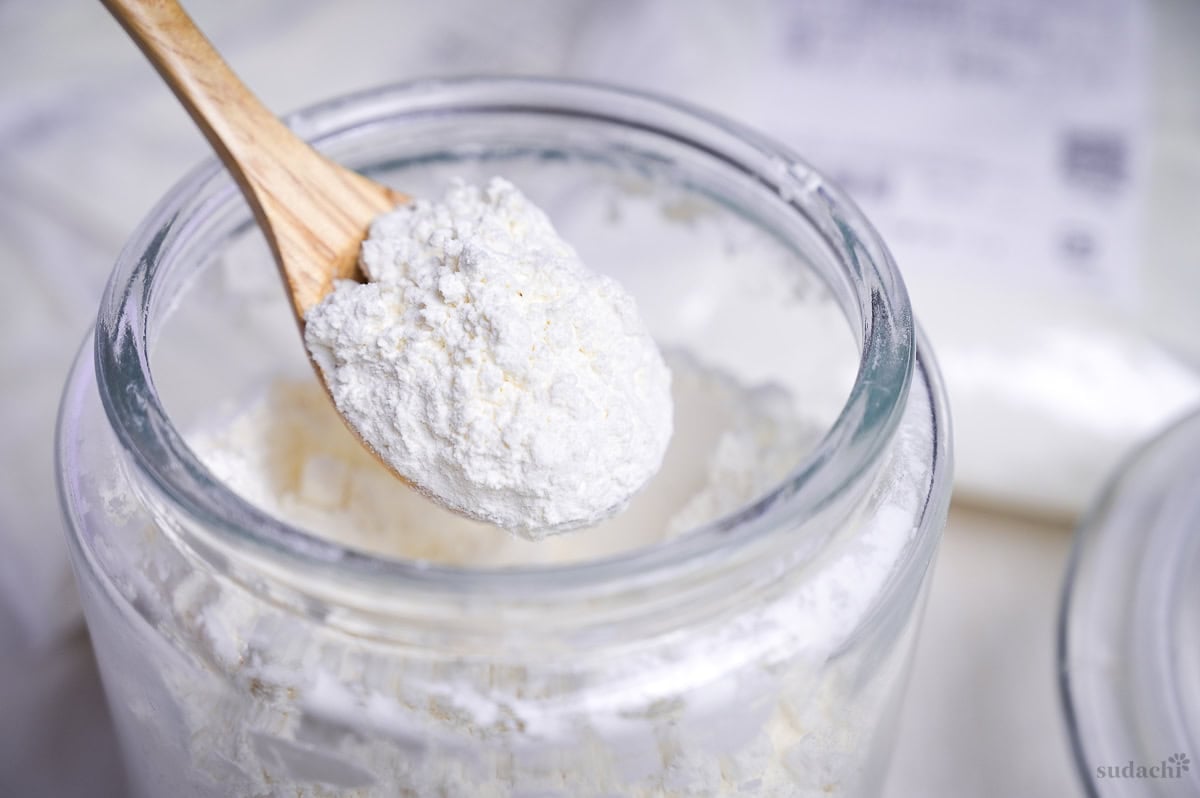
Churikiko sits between the other two and is mostly used for homemade udon. Most Japanese homes do not actually keep it on hand.
Alternative 1: US All-Purpose Flour
US AP flour at 10-12% protein sits almost exactly where churikiko does. The match is clean enough that no adjustment is needed.
- Taste impact: Indistinguishable in most applications, including udon.
- Use exactly: 1:1 ratio.
- Perfect when: Anywhere AP flour is sold.
- Watch out for: Nothing significant.
- My take: This is the easiest substitution in the entire flour section. AP flour is churikiko in practical terms.
Alternative 2: 50/50 Blend of Bread Flour and Unchlorinated Cake Flour
If you only have bread flour and unchlorinated cake flour on hand, blending them lands you in the churikiko zone.
- Use exactly: Equal parts by weight (50g bread + 50g cake = 100g churikiko substitute).
- Perfect when: You don’t have AP flour but want to make udon.
- My take: Works fine, but if you are buying flour specifically for this, just get AP.
Bottom Line
US AP flour is churikiko for all practical purposes. There is no real gap to close here.
Substituting for Kyorikiko (Strong / High-Protein Flour)
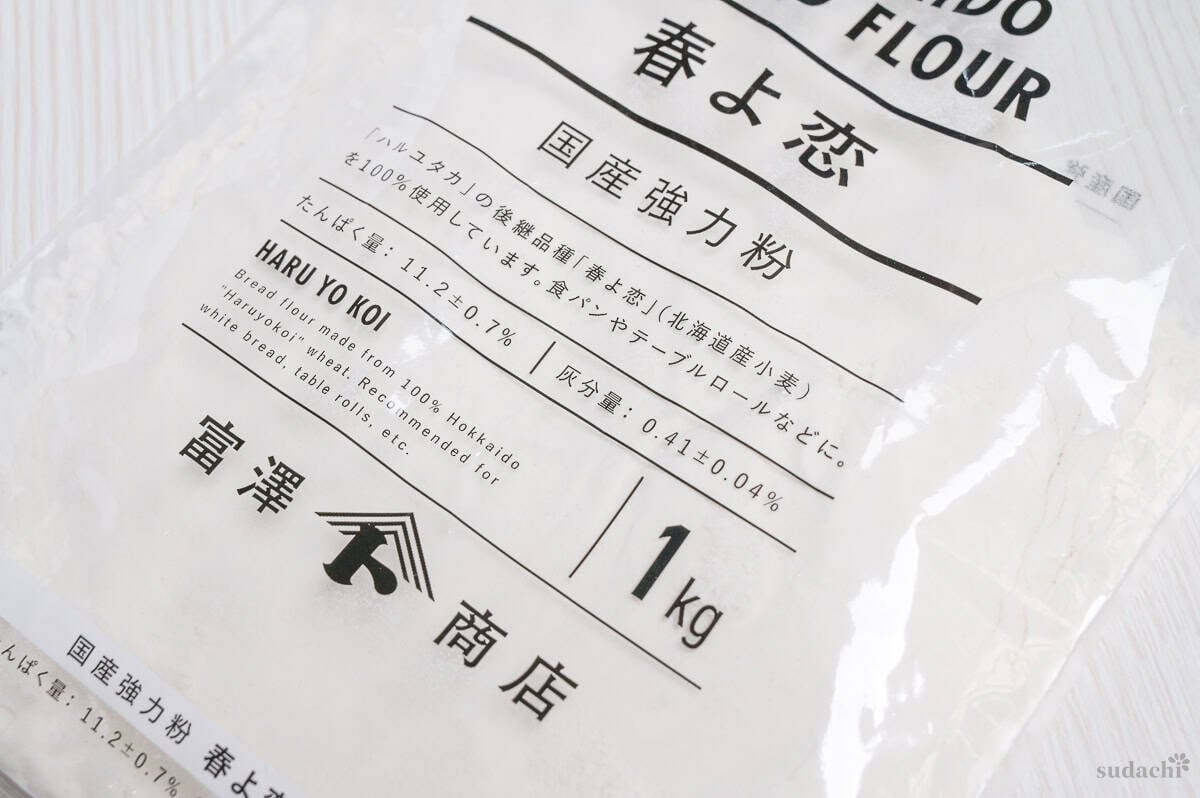
Kyorikiko reads cleanly as bread flour. The substitution gap is small.
Alternative 1: Bread Flour
Bread flour at 11.5-13.5% protein matches kyorikiko’s range almost exactly. King Arthur Bread Flour at 12.7% sits just above Nisshin Camellia at 11.8%, close enough that the difference is barely perceptible in shokupan.
- Taste impact: Crumb runs very slightly denser with higher-protein bread flour, but the result is still excellent.
- Use exactly: 1:1 ratio.
- Perfect when: Anywhere bread flour is sold.
- Watch out for: Avoid organic bread flour for shokupan. The batch-to-batch protein variability tends to throw off the rise.
- My take: This is the cleanest cross-country substitution in the entire flour aisle. Bread flour is kyorikiko in the kitchen.
Alternative 2: Italian 00 Flour (Specific Varieties Only)
Italian 00 flour comes in different protein grades. The bread-grade 00 (sometimes labeled “per pane” or “W 280-350”) sits in kyorikiko territory.
- Taste impact: Slightly silkier texture, fine for pizza-style applications and some noodle work.
- Use exactly: 1:1 ratio, but only for the higher-protein versions.
- Watch out for: Most 00 flour at supermarkets is the pizza/pasta grade at 9-11% protein, which is too soft for shokupan or ramen noodles. Read the protein line.
- My take: Niche option. Just use bread flour unless you happen to have the right 00 already.
Not Recommended Alternatives
- Vital wheat gluten added to AP flour: Technically possible but unpredictable. The dough handles differently and the crumb structure suffers.
- Self-raising flour: Same problem as with hakurikiko. The baking powder ruins yeasted breads and noodle doughs.
Bottom Line
Bread flour is kyorikiko. No adjustment needed. The two places this breaks down are udon (you want softer flour anyway, so use AP) and castella (where Japanese kyorikiko’s lower protein gives a more delicate crumb).
Quick Reference Table
| Japanese flour | Protein | Best substitute |
|---|---|---|
| Hakurikiko (薄力粉) | 6.5-8.5% | UK/AU plain flour, Korean Beksul cake flour, regular unbleached cake flour |
| Churikiko (中力粉) | 8.5-10.5% | All-purpose flour |
| Kyorikiko (強力粉) | 11.5-13.5% | Bread flour |
For the science behind why these swaps work (and where they don’t), check out my full guide on Japanese flours.
Need More Substitutes?
That wraps up my guide to the most common Japanese ingredient substitutions. What substitutes do you use in your cooking? If you know of any good alternatives that didn’t make this list, I’d love to hear about them.
And if there are other Japanese ingredients you’re struggling to substitute, drop them in the comments! I will add them to a future update!

Any emergency substitute for dashi granules? Thanks for a tremendous recipe, and site!
Hi Steven,
Thank you so much for your kind words!
The best substitute depends on how you plan to use the dashi granules.
1. If you’re only adding a small amount for flavor (such as in my salmon fried rice recipe or kinpira gobo recipe), you can use bouillon powder or MSG in slightly smaller quantities.
2. If you need to prepare dashi stock, unsalted chicken stock or vegetable stock would work as emergency alternatives.
Interestingly, in Japan, some people even use ketchup in extreme emergencies, since both contain glutamic acid (umami). However, this is not a substitute I would personally recommend too much.
I hope this helps!
Yuto
Hi Yuto
What do you suggest as a substitute for karashi?
Hi Ethel,
Thank you for your suggestion. I’ve now added a new section dedicated to karashi mustard! 🙂
Yuto
Can korean dashi work in this recipe?
Hi Mary
I’m not too familiar with Korean dashi, but my understanding is that it has a stronger profile. It would be a great sub for heartier dishes where dashi isn’t the main note, but for something delicate like a clear soup, I’d stick with Japanese dashi stock.
Yuto
Dear Yuto,
I’m new to Japanese cooking, but after visiting a couple of Traditional Japanese restaurants: one in London and one in Kent; I fell in love with Japanese food.
Searching the net for beginners recipes I came across your recipes. You most certainly made them achievable, seems enjoyable to cook, easy to follow and looks that they are very tasty to!!!
Anyway, working full-time, which includes unsociable hours and 13 hours shifts, I like to plan a family meals for a week and shop accordingly.
One of the meals requires the use of yellow miso paste. I’m really struggling to find it.
What can I use as an alternative? Please advise.
Really looking forward to cooking your delicious food and enjoying recently discovered immensely tasty Japanese cuisine.
With Thanks,
Viola.
Hi Maria,
Thank you so much for visiting my website! I’m happy to hear that you’re interested in Japanese cooking and that you’ve found my recipes approachable and enjoyable to follow.
Regarding your question about yellow miso paste, from my experience living in England (and a quick look at what’s currently available there), miso isn’t usually labeled as “yellow miso.” I think that term is more commonly used in the U.S. In England, you’ll often find white and red miso I think. Yellow miso is essentially a blend of the two, so you can simply mix white and red miso in roughly equal parts to achieve a yellow (blended) flavor. Also, if you find a tub labeled simply as “miso paste,” it’s often quite close to yellow miso in taste and color.
I hope this helps you get started with your meal planning and that you’ll enjoy exploring Japanese flavors at home. Wishing you lots of enjoyment in your cooking journey!
Yuto
chili bean sauce (toban djan) substitute?
Hi Joan,
Thank you for your suggestion. I’ve now added a new section dedicated to chili bean paste! 🙂
Yuto
Very well composed website -Informative, easy to understand, workable. Thanks. Look forward to cooking!
Hi Madeline,
That means a lot, thank you! I’m so happy to hear the site feels clear and helpful. Hope you enjoy trying out the recipes! 🙂
Yuto
Glad I found this website!!
Thank you!! 🙂
Kombu!! I can’t find it anywhere. I was able to find something called Mizkan Soup Base (Tsuyu), that has kombu extract in it. Will that work?
Hi, Allison! Thank you for your suggestion, I’ve just added a new section dedicated to kombu substitutes! 🙂
thank you for all your work in maintaining this wonderful website. Can perilla leaves (shiso) be substituted? because it’s very hard to find
thanks again
Thank you for your kind words! I added a shiso leaves section to the post! 🙂
After a recent trip to Japan, I have begun cooking Japanese meals regularly at home. I bought a lot of ingredients in Japan but didn’t realize how much sugar is used in Japanese sauces and dishes. Could I substitute honey for dishes and sauces like donburi bowls etc.?
Thank you for your easy to understand web site. I used it to cook Chicken Teriyaki and it turned out delicious. A special thanks for alternatives to use in place of hard to find ingredients like potato starch. I will keep looking for more recipes in the future.
Hi Ivy,
Thank you so much for your kind message, and I’m really happy to hear that your trip to Japan inspired you to start cooking Japanese food at home. I’m also glad to know that the Chicken Teriyaki recipe turned out well for you!
You’re right that many Japanese dishes rely heavily on the balance between soy sauce saltiness and the sweetness from mirin and sugar. Since I grew up in Japan, this flavor profile is very familiar to me, but it’s completely understandable to want to reduce the sweetness or simply the sugar content.
In short, yes, you can substitute honey (but not 1:1 ratio as honey is sweeter than sugar) if you prefer, and it usually works well. That said, you can also simply reduce the amount of sugar slightly without any major issues. In general, the sweetness in Japanese cooking comes from mirin and/or sugar (or alternatives such as honey). I don’t usually recommend reducing mirin, as it contributes depth and richness, but reducing sugar often works just fine.
To avoid throwing off the overall flavor balance, I suggest starting with a small reduction and adjusting gradually to taste. Another option, especially for sauces, is to reduce the total amount of sauce used. For example, with my Chicken Teriyaki recipe, I originally used 2 tablespoons each of soy sauce, mirin, and sake, plus 1/2 tablespoon of sugar. I later reduced the total sauce amount, and honestly, the result was just as good. So reducing the sauce quantity itself can also be an effective approach.
I hope this helps, and I really appreciate your thoughtful feedback on the website and ingredient substitutions. I hope you continue to enjoy exploring more Japanese recipes in your kitchen! 🙂
Yuto
What can I substitute for Pork belly? haven’t been able to find it here.
Thank you.
Hi Leslie,
Thank you for asking! I’ve added a section dedicated to pork belly!
Yuto
sub for Shishito peppers
sub for GOBO
Both added!
this is really helpful! but looking into more recipes and have been seeing a lot call for Shirasu or whitebait. Don’t think there’s any nearby in my local stores, but we have a couple different Asian stores, any suggestions for substitutes?
Hi Jayd,
So glad it’s been useful! I actually try to keep my recipes free of ingredients that are almost impossible to source outside Japan, so you probably won’t come across shirasu in any of mine. Unfortunately it’s one of those ingredients that’s really hard to substitute well because the flavor and texture are pretty unique. Sorry I can’t be more help on that one!
Yuto
Is there a substitute for umeboshi? It’s not something I can find where I live.
Hi Jacklyn,
Unfortunately, umeboshi is pretty one of a kind so there’s no perfect swap. Closest thing I’d suggest is store bought ume paste if you can track that down! 🙂
Yuto
finally someone a article with substitutions! thank you!
Thank you, Pam! I’m glad you found this helpful! 🙂
your substitution guide is crucial for me, i live in remote small town so authentic ingredients are impossible to find. I sometimes have to make radical substitutes that concern me that the final result is missing something. for example last night i made Chahon, for kamaboko i used artifical crab, pork belly for chashu, and for kombu a little dried bonito and a touch of msg. You might shake your head in dismay, but your recipes are inspiring in spite of my lack of ingredients. Your tips on how to prepare a dish makes a difference, every recipe is like a cooking class. thank you for your efforts
Hi Mike,
This honestly means so much to read. The fact that you’re making it work with what you’ve got, and getting creative with those swaps, is exactly the spirit of home cooking. I’ll keep working in more substitution ideas within the recipes themselves too! If you ever get stuck on a substitution, just drop a comment on the recipe or this post and I’ll do my best to help you out. Happy to be a resource whenever you need! 🙂
Yuto
Thank you for this, thank you for helping evaluate my recipes and find points of improvement. Great cooking roadmap info.
Hi Bell,
Thank you for your kind comment! I’m glad you found it useful! 🙂
Yuto