

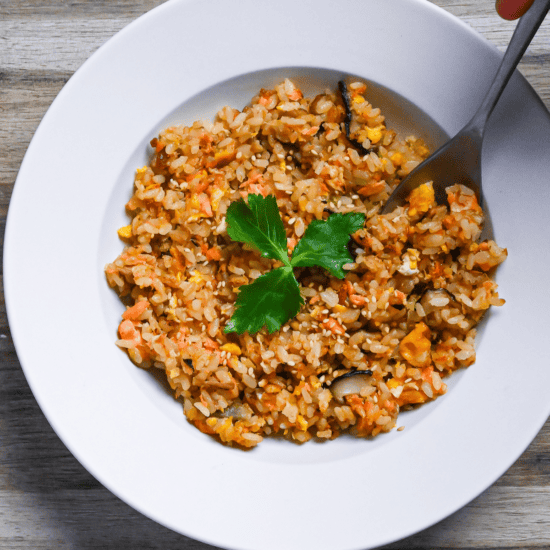


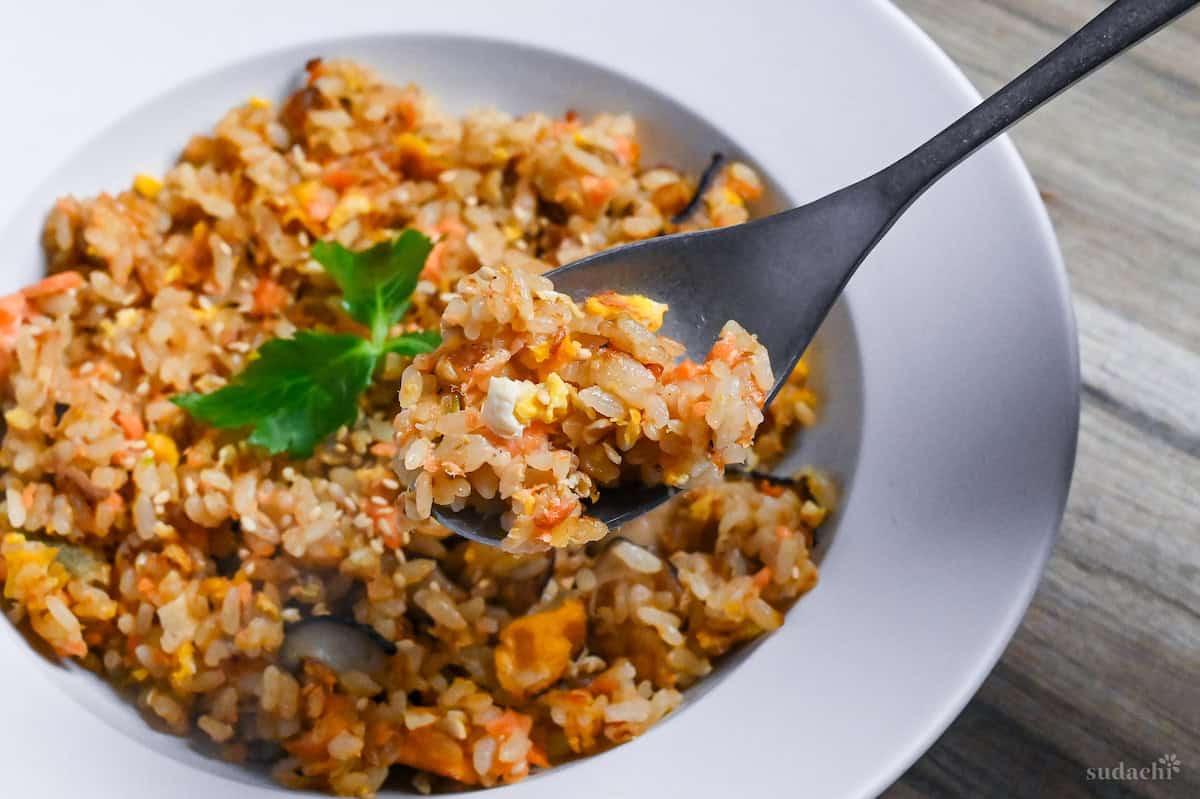
After making ramen-style chahan, miso-flavored fried rice, chicken ketchup rice, and garlic steak fried rice, I finally cracked the salmon version.
You get tender flakes, savory soy glaze, and zero post-dinner guilt.
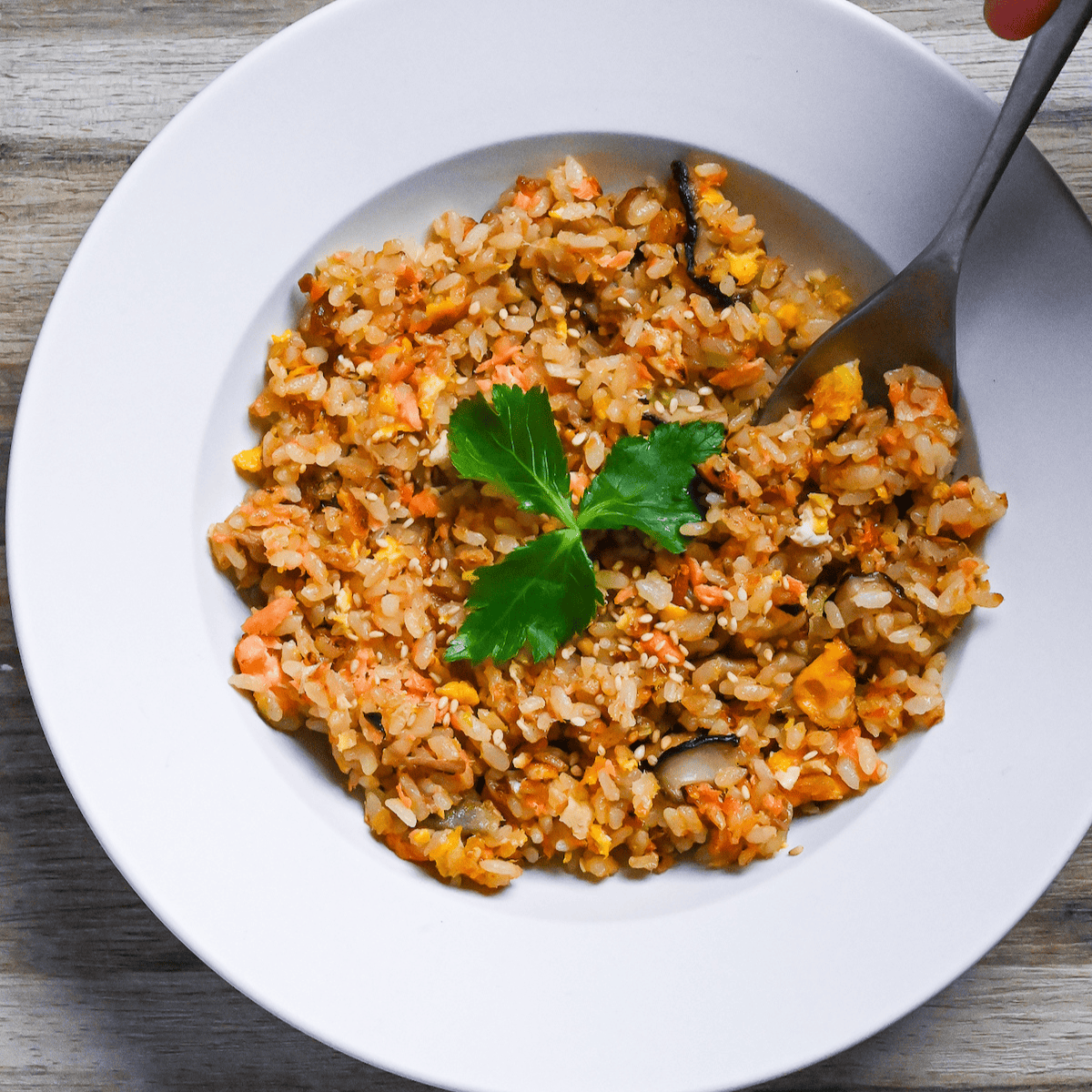
Salmon Fried RIce
Recipe Snapshot
- What is it? A buttery, savory salmon fried rice packed with bold, toasty flavor.
- Flavor profile: Buttery, Smoky, Umami-rich
- Why you’ll love this recipe: This salmon fried rice makes it easy to cook for one without overcomplicating portions. The result is a bowl that tastes special enough to share on social media, yet practical enough for any ordinary weeknight.
- Must-haves: Salmon, Cooked Rice, Large Skillet or Wok
- Skill Level: Easy
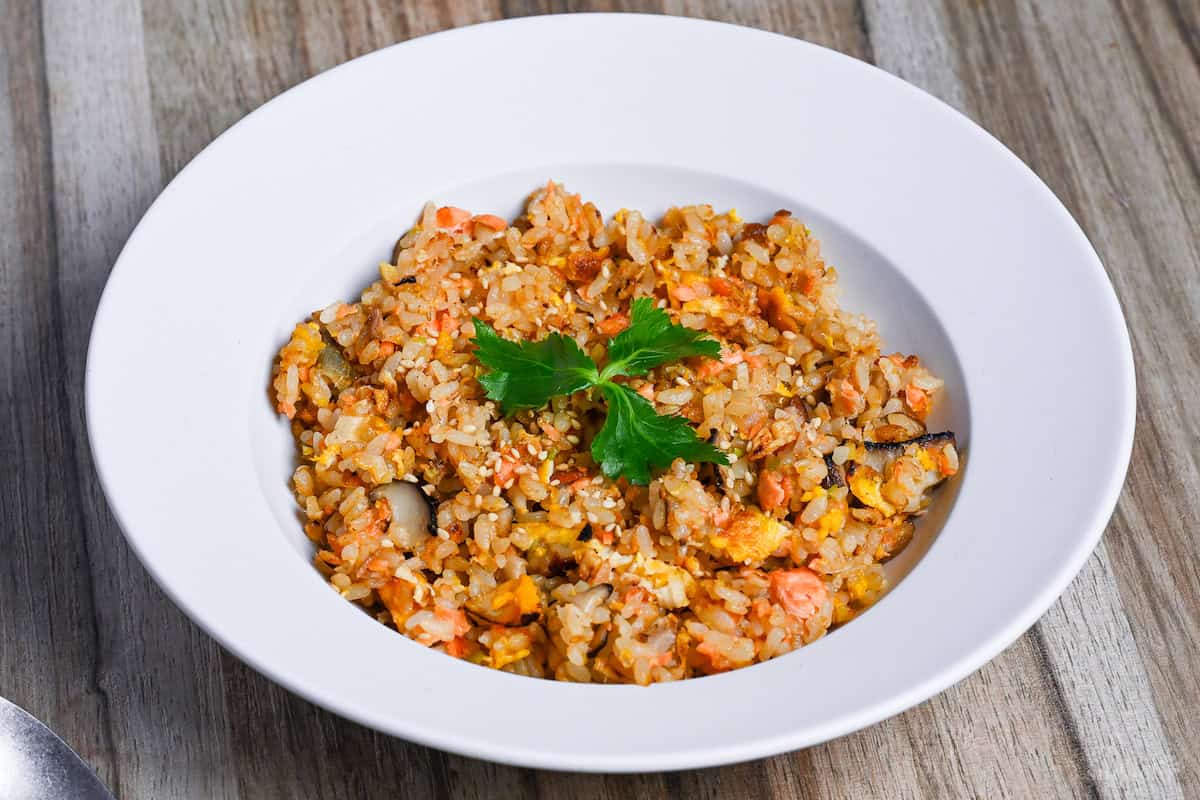
How I Developed This Recipe
For busy parents, it’s often those recipes that use up leftovers into something extraordinary. For me, it was fried rice. This recipe can use up leftover salmon, cooked rice, and eggs that are potentially sitting in your fridge waiting to be used.
The subtle dashi infusion gives it that unmistakable Japanese essence while maintaining a clean profile that lets the salmon shine without competition. Each spoonful delivers that can’t-stop-eating quality that defines great fried rice, plus a secret ingredient that adds an unexpected dimension.
Plus, it comes together in just 20 minutes with minimal dishes to wash afterward. Ready to transform your weeknight dinner routine?
Salmon Fried Rice Ingredients

- Cooked Rice: Using Japanese short-grain rice or Calrose is ideal. You’ll find it at Asian groceries. Day-old, chilled rice gives you springy, separate grains with minimal clumping, exactly that “bouncy” fried-rice texture.
- Salmon: Any salmon (sockeye, coho, or Atlantic, fresh or frozen) brings buttery, savory flakes.
- Chinese style chicken bouillon powder: This fine, savory seasoning tastes like concentrated chicken stock and gives fried rice that takeout depth. You can pick it up at Asian groceries and online retailers.
Substitution Ideas
- Salmon substitutes: Trout delivers a similar richness, or swap in any firm white fish like cod or halibut. Just avoid overly delicate fish that might fall apart when you stir-fry.
- Shiitake mushroom substitutes: Button, cremini, or whatever mushrooms are already in your fridge work perfectly here.
- Chinese-style chicken bouillon powder substitutes: Other chicken bouillon powders (or even vegetable or beef varieties) can step in, but salt levels vary widely by brand, so taste as you go and adjust. Avoid bouillon cubes since they don’t measure 1:1 with powder and can throw off your seasoning.
Have trouble finding Japanese ingredients? Check out my ultimate guide to Japanese ingredient substitutes!
How to Make My Salmon Fried Rice
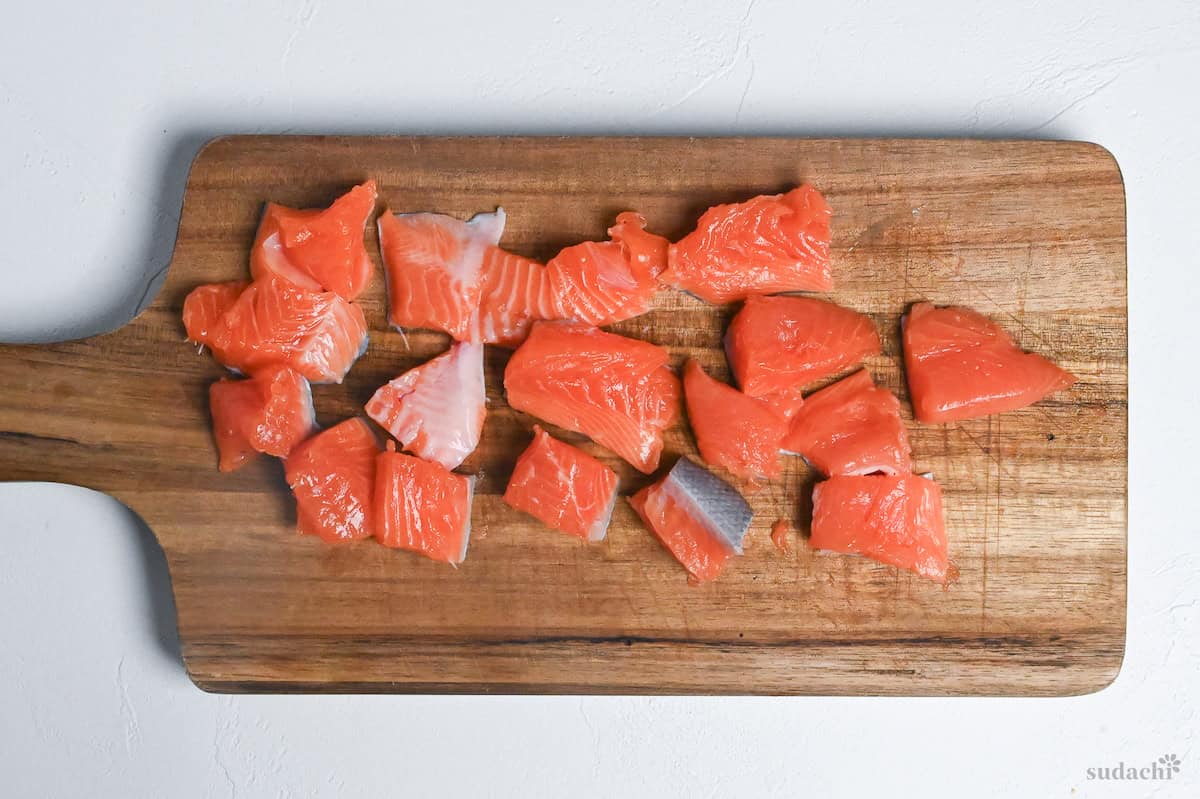
i. First, cut the salmon fillets (skin-on or skinless) into bite-sized chunks.
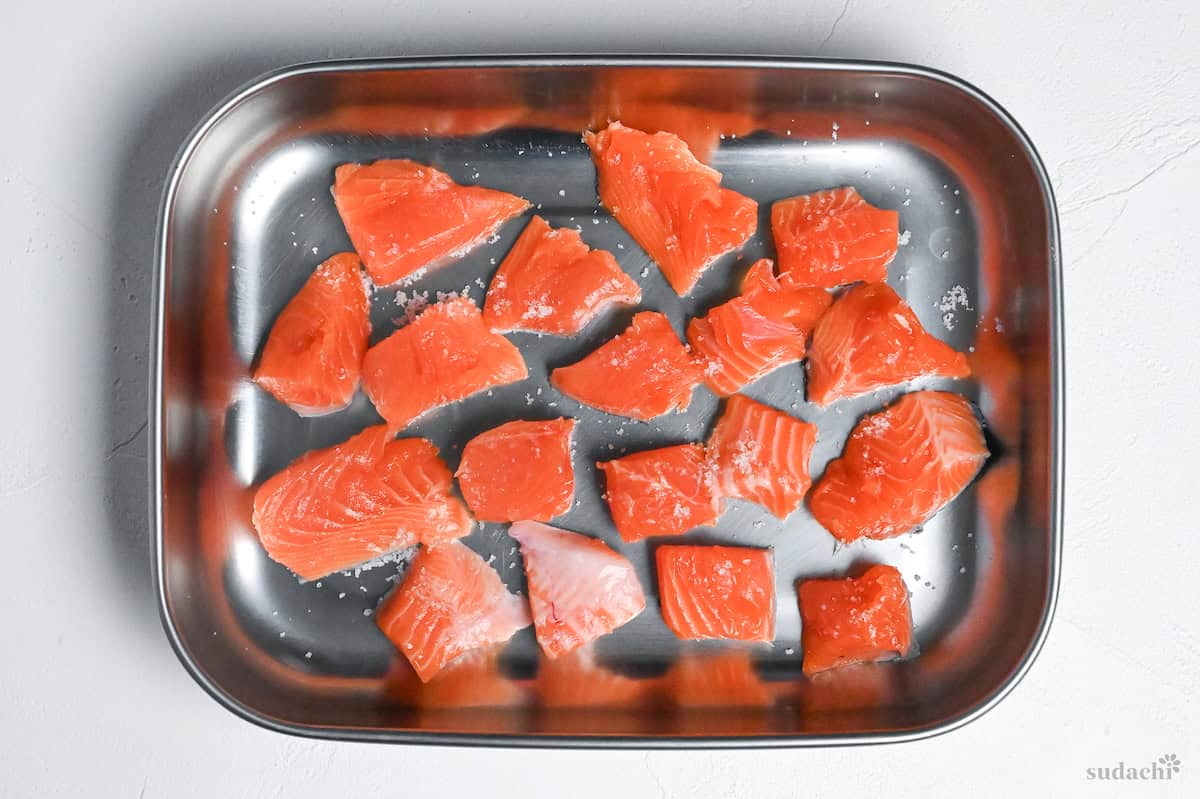
ii. Sprinkle salt over the salmon pieces and let them sit for 10 minutes.
Salt tightens the protein structure of the salmon while drawing out water and trimethylamine compounds responsible for that fishy odor. If you want to get even better results, you can add a splash of sake to this step, as alcohol helps dissolve odor-causing compounds more effectively.
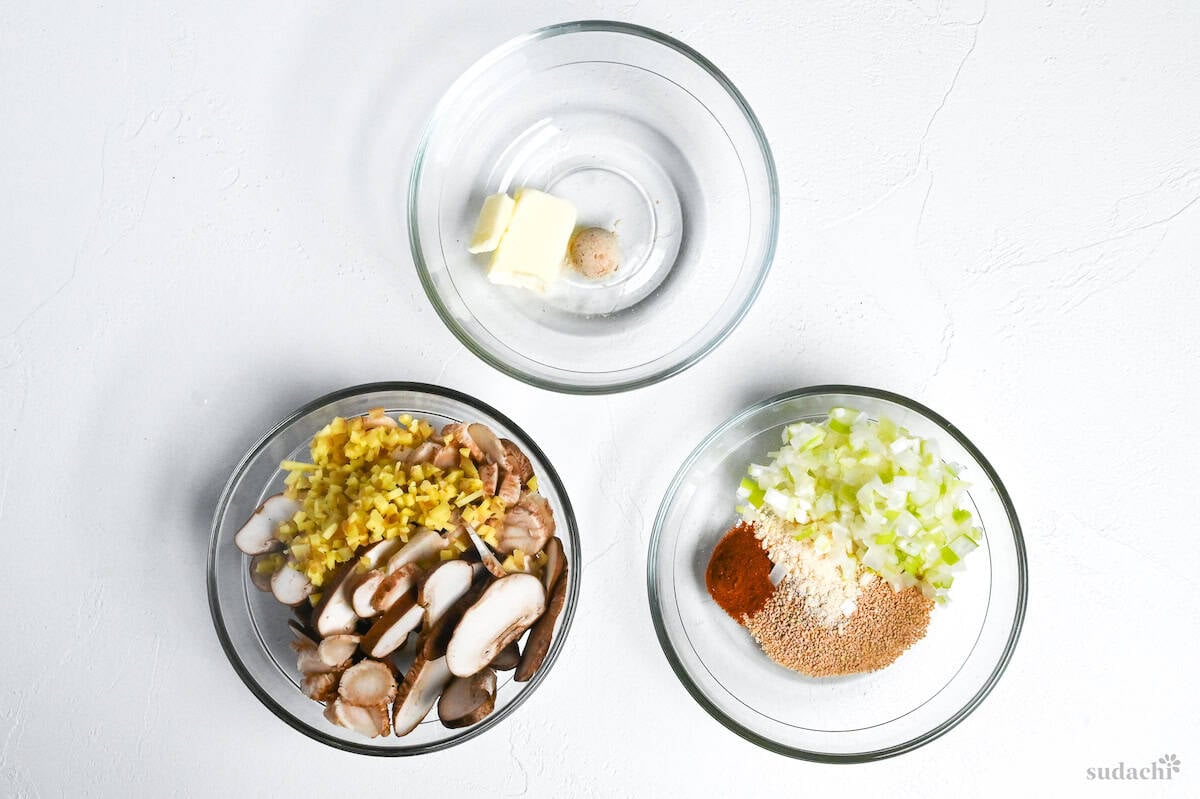
iii. While you wait, be sure to measure out all the ingredients and divide them by the time you add them! Smooth and timely cooking is very important for fried rice!
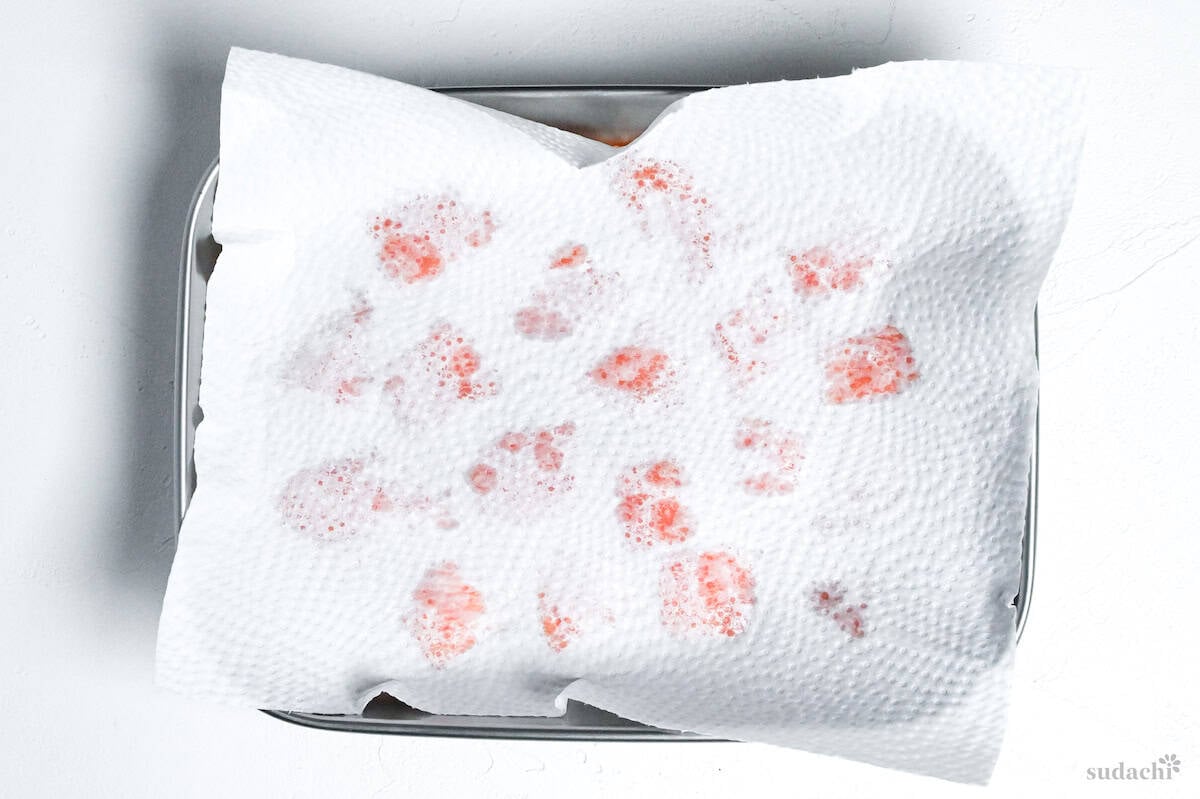
iv. After 10 minutes, pat the salmon dry with paper towels to get rid of any moisture and odor compounds.
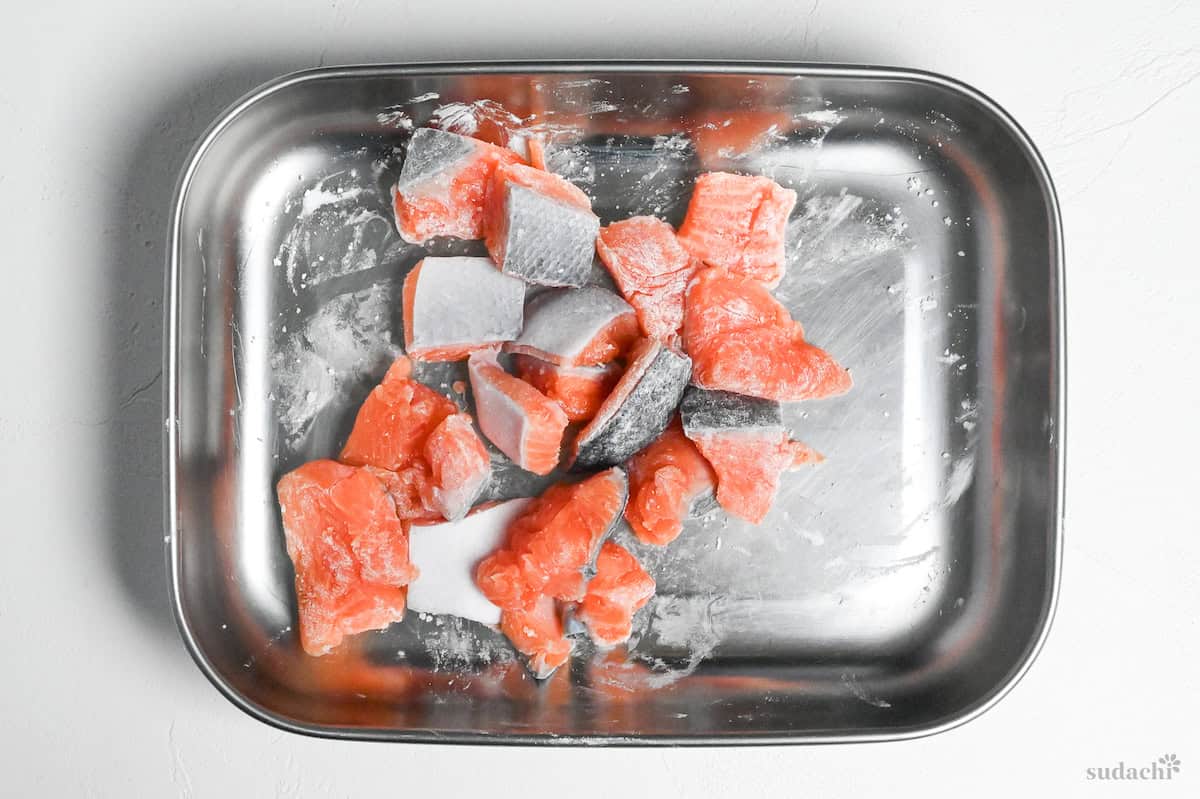
v. Then, lightly dust the salmon pieces with cornstarch.
You can also use salted salmon (shiozake) instead of fresh salmon. Salted salmon has less moisture and a firmer texture, which makes it great for fried rice because it won’t make the dish watery.
Just keep in mind that it’s already pretty salty, so you’ll need to cut back on the other salt-heavy seasonings afterwards.
i. If you want to get perfect results, use refrigerated Japanese rice. When rice is cooked fresh, it has a lot of moisture, and the starch granules are all swollen up. If you refrigerate it overnight, the starch will retrograde (crystallize), which makes the grains less sticky. This makes it perfect for fried rice.

i. Start by heating your wok over medium-low heat, and then add your cooking oil (if you want more intense flavor, you can use lard).
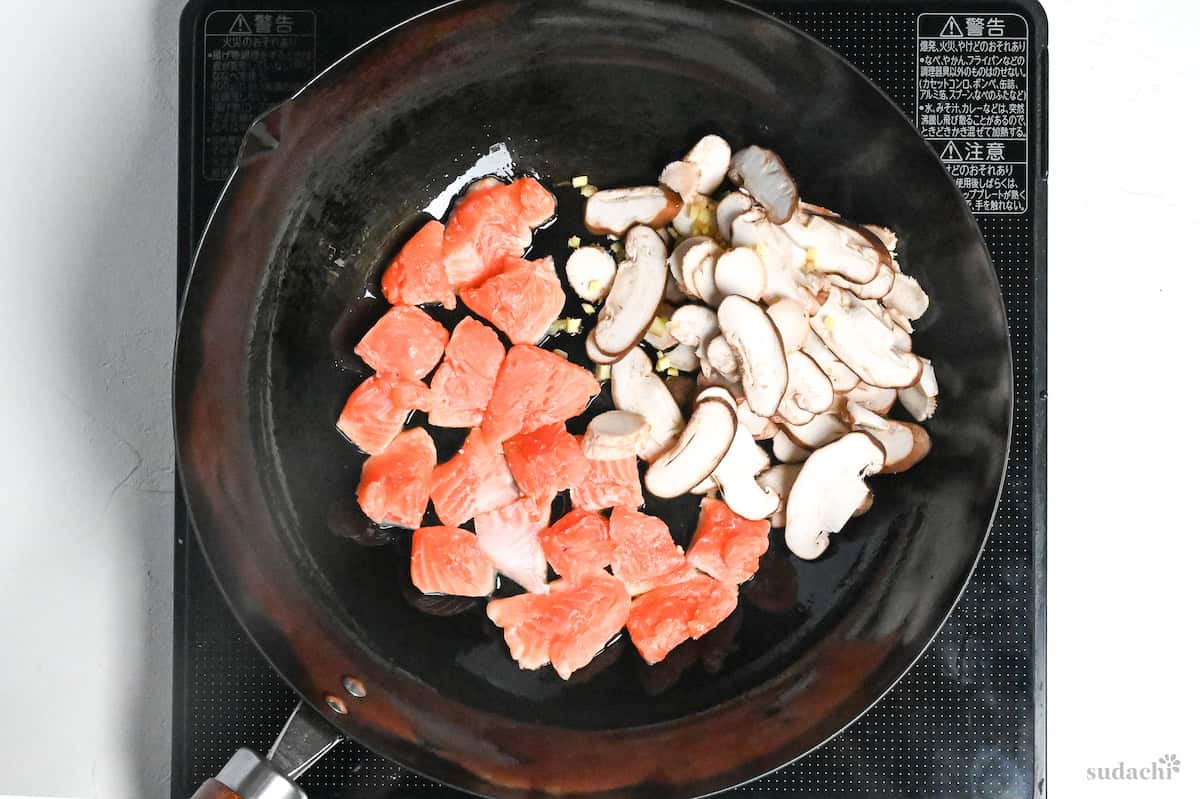
ii. Cook the dusted salmon skin-side down, along with the ginger and mushrooms. The gentle cooking lets the fat render from the skin, so the salmon cooks through without getting tough or dry.
You can also use leftover grilled salted salmon or salmon flakes instead of fresh salmon. This is a time-saving option that gets rid of the salmon cooking step entirely.
Remember that these alternatives are already seasoned and salty, so you’ll need to reduce the other seasonings accordingly to prevent the dish from becoming overly salty.
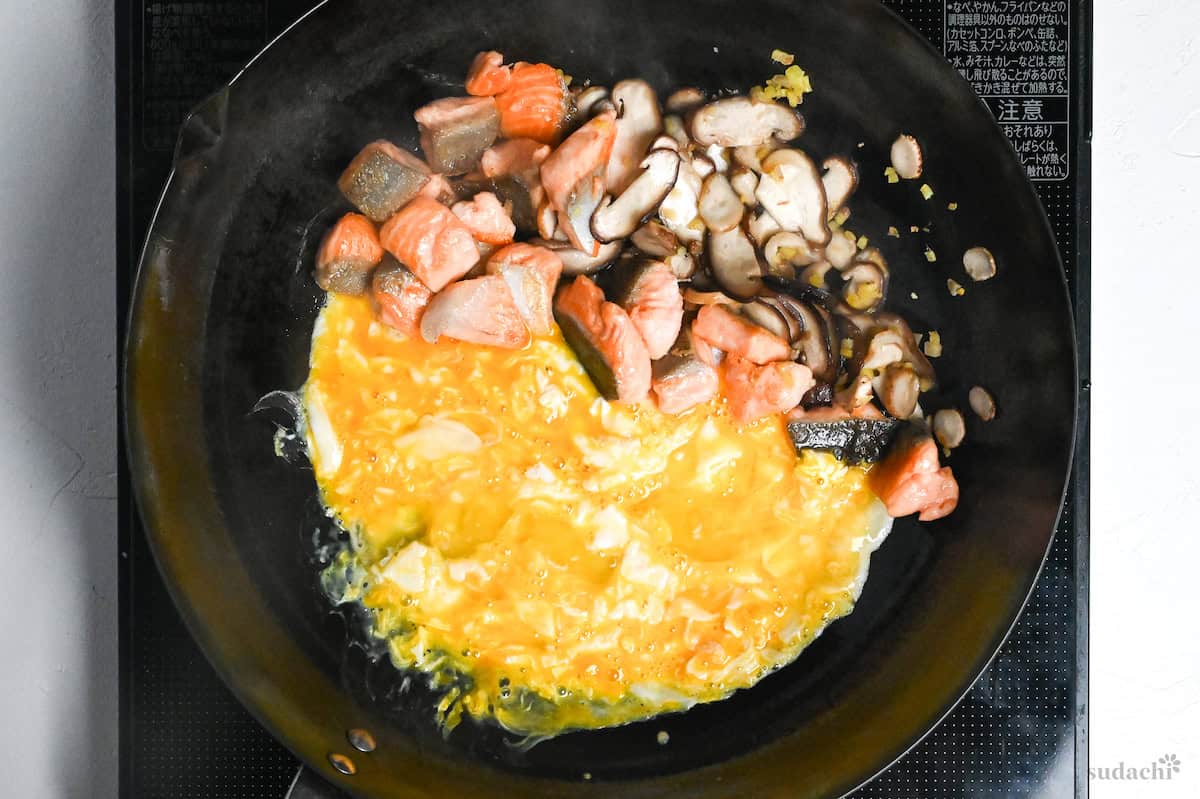
iii. When the salmon is cooked on both sides, crank the heat up high and move the cooked ingredients to the side of the wok. Just crack the eggs into the empty space and scramble them until they’re half-cooked.
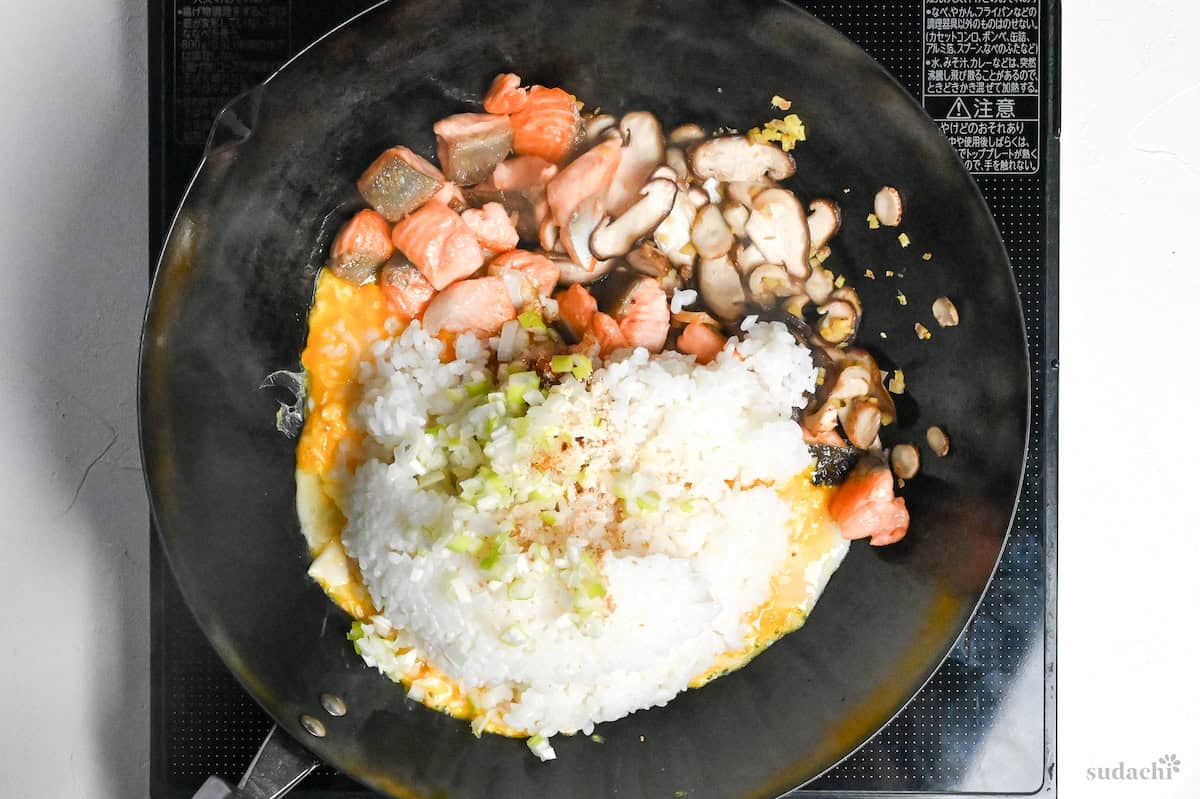
iv. Add the rinsed, drained rice to the scrambled egg.
v. Then add the dashi granules, chicken bouillon powder, the white part of the Japanese leek (or a regular leek), and the smoked paprika powder (my secret ingredient to add depth with its smoky aroma and sweetness!). Mix everything together so the egg covers the rice grains. Keep the wok on the heat without tossing it too much – home stoves don’t generate enough heat to keep the wok at a steady temperature when you lift it up too frequently.
Chicken bouillon powder varies by brand. My brand is 1 tsp per 200 ml, so if yours is more concentrated (e.g., 1 tsp per 300 ml), use less to avoid oversalting, and if it’s less concentrated, use a little more (and adjust to taste).
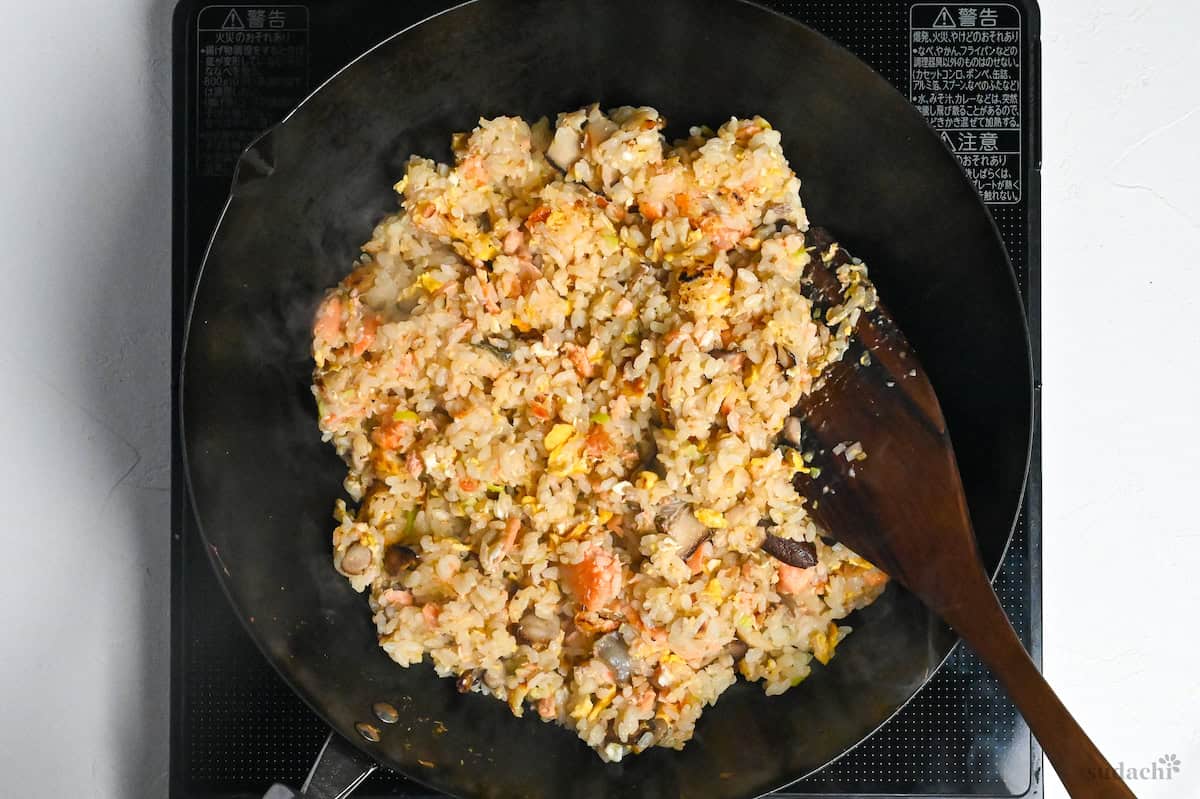
i. When the rice is fluffy and mixed with the eggs, pour soy sauce around the wok rim instead of on top of the rice.
This technique lets the soy sauce caramelize a bit on the hot wok surface, creating a nice aroma through Maillard reactions while keeping the rice from getting soggy.
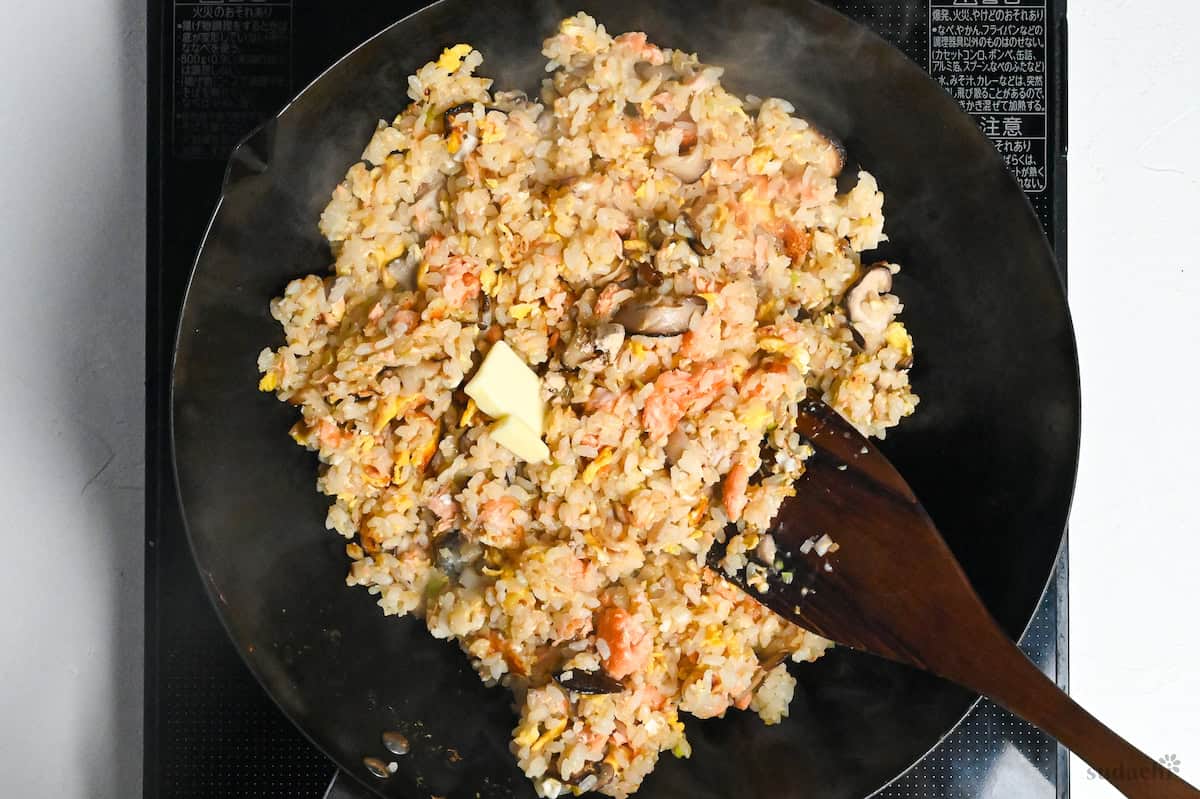
ii. Add butter, sugar, salt, and white pepper. For the salt and pepper, taste as you go and adjust the amount to your liking. I added ¼ tsp and ⅛ tsp respectively.
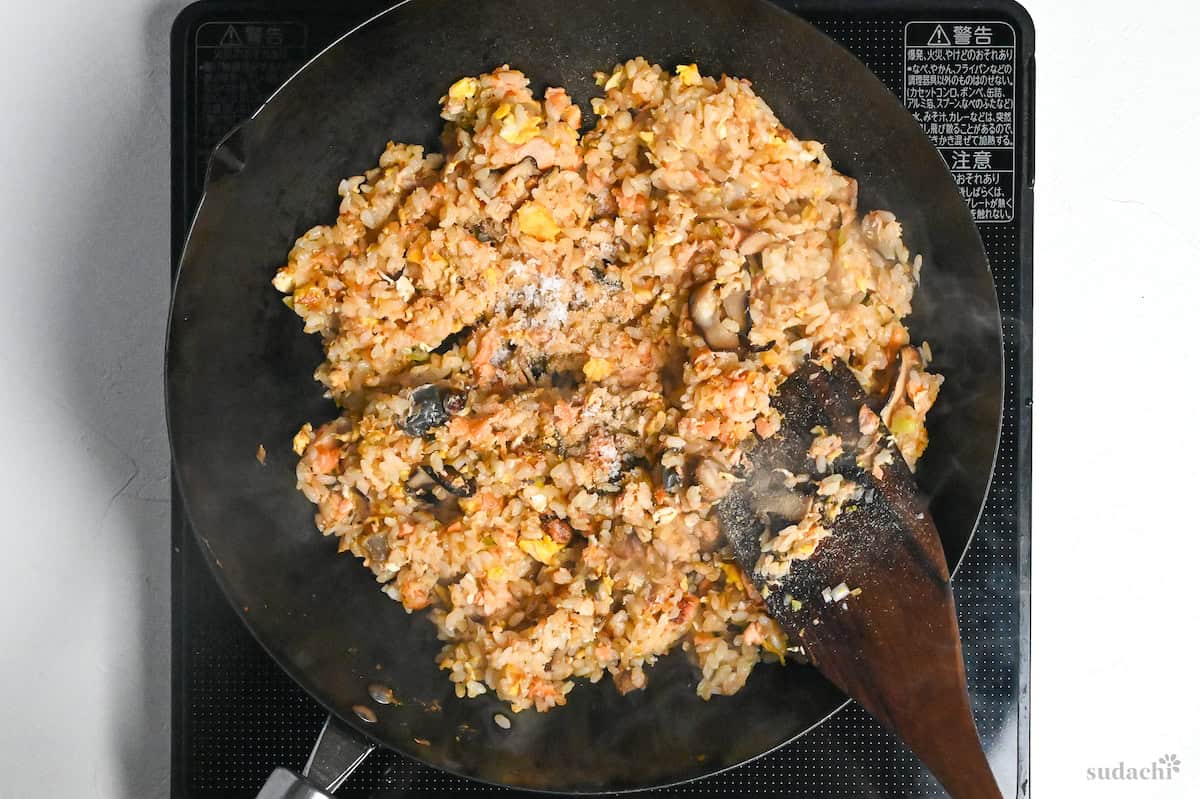
iii. The fat in butter adds a richness that pairs great with salmon, and the slight sweetness of sugar balances out the savory flavors. White pepper provides subtle heat without visual interruption or the stronger aromatic profile of black pepper.
iv. Once everything’s mixed together, add lemon juice and a bit of sesame oil, then take it off the heat right away. Give it a stir to mix it all together, using the residual heat.
Lemon juice not only adds brightness, but its citric acid neutralizes any remaining alkaline amine compounds (fishy odors) in the salmon.
Adding sesame oil at the very end and immediately removing from heat preserves its volatile aromatic compounds, which would otherwise evaporate if cooked too long.
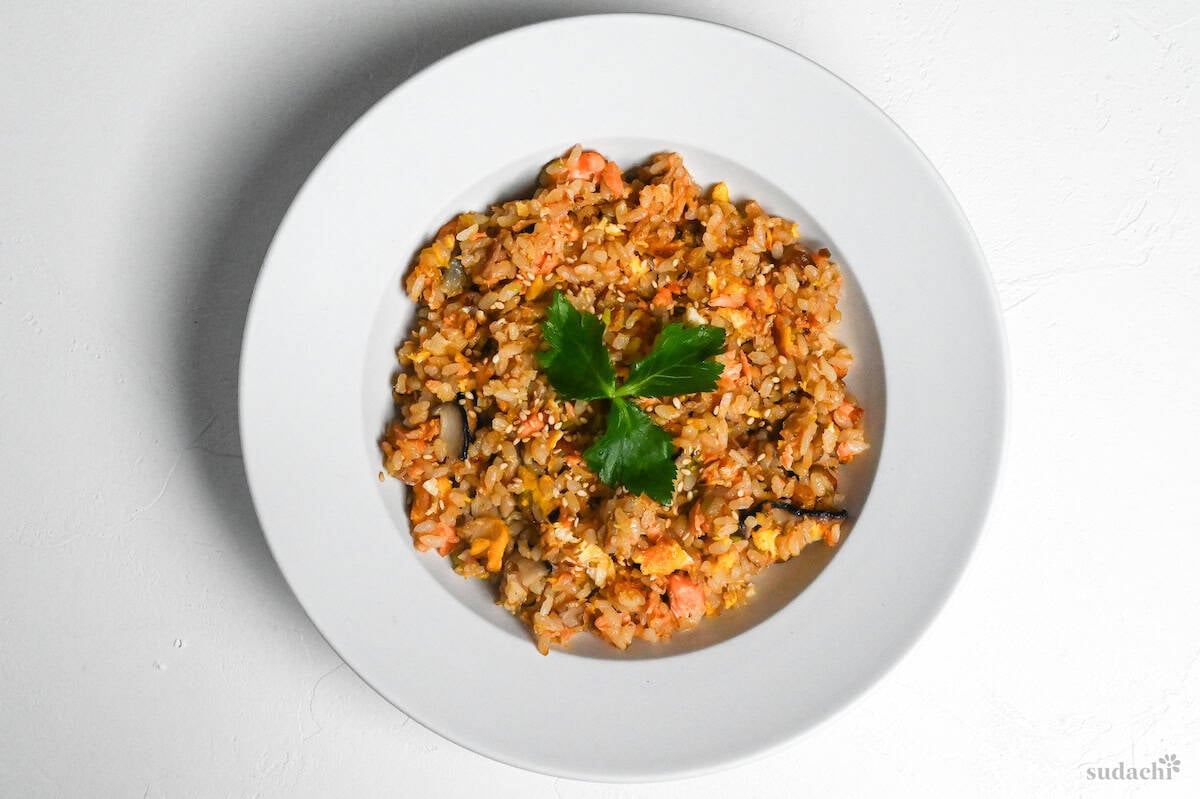
i. Garnish with white sesame seeds and chopped mitsuba (Japanese parsley) just before serving.
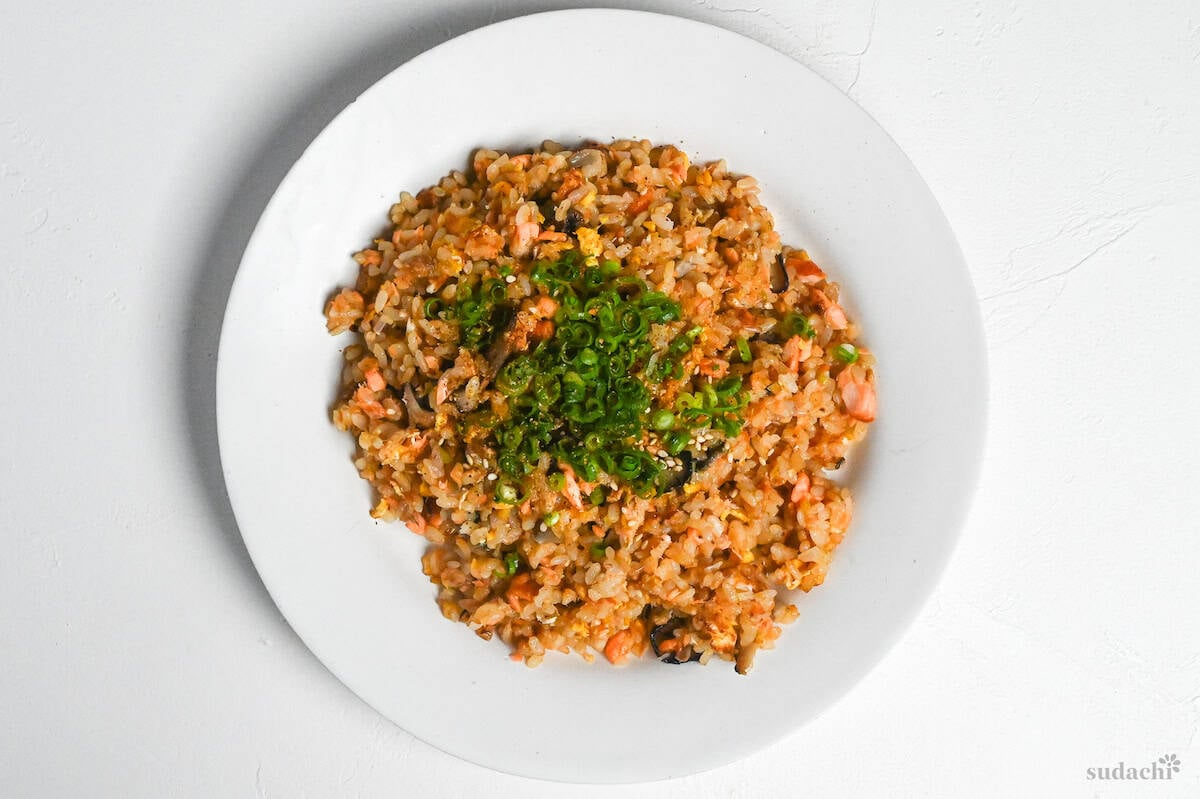
ii. If you can’t find mitsuba, you can substitute it with chopped shiso leaves (perilla) or green onions. If you want to mix things up a bit, you could try topping it with shichimi togarashi (Japanese seven-spice blend), a drizzle of chili oil, or even some crispy garlic chips.
Jump to Full Recipe Measurements
Essential Tips & Tricks
- Cold rice is preferred: Using refrigerated rice makes a difference for perfectly separated grains.
- The egg-first method: Cook scrambled eggs first until half-set, then add rice. This creates a protective coating around rice grains that prevents sticking.
- Edge-pour technique for soy sauce: Pour soy sauce around the hot edges of the wok rather than directly onto rice to develop aroma while preventing sogginess.
- Add sesame oil last: Add aromatic oils at the very end and immediately remove from heat to preserve their volatile flavors.
- Prep all ingredients before heating the wok: Once cooking starts, the process moves quickly. Having everything ready prevents overcooking any components.
With these simple tips in mind, you’re set for success every time you make salmon fried rice.
Storage & Meal Prep
Fridge: Airtight container, 1-2 days. Cool completely before storing.
Freezer: Technically possible for up to 1 month, but texture suffers. Rice can turn mushy and eggs get rubbery.
Meal Prep: Honestly, this recipe is so fast (under 20 minutes) that full meal prep isn’t your best move. The smarter strategy: cook rice a day ahead and refrigerate it covered, so you’re truly ready for a quick weeknight dinner.
Reheating: Reheat in a skillet over medium heat with a small drizzle of oil, stirring frequently until hot throughout.
What to Serve With This Recipe
Salmon Fried Rice FAQ
You can, but freshly cooked rice tends to clump. If that’s all you have, spread it on a plate and let it cool for 10-15 minutes, or pop it in the fridge uncovered while you prep everything else.
A large nonstick skillet or cast-iron pan works perfectly. The key is high heat and enough surface area so the rice can spread out and get crispy. A wok is nice but totally not necessary.
Stir in a sprinkle red pepper flakes when you add the bouillon powder.
More Salmon Recipes
- Crispy Salmon Skin Salad
- Soy Sauce & Butter Salmon
- Salmon Rice Balls (Sake Onigiri)
- Pan Fried Teriyaki Salmon
Hungry for more? Explore my Japanese-style salmon recipes to find your next favorite dishes!
Did You Try This Recipe?
I would love to hear your thoughts!
💬 Leave a review and ⭐️ rating in the comments below. 📷 I also love to see your photos – submit them here!

Salmon Fried Rice with Japanese Flair

Ingredients
- 2 salmon fillets skin-on, approx. 75g per fillet
- ½ tsp salt to draw out moisture and fishy odors
- 3 fresh shiitake mushrooms thinly sliced
- 1 tbsp ginger root finely diced
- 2 tbsp Japanese leek (naganegi) white part, finely diced
- ¼ tsp smoked paprika powder
- 1 tsp dashi granules
- ½ tsp Chinese-style chicken bouillon powder based on 1 tsp = 200ml soup ratio, scale to your brand's strength
- 1 tsp unsalted butter
- ¼ tsp sugar
- 1 tsp cornstarch or potato starch
- 350 g cooked Japanese short-grain rice refrigerated overnight
- 1 tbsp cooking oil neutral flavored, like vegetable, canola, or rice bran
- 2 eggs
- 1 tsp Japanese soy sauce (koikuchi shoyu)
- salt to taste
- ground white pepper to taste
- ¼ tsp lemon juice
- ½ tsp toasted sesame oil
- toasted white sesame seeds topping
- Japanese wild parsley (mitsuba) topping, or chopped shiso leaves or green onions
The ingredient brands and tools I trust are in my Japanese pantry guide and my cooking tools guide.
Can’t find certain Japanese ingredients? See my substitution guide here.
Instructions
- Cut 2 salmon fillets into bitesize pieces and sprinkle with ½ tsp salt. Rest for 10 minutes.

- While you wait, take 3 small bowls. Thinly slice 3 fresh shiitake mushrooms and finely dice 1 tbsp ginger root, and place them together in one bowl. In another bowl, add ¼ tsp smoked paprika powder, 1 tsp dashi granules, ½ tsp Chinese-style chicken bouillon powder and 2 tbsp Japanese leek (naganegi) finely chopped. In the final bowl, add 1 tsp unsalted butter and ¼ tsp sugar. Set all of the bowls by the stove for later.
- After 10 minutes, pat the salmon pieces dry with kitchen paper and sprinkle with 1 tsp cornstarch until every piece has a thin even layer.
- Heat a wok on medium-low and add 1 tbsp cooking oil (or lard). Once hot, add the salmon, mushroom and ginger. Fry until the salmon is cooked on the outside and the mushrooms are slightly softened.
- Push everything to one side of the wok, and increase the heat to high. In the empty space, crack 2 eggs and mix to scramble until half-cooked.
- Add 350 g cooked Japanese short-grain rice and contents of the bowl with Japanese leek, dashi, chicken bouillon, and paprika powder. Mix thoroughly.
- Pour 1 tsp Japanese soy sauce (koikuchi shoyu) around the edge of the wok and toss the rice a few times.
- Add the butter and sugar along with salt and ground white pepper to taste. Mix well, then add ¼ tsp lemon juice and ½ tsp toasted sesame oil before mixing once more.
- Divide between serving dishes and garnish with toasted white sesame seeds and Japanese wild parsley (mitsuba) or chopped green onions. Enjoy!

Leave a rating and a comment