

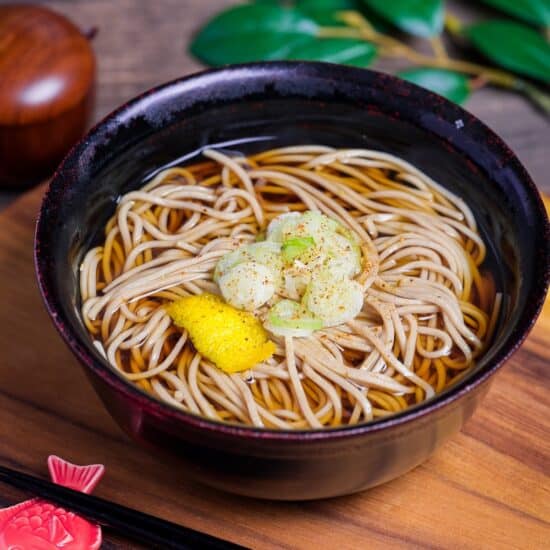


Featured Comment
It’s simple and delicious. I have tried it for the first time this week and I am already making kaeshi now to enjoy kake soba next week.
★★★★★
– Ingvar
Ever crave a hot bowl that feels restaurant-level at home? This kake soba steams with buckwheat aroma and a clean umami broth you’ll sip straight.
It’s not like udon soup or rich shoyu ramen. The subtle & elegant difference comes from a tiny “kaeshi” timing trick. Follow the steps and taste why.
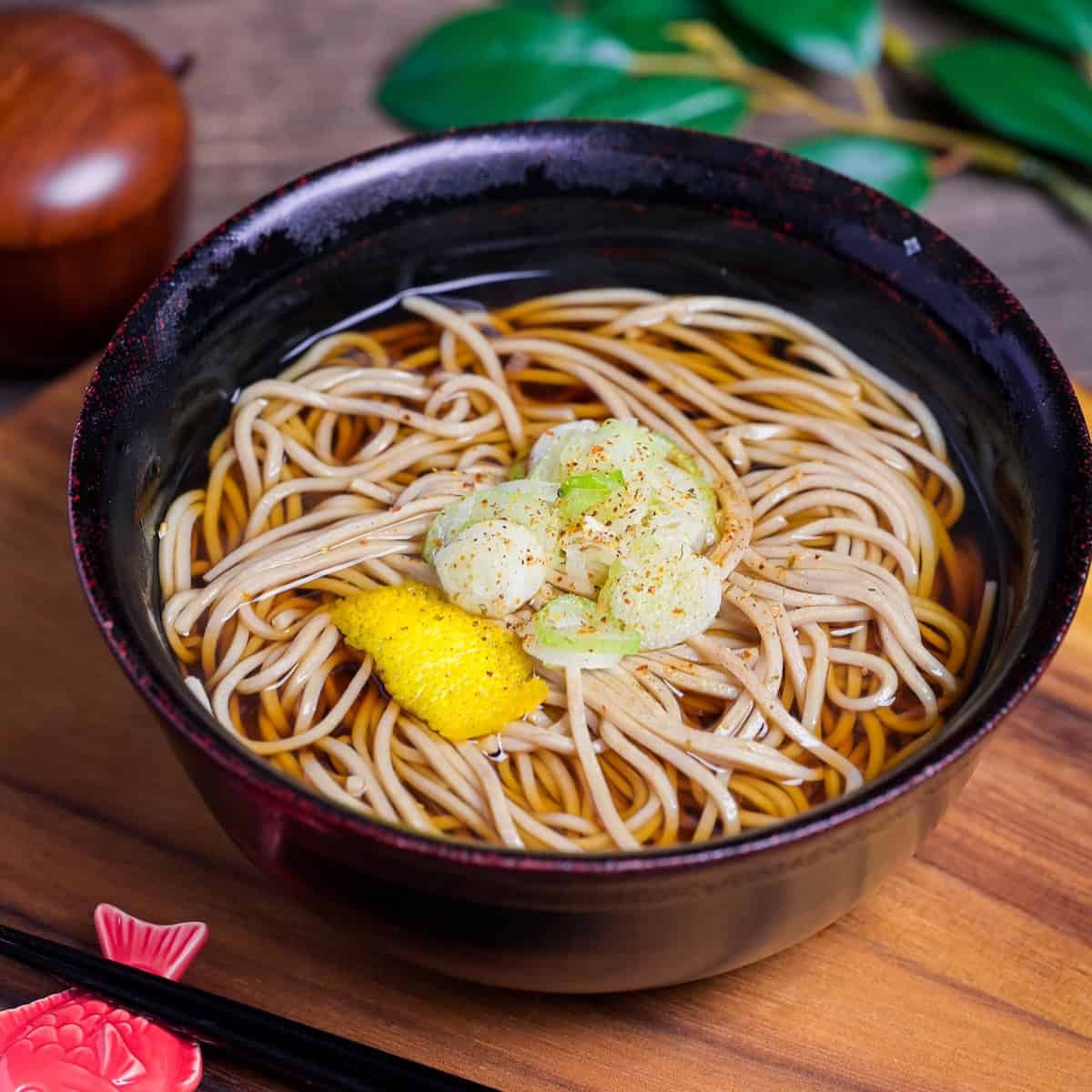
Kake Soba
Recipe Snapshot
- What is it? A refined Washoku staple consisting of buckwheat noodles served in Kake-tsuyu, a hot soup base built on dashi and matured kaeshi
- Flavor profile: Earthy buckwheat + bright dashi aroma, sweet-savory soy edge, a clean umami “finish” (not heavy like ramen).
- Why you’ll love this recipe: No “mystery ratios!” Repeatable tsuyu assembly (separate dashi + kaeshi) gives reliable authenticity for busy weeknights.
- Must-haves: Buckwheat soba noodles, quality dashi (awase or shiitake-kombu), kaeshi (soy + mirin + sugar + sake), big deep pot.
- Skill Level: Easy: Mostly temperature control
- Suitable for Meal Prep? Yes! The kaeshi (seasoning base) can be batch-matured for weeks (many soba shops in Japan keep using the same base!) to further round out the soy’s edge.
Summarize & Save this content on:
What is Kake Soba?
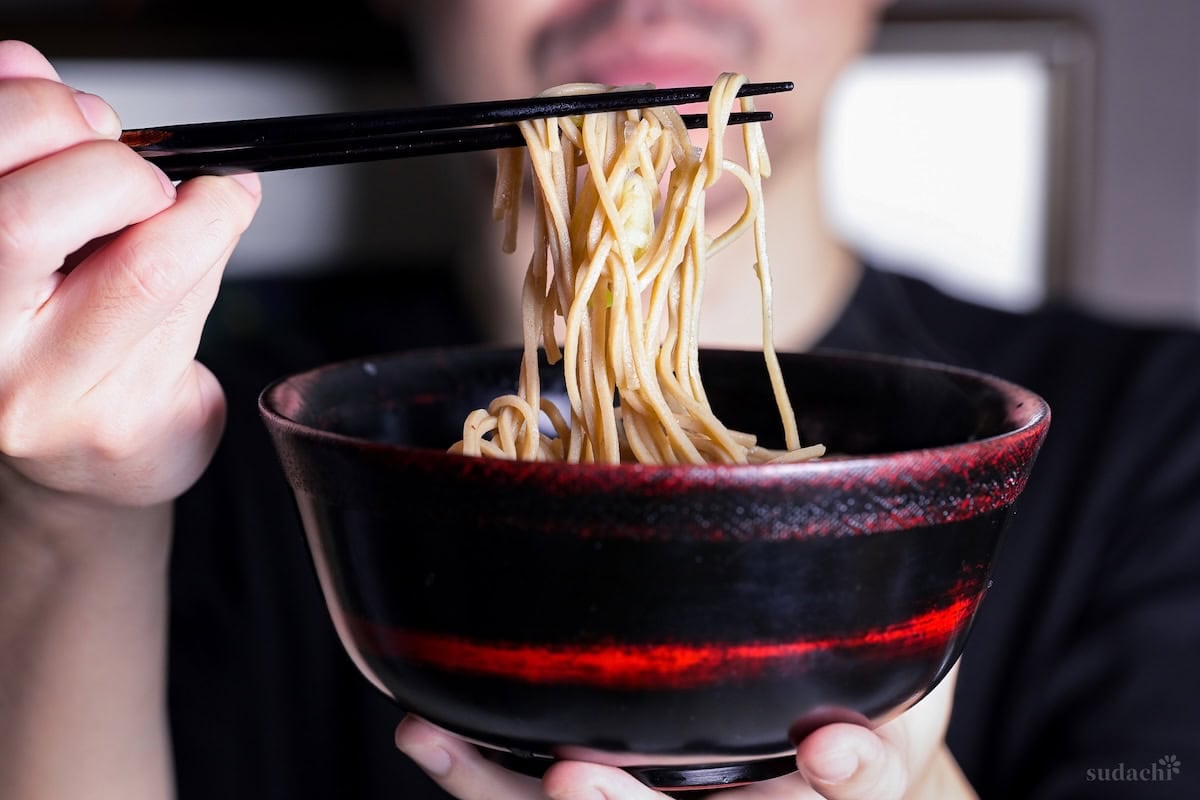
Kake soba (かけそば/掛け蕎麦) is a traditional Japanese hot noodle soup that consists of boiled soba noodles served in a hot, delicate dashi-based broth flavored with soy sauce and mirin.
Unlike zaru soba, which serves chilled noodles alongside a thick dipping sauce (mentsuyu) for controlled dunking, kake soba immerses the noodles directly in a lighter, soup-style broth meant to be sipped and finished. This structural difference makes kake soba ideal for colder months, it’s often featured among typical winter Japanese dishes for its warming, comforting qualities, while zaru soba remains a summer staple.
Soba Noodle Soup Ingredients
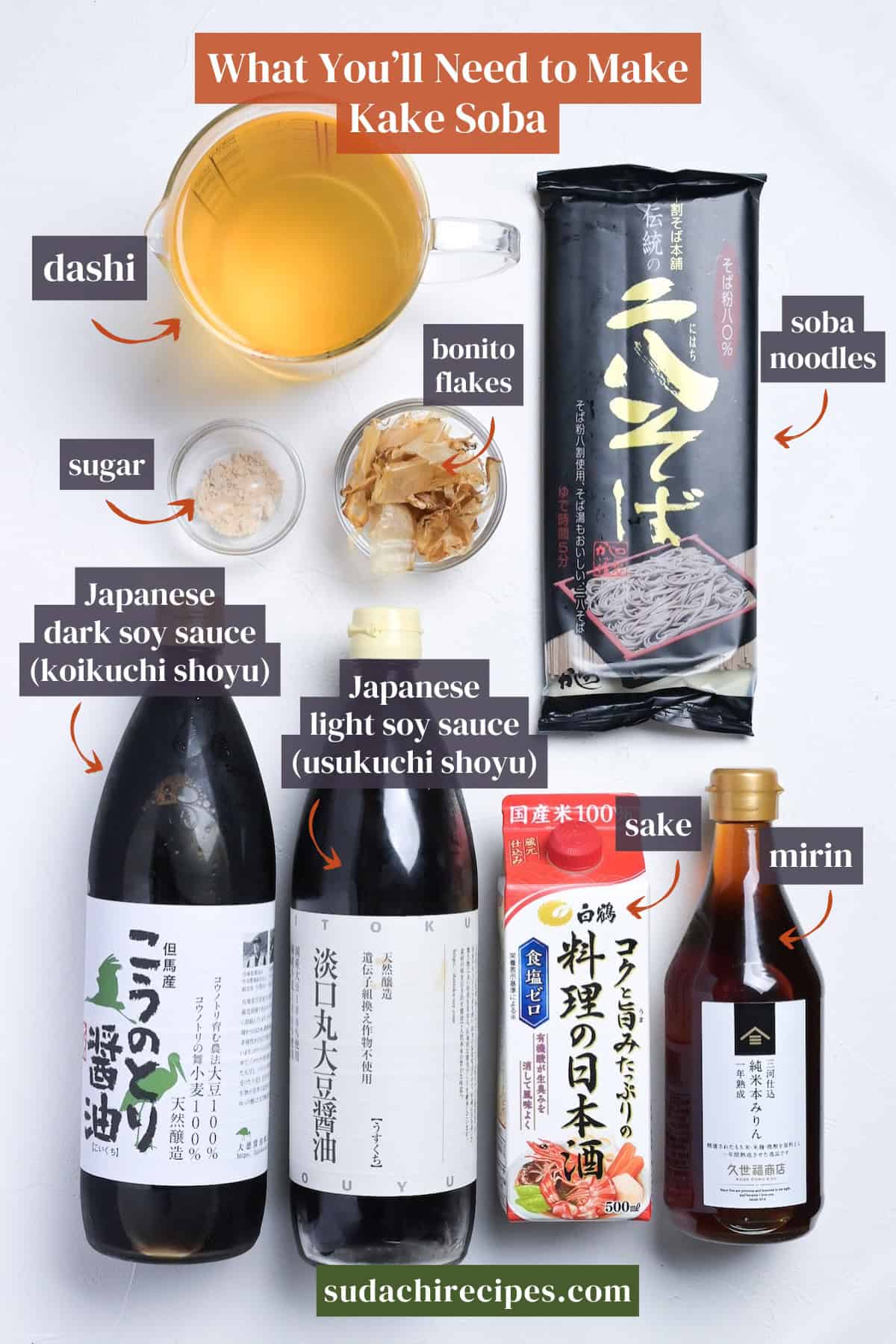
- Soba noodles (Japanese buckwheat noodles): Thin, earthy noodles made primarily from buckwheat flour, often blended with wheat flour for extra springiness. Packages with higher buckwheat percentages taste more robust and aromatic, while blends are a bit smoother and more forgiving. Look for dried soba noodles from Japanese brands in the Asian aisle of major supermarkets or at Japanese and pan-Asian groceries.
- Dashi stock: Start with DIY dashi packets if you can. When homemade is not practical, reputable packaged dashi packets steps in admirably. For the definitive dashi experience, there is only one answer: dashi from scratch with dried bonito and kombu. The aroma alone tells you why. Instant dashi is a last resort. And for a plant-based approach, shiitake mushrooms and kombu combine into a nuanced, umami-forward vegetarian dashi.
- Soy sauce (Shoyu): This is your primary seasoning and the ingredient that gives the broth its savory backbone and amber color. I use a blend of koikuchi and usukuchi for this recipe, but it’s optional. Japanese soy sauce has a more balanced, less sharp flavor than other varieties, with deeper fermentation notes that round out the sweetness from mirin.
Substitutions & Variations
- Soba Noodles: Unlike udon noodles, any variations are perfectly fine for soba noodles. Get buckwheat soba (fresh, dried, frozen) from Japanese or Asian grocery stores (or online) for authentic flavor and convenience. For gluten-free, choose juwari soba (100% buckwheat). It’s more delicate, so stir gently and don’t overcook. If you’re up for a challenge, check out my homemade soba noodle recipe!
- Japanese Soy Sauce: Chinese light soy sauce or Korean soy sauce can work if Japanese shoyu is hard to find. Just taste as you season.
- Vegan/Vegetarian Broth: Replace bonito-based dashi with dried shiitake mushrooms and kombu to make vegan dashi. You’ll get deep, earthy umami that’s naturally compatible with soy and mirin, plus you can boost depth with extra soy sauce or grated ginger if needed.
- Complete Gluten-Free: Use juwari soba (100% buckwheat noodles) and tamari for a fully GF bowl.
Have trouble finding Japanese ingredients? Check out my ultimate guide to Japanese ingredient substitutes!
How to Make My Hot Soba Noodle Soup
If you prefer to watch the process in action, check out my YouTube video of this kake soba recipe!

Before you start (Mise en place):
- Make the Kaeshi (Optional but Highly Recommended): In a small saucepan, combine a blend of soy sauce, mirin, sugar, and sake. Bring the mixture to a gentle boil over medium heat, let it bubble for exactly one minute to cook off the raw alcohol edge, then pull it off the heat. Let it cool to room temperature, then refrigerate for at least half a day, preferably overnight+. The aging period lets the sharp, angular salinity mellow out. That said, you can absolutely skip the aging if you’re cooking same-day.
- Prepare Your Dashi: Make your preferred dashi style. My recommendation for kake soba is the classic kombu-katsuobushi combination. Since kake soba is delicate, homemade dashi is ideal, followed by high-quality tea-bag style dashi packets. Instant granulated dashi is an emergency backup, but not my first choice.
To develop this hot soba recipe, I use a 24cm yukihira pot for boiling the noodles and a 16cm yukihira pot for the broth.
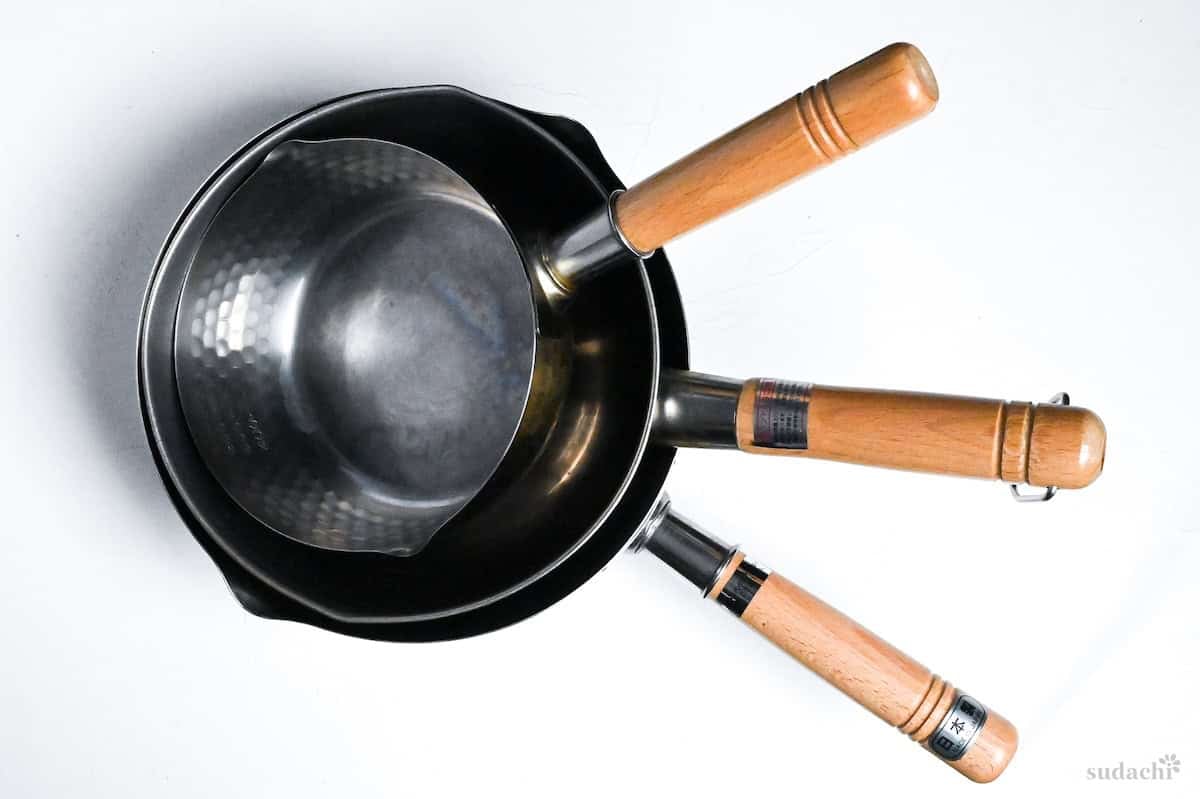
The golden rule for soba noodle boiling is simple: go big and go deep. Professional soba shops use massive pots that hold gallons of water at once, maintaining a gentle rolling boil that lets noodles swim freely rather than clump together. At home, aim for at least 2 liters of water per serving.
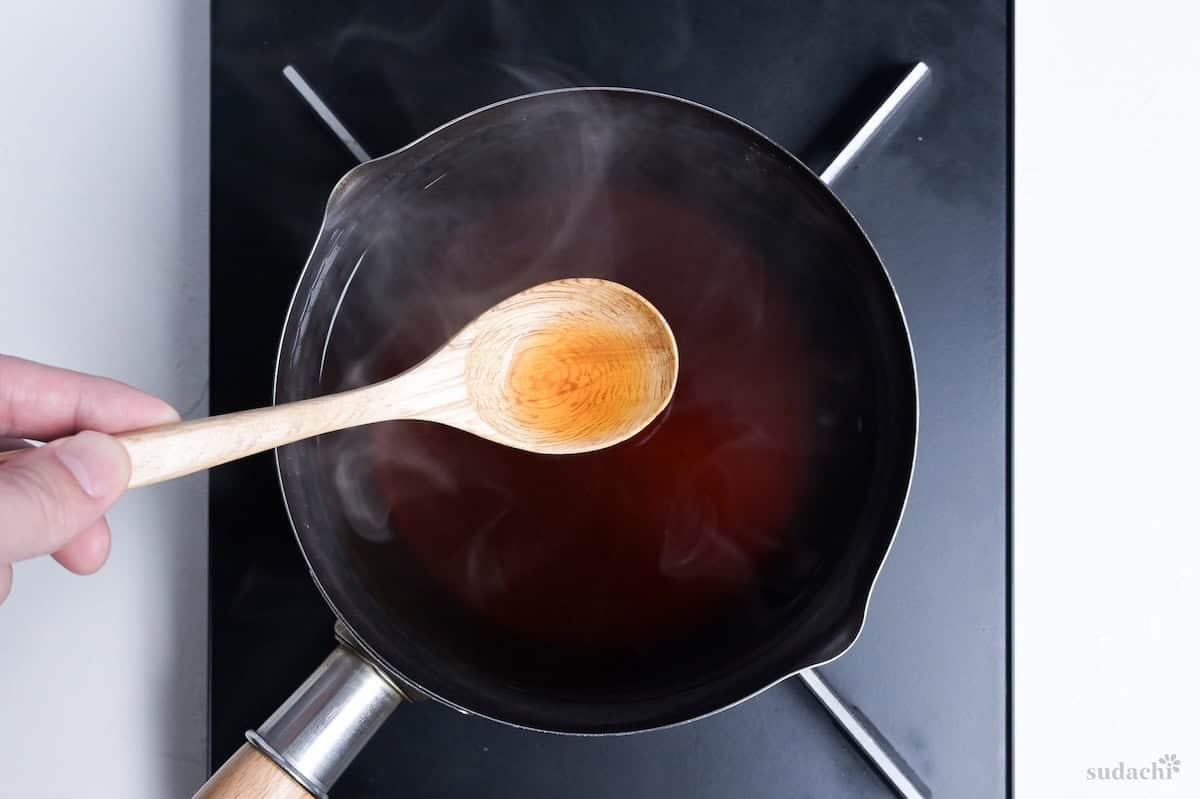
i. If you didn’t make your kaeshi the night before, start there: combine Japanese dark (koikuchi) and light (usukuchi) soy sauces, mirin, sugar, and sake in a small saucepan.
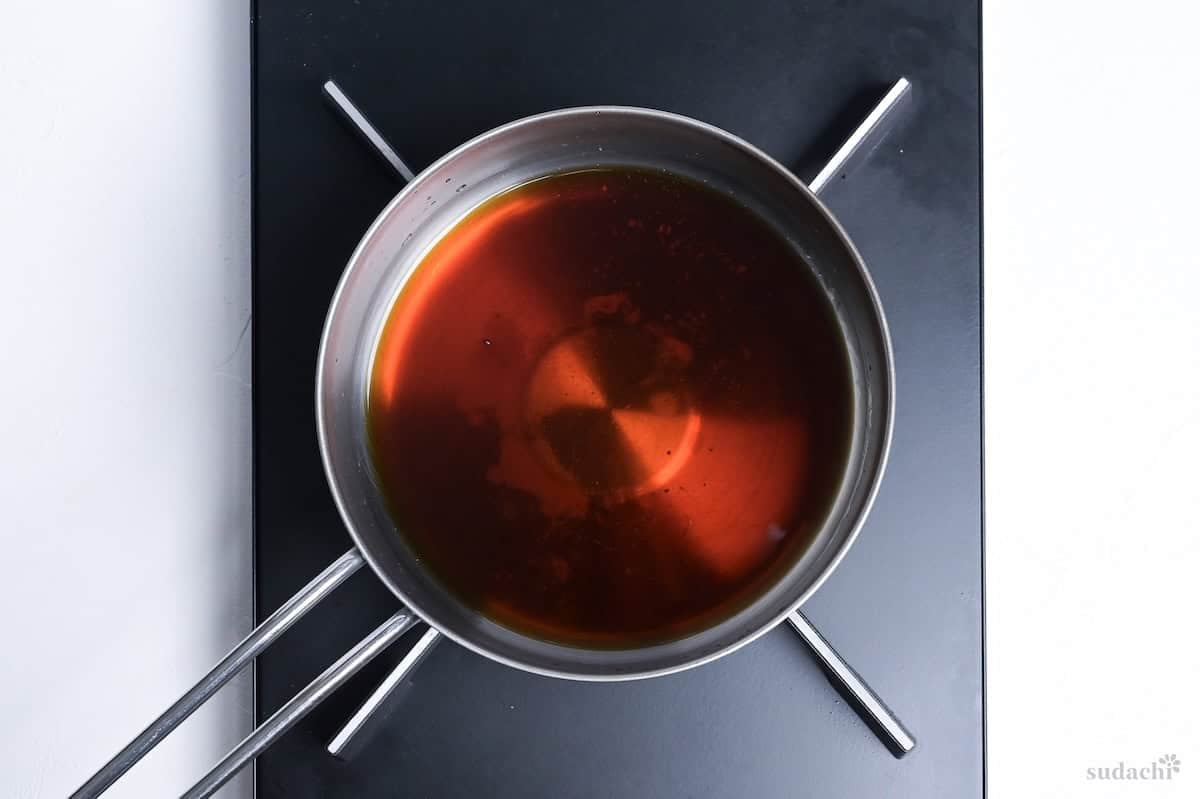
I chose this blend to create a slightly lighter, more elegant broth color while maintaining depth. Light soy sauce (usukuchi shoyu) has a higher salt content but a paler color and more delicate flavor profile than regular shoyu. If you only have regular Japanese soy sauce (koikuchi) in your pantry, use that, but just add a pinch more to compensate for the lower salinity.
ii. Bring it to a boil over medium heat, let it bubble actively for 1 minute, then remove from heat and set aside to cool while you work on everything else.
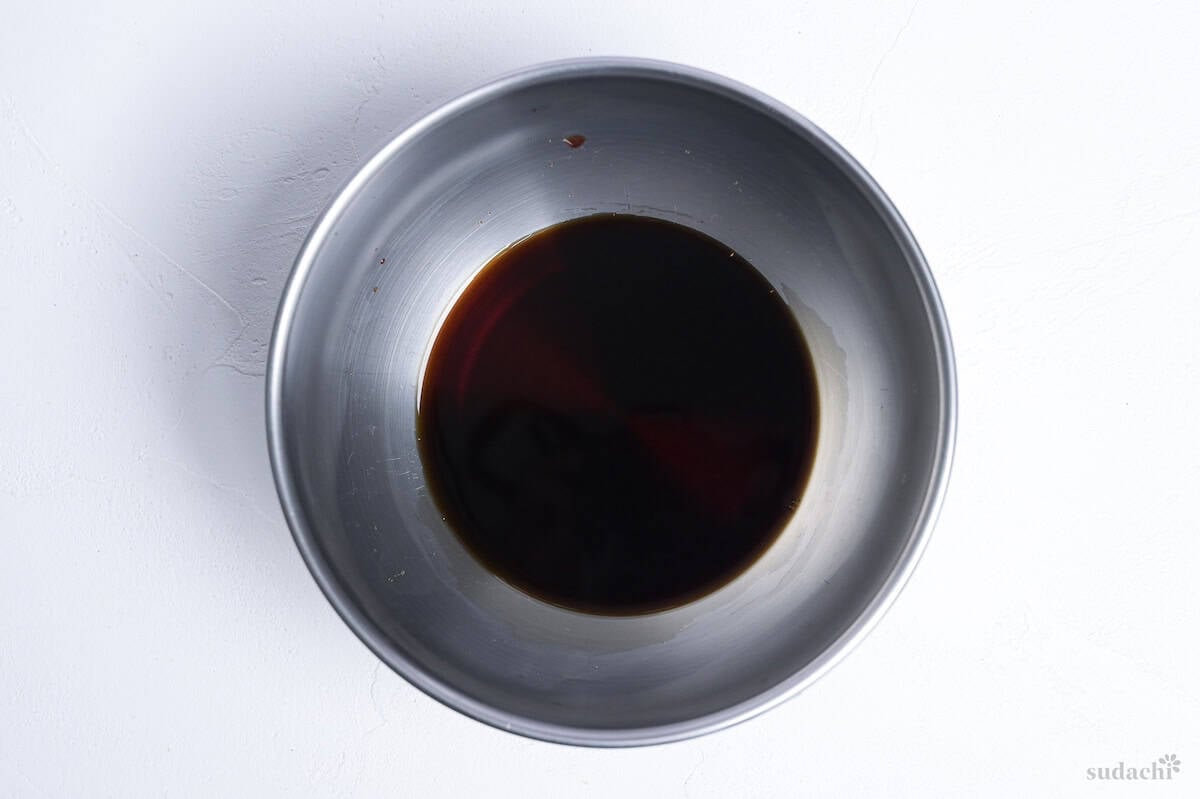
Kaeshi (かえし) is the foundational seasoning base for soba noodle soup, crafted from a precise blend of soy sauce, sugar, and hon-mirin. When diluted with dashi, this concentrate transforms into “mentsuyu,” the aromatic broth that serves as the soup’s soul.
The name originates from the Edo-period (1603 – 1868) technique of nikaesu (to simmer back), referring to the process of heating soy sauce to mellow its intensity and create a unified, sophisticated flavor profile.
i. Pour your prepared dashi into a separate pot and heat it until you see the first tiny bubbles forming at the edges, just before a full boil.
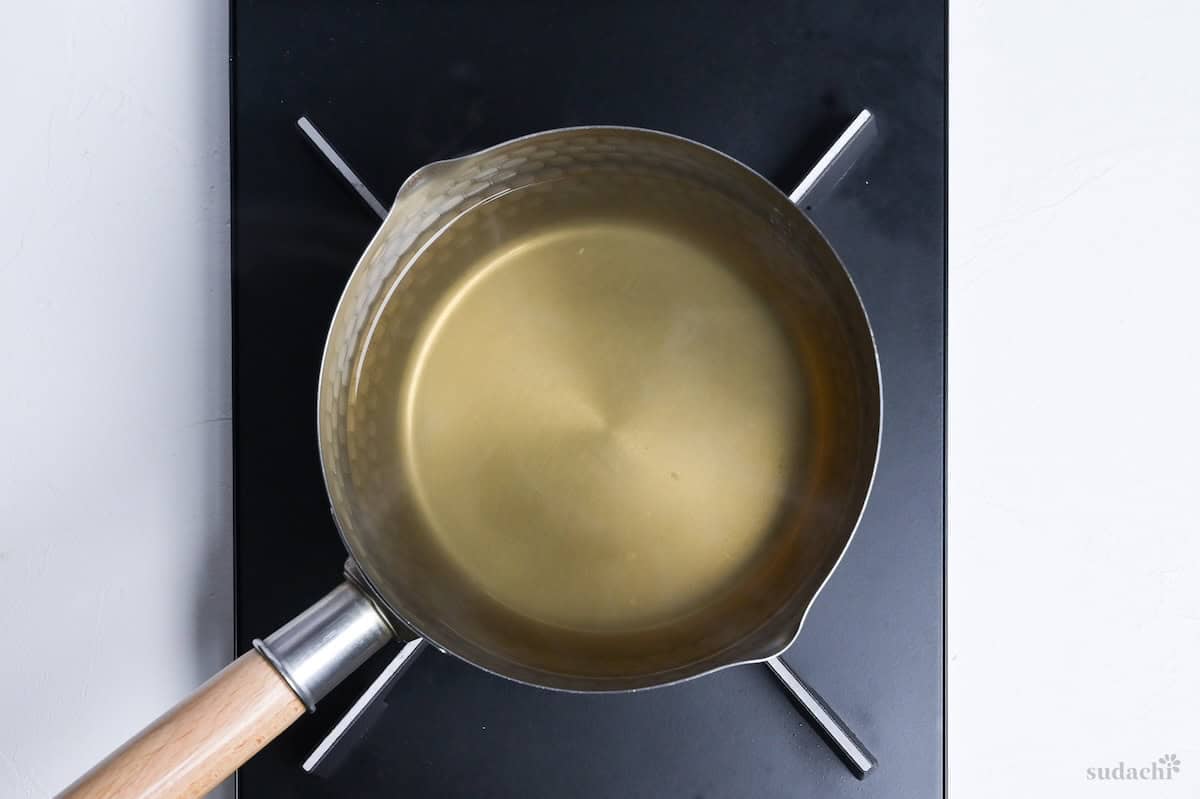
ii. Kill the heat immediately, add a small handful of katsuobushi (this is called “oi-gatsuo,” fresh bonito umami booster), and cover the pot with a lid. Let it sit undisturbed for 2 minutes.
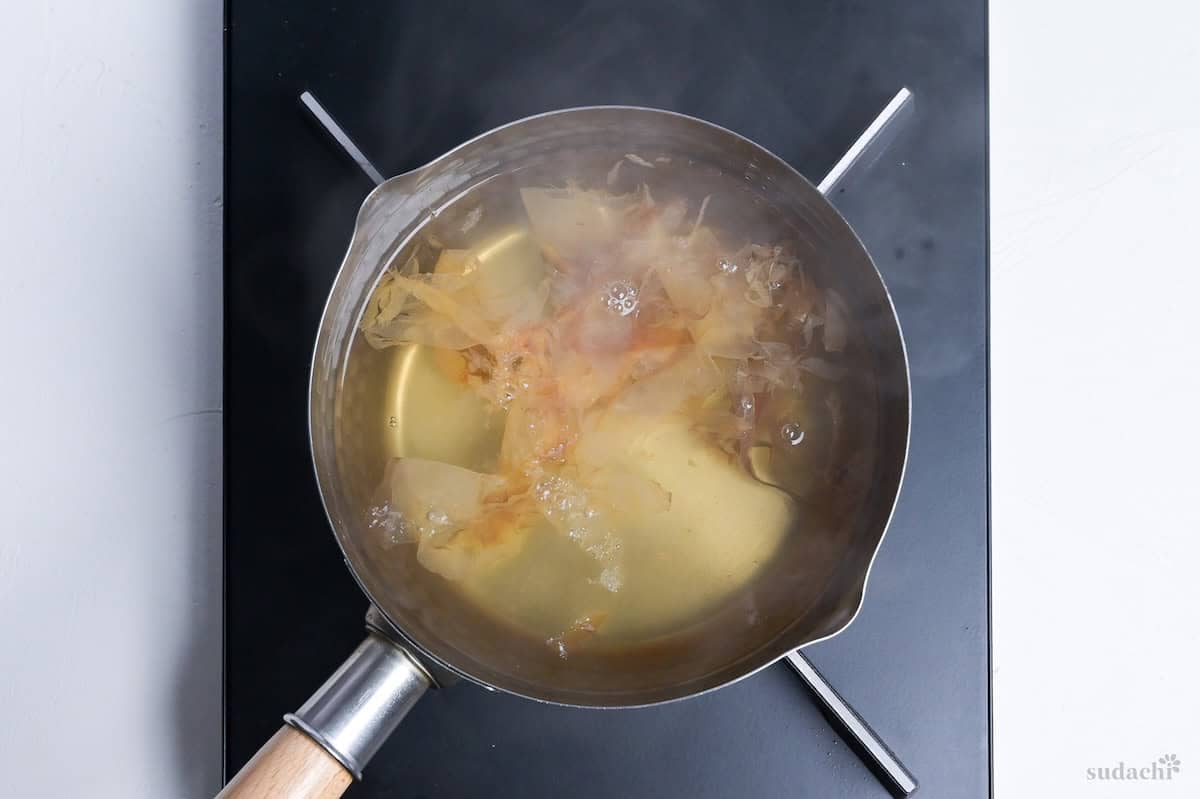
This second infusion deepens the umami without extracting harsh or fishy notes. Think of it as a finishing touch that adds aromatic top notes to your foundational dashi. It’s optional, but it’s easy and well worth it.
I originally skipped this step thinking my initial dashi was strong enough, but after several batches, I found the broth lacked that bright, just-shaved bonito aroma that makes the soba even better.
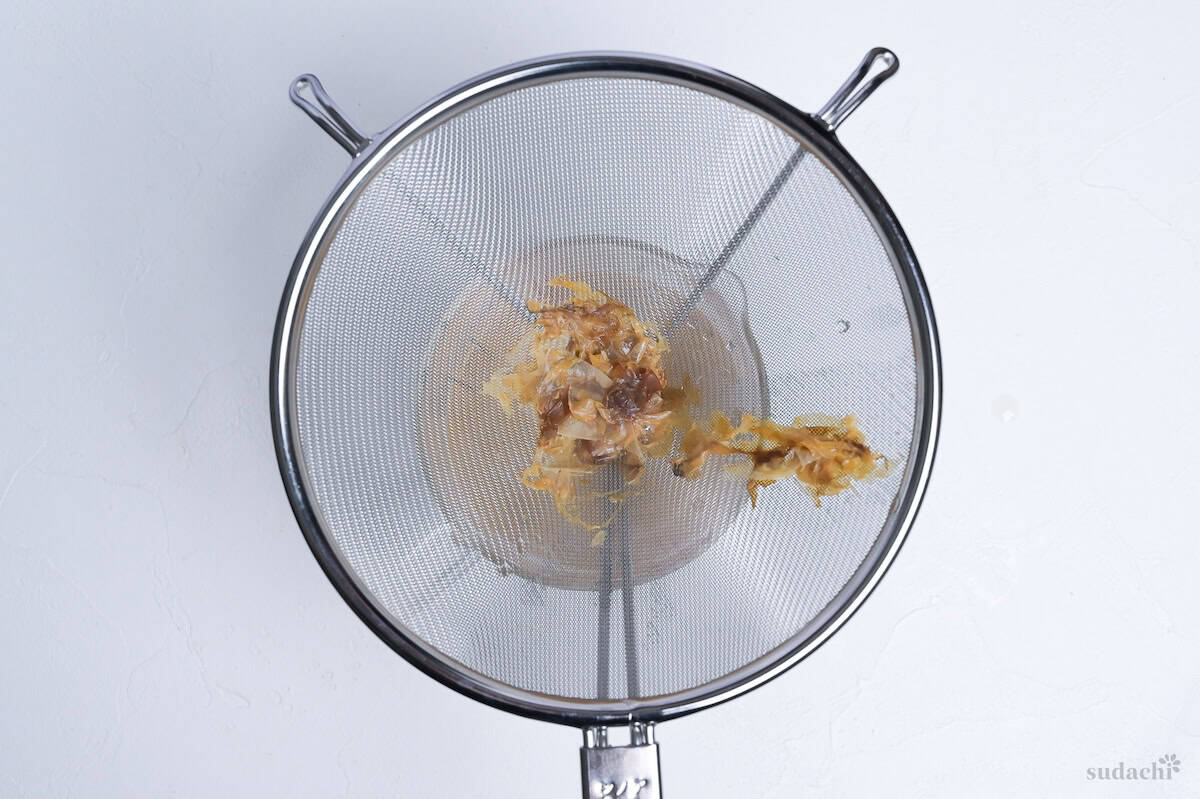
iii. After 2 minutes, strain out the katsuobushi through a fine-mesh sieve.
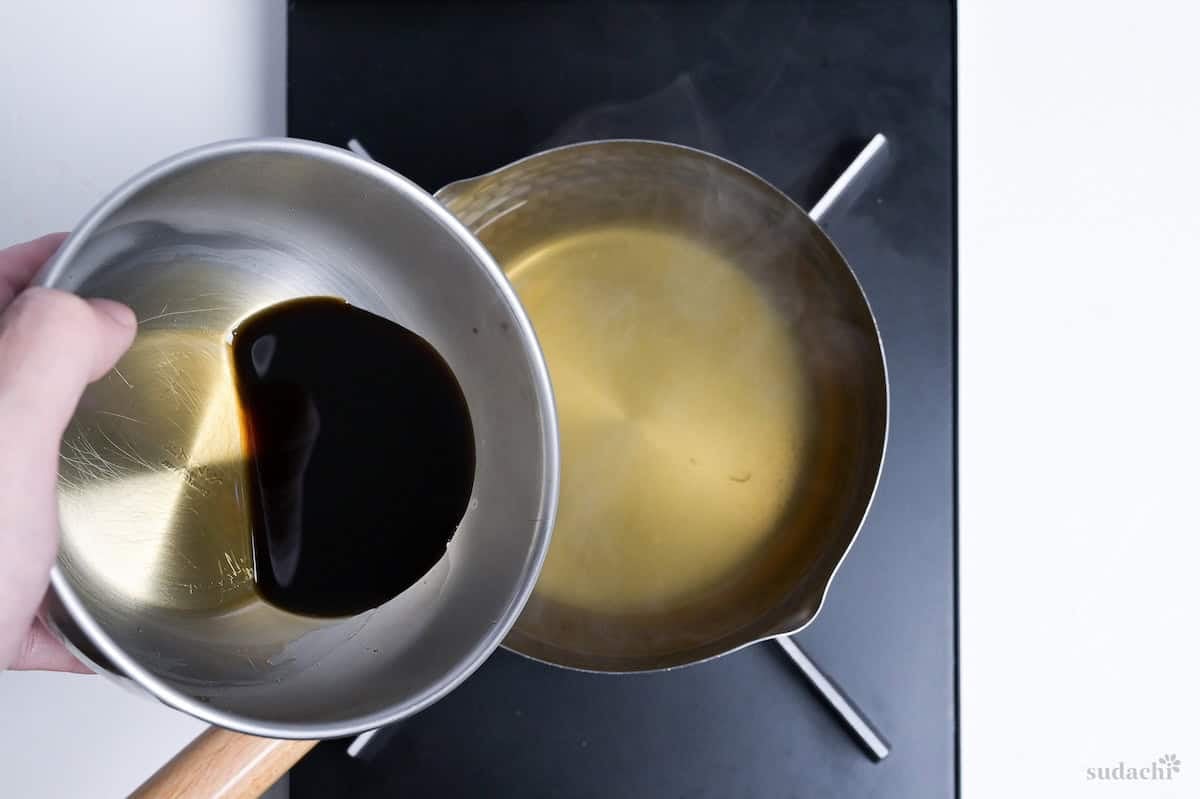
iv. Return the strained dashi to medium-low heat, add your kaeshi mixture, and stir to combine.
v. Now, taste your broth. Always taste your kake soba broth at near-serving temperature (around 85-90°C) and adjust from there. Too salty? Add a splash of water or dashi. Not salty enough? A small pinch of salt/soy sauce. Too flat? A tiny bit more sugar adds roundness. Remember, soba broth is traditionally more delicate than udon, so err on the side of subtle rather than assertive.
vi. Keep the broth warm in the lowest setting until serving.
i. Fill your large pot with water (remember, 2 liters per serving minimum) and bring it to a vigorous, rolling boil over high heat.
ii. When you see large bubbles breaking the surface consistently, add your soba noodles. Leave the lid off entirely: covering the pot creates too much heat buildup, causing the starch foam to explode upward in an instant kitchen disaster.
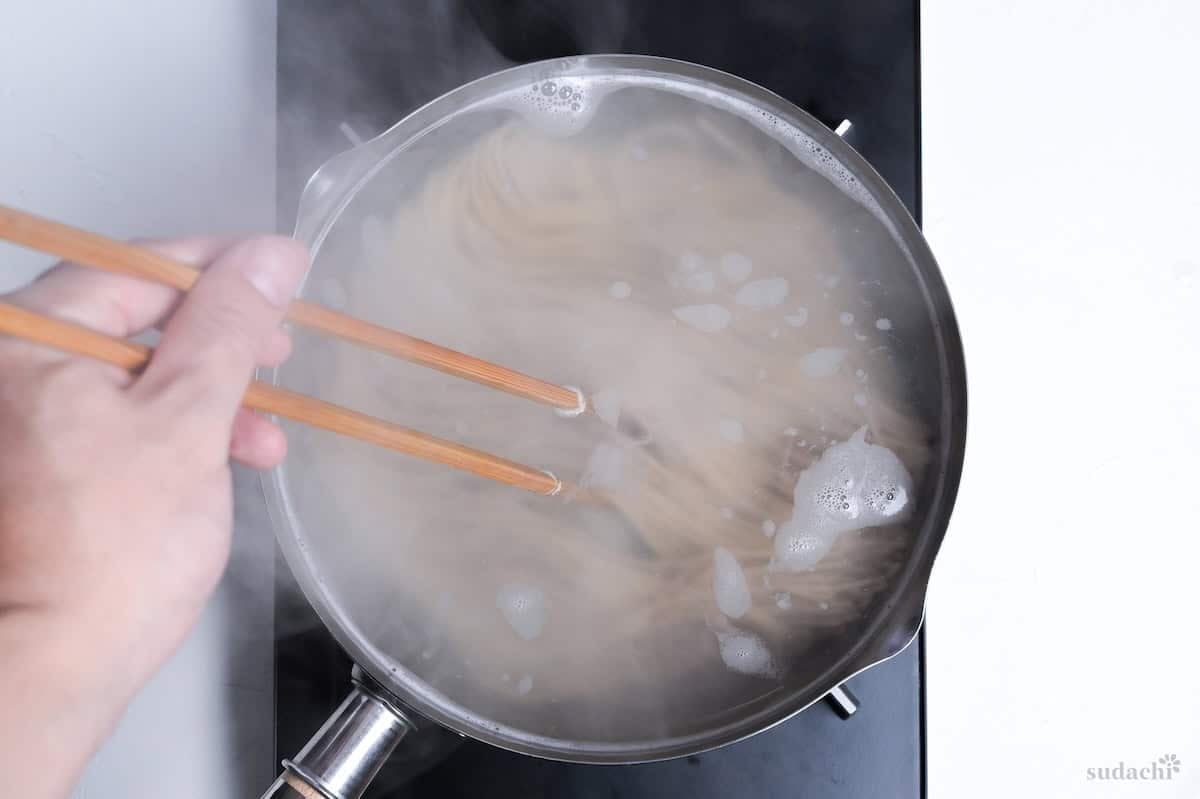
iii. For the first minute after adding noodles, gently separate the strands with chopsticks or tongs, using a slow swimming motion rather than aggressive stirring. If foam surges, lower heat or pull the pot off the burner, don’t add water.
The milky water you’re boiling your noodles in isn’t waste, it’s soba-yu, a traditional drinking broth. Japanese soba culture includes pouring this starchy liquid into your leftover dipping sauce at the end of the meal, creating a warming drink.
i. The moment your timer goes off, drain the noodles into a colander.
ii. Then immediately plunge them under cold running water, ice water is even better. Gently massage the noodles as the water runs over them, working your fingers through to remove the slippery starch coating that formed during cooking.
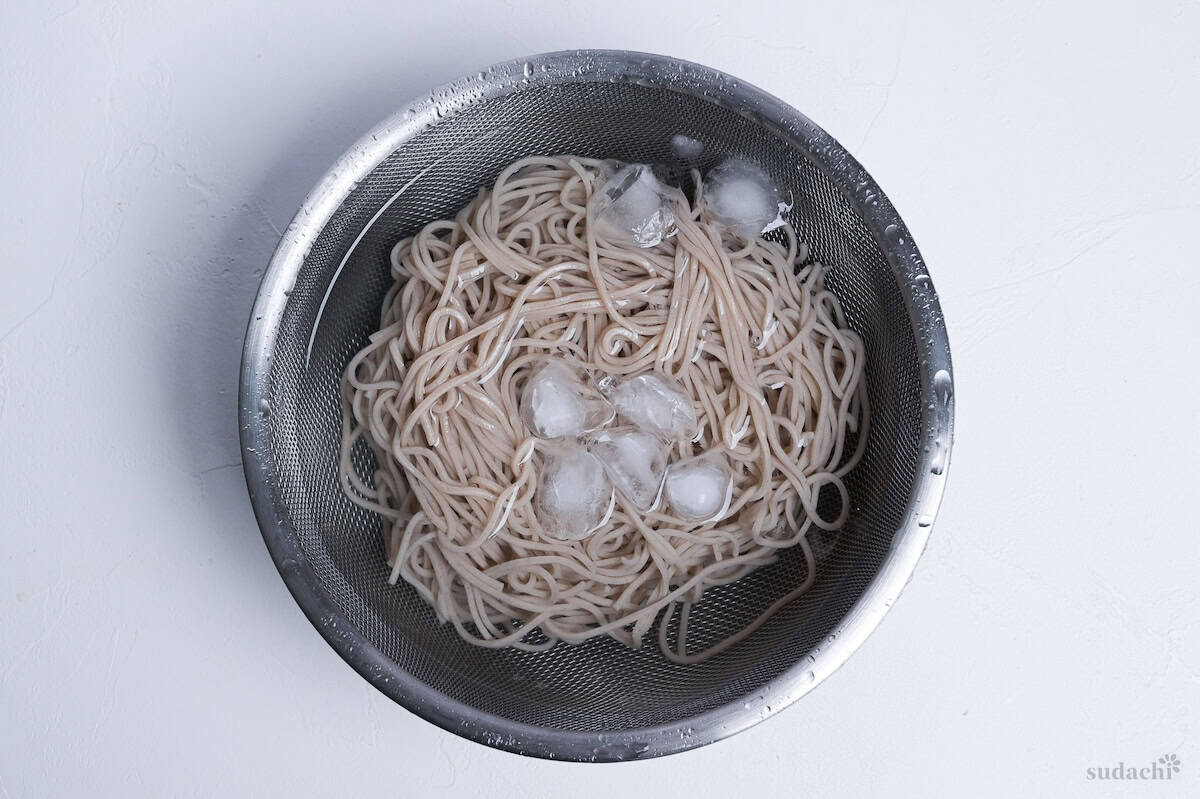
iii. Finally, pour hot water to rewarm. Make sure to do this right before assembling, warming them too early will result in fragile noodles that break easily!
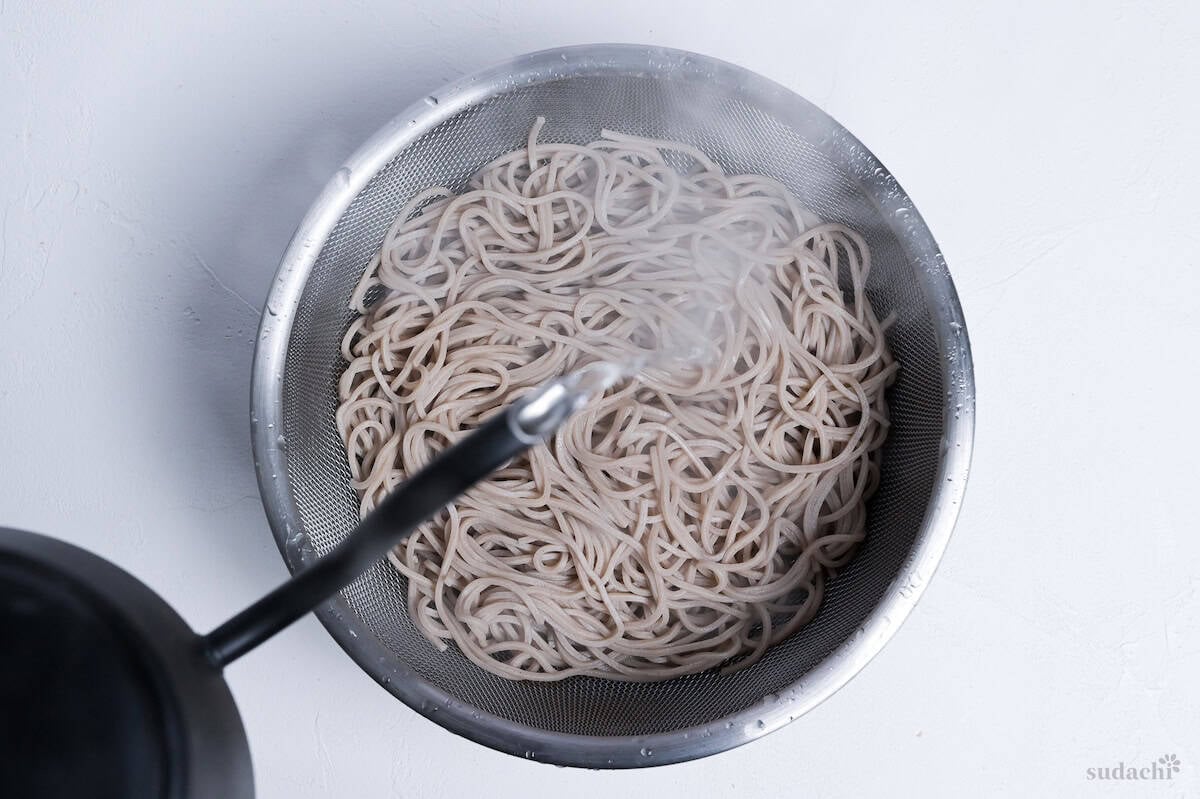
You might think: “I’m making hot noodle soup, so why shock them in cold water?” Because even though they’ll end up in hot broth, this cold rinse-and-shock step is what gives them clean flavor and proper texture. Without it, residual starch creates a cloudy, gluey broth and noodles that turn mushy within minutes of serving.
The quick temperature drop temporarily firms up the gelatinized starch structure, creating the signature “koshi” (springy bite) that defines good soba.
i. Warm the bowls with boiling water, then drain (optional). This prevents heat loss so the broth stays nice and hot.
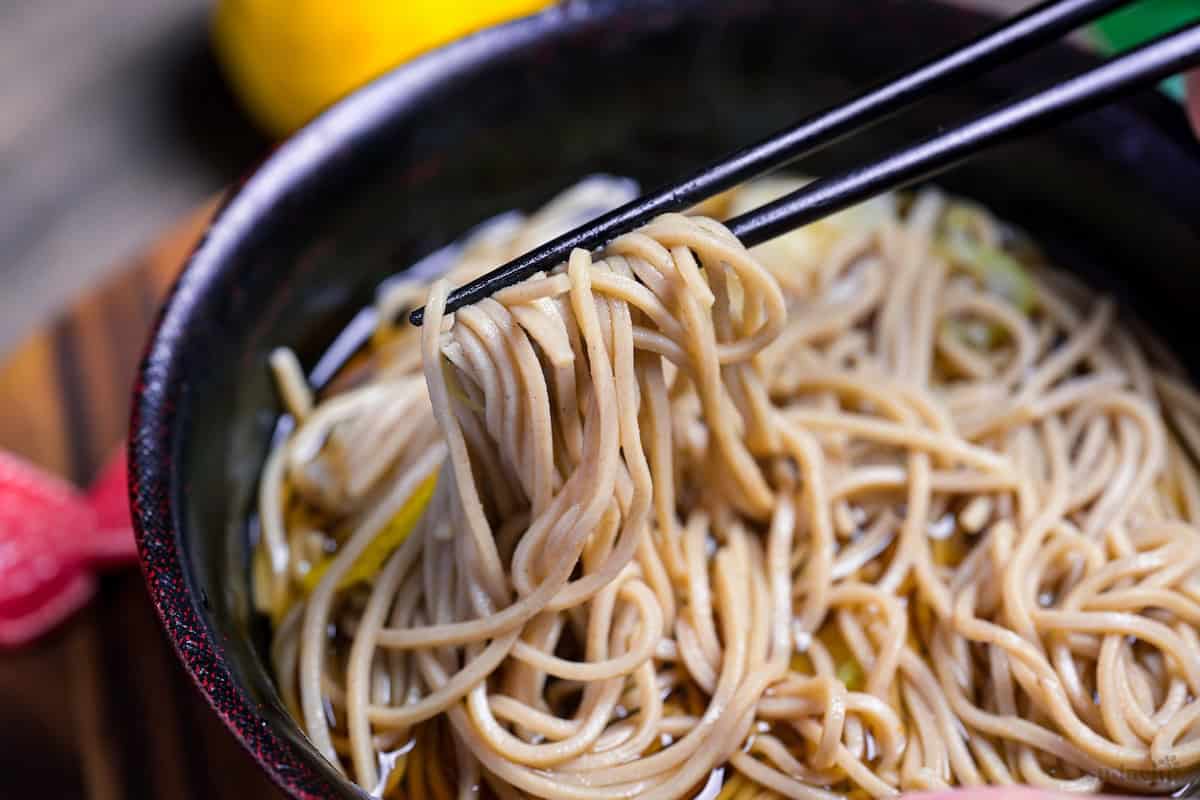
ii. Portion the noodles, pour in hot broth, and loosen once with chopsticks until the strands separate.
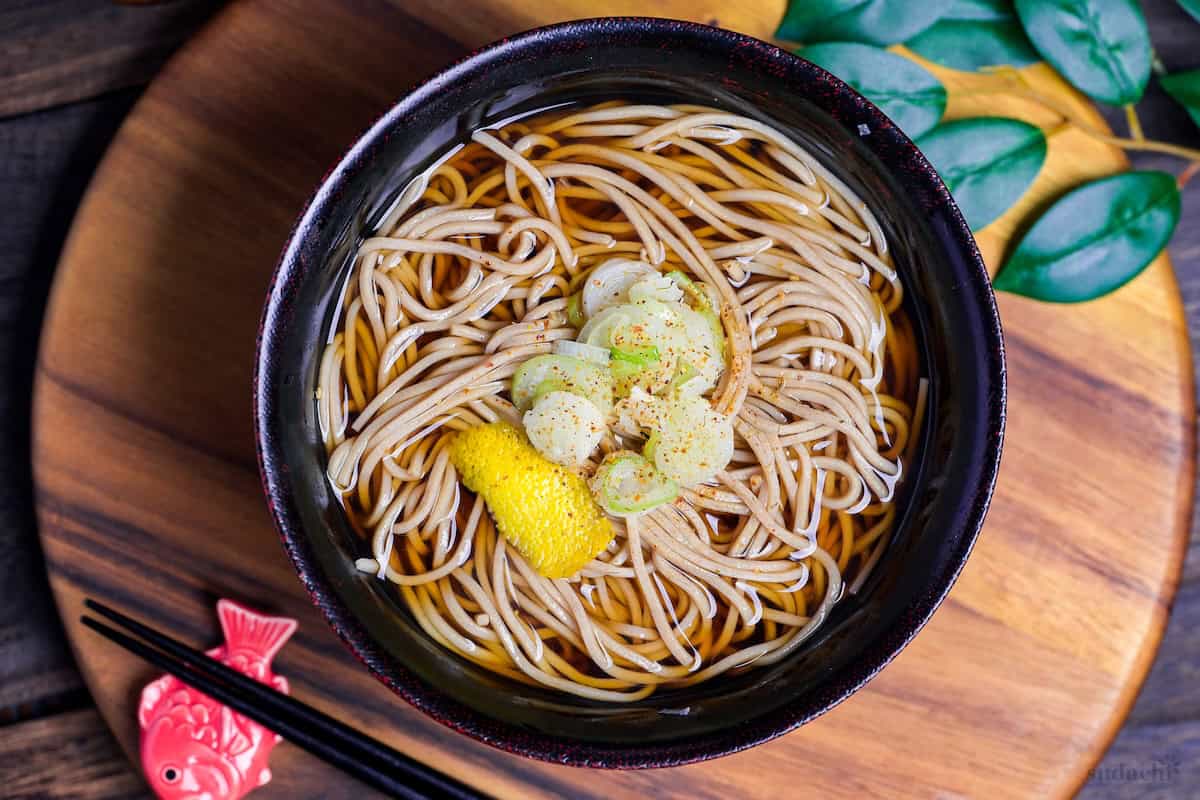
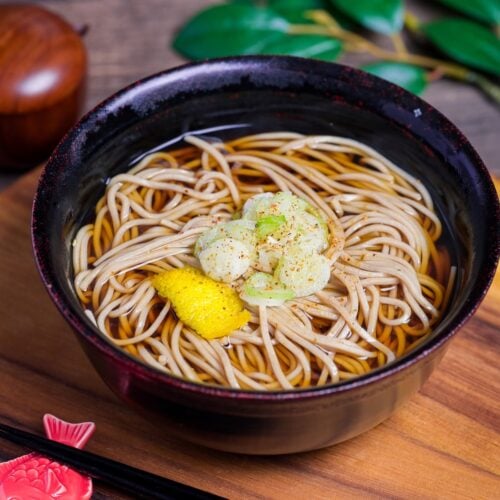
iii. Enjoy as it is or with toppings of your choice. I used chopped green onions, shichimi tograshi, and yuzu peel this time. Yuzu peel really makes this soup so elegant!!
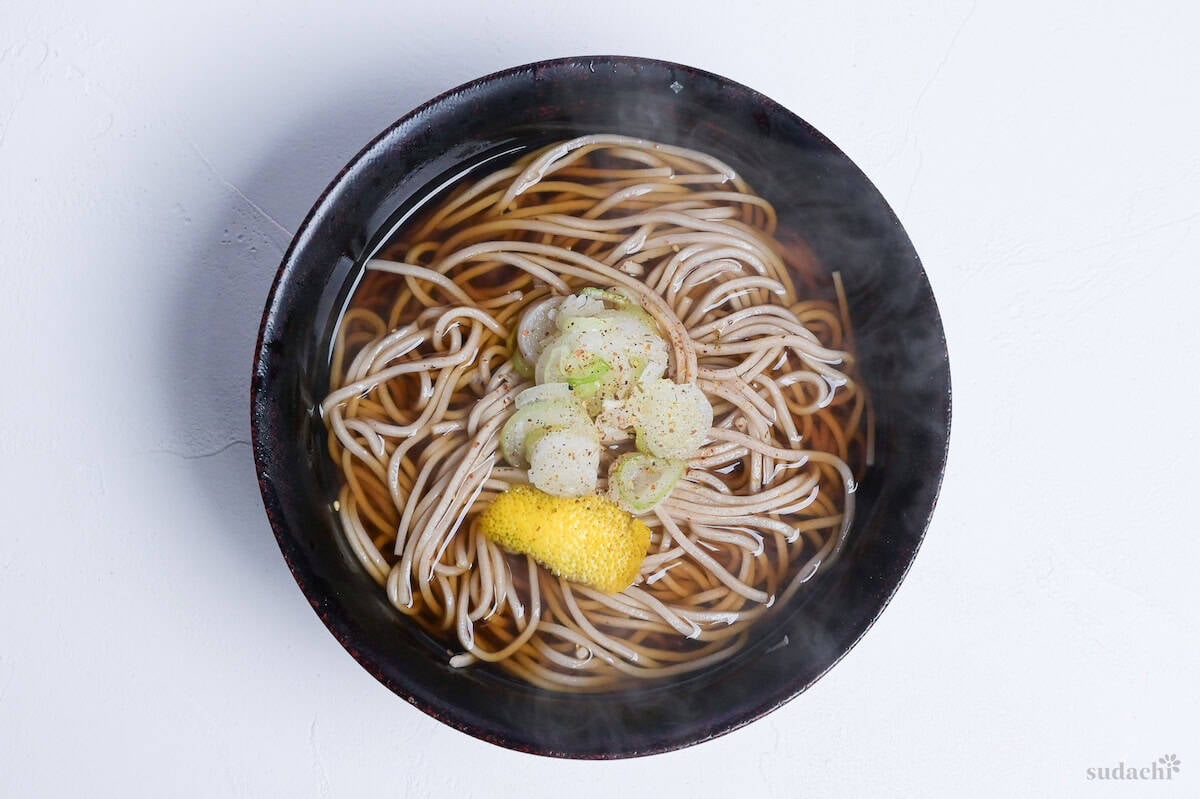
- For Heat Seekers: Sprinkle shichimi togarashi (seven-spice powder) over the top just before serving. Add it at the table, not during cooking.
- For Citrus Lovers: Float a single thin slice of yuzu peel on the surface. Yuzu is traditional, but a twist of sudachi or even a thin lemon slice works if that’s what you have. Just use restraint: one small piece per bowl.
- For Richness: Add an onsen tamago, tempura shrimp, kakiage, or tenkasu.
- For Color and Texture: Add blanched spinach, rehydrated wakame seaweed, or sliced kamaboko (fish cake).
- For Sweet-Savory Contrast: Top with kitsune (sweetened fried tofu pouches) to transform this into kitsune soba, or add slices of seared duck breast for kamo nanban soba.
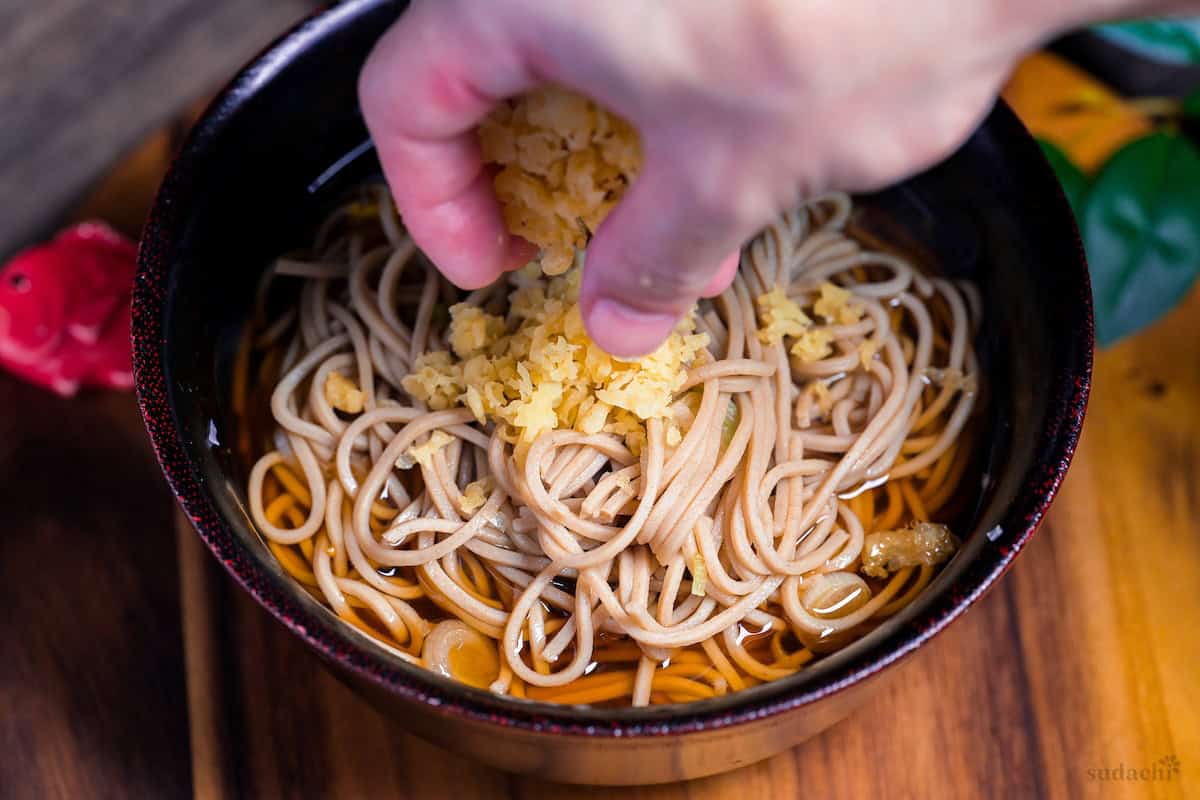
iv. Optionally, enjoy the soba noodles cooking liquid (soba-yu) on the side.
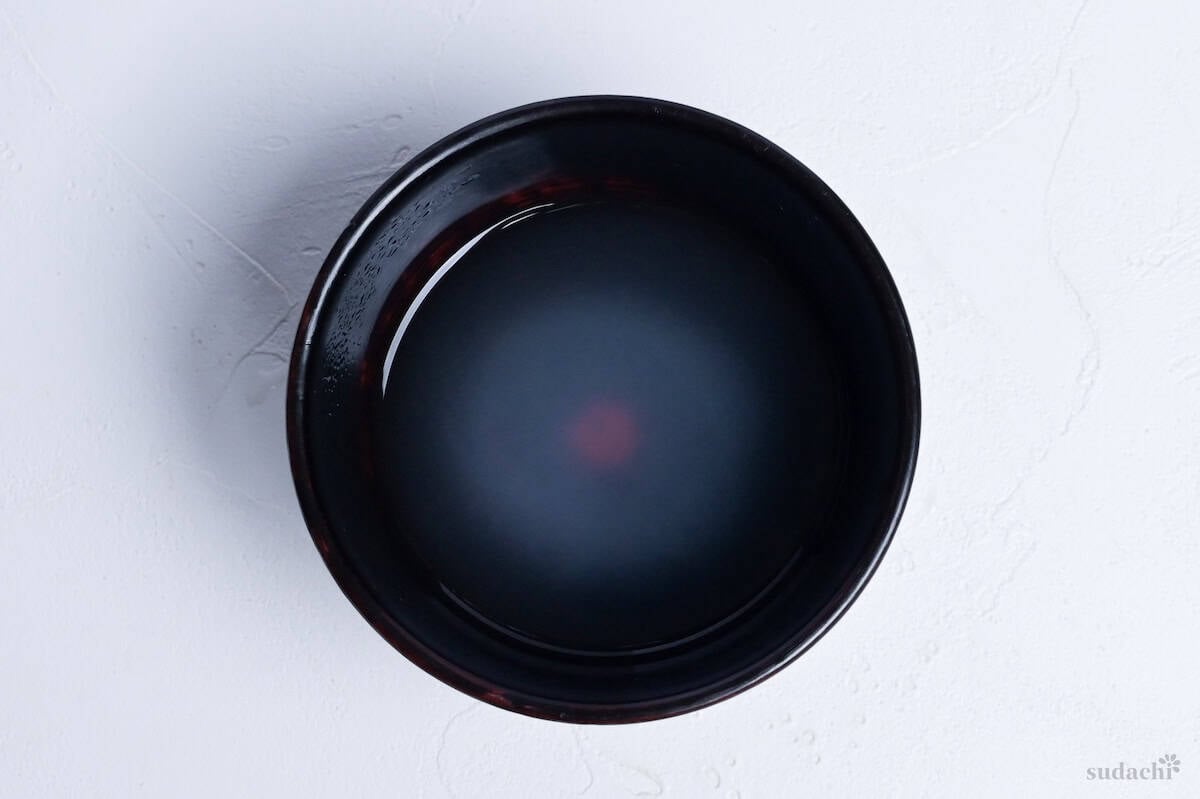
If you follow the default recipe, it will yield 2-3 servings (the soup can be stretched to 3 servings).
Weight guidelines for one serving of soba noodles before boiling:
- Dry noodles = approximately 100g (3.5 oz) (range: 80g-120g / 2.8-4.2 oz)
- Fresh noodles = approximately 120g (4.2 oz) (range: 100g-140g / 3.5-4.9 oz)

Essential Tips & Tricks
- Use a large, deep pot and plenty of water (about 2 L per portion), keep it lid-off at a steady boil, and never add cold water, lower the heat instead.
- Loosen the soba gently for the first 60 seconds, then stop constant stirring so buckwheat-heavy noodles stay intact.
- Have a colander and cold-water bowl ready, drain 10-20 seconds early, then rinse and shock while rubbing off the “slime” to stop carryover cooking.
- Reheat the chilled noodles 5-10 seconds in boiling water and pre-warm bowls with hot water to keep serving temperature high for aroma.
- Steep katsuobushi off the boil and keep the finished broth at 80-90℃ (176-194°F) to protect delicate dashi aromatics.
With these simple tips in mind, you’re set for success every time you make kake soba.
Storage & Meal Prep
Fridge: Store broth in an airtight container for up to 2-3 days in the coldest part of your refrigerator, but never store cooked noodles.
Freezer: Broth freezes well for up to 1 month in portion-sized containers or ice cube trays, though some aromatic volatiles will fade. Freezing cooked noodles is not recommended.
Meal Prep: Prepare kaeshi up to 2 weeks ahead (it actually improves with aging), and batch-make dashi for freezing in single-serving portions, but always cook noodles fresh to order.
Reheating: Warm refrigerated or thawed broth gently over medium-low heat to 80-90°C (just before simmering), but never let it boil hard. If the broth tastes flat after storage, revive it with oi-gatsuo (a pinch of katsuobushi steeped for 30 seconds, then strained) to restore the fresh bonito top notes.
What to Serve With This Recipe
Kake Soba FAQ
No, most soba noodles contain a wheat-buckwheat blend (typically 70-80% buckwheat, 20-30% wheat flour) for structural stability, making them unsuitable for celiac or gluten-sensitive diets. For true gluten-free soba soup, look for packages clearly labeled “100% buckwheat” or “juwari soba” (十割そば), and use tamari soy sauce instead of regular soy sauce in your kaeshi, since standard soy sauce contains wheat. Be aware that 100% buckwheat noodles are more delicate and require gentler handling during cooking-they break more easily but deliver stronger buckwheat flavor.
Rinsing is a non-negotiable step because it removes the sticky surface starch (numeri) that would otherwise turn your clear broth murky. This thermal shock also fixes the noodle structure, creating the firm, springy texture (koshi) expected in an authentic bowl. Rinsing ensures the noodles don’t continue to over-soften and turn gummy before the first slurp.
Soba soup features the lightest, most delicate broth of the three. It’s built on refined dashi (kombu and katsuobushi) with a restrained soy-mirin seasoning that lets the buckwheat noodle flavor shine through. Udon soup uses similar dashi foundations but typically with slightly heavier seasoning to complement udon’s neutral wheat flavor and chewy texture. Ramen diverges entirely: most ramen broths are long-simmered stocks (pork bone, chicken, or seafood) that create rich, often emulsified bases with substantial body and fat content, resulting in the cloudy, intensely flavored soups you see in ramen shops. Think of soba as a refined consommé, udon as a hearty broth, and ramen as a full-bodied stock.
More Japanese Noodle Recipes
Hungry for more? Explore my Japanese noodle recipes to find your next favorite dishes!
Did You Try This Recipe?
I would love to hear your thoughts!
💬 Leave a review and ⭐️ rating in the comments below. 📷 I also love to see your photos – submit them here!
Kake Soba (Simple Hot Soba Noodle Soup)

Ingredients
- 2 tsp Japanese dark soy sauce (koikuchi shoyu) or tamari for GF
- 4 tsp Japanese light soy sauce (usukuchi shoyu) if not available, replace it with slightly more regular koikuchi shoyu, taste test as you go
- 1 tbsp mirin
- ¼ tsp sugar
- ½ tbsp sake
- 500 ml dashi stock homemade kombu-katsuobushi or quality dashi packet
- 3 g bonito flakes (katsuobushi) approximately 1 small handful for 3g
- 2 portions soba noodles dried, fresh, or frozen, 100% juwari soba for GF
- finely chopped green onions
- Japanese chili powder (shichimi togarashi) optional topping
- yuzu peel optional topping
The ingredient brands and tools I trust are in my Japanese pantry guide and my cooking tools guide.
Can’t find certain Japanese ingredients? See my substitution guide here.
Instructions
- Make kaeshi by pouring 2 tsp Japanese dark soy sauce (koikuchi shoyu), 4 tsp Japanese light soy sauce (usukuchi shoyu), 1 tbsp mirin, ¼ tsp sugar, and ½ tbsp sake into a small saucepan and boiling for 1 minute. This can be prepared up to 2 weeks in advance (store in a sealed container in the fridge if not using straight away).

- Pour 500 ml dashi stock into a separate pot, heat until almost boiling, then turn off the heat and add 3 g bonito flakes (katsuobushi). Sit undisturbed with a lid on for 2 minutes.
- Strain the dashi through a fine mesh sieve to remove the bonito flakes, and return it to the pot.
- Heat on medium low and add the kaeshi from step one.
- Stir the broth and heat to near serving temperature, about 85 °C (185 °F) to 90 °C (194 °F). Taste test and add water to dilute or soy sauce/salt to intensify the flavor. Keep the broth warm on the lowest setting.
- Boil 2 portions soba noodles according to the package instructions.
- Strain the noodles and plunge into an ice water bath.
- Pour freshly boiled water over the chilled and drained soba noodles right before serving.
- Place the noodles in serving bowls and pour the soup over the top. Garnish with finely chopped green onions, Japanese chili powder (shichimi togarashi) and a piece of yuzu peel for a fragrant citrus finish. Enjoy!

Video

I was drawn to this article after enjoying Nama Kaki Nabe when I visited Japan. I guess your Kake Soba can be just as addictive. However, living outside of central London it seems impossible to gather and consume all the neccessary ingredients freshly for a party of just 1 or 2 persons. Are there any monthly clubs that can organise similarly wonderful dishes?
Hi Midori,
I’m really glad you found the article and that it brought back memories of your time in Japan. You’re right though, depending on where you live it can be tough to source and use everything fresh. I don’t personally know of any monthly clubs offering something like this, but I agree it would be amazing if it existed! 🙂
Yuto
It’s simple and delicious. I have tried it for the first time this week and I am already making kaeshi now to enjoy kake soba next week.
Hi Ingvar,
Thank you so much! Hearing that you’re already making kaeshi for next week makes me really happy! 🙂
Yuto