

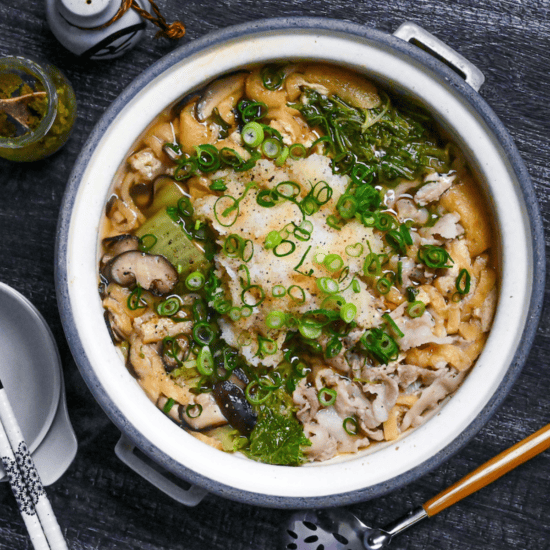


Grated daikon melts into a simmering pot of pork and vegetables, and the broth transforms. What was rich becomes refreshing. That’s mizore nabe, named after Japanese sleet for exactly the way it looks.
Unlike heavier Japanese hotpot dishes like chanko nabe or motsunabe, this one is all about contrast. Fatty pork belly, sharp daikon, clean dashi. One of Japan’s best-kept winter secrets, and my recipe keeps it simple.
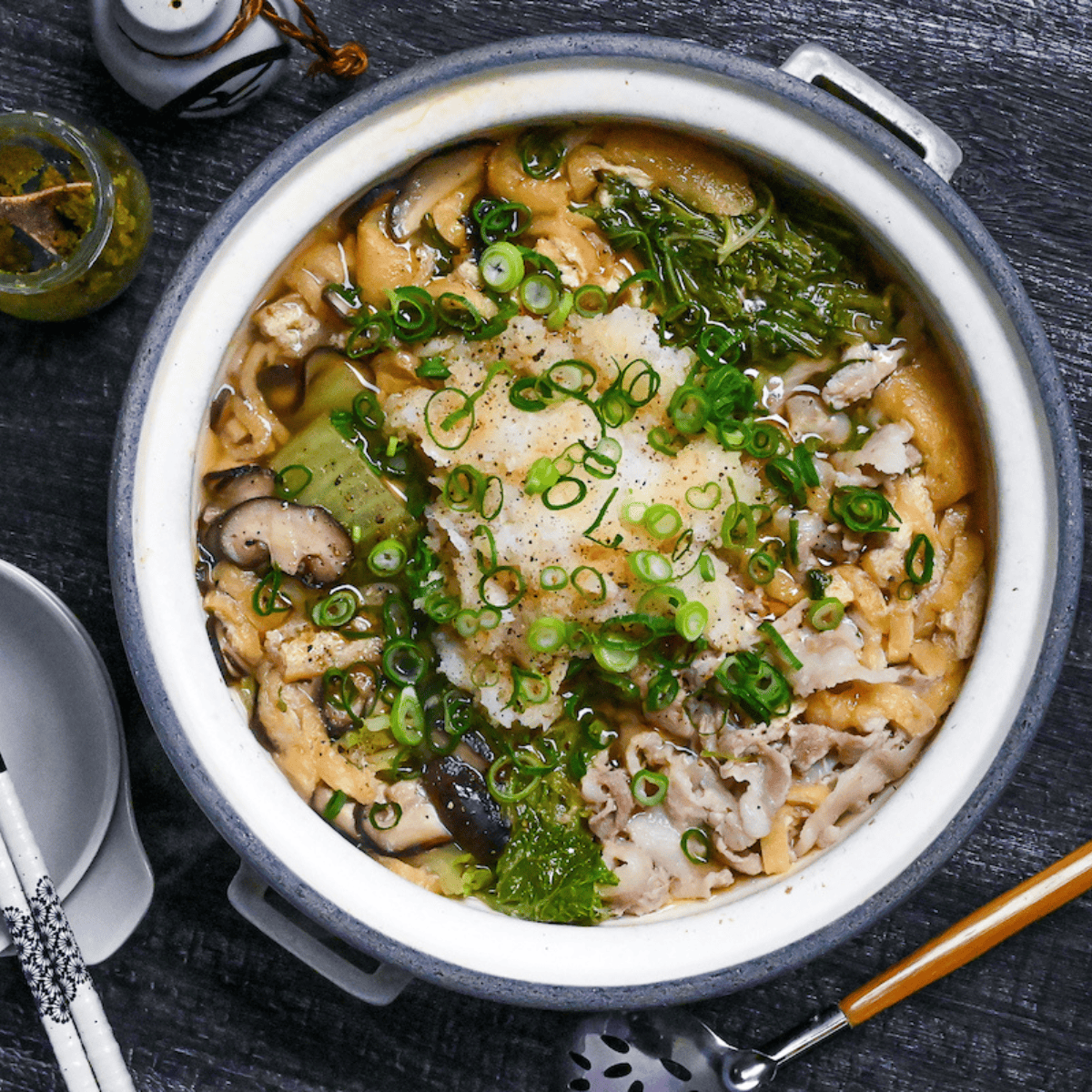
Mizore Nabe
Recipe Snapshot
- What is it? Mizore nabe is a Japanese hot pot where a generous mound of grated daikon radish is added to a dashi-based broth with pork and vegetables. “Mizore” means sleet, named for the way the daikon turns translucent and snow-like as it melts into the simmering soup.
- Flavor profile: Light, dashi-forward broth with layered umami from kombu and katsuobushi, cut by the sharp, refreshing bite of freshly grated daikon against the sweet richness of rendered pork belly fat.
- Why you’ll love this recipe: Everything goes into one pot, no searing, no roasting, no fuss. The contrast between rich pork and clean daikon makes this feel indulgent and light at the same time!
- Must-haves: Dashi stock (homemade or packet), Japanese light soy sauce (usukuchi shoyu, or regular soy sauce with adjusted salt), half a daikon radish and a grater.
- Skill Level: Easy! No advanced technique required. Combine, simmer, grate, garnish.
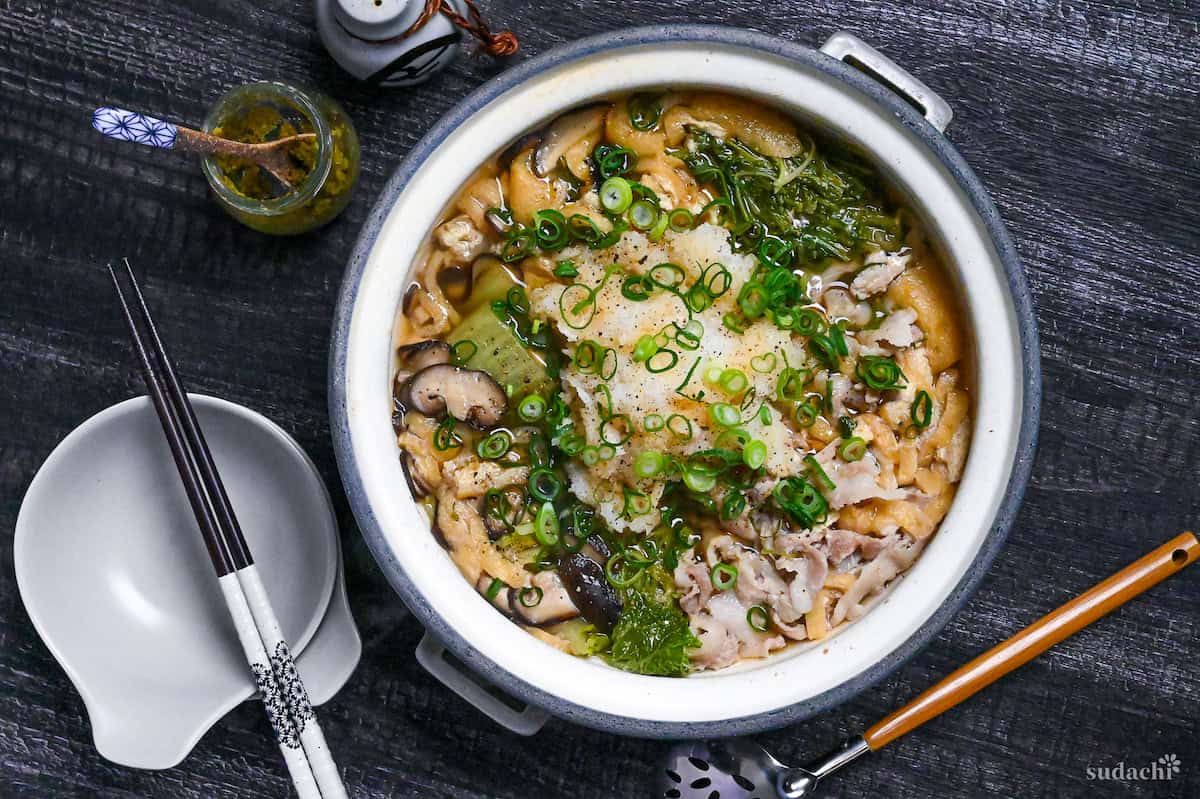
What is Mizore Nabe?
Mizore nabe (みぞれ鍋) is a Japanese hot pot where a large volume of freshly grated daikon radish is added as a finishing topping to a dashi-based broth with vegetables and thinly sliced pork. “Mizore (霙)” means sleet in Japanese, a reference to the way the translucent grated daikon resembles half-melted snow as it settles into the simmering pot. It is also called yuki nabe (snow pot) or yukimi nabe (snow-viewing pot) depending on the region.
Unlike richer nabe varieties such as sukiyaki or shabu shabu, mizore nabe is defined by its lightness. The grated daikon tempers the richness of pork fat with a gentle, peppery bite that keeps the dish feeling refreshing even on the coldest nights. Daikon’s natural digestive enzymes also make this a traditionally stomach-friendly meal in Japan.
Japanese Daikon Hotpot Ingredients
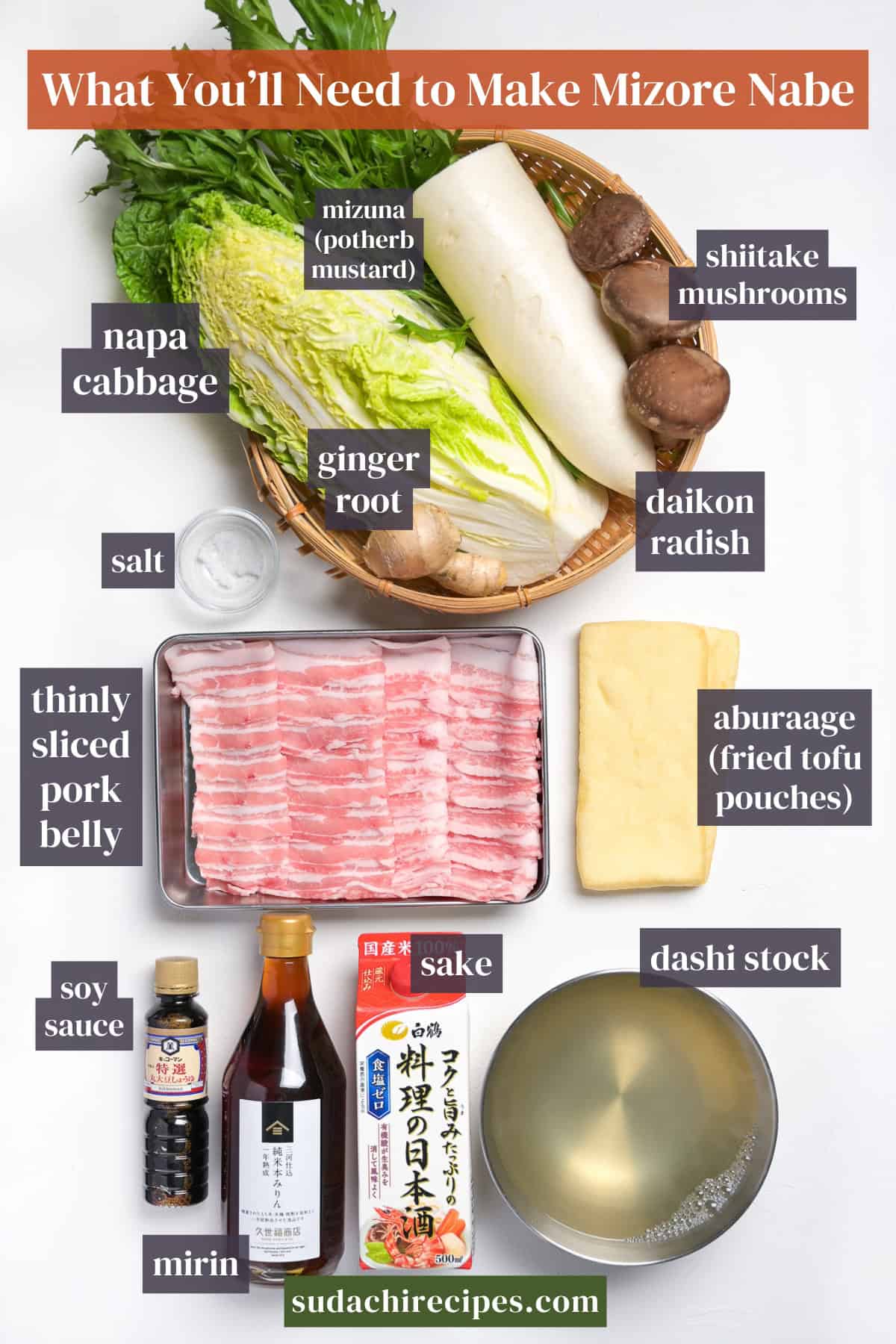
- Dashi stock: My top recommendation is my own dashi packets. If that feels like too much, quality store-bought dashi packets are a reliable alternative. Want to go all out? Japanese dashi from scratch with katsuobushi and kombu is the gold standard, and you will taste exactly why. Granulated dashi is fine in a pinch, but I only use it when nothing else is available. For a vegan route, kombu and dried shiitake mushrooms yield a beautifully savory vegan dashi.
- Pork: Thinly sliced pork belly is my go-to. The marbling renders into the broth and adds a sweet richness that pairs perfectly with the sharp daikon. Pork shoulder works too if you want something leaner. Look for cuts sliced thin enough that they cook through in minutes.
- Grated daikon radish: The star of the dish. You’ll need about half a daikon radish, grated with a Japanese oroshi grater (or a microplane).
Substitutions Ideas
- Usukuchi shoyu (Japanese light soy sauce) → Regular soy sauce (koikuchi) works. Use 3 tbsp plus 1 tsp of regular soy sauce for every 3 tbsp of light soy sauce to match the salt level. The broth will be slightly darker, but the flavor stays on track.
- Mizuna (potherb mustard) → Baby arugula or watercress are the closest match for that mild, peppery bite. Baby spinach works too if you want something milder.
- Aburaage (fried tofu pouch) → Firm tofu cut into thin slices is the easiest swap. You’ll lose the spongy texture that soaks up broth, but it still adds a nice protein element. You can also make your own homemade aburaage.
- Dashi stock → Unsalted chicken stock gives you a rounder, meatier broth that still works well here. It won’t taste as “Japanese,” but the daikon and soy sauce pull it back in that direction.
- Pork belly → Thinly sliced pork shoulder or pork loin are leaner alternatives. The broth will be lighter without the rendered belly fat, so consider adding an extra drizzle of sesame oil at the end.
- Sake → Dry white wine or sherry is a reliable swap. A touch more sugar-forward than sake, but it disappears into the broth.
Have trouble finding Japanese ingredients? Check out my ultimate guide to Japanese ingredient substitutes!
How to Make My Mizore Nabe
Combine all the soup base ingredients in a large pot and give it a good stir.

Then, add the sliced pork, aburaage (fried tofu), and vegetables.

Put a lid on the pot and turn the heat to medium. Let everything cook together until the Napa cabbage becomes tender and the pork is cooked through, which should take about 10 minutes.

The cabbage will release its natural sweetness into the broth during this time.
Once the vegetables have reached your desired tenderness and the pork is fully cooked, add in the freshly grated daikon radish. Finish by drizzling with toasted sesame oil, sprinkling with chopped green onions, and adding a generous grind of black pepper.

Serve in individual bowls while it’s still hot. Each person can add their own touch by using yuzu kosho (citrus chili paste) or shichimi togarashi (seven-spice powder) to suit their own heat preference.

If you’re looking for something a bit more filling, you can toss in udon or soba noodles after you’ve finished up with the pork and veggies. Just cook your preferred noodles in a separate pot following the instructions on the package, drain them well, and then add them to the leftover broth.

Essential Tips & Tricks
- Season the broth slightly stronger than you want the final result, because the grated daikon releases water into the pot even after squeezing.
- Keep the heat at a gentle simmer, not a rolling boil. Vigorous boiling emulsifies the pork fat and clouds the broth, ruining the clean, clear appearance you need for the mizore (sleet) effect.
- Squeeze the excess water from grated daikon before adding it to the pot. Unsqueezed daikon can dilute the broth too much and flatten the entire flavor profile, turning a well-seasoned soup into a watery one.
- Add the grated daikon at the very end, after everything is fully cooked. Simmering it too long kills the sharp, refreshing bite that defines mizore nabe and turns the daikon into a mushy, flavorless mass.
With these simple tips in mind, you’re set for success every time you make mizore nabe.
What to Serve With This Recipe
Mizore Nabe FAQ
Grated daikon releases water into the pot, which dilutes the seasoning. The fix is simple: add a splash of soy sauce and taste again. You can also simmer the broth briefly with the lid off to concentrate the flavor before adding the daikon next time. Season the base broth slightly stronger than your target to account for this.
Thinly sliced chicken thigh, firm tofu, or white fish (like cod) all work well. Chicken thigh gives you a lighter broth, tofu keeps it vegetarian, and cod adds a delicate sweetness.
A Japanese oroshi grater produces a pulpy, juicy texture that’s traditional for mizore nabe. A microplane gives a finer, smoother result, and a box grater (fine side) falls somewhere in between. All three work, the main difference is visual texture in the pot.

More Japanese Soup Recipes
- Tonjiru (Pork Miso Soup)
- Kenchin Jiru (Traditional Vegetable Soup)
- Chicken Zosui (Rice Soup)
- Japanese Clear Soup (Osuimono)
Warm up your kitchen with more bowls of comfort. Explore my Japanese soup recipe collection for your next favorite.
Did You Try This Recipe?
I would love to hear your thoughts!
💬 Leave a review and ⭐️ rating in the comments below. 📷 I also love to see your photos – submit them here!

Mizore Nabe (Grated Daikon Radish Hotpot)

Ingredients
- 600 ml dashi stock homemade or dashi packet, reduce salt if using instant granules.
- 2 tbsp sake or dry white wine/sherry
- 1 tbsp mirin
- 3 tbsp Japanese light soy sauce (usukuchi shoyu) if unavailable, sub 3 tbsp and 1 tsp of regular soy sauce (koikuchi shoyu) for every 3 tbsp of light soy sauce
- ¼ tsp salt
- ½ tsp grated ginger root or ginger paste
- 200 g potherb mustard (mizuna) roots removed, or baby arugula, watercress, or baby spinach
- 4 leaves Napa cabbage rough chunks
- 2 fresh shiitake mushrooms or mushroom of your choice
- 2 sheets fried tofu pouch (aburaage) or firm tofu
- 300 g thinly sliced pork belly or thinly sliced pork shoulder/loin for a leaner option
Toppings
- ½ daikon radish grated, excess water squeezed out
- 2 tbsp finely chopped green onions
- ground black pepper to taste
- 1 tbsp toasted sesame oil
Optional condiments
- yuzu kosho
- Japanese chili powder (shichimi togarashi)
The ingredient brands and tools I trust are in my Japanese pantry guide and my cooking tools guide.
Can’t find certain Japanese ingredients? See my substitution guide here.
Instructions
- Take a large pot and add 600 ml dashi stock, 2 tbsp sake, 1 tbsp mirin, 3 tbsp Japanese light soy sauce (usukuchi shoyu), ¼ tsp salt and ½ tsp grated ginger root. Mix it well.

- Add 200 g potherb mustard (mizuna), 4 leaves Napa cabbage, 2 fresh shiitake mushrooms, 2 sheets fried tofu pouch (aburaage) and 300 g thinly sliced pork belly to the cold broth, then place a lid on top and heat on medium.
- Bring the broth to a simmer and cook with the lid on for about 10 minutes, or until the pork is cooked through and the vegetables are softened to your liking.
- Grate ½ daikon radish using a Japanese oroshi grater. (Alternatively, you could use a microplane grater or similar fine grater.) Once grated, squeeze out the excess water.

- Once all your ingredients are cooked, add the grated daikon to the pot and sprinkle with 2 tbsp finely chopped green onions and ground black pepper. Drizzle with 1 tbsp toasted sesame oil.
- Serve and add yuzu kosho or Japanese chili powder (shichimi togarashi) to taste. Enjoy!

Leave a rating and a comment