

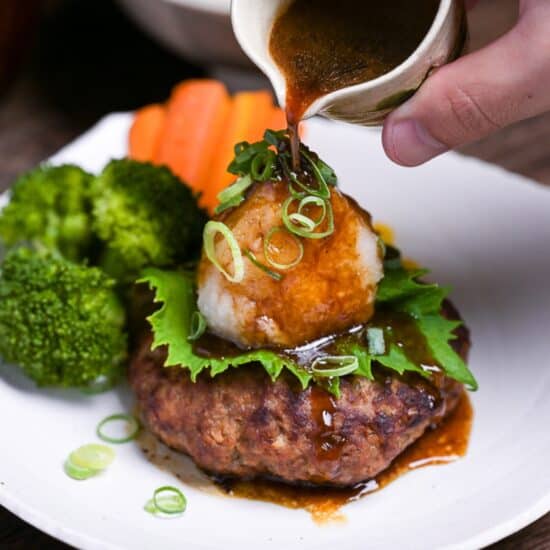


Some days I crave a big meaty bite, others I want something bright and refreshing. Even when I start with the same ground meat, those cravings pull me toward completely different dishes.
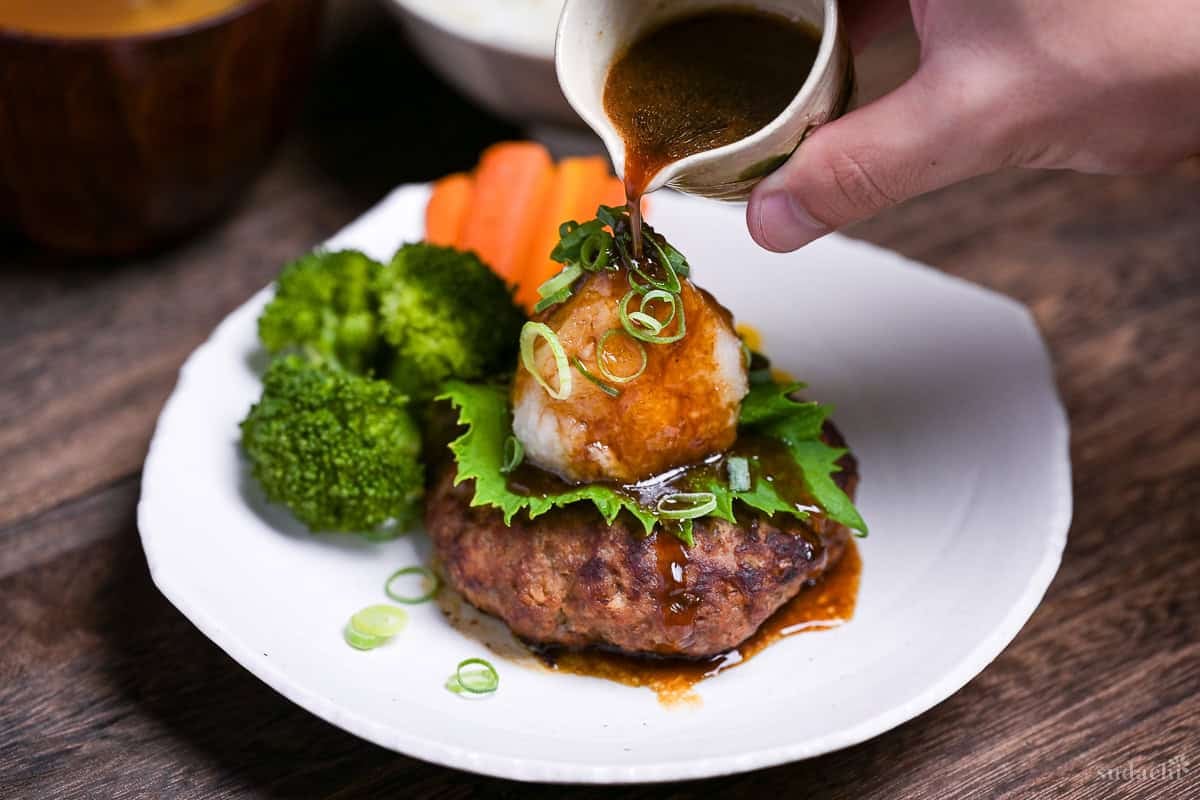
This oroshi hamburger steak belongs firmly to the lighter side. The sauce stays thin and comes together from the pan drippings, while the daikon is grated at the very last minute and piled high on top. Ponzu’s sharp acidity and the radish’s clean heat hit first. The richness of the meat arrives a beat later.
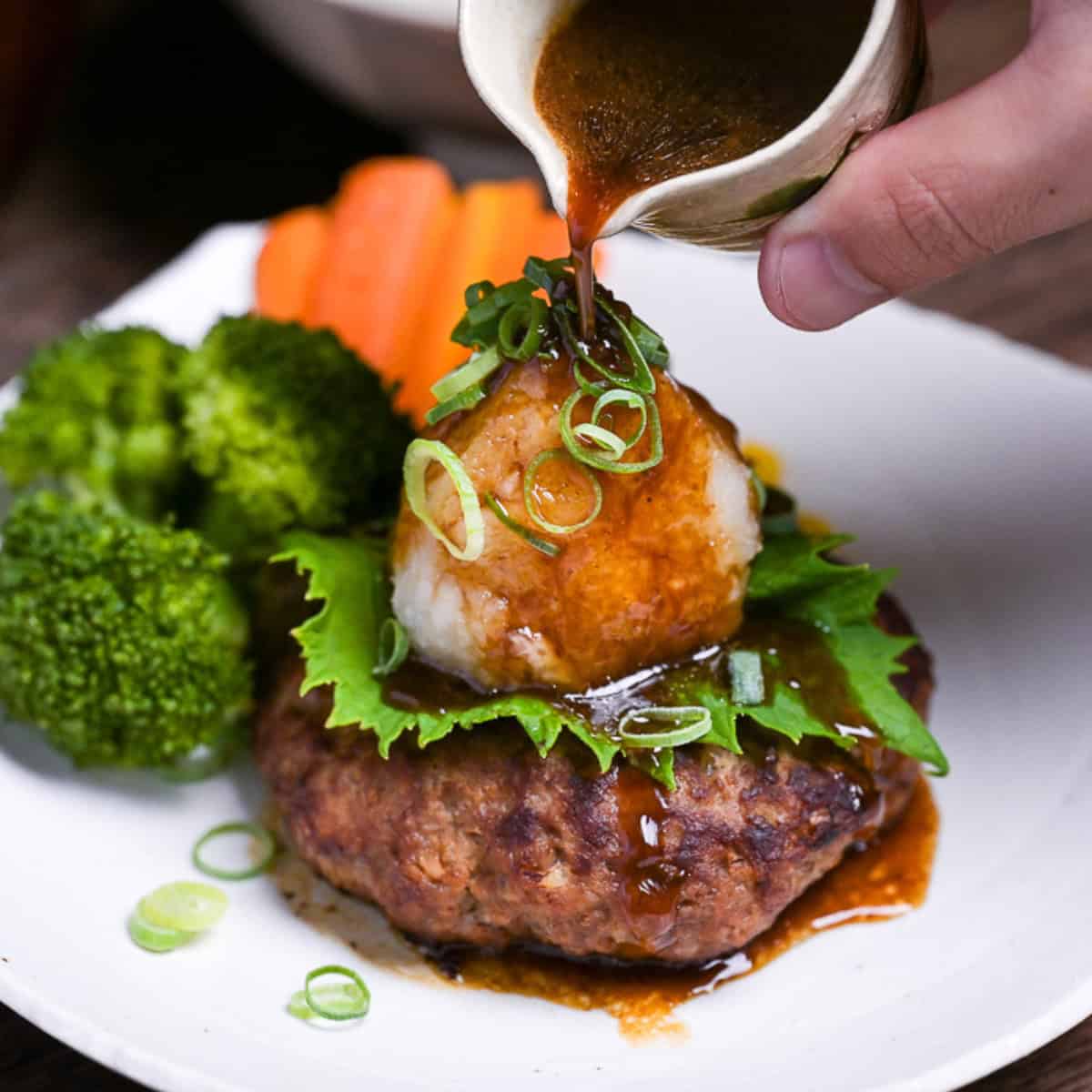
Wafu Hambagu
Recipe Snapshot
- What is it? A Japanese classic of pan-seared ground meat steak served under grated daikon and a citrus-driven ponzu sauce.
- Flavor profile: Cold grated daikon on a hot patty flips the temperature every bite. Coarse, light daikon, a lift of shiso, and meat juices melting into the thin sauce.
- Why this recipe works: The onion goes in raw. Sauteed onion turns sweet and pulls the dish toward demi-glace, so I never go there. Daikon gets grated last, before its bite fades.
- How to make it: A skillet does the cooking, plus a thermometer and a rack. Knead meat and salt first, then mix the rest in. Shape, sear, steam with sake, sauce in that pan.
- What to expect: Shaped patties chill 30 minutes. It serves 2, as 3 standard patties or 2 large. The mixture can go slack while shaping, and a little dry panko brings it back.
What Is Wafu Hambagu?
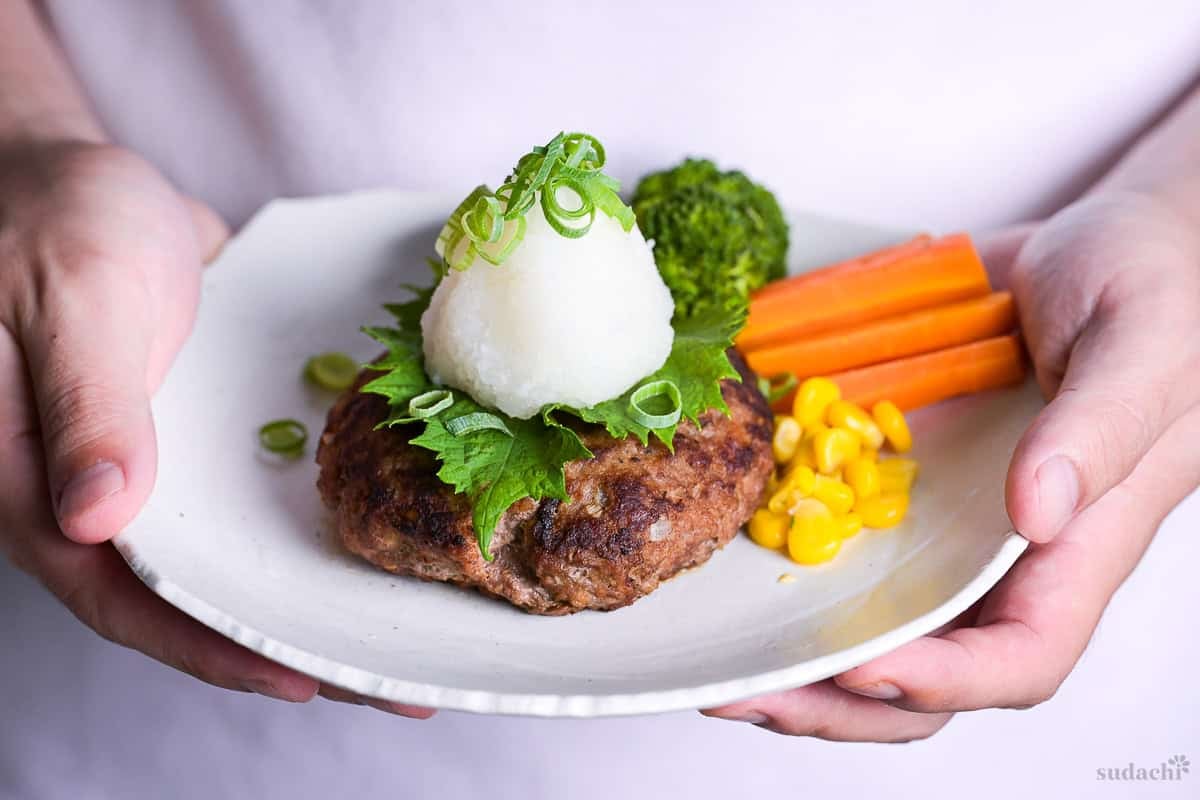
Wafu oroshi hambagu (和風おろしハンバーグ) is one of the lightest and most refreshing takes on Japanese hambagu. You shape a mix of ground beef and pork into an oval patty, pan-fry it, then finish with a thin ponzu sauce and grated daikon.
In Japan we usually name our hambagu by its sauce. Demi-glace, tomato, teriyaki, cheese, and this wafu-oroshi style all appear on both family tables and restaurant menus. They are everyday dishes. Nobody saves them for a special occasion.
The name “wafu” makes many people assume this is an old traditional way to eat hambagu. In fact the opposite is true. This exact style is relatively new and was created by family restaurant chains and condiment companies. In 1977 Denny’s Japan first listed “wafu hambagu” on its menu. The original sauce was an “oriental” blend of soy sauce and sesame. Ponzu is what carried it into home kitchens. Around 1983 Mizkan began suggesting that its Ajipon ponzu be used beyond hot pots, and by 1989 the company released a recipe for ponzu-based oroshi hambagu. So the dish is less than 50 years old. It did not evolve through generations. It was born from promotion and then made itself at home at the dinner table.
Yoshoku (洋食) is the broad Japanese term for Western dishes that have been reshaped to suit Japanese tastes. Omurice, napolitan spaghetti, doria, tonkatsu, and hambagu all belong to this group. Outside Japan it is sometimes described as “Japanese-style American food,” yet the real foundation is French. That influence traces back to the Meiji period (1868-1912) when the government officially adopted French banquet style for state dinners. Wafu oroshi hambagu takes that yoshoku idea and swings it back toward Japanese flavors. It starts with a Western dish that was already adapted for Japan, then finishes it again with Japanese seasonings and aromatics. 2 layers of adaptation.
My patty contains no egg and no milk. I soak the breadcrumbs in dashi instead. Milk usually adds richness and a milky aroma. Switch to dashi and the savory depth of the stock takes that job over. That keeps the patty flavor aligned with the ponzu and grated daikon on top. I make the sauce right in the frying pan. After browning the patties I wipe away excess beef fat but leave the meat juices behind. Pouring them out would make the light sauce taste flat. The ponzu and citrus go in only after I have removed the pan from the heat.
Wafu Hambagu Ingredients
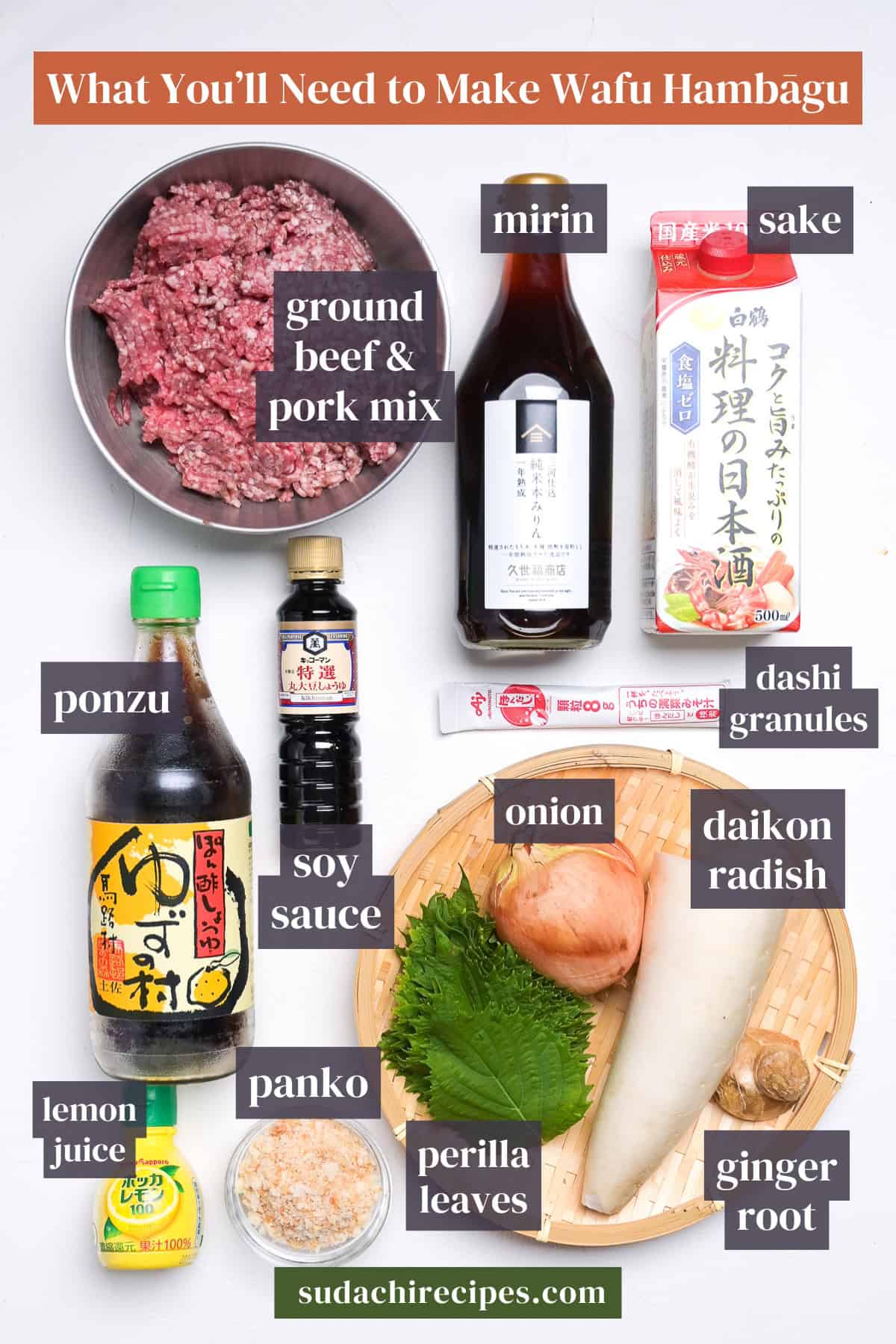
- Ground beef and pork: Japan sells the blend ready-made as aibiki. Regular meat counters have no such product, so buy ground beef and ground pork separately and mix them yourself. Pork fat melts near body heat and beef fat needs more, so a single bite carries both softness and meaty firmness. With lean grinds, plan on adding lard.
- Grated daikon: This ingredient does the heavy lifting on the plate, well past garnish duty. A whole daikon carries no heat at all. The bite appears the moment grating breaks the cells and the enzymes go to work, and it is volatile, so it thins out as the bowl sits. Grate it right before you eat.
- Ponzu: This bottle sets the acidity and the aroma of the sauce. Ponzu takes its character from the citrus inside it. Sudachi ponzu is my first pick for the clean. Kabosu is the other Japanese citrus worth reaching for. Where Japanese citrus is out of reach, lime beats lemon to my palate.
Substitution Ideas
- Ground beef and pork → All beef: All beef holds up on its own. Beef fat needs more heat to melt than pork fat does, so the mouthfeel firms up, and a little lard brings it back toward the original when your beef runs lean. All-beef patties also crack more readily, so knead the salt in a little longer and they hold together.
- Ground beef and pork → Ground chicken: Choose thigh. Breast alone comes out dry. The result is lighter than beef and pork, which lets the ponzu and the grated daikon come through even more.
- Panko → Homemade breadcrumbs: Almost any bread works as long as it carries no fillings or sauce. Pulse it coarse in a food processor and you are done.
- Panko → Fine dry breadcrumbs: These work when they are all you have. The smaller crumbs leave less room to hold liquid, so the patty comes out denser, and it pays to start with less liquid than the recipe calls for.
- Dashi granules → Water: The dashi wets the panade and goes into the sauce. Water does the panade’s job just as well, since holding moisture is all the panade is asked to do. Both the patty and the sauce come out a notch lighter on umami.
- Dashi panade → Milk panade: This moves the patty back toward the Western way of doing it. You get richness and a dairy aroma, and the smell of the meat softens. The ponzu and the grated daikon on top stay exactly as they are, so only the patty crosses over to the Western side.
- Shiso → Korean perilla leaves (kkaennip): This is the closest match in both looks and role, and any Korean grocer should stock it. The aroma is gentler than shiso, so use about 1.25 times the number of leaves.
- Shiso → Vietnamese tía tô: On aroma alone, this is the closer match. Look in the fresh section of an Asian grocer for the leaf with the purple underside. It runs gentle too, so use a few extra leaves.
How to Make My Wafu Hambagu
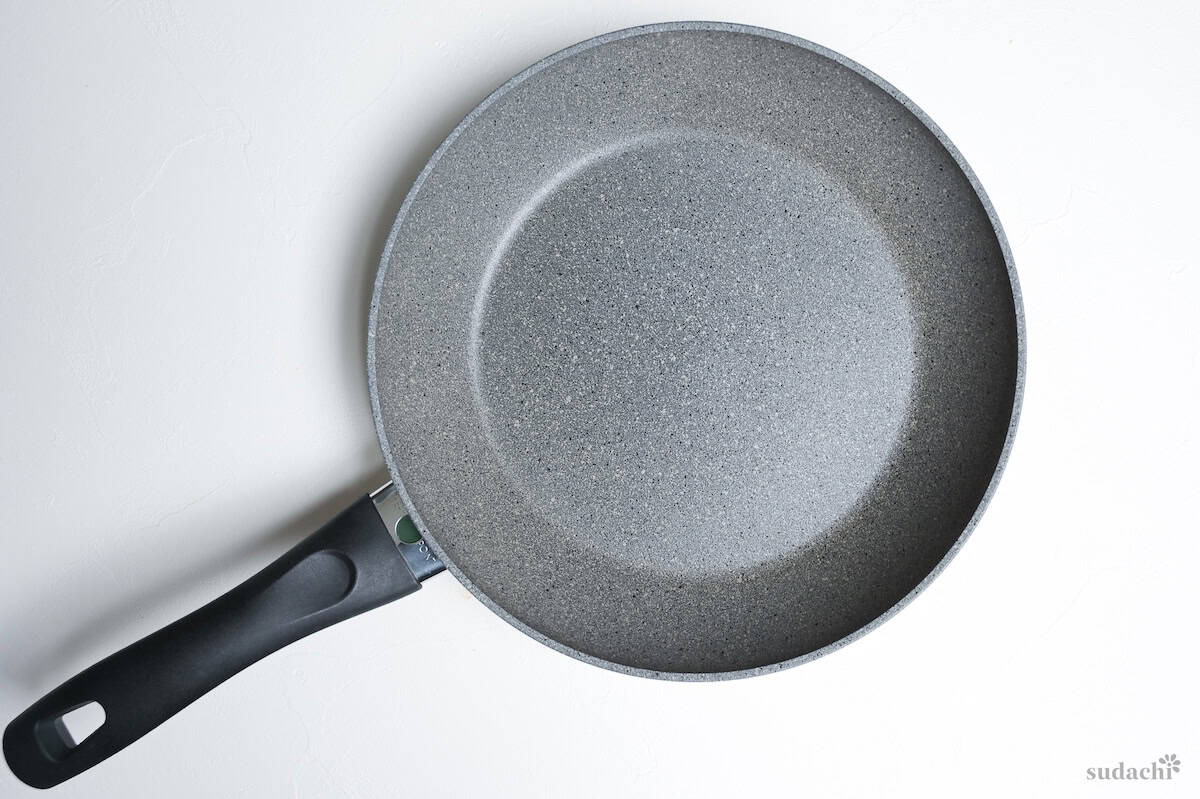
To develop this recipe, I used a 26cm non-stick frying pan.
i. Mince the onion raw, as fine as you can get it, and nothing coarser than 3mm.
ii. Make a panade by mixing the panko and the dashi together in a bowl and leave it to soften. If it looks slack, hold back on the liquid.
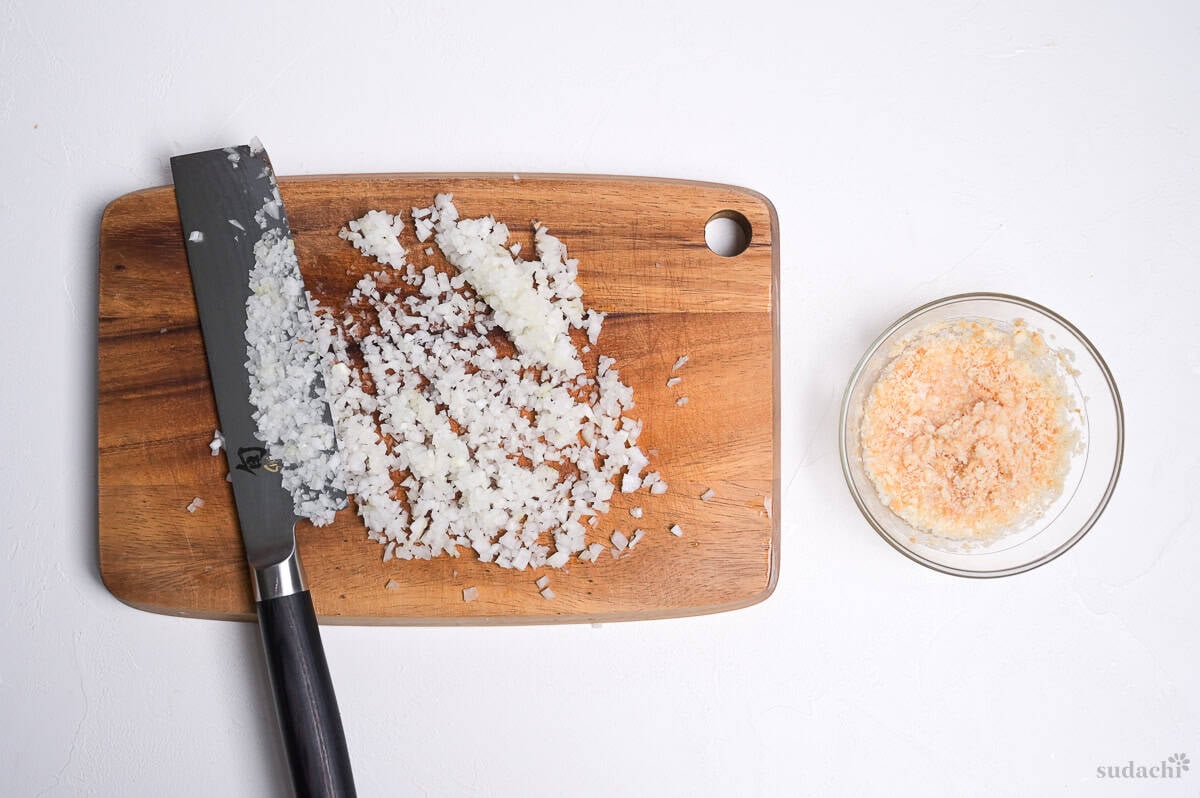
A panade is panko soaked in liquid. It sits in among the meat as a filling. It glues nothing together, so binder is the wrong word for it. It has 2 jobs. The first is to soak up the juice and the fat the meat gives off in the pan and hold onto them. The other is to open small gaps between the bits of meat so the bite never comes out packed and heavy. More of it is not better. Panko can only carry so much liquid, and past that point the mixture goes slack and watery.
i. Put the ground beef and the ground pork in a large bowl and add the salt on its own. Everything else waits.
ii. Knead the meat and salt together for about a minute, this is a method called shio-neri. Keep the bowl and your hands cold the whole way through.
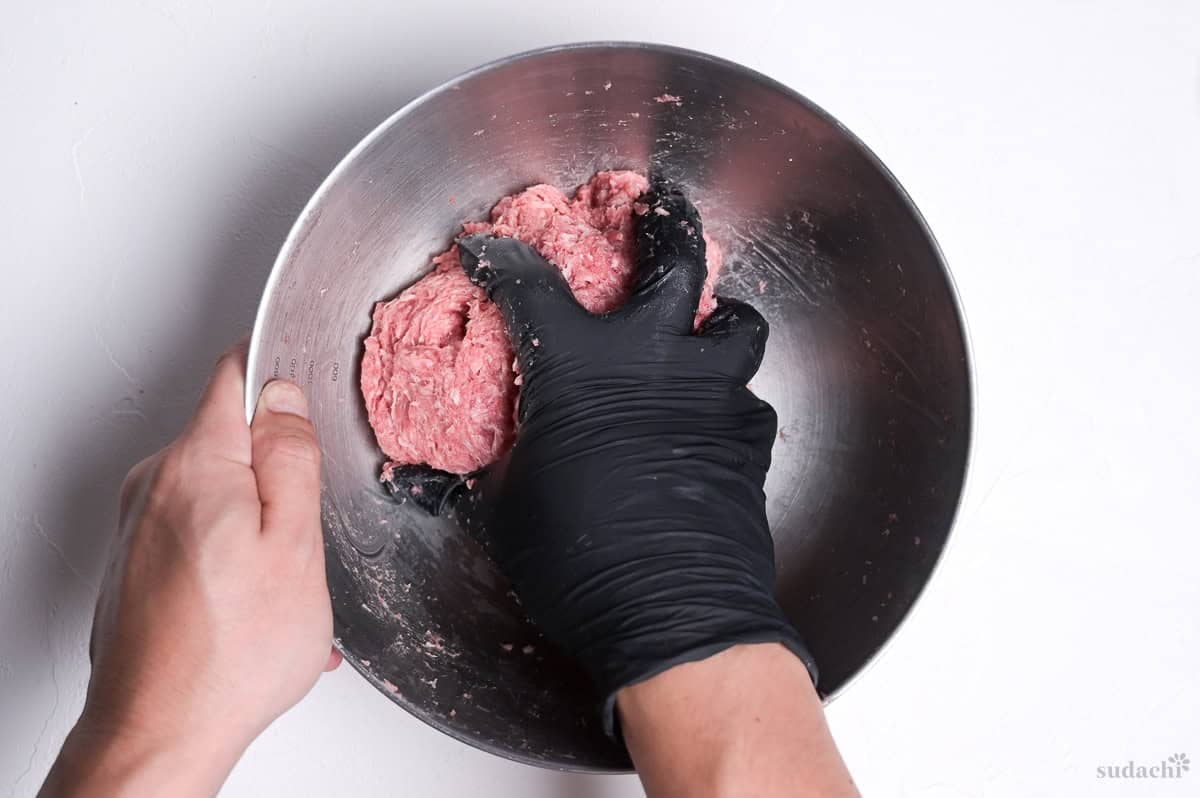
iii. Stop when the color pales, the mixture turns tacky, and it pulls into strings as you lift it off the bowl. It should be clinging to your palm.
Fat softens around body temperature, and pork fat gets there first. Let the mixture climb to the warmth of your hands and the fat starts running out while the meat loses its tack. Chilling the bowl and working fast are both there to keep it from crossing that line.
Shio-neri means kneading ground meat with salt alone, before any other ingredient joins it. Salt dissolves part of the protein in the meat, and the dissolved protein links up into a mesh. That mesh is what holds the juices in while the patties cook. If you have made burgers, this will sound backwards, since the rule there is that overworking turns them tough. A burger patty cooks with its meat still loose, so kneading tightens it and it turns tough. Here the panade opens gaps between those bits, so the mesh can form and the bite never turns dense. Salt goes in first because mixing everything at once never builds that mesh at all.
i. Add the panade, the black pepper, a light touch of grated ginger, and the raw onion. If your meat is on the lean side, add some lard too.
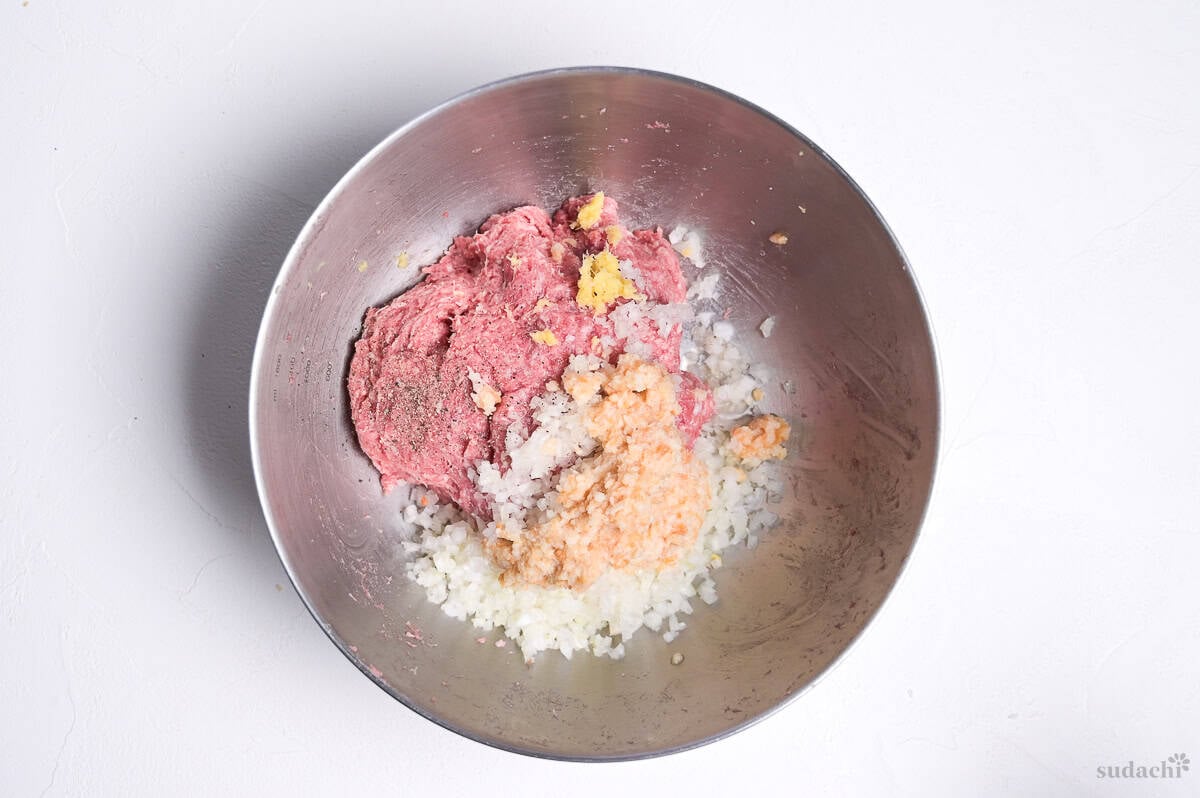
ii. Spread your fingers and mix fast and even. Keep the temperature down.
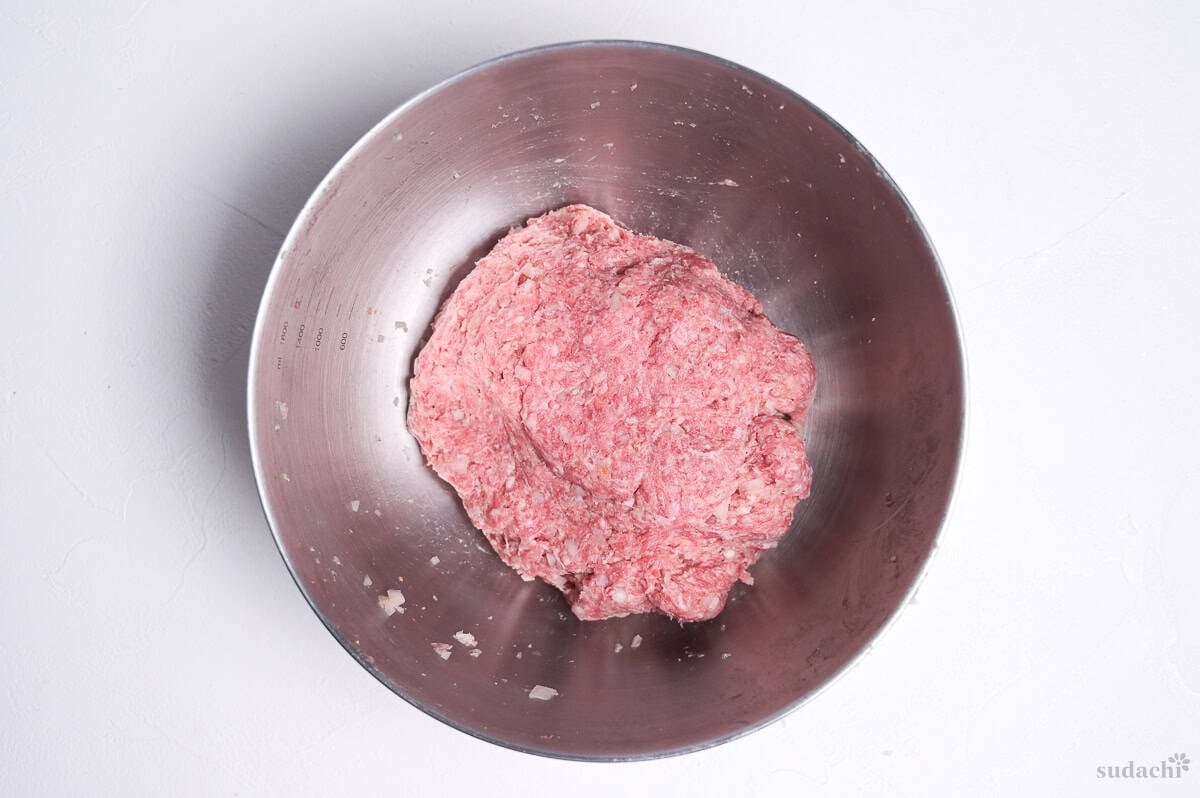
iii. Divide it into 2 large patties or 3 standard ones. Toss each portion from hand to hand, then form an oval about 2cm (¾ inch). Press a shallow dimple into the center of one side.
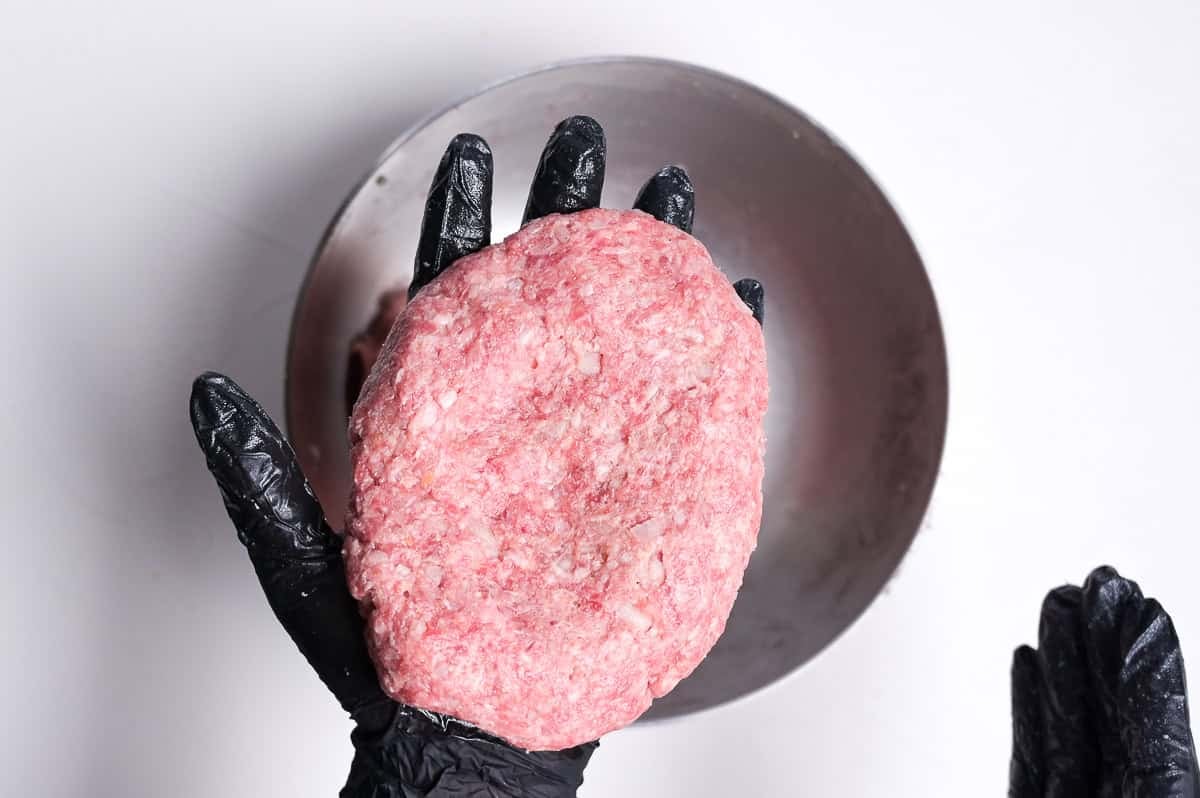
v. Smooth any cracks closed with a finger.
i. Put the shaped patties in the fridge and rest them for 30 minutes.
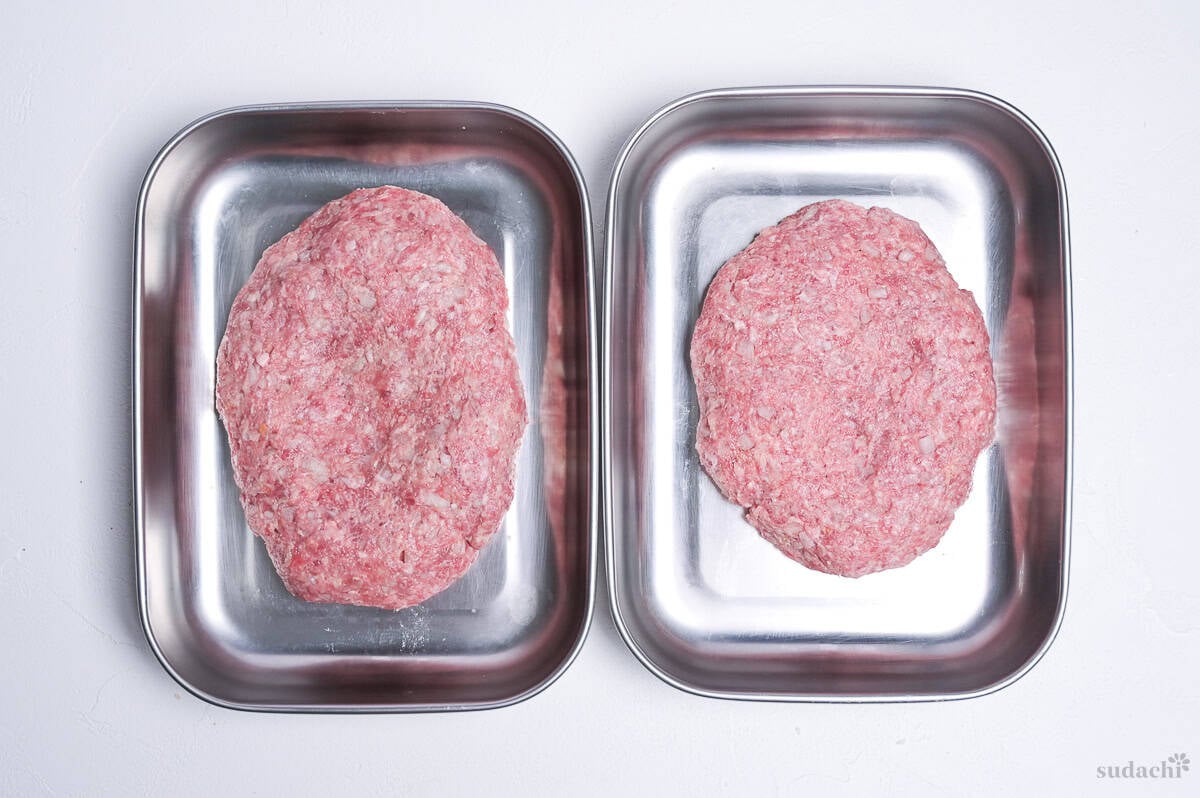
ii. Oil a skillet over medium heat and lay them in with the dimpled side up.
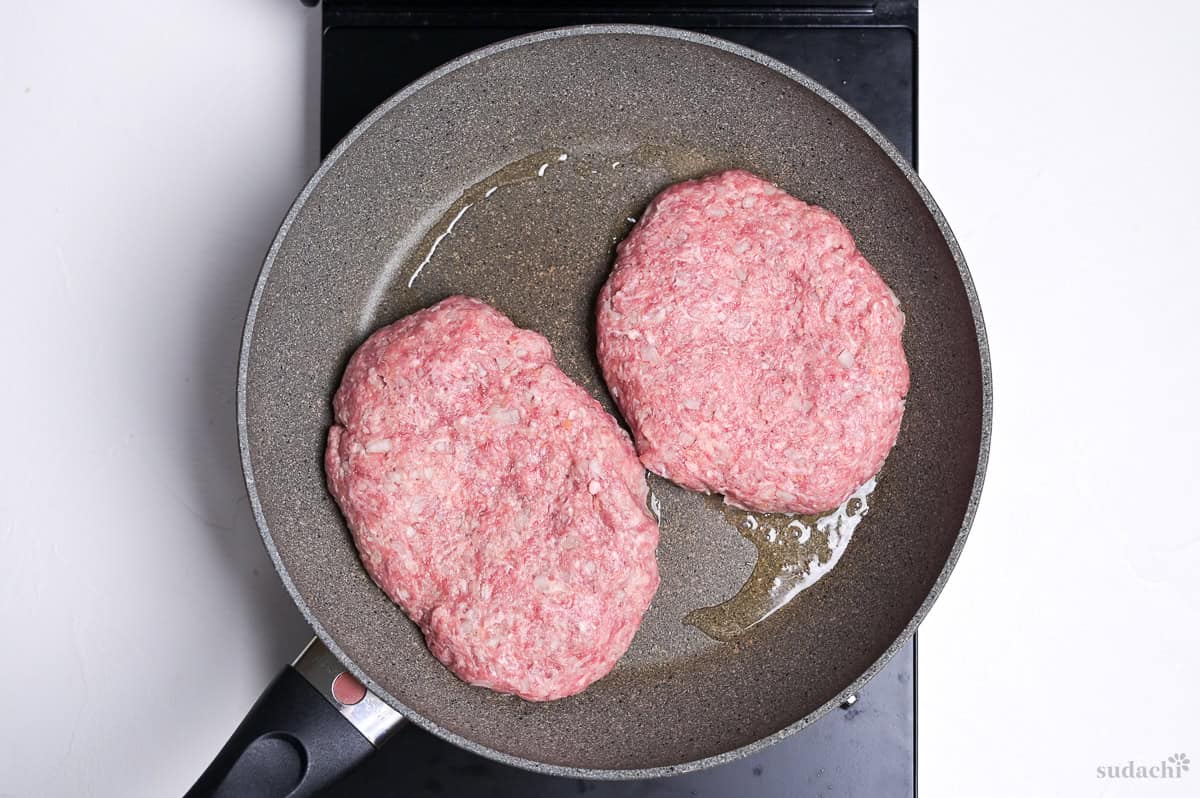
iii. Leave them alone for about 2 ½ minutes. Once a light brown crust forms, flip them and give them 1 ½ minutes.
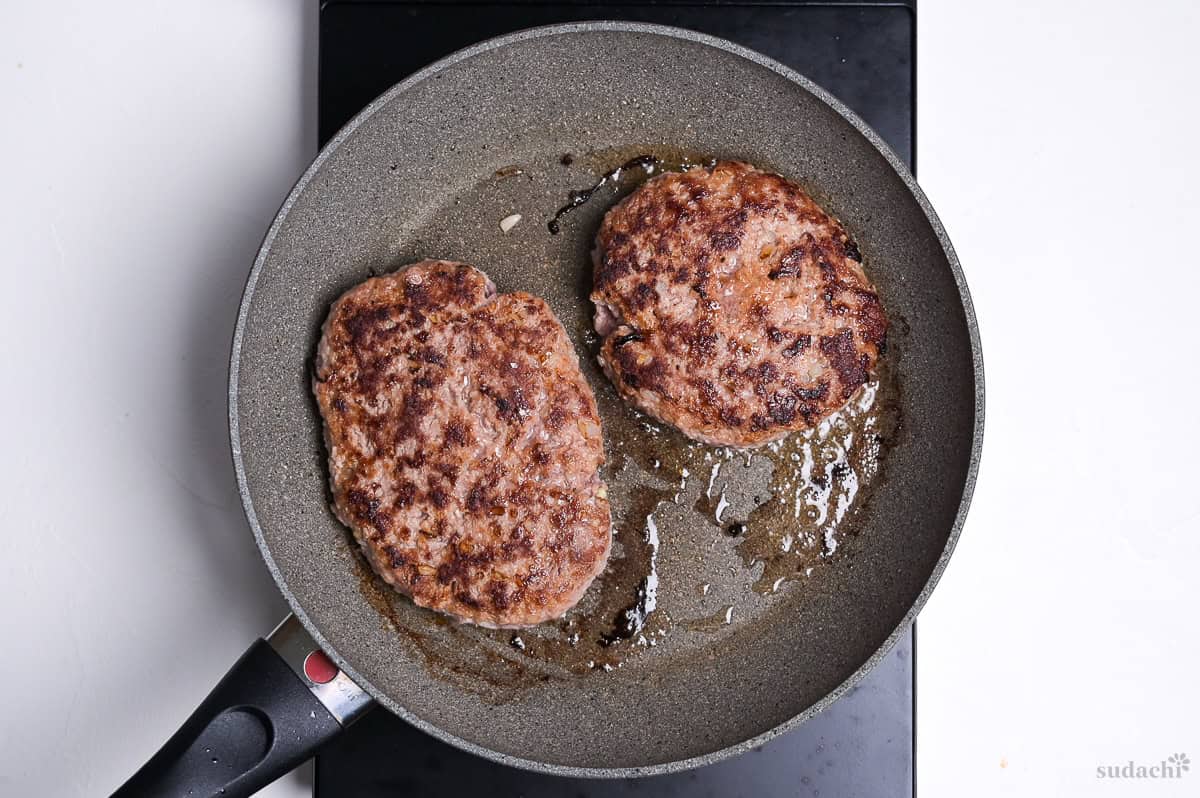
i. Pour the sake around the patties, cover the pan, and steam for 3 minutes.
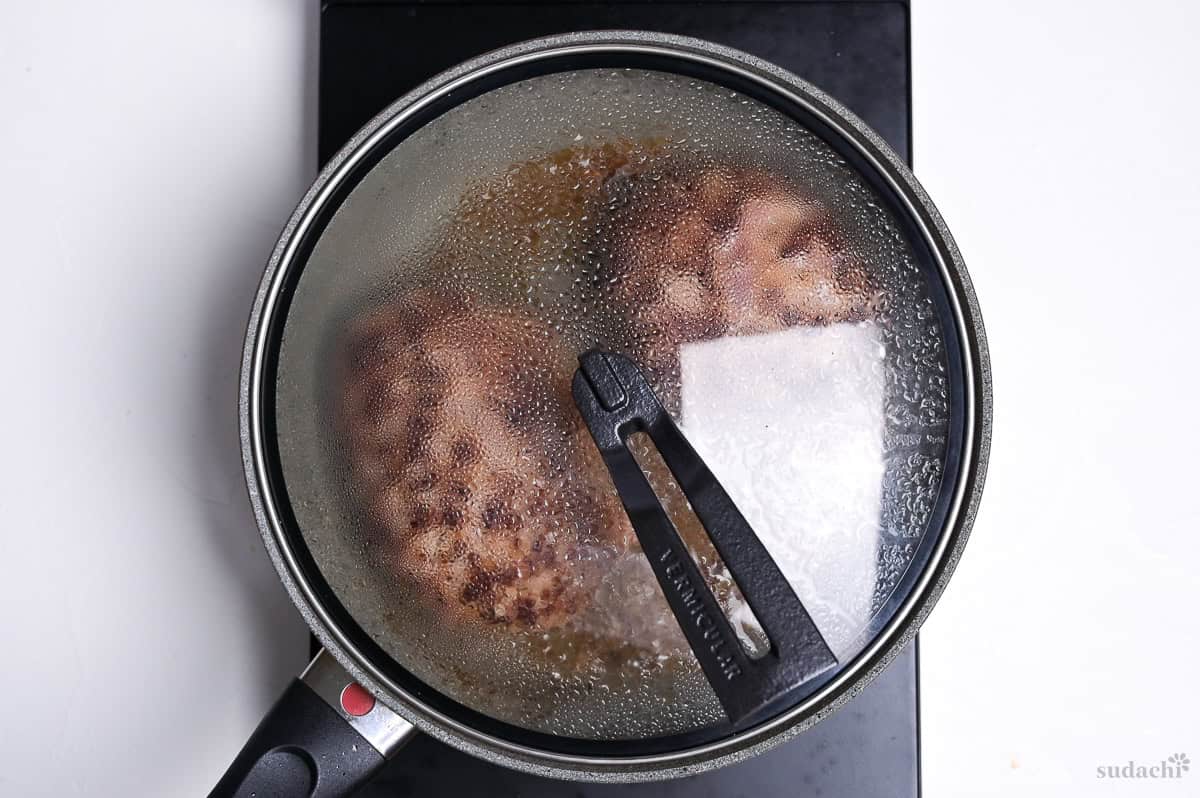
ii. Turn off the heat and leave the lid on for 2 minutes.
iii. Move them onto a rack and rest them for 2 to 3 minutes.
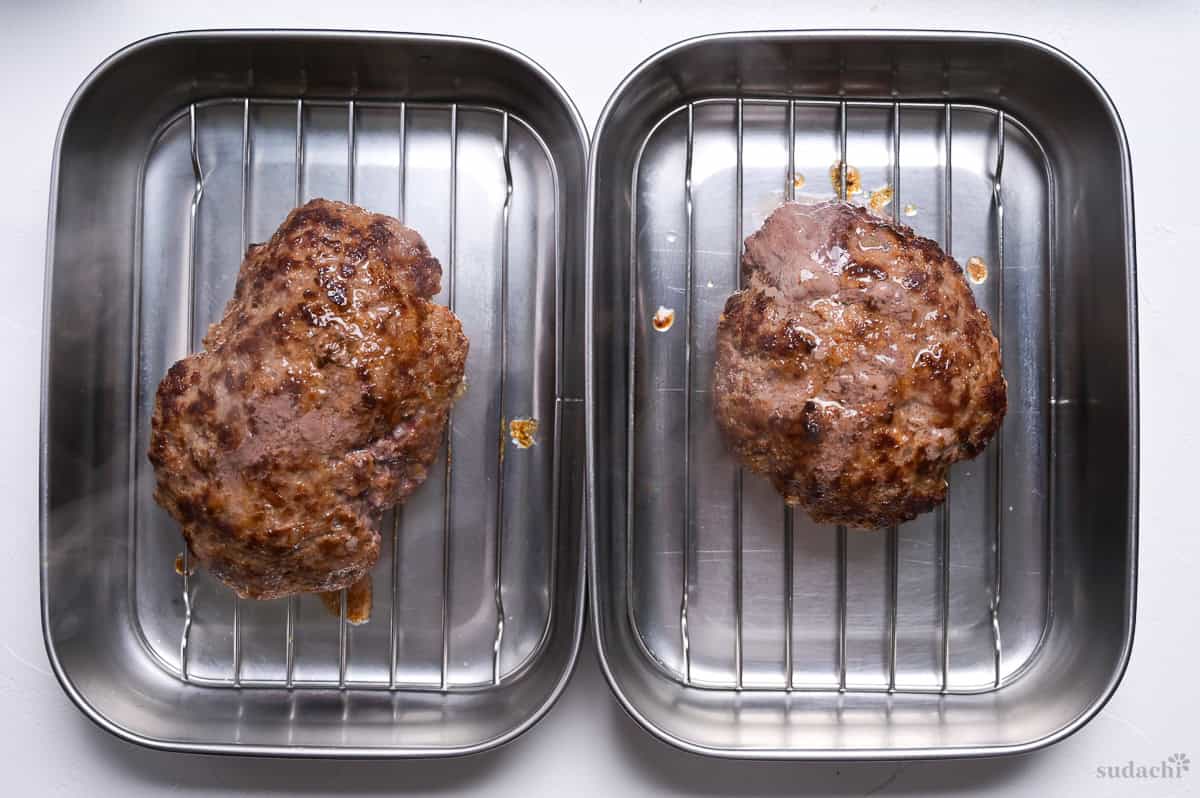
Steam carries heat faster than air, so with the lid on the center cooks through before the surface overcooks. The 2 minutes off the heat let residual warmth finish the middle.
i. Wipe the excess beef fat out of the pan. Leave the browned juices on the bottom.
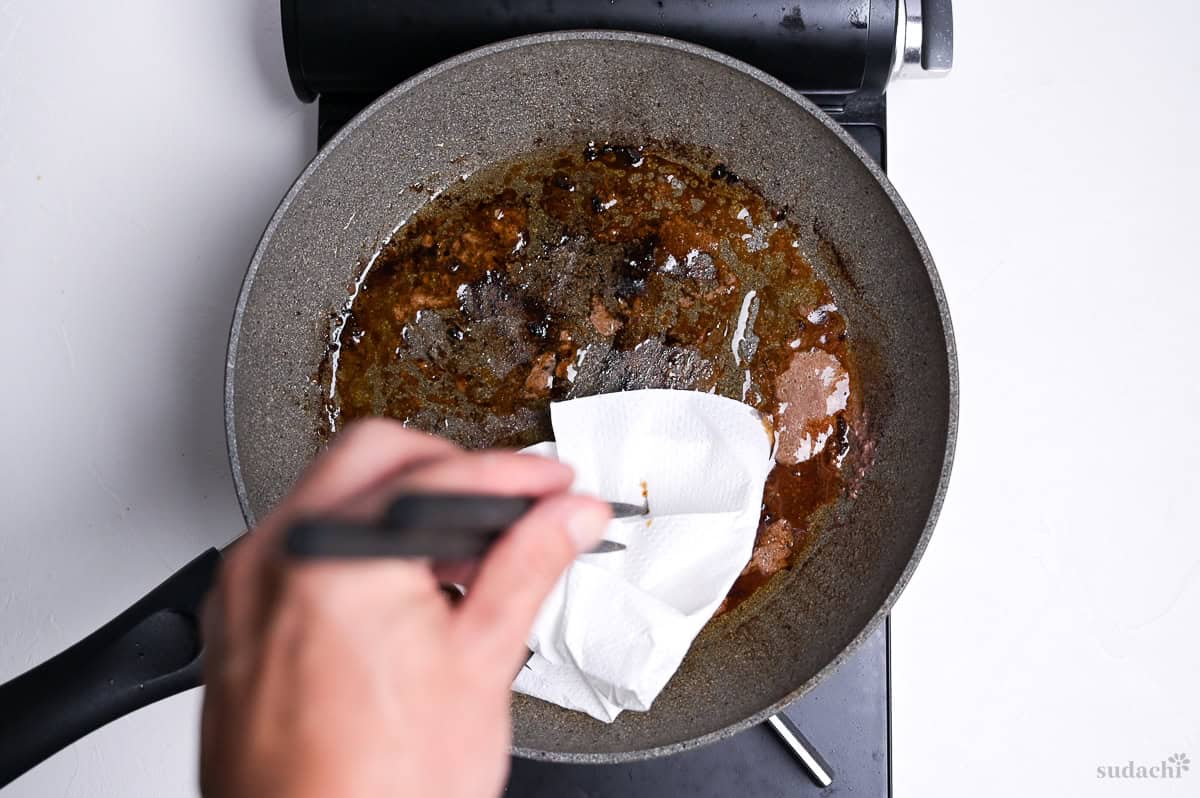
ii. Back to low heat, pour in the sake and scrape the bottom clean.
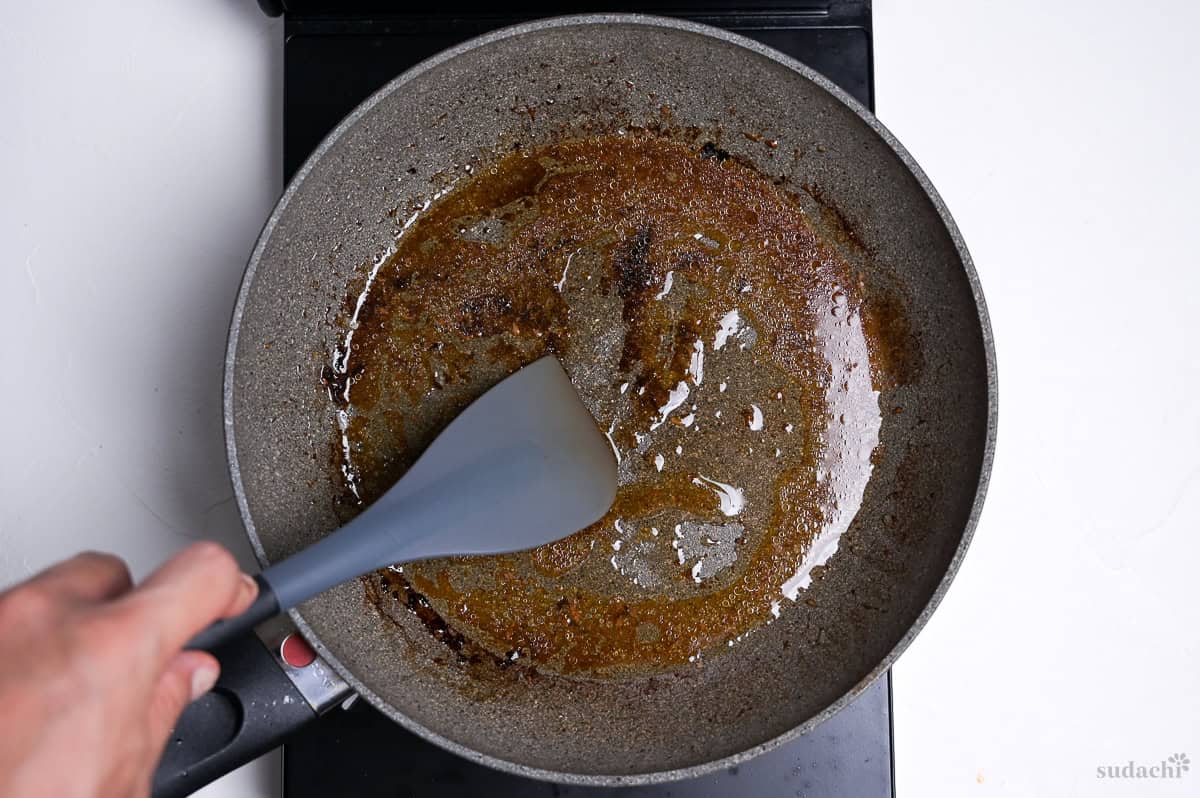
iii. Add the dashi and the mirin and bring it to a boil once to cook off the alcohol.
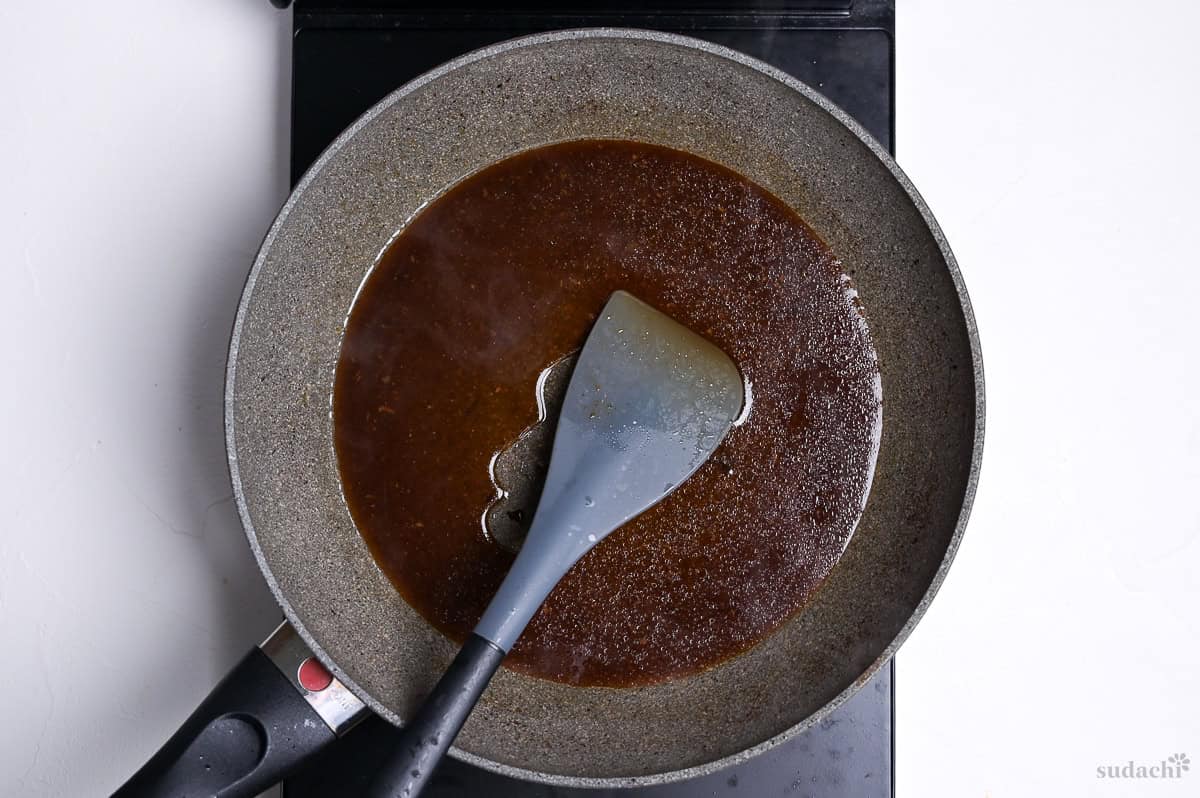
iv. Off the heat, stir in the soy sauce and the ponzu, then finish with a small squeeze of sudachi or lemon. Taste as you add the soy sauce.

i. Set the patties on plates and spoon the warm ponzu sauce over them.
ii. Pile grated daikon on top of a shiso leaf, then chopped green onions.
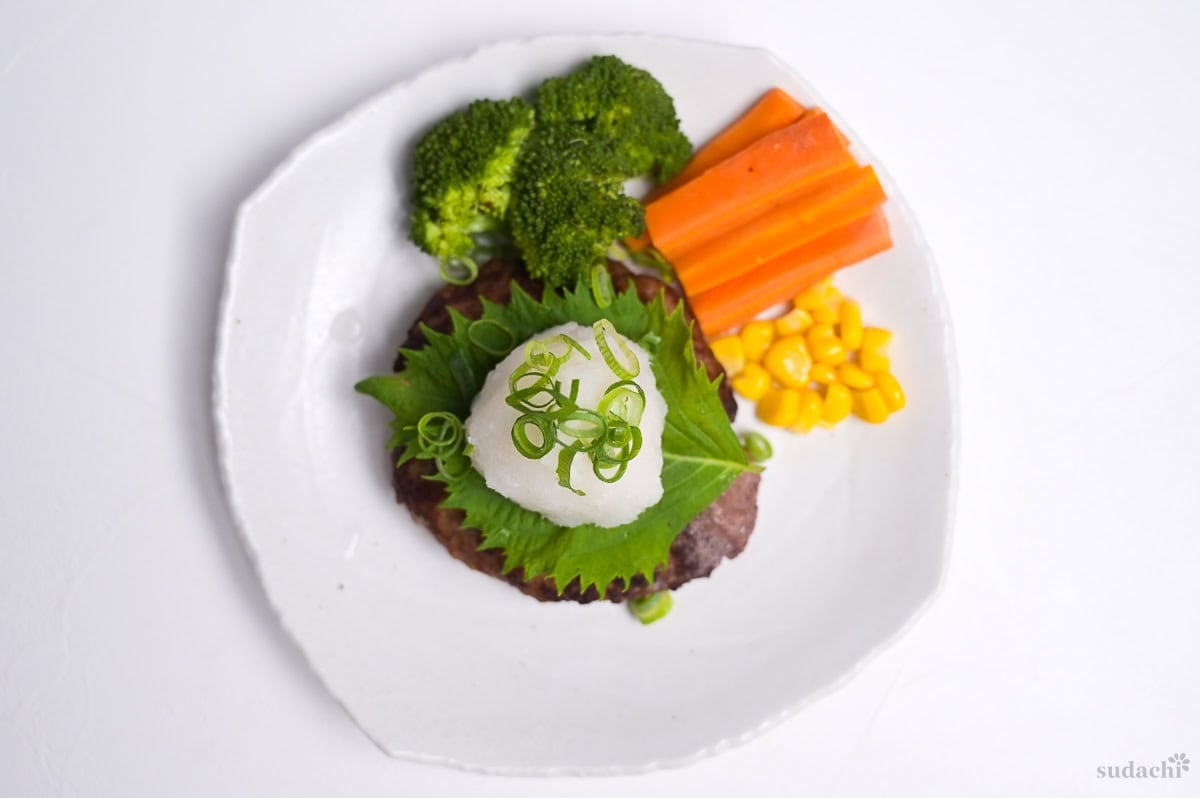
iii. Serve it with white rice and steamed vegetables or a salad.
If you follow the default recipe, it will yield 2-3 servings.

Tips for the Best Wafu Hambagu
- Salt the meat on its own, and do it first. It is tempting to tip every ingredient into the bowl and mix, and this is the one order you cannot rearrange. Only once the salt has gone in alone does the meat turn tacky, and that tack is what holds the juices while the patties cook. Salt added later never gets that back.
- When the mixture feels slack, work in a little dry panko. The onion goes in raw, so it releases water while you mix. When it sags on your palm and refuses to hold a shape, add unsoaked panko a pinch at a time. Dry panko straight from the bag drinks that water up and brings the mixture back to a texture you can shape.
- Read the internal temperature once. Every extra poke with a skewer and every press with a spatula opens another escape route for the juices. Push the thermometer into the thickest part just once and read the number.
All 3 work only while the meat mixture is in your hands or while you are standing over the pan.
Storage & Meal Prep
Fridge: Cooked patties keep 3 days, stored plain. Raw mixture keeps 1 day.
Freezer: Raw mixture 2 weeks, cooked patties 1 month. Wrap them flat and thaw in the fridge overnight.
Meal prep: Chill the mixture unshaped after kneading. Shape within 30 minutes of cooking, since longer sitting cracks it.
Reheating: Cover with a little water, 2 to 4 minutes on low. Remake just enough sauce, thinner without the pan juices.
What to Serve With Wafu Hambagu
Wafu Hambagu Troubleshooting
The patty ran thicker than 2 cm, or the dimple in the middle wasn’t deep enough, or the heat was high enough to set the outside first. This is fixable after plating. Slide it back into the pan with a splash of water, cover it, and give it 2 to 3 minutes on low. Measure the thickest part again and go by the number before you eat.
That dome is the outer fibers contracting first and pushing juice out of the middle. Either the heat is too high or the dimple was shallow. Turn the heat down right away and put the lid on. Leave it alone here, because every bit of pressure from a spatula comes back out as juice. Once the outside and the center even out in temperature, the dome settles.
Daikon holds a lot of water. What pools at the bottom of the plate is usually water that was never drained off, or water that separated while the grated daikon sat. This sauce is thin to begin with, so extra water waters down the flavor with it. Grate it right before you plate, then lift it into a strainer and drain it lightly before it goes on.
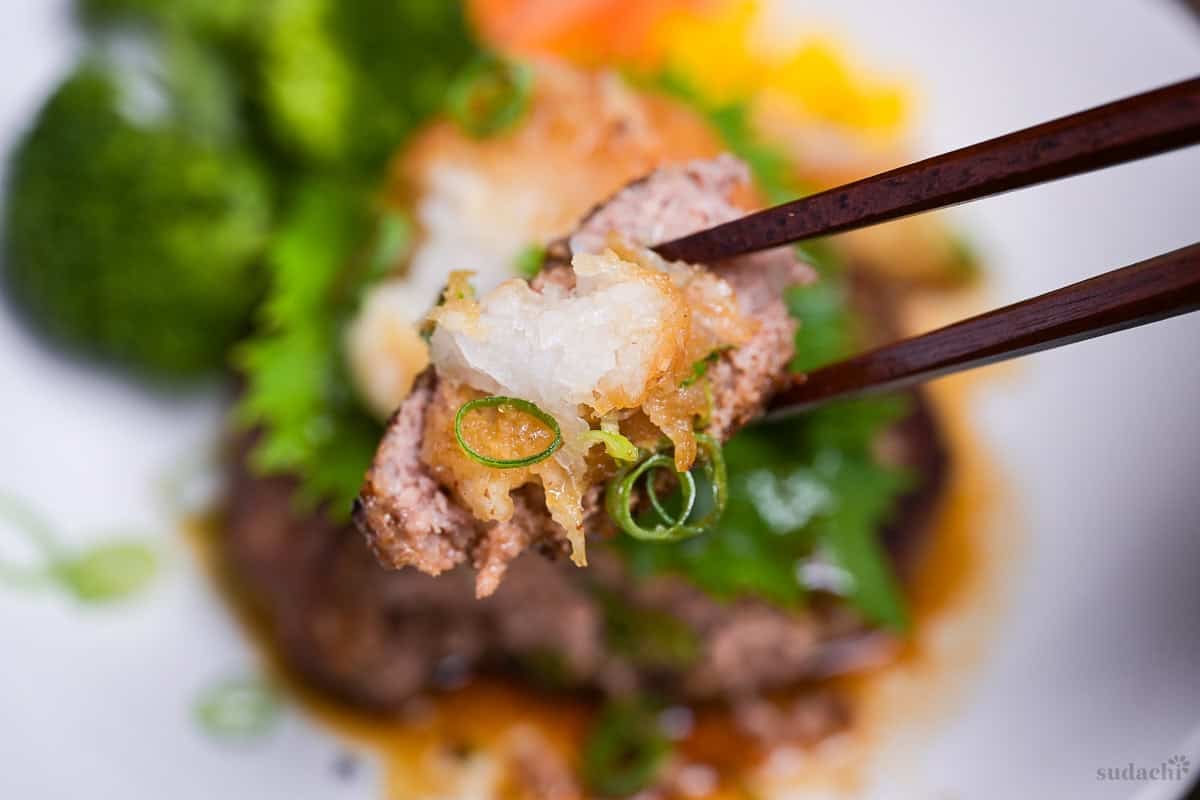
More Japanese Ground Beef Recipes
Since this one starts with blending your own beef and pork, whatever ground meat is left over has somewhere to go in my Japanese ground beef recipe collection.
Did You Try This Recipe?
I would love to hear your thoughts!
💬 Leave a review and ⭐️ rating in the comments below. 📷 I also love to see your photos – submit them here!
Wafu Oroshi Hambagu with Grated Daikon

Ingredients
For the Patties
- ½ onion minced as fine as you can get it, no coarser than 3mm
- 3 tbsp dashi stock or water/sake/milk
- 4 tbsp panko breadcrumbs
- 200 g ground beef
- 100 g ground pork
- ½ tsp salt
- ¼ tsp ground black pepper
- ½ tsp grated ginger root
- ½ tsp lard optional, for lean grinds
- ½ tsp cooking oil for the pan
- 1 tbsp sake for steaming
For the Warm Oroshi Ponzu Sauce
- 1 tbsp sake for deglazing
- 2 tbsp dashi stock or water/sake
- 1 tsp mirin
- ½ tsp Japanese soy sauce (koikuchi shoyu)
- 1 ½ tbsp ponzu sauce
For the Grated Daikon and Garnishes
- 3 tbsp grated daikon radish (daikon oroshi) about 30 to 50 g per person, lightly drained
- 2 shiso leaves
- finely chopped green onions
The ingredient brands and tools I trust are in my Japanese pantry guide and my cooking tools guide.
Can’t find certain Japanese ingredients? See my substitution guide here.
Instructions
- Finely dice ½ onion, and mix 4 tbsp panko breadcrumbs and 3 tbsp dashi stock together in a small bowl to make a panade.

- Place 200 g ground beef, 100 g ground pork and ½ tsp salt in a large bowl and knead them together until the mixture turns tacky and uniform.
- Add the onion and panade to the bowl along with ¼ tsp ground black pepper, ½ tsp grated ginger root, and ½ tsp lard. Knead until evenly distributed.
- Divide the mixture into portions and shape into ovals about 2cm (¾ inch) thick. Press a dent in the centers, then place them in sealable containers and refrigerate for 30 minutes.
- Heat a skillet over medium and add ½ tsp cooking oil. Once hot, lay the patties inside with the dent side facing up. Fry until a light brown crust forms, then flip and repeat.
- Pour 1 tbsp sake around the pan (not directly on the patties) and cover with a lid. Steam fry for 3 minutes, then turn off the heat and leave them covered for 2 minutes. Check that the thickest part reaches 75°C (167°F) on a thermometer.
- Transfer the cooked patties to a wire rack to drain excess oil.
- Wipe the excess oil out of the pan, but leave the browned bits and juices, they will add flavor to the sauce.
- Deglaze the pan with 1 tbsp sake. Heat on low and gently scrape the bottom of the pan to release any fond. Add 2 tbsp dashi stock and 1 tsp mirin. Let it boil for 1 minute then turn off the heat. Add ½ tsp Japanese soy sauce (koikuchi shoyu) and 1 ½ tbsp ponzu sauce.
- Gently squeeze the excess liquid out of 3 tbsp grated daikon radish (daikon oroshi) and prepare 2 shiso leaves. Plate up the hamburgs and top each one with a shiso leaf, a heap of grated daikon and some finely chopped green onions.
- Serve with rice and your favorite sides. Pour the sauce over the top right before eating. Enjoy!


Leave a rating and a comment