

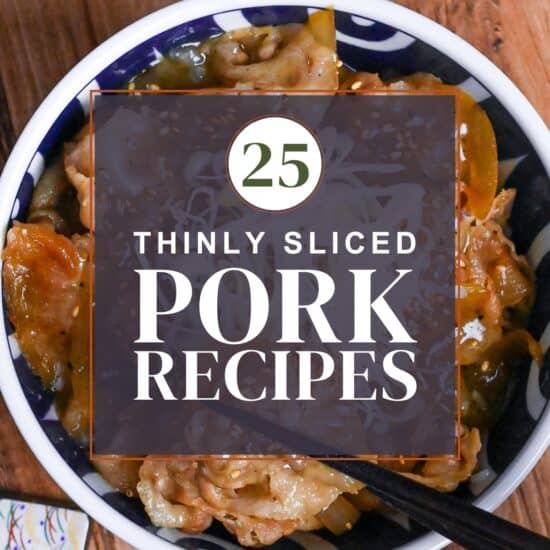

Plenty of you might first meet pork as a single thick chop, cooked one careful way, with not much room to wander from there. Thinly sliced pork works the opposite way, an all-rounder that asks almost nothing of you and gives back an absurd amount of range in return. Learn how it behaves just once, the way it crisps to lacy edges in a hot pan or melts into a pot of broth, and the same humble slice quietly becomes a different dinner every single night of the week.
1. Yakisoba

Featured Comment
My wife usually uses the mix that comes in the yakisoba package so this was the first time we made it from scratch. I used the 2x recipe… it tasted great and had a dark, smoky look from the sauce… Being Japanese, my wife usually makes all the Japanese dishes, but this definitely upped our usual recipe. Thanks for sharing your recipe, it was scrumptious!
★★★★★
– Charles
This is my number one. I thought I had finished my yakisoba back in December 2020, building the sauce from scratch to taste like the festival stalls I remembered. Then January 2025 handed me an accident that changed everything. A quarter teaspoon of curry powder, hidden in the sauce, and suddenly it was twice as good.
That hint of curry is not to make it taste like curry at all. It just deepens everything into a savory complexity you cannot quite name.
2. Pork Udon
Featured Comment
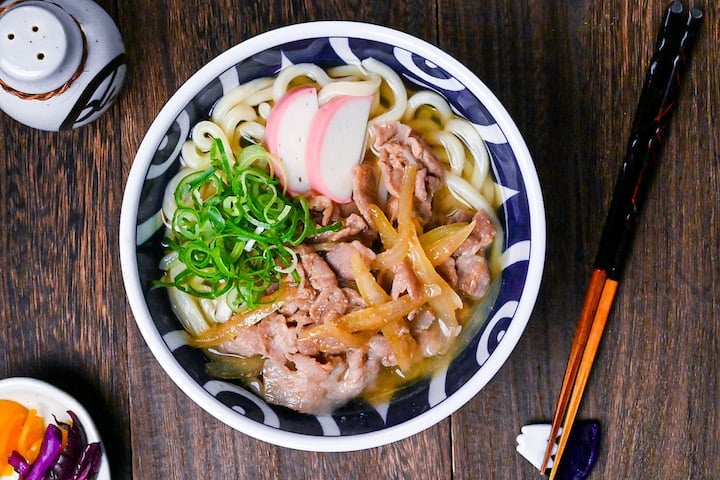
Really enjoyed this recipe. The big thing for me was the contrast between the light broth and the rich marinated pork belly. Fabulish! Will be adding this into our family menu rotation.
★★★★★
– Carolyn
Since I am from central Japan, I have never picked a side between the beef and pork versions of niku udon, so I make both. The pork bowl runs a little lighter than beef but still arrives loaded with umami, sweet onions melting into a rich dashi broth over springy noodles.
The whole bowl turns on one quiet contrast I keep coming back to. A light, clean broth meets that marinated pork belly, and the two play off each other in a way I want you to taste.
3. Osaka Okonomiyaki

Featured Comment
Just as good as restaurants in Japan!! I am japanese-American it’s nice to have recipes in English that brings authentic taste from the motherland My grandma never wrote down recipes so this brings nice memories. All his recipes are delicious definitely try them!!
★★★★★
– Rin
I stopped thinking of okonomiyaki as a cabbage pancake the day it clicked: this is cabbage first, with just enough batter to bind a whole mountain of it. So I skip the boxed flour-mix and build my own from cake flour, because a premix only ever tastes like a premix. The okonomi sauce comes from pantry staples too.
Lay the thin slices flat across the top and the rendering fat shallow-fries that surface into a crisp, lacquered edge.

4. Curry Udon

Featured Comment
Very tasty curry udon! First time making it with dashi, mirin and pork belly. Will make this again.
★★★★★
– @crypticlolita (from YouTube)
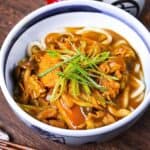
I skip the roux cubes entirely and use a simple curry powder and starch slurry whisked into dashi. The same thin pork belly that vanishes into a soup elsewhere here gets seared first in a single layer.
The whole thing comes together on one burner in under thirty minutes.
5. Buta Yasai Itame

I make this almost every week, usually the night before a grocery run, when the crisper is a graveyard of half a carrot, mushrooms, and onion. It is the recipe I reach for when I want dinner without a plan, just whatever I have and a hot wok.
The trick is patience in reverse: I sear the meat first so its sweet, glossy fat becomes the cooking medium, then add vegetables by density. The sprouts get exactly sixty seconds, no more, or they weep and go limp. Sauce comes last, a quick toss, never a simmer. Ready to empty your fridge too?
6. Negi Shio Butadon

Featured Comment
I made this for dinner for my girlfriend and me this evening, and wow … lovely!
★★★★★
– Philippe
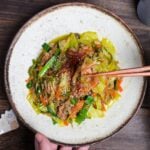
I went to Yoshinoya for takeout and ate this one like a detective, not a customer. The thing I kept chasing was the pork: how does a fast chain get it that soft and craveable? Back home I rebuilt the salty negi shio sauce with lemon and coarse black pepper, going for that gloriously junky hit.
The texture secret turned out to be almost stupidly simple. A quick blanch, thirty seconds to a minute, just until the color changes, is all it takes to keep the pork tender. No grill, no long simmer, yet it lands that soft, craveable Yoshinoya bite at home.

7. Nikujaga

Featured Comment
I made the nikujaga using shaved beef. I liked how you included shirataki. I used asparagus instead of snow peas only because of availability. This is truly comfort food.
★★★★★
– Alice
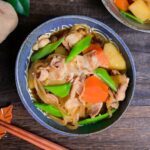
Nikujaga is the dish I reach for when I want to show what Japanese home cooking actually means.
The pork earns its spot here for a quiet reason: a little fat melts off into the broth and carries seasoning into everything around it. But the move that makes or breaks the pot is the order I add things, and getting the sugar in before the soy is what saves you from pale, unevenly seasoned bites.
8. Mille Feuille Nabe
Featured Comment
Got a giant Napa from a neighboring farm, and had some sliced pork belly in the freezer. I had seen this made on TV and so decided to try it. WOW! This recipe is delicious and greater than the sum of its parts, as they say. thanks for a great recipe!
★★★★★
– Darah
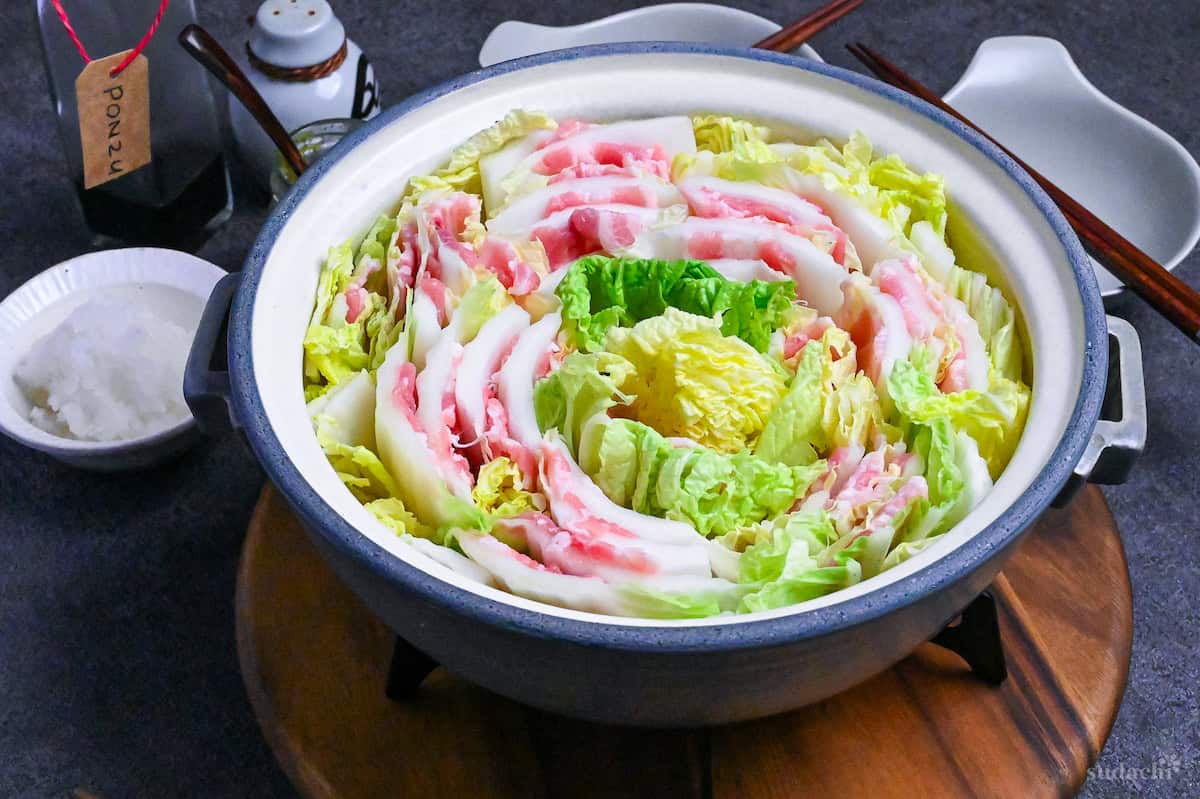
Mille feuille nabe borrows its name from the French pastry, all those delicate layers, and rebuilds the idea with thinly sliced pork and napa cabbage.
The beauty is how little it asks of you. You arrange the layers, pour over a broth of dashi, sake, sesame oil, chicken bouillon, and black pepper, then simmer and walk away. Dip each piece in ponzu and you will understand why a giant napa and a pack of sliced pork is all anyone needs.

9. Tanindon
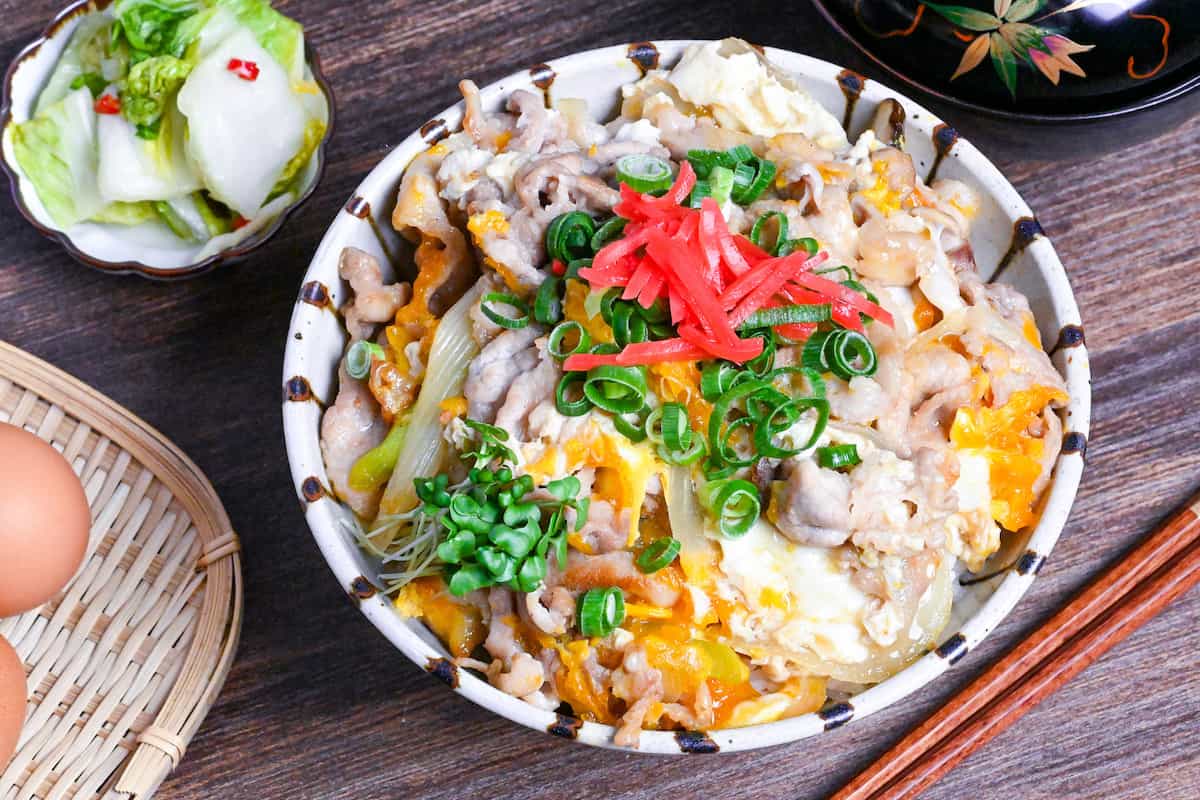
Tanindon is oyakodon‘s lesser-known cousin, the same fluffy-egg bowl but built on pork instead of chicken. I chose pork to chase the sweetness and flavor it uniquely brings, then dredged the thin slices in a pinch of salt and cake flour before frying. That light coat is crucial, and it shapes both texture and juiciness.
The eggs come in two waves, and this is the part I want you to try exactly as written. Whisked whites go in first under a lid for 1 minute, then the yolks drizzle over for a soft finish. I developed it not to repeat oyakodon, and honestly, I might like it even more.

10. Tonpeiyaki

Featured Comment
Thank you for this recipe. I am currently in Japan and enjoyed my first tonpeiyaki. I really wanted to recreate this dish once I returned home, so I am pleased to come across this recipe.
★★★★★
– Angie
Have you met Tonpeiyaki yet? It flies under the radar, but I promise you it earns a spot in your regular rotation. I set out to recreate that izakaya flavor at home, and after a fair bit of practice I landed it with nothing but a single frying pan.
The whole thing comes together in about ten minutes, and the magic is all in one move. I fry the pork until the fat turns crisp and savory, then fold it into eggs that stay soft and barely set. Pull them off the heat a beat too early, just before they look done, and you get that glossy, custardy finish.
11. Nikumaki Onigiri
Featured Comment
WOW! this is amazing! At first I was overwhelmed, but it came together so well! Thank you for such a wonderful and (deceptively) easy-to-make recipe!
★★★★★
– Charissa
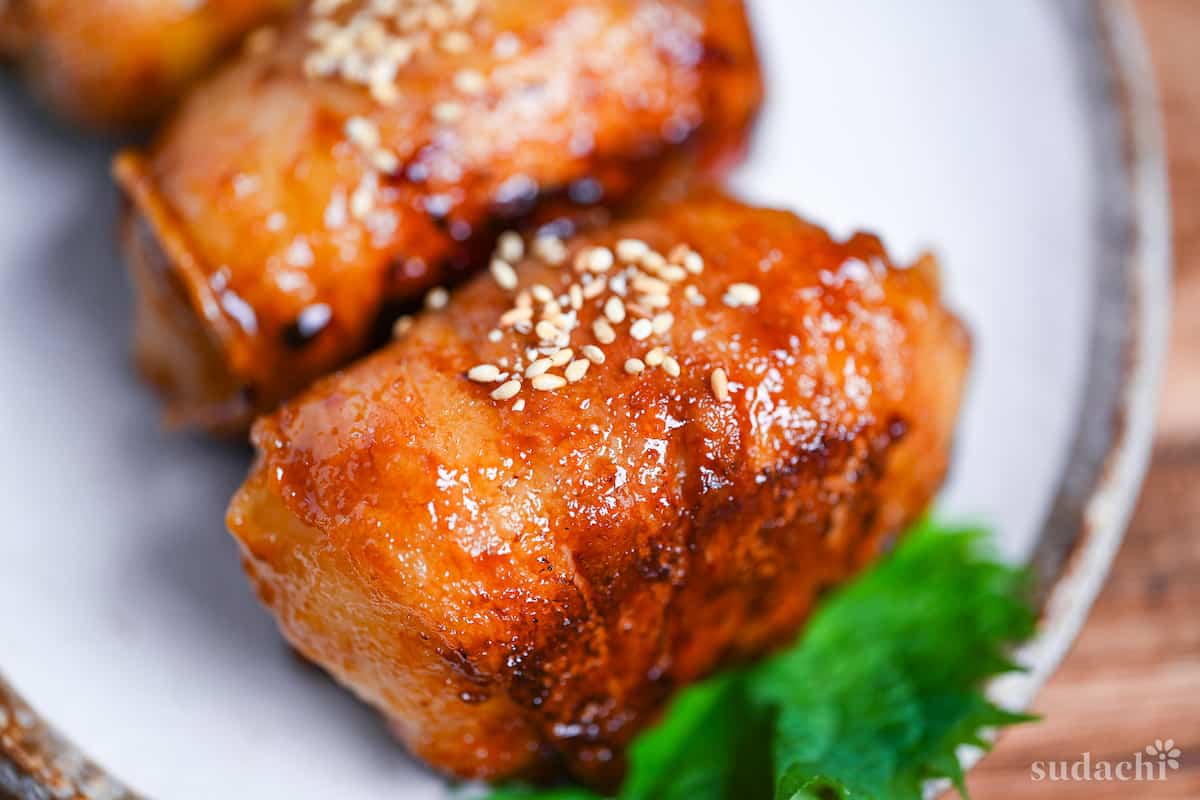
Picture a rice ball wrapped not in nori but in a coat of pork that fries as crispy as it gets. The outside turns into a brittle, glazed shell while the rice underneath stays soft and warm, and that hard-against-tender contrast is the whole reason I keep making these. It is a little junky, and completely satisfying.
The glaze leans teriyaki with a hit of garlic, the kind of sweet-savory coat that makes one onigiri quietly turn into three. My one quiet move is a thin dusting of starch before the pork hits the pan, and it does two jobs at once that change everything. Please give it a try!

12. Goya Champuru

I will be honest with you. Goya might be the most bitter vegetable I have ever cooked with, and at first I wanted to scrub that bitterness away completely. I learned not to. A short salting calms the edge while the bitterness stays, and that quiet sharpness is exactly what makes this dish worth cooking.
Here is where most cooks lose the tofu. I skip the heavy weights and use the microwave to pull out water fast, then fry the cubes separately until they turn golden and crisp at the edges. They hold their shape instead of crumbling into mush. Pull your eggs early too, while they are still soft and barely set.
13. Miso Nikomi Udon
Featured Comment
So delicious! Took me back to living in Japan.
★★★★★
– Hillary
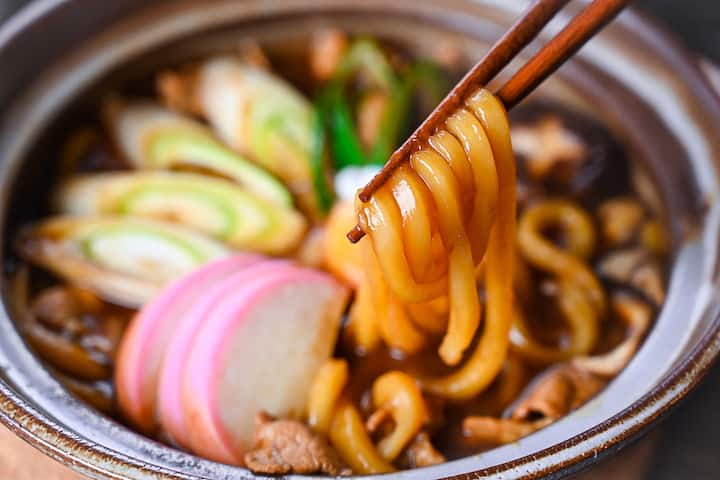
This was the bowl of my childhood, an old-fashioned udon shop just steps from my family’s apartment back then, its clay pots bubbling on cold afternoons. That smell is the memory I have spent years trying to put back into a bowl.
I sear the pork until its fat turns crisp and golden, then let it enrich a dark, deep red miso broth built on Hatcho miso. The udon goes in a few minutes shy of done, finishing right in the clay pot. One spoonful and I am ten years old again.
14. Hiroshima Okonomiyaki

Featured Comment
My first Hiroshima style okonomiyaki. Both my son and I enjoyed it. I will make this style again for dinners. Thank you!
★★★★★
– Sharon
I love how Hiroshima okonomiyaki refuses to be one fixed thing. You start with a thin crepe of batter, then build upward in layers instead of stirring everything into a single bowl. Cabbage, a tangle of noodles, and whatever else you want each get their own spot in the stack.
The slices laid across the top are the quiet trick here. As the heat works through, their fat melts down into the layers below and binds the whole tower together, so when you flip it the stack holds instead of scattering. And if your flip is a little clumsy, it still tastes right, which is the part nobody tells you.
15. Buta Kimchi Itame
Featured Comment
Absolutely delish!
★★★★★
– Esther
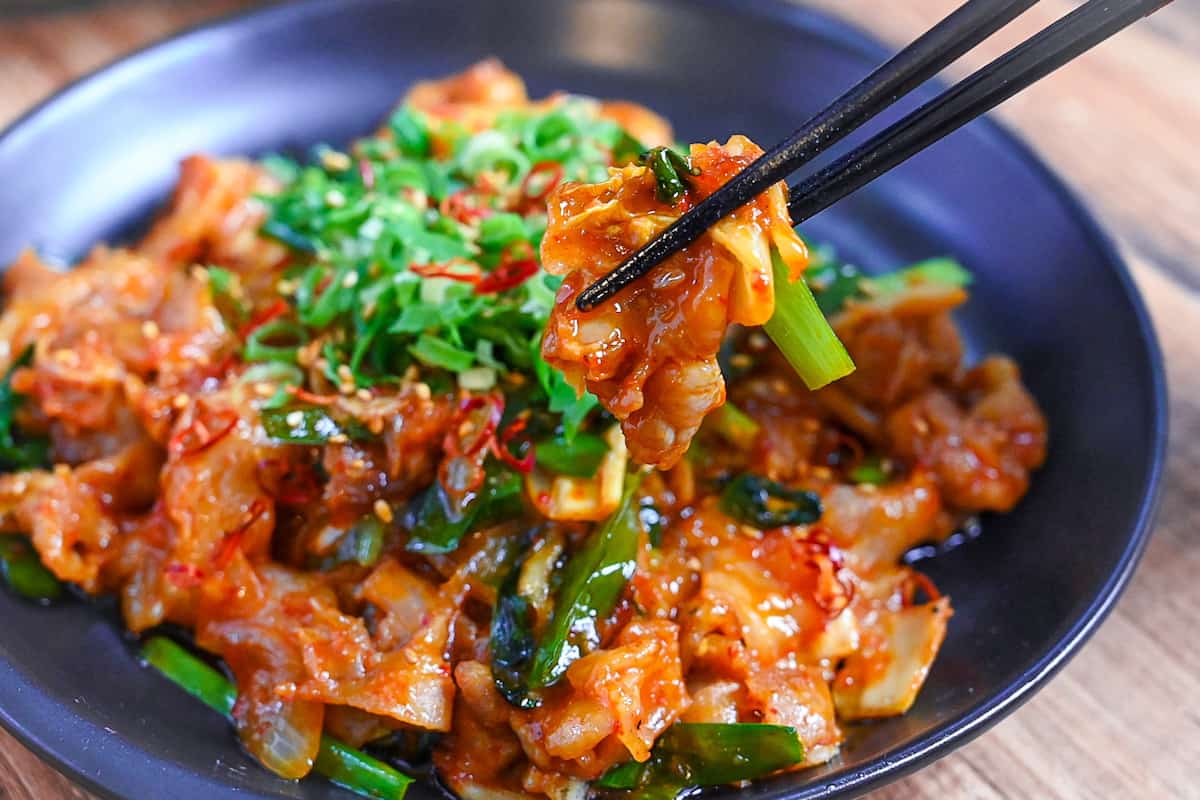
Everything in me wants to stir a hot pan, and with buta kimchi that instinct is exactly what flattens it. So I do the opposite. I press the pork into a single layer, dust it with a thin coat of flour, and walk away for half a minute while one side develops a beautiful color.
That patience is the whole trick. The flour catches the heat and crisps the fatty edges, then later thickens the sauce into something glossy that clings. The kimchi goes in last, on purpose, because acid and moisture stop browning cold. Get the order right and the difference is loud.
16. Roru Kyabetsu
Featured Comment
Cabbage rolls are safely a trustworthy ambassador of the culinary culture they come from. Over time, I have learned to trust the overall minimalism when it comes to seasoning and once more, this recipe has all it takes to deliver a stunning result.
★★★★★
– Peti
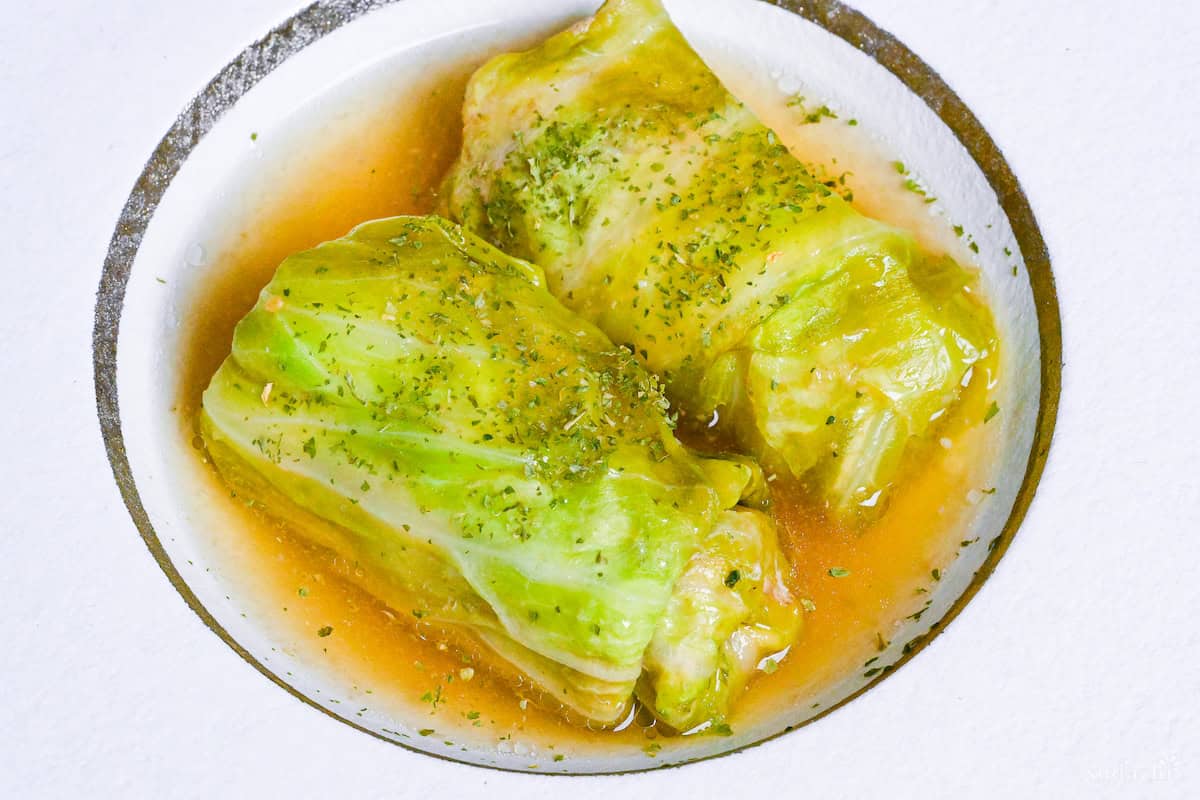
Most cabbage rolls ask you to knead a meatball of filling and then tie each one shut, which is exactly the fussy part that scares people off. I skip both steps. I lay two slices of thinly sliced pork across the leaf, tuck the sides, and roll it up, no mixing and nothing to tie.
The leaf is what makes people anxious, so blanch it for one minute first and it folds without a single tear. Then set a drop lid right on the broth and walk away. Fifteen quiet minutes later they come out plump, tender, and soaked through with a clean, layered savoriness.
17. Kasu Jiru
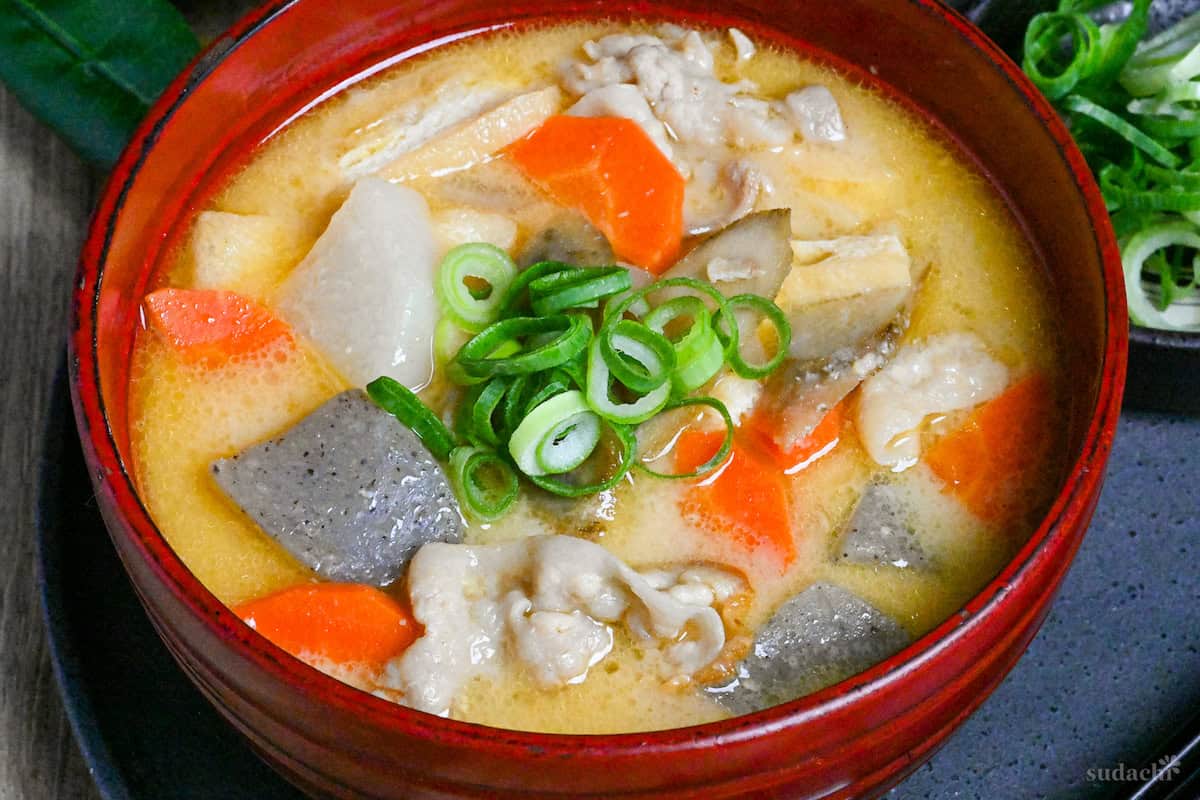
This is the soup I make when the cold sets in and a plain bowl of miso will not cut it. Sake lees give it a deep, almost nutty warmth, and the root vegetables turn soft and sweet in the broth. To me, that lees is the whole point. Skip it and you just have miso soup.
I sear the pork first so its rich fat melts into the base before any liquid goes in, seasoning the entire pot. One thing I will not budge on: I push the sake lees and miso through a fine strainer so they melt clean instead of breaking into chalky lumps. Get that right and the broth turns silky.

18. Sobameshi
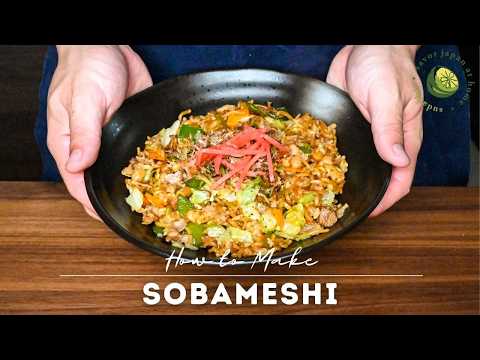
Sobameshi is one of those dishes I grew up eating often as a kid, the kind of homecooked thing most people outside Japan have never tried. It marries yakisoba noodles and fried rice in a single pan, and I keep that street-stall warmth while chasing a chewier, more tender bite than I remember.
Here is the move that earns this a second look. I render the pork until it goes crisp, then build everything on that fat, and right before serving I work in a pinch of curry powder and smoked paprika. You get a low, smoky heat that hums under the savory base, and suddenly the whole pan tastes new.

19. Nagasaki Champon

Featured Comment
I’m usually not a big fan of ramen since I like more veggies, but this one is perfect! I love how loaded it is with vegetables and how filling it feels. Super easy too!
★★★★★
– Grace
Champon is the bowl I reach for when I want something rich without much fuss. I sear the pork in a little lard, then build a broth around seafood and a pile of vegetables until everything turns deep and comforting. It is generous, fast, and forgiving in all the right ways.
The creamy, pale broth is the whole point, and mine skips the long simmer entirely. I lean on garasupu chicken bouillon for that rich base, then warm it gently so the splash of milk never curdles into something grainy. The thick noodles cook in their own pot and meet the soup right at the end.
20. Sara Udon

Sara udon traveled to my kitchen by way of Nagasaki, where the old Dejima trading port let Chinese stir-fried noodles slip into Japanese cooking. I love it for one reason: the loud crackle of fried noodles giving way under a glossy, thick gravy.
Here is the part I love most. You do not need any special fried noodles for this. I will show you how plain ramen noodles crisp into that golden, brittle nest right in your own pan, so a dish you thought lived only at the restaurant lands on your table tonight.

21. Nikumaki Asparagus
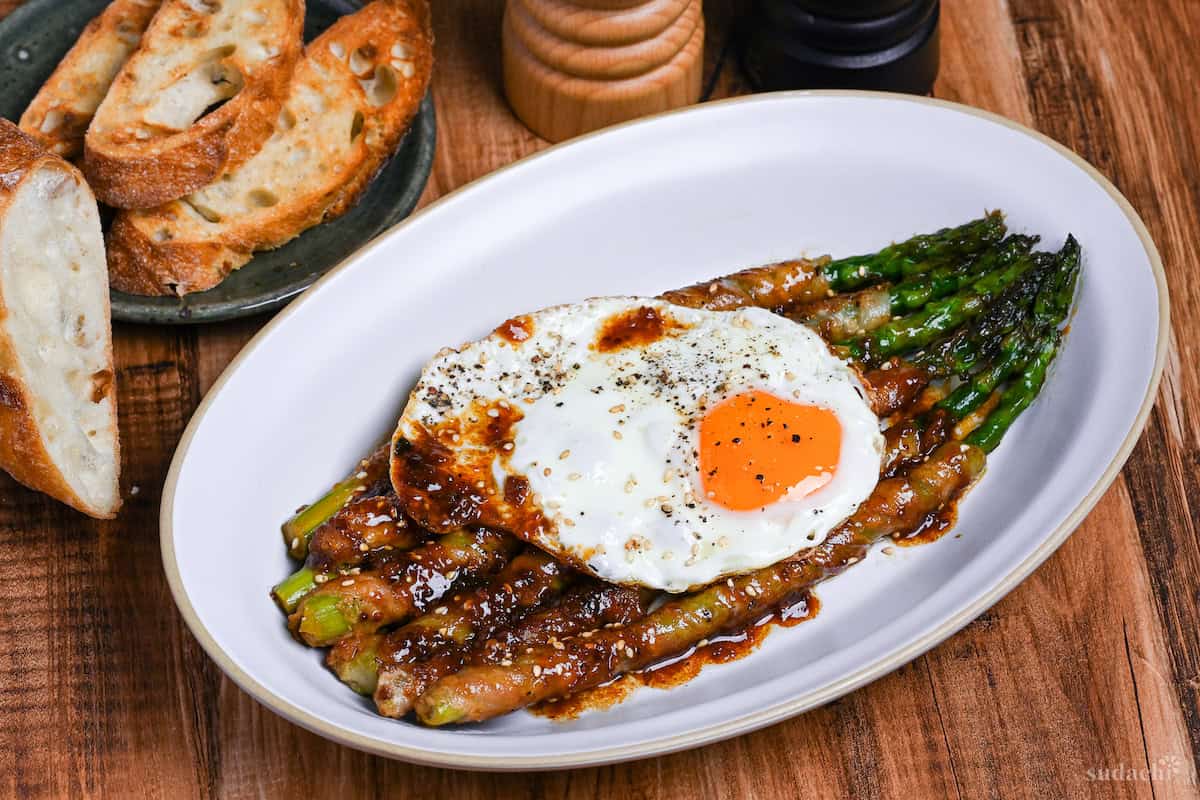
If you try one new thing from this whole list, I want it to be this one. I skipped the usual teriyaki on purpose and built a glaze with soy sauce, mirin, honey, apple juice, grainy mustard, and garlic.
I call it complicated but not hard, and I mean every word.

22. Sawaniwan

When I want a soup I can sip every single day, I reach for this one. The vegetables carry it, crisp and barely cooked so they still snap, while a quiet richness rounds out the bowl.
I kept the whole thing subtle on purpose, humble and deeply savory, the kind of broth that quietly gives a lot back.

23. Mizore Nabe
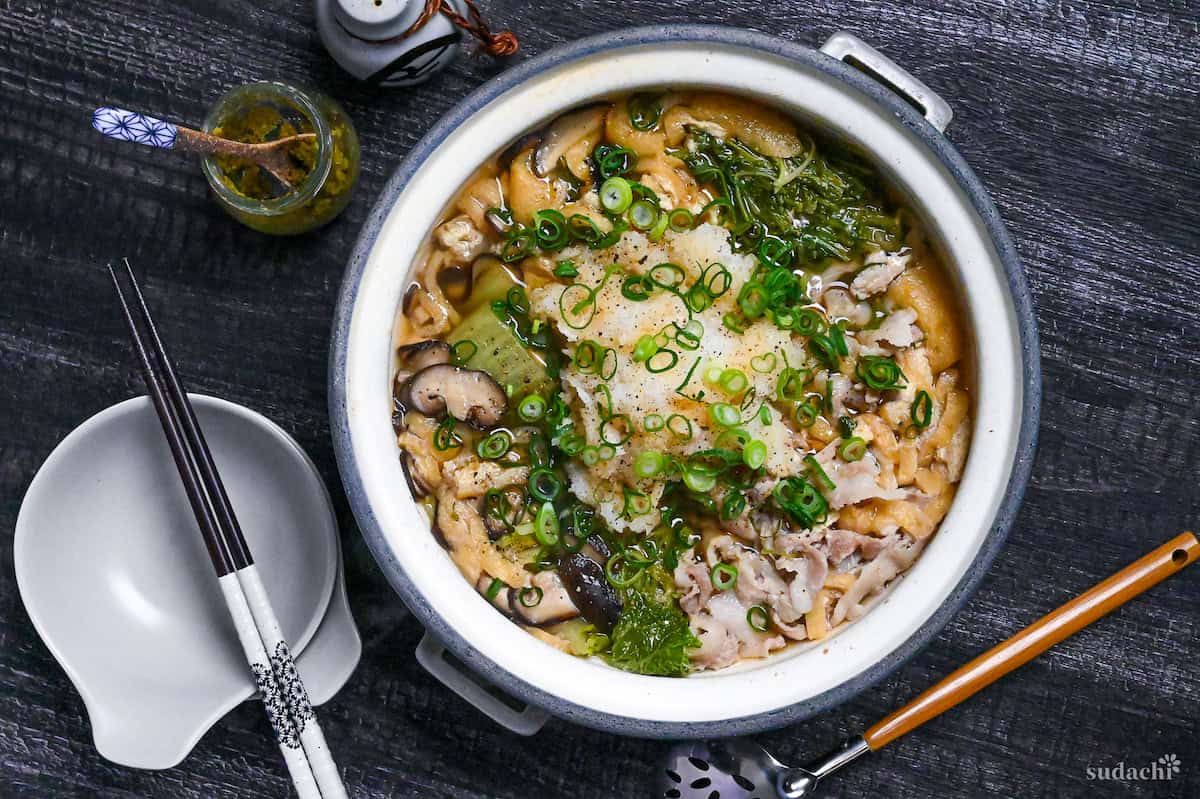
Mizore nabe is my favorite kind of hotpot, the kind that changes character while you eat it. A snowdrift of grated daikon sits on top of a clean dashi, and as it melts down it turns what started out rich and fatty into something bright and almost weightless.
That shift is what defines it, sweet richness landing against sharp daikon in the same spoonful.
24. Yakisoba Pan
Featured Comment
Very easy to make! Perfect for lunch!
★★★★★
– Yuri
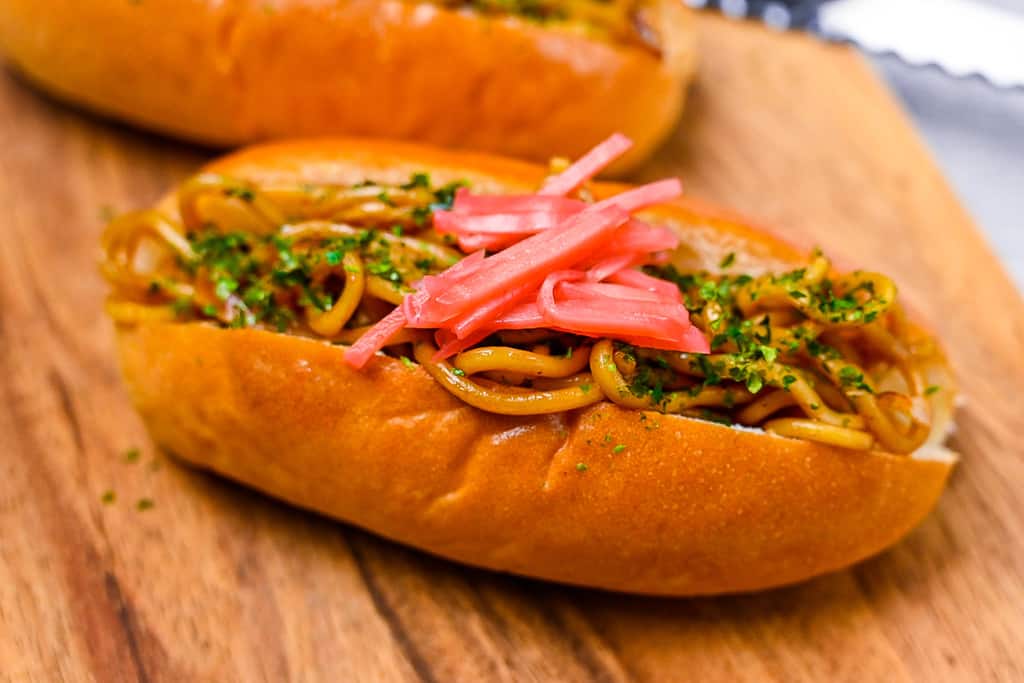
My high school had no cafeteria, just one tiny kiosk that sold a small batch of packaged breads each day. When the bell rang, my friends and I sprinted for the best one, and yakisoba pan was always the prize worth running for. Saucy noodles tucked into a soft koppepan roll: the king of B-class bread.
The trick is keeping the bun from going soggy under all that sauce. I crisp the pork in nothing but salt and pepper until cooked through, then fold it through noodles fried until they catch and brown. That faint crackle against the sweet, sticky sauce is the bite nobody expects from a bread roll.

25. Harumaki
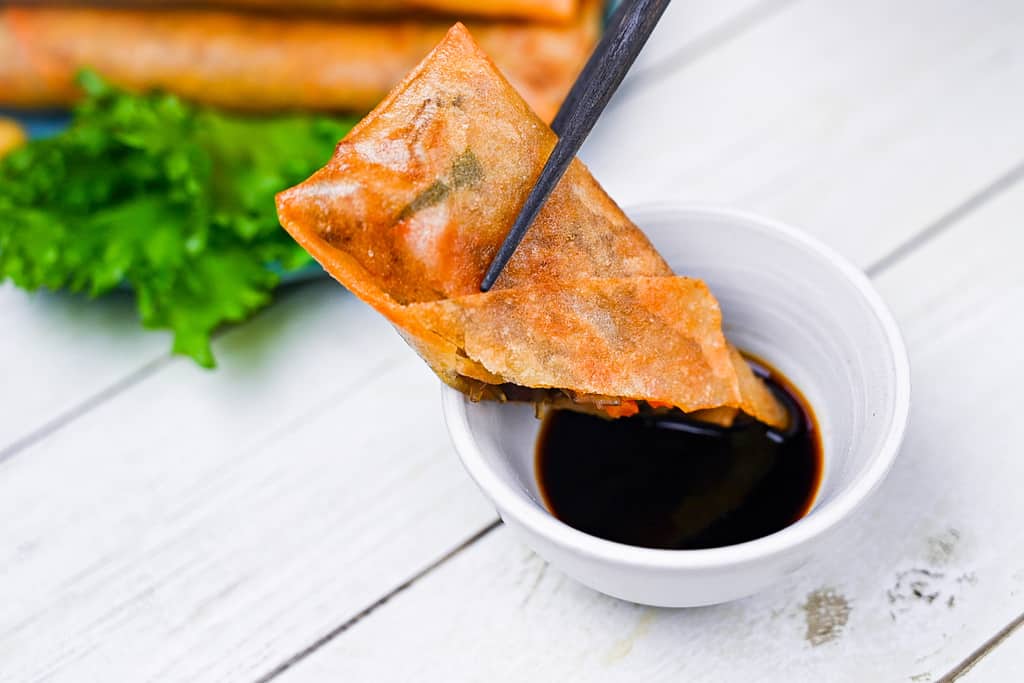
I used to toss raw cabbage straight into the main pan, and every time I ended up with a watery mess that soaked through the wrappers before they hit the oil. So now I cook the filling first, thicken it with a cornstarch slurry, and let it cool completely. Chilled filling, crisp shell.
The pork goes in roughly chopped rather than ground, so you get chunky, juicy bites instead of a smooth paste. The shell shatters; the inside stays succulent. There is one move that decides whether your rolls leak or hold, and it happens with the very first corner you fold.
26. Tanmen
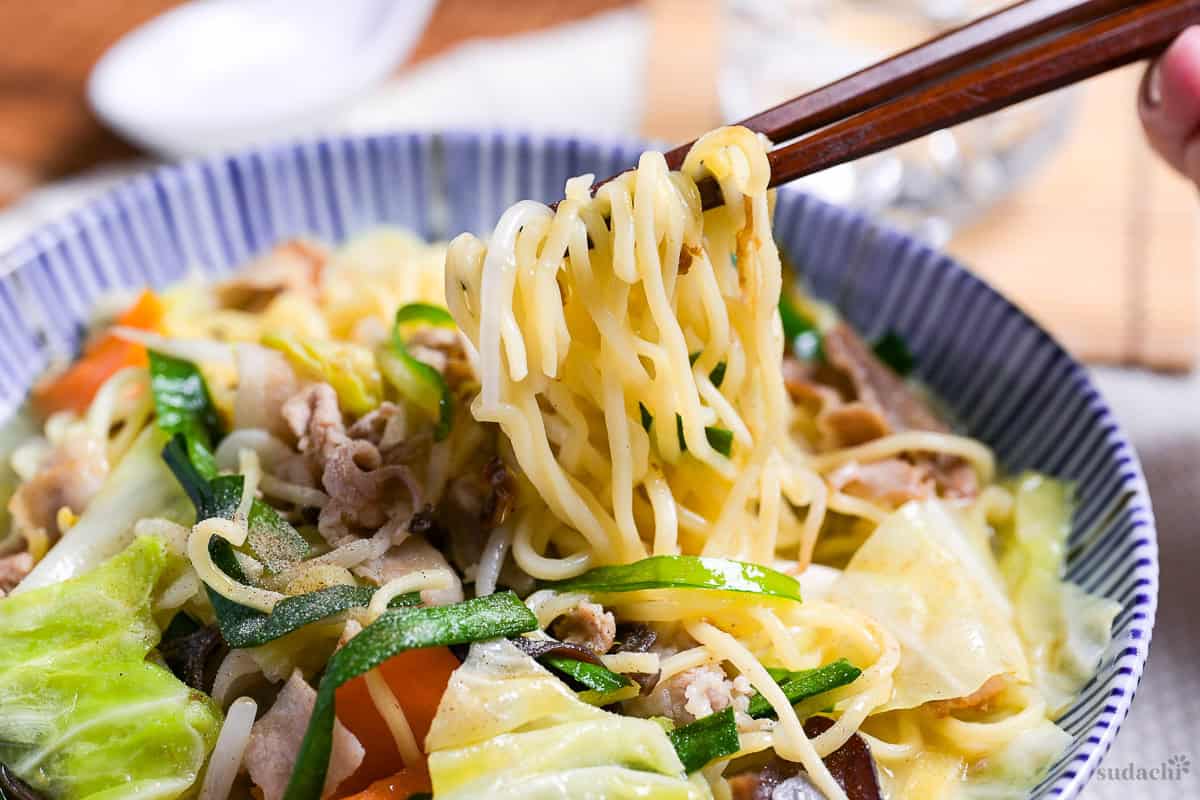
Tanmen looks like a vegetable dish, and it mostly is, but thin-sliced pork belly is the quiet engine underneath. As it sears in the hot pan, its fat renders out and coats every vegetable that follows. That thin film of fat is what pulls a towering pile into one coherent bowl.
I sear the belly first so it crisps at the edges before anything else goes in. Any thin pork will carry it, and pre-sliced belly from an Asian grocer makes it effortless. Learn how the fat behaves once, and you see why the pile never falls apart.

Leave a rating and a comment