



Featured Comment
Got a giant Napa from a neighboring farm, and had some sliced pork belly in the freezer. I had seen this made on TV and so decided to try it. WOW! This recipe is delicious and greater than the sum of its parts, as they say. thanks for a great recipe!
★★★★★
– Darah Hart
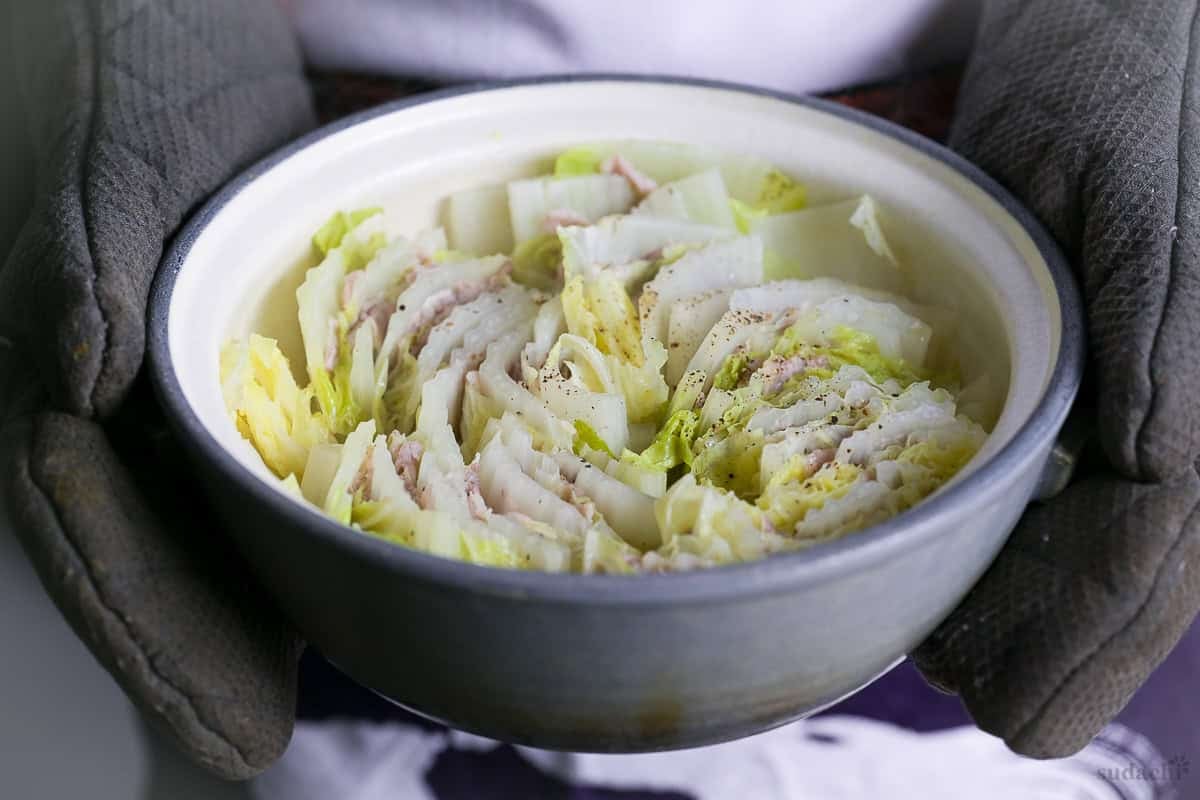
Mille feuille nabe, a Japanese hot pot, looks beautiful, with napa cabbage and pork packed into the pot in neat stripes. Looking at those layers, you might wonder, “But that has to be hard, right?”
Not at all. Learn the technique, and you will find it simpler, easier, and quicker than any other hot pot I know. Layer the ingredients, cut through the stacks, then arrange the pieces starting at the edge of the pot. Then your only job is to wait for it to cook.

Mille Feuille Nabe
Recipe Snapshot
- What is it? A Japanese home hot pot, mille feuille nabe has stripes of napa cabbage and pork across each cut surface. Everyone shares it, dipping pieces in ponzu, a citrus soy sauce.
- Flavor profile: As the napa steams, it softens and becomes sweet. Savory pork belly fat and a lightly seasoned broth bring the flavors together, while ponzu’s sharp citrus keeps them balanced.
- Why this recipe works: Cutting through stacks of napa and pork gives you striped layers with little effort. Pack snugly from the outside in, center last, so they stay standing as they shrink.
- How to make it: Layer, slice, and arrange napa and pork in a clay or wide, heavy-bottomed pot. Simmer covered in dashi and sake, then serve with ponzu and condiments. One pot is enough.
- What to expect: Allow about 10 minutes to stack, cut, and arrange everything. After that, just bring it to a boil, cover the pot, and let it simmer for 20 minutes!
What Is Mille Feuille Nabe?
Mille feuille nabe (ミルフィーユ鍋) is a Japanese home-style hot pot. You layer napa cabbage leaves with thinly sliced pork, cut the stacks into pieces, and simmer them next to one another. The pot then comes to the table, where everyone gathers to share it.
Its name refers to the layers you see when you cut through a stack. They resemble mille-feuille, the French pastry whose name means “1,000 leaves.” As a side note, I think Japan is obsessed with mille-feuille as an idea. Mille-feuille katsu is made with thin layers of pork that are stacked and deep-fried, and there’s even mille-feuille sushi.
Actor Akira Nakao showed this pot on Japanese TV as Nakao nabe in October 2008, and said he first made it as an art student. A 2010 instant dashi commercial featured a “layered pork belly and napa cabbage hot pot,” made by stacking, cutting, and cooking both ingredients. The recipe reportedly came from a woman in her 40s in Osaka Prefecture. A dated entry on a recipe-sharing site shows that the name mille feuille nabe was already in use by October that year. Another recipe, recreating the commercial’s method, had appeared by the end of December. In 2015, the dashi maker announced that this was the most viewed recipe on its site, out of more than 10,000.
To me, this hot pot tastes best with a deliberately light broth that gives the ingredients just a little seasoning, with ponzu for dipping. Japanese food companies often publish versions with a fully seasoned broth that you eat along with everything else. There’s nothing wrong with that approach. For me, though, ponzu is a perfect match for such a simple hot pot of sweet napa and savory pork. Start with that flavor in your bowl, then add grated daikon radish, shichimi togarashi (a 7-spice blend), or yuzu kosho (a citrus-chili paste). You can keep changing the flavor as you work your way through the same pot.
Napa Cabbage Hot Pot Ingredients

- Napa cabbage: The pale stripes come from napa, which softens and sweetens as it cooks. Winter napa is sweet because it stores sugar in its cells to protect itself from freezing. About a quarter of a small head is enough here, although US supermarkets often sell whole heads. Look for one that feels heavy and has a fresh, white cut end.
- Thinly sliced pork belly: This is my first choice whenever I can find it. Its sweetness and deep, savory flavor make it the best-tasting cut for this hot pot. It can be hard to find thinly sliced at regular US supermarkets, so try an Asian grocer first. Responses to our survey of Japanese people living abroad showed how much shopping options depend on the area. People bought thinly sliced pork or pork belly at Safeway, Smith’s, Costco, PAT, H Mart, other Asian supermarkets, and Korean butchers. Some also buy packs of thin slices at Korean stores or frozen rolls of sliced pork at Chinese stores.
- Ponzu: At the table, ponzu brings the sweet napa and savory pork together. In Japan, the word usually refers to ponzu shoyu, which contains soy sauce. A store-bought bottle does the job on busy days. When you have the chance, though, try making your own. Homemade ponzu is exceptionally good, in a league of its own.
Substitutions
However well a recipe works in my kitchen, I consider it a failure if most people can’t make it in theirs. These alternatives are here to help when an ingredient is hard to find.
Substitutions:
- Napa cabbage → green cabbage (savoy as the next choice): Green cabbage is the closest substitute, and Japan even has a cabbage version of mille feuille nabe. Expect thicker, firmer leaves and a less pronounced sweetness than napa. Savoy is another option. Japanese people living abroad told us in our survey that they buy cabbage at regular supermarkets as well as Asian and Japanese grocers. Some use local varieties, such as Spitzkohl in Germany, sweetheart cabbage or the soft cabbage sold in Korean and Middle Eastern shops in the UK, and flat Korean or Taiwanese cabbage in North America.
- Thinly sliced pork belly → thinly sliced pork loin or shoulder: Either leaner cut works well and makes a lighter-tasting hot pot because it has less fat. Another option is to buy a piece of pork shoulder and ask the butcher to slice it thinly.
- Dashi → dashi granules or dashi packets: Both are suitable. Check the granules, though, because some contain salt and other seasonings that will make the broth saltier.
- Chinese-style chicken bouillon powder → Wei-Pa or another Chinese-style paste: A Chinese-style paste is the closest match. In our survey, one respondent in the Nevada and Arizona area orders Popla’s HAOH Chinese-style paste through Weee! Elsewhere abroad, some Japanese cooks use Wei-Pa or Popla’s chicken paste as substitutes.
- Chinese-style chicken bouillon powder → Korean beef or clam soup powder: Korean grocers sell these powdered soup bases. Some Japanese cooks living abroad buy them there and describe their flavor as closer to Japanese food than that of Western-style chicken bouillon powder.
- Grated daikon → skip it, or grate turnip or radish: Leaving it out is fine. Some Japanese cooks abroad find local daikon too hot and grate turnip instead. Red radishes are another choice, and those who use them say they still taste good, even if they turn pale pink when grated. Others use kohlrabi.
- Yuzu kosho → skip it, or make it with another citrus: This condiment is optional too. If yuzu is unavailable, a version made with another citrus such as lemon, lime, or orange also tastes great.
Substitutions that I don’t recommend:
- Bacon instead of pork belly: Bacon’s salt and strong smoky, cured aroma carry into the broth and change its flavor.
- Dry white wine instead of sake: The wine’s acidity and fruity aroma are noticeable in the pot and don’t work with this delicate broth.
Hunting for another Japanese ingredient? My guide to Japanese ingredient substitutes covers plenty more swaps.
How to Make My Mille Feuille Nabe
If you prefer to watch the process in action, check out my video of this Mille-Feuille nabe recipe!
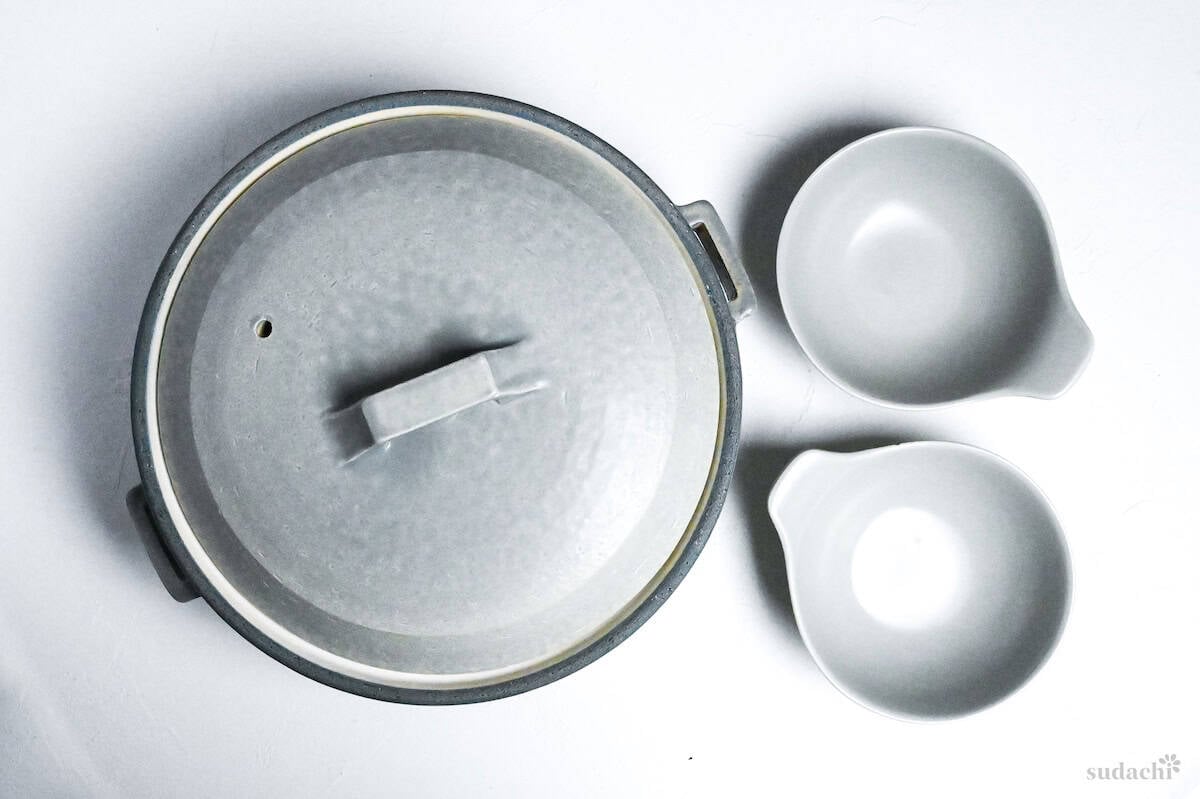
To develop this recipe, I used a 30 cm donabe (Japanese clay pot).
i. Starting at the base, separate the napa leaves one by one. Keep each leaf whole.
ii. Place a leaf on your cutting board, then lay a slice of pork over it. Alternate napa and pork until the stack is about 6 layers high.

iii. Repeat with the remaining leaves and pork to make more stacks.

i. Cut across the stacks with a sharp knife to make pieces about 5 cm wide.

ii. Stand the pieces around the edge of the pot, with their cut surfaces facing upward. My pot is a 30 cm donabe, a Japanese clay pot. A wide, heavy-bottomed pot is also suitable. Choose a pot these stacks fill from edge to center. If yours is bigger, make more stacks with extra napa and pork.

iii. After filling the outer edge, work your way inward. Fill the center last.

Fit the pieces snugly together, leaving no gaps. Both the napa and pork shrink during cooking, so space between the stacks gives them room to fall over.
i. Pour the dashi stock, sake, and sesame oil over everything in the pot. Scatter the Chinese-style chicken bouillon powder and black pepper over the top.

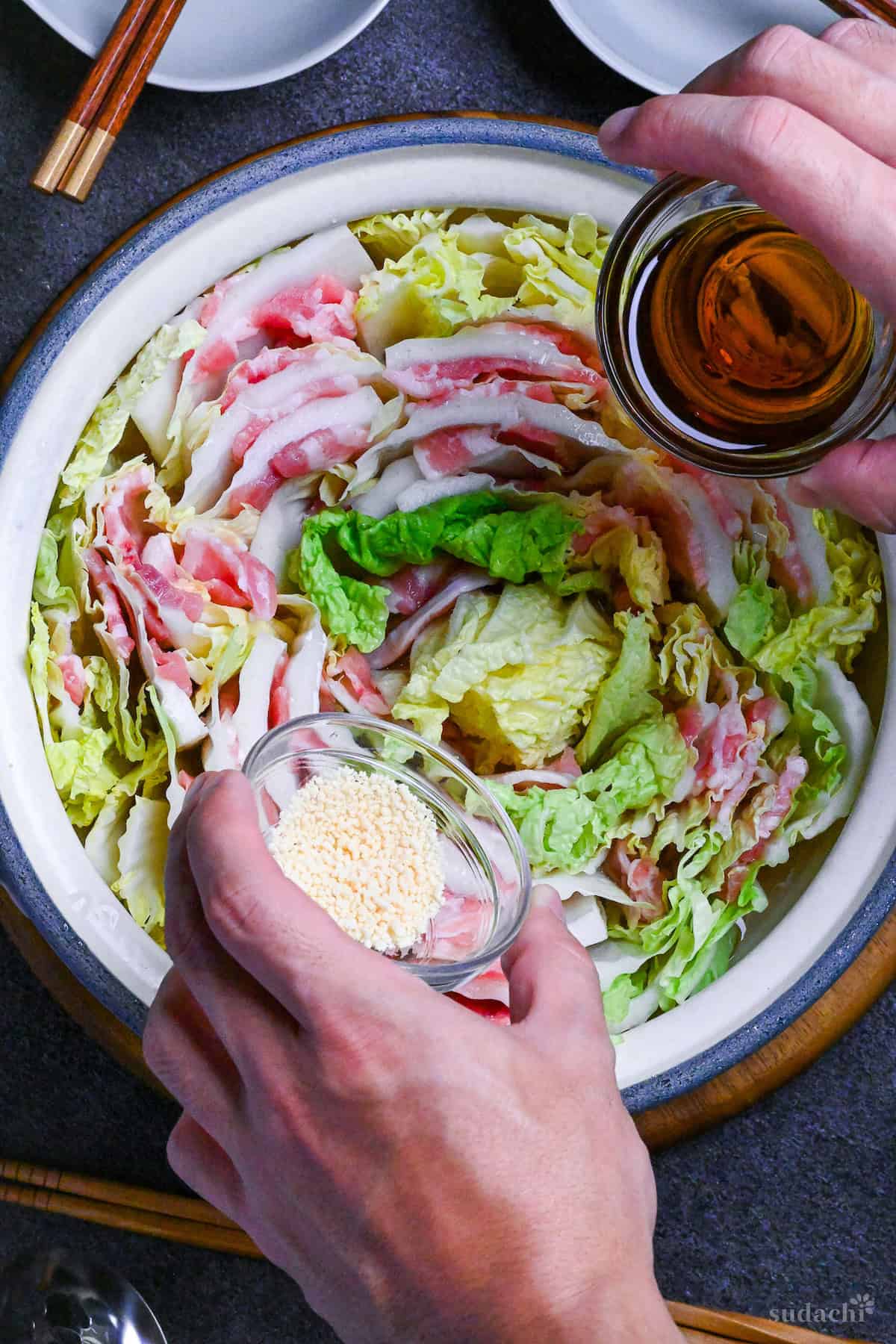
ii. Bring to a boil over medium heat.

iii. Reduce the heat to a gentle simmer, cover, and cook for 20 minutes. It’s done when the pork has changed color and the napa has wilted into soft, tender leaves.

i. During the simmer, fill individual dipping bowls with ponzu and put the grated daikon, shichimi togarashi, and yuzu kosho on small plates.
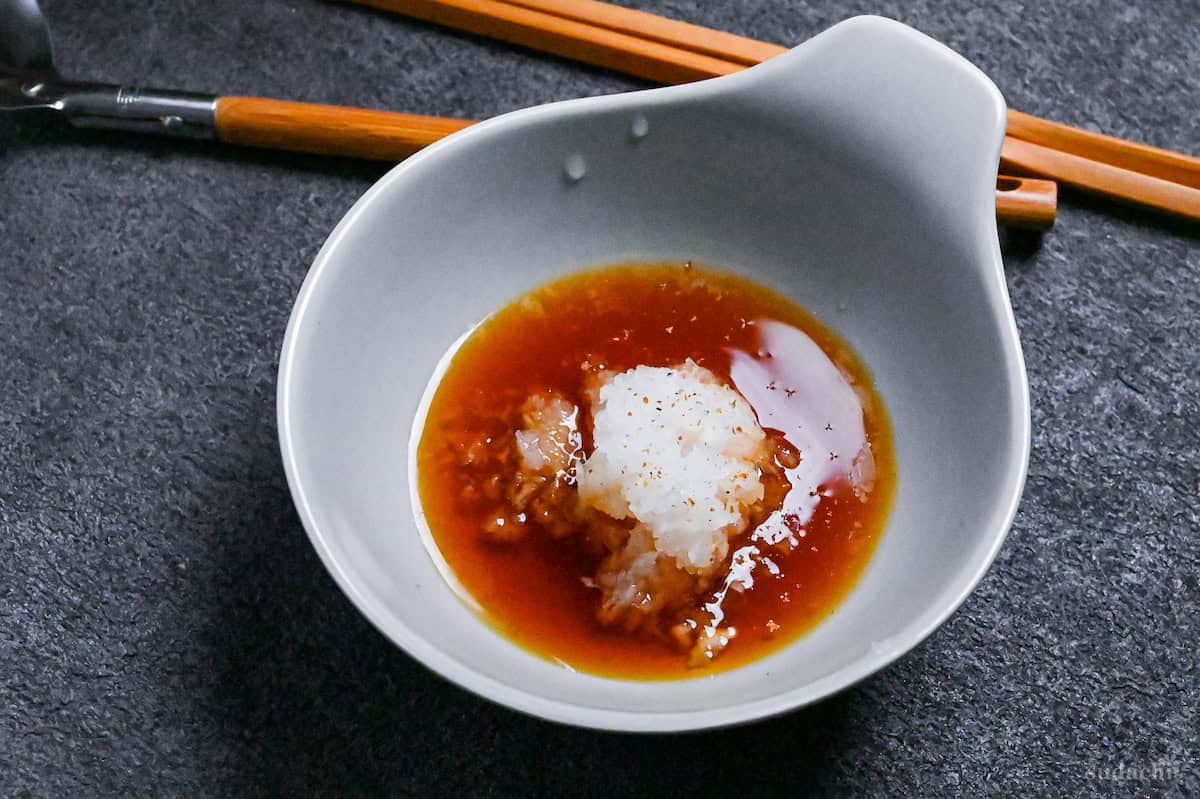
ii. Take the cooked hot pot to the table. Lift out each stack of napa and pork with cooking chopsticks or tongs.
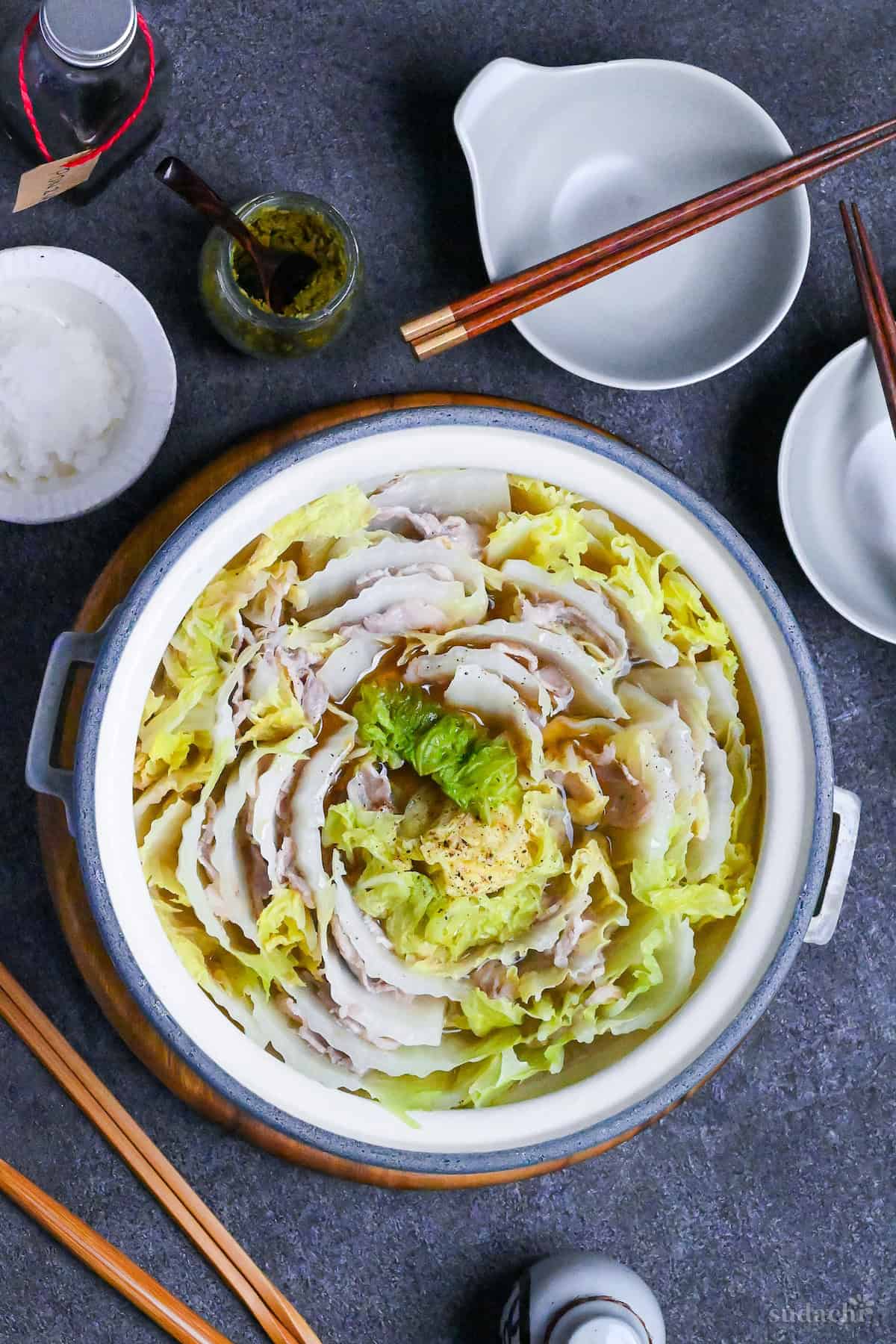
iii. Dip the pieces in ponzu as you eat, adding whichever condiments you like to your own bowl.

The broth in this pot isn’t for drinking. I use it only to season the ingredients lightly. The napa and pork should taste slightly underseasoned on their own, because the ponzu finishes the dish.

Storage & Meal Prep
Fridge: Once cooled, and within 2 hours of cooking, cover the pot or move everything to a lidded container and refrigerate. Eat by the next day.
Freezer: I don’t recommend freezing, as the cooked napa becomes even softer.
Meal prep: Assemble everything raw a day ahead, cover, and refrigerate, then add the broth and simmer. With raw pork inside, keep it cold and cook it the next day.
Reheating: Bring the whole pot to a boil, until the pork and napa are hot all the way through.
What to Serve With Mille Feuille Nabe
- Perfect Stovetop Japanese Rice
- Easy Takuan (Pickled Daikon)
- Spinach Ohitashi
- Japanese Potato Salad (Potesara)
Napa Cabbage Hot Pot Troubleshooting
A tightly filled pot or thick stacks may take longer than 20 minutes to cook. Cover again and continue at a gentle simmer, checking every few minutes. Once the pork has changed color and the napa is limp all the way through its core, turn off the heat.
Check for pieces that are taller than the pot’s depth and for spaces between the stacks. Cut any protruding pieces again so their height fits your pot. To fill gaps, tuck in leftover napa leaves that didn’t go into the hot pot. The stacks should then support one another.

More Quick Japanese Recipes
If a hot pot you just stack, cut, and simmer won you over, pick your next fast weeknight dish from quick Japanese recipes.
Did You Try This Recipe?
I would love to hear your thoughts!
💬 Leave a review and ⭐️ rating in the comments below. 📷 I also love to see your photos – submit them here!

Mille Feuille Nabe (Pork & Napa Cabbage Hotpot)
Ingredients
- 400 g Napa cabbage about ¼ head
- 300 g thinly sliced pork belly or thinly sliced loin or shoulder
- 400 ml dashi stock
- 100 ml sake
- ½ tbsp toasted sesame oil
- 1 tsp Chinese-style chicken bouillon powder
- ground black pepper to taste
Dipping/Topping
- ponzu sauce
- grated daikon radish (daikon oroshi) optional
- Japanese chili powder (shichimi togarashi) optional
- yuzu kosho optional
The ingredient brands and tools I trust are in my Japanese pantry guide and my cooking tools guide.
Can’t find certain Japanese ingredients? See my substitution guide here.
Instructions
- Break off the leaves of 400 g Napa cabbage and lay one on a chopping board. Take 300 g thinly sliced pork belly and place one slice on top of the leaf.

- Continue to layer the napa cabbage leaves and pork belly slices in stacks of about 6 layers each.
- Cut each stack into roughly 5cm (2 inch) pieces.
- Arrange each stack around the edge of your cooking pot. Start with the edge of the pot and work your way into the middle.
- Pour 400 ml dashi stock, 100 ml sake and ½ tbsp toasted sesame oil around the pot, then sprinkle with 1 tsp Chinese-style chicken bouillon powder and ground black pepper to taste.Place the pot over a medium heat and bring to a boil. Once boiling, lower to a simmer and cover with a lid. Simmer for 20 minutes.

- Serve with ponzu sauce for dipping. You can also add grated daikon radish (daikon oroshi), Japanese chili powder (shichimi togarashi) and/or yuzu kosho to taste. Enjoy!

Got a giant Napa from a neighboring farm, and had some sliced pork belly in the freezer. I had seen this made on TV and so decided to try it.
WOW!
This recipe is delicious and greater than the sum of its parts, as they say. thanks for a great recipe!
Hi Darah,
Thank you so much for giving this one a go! Really glad you enjoyed it! 🙂
Yuto
This delicious dish ist great! Easy to make, looks good and, oh boy, it is perfect for Fall or Winter diners
Hi Anne,
Thank you so much for making it! I’m really glad you enjoyed it. This is definitely the perfect time of year for those layers of pork and napa cabbage! 🙂
Yuto