

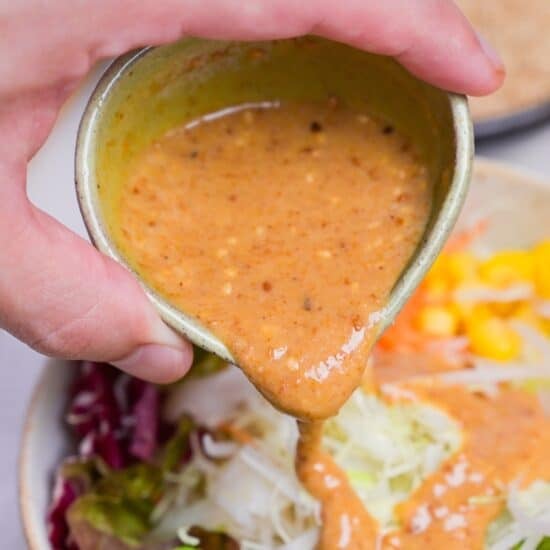


Featured Comment
Extremely good recipe. I had to triple the recipe for my family. Thank you.
★★★★★
– Kerry
You had it once in Japan, poured over a simple side salad, and it stayed with you. Thick, creamy, nutty, a little sweet, the kind of dressing that makes you reach for more salad than you meant to.
For a long time you might think that taste lives only over there, an ocean away. It does not. You can make it in your own kitchen, and I would take this over the store-bought bottle any day.
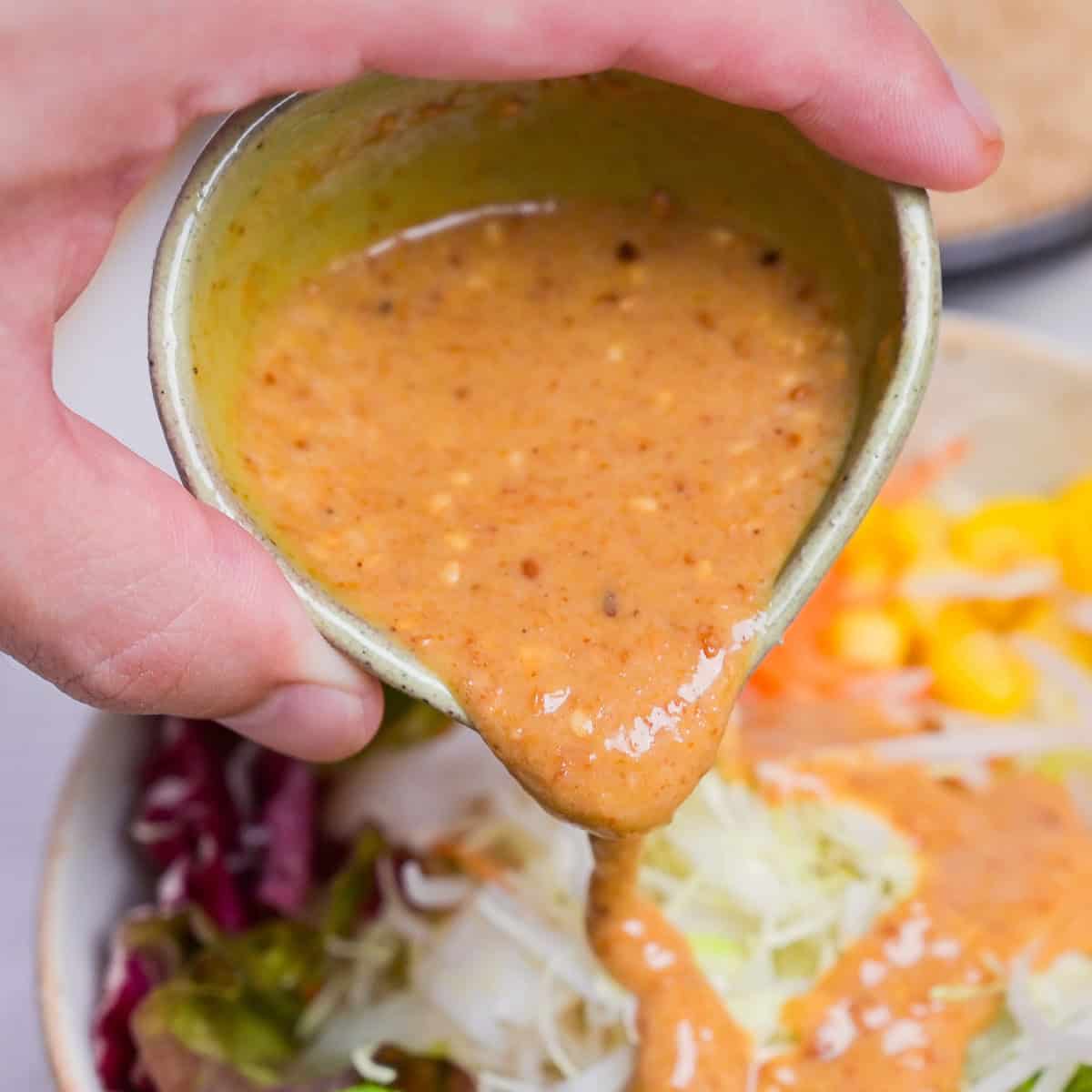
Goma dressing
Recipe Snapshot
- What is it? A thick, creamy Japanese salad dressing built on ground sesame, with a sweet and savory backbone that turns plain greens into something you want to keep eating.
- Flavor profile: Nutty and rich up front, sweet and tangy underneath, with a savory depth from soy sauce and a fresh sesame aroma that lands last.
- Why this recipe works: Toasting and grinding whole seeds warm releases their oil, so it turns creamy with no need for sesame paste. That freshly ground depth is what the store-bought bottle cannot match.
- How to make it: Toast the sesame, grind it warm in a mortar, then whisk it into a base of vinegar, soy sauce, sugar, and Japanese mayonnaise.
- What to expect: Ready in about 10 minutes and makes a small jar, enough for a couple of salads. The one place to slow down is toasting the sesame.
Summarize & Save this content on:
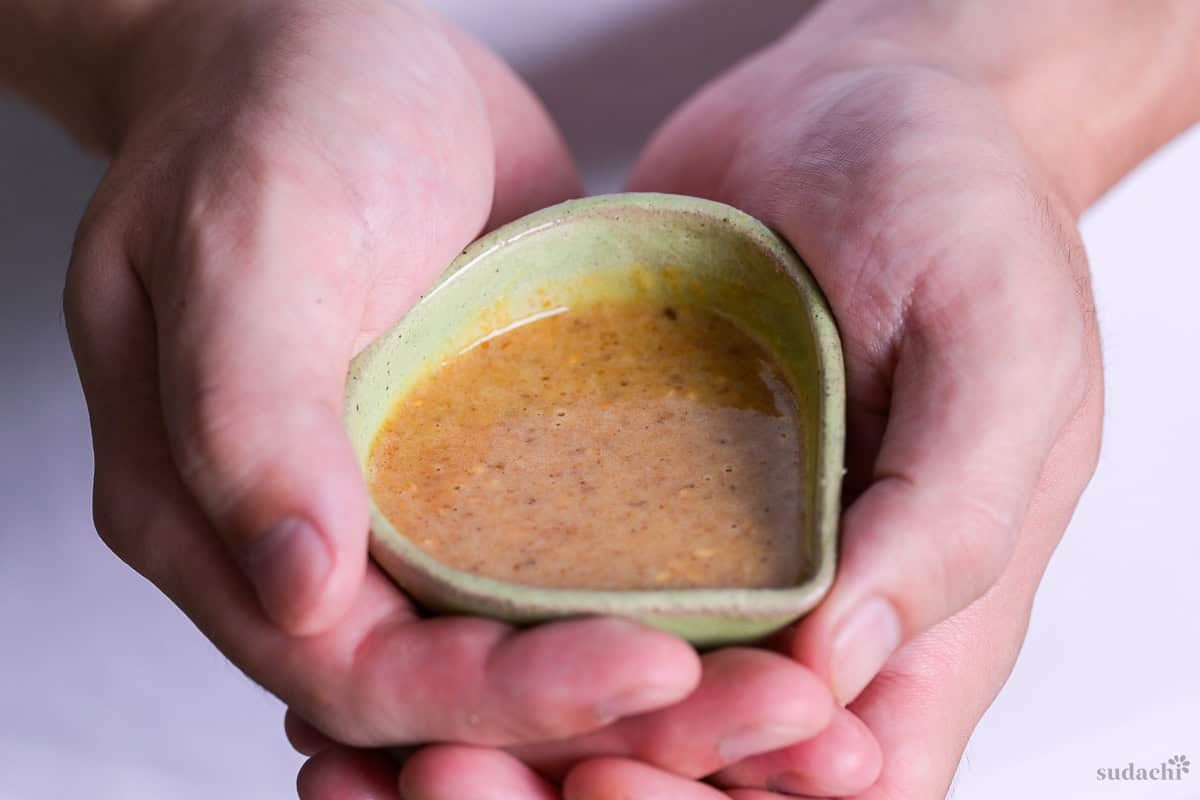
What Is Goma Dressing?
Goma dressing (ごまドレッシング) is Japan’s creamy sesame dressing, thick and nutty with a sweet, tangy edge that keeps a bowl of plain leaves interesting. It is one of the most-loved dressings on Japanese tables, built from ground sesame, Japanese mayonnaise, rice vinegar, sugar, soy sauce, and sesame oil.
It tastes like it has always been there, but it is younger than you would guess. Kewpie put it on shelves in 2000, and it reached the top of the dressing market two years later and has stayed there ever since, in a category with more than 400 domestic manufacturers.
I grew up on that flavor, and I have spent years getting it at home without a jar of sesame paste. The secret is the sesame itself, toasted fresh and ground while still warm so it gives up its aroma and oil right into the bowl. That fresh grind is what gives it body, and why a homemade batch tastes best.
Sesame Dressing Ingredients
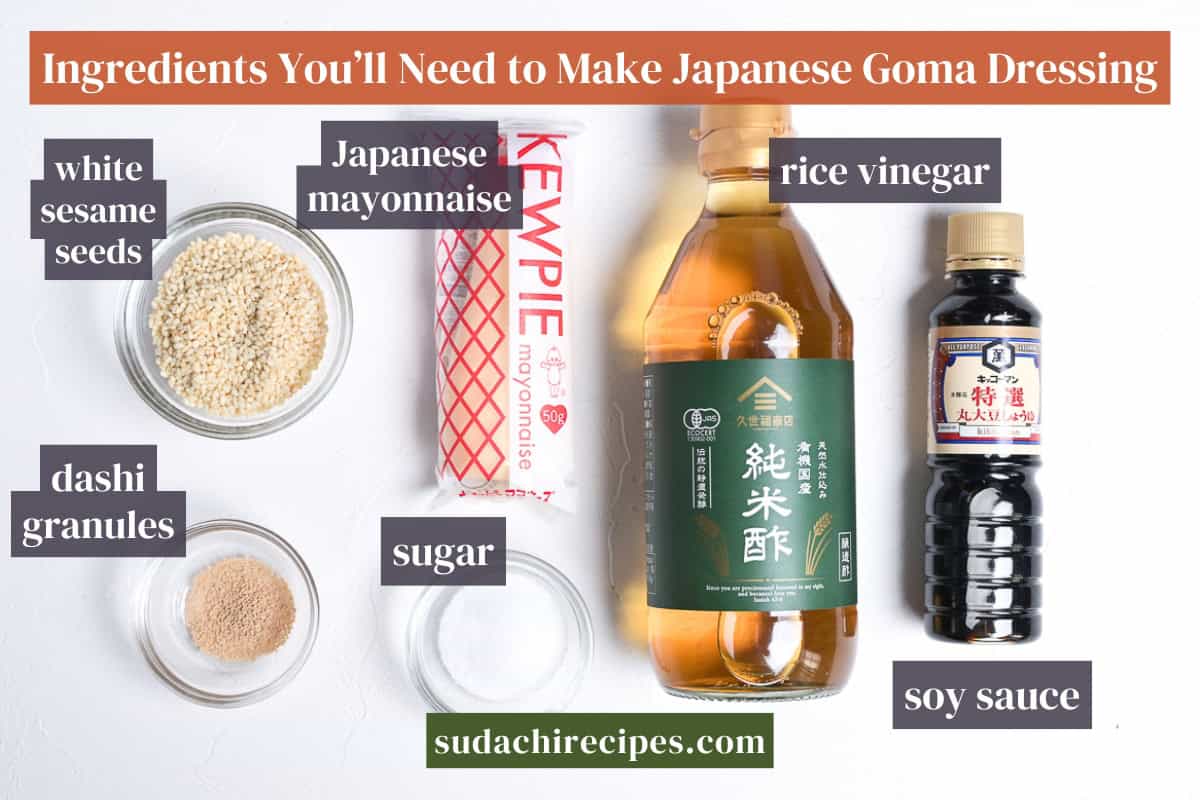
- White sesame seeds: These carry the whole dressing, so buy them fresh. Either raw or already toasted works, since you toast them again yourself. Look for plain hulled white sesame in the baking aisle or at any Asian grocer, and pick up a little more than you think you need. Skip the black seeds for this one, they run more bitter.
- Japanese mayonnaise: This is where the creaminess and the round, savory depth come from. Japanese-style mayo is made with egg yolks only. Your usual mayonnaise still works, the taste just lands a little different. Kewpie in the red-capped bottle is the easy one to find at any Asian grocer.
- Rice vinegar: Its mild, clean tang lifts the sesame and mayo so the dressing does not turn heavy. A plain unseasoned rice vinegar is what you want.
Substitution Ideas
- Japanese mayonnaise → Regular mayonnaise: Your everyday mayo works fine here. The dressing comes out a touch less rich and the taste lands slightly different, but still good.
- Rice vinegar → Apple cider or white wine vinegar: Either keeps the mild tang. They are a little sharper, so start with a bit less and taste as you go.
- Soy sauce → Tamari: Tamari swaps in 1 for 1 and keeps the savory depth, running just a shade darker. It is also a gluten-free swap for the soy sauce, so the dressing stays gluten-free as long as your other ingredients are too.
- Sugar → Honey or brown sugar: Both bring the sweetness. Honey adds a floral note and brown sugar a faint molasses depth, and each melts in best when stirred into the vinegar first.
Have trouble finding Japanese ingredients? Check out my ultimate guide to Japanese ingredient substitutes!
How to Make Sesame Dressing
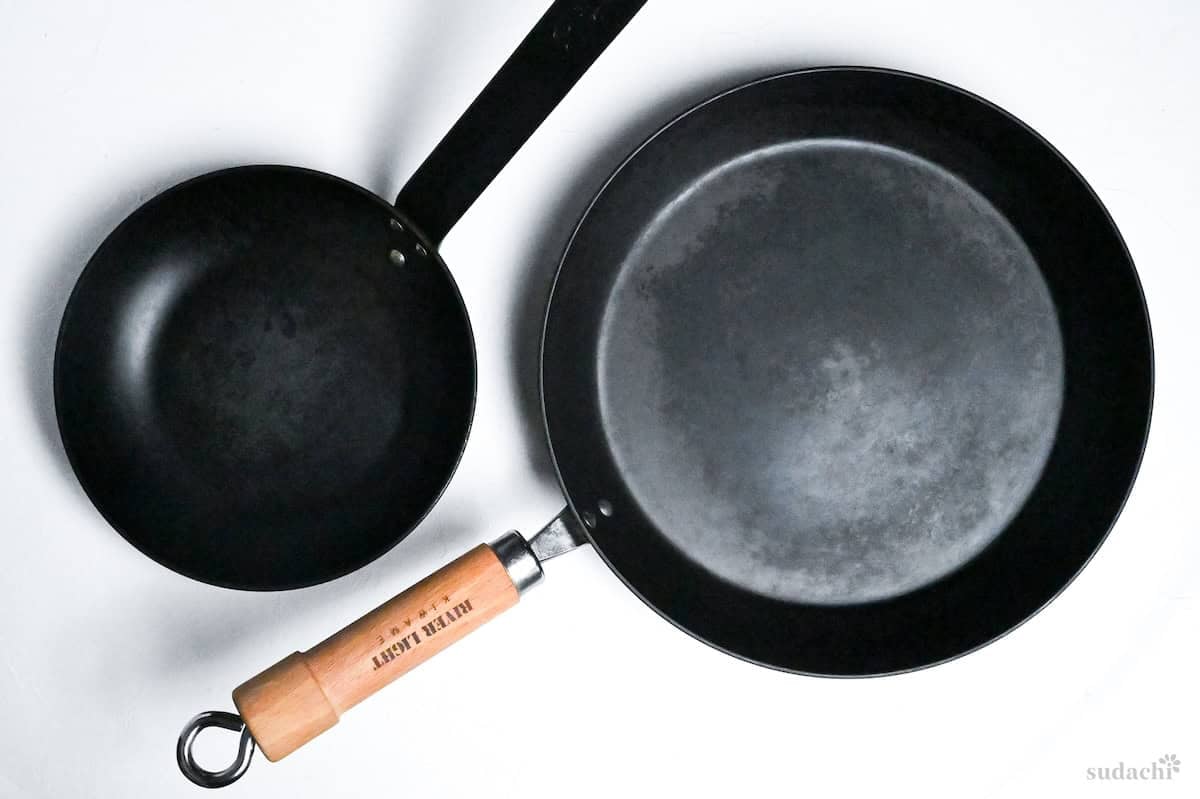
To develop this recipe, I used a 20cm carbon steel pan.
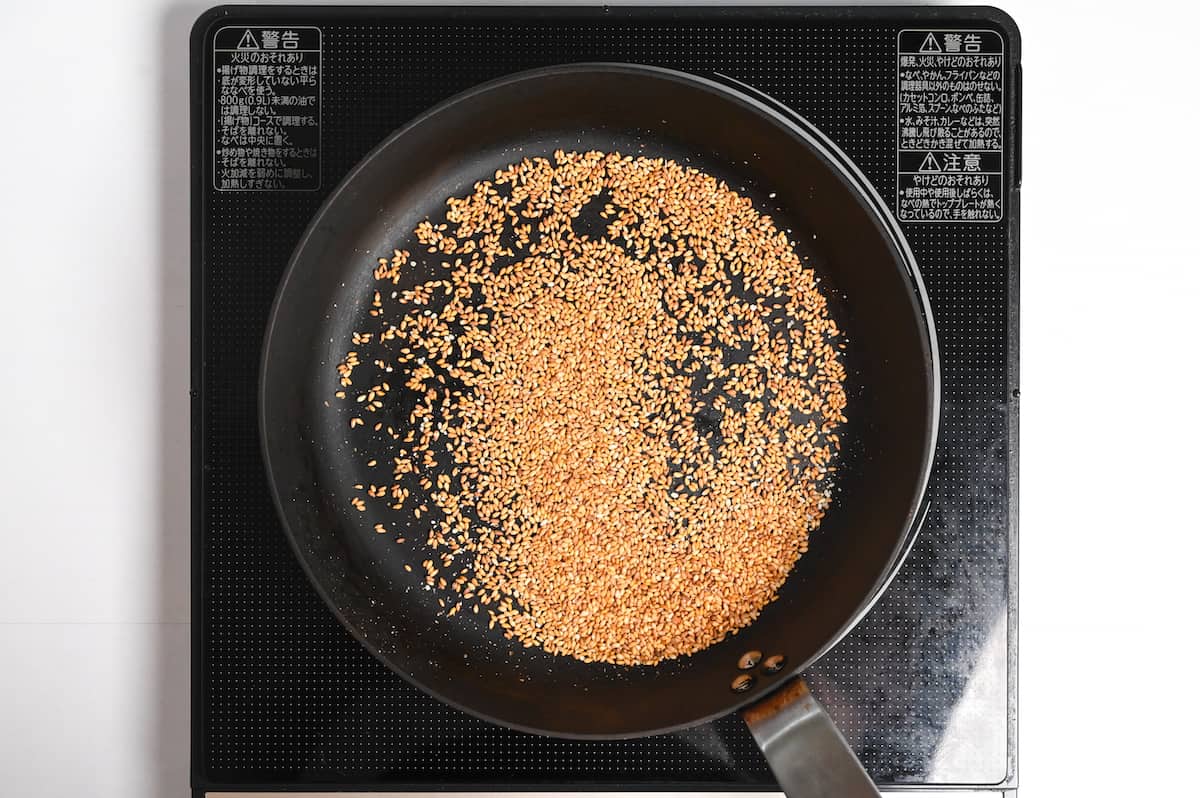
i. Spread the white sesame seeds across a small to medium frying pan in a single layer.
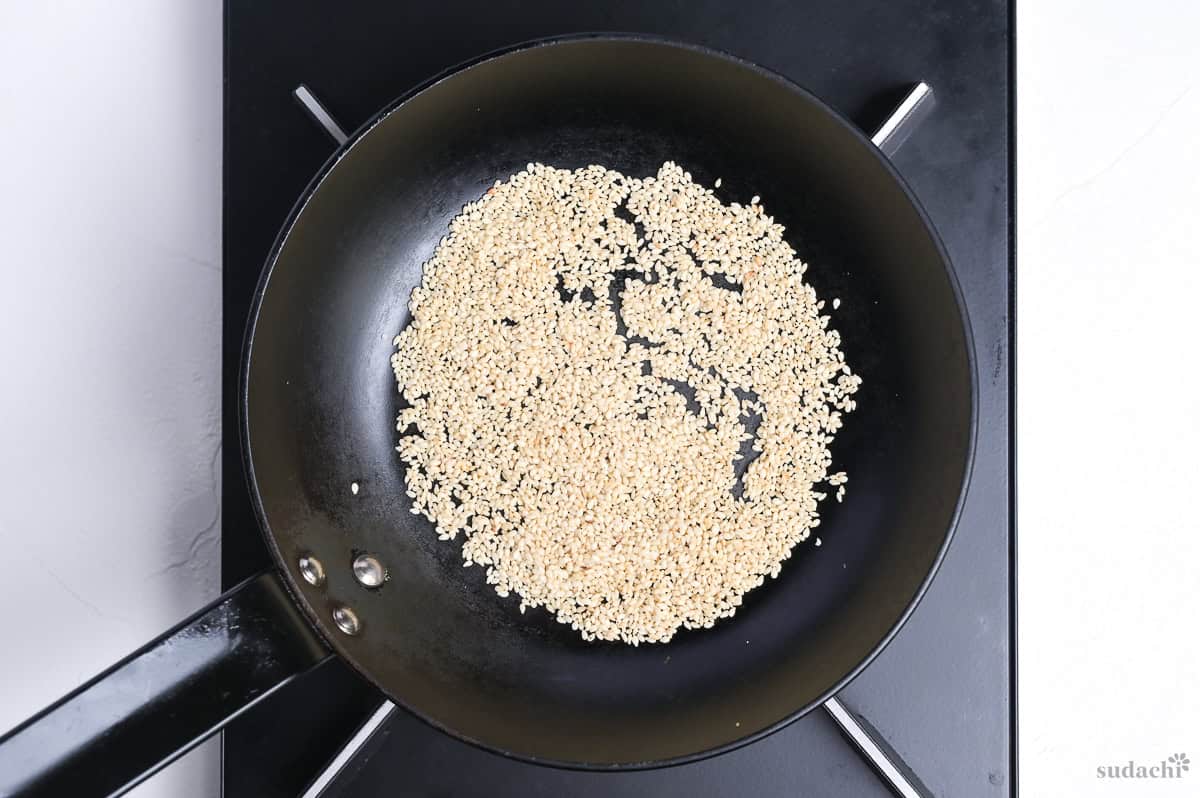
ii. If your seeds are raw, dry-toast them over medium heat, keeping them moving the whole time, until they swell, a few pop, and a nutty aroma rises. Take the pan off the heat right there.
iii. If your seeds are already toasted, just warm them over medium heat for a few dozen seconds, moving them constantly, and stop the moment the aroma lifts. You are waking the aroma back up, not deepening the color.
Toasting sesame moves fast, and color is the last signal to arrive, not the first. Go by your nose and your ears instead. When the seeds swell, a few pop, and the aroma turns nutty, they are ready. Wait for real color and they have already gone too far.
i. Tip the hot seeds straight onto a tray or a cold plate and spread them out, which stops the carryover heat before it pushes them past done.
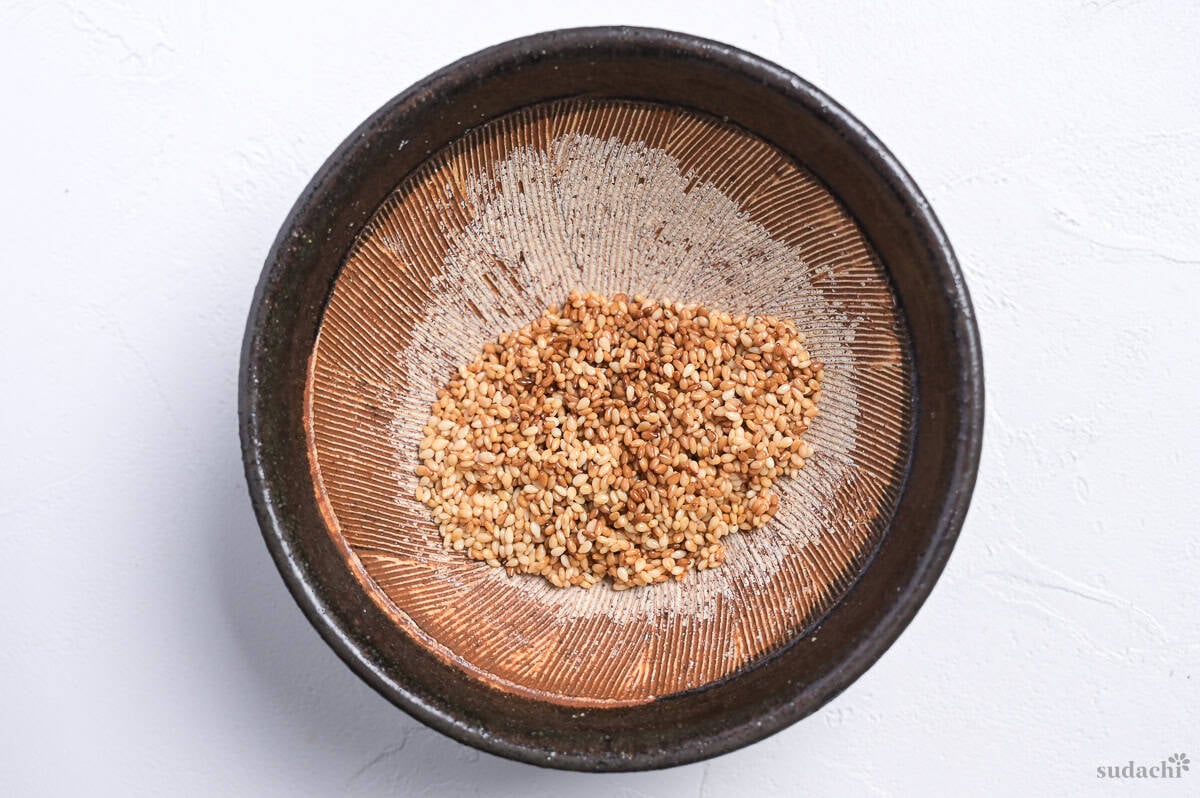
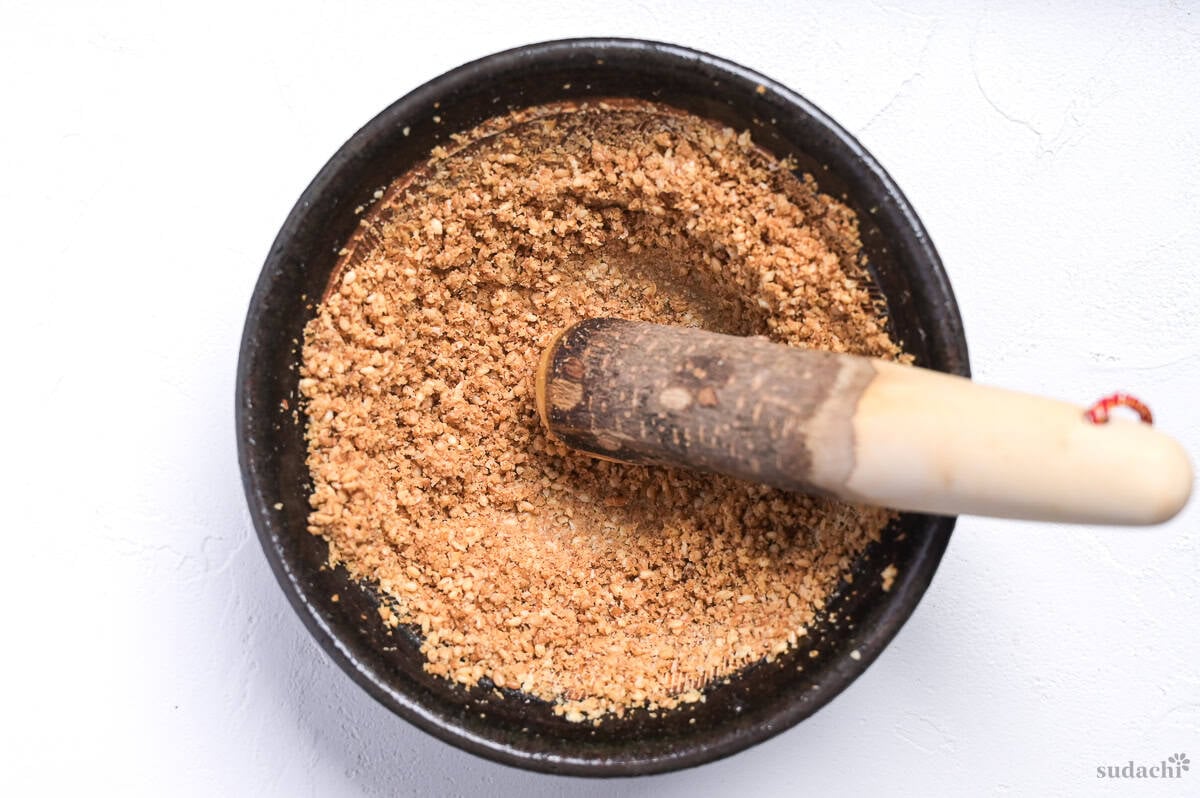
ii. While they are still warm, move them to a suribachi (Japanese mortar) or any mortar you have and grind until they turn into a half-paste, one step past a fine powder. In a ridged suribachi they cling to the grooves with a faint sheen. In a smooth bowl, look instead for a damp paste that clumps together. Stop just before the oil begins to weep out.
i. In a separate bowl, combine the rice vinegar, the soy sauce, and dashi granules if you are using it.
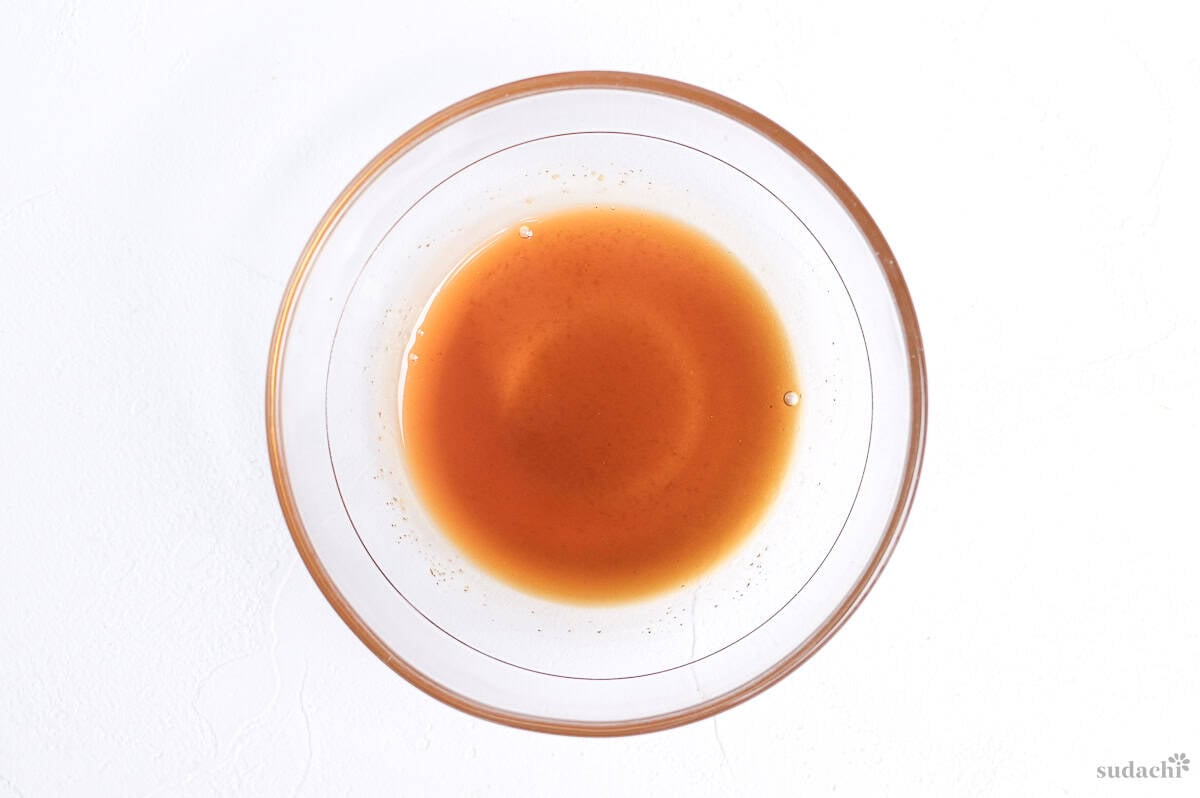
ii. Add the sugar and stir until it has completely dissolved into the liquid.
Sugar dissolves in water, not oil. Once the sesame is ground it is coated in its own oil, so sugar dropped on top just sits there as grit. Stir it into the vinegar and soy sauce first, where it melts away completely, and the finished dressing stays smooth.
i. Add the ground sesame and the Japanese mayonnaise to the base and whisk back and forth until the dressing turns smooth and creamy.
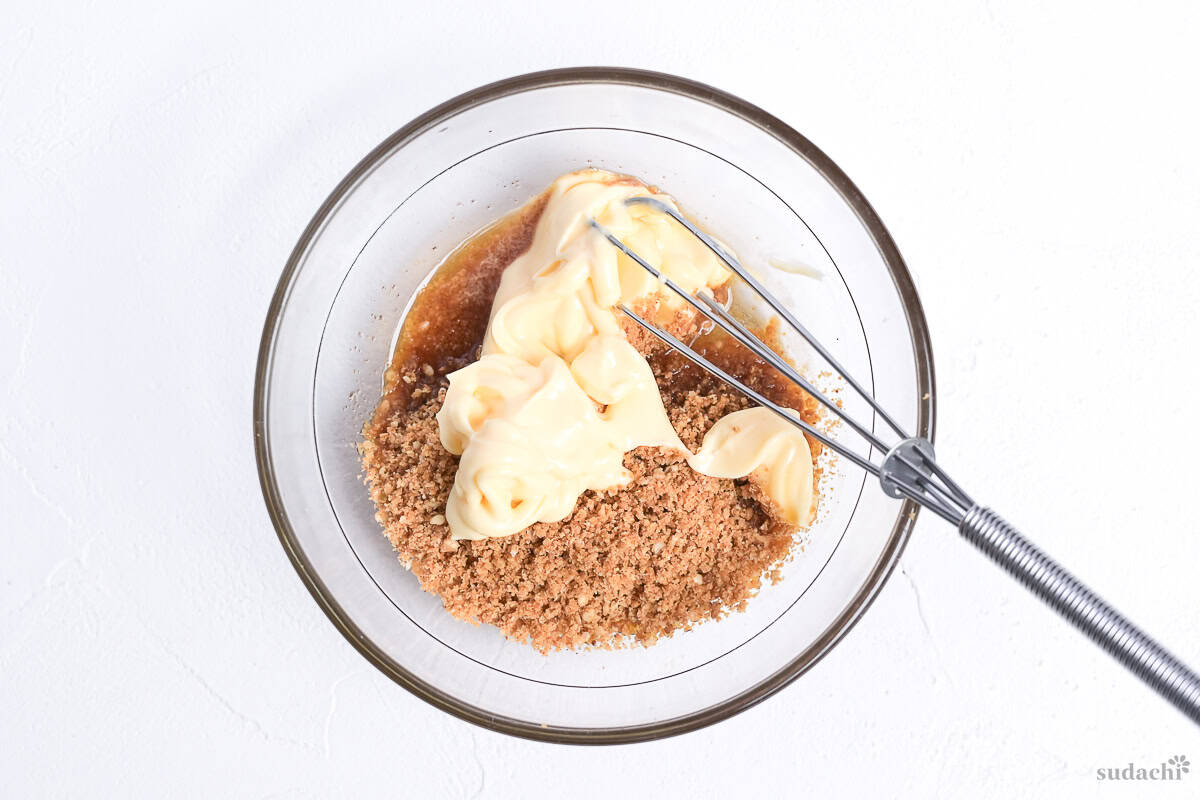
ii. Drizzle in the toasted sesame oil and fold it through with just a few light strokes.
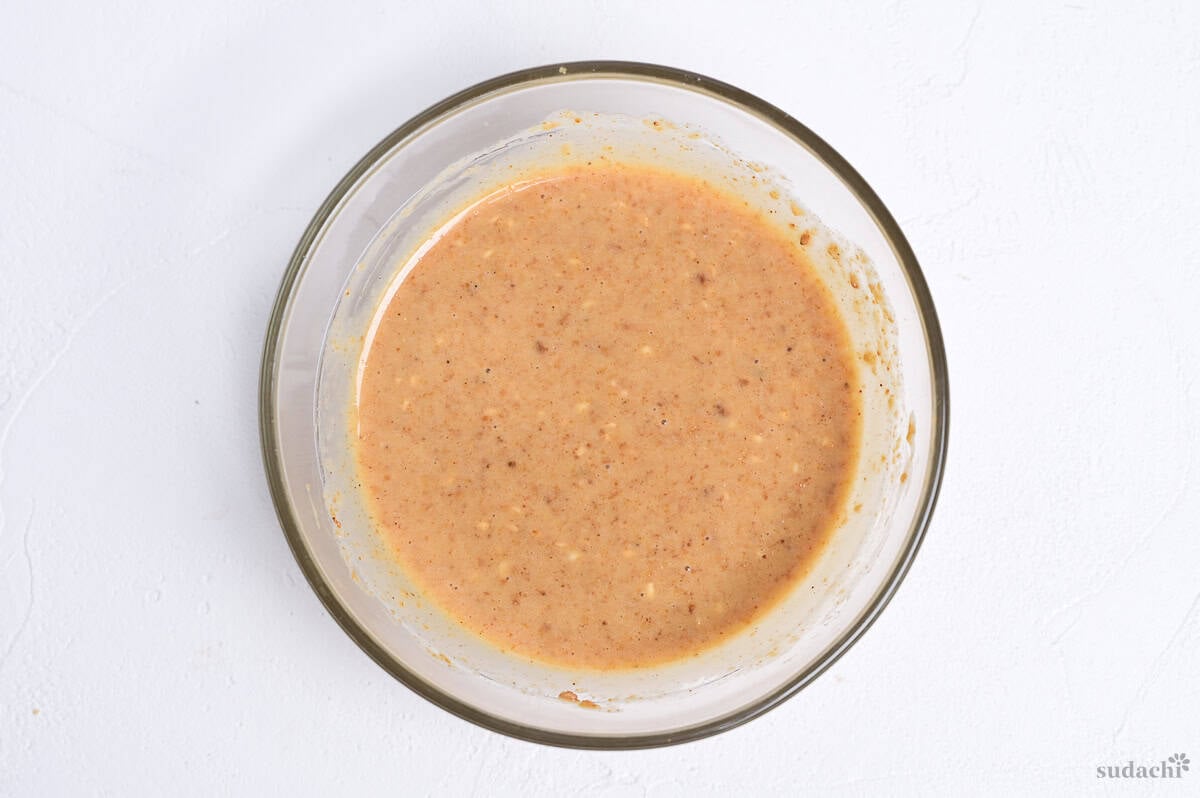
i. Use the dressing right away, or let it rest in the fridge for 15 to 30 minutes to let the flavors settle together.
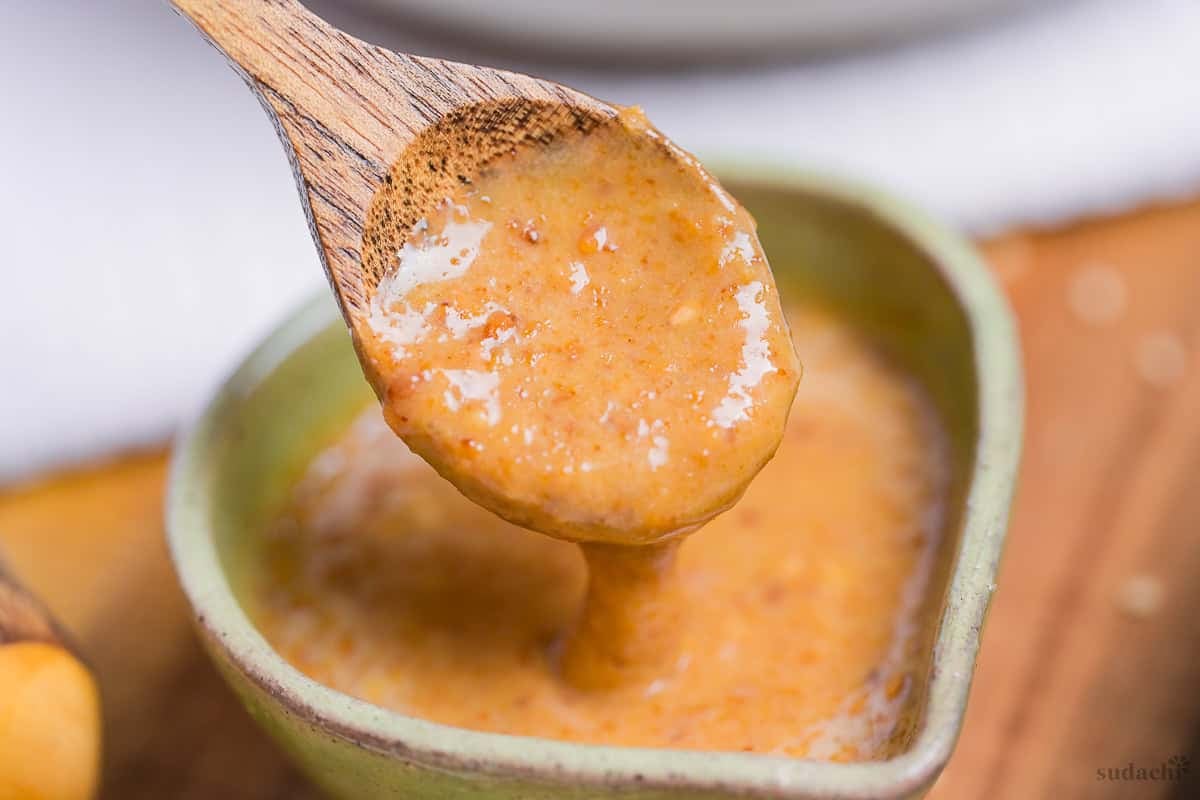
ii. Give it a good stir just before serving to bring the emulsion back together.
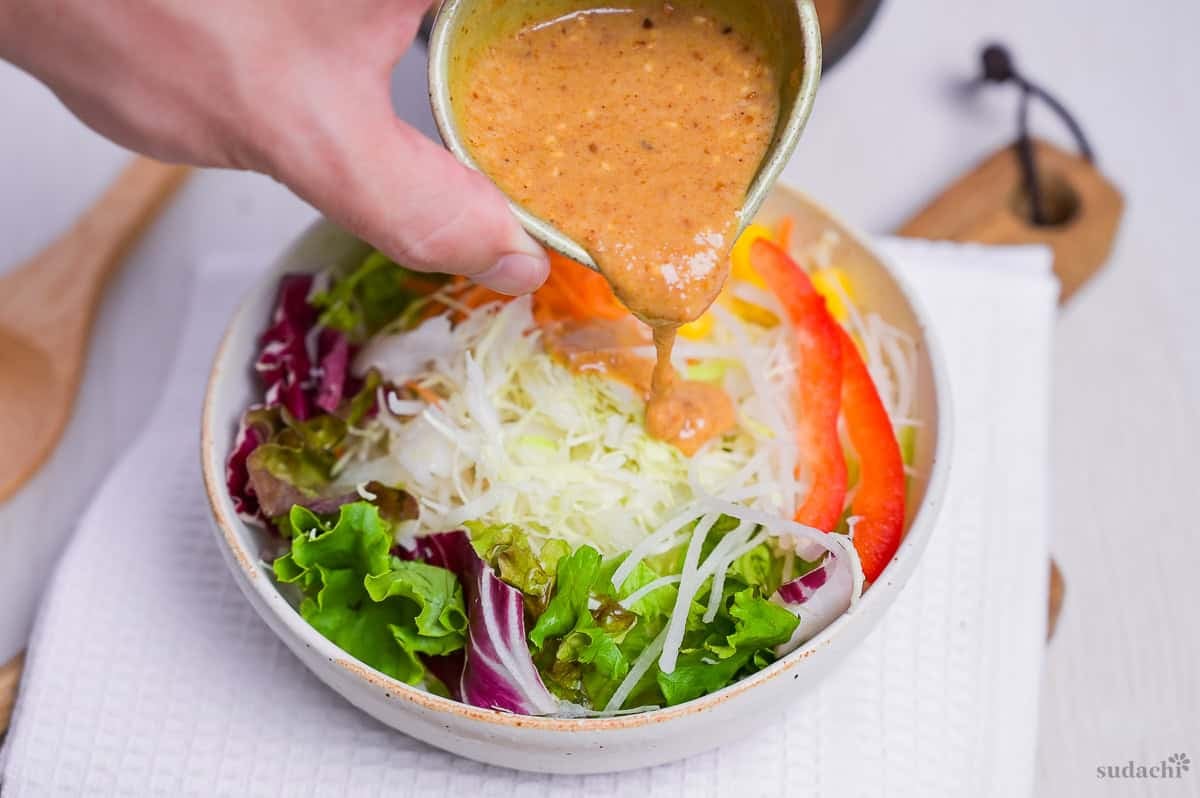

Tips for the Best Sesame Dressing
- Dissolve the sugar completely before it meets the sesame. Stir it into the vinegar and soy sauce until not a grain is left, and use a fine, easy-dissolving sugar rather than a coarse one. Sugar melts into water but not into oil, so once the ground sesame coats everything, stray grains have nowhere to go.
- Grind the sesame just before you build the dressing and use it right away. Freshly ground sesame carries a light top note that comes from low boiling point roast and sulfur compounds sitting on top of the aroma already present in whole roasted seeds. I grind mine while they are still warm from the pan and fold them straight into the base.
- Stop toasting at the smell, not the color. Sesame goes from fragrant to scorched in seconds, and color is the last signal to arrive. When the seeds swell, a few pop, and a nutty smell lifts off the pan, kill the heat right there. Wait for real color and you have already gone too far.
Get the sugar, the fresh grind, and the toast right, and you end up with the kind of sesame dressing that makes a bowl of plain vegetables vanish.
Storage & Meal Prep
Fridge: Keeps 5 to 7 days in an airtight jar. Stir well before each use, since it separates as it sits.
Freezer: Not suitable. Freezing breaks the emulsion and the thawed dressing turns grainy.
Meal prep: Grind a larger batch of sesame to powder ahead of time so the dressing comes together in minutes when you need it.
Japanese Sesame Dressing Troubleshooting
Once sesame is truly scorched the bitterness barely rinses out, so the fix depends on how far along you are. If you have not ground the seeds yet, pick out the darkest ones and work with the paler seeds only. If the dressing is already mixed and tastes bitter, toast a small fresh batch, grind it in, and let that clean nutty flavor pull the balance back. Next time, cut the heat the moment it smells toasty rather than waiting to see color.
A couple of things usually cause this. Either the sesame was not ground far enough, so it slipped through as whole seeds instead of releasing its oil, or a thin Western-style mayonnaise loosened the body. Grind the seeds again until they turn into a half-paste that clings to the bowl, then whisk them back in. If it is still loose, add a spoonful more mayonnaise and a little extra ground sesame to bring it back together.
Not at all. A creamy sesame dressing settles and splits a little as it rests, and that is normal rather than a sign anything is broken. The only batch you cannot bring back is one that was frozen, since freezing breaks the emulsion for good. For everything else, a firm stir or a few quick whisks right before serving pulls it smooth again.
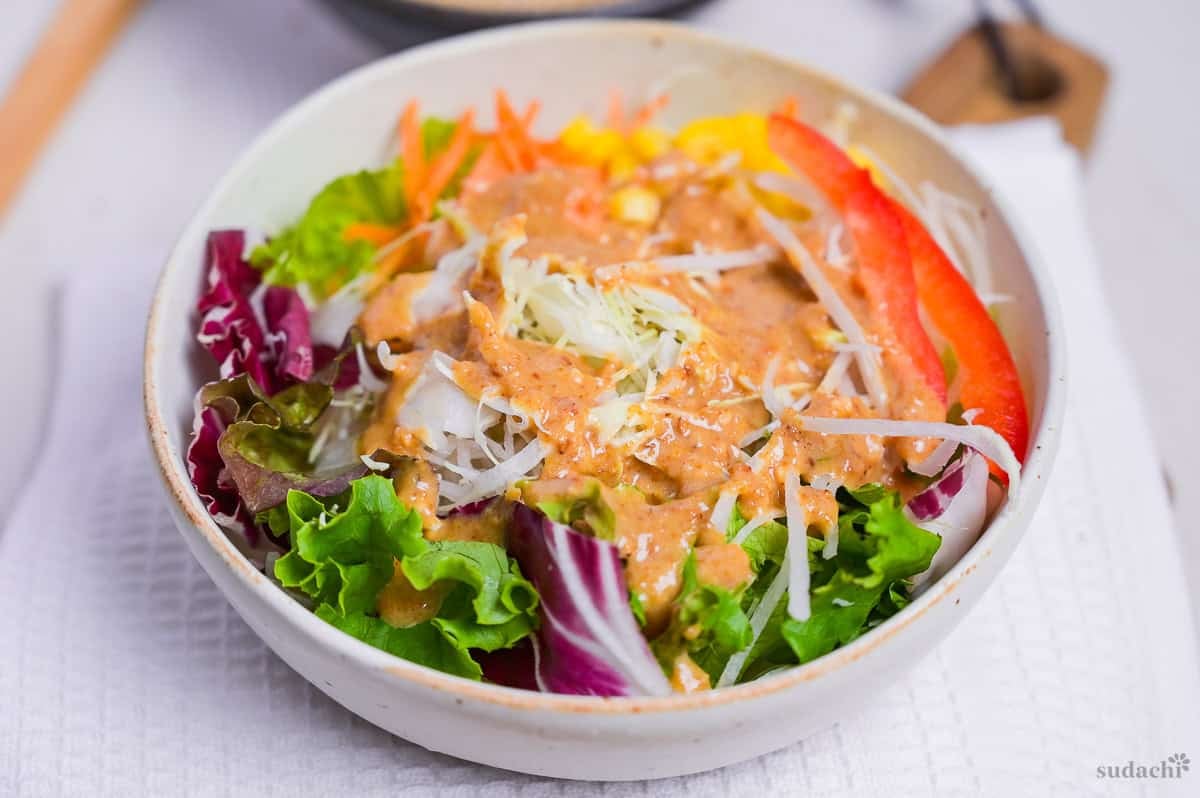
More Japanese Dressing Recipes
- Wafu Dressing (Japanese-Style Vinaigrette)
- Shiso Dressing
- Ponzu Dressing
- Carrot Ginger Dressing
Craving more ways to dress a salad? Explore my full Japanese salad dressing collection for more homemade favorites.
Did You Try This Recipe?
I would love to hear your thoughts!
💬 Leave a review and ⭐️ rating in the comments below. 📷 I also love to see your photos – submit them here!
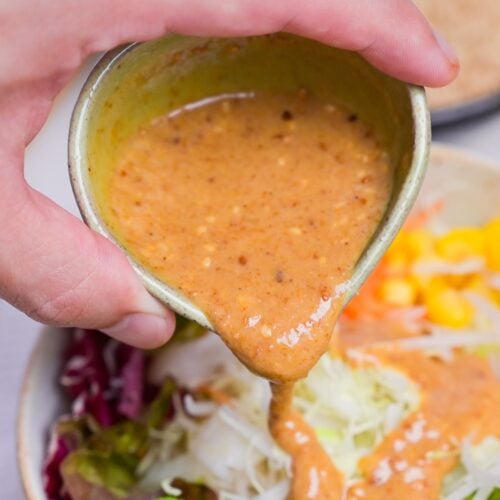
Japanese Sesame Dressing (Goma Salad Dressing)

Ingredients
Small batch (serves 2)
- 2 tbsp white sesame seeds raw or already toasted, both work
- 1 tsp unseasoned rice vinegar (komezu) not sushi vinegar
- 1 tsp Japanese soy sauce (koikuchi shoyu)
- 1 ½ tsp sugar fine granulated, so it dissolves clean
- ⅛ tsp dashi granules optional
- 2 tbsp Japanese mayonnaise egg-yolk-based type like Kewpie
- 1 tsp toasted sesame oil optional
Large batch (serves 16)
- 140 g white sesame seeds
- 40 ml unseasoned rice vinegar (komezu)
- 40 ml Japanese soy sauce (koikuchi shoyu)
- 4 tbsp sugar
- 1 tsp dashi granules optional
- 230 g Japanese mayonnaise
- 40 ml toasted sesame oil
The ingredient brands and tools I trust are in my Japanese pantry guide and my cooking tools guide.
Can’t find certain Japanese ingredients? See my substitution guide here.
Instructions
Small batch (2 portions)
- Add 2 tbsp white sesame seeds to a dry frying pan and gently toast over a medium heat until fragrant and slightly golden. Shake the pan regularly and remove from the heat as soon as they're done to prevent burning.

- Pour the hot sesame seeds into a mortar while they are still warm. Grind with a pestle until they're half paste, half powder.
- In a separate bowl, mix 1 tsp unseasoned rice vinegar (komezu), 1 ½ tsp sugar, and 1 tsp Japanese soy sauce (koikuchi shoyu) until the sugar has dissolved. If you're using ⅛ tsp dashi granules, add them here too.
- Add the ground sesame to the bowl along with 2 tbsp Japanese mayonnaise. Whisk until smooth and creamy.

- Drizzle in 1 tsp toasted sesame oil and whisk until combined. Use straight away, or chill in the fridge for 15-30 minutes. Enjoy!
Large batch (16 portions)
- Toast 140 g white sesame seeds in a large dry pan until golden and fragrant, then pour into a food processor and blitz until they become half paste half powder.
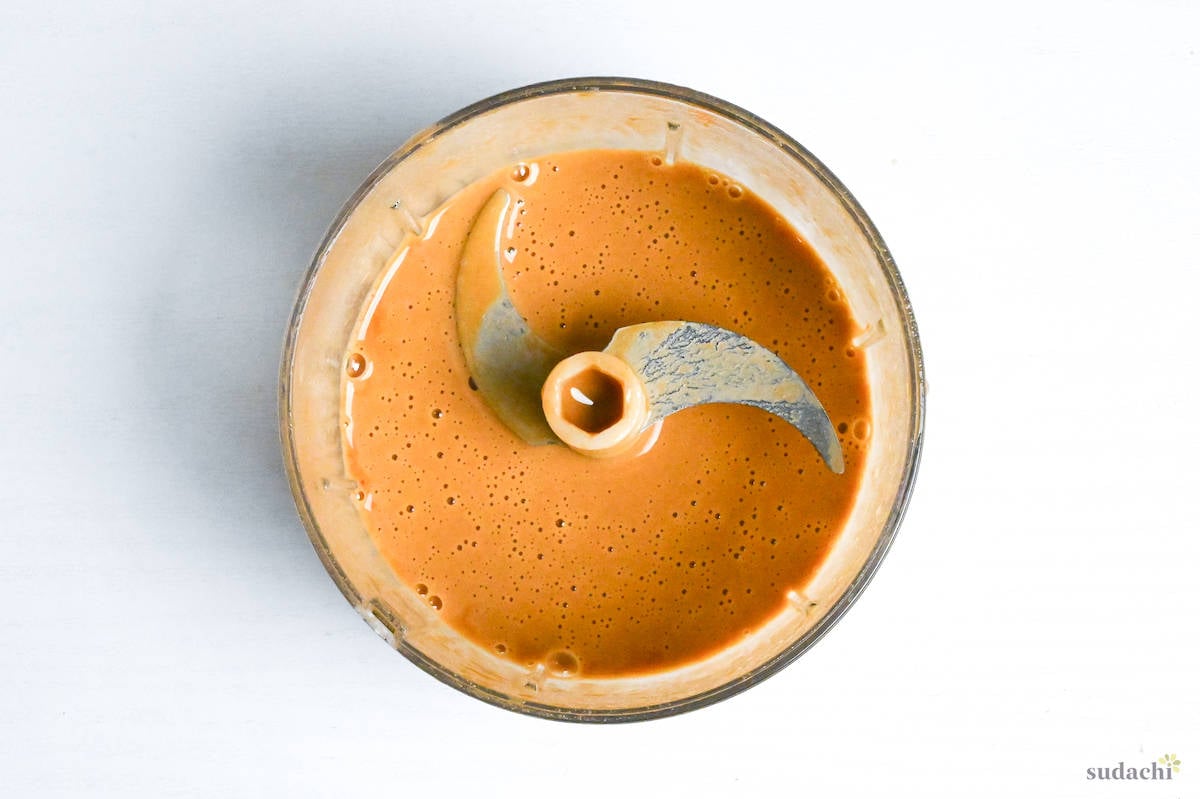
- In a small bowl, whisk 40 ml unseasoned rice vinegar (komezu), 40 ml Japanese soy sauce (koikuchi shoyu), 4 tbsp sugar and 1 tsp dashi granules (optional). Whisk until all the granules have dissolved, pour the mixture into the food processor. Add 230 g Japanese mayonnaise and 40 ml toasted sesame oil. Pulse until smooth, creamy and well combined.

- Enjoy!

This was amazing! I made a big batch and enjoyed it on a chicken salad and later in the week on a cabbage and carrot salad. Delicious! Thank you for the recipe
Hi Paula.
Thank you for your kind words and generous rating, I’m glad you enjoyed the recipe! 🙂
I love how simple and delicious this recipe is!!! Thanks for sharing!!
Hi Alice,
My pleasure! Glad you liked the recipe 🙂 Thank you for the 5 star rating!
Extremely good recipe. I had to triple the recipe for my family. Yoroshiku onegaiitashimasu. Thank you.
Thank you so much! Glad your family enjoyed it 🙂
j adore cette recette, merci beaucoup pour le partage
peut-on vous suivre avec des newsletter ?
Hi Anita,
Merci ! Je suis ravi d’apprendre que cela vous plaît ! Vous pouvez me suivre via la newsletter ici ! (https://sudachi.kit.com/5c166f80ba)
Yuto
Hello
Will like to know when you make a big batch with mayonaise, how long it will keep in the refrigerator,!! Thanks and I really enjoy all your recipes.
Hi Mikael,
Thank you for your question! Once the dressing ingredients are mixed together, if you store it in a clean airtight container in the fridge for about a week (mainly because this recipe contains mayo).
As an alternative option, I recommend blitzing a large batch of sesame seeds to a powder and storing them in a cool dry place for up to 3 months, or in the fridge for up to 6 months. With ground sesame seeds ready, this recipe goes from 10 minutes to 1!
I hope this answer helps!
Yuto
I followed the recipe, used a mortar and pestle, but the texture came out like tahini. Extremely thick. Not sure how to get this to a dressing consistency. Any tips? The taste is great, but it’s way way too thick.
Hi Summer,
Thank you for trying out the recipe and for your feedback!
The texture can vary depending on the condition and thickness of the mayonnaise used. If the dressing turns out too thick, you can gradually thin it by adding a small amount of rice vinegar (if you’re using non-Japanese mayonnaise) or water (if using Japanese mayonnaise). Be sure to add it slowly, a little at a time, until you reach your desired consistency.
I’m glad to hear you enjoyed the flavor, and I hope this helps! I will also add this note to the recipe too! 🙂
Yuto
Wonderful, tasty and great for dressing for cabbage and Tonkatsu
Hi Barry,
Thank you for trying my sesame dressing recipe! I’m so happy that you enjoyed it! 🙂
Yuto