

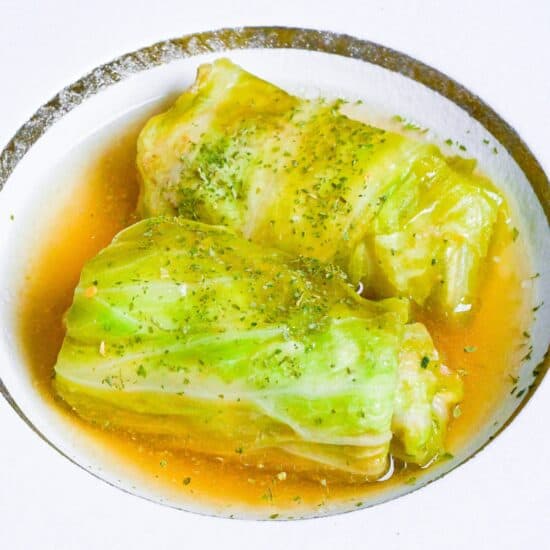


Featured Comment
Just tried this recipe, LOVED IT! The sauce is what makes the difference!!
★★★★★
– Andrea
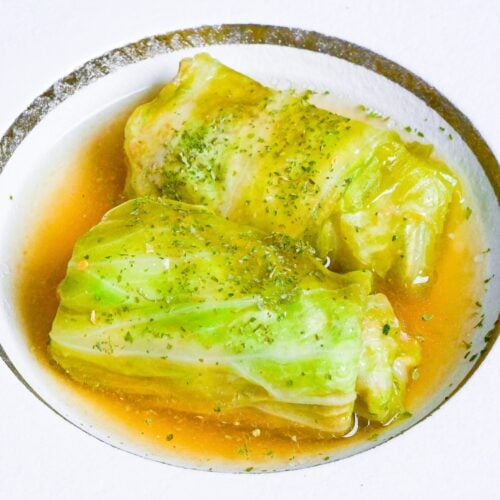
What if cabbage rolls tasted like a warm bowl of soup? This Japanese rōru kyabetsu wraps pork in tender cabbage, then perfumes you with dashi, ginger, and quiet sweetness.
This yōshoku classic keeps the familiar shape but tastes quietly savory.
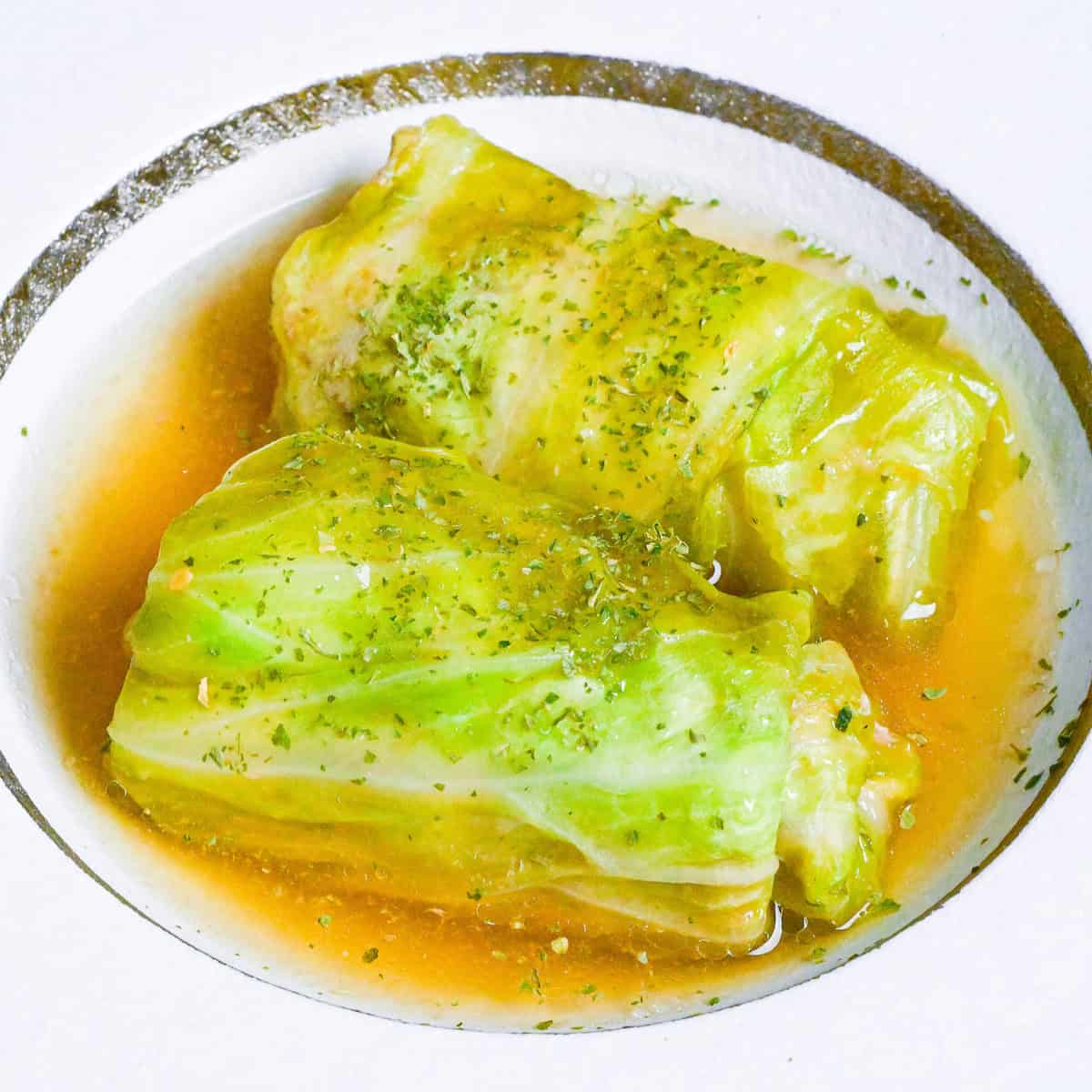
Japanese Cabbage Rolls
Recipe Snapshot
- What is it? Tender cabbage leaves wrapped around thin-sliced pork, gently simmered in a savory dashi broth until melt-in-your-mouth soft.
- Flavor profile: Clear, umami-forward dashi, mellow sweetness from cabbage + mirin, rich pork fat.
- Why you’ll love this recipe: No more cabbage-roll anxiety! A foolproof “layer-and-roll” build (no fussy tying) plus otoshibuta simmering delivers tender, intact rolls with predictable doneness.
- Must-haves: Green cabbage leaves, Dashi stock, A wide pot + drop lid (otoshibuta)
- Skill Level: Easy (blanching + basic rolling)
Summarize & Save this content on:

What are Japanese Cabbage Rolls?
Japanese cabbage rolls (和風ロールキャベツ, wafū rōru kyabetsu) are a Japanese adaptation of Western stuffed cabbage, where ground meat or sliced pork is wrapped in cabbage leaves and simmered in dashi-based broth.
The key feature is the awase dashi-based broth (often seasoned with soy sauce and mirin), which stays light and clear while building layered umami, some home versions also use a tomato-forward broth for a slightly richer feel.
It sits within yoshoku dishes as a Western-origin idea that’s been re-seasoned for Japanese home cooking, but unlike hambagu or korokke that mimicked Western flavors wholesale, Japanese cabbage rolls follow a different path. It’s more similar to Japanese potato salad, where they retain the structural concept (wrapping filling in leaves) but completely redefine the flavor profile using Japanese seasonings.
Japanese Cabbage Rolls Ingredients

- Green Cabbage (head): You’ll want regular green cabbage with large, sturdy leaves that can wrap around the filling without tearing. Look for heads that feel heavy and tightly packed, the outer leaves should be firm but flexible enough to roll after blanching. Spring cabbage is ideal because its thinner, sweeter leaves wrap more easily, but standard green cabbage works beautifully year-round. One of my readers reported arrow (cone) head cabbage worked great!
- Thinly Sliced Pork Belly: This is your shortcut to foolproof, juicy cabbage rolls! No mixing or binding required. Using pre-sliced pork belly means you simply layer the meat and roll, which cooks through quickly and stays tender, adding rich depth without drying out.
- Dashi: Awase dashi is a light Japanese stock made from kombu (dried kelp) and katsuobushi (bonito flakes). Think of it like a clean, savory “tea” that builds flavor without heaviness. Homemade tastes cleanest, but high-quality dashi packets.
Substitution Ideas
- Napa cabbage (hakusai) is the best swap for green cabbage, and savoy cabbage is a close second. Both turn tender faster, with napa tasting a bit sweeter and more delicate. Because these leaves are softer (and napa is especially thin), handle gently and avoid over-simmering so the rolls don’t tear.
- Thinly sliced pork shoulder (or pork shoulder loin) is the closest swap for pork belly, giving a lighter, less rich bite while still tasting very “Japanese.” Thinly sliced chicken thigh also works for an even cleaner flavor, but it can feel less hearty.
- If you’re out of mirin, use a little sugar plus sake (or dry sherry/white wine) for a similar gentle sweetness, though it’ll taste a bit less mellow. If you don’t have usukuchi soy sauce, regular soy sauce works (or tamari for gluten-free).
Have trouble finding Japanese ingredients? Check out my ultimate guide to Japanese ingredient substitutes!
How to Make My Japanese Roll Cabbage
Before you start (Mise en place): Have your dashi broth ready. Homemade awase dashi is beautiful here, but a quality dashi packet works perfectly for a weeknight.

I developed this recipe in a 24cm yukihira nabe (a traditional Japanese pot with a pouring lip), but your Dutch oven, deep sauté pan, or any heavy-bottomed pot will work fine.
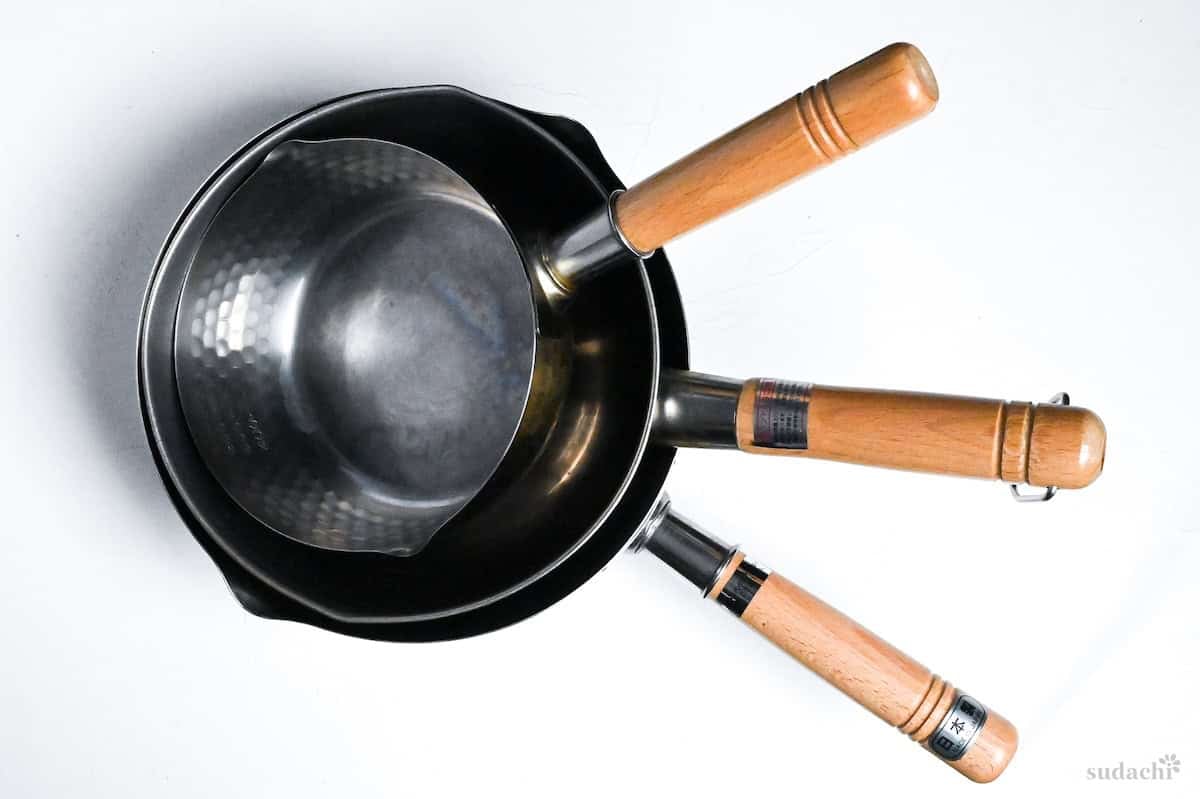
For the drop lid (otoshibuta), I use a stainless steel one.

But if you don’t have one, you can make otoshibuta out of parchment paper.

i. Bring a large pot of water to a rolling boil and gently nestle the whole cabbage inside so that all of the leaves are submerged. Blanch for 1 minute.

ii. Use tongs or a strong slotted spoon to lift them out gently, then drain in a colander.

This brief blanch does something crucial: it softens the pectin in the cell walls just enough to make the leaves pliable without turning them mushy. Skip this step, and you’ll be fighting torn, cracked leaves that refuse to cooperate.
iii. Let the leaves cool until you can handle them comfortably.

i. While your cabbage cools, combine all your broth ingredients (dashi stock, sake, soy sauce, mirin, light brown sugar, salt, grated ginger & garlic) in a separate pot and set it over medium heat.

ii. Bring it just to the edge of a simmer, then turn off the heat and set it aside.
This isn’t just salty water; it’s the liquid that will carry umami deep into the meat and cabbage, creating that signature “tastes Japanese” moment.
i. Lay a cooled cabbage leaf flat on your work surface, smooth side down.

ii. If the thick stem at the base feels bulky, use a knife to cut it out or shave it down until it’s nearly flush with the rest of the leaf. This prevents awkward lumps and makes your roll tight and even.

iii. Place 2 slices of pork belly across the center of the leaf, overlapping slightly if needed. Give them a light grind of black pepper. Just enough to add a subtle bite that’ll bloom.

iv. Now fold the left and right sides of the leaf inward so they cover the edges of the meat.

v. Then roll from the bottom up, tucking firmly as you go.

vi. You want tension here. A loose roll will unravel in the pot and let the meat float free.

vii. Set each finished roll seam-side down.
If you’re after a richer flavor, heat a thin film of oil in your pan and sear the rolls on all sides until they’re just golden. This is pure Maillard magic! Browning reactions that add roasted, savory notes the broth alone won’t deliver.
It’s not traditional for the lightest Japanese style, but it transforms the dish into something deeper and more complex.
i. Nestle your rolls seam-side down in the pot in a single, snug layer. Pour your prepared broth over the top until it comes about three-quarters of the way up the sides of the rolls.

ii. Place your drop lid (otoshibuta) directly on the surface of the liquid, pressing it down gently so the rolls don’t move around.

It’s not 100% required, but this does two things:
- It keeps the broth circulating evenly.
- Prevents the rolls from bobbing around and bursting open.
iii. Bring everything to a gentle boil over medium heat, then immediately lower to a quiet simmer, and let it cook for 15 minutes.
i. Use tongs to carefully transfer the cooked rolls to your serving plates, leaving all that beautiful broth behind in the pot.
If it feels thin or lacks punch, turn the heat to medium and let it reduce for a few minutes until the flavors concentrate and the saltiness feels just right.
ii. In a small bowl, mix your potato starch (or cornstarch) with just enough cold water to make a smooth slurry. Stir it into the simmering broth bit by bit, whisking constantly, until the liquid thickens to a glossy consistency.

iii. You won’t use all of this sauce, and there will be extra. Save it for drizzling over rice, tossing with noodles, or enriching another soup later in the week.
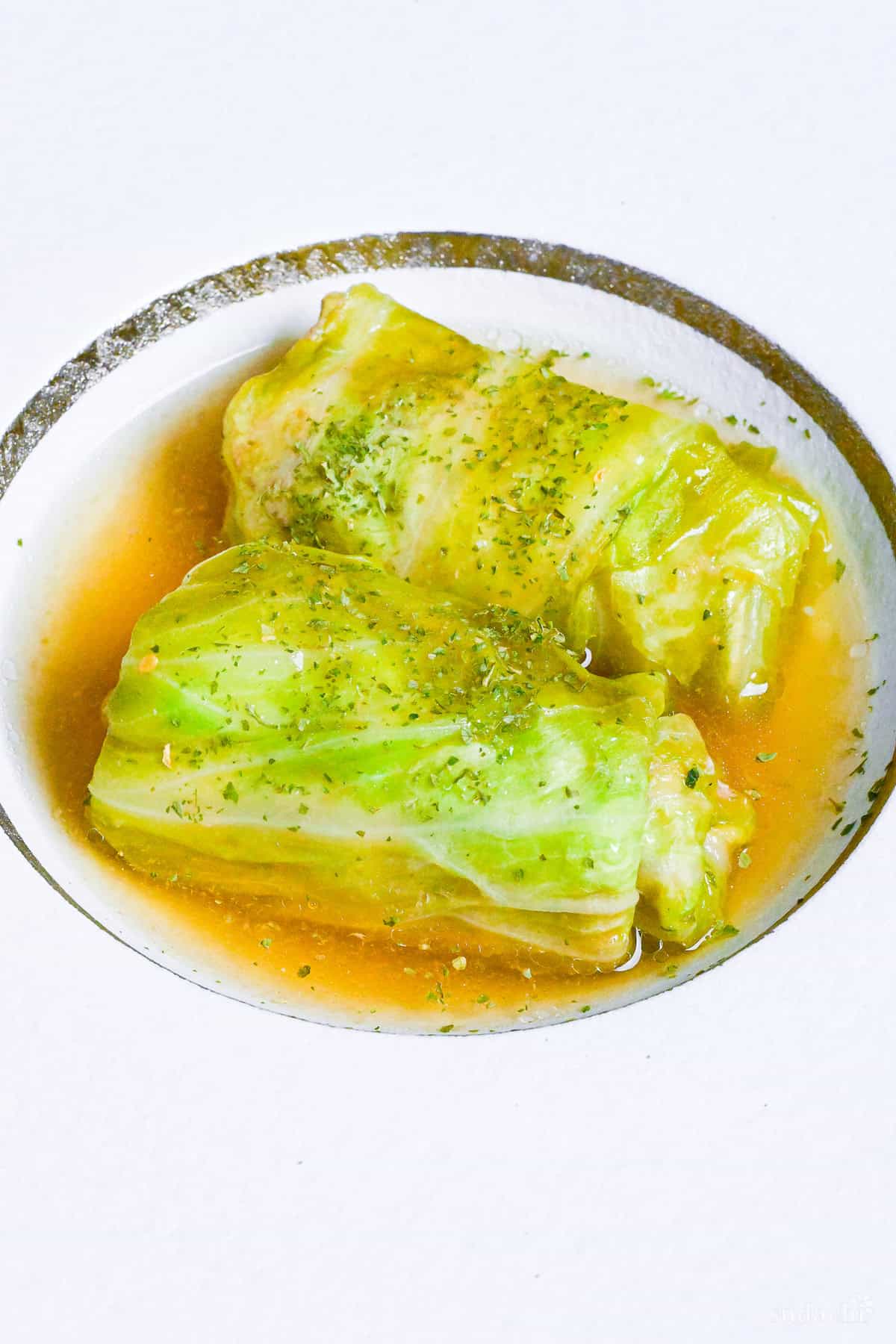
i. Spoon your glossy, thickened sauce generously over each cabbage roll, letting it pool around the base and glaze the top.

ii. Finish with a sprinkle of parsley.

Essential Tips & Tricks
- Blanch cabbage leaves until fully pliable for easy rolling to prevent brittle ribs from cracking or tearing.
- Shave down the thick rib before rolling so the leaf bends and seals cleanly, otherwise the bulky vein creates gaps that pop open and let pork slip out in the broth.
- Nestle rolls tightly together in a single snug layer so they support each other during cooking and stay submerged under the drop lid.
With these simple tips in mind, you’re set for success every time you make Japanese cabbage rolls.
Storage & Meal Prep
Fridge: Store cooked Japanese cabbage rolls fully cooled (within 2 hours) in an airtight container with enough broth to keep them covered for 2-3 days.
Freezer: Up to 1 month. Wrap each cooked roll individually in plastic wrap, then store in a freezer-safe container with some broth to prevent freezer burn and drying.
Meal Prep: You can blanch and trim the leaves up to 1 day ahead and refrigerate them in a sealed bag, making weeknight assembly quick and low-stress. For maximum convenience, assemble the rolls completely, freeze them raw, and simmer from frozen (add 10 extra minutes to the cooking time to make sure the filling is cooked throughout).
Reheating: Reheat gently in a covered pot over low heat with extra broth.
What to Serve With This Recipe
Cabbage Rolls FAQ
While Western stuffed cabbage often features a thick, acidic tomato sauce, the Japanese version (Rōru Kyabetsu) centers on a light, umami-rich dashi broth. This approach highlights the “silky cabbage” texture and creates a more delicate profile. It’s a comfort food that feels lighter and more soup-like than its global counterparts.
Yes, blanching is a critical step for failure prevention. Raw cabbage leaves are structurally brittle and will snap or crack if you attempt to fold them, causing the filling to leak into the broth. A quick 1-minute blanch softens the leaf’s pectin, transforming it into a pliable wrapper that can maintain the tension needed for a perfect roll.
The usual culprits are loose rolling tension, an untrimmed thick rib creating gaps, or a hard boil that makes the rolls bump and unravel. Pack them snugly, keep a gentle simmer (tiny bubbles, not rolling), and use a drop lid to control movement.

More Japanese Winter Recipes
Hungry for more? Explore my Japanese winter recipe collection to find your next favorite dishes!
Did You Try This Recipe?
I would love to hear your thoughts!
💬 Leave a review and ⭐️ rating in the comments below. 📷 I also love to see your photos – submit them here!
Japanese Cabbage Rolls (Roru Kyabetsu)
Ingredients
- 12 leaves green cabbage large outer leaves, or napa/savoy/cornhead
- 24 slices thinly sliced pork belly shabu-shabu cut, or thin-sliced pork shoulder
- ground black pepper coarse
- 1 tbsp potato starch (katakuriko) for slurry, or cornstarch
- 1 tbsp water for slurry
- dried parsley
Broth
- 500 ml dashi stock or dashi packet
- 2 tbsp sake
- 1 ½ tbsp Japanese light soy sauce (usukuchi shoyu) or regular soy sauce
- 1 tbsp mirin
- ½ tbsp light brown sugar
- 1 tsp salt
- 1 tsp grated ginger or ginger paste
- 1 tsp grated garlic or garlic paste
My recommended brands of ingredients and seasonings can be found in my Japanese pantry guide.
Can’t find certain Japanese ingredients? See my substitution guide here.
Instructions
- Bring a large pot of water to a rolling boil and blanch 12 leaves green cabbage for 1 minute. Drain the water and rest until cool enough to touch.

- While the cabbage leaves cool, add the broth ingredients to a saucepan (500 ml dashi stock, 2 tbsp sake, 1 ½ tbsp Japanese light soy sauce (usukuchi shoyu), 1 tbsp mirin, ½ tbsp light brown sugar, 1 tsp salt, 1 tsp grated ginger, and 1 tsp grated garlic) and heat over medium until almost boiling. Turn off the heat and set aside for later.
- Lay the cooled cabbage leaves out on a chopping board and cut out the thickest part of the stem.
- Sprinkle 24 slices thinly sliced pork belly with ground black pepper on both sides and lay two slices on each cabbage leaf.
- Fold two parallel edges of the cabbage leaf over the pork slices.
- Starting from the bottom stem, tightly roll the cabbage and pork upwards to create a neat package, then place them in a large pot with the seam facing down to prevent unraveling.
- Pour the prepared broth over the rolls until evenly covered.
- Place a drop lid (or a light heatproof plate) on top to stop them from moving and bring to a boil over medium heat. Once boiling, reduce the heat to low and simmer for 15 minutes.
- Carefully transfer the cooked cabbage rolls to serving plates but leave the broth in the pot. Mix 1 tbsp potato starch (katakuriko) and 1 tbsp water together in a small bowl to make a slurry, then pour it into the broth and continue to cook until glossy and slightly thickened.
- Pour the thickened sauce over the cabbage rolls and sprinkle with dried parsley. Enjoy!


We loved this recipe!!!
Cabbage rolls are safely a trustworthy ambassador of the culinary culture they come from – and these are an outstanding example. Over time, I have learned to trust the overall minimalism when it comes to seasoning and once more, this recipe has all it takes to deliver a stunning result. The only alteration I could not resist was searing them on one side first „potsticker style“ because cabbage develops such a tasty, smoky caramelisation. I used arrow-head, btw. I still cannot figure out how to upload a picture here – I’ll leave one in the community section on YouTube.
Just tried this recipe, LOVED IT!
The sauce is what makes the difference!!
Hi Andrea,
Thank you so much for trying this recipe! So glad you loved it! Thank you for sharing your photo too, it looks amazing! 🙂
Yuto
An extra five stars for the broth!
Hi Peti,
Thank you so much for cooking this and for such a thoughtful comment. I’m really happy the minimal seasoning resonated with you. And searing them sounds amazing for this recipe! I’ll definitely have to try that next time. I’ll go check the photo on YouTube now. 🙂
Yuto