

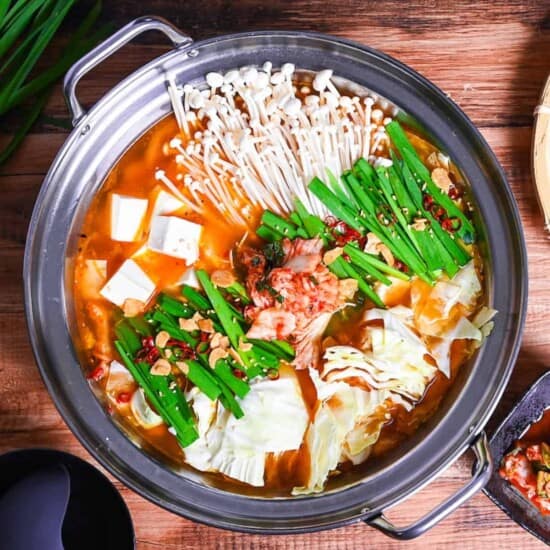


Featured Comment
Made it today as temperatures hit minus in Amsterdam. I don’t really like Kimchi usually but the nabe was so tasty even though I forgot to buy garlic and ginger to put inside. Would make it again
★★★★★
– Sakura
Forget store-bought kimchi nabe base. It can’t replicate what happens in a homemade version. My kimchi nabe recipe tastes like kimchi itame met motsunabe: seared pork, umami-rich broth, crisp-tender cabbage.
Once you try this easy homemade version, store-bought becomes unthinkable.
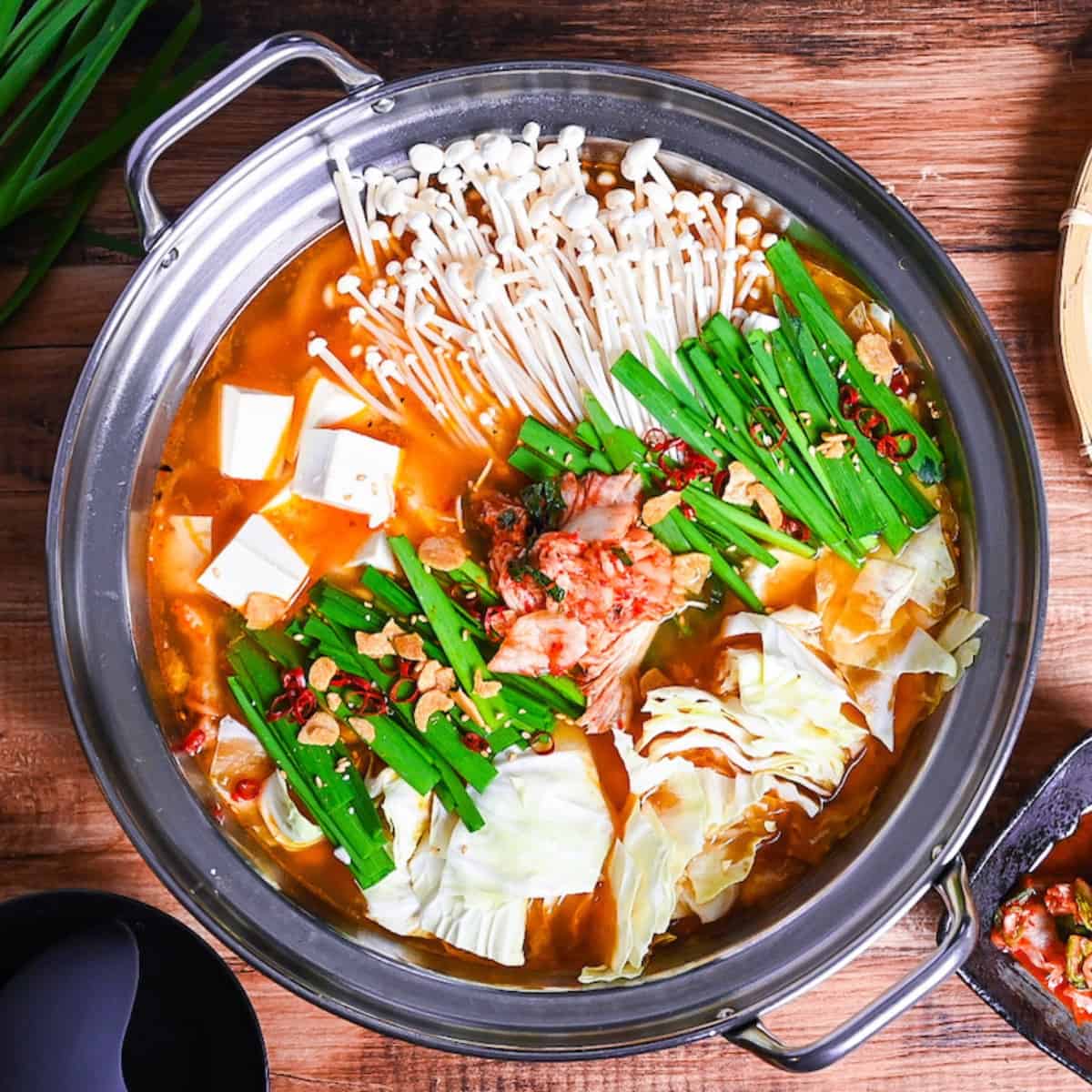
Kimchi Nabe
Recipe Snapshot
- What is it? A from-scratch Japanese kimchi nabe, a Korean-Japanese fusion hot pot built on dashi broth, seared pork belly, and fermented cabbage kimchi.
- Flavor profile: Mild-to-medium heat with layered umami from dashi and fermented kimchi, balanced by subtle sweetness from mirin and rendered pork fat.
- Why you’ll love this recipe: This recipe replaces instant soup bases with deliberate technique. Searing pork for Maillard depth, blooming aromatics in sesame oil, and layering miso into a living broth that deepens as it simmers.
- Must-haves: Cabbage kimchi, Dashi stock, Donabe/heavy pot
- Skill Level: Easy! Straightforward searing and simmering, with room to adjust heat and salt to taste.
Summarize & Save this content on:
What is Kimchi Nabe?
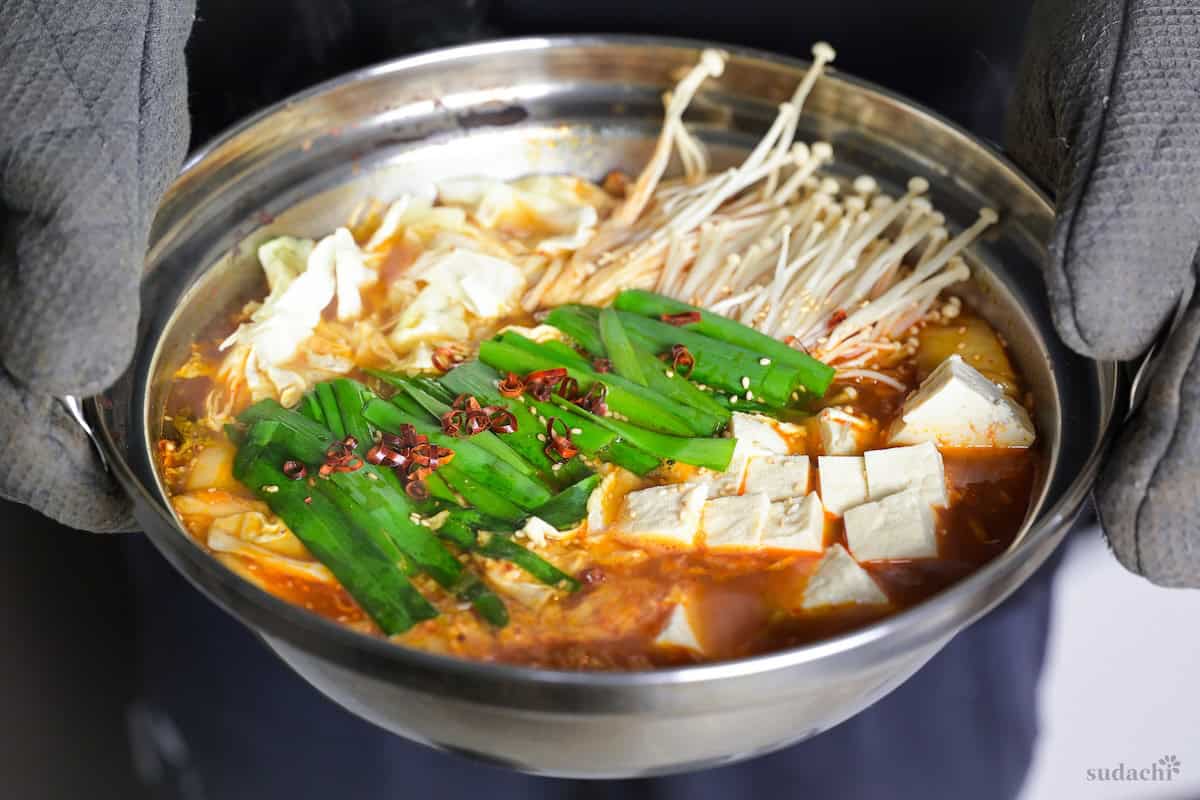
Kimchi nabe (キムチ鍋) is a nabemono (Japanese-style hot pot) built around kimchi’s tangy heat, cooked by simmering ingredients in a seasoned broth until they’re just done. Most households use store-bought soup base, but the core format is the same: a communal pot of broth where meat, tofu, and vegetables cook gently and are eaten straight from the pot, like other Japanese hot pot dishes.
While there’s no doubt that it was inspired by Korean jjigae, several key differences set them apart. Jjigae is typically a single-serving stew with a higher solids-to-liquid ratio. Kimchi nabe, by contrast, is communal and broth-forward, closer in spirit to yose-nabe with kimchi added.
The Japanese adaptation also tends to be milder, using less fermented (sweeter) kimchi and incorporating Japanese seasonings like dashi stock, miso and soy sauce. This Japanese-Korean fusion sits alongside other adapted favorites like yakiniku and mentaiko, which have similarly evolved to suit local tastes.
Kimchi nabe is now a well-established hot pot kind: a 2003 nationwide survey (1,013 university students and staff) ranked it third among commonly eaten nabe, after sukiyaki and yosenabe.
Kimchi Nabe Ingredients
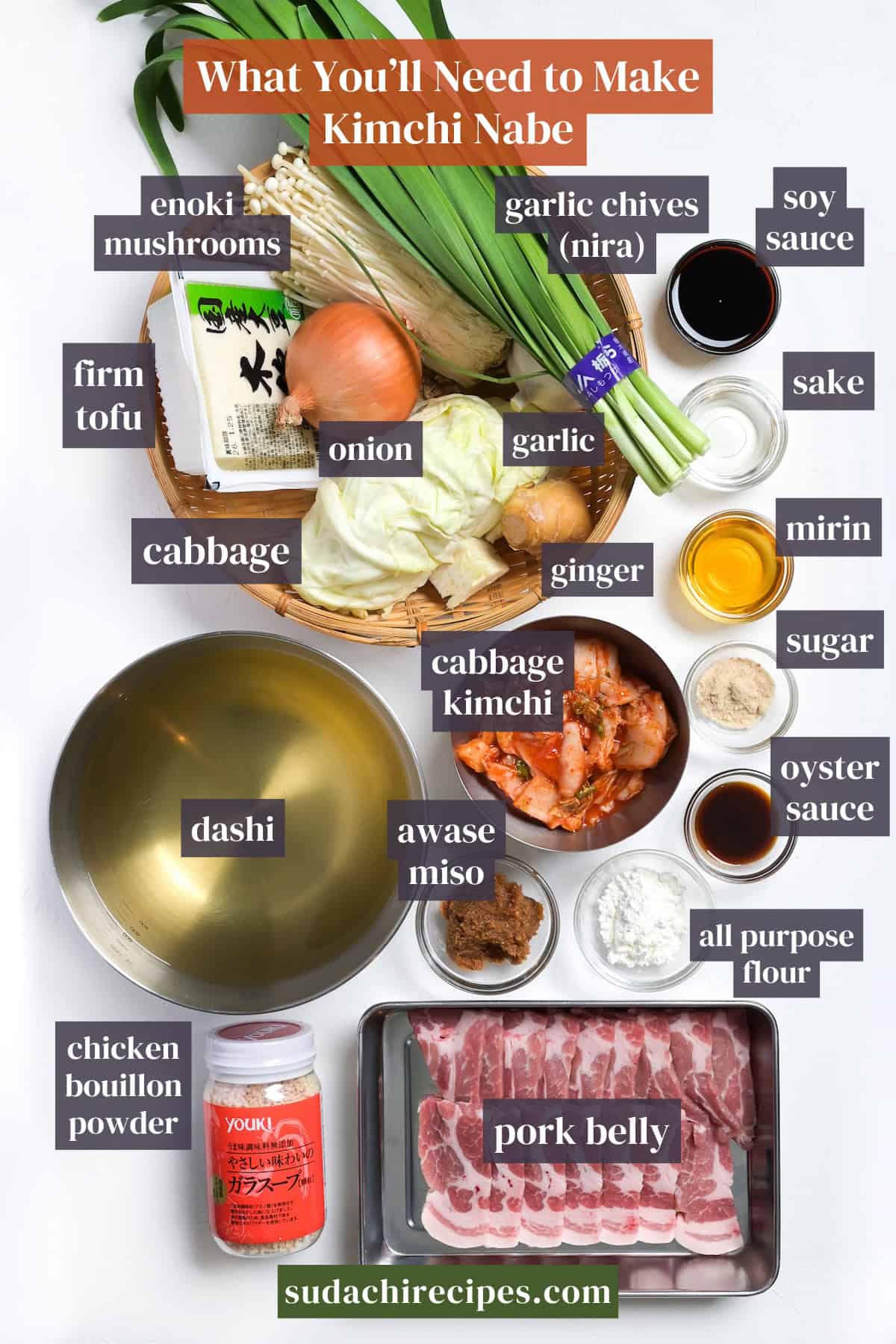
- Pork: Belly brings the luxurious richness that defines a great kimchi nabe (though the picture above is shoulder). Look for thinly sliced pork belly (often labeled “for hot pot” or “shabu-shabu style”) at Asian groceries, or slice a slab yourself to about 5mm thickness (just like Korean samgyeopsal-style slices) for more satisfying, meaty bites. Pork shoulder also works if belly feels too rich.
- Dashi Stock: Japanese soup stock (dashi) is a clear, savory liquid brewed from kombu seaweed and dried fish that serves as the “umami backbone” of Japanese cuisine. Homemade is wonderful, but dashi packets (the tea-bag style you steep) are an excellent weeknight shortcut. If using instant dashi granules, just reduce the chicken bouillon or soy sauce slightly since granules contain salt.
- Napa Cabbage Kimchi: Napa cabbage kimchi is a vibrant, fermented staple that provides the pot’s signature tang, spice, and aromatic depth. Japanese-market kimchi tends to be milder and sweeter than Korean versions.
Substitution Ideas
- Chicken thighs are the most forgiving alternative to pork. They stay juicy and create a milder, lighter broth, though you will lose some of the rich unctuousness that pork fat provides.
- Napa cabbage is the easiest swap for green cabbage, savoy cabbage is fine too. Napa turns sweeter and more tender, while sturdier cabbages stay a little crunchier and may need a longer simmer.
- Shiitake, oyster, or white button mushrooms are excellent swaps if you cannot find enoki.
Have trouble finding Japanese ingredients? Check out my ultimate guide to Japanese ingredient substitutes!
How to Make My Kimchi Nabe
Before you start (Mise en place):
- Prepare your dashi stock using your preferred method.
- If you use slab of pork, cut a pork belly block into about 5mm thick slices.
- Finely dice garlic and ginger.
- Thinly slice the onion, roughly cut the cabbage, remove the base of enoki mushroom, cube tofu.
i. Season both sides with a confident pinch of salt and a few grinds of black pepper.
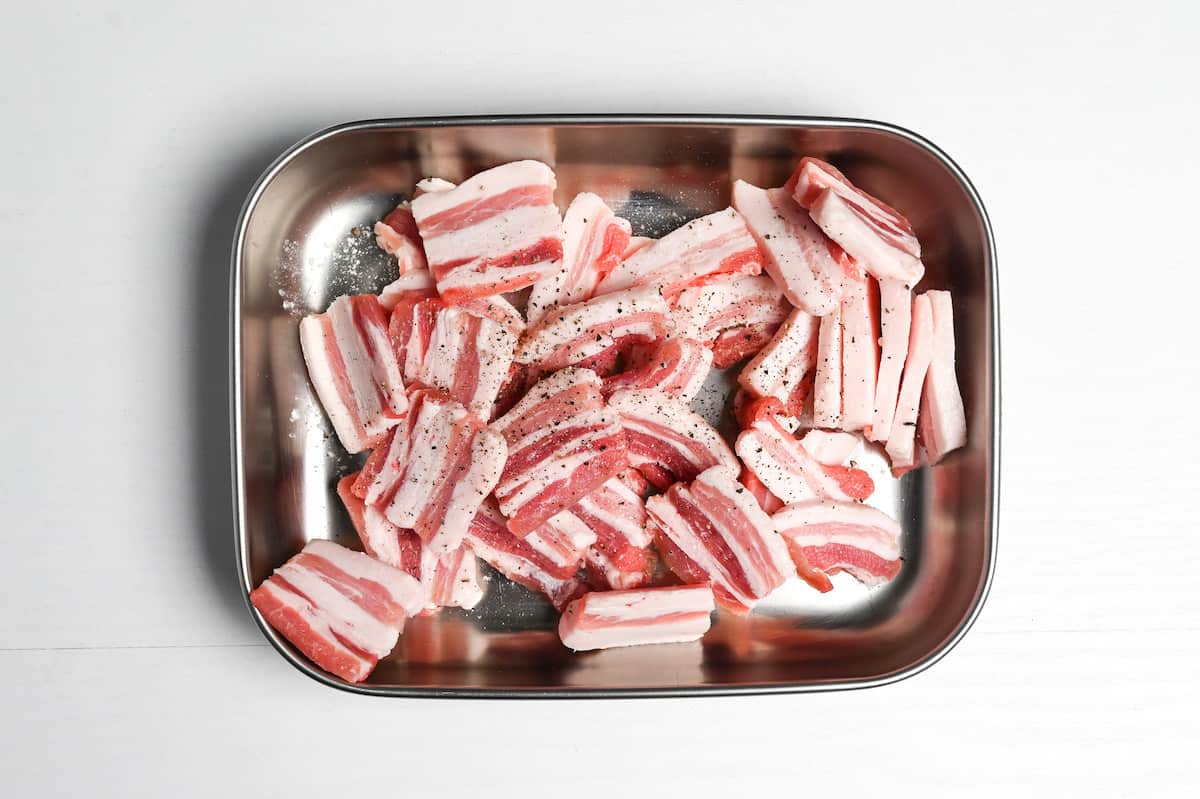
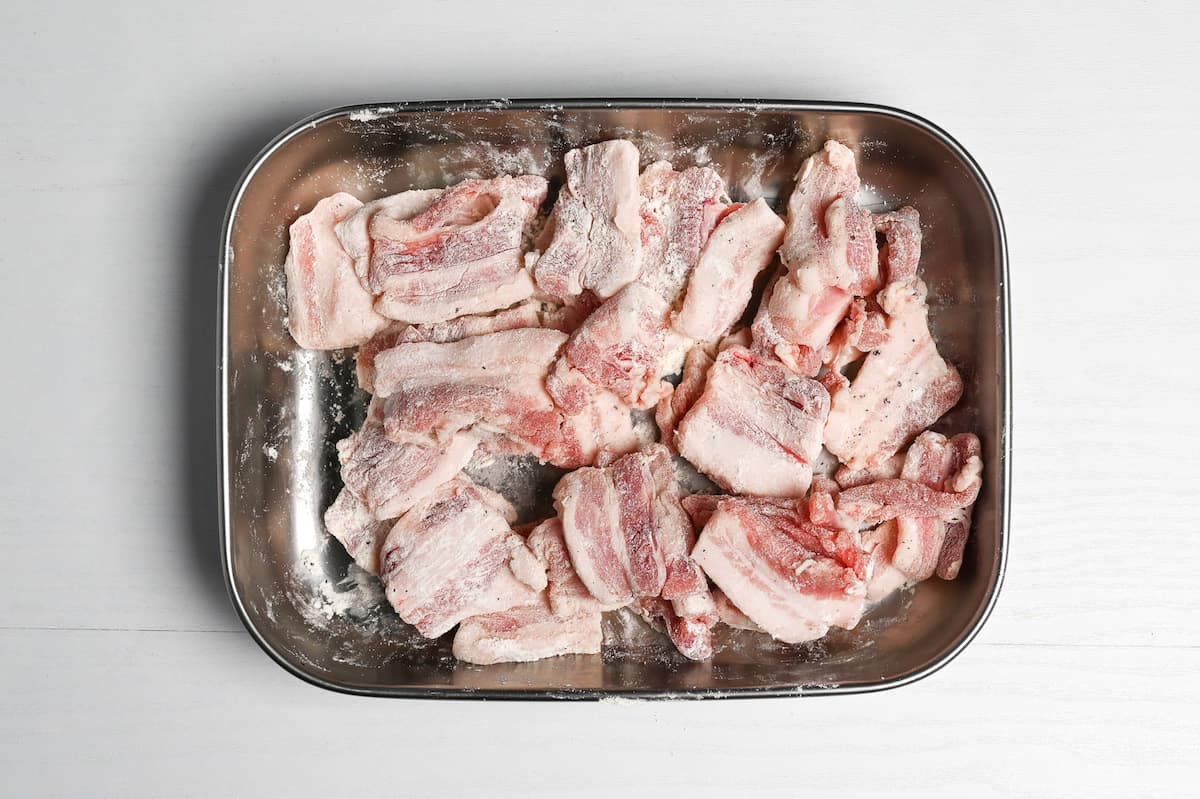
ii. Then dust each slice with a whisper-thin layer of all-purpose flour. This flour coating creates a micro-barrier that helps the pork develop golden, crispy edges while locking in moisture. You’ll taste the difference in every bite.
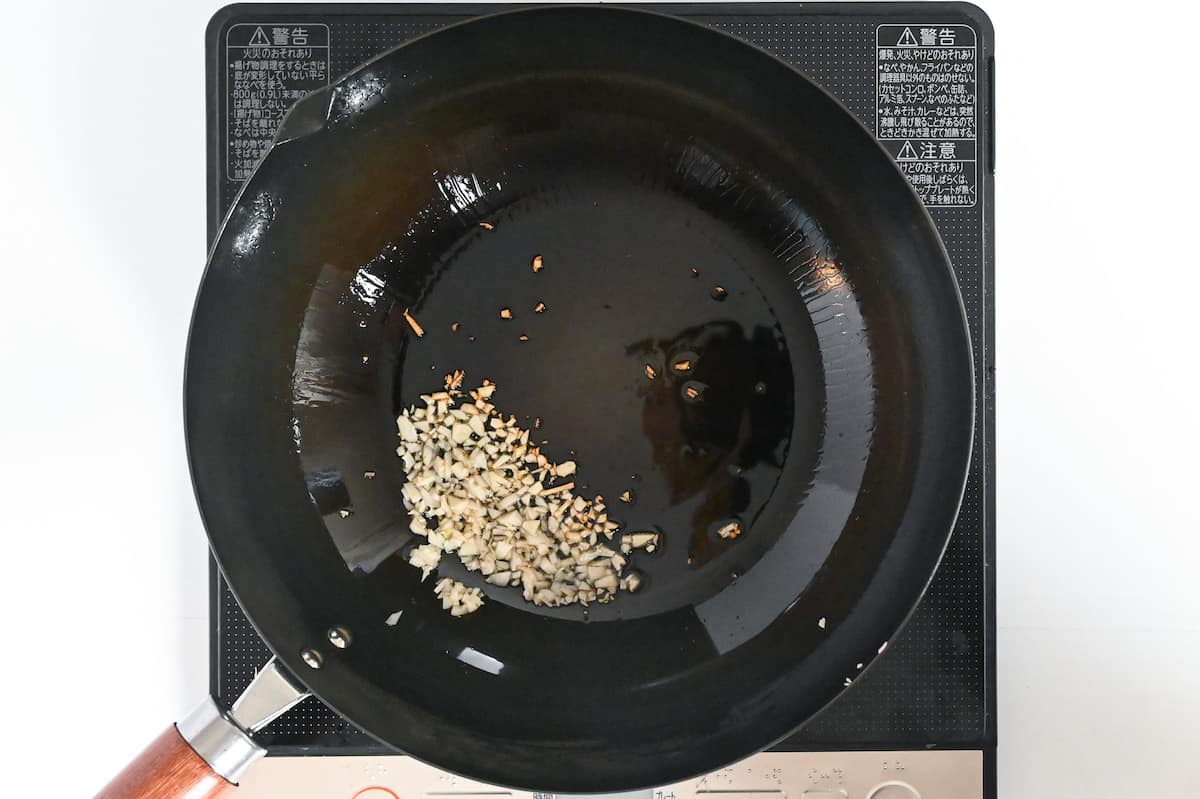
i. Heat a wok on medium-low, drizzle in sesame oil, then add finely diced garlic and ginger. Stir just until the aroma turns fragrant and nutty.
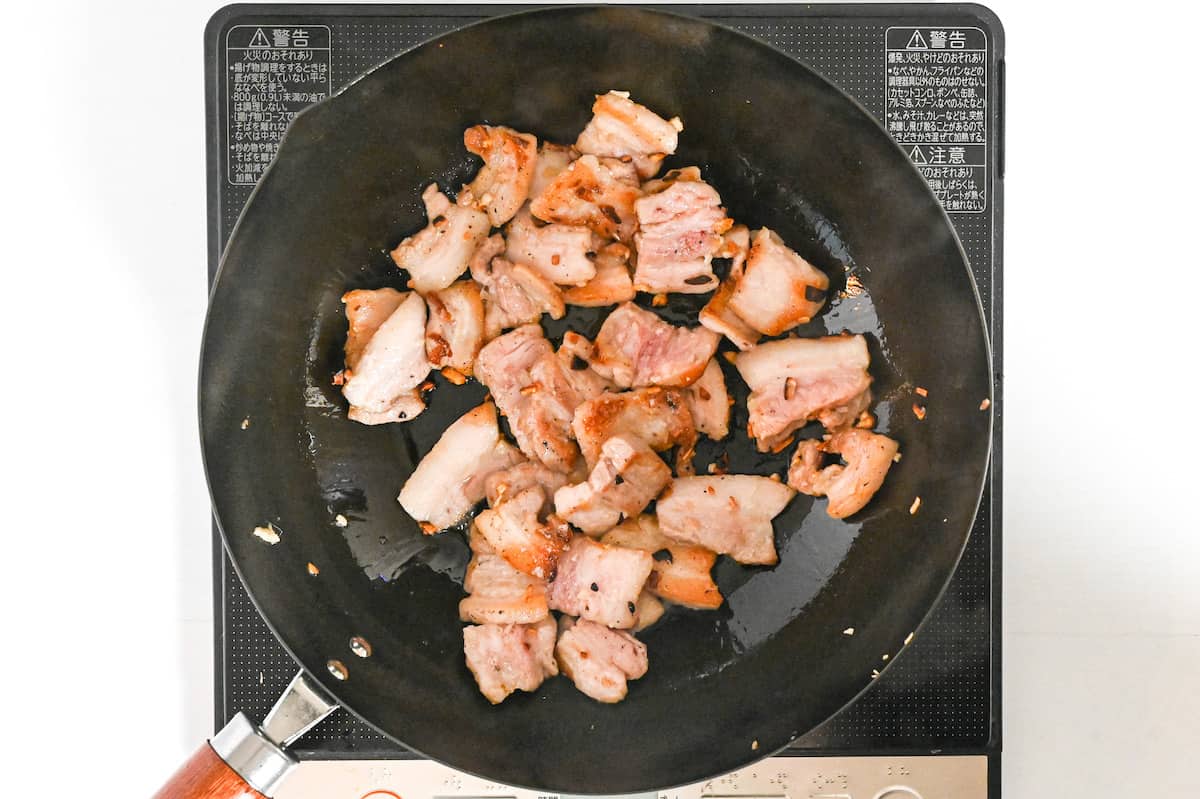
ii. Add the pork and stir-fry until the fat renders and turns golden.
i. Tumble your sliced onions into the pot with the pork and stir-fry until they turn slightly translucent at the edges, about 2 minutes.
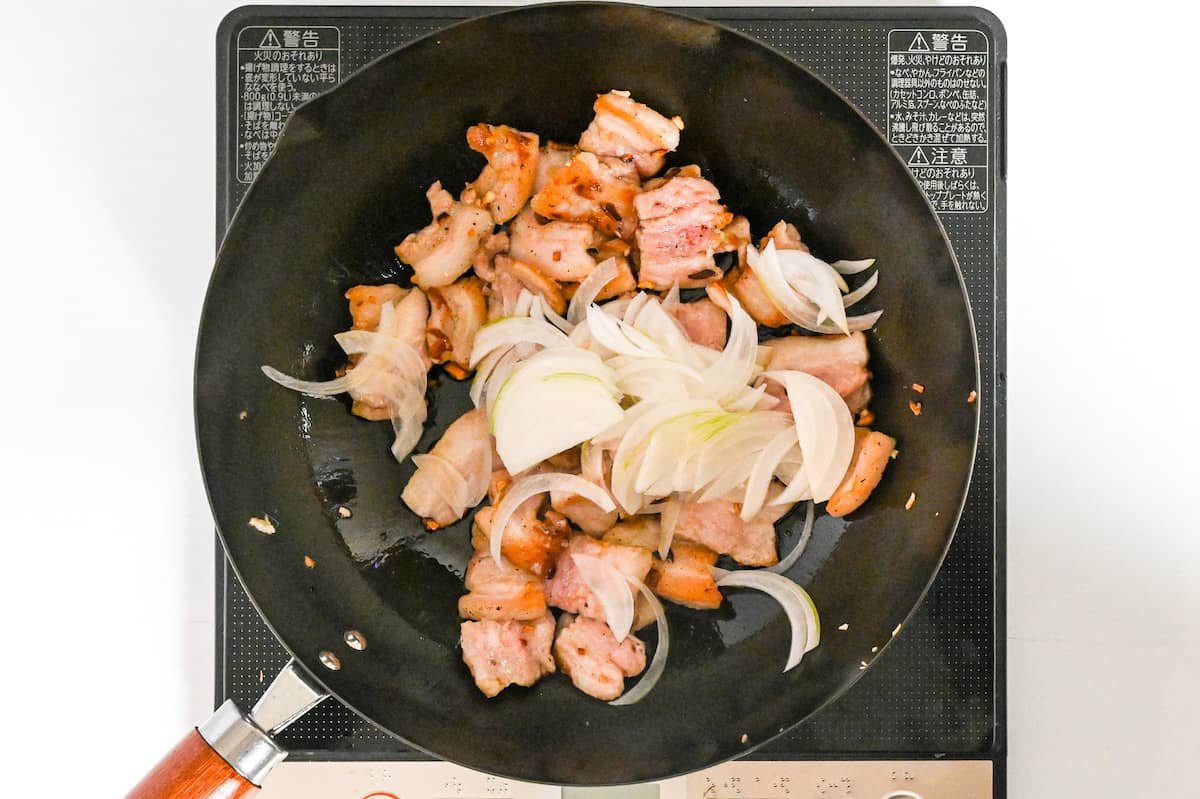
The onions will absorb some of that gorgeous rendered fat while releasing their own natural sugars.
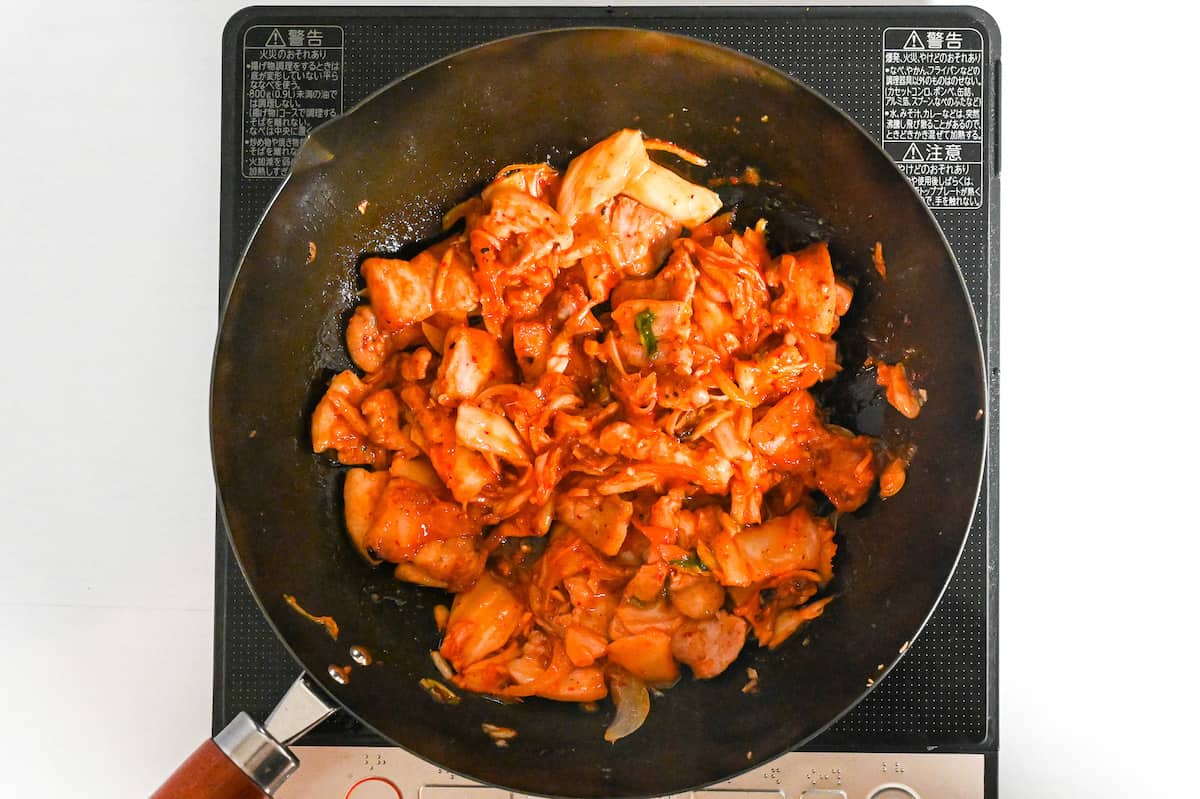
ii. Introduce the kimchi to the pan along with the oyster sauce and light brown sugar, stirring to coat everything evenly. Let this mixture sizzle for about 1 minute.
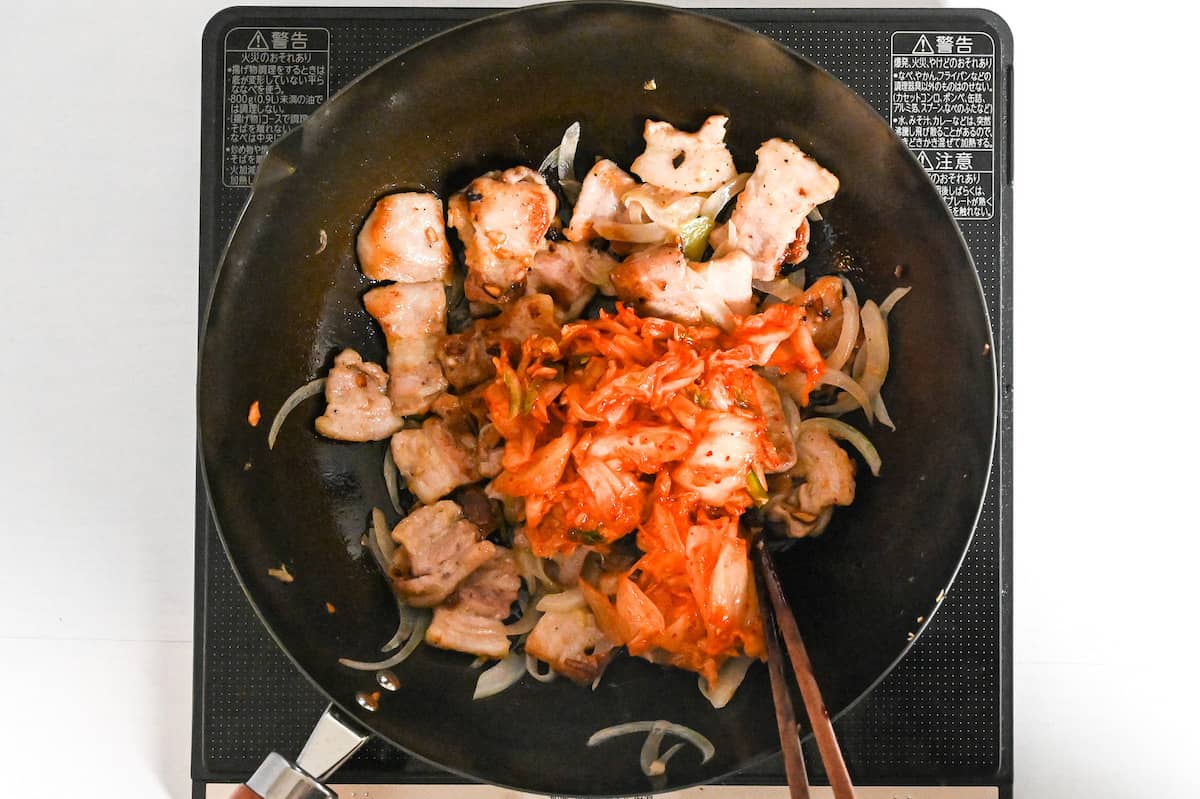
iii. Remove the entire contents from the heat and set aside. This flavor-packed mixture will reunite with your broth shortly.
i. Pour your dashi stock into a large pot and bring it to a gentle simmer over medium heat. The surface should show lazy bubbles, not a rolling boil.
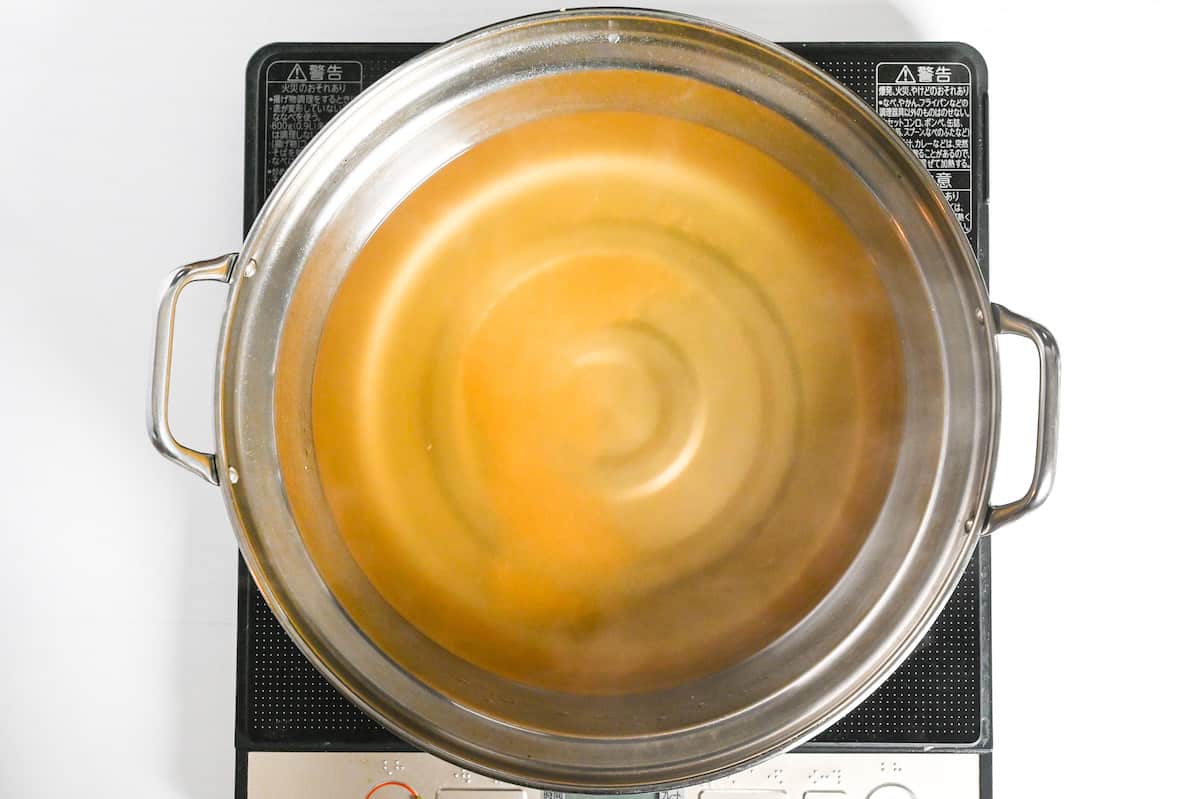
ii. Now add the Asian chicken bouillon powder, soy sauce, mirin, and sake, stirring to incorporate. For the awase miso, place it in a fine-mesh strainer, dip it into the broth, and whisk until it dissolves completely.
You can do this step at the same time as the stir-fry. If you have more than one stovetop burner, start heating the dashi and building the soup base while you stir-fry the pork and kimchi. Running them in parallel cuts down total cook time and keeps everything moving smoothly.

Concentration varies wildly between brands. My brand calls for one teaspoon per 200ml, but yours may differ significantly.
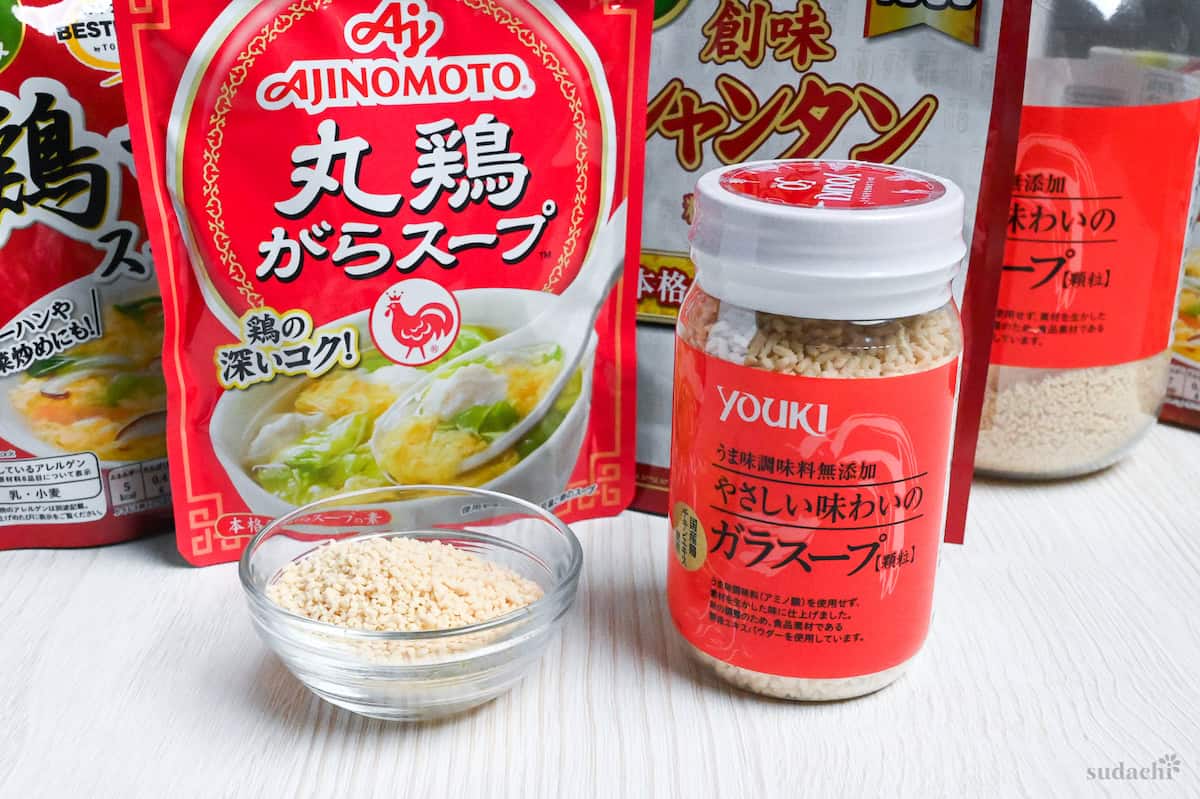
Check your label: if it’s more concentrated (like 1 tsp per 300ml or 1 cup), use a touch less to avoid oversalting. You can always add more, but you can’t take it back. Start conservative, taste, and adjust.
iii. Bring the broth to almost a boil, then immediately lower to a steady simmer.
i. Empty the reserved pork and kimchi mixture directly into the simmering broth and stir thoroughly.
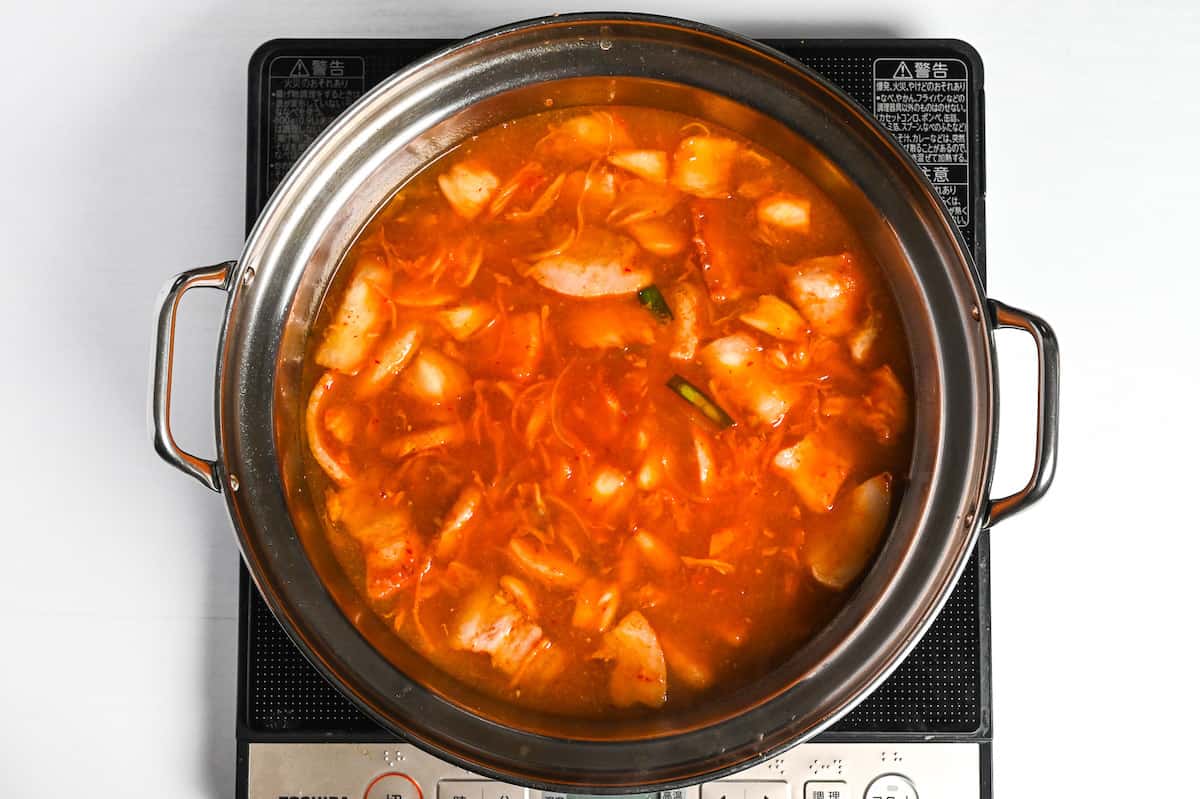
ii. Gently lower your tofu cubes, vegetables, and chosen toppings into the simmering broth.
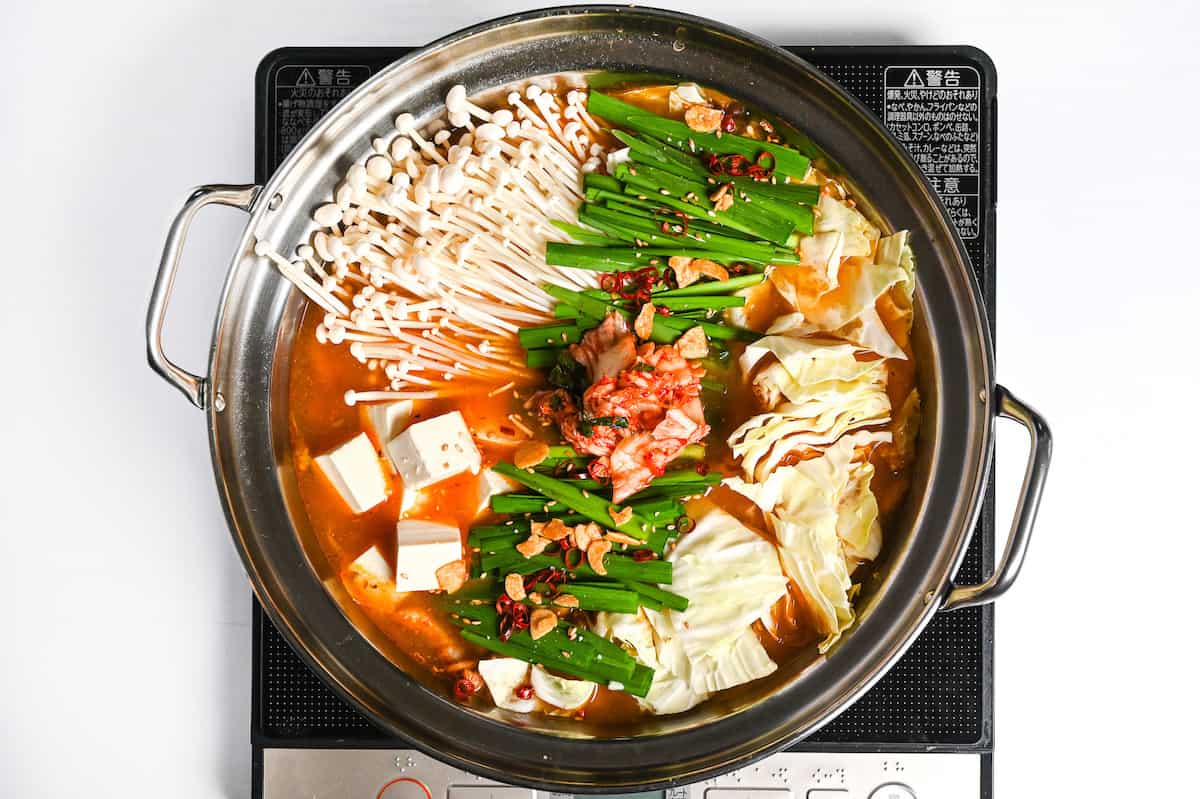
iii. Continue simmering until the cabbage has softened to tender-but-not-mushy and the tofu has warmed completely through. Keep the heat at a gentle bubbling simmer, not a hard boil.
i. Bring the pot to the table while it’s still steaming, the broth surface shimmering with aromatic oil. Ladle generous portions into individual bowls, making sure each serving gets a balance of pork, tofu, vegetables, and plenty of that complex, soul-warming broth.
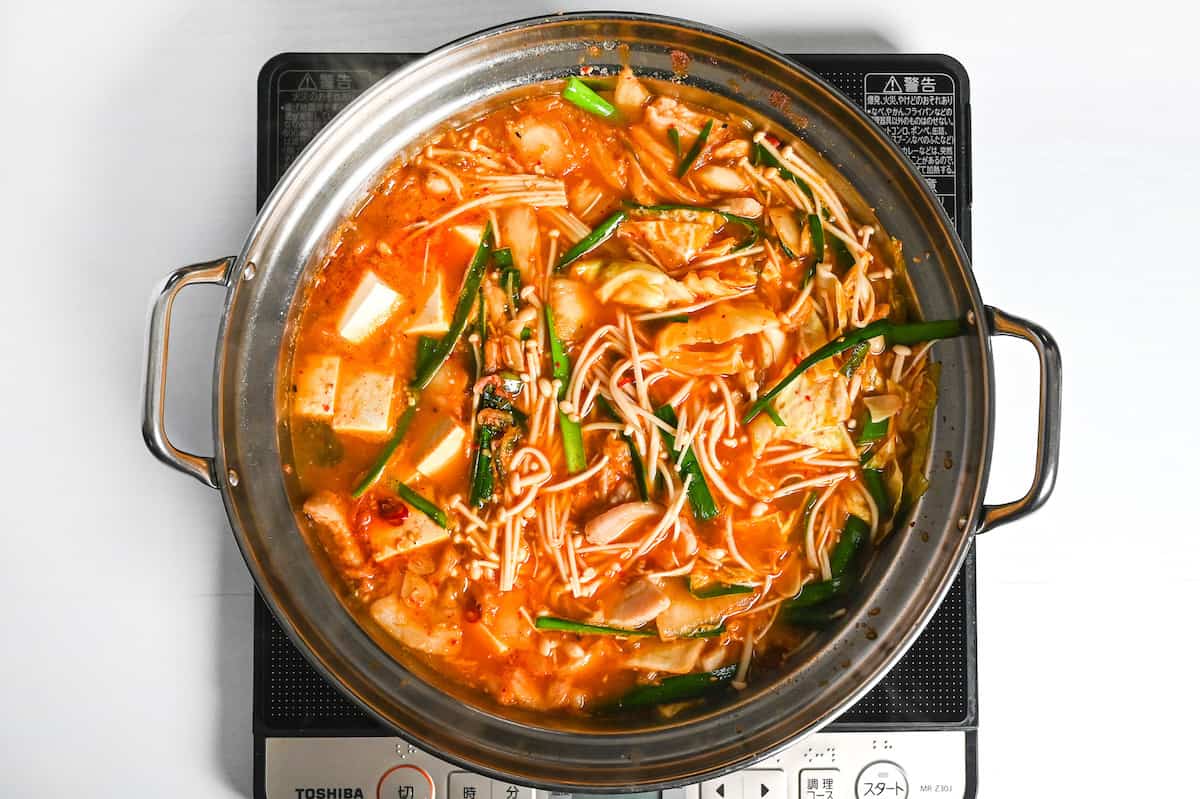
One of the quirks of hot pot is that the broth constantly changes: vegetables can release natural water and dilute it a bit, while simmering can also evaporate liquid and concentrate the flavor. It’s rare for kimchi nabe to get too thin, but it can definitely get too intense. If it starts tasting overly strong or salty, add a splash of water as you go to bring it back into balance.
ii. If you have leftover broth and you really should, because that’s where all the flavor migrated, don’t let it go to waste. This concentrated elixir is perfect for a traditional shime (finishing course): add cooked ramen noodles, chewy udon, or even a scoop of steamed rice directly into the simmering remnants.
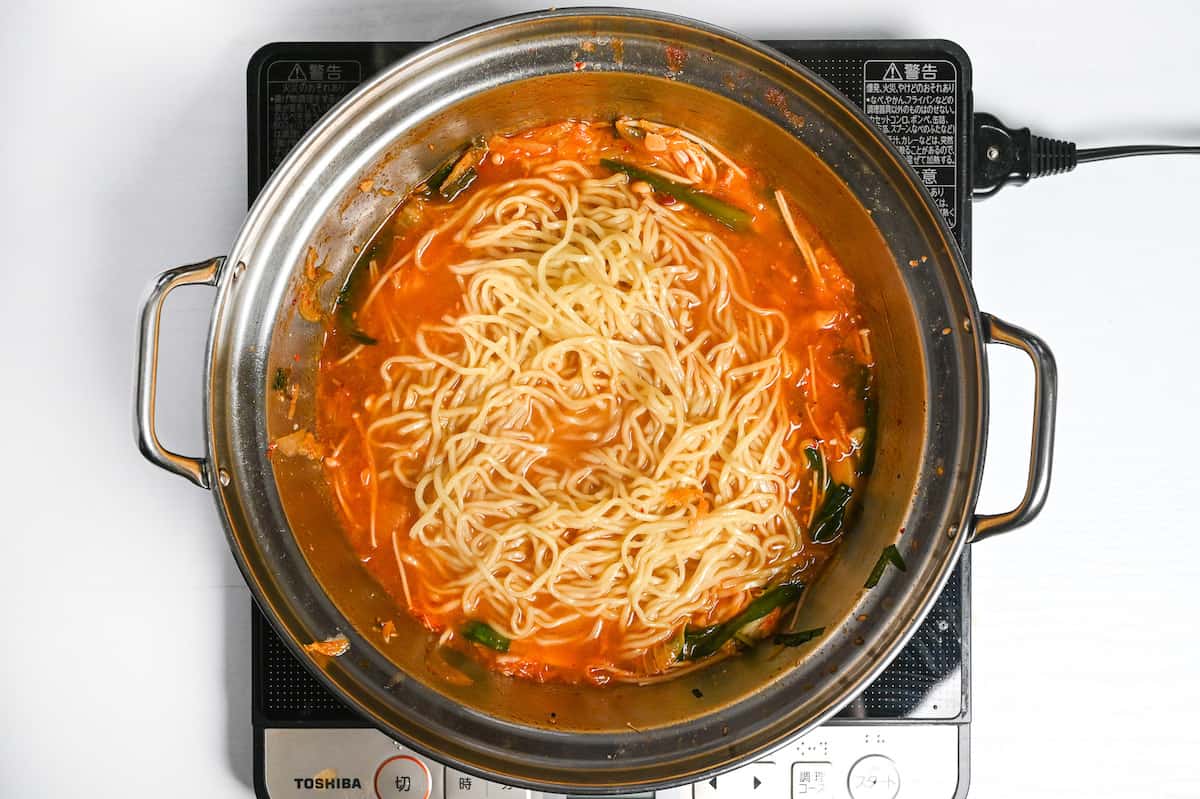
If you’re using noodles, do not add raw noodles straight into the broth, too much starch will leach out and turn your shime into a gummy, starchy mess. Always use pre-cooked noodles or pre-cooked rice instead, so you control thickness without clouding the soup.
Also, if the broth has reduced and tastes intense at this point, dilute with a splash of water before adding your noodles/rice so it doesn’t end up overly salty.

Essential Tips & Tricks
- Don’t let the mixture boil after you add miso paste to preserve its volatile aromatics.
- Stagger ingredient addition (stems first, leaves last) to protect texture.
- Maintain a gentle simmer (not a hard boil), skim foam early, and top up with water as you eat for a clean, balanced broth, otherwise it turns cloudy, aggressively sharp, and overly intense.
With these simple tips in mind, you’re set for success every time you make kimchi nabe.
Storage & Meal Prep
Fridge: Cool leftovers quickly, then store broth + solids in shallow airtight containers for 2-3 days. Expect tofu to turn a bit spongier and vegetables to soften.
Freezer: Recommended mainly for the broth/base: freeze in a freezer-safe airtight container (leave headspace) for up to 1 month.
Meal Prep: Prepare the sautéed pork-kimchi base and seasoned broth up to two days ahead, storing them separately. On cooking day, simply reheat the base, add fresh-cut vegetables and tofu, and simmer. Your hands-on time drops to under fifteen minutes.
Reheating: Reheat only the portion you plan to eat by bringing it to a gentle boil for 1-2 minutes, then reduce to a simmer.
What to Serve With This Recipe
- Freshly cooked Japanese rice
- Japanese cucumber salad
- Table condiments (extra chopped green onions, toasted sesame, chili oil “at the table”)
Kimchi Nabe FAQ
Use napa cabbage kimchi you already enjoy eating plain-its salt, tang, and heat become the “seasoning base” of the whole pot. Slightly fermented kimchi gives clean spice and a brighter broth, while older kimchi brings deeper funk and sharper sourness (great, but you may need a touch more sweetness to balance).
Too sour usually means the kimchi (or brine) is intense, and too salty often comes from brine + bouillon + evaporation. Add hot water to dilute, keep a steady simmer, then adjust in small steps: a pinch of sugar will soften sharpness (taste after each change).
Not at all! Add water in small increments to dilute the concentration without losing body. If it’s too sour, sugar will counterbalance the acidity.

More Nabe Recipes
- Chanko Nabe (Sumo Stew)
- Shabu Shabu
- Curry Hotpot
- Salmon and Miso Hot Pot
Hungry for more? Explore my Japanese hot pot recipes to find your next favorite dishes!
Did You Try This Recipe?
I would love to hear your thoughts!
💬 Leave a review and ⭐️ rating in the comments below. 📷 I also love to see your photos – submit them here!
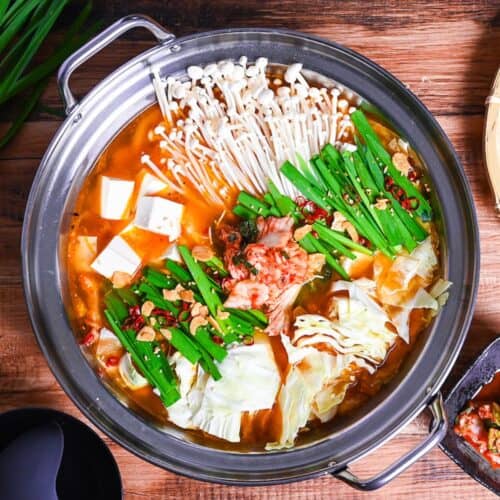
Kimchi Nabe (Kimchi Hotpot)
Ingredients
- 200 g slab skinless pork belly sliced into 5 mm, or shabu-shabu style/pork shoulder
- 1 pinch salt and pepper
- 1 tbsp all-purpose flour for dusting
- 1 tbsp cooking oil
- 1 tsp garlic clove finely diced
- 1 tsp ginger root finely diced
- 50 g onion thinly sliced
- 1 tsp oyster sauce
- 200 g cabbage kimchi napa cabbage kimchi, mild if possible
- 1 tsp light brown sugar
Broth
- 800 ml dashi stock
- 2 tbsp Chinese-style chicken bouillon powder
- 2 tbsp Japanese soy sauce (koikuchi shoyu)
- 2 tbsp yellow miso paste (awase) (yellow)
- 2 tbsp mirin
- 2 tbsp sake
- 150 g firm tofu or silken if you prefer
- 100 g enoki mushrooms or mushroom of your choice
- 100 g green cabbage or napa cabbage
Toppings
- 30 g garlic chive(s) cut into 5 cm
- ½ tsp dried red chili pepper thinly sliced
- 1 tsp garlic chips optional
- 1 tsp toasted white sesame seeds
- 2 portions cooked ramen noodles or udon noodles (optional)
My recommended brands of ingredients and seasonings can be found in my Japanese pantry guide.
Can’t find certain Japanese ingredients? See my substitution guide here.
Instructions
- Season 200 g slab skinless pork belly with 1 pinch salt and pepper on both sides.

- Sprinkle with 1 tbsp all-purpose flour and rub over the surface of the pork until evenly coated.
- Drizzle 1 tbsp cooking oil into a heated frying pan (medium-low) and add 1 tsp garlic clove and 1 tsp ginger root. Fry until fragrant.
- Add the pork to the pan and fry until both sides are browned and the fat is a little bit crispy.
- Add 50 g onion and stir fry until slightly softened.
- Add 1 tsp oyster sauce, 200 g cabbage kimchi and 1 tsp light brown sugar. Stir fry for 1 minute.
- Remove from the heat and set aside for later.
Broth
- Add 800 ml dashi stock to a large pot and turn on the heat to medium.
- Add 2 tbsp Chinese-style chicken bouillon powder, 2 tbsp Japanese soy sauce (koikuchi shoyu), 2 tbsp yellow miso paste (awase), 2 tbsp mirin and 2 tbsp sake, and bring to a boil.
- Once boiling, turn the heat down to simmer and add the contents of the pan from earlier.
- Add 100 g enoki mushrooms, 150 g firm tofu, 100 g green cabbage and 30 g garlic chive(s), and top with ½ tsp dried red chili pepper, 1 tsp garlic chips and 1 tsp toasted white sesame seeds. Mix thoroughly.
- Simmer until the cabbage is softened and enjoy!
- Optional: Enjoy the leftover broth with 2 portions cooked ramen noodles!

I love how you made kimchi nabe completely from scratch! The broth sounds so rich and comforting! Perfect for winter nights.
Thank you so much, Avianna!
Me encanta comer en tiempos de frío. Me gustó agregar harina o maicena a la carne para una textura más crujiente
Hi Gabriela,
¡Muchas gracias por probar esta receta! ¡Me alegra mucho que te haya gustado! 🙂
Yuto
Made it today as temperatures hit minus in Amsterdam. I don’t really like Kimchi usually but the nabe was so tasty even though I forgot to buy garlic and ginger to put inside.
Would make it again
Hi Sakura,
Thanks so much for sharing this! It’s great to hear it worked well as a cold-weather meal. Thanks for making the recipe, and stay warm over there! 🙂
Yuto
I love this recipe my mom loves it to.
Hi Car So-Young,
Love hearing this! It makes me smile knowing it was something you could both enjoy. Thanks so much for trying it out!
Yuto