
Kimchi Nabe (Kimchi Hotpot)
Ingredients
- 200 g slab skinless pork belly sliced into 5 mm, or shabu-shabu style/pork shoulder
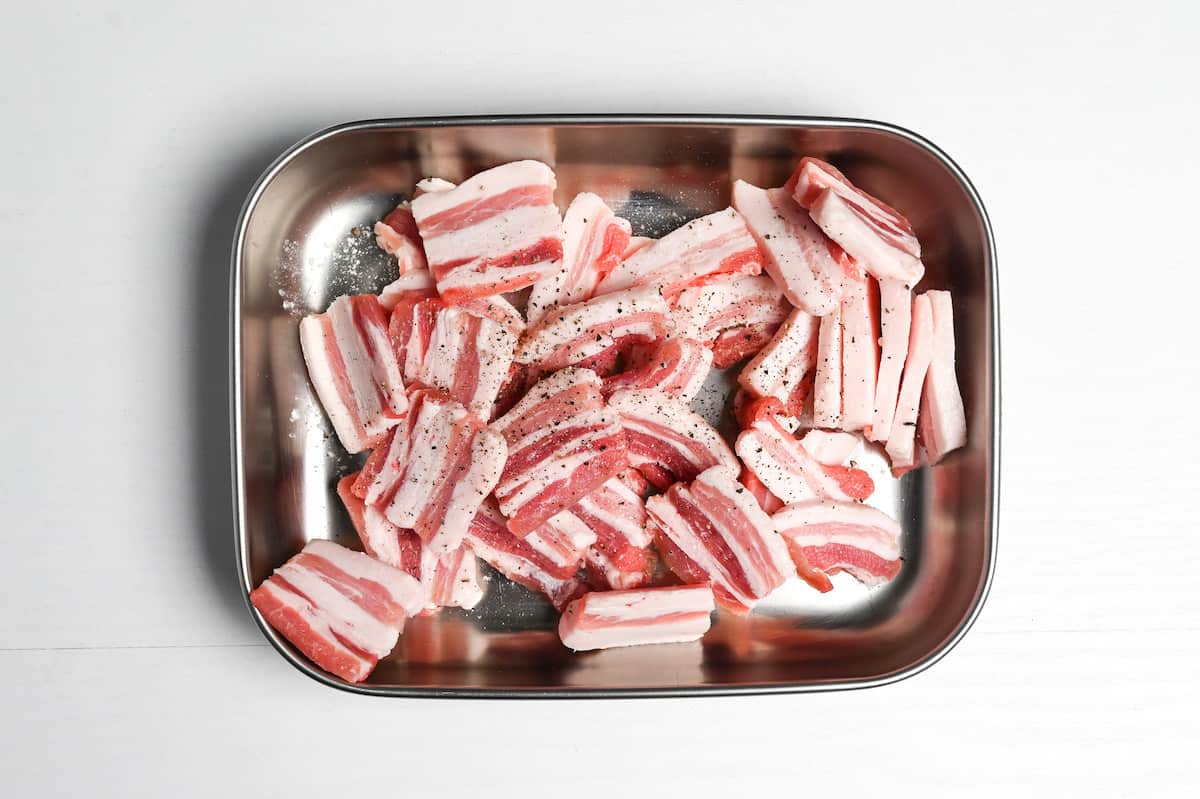
- 1 pinch salt and pepper
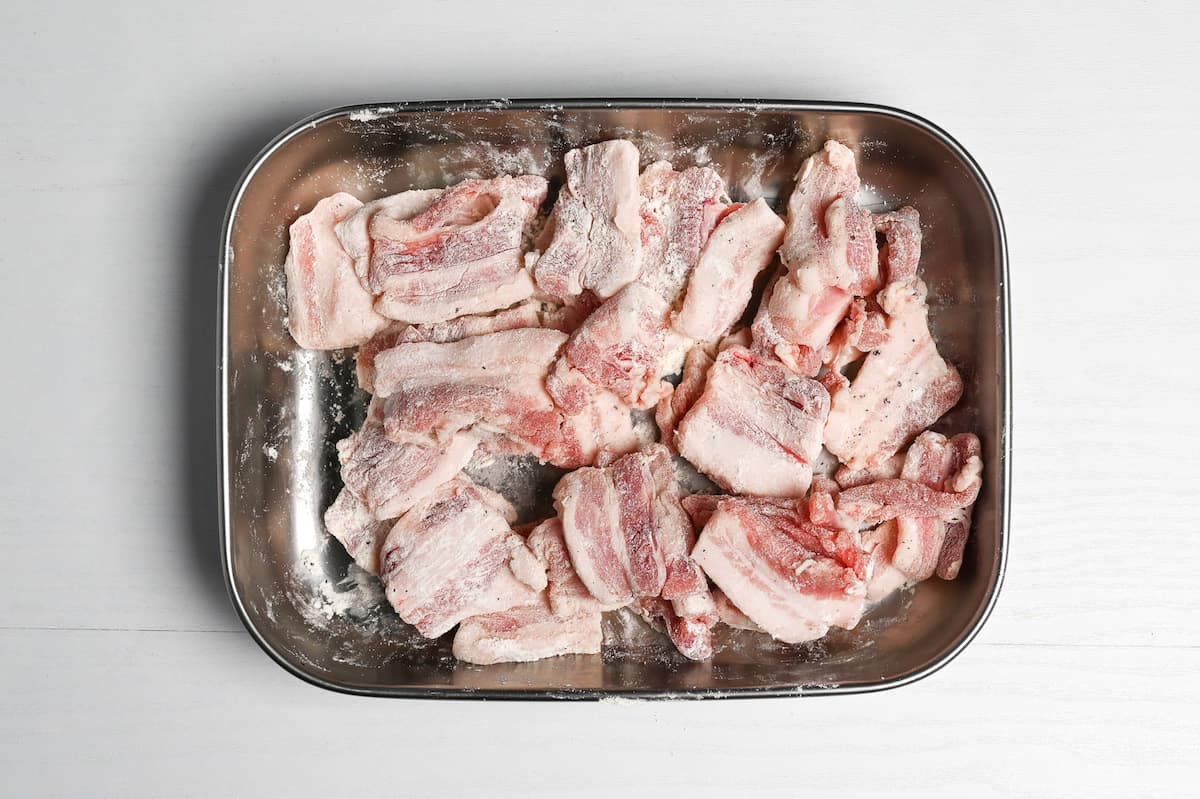
- 1 tbsp all-purpose flour for dusting
- 1 tbsp cooking oil
- 1 tsp garlic clove finely diced
- 1 tsp ginger root finely diced
- 50 g onion thinly sliced
- 1 tsp oyster sauce
- 200 g cabbage kimchi napa cabbage kimchi, mild if possible
- 1 tsp light brown sugar
Broth
- 800 ml dashi stock
- 2 tbsp Chinese-style chicken bouillon powder
- 2 tbsp Japanese soy sauce (koikuchi shoyu)
- 2 tbsp yellow miso paste (awase) (yellow)
- 2 tbsp mirin
- 2 tbsp sake
- 150 g firm tofu or silken if you prefer
- 100 g enoki mushrooms or mushroom of your choice
- 100 g green cabbage or napa cabbage
Toppings
- 30 g garlic chive(s) cut into 5 cm
- ½ tsp dried red chili pepper thinly sliced
- 1 tsp garlic chips optional
- 1 tsp toasted white sesame seeds
- 2 portions cooked ramen noodles or udon noodles (optional)
Instructions
- Season 200 g slab skinless pork belly with 1 pinch salt and pepper on both sides.
- Sprinkle with 1 tbsp all-purpose flour and rub over the surface of the pork until evenly coated.
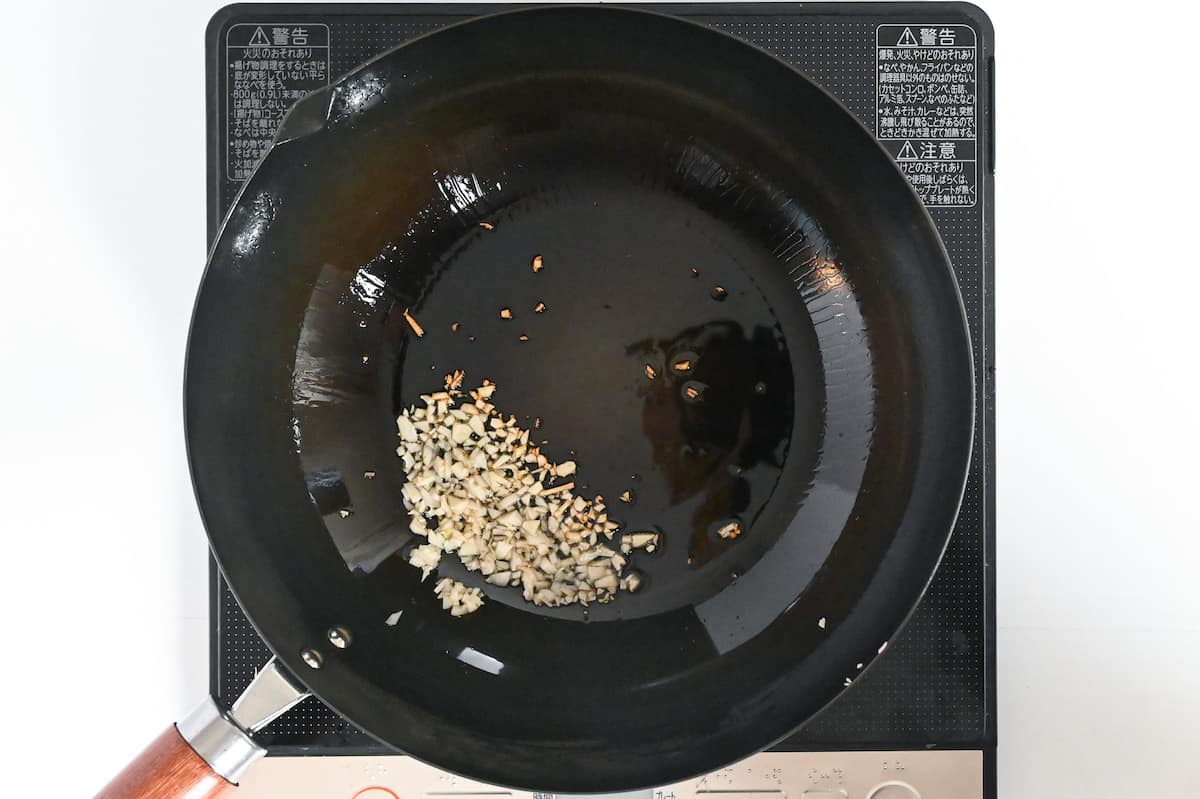
- Drizzle 1 tbsp cooking oil into a heated frying pan (medium-low) and add 1 tsp garlic clove and 1 tsp ginger root. Fry until fragrant.
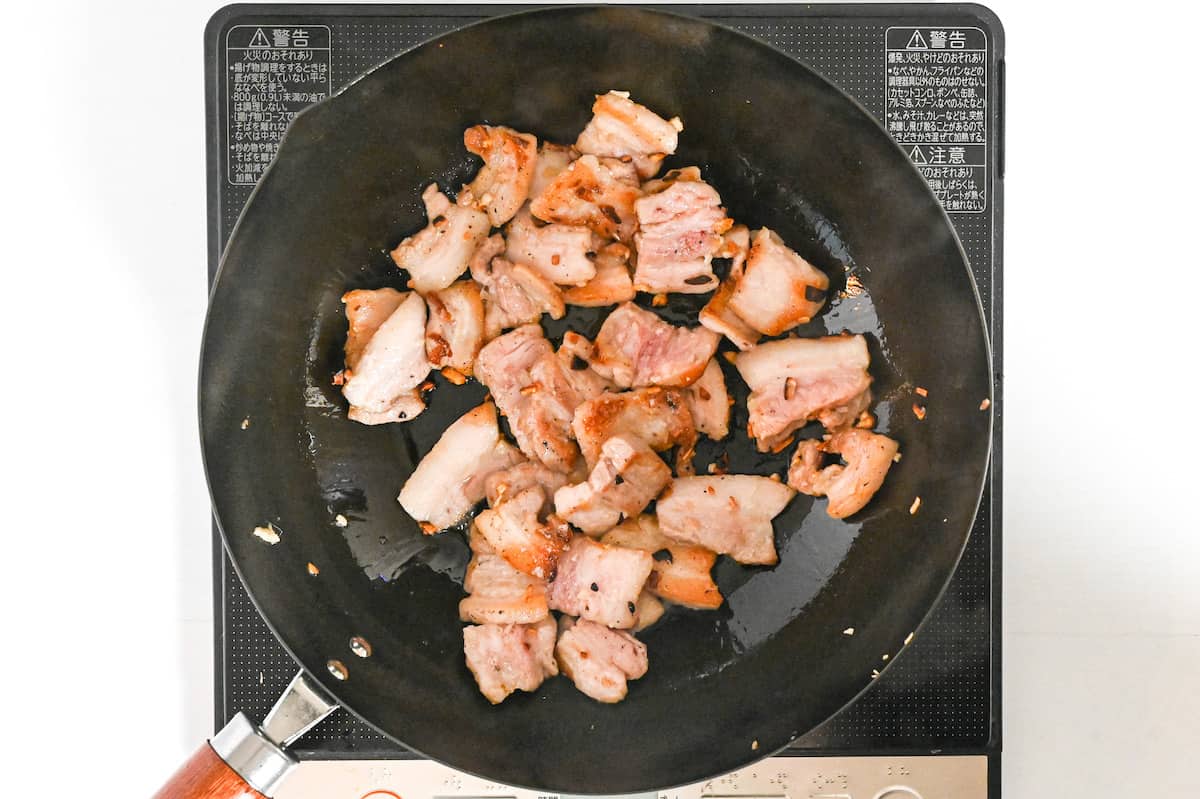
- Add the pork to the pan and fry until both sides are browned and the fat is a little bit crispy.
- Add 50 g onion and stir fry until slightly softened.
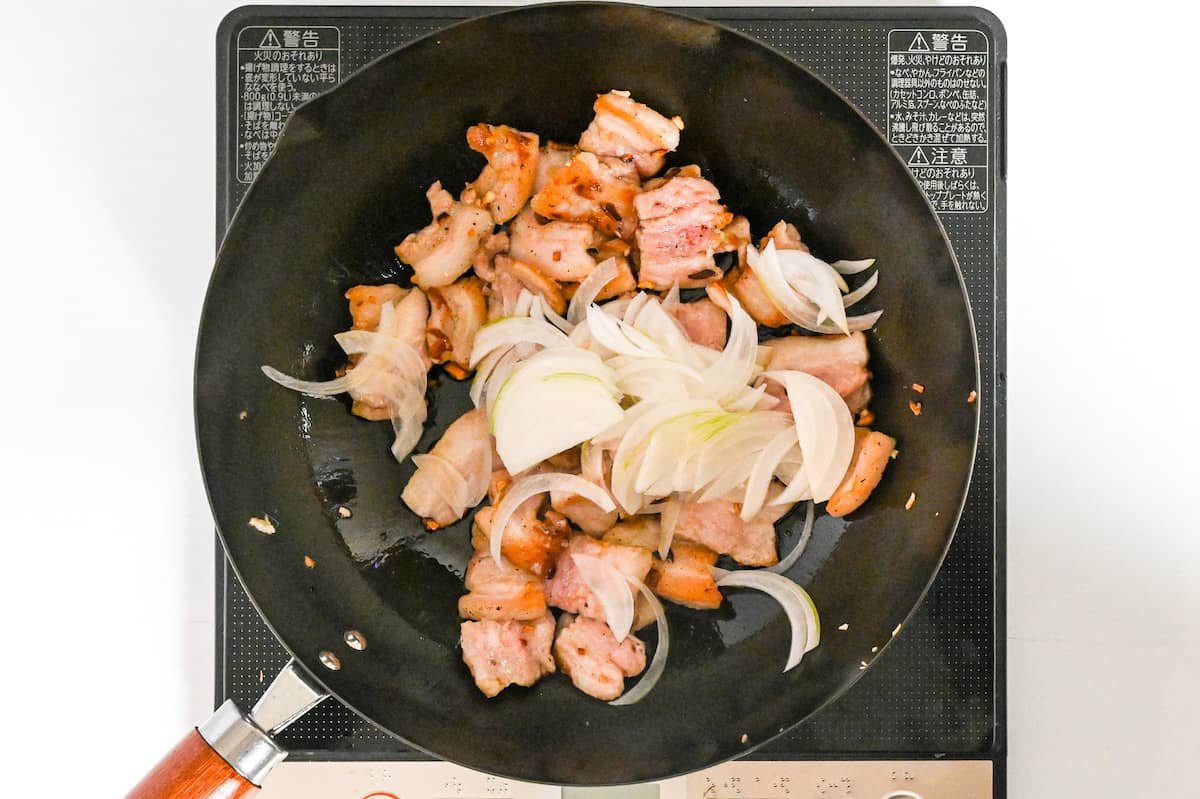
- Add 1 tsp oyster sauce, 200 g cabbage kimchi and 1 tsp light brown sugar. Stir fry for 1 minute.
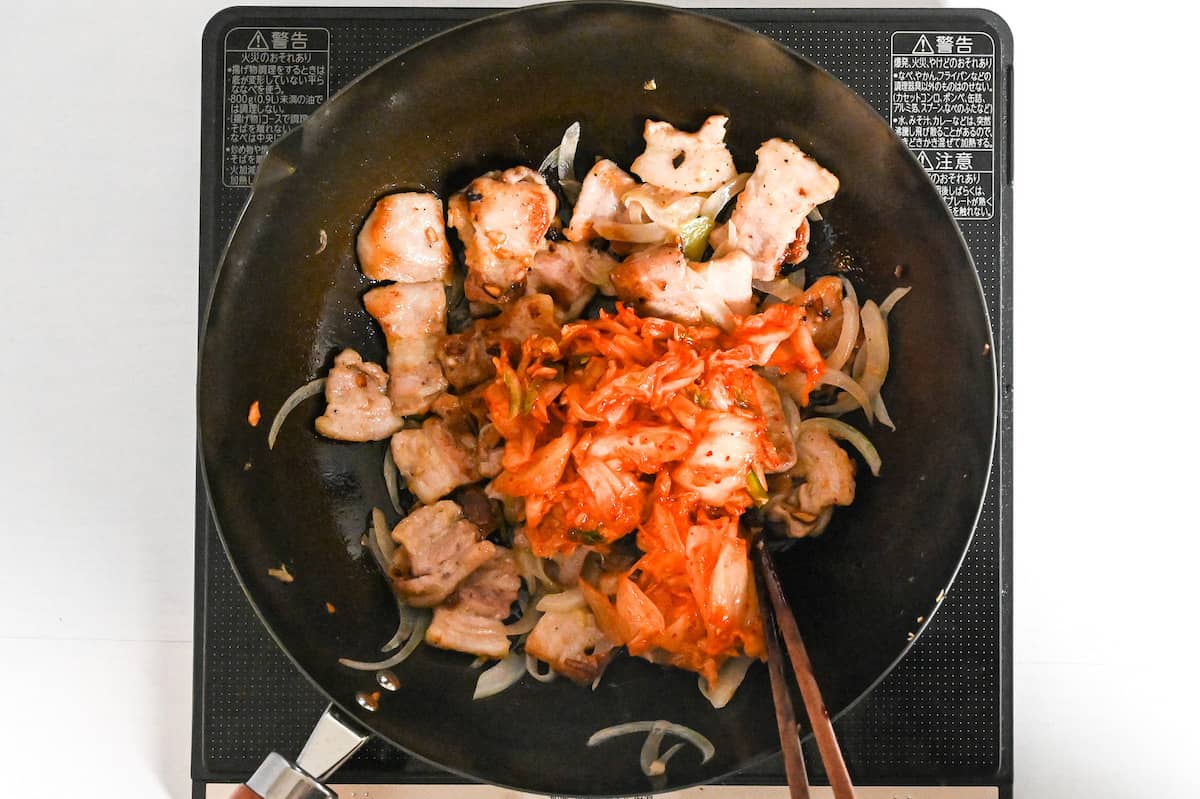
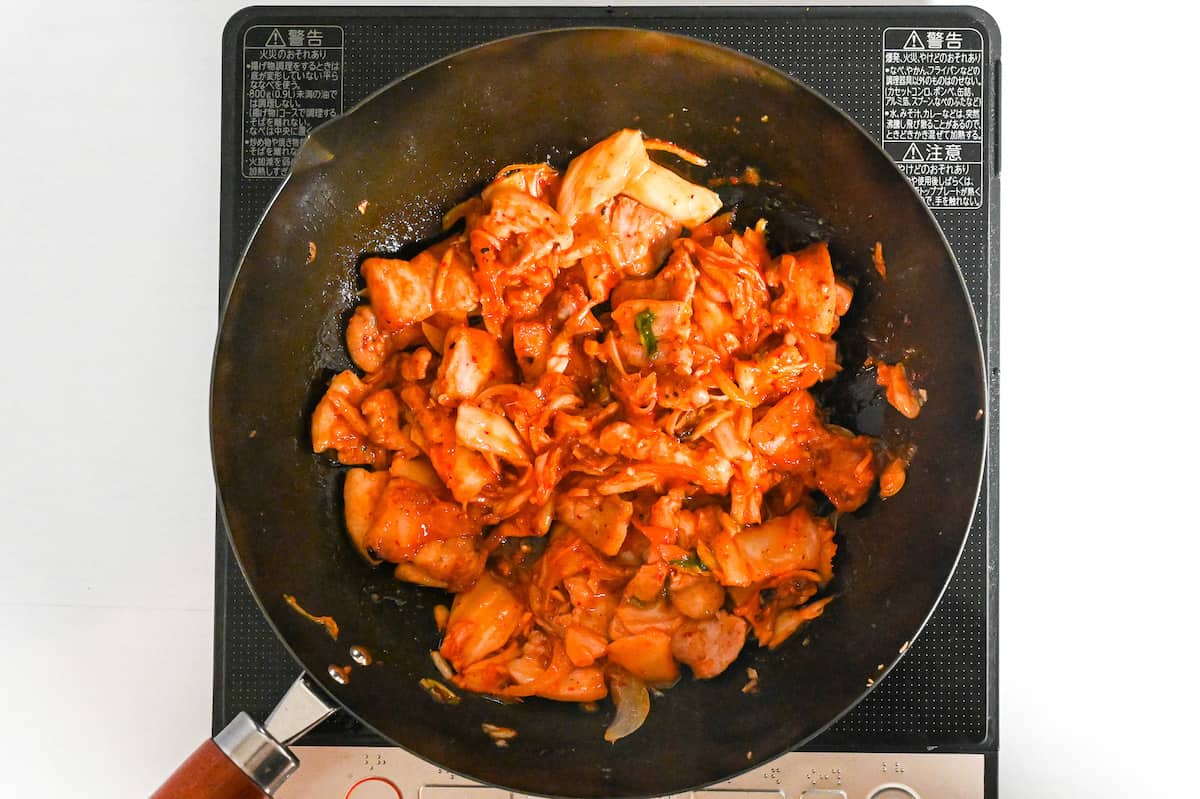
- Remove from the heat and set aside for later.
Broth
- Add 800 ml dashi stock to a large pot and turn on the heat to medium.
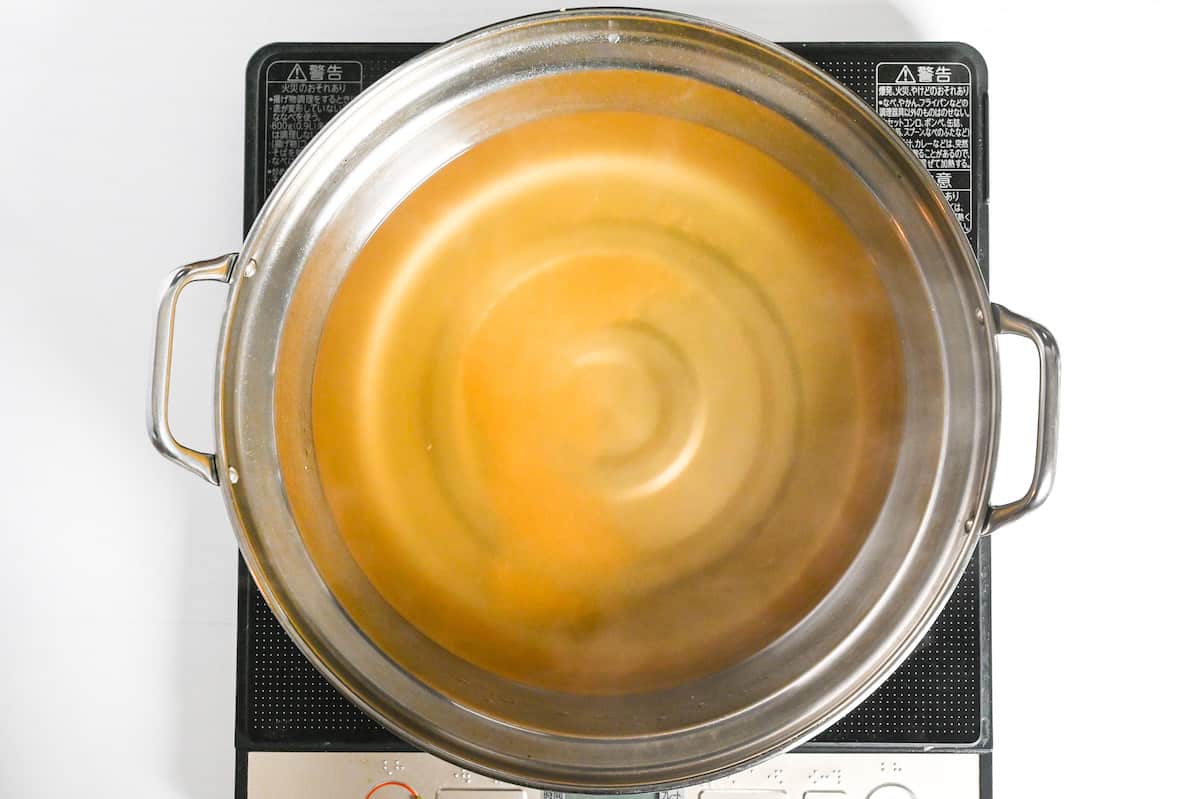
- Add 2 tbsp Chinese-style chicken bouillon powder, 2 tbsp Japanese soy sauce (koikuchi shoyu), 2 tbsp yellow miso paste (awase), 2 tbsp mirin and 2 tbsp sake, and bring to a boil.
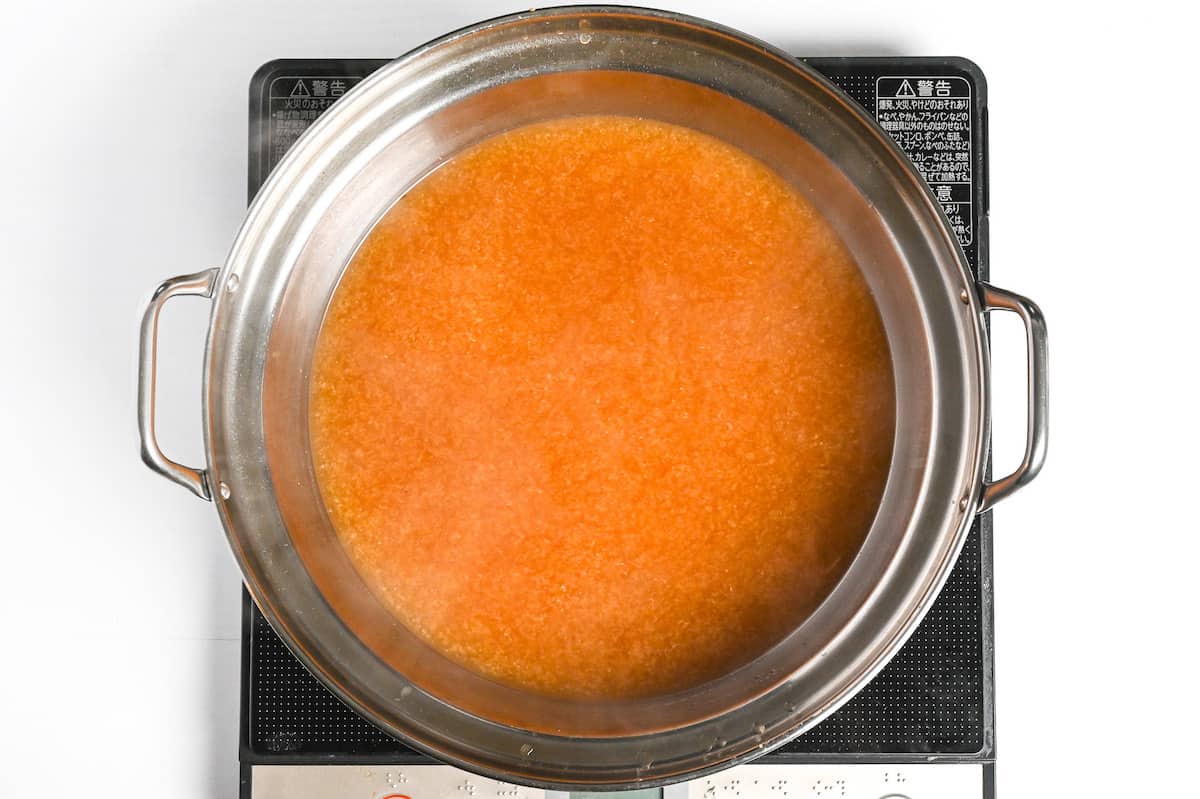
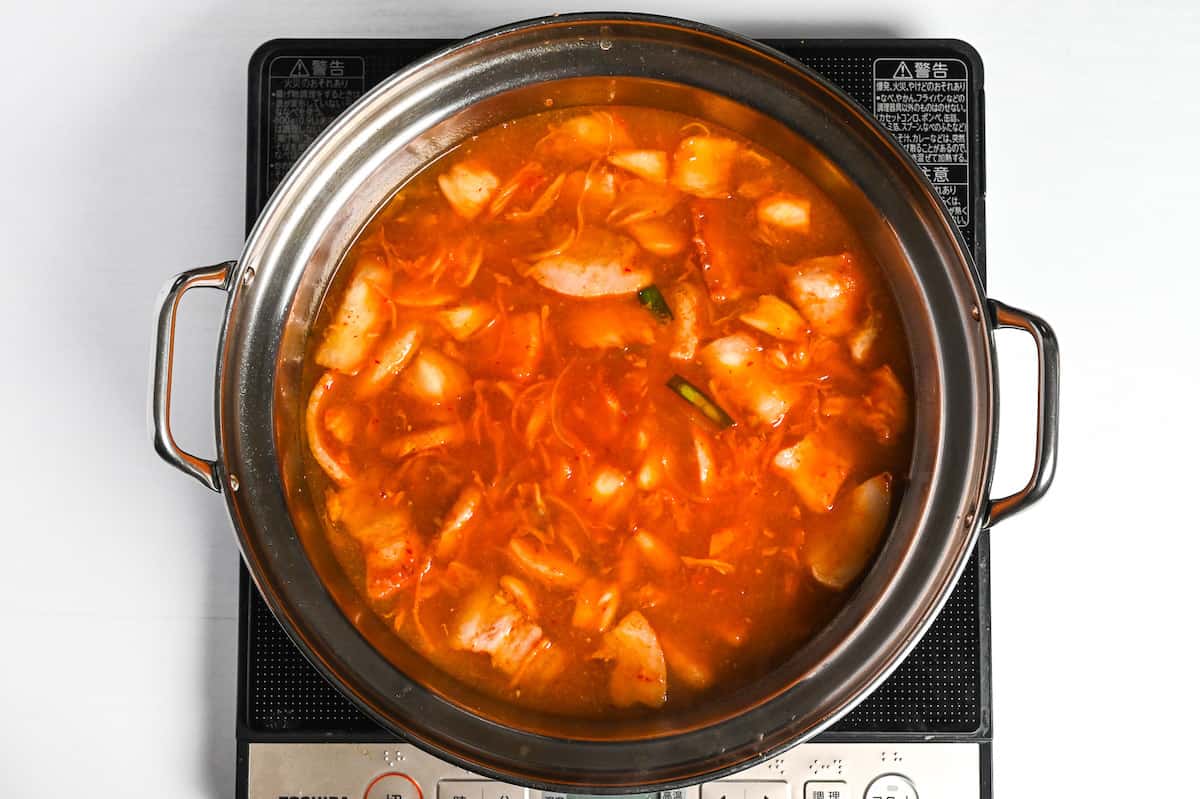
- Once boiling, turn the heat down to simmer and add the contents of the pan from earlier.
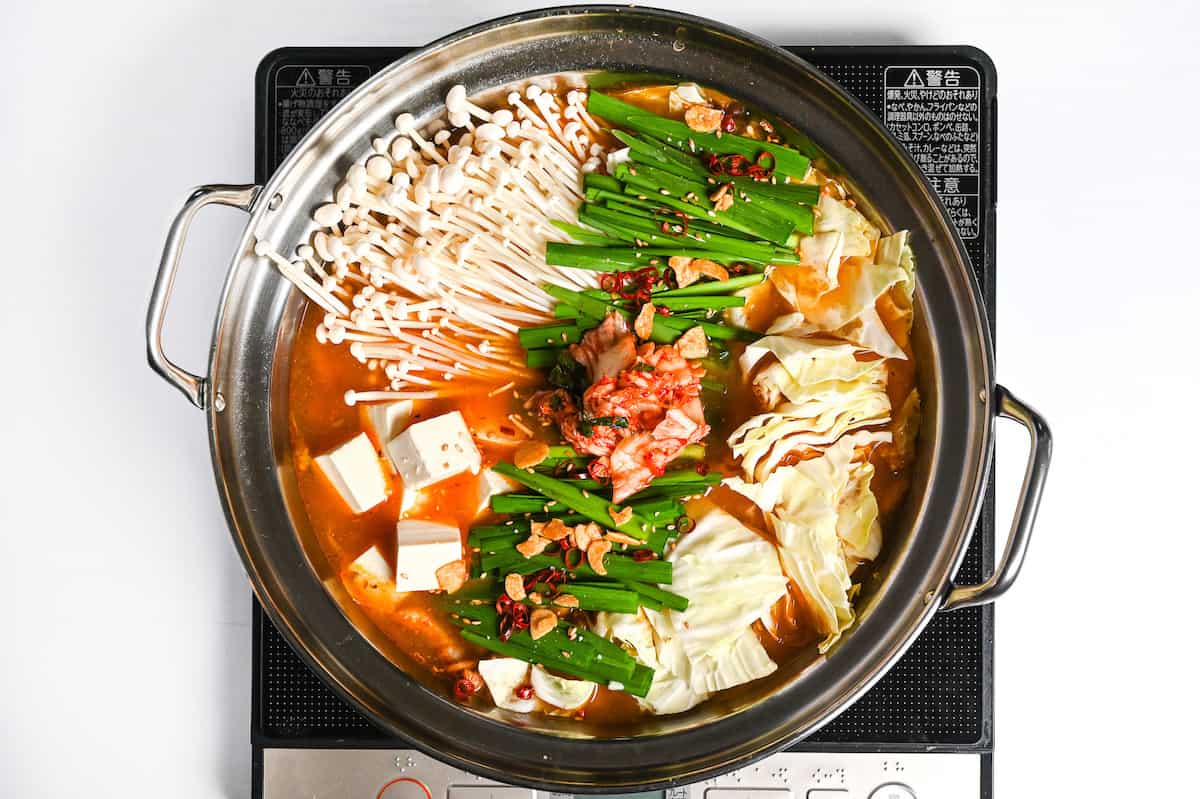
- Add 100 g enoki mushrooms, 150 g firm tofu, 100 g green cabbage and 30 g garlic chive(s), and top with ½ tsp dried red chili pepper, 1 tsp garlic chips and 1 tsp toasted white sesame seeds. Mix thoroughly.
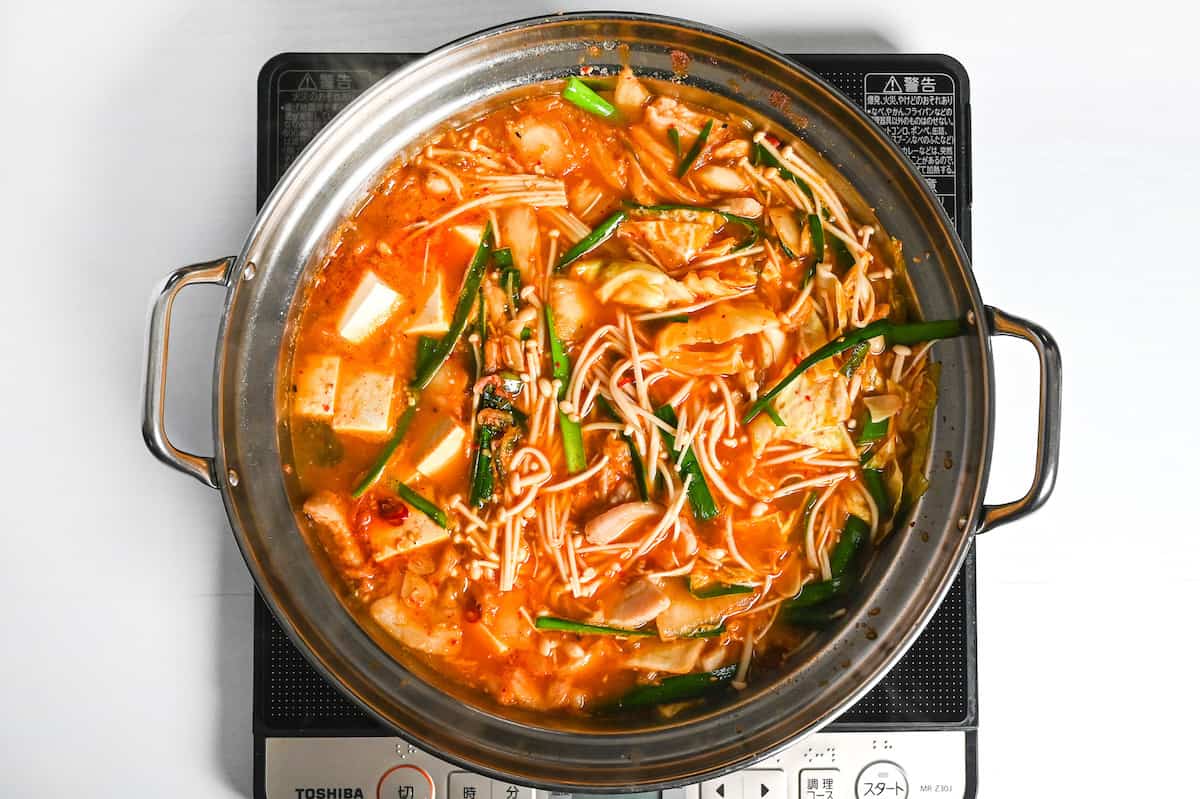
- Simmer until the cabbage is softened and enjoy!
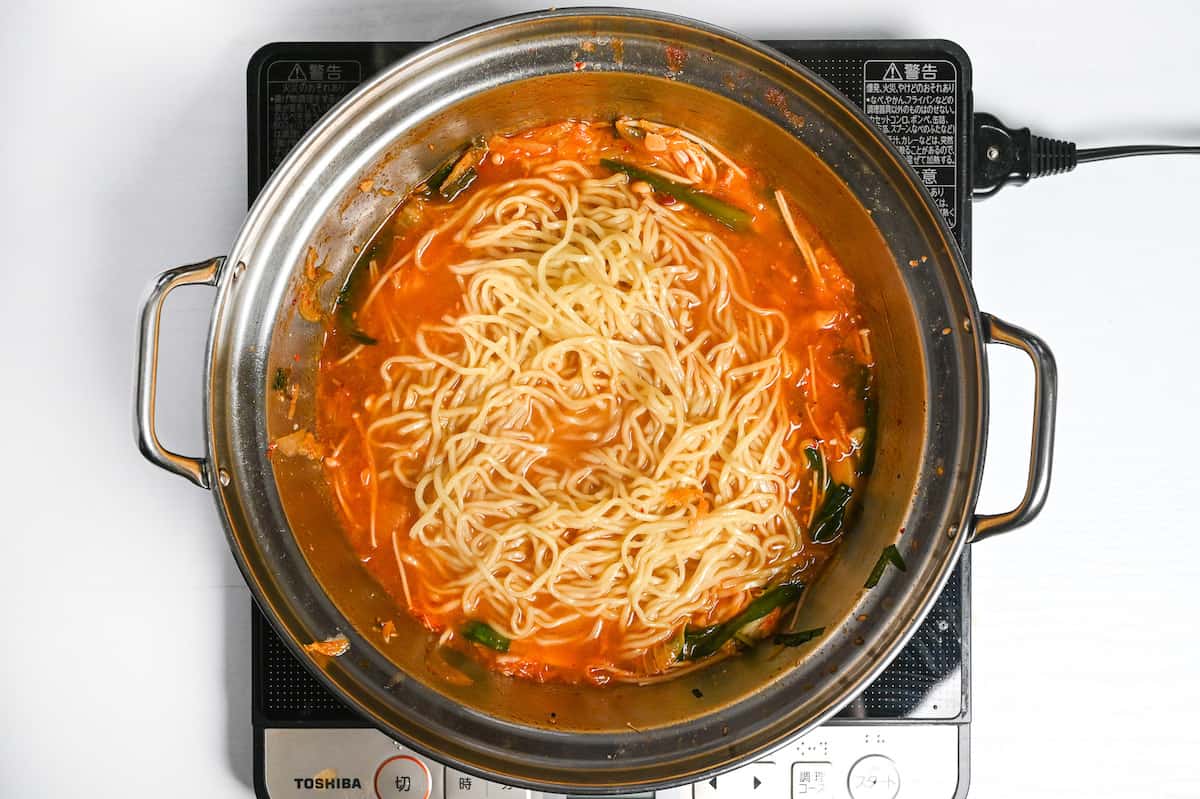
- Optional: Enjoy the leftover broth with 2 portions cooked ramen noodles!
Notes
The best kimchi is napa cabbage kimchi you enjoy eating as-is. Younger kimchi tastes brighter, while older kimchi is funkier and more sour and may need a touch more sweetness to balance.
Bouillon powder strength varies by brand, so start a little light and adjust gradually.
If the broth turns too sour/salty, dilute with water first, then rebalance with a small pinch of sugar for roundness or a bit more miso for depth.
If you have two burners, start heating the dashi/soup base while you stir-fry the pork-kimchi base to shorten cooking time.
Keep kimchi nabe at a gentle simmer (small, steady bubbles), not a rolling boil, and skim any foam early.
Never add raw noodles! Pre-cook the noodles separately before adding so the broth doesn't turn gummy and starchy.
Recommended serving option: Cooked plain Japanese rice.
Note: In Japanese hot pot dishes, the soup is not consumed in full. Nutritional values are calculated assuming 50% of the soup is consumed.
Full Recipe QR Code↑↑