

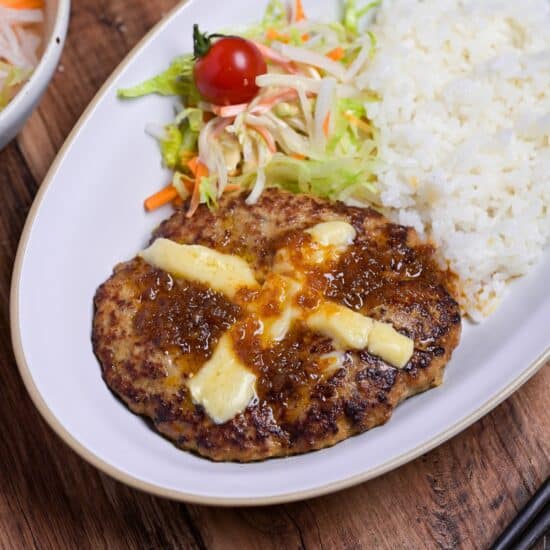


Featured Comment
I made this for dinner this evening and it was absolutely delicious, so tasty and light, it was a massive hit with the family, definitely one I’ll do again 😁
★★★★★
– iangharper (from Instagram)
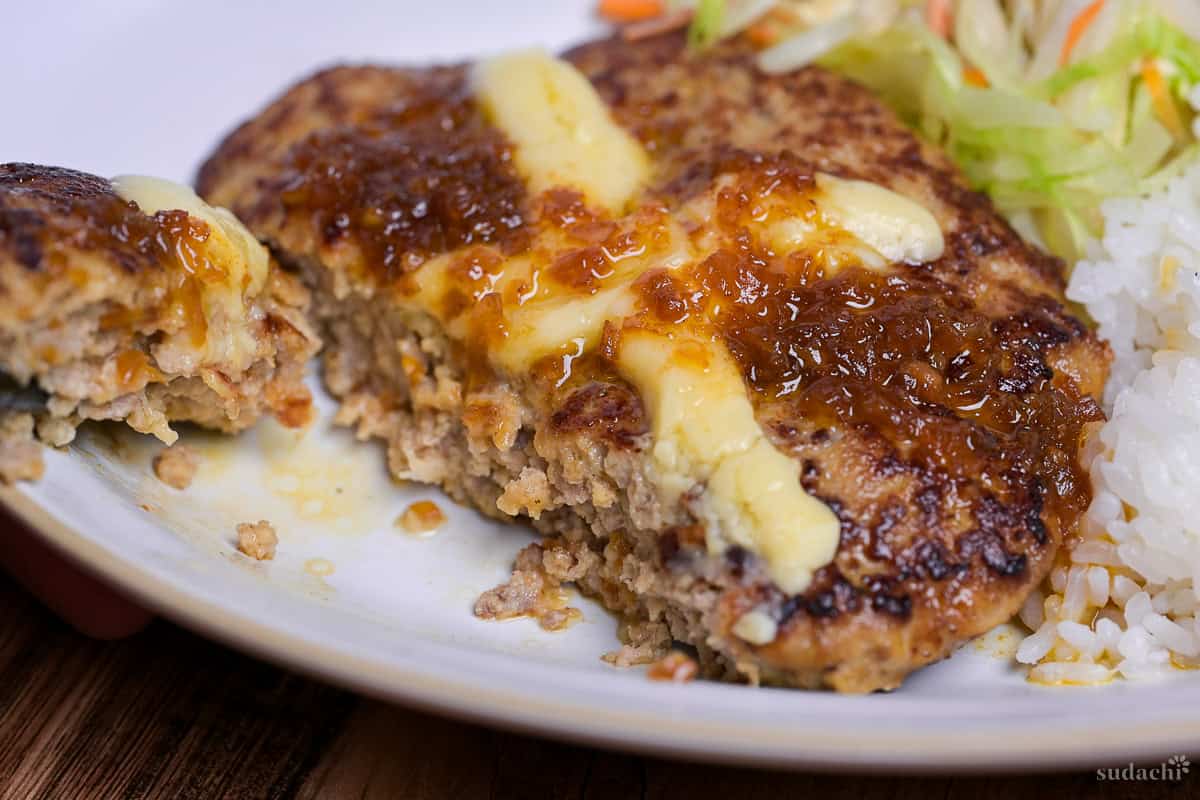
Say hamburger steak, and you might picture a thick slab you cut with a knife and fork. Bikkuri Donkey’s hamburger steak cuts cleanly with chopsticks.
Meat so soft it falls apart, under a thin Japanese-style sauce. Beneath that sauce, there is a soft hint of dashi. It is still hamburger steak, but it eats like a different dish. Want to make that plate with me?
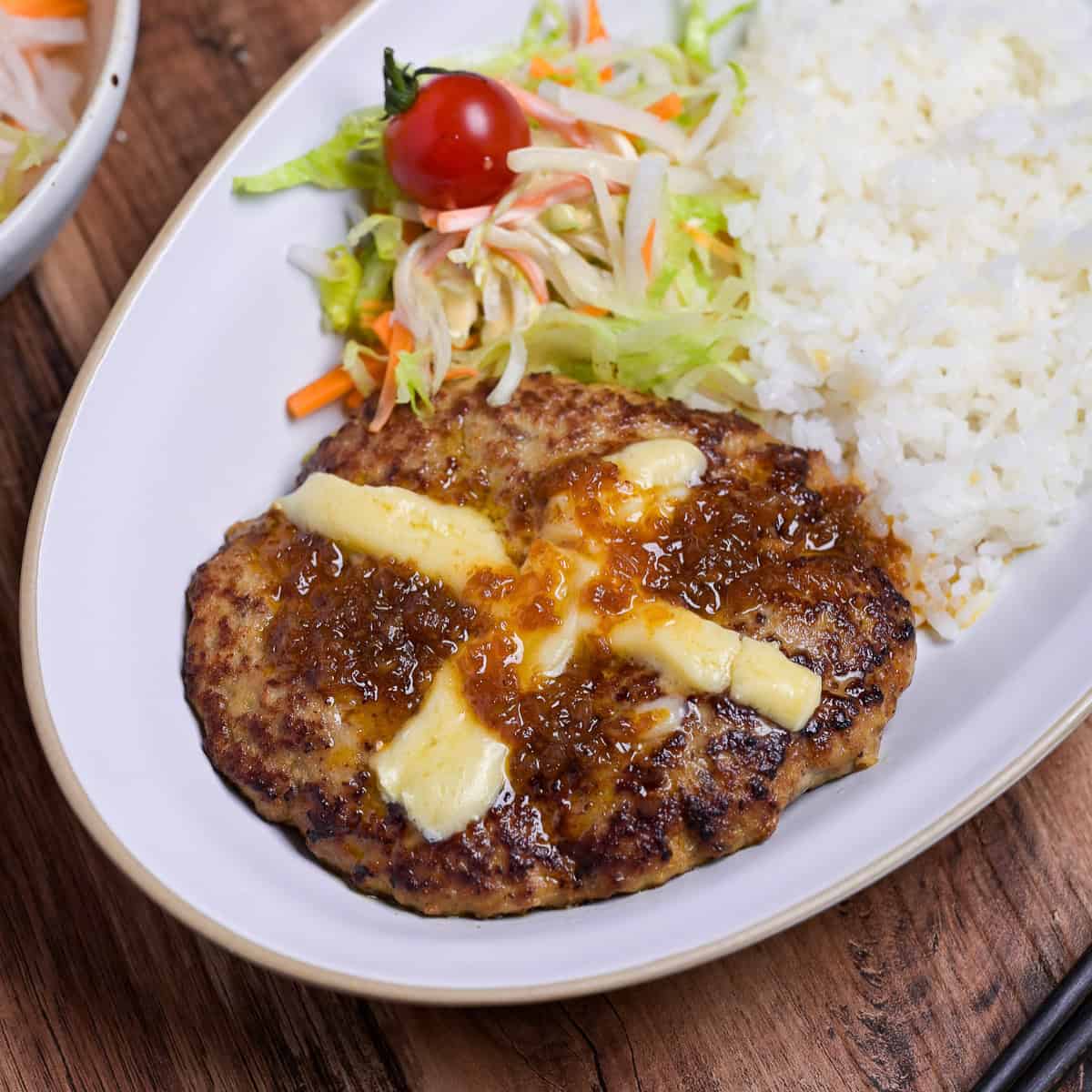
Bikkuri donkey hambagu
Recipe Snapshot
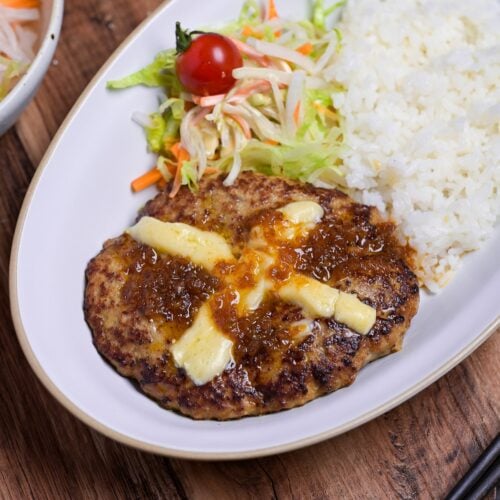
- What is it? At Bikkuri Donkey, a Japanese family hamburger restaurant, the classic hamburg dish is a soft oval patty with rice and daikon salad, Japanese-style sauce instead of demi-glace, eaten with chopsticks.
- Flavor profile: First comes the texture, smooth and soft with hardly any coarse bits of meat. The sparing pour of Japanese-style sauce follows, and under the soy sauce you taste dashi.
- Why this recipe works: Every choice comes from the restaurant plate. A pork-heavy, deliberately loose mixture cooks up smooth and soft with little beefiness, and dashi granules give the sauce its dashi-forward Japanese taste.
- How to make it: Knead everything for the patties in one bowl, then sear and steam them in one frying pan. The sauce follows in the leftover fat, onion first, then a 30-second boil.
- What to expect: About 30 minutes, 15 at the stove. The catch is the loose mixture, which breaks if carried by hand or left sitting, so shape and flip it on baking paper.
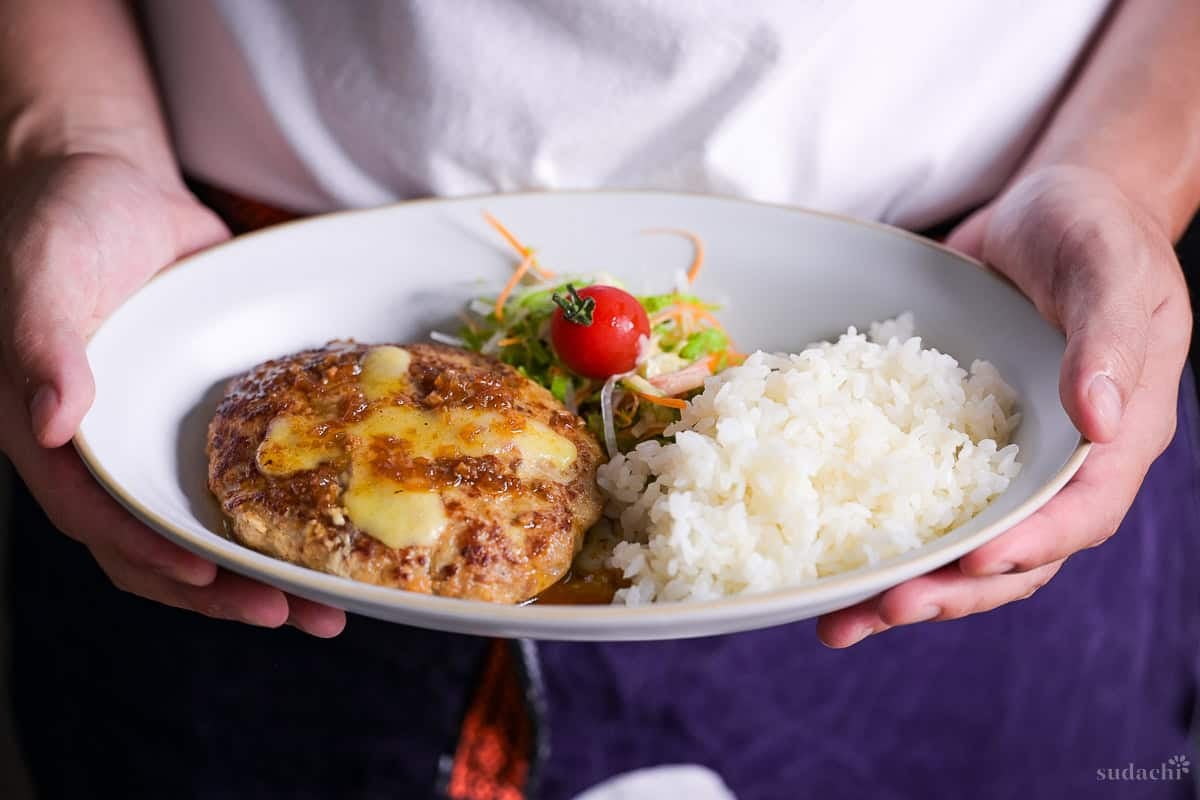
What I Noticed at Bikkuri Donkey, and How I Recreated It
I have been to this restaurant more times than I can count, but the day I went to work out this recipe was the first time I ate there studying the plate, one part at a time. The restaurant does not publish its formula, of course. What follows is what I noticed there, and how I settled each point at home.
As it happens, I live right next door to a Bikkuri Donkey, so I could go back and forth many times, testing at home and then checking at the restaurant.


- Texture: Smooth and soft, with almost no beefiness. The restaurant says it uses beef too, but I read it as mostly pork. So at home, ground pork leads and there is only a little ground beef. For the softness, I added plain yogurt to the egg and breadcrumbs. I also keep the meat loose on purpose. Without that looseness, you cannot get that softness.
- Onion: You never bite into a single piece of onion. So I grate it instead of chopping it.
- How much sauce: Very thin, and only a little on the plate. At home I make just a little too, and drizzle it over the top.
- The sauce’s flavor: A Japanese-style sauce. But when my son ordered udon from the kids’ menu, I noticed the sauce and the udon broth underneath tasted oddly alike. I suspected dashi, and added dashi granules.
- Orange juice: I settled this by making batches side by side at home. It adds a gentle tartness and some sweetness, and brings the sauce closer to the restaurant’s.
- Salad: The dressing is mayonnaise-based, with soy sauce and a mustard-like heat that lingers. At home I mix soy sauce and just a little karashi into mayonnaise.
I decided 2 more things at home. The patties are thin, like the restaurant’s. And because there is so much pork, I always cook them right through to the center.
Bikkuri Donkey is a hamburger steak restaurant chain with about 350 locations, in every prefecture except Shimane and Tottori. Among English speakers, the name sometimes makes people imagine donkey meat, and that is wrong. It has nothing to do with the similarly named Don Quijote either. It began in 1968 as a small shop in Morioka, Iwate Prefecture, called Hamburger and Salad Shop Beru. McDonald’s arrival in Japan in 1971 was the turning point, and in 1972 the shop switched its main item from hamburgers to hamburger steak. The Bikkuri Donkey name came later. The company’s history says its first Sapporo shop, opened in 1980, took that name in 1986. Founder Akio Shoji likened McDonald’s to a thoroughbred and his own side to a slow but sturdy donkey. The story goes that bikkuri, Japanese for surprise, was put in front because they wanted to surprise people.
The name burg dish covers more than the hamburger steak. It means the whole set of hamburger steak, rice, and salad, each in a fixed spot on one wooden plate, a form it took in 1973. As the restaurant explains it, it is a hamburger taken apart, with rice in place of the bun, on a single plate. The salad is mostly thinly cut daikon, with one cherry tomato on top. The plate is not flat. Its center rises and divides the meat from the rice, so the sauce runs toward the meat and the rice stays white. The standard sauce is a single one made with soy sauce, and the black demi-glace is a separate menu item. On the cheese burg dish, the cheese goes on top of the patty. There is a knife and fork too, but by default it is a Japanese-style hamburger steak you eat with chopsticks.
Bikkuri Donkey Hamburger Ingredients
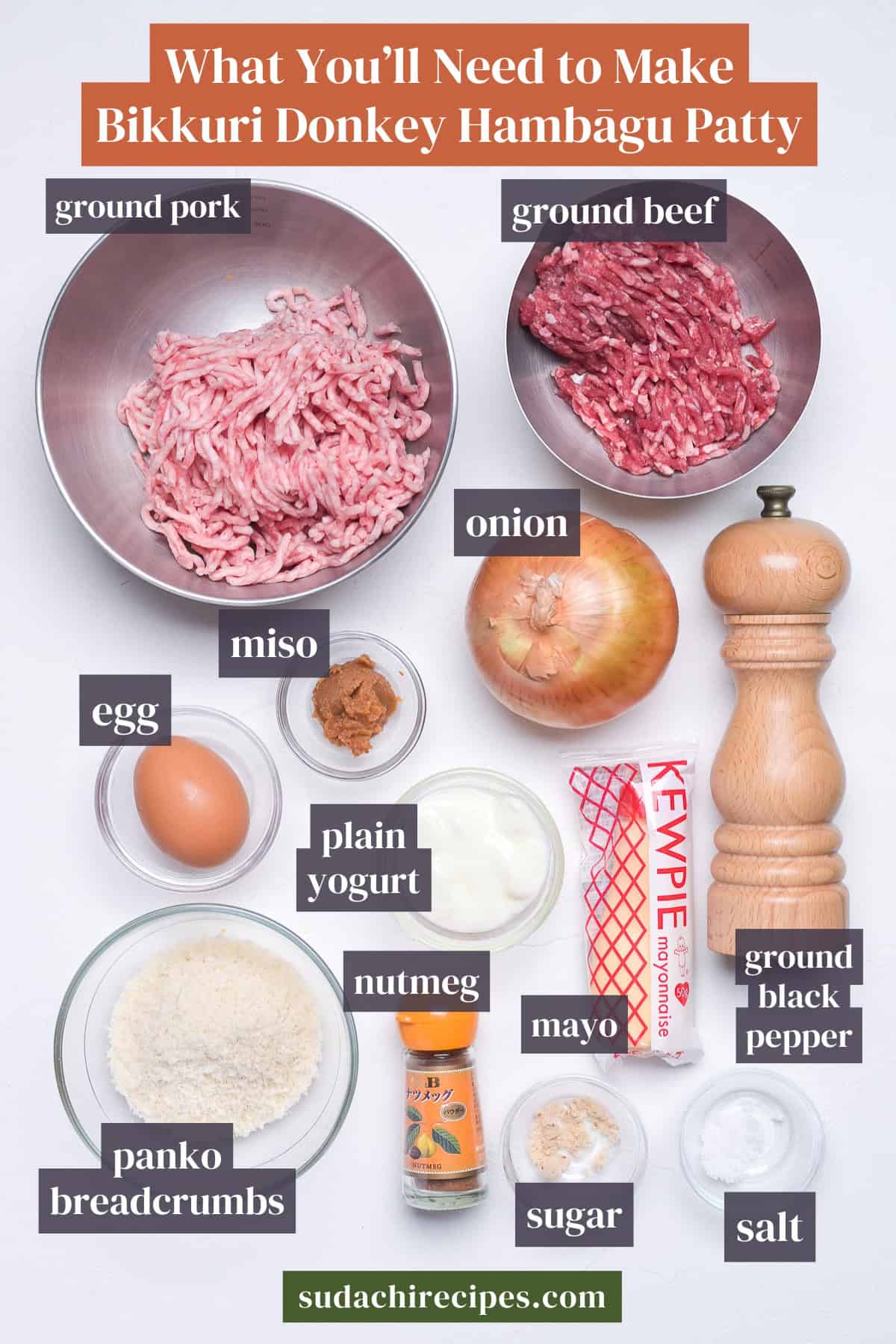
- Ground pork: Pork is the star of this mixture, with only a little ground beef alongside it. In my everyday hamburger steak the beef takes the bigger share, and here I turn that around. Buy the pork and the beef in separate packs and combine them in the bowl, or if your store sells a 50/50 pork and beef mix, add extra ground pork to it so the pork comes out ahead.
- Plain yogurt: This goes into the patty mixture. Any kind works as long as it is plain and unsweetened.
- Dashi granules: These are dashi ingredients such as bonito flakes and kombu, granulated and blended with seasonings. You would usually dissolve them in hot water, but here they go into the sauce as they are, without dissolving them. The easiest to find is Ajinomoto Hondashi, which has spread well beyond Japan and is easy on the wallet.
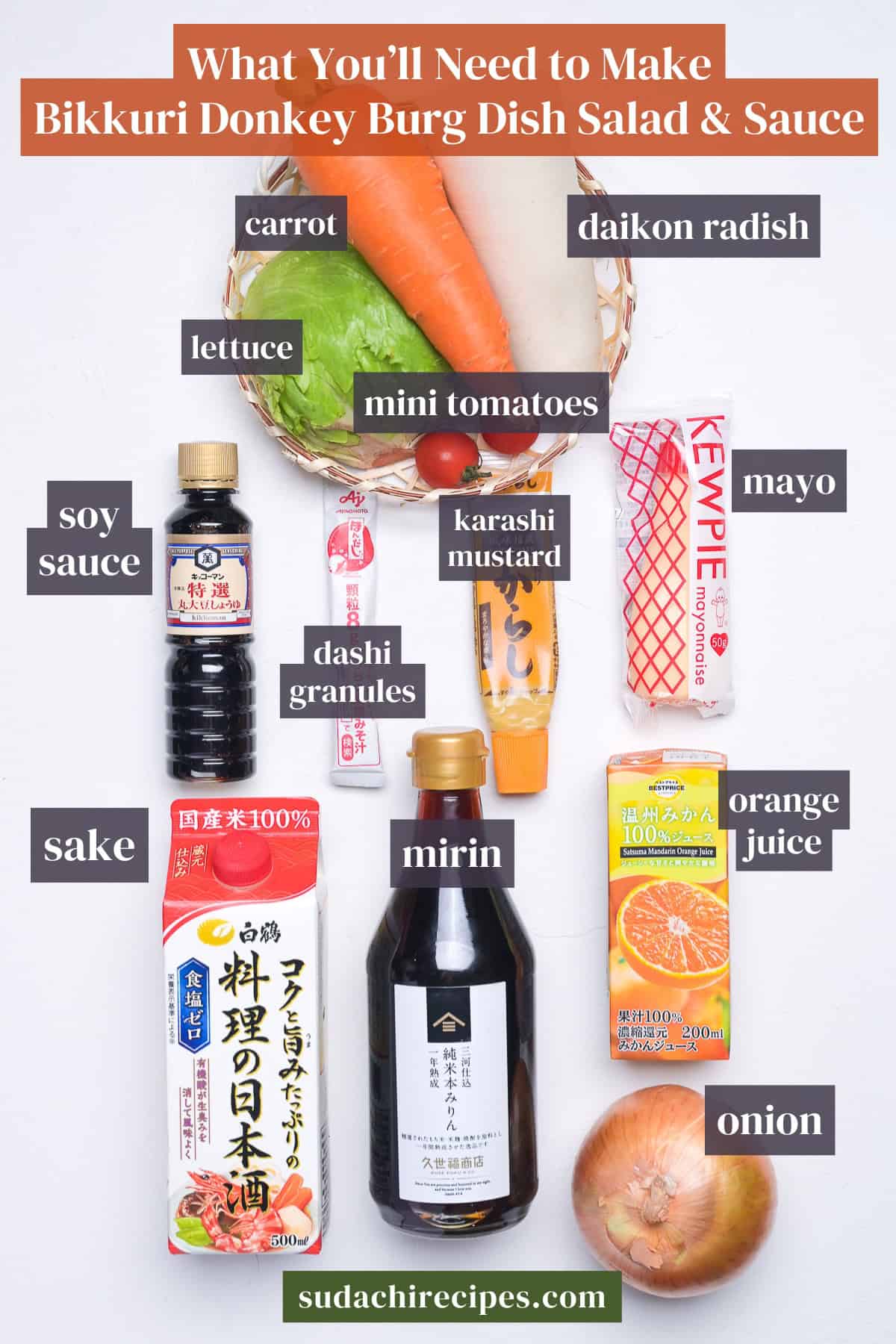
Substitutions & How to Customize
If you are out of orange juice or dashi granules, these swaps keep you close to the restaurant’s flavor, and the notes below show how to add its toppings at home.
Substitutions:
- Orange juice → Apple juice: Add it a little at a time.
- Dashi granules → Mentsuyu: Mentsuyu, the bottled noodle soup base, is the easy swap. It already has soy sauce, mirin and sugar in it and leans sweet and savory, so ease off on the soy sauce when you build the sauce.
- Awase (blended) miso → White or light-colored miso: If you swap the miso that goes into the patty mixture, one of these keeps you closer to the restaurant’s mild flavor. Red miso is saltier and darker, and it pulls the patty away from the taste you are after.
- Cheddar → Gouda or another melting cheese: It goes on the same way. I just happened to use white cheddar, and any melting cheese works. The cheese is not a default at the restaurant either, so you can leave it off altogether.
How to Customize:
- Oroshiso: Top the patty with grated daikon and shiso leaves, the combination the restaurant calls oroshiso. It is one of the standard toppings there, eaten with the same soy sauce-based sauce.
- Pineapple: Top the patty with sweet grilled pineapple. The restaurant sells this one as the Pine Burg Dish.
- Fried egg: Top the patty with a fried egg. A soft-yolk fried egg is a regular topping on the restaurant’s menu.
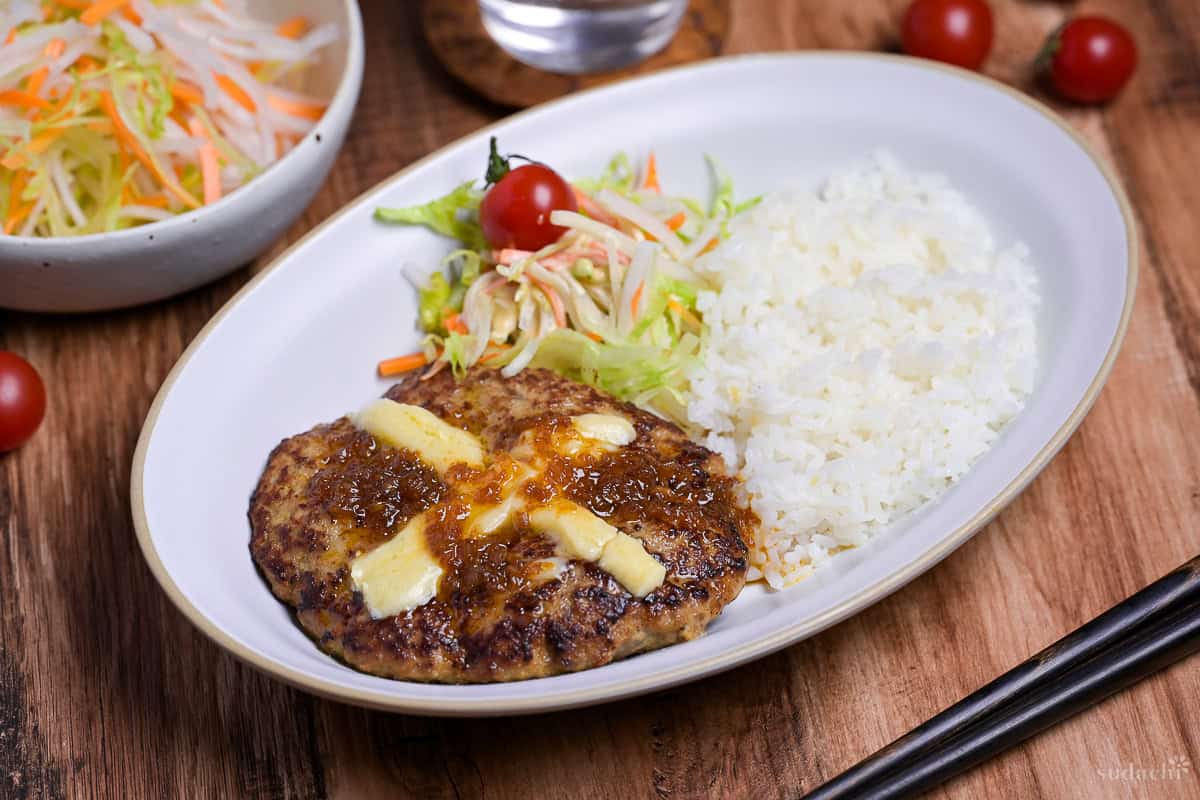
How to Make My Bikkuri Donkey Hamburger Steak
Before you start (Mise en place):
- Cook the rice that goes on the side of the plate.
- Grate the onion for the patty mixture.
- Finely chop the onion for the sauce.
- If you are adding cheese, cut it into long, thin strips.
- Cut baking paper into rectangles a little larger than the size of the patties.
i. Cut the daikon and carrot into thin strips, shred the lettuce, and soak them all in cold water.

ii. Wash the cherry tomatoes and pat them dry.
iii. In a small bowl, mix the mayonnaise, standard Japanese soy sauce and karashi (Japanese hot mustard) until smooth, then set it aside.


i. Put the ground pork, ground beef, grated onion, egg, panko, plain yogurt, mayonnaise, awase miso, salt, sugar, nutmeg and black pepper into a large bowl, all at once.

ii. Knead it thoroughly until it is even all the way through and turns a little sticky.

i. Set a frying pan over medium heat with a little oil.
ii. Divide the mixture so each person gets a patty.
iii. Rub a thin film of oil on your hands, then toss each portion from palm to palm about 10 times to knock the air out.

iv. Roughly shape the patties into ovals and place them on the prepared baking paper. Press them fairly thin and neaten the edges with your fingers or the edge of a dinner knife. The high moisture in this patty makes it easy to break and difficult to move, baking paper keeps the shape clean and the patties in one piece.
i. Flip each patty, paper and all, into the pan, then peel the paper off.

ii. Cook for 2 minutes, flip, and give the other side 2 minutes.

iii. Once both sides are browned, turn the heat down to low, add a splash of hot water and put the lid on. Steam for 6 minutes to cook the patties through.

With this much pork in the mixture, make sure the patties are cooked through before you move on. Press the center, and the juice that comes out should run clear.
i. Lift the lid and lay the cheese strips across each patty in a cross.

ii. Put the lid back on and let the cheese melt for 30 seconds to 1 minute.
Note: The cheese is optional.
i. Move the patties to warmed plates.
ii. Add the chopped onion to the same pan and sauté it in the fat the patties left behind.

iii. When the onion is soft and lightly golden, add the orange juice, soy sauce, sake, mirin and dashi granules and stir.

iv. Let it bubble for 30 seconds.
i. Drain the salad well and give it a gentle squeeze. Place it in the top center of the plate, then top it with the mayonnaise dressing and a cherry tomato.
ii. Spoon the rice on the right.
iii. Place the patty on the left and drizzle the sauce over the top.
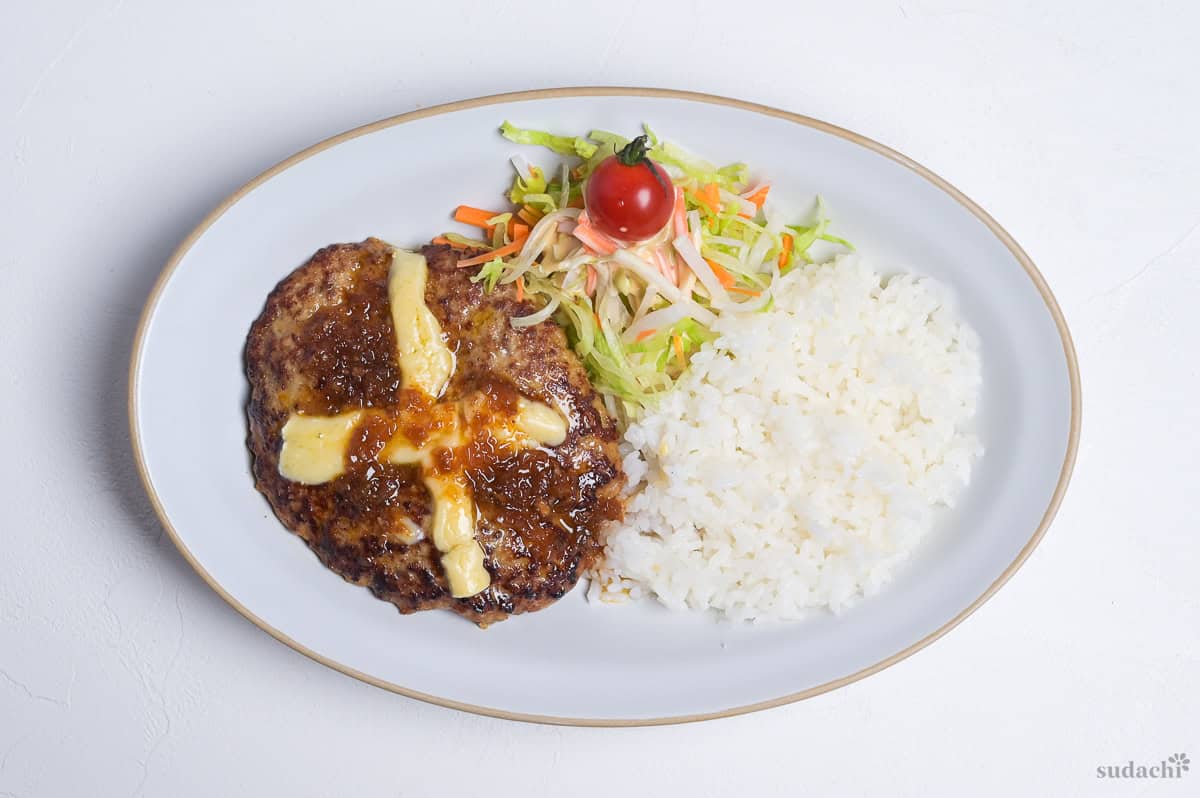


If you follow the default recipe, it will yield 2 servings.
Tips for the Best Bikkuri Donkey Hamburger
- Let the baking paper, instead of your hands, carry the loose mixture. Roughly shape the patties, place them on individual rectangles of baking paper and neaten the edges. When it’s time to cook, flip it into the pan paper and all. This loose mixture is easy to break, the baking paper keeps them all in one piece and easy to transport.
- Shape the patties flatter than an everyday hamburger steak. Keep the oval flat and spread it thin across the paper.
- Drizzle just a little sauce over the patty alone. Keep it from spreading across the plate, and keep it off the rice.
Hand the job to the baking paper from the very first patty, and even this loose mixture makes it to the pan in one piece.
Storage & Meal Prep
Fridge: Cool, wrap tightly and eat cooked patties by the next day. Cook raw mixture the same day.
Freezer: Wrap cooled, cooked patties individually and eat within about 1 month.
Meal prep: Make the salad dressing the day before and keep it cold.
Reheating: Thaw in the fridge, then warm covered in a frying pan with a splash of water or sauce until piping hot all the way through. Add the cheese afterward.
What to Serve With Bikkuri Donkey Hamburger Steak
- Stovetop Japanese Rice
- Homemade Miso Soup
- Corn Potage from Scratch (Japanese Corn Soup)
- Ginger Cucumber Tsukemono (Pickled Cucumber)
Bikkuri Donkey Hamburger Troubleshooting
A crack most likely means the shaped patty was carried by hand or sat waiting before it went in. Even so, leave it alone and avoid pressing it down. Turn the heat down, put the lid on and let it cook through as it is.
Either it was shaped too thick, or the heat was high enough to cook the surface before the middle caught up. Skip the repeated flipping, add a splash of hot water, turn the heat back down to low, cover and steam for 5 to 8 minutes. Once pressing the center brings up clear juice, turn off the heat.
Put the patty back in the pan with the sauce and 2 to 3 tablespoons of water. Cover, steam for 2 to 3 minutes and plate it with all of that sauce.
More Japanese Yoshoku Recipes
- Pork Teriyaki Burgers
- Menchi Katsu Ground Meat Cutlets
- Beef and Potato Korokke
- Simple Omurice Omelette Rice
Plenty more of the yoshoku you find on Japanese family restaurant plates is collected in Japanese Yoshoku Recipes.
Did You Try This Recipe?
I would love to hear your thoughts!
💬 Leave a review and ⭐️ rating in the comments below. 📷 I also love to see your photos – submit them here!
Bikkuri Donkey Copycat Hamburg Steak

Ingredients
Salad (Optional)
- daikon radish shredded
- carrot shredded
- lettuce leaves shredded
- mini tomatoes
- 2 tbsp Japanese mayonnaise
- 1 tsp Japanese soy sauce (koikuchi shoyu)
- ⅛ tsp Japanese mustard (karashi) or Dijon mustard (adjust to taste)
Patty
- 200 g ground pork
- 50 g ground beef
- ½ onion grated
- 1 egg
- 4 tbsp panko breadcrumbs
- 2 tbsp plain yogurt
- 2 tbsp mayonnaise
- ½ tbsp yellow miso paste (awase)
- ¼ tsp salt
- ¼ tsp sugar
- 1 pinch nutmeg powder
- 1 pinch ground black pepper
- cheddar cheese optional, or preferred melting cheese
Sauce
- 2 tbsp onion finely diced
- 2 tbsp orange juice
- 1 tbsp Japanese soy sauce (koikuchi shoyu)
- 1 tbsp sake
- 1 tbsp mirin
- ¼ tsp dashi granules
The ingredient brands and tools I trust are in my Japanese pantry guide and my cooking tools guide.
Can’t find certain Japanese ingredients? See my substitution guide here.
Instructions
Salad (optional)
- Thinly slice daikon radish, carrot and lettuce leaves and soak them in a bowl of cold water. Wash and dry mini tomatoes. You can serve as much or as little salad as you like so I didn't include measurements for this part.

- Mix 2 tbsp Japanese mayonnaise, 1 tsp Japanese soy sauce (koikuchi shoyu) and ⅛ tsp Japanese mustard (karashi) in a small bowl until combined, set aside for later.
Patty
- Take a large mixing bowl and add 200 g ground pork, 50 g ground beef, ½ onion (grated), 1 egg, 4 tbsp panko breadcrumbs, 2 tbsp plain yogurt, 2 tbsp mayonnaise, ½ tbsp yellow miso paste (awase), ¼ tsp salt, ¼ tsp sugar, 1 pinch nutmeg powder, and 1 pinch ground black pepper.
- Knead everything together until well distributed and you have a uniform sticky mixture.
- Divide the mixture into equal portions. Lightly oil your hands to stop sticking, and throw each patty between your hands about 10 times to remove excess air. Shape into an oval and make a dent in the center. Place each patty on a square of baking paper to make it easy to transfer to the pan later. You can neaten the shape once it's on the baking paper.
- Heat a pan on medium and add a small amount of oil. Flip the patties into the pan with the baking paper side facing up and carefully peel it off. Fry for 2 minutes on each side, or until they have a nice golden-brown crust all over.
- Reduce the heat to low, add a few teaspoons of warm water to the pan and cover with a lid. Steam-fry for 6 minutes or until cooked through.
- Remove the lid and top each patty with cheddar cheese (optional). If you want it to look more like Bikkuri Donkey's, you can cut cheese slices into strips and make a cross shape on top. Place a lid on top and steam until melted, then transfer to a warm plate.
Sauce
- In the same pan, add 2 tbsp onion (finely diced) and fry them in the leftover fat from the patties until softened. Wipe out excess oil if needed.
- Once the onions are soft and golden, add 2 tbsp orange juice, 1 tbsp Japanese soy sauce (koikuchi shoyu), 1 tbsp sake, 1 tbsp mirin and ¼ tsp dashi granules. Mix it well and let it boil for 30 seconds.
Serving
- Drain the salad and squeeze to remove the excess water. Place it on the plate and top it with the seasoned mayonnaise and a mini tomato. Arrange a portion of rice and the hamburg next to it, then drizzle the hamburg with the sauce from the pan. Enjoy!


We loved it. Thank you for sharing the recipe. This will definitely be part of our weeknight dinners now.
Hi Myra,
Thank you so much for trying this recipe! I’m really happy you enjoyed it together, and hearing it’s earned a spot in your weeknight dinners is what makes all the recipe testing worth it 🙂
Yuto