




Featured Comment
Exceptional. Subtle, sweet, smooth. I agree the croutons add a welcome crunch. Made fried ‘pancake’ with leftover corn skins. Everything was used, soothes my soul.
★★★★★
– Martha
Why mask corn’s natural sweetness when it’s already perfect? That question is the whole recipe.
No bouillon, no sugar, no flour. 2 ears of fresh corn, an onion, butter, and milk, finished with the pinch of salt that transforms all that natural sweetness into an irresistible soup. Come taste what subtraction can do.

Corn Potage
Recipe Snapshot
- What is it? Japan’s everyday corn soup, a yoshoku classic blended and sieved until completely silky, beloved enough to fill cup-soup shelves and winter vending machines despite the French-sounding name.
- Flavor profile: Pure, sweet corn front and center, deepened by milk that has steeped with the corn cores, a quiet layer of butter-softened onion underneath, and silk from the sieve in every spoonful.
- Why you will love this recipe: It coaxes a complete soup out of fresh seasonal corn without bouillon, sugar, or flour, and the herb croutons are not a topping, they are the crunch all that silk needs.
- Must-haves: Fresh in-season corn on the cob, cores included, a fine mesh sieve for the final pass, and a baguette for the croutons.
- Skill level: Easy. The pot never works hard and the milk never boils.

What is Corn Potage?
Corn potage (コーンポタージュ) is a smooth, strained corn soup with a made-in-Japan name: corn from English, potage from French, welded into a word France never coined. The dish took the same route. French technique likely supplied the seed, but the bowl grew up in Japan as yoshoku, Western cooking rebuilt by Japanese home kitchens.
Japan’s love here is not subtle. Winter vending machines even sell in hot cans.

Cupboards hold the cup-soup version and it moonlights as a snack flavor. The corn potage umaibo stick is a stone-cold classic, and in 2012 a corn potage popsicle outran supply and left shelves nationwide in 2 days. I tried it. Just okay. Its existence was the point.

For this recipe though, I build more refined and sohisticated flavor from 2 ears of corn, cobs steeped in the milk, sieved to silk. No stock, no sugar, no flour.
Japanese Corn Soup Ingredients
What You’ll Need for Corn potage
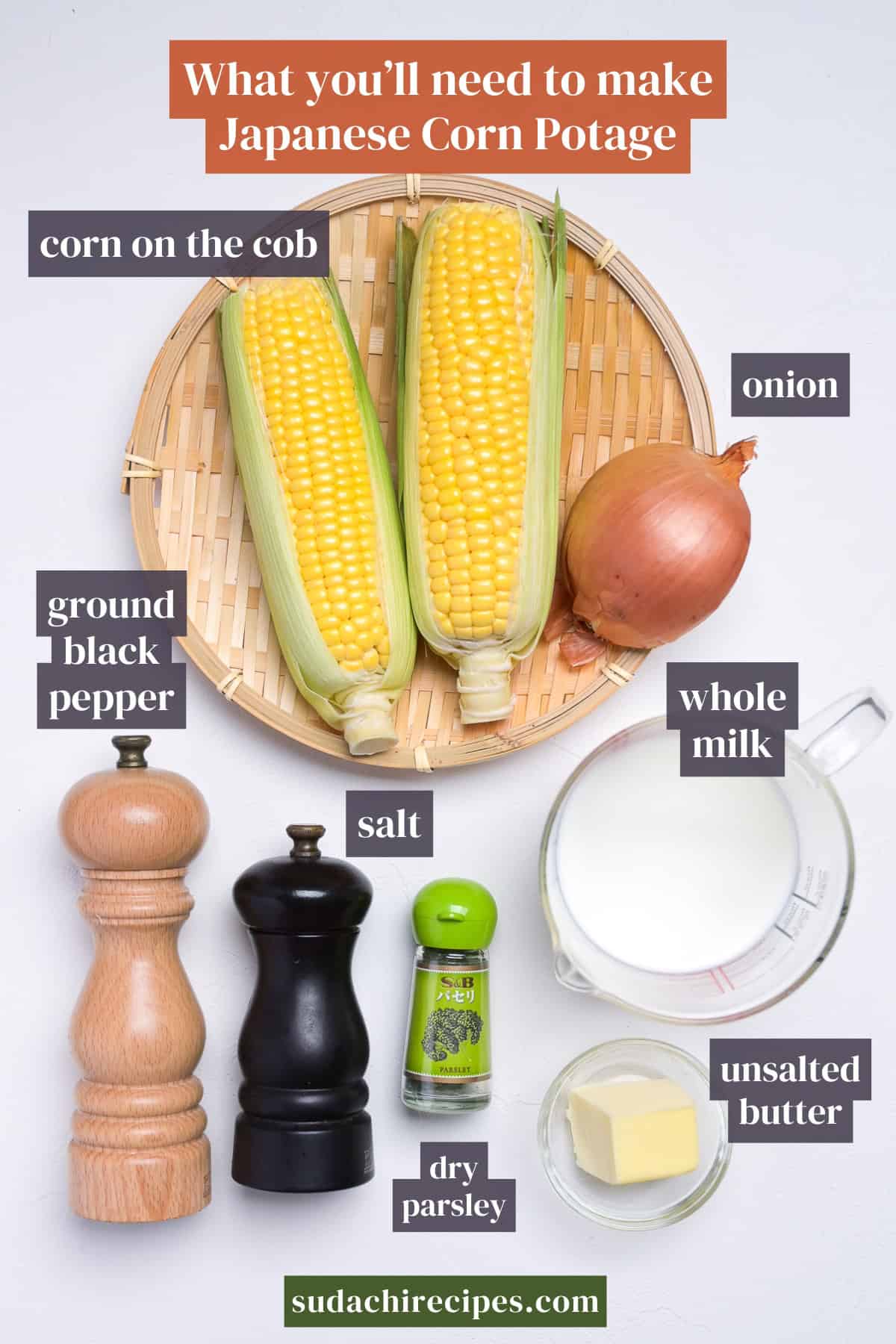
- Corn: Buy fresh, in-season ears, then make this soon after. Corn’s sugar peaks at harvest and slides toward starch from there, so the calendar matters more than any squeeze test. Honestly, I do not perform rituals at the market. The one thing I do check is color: the deeper the yellow, the prettier the finished potage.
- Whole milk: The body of the soup and the steeping liquid for the cobs, so it carries more responsibility than milk usually gets. Whole milk only. I have not run a low-fat test batch and I am not going to, because stripping out the fat strips out the richness, and you can see that coming before you even pick up a spoon.
- Onion and butter: The quiet co-signers of the no-sugar promise. A handful of sliced onion, cooked soft in butter, lays a layer of sweetness underneath the corn so the soup never has to reach for the sugar jar.
What You’ll Need for Homemade Croutons

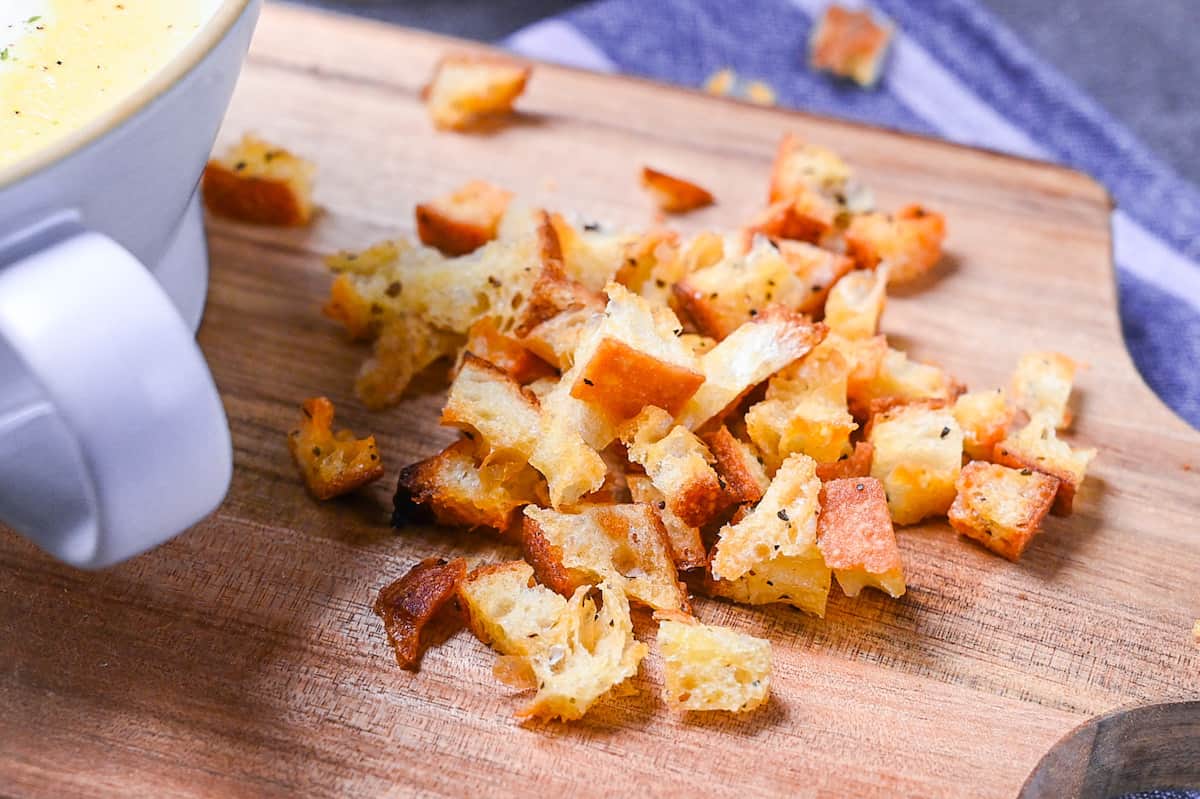
- Croutons: Not a garnish, a structural decision. The soup is silk from the first spoonful to the last, and the croutons are the crunch that keeps all that silk interesting. Baguette cubes, butter, olive oil, dried herbs. For me, the bowl is not finished without them.
Substitutions, Variations, and How to Customize
I will be upfront: this is not a recipe with a long swap list. The corn is the identity of the soup and cannot be replaced, and most of the short ingredient list earns its place as written. The honest flex points are the milk, which has more give than you might think, and the heavy cream, which is mostly there for looks anyway.
- Fresh corn on the cob → Canned or frozen corn: It works, and I would rather you make the soup than skip it. But know what changes: the flavor and the sweetness shift, and with no cores there is no corn stock steeping in your milk, so the soup loses a layer it was designed around. Taste at the end and adjust your salt with extra care.
- Whole milk → Soy milk: I have not tried this myself, but a reader told me it worked well with soy milk, and I trust the report to pass it on. Expect a lighter, cleaner finish than the dairy version.
- Heavy cream → Skip it: The cream is a finishing swirl, not a load-bearing wall. I leave it out most of the time and the soup is complete without it. Use it when you want the bowl to look like a restaurant sent it or you happen to have it in your fridge.
- Baguette → Any bread with baguette-level firmness: Baguette makes the crunchy croutons, which is why it gets the starting spot. The real rule is hardness, though: if the loaf on your counter is as firm as a baguette, it will toast into a great crouton, no question. Soft sandwich bread is the one that might let you down.
- White pepper → Black pepper: Either works, this is a color call, not a flavor emergency. I default to white because it keeps the pale gold of the soup clean.
Have trouble finding Japanese ingredients? Check out my ultimate guide to Japanese ingredient substitutes!
Variations:
- Chilled summer potage: Corn season is hot weather season, so chilling this soup sounds logical, but I will be honest: I do not do it. When I want a cold potage, I reach for my kabocha potage instead, which is simply the better soup chilled. This bowl gives its best hot, with the croutons loud on top.
- Corn soup, not potage: If you like texture, strain only half, or skip the sieve and keep the kernel bits in. In Japan, the strained silky version is the potage ideal, and the kernel-in version lives closer to what gets sold as corn soup. Both are good. This recipe is simply built around the silk.
How to Customize:
- Crouton herbs: Italian seasoning and herbes de Provence both live happily on these croutons, so use whichever jar is already open. You can also drop the herbs and keep just the butter and salt.
How to Make My Corn Potage
If you prefer to watch the process in action, check out my YouTube video of this corn potage recipe!

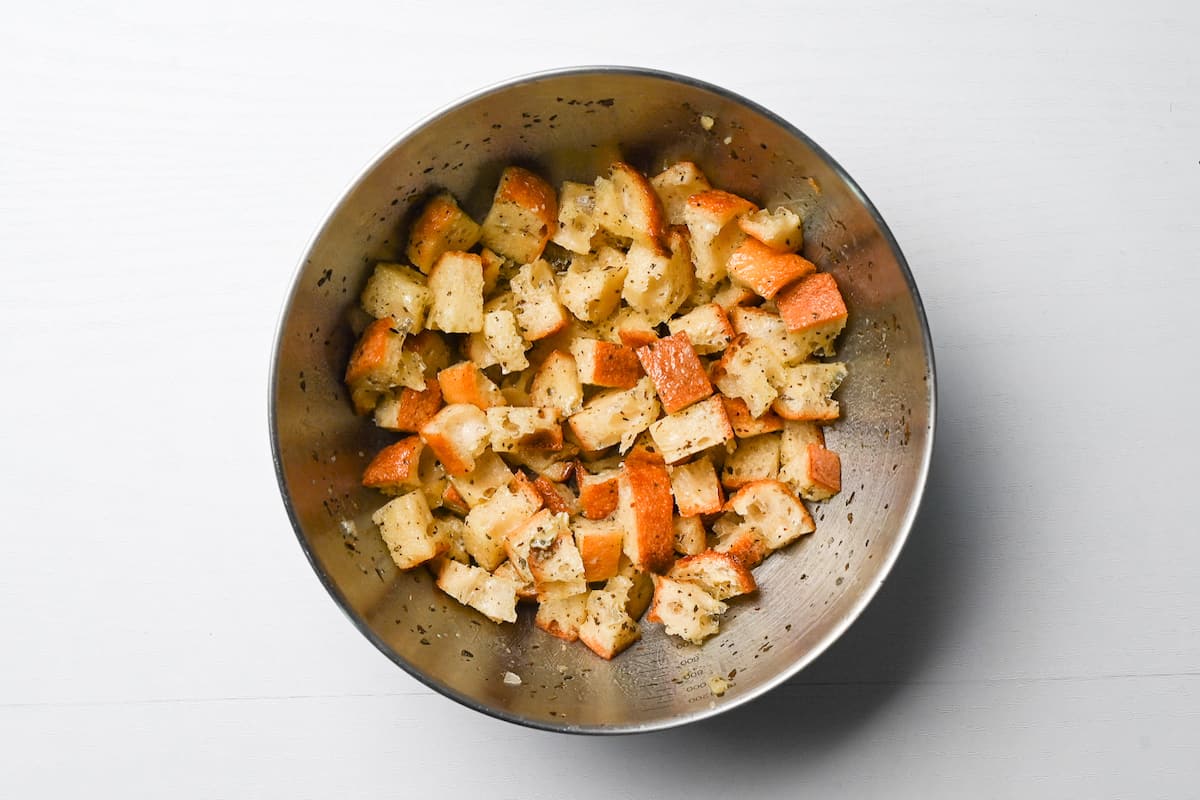
i. Preheat your oven to 180°C (360°F) and, while it warms, mix the olive oil, melted butter, dried herbs, and salt in a large bowl. Add the cubed baguette and toss until every piece is coated and glossy.
ii. Spread the cubes over a baking tray in a single layer, no overlapping, and bake on the bottom shelf until golden and crisp, about 10 minutes.
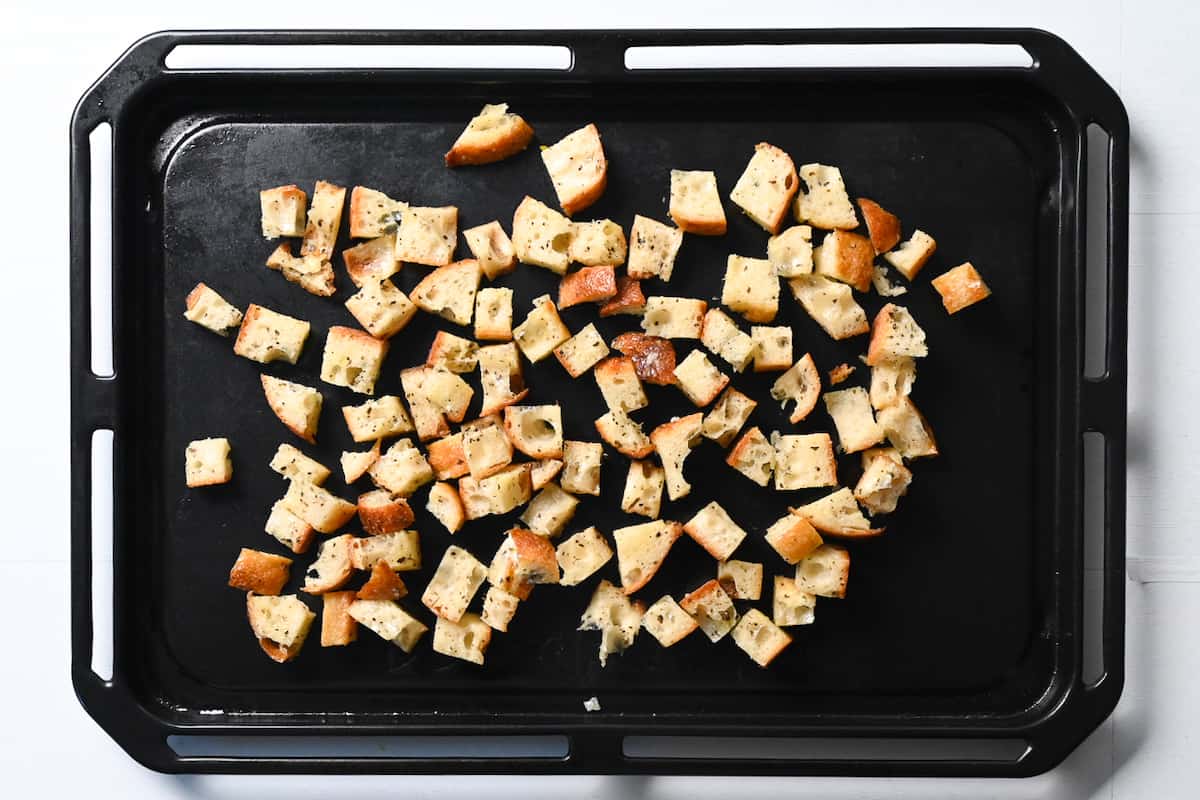
iii. Pull them out and set them aside. Or set most of them aside. I cannot stop eating these straight off the tray, and I have made peace with that. Sometimes most is gone before potage is finished…
As you might guess, this yields plenty of croutons for a generous topping. If you prefer just a light sprinkle, halve the quantities and enjoy the perfect crunch without cook’s snacks.
i. Wash the corn and stand each ear on its end. Slice the kernels off in rows, cutting just deep enough to free them. Go shallow on purpose! Dig into the cob and you bring tough little bits along for the ride, and they read as bad texture all the way into the finished bowl.
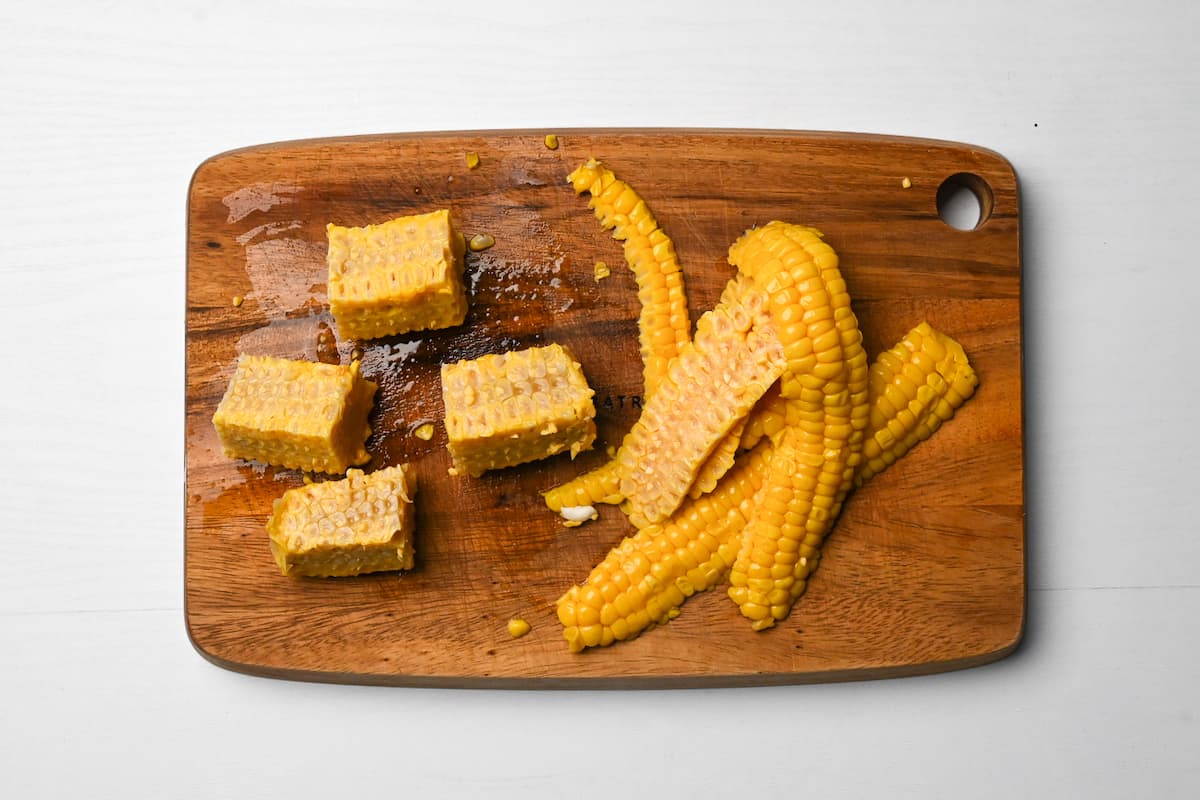
ii. Cut the bare cores into thirds or quarters. Do not throw those cores away. They are the secret half of this recipe, and they are about to earn it.
i. Set a pot over medium heat and melt the butter. Add the sliced onion and cook, stirring now and then, until the slices are soft and golden at the edges. The raw bite cooks out and a quiet sweetness takes its place, the first layer under the corn.
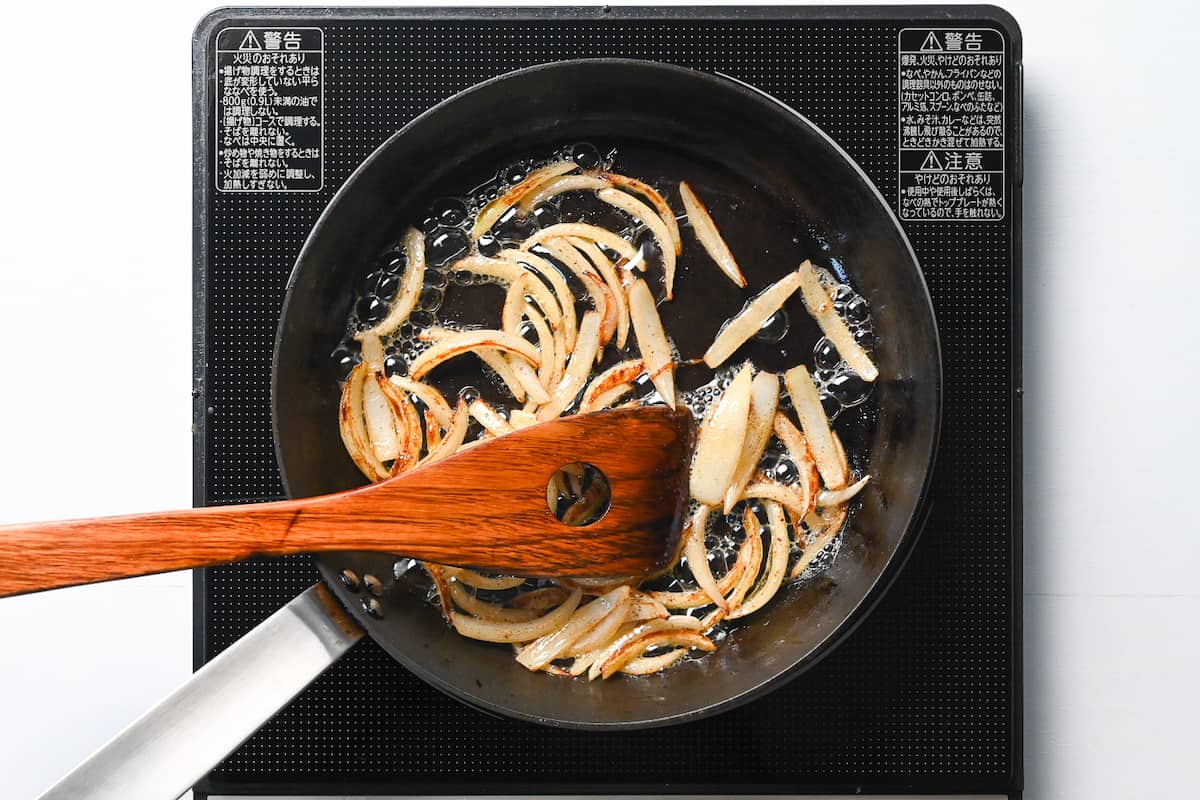
ii. Reduce the heat to medium-low before anything browns too hard.
i. Pour the milk into the pot and slide in the corn cores, along with a pinch of salt and white pepper.
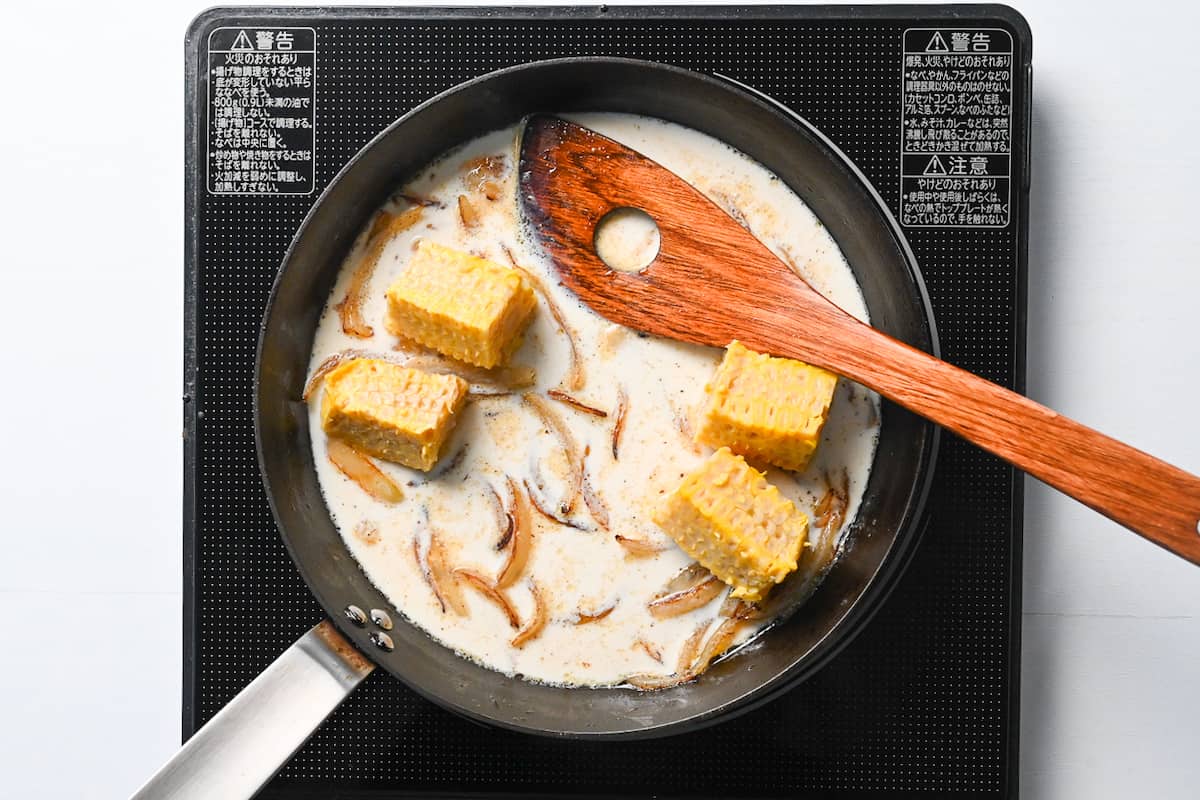
ii. Heat gently until small bubbles just begin to appear at the surface. That shimmer is your ceiling. Do not let it boil.
iii. Turn off the heat, then lift out the cores and discard them. Their job here is finished.
i. Add the corn kernels with another small pinch of salt and pepper, then return the pot to low heat.
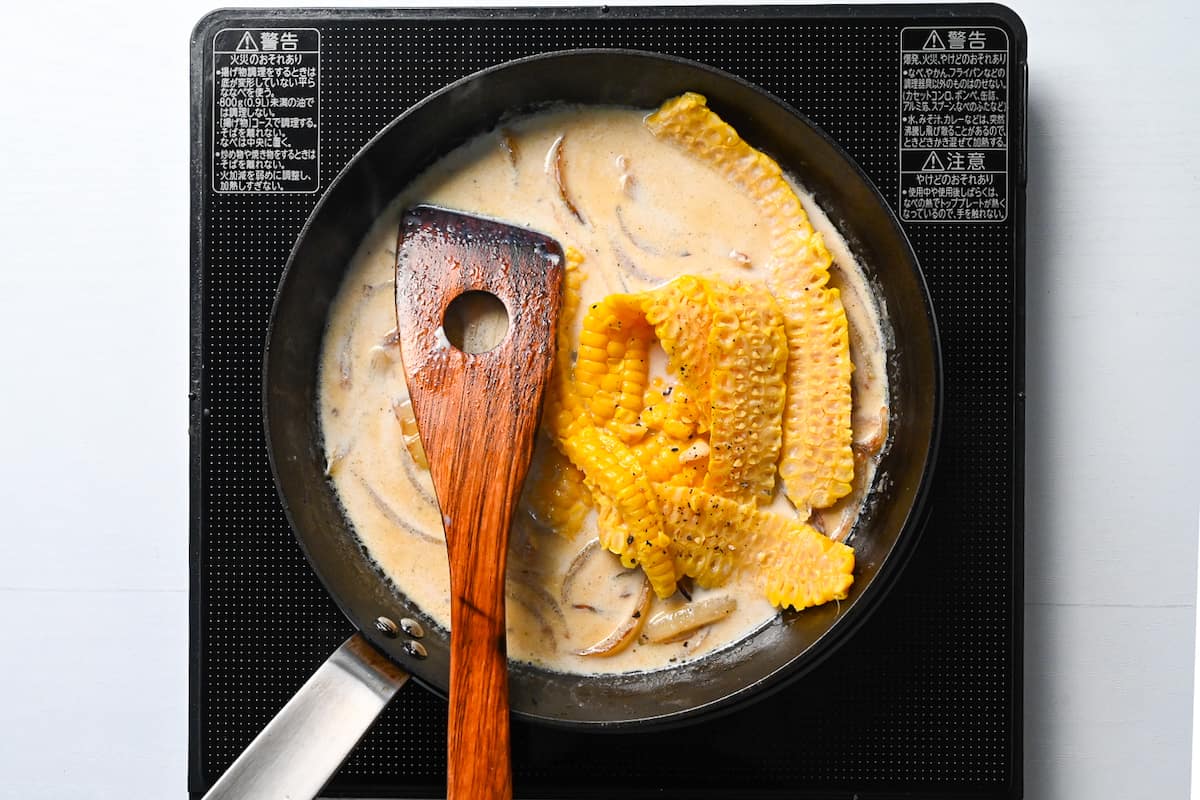
ii. Warm it gently until those small surface bubbles show up again and kernels are cooked through, then take the pot off the heat and let it cool slightly before blending.
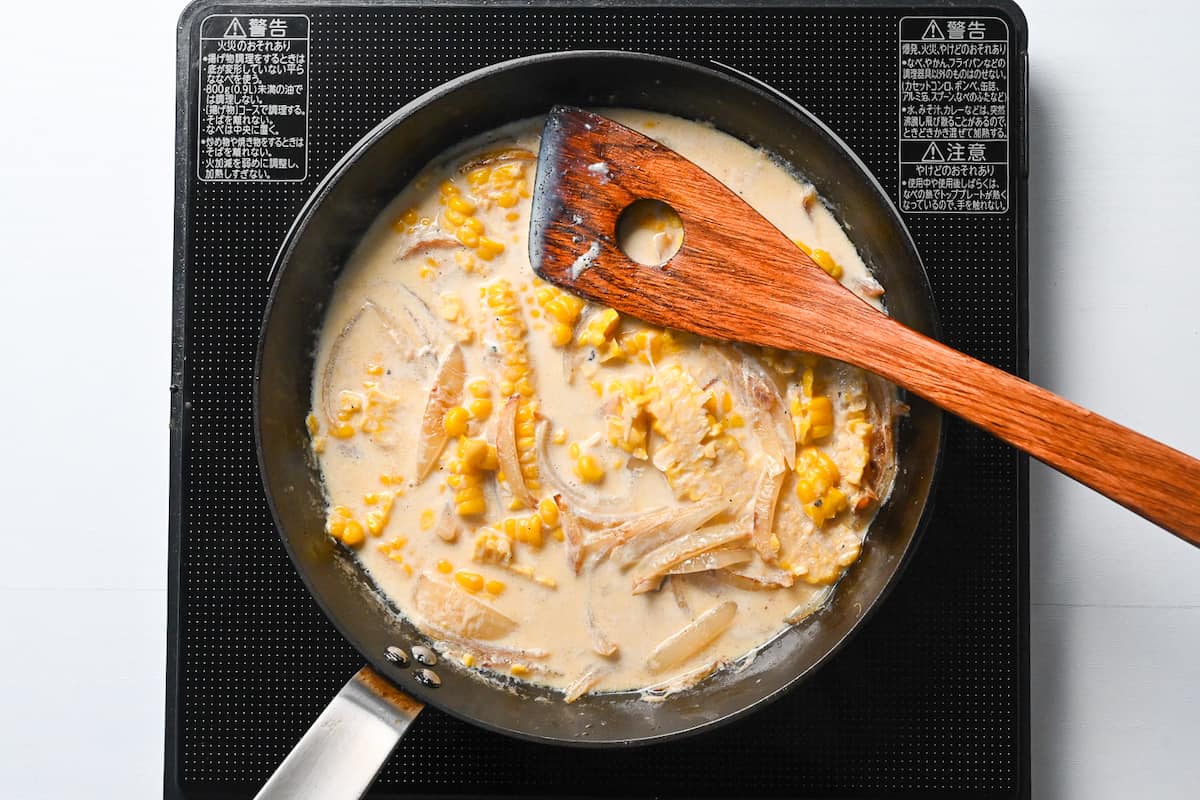
2 reasons. Milk proteins curdle when heat and corn’s gentle acidity gang up on them, and once the soup splits, no whisk brings it back. And corn’s sweetness is not built by simmering, it is protected: the sugar is already there at harvest, and long cooking only walks it away. Gentle and brief (enough to cook through the kernels) wins twice.
i. Blitz the soup thoroughly with an immersion blender right in the pot, or transfer it to a heatproof blender and work in batches. Either tool gets you there.
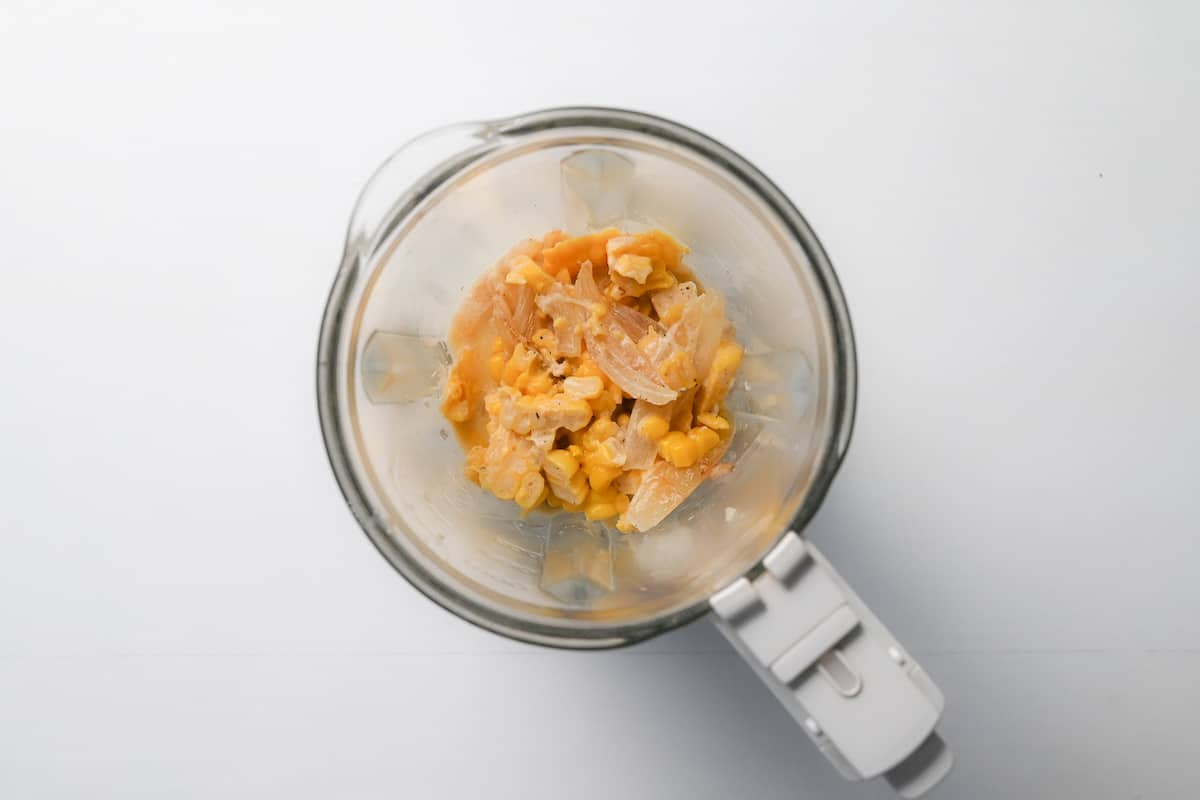
ii. Keep going a little longer than feels necessary. The goal is a texture with no detectable pieces, and corn makes you work for it.
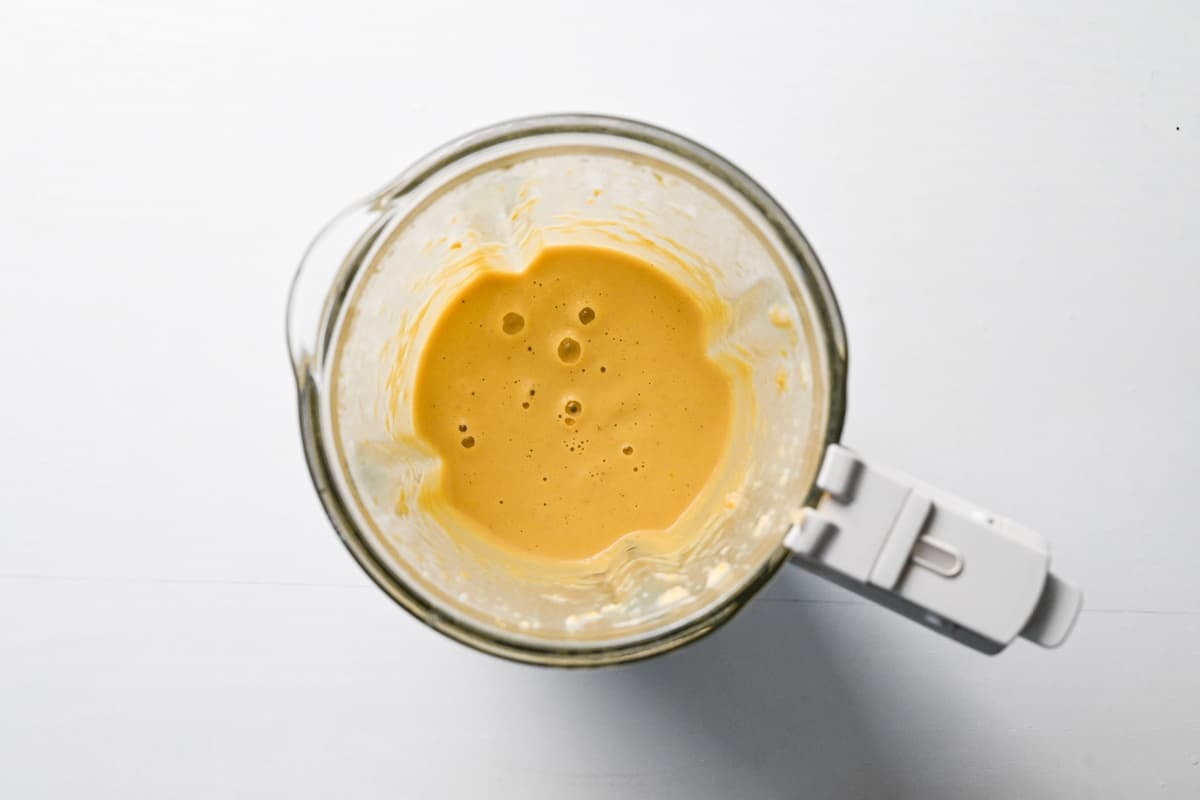
i. Set a fine mesh sieve over a clean pot or bowl and pour the blended soup through, pressing gently with a spatula until only a dryish mat of fiber is left behind.
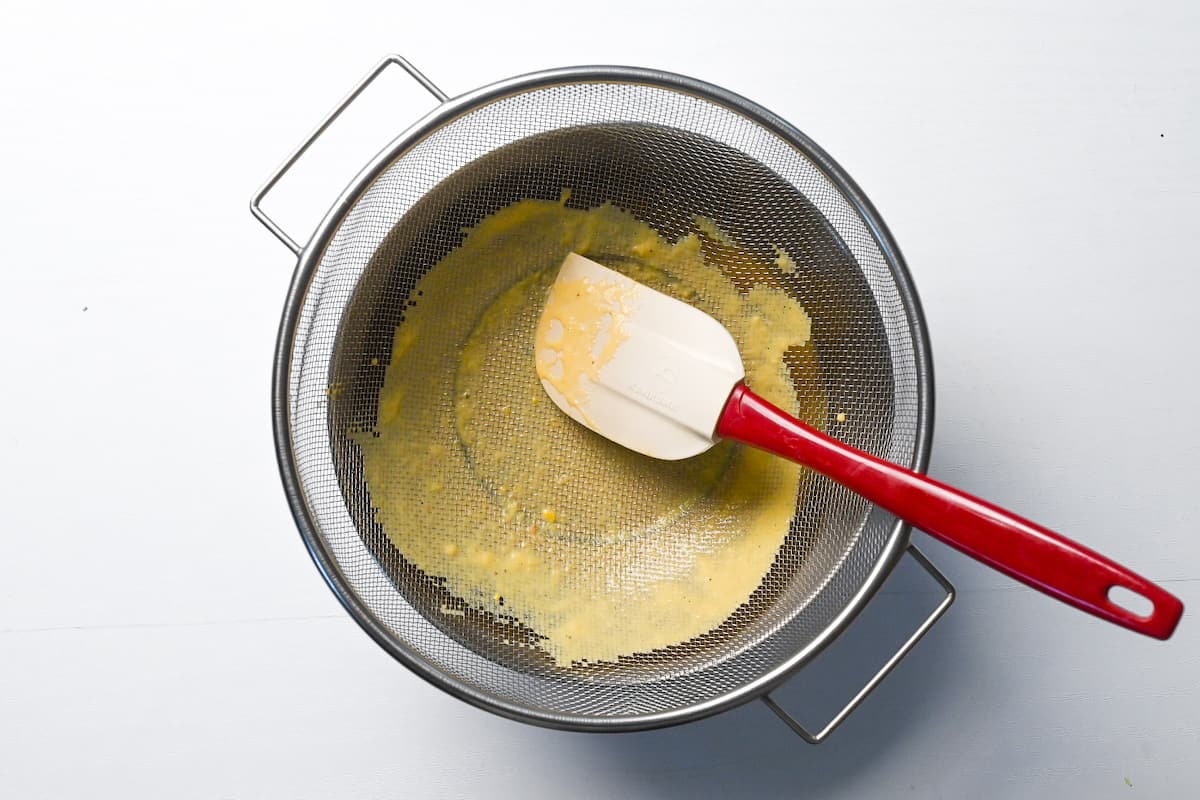
ii. Scrape the underside of the sieve before you lift it away. There is always good soup clinging there.
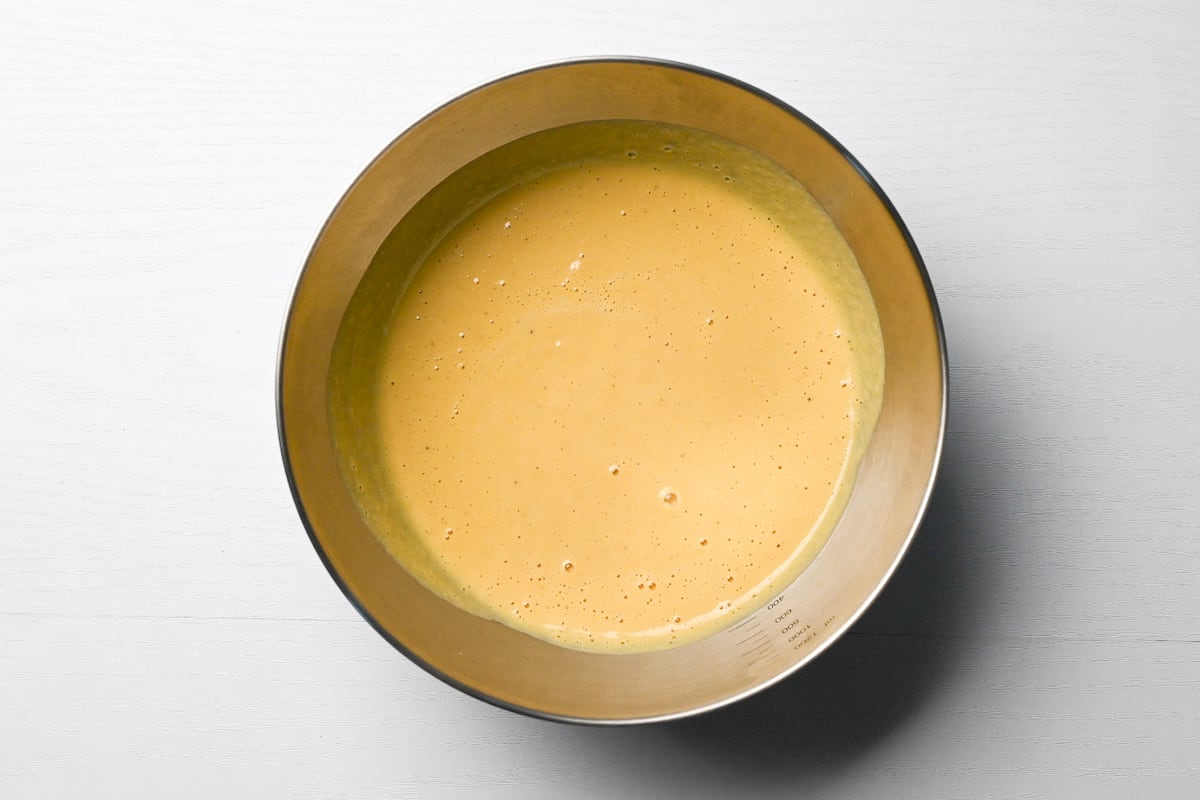
If you have ever blended a corn soup into something gritty and wondered what the restaurant knows that you do not, this is it. Corn’s seed coat is fibrous enough to survive even a strong blender, and the sieve is where those last skins stay behind. Straining is technically optional though.
i. Reheat gently, then taste it. Really taste it. With peak-season corn, what is in your spoon right now probably sweeter than you think. Start adding salt a small pinch at a time, tasting between pinches, until the sweetness stops floating and lands as you like.
Salt does not fight the sweetness, it frames it. Seasonal corn varies too much from ear to ear for any fixed amount to work, which is why this recipe refuses to hand you one. Your tongue closes this recipe, not the measuring spoon.
ii. Serve hot, with a swirl of heavy cream if the day calls for looks, a generous scatter of croutons, and a pinch of dried parsley.


Essential Tips & Tricks
- Keep the milk on a leash from the first minute. Corn runs gently acidic, milk protein hates acid plus hard heat, and a pot that crosses into a boil breaks into grainy curds that never fully come back. I have never split this soup, and that is not luck, gentle low heat, and the first small bubbles at the rim are the stop sign. Past that, you are gambling.
- Slice the kernels shallow, even where it feels like leaving corn behind. Dig deep to claim every last kernel and you carry tough little cob bits into the pot, and here is the trap. The sieve does not promise to catch them. I have done it exactly once, and depending on how fine your mesh is, some of those bits ride straight through into the finished bowl. Cut shallow and let the cores pay you back in the milk, where their flavor was headed anyway.
- Do not let the recipe salt this soup for you. Peak-season corn swings wildly from ear to ear, which is exactly why this recipe refuses to print a fixed amount: the measured spoon that landed last week can leave this week’s pot sweet from first sip to last with nothing holding it down. Taste at the end, add salt a small pinch at a time, and stop the moment corn leads and a low savory taste follows. That final taste is not a finishing touch, it is the destination.
- Blend longer than your patience wants. Stop when it merely looks done and you hand the sieve a rough puree full of half-broken kernels, which clogs the mesh and drags bits through it. Run the machine a beat past the point that feels finished, until nothing visibly textured is left, and the sieve turns from a rescue operation into a quick polish.
Guard the gentle heat, respect the sieve, and let your own tongue place the last pinch of salt, the corn handles everything else.
Storage Guide
Fridge: Leftovers keep 2 to 3 days in an airtight container, and they reheat into a genuinely good bowl, this is a soup that loses nothing overnight. It does thicken as it rests, so expect a denser spoonful than the night you made it.
Freezer: Not so recommended.
Reheating: Low heat only, stopping at the first small bubbles, never a boil, or the milk splits. If the rested soup is thicker than you want, loosen it with a splash of milk as it warms.
What to Serve With This Recipe
Corn Potage Troubleshooting
Grit in corn potage is almost never your blender’s fault. Corn kernels wear a fibrous seed coat that survives blending, and if the knife dug deep into the cobs, harder cob bits joined the pot too. Re-blend the soup for another full minute, then pass it through the finest sieve you own, working it through gently with a spatula. Mesh size matters more than people expect, a coarse strainer lets the smallest skins ride through, so if the grit survives the first pass, strain a second time.
I will be honest, because this is the failure I cannot fully reverse. Once heat and corn’s gentle acidity break the milk, no amount of whisking brings the texture all the way back. A pass through the blender and the sieve can smooth a mild split into something you can still serve, but the spoonful never quite regains what it had. The diagnosis is always the same: the pot crossed its ceiling and boiled. Next time, keep the flame low, and the moment small bubbles shimmer at the surface, you have hit the roof.
That is peak-season corn doing exactly what it does, and the fix is simple, salt. Add it a small pinch at a time, tasting between pinches, until the sweetness stops floating and lands as soup. If you reach for anything else first, broth, spice, more dairy, you are treating the wrong problem. The sweetness does not need dilution, it needs a frame.
Too thick is the easy direction, stir in milk a splash at a time over low heat until the spoon moves the way you want, then check the salt again, since you just diluted it. Too loose only has the slow road. Keep the pot on a low flame below a boil and let it reduce gently, stirring now and then so the bottom never catches. There is no flour in this soup to bail you out, and that is by design. The corn, the milk, and your patience set the texture.

More Japanese Soup Recipes
If this bowl starts a soup streak in your kitchen, the full lineup lives in my collection of Japanese soup recipes.
Did You Try This Recipe?
I would love to hear your thoughts!
💬 Leave a review and ⭐️ rating in the comments below. 📷 I also love to see your photos – submit them here!

Corn Potage (Japanese Corn Soup) from Scratch

Ingredients
Croutons
- 150 g baguette cubed, or any bread with baguette-level firmness
- 1 tbsp olive oil extra-virgin
- 1 tsp dry mixed herbs Italian seasoning or herbs de Provence
- ⅛ tsp salt
- 1 tbsp butter melted
Corn Potage
- 2 ears corn on the cob whole, fresh preferred
- 2 tbsp unsalted butter
- 100 g onion thinly sliced
- 300 ml whole milk do not use low-fat
- salt and pepper white or black pepper
- heavy cream optional
- dried parsley
The ingredient brands and tools I trust are in my Japanese pantry guide and my cooking tools guide.
Can’t find certain Japanese ingredients? See my substitution guide here.
Instructions
Homemade Croutons
- Preheat the oven to 180 °C (356 °F). While you wait, mix 1 tbsp olive oil, 1 tbsp butter , 1 tsp dry mixed herbs and ⅛ tsp salt in a mixing bowl until well combined. Add the cubed 150 g baguette and mix until evenly coated.

- Spread the baguette cubes over a baking tray in a single layer so no cubes are overlapping, then bake for 10 mins on the bottom shelf.
- Once golden and crispy, remove from the oven and set aside for later.

Corn Potage
- Wash 2 ears corn on the cob and slice the kernels off in rows. Cut the cores into thirds or quarters.
- Melt 2 tbsp unsalted butter in a pot over medium heat, and add 100 g onion (finely sliced). Fry until soft and transulent, then reduce the heat to medium-low. Avoid browning the onions and reduce the heat if they start to catch.
- Pour 300 ml whole milk into the pot and add the cob cores along with a few pinches of salt and pepper.Heat until small bubbles start to appear around the surface edges. Do not let it boil. Turn off the heat, then remove and discard the cores.
- Add the corn kernels and another pinch of salt and pepper, then return to a low heat.
- Heat gently until small bubbles start to appear once more, then take the pot off the heat and leave to cool slightly.
- Blitz the soup thoroughly using your preferred method (immersion blender or heatproof blender).
- Pour the mixture through a fine mesh sieve for an extra smooth result.
- Reheat on the stove top if needed and season with extra salt and pepper to taste. Serve with an optional drizzle of heavy cream, a generous helping of homemade croutons and a sprinkle of dried parsley. Enjoy!


Have you tried this with soymilk or other non-dairy milks?
Hi Jan,
Thank you for the question!
I haven’t personally, but I’d assume it works with soymilk if you add a bit more flavor to it (e.g. a small amount of vegetable bouillon powder).
I hope this answer helps!
Yuto
Thank you for this!
After blending and straining, is it normal for there to be so much sweetcorn left in the sieve? It really felt like a lot. It had me wondering how much sweetcorn even made it into the finished meal 😅 I think the colour looks right?
Hi Matt,
Thank you for sharing your question along with the image! After blending and straining, there typically shouldn’t be many visible corn kernels remaining. The color of your dish looks spot on though! Honestly, even better than mine!
If you’d like to refine the texture further, you could try blending for a bit longer in short intervals, stirring in between, or experimenting with a different type of blender (e.g. immersion blender). Using a finer mesh sieve can also help achieve a smoother result. That said, I suspect that simply blending a little longer with pauses to stir will likely solve the issue! 🙂
Yuto
I’ve been buying the powdered version of Hokkaido corn soup for my father and came upon this recipe. Followed recipe exactly minus the croutons. He loved it, fresh corn in late July is so sweet!
Hi Jeannie,
Thank you so much for trying the recipe! I’m so glad both you and your father liked it. And yes! Peak summer corn always surprises me with how sweet it is! 🙂
Yuto
Exceptional. subtle, sweet, smooth. I agree the croutons add a welcome crunch.
Made fried ‘pancake’ with leftover corn skins. Everything was used, soothes my soul.
Hi Martha,
Thank you so much for making the recipe and sharing your photo! It looks wonderful! I’m so glad you enjoyed the soup, and I really love how you made use of the corn completely.
Yuto
Amazing taste, I have made it with soy milk and loved it. Pouring it through a mesh sieve was easier than I thought and worth the effort. will certainly cook it again and again.
Hi Hadaas,
Thank you so much for making my corn potage! I’m really happy it turned out well with soy milk, and great to hear the sieve step was easier than expected!
Yuto
thank you for one of the best soups I had. putting it through the sieve was not as big an effort as i feared it be, and it made the soup like velvet. will do it again and again I am sure.
by the way made it with soy milk and it turned out very very good.
Hi Hadaas,
Wow, thank you so much! I’m really happy you kept making this corn soup! It means a lot. And I appreciate you letting me know it works beautifully with soy milk too. 🙂
Yuto