



Think a negitoro roll needs toro, the fatty cut of tuna, to melt in your mouth? In fact, a lot of the negitoro sold in stores starts with lean tuna such as yellowfin or bigeye, with fat mixed in.
You can do the same at home. Take the cheapest block of lean sashimi-grade tuna you can find, mince it, and stir in mayonnaise, oil and dashi granules. Wrap the filling in sushi rice and nori seaweed, then try a piece. It melts on your tongue before you even start to chew. Here’s the trick.

Negitoro maki
Recipe Snapshot
- What is it? Negitoro maki is a Japanese hosomaki, a slender sushi roll. A center of minced tuna and green onion sits inside a layer of vinegared rice and a nori wrapper.
- Flavor profile: The melting texture comes first, followed by the clean flavor of lean tuna and a lingering savory taste. Grassy green onion and toasted nori bring the flavors together.
- Why this recipe works: Start with the cheapest lean sashimi block, no hunt for fatty tuna. As store-bought negitoro does, I add fat with mayonnaise and oil, so even lean tuna turns creamy.
- How to make it: Only the rice is cooked. Spoon-scrape the tuna, chop it coarsely and mix in mayonnaise, oil and dashi granules. Roll it in rice and halved nori on a bamboo mat.
- What to expect: About 50 minutes, with the sushi rice made during the optional salt cure. Above all, leave a finger-wide strip of nori bare and keep the filling on the rice.

What Is Negitoro Maki?
Negitoro maki (ネギトロ巻き) is a slender sushi roll, or hosomaki, filled with chopped tuna and wrapped in sushi rice and nori. It has long been popular at sushi bars in Japan. Originally, the tuna was scraped from the nakaochi and beneath the skin, then chopped and topped with green onion.
The American spicy tuna roll is a close overseas cousin of negitoro maki. Negitoro maki isn’t spicy and has green onion. Nobody is sure where the name comes from. It could combine negi (green onion) with toro (fatty tuna), or derive from negitoru, meaning to scrape the meat away.
Negitoro is said to have been born at a sushi shop in Asakusa, Tokyo. The shop dates it to 1964, when cooks found that chopping tuna too sinewy for sashimi made it tender, with no stringy bits left. Green onion and wasabi meant for the soba or udon boiling for lunch got spilled onto the sinewy meat by accident. Served over rice with a splash of soy sauce, the combination tasted good enough to earn a place on the menu. According to the shop’s chairman, the name plays on Mugitoro, a nearby restaurant famous for tororo, or grated mountain yam. A separate development followed in 1987, when a food processor in Gunma is said to have chopped nakaochi and meat from near the skin, mixed in fat, and packaged it for sale as negitoro. Lean tuna with added fat later became widely sold.
Nakaochi refers to the central backbone remaining after a fish has been filleted, along with the meat attached to it. A lean block of tuna sold for sashimi is a different part of the fish altogether. It is the center of the fillet, left after the fattier portion beside the skin has been removed.
Traditionally, “proper” negitoro means rich, fatty meat taken straight from the bone and chopped. I take a different approach, starting with the cheapest lean block of sashimi tuna available. For years, I simply chopped sashimi, but the result never quite satisfied me. It tasted flat, and some cuts had a texture that didn’t feel right. Adding mayonnaise and oil gives the lean fish the soft, creamy texture I want, without the dryness. My aim is to make the leanest part of the tuna taste like the negitoro sold in ready-made packs.
Negitoro Roll Ingredients
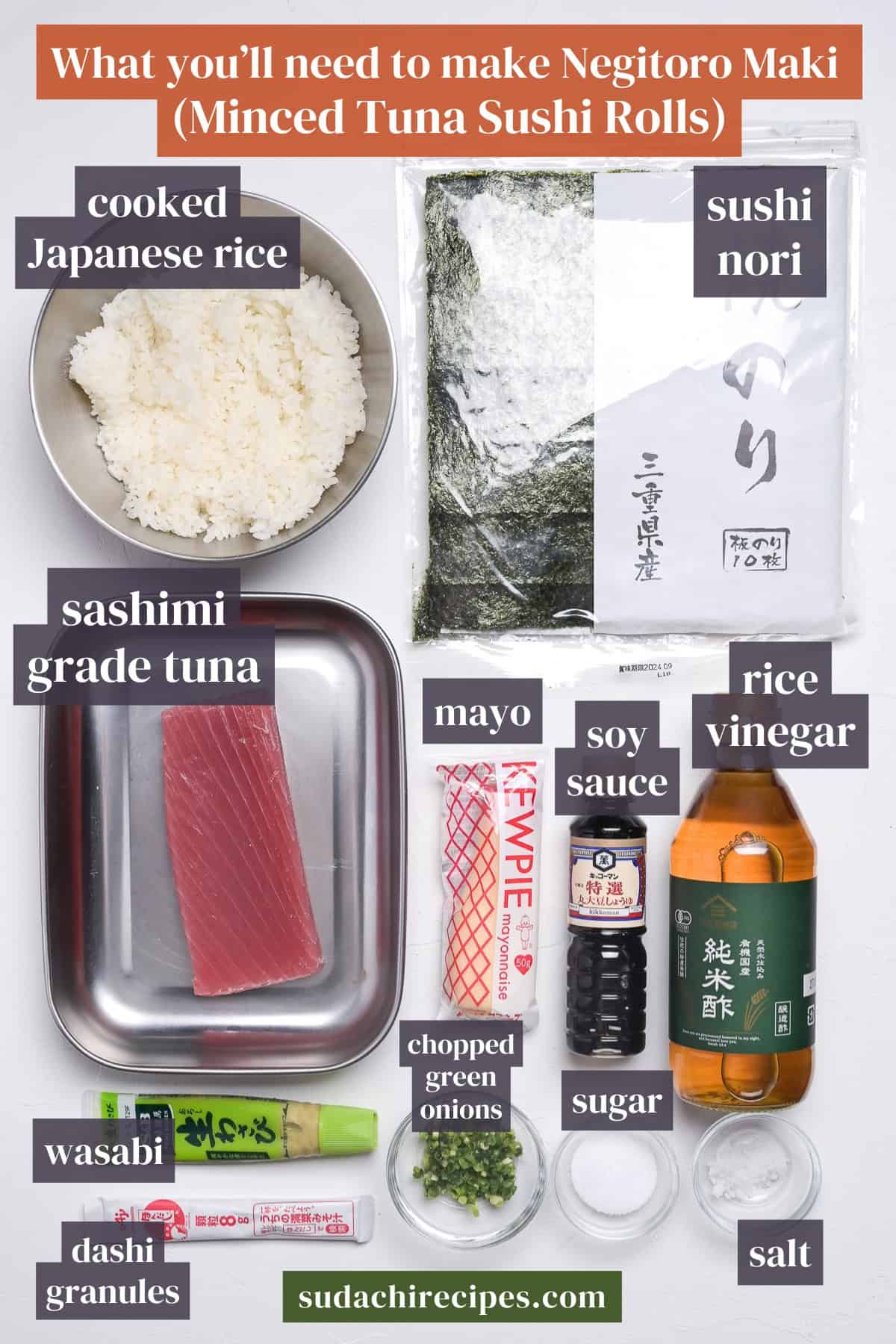
- Sashimi-grade lean tuna: The cheapest lean block you can find will do, provided it is sold for eating raw. Yellowfin, sometimes labeled ahi, and bigeye both work. Frozen sashimi blocks from Asian markets also work well. You can use sashimi-grade albacore, although its paler color and softer texture produce a distinctly different negitoro.
- Japanese mayonnaise: Chopping lean tuna alone leaves it dry and grainy, with an iron-like flavor that dominates and makes each bite taste much like the last. Mayonnaise turns that mixture soft and creamy. In our survey of Japanese home cooks living abroad, the respondent from Ohio told us they buy Kewpie at Walmart or an Asian market.
- Green onions: This roll needs finely chopped green onions. Look for the slender ones, sold in US stores as either green onions or scallions. Tokyo negi, with its thick stalks, is a different vegetable.
Substitutions, Variations, and How to Customize
There aren’t many direct substitutes for this recipe, but you have a few options for adapting it to what’s available and changing the flavor.
Substitutions:
- Sashimi-grade lean tuna → Opah (moonfish): Because opah is fattier than tuna, it sometimes needs less help from mayonnaise and oil. If you skip tricking it out with mayo and oil, I personally think opah makes a far better negitoro than lean tuna does.
- Japanese mayonnaise → American mayonnaise: American mayonnaise will work here. Some Japanese cooks living abroad add a little lemon juice to Hellmann’s for a taste closer to Japanese mayonnaise.
- Green onions → Chives: Finely chopped chives make a suitable raw garnish and taste milder than green onions. Garlic chives are a different ingredient, so don’t grab those by mistake.
- Wasabi → Leave it out: Use it only if you like it. The recipe works without it.
Substitutions that I don’t recommend:
- An ahi steak with no raw-use label instead of a sashimi block: If the steak isn’t labeled as safe to eat raw, it is intended for cooking. Never use it raw.
- Canned tuna instead of sashimi-grade tuna: Since canned tuna has already been cooked, it makes a different dish from raw negitoro. For Japanese recipes that use canned tuna, try my tuna mayo onigiri or daikon salad.
Variations:
- Negitoro-style salmon: Use sashimi-grade salmon and chop it as you would the tuna. This version even appears on Japanese supermarket recipe cards. Salmon is much fattier than tuna, so mayonnaise and oil are not necessary.
- The old-school chop-only version: Chutoro, the medium-fatty cut of tuna, or rich meat from near the bone needs only chopping, with no mayonnaise or oil added. Honestly, I think using chutoro for negitoro is a terrible waste. Eat it as sashimi.
How to Customize:
- Takuan (toro-taku): Add finely chopped takuan, Japanese pickled daikon radish, to the filling as you roll for a crisp crunch.
- Shiso: Place one shiso leaf, an aromatic Japanese herb, on the rice before rolling to give each bite a bright, fresh aroma.
- Avocado: Thin strips of avocado can go into the roll beside the filling. Japanese supermarkets suggest this pairing too.
- Kimchi: A little chopped kimchi mixed into the filling adds tang and heat.
- Toasted sesame oil: Using toasted sesame oil instead of neutral oil gives the filling a pronounced, nutty sesame aroma.
- A little heat: Add chili powder for a flavor close to a spicy tuna roll. Choose either chili powder or wasabi, since they compete.
How to Make My Negitoro Maki
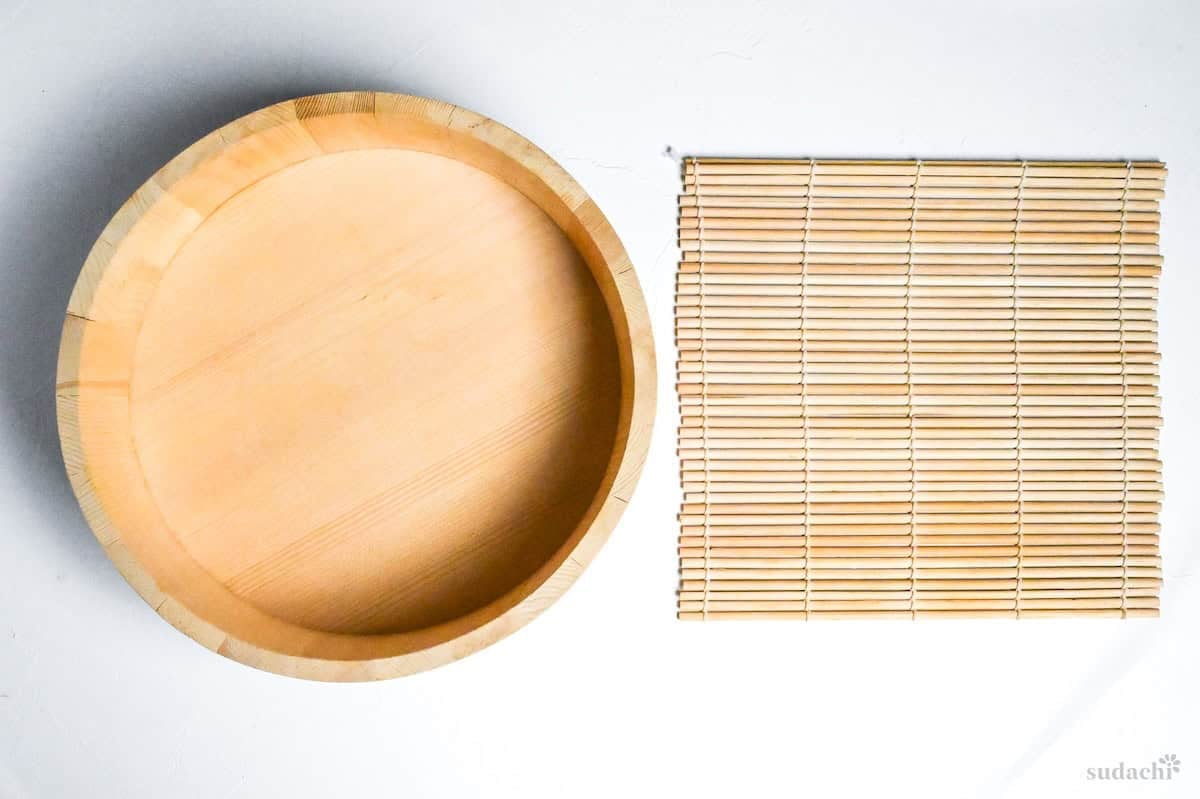
To develop this recipe, I used a sushi oke and a bamboo sushi rolling mat.
i. Quickly rinse the tuna block under cold water, then pat it dry with paper towels.

ii. Salt all sides of the block and place it in a container with one end raised. Leave it in the refrigerator for 10 to 15 minutes. The slope lets the released liquid collect at the lower end.

Make the sushi rice during this rest.
iii. Rinse the rested tuna in cold water once more and pat it dry.

Shiojime is a light salt cure, where sashimi-grade fish is salted and left to rest before use. Osmosis draws excess moisture from the flesh, making it firmer. The resulting meatier texture makes the umami easier to taste, and fishy odors ease too. This is also a useful way to improve the flavor of inexpensive sashimi.
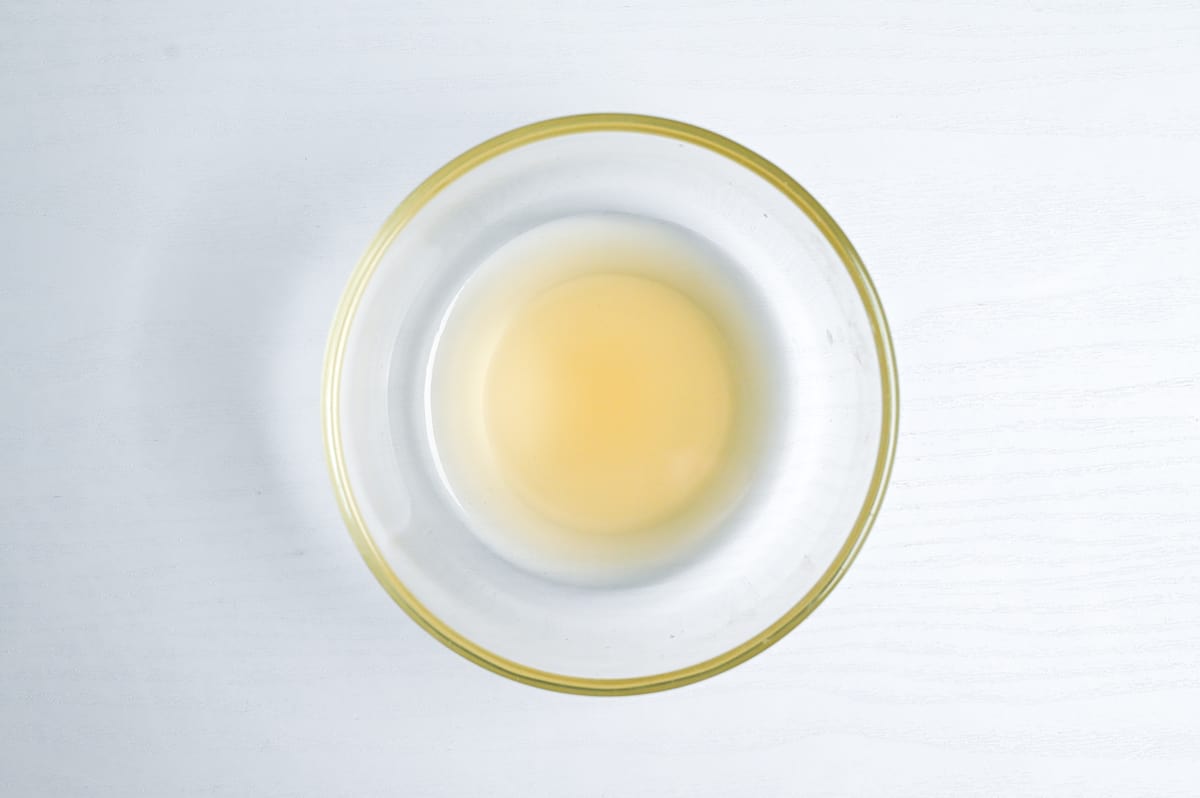
i. Combine rice vinegar, sugar and salt in a bowl, stirring until the sugar and salt have dissolved.
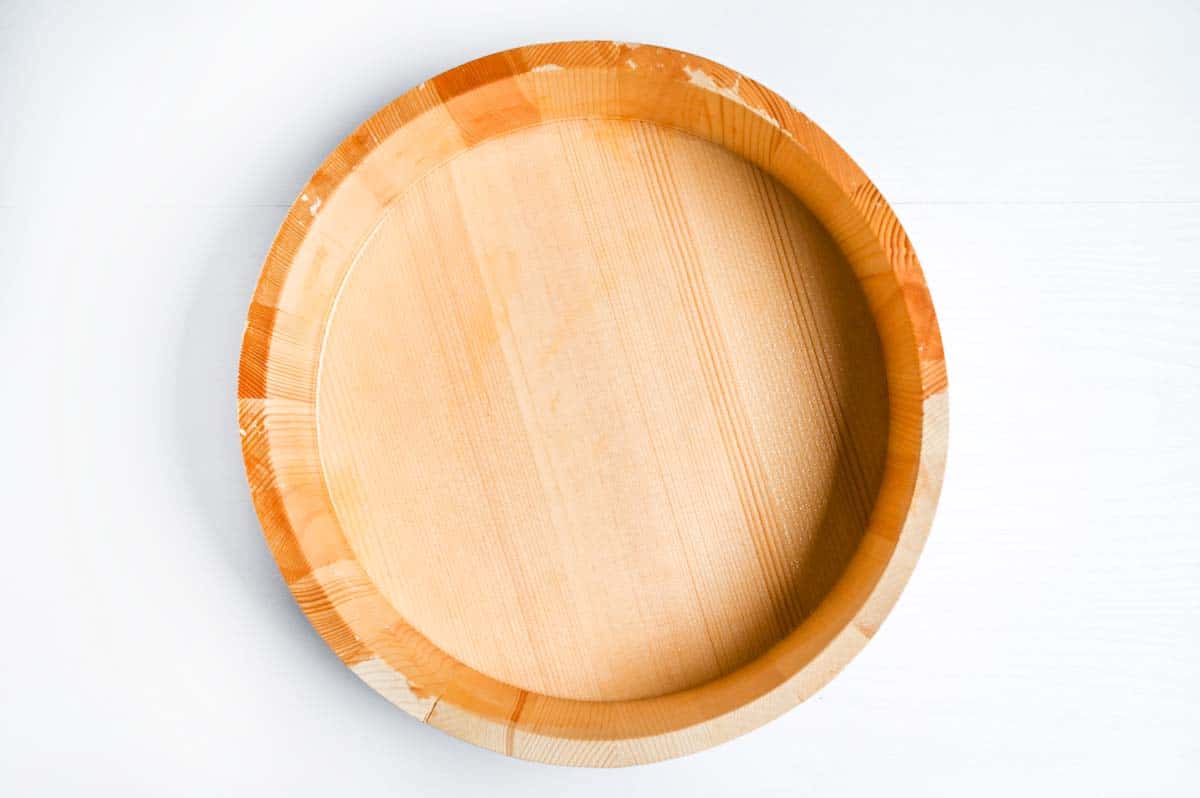
ii. Wet the bottom of a bamboo container with water
iii. Add this seasoning to the warm rice. With the edge of a rice paddle, use a slicing motion to fold it through while fanning the rice to cool it. Continue until all the grains are seasoned.
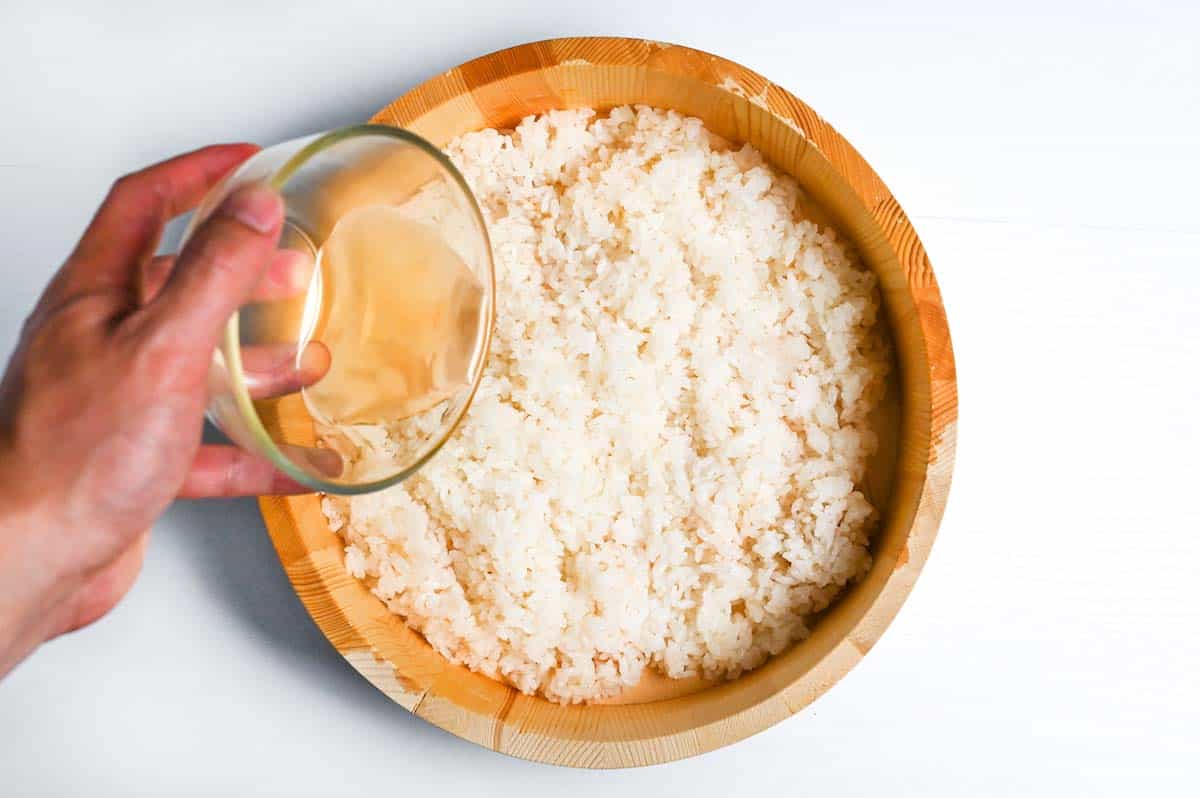
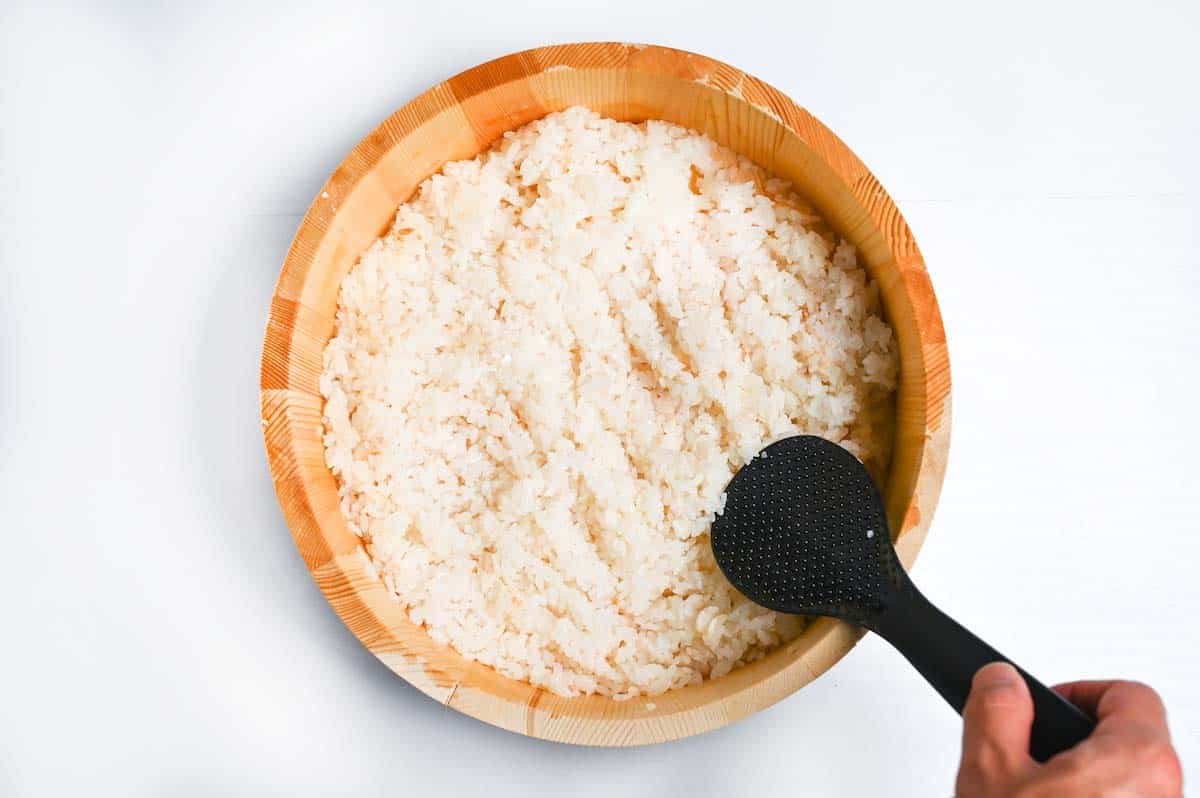
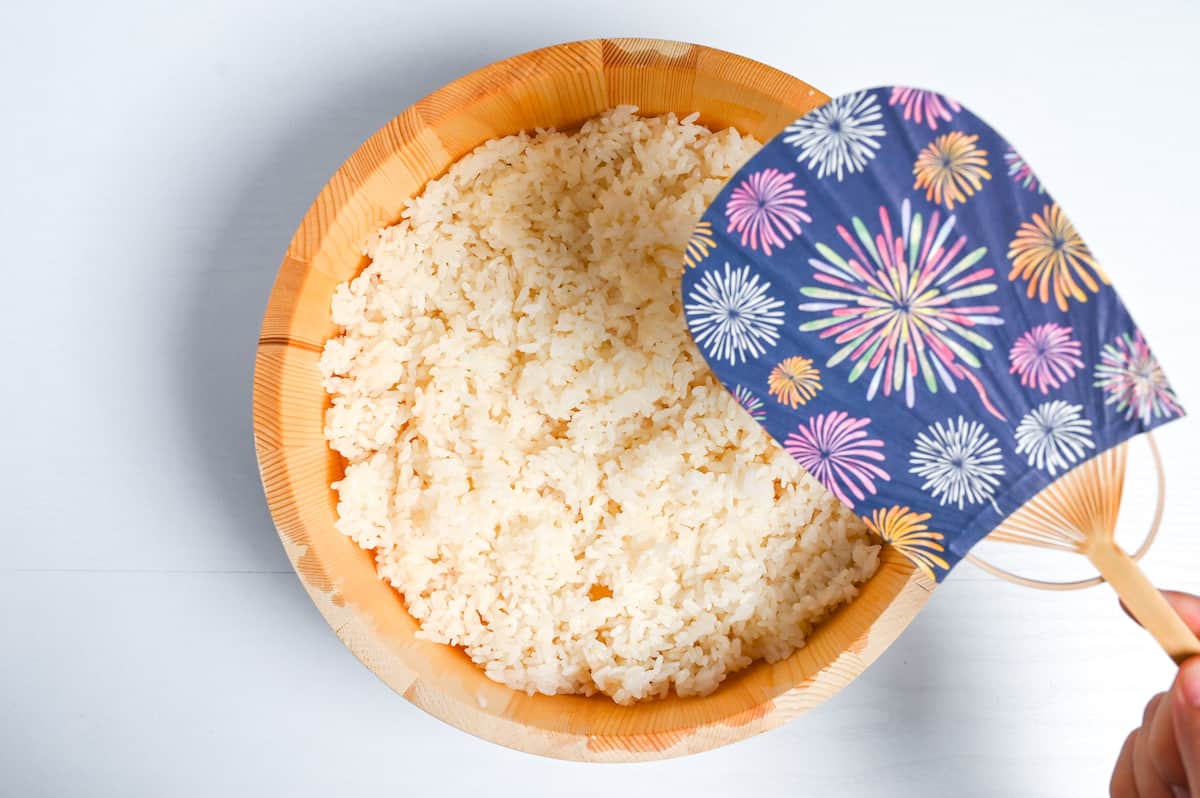
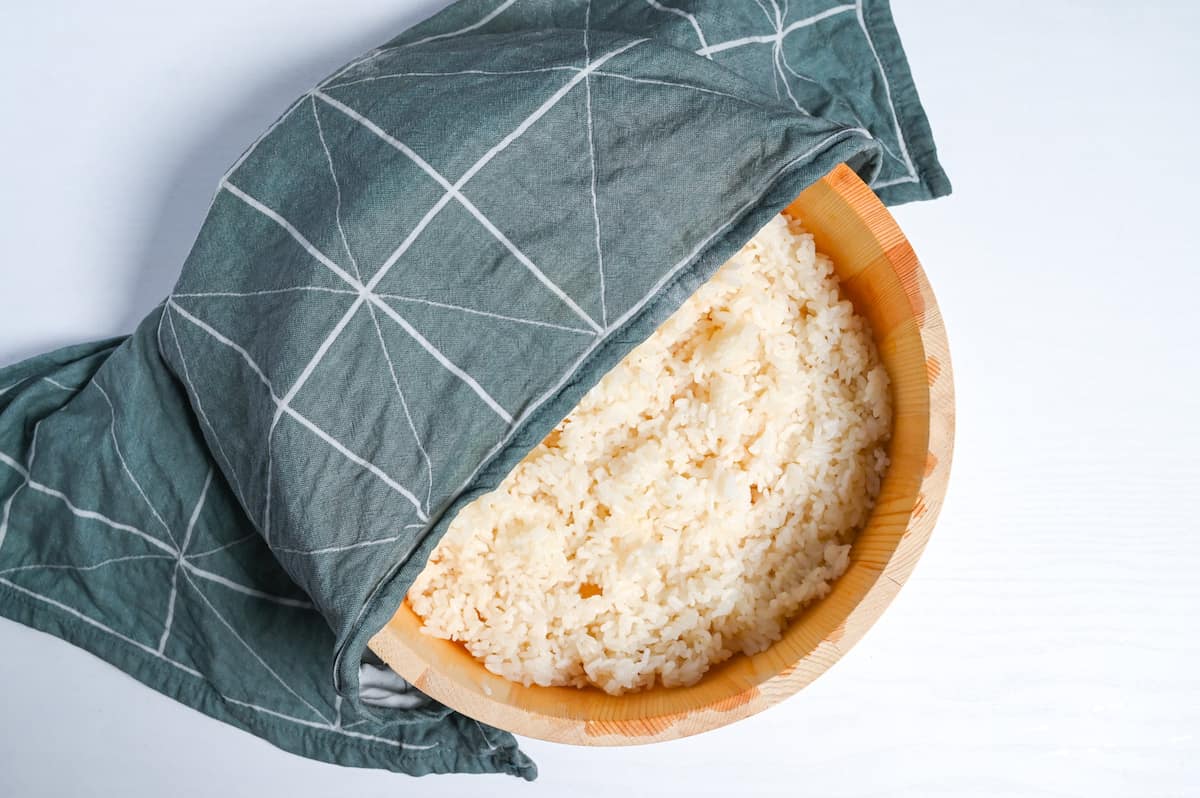
iii. Wring out a damp kitchen towel well and cover the rice to keep it from drying out.

i. Use a spoon to scrape the tuna flesh from the block in rough clumps.

ii. Coarsely chop the scraped tuna with a knife, leaving some texture. Stop well short of a smooth paste.

iii. Put the tuna in a bowl and stir in the mayonnaise, neutral oil and dashi granules until combined.

Dashi granules add umami to lean tuna, which tastes flat when simply chopped on its own.
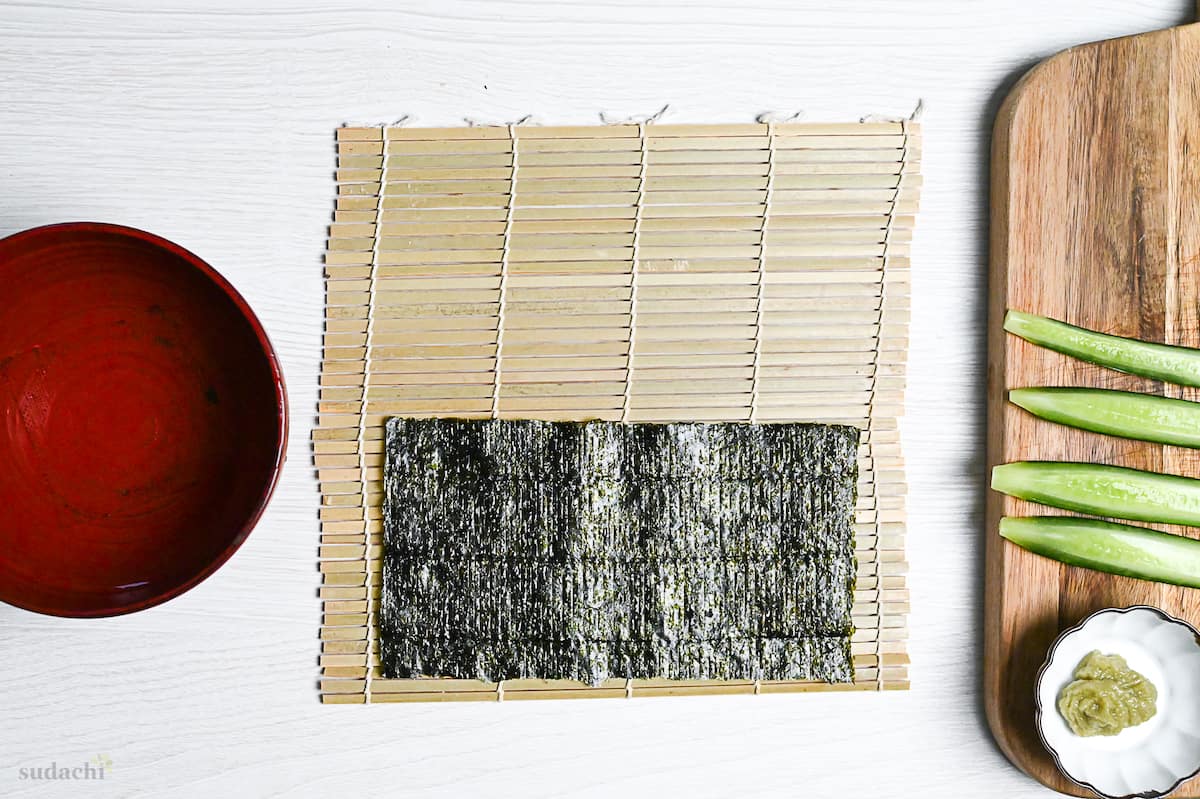
i. Position the bamboo mat with its slats running horizontally. Place a half sheet of nori on top, rough side facing up, with its near edge aligned with the edge of the mat closest to you.
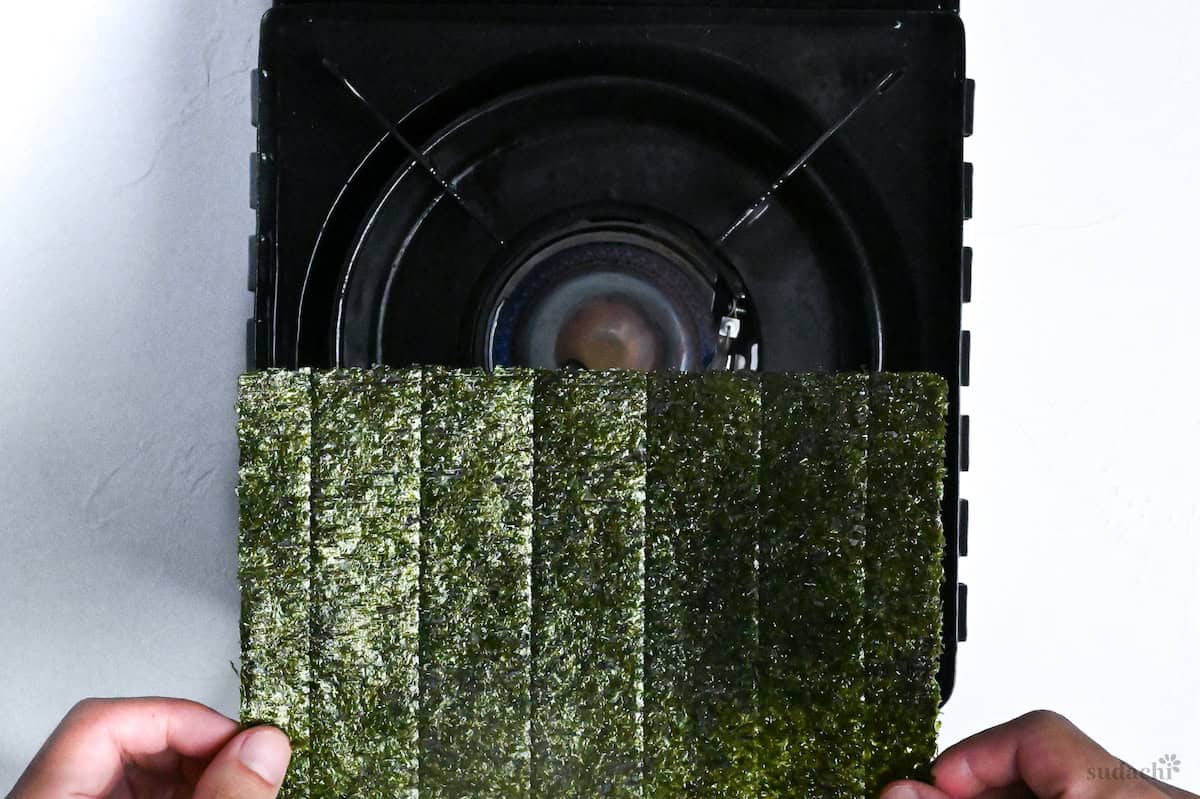
Optional: To improve the texture and aroma of the nori, fan it over an open flame using your gas burner on a low setting. Be careful not to burn the nori or your hands though!
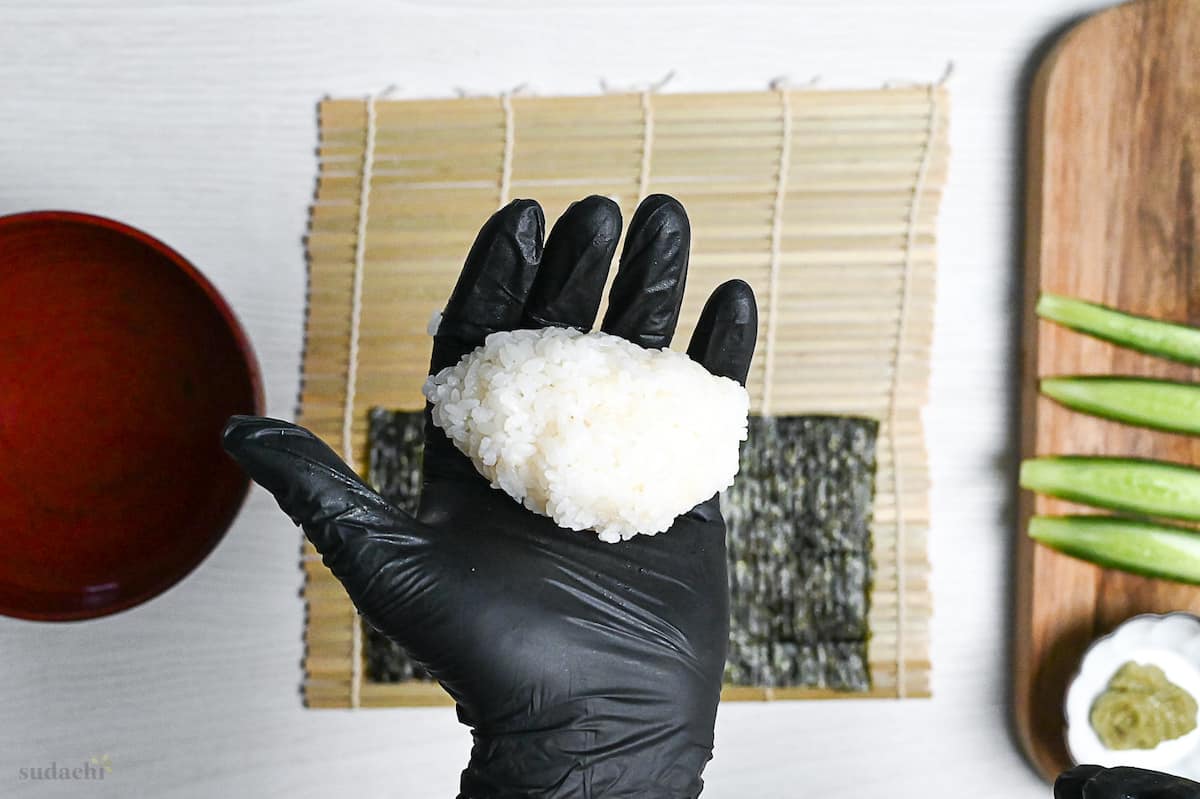
ii. Wet your hands and loosely shape about 70 g of sushi rice, a quarter of the batch, into a log on the nori. Spread it into an even layer, keeping a finger-wide strip at the top free of rice.
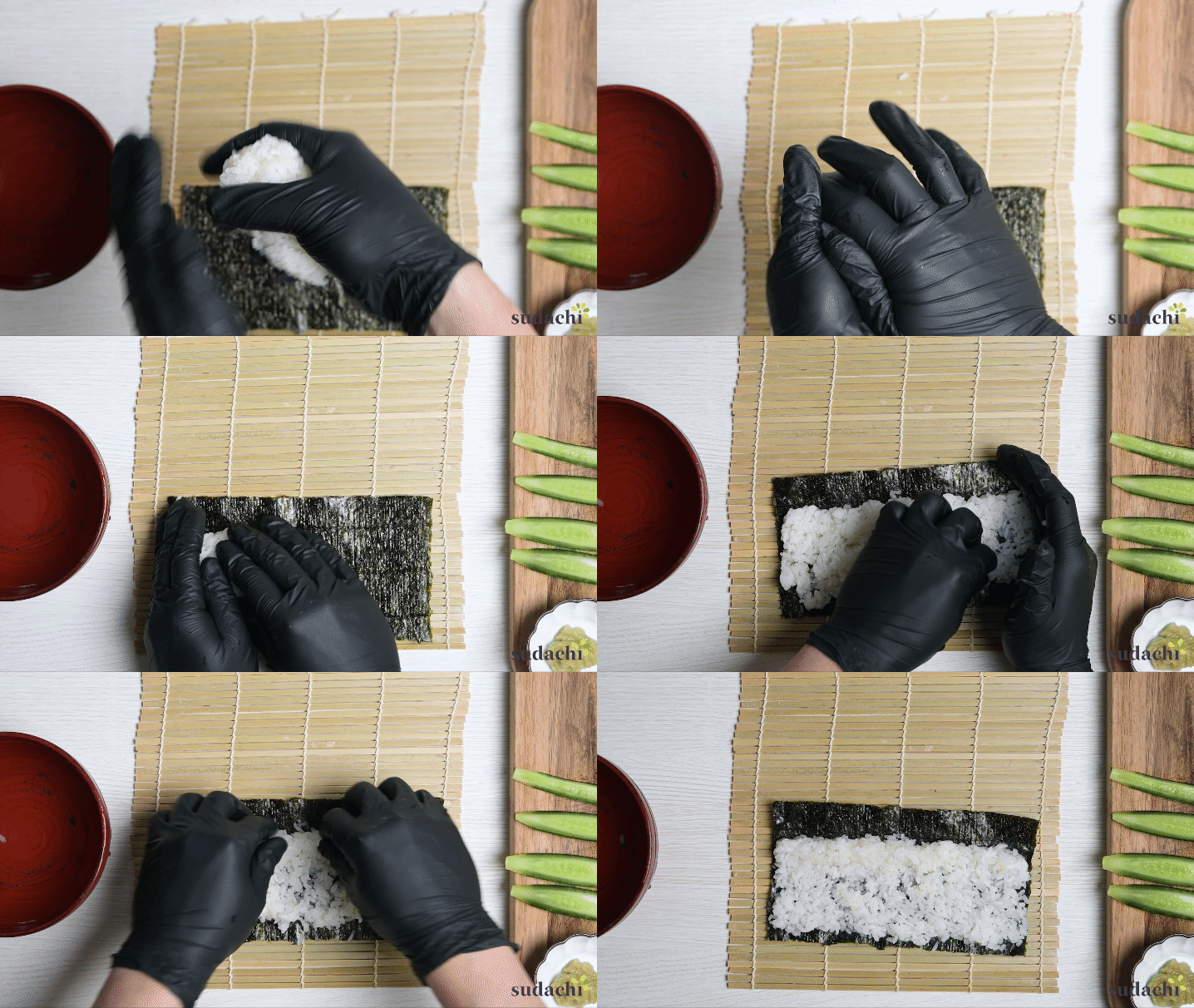
iii. Pinch the rice into a low ridge where it borders the bare strip to help the roll seal.
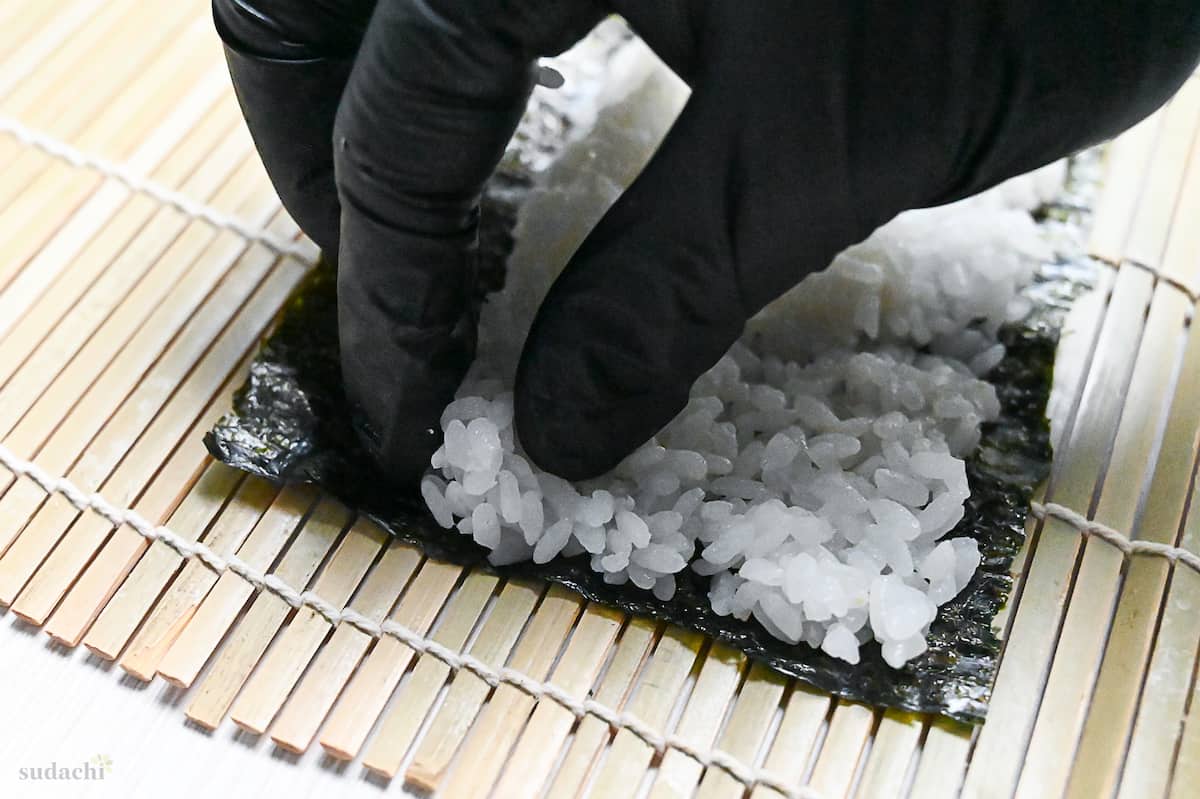
iv. For a roll with wasabi, spread a single line along the middle of the rice.

i. Arrange a quarter of the negitoro in a line along the center of the rice, with the green onion beside it. Keep the filling on the rice rather than the bare nori.

ii. Raise the edge of the mat nearest you and roll forward until the near and far edges of the rice meet. Keep the nori edges aligned as you roll.

iii. Press firmly to form the roll. Lift the end of the mat, then roll forward again to seal the seam with the bare strip of nori.

iv. Gently press the sides with your fingers to give the roll a square shape. Make the remaining rolls the same way.

i. Dampen a towel and wipe a sharp knife with it. Cut the roll in half with short sawing strokes. Avoid pressing the blade straight down, which crushes the roll.
ii. Divide each half into 3 equal pieces, wiping the blade after every cut.

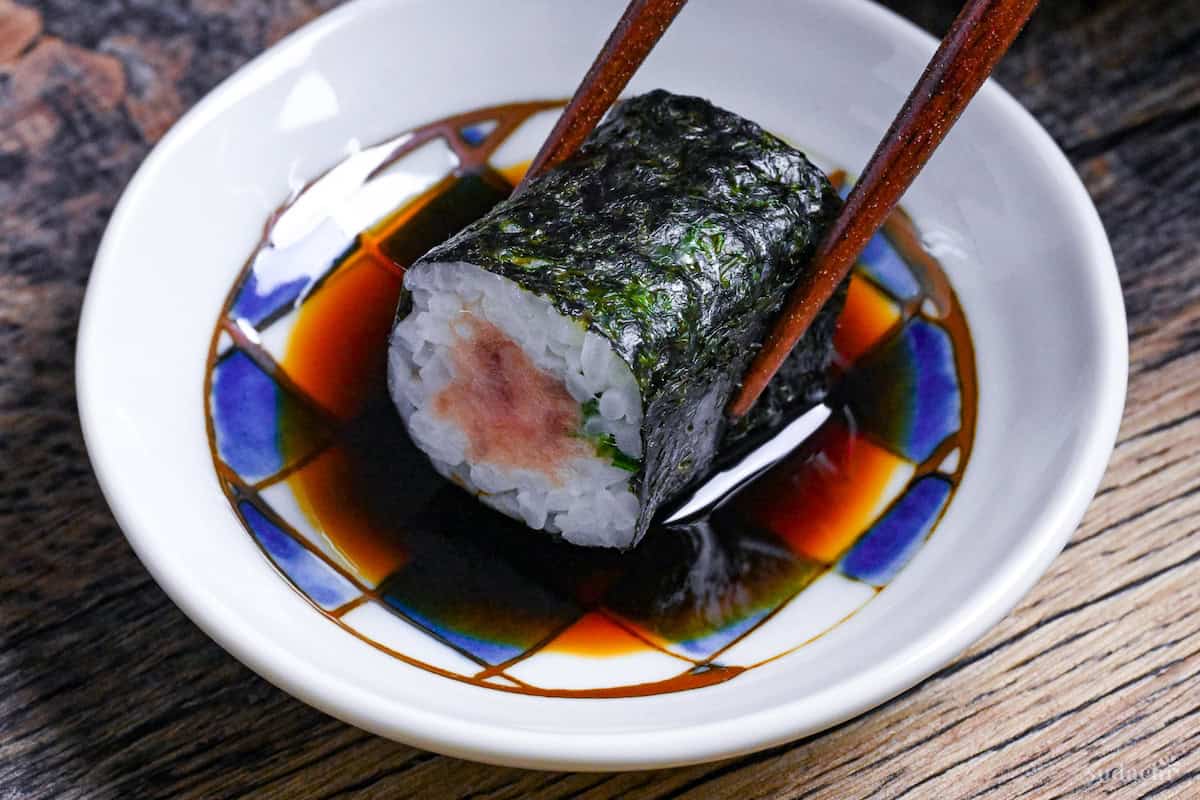
iii. Serve with a little soy sauce in a small dish. Dip each piece lightly.


Tips for the Best Negitoro Roll
- Leave visible pieces when you chop. Those little pieces give the tuna texture. Mayonnaise and oil provide the creamy, melting quality, so the fish doesn’t need to become a fine paste.
- Have the sushi rice ready before chopping the tuna. Air turns the freshly cut surfaces bright red at first, then they slowly darken as time passes. The fridge won’t stop it. Mix the filling, then roll it right away.
- Keep the layer of sushi rice modest. Too much rice or filling leaves too little nori to close the roll, causing it to split. Rice covering the bare strip at the top after spreading is your sign that you’ve added too much.
Slice a roll made this way, and the tuna inside is still bright red.
What to Serve With Negitoro Maki
- Classic Miso Soup
- Steamed Egg Custard (Chawanmushi)
- Octopus and Cucumber Sunomono (Vinegared Octopus Salad)
- Homemade Sushi Ginger (Gari)
Negitoro Sushi Troubleshooting
An excess of rice or filling means the nori won’t reach far enough to close. Unroll the mat and remove some rice from the far edge until you have a finger-wide strip of bare nori again. Realign the near edge of the nori with the mat and roll again.
Nori absorbs moisture from the air and can lose its crispness within a few hours in a humid kitchen. To restore a limp sheet’s crunch, briefly pass it over a low gas flame before rolling.
Downward pressure from the knife squashes the roll, and any rice stuck to the blade adds drag. Lay the mat over the flattened roll and gently press it back into a square shape. Before cutting the remaining pieces, wipe the blade with a damp towel, then use short sawing strokes.
More Japanese Fish Recipes
Once a cheap lean block has turned into negitoro that melts, take raw tuna and other fish further with my Japanese Fish Recipes.
Did You Try This Recipe?
I would love to hear your thoughts!
💬 Leave a review and ⭐️ rating in the comments below. 📷 I also love to see your photos – submit them here!

Negitoro Maki (Mashed Tuna Sushi Rolls)

Ingredients
- 120 g sashimi grade tuna block
- 2 tsp unseasoned rice vinegar (komezu)
- 1 tsp sugar
- ½ tsp salt
- 280 g cooked Japanese short-grain rice
- 1 tbsp Japanese mayonnaise
- ½ tbsp cooking oil neutral flavor
- ¼ tsp dashi granules
- wasabi
- finely chopped green onions
- 2 sheets roasted seaweed for sushi (nori)
- Japanese soy sauce (koikuchi shoyu) for dipping
The ingredient brands and tools I trust are in my Japanese pantry guide and my cooking tools guide.
Can’t find certain Japanese ingredients? See my substitution guide here.
Instructions
- Optional "shiojime" to improve flavor: Rinse 120 g sashimi grade tuna block with cold water and pat it dry with kitchen paper. Sprinkle with salt all over, then place it in a container propped up on one side to allow excess moisture to drip to the bottom. Rest in the refrigerator for 10-15 minutes, in the meantime you can prepare the rice.

- Mix 2 tsp unseasoned rice vinegar (komezu), 1 tsp sugar and ½ tsp salt in a bowl until dissolved.

- Pour the mixture over warm 280 g cooked Japanese short-grain rice, and mix using a cut and fold motion with the edge of a rice paddle while fanning to cool. Once evenly distributed, cover the rice with a clean damp tea towel to prevent it drying out and set aside.
- Wash the tuna and pat it dry with kitchen paper.
- Use a spoon to scrape the tuna flesh into rough pieces.
- Roughly chop it with a knife to make a chunky mash.
- Transfer the mashed tuna to a bowl and add 1 tbsp Japanese mayonnaise, ½ tbsp cooking oil and ¼ tsp dashi granules. Mix until everything is combined.
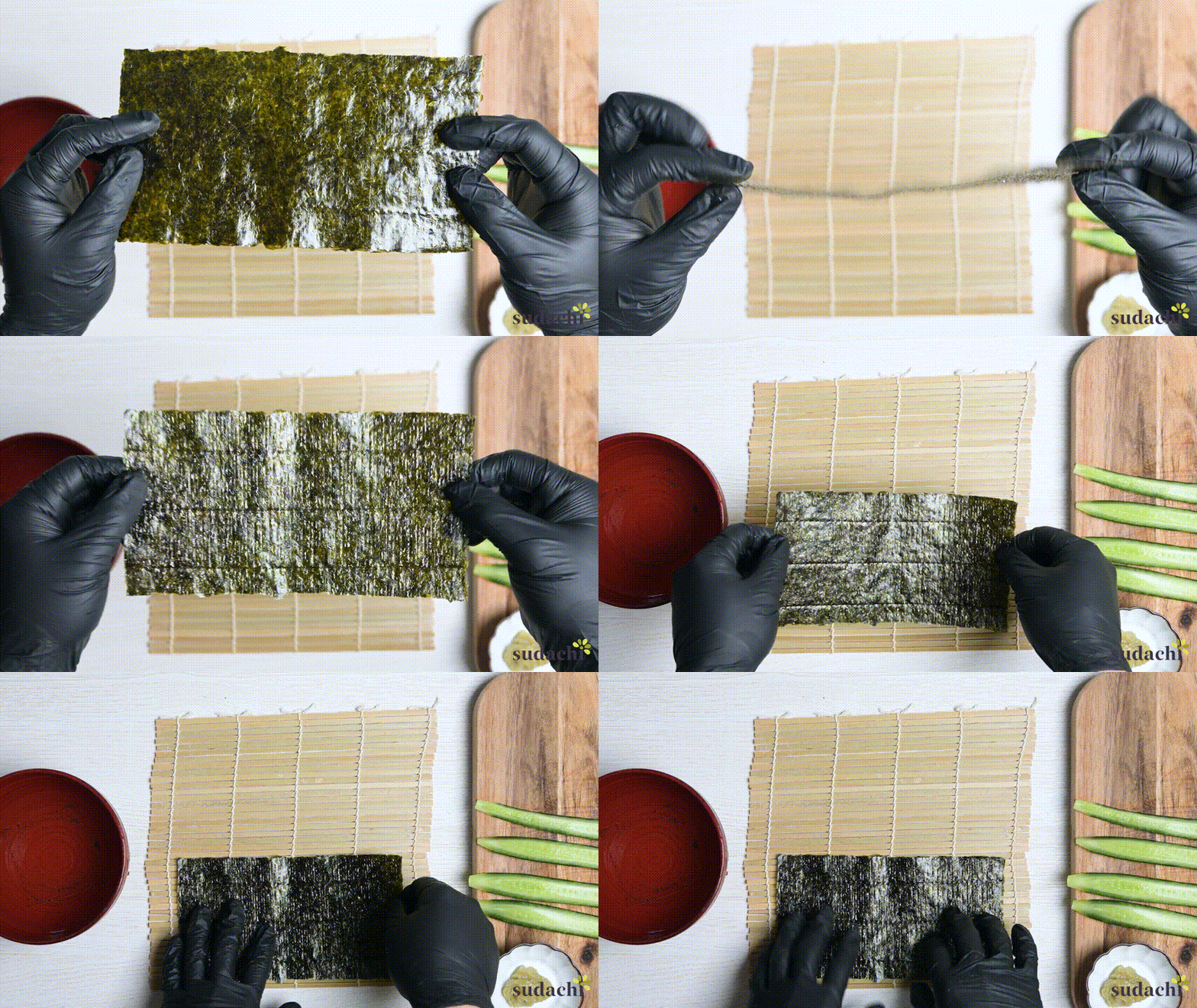
- Optional: Turn your gas burner on low and carefully fan 2 sheets roasted seaweed for sushi (nori) over the fire to improve the texture and aroma of the nori.
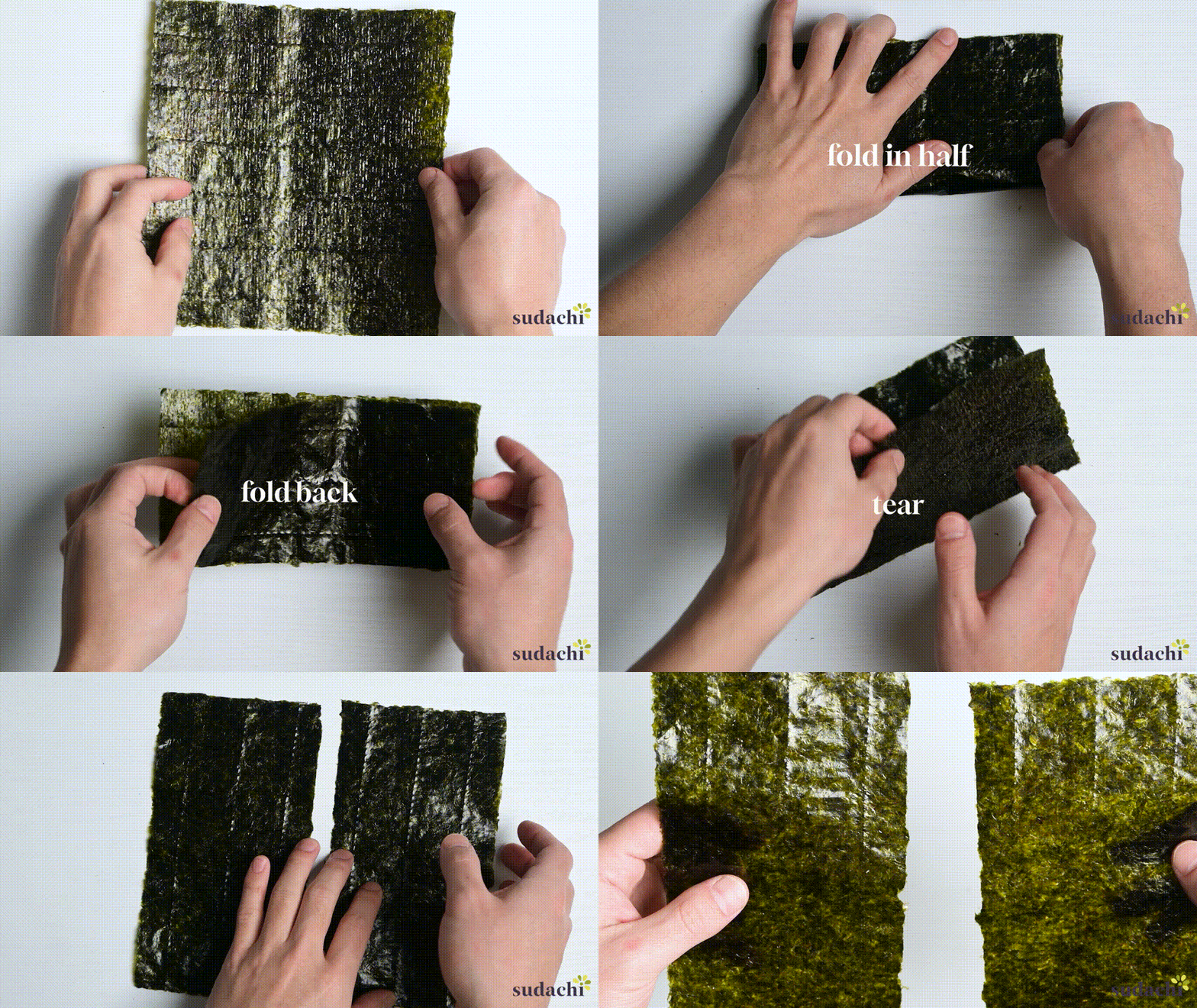
- Fold the nori in half and pinch along the crease before tearing them down the fold. (Use scissors for a neater cut.)

- Lay the bamboo rolling mat on a flat surface with the bamboo sticks laying horizontally. Place a piece of nori rough side facing up at the bottom of the mat.
- Wet your hands and shape an 70g (approx 2.5 oz) handful of rice into a rough cylinder.
- Place the rice on the nori and spread it out while leaving a finger-width border along the top. Pinch along the top edge of the rice to make a ridge, then spread wasabi through the middle.
- Spread quarter of the tuna mixture through the middle of the rice, then sprinkle finely chopped green onions next to it.
- Lift the bottom of the mat fold over until the rice meets.
- Press firmly to shape, then lift the edge of the mat and roll once more so that the edge of the nori seals the roll.
- Wipe a sharp knife with a damp cloth and cut the sushi roll in half. Use a short, sharp sawing motion to cut the roll without applying too much pressure (pressing down will squash it).
- Cut each half into thirds, wiping the knife between each cut.
- Enjoy with a small bowl of Japanese soy sauce (koikuchi shoyu) for dipping.


Leave a rating and a comment