



Featured Comment
There are many abura soba and mazesoba recipes on YouTube and I wish I’d seen yours much earlier because it’s the best and most kitchen friendly. Thanks for making the recipe available for us ramen freaks.
★★★★★
– Mike
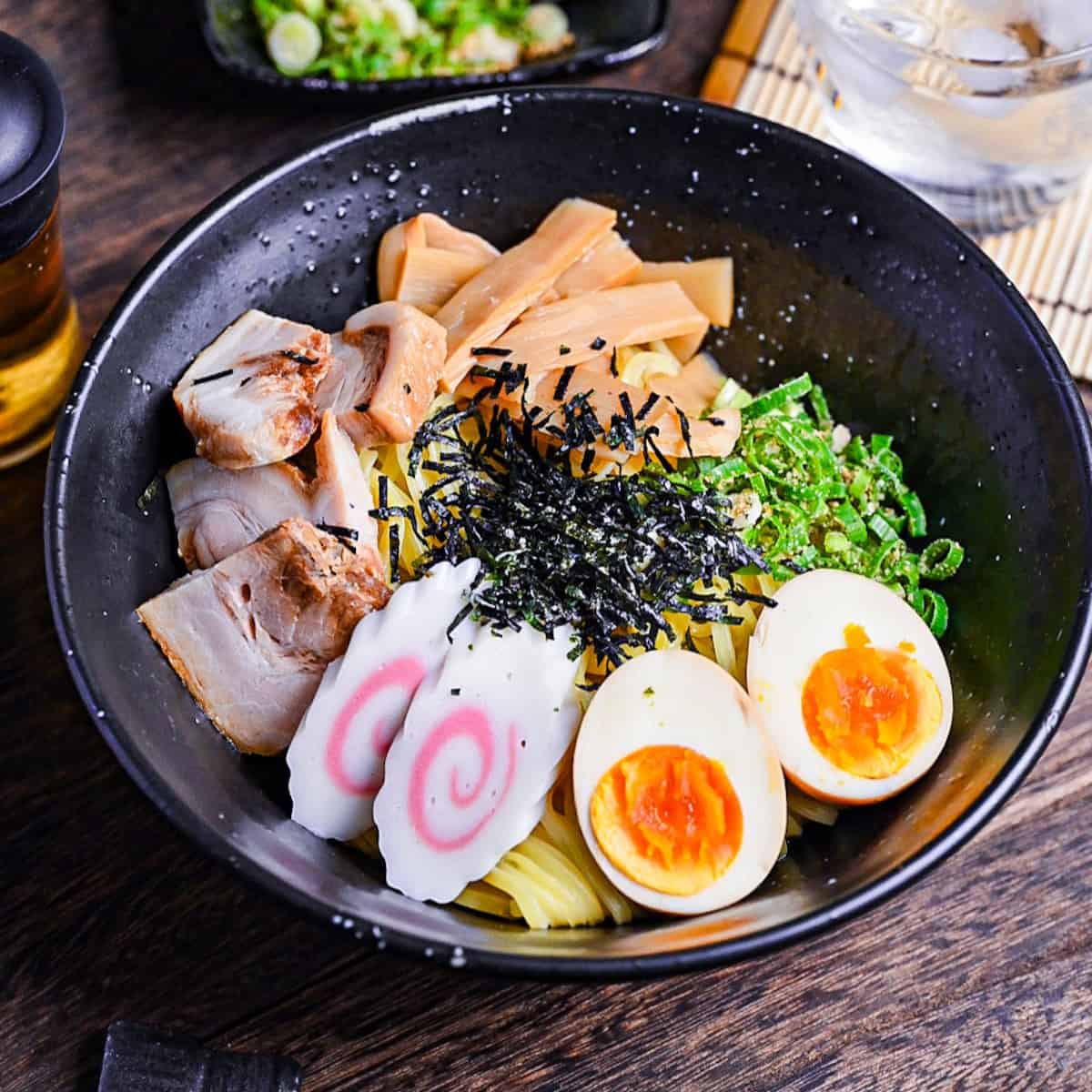
The abura soba you slurped at a shop in Tokyo, a junky, easy-to-eat spin-off of ramen, is closer to your own kitchen than you think.
It comes down to a single sauce you stir together in the bowl, and it might just be the fastest one you will ever make. Come make a bowl with me.
Abura Soba
Recipe Snapshot
- What is it? A soupless bowl of ramen. Hot noodles get tossed with a soy-sauce-based seasoning and aromatic oil pooled at the bottom, then finished at the table with vinegar and chili oil. There is no broth.
- Flavor profile: Rich and junky, but lighter than it looks. The soy sauce and oyster sauce hit salty and deep and the toasted sesame oil carries the aroma, while whipping it all into the hot noodles turns the sauce glossy so it clings without feeling greasy. Vinegar and chili oil keep resetting the bowl brighter as you eat.
- Why this recipe works: The whole bowl rests on a single sauce instead of a shop’s aged sauce and custom oil blend, and that sauce comes together right in the serving bowl in the microwave. That same heat warms the bowl, so the fat stays melted and the sauce clings to the hot noodles cleanly instead of splitting.
- Must-haves: Ramen noodles, Japanese soy sauce for the salt backbone, and oyster sauce for the deep savory roundness.
- Skill level: Easy, and about 15 minutes start to finish. There is no broth to simmer and no special equipment, just boiling the noodles, melting the sauce in the microwave, and tossing everything together hard.
Summarize & Save this content on:
What Is Abura Soba?
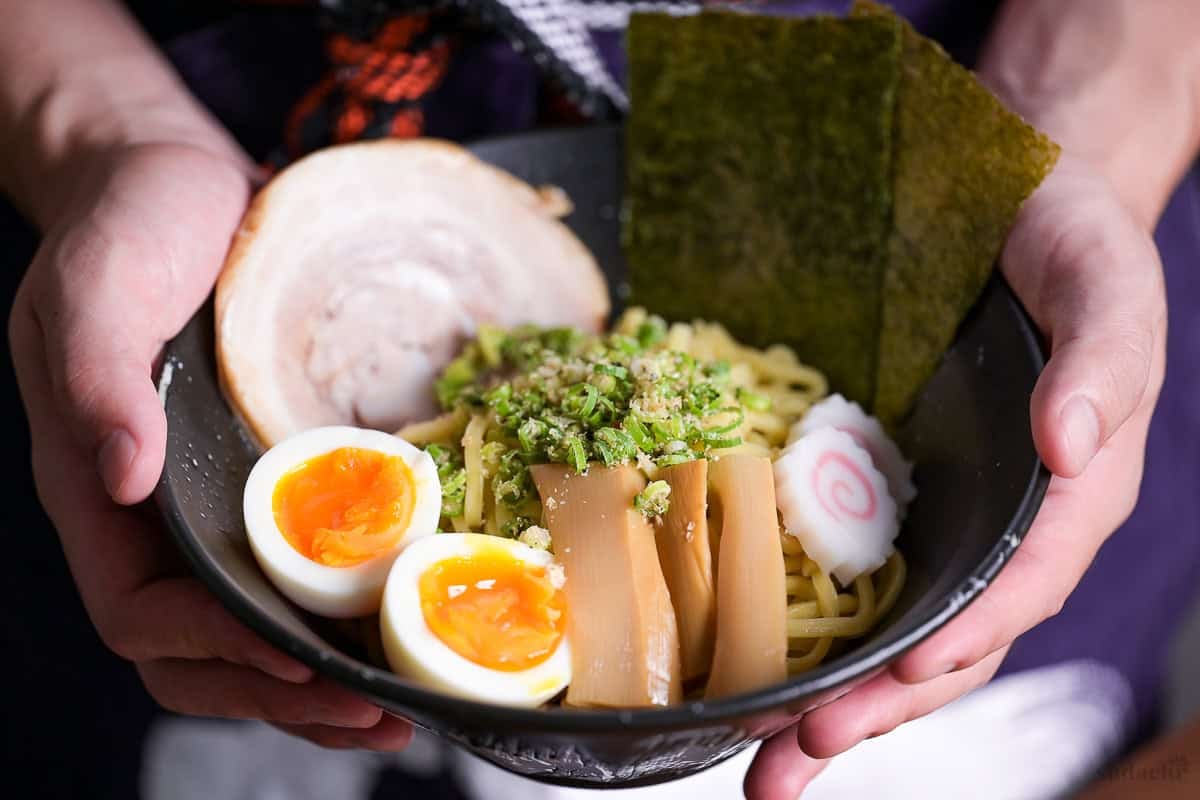
Abura soba (油そば) is a bowl of hot ramen noodles with no broth, and its name sets up 2 small traps. The first is the oil (abura). It reads like a greasy bowl and it is not one, because a savory sauce called tare (sauce) sits at the bottom with a little oil, and you toss it hard before eating, whipping the oil together with the hot noodles into a light, glossy coating rather than a slick one.
The second is the soba. There is no buckwheat in it. In Japan, soba was once a loose word for almost any long noodle, as in chuka soba (中華そば), literally Chinese soba, the alkaline wheat noodles that became ramen. So the name promises a greasy, buckwheat bowl, and delivers neither. It’s just a name of the dish.
Japan sorts ramen into 3 broad shapes, the soup bowl, the dipping bowl, and this one with no soup at all. Abura soba is generally traced to the Tama area of western Tokyo, with a history reaching back into thethe late 1950s and early 1960s. Which shop got there first is still argued over. Its close cousin is mazesoba, and no firm line divides them, so the names blur from shop to shop. Both are built to be mixed hard and eaten fast, and this one you finish with a splash of vinegar and chili oil.
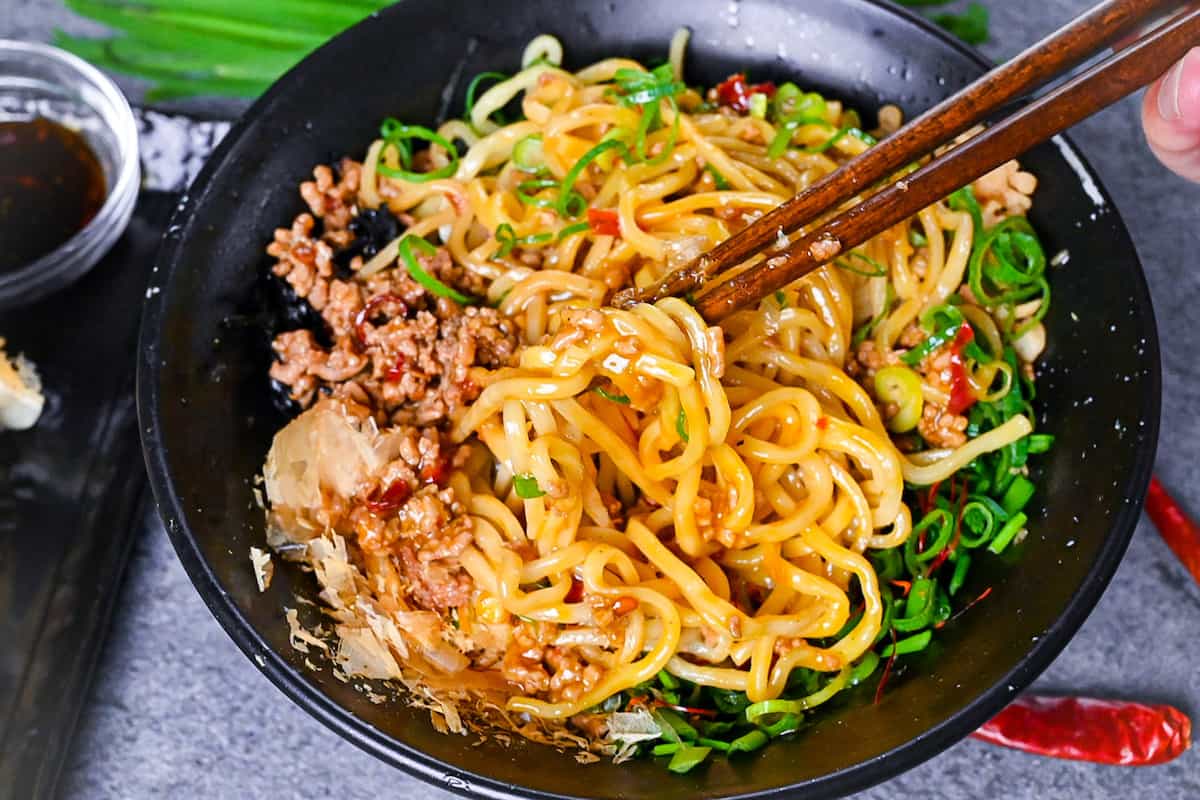
For this recipe, I stripped a shop bowl down to what a home kitchen can actually pull off. I get the depth from oyster sauce and a spoonful of lard for the richness. The move that ties it together is almost too simple. Everything for the sauce goes into the serving bowl and melts together in the microwave, and that minute pulls double duty. It warms the bowl too, so the fat stays loose and ready the moment the hot noodles land. The whole thing started as a what-if. What if I dissolve it all at once, in the very bowl I am about to eat from? It worked.
Abura Soba Ingredients
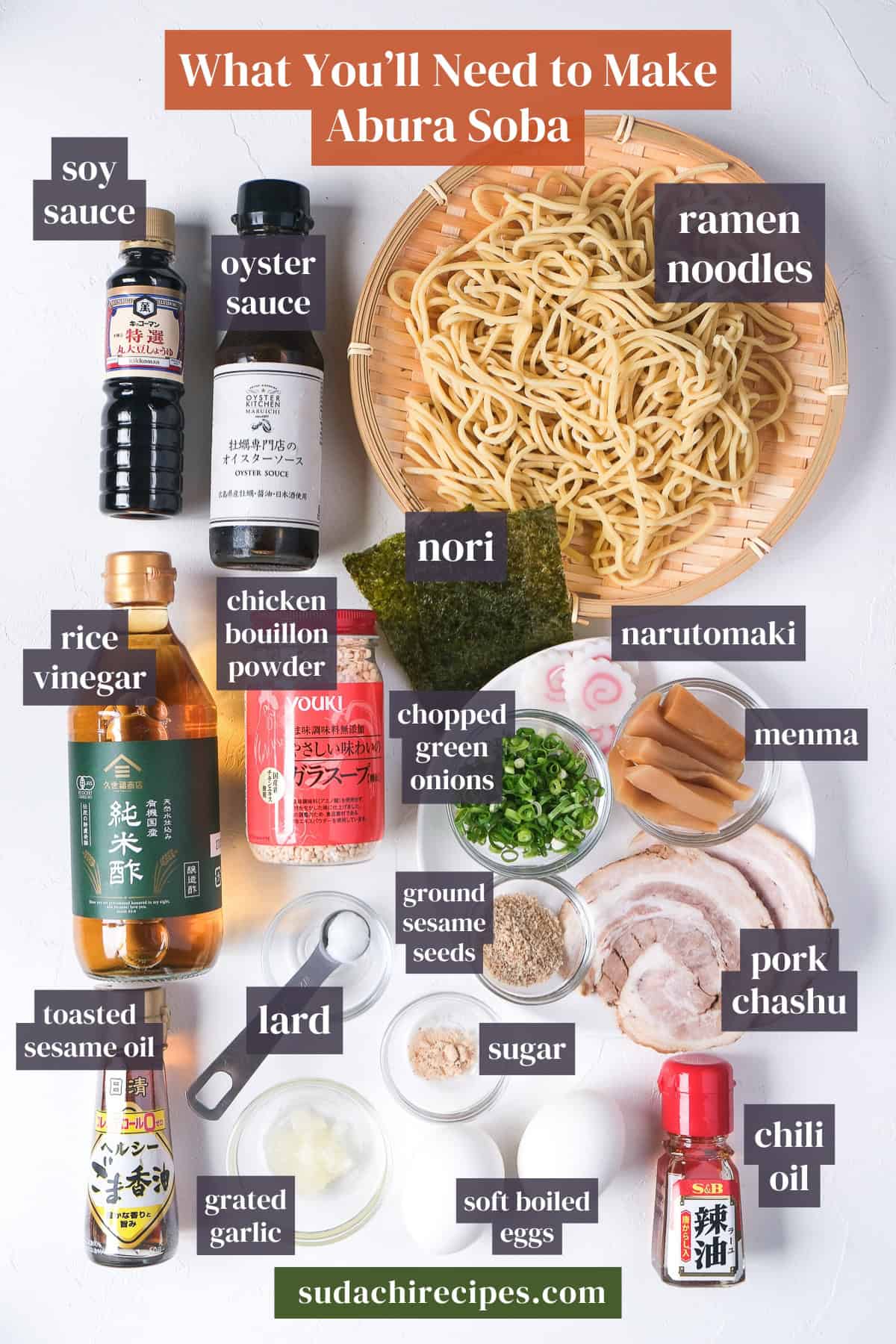
- Ramen noodles: Its surface starch is what pulls the oil and seasoning into that glossy coat. Fresh alkaline wheat noodles are the target, and homemade ones are in a league of their own, but dried ramen still makes a good bowl and even a spaghetti hack with baking soda holds up. A medium-thick noodle grabs the sauce a shade better than a thin one, but this sauce is loud enough that I would not lose sleep over it.
- Japanese soy sauce: The backbone. This is the standard Japanese soy sauce, the everyday all-rounder, and it carries the salt and the base note the whole bowl is built on. With no broth in the picture, it is doing more work here than it would in a soup.
- Oyster sauce: The depth. In a shop, that deep savory roundness comes from an aged sauce and hours of stockwork. Here it comes from a single bottle, dark umami and a touch of sweetness that pulls the whole sauce together. Lee Kum Kee is the one most kitchens keep on hand.
Substitutions, Variations, and How to Customize
Because I stripped the sauce down to just the few things that carry it, the sauce is the part I would ask you to hold steady. Everything on top of the noodles, though, is wide open.
Substitutions:
- Pork chashu → pork belly or leftover roast: The protein is the least fussy part. Slow chashu is the classic, oven-baked pork belly is the shortcut, and honestly a few slices of leftover roast pork, chicken, or deli meat do the job.
- Fresh ramen noodles → dried or spaghetti hack: Fresh alkaline noodles are best, dried ramen is a solid everyday swap, and if both are off the table, boiling spaghetti with a spoon of baking soda mimics that springy, alkaline chew better than you would expect.
- Menma → seasoned bamboo shoots, or skip it: Menma adds a savory, chewy note, but plain seasoned bamboo shoots cover it, and skipping it entirely is also okay.
- The tare → leave it as written: This is the spot I would not swap. Each piece is mimicking a job a shop gets from long-simmered stock and an aged sauce, so removing any of them leaves a gap you can taste. The oyster sauce, lard, sesame oil, soy sauce, vinegar, garlic, and sugar are a small team with no bench. That is the trade for how fast and easy the sauce is.
Have trouble finding Japanese ingredients? Check out my ultimate guide to Japanese ingredient substitutes!
Variations:
- Add a raw egg yolk: Slip a raw egg yolk in with the hot noodles and mix, and it turns the sauce creamier and rounder as it coats everything, the way a carbonara goes silky. Outside Japan, raw eggs are a different safety question. The FDA advises that for recipes served with raw or undercooked eggs, you use shell eggs treated to destroy Salmonella by pasteurization, or pasteurized egg products. An onsen egg, a soft boiled egg, or a poached egg still leaves the yolk runny, so a pasteurized egg is the safer route if you want that yolk raw.
- Push the garlic or the heat: Double the garlic for a stamina-style bowl, or lean hard on the chili oil if you like it to bite back.
- Finish the bowl with rice: When the noodles are gone, the sauce left behind is not trash. Stir in a small scoop of hot rice and eat that too. The move has a name in Japan (oimeshi) and a following to match.
How to Customize:
- Season it at the table: Abura soba is built to change as you eat. The first few bites go in just as you tossed them, then you start adjusting. A splash of vinegar to brighten, a line of chili oil for heat, a little more sesame oil for aroma. Every few bites can taste a bit different, and that back-and-forth is half the fun.
- Set the richness: For a lighter bowl, go easy on the lard and heavier on the vinegar. For a richer one, add the lard back and finish with an extra drizzle of sesame oil.
- Dial the noodle thickness: A medium-thick noodle is the classic pick for the chew and the slurp, but since the sauce is bold, thinner noodles still eat well. Use what your store carries.
How to Make My Abura Soba
If you prefer to watch the process in action, check out my video of this abura soba recipe!
Before you start (Mise en place):
- Serving bowls: they have to be heatproof and microwave-safe, because the sauce gets warmed right in the bowl you eat from.
- Toppings: slice the chashu and the narutomaki and get every topping within reach. Once the noodles hit the water, this bowl comes together fast.
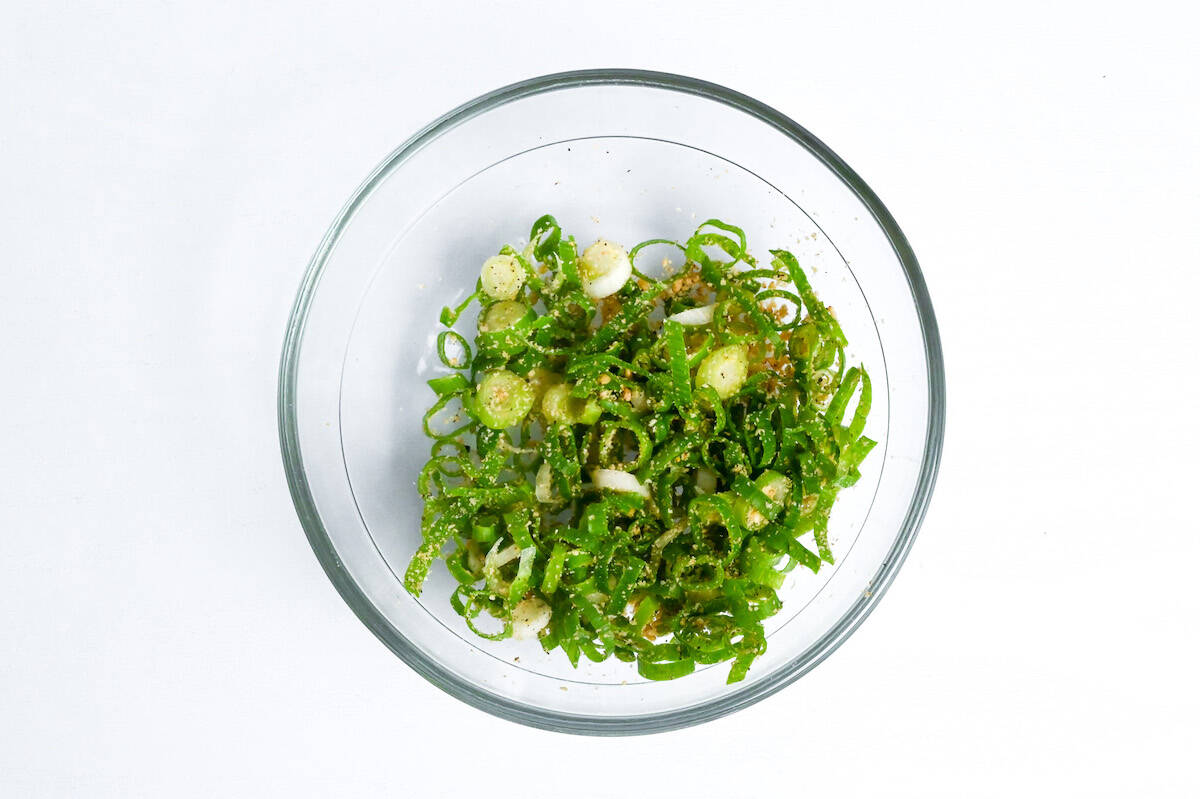
- Green onion: chop it fine and stir it together with the ground sesame and black pepper now, so it is ready to scatter.
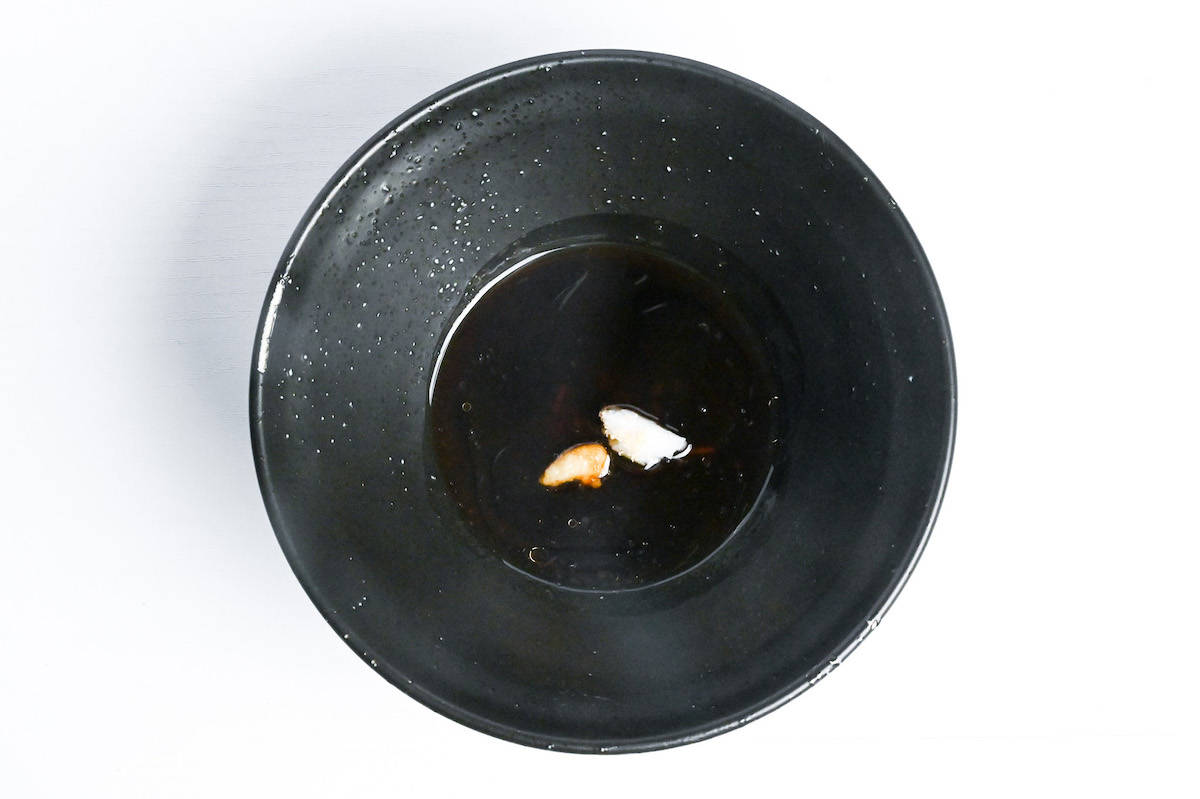
i. In each microwave-safe serving bowl, combine the water, oyster sauce, soy sauce, rice vinegar, toasted sesame oil, Asian-style chicken bouillon powder, lard, grated garlic, and light brown sugar. Mix it well so the lard and the powder start to break down.
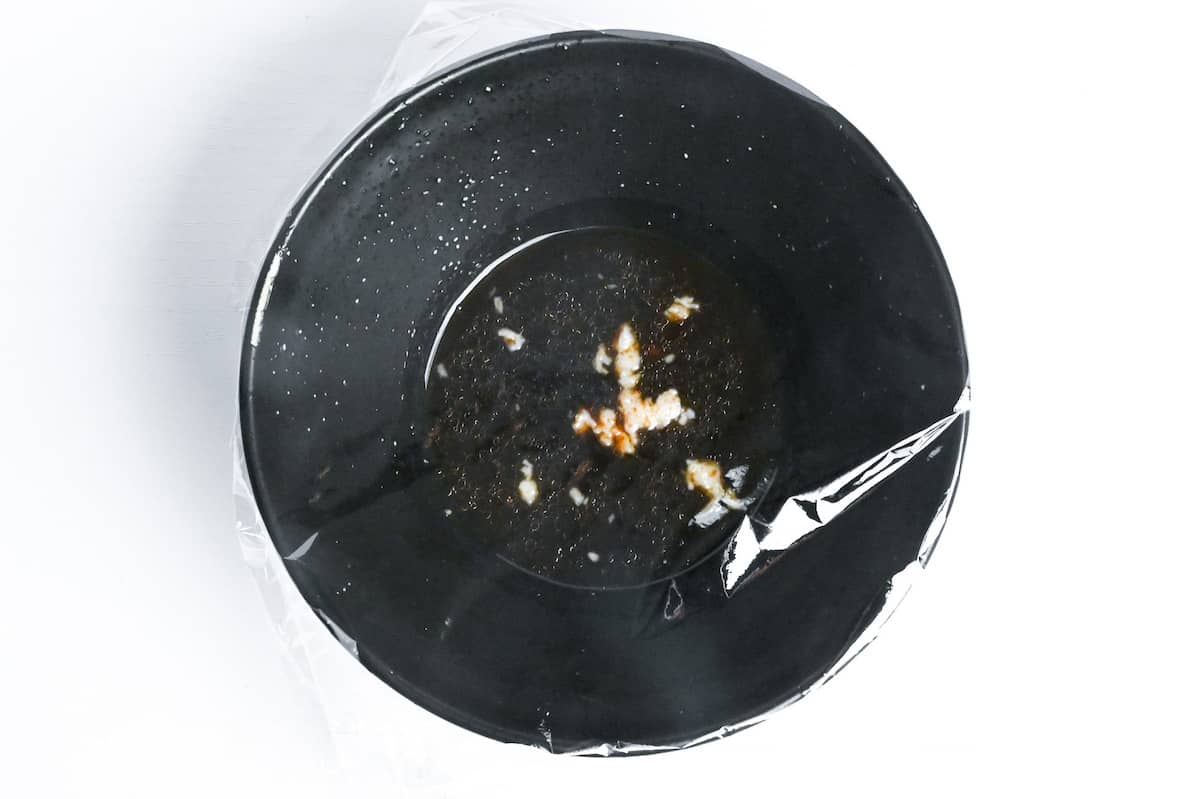
ii. Cover each bowl with a large plate or plastic wrap and set it aside.
Making a bigger batch? Mix all the sauce in a jug instead of measuring into each bowl, then divide it out evenly.
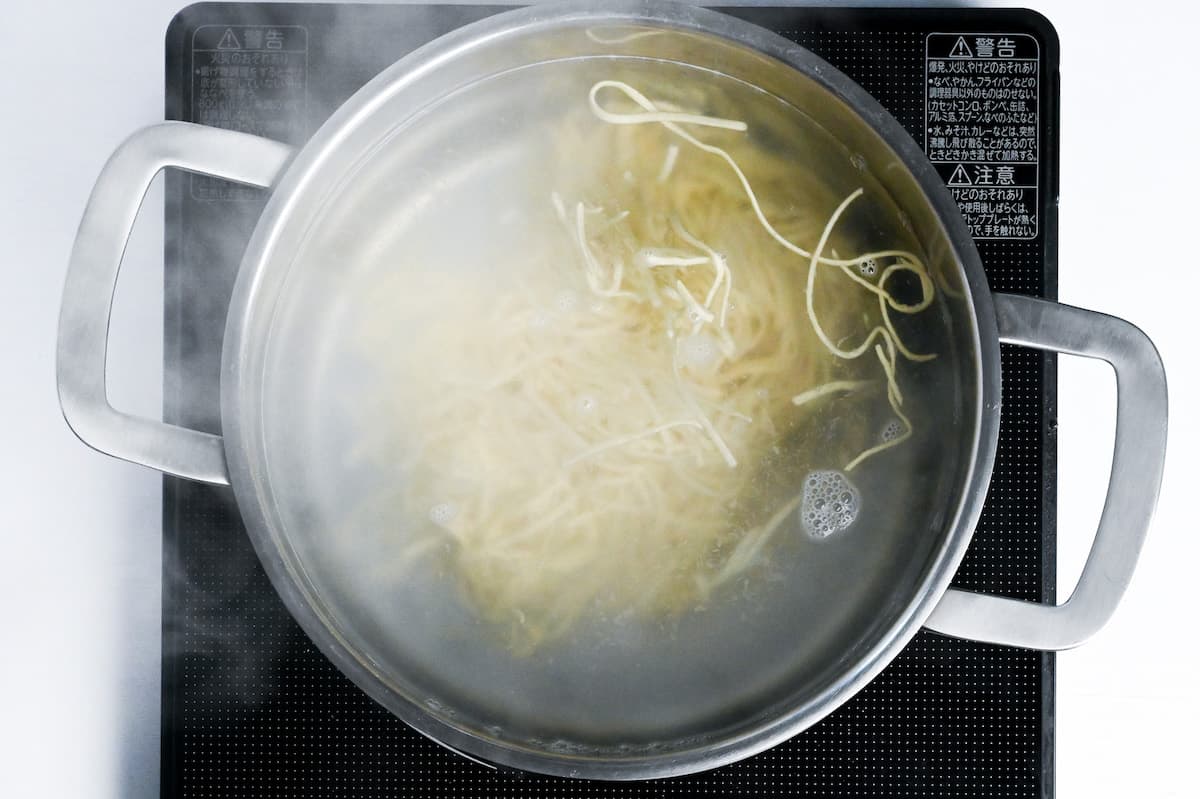
i. Bring a large pot of water to a boil and cook the ramen noodles to the package time. Give them plenty of room to move so they cook evenly.
i. When the noodles have about 1 minute of cooking left, put the covered bowls in the microwave and heat them for 1 minute at 600W.
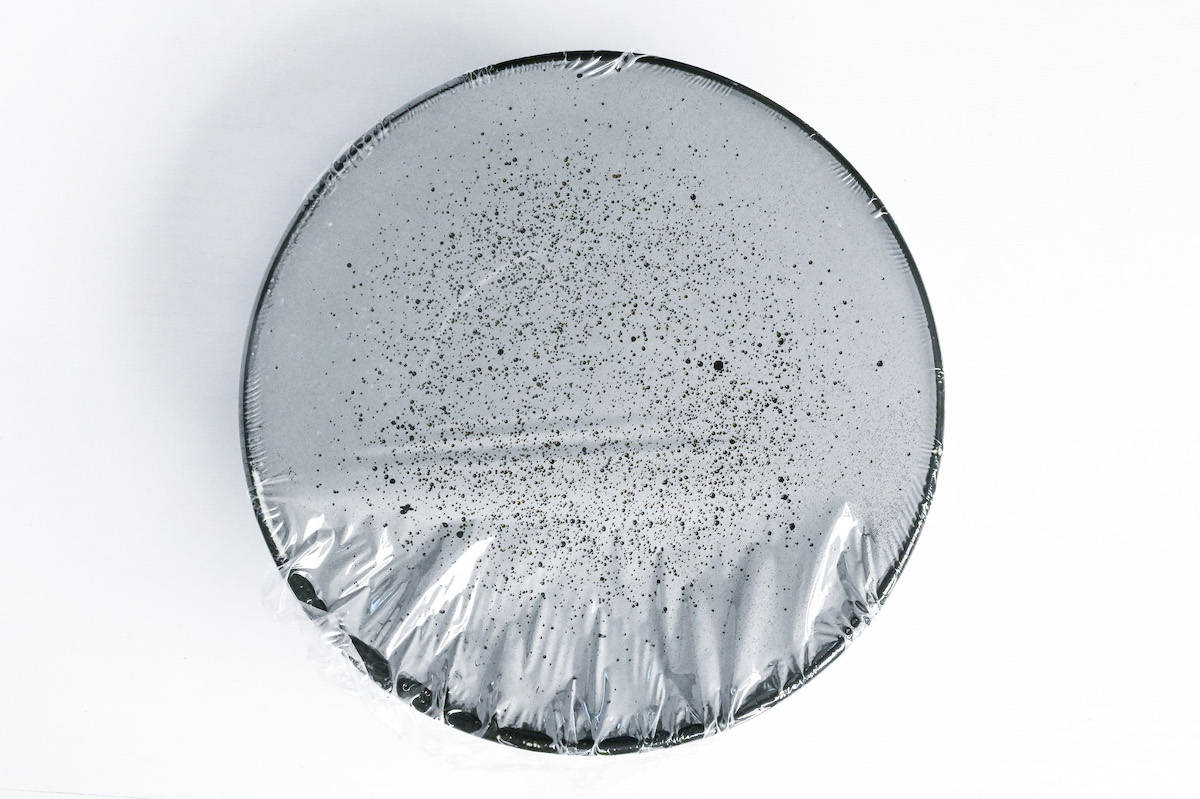
Warming the sauce is not only about temperature. The lard has to be fully melted and the powders fully dissolved before the noodles land, or the coating breaks instead of coming together. That minute melts and dissolves everything, and it warms the bowl at the same time. A shop bowl arrives hot without anyone thinking about it, and at home a cold bowl is exactly where the fat seizes and the sauce splits, so heating the sauce in the serving bowl takes care of the step nobody writes down.
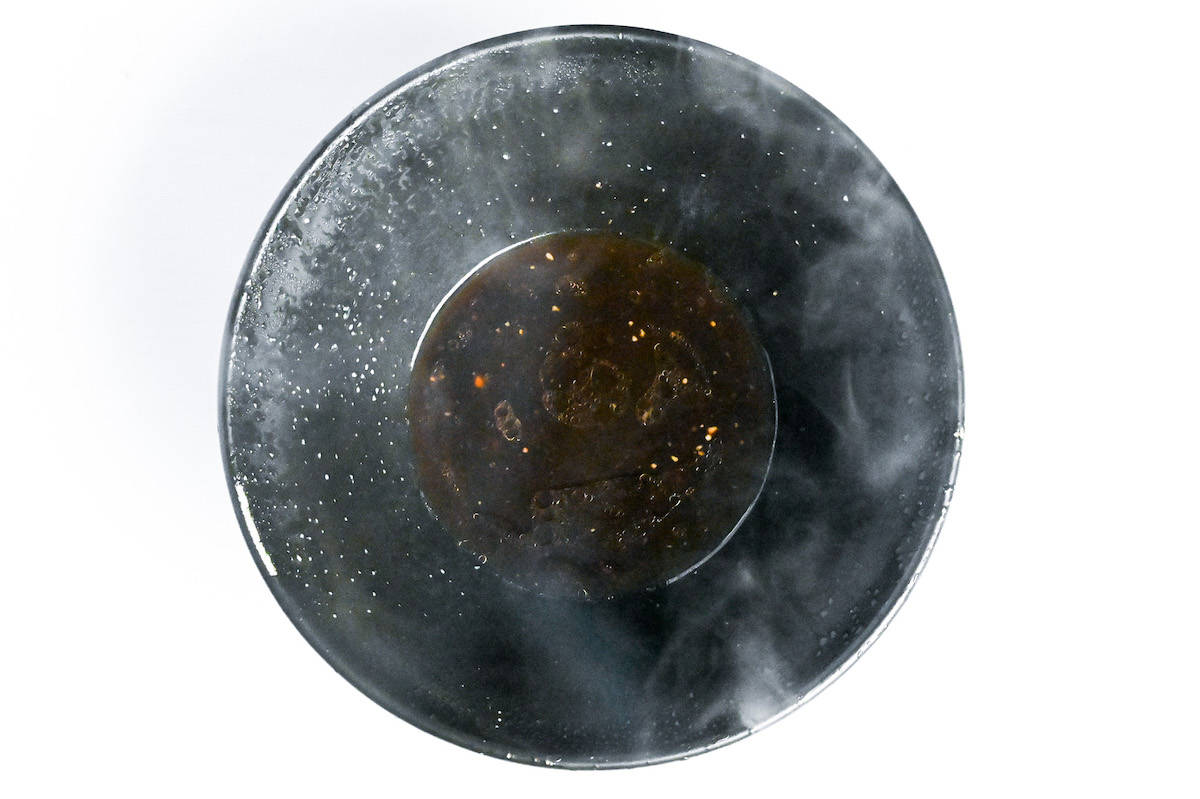
i. Lift the plastic wrap off the warmed bowls.
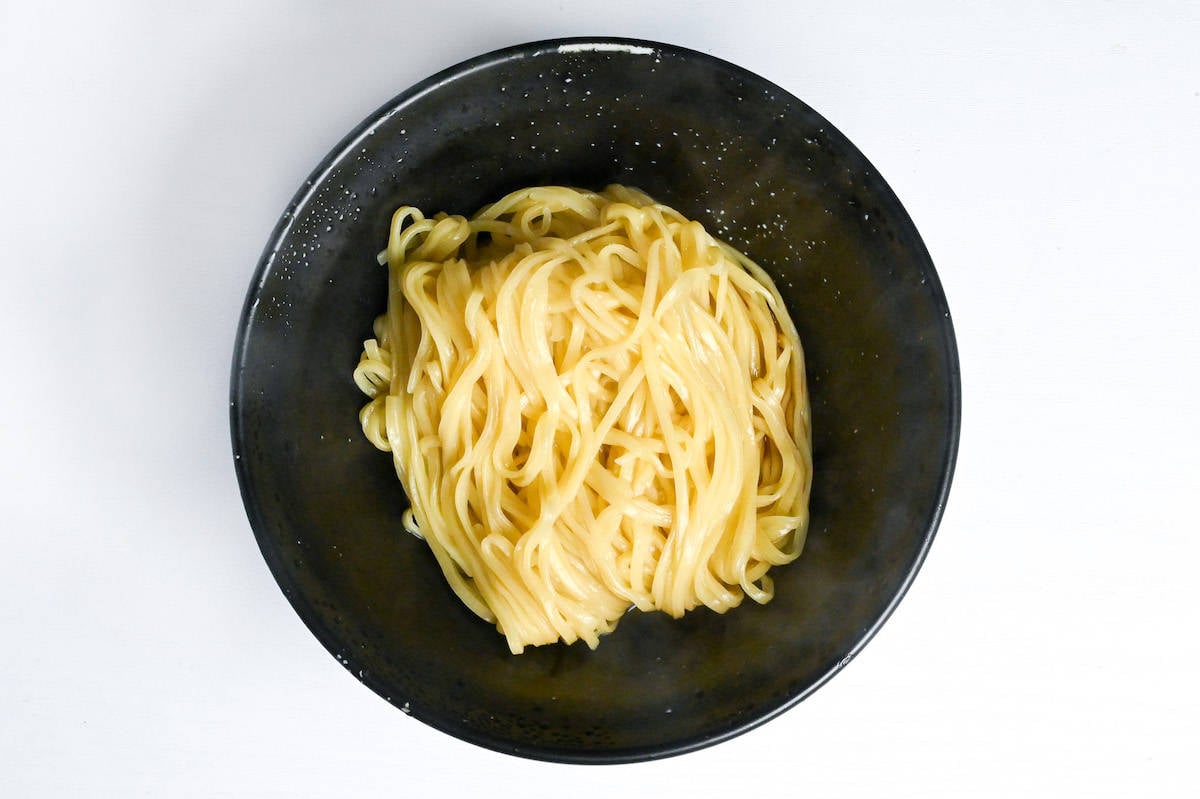
ii. Drain the noodles well in a sieve, then divide them straight onto the sauce.
i. Pile on the chashu, ramen egg, bamboo shoots, narutomaki, and shredded nori.
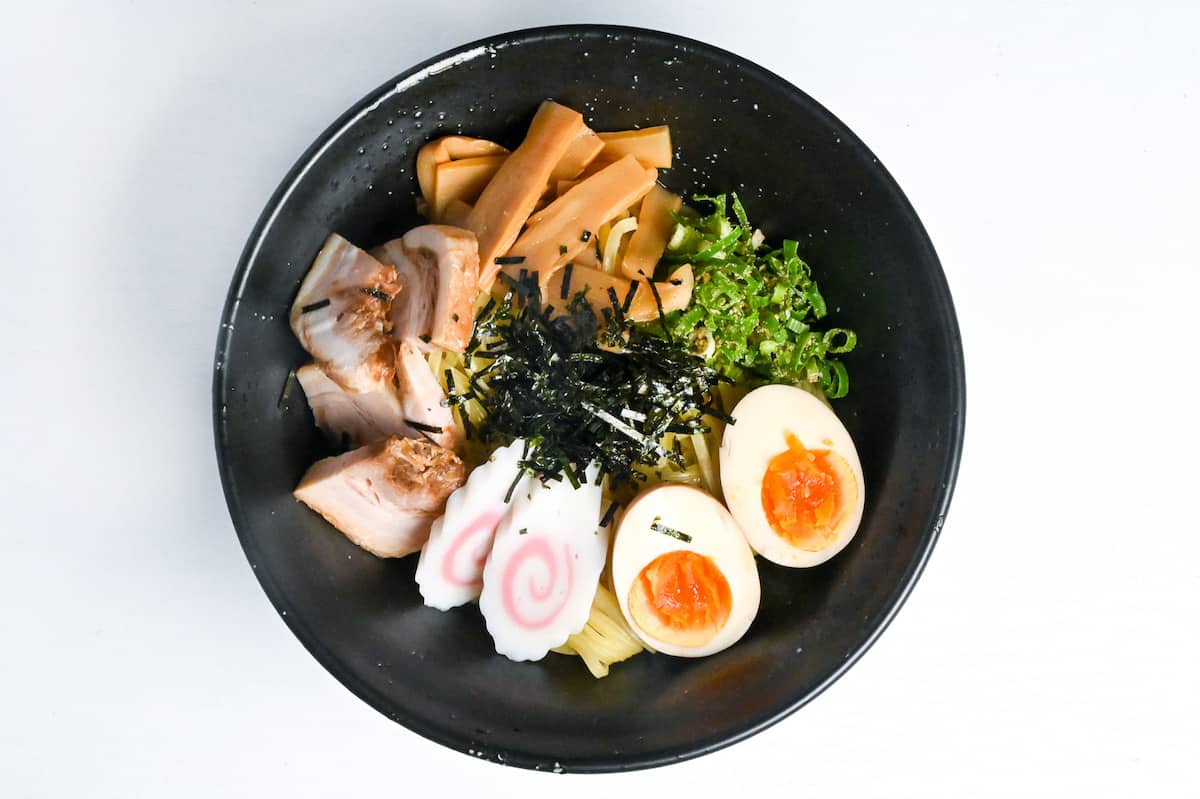
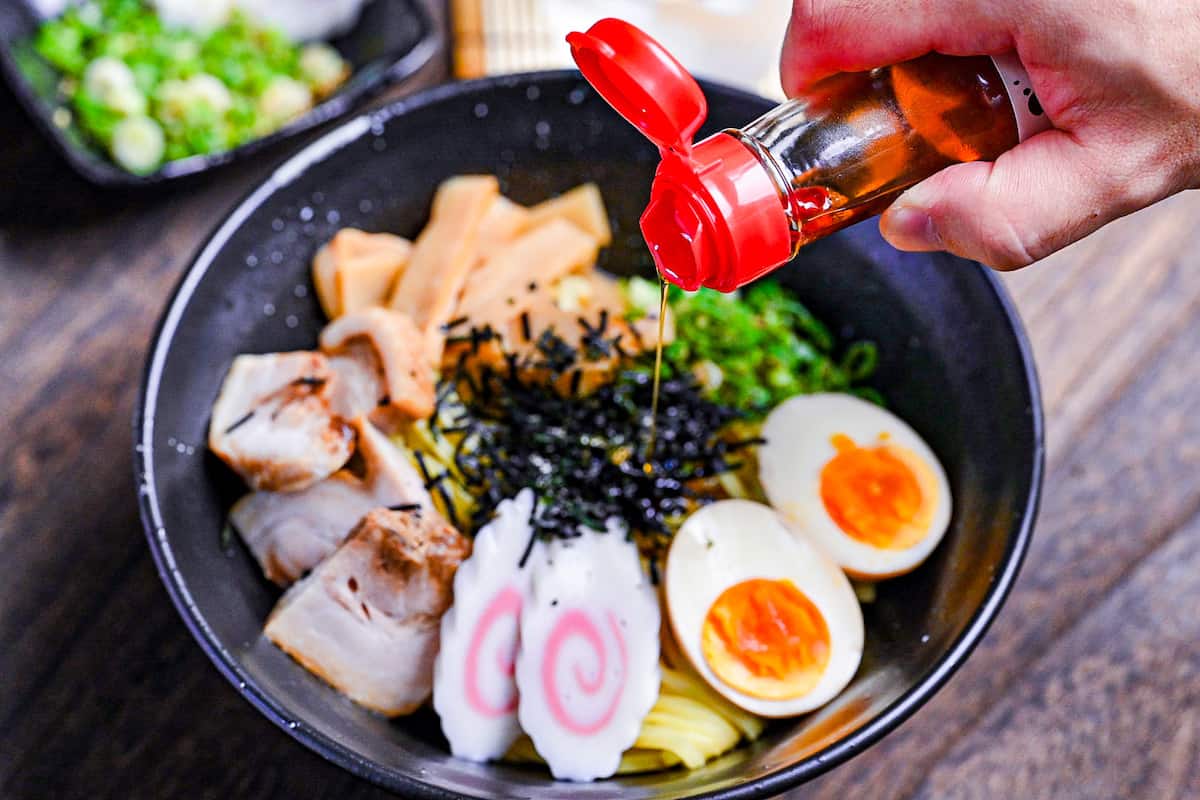
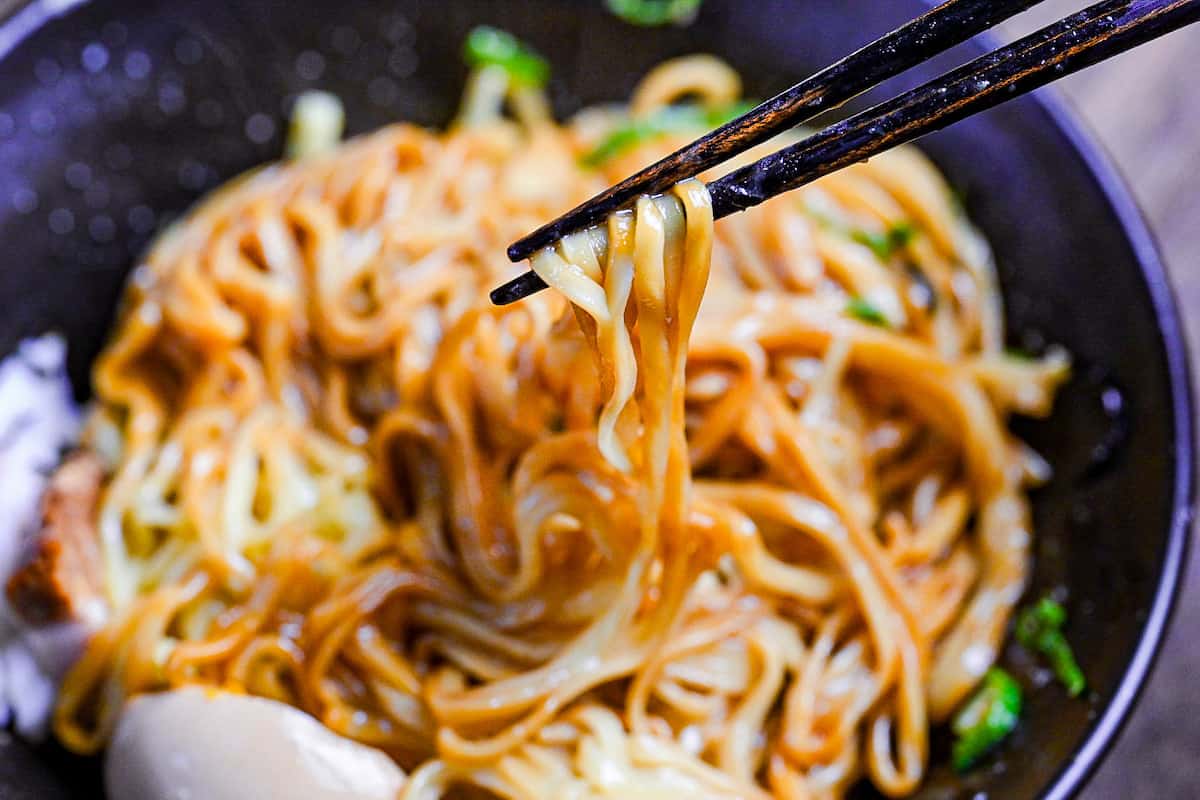
ii. Drizzle over the chili oil and a splash of vinegar and mix the bowl thoroughly so they run all the way through. From there you can keep adjusting as you eat, adding a little more of either to change the bowl bite by bite.
iii. Eat it now, while it is hot. The coating and the aroma are at their best in the first minutes and fade as the bowl cools, so this is a sit-down-right-now dish, not a keep-it-warm one.

Tips for the Best Abura Soba
- Cook the noodles the full package time, and skip the early pull. With soupy ramen you yank the noodles a few seconds early, because the hot broth keeps cooking them once they land in the bowl. Abura soba has no broth, so there is no second stove waiting to finish them. Pull them early here and they stay stiff and under-done in a bowl that has nothing left to soften them. Give them the whole time the package asks for.
- A slightly soft noodle surface is the feature, not the flaw. This is the one bowl where chasing an ultra-firm bite works against you. The softened outside of a fully cooked noodle is what the sauce grabs onto, so leave the noodles a touch too firm and it slides off instead of clinging.
With these simple tips in mind, you’re set for success every time you make abura soba.
Storage & Meal Prep
Fridge: An assembled bowl does not keep.
Freezer: The assembled bowl does not freeze. Chashu is the one part worth stashing, and it freezes well for a couple of weeks to a month if you cook a batch.
Meal prep: The only thing worth prepping ahead is the toppings. The sauce is faster than almost anything you could make in advance, so there is nothing to gain by building it early.
What to Serve With Abura Soba
Abura Soba Troubleshooting
The sauce never came together, and that comes down to heat and mixing. It splits or slides when it meets a cold bowl or cold noodles, or when it simply was not tossed hard enough. Warm the sauce so the fat is fully melted and the bowl is hot, get the noodles onto it while they are still steaming, and mix from the bottom with real force until it thickens and coats the strands. If it still looks watery, you have not mixed it enough yet.
The microwave is doing 2 quiet jobs, melting the fat and heating the bowl so nothing seizes when the noodles arrive. Without it, warm your serving bowls by filling them with boiling water for a minute and tipping it out, then mix the sauce right in the hot bowl, or melt it in a small saucepan first. A cold bowl is where the lard sets hard and the sauce breaks, so the warmth matters here.
The sauce breaks as the bowl cools and the fat starts to set again, which is why abura soba is a right-now dish. A quick re-toss with a few drops of hot water or sesame oil can loosen it back enough for the next few bites, but the honest answer is to eat it the moment it is mixed. Get every topping within reach before you drain the noodles so nothing makes you wait.
More Japanese Noodle Recipes
Hungry for more? Explore my Japanese noodle recipe collection to find your next bowl.
Did You Try This Recipe?
I would love to hear your thoughts!
💬 Leave a review and ⭐️ rating in the comments below. 📷 I also love to see your photos – submit them here!
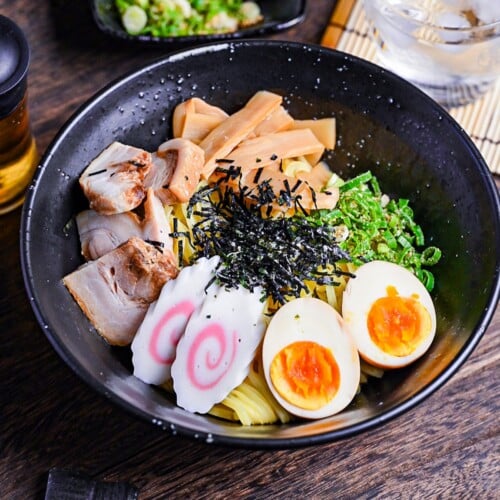
Abura Soba (Soupless Ramen)

Ingredients
Tare (sauce)
- 4 tsp oyster sauce
- 4 tsp Japanese soy sauce (koikuchi shoyu)
- 2 tsp unseasoned rice vinegar (komezu)
- 2 tsp toasted sesame oil
- 2 pinches Chinese-style chicken bouillon powder optional
- 1 tsp lard
- 1 tsp garlic paste
- ½ tsp light brown sugar
- 2 tsp water
Abura Soba
- 2 portions ramen noodles fresh or spaghetti hack
- 3 tbsp finely chopped green onions
- ½ tbsp ground sesame seeds
- 1 pinch ground black pepper
- 4 pieces pork chashu or easy oven baked alternative
- 2 ramen egg or soft boiled egg
- seasoned bamboo shoots (menma)
- narutomaki fish cake optional
- roasted seaweed for sushi (nori) to garnish
- chili oil (rayu) to garnish
- unseasoned rice vinegar (komezu) to garnish
The ingredient brands and tools I trust are in my Japanese pantry guide and my cooking tools guide.
Can’t find certain Japanese ingredients? See my substitution guide here.
Instructions
Mix the Tare
- To each serving bowl, add 2 tsp oyster sauce, 2 tsp soy sauce, 1 tsp rice vinegar, 1 tsp sesame oil, a pinch of chicken stock powder, 1/2 tsp lard, 1/2 tsp garlic paste, 1/4 tsp of light brown sugar, and 1 tsp water.

- Mix the sauce and cover the bowls with a plate or plastic wrap, then set aside.
Prepping and Assembling the Abura Soba
- Boil 2 portions ramen noodles according to the package instructions.
- While you wait, mix 3 tbsp finely chopped green onions, ½ tbsp ground sesame seeds and 1 pinch ground black pepper together in a bowl.
- When the noodles have 1 minute left of cooking time, heat the bowls with the tare in the microwave for 1 minute on 600W.
- Take the bowls from the microwave and remove the cover.
- Drain the noodles and divide them between serving bowls, placing them on top of the tare.
- Arrange pork chashu, ramen eggs, bamboo shoots, nori, narutomaki or your choice of fillings over the noodles.
- Drizzle with chili oil and rice vinegar to taste, then mix thoroughly before eating. Enjoy!

Thank you so much for this awesome recipe! I made it two nights in a row, and I’ll definitely make it more in the future. I live in an area without many choices when it comes to Japanese ingredients, especially ramen noodles, so the spaghetti + baking soda trick is a godsend. I was surprised by how well it works.
Your website is great, looking forward to trying your other recipes!
Hi Robyn! Thank you so much for your kind comment and rating.
I’m happy you enjoyed the recipe!
I also used this spaghetti technique when I was living in England, I’m glad you found it useful too!
There are many abura soba and mazesoba recipes on YouTube and I wish I’d seen yours much earlier because it’s the best and most kitchen friendly. Thanks for making the recipe available for us ramen freaks.
Hi Mike,
Thank you for the comment and your kind words, it means a lot!
I’m so happy that you enjoyed this recipe and the method!
Yuto
I fell in love with this dish during a recent trip to Japan. This recipe was exactly what I was looking for to recreate it at home! Super easy to make and the taste was nearly identical to what I had in Japan (noodles were way better there but that has nothing to do with the recipe). Thanks for sharing this!
Hi Jarrett,
Thank you so much for trying this recipe! I’m really glad to hear that! It means a lot to know the recipe helped bring back a special memory from your trip! 🙂
Yuto
SO GOOD! Low effort, amazing taste.
Thank you so much, Truc! 🙂