



Featured Comment
This is the most delicious cold noodle dish I’ve had in a long time! Even better when you use the homemade soba noodle recipe to go with it. Gourmet dining at home 🙂
★★★★★
– Jamie
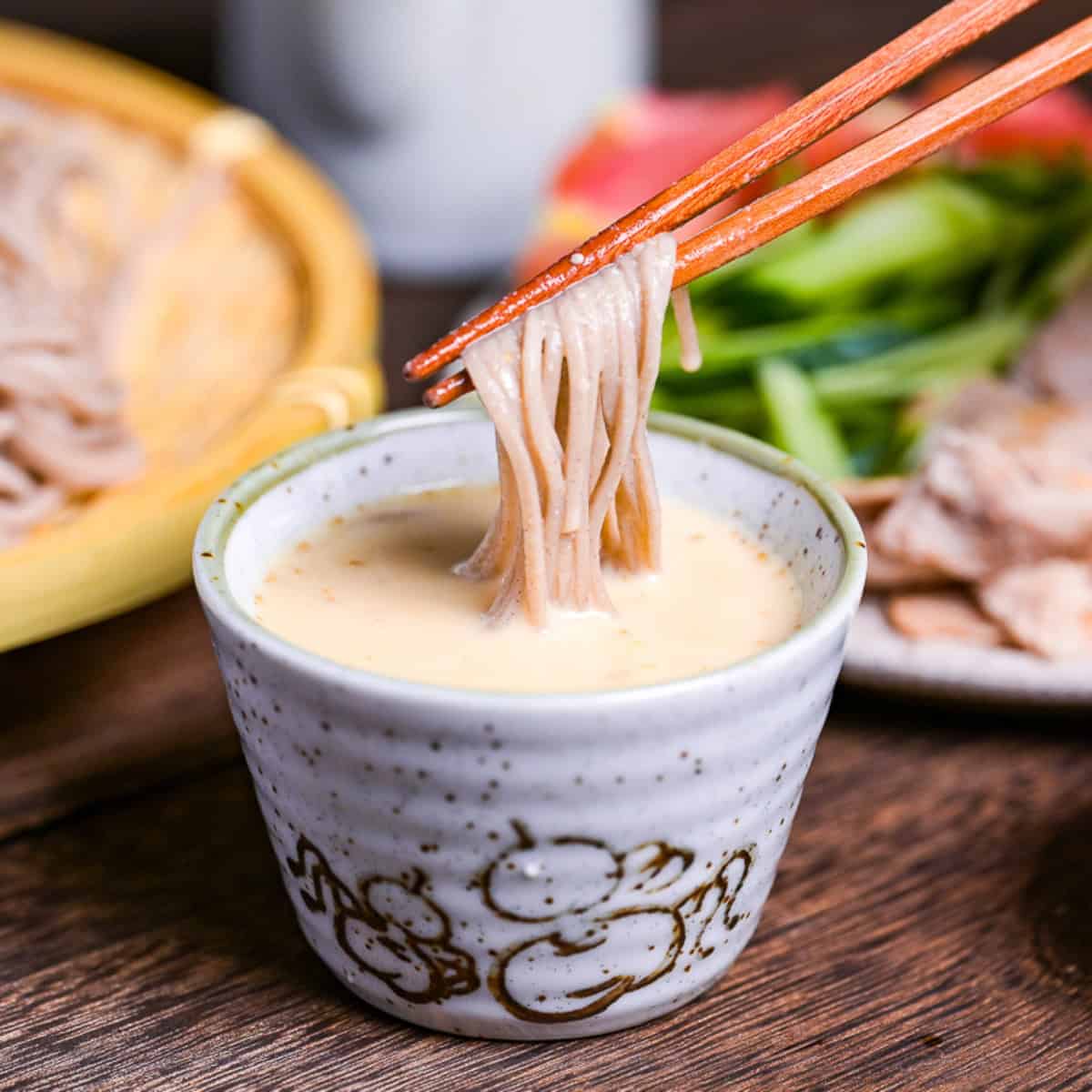
You know that sesame sauce at the soba shop, the cold buckwheat noodles you dip into something nutty and deep. You can make it at home, and it is easy.
It is a summer treat that never weighs you down, refreshing and filling at once. Build the sauce with dashi stock, both ground and pasted sesame, and a little miso, mix it in order, and you have the shop bowl on your own table.
Sesame Soba
Recipe Snapshot
- What is it? Chilled buckwheat soba noodles served with a nutty sesame dipping sauce built from dashi, 2 forms of roasted sesame, and a little miso. A warm-weather soba-shop favorite, not a sesame noodle salad and not a shabu-shabu sauce borrowed onto noodles.
- Flavor profile: Deep and toasted from roasted sesame, rounded out by miso paste and real dashi, with a cool, refreshing edge from rice vinegar and summer vegetables that keeps the richness from ever feeling heavy.
- Why you will love this recipe: It gives you the soba-shop bowl at home and it is genuinely easy. The mixing order keeps the sauce smooth instead of split, and the cold noodles, vegetables, and sesame sauce make a summer plate that stays light without leaving you hungry.
- Must-haves: Sesame paste for body, ground roasted sesame for aroma, and real dashi rather than plain water to thin the sauce.
- Skill level: Easy, and about 15 minutes start to finish. The only move that needs attention is building the sauce in the right order so the paste emulsifies instead of seizing.
What Is Gomadare Soba?
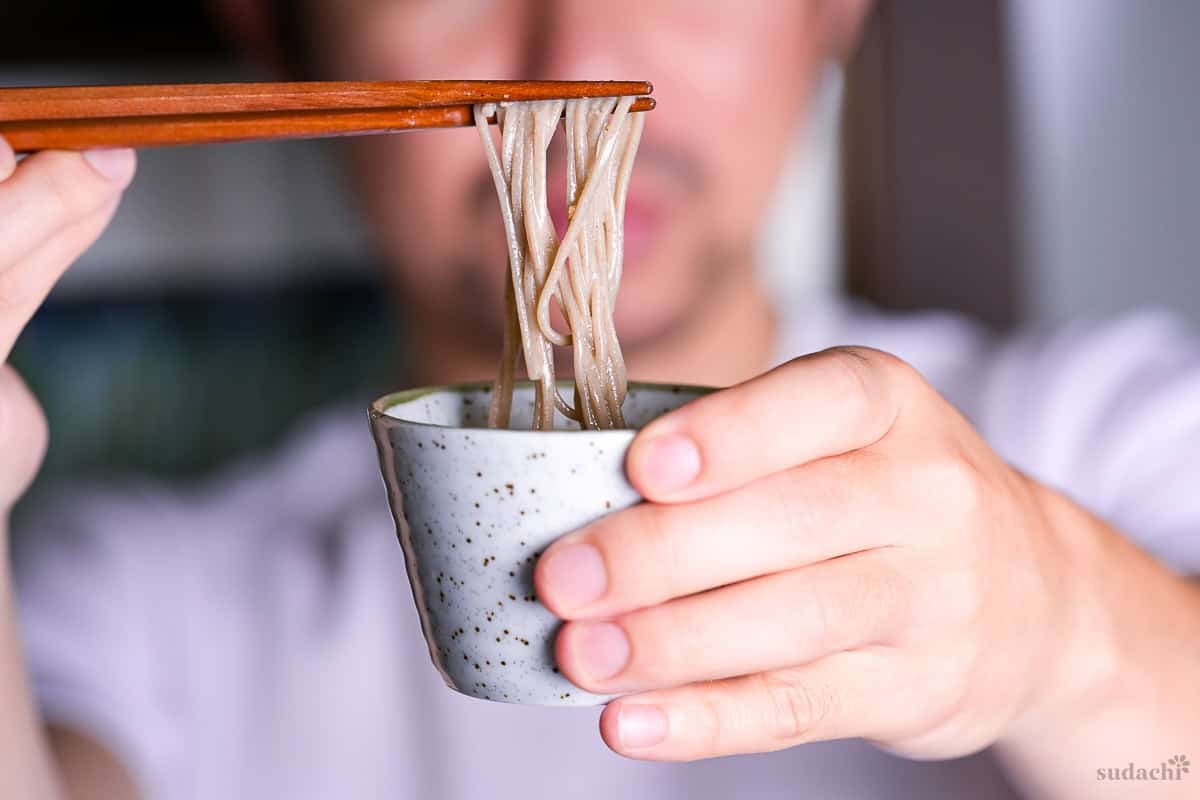
Say “sesame soba” in English and your mind may jump to a cold noodle salad, seeds tossed through. In Japan, gomadare soba means something else. It is buckwheat soba you dip into a nutty, deep sesame sauce, the way you would dip zaru soba or zaru udon into mentsuyu sauce. Goma is sesame. Dare is the sauce.
It lives in the everyday register, a newer way to eat soba that reads as a modern habit more than an old tradition. If the shabu-shabu connection is forming in your head, you are not wrong. Gomadare soba is close to that dipping sauce, but the flavor and texture here are a bit different, built for noodles.
My version is zaru soba with a touch more luxury, yet both refreshing and filling at once.
Gomadare Soba Ingredients
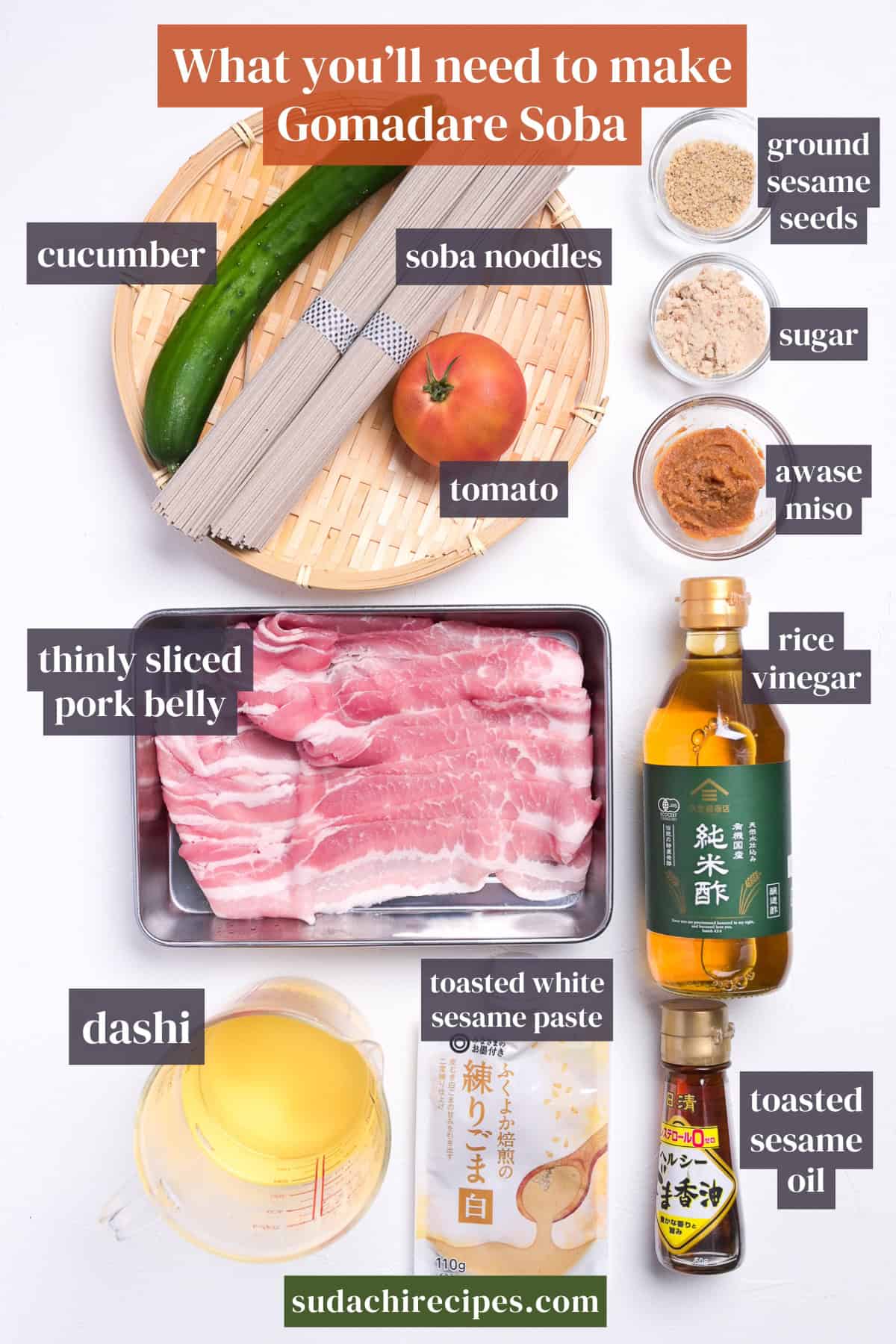
- Soba noodles: Buckwheat soba is the whole foundation, and the earthy, nutty taste of the buckwheat is meant to come through under the sesame. Read the label, since a lot of supermarket soba is mostly wheat. It runs on a spectrum, from juwari (100% buckwheat), nihachi (80% buckwheat with 20% wheat) to 50/50 or lower. Any works here. Whatever the buckwheat percentage, the trick that matters comes later, in how you cook and drain it.
- Dashi stock: My go-to method is homemade dashi packets, 1 batch on a Sunday, enough for weeks, and the flavor is the real thing. If you would rather skip that step, high-quality store-bought dashi packets are a solid choice too. For the absolute best, make dashi from scratch with katsuobushi and kombu, nothing else comes close. Instant granules mixed with water technically works, but I treat them as a last resort, not a go-to. And if you need a plant-based option, kombu and dried shiitake mushrooms make a beautiful vegan dashi.
- Miso paste: Here is the part you will not find in most sesame sauces. I put a little miso in, and it earns its place. It adds body, a particular sweetness, savory depth, the kind of background roundness that you only notice when it is gone.
Substitutions & Variations
Sesame paste is the one ingredient people get stuck on, so most of this section is about getting the sauce right without the exact jar I use. The good news is that almost everything here has a real swap, and the noodles and dashi are flexible too.
Substitutions:
- Neri goma → Tahini: Tahini will get you a sesame sauce, but it is made from raw or barely toasted sesame, so it misses the roasted, toasty aroma that gives Japanese sesame paste its depth. The fix is to add a few drops of toasted sesame oil and a spoon of toasted ground sesame. Tahini also runs thinner, so you may need a little more of it to hit the same body.
- Neri goma → Chinese sesame paste: This is the closest stand-in, because it is also made from fully roasted seeds, so the toasted aroma is already there. Check the label, since some Chinese sesame pastes come sweetened, and adjust your sugar down if so.
- Neri goma → Peanut butter: I have not tested this swap in this recipe, but unsweetened peanut butter works well alongside sesame and miso in my pork miso ramen, so the risk is low. Use an unsweetened, unsalted one and go a little lighter, since its flavor pushes harder than sesame.
- Soba → Udon noodles: Cold udon will happily take this sesame dipping sauce too.
- Rice vinegar → Apple cider vinegar or lemon: A milder apple cider vinegar or a small squeeze of fresh lemon stands in fine. You can also leave the vinegar out altogether for a rounder, softer sauce, though you give up a little of the brightness that cuts the sesame.
Have trouble finding Japanese ingredients? Check out my ultimate guide to Japanese ingredient substitutes!
Variations:
- Gluten-free version: Use 100% buckwheat (juwari) soba, and make the rest of the bowl gluten-free too. Check that your miso is gluten-free, since some are made with barley or wheat. Build the sauce on homemade dashi or a gluten-free dashi.
- No-meat bowl: Skip the cold-shabu pork and lean harder on the cucumber and tomato, or add blanched greens. The sauce and the vegetables carry the bowl on their own.
- Warm version: The sauce works on warm soba too, not just cold. When the weather turns, the same sesame dipping sauce over hot noodles is a completely different bowl, and a good one.
How to Make My Gomadare Soba
If you prefer to watch the process in action, check out my video of this gomadare soba recipe!
Before you start (Mise en place):
- Prepare the dashi first, and let it cool before use. It should be at least room temperature, or fridge cold if you want to serve the sauce chilled.
i. Put the neri goma (sesame paste) in a bowl and mix in the ground sesame seeds, sugar, and miso first, before any liquid goes in. Work it into a smooth, thick paste.
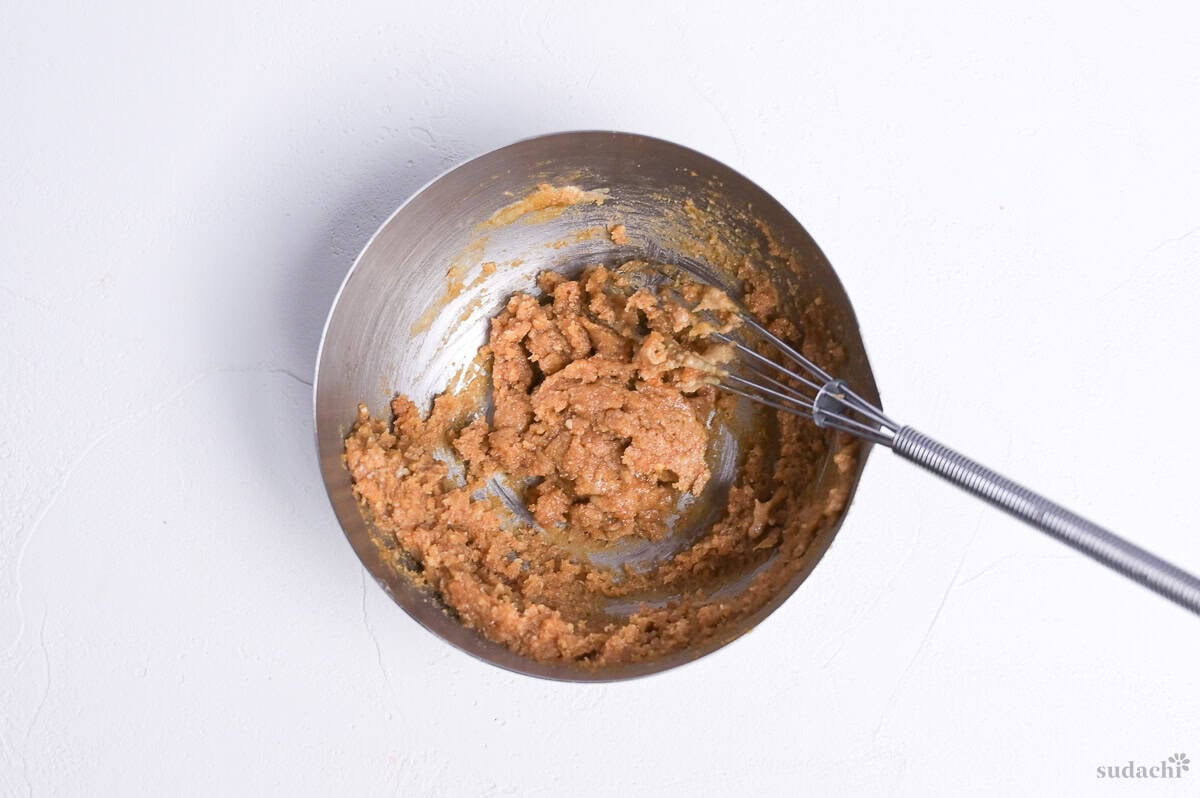
ii. Add the vinegar and stir until the paste turns glossy.
iii. Now add the dashi a little at a time, mixing fully between each addition until the sauce loosens to your preferred dipping consistency. You might not need all of the dashi, so you can save leftovers for another recipe.
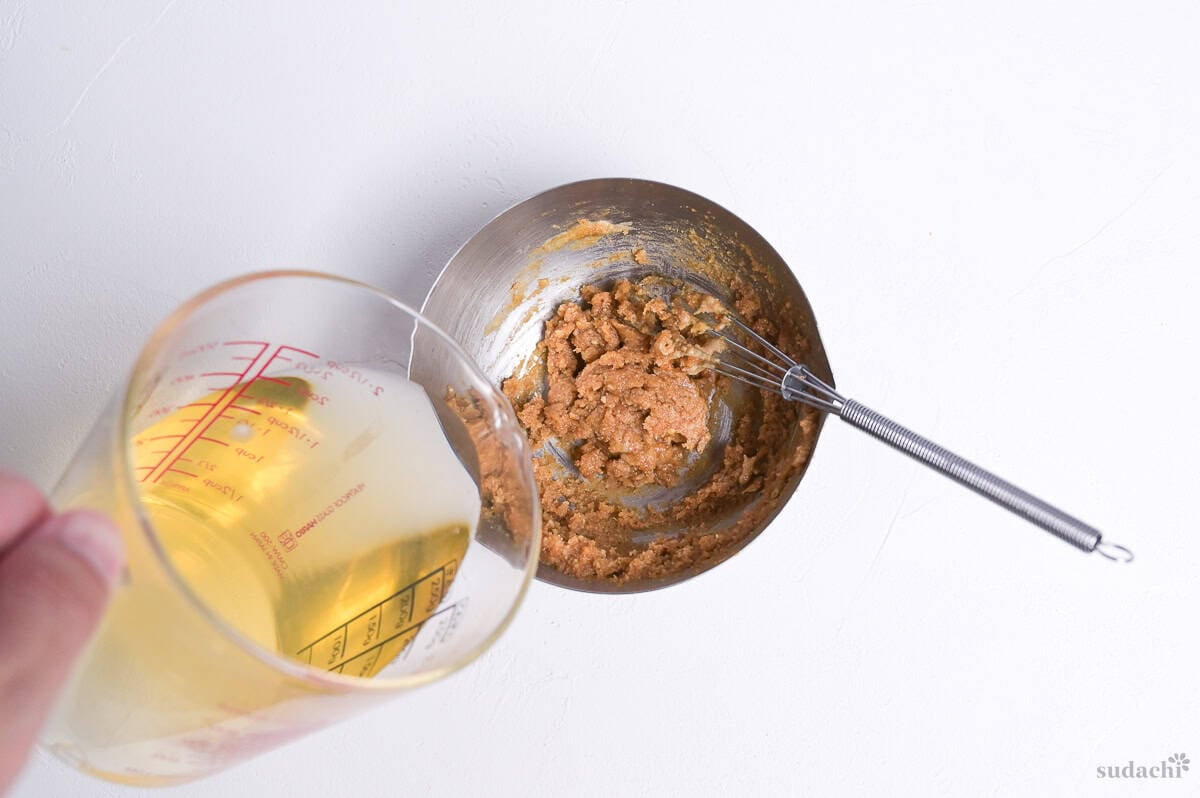
iv. Finish with a few drops of sesame oil, stirred in at the very end. You can serve it lukewarm, but if you prefer it chilled then place it in the fridge until serving time.
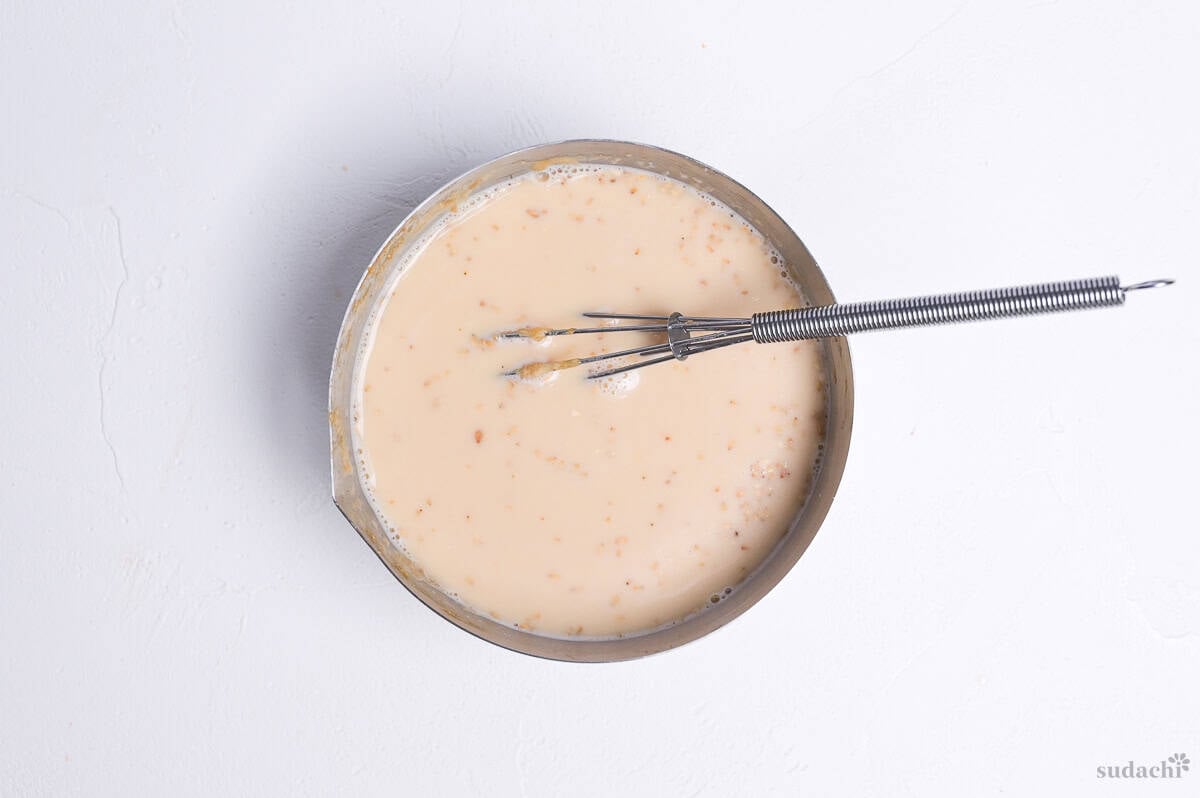
Sesame paste is mostly oil, and if you pour a thin liquid straight into thick paste, the paste seizes and the sauce splits into grainy clumps and beads of oil. The fix is the sequence. The sugar and the vinegar go in first and act like the mediator, the same way you loosen tahini or natural peanut butter before you thin it, so by the time the dashi arrives the sauce is already emulsified and drinks it in smoothly. Add the liquid slowly and you stay in control.
i. If you are using pork belly, cut it into bitesize pieces. For the vegetables, cut tomatoes into wedges and julienne the cucumber (matchstick cuts).
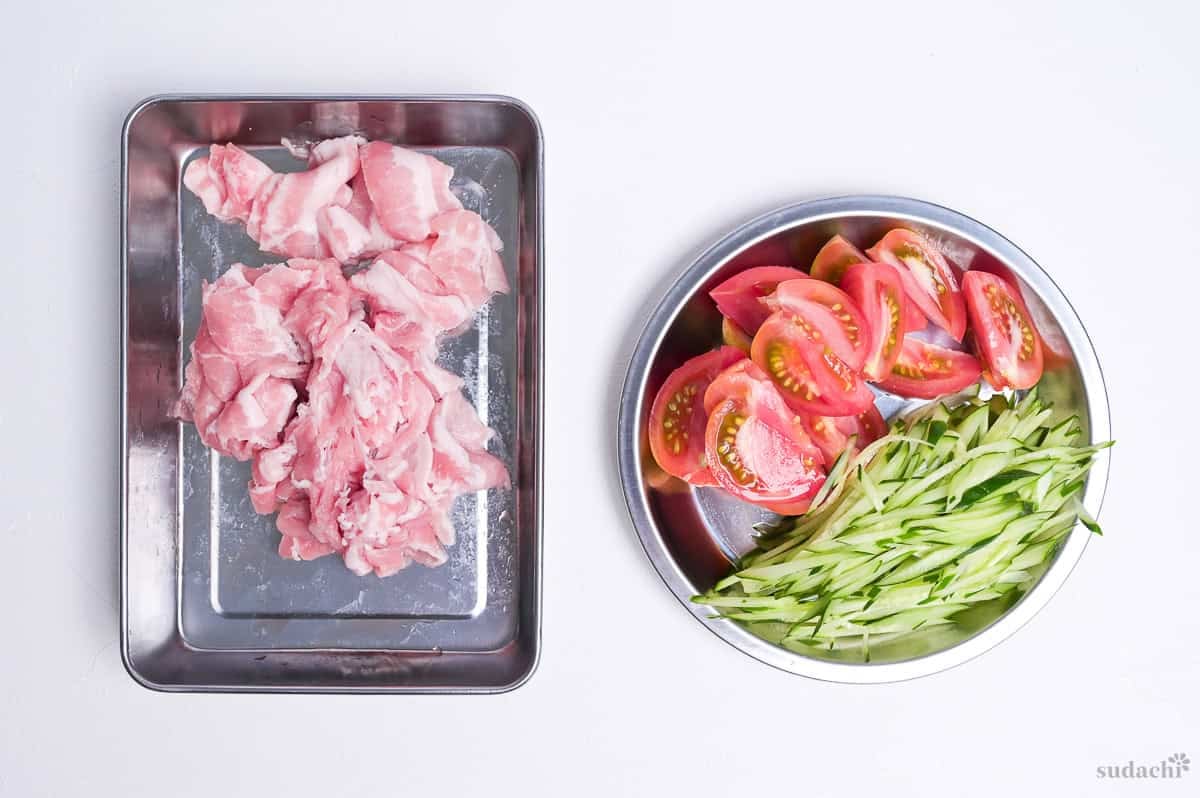
ii. Season the pork belly with a pinch of salt and cook it in a pan to your liking. Cook it all the way through, until the pieces show no signs of pink, then set it aside to cool.
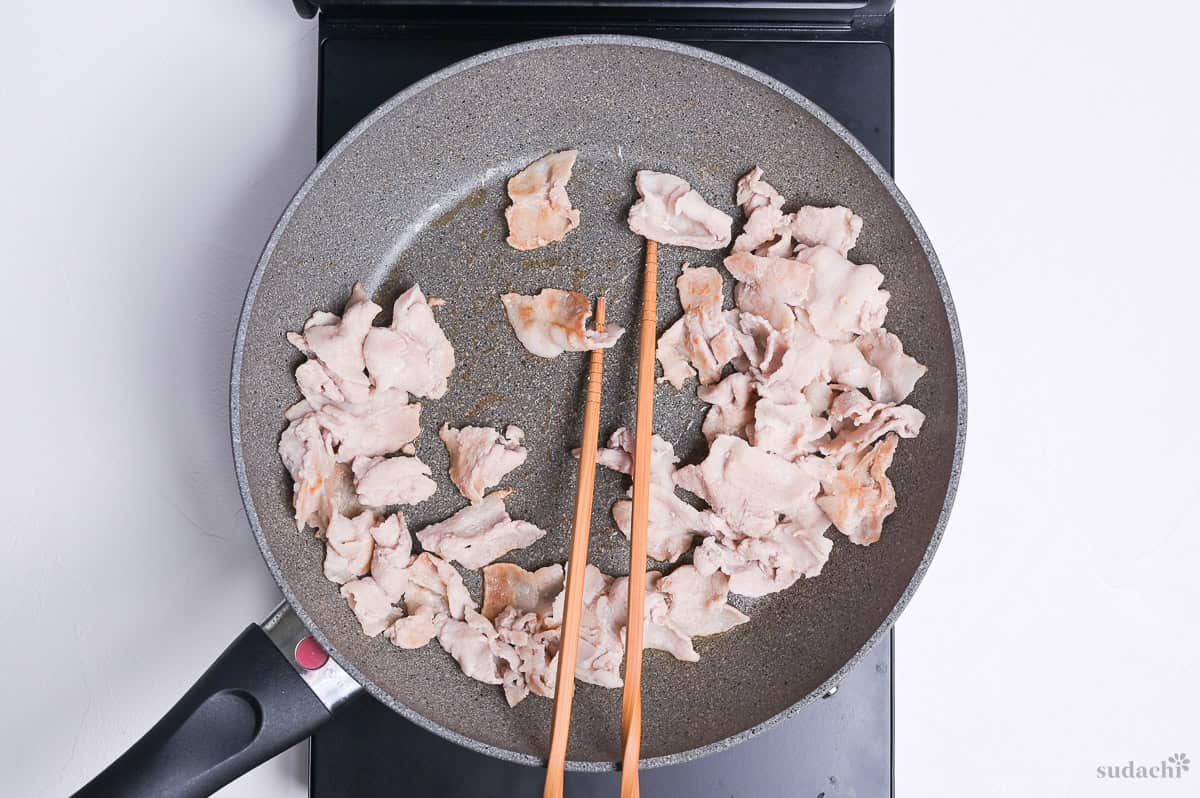
i. Bring a large pot of water to a rolling boil, far more water than you think you need, and cook the soba to the package time without adding cold water to slow the boil.
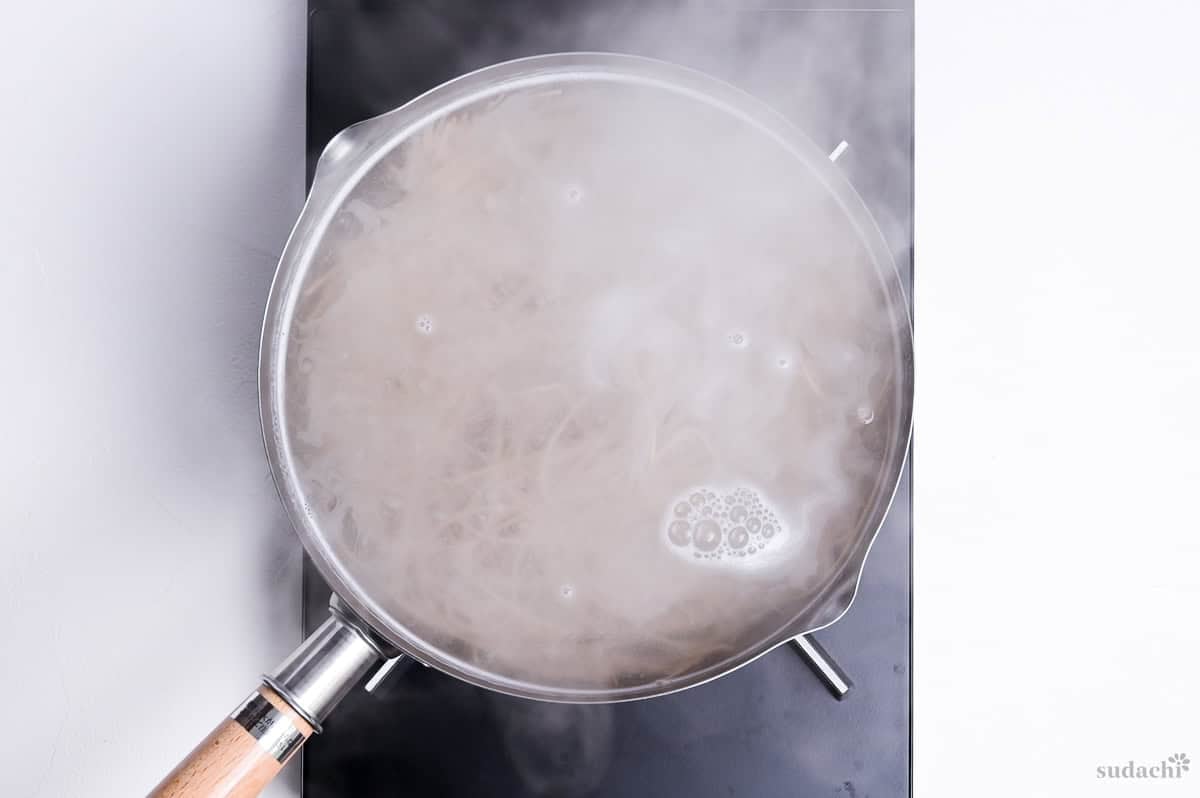
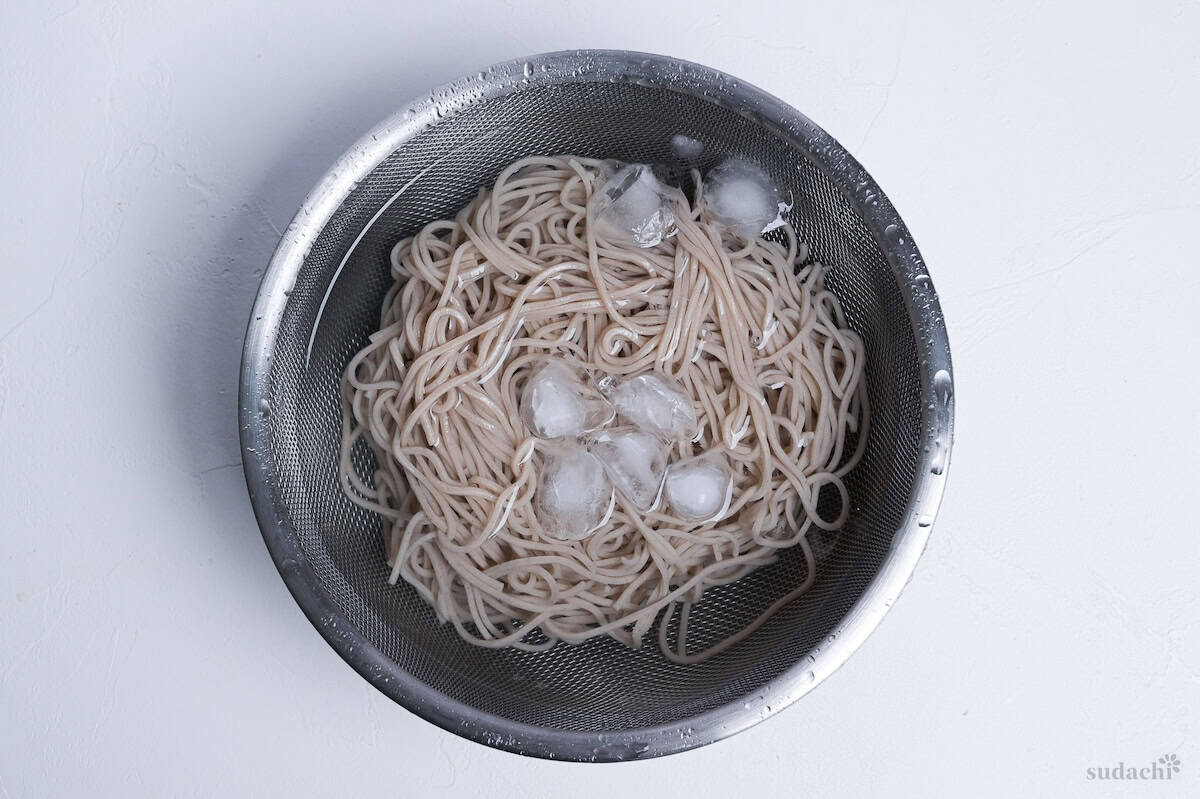
ii. The moment the noodles are done, rinse them under cold running water, rubbing them gently with your hands to wash off the surface starch. Shock them in ice water to tighten them up and bring back the bite, then lift them out.
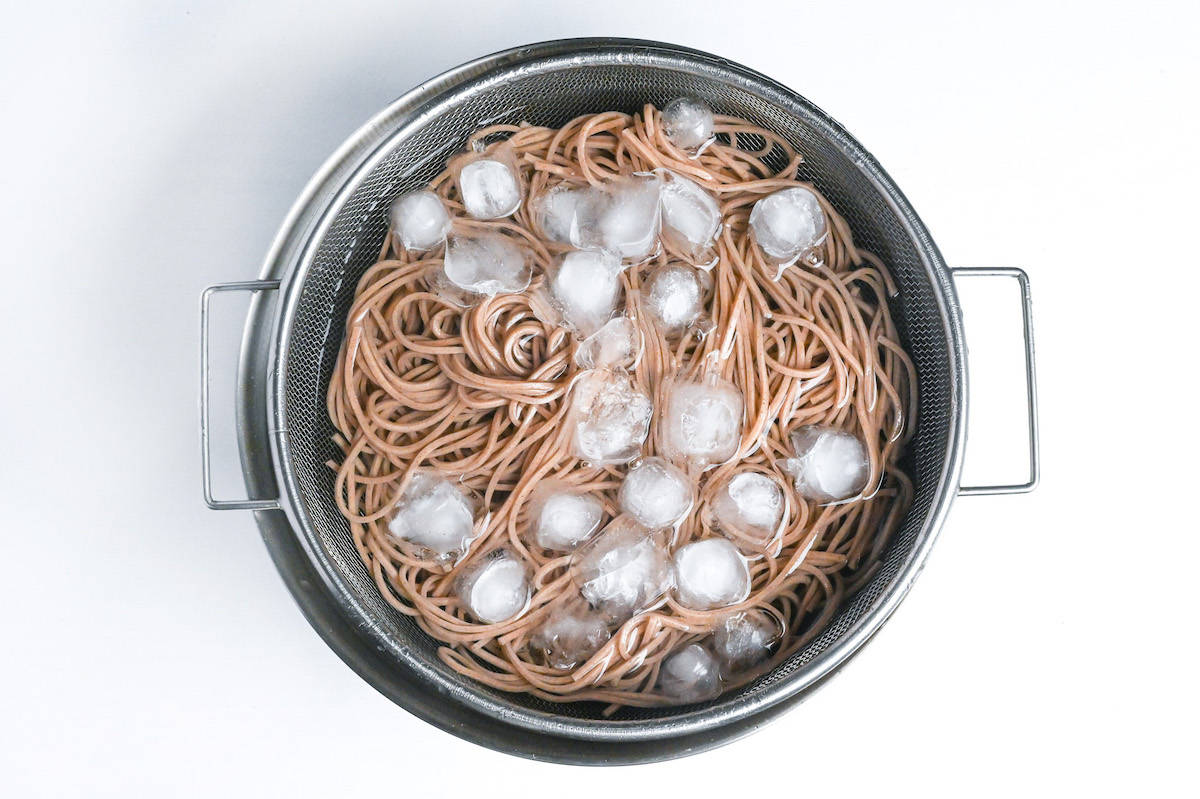
iii. Drain them hard and press out the water until the noodles are nearly dry.
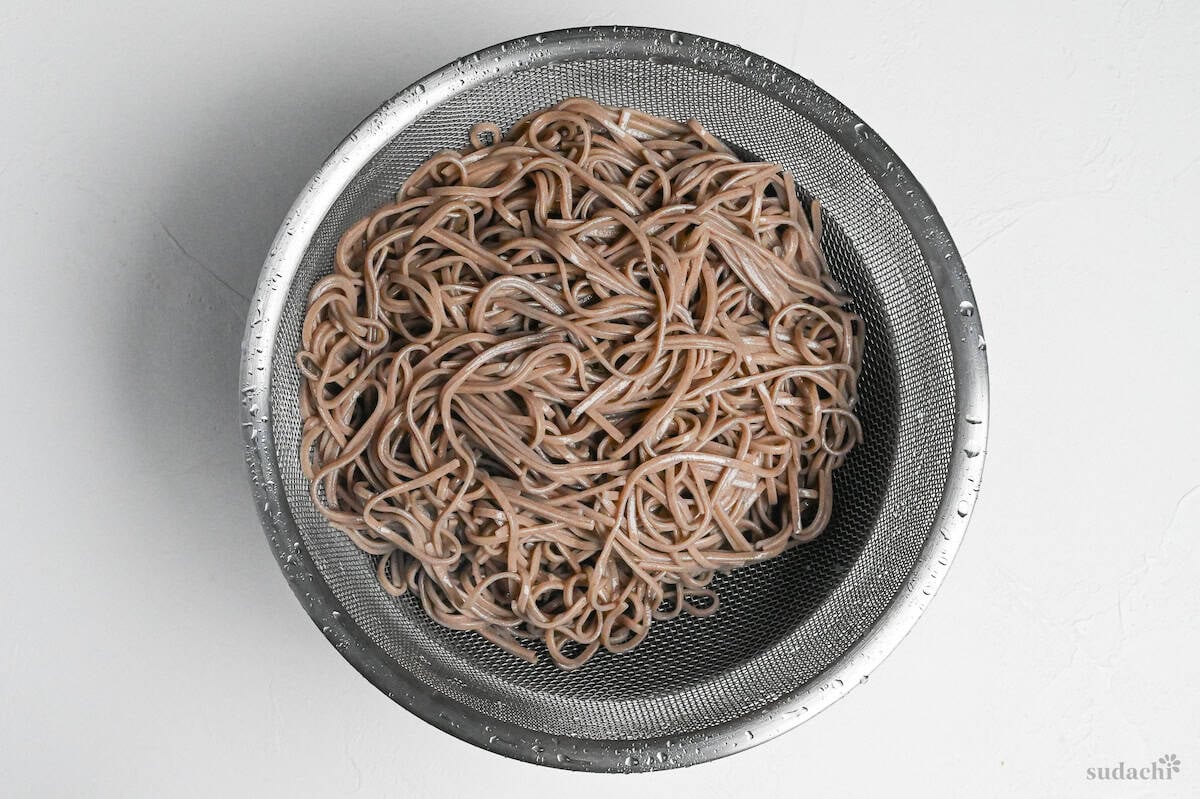
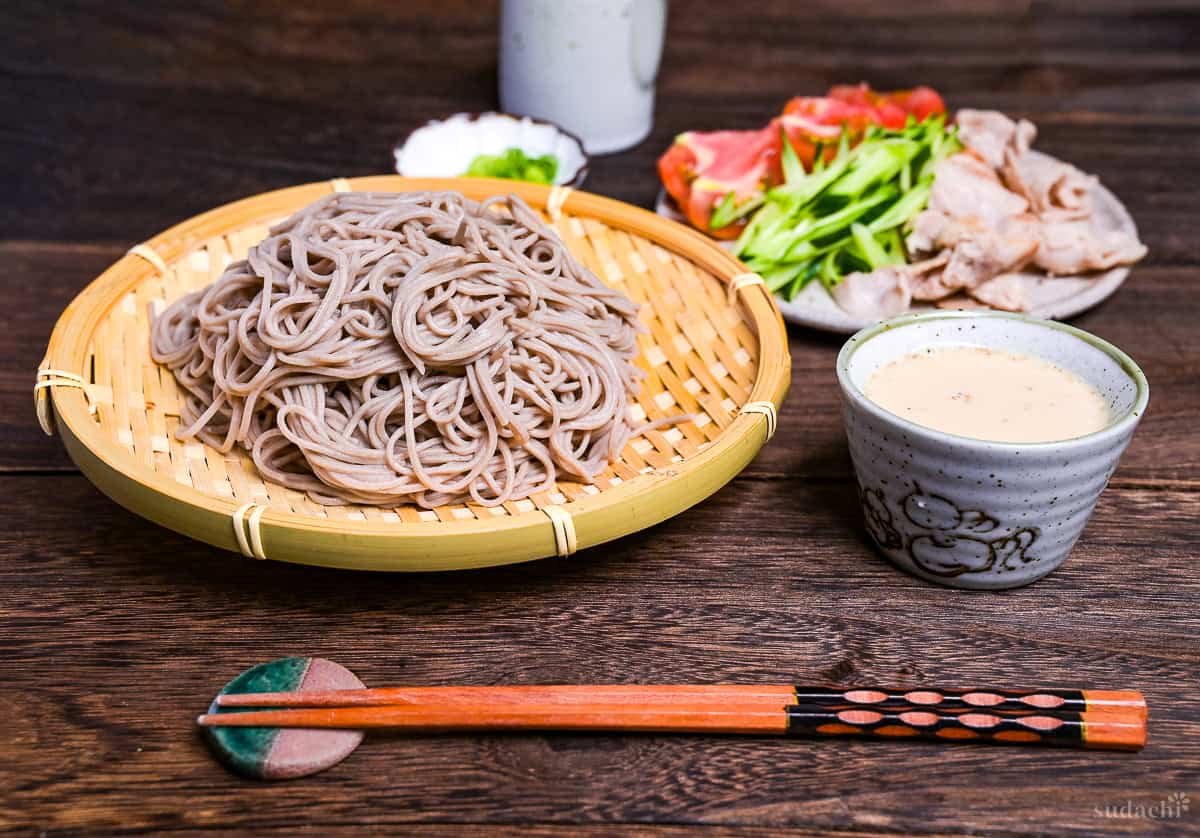
i. Pile the drained soba onto plates and arrange the cucumber, tomato, and cooled pork alongside. Pour the gomadare into individual dipping cups.
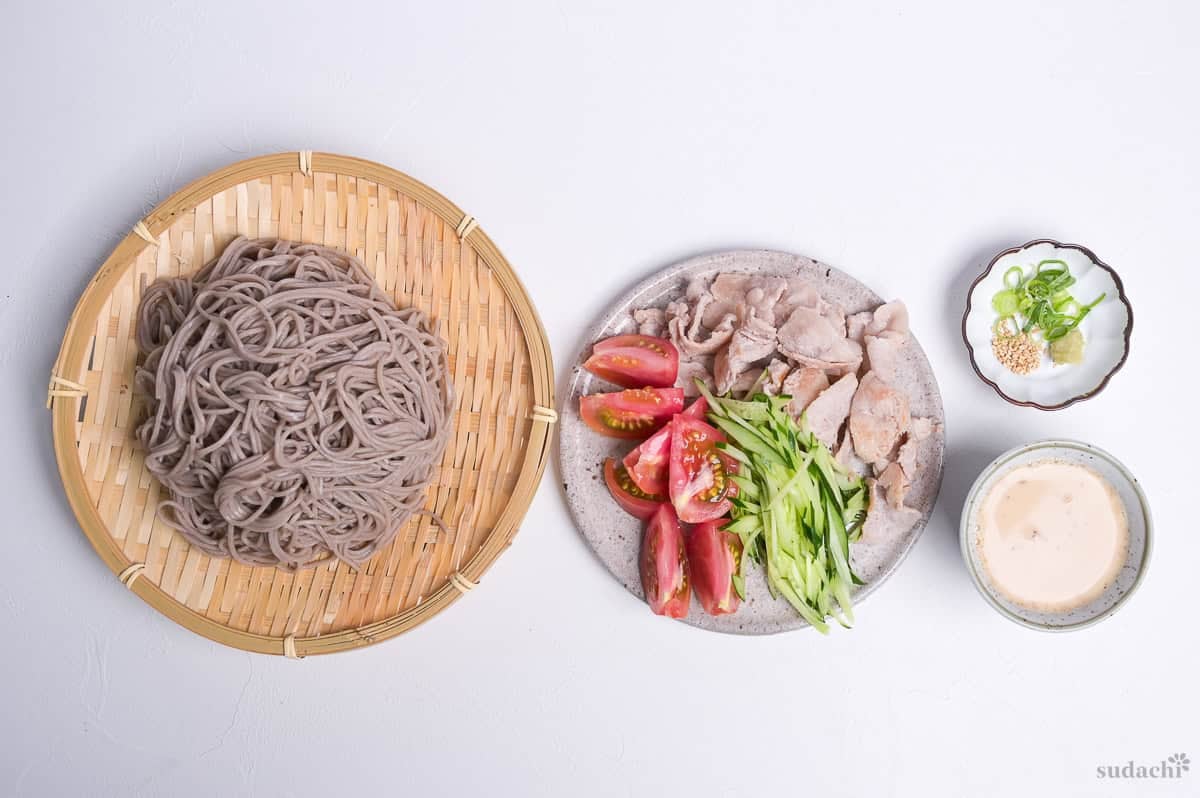
ii. Prepare the chopped green onion and add a little wasabi paste to taste, going light first and building up. Dip the noodles into the sesame sauce and eat.

Essential Tips & Tricks
- Build the sauce in order and it will not split. Paste first with the sugar and miso, then the vinegar to bring it together, then the dashi a little at a time. Follow that sequence and the sauce just comes together, smooth and glossy, every time.
- Hold the yakumi back and add as you eat. I do not pile the wasabi and spring onion on all at once. A little goes on, you taste, you add more, and the bowl shifts as you go. Treat the aromatics as a way to keep changing the flavor mid-meal rather than a one-time topping, and a simple bowl stays interesting to the last bite.
- Pick your temperature by the day. Cold noodles with cold sauce is what I reach for first, clean and bracing in the heat. On a day when I want to eat the second it is done, chilled noodles with a lukewarm sauce works just as well. Either way the noodles go cold. That part does not bend.
Get the noodles dry and the order right, and this bowl rewards you every single time.
Storage & Meal Prep
Fridge: Keep the sesame sauce in an airtight jar in the fridge for up to about 1 week.
Freezer: Not recommended.
Meal prep: Make the sauce up to a few days ahead, cook the noodles and pork on the day, then assemble.
What to Serve With This Recipe
Gomadare Soba Troubleshooting
The noodles went on still wet, and that water thinned the sauce right on the plate. Drain the soba hard and press it gently until it is nearly dry before plating. The sauce is built thick on purpose so it clings, and damp noodles undo that in a single dip
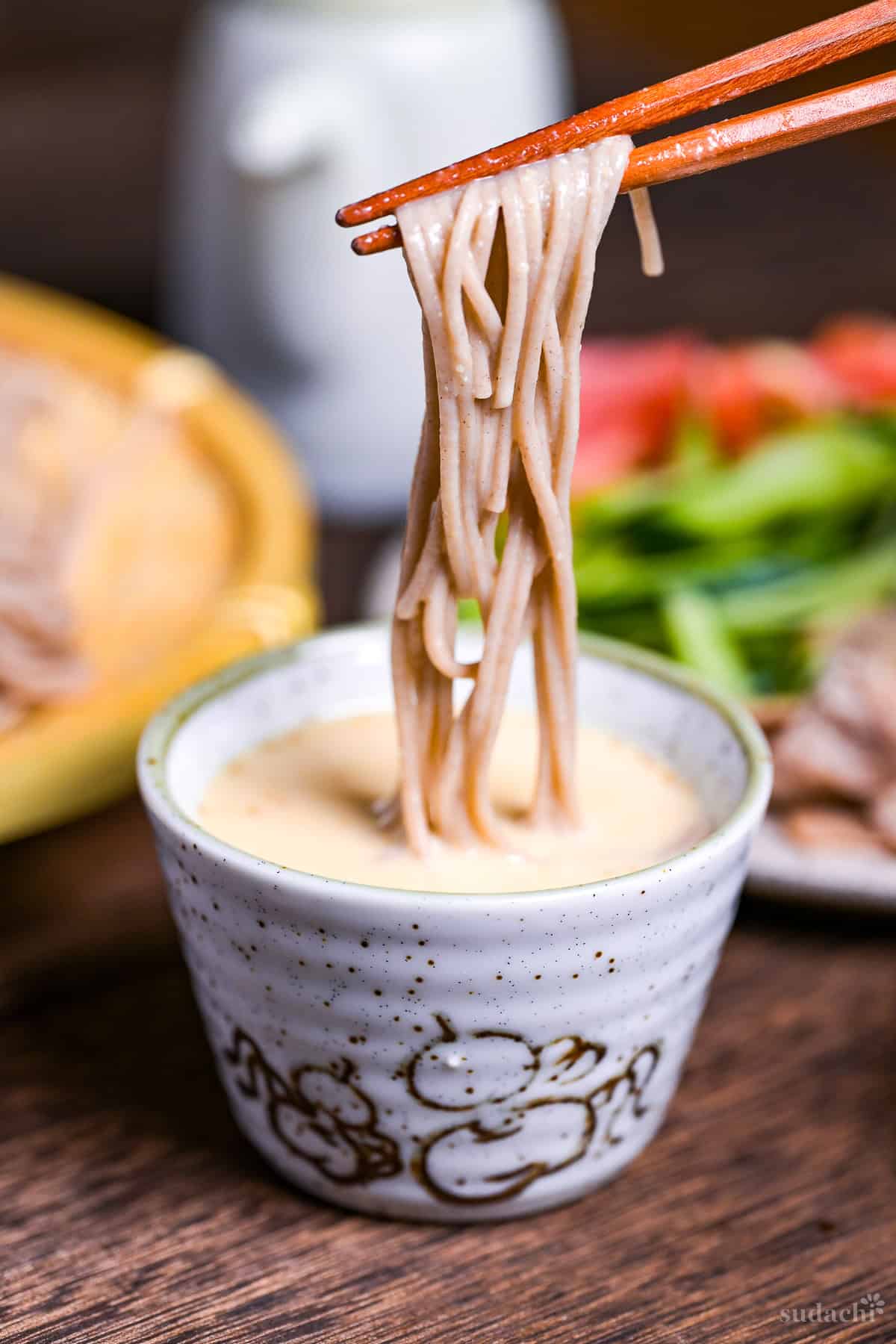
The noodles either overcooked or skipped the cold shock. Pull them right at the package time, rinse them under cold running water to wash off the surface starch, then plunge them into ice water for 30 to 60 seconds. That cold shock is what tightens the strands and brings back the bite.
Surface starch was left on, so the strands glued themselves into a sticky mass. Rinse them again under cold running water, rubbing gently with your hands to lift the starch off, then shock them in ice water and drain. They loosen back into separate strands. Going forward, rinse the moment they come out of the pot so the starch never sets.
More Japanese Cold Noodle Recipes
Craving more chilled bowls for a hot day? Browse my Japanese cold noodle recipe collection to find your next favorite.
Did You Try This Recipe?
I would love to hear your thoughts!
💬 Leave a review and ⭐️ rating in the comments below. 📷 I also love to see your photos – submit them here!
Chilled Soba Noodles with Sesame Dipping Sauce (Gomadare Soba)

Ingredients
Sesame Dipping Sauce (Gomadare)
- 250 ml dashi stock cooled
- 2 tbsp sesame paste (nerigoma) or Chinese sesame paste/Tahini
- 1½ tbsp yellow miso paste (awase)
- 1 tbsp sugar
- 1 tbsp ground sesame seeds toasted
- ½ tsp unseasoned rice vinegar (komezu)
- 1 tsp toasted sesame oil stir in at the very end
Soba and Toppings
- 200 g thinly sliced pork belly optional
- a pinch of salt for the pork
- 1 Japanese cucumber or Persian, julienned
- 1 tomato cut into wedges
- 200 g soba noodles
- wasabi paste to taste
- finely chopped green onions to taste
The ingredient brands and tools I trust are in my Japanese pantry guide and my cooking tools guide.
Can’t find certain Japanese ingredients? See my substitution guide here.
Instructions
- In a bowl, whisk 2 tbsp sesame paste (nerigoma), 1½ tbsp yellow miso paste (awase), 1 tbsp sugar, and 1 tbsp ground sesame seeds until the ingredients are evenly distributed into a smooth thick paste.

- Add a splash of ½ tsp unseasoned rice vinegar (komezu) and whisk to loosen, then add 250 ml dashi stock a little at a time and whisk vigorously between each addition.
- Continue to add the dashi until it reaches your desired dipping consistency, then stir in 1 tsp toasted sesame oil. Set aside for later, store in the fridge if you want it chilled.
- Cut 200 g thinly sliced pork belly into bitesize pieces and sprinkle with a pinch of salt. Julienne 1 Japanese cucumber and cut 1 tomato into wedges.
- Heat a pan and add a splash of cooking oil. Once hot, add the pork belly and stir fry until cooked through and no more pink is showing. Set aside for later.
- Heat a pot of water to a rolling boil and cook 200 g soba noodles according to the package instructions. Once cooked, pour through a colander to drain and rinse with fresh cold water, rubbing them gently to remove any starch. Drop the noodles into a bowl of ice water to chill and tighten them.

- After a few minutes, drain the noodles hard and gently press them to remove any excess moisture.
- Serve the noodles on a zaru or tray, and arrange the pork and vegetables on a communal plate. Pour the gomadare into individual dipping bowls along side a small plate of condiments like wasabi paste, finely chopped green onions and extra sesame seeds.
- Serve, dip, and enjoy!


I’ll be trying this. I love goma dare soba and I often order it here in Japan.
I really like that you have included tasty add-ins. I get tired of all these fancy sobas/noodle dishes that have nothing but noodles and sauce. I WANT a MEAL!
Suggestion: You should also do one for kurumi dare/くるみダレ/walnut sauce soba. Also one of my favorites!
Hi Pamela,
Thank you, hope you enjoy making it at home. And I’m with you, the summer soba and udon menus really do swing to extremes, either just noodles and dipping sauce or noodles plus assortment of tempura if you want more haha As for kurumi dare, I’ve actualy never had it myself. If I get the chance I’ll try it at a restaurant first! 🙂
Yuto
I have heard that Kurumi dare/walnut dipping sauce is mainly from Nagano Pref. Nagano being the epicenter of Soba in so many ways… I’ve only had it at a very very few soba shops… Most soba shops don’t feature it…. Do try it if you ever see it on the menu… I think you would like it.
This is the most delicious cold noodle dish I’ve had in a long time! Even better when you use the homemade soba noodle recipe to go with it. Gourmet dining at home 🙂
Hi Jamie,
Thank you so much for giving this recipe a try! Really happy to hear that. I know it’s a bit much to praise my own cooking, but I made it again yesterday for a video and honestly thought the same thing, Haha!
Yuto
LOL Yuto, not too much to praise your own cooking but I get it, I’m from Hawai`i and cuturally humility is admired quality but really you deserve the pat on the back. This recipe is so simple to make that you would not expect it would pack such a flavorful punch. I used your homemade soba noodle recipe but actually tried it out using my Phillips noodle machine; it worked out great. I’m still getting used to using it but was a good investment as I prefer homemade noodles to store bought (no comparison in flavor as far as I’m concerned) and eat noodles often but don’t have a lot of time. Just reduced the amount of water by half and voila, it turned out just right. Thanks again for sharing all your amazing recipes Yuto!
Hi Jamie,
Thank you for your reply! Love that you tried my homemade soba through the Philips machine. I assume it’s that automatic noodle maker? I’ve had my eye on that machine for years and would like to get one day I have more space! Thank you for sharing that! 🙂
Yuto
Hi Yuto, yes, that is right, the Phillips machine is an automatic noodle maker. I bought the full sized machine second hand on E-bay for a really good price; it had never been used so it was essentially brand new. A friend of mine has the Phillips mini but I like the full sized one because I can purchase the shaping discs more easily. Originally I was buying the pasta shaping discs through Amazon but the company sent me their business card and I buy direct from them now for half of the price. They are based in Vietnam and then ship through California; the discs are incredibly durable and well crafted. I can make everything from Italian style noodles to soba, ramen, rice vermicelli, etc. Hope that helps when you can get your machine!
Chilled soba noodles as part of dinner was requested so I tried out his recipe. It was so good! everyone loved it. This recipe sent me on an adventure while I was visiting family in Portland and found Uwajimaya in Beaverton and was able to find all the ingredients
Hi Emily,
Thank you so much for making it for everyone! It means a lot that my recipe was part of a dinner you all sat down to together. And thank you for sharing where you found everything, being in Japan I have no way of knowing what is actually on the shelves over there, so you have just added something to this recipe that I could not! 🙂
Yuto