


Every time you eat miso soup, slurp udon, bite into a piece of simmered pumpkin, or crack open a bowl of chawanmushi, you’re tasting dashi. You might not see it. You might not even notice it. But take it away, and the dish falls apart.
Dashi is the single most important element in Japanese cooking. It’s a light, clear stock made by extracting umami compounds from dried ingredients, and it sits underneath almost everything in the washoku canon. Unlike Western stocks that build flavor through hours of simmering bones, dashi gets there in minutes by leveraging ingredients that have already been concentrated through months of drying, smoking, and fermentation.
This guide covers everything: what dashi actually is, why it works at a molecular level, what it’s made from, and the 4 main ways to make it at home. I’ll rank those methods honestly based on years of cooking with all of them, and I will tell you which one I actually reach for. If you’ve ever made dashi from scratch and thought it tasted thin, I will explain exactly why that happens and what to do about it.
What Is Dashi Stock?
The word dashi (出汁) comes from 煮出汁 (nidashijiru), meaning “simmered extraction liquid,” shortened over centuries to dashi. In professional kitchens, chefs use the verb 引く (hiku, “to draw out”) rather than 取る (toru, “to take”). That distinction matters. Dashi isn’t something you force out of ingredients. You coax it.

At its core, dashi is umami dissolved in water. The dried ingredients, primarily kombu (kelp), katsuobushi (smoked and dried bonito), niboshi (dried sardines), or dried shiitake mushrooms, have had their flavors pre-concentrated over weeks or months of processing. When you steep them in water, you’re simply releasing what’s already there.
Dashi appears in miso soup, clear soup, simmered dishes like nikujaga, hot pots like chanko nabe, udon and soba broth, dipping sauces like mentsuyu, donburi like oyakodon and katsudon, and even some Japanese pickles. It is sometimes described dashi as being “to the Japanese what pure water and fresh air are, indispensable and invisible.”

Dashi vs Western Stock
This is one of the most common points of confusion, so let me be direct: dashi and Western stock serve a similar role (liquid flavor foundation), but the chemistry, technique, and philosophy are fundamentally different.
| Dashi | Western Stock | |
|---|---|---|
| Time | 10-15 minutes active | 4-12 hours |
| Ingredients | Pre-dried and fermented | Raw bones and vegetables |
| What it extracts | Umami compounds (amino acids, nucleotides) | Gelatin, collagen, fat |
| Result | Clear, virtually fat-free, clean | Viscous, rich, layered |
| Philosophy | Draw out what’s already concentrated | Transform raw materials through long cooking |
Dashi ingredients have done most of the work before they ever touch water. Katsuobushi goes through months of smoking and mold fermentation. Kombu dries in ocean air. Shiitake mushrooms concentrate umami through dehydration. The extraction is quick because the hard part already happened.
The Science of Umami
If you understand this one section, you will understand dashi at a deeper level than most people who cook Japanese food every day.
3 discoveries that changed Japanese food science
In 1908, Professor Ikeda Kikunae at Tokyo Imperial University extracted glutamic acid from dried kombu and named the taste umami. 5 years later, his student Kodama Shintaro identified inosinic acid as the umami compound in katsuobushi. Then around 1960, Kuninaka Akira at the Yamasa Shoyu laboratory made the breakthrough: when glutamic acid (from kombu) combines with inosinic acid (from katsuobushi), the perceived umami intensity multiplies by 7-8 times.
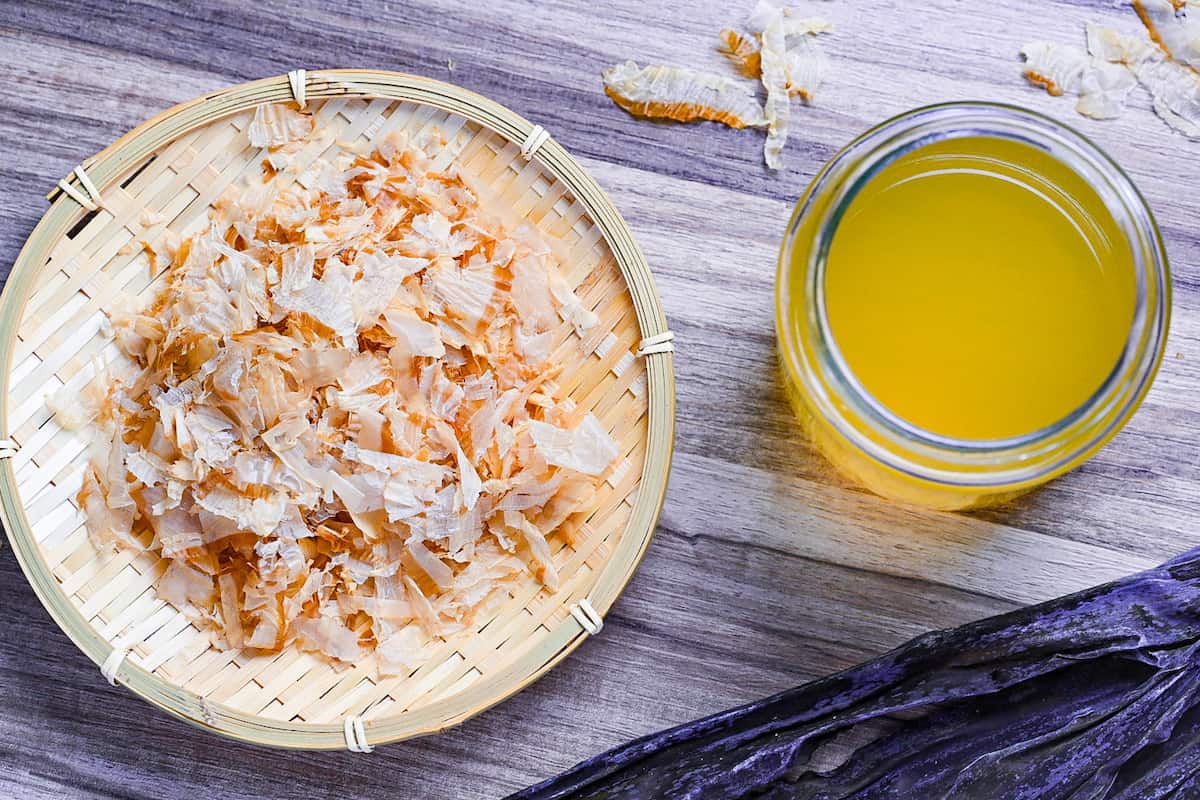
This is called umami synergy, and it’s the reason awase dashi (combined kombu and katsuobushi dashi) tastes dramatically better than kombu dashi or katsuobushi dashi alone. If you compare them side-by-side, you’d be surprised. It’s not additive. It’s multiplicative.
The mechanism works at the receptor level. Glutamic acid first binds to the umami taste receptor (T1R1+T1R3) on your tongue. When inosinic acid then binds to the same receptor complex, it stabilizes the connection and amplifies the signal sent to your brain. Doubling the amount of one compound doesn’t achieve the same effect. You need both.
The umami triangle
Think of umami as a triangle. At the 3 corners:
- Glutamic acid (kombu, vegetables, cheese, tomatoes)
- Inosinic acid (katsuobushi, niboshi, meat, fish)
- Guanylic acid (dried shiitake, dried mushrooms)
Glutamic acid synergizes with both inosinic acid and guanylic acid. But here’s a detail most people might miss: inosinic acid and guanylic acid do not synergize with each other. Combining katsuobushi (inosinic acid) and dried shiitake (guanylic acid) without kombu (glutamic acid) doesn’t trigger the multiplication effect. Glutamic acid is always the trigger. It must be present for synergy to occur.
If this all sounds abstract, you already experience umami synergy regularly. Parmesan cheese packs about 1,200-1,680 mg of glutamic acid per 100g (those white crystals on aged wheels? crystallized amino acids). A cheeseburger is actually an umami bomb: beef provides inosinic acid, aged cheese and ketchup provide glutamic acid. Caesar salad achieves synergy through Parmesan (glutamic acid) and anchovies (inosinic acid).
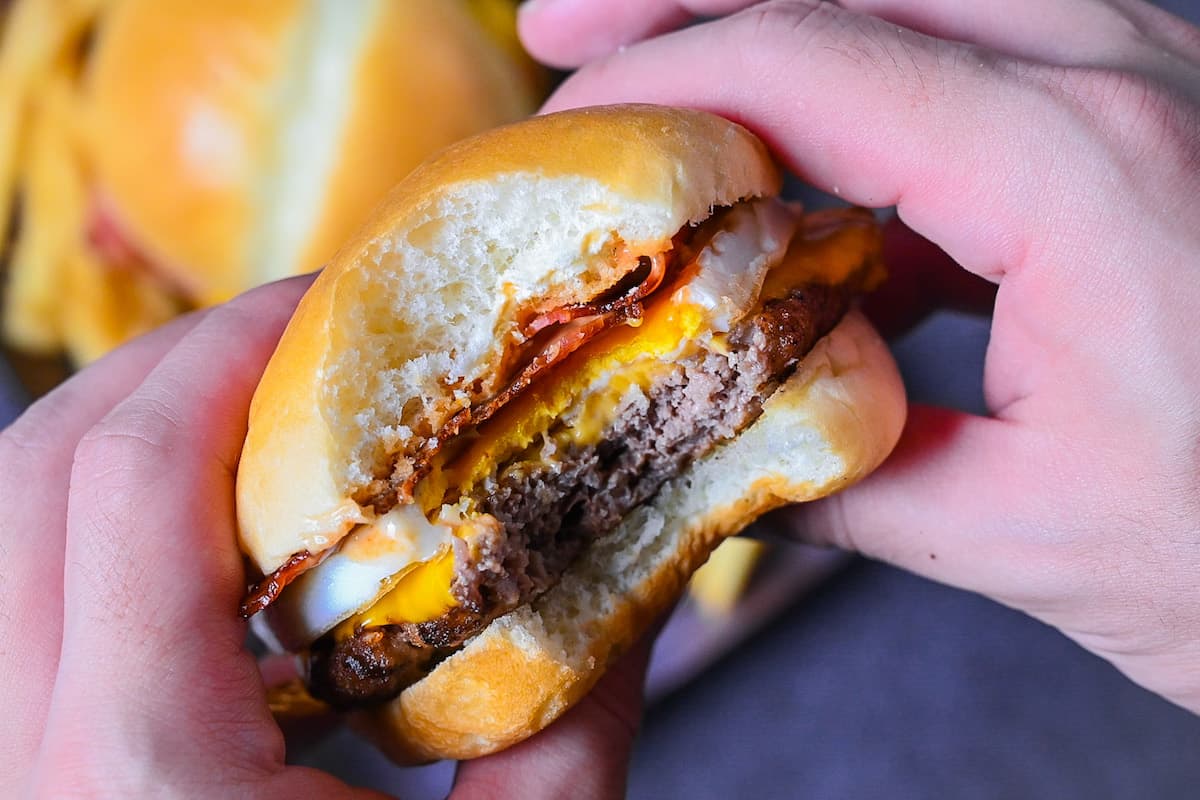
Dashi just does this more efficiently and more purely than any of those examples.
The even more powerful plant-based synergy
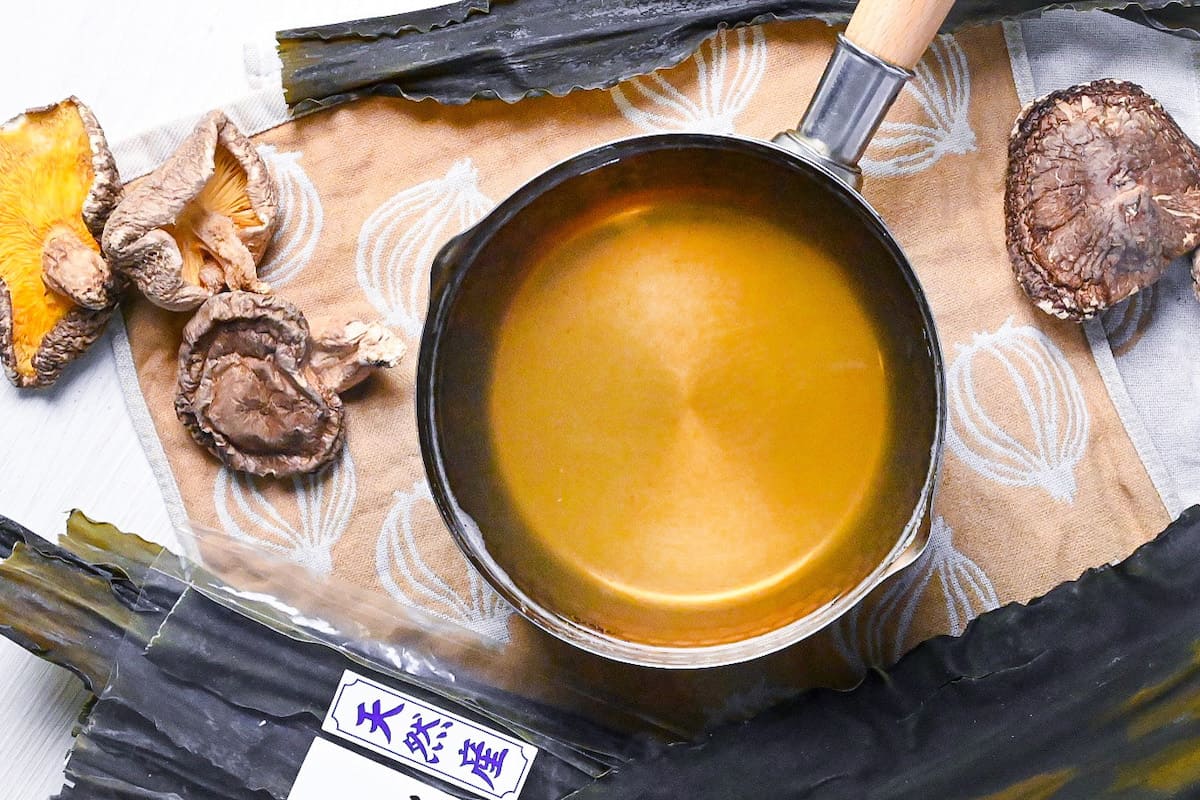
The synergy between glutamic acid and guanylic acid (from dried shiitake) can amplify umami perception by up to 30 times, even stronger than the kombu-katsuobushi combination. This means a vegan dashi made from kombu and dried shiitake isn’t just a compromise. In terms of pure umami intensity, it can actually exceed traditional dashi.
The Core Dashi Ingredients
Kombu (dried kelp)
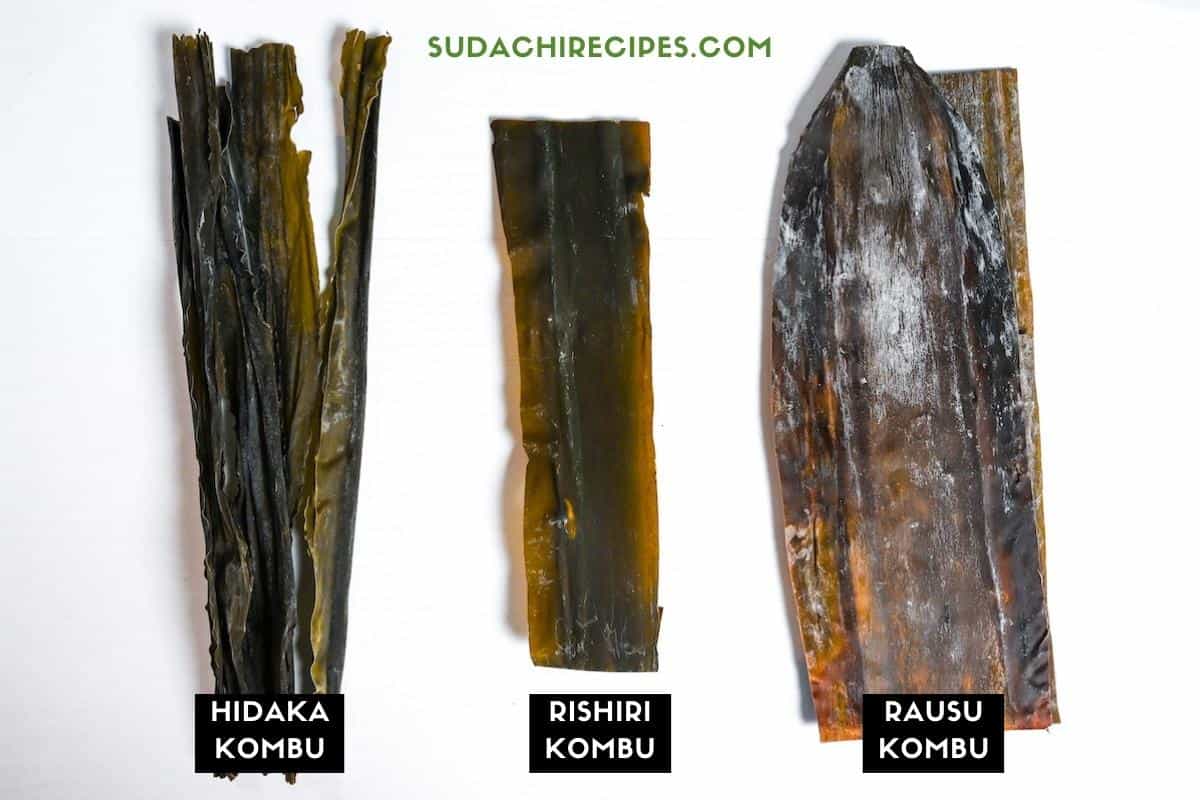
Over 90% of Japan’s kombu is harvested in Hokkaido, and the 4 major dashi varieties each come from different parts of the island’s coastline, producing distinctly different stocks.
- Ma-kombu (真昆布), harvested near Hakodate on the southern coast, is considered the highest grade. It produces a refined, elegant dashi with clean sweetness, and it’s the preferred kombu in Osaka’s cooking tradition.
- Rishiri-kombu (利尻昆布), from the Rishiri and Rebun islands off Hokkaido’s northwestern tip near Wakkanai, makes a clear, slightly salty dashi with a clean finish. It’s harder in texture and requires longer soaking, but it’s the kombu of choice for Kyoto’s kaiseki cuisine because it never clouds the broth.
- Rausu-kombu (羅臼昆布), from the Rausu area on the Shiretoko Peninsula in northeastern Hokkaido, is called “the king of kombu.” It produces the richest, most concentrated dashi with powerful umami, though the liquid tends to be more yellowish and slightly cloudy.
- Hidaka-kombu (日高昆布), from the Mitsuishi area on the southern Pacific coast, is softer and more affordable, a good dual-purpose option for both eating and dashi, though its umami is weaker than the top 3.
One important characteristic of kombu as a dashi ingredient, it has strong umami but extremely subtle aroma. This means it supports other ingredients and seasonings without competing with them. That quiet, behind-the-scenes nature is exactly what makes kombu the ideal foundation for dashi.
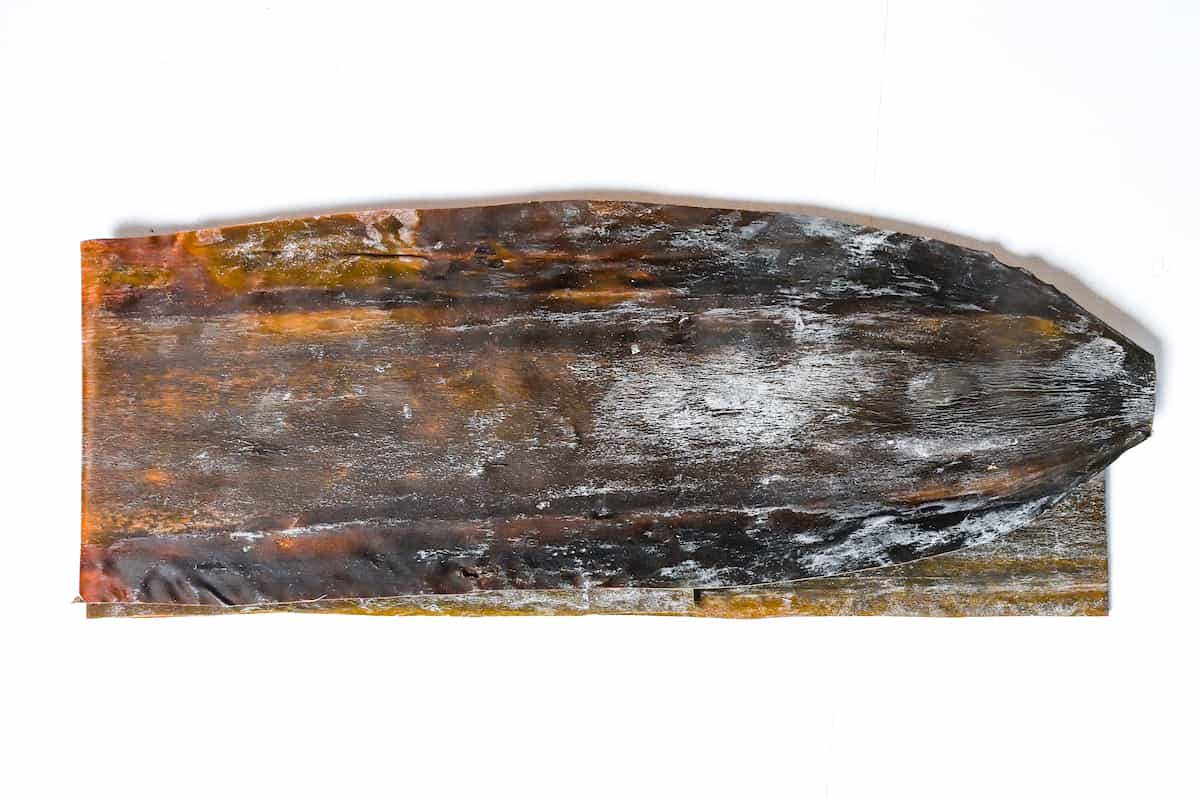
That’s mannitol, a sugar alcohol that crystallizes on the surface during drying. It contributes to sweetness and umami. Do not wash it off under running water. Just wipe the surface gently with a firmly wrung damp cloth to remove any sand. If it looks cotton-like or fuzzy with a musty smell, that’s mold, which is different, and the kombu should be discarded.
For a dedicated deep dive, check out my kombu dashi guide.
Katsuobushi (dried bonito flakes)
The production of katsuobushi is one of the most extraordinary food-processing journeys in any cuisine: fresh skipjack tuna is filleted, boiled, deboned by hand, repaired with fish paste, and then smoked 6-15 times over oakwood fires across roughly 20 days with resting periods between sessions.
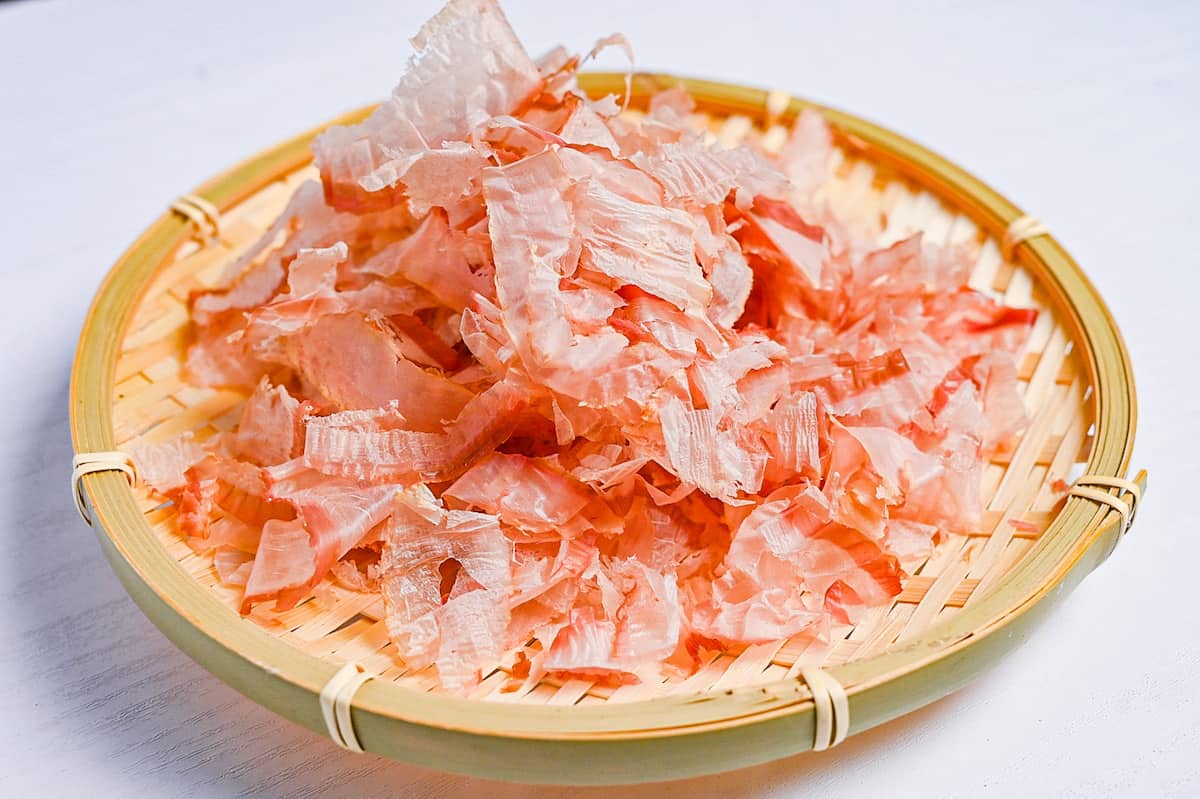
This produces arabushi (荒節). To create hon-karebushi (本枯節), the surface tar is scraped off and beneficial Aspergillus mold is applied and allowed to grow. This mold-curing cycle is repeated 4 or more times over 3-6 additional months. The finished product weighs less than 20% of the original fish and contains under 15% moisture. When 2 pieces are tapped together, they ring like ceramic. It is, by Guinness World Record standards, the hardest food in the world.
Shaving thickness also matters. Thin-shaved (usukesuri) extracts in 1-2 minutes and produces aromatic, elegant dashi ideal for clear soup. Thick-shaved (atsukesuri) requires 15-40 minutes of simmering and yields a concentrated, powerful dashi suited for soba tsuyu and robustly seasoned dishes.
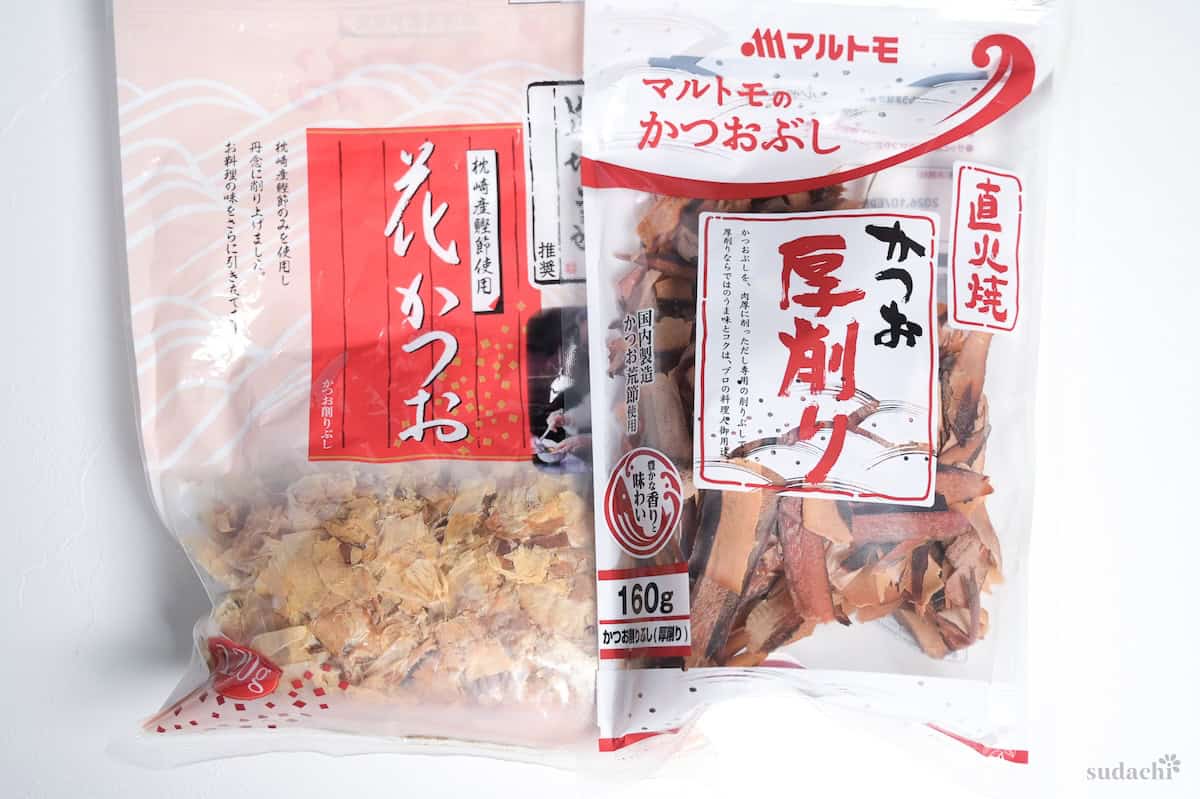
For everything you need to know about this ingredient, read the katsuobushi guide written by professional chef Hidefumi Aoki.
Niboshi
Niboshi (煮干し, also called iriko in western Japan) literally means “boiled and dried,” and the name applies to any small fish prepared this way. The 2 most common types are quite different:
- Katakuchi-iwashi niboshi (dried Japanese anchovy) is the most widely available and what most people mean by “niboshi.” It has a strong, assertive aroma and robust umami that holds its own against bold seasonings. This is the niboshi for hearty miso soups like tonjiru, rustic simmered dishes, and Sanuki udon broth.
- Ago niboshi (dried flying fish, also called yaki-ago when grilled) is less fishy and more mild, smooth, and sweet than anchovy niboshi. It produces a refined, elegant “golden dashi” that’s popular for chawanmushi, oden, and lighter soups.
The key to clean niboshi dashi is preparation. The heads and guts are traditionally removed because the gills contain hemoglobin that causes fishiness, and the intestines release bitter oxidized lipids. That said, for cold-water overnight extraction, many experts say removing them isn’t necessary since those compounds need heat to dissolve. Good niboshi should be silver-colored with an intact belly. Yellow discoloration means oxidation.
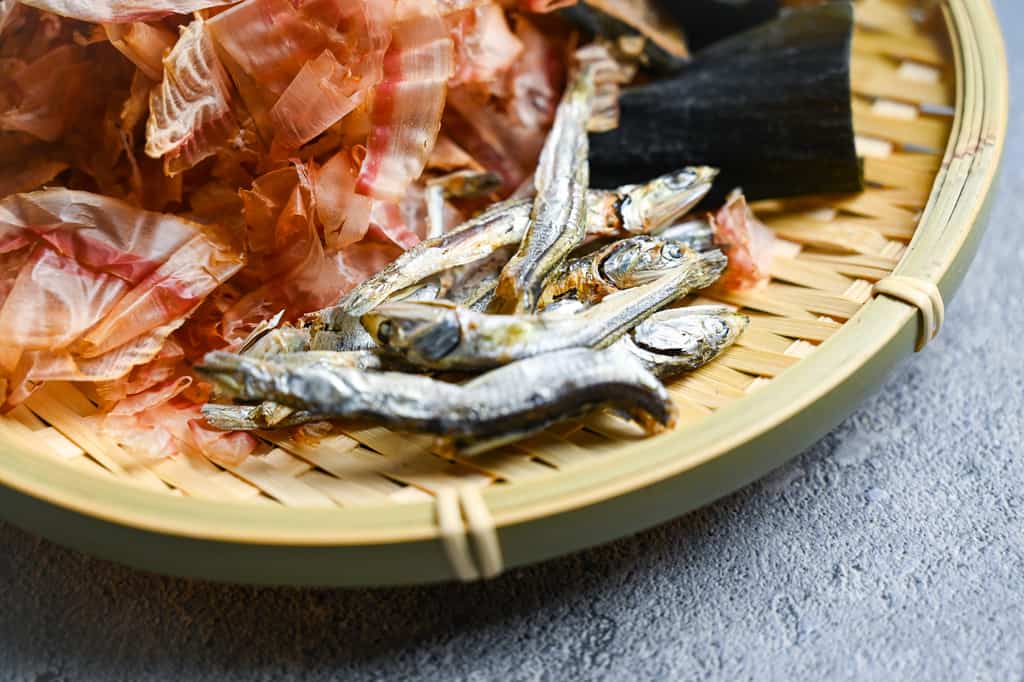
The important thing to understand about niboshi is that its bold, individual character calls for equally bold ingredients and seasonings. Pair it with strong flavors that can match its intensity.
Dried Shiitake Mushrooms
Dried shiitake (干し椎茸) comes in 2 main grades. Donko (冬菇) is harvested while the cap is partially open, yielding thick, meaty mushrooms with a satisfying texture. Koshin (香信) is harvested fully opened, thinner and more affordable, best for slicing into soups and stir-fries. The soaking liquid is the dashi, rich in guanylic acid, and should never be discarded.
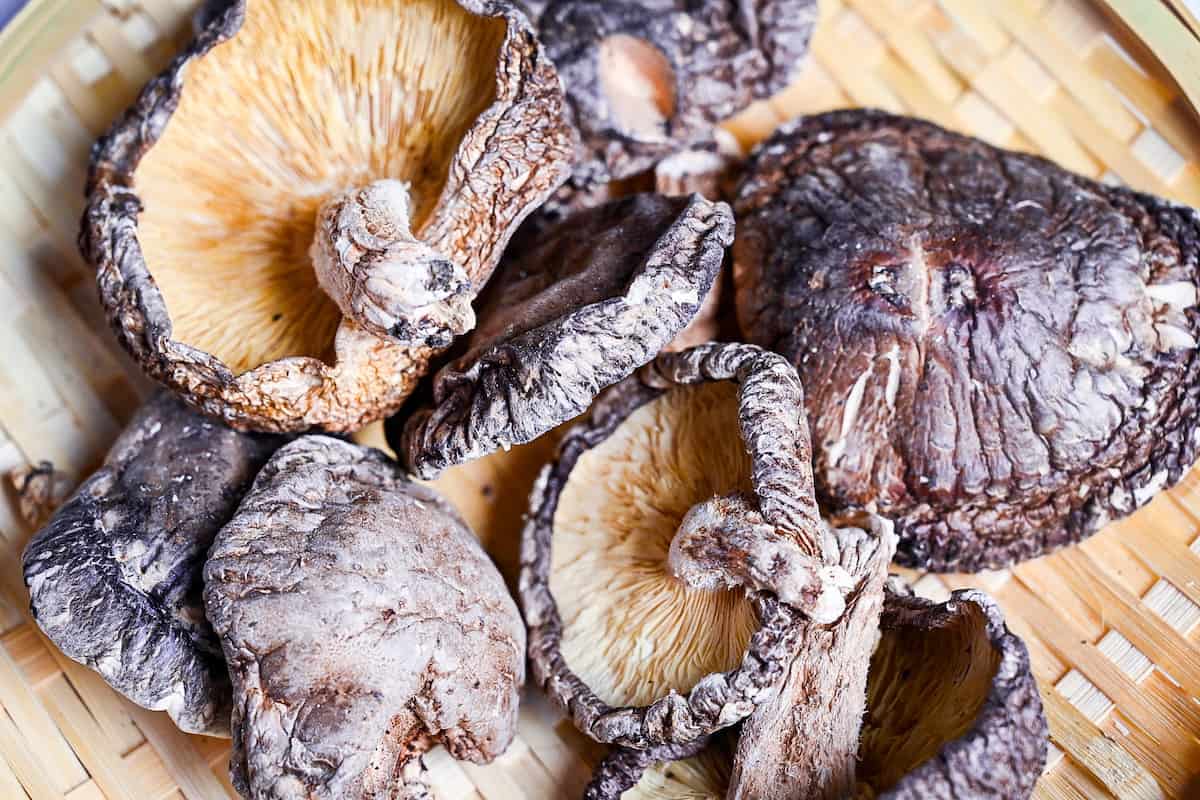
What makes dried shiitake special is something fresh shiitake can’t offer. The drying process dramatically increases guanylic acid content through the enzymatic breakdown of RNA, a transformation that gives dried shiitake its characteristic umami that fresh shiitake largely lacks.
And the unique thick texture and concentrated flavor open up possibilities that go beyond what raw shiitake can do. In warm soups and simmered dishes, dried shiitake’s guanylic acid creates umami synergy with glutamic acid from kombu or vegetables, giving you a depth of flavor that fresh mushrooms simply cannot replicate.
Check out the dried shiitake guide for a more detailed breakdown.
Other Dashi Ingredients
Beyond these core ingredients, some professional kitchens use a family of dried fish called zassetsu (雑節). Soda-bushi (宗田節) from frigate tuna produces an intensely dark, concentrated dashi essential for mori-soba tsuyu. Saba-bushi (鯖節) from mackerel gives rich sweetness and deep body. Urume-bushi (うるめ節) contributes a mellow, sweet character that defines Kansai-style udon. Professional Japanese kitchens rarely use a single type. The broth for a bowl of kitsune udon, for example, typically blends katsuo, mejika, urume, and saba in carefully calibrated proportions.
4 Ways to Make Dashi at Home: My Honest Ranking
This is the section I built this article around. There’s no shortage of articles telling you how to make dashi. But almost none of them help you figure out which method is right for you. Here’s my honest ranking, based on years of using all 4 methods, with the real trade-offs laid out.
1. Homemade Dashi Packets (My Top Pick)
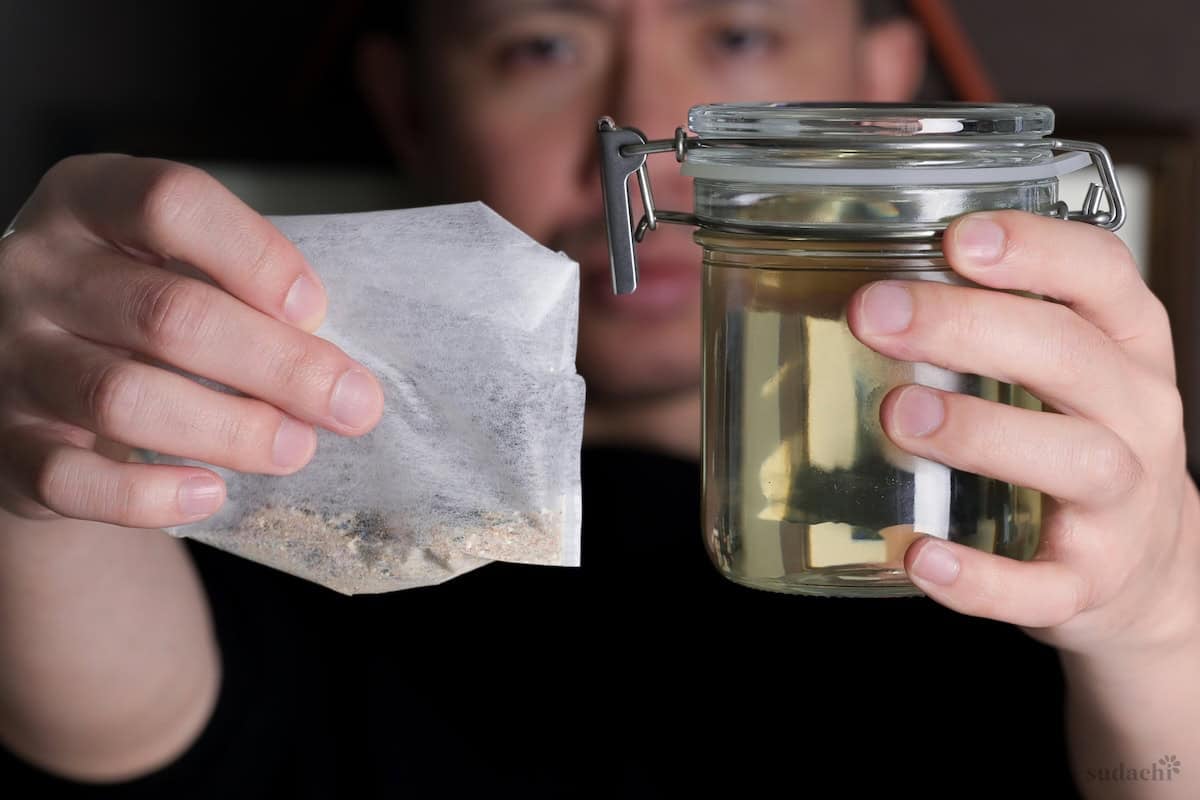
This is my now go-to, and it’s the method I recommend most. You grind pure dashi ingredients into coarse pieces, pack them into disposable tea filter bags, and brew. That’s it.
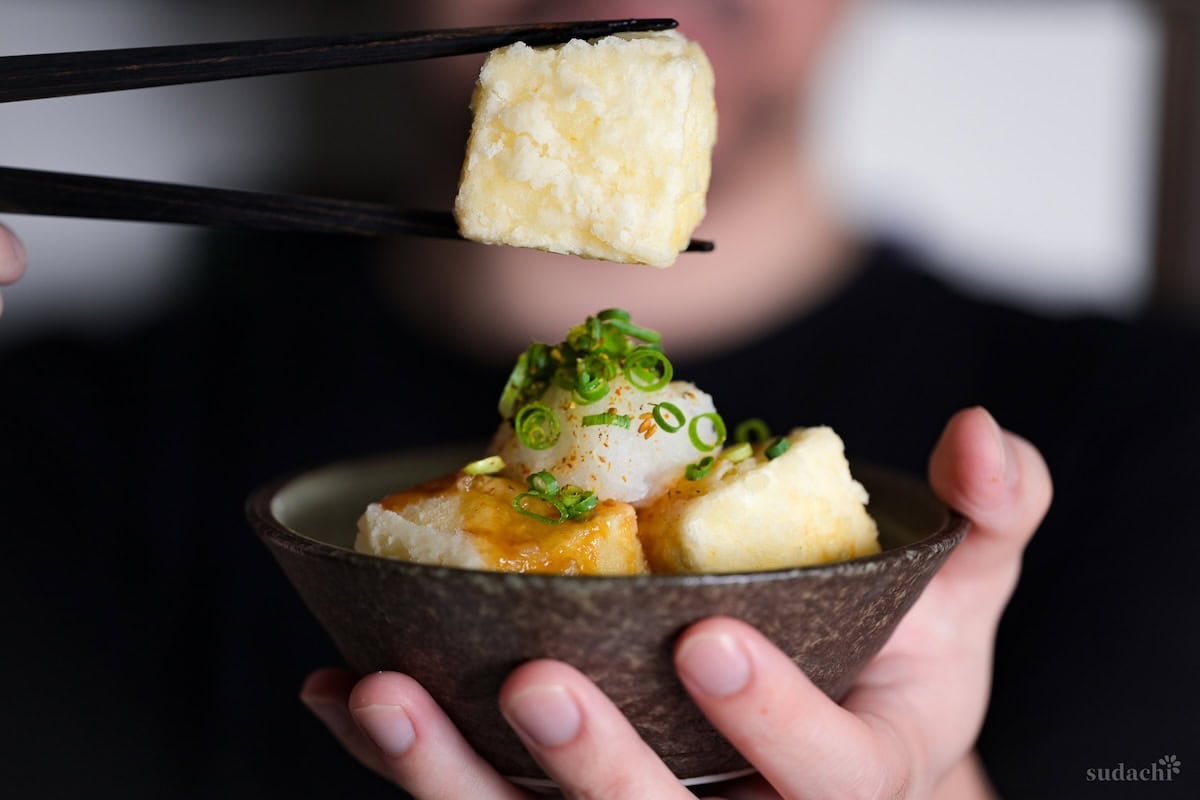
Why #1? Because these packets are 100% natural, that means you control every ingredient and ratio, and they work beautifully for cold-brew overnight in the refrigerator. Drop a packet in a jar of water before bed, and clean, restaurant-quality dashi is waiting for you in the morning. I use this dashi for everything from kake udon to agedashi tofu to weeknight miso soup.
One batch on a Sunday gives you enough packets for weeks. Store them in ziplock bags: 1 month refrigerated, 2-3 months frozen.
If you want from-scratch flavor but don’t want from-scratch effort every time, this is the sweet spot. For the full method, ingredients, and ratios, head over to my homemade dashi packets guide.
2. Store-Bought Dashi Packets
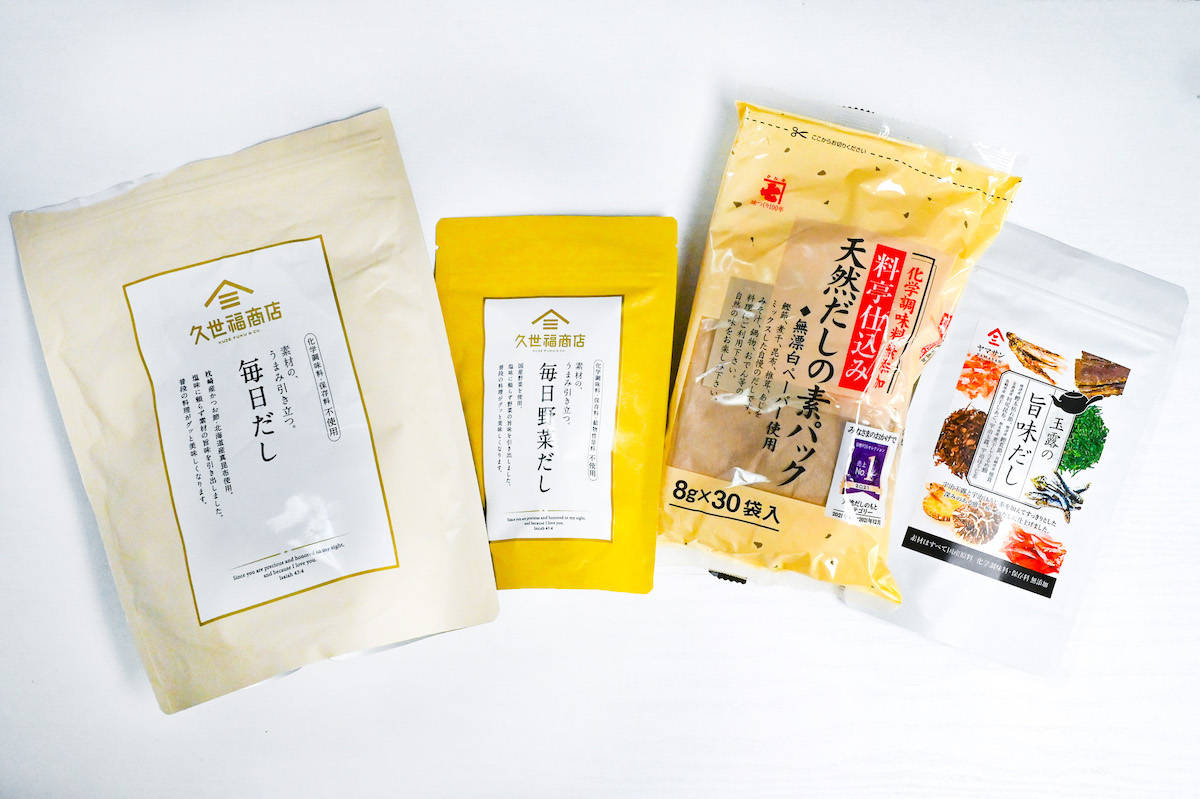
High-quality store-bought packets can produce very good dashi with almost zero effort. The best ones use real, named-origin ingredients and minimal additives. The problem is that “almost zero additives” is doing a lot of heavy lifting in some brands’ marketing.
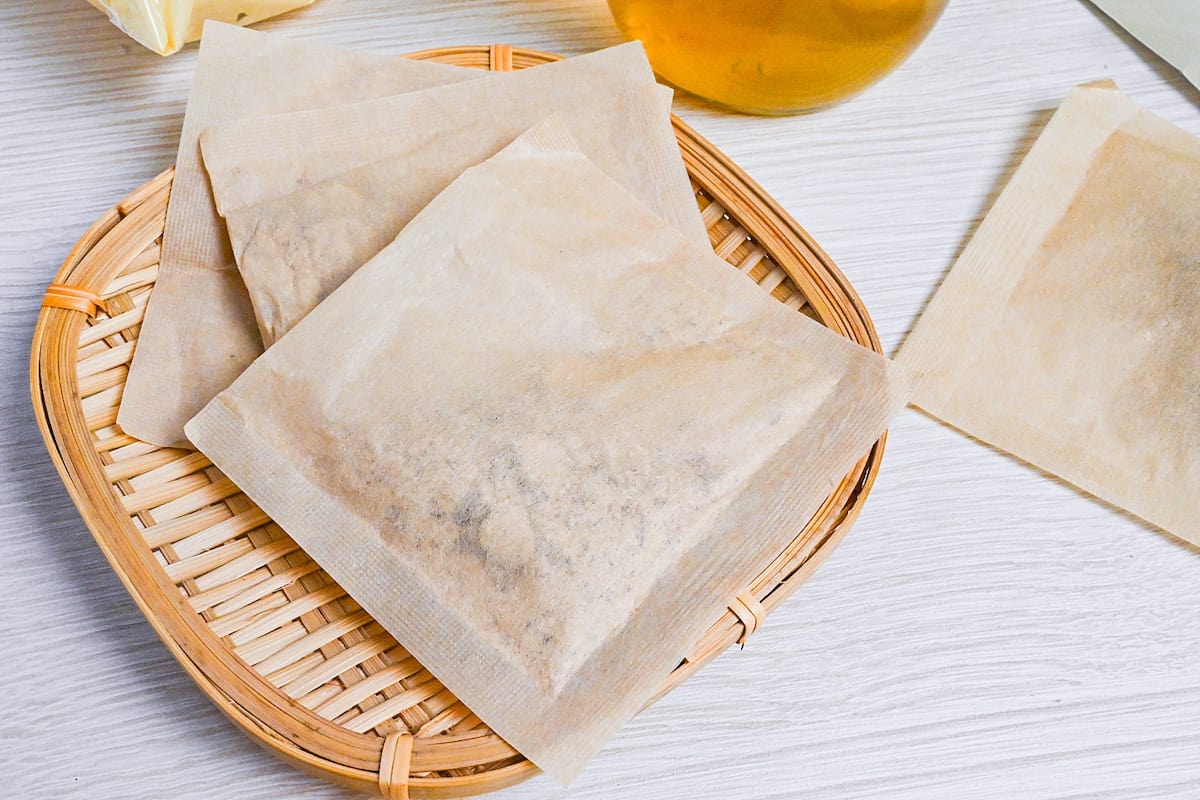
Some brands market themselves as “chemical additive-free,” but the ingredient list includes yeast extract, powdered soy sauce, and starch hydrolysate. These ingredients function as flavor boosters but are classified as “foods” rather than “additives” under Japanese labeling laws.
Ingredients are listed in order of quantity. If salt leads the list, it’s a budget product. Watch for amino acid, yeast extract, and hydrolyzed protein, which serve similar flavor-boosting functions. It’s not a bad thing, but it has more flavor than pure dashi stock.
For a deeper breakdown, see my store-bought dashi packets guide.
3. From-Scratch Traditional Dashi
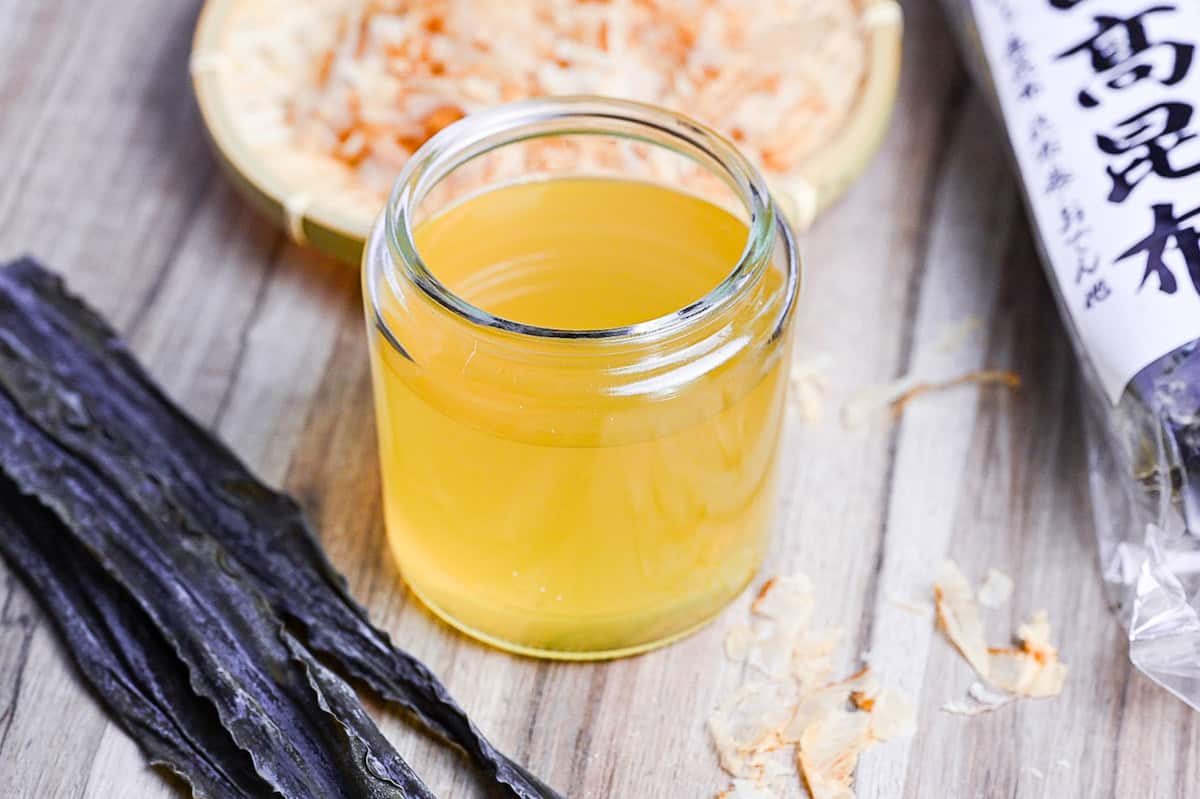
Nothing beats this for flavor. A properly made ichiban dashi has a delicacy, complexity, and aroma that no shortcut can fully replicate (even homemade dashi packet cannot!).
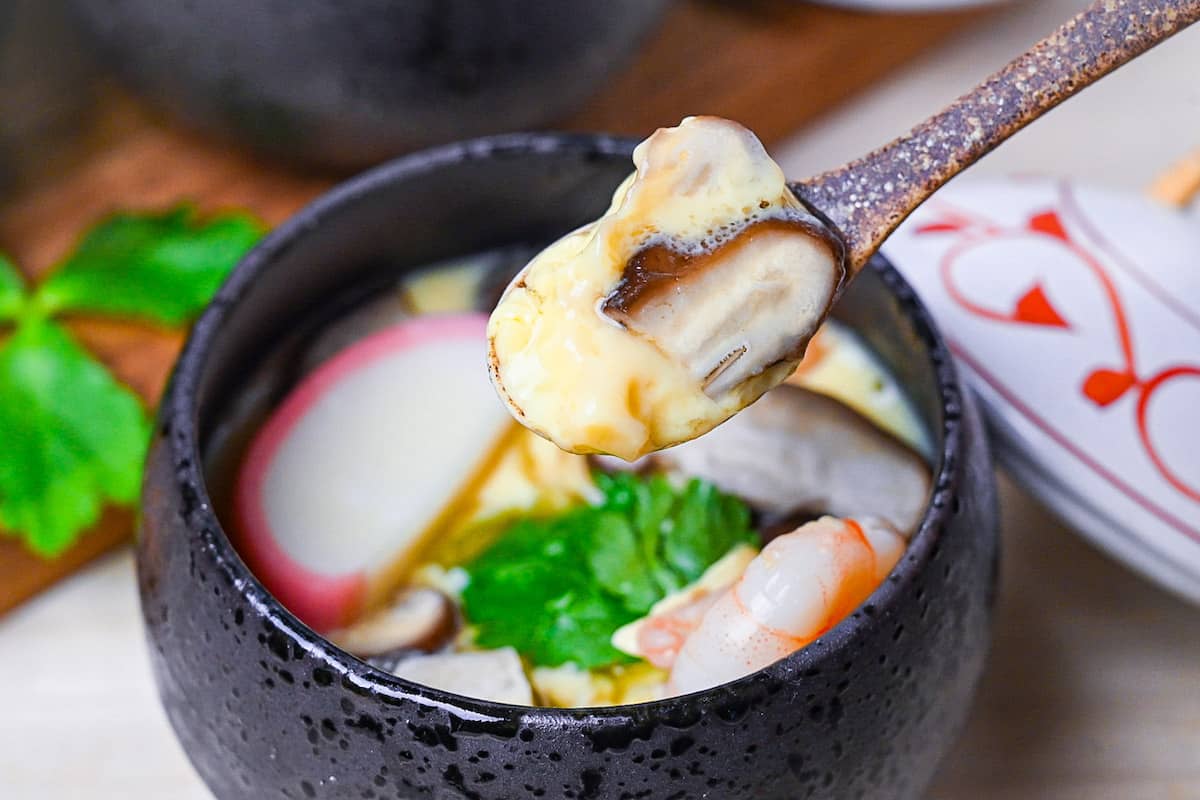
The result is the only option for dishes where dashi is front and center, such as clear soup, chawanmushi, and dashimaki tamago.
Niban dashi (second brew) is cloudier and more robust, perfectly suited for miso soup, niku dofu, simmered kiriboshi daikon, and other strongly seasoned dishes.
For special occasions, absolutely make it from scratch. If you’re making big dinner for guests, from-scratch dashi is worth every minute. For the full method, visit the awase dashi guide.

4. Instant Dashi Granules and Liquid Dashi
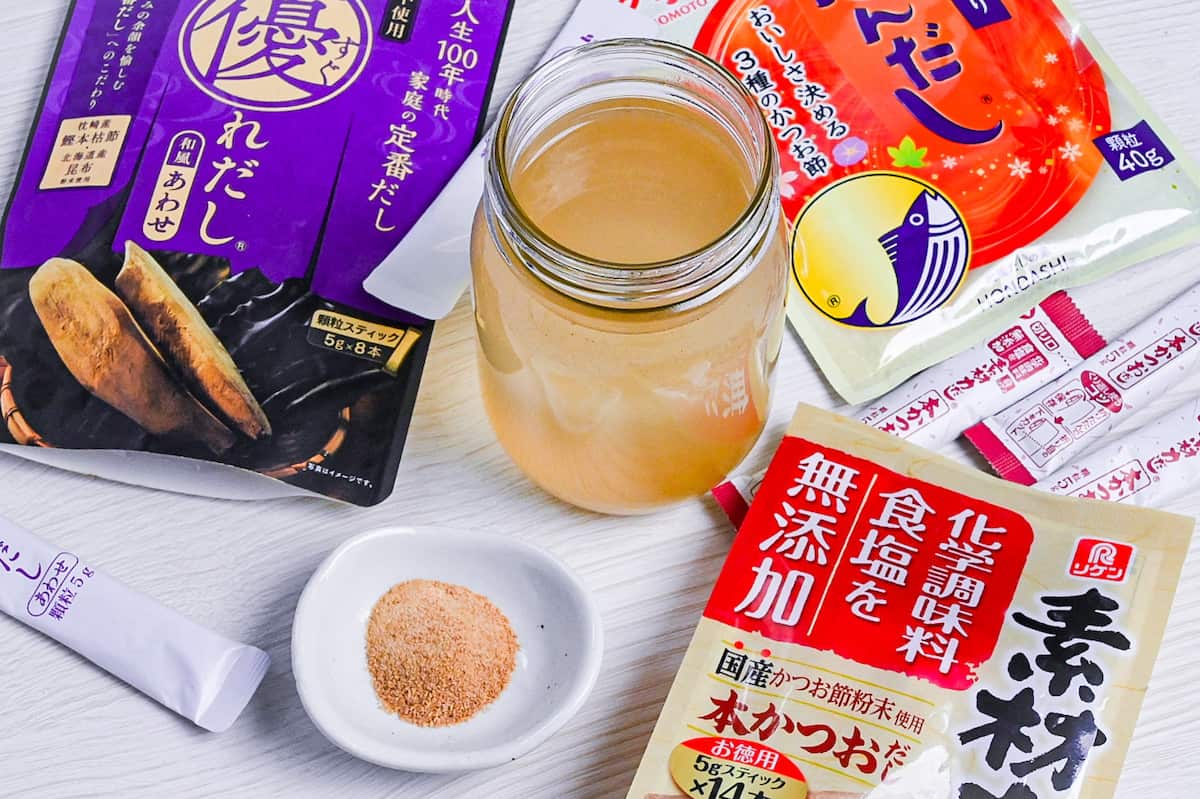
I use instant dashi granules sometimes. But I don’t use them to make dashi. In a way, they’re closer to bouillon powder than they are to real dashi. When I’m making yoshinoya-style butadon or okonomiyaki and I want that punchy, street-food-ish Japanese flavor on purpose, a pinch of granules does the job as a seasoning. But I don’t use them to prepare dashi stock.
For a full breakdown, see the dashi granules guide.
Why Real Dashi Tastes “Thin” If You’re Used to Instant
This might be the most important practical insight in this entire guide. Instant dashi granules deliver flavor-boosters and salt at concentrations far exceeding what natural extraction produces. Your umami receptors recalibrate to expect this intensity. You’re not tasting weak dashi. You’re tasting real dashi through a palate calibrated to artificial levels.
A trial by Bonito Japan with DeNA employees found that after drinking natural dashi for just 10 days, 80% of participants reported enhanced taste sensitivity. Commit to natural dashi for 2 weeks. Your palate will adjust.
Vegan and Vegetarian Dashi
Vegan dashi is where dashi started (shojin ryori, Buddhist temple cuisine). Kombu dashi is the simplest option. Kombu + dried shiitake gives up to 30x umami synergy.
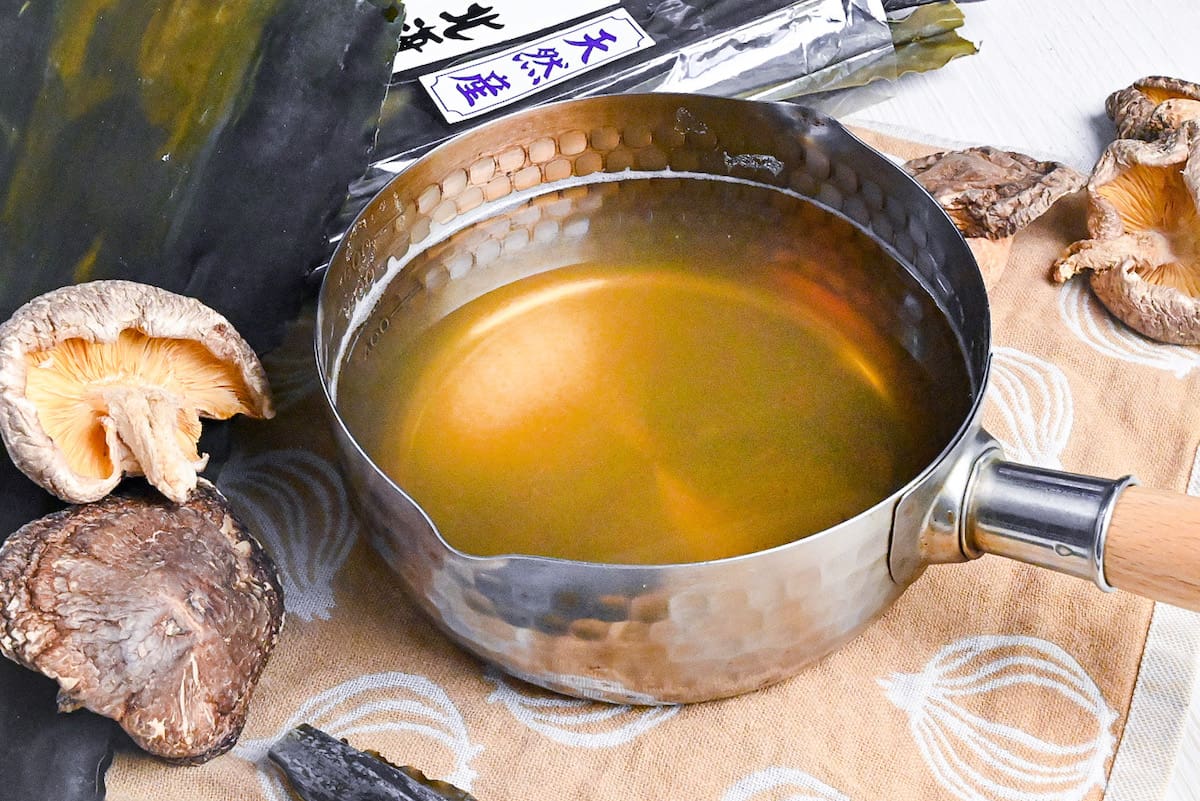
See the vegan awase dashi guide.
Dashi Stock FAQ
Fundamentally different products. Granulated powder (like Hondashi) dissolves instantly and is legally classified as a “flavor seasoning.” Primary ingredients: salt and sugar, with bonito extract for flavor. Dashi packets are tea-bag sachets of ground natural ingredients you steep for 2-5 minutes. Premium packets contain only natural ingredients; budget packets add salt, sugar, or flavor boosters. The label test: If 食塩 (salt) or 砂糖 (sugar) appears first, it’s a seasoning product regardless of packaging. If the first ingredients are かつお (bonito), こんぶ (kombu), いわし (sardines), it’s closer to real dashi.
6 causes in order of likelihood: 1. Not enough material (most common). 2. Wrong kombu type. Naga-kombu and hayani-kombu are for eating, not dashi. Use ma-kombu, rishiri, rausu, or hidaka. 3. Boiled the kombu. Above 70℃ (158°F), alginic acid, sulfur compounds, and chlorophyll release, masking clean umami. 4. Stale katsuobushi. Dark brown, dull, flat-smelling flakes are oxidized. Use fresh or store opened packages in the freezer. 5. Hard water. Calcium/magnesium bind umami compounds. Use soft/filtered water. 6. Palate calibration. If switching from instant, your tongue expects MSG-level intensity. Give it 2 weeks to recalibrate.
No. Dashi extracts umami compounds from pre-concentrated dried ingredients in minutes. Western stock extracts gelatin, collagen, and fat from raw bones over 4-12 hours. Research by Ninomiya (2016) confirmed their amino acid profiles are fundamentally different: dashi produces a “simple umami taste” while stocks develop complex profiles through prolonged extraction. Dashi is a focused umami extraction. Stock is a broad-spectrum extraction. Both are excellent, but not interchangeable in most cases.

Leave a rating and a comment