

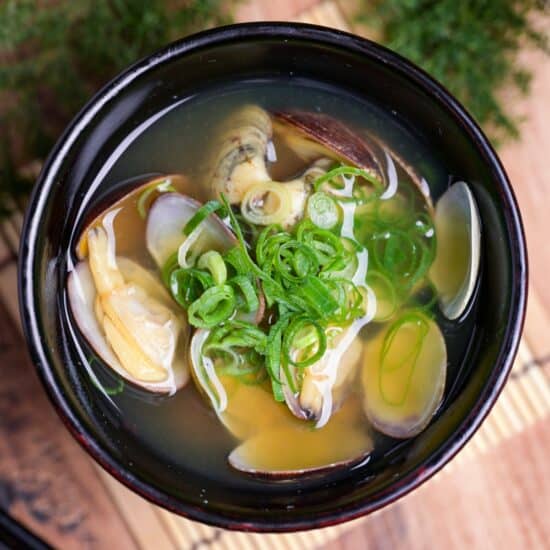


You might wonder, whether it’s possible to make a proper miso soup without dashi stock made with bonito flakes and kombu?
Yes it is. All you need is a handful of clams. Those little shells are pure umami. Open them up and an intense savory broth pours out, rich enough to carry the whole soup. No dashi required.
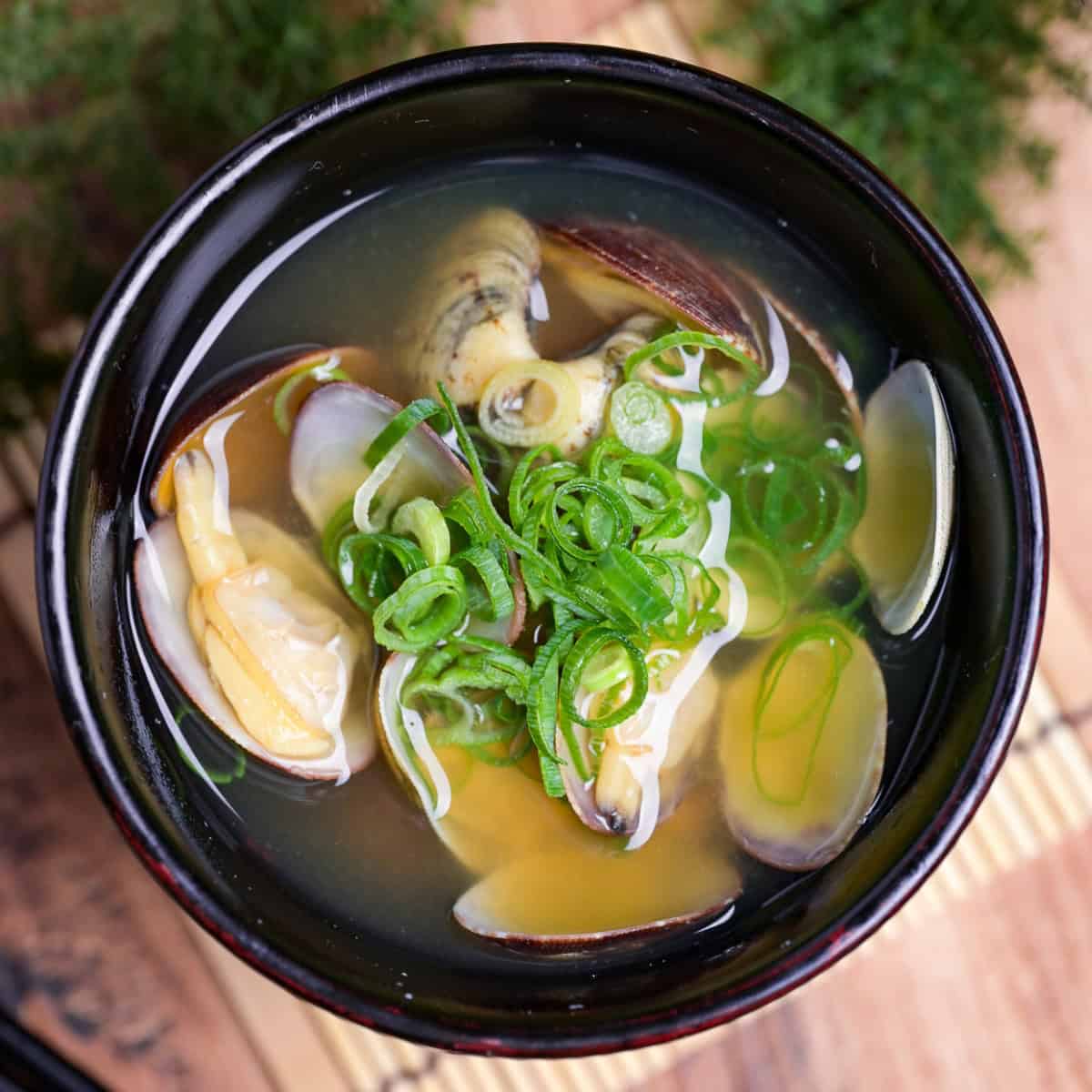
Clam miso soup
Recipe Snapshot
- What is it? Clam miso soup is a bowl built on the umami of clams alone, briny and savory without any blended bonito-and-kombu stock behind it.
- Flavor profile: Briny savor leads, with the clams’ own sweetness and the depth of miso layered lightly on top. The finish stays clean and never turns heavy.
- Why this recipe works: The succinic acid in clams is its own stock, so you skip the dashi, and careful purging keeps the bowl clear and grit-free. Kombu adds depth but stays optional.
- How to make it: Purge the clams of sand and salt, steam them open in sake, fold in a little kombu dashi if you like, then stir in the miso off the heat.
- What to expect: About 15 minutes of active work, but plan roughly 1 hour 45 minutes total with the soak. Serves 4. The sand purge is where you stumble, and skimping leaves grit.
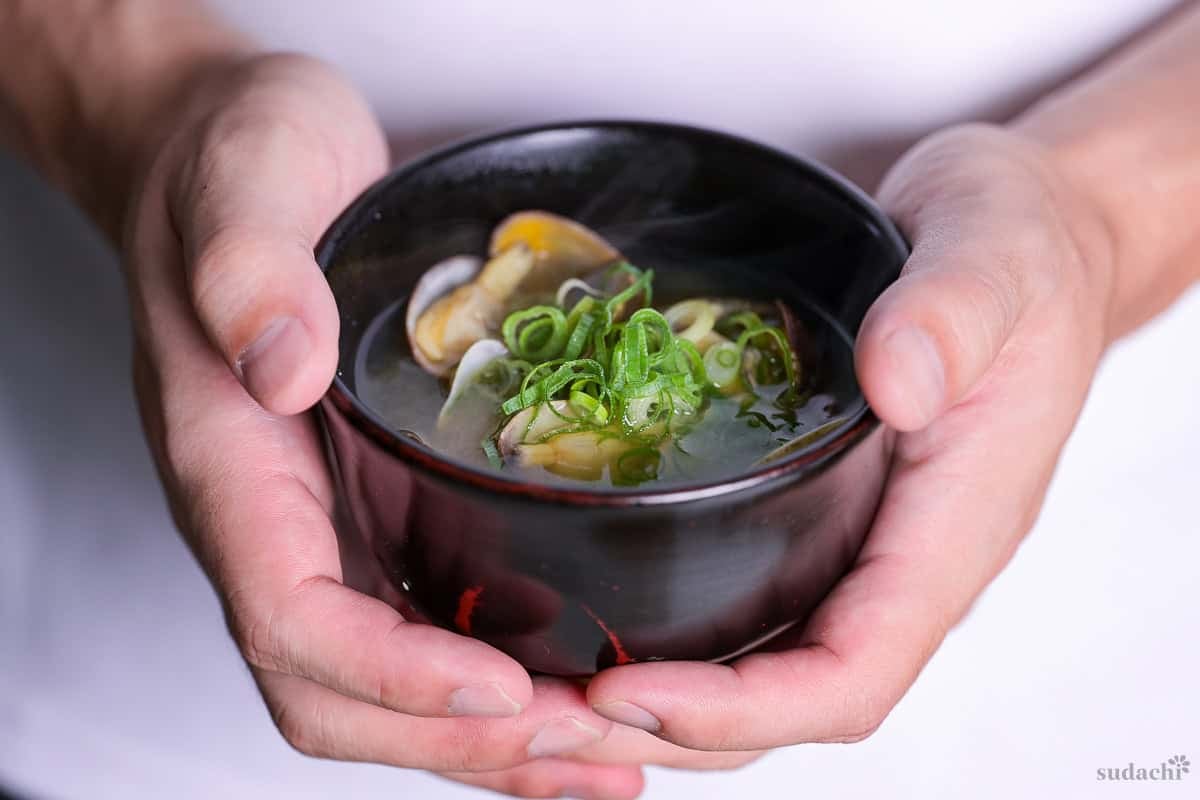
What Is Clam Miso Soup?
Clam miso soup, or asari no miso shiru, is a Japanese miso soup variation built around asari clams. Its defining trait is that it stands completely on its own without needing any awase dashi. The clams themselves release such rich umami that they become the broth.
That umami comes from succinic acid, the distinctive umami compound of shellfish. How much a clam carries is not fixed: freshly harvested asari measured under 40 mg per 100 g, well below published figures, and the level climbed the longer the clams sat out of water, with the biggest rise in summer. A small piece of kombu can add extra depth if you like, but it is entirely optional. Plain water works well.
Asari Miso Soup Ingredients
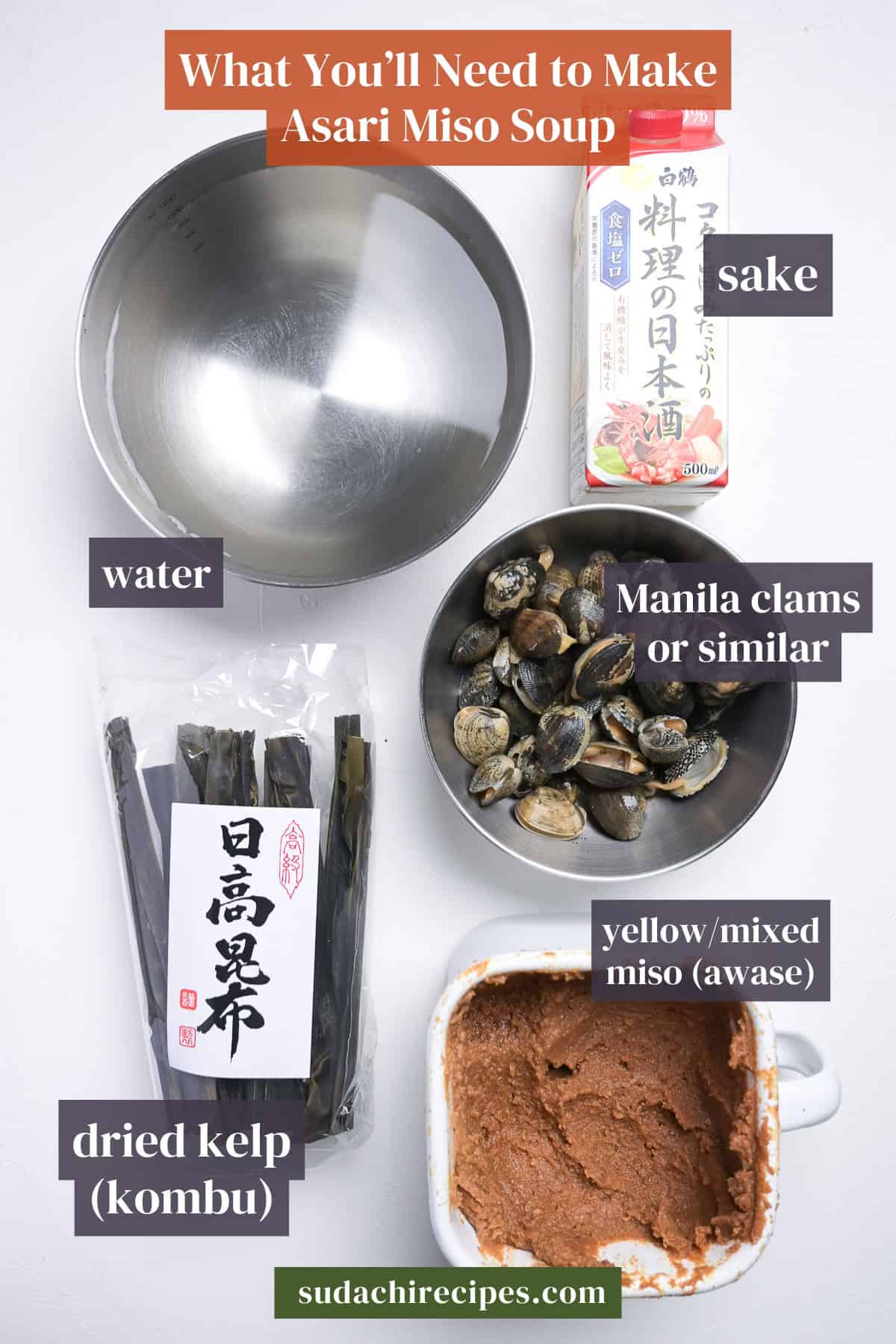
- Clams (asari): The briny depth that carries the bowl comes from succinic acid (the umami compound of shellfish), and nothing but a bivalve makes it, so there is no standing in for the clams themselves. Buy them live and fresh. Look for shells that are shut, or that close when you tap them, and set aside any that gape open or are cracked. On the US west coast, Manila clams or littleneck sit in the same spot, and you can find frozen shelled clams too. At a European fishmonger, vongole or palourde are direct equivalents. Use whatever fresh bivalve you can get and do not overthink it.
- Miso: Awase miso (blended miso, sometimes labeled yellow miso) or red miso both suit this bowl. The lighter the miso, the more the delicate brine of the clams comes forward, while red miso brings a heavier, deeper body. Either works. Just keep in mind that the clams are already salty on their own, so dissolve in a little less miso than you would for an everyday miso soup. Start on the light side and taste as you add more.
- Kombu: A small piece adds a layer of depth behind the clam brine without ever getting in its way. It is not something the soup misses if you leave it out, so if you do not have any on hand, skip it and make the soup with plain water.
Substitution Ideas
- Clams → Littleneck or Manila clams: In the US these sit in the exact same niche, so they are the most natural swap. The taste and texture come through almost unchanged.
- Clams → Cherrystone, cockle, vongole, or palourde: In Europe, vongole and palourde are direct equivalents. Any bivalve your fishmonger sells as clams will do the job here.
- Clams → Shijimi or hamaguri: Shijimi (small freshwater clams) give a stronger, more intense stock, though the meat inside is tiny. Hamaguri (larger clams) go the other way, for an elegant, almost luxurious briny broth.
- Clams → Frozen shelled or frozen in-shell: These are easy to find overseas. Drop the in-shell kind into hot water straight from frozen and the shells open, but thaw them first and they will not. Shelled clams give a milder taste than in-shell.
- Clams → Canned clams: This is the last resort for when you want the soup fast. The taste and the bite both shift away from fresh.
- Kombu dashi → Water only: The clams put out their own stock, so you can drop the kombu entirely and build the soup on plain water.
Have trouble finding Japanese ingredients? Check out my ultimate guide to Japanese ingredient substitutes!
How to Make Clam Miso Soup
i. Rinse the clams under running water, gently rubbing the shells against each other (do not scrub hard, since broken bits of shell are what turn the soup gritty).
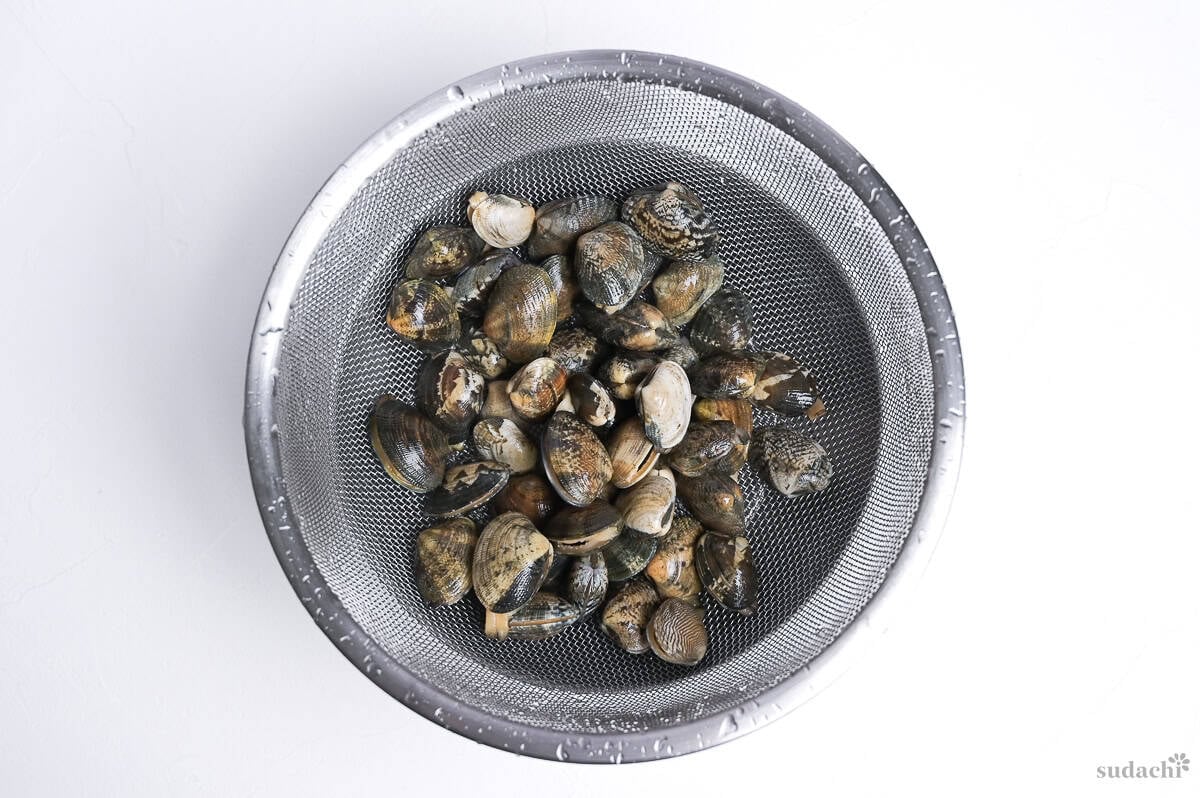
ii. Set aside any with cracked shells, or that stay open and do not close.
iii. Tap the clams together lightly. A dull, low sound means the clam is full and heavy inside. A high, hollow ring means an empty one, so set those aside.
i. Dissolve salt at 3 percent of the water weight.
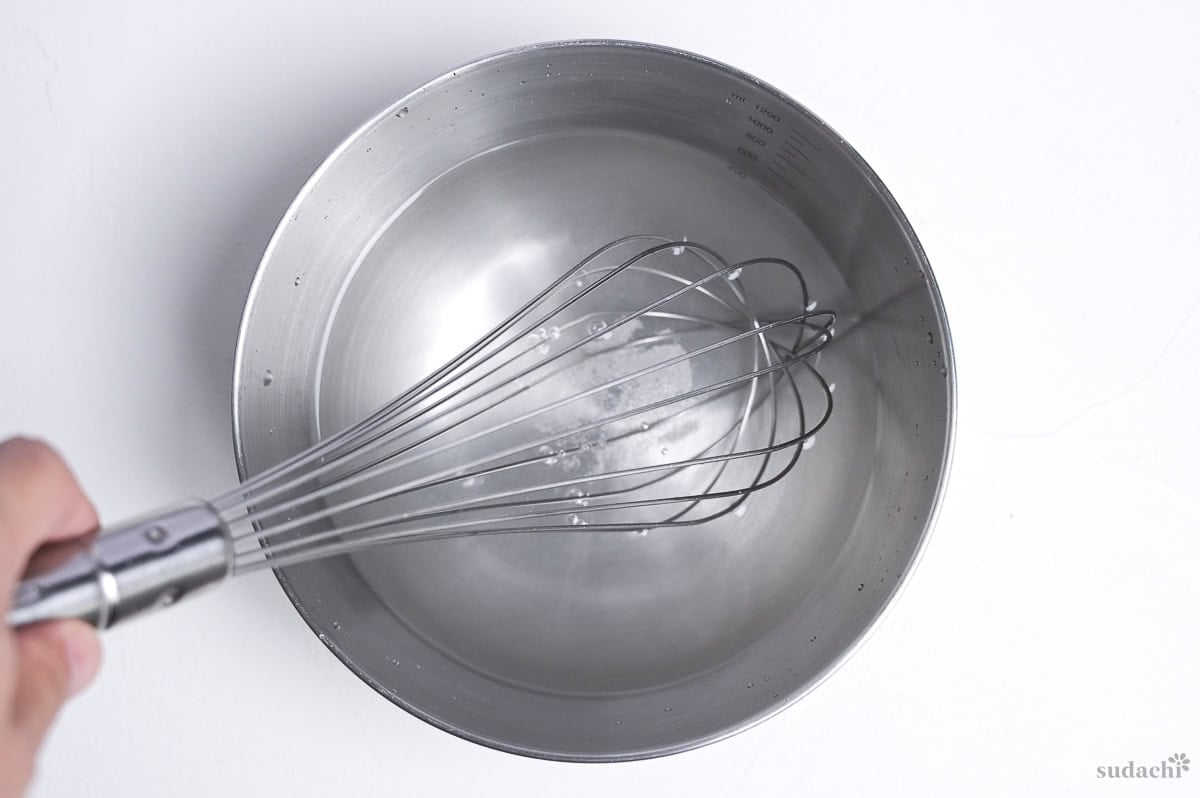
ii. Spread the clams in a single layer in a flat container, with water just below the tops of the shells.
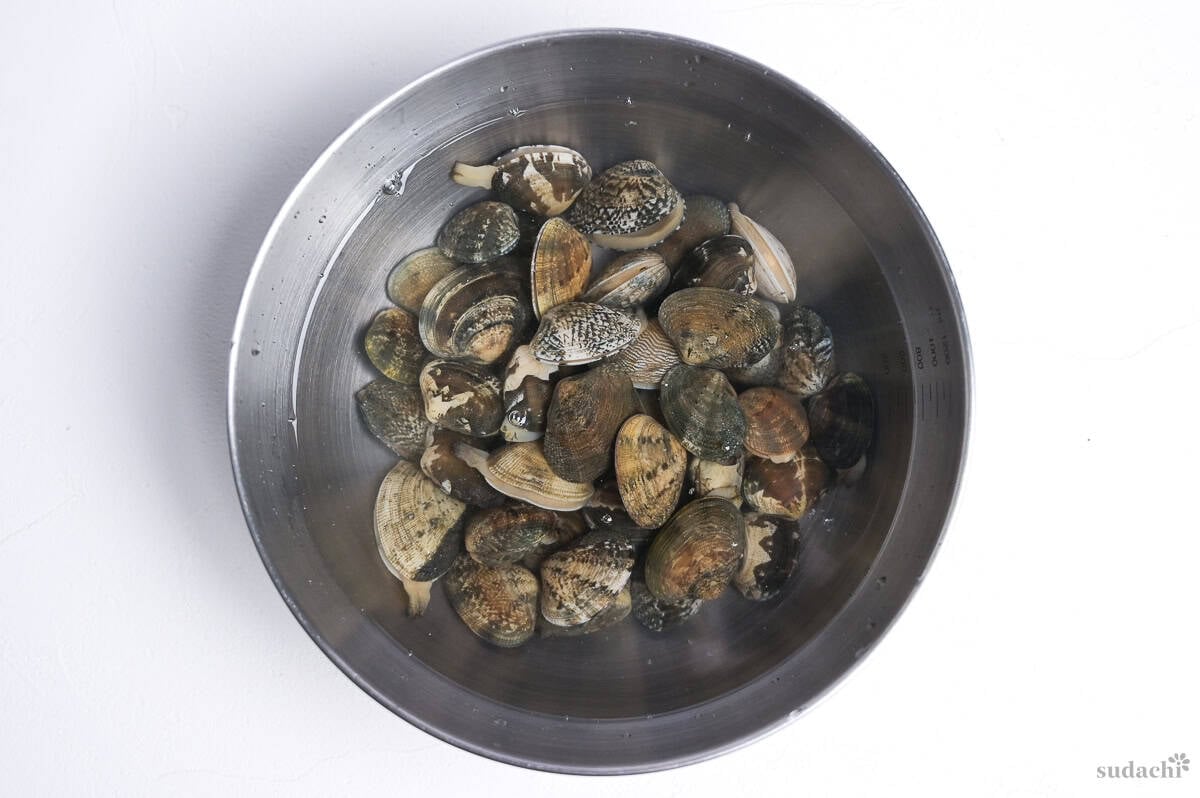
iii. Cover to darken and leave at about 20°C (68°F) for 1 hour. Do not refrigerate. If the room runs above 25°C (77°F), switch to the fridge to keep them from spoiling.
The brine mimics the sea, so the clams settle and spit out their sand. Clams are nocturnal, so covering them to darken the container moves the purge along. The fridge is out because below 10°C (50°F) they go sluggish and stop purging.
i. Once purged, lift the clams out and rest them in a strainer for 30 minutes. Do not leave them longer than that.
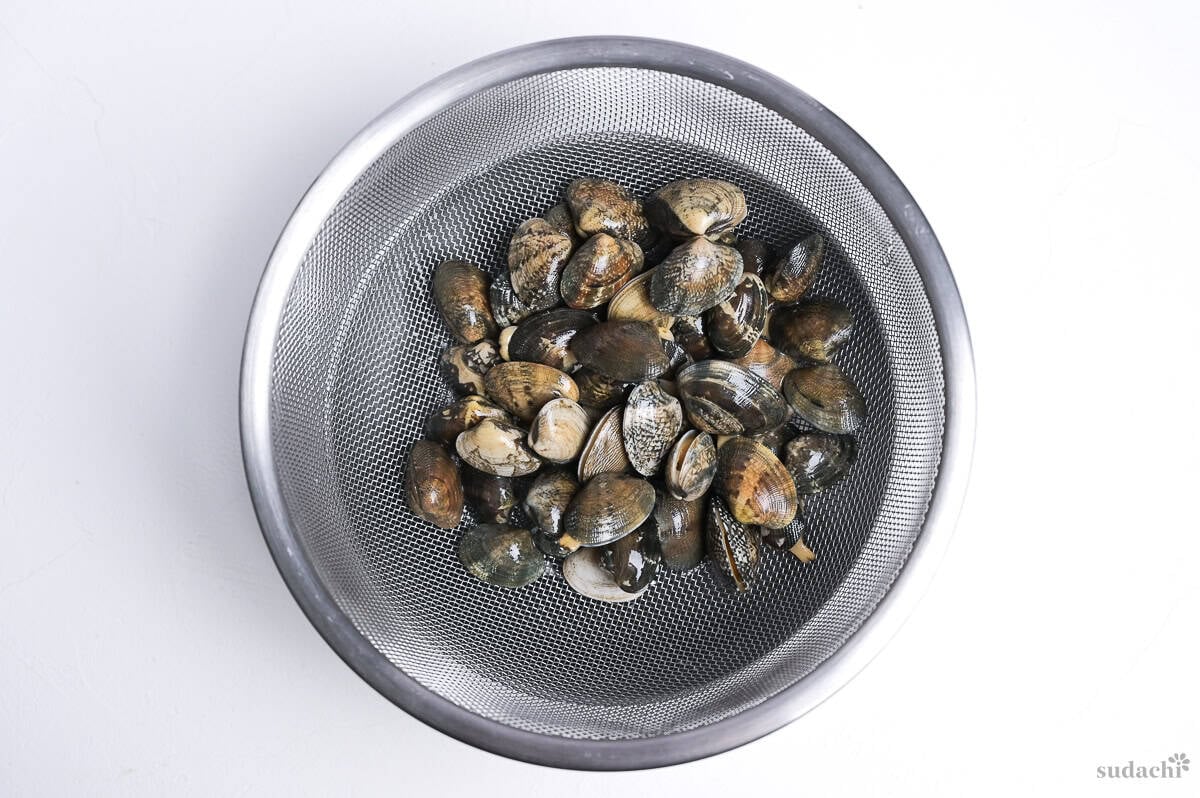
ii. Throw out any that open during this time, since they are dead.
This is the step that makes the clams give back the purging brine. Do it and the extra salt they took on drains away, so the broth does not run too salty and you stay in control of how much miso goes in.
i. As you start the purge, soak the kombu in water in a separate bowl. Kombu deepens the umami if you have it, but if you do not, skip this step and the kombu step later, and build the soup on water alone.
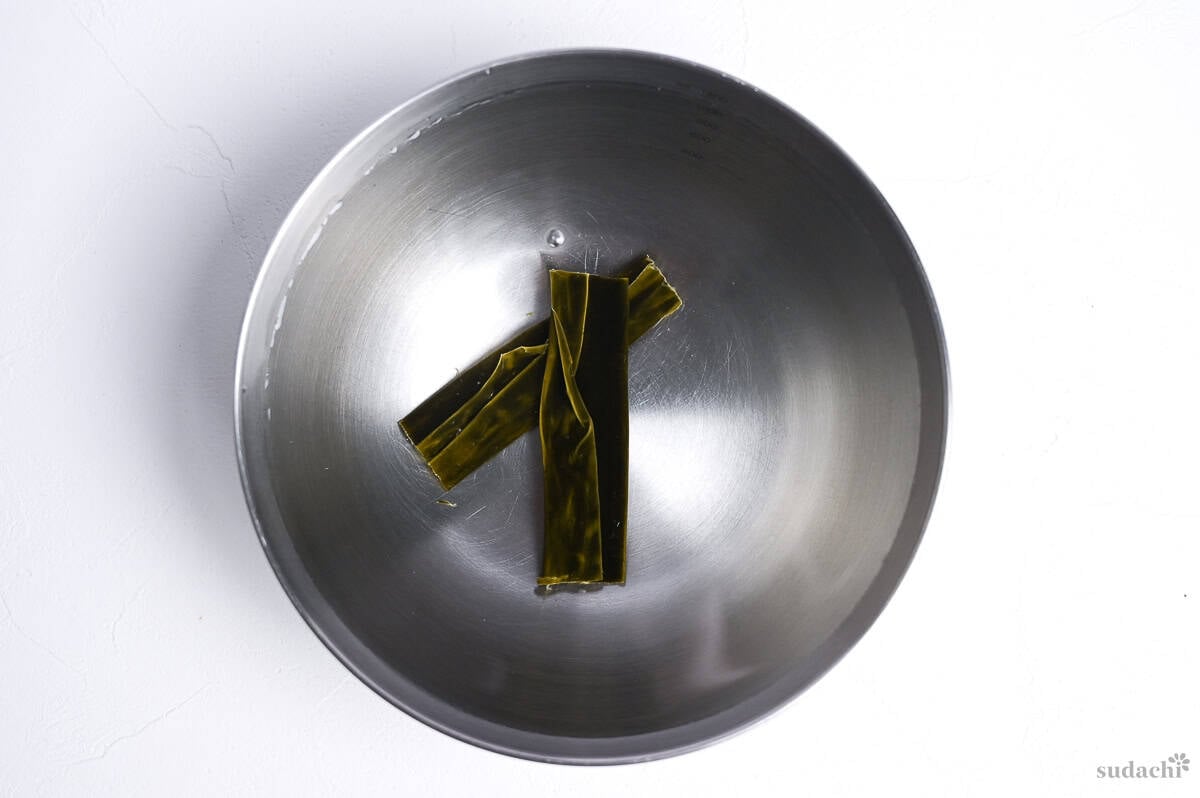
i. Rinse the clams gently once more, move them to a pot, and add the sake.
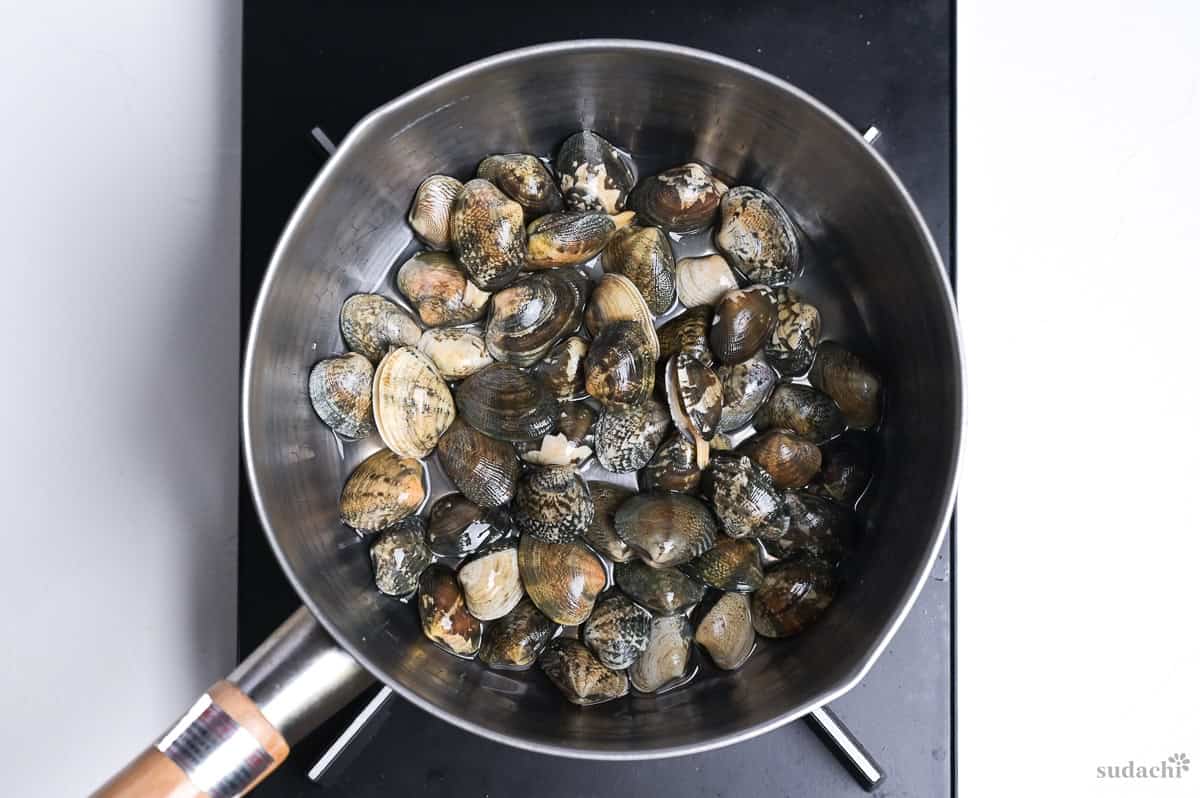
ii. Set over medium heat, and once the sake comes up to a boil, let it bubble uncovered for about 30 seconds.
iii. Cover and steam for about 5 minutes, until the shells open.
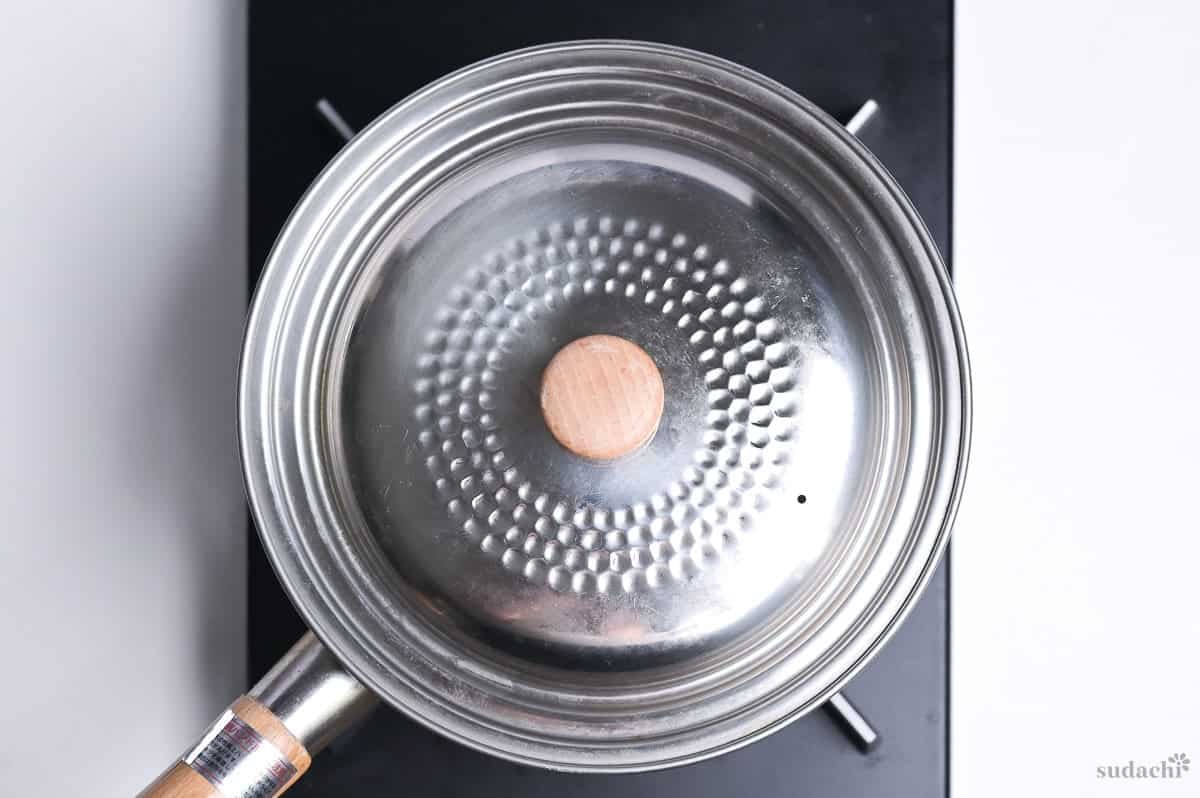
iv. Scoop the clams out with a slotted spoon into a bowl. Toss any that did not open.
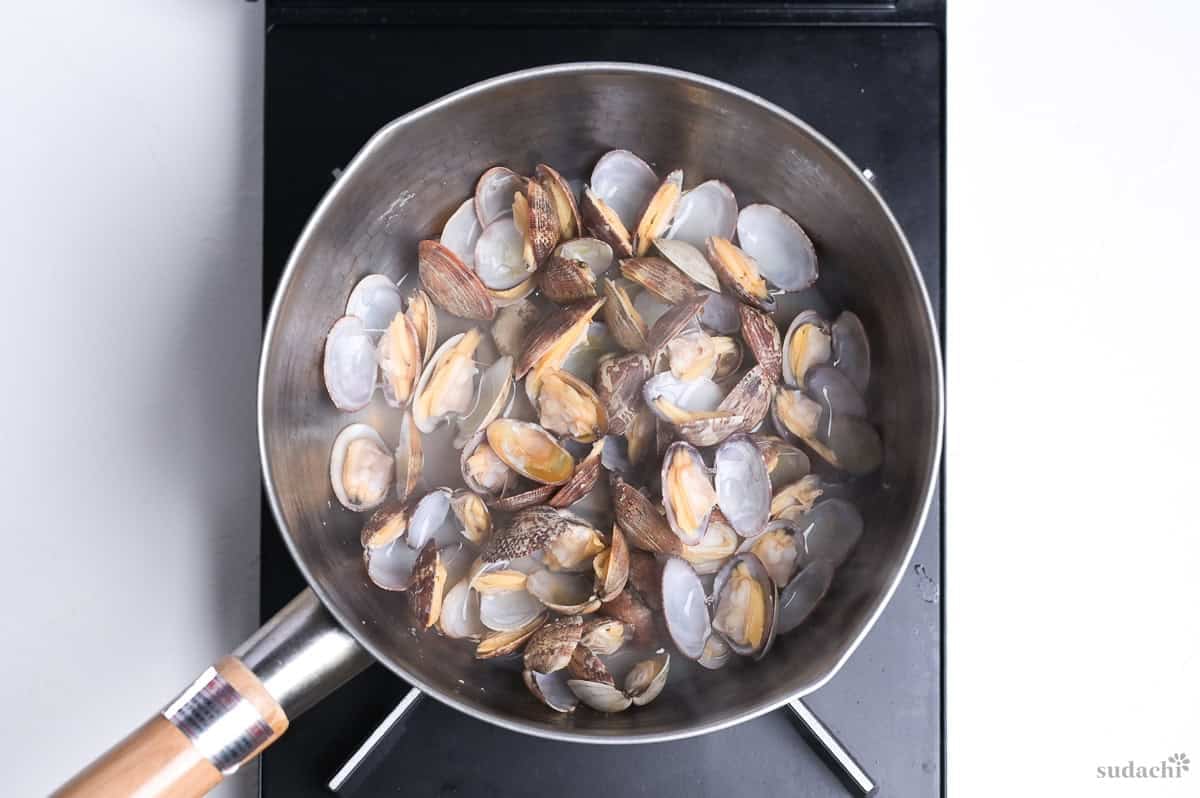
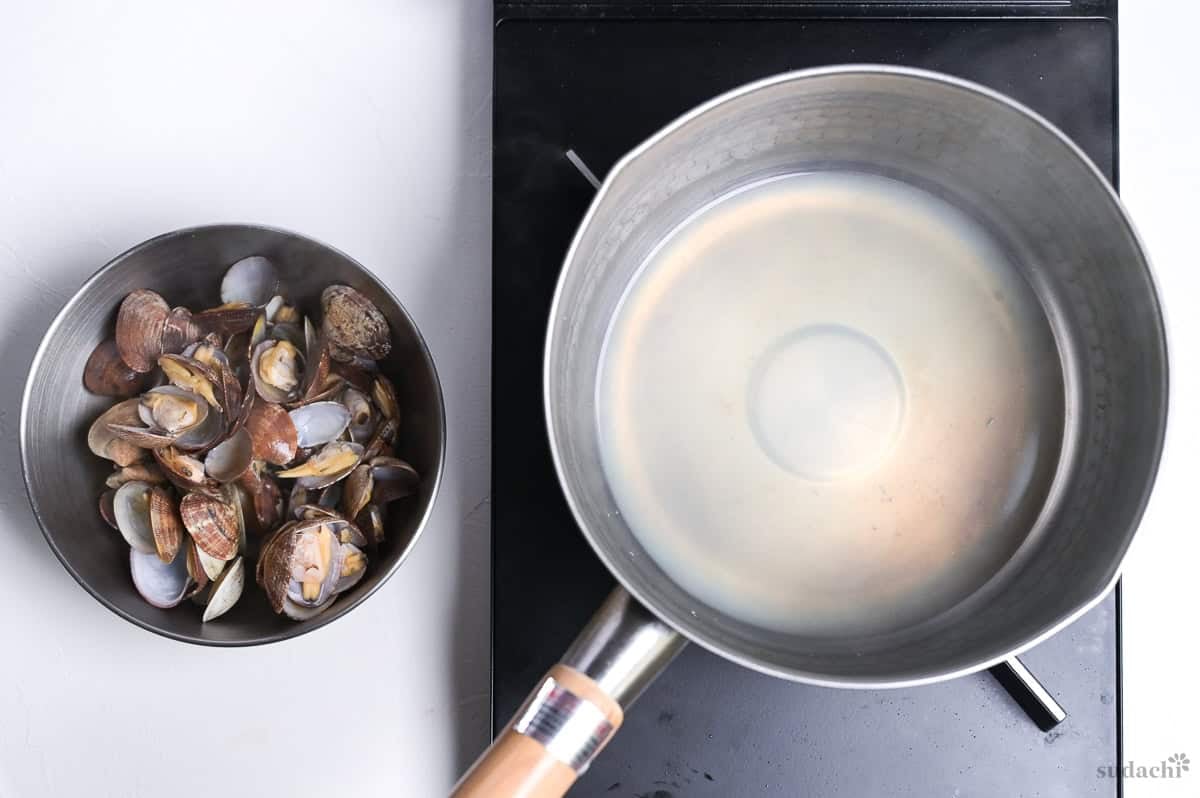
A clam that will not open after cooking was usually dead before it went in. There is no telling when it died, so do not force it apart to eat it.
i. Pour the kombu dashi into the pot (or water, if you skipped the kombu), and set over medium-low heat.
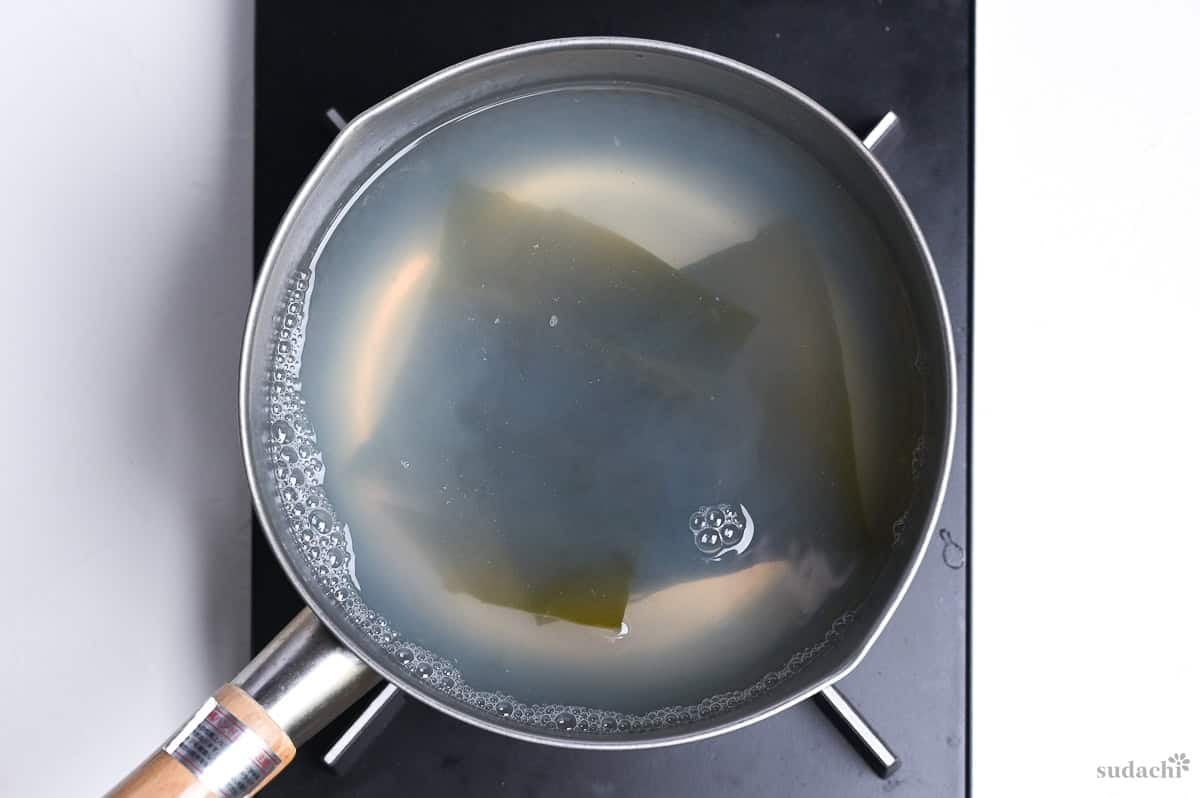
ii. If you used kombu, lift it out once small bubbles start to form at the edge of the pot, at about 80°C (176°F).
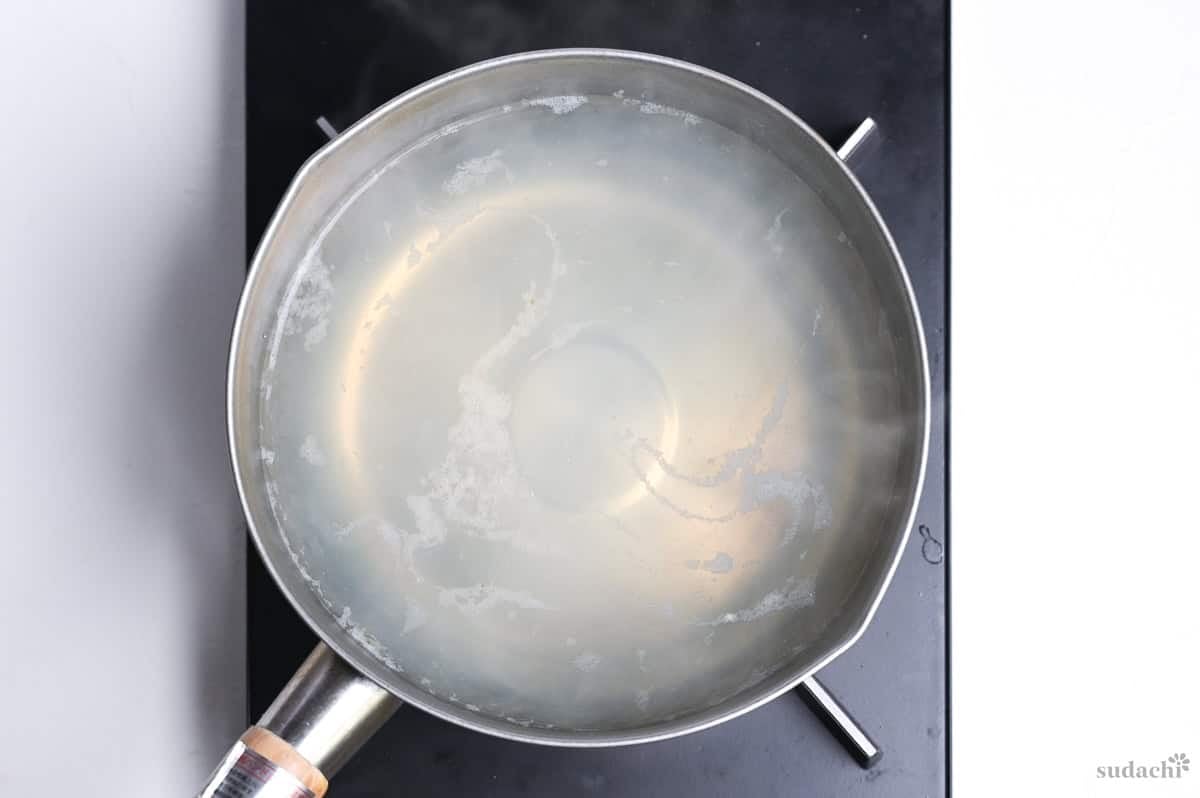
iii. Bring it to just below a boil and carefully skim off the scum that rises.
i. Return the clams and simmer for 1 to 2 minutes.
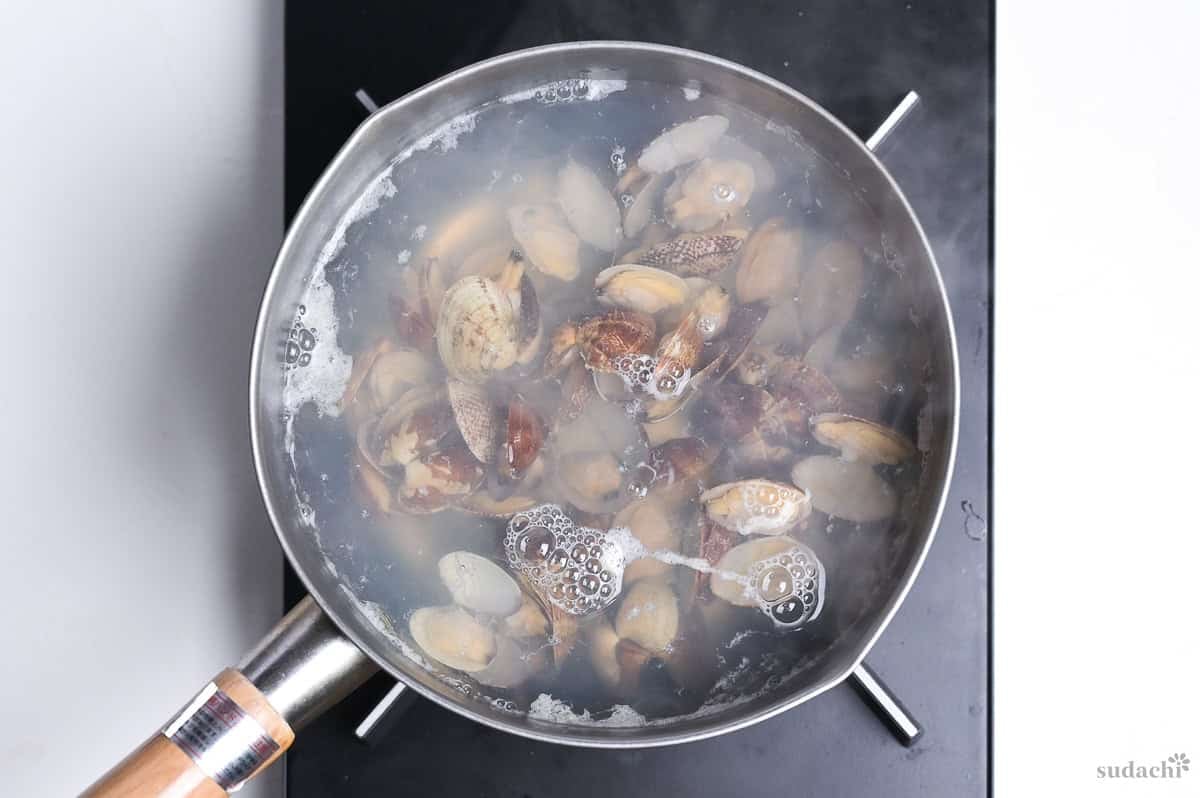
ii. Take the pot off the heat, then dissolve in the miso, starting light, through a miso strainer or a ladle of the broth.
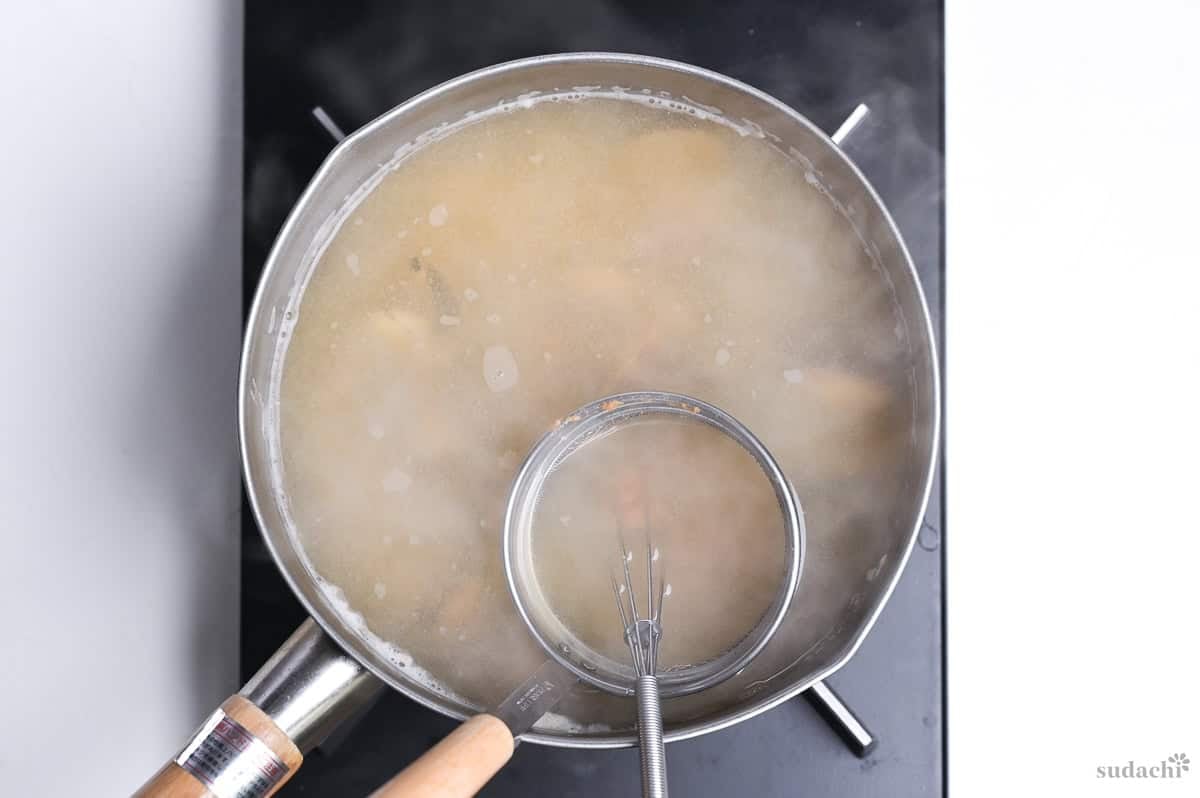
iii. Taste and add more miso to adjust if it needs it.
iv. Ladle into bowls and scatter over the chopped green onion.
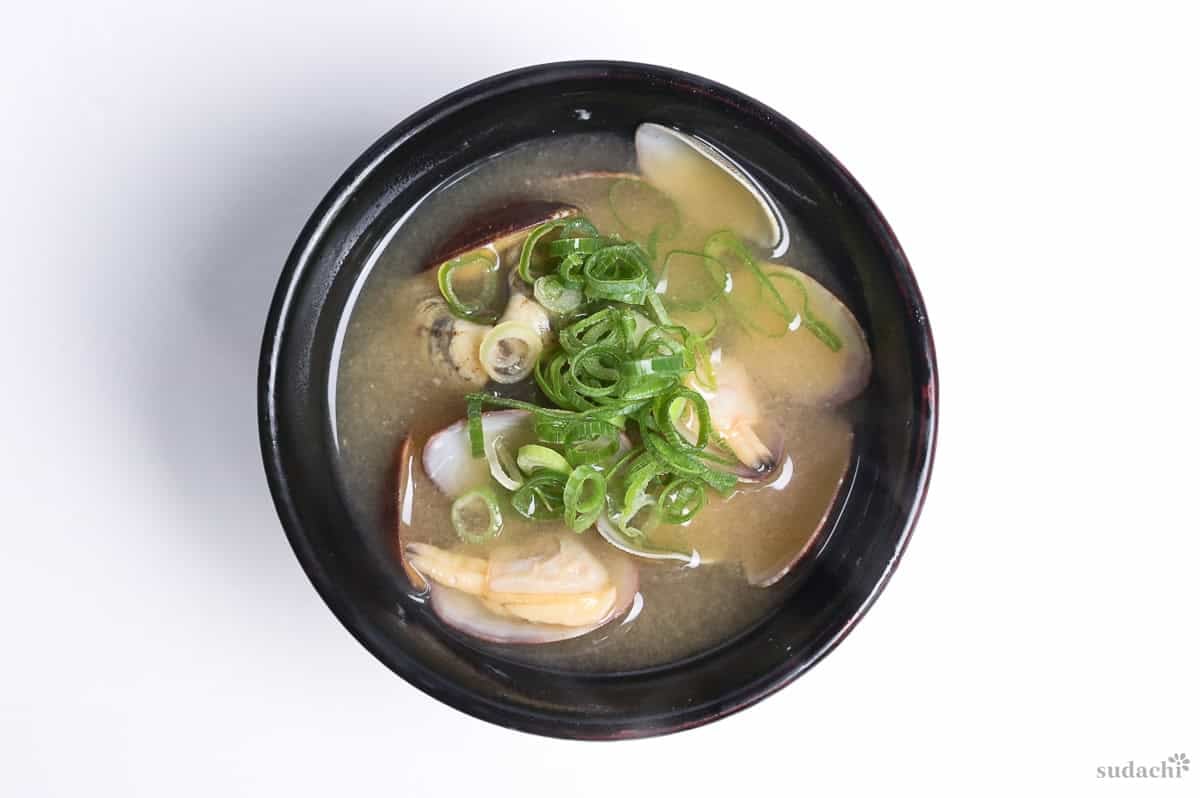
What makes miso miso is its aroma, and boiling carries that aroma off with the steam. So stir it in once the heat is off. When you reheat, warm it only to steaming rather than a rolling boil.

Tips for the Best Asari Miso Soup
- Do not rush the sand purge. Buy the clams ahead and soak them in salted water with plenty of time to spare so they spit out their grit. Rush it and the whole bowl comes out gritty, with no way to fix it once it is served.
- Never thaw frozen clams. Drop them into hot water straight from frozen so the heat shock forces the shells open. Thaw them first and they stay shut. Why that happens is still unsettled, though one proposal is that protein leaking from the meat as the clam freezes and thaws binds it more tightly to the shell.
- Do not overcook the clams. Pull each one the moment it opens. Leave them in longer and the meat shrinks and turns rubbery.
Get the prep right and this bowl rarely lets you down. From there the clams do the work for you.
Storage & Meal Prep
Fridge: Chill once cooled and eat within 1 to 2 days. Shellfish does not keep.
Freezer: Freezing the soup toughens the clams. Instead, freeze purged raw clams and kombu dashi separately and build each bowl fresh.
Meal prep: Store clams and kombu dashi apart, then combine and melt the miso just before serving.
Reheating: Warm only to steaming, never a boil, which flattens the aroma and toughens the clams.
What to Serve With Clam Miso Soup
- Steamed Japanese Rice
- Yellowtail Teriyaki (Buri no Teriyaki)
- Bettarazuke Pickled Daikon
- Shrimp Tempura
Asari Clam Soup Troubleshooting
The clams did not purge long enough. Next time, soak them longer in salted water, spread in a single layer in a flat container, kept dark so they open up and spit the grit out. For the batch in front of you, ladle off only the clear top layer and the mouthfeel comes out a lot better.
Cloudiness is normal, and it is actually a sign the clams gave up plenty of their savory flavor. Spoilage looks different, so judge it by a sour smell, a slimy feel, or a clear sour taste. Go by smell and taste, not by how cloudy it looks.
Either too much miso went in or the clams were not purged enough. The clams carry their own salt, so start with a light hand on the miso and taste as you add more. Skip the purge and the shells hold onto salt water, which pushes the soup salty fast.
More Miso Soup Recipes
- Tofu Miso Soup
- Homemade Miso Soup
- Asari no Sakamushi (Sake-Steamed Clams)
- Red Miso Soup
For more ideas, browse all my miso soup recipes.
Did You Try This Recipe?
I would love to hear your thoughts!
💬 Leave a review and ⭐️ rating in the comments below. 📷 I also love to see your photos – submit them here!
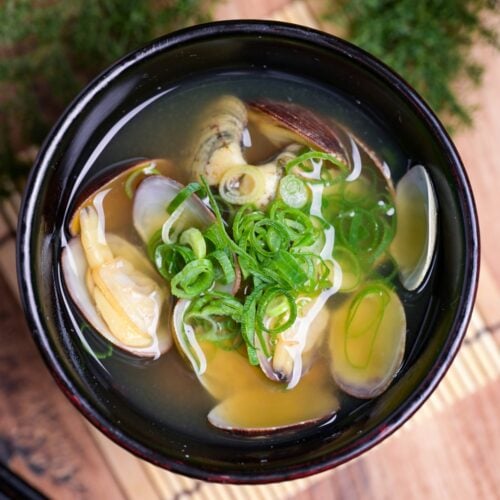
Japanese Clam Miso Soup (Asari no Miso Shiru)

Ingredients
For the Clams (Purge and Salt Off)
For the Soup
- 5 g dried kelp (kombu) optional
- 1100 ml water for the kombu dashi
- 4 tbsp sake
- 3 tbsp yellow miso paste (awase) dissolve 3 tbsp first, taste, then add the rest to adjust
- finely chopped green onions to taste
The ingredient brands and tools I trust are in my Japanese pantry guide and my cooking tools guide.
Can’t find certain Japanese ingredients? See my substitution guide here.
Instructions
- Rinse 450 g clams under running water, rubbing the shells together gently so you do not chip them. Discard any clam with a cracked shell, and any that gapes open and does not close when you tap it.

- Spread the clams a single layer deep in a flat dish, water just below the shell tops. Dissolve salt at 3 percent of the water weight. Cover to darken, then leave at 20°C (68°F) for 1 hour to purge the sand. Do not refrigerate unless the room is above 25°C (77°F).
- Optional: At the same time, soak 5 g dried kelp (kombu) in 1100 ml water in a separate bowl and leave it there for now.
- After purging, lift the clams out of the brine and rest them in a strainer for 30 minutes so they expel the excess salt. Discard any that open during this time.
- Tip the clams into a pot, add 4 tbsp sake, and set over medium heat. Boil uncovered for 30 seconds, then cover and steam for about 5 minutes until the shells open. Discard any that stay shut, then lift the clams out.
- Pour the kombu dashi (or water if skipped) into the pot, and heat over medium-low. When small bubbles form at the edge, lift the kombu out. Bring the pot to just below a boil and skim off any scum that floats to the surface.
- Return the clams to the pot and simmer for 1 to 2 minutes. Remove from the heat, dissolve in 3 tbsp yellow miso paste (awase) first, taste, and add more if needed.
- Ladle the soup into serving bowls and scatter over the chopped green onion. Enjoy!

could i substitute mussels for the clams. we don’t find clams around here and isf we do dthey are quite expensive so i hope you ethink that mussels could be a sub.
tia
Hi Eleanor,
Thank you for your question! I haven’t personally tried it with mussels, but it should work in theory! The flavor will be a bit different, but they’ll still bring that oceanic umami that’s key to the broth. I hope this helps!
Yuto