



Featured Comment
I made gyoza for my family but my mother in law is vegetarian so I decided to try your recipe. I used vegetarian miso and she really loved them! Can’t wait to try more of your recipes 🙂
★★★★★
– Bella
In these vegan gyoza, every ingredient earns its place. Shiitake and garlic chives carry the aroma. Bamboo shoots and wood ear mushrooms bring that chew. Tofu is the base that holds everything together.

Vegan tofu gyoza
Recipe Snapshot
- What is it? Tofu gyoza is a pan-fried dumpling with drained tofu at the core of the filling and no animal ingredients anywhere in it.
- Flavor profile: You smell earthy shiitake and grassy garlic chives first, then taste the mellow richness of miso-soaked tofu. Bamboo shoots and wood ear crunch to the last bite.
- Why this recipe works: Mild tofu carries protein and texture, no mock meat, so the miso and shiitake it soaks up come forward as depth. Each bite layers aroma and crunch from different ingredients.
- How to make it: Microwave the tofu to steam off excess moisture, mix it raw with chopped vegetables, and wrap. Pan-fry, then steam with a lid. No stir-frying the filling first.
- What to expect: Plan on 30 minutes of prep and 10 minutes at the stove, about 40 minutes all in. If you’re used to wrapping gyoza, it’s no big deal.
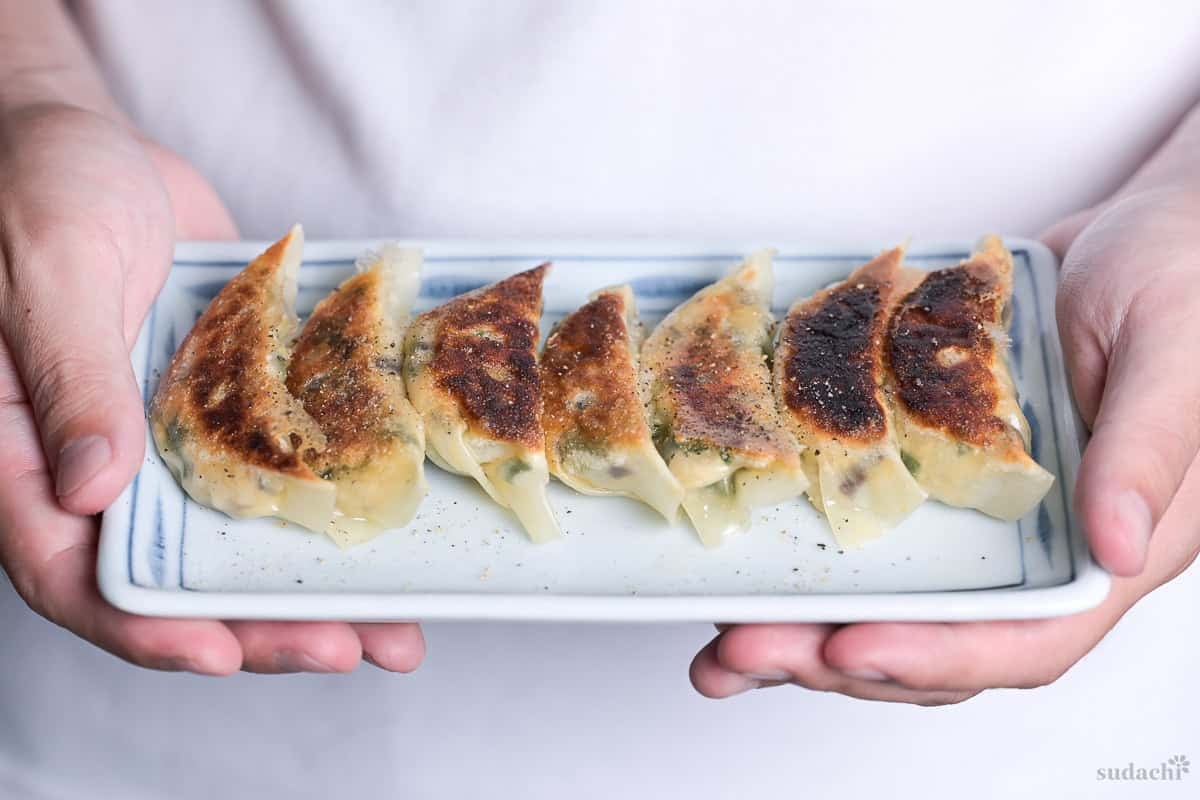
What Is Vegan Tofu Gyoza?
Vegan tofu gyoza is a Japanese pan-fried gyoza. You wrap tofu and vegetables in a wheat gyoza wrapper, sear the bottom, and steam the top. It has no meat and no fish, and you serve it like any pan-fried gyoza, next to a bowl of rice or a beer.
In Japan, cooks name gyoza by the filling. Ground pork means meat gyoza, shrimp means shrimp gyoza, and vegetables in the lead mean vegetable gyoza. The wrapper and the cooking stay the same, and the gyoza filling is up to the cook. Here, the filling is built on tofu.
Strictly speaking, this gyoza is not shojin ryori. Shojin ryori is traditional Japanese plant-based cooking born from Buddhist precepts, with no meat and no fish. People often think of it as Japanese vegan cooking. On top of that, shojin ryori also avoids strong-smelling vegetables such as garlic, negi (green onion), and nira (garlic chives), because strong smells and stimulation get in the way of practice. So temple gyoza recipes leave out both nira and garlic. This recipe uses both. It is a plant-based gyoza, but it is not shojin gyoza.
Pan-fried gyoza spread through Japan after the war. Repatriates from places such as the former Manchuria opened shops in Tokyo, and around 1954 there was a gyoza boom said to be second only to ramen. The pan-fried gyoza you set next to rice took root during this boom.
For this gyoza I deliberately skip plant-based ground meat. I add the protein and build the texture with tofu. There is no meaty chew, and the crunchy vegetables take care of the bite. Instead, miso brings the depth and shiitake the aroma, and the gyoza satisfies in its own way.
Tofu Gyoza Ingredients
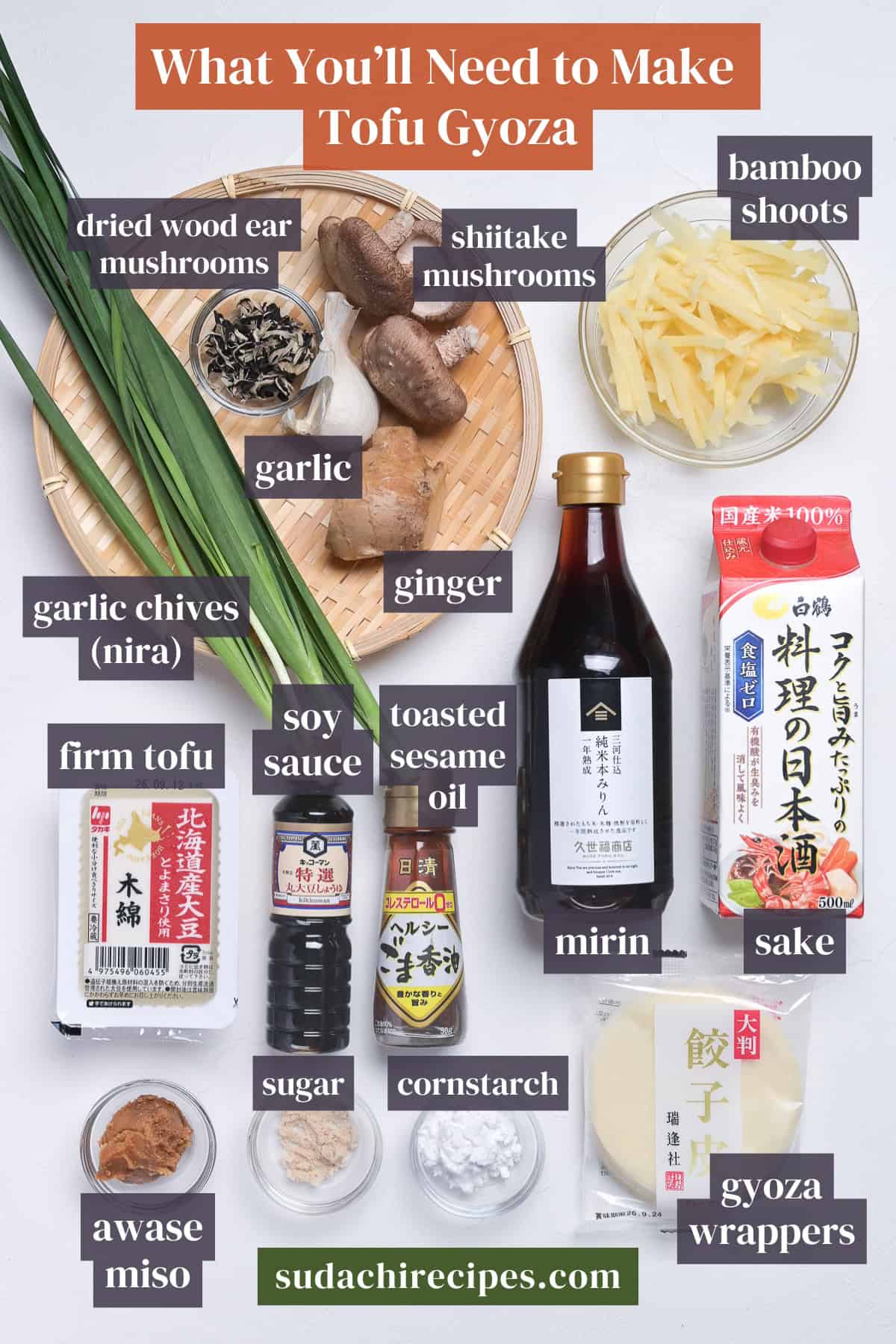
- Firm tofu (momen): Momen tofu is wrapped in cloth and pressed while it is being made, so it comes out firmer and denser than silken. On a US shelf, grab the pack labeled Firm, which is the closest match to Japanese momen. Extra Firm and Super Firm hold far less water. People in Japan, me included, are not used to that kind of firmness, so I would stop short of those.
- Fresh shiitake mushrooms: Fresh shiitake go into this gyoza instead of dried. I want the soft bite of a fresh mushroom, and rehydrated dried shiitake chew differently.
- Boiled bamboo shoots: Canned or vacuum-packed both work. Sometimes you will spot a white powder tucked between the layers. That is tyrosine, an amino acid. It is not mold.
Substitution Ideas
- Fresh shiitake mushrooms → Dried shiitake mushrooms: Rehydrate them in water and chop them, and they will do the job. You get more umami but a firmer chew, and the soft give of fresh shiitake goes missing.
- Garlic chives (nira) → Japanese leek (naganegi) and a little garlic: This is the stopgap for when garlic chives are nowhere to be found. The filling will smell of leek and garlic, which is a different aroma from garlic chives, but still good.
- Boiled bamboo shoots → King oyster mushroom stems: Coarsely chop the thick stems and they come close to bamboo shoots in color, shape, and bite.
- Dried wood ear mushrooms → Skip them: Leave them out if you cannot find any. The snap in the filling can come from the bamboo shoots alone.
- Potato starch → Cornstarch: The most reliable stand-in when you are out of potato starch. Use the same amount and it holds the filling together.
- Toasted sesame oil → Olive oil: Some plant-based gyoza shops cook with olive oil. You lose the toasty sesame note, and the filling picks up a different kind of aroma.
- Unseasoned rice vinegar → Apple cider vinegar: Of all the vinegars, this one comes closest to rice vinegar. Expect a faint, sweet hint of apple.
- Large gyoza wrappers → Regular-size gyoza wrappers: Smaller wrappers work too. The batch of filling stays the same, so you simply get more dumplings out of it.
Substitutions that I don’t recommend:
- Silken tofu instead of firm tofu: The water never fully drains out of it, so the filling leaks liquid and the wrappers tear.
- Sushi vinegar instead of unseasoned rice vinegar: Sushi vinegar already has sugar and salt in it. The dipping sauce comes out sweet and salty, with no clear edge.
- Wheat flour instead of potato starch: Flour behaves differently from potato starch and will not do the binding job.
Short on a Japanese pantry staple? Take a look at my guide to Japanese ingredient substitutes.
How to Make My Vegan Tofu Gyoza
Before you start (Mise en Place):
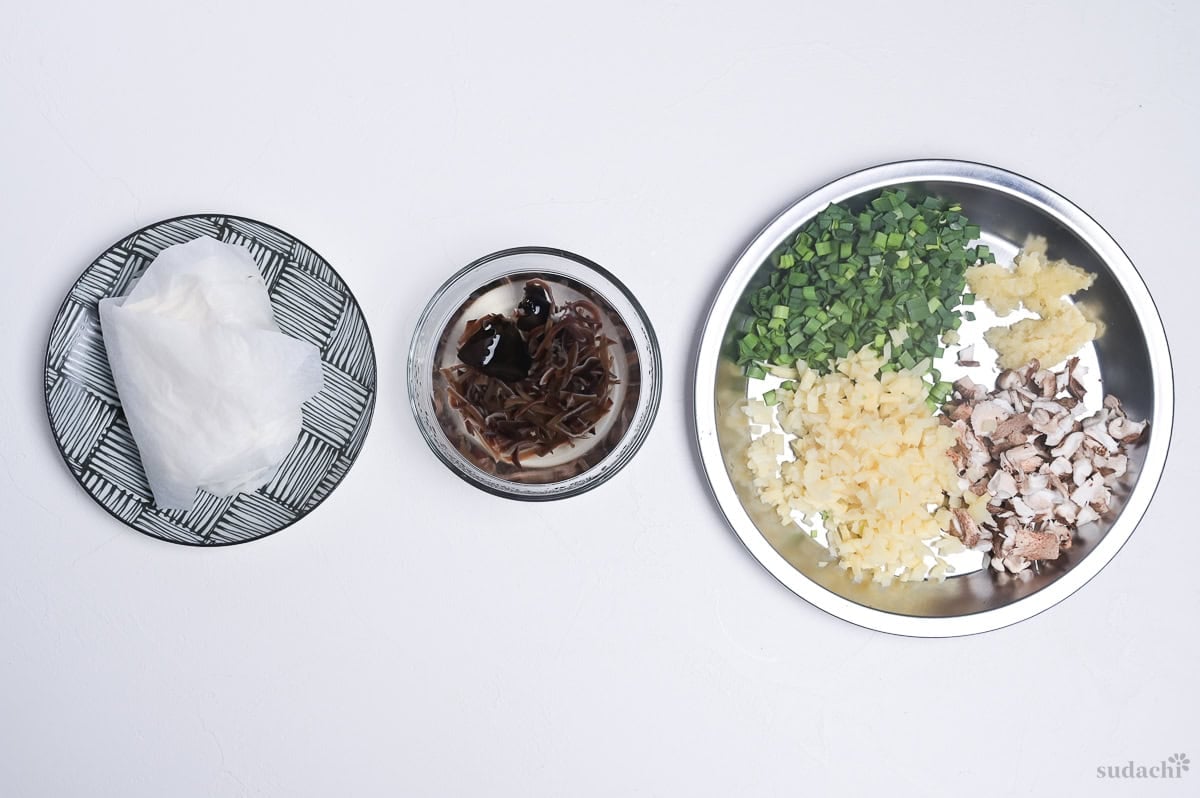
- Soak the dried wood ear mushrooms in boiling water for about 20 minutes. Then cut off the tough base of each one, then chop them coarsely.
- Wrap the firm tofu in paper towels and microwave at 600W for 2 to 3 minutes. When it is cool enough to handle, squeeze it gently. If you have time, you can press it under a weight for 20 to 30 minutes instead.
- Trim off only the hard tip of each shiitake stem, then tear the mushrooms by hand, stems and all, into small bite-size pieces.
- Coarsely chop the bamboo shoots, roughly chop the garlic chives, and grate the garlic and ginger. If the sour smell of canned bamboo shoots bothers you, blanch them briefly before chopping.
i. Put the drained tofu in a bowl with the miso, soy sauce, and sake, and mix these in first.
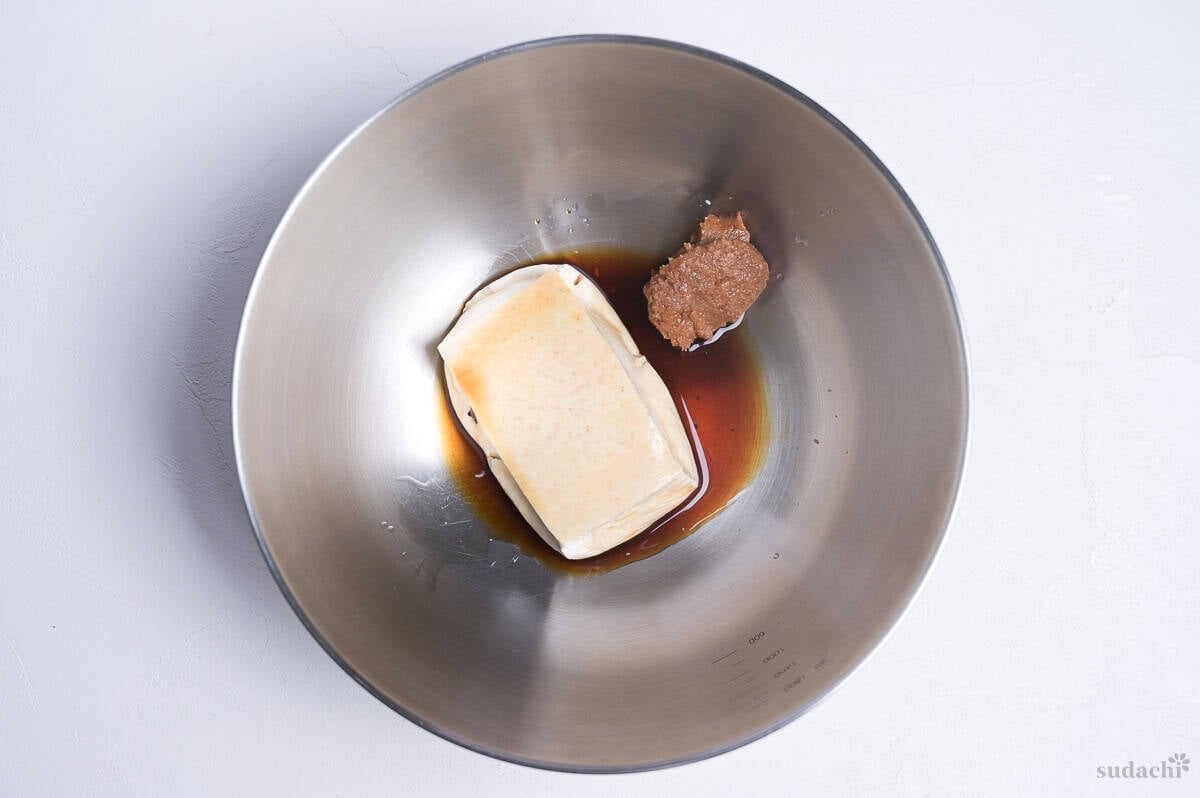
This is where the salt soaks into the tofu, before anything else joins it.
I use yellow (awase) miso, the light-colored blended kind. But salt swings hugely from one type to another, close to double between a sweet white miso and an awase miso, and even awase miso changes from brand to brand. So there is no set amount. Start with less, taste a little of the filling, and add more as you go.
i. Add the shiitake, bamboo shoots, wood ear, garlic chives, sugar, and mirin to the seasoned tofu and mix.
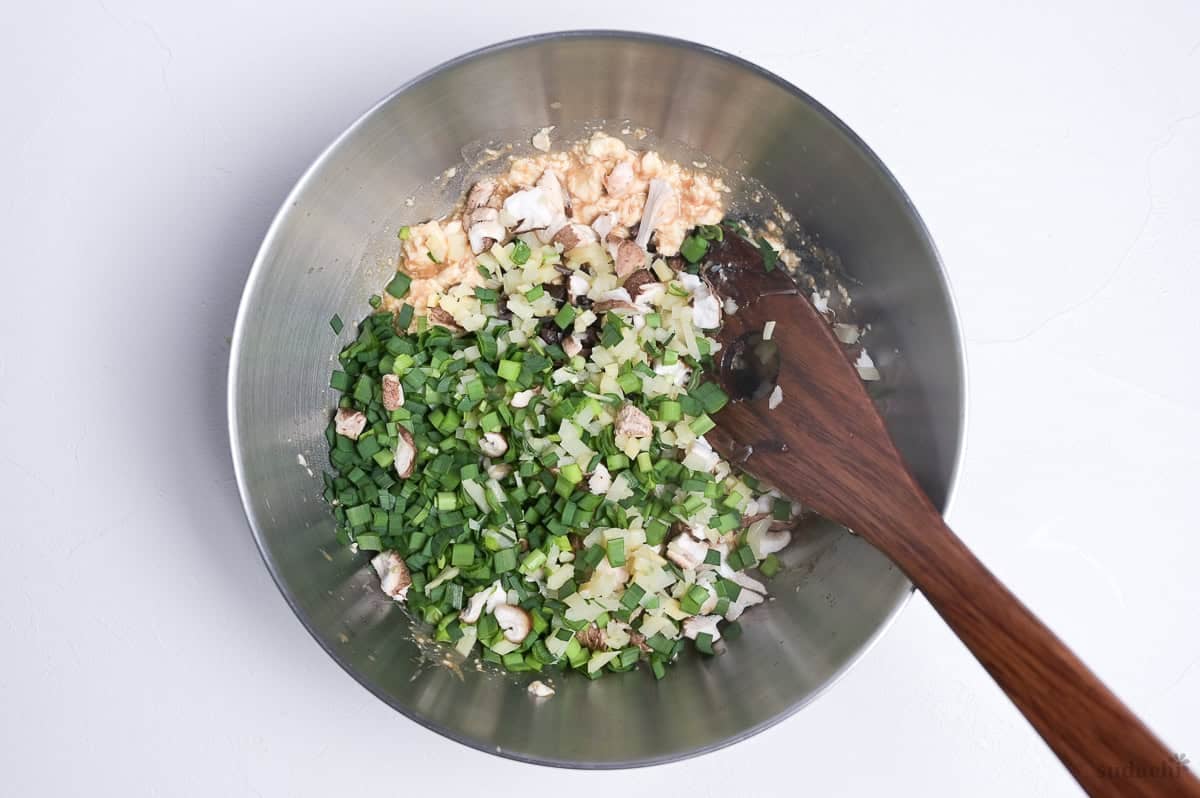
Stop as soon as it all looks even. Overmixing pulls water out of the vegetables.
ii. Last, add the garlic, ginger, and toasted sesame oil and fold everything together.
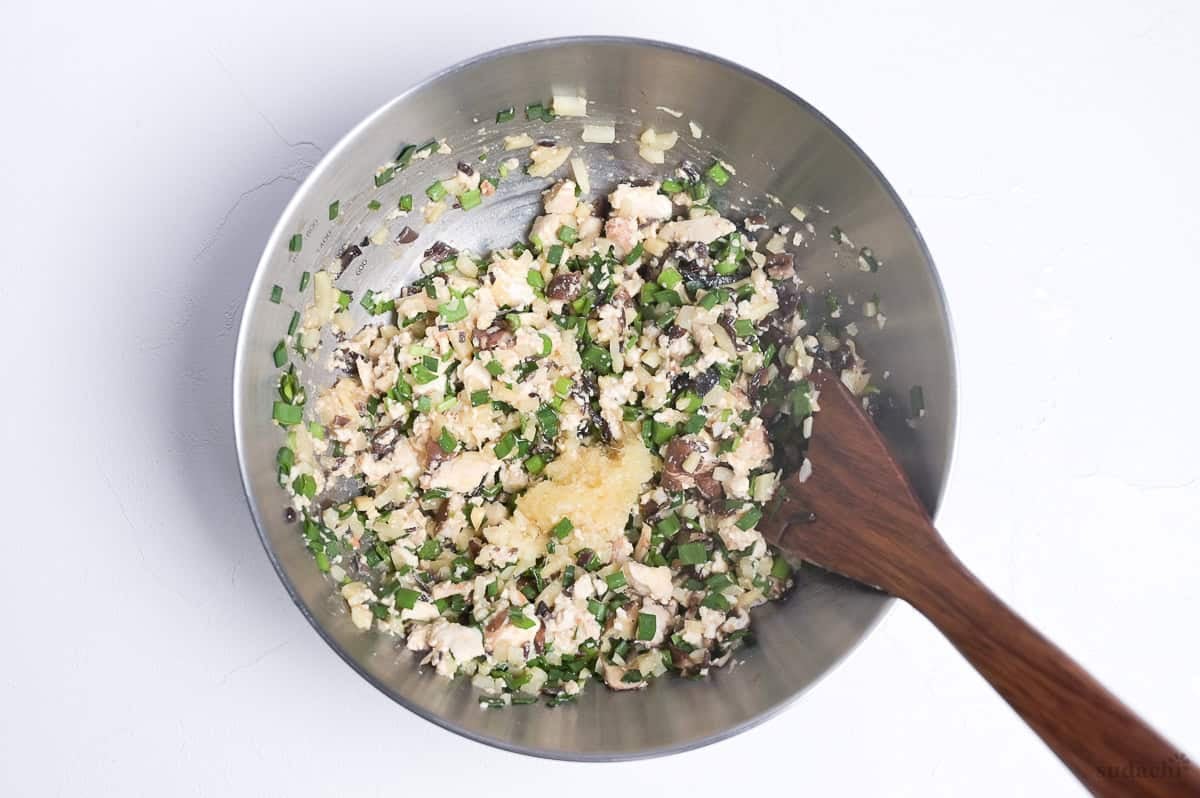
The sesame oil goes in last, so its aroma stays in the filling instead of drifting off.
iii. Right before you wrap, add the potato starch and mix lightly to bring the filling together.
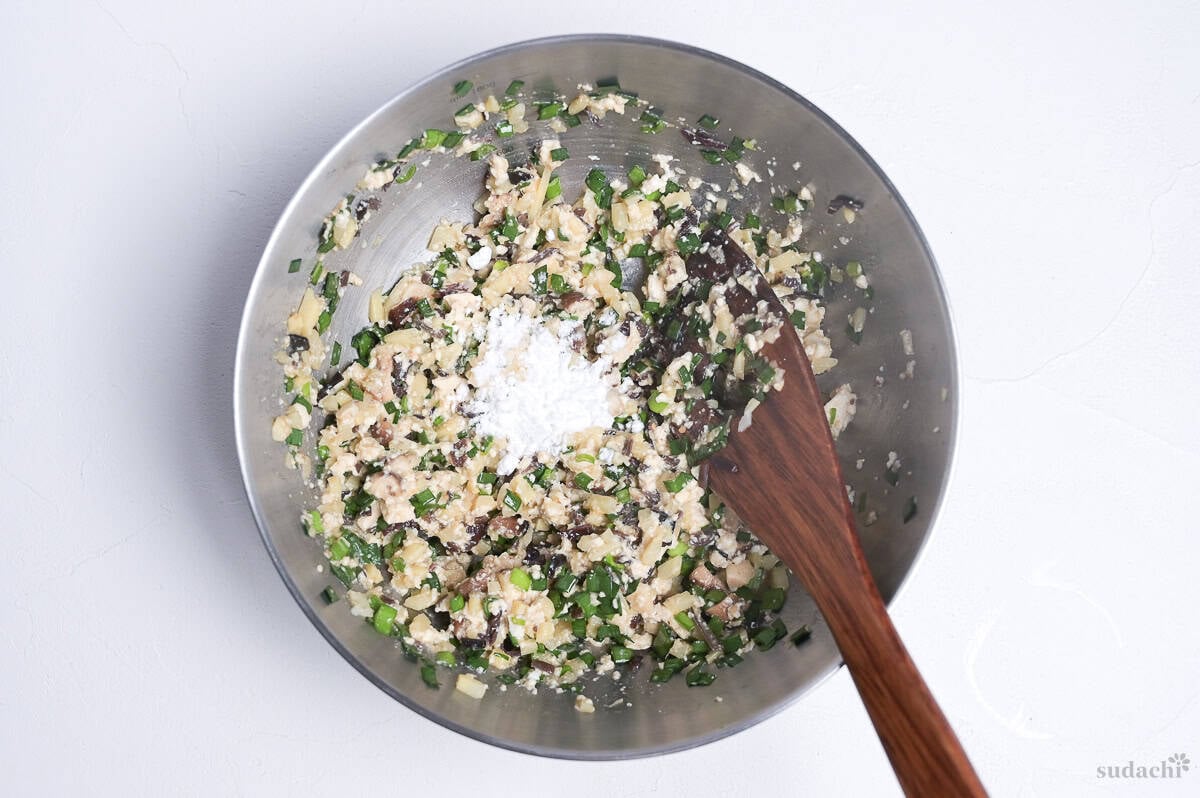
If water pools at the bottom of the bowl, or a spoonful of filling slumps and will not hold its shape, it is still too wet. Bring loose filling together with potato starch before it goes into a wrapper.
i. Lay a large gyoza wrapper on your palm and put the filling in the center, leaving a little border.

ii. Lightly wet the edge with water.
iii. Fold it in half and seal it, gathering 5 to 6 pleats along one side as you go.


iv. Once it is sealed, tap the bottom gently to flatten it.

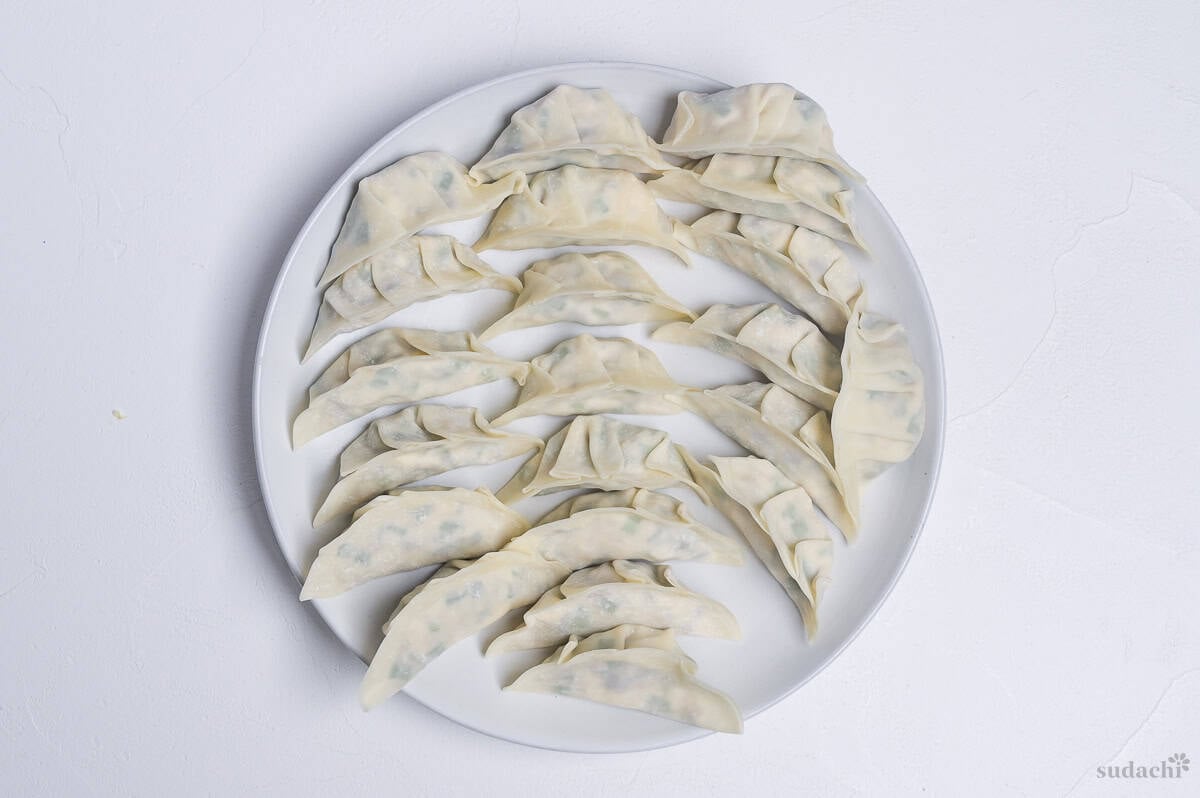
The pleated side faces up. The smooth side becomes the bottom that sits on the pan.

i. Heat a frying pan over medium heat, then add the cooking oil and line up the gyoza.
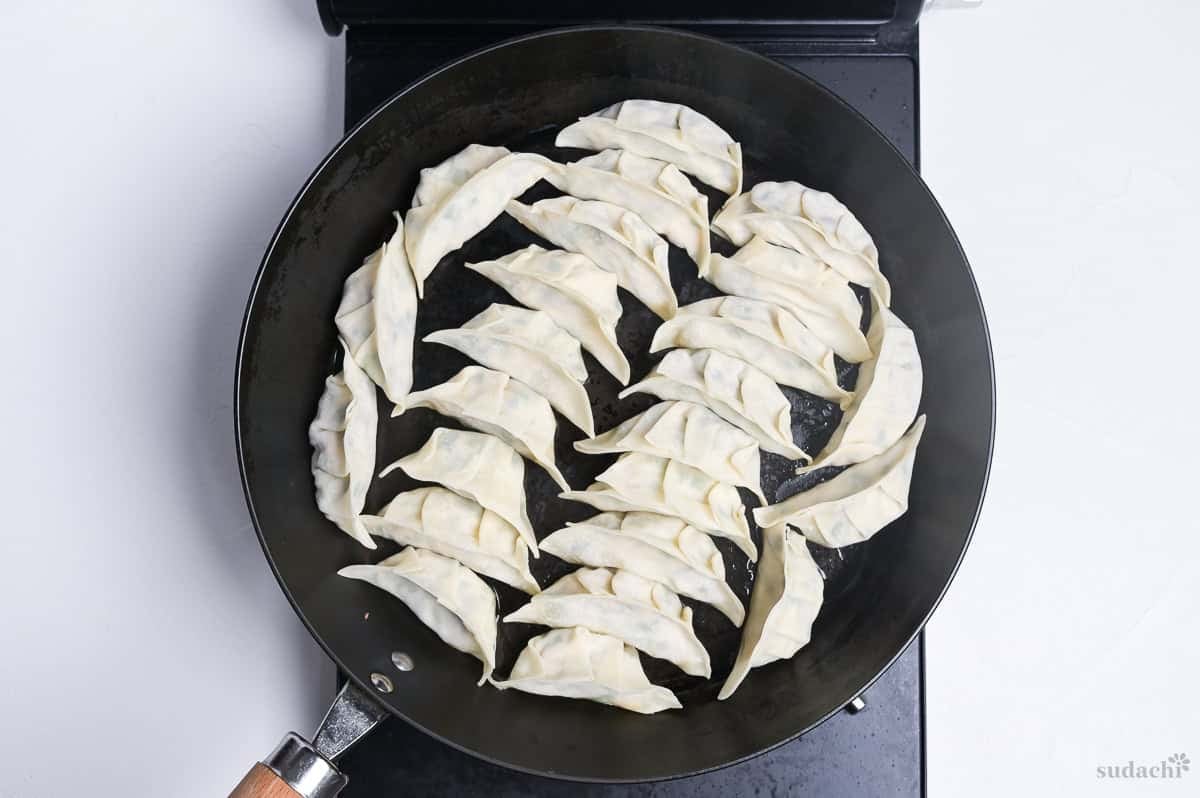
A pan that is hot and coated in oil is less likely to grab the wrappers.
ii. Fry undisturbed until the bottoms are golden brown and crisp.
iii. Prepare the boiling water, pour it straight into the pan, and cover. Steam for 4 to 6 minutes, until the moisture is nearly gone.
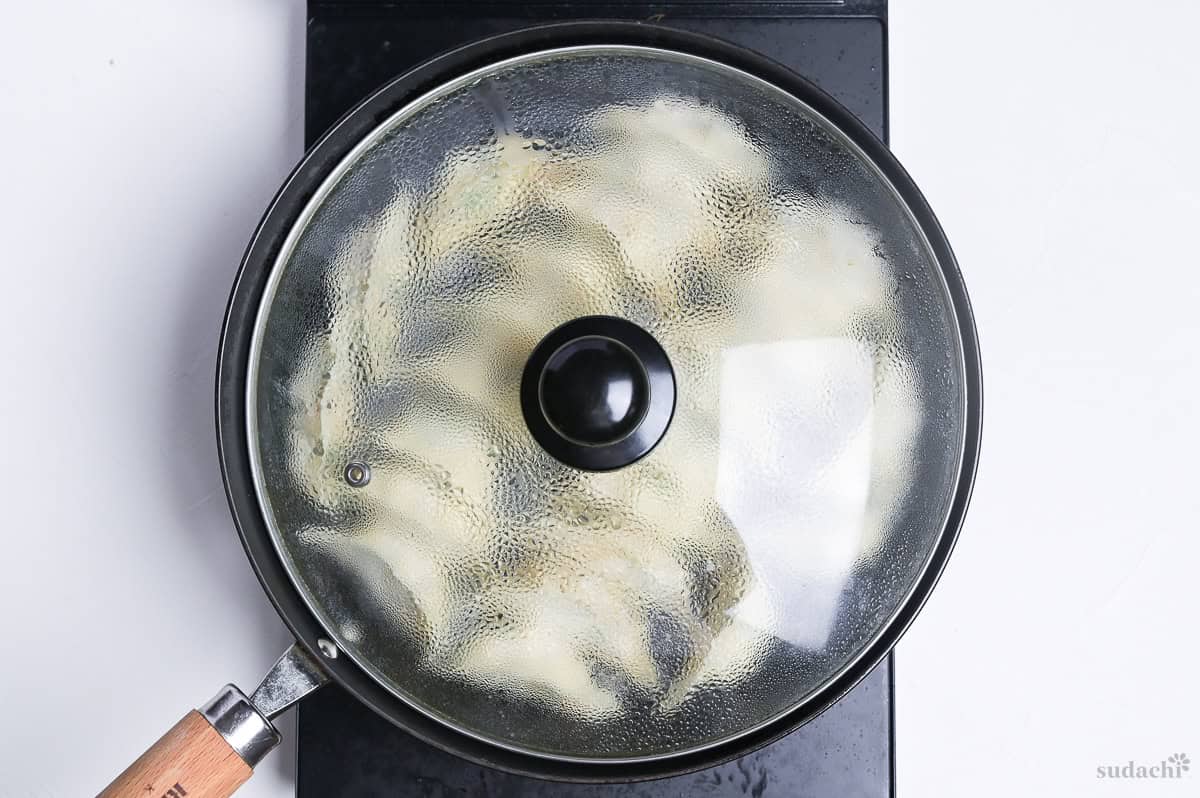
The water has to be boiling, because cold water drops the temperature of the pan and leaves the wrappers soggy.
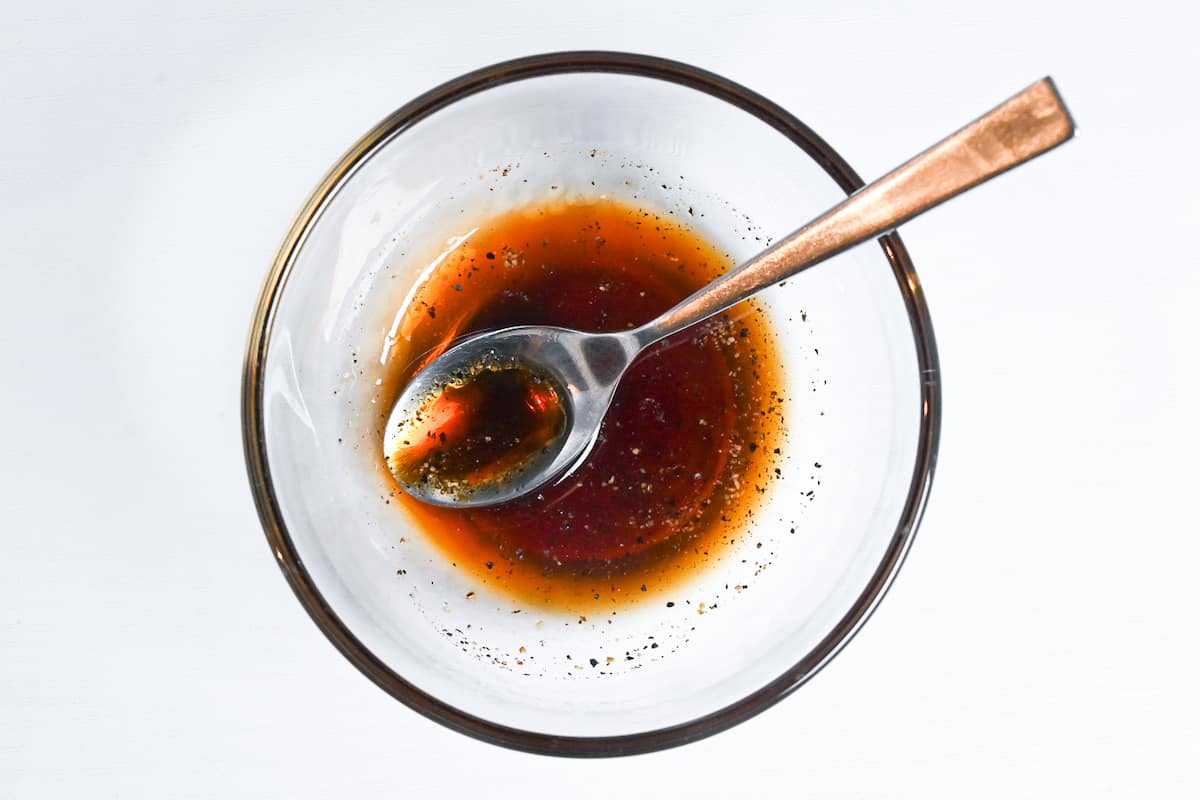
iv. While they steam, mix the rice vinegar, soy sauce, and chili oil to make the dipping sauce.
i. Take off the lid and cook off the water that is left. The gyoza are done when the bases are crispy and the pan is dry.
ii. Drizzle the toasted sesame oil around the edge of the pan and crisp the bottoms once more.
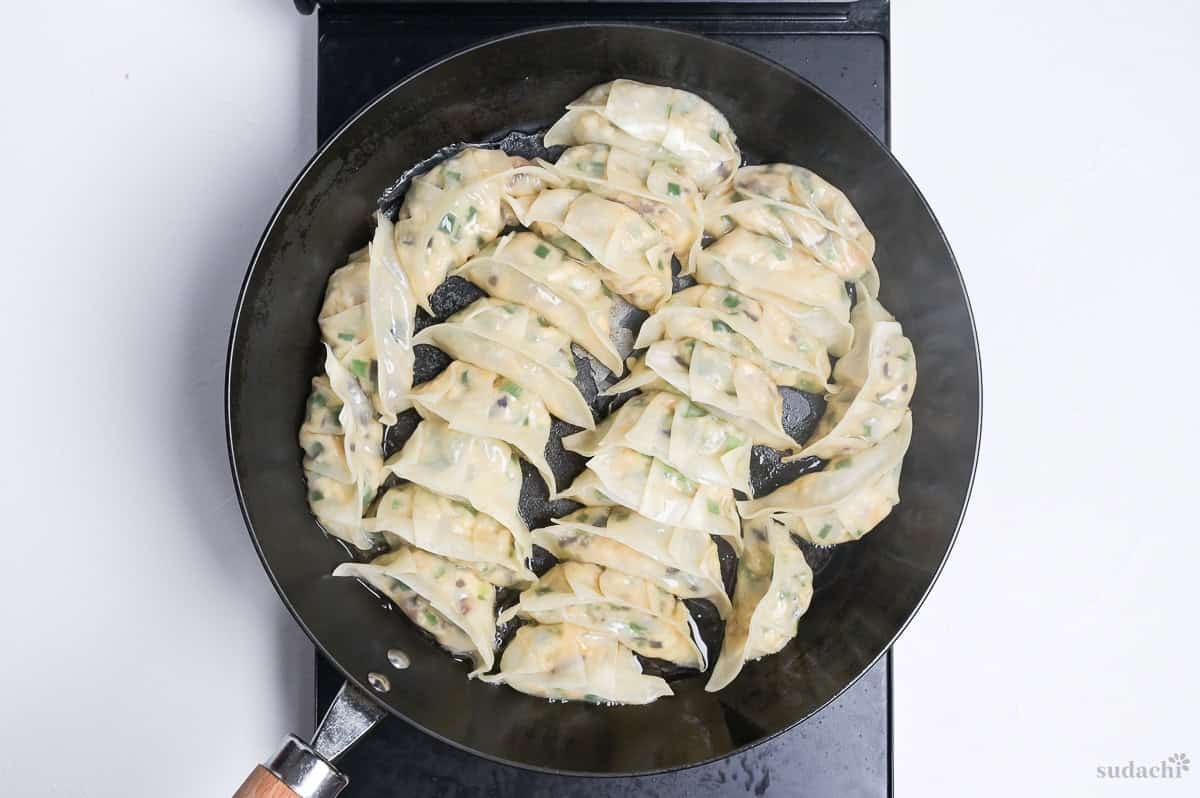
iii. Set a plate over the pan, flip it, and serve with the bases facing up.
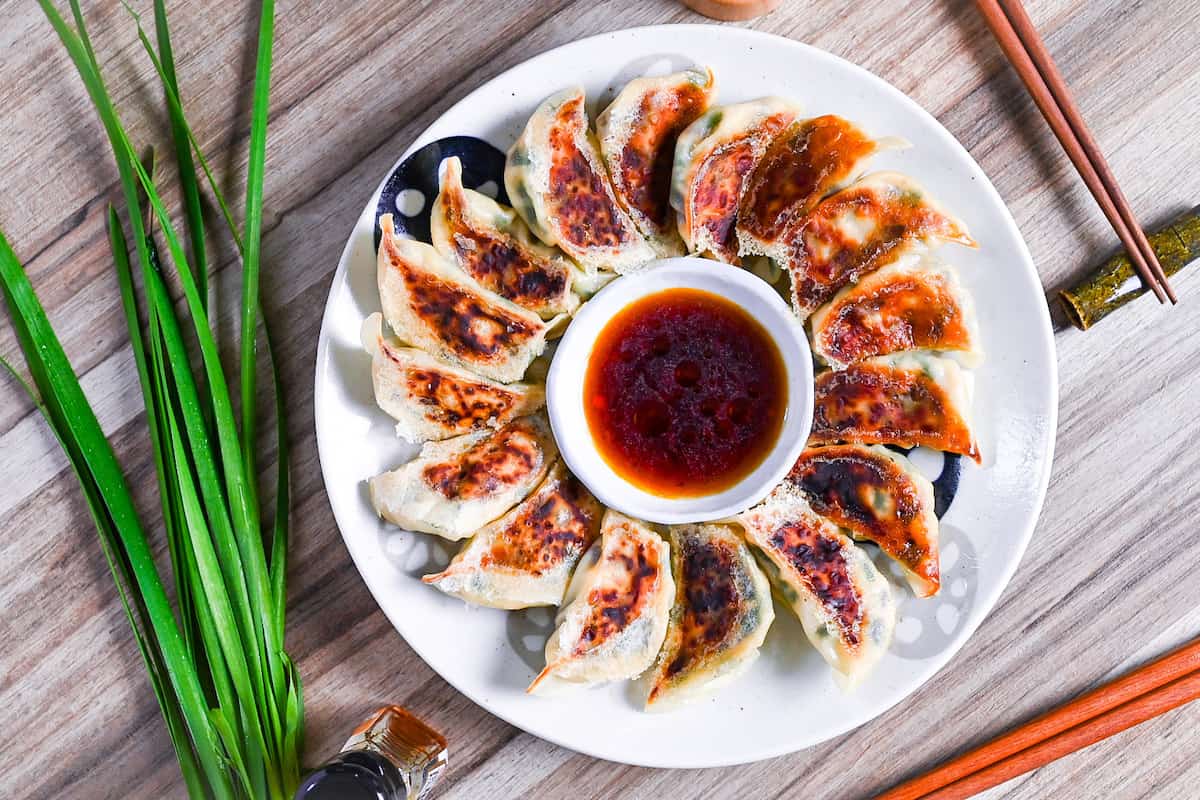
iv. Give the finished gyoza a sprinkle of black pepper and serve them with the dipping sauce.
If you follow the default recipe, it will yield 20 gyozas with large wrappers or roughly 30 with small ones.

Tips for the Best Plant-Based Gyoza
- Save the potato starch for right before you wrap, then wrap the whole batch. Mixed filling keeps giving up water from the tofu and chopped vegetables, more the longer it sits. Starch added early sits in that water and goes damp, so by wrapping time it no longer holds the filling together. Loose, wet filling dampens the wrapper, and it tears in your hand.
- Fill each wrapper before it dries out. A wrapper left out of the pack dries from the edge in, cracks, and gets hard to seal. Take out only as many as you are about to fill, keep the others sealed in a container or covered with plastic wrap to protect them from drying out while you shape.
- Hold off on the plate flip until the pan is dry. Even when it looks cooked, moisture in the pan makes the gyoza fragile and prone to tearing. Flip onto a plate only when the liquid has completely evaporated.
Keep the wrappers moist, the filling dry, and the wings on the heat until the water is gone, and your tofu gyoza come out crisp right down to the bottom.
Storage & Meal Prep
Fridge: Not for raw gyoza. The filling’s water turns their wrappers soggy before cooking. After they’re cooked, cool them, store in a lidded container and eat by the next day.
Freezer: Optional for any not cooked that day. Tray-freeze spaced apart, bag, 1 month max. Steam them from frozen 2-3 minutes longer. Don’t freeze already cooked ones, they go soggy.
Meal prep: Mix the filling, assemble and freeze straight away for meal prep. The filling tends to get watery if stored, so it’s better to use it as soon as possible.
Reheating: Re-crisp the bottoms in a lightly oiled pan on medium.
What to Serve With Tofu Gyoza
- Stovetop Japanese Rice
- Vegan Ginger Miso Soup
- Cucumber Tsukemono with Ginger (Japanese Pickled Cucumber)
- Izakaya-Style Salted Edamame
Vegan Tofu Gyoza Troubleshooting
Either the tofu was not drained enough, or the mix has been sitting and the tofu and vegetables have given up their water. A puddle in the bottom of the bowl and filling that slumps flat off the spoon are the signs. Work potato starch into the rest of the filling a little at a time until it holds, and wrap right away.
The lid came off while water was still in the pan, or there was so much water that the steam never cleared. Leave the lid off, turn the heat up a little, and cook off what is left. Once the water is gone, drizzle toasted sesame oil around the edge of the pan and crisp the wing up again.
The gyoza went in before the pan was hot, or you are lifting them before the water has evaporated. Add a little more oil around the edge, give the pan a shake, slip a spatula in at the edge, then cover the pan with a plate and flip. Where they still cling, 1 or 2 drops of vinegar help them come free.
There was not enough steaming water, so the stacked pleats never cooked through. Add a little more water, cover right away, and steam until the pleats soften, then take the lid off and cook the water away.

More Japanese Vegetarian Recipes
- Plant-Based Mabo Nasu
- Teriyaki Tofu Steak
- Kenchin Jiru (Japanese Vegetable Soup)
- Miso-Glazed Nasu Dengaku
When you want one more plant-based dish on the table, everything from mabo nasu to shojin-style vegetable tempura is waiting in my Japanese Vegetarian Recipes.
Did You Try This Recipe?
I would love to hear your thoughts!
💬 Leave a review and ⭐️ rating in the comments below. 📷 I also love to see your photos – submit them here!

Pan-Fried Vegetarian Tofu Gyoza (Plant-Based Potstickers)

Ingredients
Gyoza Filling
- 2 tbsp dried wood ear mushroom the black kind, white wood ear is a different fungus
- 100 g firm tofu momen, labeled Firm on US shelves
- 50 g fresh shiitake mushroom
- 50 g canned bamboo shoots or vacuum-packed
- 30 g garlic chives
- 1 tbsp yellow miso paste (awase) light-colored blended miso
- ½ tbsp Japanese soy sauce (koikuchi shoyu) for the filling
- 1 tsp sake
- ¼ tsp sugar
- 1 tsp mirin
- ½ tbsp grated garlic
- 1 tsp grated ginger root
- 1 tbsp toasted sesame oil for the filling
- 1 tbsp potato starch (katakuriko) to bind, or cornstarch
Assembly and Cooking
- 20 gyoza wrappers large, about 9.5 cm across, or 30 small ones
- 3 tbsp freshly boiled water
- ½ tsp cooking oil
- 1 tsp toasted sesame oil for finishing
Gyoza Dipping Sauce
- 1 tbsp unseasoned rice vinegar (komezu)
- 2 tsp Japanese soy sauce (koikuchi shoyu) for the sauce
- ½ tsp chili oil (rayu)
To Finish
- 1 pinch ground black pepper
The ingredient brands and tools I trust are in my Japanese pantry guide and my cooking tools guide.
Can’t find certain Japanese ingredients? See my substitution guide here.
Instructions
- Cover 2 tbsp dried wood ear mushroom with boiling water and soak for about 20 minutes.Wrap 100 g firm tofu in paper towels and heat it in the microwave at 600W for 2 to 3 minutes. Once it is cool enough to hold, give it a light squeeze.

- Cut just the hard end off the stems of 50 g fresh shiitake mushroom, then tear the mushrooms, stems included, into bite-size pieces with your hands. Coarsely chop 50 g canned bamboo shoots and roughly chop 30 g garlic chives.When the thick middle of the wood ear feels soft, drain it. Trim away the hard stub at the base and chop the rest coarsely.

- Put the drained tofu in a bowl with 1 tbsp yellow miso paste (awase), ½ tbsp Japanese soy sauce (koikuchi shoyu) and 1 tsp sake, then mix.
- Add the shiitake, bamboo shoots, wood ear, garlic chives, ¼ tsp sugar and 1 tsp mirin, and mix just until it all looks even. Add ½ tbsp grated garlic, 1 tsp grated ginger root and 1 tbsp toasted sesame oil and fold everything together.
- Just before you start wrapping, add 1 tbsp potato starch (katakuriko) and mix lightly until the filling holds together. Working with 20 gyoza wrappers one at a time, lay a wrapper on your palm and spoon ½ to 1 tbsp of filling into the middle, leaving a little room around the edge.
- Dab a little water along the edge, fold the wrapper in half and seal it, pleating one side 5 to 6 times as you go. Tap the bottom of each gyoza lightly to flatten it.
- Heat a frying pan over medium heat, add ½ tsp cooking oil and arrange the gyoza smooth side down in a single layer. Fry until the bottoms are golden brown and crisp.
- Prepare 3 tbsp freshly boiled water and pour it into the pan right away. Cover with a lid and steam until almost no water is left, 4 to 6 minutes.
- While the gyoza steam, stir together 1 tbsp unseasoned rice vinegar (komezu), 2 tsp Japanese soy sauce (koikuchi shoyu) and ½ tsp chili oil (rayu) for the dipping sauce.

- Take off the lid and cook off any remaining water. Drizzle about 1 tsp toasted sesame oil down the sides of the pan and fry until the bottoms are crisp again. Cover the pan with a plate, turn the gyoza out onto it, sprinkle with 1 pinch ground black pepper and serve with the dipping sauce. Enjoy!


Hi, looks delish!
Just letting you know that the link to making the gyoza is broken.
Thanks for the recipe!
Thank you for your comment and letting us know!
It’s fixed now, thanks again!
Hi, these look good. Have you got a substitute for those allergic to mushrooms? I’ve tried several of your recipes and they always work well.
Thank you Esca! I’m sorry to hear about your allergy. I think bamboo shoots would be a good substitute, but otherwise you can just omit the mushrooms and add more of one of the other ingredients if you prefer. Hope this helps, I’m happy you’re enjoying my recipes!
I made gyoza for my family but my mother in law is vegetarian so I decided to try your recipe. I used vegetarian miso and she really loved them! Can’t wait to try more of your recipes 🙂
Hi Bella,
Really happy it worked out for everyone! Can’t wait for you to try more recipes!
Yuto