



Featured Comment
I just made this for my family and we couldn’t stop eating it! Excellent recipe. Will make it again many times!
★★★★★
– @circumboreal (from YouTube)
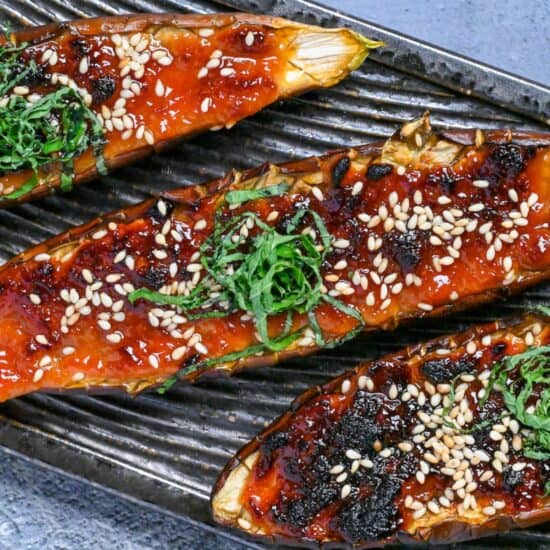
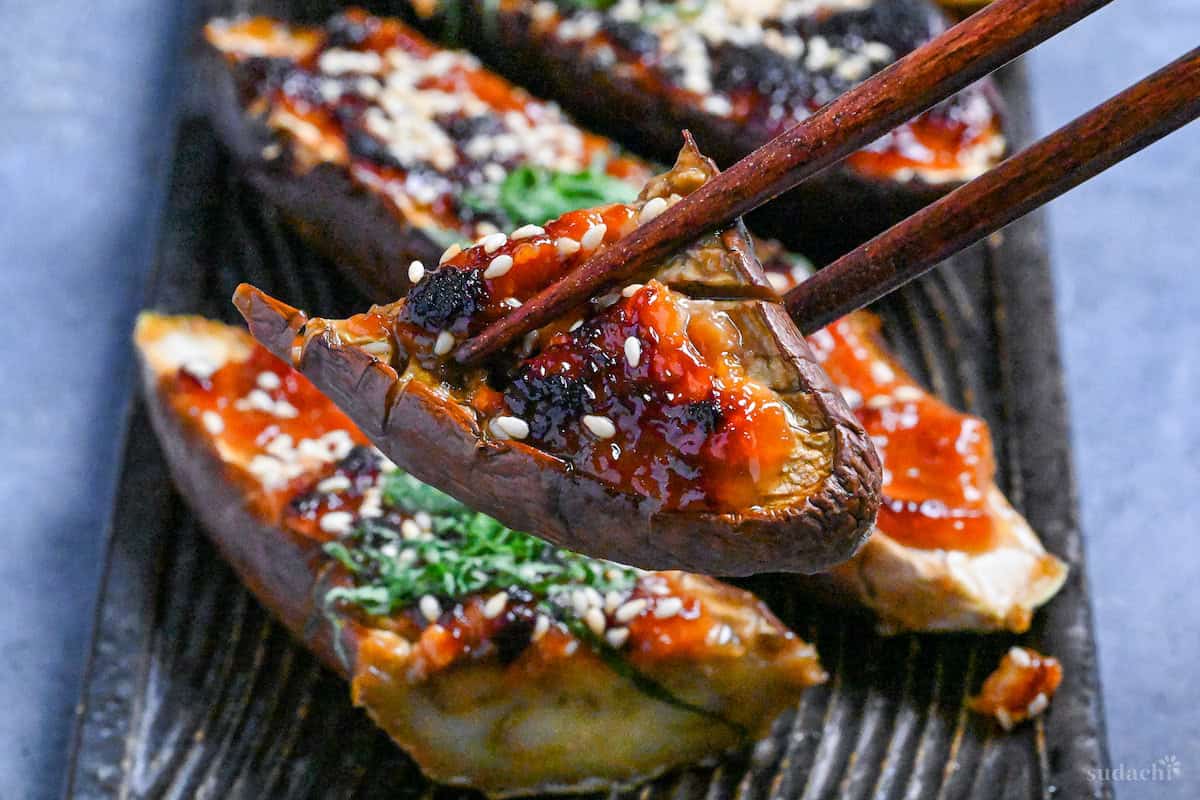
Nasu dengaku is the sweet miso glaze, and the eggplant that turns to custard under it. Grill them well, brush at the very end, and the whole thing tastes the way it does.
Meet my perfect dengaku.
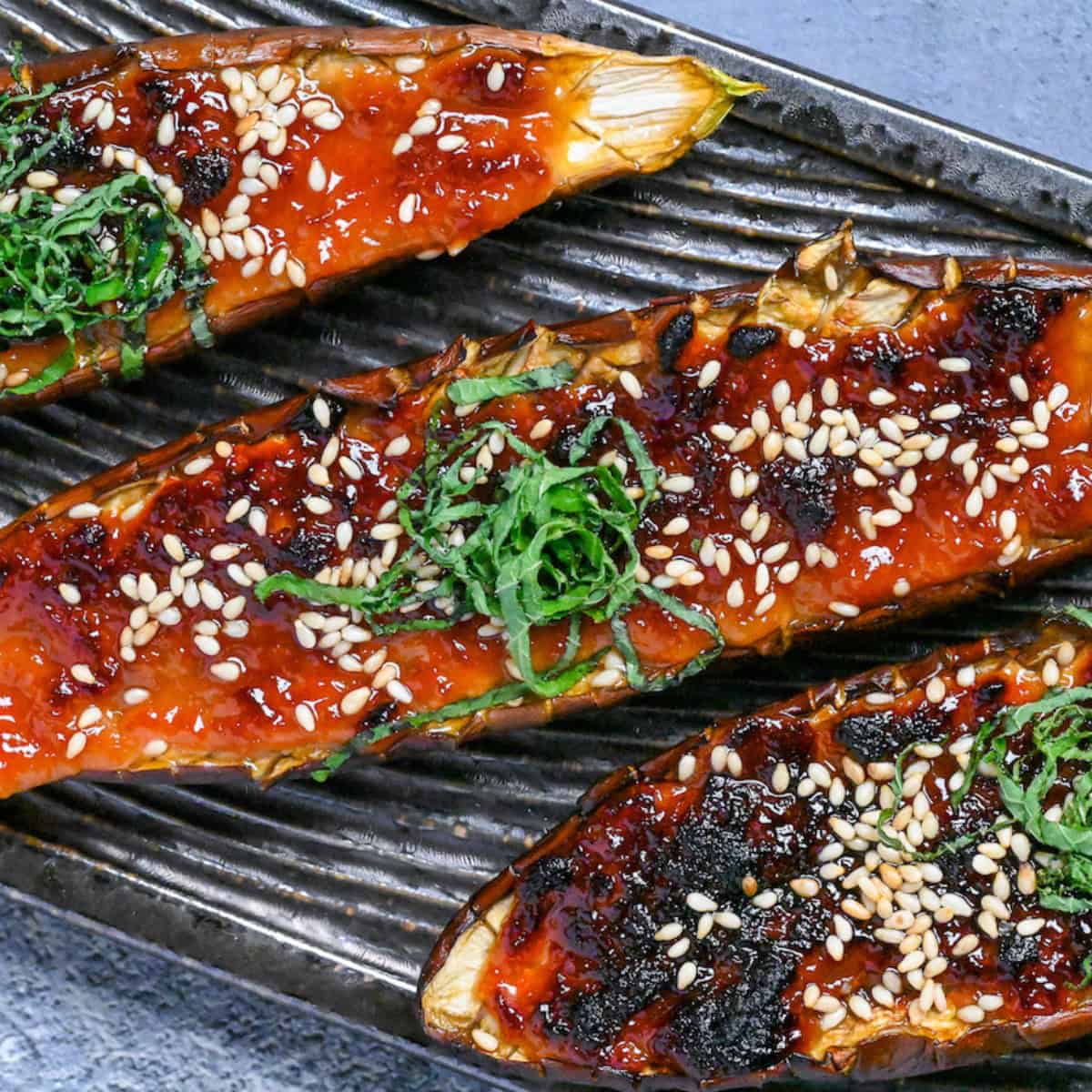
Nasu Dengaku
Recipe Snapshot
- What is it? A Japanese side dish of grilled long eggplant brushed with a separately simmered sweet miso glaze and finished under direct heat.
- Flavor profile: Sweet-salty and faintly nutty up top from a glossy miso lacquer, with a custard-soft melting interior underneath.
- Why you will love this recipe: It treats the dish as a sequence of 2 separately engineered components, so the glaze never burns and the eggplant never goes mushy.
- Must-haves: Long Japanese or Chinese eggplant, yellow miso awase, and mirin.
- Skill level: Beginner-friendly. Sequence discipline matters more than knife skill, and the only real attention point is the broiler window in the last 2 to 3 minutes.
What is Nasu Dengaku?
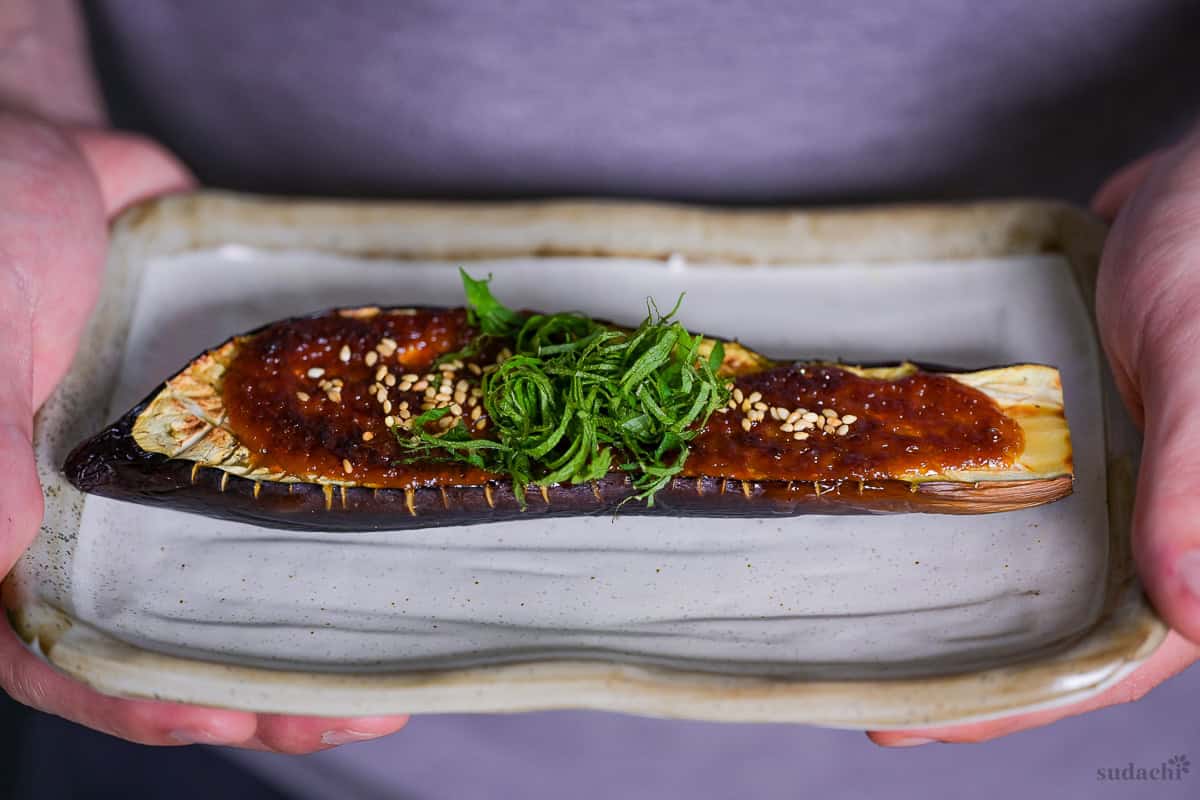
Nasu dengaku is a Japanese dish of grilled eggplant brushed with a sweet miso glaze and finished under direct heat. The miso paste never touches the eggplant until the very end.
The name predates the eggplant. Dengaku began with tofu skewered on a bamboo stick, the silhouette echoing the white-clad dancer on a one-legged stilt at Heian rice festivals. Eggplant joined the family in the early 1800s, when Edo cookbooks broadened vegetable dengaku out of its tofu origin.
In my hometown, dengaku meant red miso. I grew up walking distance from a Hatcho miso factory and toured the cellars on school trips, so for years I thought dengaku could not be made any other way. For this recipe I land on yellow awase instead, the safest cross-brand miso to find in any kitchen with internet shopping.
Miso Eggplant Ingredients
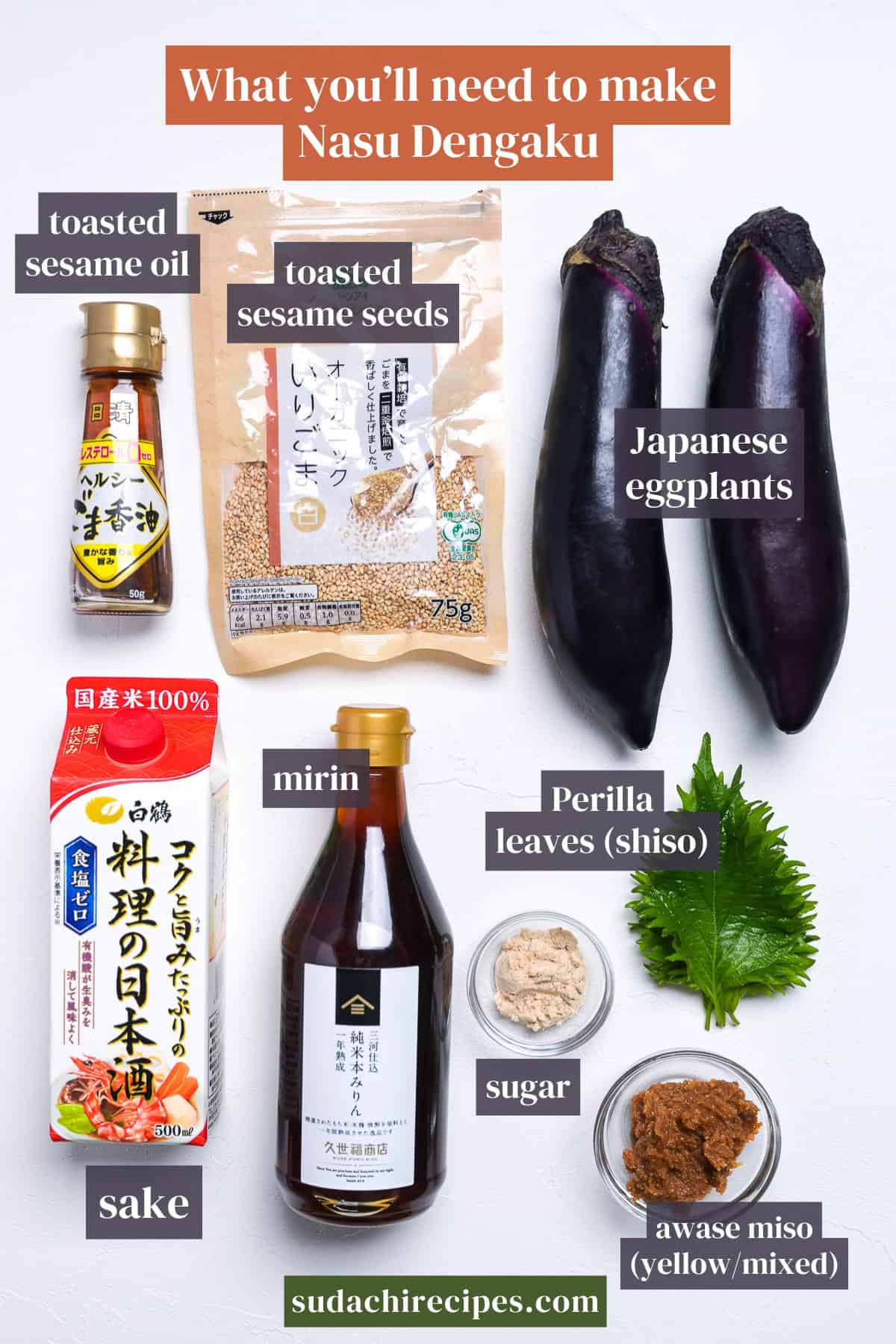
- Eggplants: Shape matters more than brand on this one. Reach for long Japanese or long Chinese eggplant if your grocer carries them. Both are thin-skinned, virtually seedless, and built to give you the silky melting interior dengaku is famous for. Globe works too, but you have to treat it like a different vegetable (more on that in Substitutions).
- Yellow miso paste (awase): Here is what the brand-versus-recipe rule actually looks like in your shopping cart. Awase tubs that look identical can land anywhere from 8 percent salt to 13 percent, with no visual cue on the label to warn you. So taste a fingertip out of the tub before you measure. If it reads sharp and aggressive, pull the miso back by a teaspoon and walk the sugar up by the same beat. If it reads mellow and almost candy-sweet, the recipe ratio is honest as written.
Substitution Ideas
- Japanese nasu → Chinese eggplant: Long, thin-skinned, virtually seedless, and very similar to nasu in the pan. Reach for these at Asian/Chinese supermarket. One for one by piece, no technique adjustment needed. This is the swap I would make first.
- Japanese nasu → Globe eggplant: The big round purple one at any chain supermarket. It works, but you have to treat it like a different vegetable. Cut into 2 to 3 cm rounds rather than long halves so the heat reaches the center, salt the rounds for 10 minutes to pull water out, and add a few minutes to the bake before the glaze goes on.
- Japanese nasu → Italian eggplant: Workable but the bitterness lingers even after salting. If this is what you have, salt-degorge longer than usual and lean a little harder on the sweetness in the glaze.
- Awase miso → White miso: The flavor reads softer, more elegant, and the glaze burns faster under the broiler because the lower salt and higher sugar shorten the Maillard window. Watch the heat and reduce the sugar a little.
- Awase miso → Red miso (Sendai-style aka miso): A bolder, home-style direction. Red miso runs salt-heavy at 11 to 13 percent and reads savory more than sweet, so use slightly less miso and bump the sugar by 30 to 50 percent to balance.
Have trouble finding Japanese ingredients? Check out my ultimate guide to Japanese ingredient substitutes!
How to Make My Nasu Dengaku
If you prefer to watch the process in action, check out my YouTube video of this nasu dengaku recipe!

Before you start (Mise en place):
- Preheat your broiler before you start. By the time the eggplant hits the second pass under it, the element will be radiating at full strength and you will not be standing there waiting on a cold heat source.
- Wash the eggplants and pat them dry. Dry skin matters here.
i. Pull the green stem cap off each eggplant and slice each one in half lengthways from cap end to tip. Lay each half cut side up on the board.
ii. Take a sharp knife and score the flesh in a shallow crosshatch pattern. Cut about 5 mm deep, parallel diagonal lines first, then a second set crossing the first at right angles, until you have a checkerboard of 1 cm squares across the cut face.

The cuts are not decoration. Eggplant flesh is dense and full of air pockets, and heat moves through it slowly from the cut face to the center. The crosshatch shortens that distance to the heat source for every interior pocket and gives the glaze something to grip when it goes on at the end.

i. Set a wire rack over your grill or broiler element or heat a splash of oil in a frying pan over medium. Either path works. Just commit to one.

ii. Lay each eggplant half so that the skin side is facing away from the heat source. Cook the flesh side for about 5 minutes. The skin protects the nasunin pigment underneath and the heat starts loosening the cell structure of the flesh from below.
iii. Flip each half so the cut face is now down (or facing the heat source if you are using a grill or broiler). Cook for another 5 minutes or so, until the flesh has gone fully soft and squishy when you press the back of a spoon into the thickest part. This is the moment to trust the eggplant, not the timer. Variety, size, and your heat source all push the actual time around.

i. While the eggplant cooks, combine the miso paste, sake, mirin, sugar, and toasted sesame oil in a small saucepan over medium-low heat. Stir with a small whisk or a spatula until the miso has dissolved and the paste is uniform.

ii. Bring the mixture to a low boil, then immediately drop the heat to low. Simmer for 2 to 3 minutes, stirring almost constantly, until the paste thickens enough that a spatula track stays clean on the bottom of the pan for half a second before the paste fills back in. That track is your finish cue.
iii. Pull the saucepan off the heat the moment the track shows.
i. Once the eggplant is fully soft from the previous step, transfer each half back onto the wire rack with the cut face facing the heat source.
ii. Take a pastry brush (or the back of a spoon if you do not own one) and paint a generous, even coat of the simmered glaze across each cut face. Work the paste into the crosshatch grid so the cuts catch the sauce.

i. Slide the tray under the broiler, cut face up.
ii. Broil for 2 to 3 minutes. Do not walk away, miso can burn in a flash. Stand there with the door cracked or the light on and watch the surface.
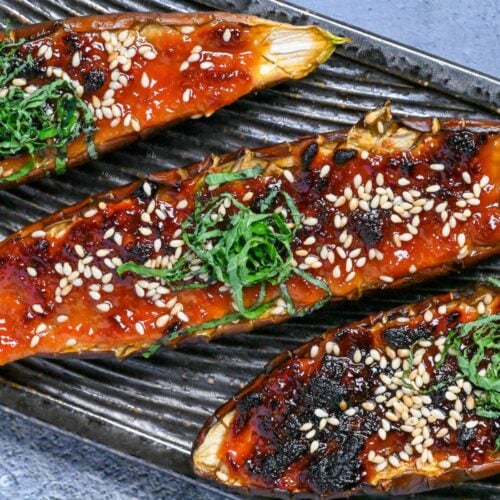
iii. The cue you are waiting for is two-fold. The glaze surface goes from matte to glossy and then starts catching the first hints of darker color along the high points of the crosshatch. The smell shifts from sweet-savory to a deeper toasted note. The moment you catch that smell, the dish is done.
i. Transfer each glazed half to a serving plate. Let them rest for a minute. The glaze tightens slightly as it cools.
ii. Sprinkle toasted white sesame seeds across the top.

iii. Scatter shredded shiso leaves on top of the sesame. The sharp herbal note cuts through the glaze and lifts the dish out of one-note sweet territory.

iv. Eat them hot, and enjoy!


Essential Tips & Tricks
- Treat color as a paint chip, not a flavor reading. 2 awase tubs of miso that look identical on the shelf can vary in salt content, with no visual cue on the label to warn you. Taste a fingertip out of the tub before you measure, and if it reads sharp pull the miso back by a teaspoon and walk the sugar up by the same beat.
- Cook the eggplant fully soft on the first pass, before any glaze touches it. The broiler at the end is for caramelizing the surface, not for finishing the cook. If the flesh still has resistance when you press it with the back of a spoon, it will be undercooked when the glaze blackens, and you cannot recover the dish from there. Press, taste, and only then move to the glaze.
- Watch the broiler with the door cracked or the light on, no walking away. The miso paste is sugar-rich and amino-acid-rich, and the broiler element radiates roughly twice the temperature of the simmer. Browning runs at that intensity in seconds, not minutes. The cue you want is a sweet-savory smell shifting to a deeper toasted note. Pull the moment you catch it.
With these simple tips in mind, you’re set for success every time you make nasu dengaku.
Storage & Meal Prep
Fridge: Assembled and broiled eggplant halves keep 2 to 3 days in a covered container. The texture goes a little softer overnight as the glaze migrates into the crosshatch grid, which is not a flaw but does change the mouthfeel from glossy to almost yielding.
Freezer: Not recommended.
Meal prep: Make the glaze ahead, cook the eggplant fresh. The whole craft of this dish is in the broiler window, and the eggplant texture is at its peak in the first 15 minutes off the heat.
Reheating: Use a toaster oven or a small oven at 180 to 200°C (356 to 392°F) for 5 to 7 minutes with a loose tent of foil over the top to keep the glaze from re-caramelizing into a burn.
What to Serve With This Recipe
Miso Eggplant FAQ
The default for my recipe is yellow awase, which is the everyday blended miso that most home cooks in Japan reach for first. If you want a sweeter, softer version, swap to white miso and reduce the sugar in the glaze a little. For a bolder, savory version, swap to red miso and bump the sugar and reduce the miso amount.
Yes, but treat it like a different vegetable. Cut into 2 to 3 cm rounds rather than long halves so the heat reaches the center, salt the rounds for 10 minutes to pull water out, and add a few minutes to the bake before the glaze goes on. Score deeper than you would on a Japanese long eggplant.
Texture is the signal, not color. A finished eggplant gives way completely to a chopstick, the way a ripe avocado does, and the cut flesh turns translucent rather than opaque. Surface browning does not mean cooked center, especially with thick globe eggplant whose sponge-like flesh insulates the interior (this is the classic trap, char on top while the middle is still firm). If the chopstick meets any resistance, return the eggplant to the broiler under loose foil for 2-3 more minutes, or microwave the piece for 60 to 90 seconds and re-broil briefly to refresh the glaze.
More Japanese Eggplant Recipes
- Nasu no Agebitashi (Marinated Fried Eggplant)
- Eggplant Kabayaki
- Eggplant Tempura
- Vegan Mabo Nasu
If the long Japanese eggplant pulls you in, browse my full collection of Japanese eggplant recipes and pick your next project.
Did You Try This Recipe?
I would love to hear your thoughts!
💬 Leave a review and ⭐️ rating in the comments below. 📷 I also love to see your photos – submit them here!
Nasu Dengaku (Grilled Miso Eggplant)

Ingredients
- 2 eggplants preferably long Japanese (nasu) or long Chinese
- toasted white sesame seeds to garnish
- perilla leaves (shiso) shredded, to garnish
Miso Glaze
- 2 tbsp yellow miso paste (awase)
- 2 tbsp sake
- ½ tbsp toasted sesame oil
- ½ tbsp light brown sugar white granulated sugar works
- 1 tsp mirin
The ingredient brands and tools I trust are in my Japanese pantry guide and my cooking tools guide.
Can’t find certain Japanese ingredients? See my substitution guide here.
Instructions
- Preheat your grill or broiler on medium. While you wait, wash 2 eggplants and dry with kitchen paper. Remove the stems and cut them in half lengthways, then score the flesh with a crosshatch pattern.

- Once the grill is fully preheated, place the eggplant halves on a wire with the flesh side facing the heat source and grill for 5 minutes.
- While the eggplant cooks, combine the sauce ingredients (2 tbsp yellow miso paste (awase), 2 tbsp sake, ½ tbsp toasted sesame oil, ½ tbsp light brown sugar and 1 tsp mirin) in a small saucepan and bring to a gentle boil over medium heat while stirring continuously. Reduce the heat to low and simmer for a few minutes, stirring occasionally to prevent burning.
- After 5 minutes, flip the eggplant and grill the skin side for another 5 minutes.
- Flip the eggplant pieces once more and test the doneness by piercing the thickest part with a chopstick. If it's still firm, grill for another 2-3 minutes. Once softened, brush the scored side with the miso sauce and grill for a few minutes until the miso glaze chars lightly on top.
- Transfer to serving plates, then sprinkle with toasted white sesame seeds and shredded perilla leaves (shiso). Enjoy!

I need to try this recipe. I’m intersted in your remark regarding Sake. like wine in recipes, chefs will say use only wine that you would drink yourself in your recipes, and you say the same about sake? I had always wondered
about cooking sake -why is it always listed?
Hi Vincent,
Thank you for the question.
As a general rule, the best product for cooking isn’t cooking sake, it’s sake you can drink just like you mentioned. The difference between cooking sake and regular sake is quite confusing but at the same time, important because cooking sake is categorized as a seasoning, not an alcoholic beverage. This means that salt is added to cooking sake just to reduce the tax rate and deliberately make it undrinkable. But unfortunately, the name “cooking sake” is quite misleading. I personally only use pure sake with no salt added.
For the cleanest flavor in your dishes, it’s best to use drinking-grade Junmai-shu (pure rice sake). Even the cheapest brand of Junmai-shu will give you a lot better result compared to cooking sake.
For a more comprehensive understanding of sake in cooking, I highly recommend checking out the “Sake 101” article (https://sudachirecipes.com/sake-101/)!
Yuto