

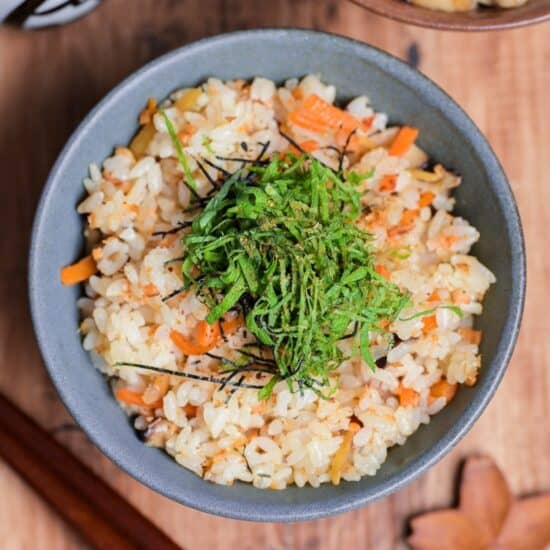


Featured Comment
Absolutely delicious and my family loved it. Well organized recipe and easy to make. This will be on my regular rotation of meals.
★★★★★
– Jeffrey
Looking for a rice dish that delivers comfort, nourishment, and great flavor? Then this Salmon Maze Gohan is for you! It’s the go-to Japanese rice dish when you crave a savory, cozy weeknight dinner.
You simply toss pre-cooked and seasoned ingredients into your hot rice in the rice cooker for an instant feast. I’ll reveal the one buttery finishing touch to upgrade this homestyle Japanese classic.
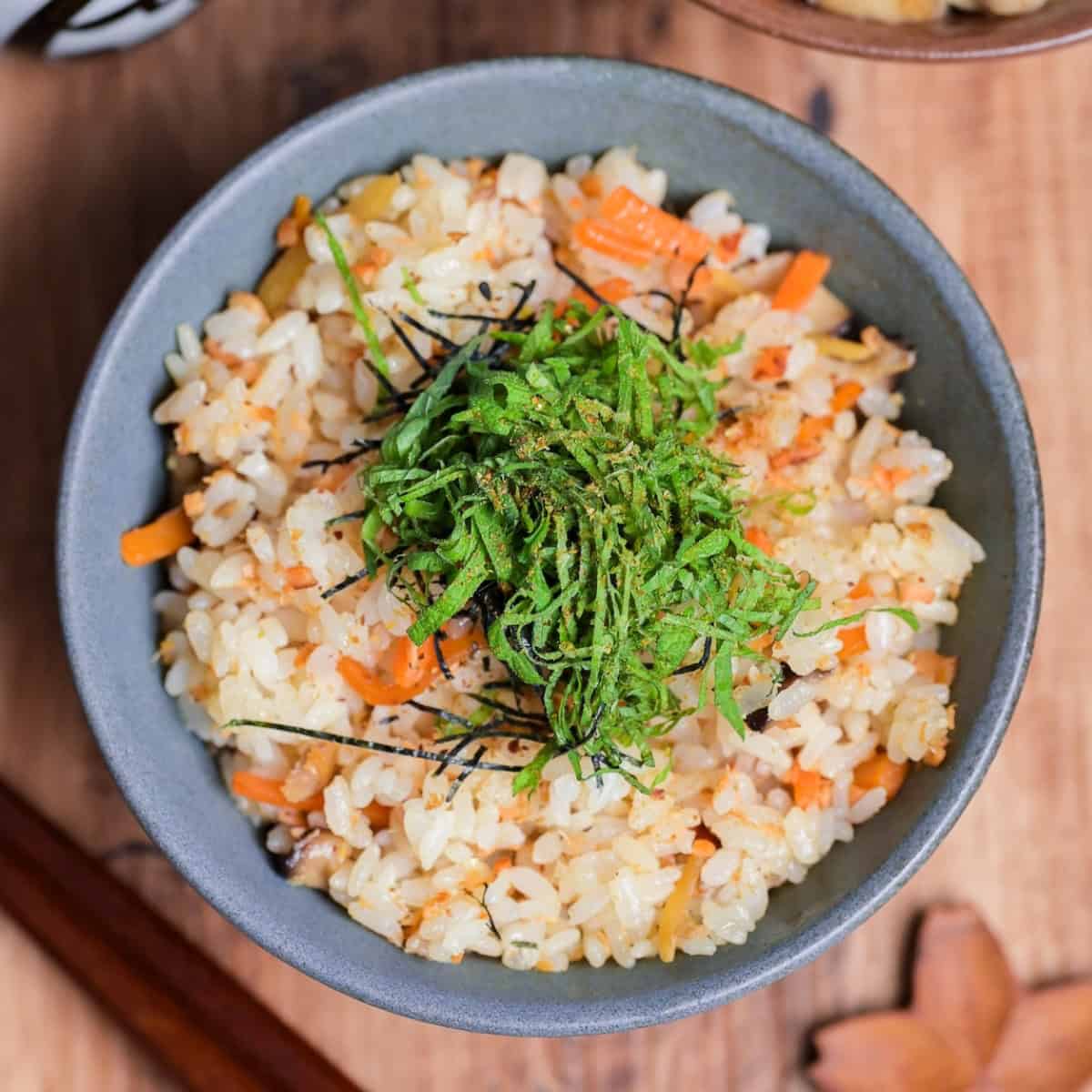
Salmon Maze Gohan
Recipe Snapshot
- What is it? A vibrant, comforting bowl of “mixed rice” where flaky, golden-seared salmon meets the zesty snap of ginger and toasted sesame.
- Flavor profile: Multi-layered umami synergy with a savory-sweet soy-butter aroma and refreshing accents.
- Why you’ll love this recipe: Build flavor after rice is cooked! No water-ratio/timing stress like takikom gohan! It’s the weeknight win that tastes like you simmered all day.
- Must-haves: Hot (70°C+) freshly steamed Japanese short-grain rice, salmon, soy sauce.
- Skill Level: Easy: No specialized tools or ratio calculations.
- Freezer Friendly? Yes! Portion for future “instant Japanese comfort bowls.”
- Suitable for Meal Prep? Yes! Great for bentō, onigiri shaping, and leftover upgrades
Summarize & Save this content on:
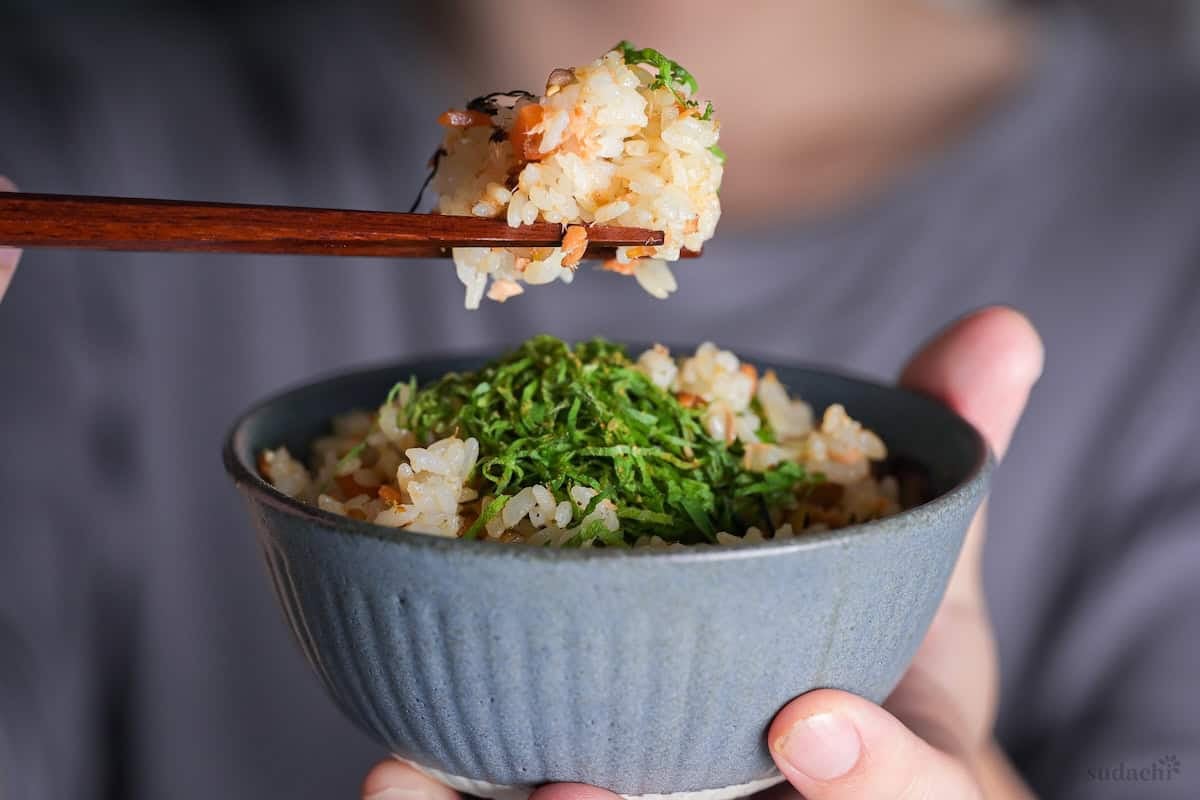
What is Maze Gohan?
Mazegohan (混ぜご飯) is a Japanese gohan-mono (rice dish) where cooked ingredients are mixed into freshly cooked Japanese rice after it’s done steaming.
In Japanese, “maze (混ぜ)” means “mix,” and “gohan (ご飯)” can mean “cooked rice,” which matches how this dish functions: you cook the rice separately, prepare the add-ins separately (often grilling, simmering, or sautéing), then fold everything together at the end.
Compared with takikomi gohan, which is cooked with the ingredients and requires careful liquid ratios to avoid uneven doneness, mazegohan is way more forgiving and tends to taste “cleaner” and more texturally separated.
Mazegohan Ingredients
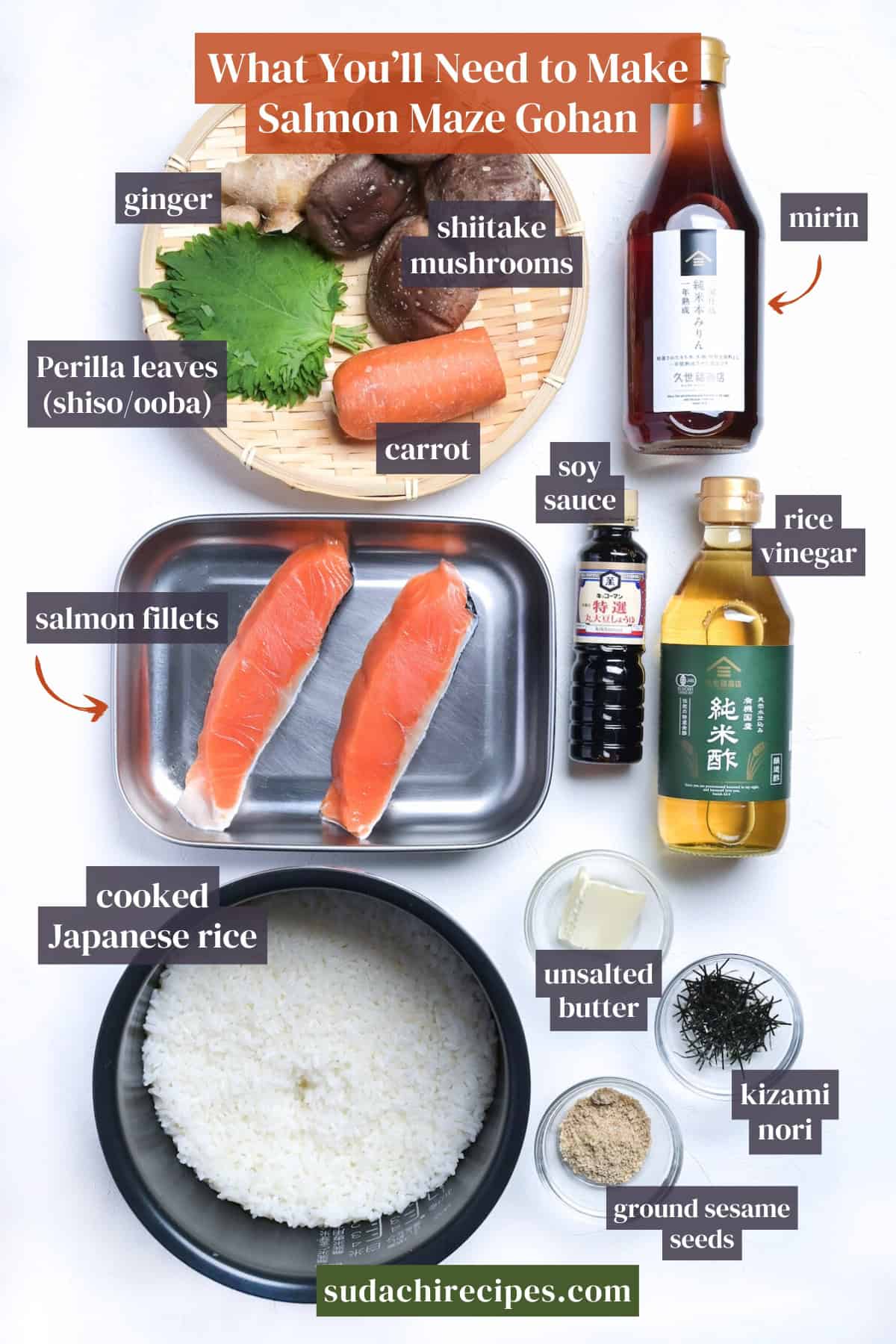
- Fresh salmon: It is the succulent heart of this maze gohan. It provides essential inosinic acid and healthy fats that emulsify with the soy-butter sauce to coat every grain of rice. But I don’t recommend using overly fatty salmon varieties as it will get too oily and soggy.
- White sesame seeds (toasted): These tiny seeds pack a nutty, almost sweet aroma that amplifies when you stir them into warm rice. The gentle crunch breaks up the softness of rice and flaked salmon, adding a satisfying textural pop in every spoonful.
- Kizami nori: This roasted seaweed is sliced into paper-thin threads to provide a concentrated punch of oceanic umami. It acts as a flavor bridge that ties the salmon back to its maritime roots, rounding out the rich soy-butter notes with the same briny soul found in a salmon onigiri.
Substitution Ideas
- Trout is the most seamless substitutes as they share the similar flavor profile and flaky texture as the original recipe. You’ll get a slightly leaner bite and deeper color, but the soy-butter finish will still taste perfectly authentic.
- Canned tuna (in oil) is a reliable pantry staple that offers a milder, delicate flavor while pairing beautifully with the butter seasoning. Make sure to drain the oil well before mixing.
- Salmon flakes: An ultra-convenient shortcut that skips cooking entirely, but cut the soy sauce by half since the flakes are usually already well-seasoned.
- Chicken soboro or chopped yakitori creates a savory, meat-forward version that feels heartier and more robust.
- Calrose or medium-grain “sushi rice” provides the essential stickiness needed to bind the ingredients together for a cohesive texture. Avoid long-grain jasmine rice, as its separate grains won’t allow the salmon and seasonings to meld into a proper maze gohan.
- Japanese brown rice or mixed grains (zakkoku-mai) add a satisfying nutty flavor and toothsome bite that complements the rich salmon perfectly.
- Fried tofu (aburaage) or extra mushrooms offer a wonderful plant-based umami that soaks up the soy-butter sauce like a sponge.
Have trouble finding Japanese ingredients? Check out my ultimate guide to Japanese ingredient substitutes!
How to Make My Salmon Maze Gohan
If you prefer to watch the process in action, check out my video of this maze gohan recipe!
Before you start (Mise en place):
- Cook your rice and keep it in the rice cooker’s “keep warm” mode. If you’re cooking rice on the stove top, cook the mix-ins during the steaming period and leave the lid on to keep it warm.
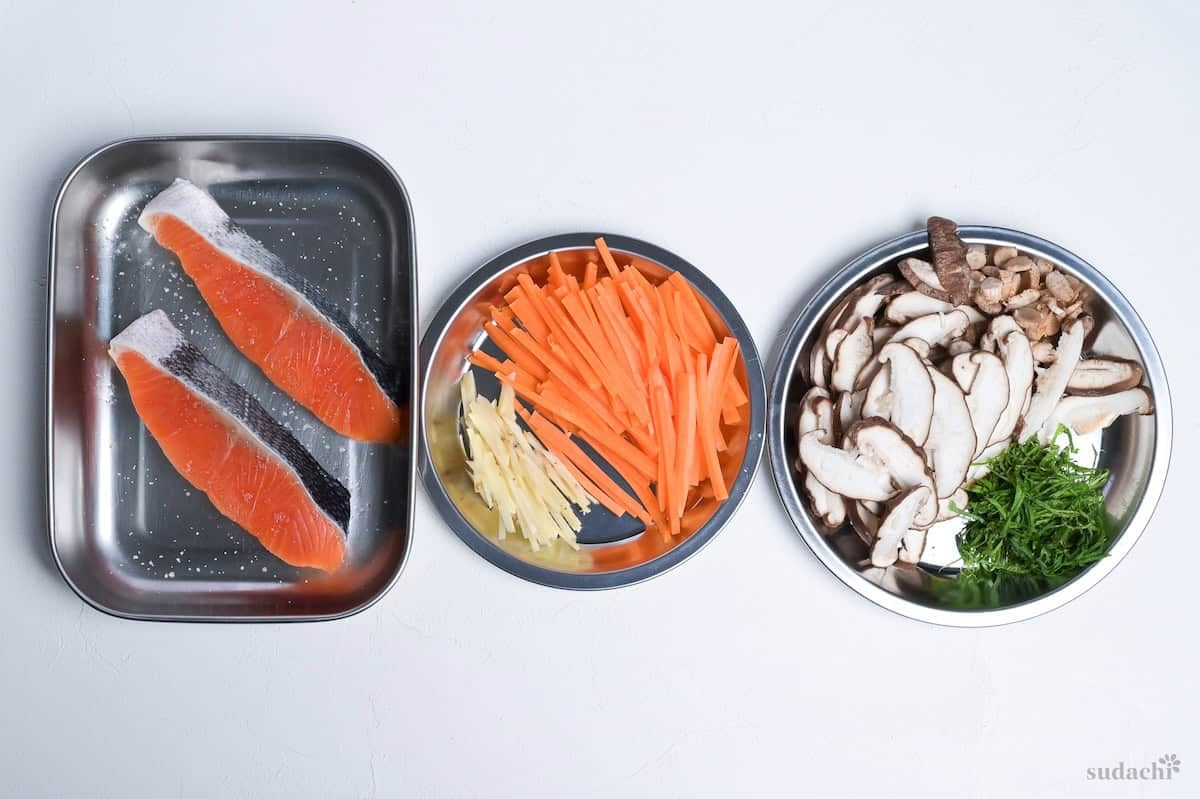
- Sprinkle salt over salmon fillets and rest 15 minutes to draw out moisture and trimethylamine (the compound responsible for that “fishy” smell) through osmotic pressure.
- Julienne carrot and ginger root (skin removed).
- Slice shiso leaves and mushroom of your choice (I used shiitake mushroom).
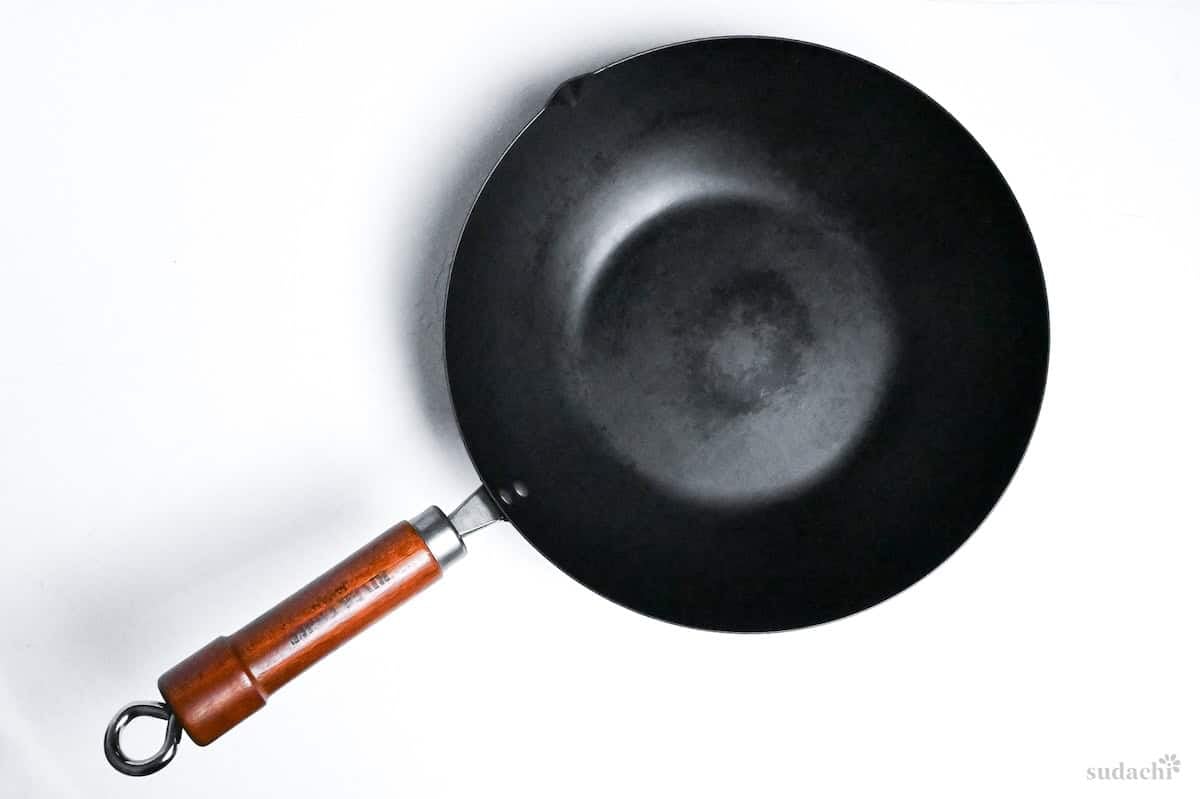
I cooked this maze gohan recipe in a 30cm wok (any frying pan will work for this).
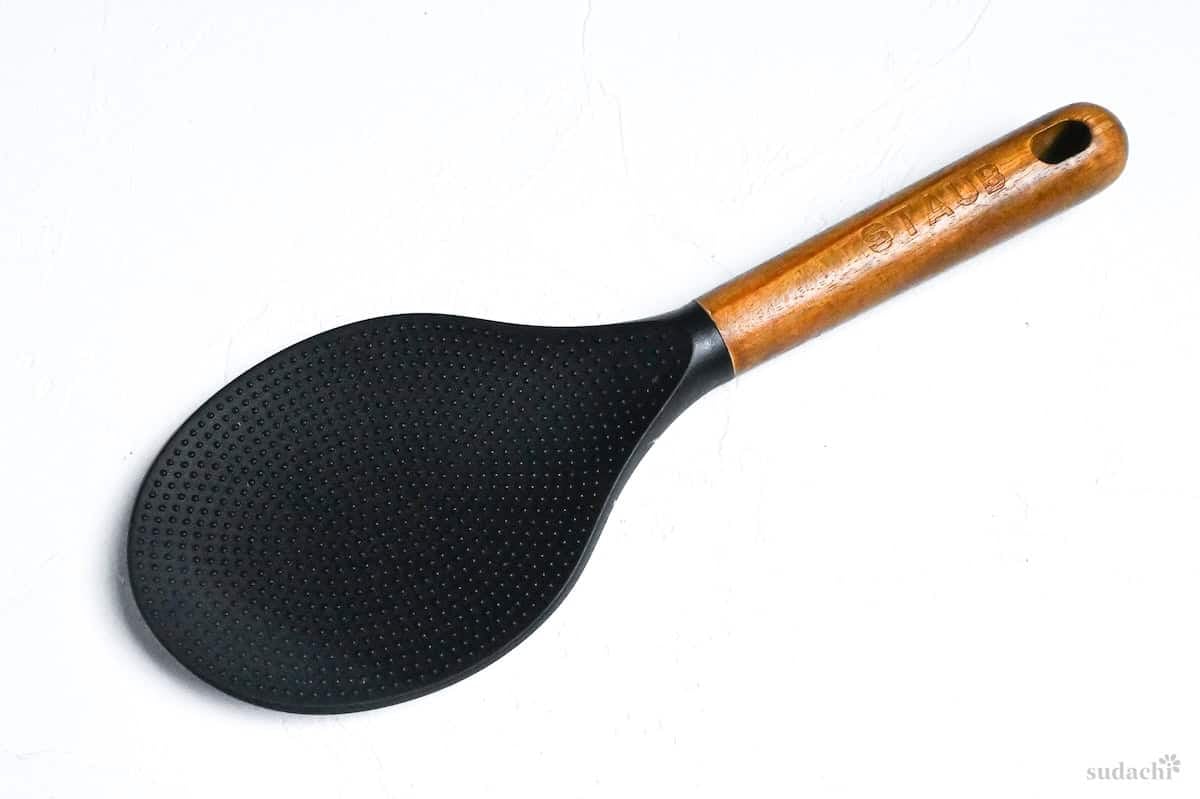
A silicone rice paddle to mix without breaking grains.
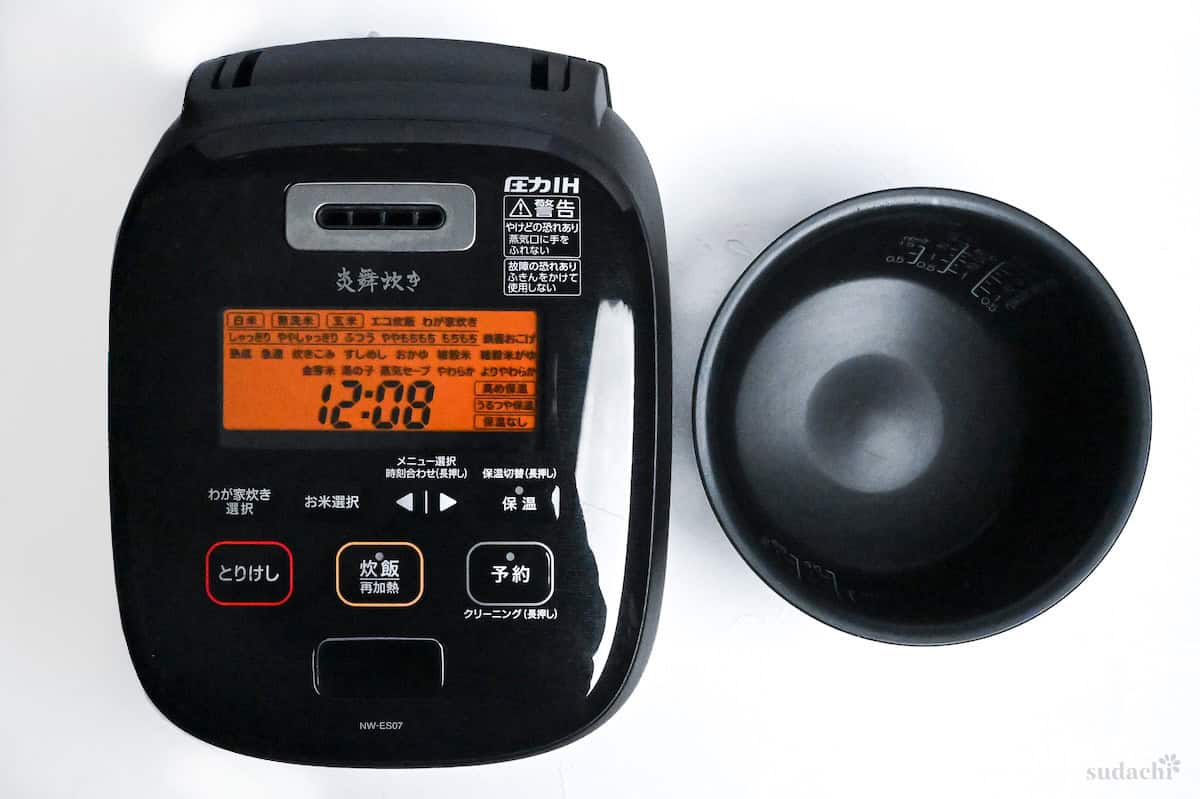
A high-quality Japanese rice cooker to cook rice with ease.
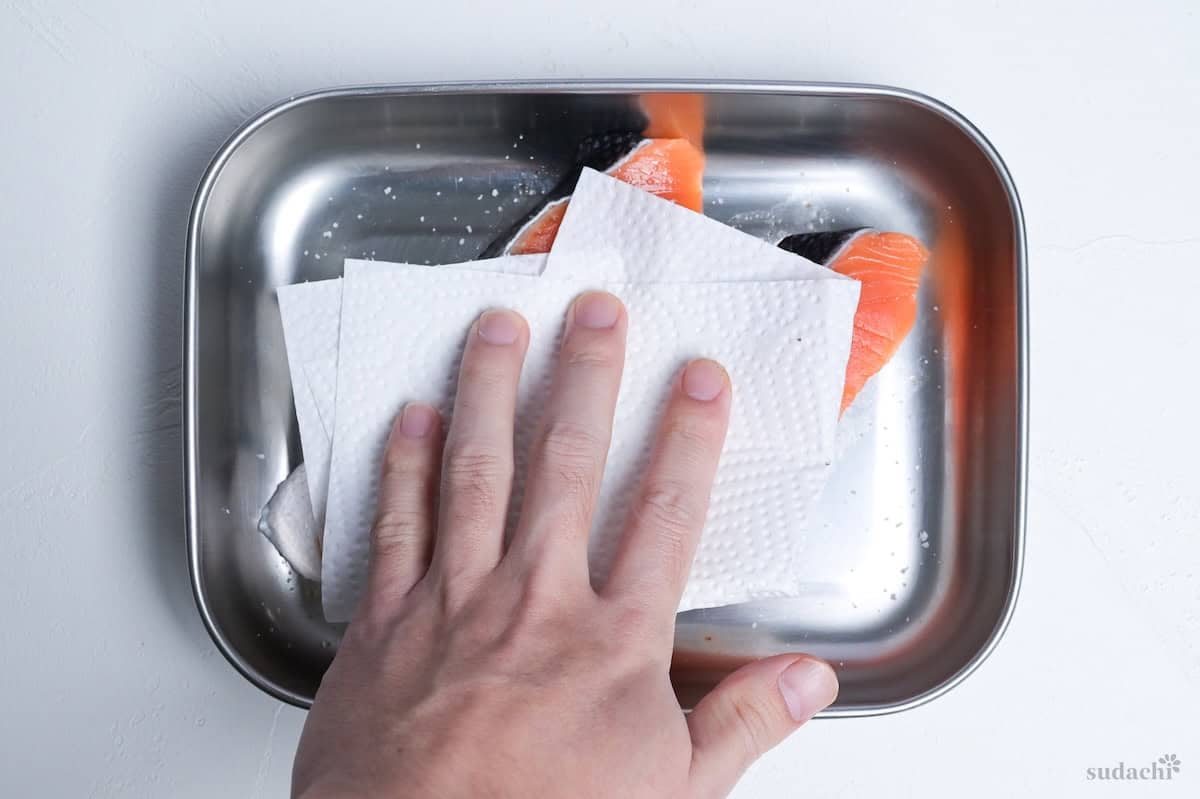
i. After 15 minutes, blot the salmon dry so it browns (not steams).
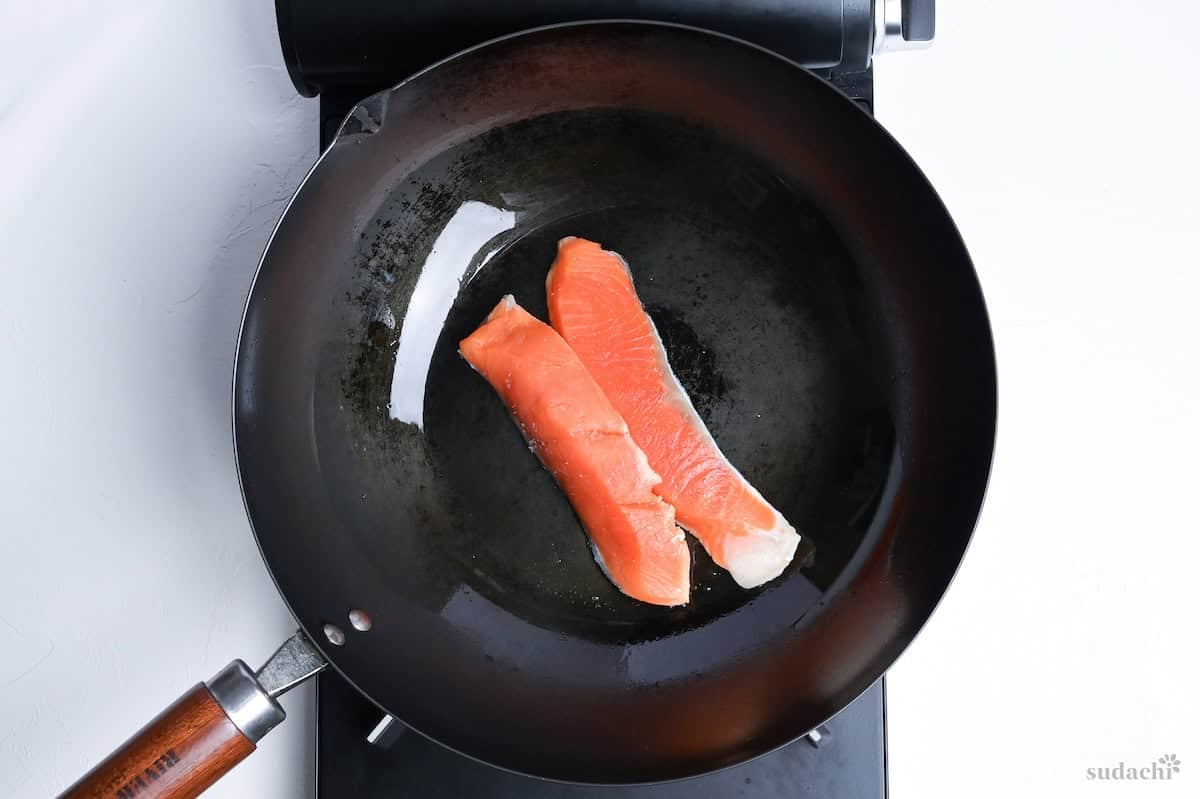
ii. Heat a drizzle of oil in a skillet over medium heat, then lay the salmon fillets skin-side down (if using skin-on). Cook for about 2 minutes without moving them. You want a golden-brown crust that smells nutty and rich.
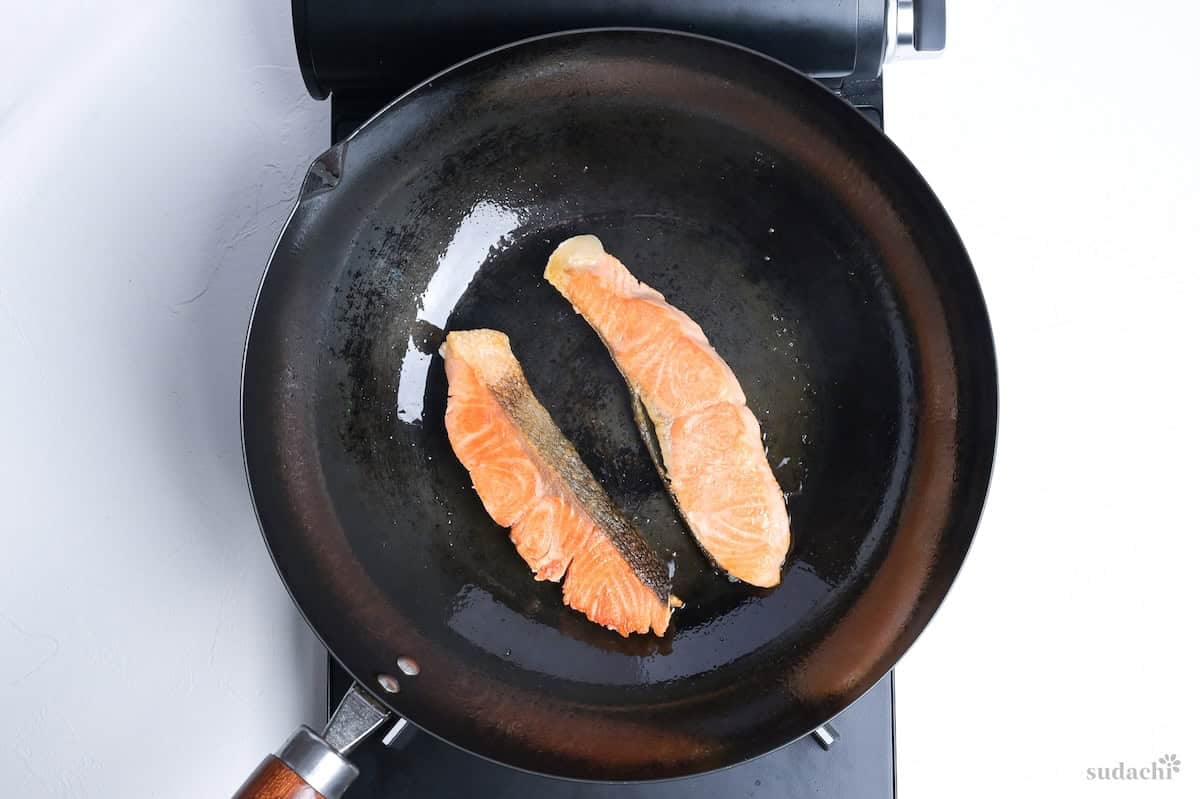
iii. Flip and cook the other side for another 2-3 minutes until the flesh is just cooked through but still slightly glossy in the very center.
i. Add the carrots, ginger, and mushrooms, then flake the salmon into uniform pieces as the vegetables soften. Achieving a consistent size is critical for an even seasoning distribution.
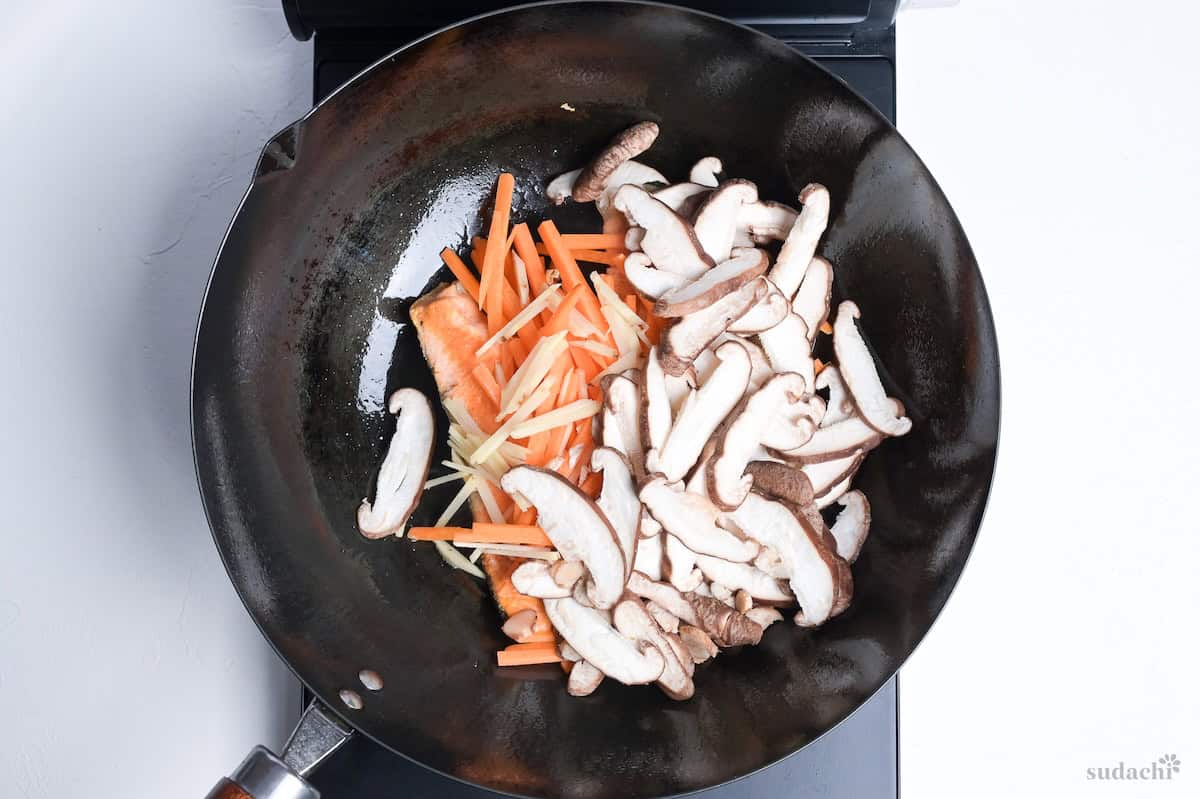
ii. Stir everything together, letting the vegetables cook until the carrots are tender but still have a slight bite, about 3 minutes.

The carrots will start to soften and the mushrooms will release their earthy moisture, mingling with the salmon’s fat to create a fragrant base.
i. Clear a small space in the center of your pan by pushing the salmon mixture to the edges. Pour mirin into that open space and let it bubble vigorously for a about 10-15 seconds.
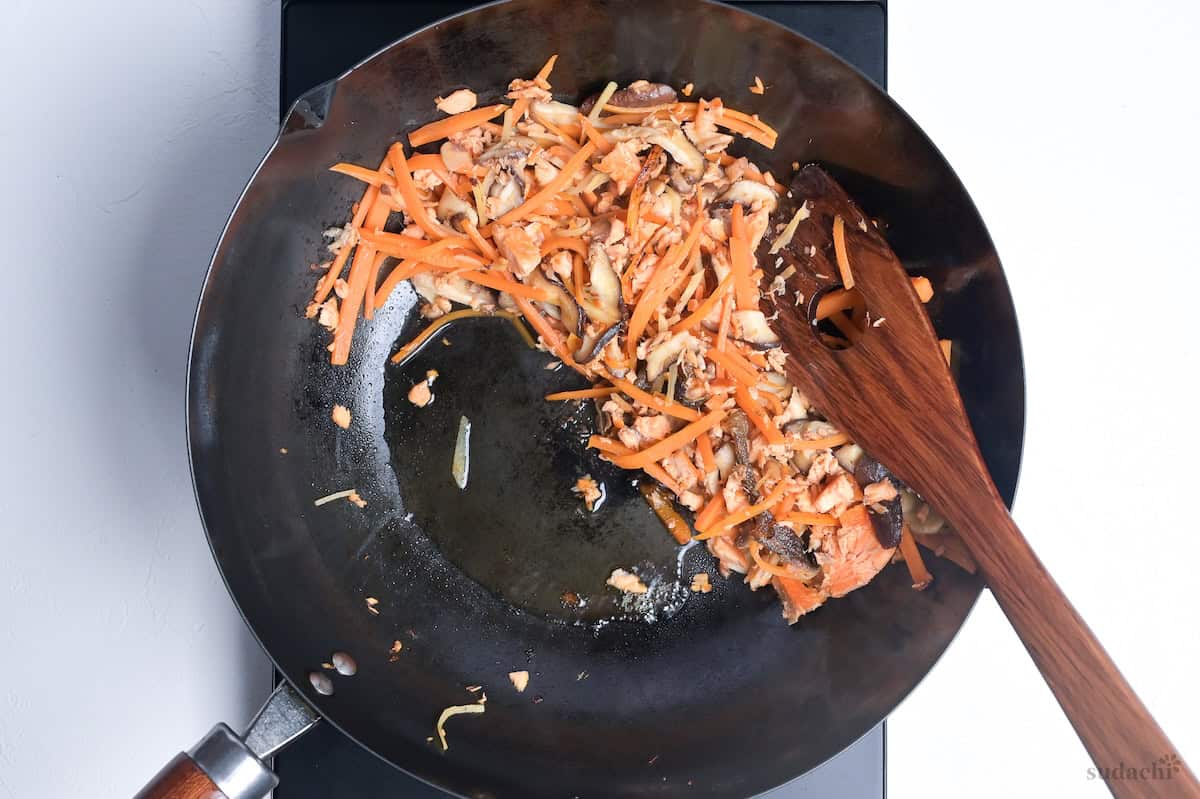
ii. Likewise, add soy sauce in the empty spot to scorch it, then fold it in. Reduction concentrates flavor without watering down maze gohan.
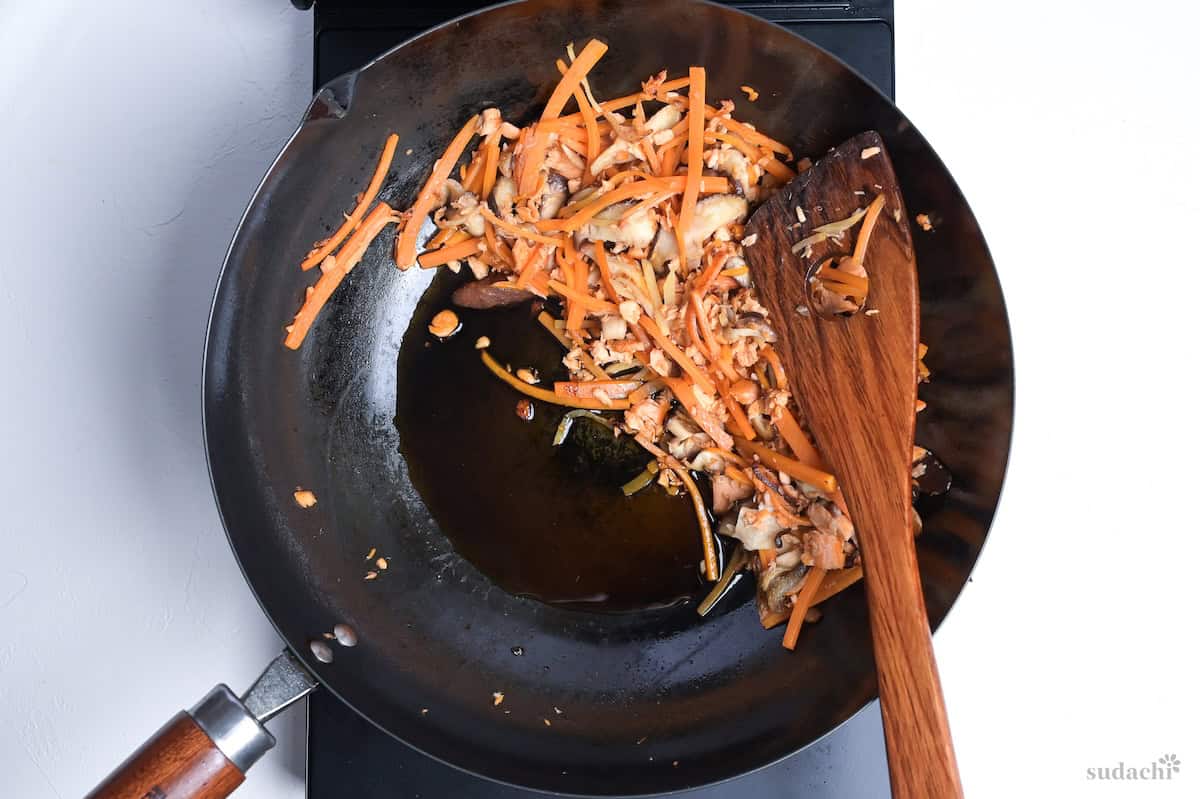
That brief moment of high heat transforms soy sauce from simply salty to deeply savory with roasted, almost chocolatey undertones. I once skipped this step thinking it wouldn’t make much difference, but tasters immediately noticed the version with kogashi shoyu had way more complexity.
i. Turn off the heat and stir in the butter until it melts and clings to the salmon and vegetables. You’re building a quick emulsion that carries that soy-butter aroma through every bite, so it should look shiny, not oily.
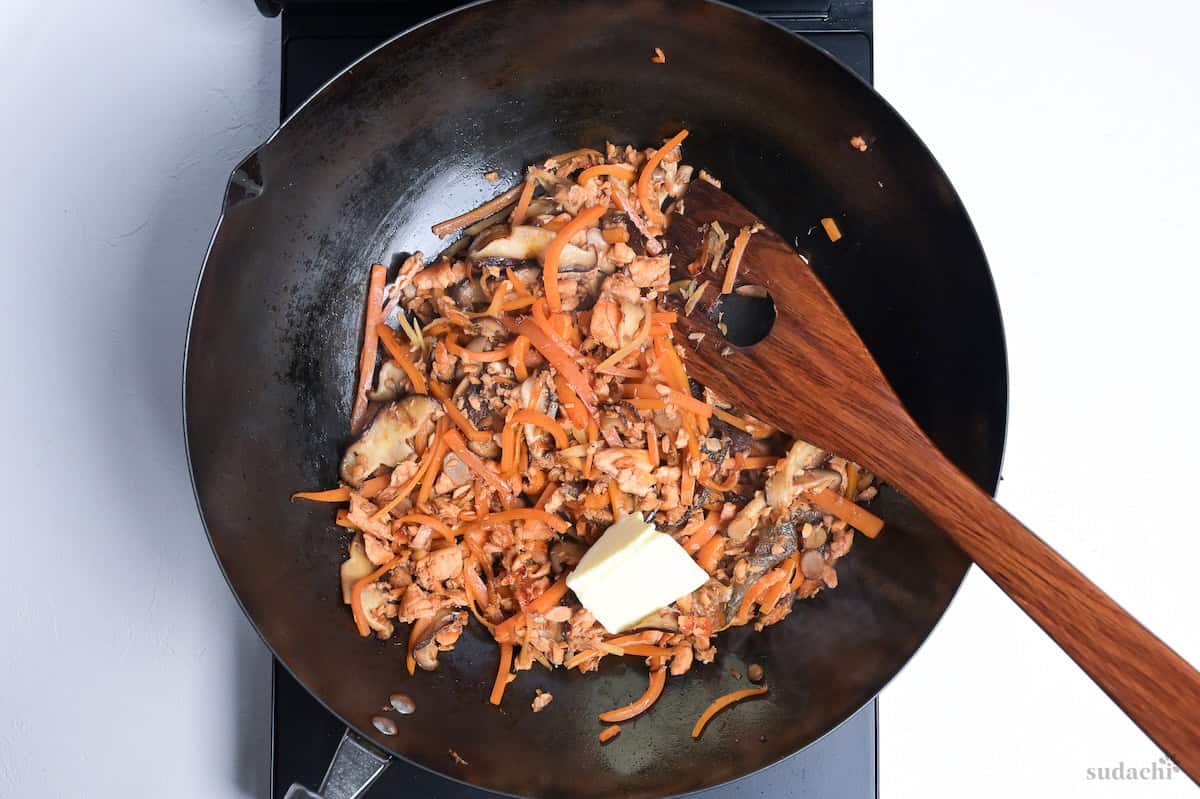
I recommend using unsalted butter to allow more precise control over the final salinity.
i. Put hot rice in a bowl (if using rice cooker, just use the inner bowl) and add ground sesame, rice vinegar, and fold them in.
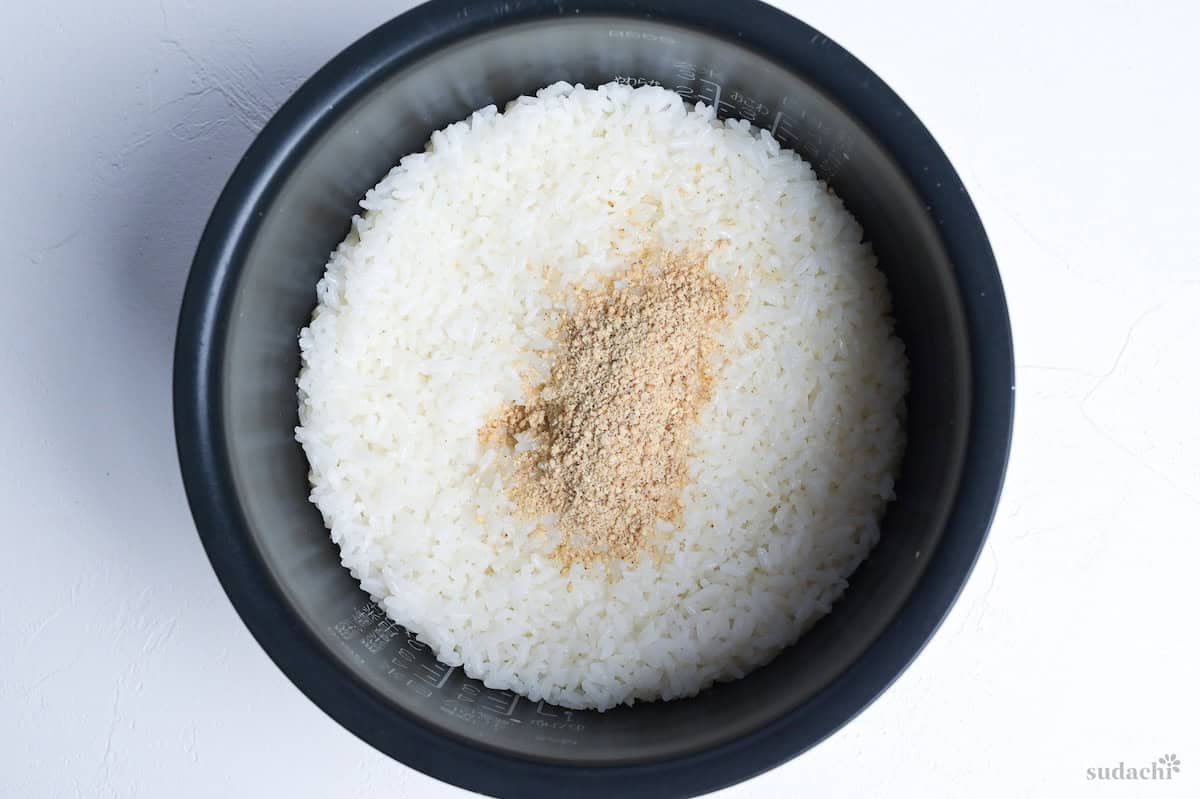
ii. Add the mixture in the pan. Fold fast with a rice paddle using a “cutting” motion. Warm rice absorbs the soy-butter aroma as steam escapes. If it turns gummy, you over-mixed.
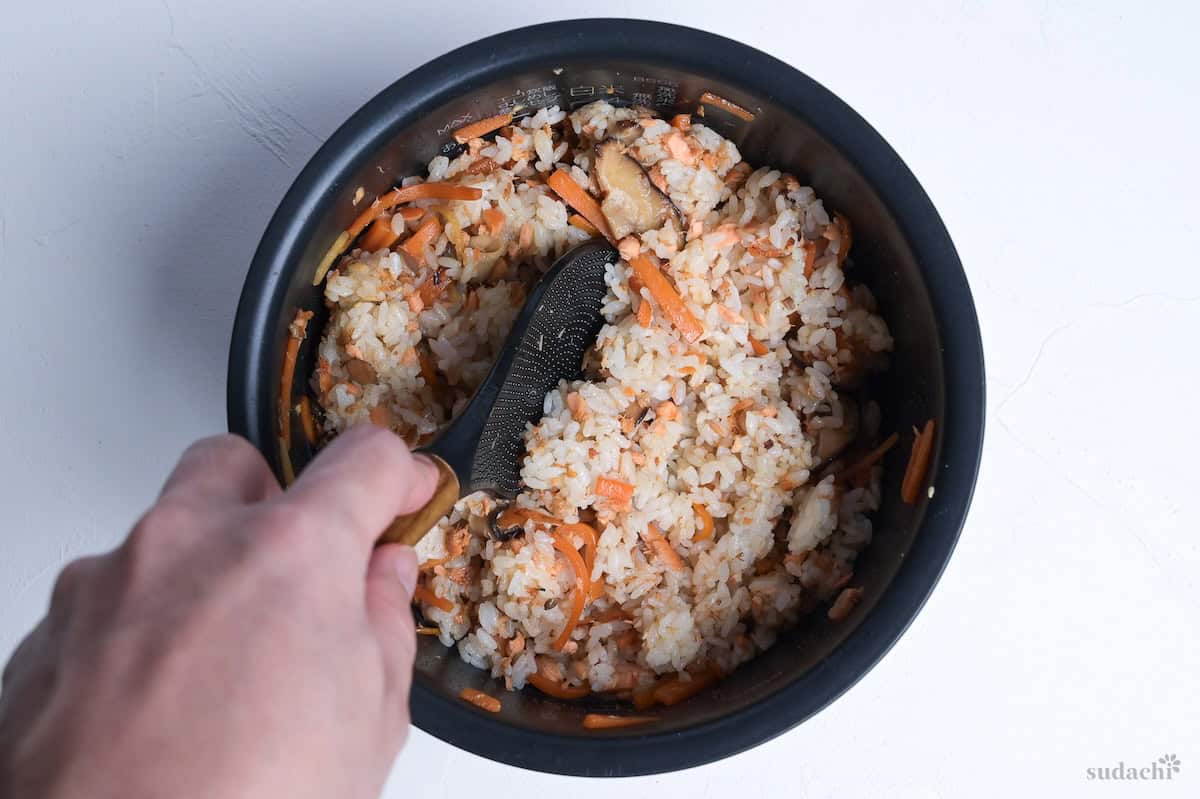
Work quickly but gently, mixing just until the salmon and vegetables are evenly distributed throughout, about 10-15 folds total. The rice should stay fluffy with distinct grains, not mashed or gummy.
iii. Taste the rice and adjust seasoning if needed (a few more drops of soy sauce for saltiness or a pinch of sesame for nuttiness).
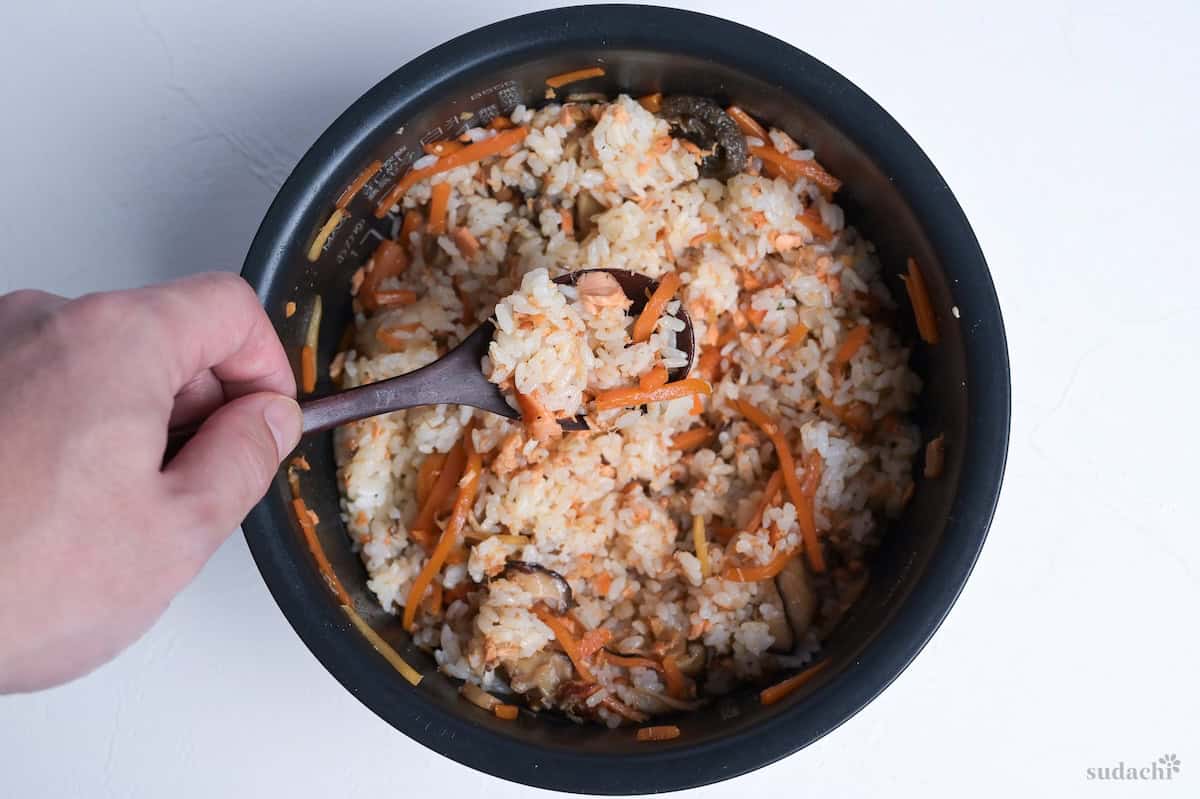
iv. Top with shiso leaves, along with a generous handful of shredded nori.
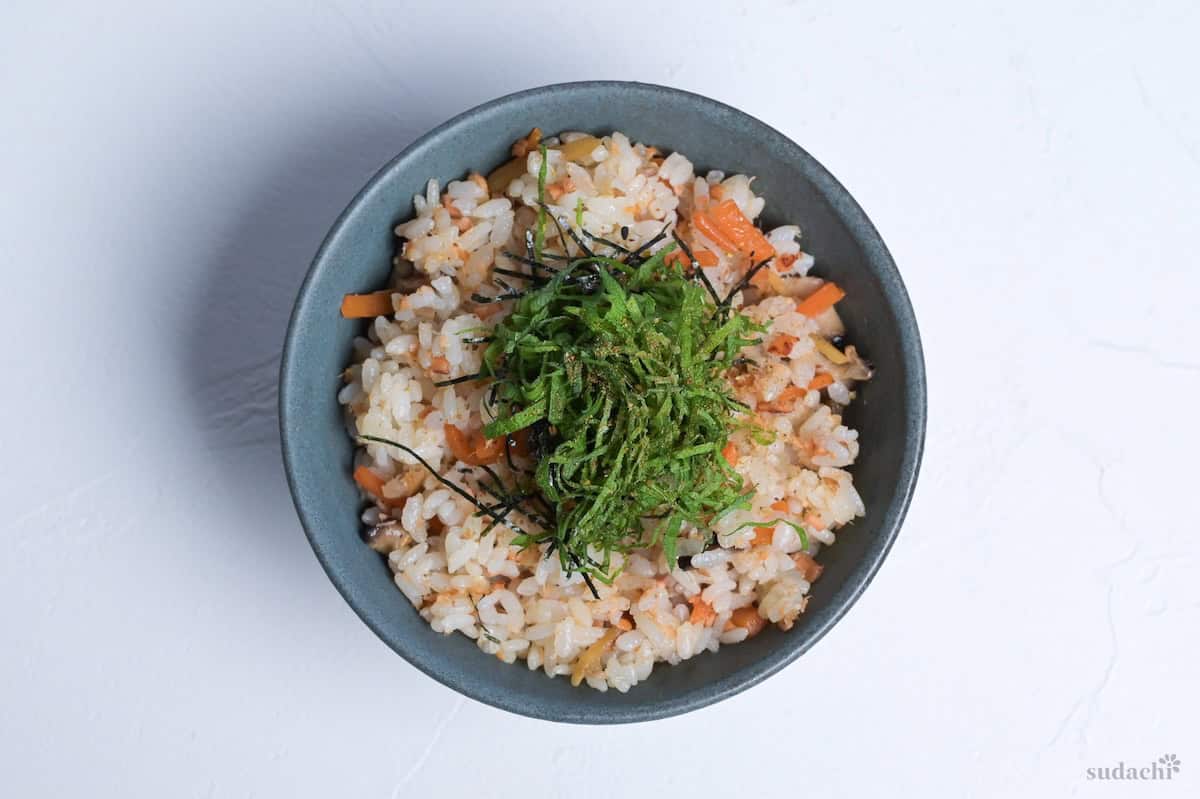
v. Optionally drizzle tiny bit of toasted sesame oil and a tiny pinch of high quality sea salt to mix things up. A tiny blob of wasabi actually adds great contract too!
If you follow the default recipe, it will yields 4-5 main servings, or 7-8 side servings.

Essential Tips & Tricks
- Salt the salmon and wipe the surface dry to draw out odors and excess moisture.
- Reduce the soy-mirin glaze until moisture is evaporated to concentrate umami. If liquid remains, it will migrate into the grains and turn your rice unpleasantly soggy.
- Emulsify the butter by stirring it off the heat to create a smooth, glossy coating.
- Fold the ingredients into the rice with a “cutting” motion to preserve grain integrity.
- Add aromatic shiso and nori only when serving.
With these simple tips in mind, you’re set for success every time you make mazegohan.
Storage & Meal Prep
Fridge: Store in an airtight container for up to 1-2 days. The cold environment triggers rapid starch retrogradation, causing the rice to lose its springy chew and become hard
Freezer: Recommended, portion into single servings, wrap tightly, then seal in a freezer bag to prevent freezer burn. Best within 2-3 weeks (up to 1 month for quality). Freeze only after it’s cooled so you don’t trap excess condensation.
Meal Prep: Prep the salmon and vegetable mixture up to 3 days in advance and store it the fridge. Mix with freshly cooked rice right before serving. Mixing too early is not recommended, as moisture migration from the fish will lead to soggy rice and a diluted soy-butter aroma. If you have leftovers of already mixed rice, you can store it in portions in the freezer (see above).
Reheating: Microwave individual portions in a covered container with 1 tbsp of water or sake sprinkled over the top (600W for 2-3 minutes), stirring halfway through to ensure even heating.
What to Serve With This Recipe
Maze Gohan FAQ
Takikomi Gohan involves cooking raw ingredients directly with the rice, whereas Maze Gohan (this recipe) folds seasoned toppings into already-cooked rice. This “post-mix” technique offers superior moisture control, ensuring the rice grains stay distinct while the salmon retains its seared, Maillard-driven aroma. It is the best method for beginners who want to avoid the “soggy rice” failure mode common in one-pot rice cooker recipes.
Soggy usually means too much free water (wet salmon, watery vegetables, or not reducing the mirin/soy enough) and gummy usually means over-mixing that breaks grains and releases starch. Fix it next time by sautéing until the pan looks nearly dry (evaporation), reducing the seasonings until almost dry (reduction), and mixing with a rice paddle in a “cut and fold” motion.
You can, but you’ll need to reheat it until it’s steaming hot before mixing-cold rice has undergone starch retrogradation, making it stiff and unable to absorb the salmon’s flavors properly. Microwave the rice with a tablespoon of water covered for 2-3 minutes, fluffing it once midway, so the grains soften and become receptive to the buttery glaze. The result won’t be quite as fluffy as using fresh rice, but it’s a perfectly viable way to transform leftovers into a satisfying meal.
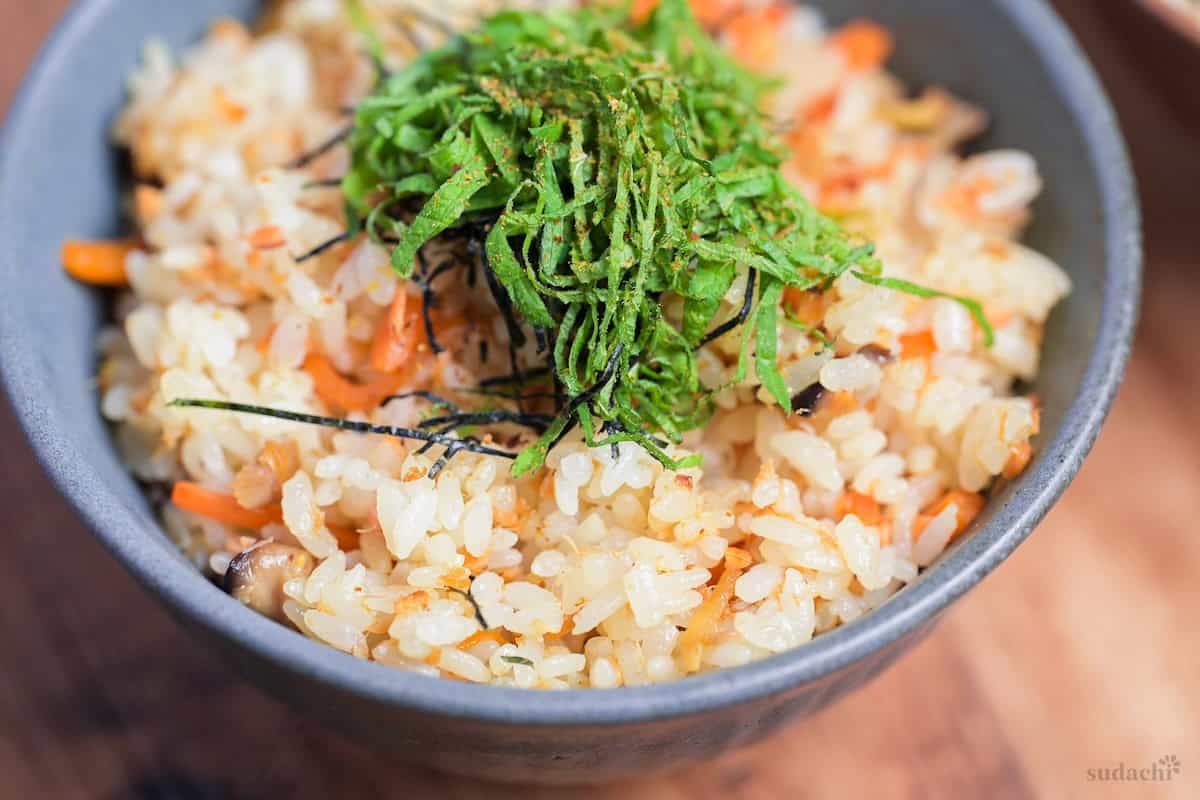
More Japanese Salmon Recipes
Hungry for more? Explore my Japanese salmon recipes to find your next favorite dishes!
Did You Try This Recipe?
I would love to hear your thoughts!
💬 Leave a review and ⭐️ rating in the comments below. 📷 I also love to see your photos – submit them here!
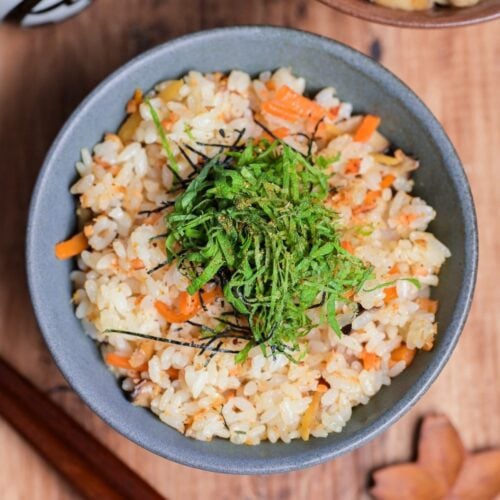
Salmon Maze Gohan (Japanese Mixed Rice)

Ingredients
- 200 g salmon fillets not overly fatty, or trout
- ¼ tsp salt
- 100 g mushroom of your choice fresh, I used shiitake
- 100 g carrots
- 1 tbsp ginger root
- 1 tsp cooking oil neutral
- 2 tsp mirin
- 1½ tbsp Japanese soy sauce (koikuchi shoyu)
- 660 g cooked Japanese short-grain rice steaming hot, or Calrose (not long-grain)
- ¼ tsp rice vinegar unseasoned
- 1 tbsp ground sesame seeds toasted white
- 1 tbsp unsalted butter
- 5 shiso leaves sliced, for topping
- kizami nori (shredded nori) for topping
My recommended brands of ingredients and seasonings can be found in my Japanese pantry guide.
Can’t find certain Japanese ingredients? See my substitution guide here.
Instructions
- Before you start, cook your rice using your preferred method and keep it warm. This recipe uses 660 g cooked Japanese short-grain rice (one Japanese rice cup contains 150g raw rice and yields approx 330g cooked rice).

- Sprinkle 200 g salmon fillets with ¼ tsp salt on both sides and rest for 15 minutes. Thinly slice 100 g mushroom of your choice, julienned 100 g carrots and 1 tbsp ginger root and shred 5 shiso leaves.
- After 15 minutes, pat the salmon fillets dry with kitchen paper.
- Heat a pan on medium and add 1 tsp cooking oil. Place the salmon fillets skin side down and fry for 2 minutes undisturbed. Flip and fry on the other side for 2-3 minutes.
- Add the mushrooms, carrots and ginger to the pan and stir fry everything together while breaking the salmon into flakes with a spatula.
- Once the vegetables have softened, push everything to one side and pour 2 tsp mirin into the empty space. Let it bubble for 10-15 seconds, then add 1½ tbsp Japanese soy sauce (koikuchi shoyu) and let it bubble and reduce for about 10-15 seconds.
- Mix the salmon and vegetables into the reduced mirin and soy sauce until evenly distributed, then turn off the heat and stir in 1 tbsp unsalted butter until it's melted and coated the mixture.
- Pour ¼ tsp rice vinegar and 1 tbsp ground sesame seeds over the 660 g cooked Japanese short-grain rice. Fold them in with a rice paddle.
- Add the contents of the pan to the rice and mix with a rice paddle using a cut and fold motion so that you don't crush the rice.
- Taste test and add more soy sauce or sesame seeds to taste.
- Divide into serving bowls and top with kizami nori (shredded nori) and the shredded shiso leaves. Enjoy!

Absolutely delicious and my family loved it. Well organized recipe and easy to make. This will be on my regular rotation of meals.
Hi Jeffrey,
Thank you so much for the kind feedback! I’m really glad you found the recipe well organized and easy to make, and it makes me happy to hear it was a hit with your family! 🙂
Yuto