

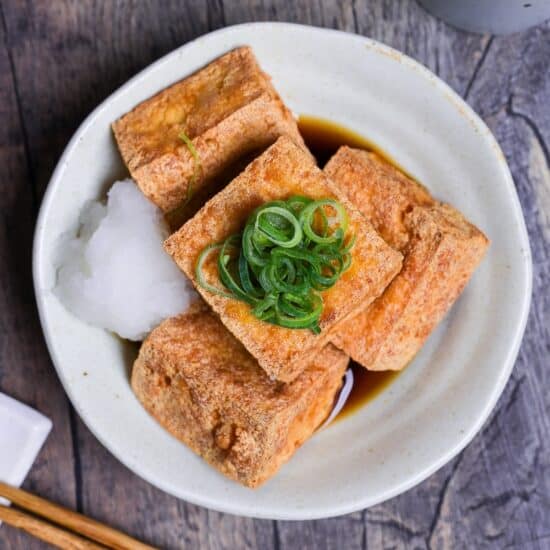


Atsuage is just fried tofu. That is exactly why most people underestimate it. Done right, 10 minutes in hot oil transforms a plain block of firm tofu into something with a crackling golden crust and a soft, warm center that no store-bought version can replicate.
This is how I make it at home, and the best way to eat it straight from the pot.
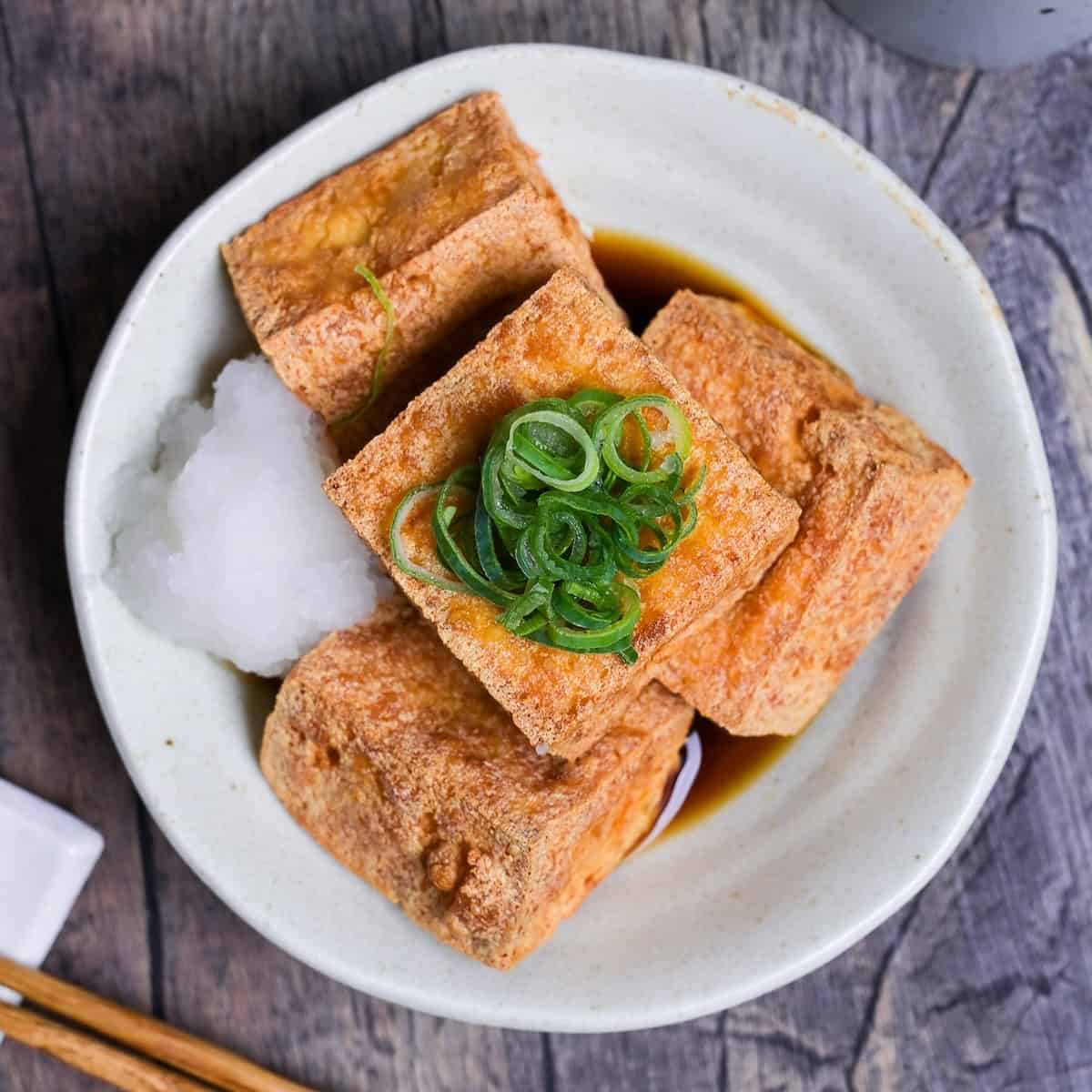
Atsuage Tofu
Recipe Snapshot
- What is it? Crunchy cubes of firm tofu, deep-fried until the outside turns golden and crispy while the inside stays soft and barely cooked. Known as atsuage (“thick-fried”) or namaage (“raw-fried”) in Japanese, it is both a standalone dish and a versatile ingredient in simmered and grilled recipes.
- Flavor profile: A crackling, toasty crust with the nutty aroma, giving way to mild, clean tofu inside.
- Why you’ll love this recipe: The crispy shell only lasts minutes after frying. Store-bought atsuage has already lost it by the time you open the package. Making it yourself is the only way to experience what atsuage is actually supposed to taste like.
- Must-haves: Firm (momen) tofu, a neutral oil with a high smoke point, and a way to monitor oil temperature.
- Skill level: Beginner-friendly. No batter, no breading. Press the tofu, manage the oil temperature, and watch the magic happen.
Summarize & Save this content on:
What is Atsuage Tofu?
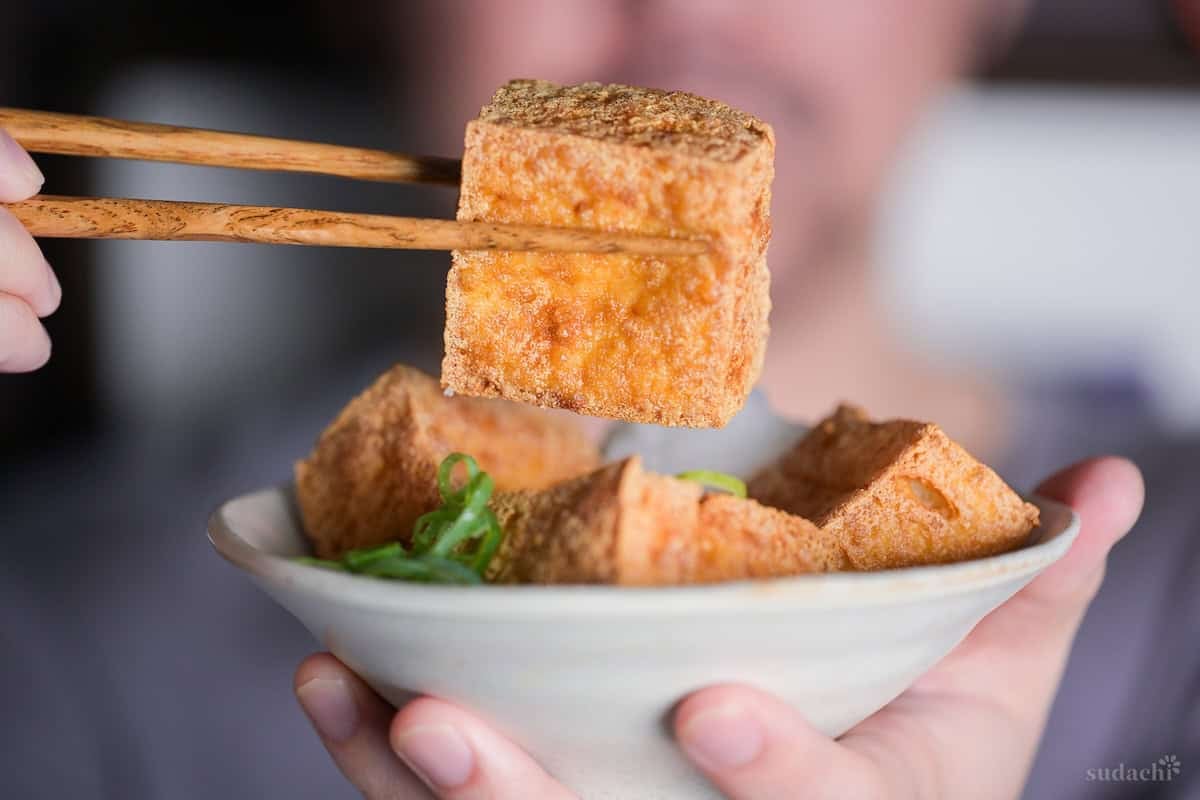
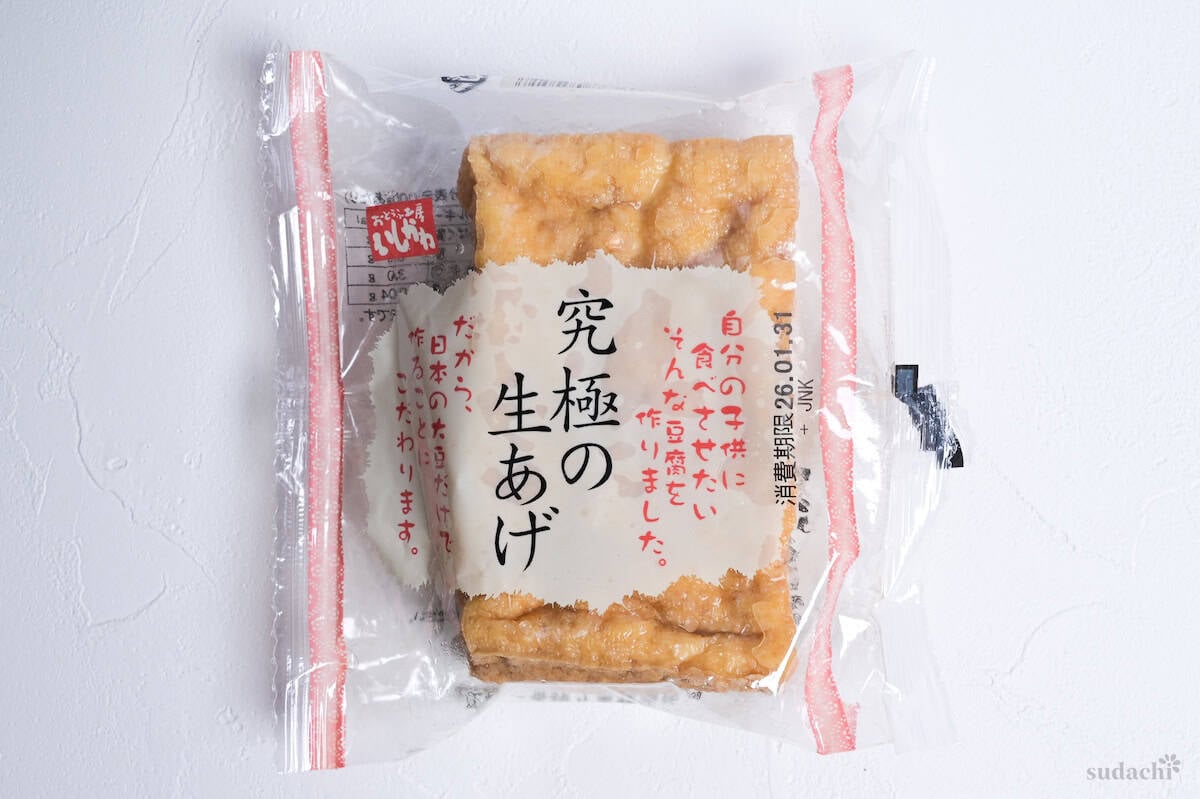
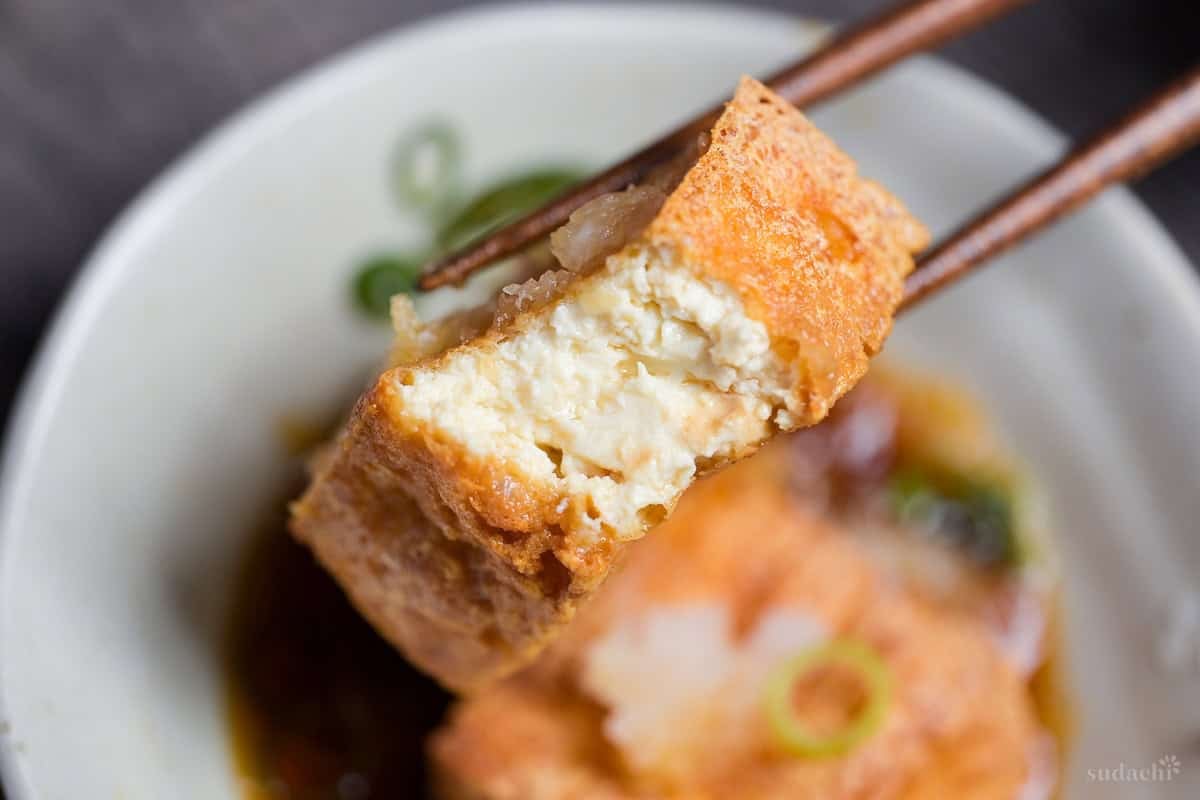
Atsuage (厚揚げ) is a Japanese fried food (agemono), thick-cut firm tofu deep-fried until the surface turns golden brown while the interior stays soft and essentially uncooked. The name means “thick-fried,” distinguishing it from aburaage (fried tofu pouches). Atsuage is also called namaage (生揚げ, “raw-fried”), a Kanto term that highlights the uncooked center.
Its dual texture, crispy crust over creamy tofu, makes it a staple in simmered dishes like oden and kenchinjiru, where the fried surface absorbs broth while the interior holds its shape. At izakaya, it is served simply grilled with grated ginger and a warm tsuyu sauce, letting the contrast between the crackling shell and soft center speak for itself.
Atsuage Ingredients
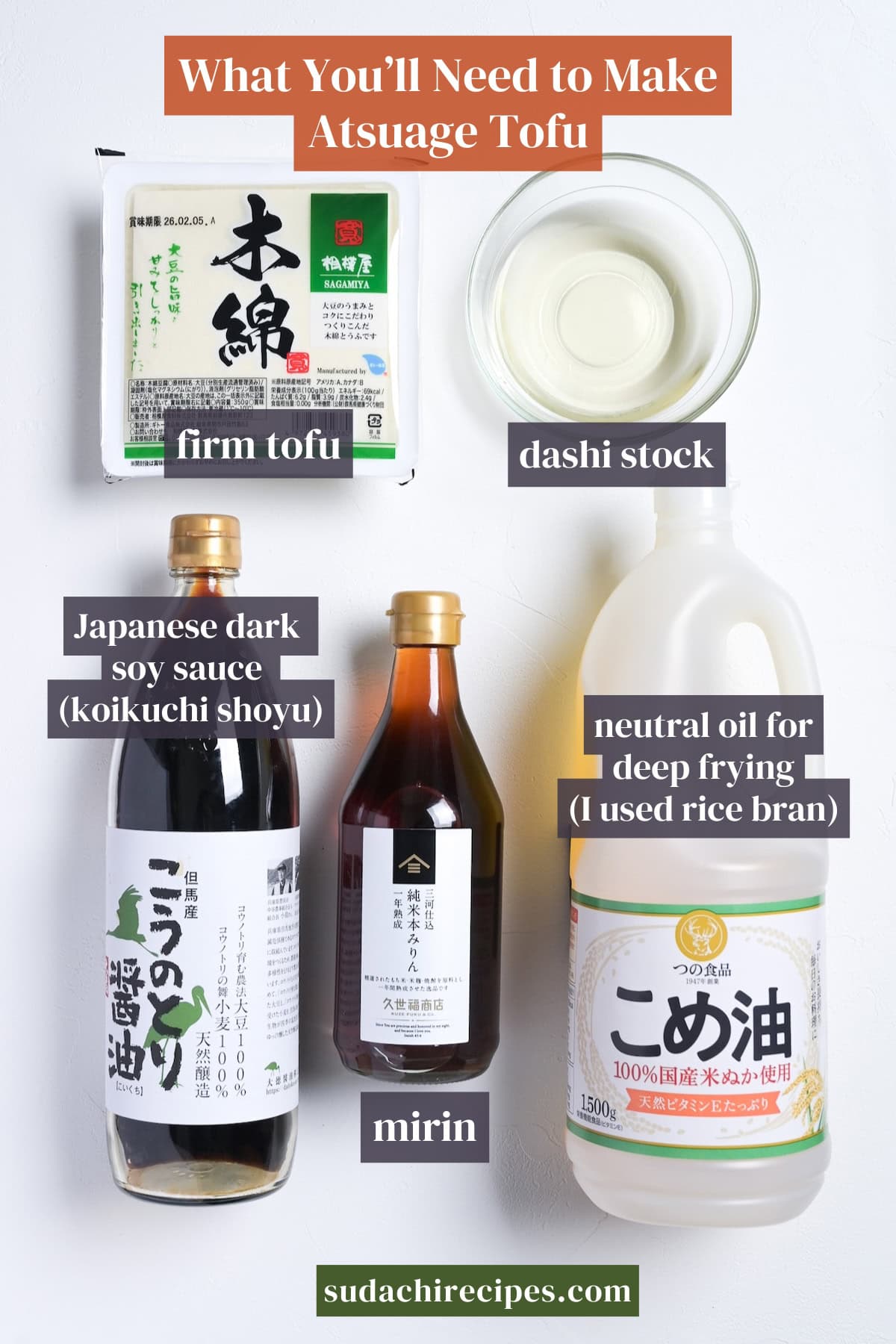
- Tofu: Firm (momen) tofu is the standard choice here (in the U.S., medium to firm is a good range). It has less water and a denser protein structure than silken, which means it holds its shape during frying and gives you the ideal atsuage texture. You can use silken tofu if that is all you have, but it is fragile and breaks easily.
- Cooking Oil: Any neutral oil with a high smoke point works. Rapeseed oil (canola) is the traditional go-to in Japan and rice bran oil is my favorite for deep-frying. Peanut oil is another strong option.
Substitution Ideas
- Firm tofu (momen) → Silken tofu (kinu): Works, but you will need to press it much longer (1-4 hours) and handle it carefully. The result is smoother and more delicate, just not as sturdy for simmered dishes.
- Deep frying → Shallow frying: Use 1-2 cm of oil at 170-180 C and fry about 3 minutes per side. You get a similar golden crust with far less oil. This is the most practical home compromise.
- Soy sauce → Tamari If you need the dish to be strictly gluten-free, swap the soy sauce in the dipping sauce for tamari. Atsuage itself is naturally gluten-free.
- Dashi (bonito flake-based) → Kombu and shiitake dashi: Atsuage itself is vegan. To keep the entire dish plant-based, use a kombu-shiitake dashi for the tsuyu sauce instead of bonito-based stock.
Have trouble finding Japanese ingredients? Check out my ultimate guide to Japanese ingredient substitutes!
How to Make My Atsuage Tofu
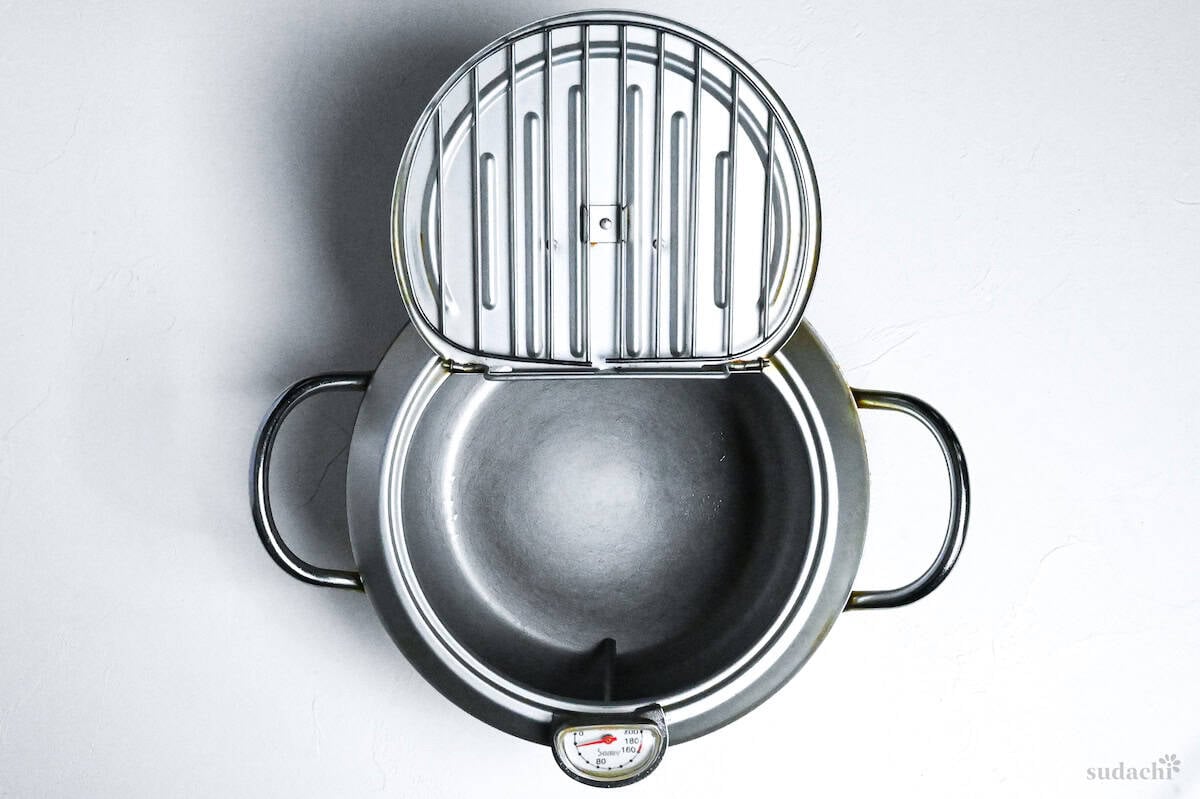
To develop this atsuage tofu recipe, I used a tempura pot with built-in rack and thermometer.
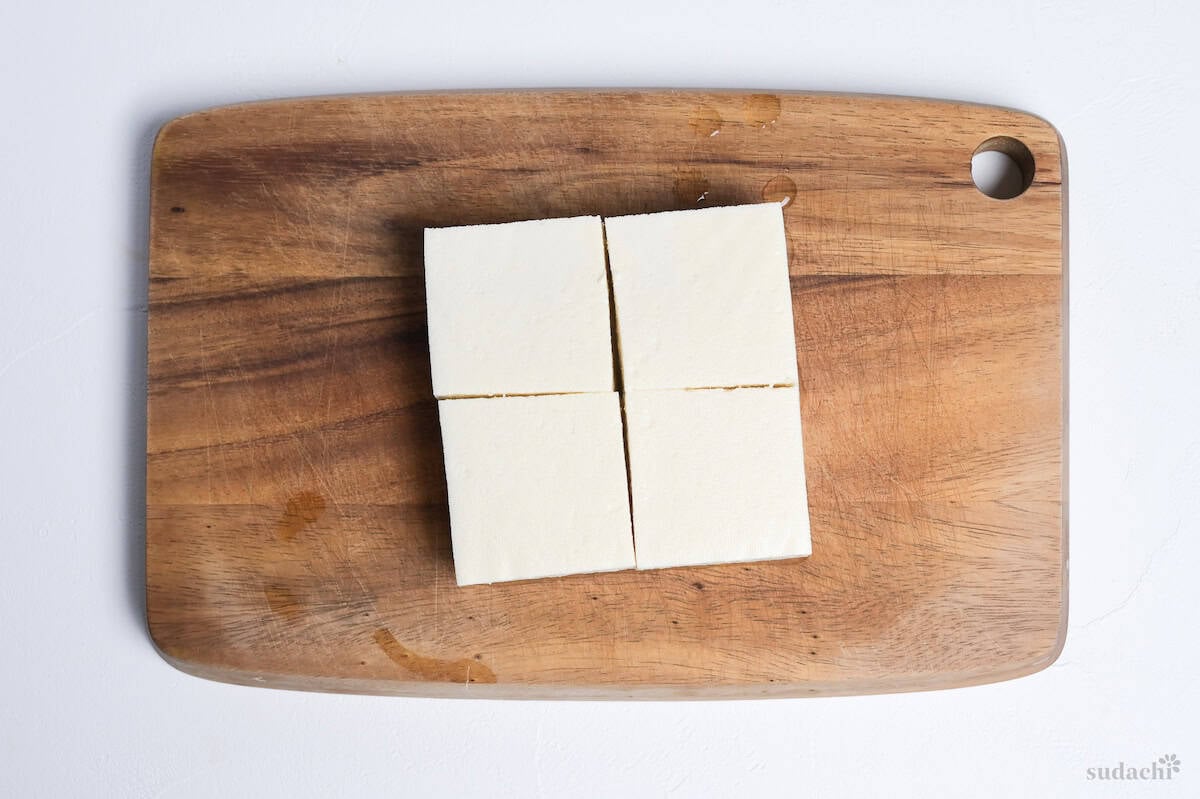
i. Cut the tofu block into 4 equal pieces. If your block is particularly large, adjust the number of pieces so each one is roughly 5 cm x 3.5 cm.
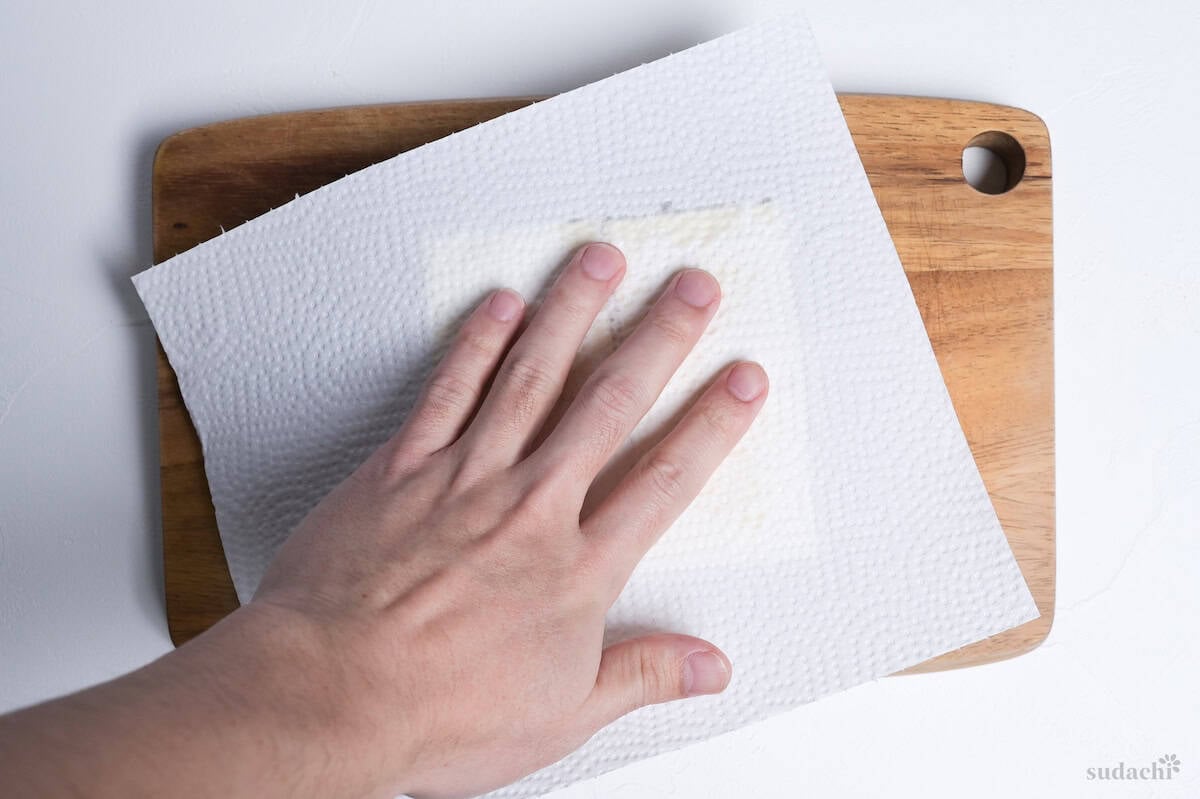
ii. Lightly pat the surface of each piece dry with paper towels, just enough to remove visible moisture.
iii. Sprinkle a thin, even layer of salt over all sides of the tofu. Use about 1/3 to 1/2 teaspoon for a 350 g block, keeping it well within the “not salty” range.
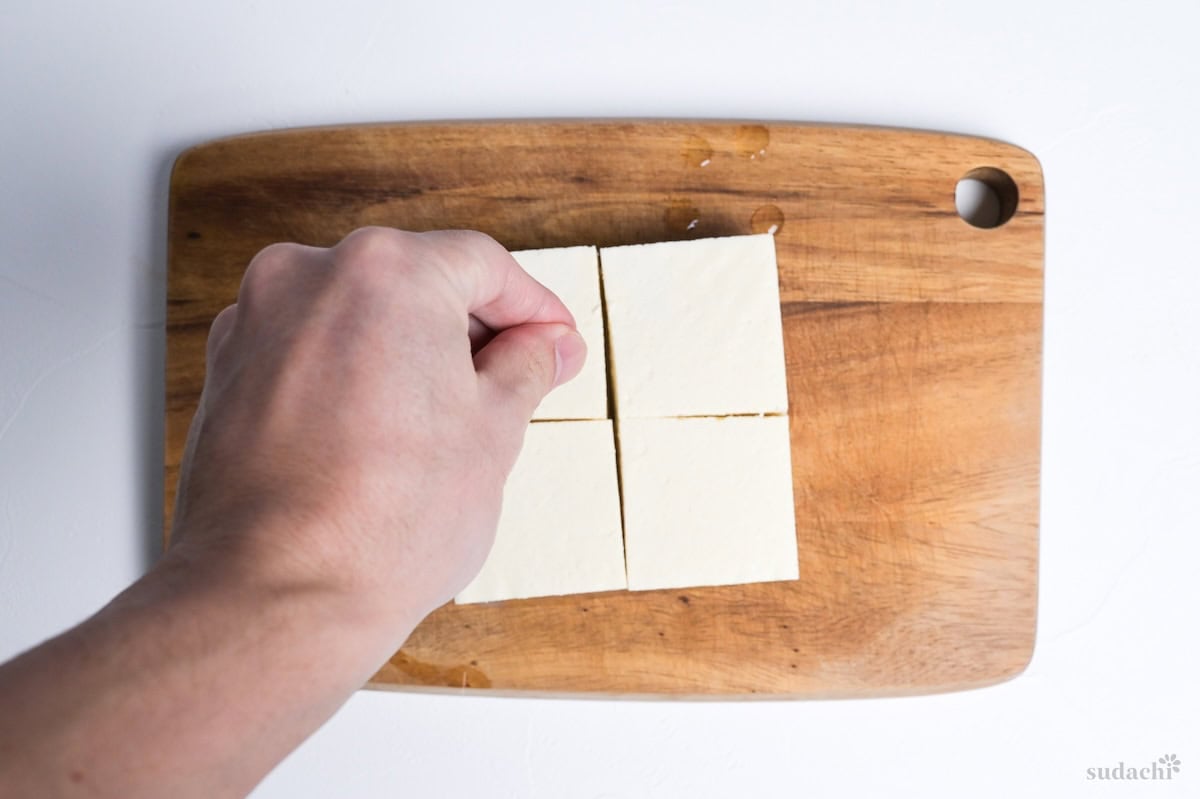
Salt draws water out of the tofu through osmotic pressure, pulling moisture to the surface where it can be absorbed by paper towels. It is the first stage of the water removal process that determines whether your atsuage succeeds or fails.
i. Wrap the salted tofu pieces in fresh paper towels and place a light weight on top.
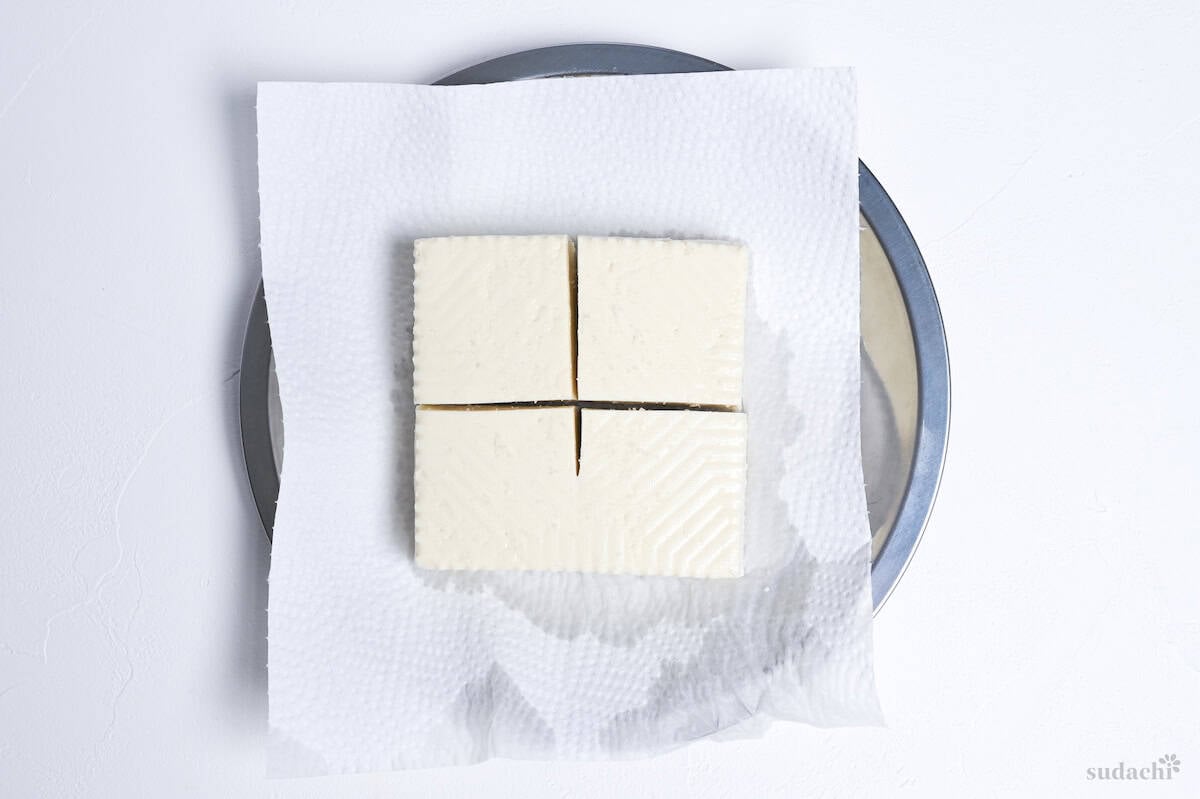
ii. A small plate with a water-filled cup works well. The weight should be roughly 1.5 times the weight of the tofu.
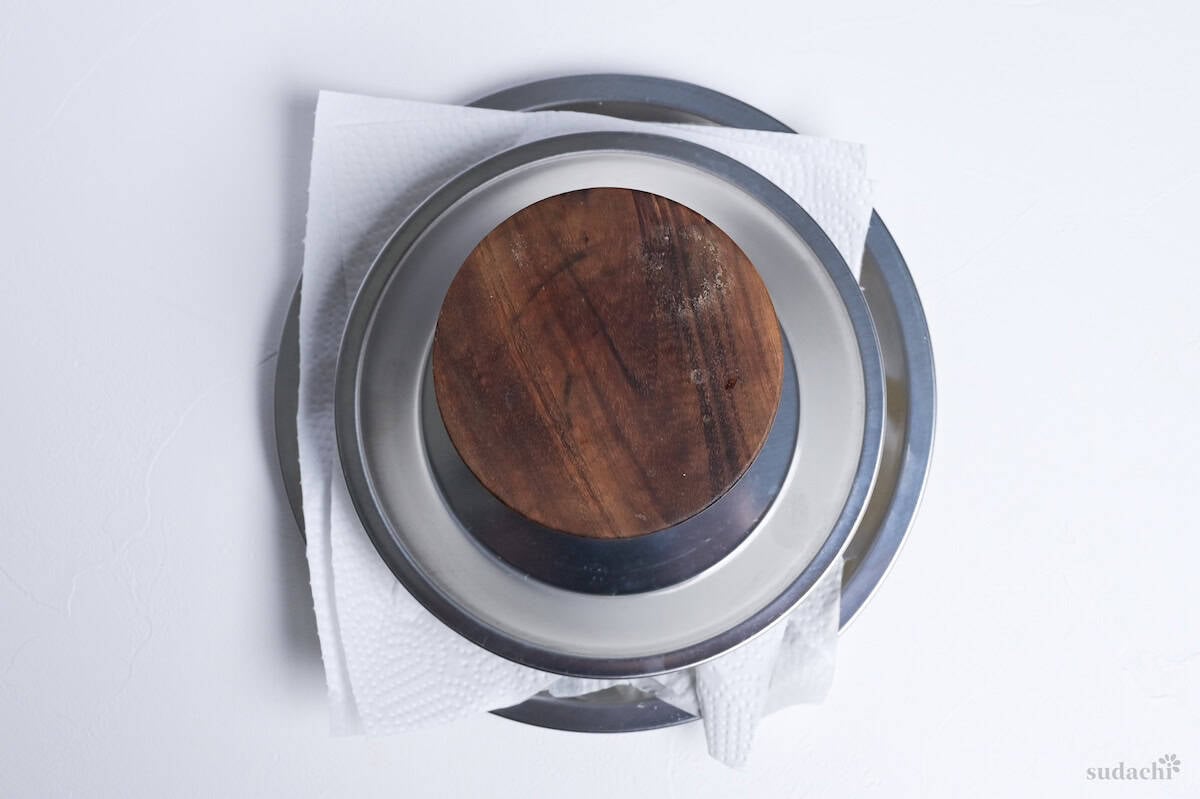
iii. Refrigerate for about 30 minutes. Your target is a 20-30% weight reduction.
Under-draining means dangerous oil splattering and a crust that will not brown properly. Over-draining means dry, spongy, flavorless atsuage. That 20-30% window is where the magic lives. If you are unsure, weigh the tofu before and after pressing.
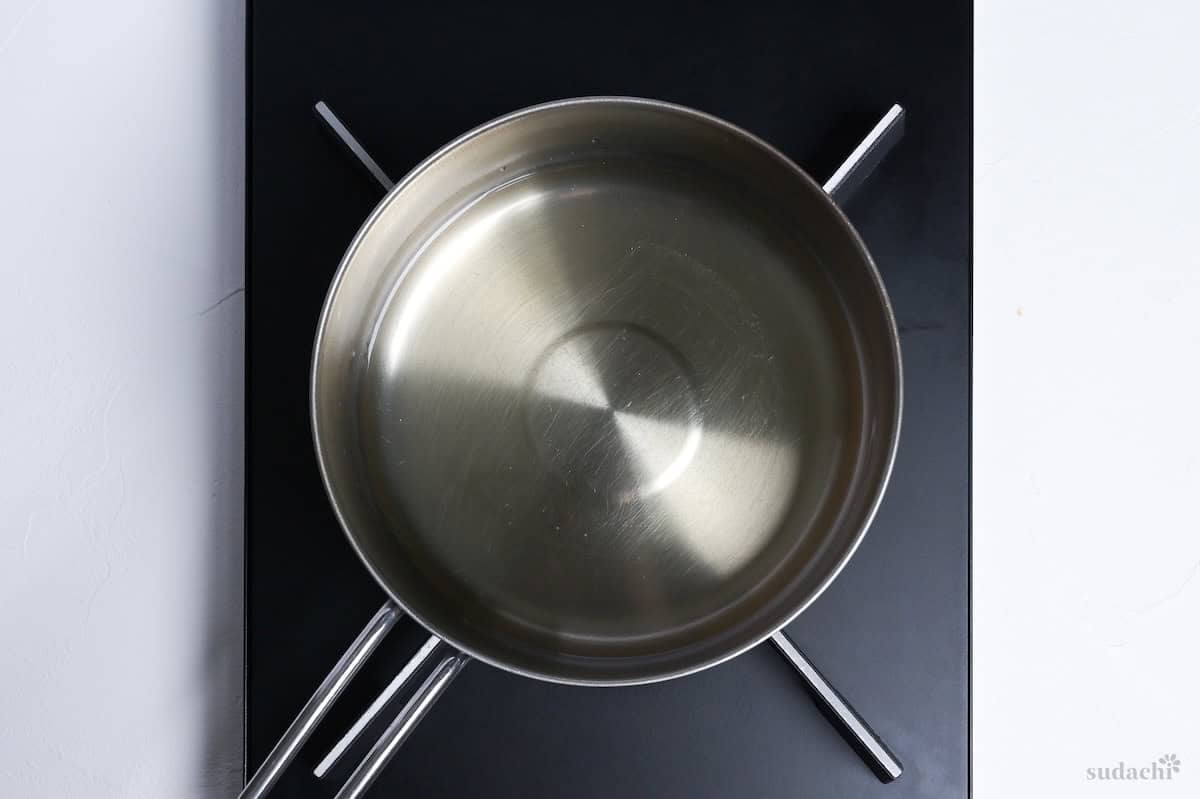
i. Pour off the liquid that has collected around the tofu. Using a sharp knife, score 1 or 2 very shallow cuts into the surface of each piece.
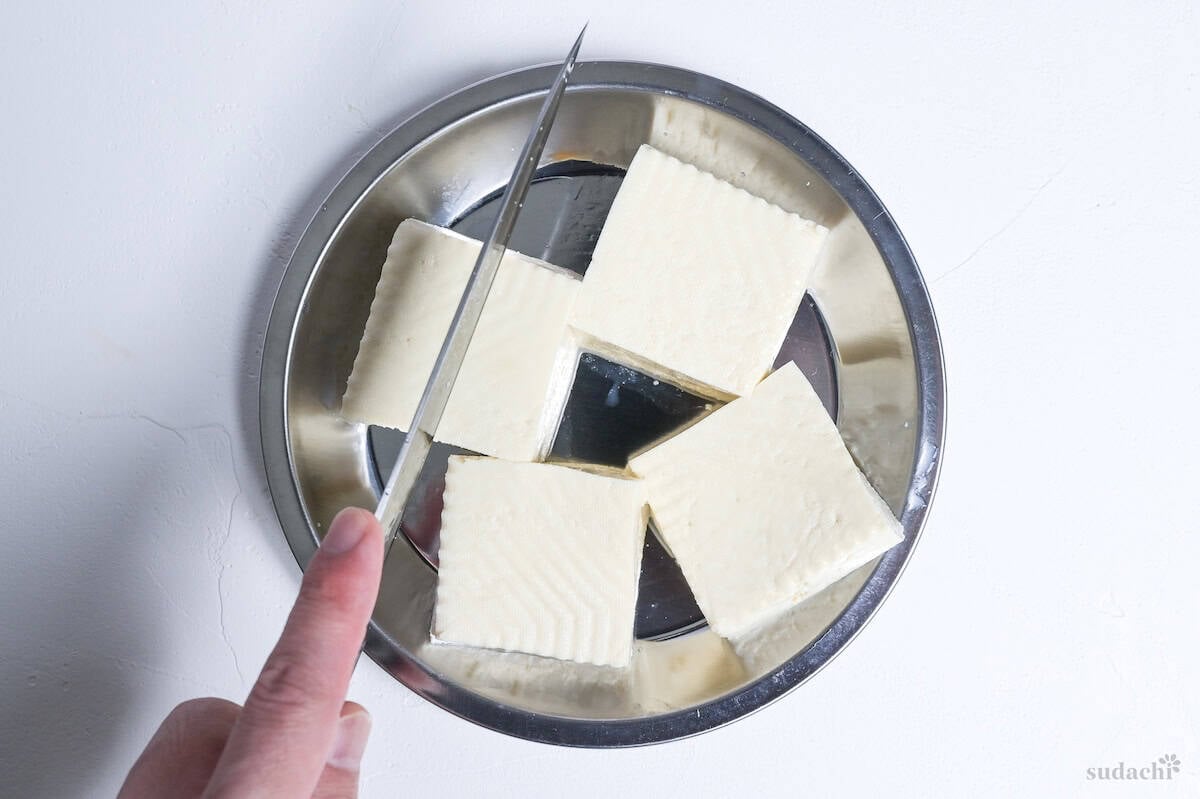
These are steam escape channels. When the water inside the tofu hits 180°C oil, it expands roughly 1,700 times in volume as it flashes to steam. Without escape routes, that pressure builds until it bursts through the surface, sending hot oil in every direction.
ii. Pat the surface completely dry with a fresh paper towel. Make sure to dry inside the scored cuts as well. This is the single most important step for preventing oil splatter.
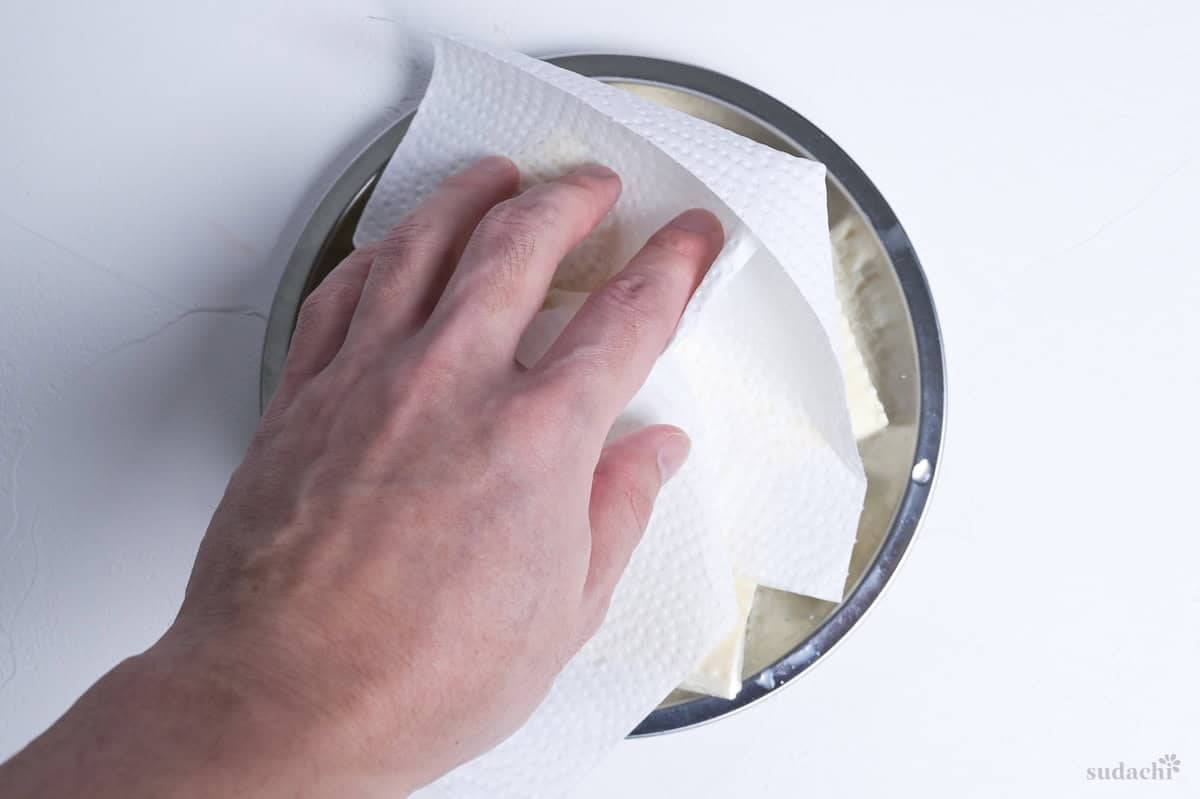
This obsessive water removal eliminates 90% of splattering risk. If the surface feels even slightly damp, pat it again with a dry towel.
i. Pour enough oil into a deep, heavy pot to submerge at least half the tofu’s thickness. Heat to 180°C (355°F).
Use the chopstick test: dip dry wooden chopsticks into the oil and watch for fine bubbles rising steadily from the entire length. Large, aggressive bubbles mean the oil is too hot. Slow bubbles only at the tips mean it is too cool.
ii. Carefully lower the drained tofu into the oil. Fry 2-4 pieces at a time, no more. Overcrowding drops the oil temperature and leads to greasy, pale results.
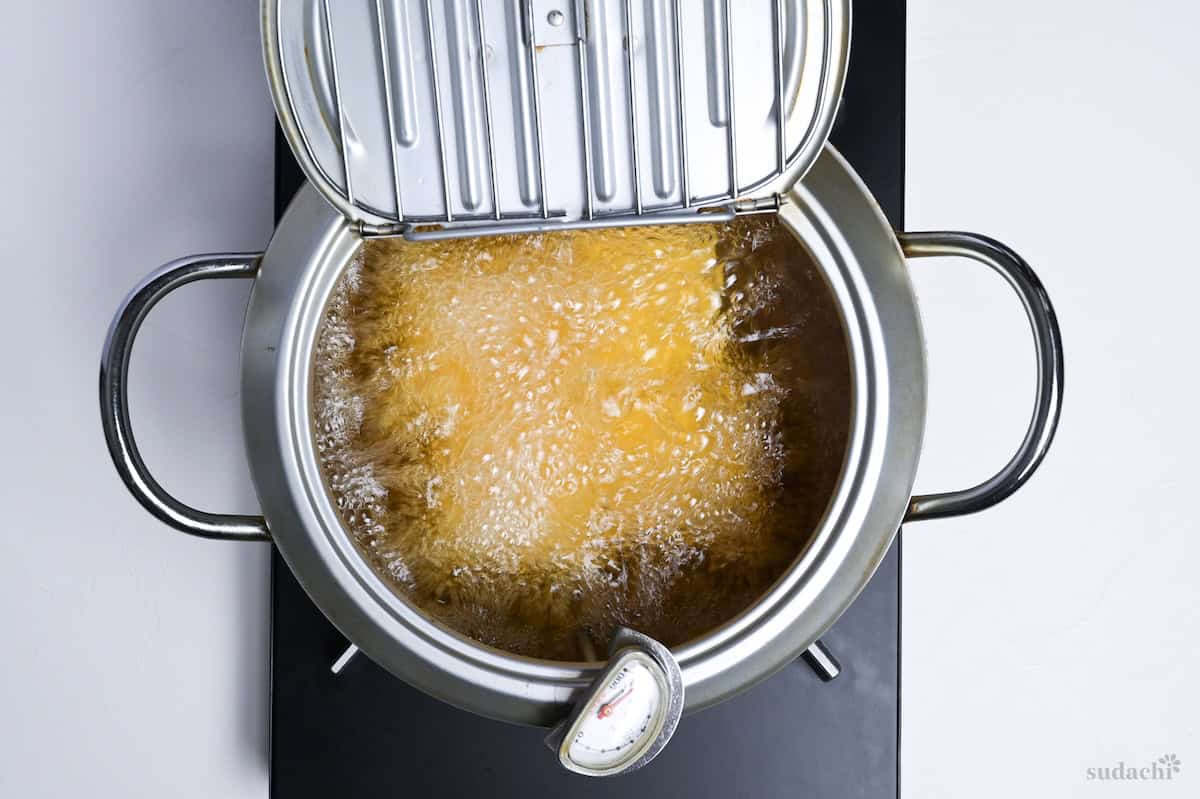
The forming crust is the structural shell holding everything together. Move it too early and the tofu will break apart before the protein matrix has set into a rigid surface. Wait until you see a golden edge forming before you even think about flipping.
iii. Fry for about 5 minutes on the first side, watching for the bubble progression: large bubbles first, then fine bubbles, then almost none. When the bubbling quiets, flip.
iv. Fry for another 5 minutes, or until the entire surface reaches a golden kitsune-iro (fox-colored brown) and the crust feels firm when tapped with chopsticks. The tofu may also feel lighter when you lift it, a sign that internal moisture has escaped.
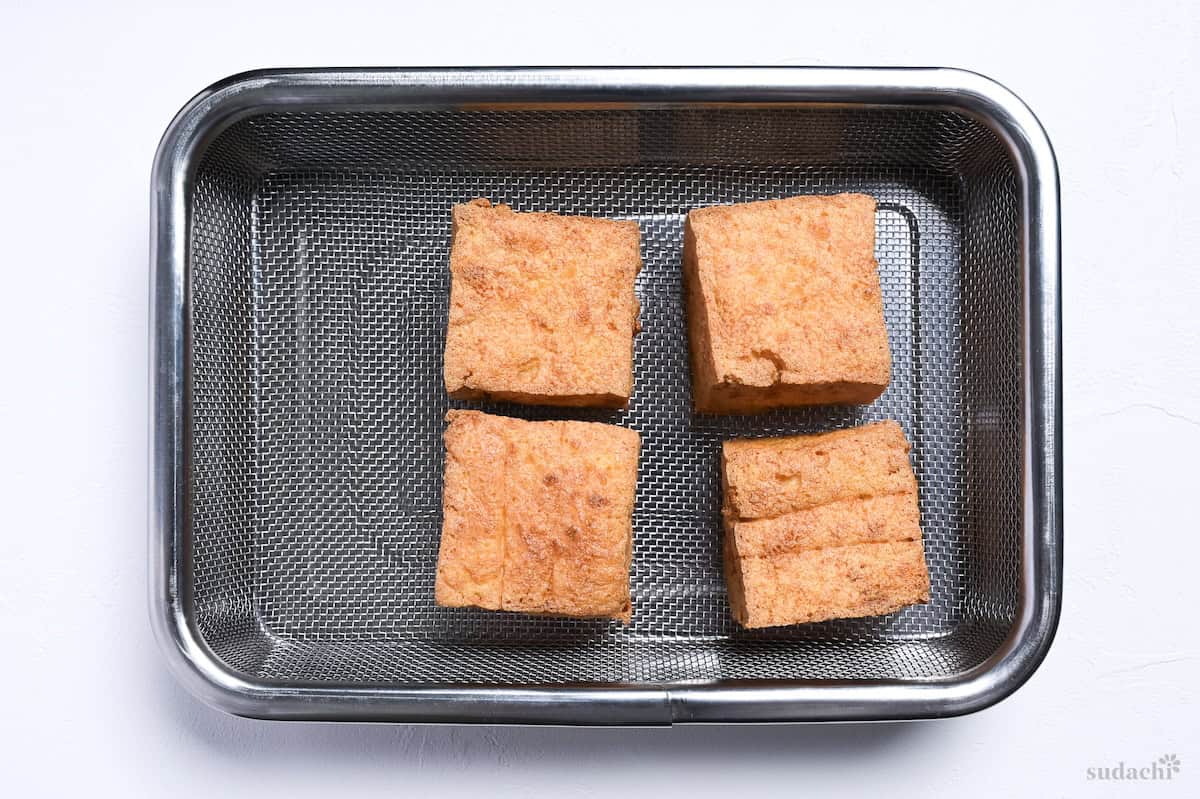
i. Remove the atsuage from the oil and drain on a wire rack, not paper towels. Paper traps oil against the surface and makes the crust soggy. A wire rack lets excess oil drip away, keeping the crust crisp.
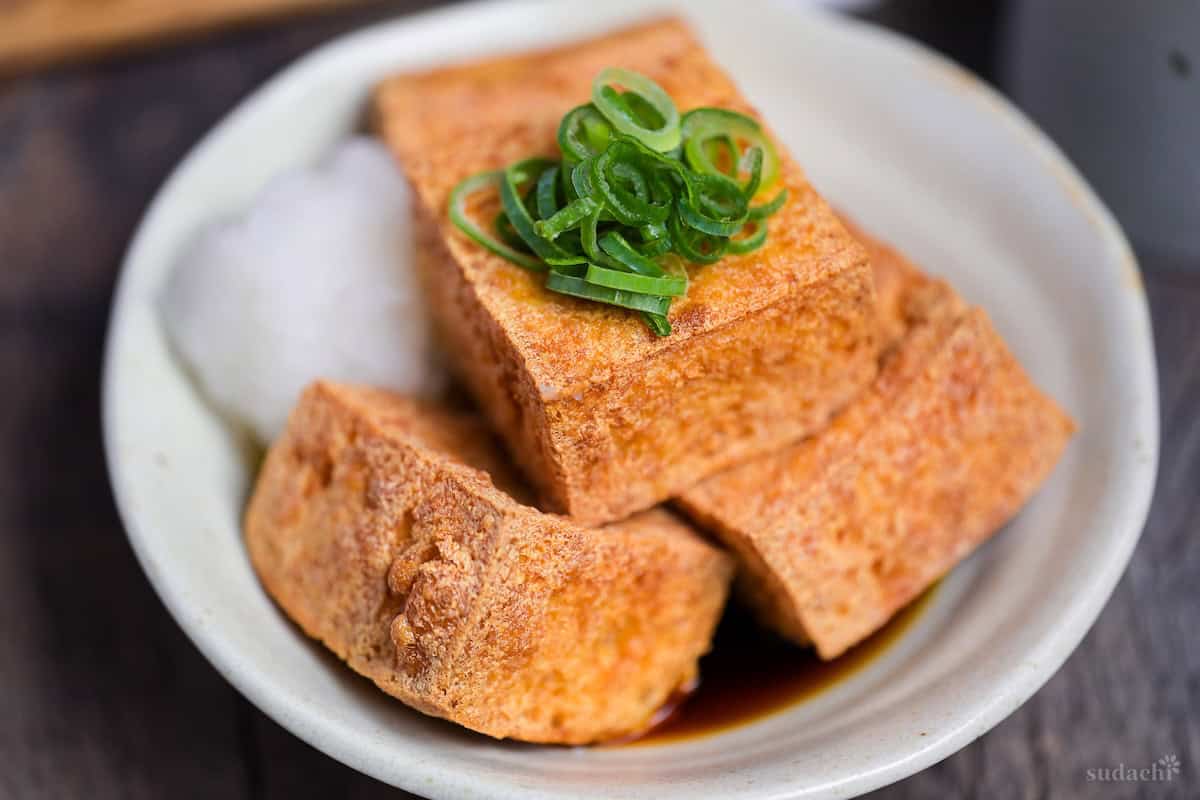
ii. Drizzle the warm sauce over the top. Garnish with grated daikon, grated ginger, and chopped green onion. Serve immediately. The crackling crust only lasts minutes. This is a dish that rewards you for eating it the moment it is ready.

Essential Tips & Tricks
- Aim for 20-30% weight loss during pressing, not more. This is the critical balance between safe frying and good eating.
- Hold the oil at 180 C (355 F) throughout frying. Stable temperature drives the Maillard reaction that creates the golden crust and nutty aroma.
- Do not move the tofu for the first 2-4 minutes after it enters the oil.
- Drain on a wire rack, never on paper towels.
- Pat the tofu surface completely dry immediately before frying.
With these simple tips in mind, you’re set for success every time you make atsuage tofu.
Storage & Meal Prep
Fridge: Store leftover atsuage in an airtight container for up to 3-5 days. The crispy crust will soften as internal moisture migrates outward, but the tofu itself keeps well.
Freezer: Not so recommended. Freezing works, but it fundamentally changes the texture.
Meal Prep: Press and cut the tofu ahead of time and keep it in the fridge wrapped in paper towels. Prepare the dipping sauce in advance as well. Fry only when you are ready to eat.
What to Serve With This Recipe
Namaage FAQ
Atsuage itself is naturally both. It is made from soybeans, water, a mineral coagulant, and vegetable oil. The only caveat is the dipping sauce: standard soy sauce contains wheat (use tamari for gluten-free), and bonito-based dashi is not vegan (use kombu dashi or a kombu-shiitake blend instead).
You pressed out too much water. The target is 20-30% weight reduction, not more. Over-draining destroys atsuage’s soft, creamy interior. If you are unsure, weigh the tofu before and after pressing. A 350 g block should end up around 245-280 g.
Residual moisture is almost always the cause. Water trapped inside the tofu flash-boils in 180 C oil and expands roughly 1,700 times as steam. The fix: press longer, pat every surface completely dry (including inside the scored cuts) immediately before frying, and use a deep pot with a splash guard if you have one.
More Japanese Tofu Recipes
If you love cooking with tofu, take a look at my full Japanese tofu recipe collection for even more ideas.
Did You Try This Recipe?
I would love to hear your thoughts!
💬 Leave a review and ⭐️ rating in the comments below. 📷 I also love to see your photos – submit them here!
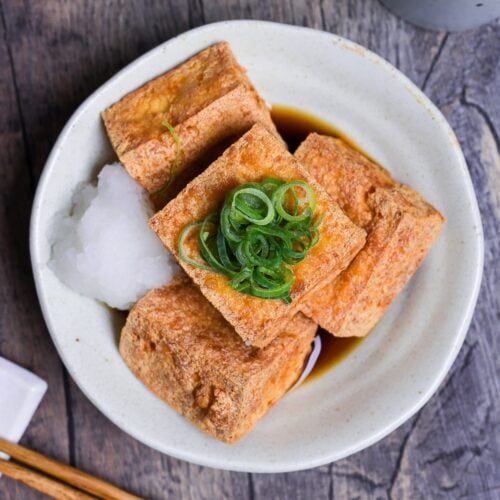
Homemade Atsuage (Namaage) Tofu
Ingredients
For the Tofu
- 350 g firm tofu medium to firm recommended
- salt
- cooking oil neutral, rapeseed, canola, or rice bran oil
For the Dipping Sauce
- 5 tbsp dashi stock
- 1 tbsp mirin
- 1 tbsp Japanese soy sauce (koikuchi shoyu)
Toppings (optional)
- grated daikon radish (daikon oroshi)
- grated ginger root
- finely chopped green onions
My recommended brands of ingredients and seasonings can be found in my Japanese pantry guide.
Can’t find certain Japanese ingredients? See my substitution guide here.
Instructions
- Drain 350 g firm tofu and cut into approximately 5×3.5cm (2×1.3") cubes. Pat the surface dry with paper towels, then sprinkle a thin even layer of salt all over (about ⅓-½ tsp, not too salty).

- Wrap the salted tofu with paper towels and place them in container with raised edges. Top with a plate and place a light weight on top, approximately 1.5x the weight of the tofu. Refrigerate until the tofu has reduced by about 20-30% its original weight (about 30 minutes).
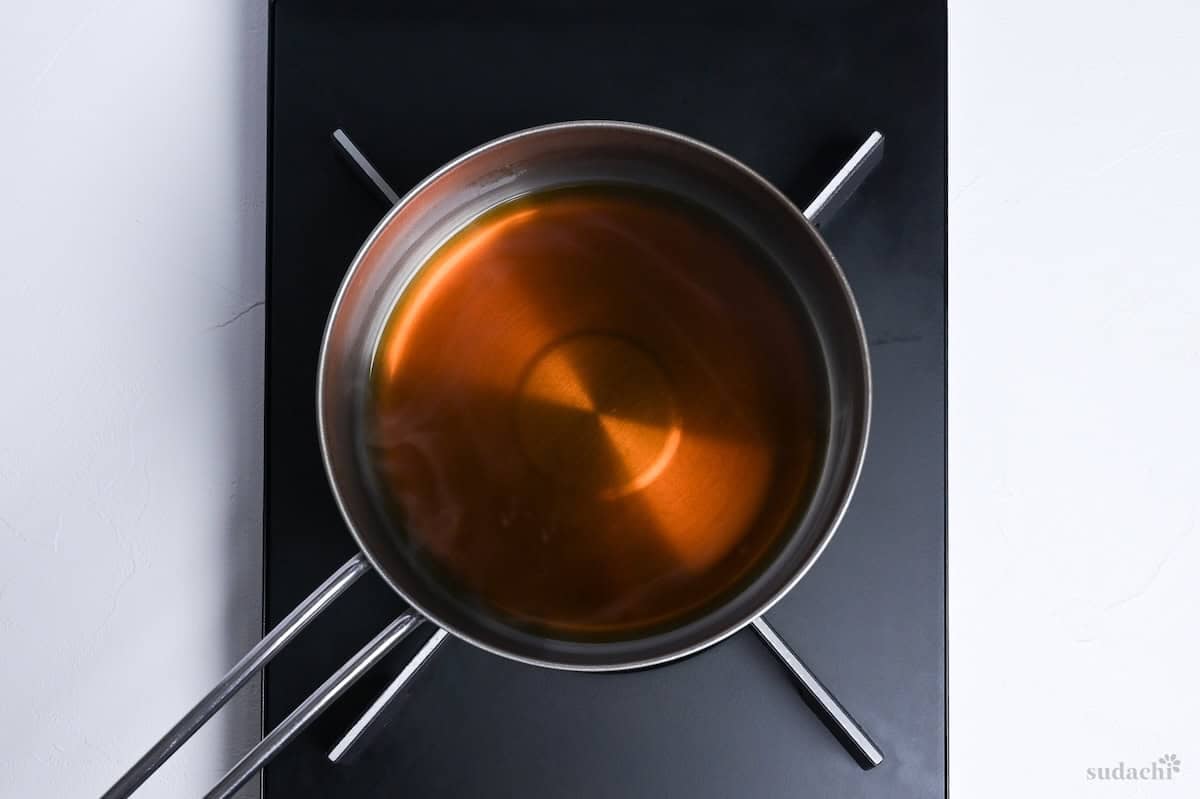
- While you wait, pour 5 tbsp dashi stock and 1 tbsp mirin in a small saucepan and boil for 1 minute to burn off some of the alcohol.
- Remove the pan from the heat and stir in 1 tbsp Japanese soy sauce (koikuchi shoyu). Set aside for now.
- Heat your cooking oil for deep frying to 180 °C (356 °F). Take the tofu from the fridge, remove the weights and pour the excess liquid away. Score 1-2 shallow cuts on each side of each piece. Be careful not to cut too deep.
- Pat thoroughly dry all over with kitchen paper.
- Once the oil reaches 180 °C (356 °F), carefully lower the tofu pieces into the pot and fry until deeply golden all over (about 10 minutes, turning half-way through). Fry in batches of 2-4 to avoid lowering the oil temperature.
- Drain on a wire rack for a few minutes.
- Plate up and drizzle the warmed sauce over the top. If you prefer to retain the crispiness, pour the sauce into the serving bowls first and place the atsuage on top. Garnish with grated daikon radish (daikon oroshi), grated ginger root, and finely chopped green onions. Enjoy!


Leave a rating and a comment