Homemade Atsuage (Namaage) Tofu
Ingredients
For the Tofu
- 350 g firm tofu medium to firm recommended
- salt
- cooking oil neutral, rapeseed, canola, or rice bran oil
For the Dipping Sauce
- 5 tbsp dashi stock
- 1 tbsp mirin
- 1 tbsp Japanese soy sauce (koikuchi shoyu)
Toppings (optional)
- grated daikon radish (daikon oroshi)
- grated ginger root
- finely chopped green onions
Instructions
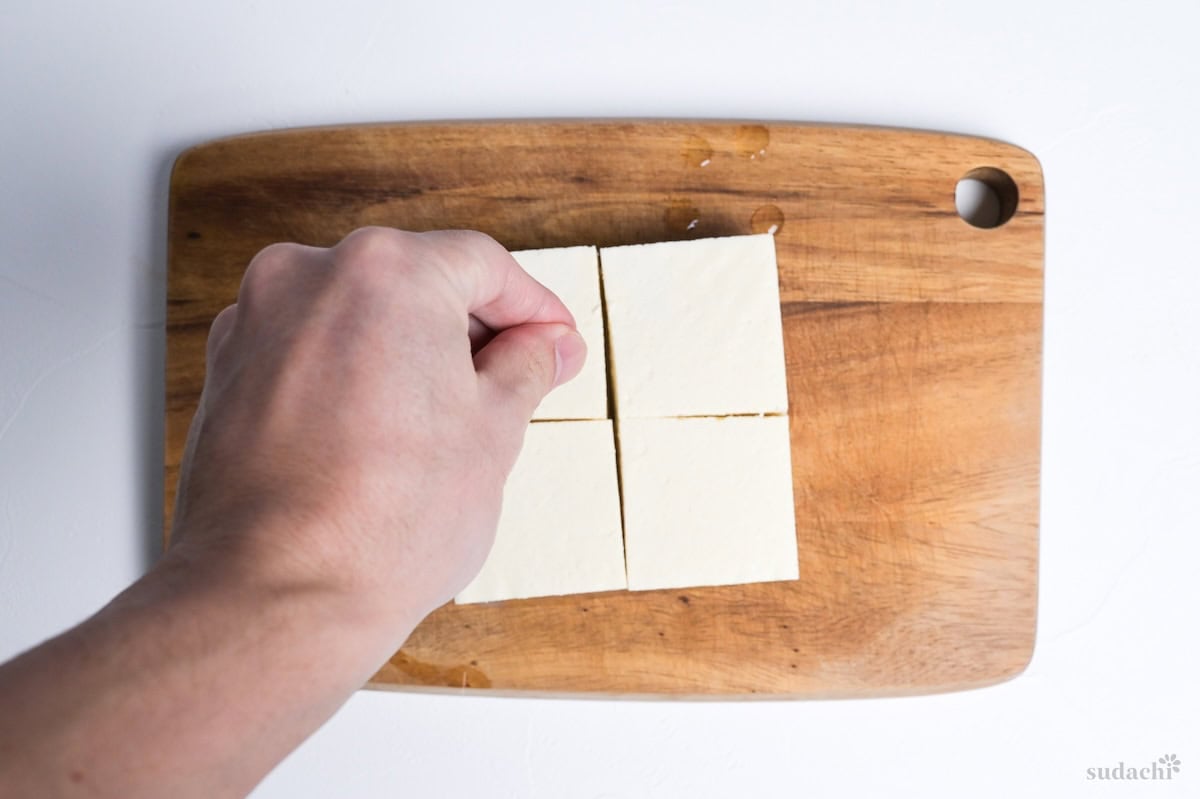
- Drain 350 g firm tofu and cut into approximately 5x3.5cm (2x1.3") cubes. Pat the surface dry with paper towels, then sprinkle a thin even layer of salt all over (about ⅓-½ tsp, not too salty).
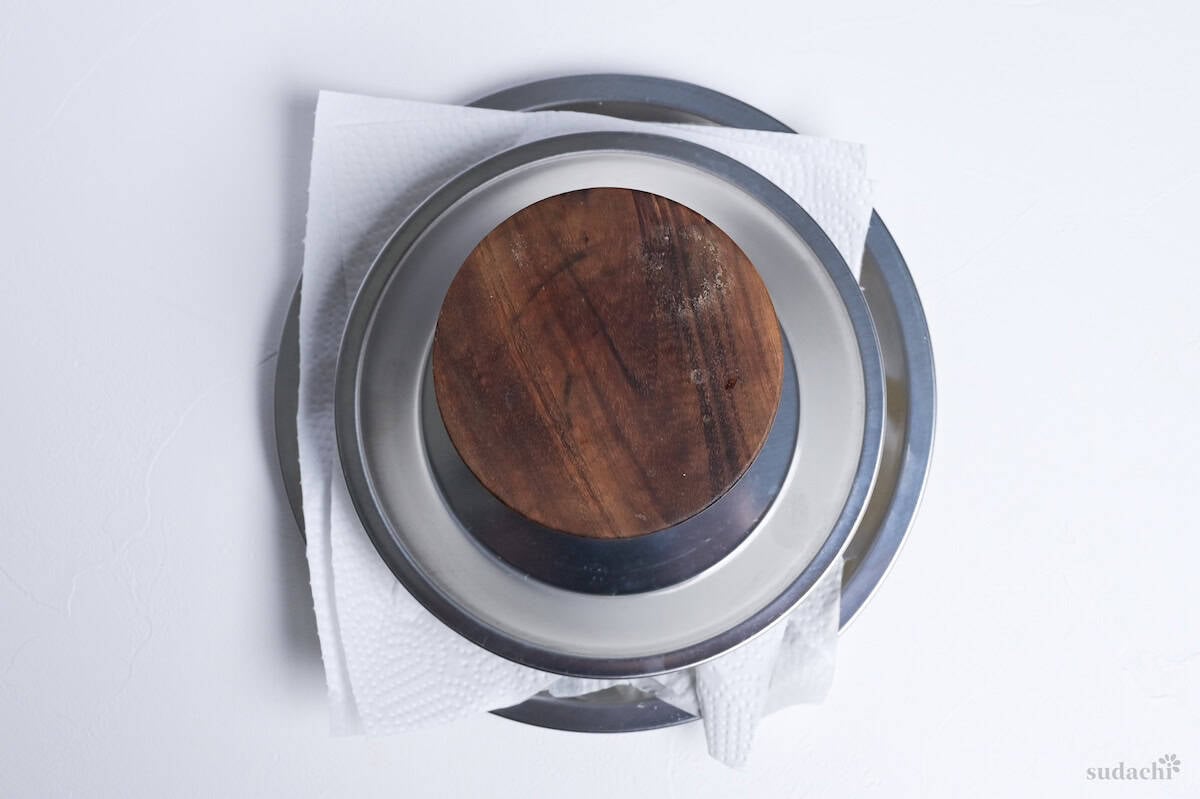
- Wrap the salted tofu with paper towels and place them in container with raised edges. Top with a plate and place a light weight on top, approximately 1.5x the weight of the tofu. Refrigerate until the tofu has reduced by about 20-30% its original weight (about 30 minutes).
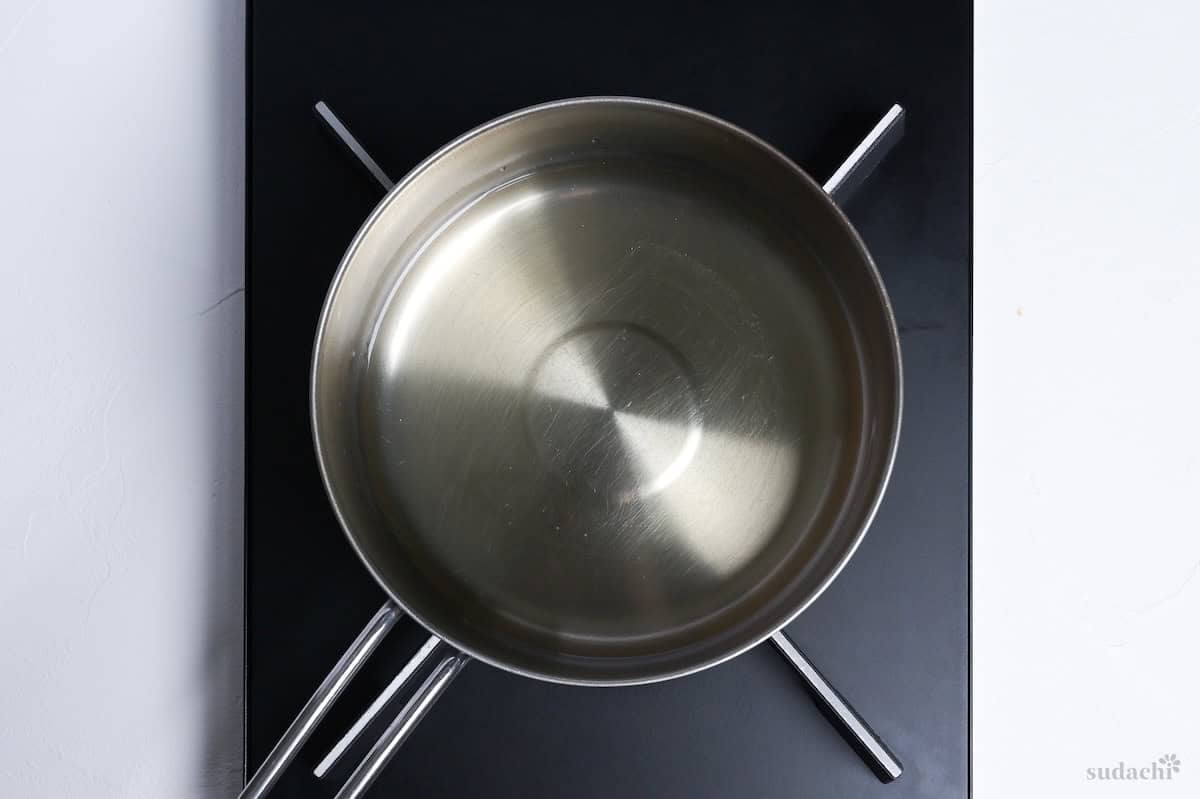
- While you wait, pour 5 tbsp dashi stock and 1 tbsp mirin in a small saucepan and boil for 1 minute to burn off some of the alcohol.
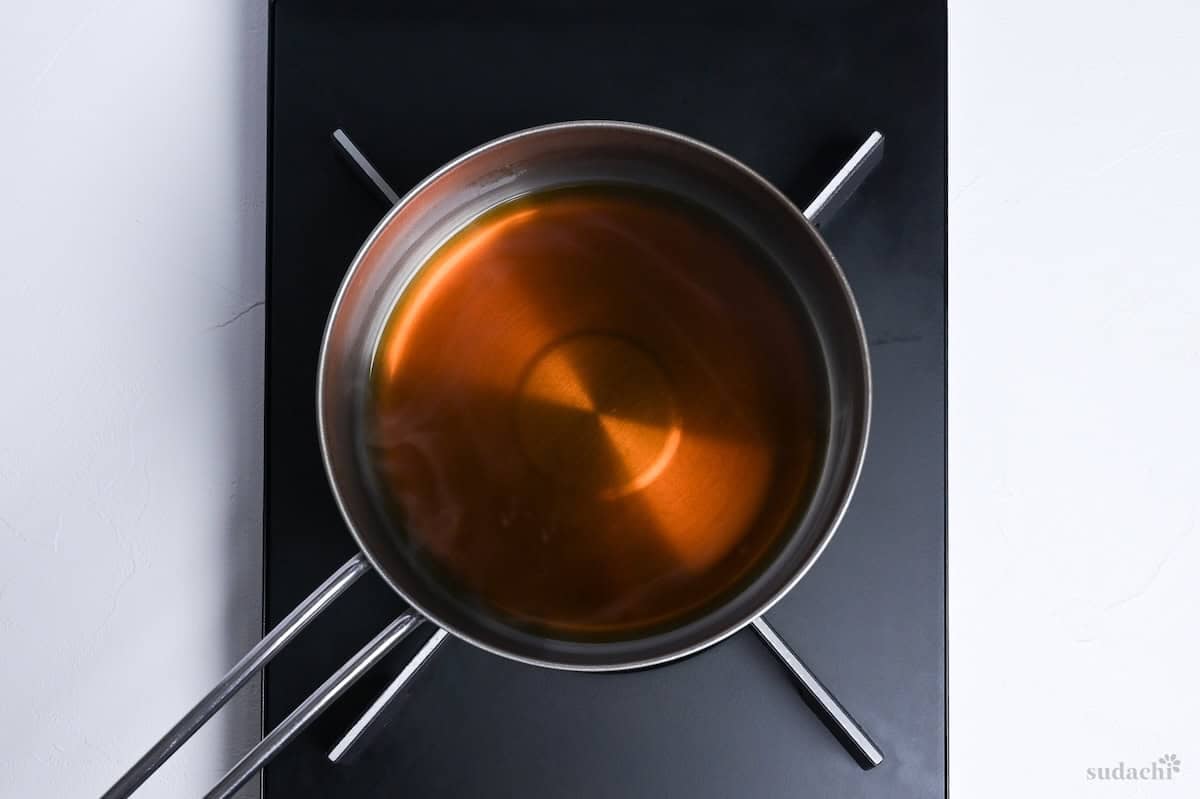
- Remove the pan from the heat and stir in 1 tbsp Japanese soy sauce (koikuchi shoyu). Set aside for now.
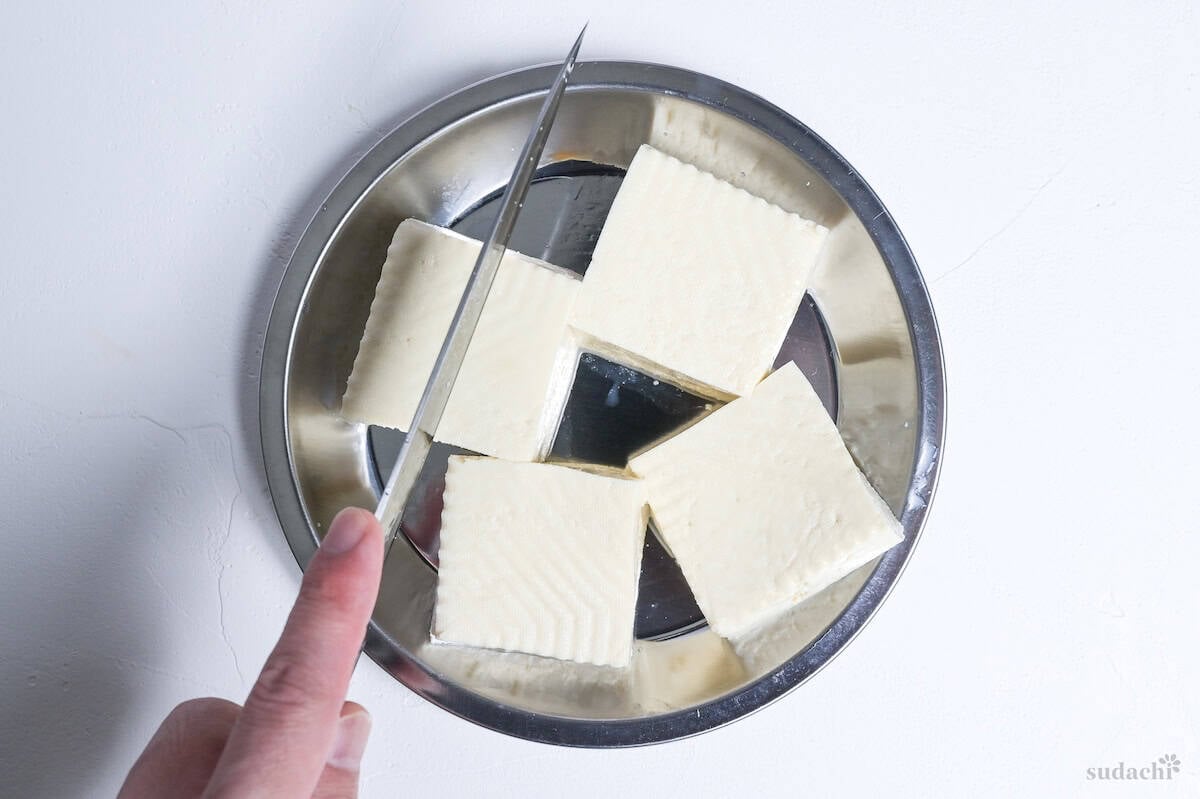
- Heat your cooking oil for deep frying to 180 °C (356 °F). Take the tofu from the fridge, remove the weights and pour the excess liquid away. Score 1-2 shallow cuts on each side of each piece. Be careful not to cut too deep.
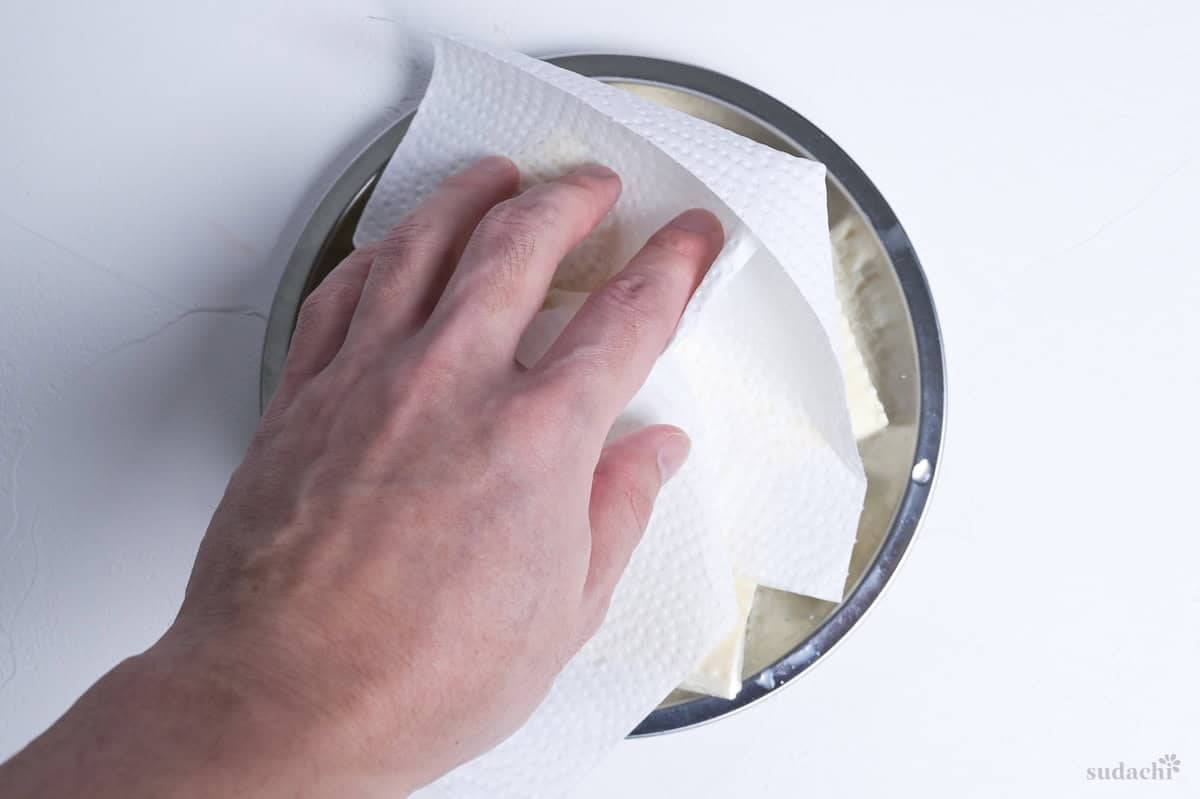
- Pat thoroughly dry all over with kitchen paper.
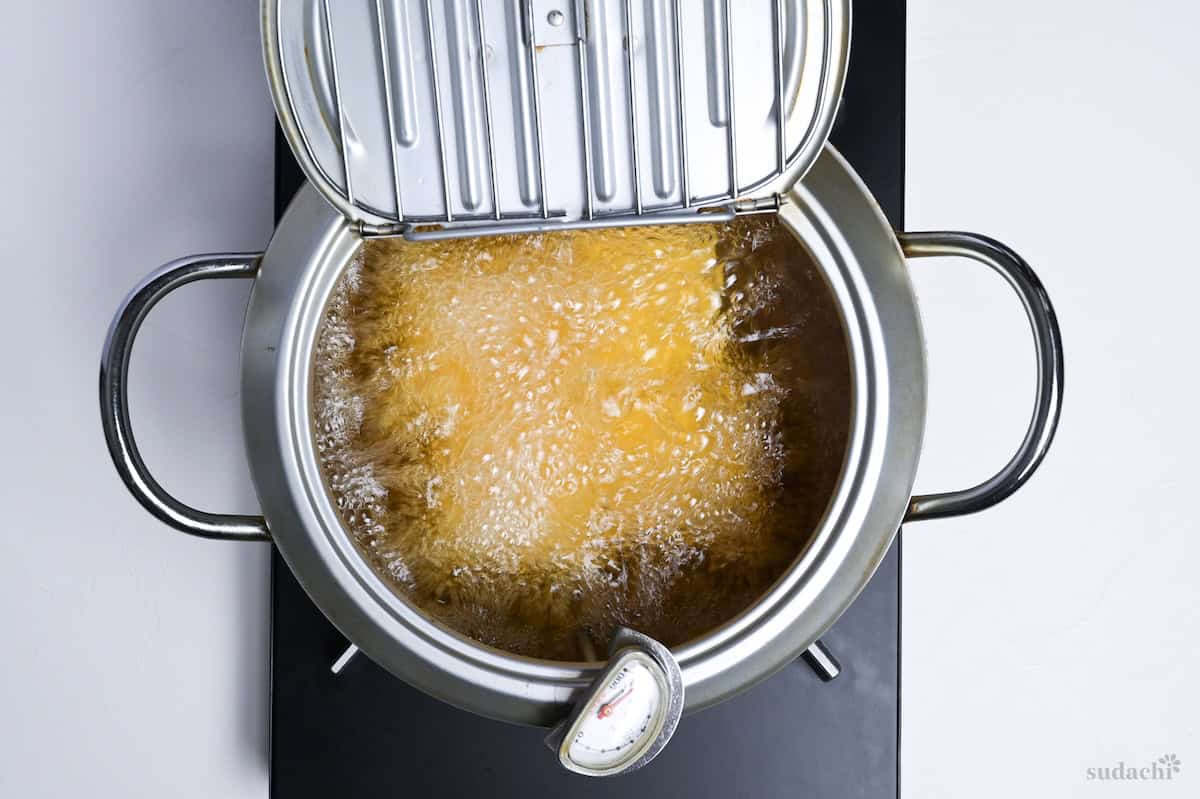
- Once the oil reaches 180 °C (356 °F), carefully lower the tofu pieces into the pot and fry until deeply golden all over (about 10 minutes, turning half-way through). Fry in batches of 2-4 to avoid lowering the oil temperature.
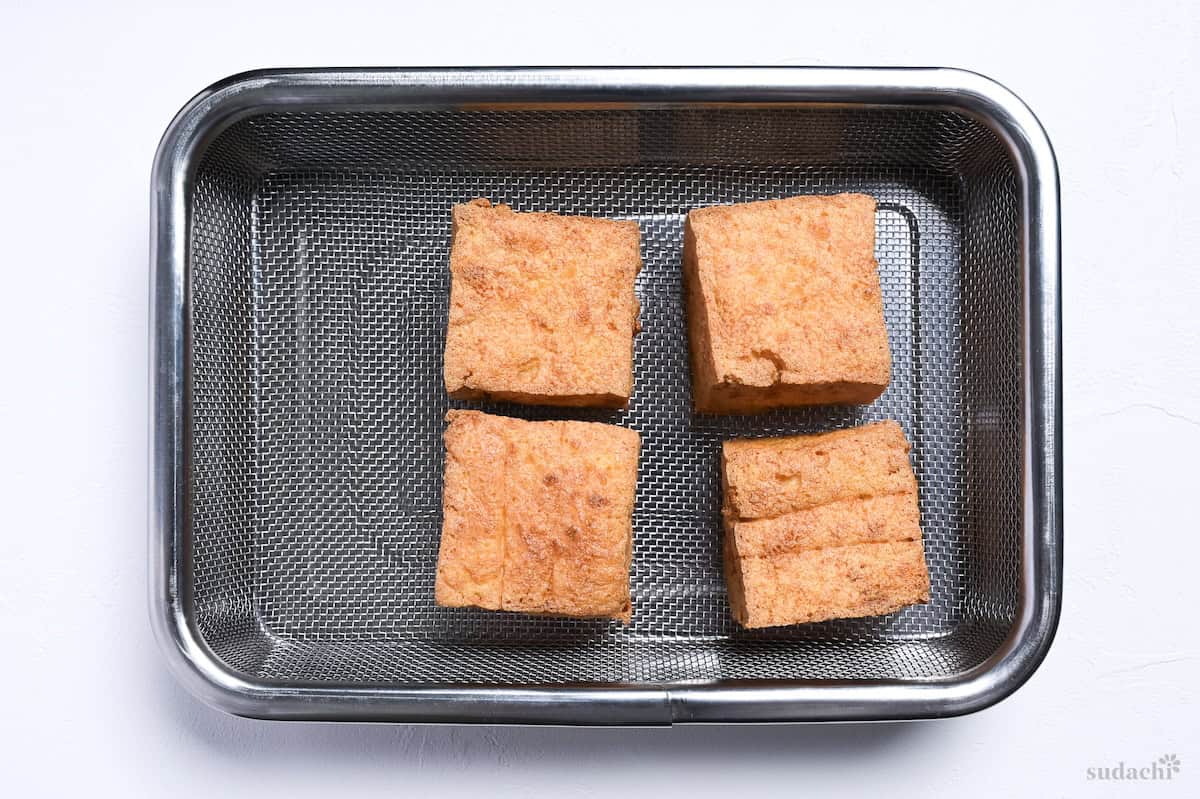
- Drain on a wire rack for a few minutes.
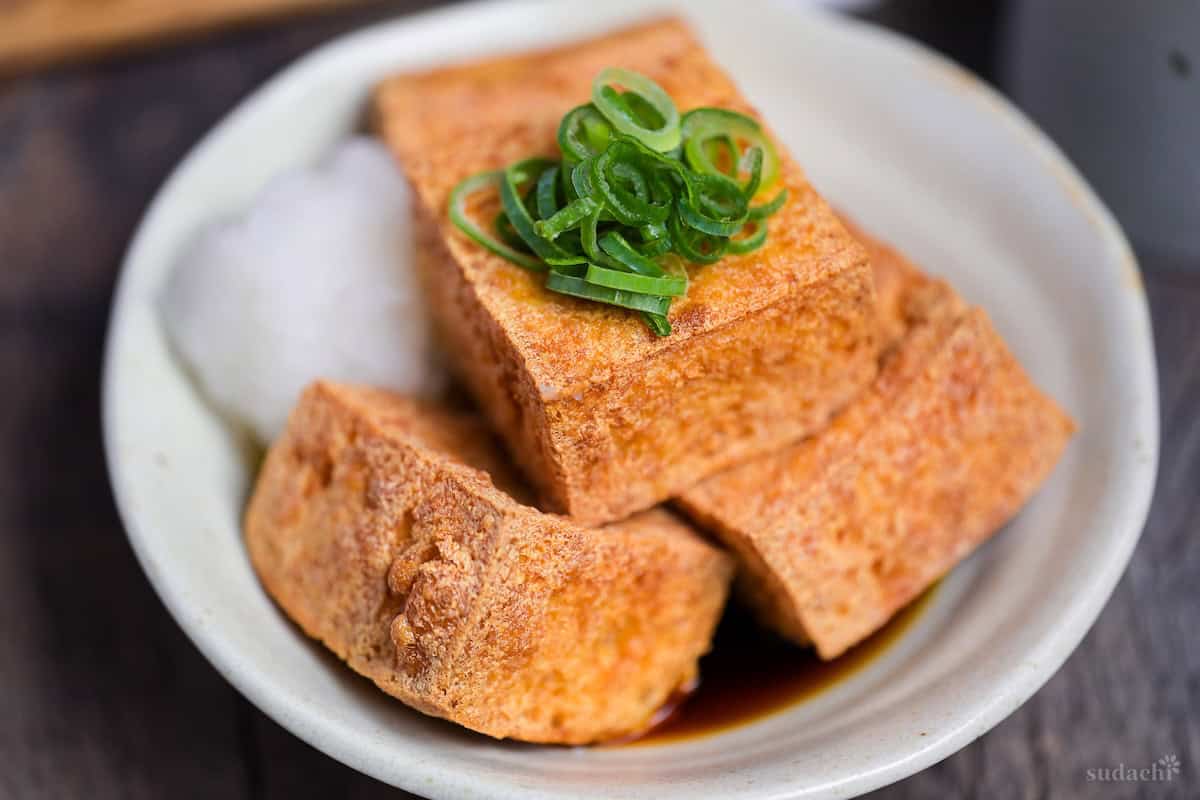
- Plate up and drizzle the warmed sauce over the top. If you prefer to retain the crispiness, pour the sauce into the serving bowls first and place the atsuage on top. Garnish with grated daikon radish (daikon oroshi), grated ginger root, and finely chopped green onions. Enjoy!
Notes
Score only 2-3 mm deep. The shallow cuts are steam escape channels, not structural cuts. If you score too deep, the tofu can split open during frying, releasing a burst of steam and oil.
Keep the oil at 180°C (356°F). If the temperature drops below 170°C (338°F), the tofu absorbs excess oil and will not crisp properly.
If you don't have a thermometer, use the chopstick test. Dip a wooden chopstick in the oil. If fine bubbles rise steadily, your oil is a good temperature. (Large aggressive bubbles means too hot, slow bubbles at the tip means not hot enough).
Read the bubbles, not the clock. The bubble progression is your most reliable doneness indicator. Large bubbles mean water is still actively boiling off. Fine bubbles mean the Maillard reaction is building the golden crust. Almost no bubbles means it is time to pull.
Do not touch for the first 2-4 minutes. The forming crust acts as the structural shell holding the soft tofu interior together.
Full Recipe QR Code↑↑