

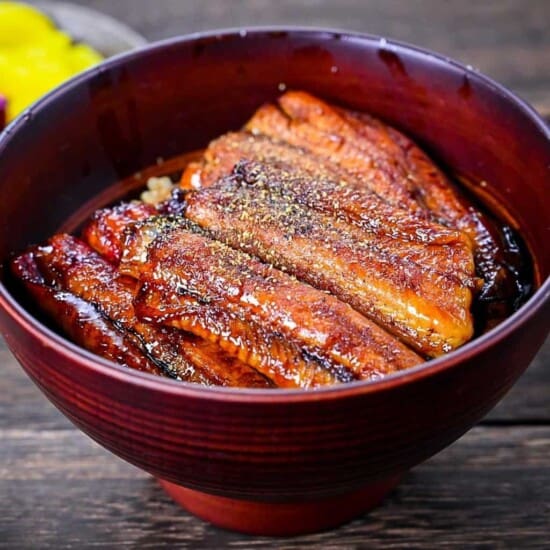


Featured Comment
Made your sauce and cooked the unagi your way. Also cooked some Japanese eggplant in same way. Turned out wonderful. Home cooking is the way to go. Eel was from a small company in Maine, American Unagi. Thanks for all the work you do, you have an awesome website.
★★★★★
– Kat
The smell reaches the street before the shop does, a sweet smoke that says only a specialist can do this. You have caught it walking past an eel restaurant and decided, without tasting a thing, that this belongs to them.
I used to read that smoke the same way, until I made it from a raw eel at home. The flesh came out soft, the skin crisp, the sauce dark and deep. The only thing I could not give it was the charcoal.
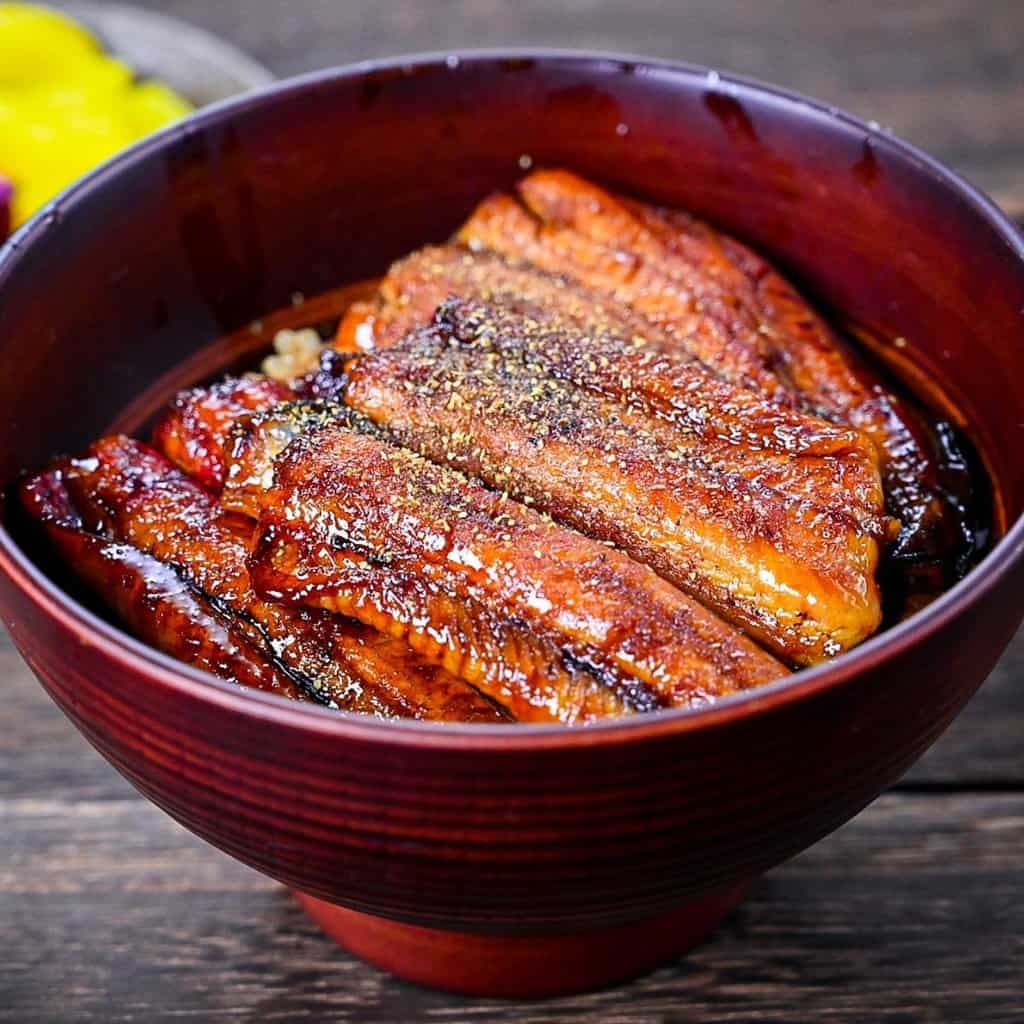
Unadon
Recipe Snapshot
- What is it? The Japanese eel-on-rice bowl, grilled eel lacquered in a sweet soy kabayaki glaze (eel sauce) and laid over plain short-grain rice.
- Flavor profile: Rich and fatty eel against a sweet-savory glossy glaze, with firm rice underneath and a bright, numbing lift of sansho cutting clean through the whole bowl.
- Why you will love this recipe: It walks you through my from-scratch method, sake-steam then grill then glaze, that gives you the melting-inside, crisp-outside texture restaurants get, without the charcoal or the price tag.
- Must-haves: Raw eel you can grill from scratch and a kabayaki glaze of soy, mirin, sake, and 2 sugars.
- Skill level: Medium. No special equipment, but the sake-steam step and the 30-second sauce coats are the moves that decide whether the eel comes out melting or merely fine.
Summarize & Save this content on:
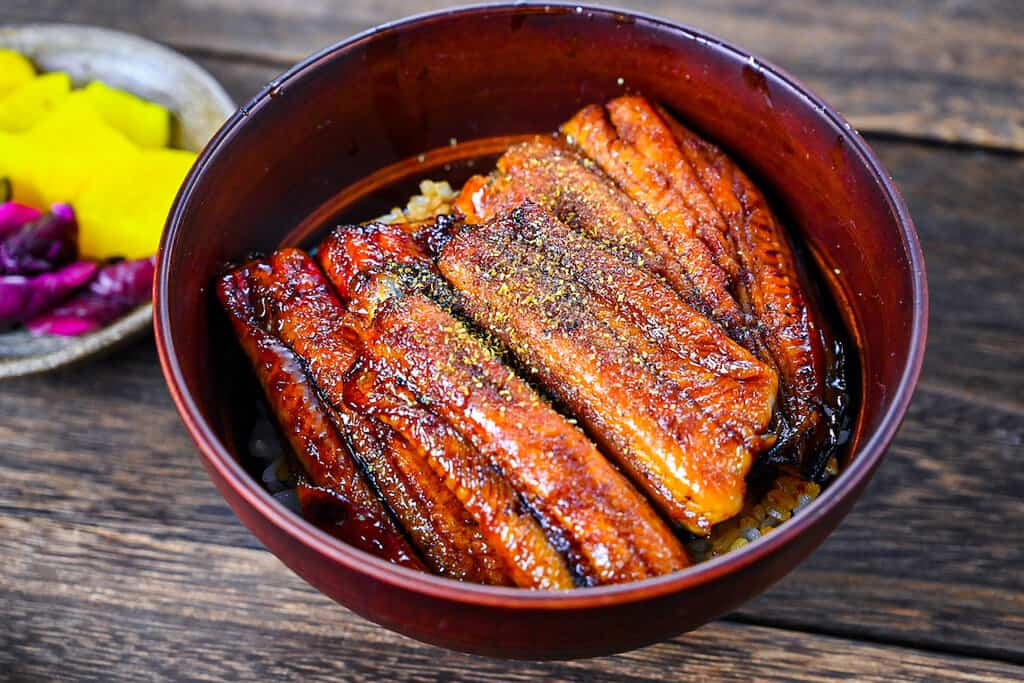
What Is Unagi Donburi?
Unagi donburi (鰻丼), or unadon, is a bowl of steamed short-grain rice topped with grilled eel that has been brushed with a sweet, dark, soy-based glaze called kabayaki. In Japan it is special-occasion food, eaten at a dedicated eel restaurant on a hot summer day, especially on Doyo no Ushi no Hi, the midsummer Day of the Ox.
Here is the part a lot of people get wrong, even in Japan. Unadon and unaju are the same eel at the same quality. The only difference is the vessel: a bowl (donburi) for unadon, a lacquered box for unaju.
For this recipe, I am doing what even most people in Japan never attempt at home: starting from raw eel and building the whole thing from scratch. The restaurant bowl is formal. At home, mine does not have to be.
Unadon Ingredients
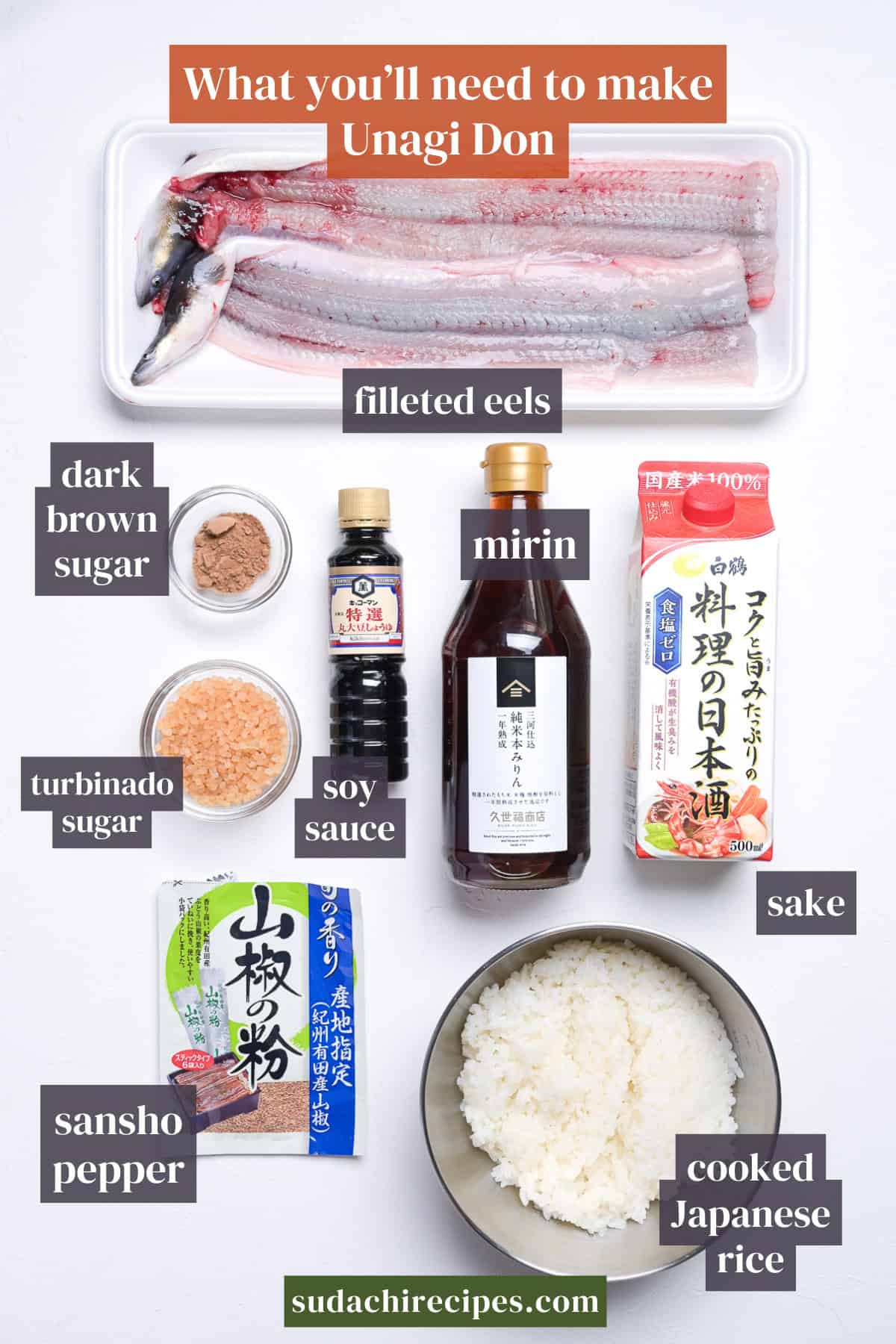
- Eel (unagi): Search “eel” plus your country rather than “unagi” and you will turn up actual fish instead of pre-cooked fillets, whether that is live eel at a Chinese fishmonger, capitone at an Italian market, or raw butterflied fillets from an eel farm. Just know what is in your hands and buy the eel that is in front of you. Most eels available in Japan today are not wild eels, but farmed eels, mainly domestic, Chinese, and Taiwanese eels.
- Soy sauce, mirin, and sake: These 3 are the backbone of the authentic kabayaki glaze.
- Short-grain rice: Plain steamed Japanese short-grain rice is the best option here. Cook it slightly on the firm side so the grains hold their own under the sauce and the eel fat instead of going soft and mushy. Korean short-grain or Calrose work fine too.
Substitution Ideas
- Eel → Anago (conger eel): Anago is the closest stand-in by look. It is leaner and milder, a lighter cousin rather than a true match, but glazed with this same kabayaki sauce over rice it makes a genuinely good bowl.
- Eel → Catfish: This one will probably surprise you, but catfish takes the sauce well and lands somewhere delicious. It is a different fish and a different bowl, not a copy, yet it is good in its own right. Think of it as its own thing rather than a fake unagi.
- Soy sauce → Tamari: If you are GF, tamari is the clean swap. Most tamari is wheat-free and it actually gives the glaze a thicker, glossier finish.
Have trouble finding Japanese ingredients? Check out my ultimate guide to Japanese ingredient substitutes!
How to Make My Unagi Don
If you prefer to watch the process in action, check out my YouTube video of this unadon recipe!

i. Add your 2 kinds of sugars to a saucepan over medium-low heat.
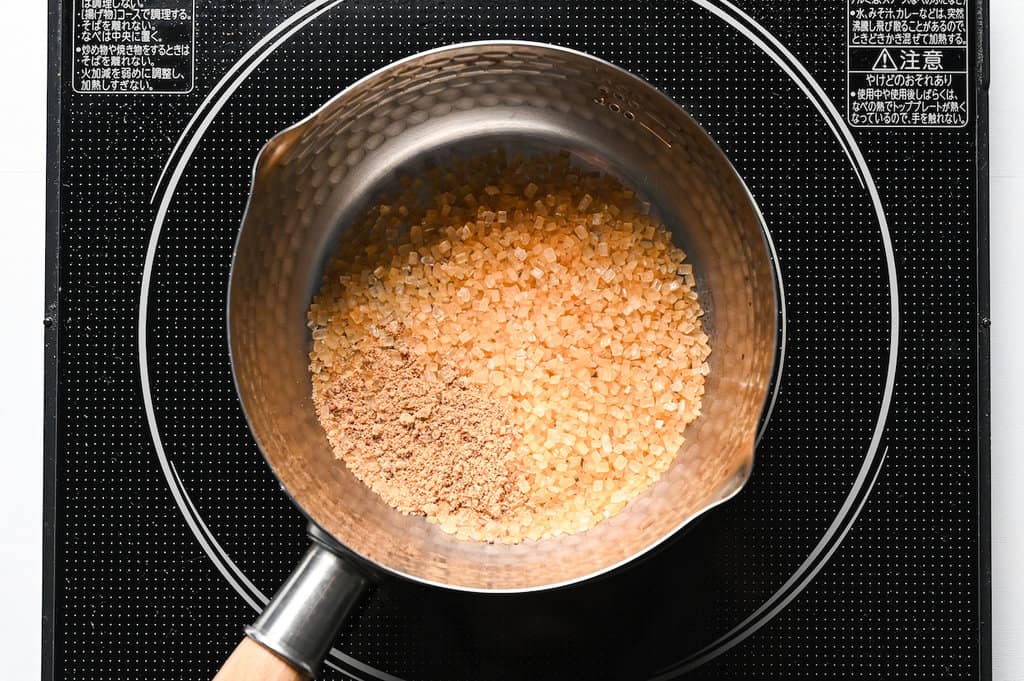
ii. Once the sugar starts to melt, pour in the sake and mirin, bring it to a boil, and let it bubble a minute or 2 so the raw alcohol cooks off.
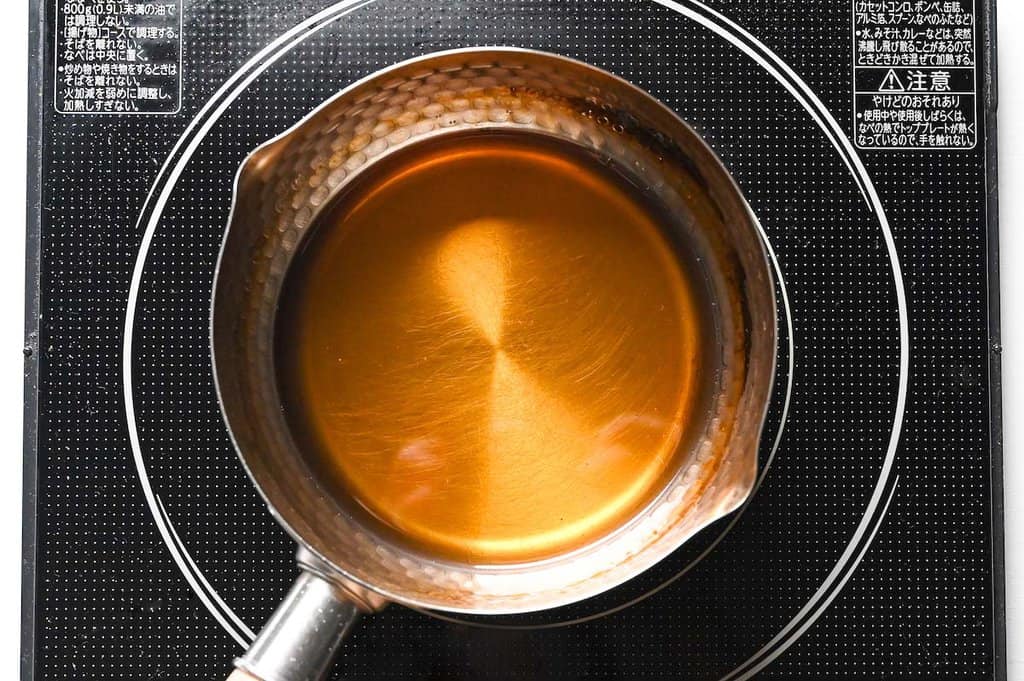
iii. Add the soy sauce, drop the heat to a simmer, and let it reduce gently until it thickens just enough to coat. Stir now and then so the sugar at the bottom does not catch and burn.
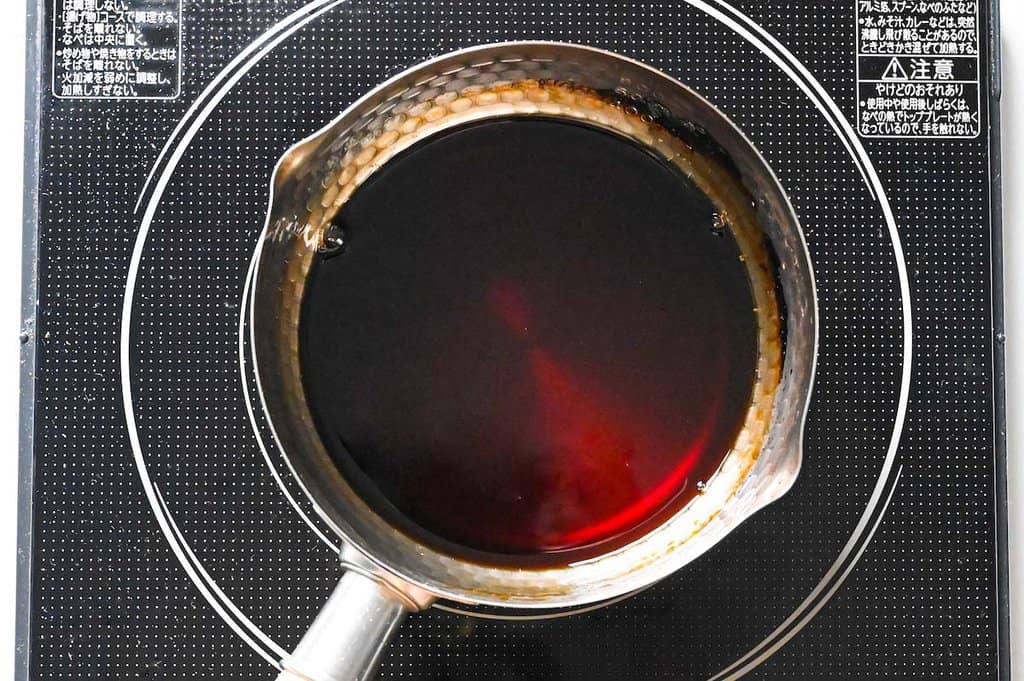
iv. Pull it off the heat and let it cool while you deal with the eel.
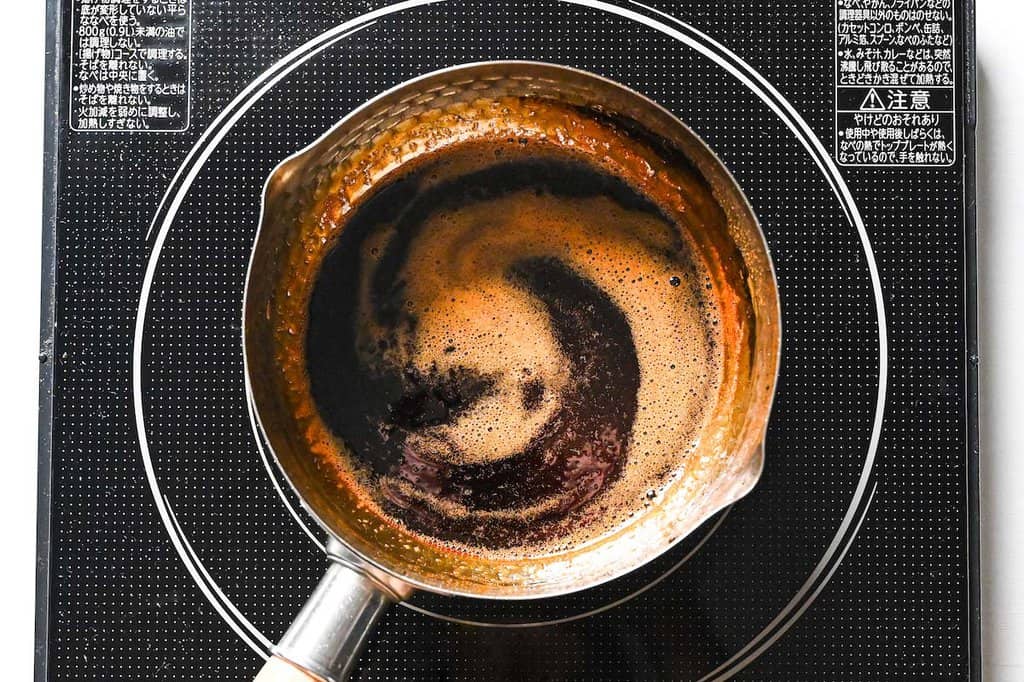
You want a sauce that is sweet, a little sticky, glossy, and rich. Too salty and it fights the eel, too sweet and it goes flat. That balance is the whole point, and it is the part I kept adjusting until it landed.
i. Buy your eel already gutted and boned unless you genuinely love filleting fish, and rinse it under cold running water first. Lay a sheet of plastic wrap over your cutting board and put the eel on top of it.
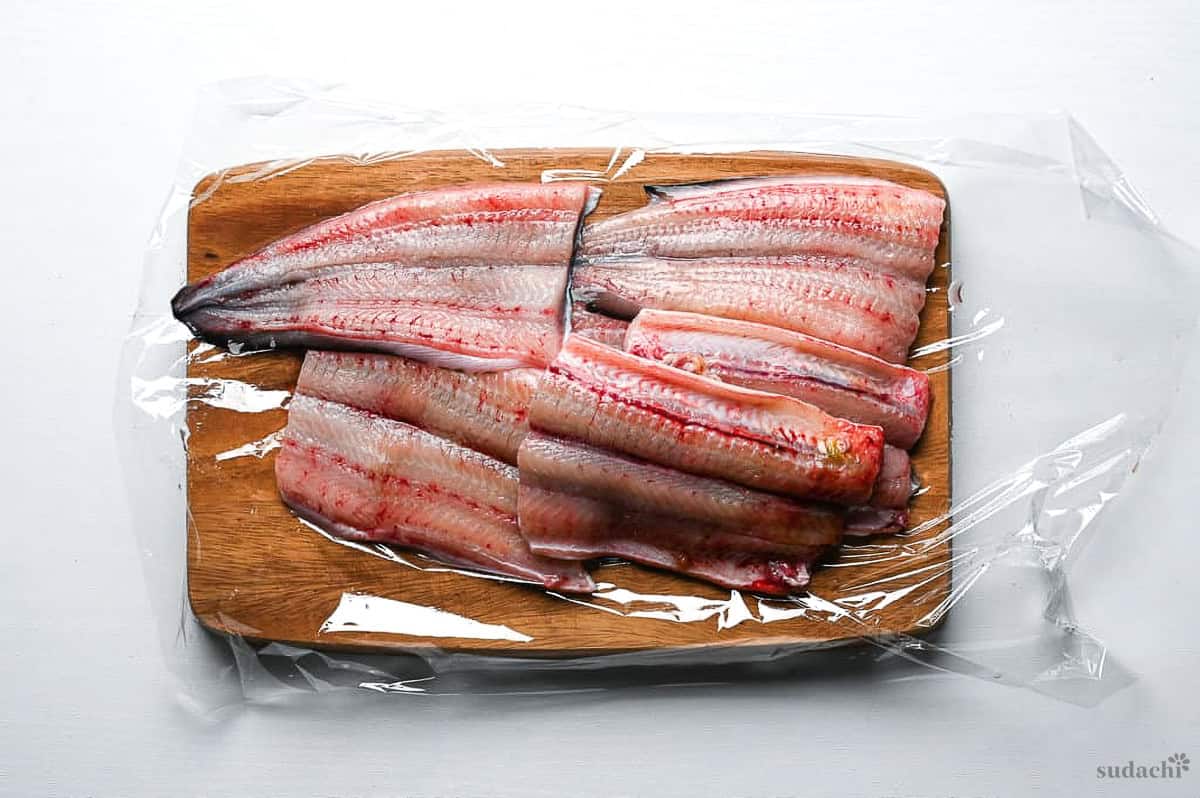
ii. Hold the knife still. Do not chase the eel with the blade. Slide the eel back and forth underneath the stationary knife to make each cut, working it into 2 or 3 pieces.
Eel is unbelievably slippery, which is exactly why a fixed knife plus a moving fish beats the usual approach. The wrap gives the eel something to glide against, so it does not skate off the board or slide you into the blade. It feels strange the first time and then it just works.
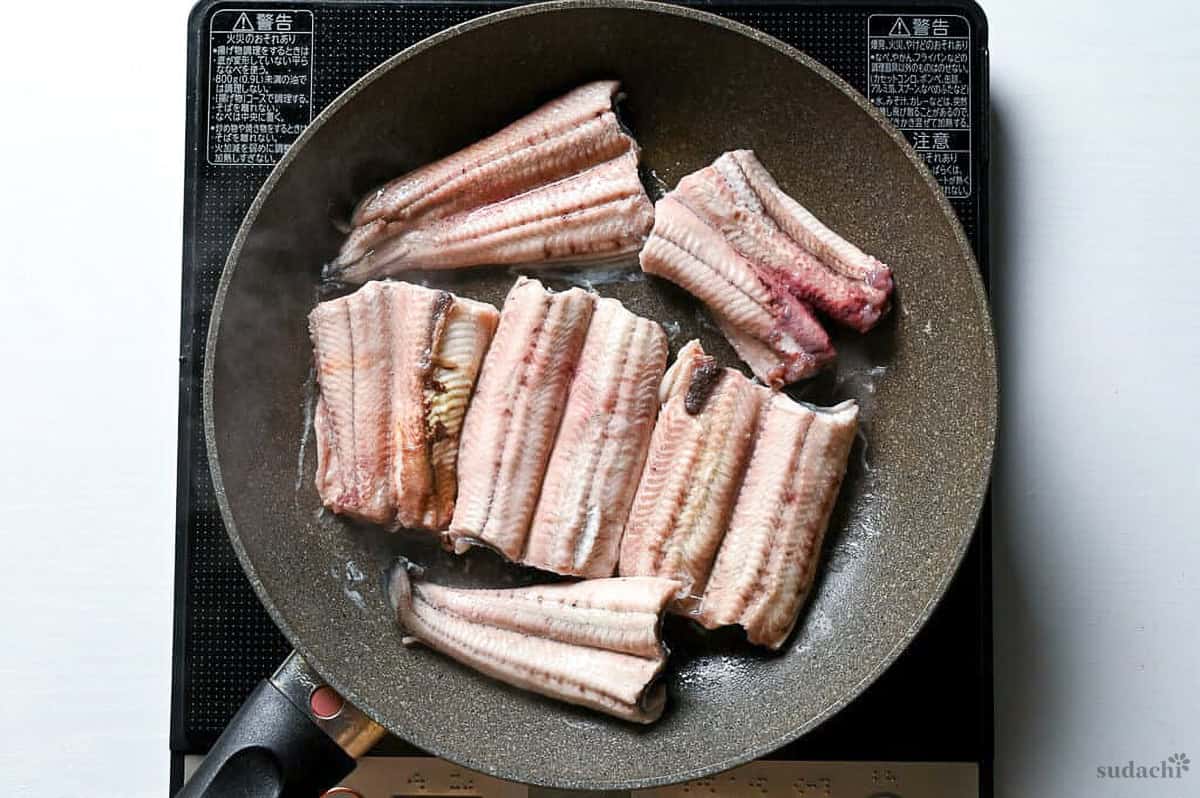
i. Lay the eel skin-side down in a cold frying pan, sprinkle over the sake, put the lid on, and steam it on medium-low for a few minutes.
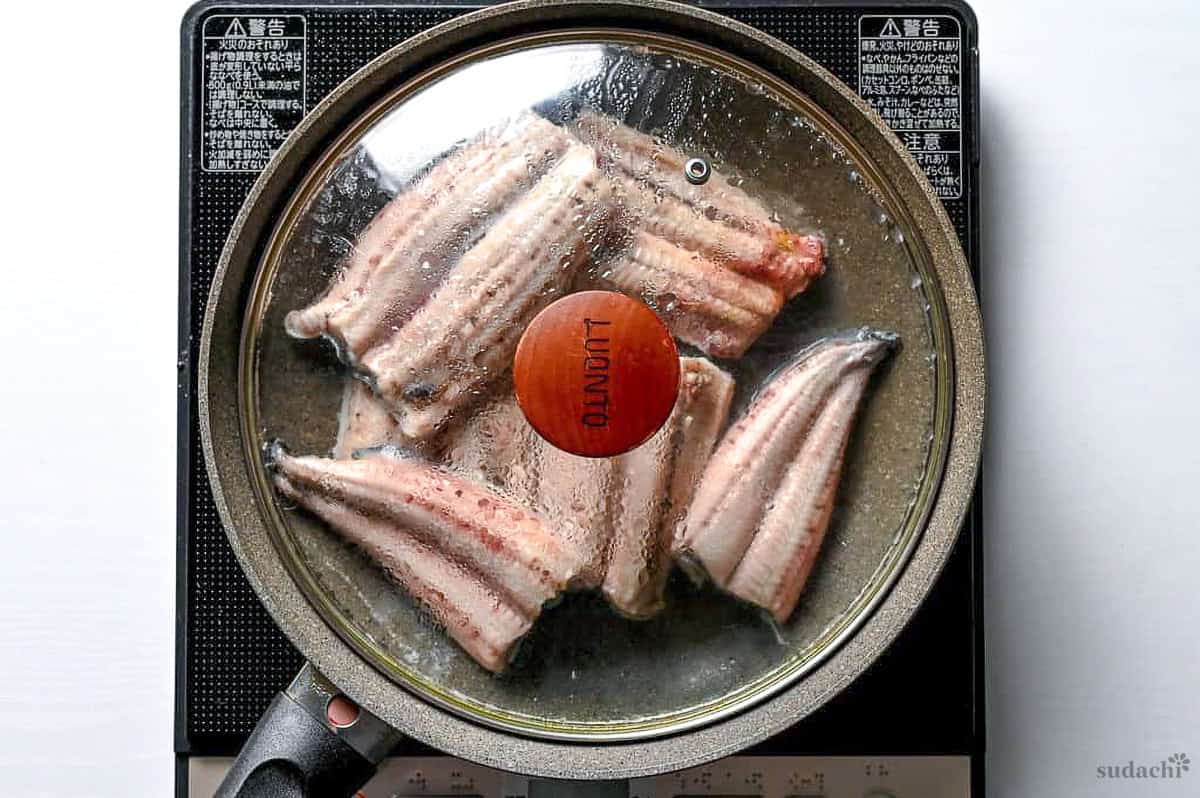
ii. While that goes, get your grill or broiler heating up.
You could grill the eel straight away. Do not. This quick sake-steam is the difference between melting, pillowy eel and eel that stops at fine. It softens the flesh, renders off excess fat, and quietly takes the fishiness with it. Skip it and you taste the gap immediately. For me it is non-negotiable.
i. Line your grill or broiler tray with foil, since a lot of sauce is about to be involved, and preheat it well. Transfer the steamed eel onto the tray, still skin-side down.
ii. Grill the flesh side first until it firms up.
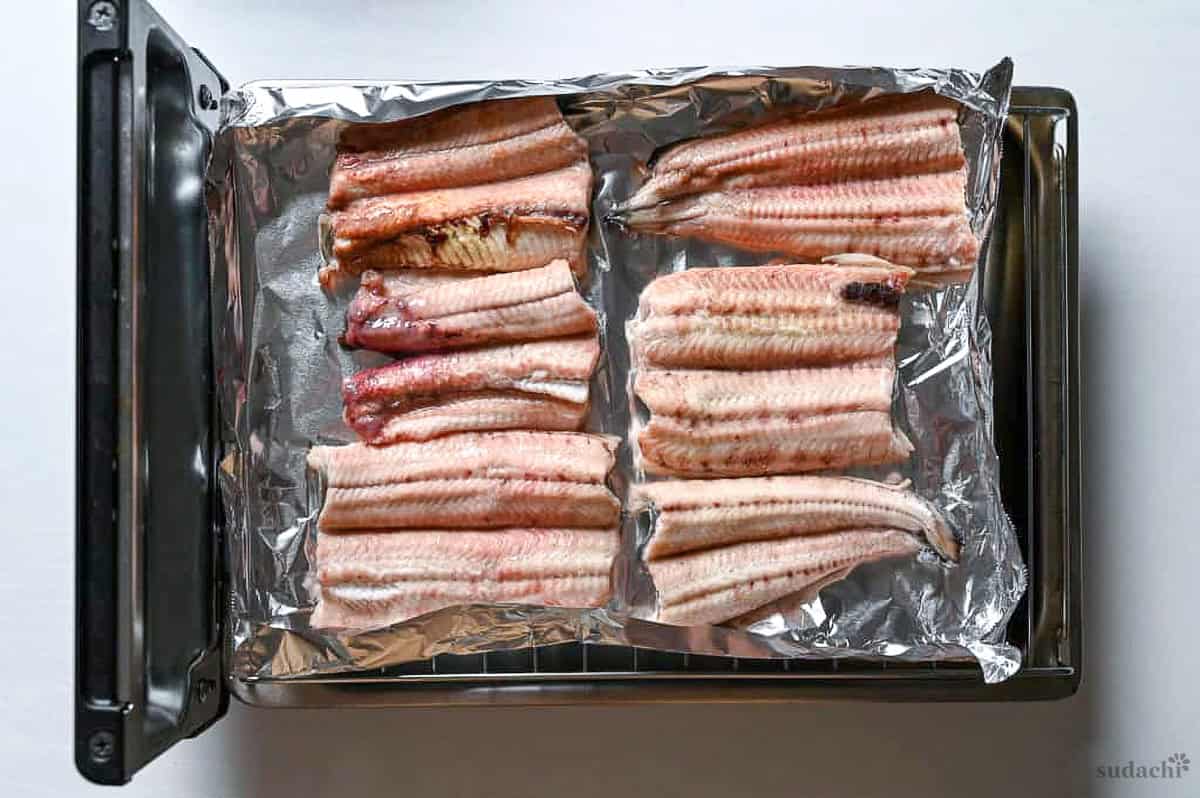
iii. Flip and grill the skin side until it is lightly charred, not black.
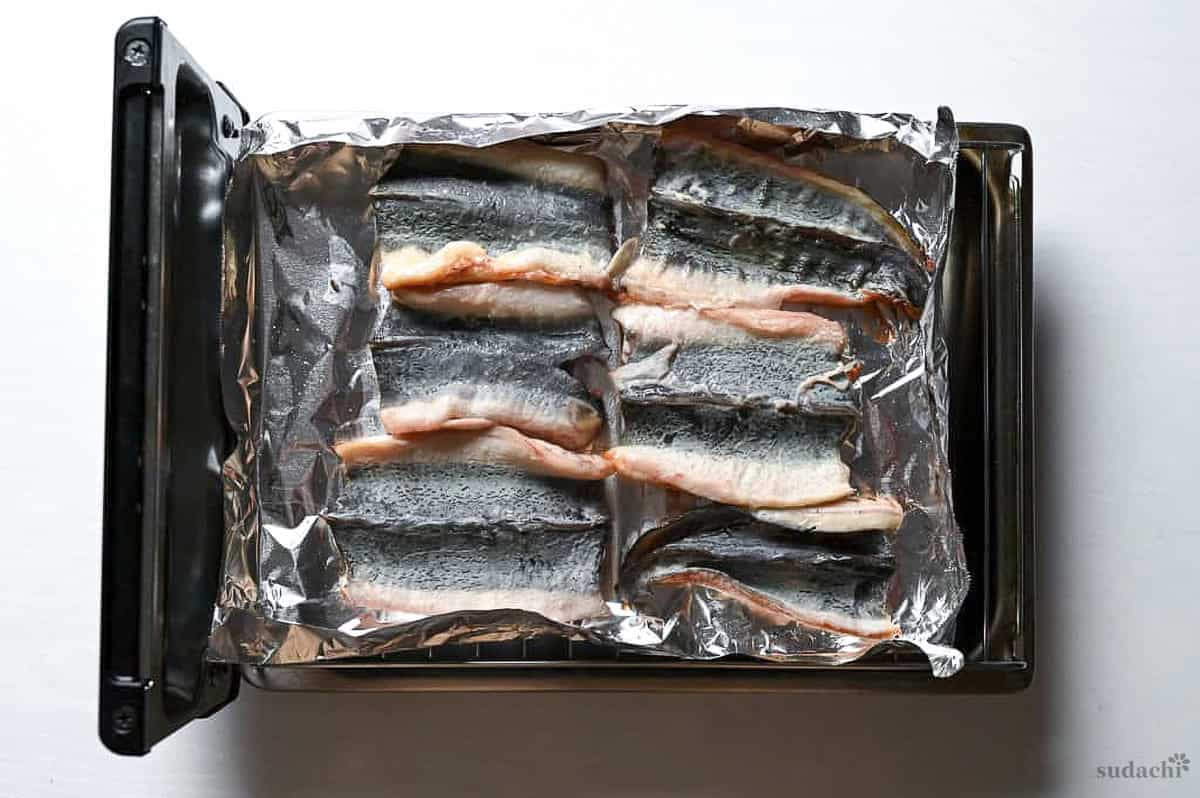
Many of my fish recipes start with crisping the skin up first, but not eel. Eel shrinks fast under heat, so if you cook the skin first then the whole fish contracts, then tears and falls apart on you. Flesh side first (skin away from the heat source) first lets it hold its shape through the cook. By the way, at this plain-grilled, no-sauce stage the eel has a name of its own: shirayaki.
i. Brush the sauce generously over 1 side, then return it to the grill for about 30 seconds.
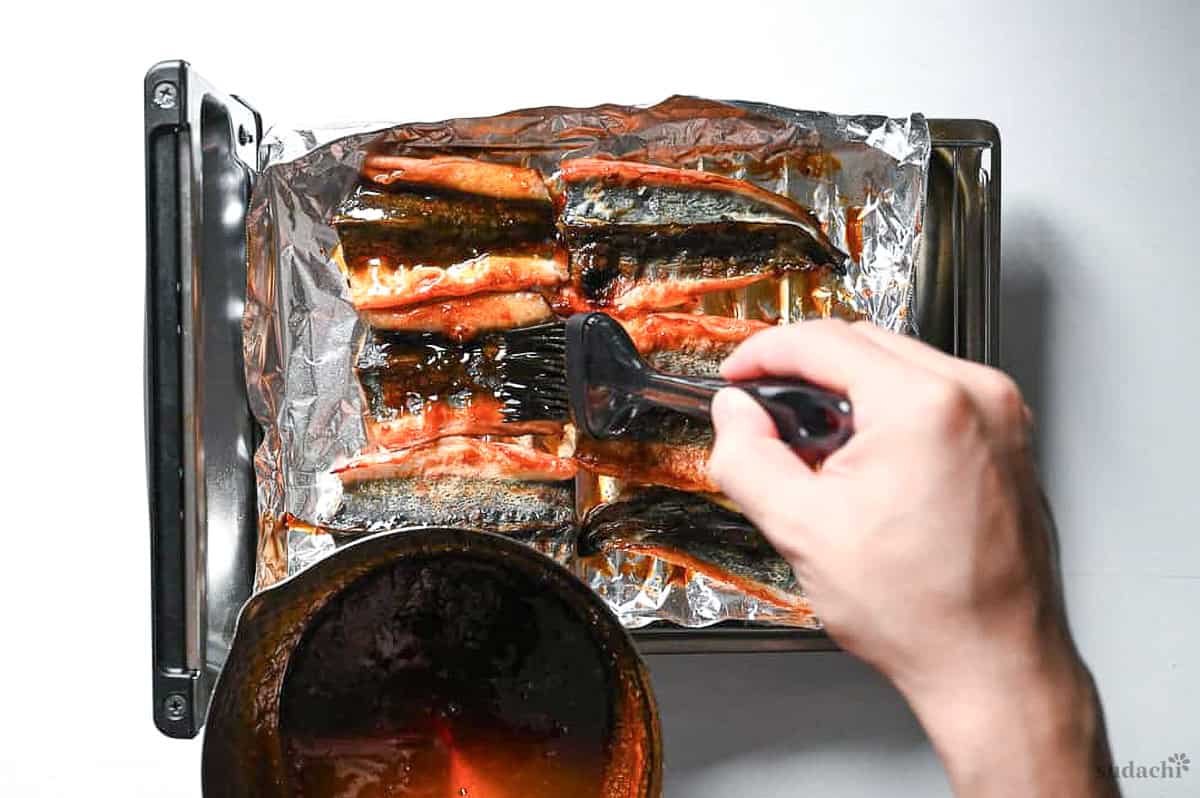
ii. Flip, brush the other side, and grill again.
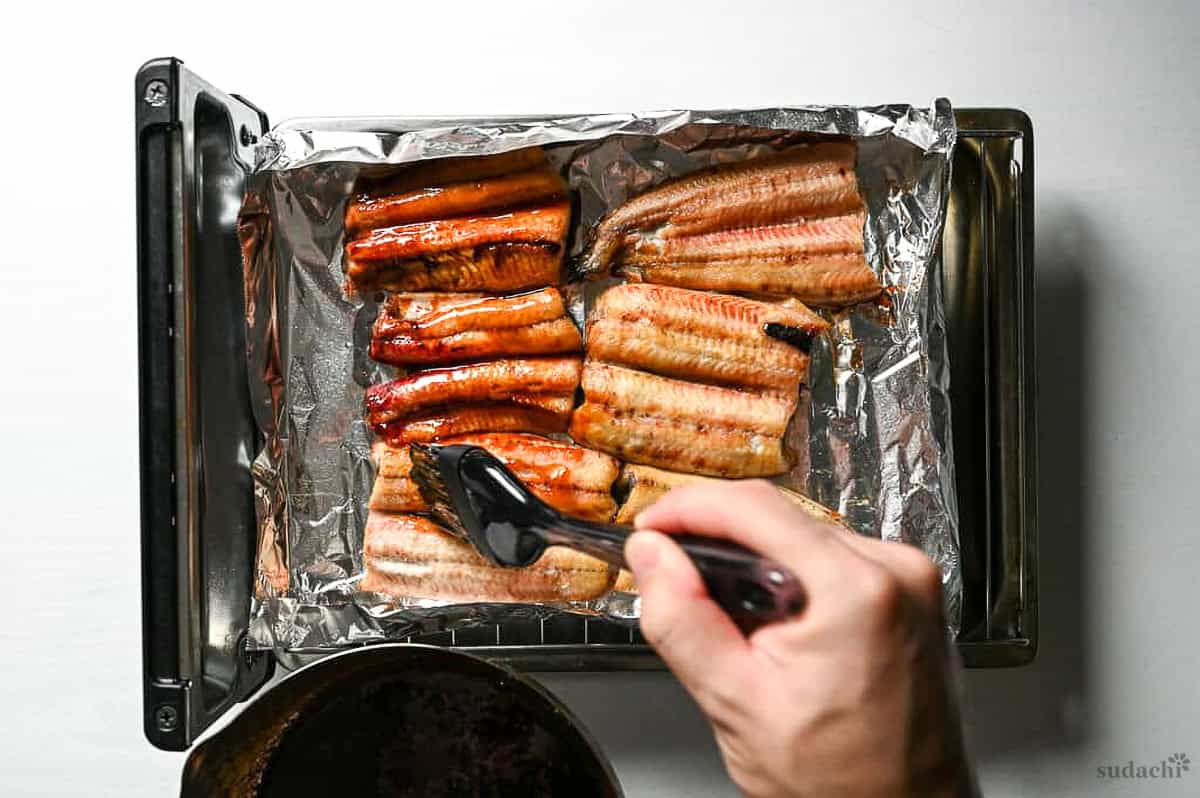
iii. Repeat until you have coated and grilled each side 3 times, building gloss with each pass.
30 seconds is the line, and it matters because this sauce is loaded with sugar. Push past it and the glaze tips from caramelized and glossy to scorched and bitter. Each thin coat sets and browns before the next goes on, and that repeated brush-and-grill is the basting that drives the sauce into the eel.
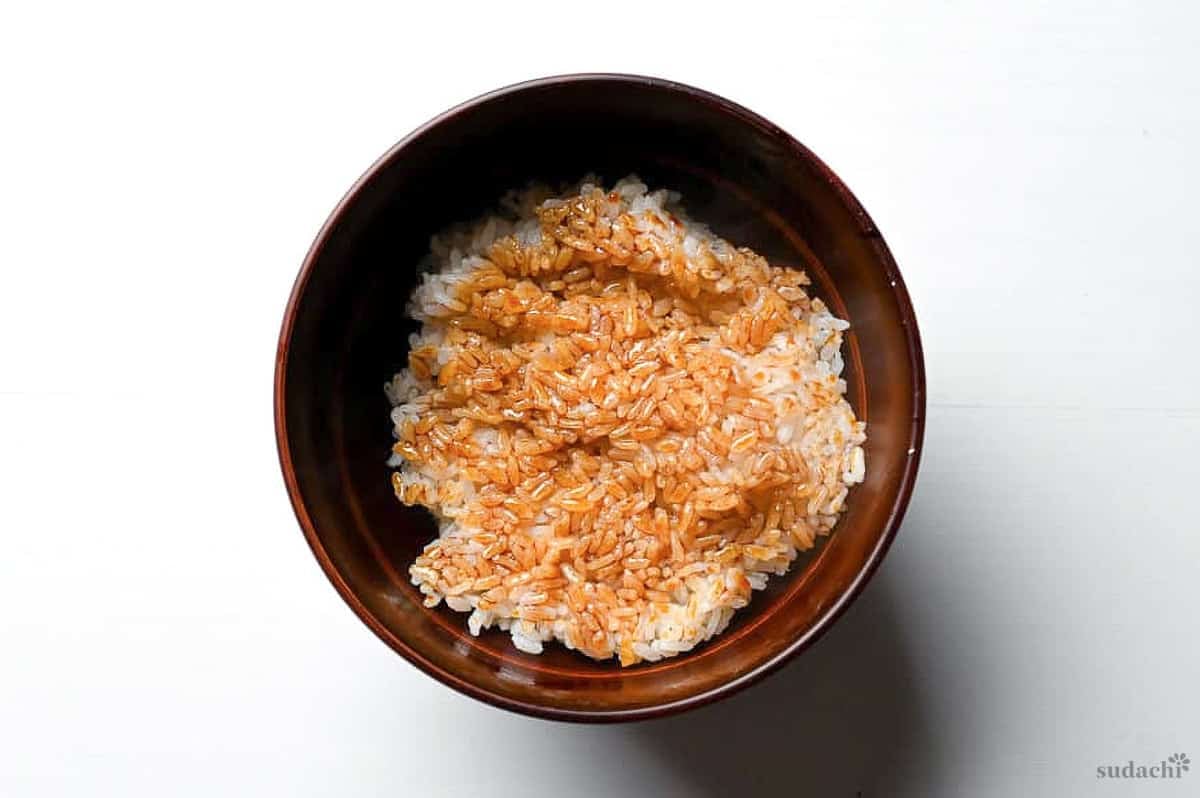
i. Mound hot rice into your bowl, then brush a little of the leftover sauce right onto the rice. That one move flavors the grains underneath and uses up sauce that would otherwise go to waste.
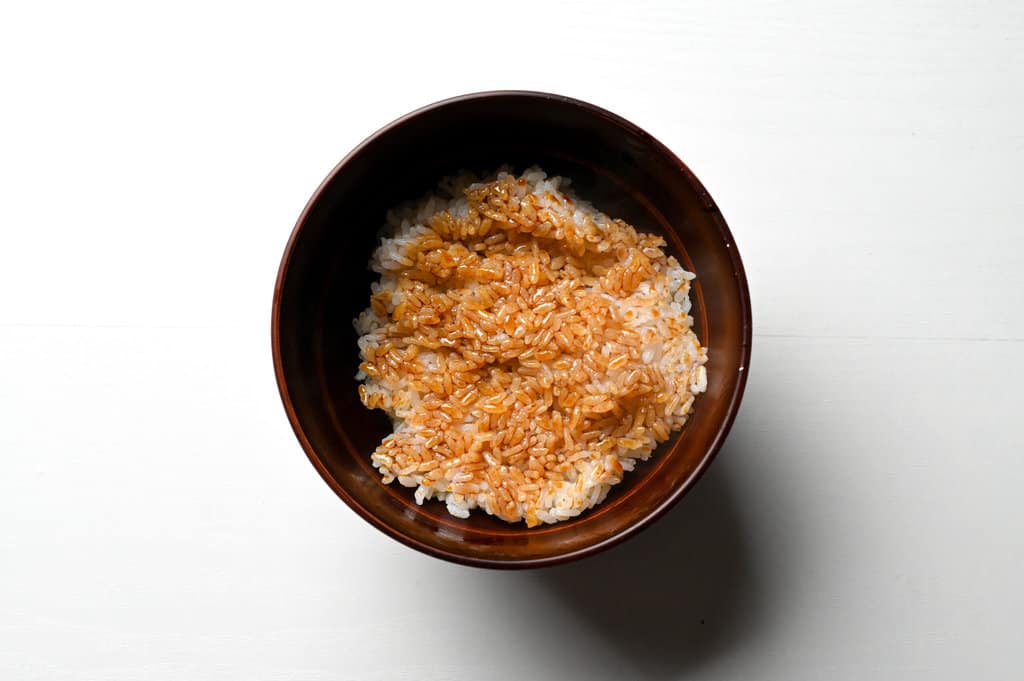
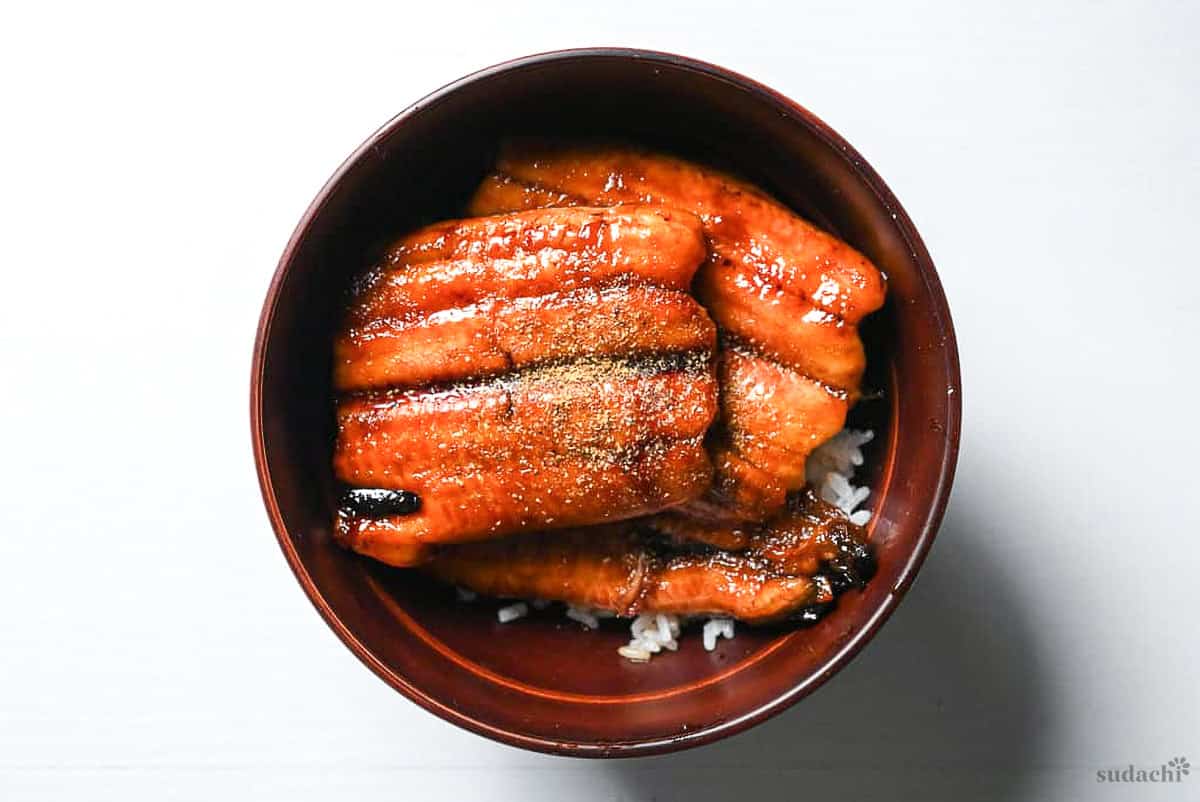
ii. Lay the glazed eel on top.
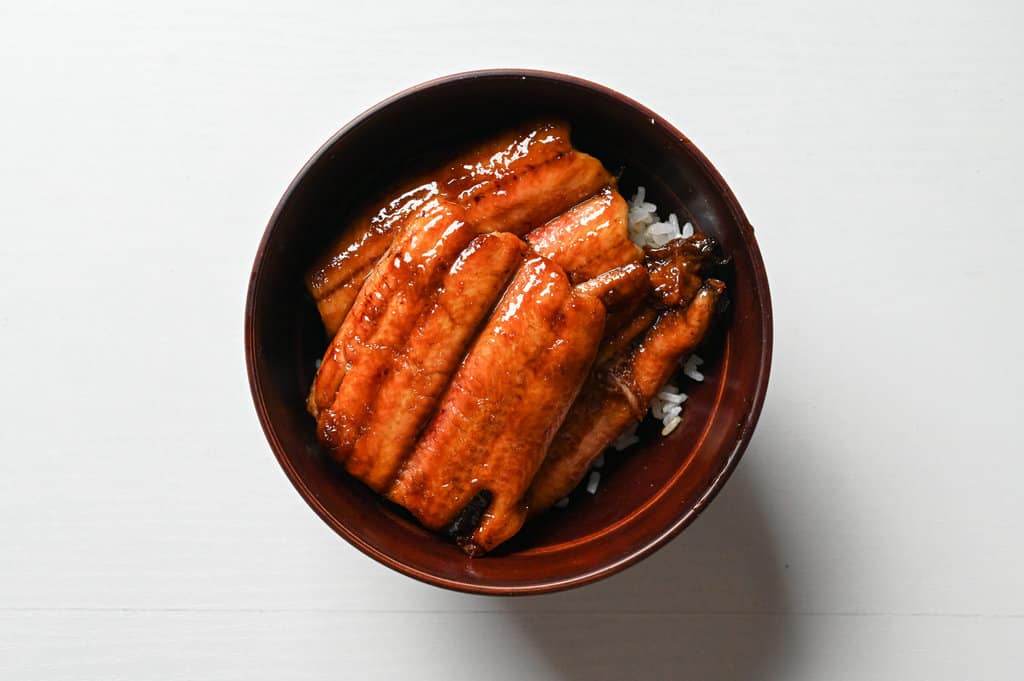
iii. Finish with a shower of sansho, then enjoy.
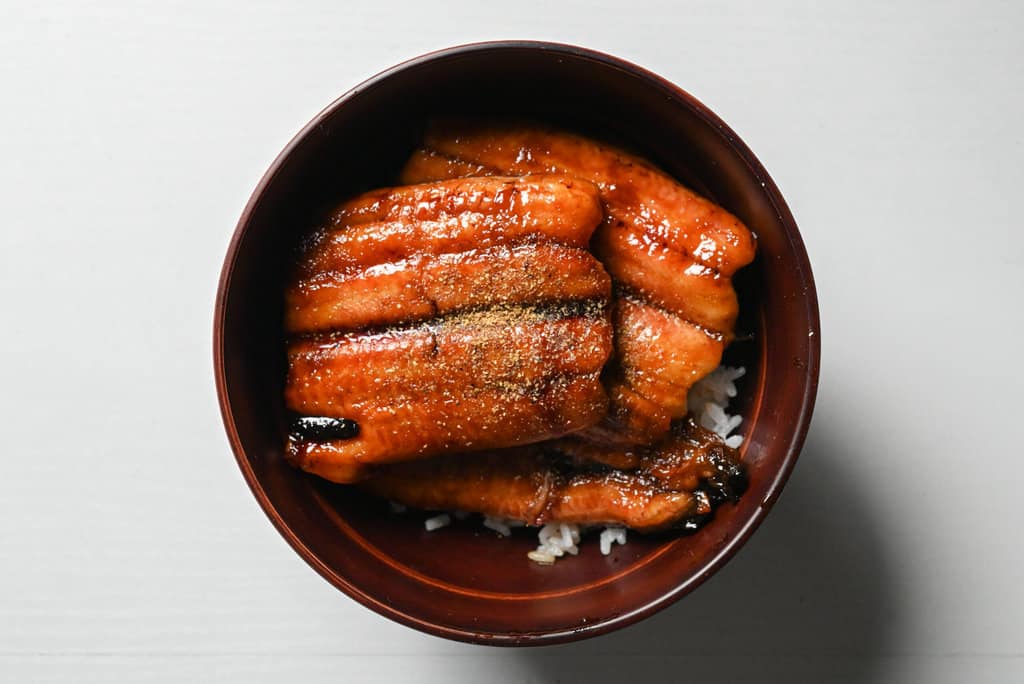
Sansho pepper goes on last: That bright, numbing lift is what pulls the rich glaze and the fatty eel into a single clean bite. For me the bowl is not finished until it is on there. Kind of like a ritual.

Essential Tips & Tricks
- Guard against scorching above all else. The sauce is loaded with sugar, and once a glazed coat tips from glossy to black it is gone, there is no walking it back. This is the one mistake I will not let you make. Treat every grilling pass as a thing you watch, not a thing you set and leave, and pull the eel the instant the surface looks lacquered rather than charred.
- Do not skip the sake steam. Laying the eel skin-side down and steaming it in sake before it ever sees the grill is what separates melting, pillowy flesh from eel that stops at merely fine. The steam softens the flesh, renders off heavy fat, and carries the fishiness out with it. Grill straight from raw and you taste the gap on the first bite.
- Grill the flesh side first, always. Eel shrinks fast under heat, so if the skin faces the heat first the whole fillet contracts, tears, and falls apart on the tray. Flesh side first lets it hold its shape through the cook.
- Cook the rice a touch firm. Use slightly less water than usual so the grains stay distinct. Soft rice collapses into mush under the warm tare and rendered eel fat, and once that happens the bowl loses the contrast that makes each bite land. Firm grains hold up and let the sauce and eel stay the stars.
Nail the steam and respect the 30-second clock on every glaze, and the rest of this bowl is just patience paying off.
Storage & Meal Prep
Fridge: I would not store this one. Grilled eel this good is meant to be eaten the moment it comes off the heat, and holding it back feels like a waste of the work. If you genuinely have leftovers, cooked eel keeps about 2 days in an airtight container, though the skin softens and the glaze dulls as it sits.
Freezer: Cooked eel freezes for roughly 1 month if you wipe off the tare and double-wrap it tightly, but the texture pays for it. Never freeze raw eel as is. If you must freeze, grill it to the plain shirayaki stage first, then wrap and freeze, and finish with sake-steam and tare when you want to eat.
Meal prep: The real make-ahead here is the tare, not the eel. The sauce keeps for weeks to a couple of months in a sealed jar in the fridge and only deepens, so make a batch in advance and you are halfway to dinner. The eel itself I cook fresh every time, since steaming and grilling are where all the texture lives.
Reheating: Skip the microwave, it turns the eel rubbery and dries the glaze out. Set the pieces in a pan skin-side down, add a small splash of sake, cover, and warm them gently so the steam brings the flesh back to soft. A quick pass under the grill afterward revives the gloss.
What to Serve With This Recipe
Troubleshooting
This almost always means the sake steam got skipped or cut short. The steam is what softens the dense flesh and carries off the fat and odor before the grill ever touches it, so without it the eel stays firm and the smell lingers. Steam it skin-side down in sake for a few minutes next time, and if this batch is already grilled, a quick covered pan-steam with a splash of sake can soften it partway.
The sauce is heavy with sugar, so anything past about 30 seconds per grilling pass scorches it. Keep each coat short, brush a thin layer, grill briefly, flip, and repeat, so each pass sets and browns without burning. If a coat already went too far, stop glazing, scrape off the bitter crust if you can, and brush with a fresh thin coat.
You most likely started it skin-side up. Eel shrinks fast under heat, and when the skin faces up first the whole fillet contracts and splits. Lay it skin-side down first so it holds its shape, and move it with a wide spatula rather than tongs once it is hot and tender.
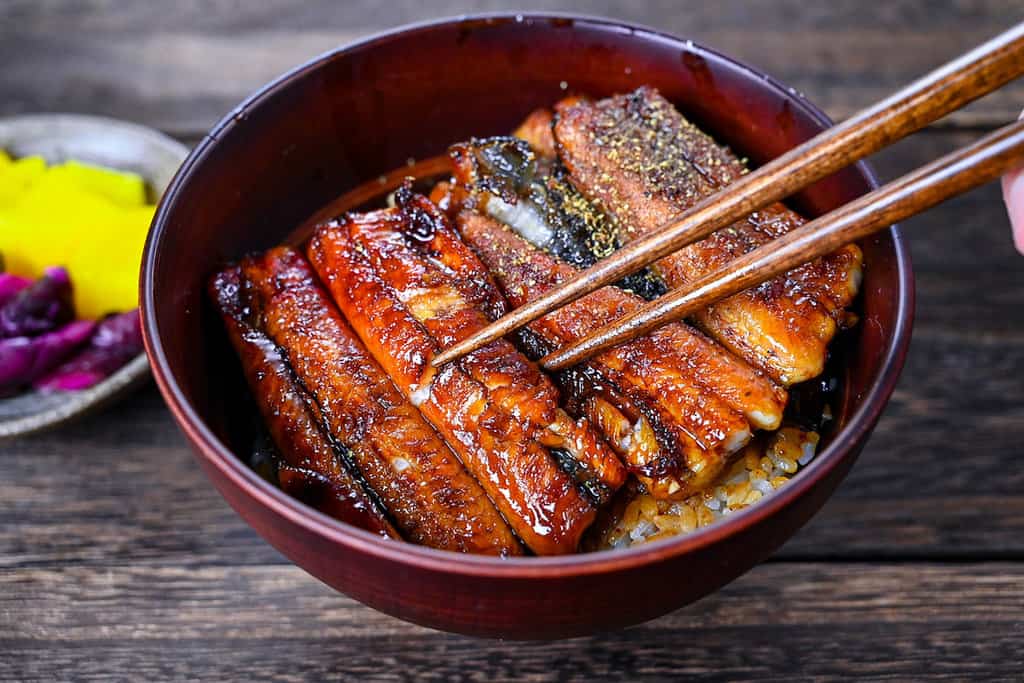
More Japanese Fish Recipes
Hungry for more fish ideas? Explore my Japanese fish recipe collection to find your next favorite.
Did You Try This Recipe?
I would love to hear your thoughts!
💬 Leave a review and ⭐️ rating in the comments below. 📷 I also love to see your photos – submit them here!
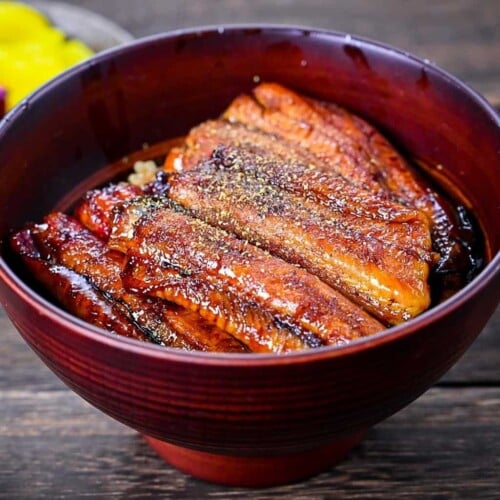
Unagi Donburi (Japanese Grilled Eel Rice Bowl)

Ingredients
Unagi Sauce
- 3 tbsp turbinado sugar coarse light brown (zarame)
- 1 tsp dark brown sugar muscovado or similar
- 5 tbsp sake
- 5 tbsp mirin
- 5 tbsp Japanese soy sauce (koikuchi shoyu)
Unagi don
- 300 g filleted freshwater eels buy gutted and boned, conger eel or catfish stand in if eel is out of reach
- 2 tbsp sake
- 2 portions cooked Japanese short-grain rice or Korean short-grain/Calrose
- Japanese sansho pepper optional but recommended
The ingredient brands and tools I trust are in my Japanese pantry guide and my cooking tools guide.
Can’t find certain Japanese ingredients? See my substitution guide here.
Instructions
Unagi Sauce
- Pour 3 tbsp turbinado sugar and 1 tsp dark brown sugar into a cold saucepan. Set the pan on the stove and heat over medium-low.

- When the sugar starts to melt, add 5 tbsp sake and 5 tbsp mirin. Bring to boil and let it cook for 1-2 minutes, stirring occasionally.
- Reduce the heat to a simmer and add 5 tbsp Japanese soy sauce (koikuchi shoyu). Stir occasionally, and simmer until slightly thickened (about 10 minutes).
- Scoop off any foam that formed on top, and remove the pan from the heat. Leave it cool while you prepare the eel.

Unagi don
- Wash 300 g filleted freshwater eels with cold running water. Cover a chopping board with a sheet of plastic wrap and place the eel on top. To cut the eel, gently press the blade of the knife in the place you want to cut, then hold the knife still and slide the eel backwards and forwards as you slowly move the knife down. Cut the eel fillets in halves or thirds.

- Place the eel skin-side down in a cold frying pan and pour 2 tbsp sake around them.
- Cover with a lid and heat on medium-low. When it starts to steam, set a timer for 3 minutes. While you wait, preheat the grill/broiler on medium-high.
- After 3 minutes, remove the pan from the heat. Line a wire rack with foil and place it over a baking tray. Arrange the eel on the wire rack so that the skin side is facing the heat source. Slide under the grill/broiler and cook for 6 minutes.
- Turn the eel over and grill the skin side for 5 minutes or until lightly charred.
- Side the tray out and brush an even layer of sauce all over the skin. Return it to the grill for 30 seconds or until it looks lacquered (keep an eye on it, the sauce burns quickly if left).
- Carefully flip the eel over, apply the sauce to the other side and grill for 30 seconds. Flip and repeat six times in total, so each side has been brushed with sauce and grilled three times each.
- Divide 2 portions cooked Japanese short-grain rice into serving bowls and brush the top with leftover unagi sauce.
- Place the eel on top and sprinkle with Japanese sansho pepper. Enjoy!


Hi ,
Loving this.
This is the most comprehensive and step by step instruction for Unagi kabayashi.
Loving it Ummm yummy
Preparing tonight ( with spanish Mackerel fillet, cheaper and since unable to get Eel at Singapore)
Thank you very much
Hi Francis,
Thank you so much! I’m interested in how it tastes with mackerel, let us know how it goes.
Hope you enjoy the recipe!
Made your sauce and cooked the unagi your way. Also cooked some Japanese eggplant in same way. Turned out wonderful. Home cooking is the way to go. Eel was from a small company in Maine, American Unagi. Thanks for all the work you do, you have an awesome website.
Hi Kat,
Thank you for your kind words and sharing your experience!
I’ve just checked out the American Unagi website, and it was a very interesting read.
I really loved to see their passion towards locally raised unagi!
Yuto
hi can you please send me the moonlight cookie recipe please and thank you
Making this for a friends birthday! I’m super excited to make it. (Purin for dessert as well.) I hope she enjoys it. It seems to be a very clear recipe to you, thanks for that! I’ll make sure to check out other recipes you have written. Thank you again. I apologize if my writing is hard to understand, English is still new. Thank you!
Hi 재원,
Thank you for the comment and your kind words! I hope everything will turn out great on her birthday! 🙂
Yuto
hi can you please send me the moonlight cookie recipe please and thank you
Thank you for your suggestion!