

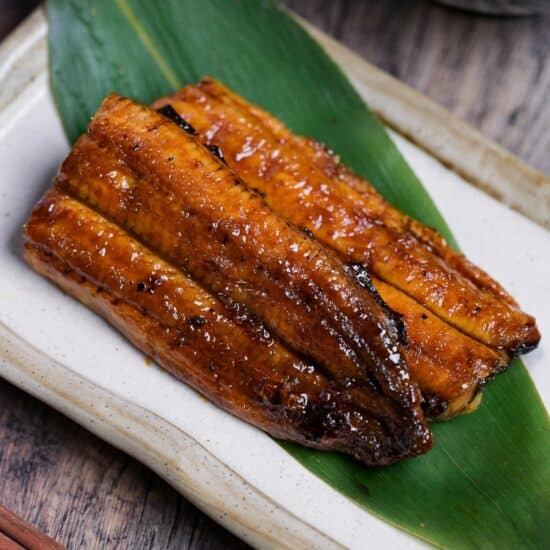


“I want to make unagi no kabayaki at home.” If you have ever thought that and then talked yourself out of it because you had no idea where to begin, this is for you. The barrier was never the price or the eel, it is that nobody hands you a clear path from a raw fillet to the plate.
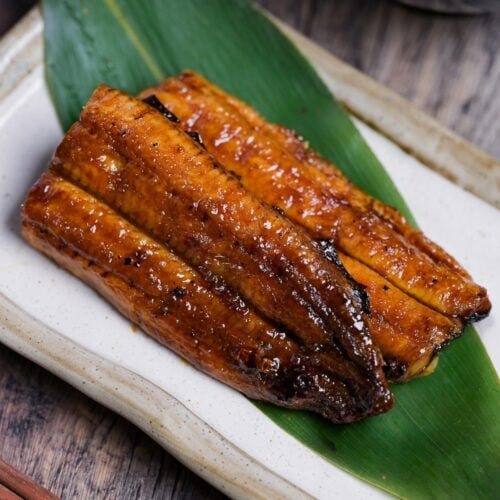
Here it is. You steam the eel with sake, grill it, then layer the homemade tare on in thin coats until it shines, crisp skin over a soft, fluffy inside.
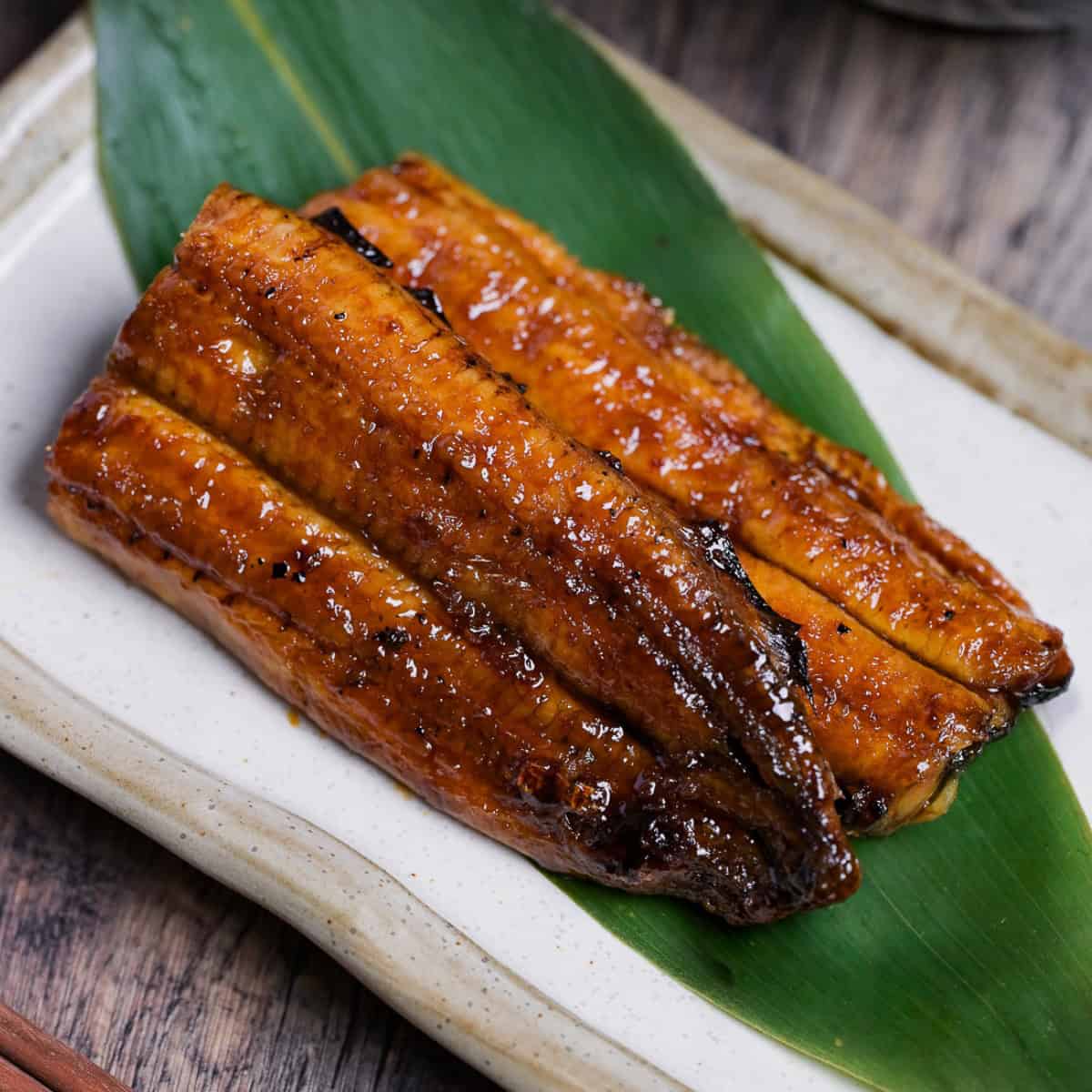
Unagi Kabayaki
Recipe Snapshot
- What is it? Restaurant-style grilled eel built from a raw fillet at home, taking the sake-steam for a soft middle and the grill for crisp skin, then lacquered in a 4-part tare sauce.
- Flavor profile: Sweet-savory and glossy, a dark soy-and-mirin glaze with a deep richness from a 2-sugar blend, crisp skin against an unbelievably soft, fluffy inside.
- Why you will love this recipe: It hands you both traditions on 1 fillet instead of making you pick, and it proves the technique, the sake-steam plus the layered tare, matters more than the grade of the eel or living near a famous eel town.
- Must-haves: A flat gutted-and-boned eel fillet, a coarse light brown sugar plus a small hit of dark molasses-heavy brown, and Japanese soy sauce for the tare.
- Skill level: Medium.
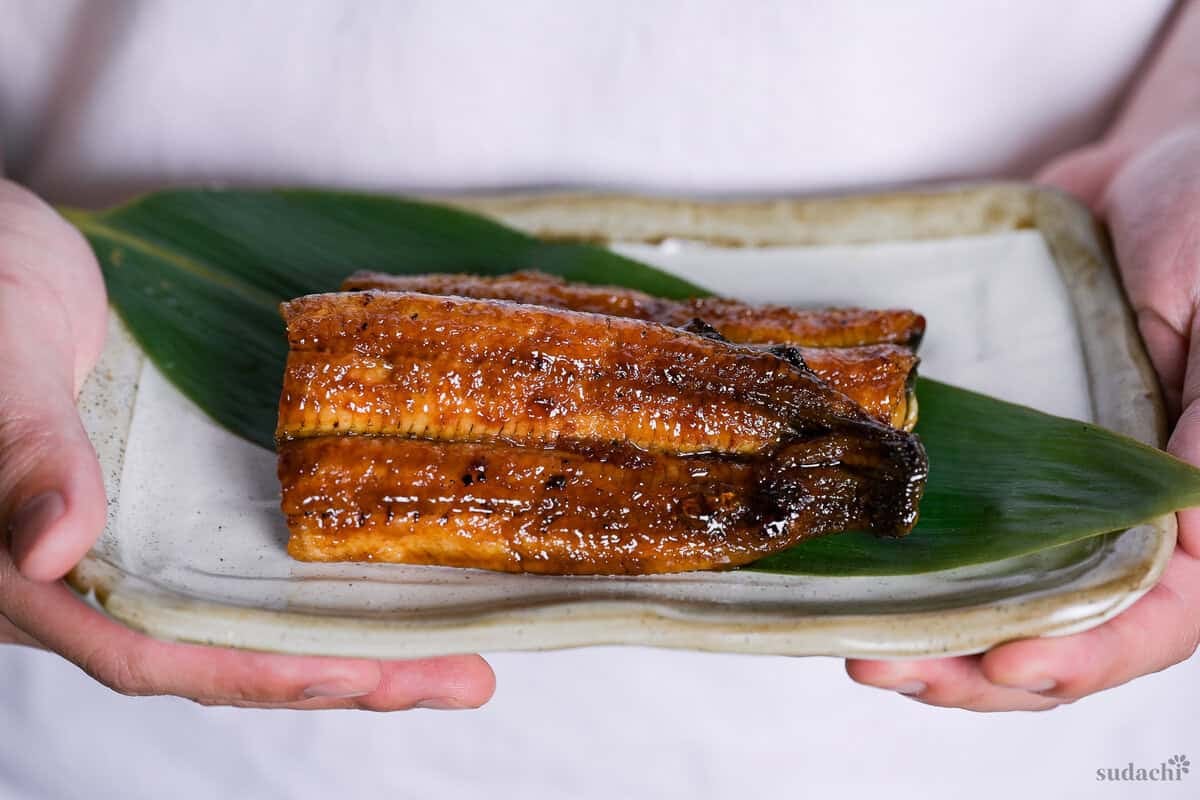
What Is Unagi Kabayaki?
Unagi kabayaki (鰻の蒲焼き) is freshwater eel split open, grilled, and glazed again and again with a sweet-savory unagi no tare made with soy sauce, mirin, sake, and sugar. For Japanese people like myself, this is the eel dish, the one that comes to mind well before any piece of eel on sushi rice.
There are 2 honest traditions, and they split on 1 move: steam or no steam. Kanto eel gets split down the back, white-grilled, then steamed, then grilled again with the tare, and it comes out soft and fluffy. Kansai skips the steam entirely and grills straight through, so the skin turns crisp and the bite is firmer. The dividing line runs through Japan somewhere near Hamamatsu, and cooks on each side will tell you theirs is the right one.
For this recipe, I did not want to give up either. Kanto gives you that fluffy inside. Kansai gives you the crisp skin. So I steam the eel with sake for the soft middle, and I still grill the skin until it goes crisp. Two textures. One fillet.
Unagi Kabayaki Ingredients
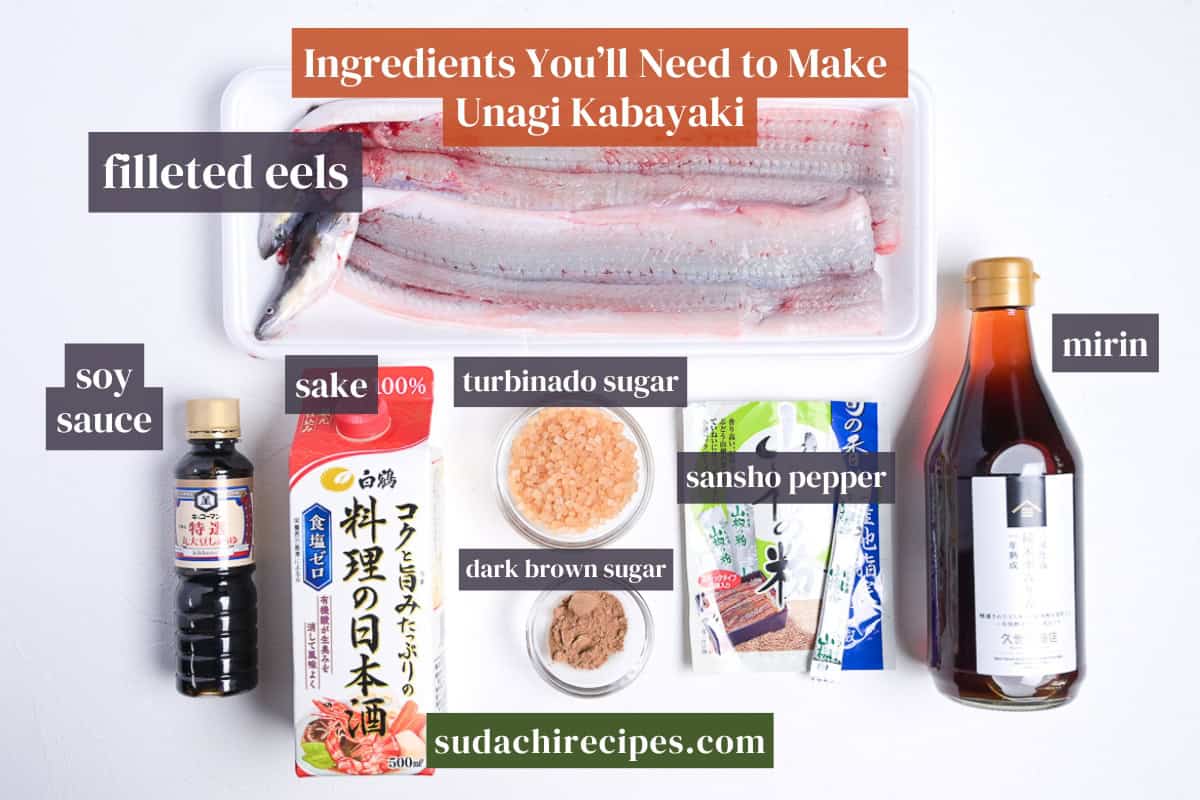
- Filleted eel: This is the whole reason you are here, so get the eel right and the rest is easy. Buy it already gutted and boned, a flat fillet you can rinse and slice on a board, not a live eel you have to wrestle and butcher.
- Sake (2 jobs): Sake shows up twice in this recipe and does 2 different things. In the tare it carries aroma and quietly pulls the fishy edge off the eel.
- The sugar blend: I use 2 sugars on purpose, a coarse light brown one and a small hit of a dark, molasses-heavy brown. That second sugar is doing all the work you cannot see. Plain white sugar alone gives you pure sweetness, and that sweetness jumps straight to the front and leaves the tare thin.
Substitution Ideas
- Eel → Conger eel or catfish: These work as a stand-in, and you will get something good on the plate. The reason eel is eel is that distinctive fat and that flavor, and neither of those comes along for the ride. You are making a fine grilled fish in a great tare. They’re just not eels.
- Koikuchi shoyu → Tamari: This is the one swap I actually like. Tamari is mostly or all soybeans, so it brings a little more body and a deeper gloss to the finished glaze, and it happens to be gluten-free if you need that. Use it at the same volume.
Have trouble finding Japanese ingredients? Check out my ultimate guide to Japanese ingredient substitutes!
How to Make My Unagi Kabayaki
If you prefer to watch the process in action, check out my YouTube video of this unagi kabayaki recipe!

Before you start (Mise en place):
- Rinse the filleted eel under cold running water and pat it dry.
- Lay a sheet of plastic wrap over your cutting board and set the eel on top. You are about to cut it on the wrap, not straight on the board, which helps you slide it with purpose.
- Preheat your grill or broiler partway through the steam step, not now. I will tell you exactly when, so you are not standing around waiting on a hot grill.
i. Add both sugars to a saucepan, set it over medium-low heat, and let the sugar start to melt.
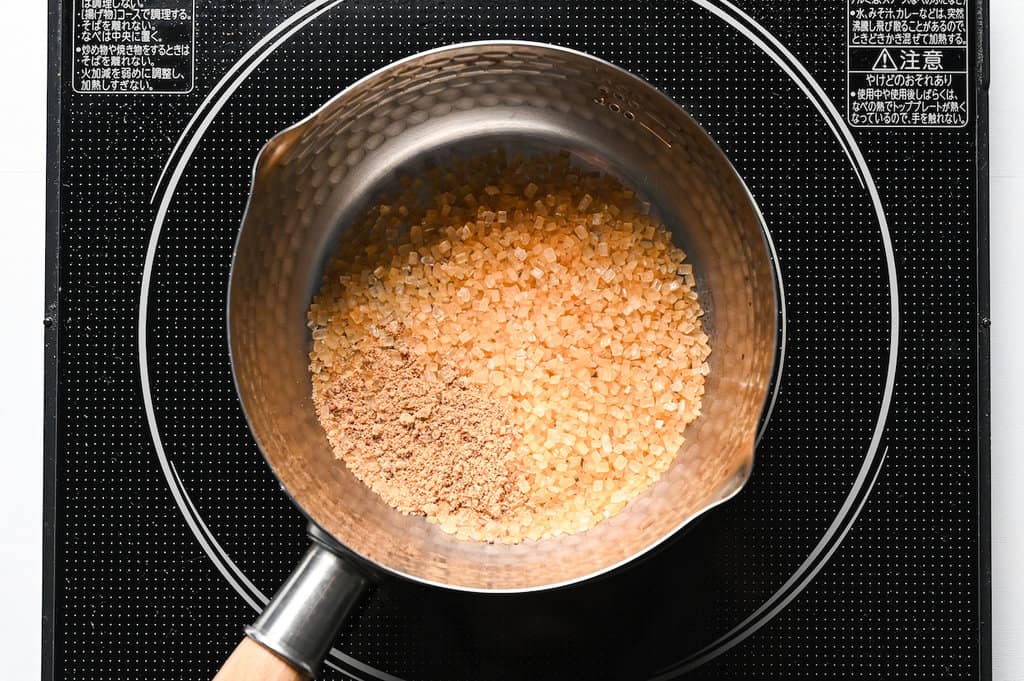
ii. The moment it starts melting, pour in the sake and the mirin. Bring it to a boil and let it cook a minute or 2, stirring now and then.
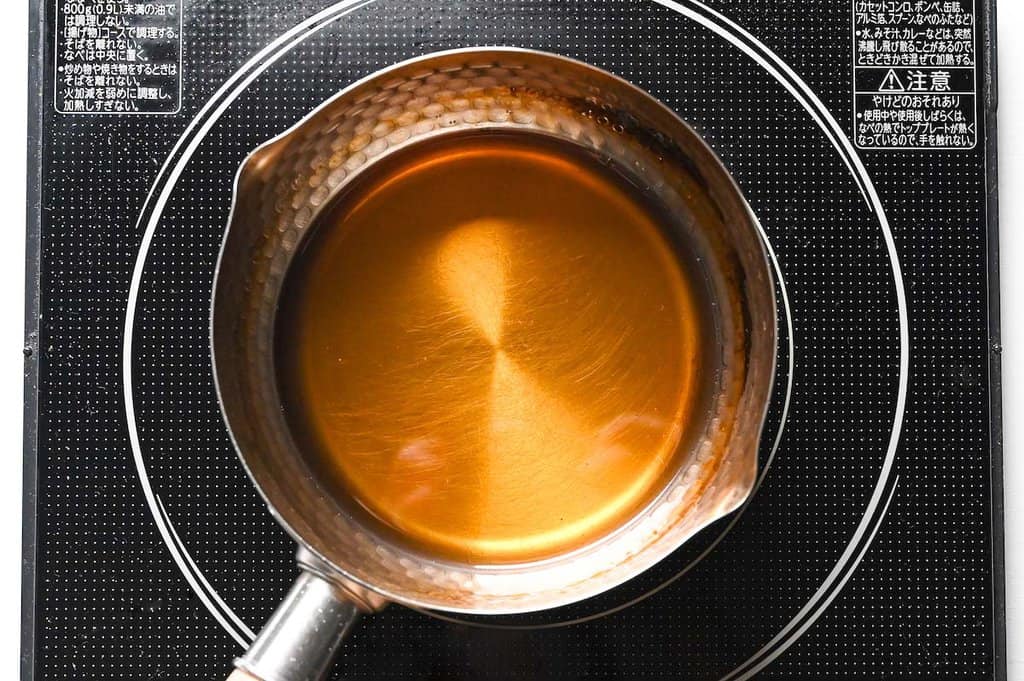
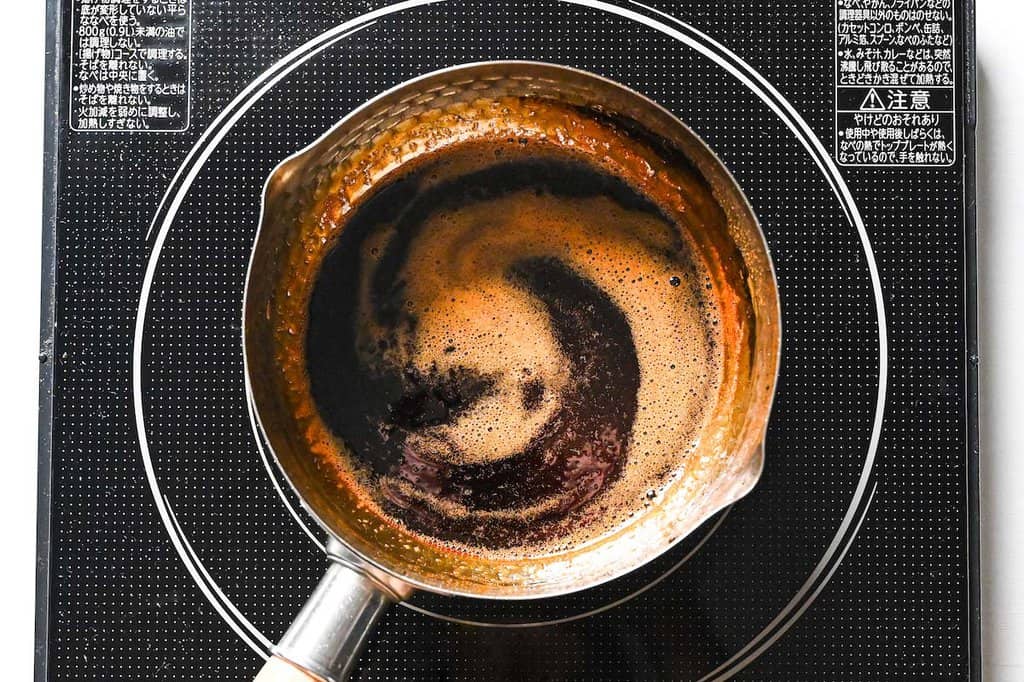
iii. Add the Japanese soy sauce and drop the heat to a simmer. Let it go until it thickens just slightly, stirring occasionally so the sugar does not catch and burn on the bottom. Pull it off the heat and let it cool while you deal with the eel.
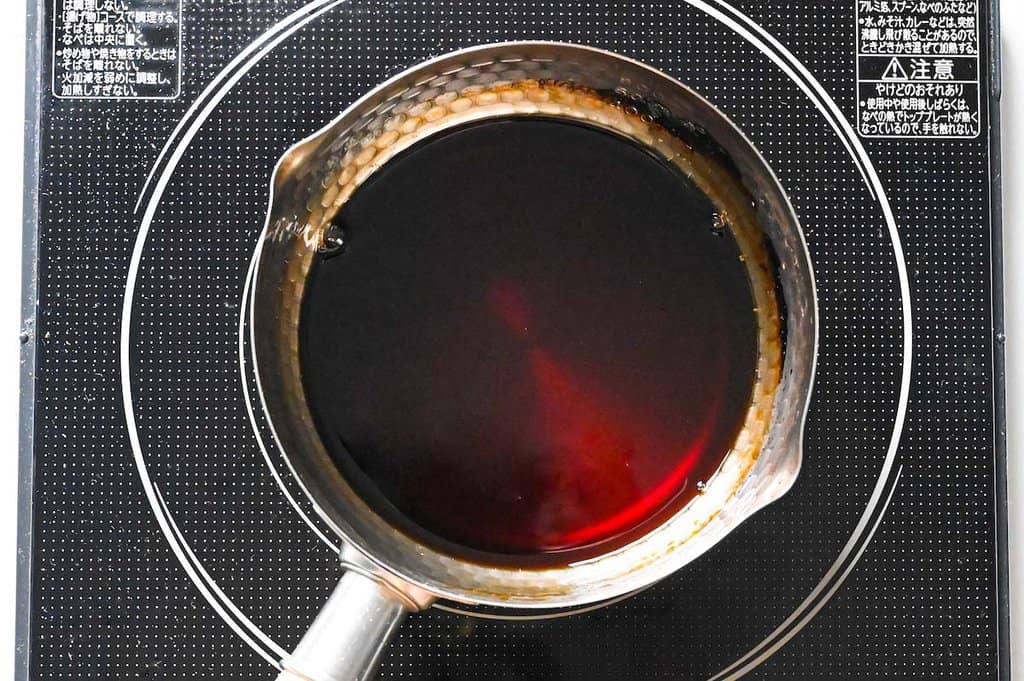
The tare needs to cool before it does its best work as a glaze. Warm off the stove it is thin and runs straight off the eel. Cooled, it thickens and clings, so each later coat sits where you brushed it instead of sliding into the pan. Make it first, walk away, come back to it.
i. With the eel flat on the plastic wrap, cut each fillet into 2 or 3 pieces. Press a sharp knife straight down into the spot you want to cut, then push the eel back and forth against the wrap to work the blade through.
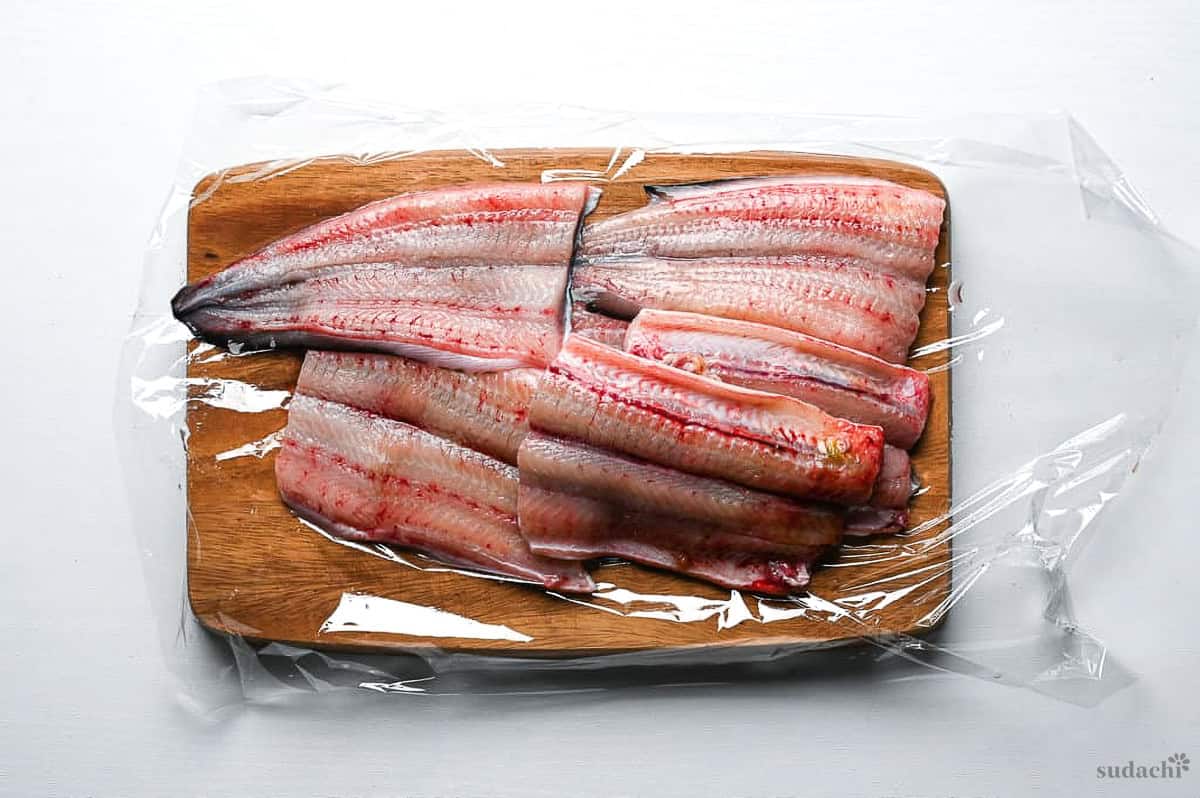
ii. You want flat, even pieces that will sit fully on the rack later. No folds, no curl.
i. Set the eel skin side down in a cold frying pan. Pour the sake straight in around it.
ii. Put the lid on, turn the heat to medium-low, and steam for a few minutes. You will hear it go quiet and gentle under the lid, not a hard sizzle. While it steams, this is the moment to fire up your grill or broiler on medium-high so it is hot when you need it.
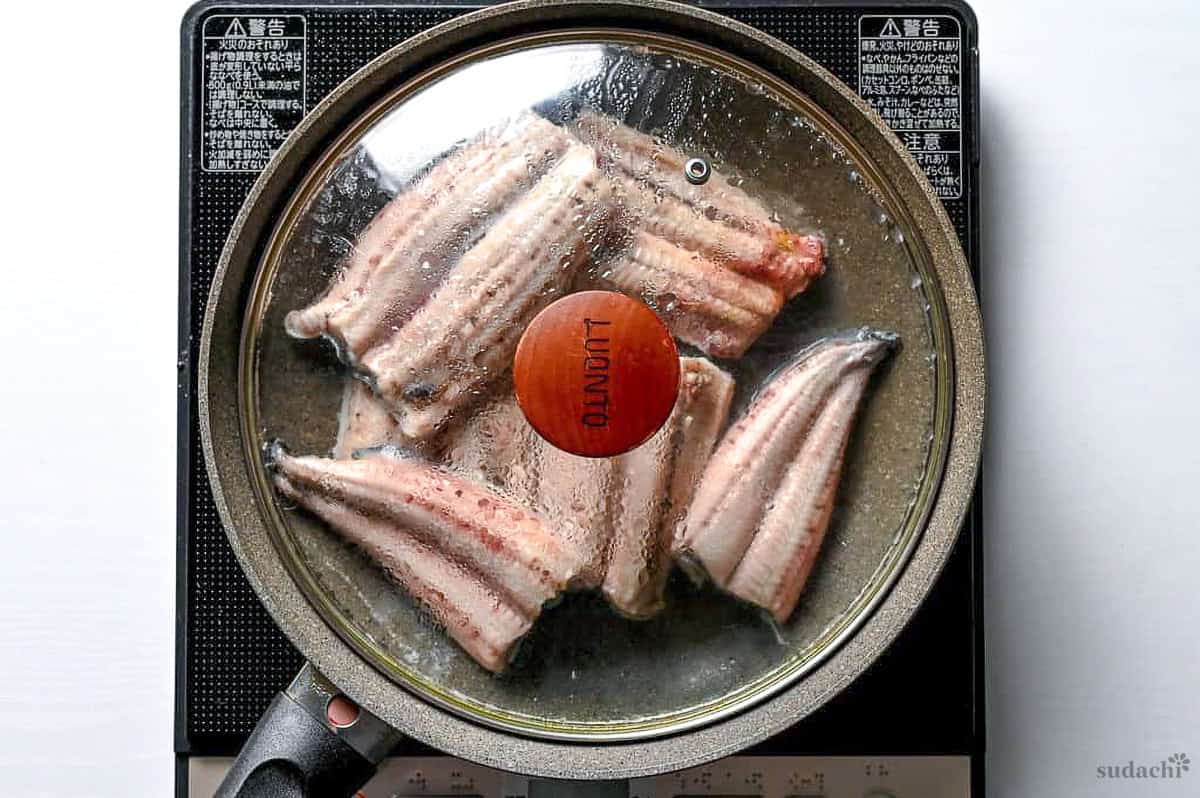
iii. Lift the lid. The eel has firmed up and softened at the same time, and that is exactly what you want.
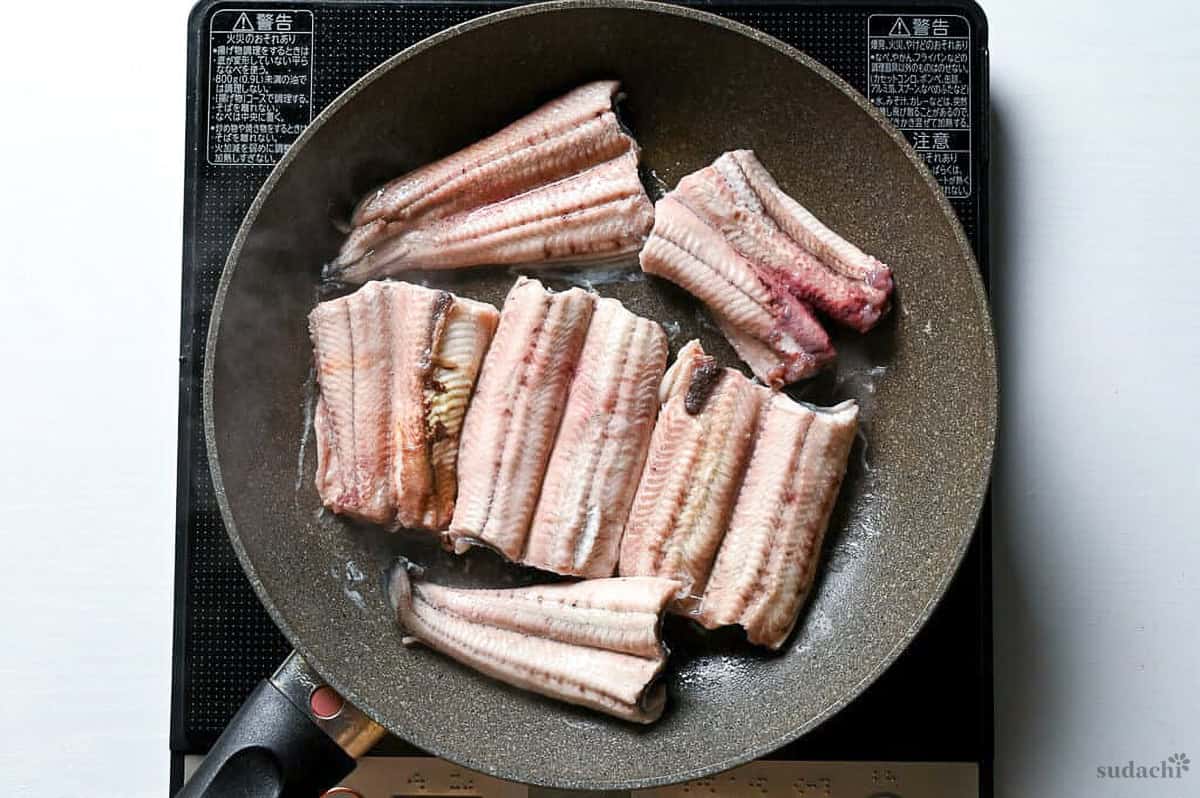
What the steam works on is the collagen. Eel skin and flesh are full of it, and gentle steam turns it soft and silky, the fluffy middle that makes Kanto-style eel melt. The fat stays. The texture changes. That is the whole trick.
i. Move the eel fillets onto a wire rack lined with foil. We’re grilling the flesh-side first. In my case, the heat source is up, so it’s facing up. Grill it for several minutes.
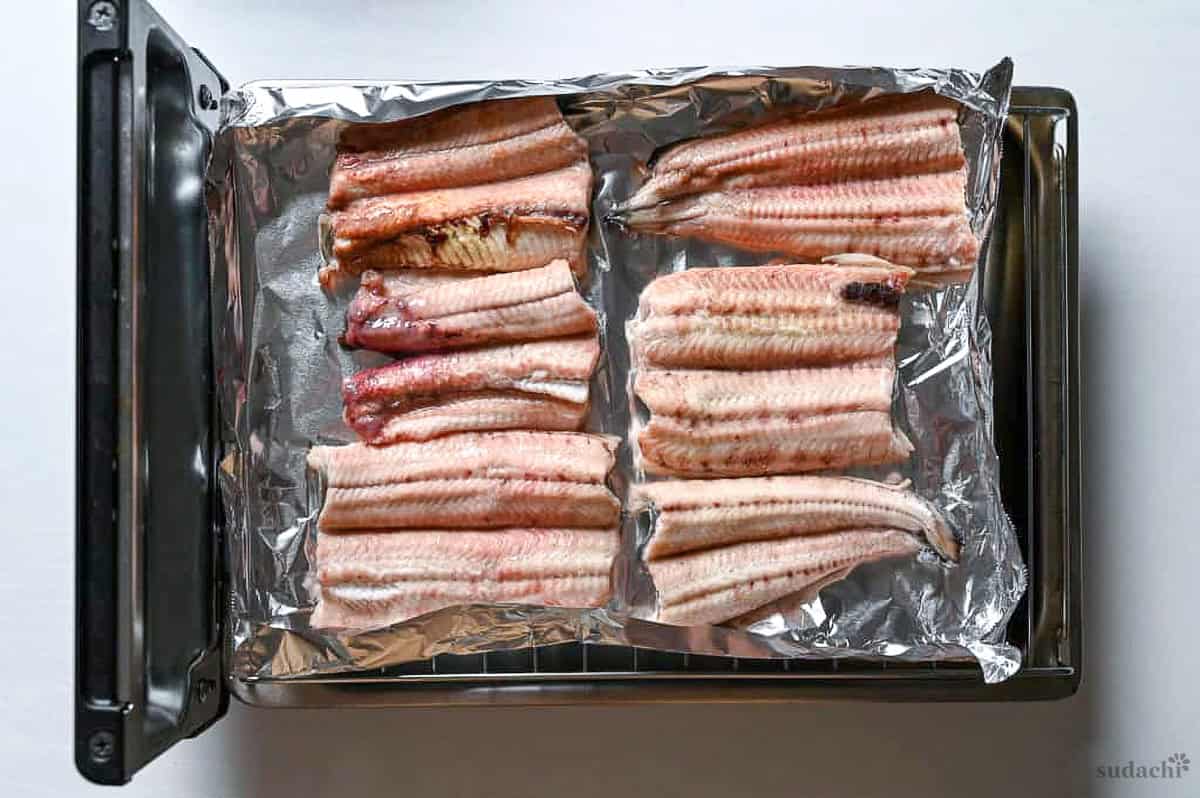
ii. Flip it and grill the skin side until it is lightly charred and you can smell the skin starting to crackle and catch. This is where the crisp comes from.
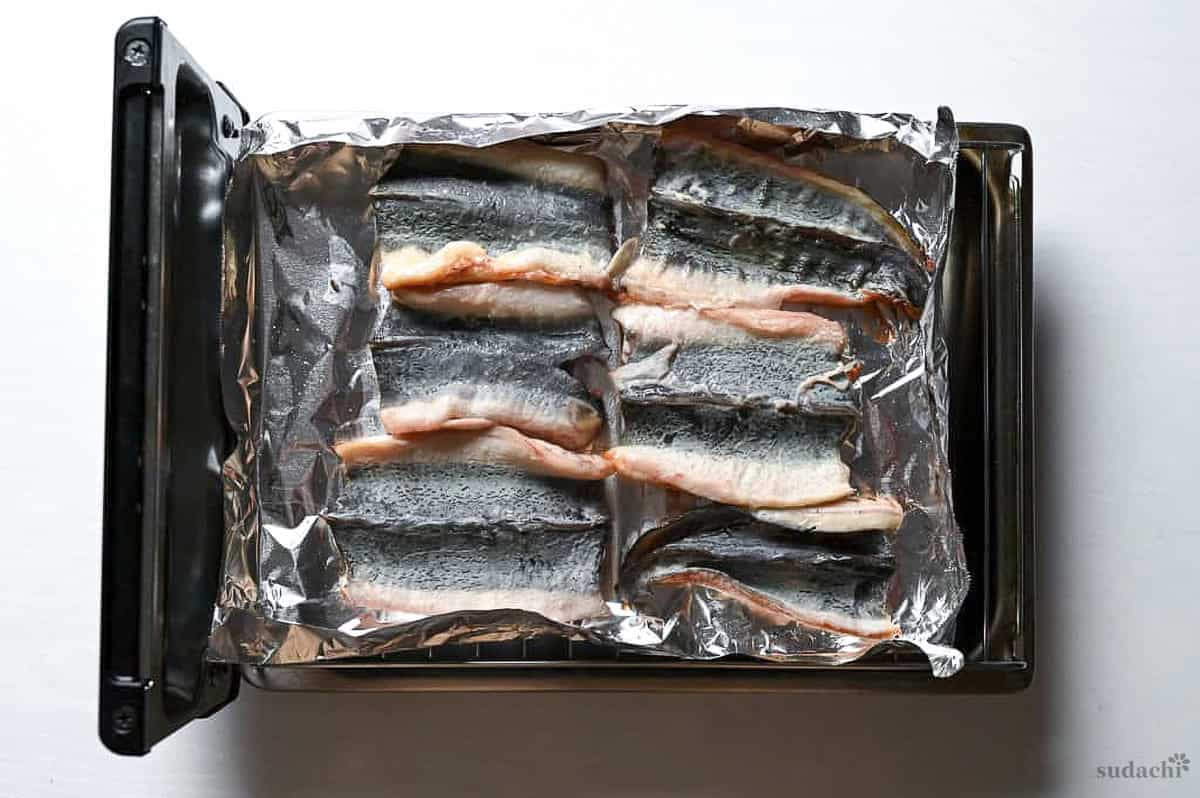
i. Brush the tare generously but evenly over the skin side, then grill it for about half a minute, just long enough to set.
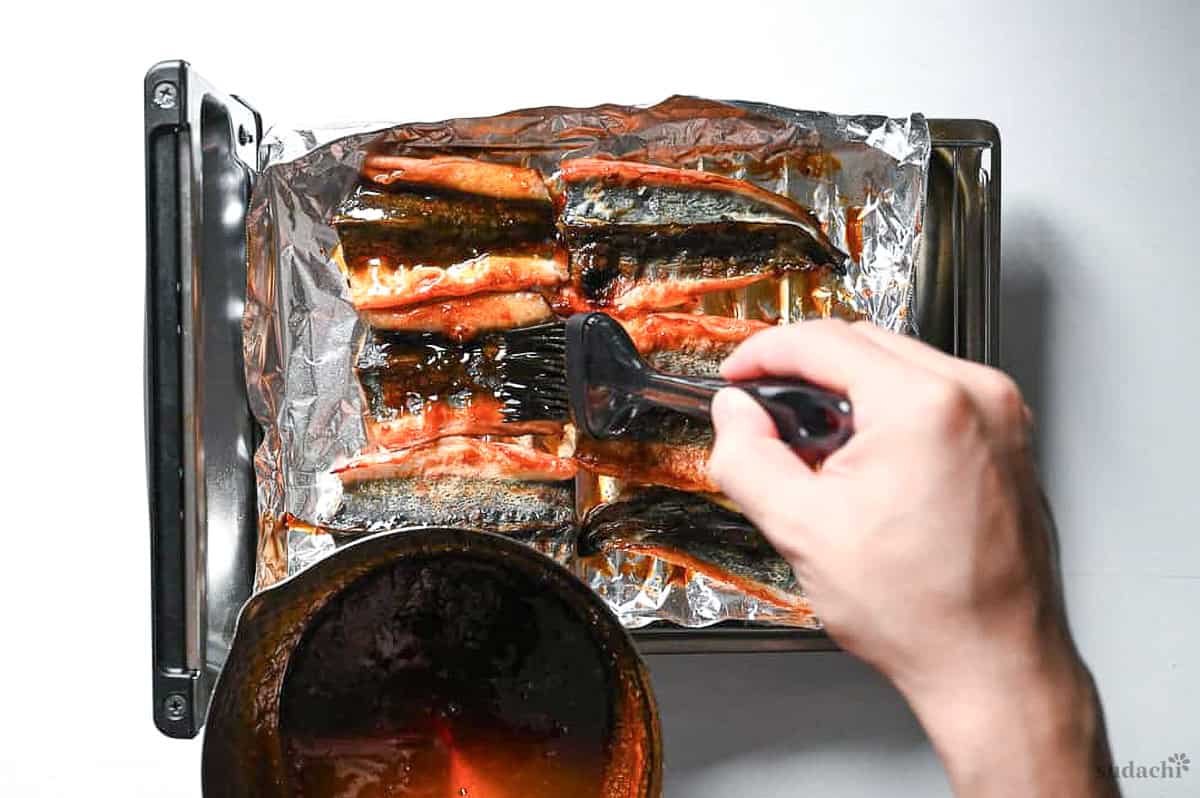
ii. Flip it, brush the tare over the flesh side, and grill that for about half a minute too.
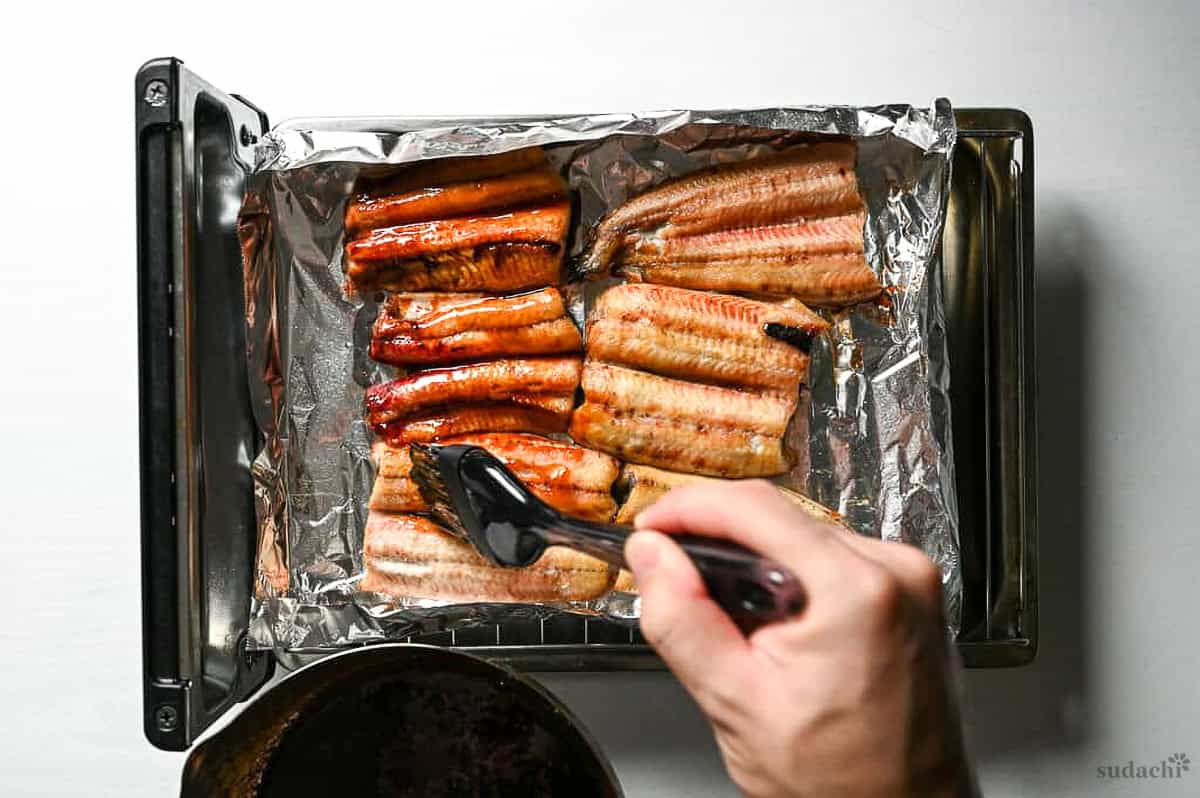
iii. Now repeat that brush-and-grill on each side 2 more times, 3 coats per side in all. Watch it like a hawk on these final passes.
1 heavy coat of a sugary tare scorches before it ever sets, and you end up with a bitter, burnt outside instead of a glossy one. Building it in thin layers lets each pass caramelize and grip before the next goes on, the way you would lacquer a glaze in coats rather than dumping it on at once. Color, then flavor, then shine.
The line you are watching for, every single time the eel goes back under the heat, is the gap between a deep glossy glaze and an actual burn. Push too far and it chars. Pull too early and the skin goes flabby and soggy. That one read is the single biggest line between success and failure in this whole recipe.
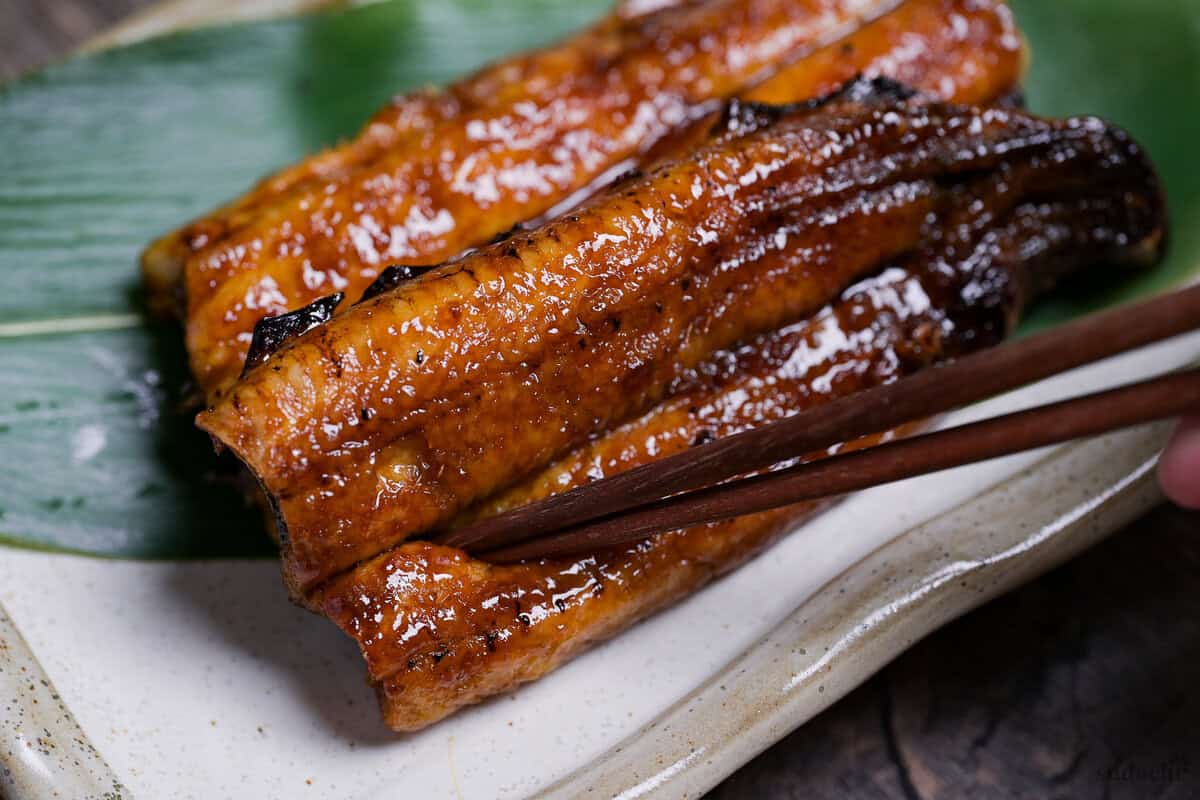
iv. Enjoy it as unagi don (rice bowl), unaju, hitsumabushi, or on its own with separate freshly cooked Japanese rice!

Essential Tips & Tricks
- Cool the tare before it ever touches the eel. Straight off the stove the tare is thin and slides right off into the pan. Cooled, it thickens and grips, so each coat actually stays where you put it. Build it first, walk away, and let it sit while you handle the eel.
- Keep the sake-steam quiet, not a hard sizzle. Under the lid you want a soft, gentle whisper of steam, not an aggressive crackle. Too much heat there and you firm the skin up hard before the gentle steam has done its slow work on the collagen, and you lose the soft middle the whole steam step exists to give you.
- Brush the tare in 3 thin coats, not 1 heavy one. A single thick layer of sweet tare burns before it sets and leaves you a bitter crust. Thin coats each get a chance to caramelize and grip before the next goes on. Color first, then flavor, then shine, the same logic as lacquering rather than dumping.
- Read the line between glossy glaze and burnt, every single pass. This is the one that separates a shop-level piece from a sad one. Push the heat too long and the sugary tare scorches into something bitter. Pull too early and the skin goes flabby instead of crisp. Watch it like a hawk on the final coats and learn to call that moment by eye.
- If you are on an oven broiler, get the eel close to the element and check often. I work on a Japanese gas fish grill, so I will not pretend to know your exact broiler. The honest translation is to move the rack near the heat and look at it constantly, because a broiler swings hotter and faster than you expect on those sugary final passes.
With these tips in mind, the gap between your kabayaki and the one at the eel shop becomes very small.
What to Serve With This Recipe
- Osuimono (Clear Soup)
- Japanese Pickles
- Easy Takuan
- Spinach Ohitashi
Unagi Kabayaki Troubleshooting
You grilled the skin side too long, or the sake-steam ran too hot before it. Crisp skin and hard skin are only a minute apart, so pull the skin off the heat the moment it is lightly charred and you can smell it crackle, not after. (And keep that steam quiet, a hard sizzle firms the skin up before the gentle steam has done its job.) Aim for a deep glossy edge, not a blackened one.
Flat tare almost always means it was under-reduced or you leaned on plain white sugar alone. Simmer it a little longer until it coats the back of a spoon, and make sure you are using the 2-sugar blend, the dark molasses-heavy sugar is what gives the tare its rounded depth. White sugar by itself jumps to sweet and leaves nothing underneath.
You brushed on 1 heavy coat instead of building thin ones. A thick layer of sugary tare scorches before it ever sets. Brush it on in 3 thin passes per side, grilling about half a minute between each, so each coat caramelizes and grips before the next goes on. (This is the single most common way a good piece of eel gets ruined at the finish line.)
More Japanese Fish Recipes
- Buri no Teriyaki (Yellowtail)
- Saba no Shioyaki (Grilled Mackerel)
- Sakana no Nitsuke
- Miso Glazed Salmon
Hungry for more? Explore my Japanese fish recipe collection to find your next favorite dishes!
Did You Try This Recipe?
I would love to hear your thoughts!
💬 Leave a review and ⭐️ rating in the comments below. 📷 I also love to see your photos – submit them here!
Unagi Kabayaki (Japanese Grilled Freshwater Eel)

Ingredients
For the tare:
- 3 tbsp turbinado sugar coarse light-brown zarame
- 1 tsp dark brown sugar muscovado or similar
- 5 tbsp sake
- 5 tbsp mirin
- 5 tbsp Japanese soy sauce (koikuchi shoyu)
For the eel:
- 300 g filleted freshwater eels buy gutted and boned, conger eel or catfish can stand in
- 2 tbsp sake
The ingredient brands and tools I trust are in my Japanese pantry guide and my cooking tools guide.
Can’t find certain Japanese ingredients? See my substitution guide here.
Instructions
- Add 3 tbsp turbinado sugar and 1 tsp dark brown sugar to a small cold saucepan. Heat over medium-low. When the sugar starts to melt, pour in 5 tbsp sake and 5 tbsp mirin. Bring to a boil and let it bubble for 1-2 minutes, stirring occasionally.

- Reduce the heat to a simmer and add 5 tbsp Japanese soy sauce (koikuchi shoyu). Stir occasionally to prevent burning and simmer until thickened to a thin syrup-like consistency, about 10 minutes.
- Scoop out any foam on top, and remove the pan from the heat. Leave to cool while you prepare the eel. The sauce will thicken more as it cools.

- Wash 300 g filleted freshwater eels under cold running water, and then pat dry with kitchen paper. Cover a cutting board with plastic wrap, and place the eel flesh-side up on the board. Press the a sharp knife on the area you want to cut, then carefully push the eel fillet back and forth while pressing the knife down. Cut in half or thirds.

- Arrange the eel skin-side down in a large frying pan with a lid. Pour 2 tbsp sake around the pan, then cover with the lid and heat over medium-low. When it starts to steam, set a timer for 3 minutes and start to preheat your grill/broiler on medium-high.
- Cover a wire rack with foil and place it on top of a baking tray. Once the eel has finished steaming, arrange it on the foil in a single layer with the flesh-side facing towards the heat source. Slide it under the grill for 6 minutes.
- Slide the tray out, flip the eel fillets over and push back under the grill. Grill the skin side for 5 minutes or until lightly charred.
- Pull the eel out again, and brush the skin with a thin even layer of the sauce. Slide it under the grill for about 30 seconds (be careful not to let it burn), then flip the fillets, brush the flesh side with sauce and return to the grill again.
- Flip and repeat until the skin and flesh sides have been brushed with sauce and grilled three times each (6 times in total).
- Serve with rice, clear soup and pickles for a traditional Japanese meal. Enjoy!


I have had unagi in Japan and really loved it, the sad fact is that here in the UK it is regarded as an endangered speices therefore is a highly regulated market.
So typical of many once abundant and cheap food species, like oysters, they are now regarded as a rare luxury food. I understand that it is illegal here to trade in live eels.
I only say this as to not give the impression of them being easily available, at least here in the UK.
Hi Vincent,
Thank you for the comment! The situation is actually not too far in Japan. I’ve actually never had wild eel even once in my whole life! More than 99% of what circulates here is farmed, and the wild stuff basically only turns up at the very high-end restaurants. The reason eel is still so common here at all probably comes down to the size of the market and the eel-farming techniques built up over more than 100 years! 🙂
Yuto