



My zuke don marinade works a little magic on sashimi, making it taste even better. Something this easy has no business being this good.
Boil the mirin and sake to cook off the harsh alcohol smell, mix in an equal measure of soy sauce, then let it cool. Add a small piece of kombu (dried kelp), arrange the tuna in one layer, and press plastic wrap onto it. Even with too little marinade to cover the fish, every side gets a soak. Want to see how such a small amount reaches it all?

Maguro zuke don
Recipe Snapshot
- What is it? In maguro zuke don, warm rice is topped with sashimi-grade tuna that has soaked in a soy sauce-based marinade.
- Flavor profile: Lean tuna, with enough flavor to stand up to the marinade, leads. Soy sauce salts the fish and rice, mirin adds mellow sweetness, and umami from the kombu sits underneath.
- Why this recipe works: Equal parts soy sauce, mirin and sake let the mirin soften the salt. Plastic wrap pressed against the coated tuna means less marinade, while kombu supplies extra umami.
- How to make it: Boil the mirin and sake alone for 1 minute, add soy sauce and cool. Coat the tuna, wrap and chill 30 minutes. Serve on warm rice with a little marinade.
- What to expect: Allow 15 minutes prep, 5 to cook and 30 hands-off in the fridge, 50 in all. The one catch is still-warm marinade, which turns the tuna’s surface white and firm.

What Is Maguro Zuke Don?
Maguro zuke don (マグロ漬け丼) is a Japanese rice bowl topped with tuna sashimi that has been marinated in soy sauce. The rice is plain and white, and the tuna develops a deeper flavor as it releases a little moisture into the marinade.
Tuna isn’t the only choice for zuke don in Japan. Sea bream, yellowtail and other sashimi can be marinated and served over rice just as easily. With little more to do than slice the fish and leave it to soak, it’s an easy bowl to make at home.
The word zuke comes from sushi shops in Edo, as Tokyo was once known. To preserve lean red tuna, the shops soaked it in soy sauce. Zuke means something soaked, and this practice is said to have given sushi chefs their shorthand for both the marinated tuna and the sushi made with it. The practice is usually traced to the 1830s, when tuna was cheap and plentiful in Edo and sushi shops began storing slices in soy sauce. In the late 1800s, ice-cooled iceboxes began to reach sushi shops, and serving tuna raw gradually became the norm. Marinating continued as a way to flavor the fish. That’s also the purpose of today’s 30-minute soak in the fridge. It’s for seasoning, rather than preservation.
Japan’s best-known raw tuna bowls, maguro don (tuna bowl) and tekka don, are hard to tell apart by looking at them. Tekka don traditionally pairs lean red tuna with sushi rice. Maguro don can use any cut of tuna and usually comes on plain white rice. Those are the main distinctions, and they’re subtle enough that many people in Japan don’t know the difference either. Zuke don also uses plain white rice with no vinegar.
Soy sauce, mirin and sake make up the usual zuke marinade. I add a small piece of kombu to mine, because I want even more umami in there. Some methods call for enough marinade to submerge the tuna entirely. I don’t sink mine. I use a smaller amount and press plastic wrap onto the fish to keep it soaking.
Zuke Maguro Don Ingredients
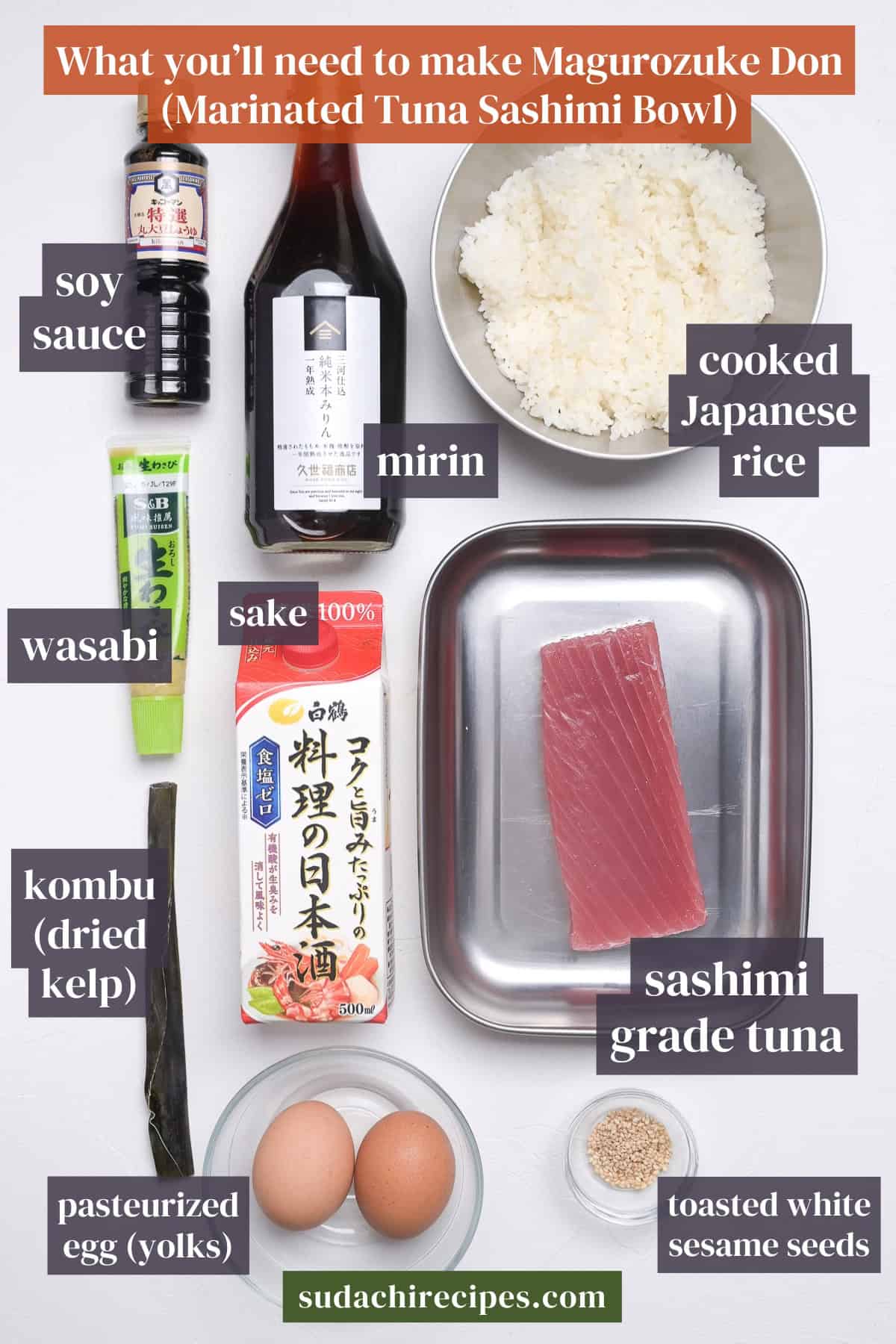
- Sashimi-grade tuna: Start with the label: it must say the tuna is suitable for eating raw. Leave any package that doesn’t on the shelf. Check the species as well, since ahi can mean either yellowfin or bigeye. Most cuts work here. Look for flesh with a glossy, almost translucent surface and no puddle of liquid in the tray.
- Kombu (dried kelp): An ordinary piece of dried kombu adds umami as it sits in the cooled marinade. Online shopping is an option if you can’t find it nearby. In our survey of Japanese home cooks living abroad, one respondent in Nevada and Arizona reported buying Shirakiku kombu online.
- Sake: It softens the fishy smell of raw tuna and brings more umami to the marinade. Choose drinking sake without added salt. A cheap junmai is more than enough for the job.
Substitutions, Variations, and How to Customize
You can still make this bowl on a day when you can’t find tuna.
Substitutions:
- Sashimi-grade tuna → Other sashimi-grade seafood: Give salmon, sea bream, scallops or other seafood labeled for eating raw the same 30 minutes in the marinade, then serve over rice. Once your soy sauce, sake and mirin are good ones, I truly believe raw ingredients from close to home often taste better.
- Kombu → Korean dried kelp (dashima): Korean dried kelp is almost identical to Japanese kombu and works the same way in the marinade.
- Japanese short-grain rice → Calrose medium-grain rice: Calrose is a medium-grain japonica variety that cooks much like Japanese rice, with slightly less stickiness. Serve it freshly cooked, since the grains separate more quickly once cool.
- Japanese short-grain rice → Korean short-grain rice: Korean short-grain is an easy choice here. It belongs to the same japonica type and closely matches Japanese rice in texture and aroma.
- Shiso → Leave it out: You can make a good bowl without this fresh green herb topping, though you will miss its bright aroma.
- Egg yolk → Skip it: It’s an optional topping.
Substitutions that I don’t recommend:
- Chinese dark soy sauce instead of Japanese soy sauce: Its sweetness and thickness change the marinade completely. Choose Chinese light soy sauce if you’re using a Chinese variety.
- Vinegar and sugar instead of mirin: Vinegar brings a sourness that unbalances the marinade.
- Usukuchi (light-colored) soy sauce instead of standard Japanese soy sauce: Usukuchi is lighter in color and saltier than standard Japanese soy sauce, so it produces paler marinated fish and tends to let a little fishiness show through.
Have trouble finding Japanese ingredients? Check out my ultimate guide to Japanese ingredient substitutes!
Variations:
- Over sushi rice: Use sushi rice for a bowl similar to tekka don.
- No kombu: The marinade works with soy sauce, mirin and sake alone, though leaving out the kombu means a little less depth and umami.
- A quick scald before marinating: Briefly dip the tuna in boiling water, just a few seconds, and immediately transfer it to ice water. The thin layer this forms on the surface limits how deeply the marinade penetrates, helping keep the fish from getting too salty. It also removes any fishy smell.
- Finish it as ochazuke: When you’ve eaten about half the bowl, add hot dashi or tea to the remainder to make chazuke, rice in a hot soup. The tea or dashi thins the flavor, so add a little extra marinade to bring the salt back.
How to Customize:
- Less sweet: I make a fairly sweet marinade. For less sweetness, try 2 parts soy sauce, 1 part mirin and 1 part sake, a common starting ratio for marinated tuna.
- Ginger: A little grated ginger gives the marinade a fresh, sharp heat.
- Red chili rings: Add a few rings to the marinade for a tingling heat that arrives just after each bite. Choose these or wasabi, since they clash.
- Yuzu kosho: A small amount of this Japanese citrus-chili paste stirred into the marinade adds yuzu fragrance and a fresh green heat. It competes with wasabi too, so use only one.
- Toasted sesame oil: Just a few drops in the marinade give the bowl a nutty sesame scent.
How to Make My Maguro Zuke Don
If you prefer to watch the process in action, check out my YouTube video of this recipe for a complete visual walkthrough!

i. Start your rice cooker first if that’s how you’re cooking the rice.
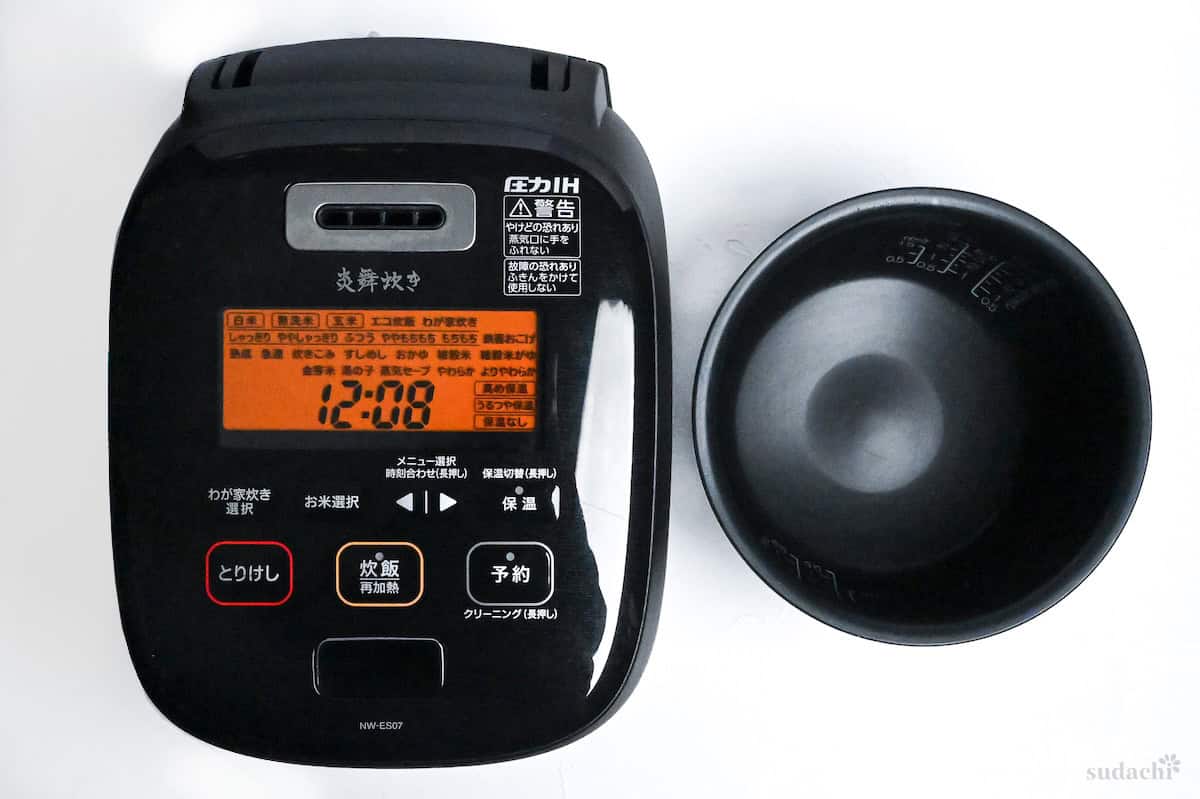
ii. For rice cooked in a pot, begin with a 30-minute soak in water. Cook it while the tuna marinates.
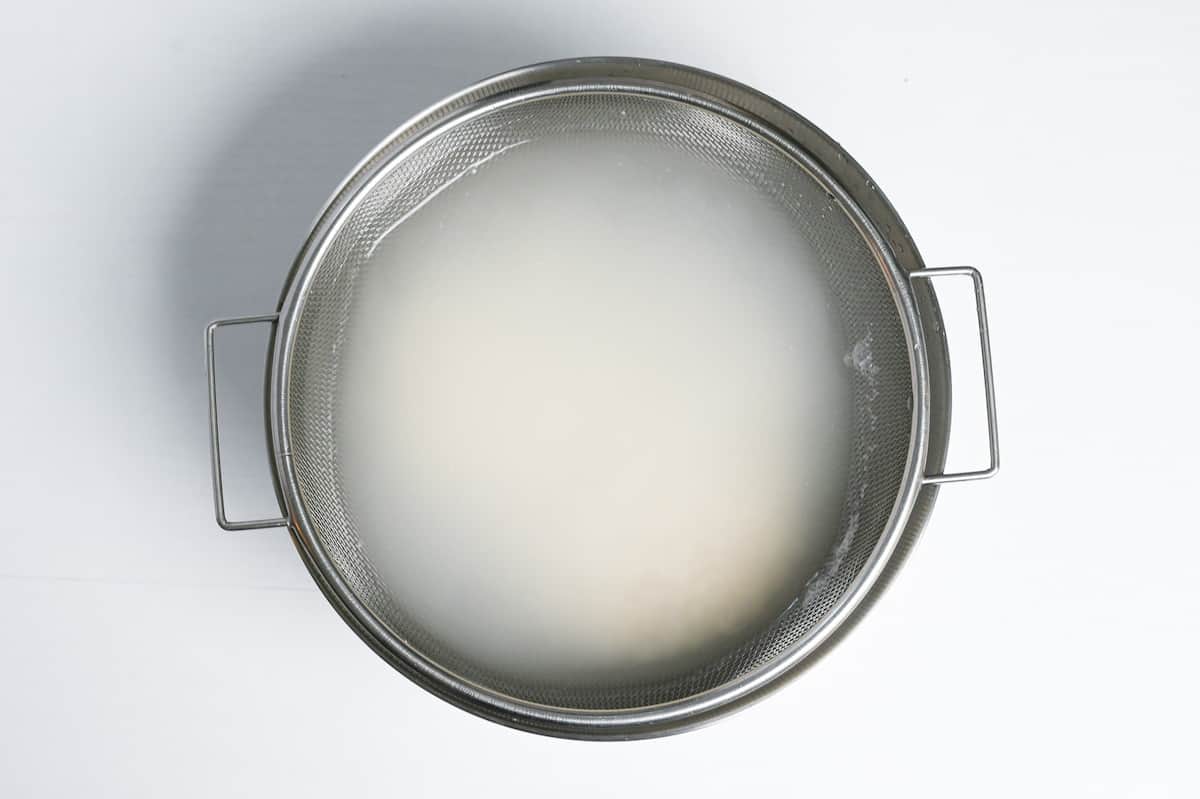

i. Put the mirin and sake in a small saucepan over medium-high heat.
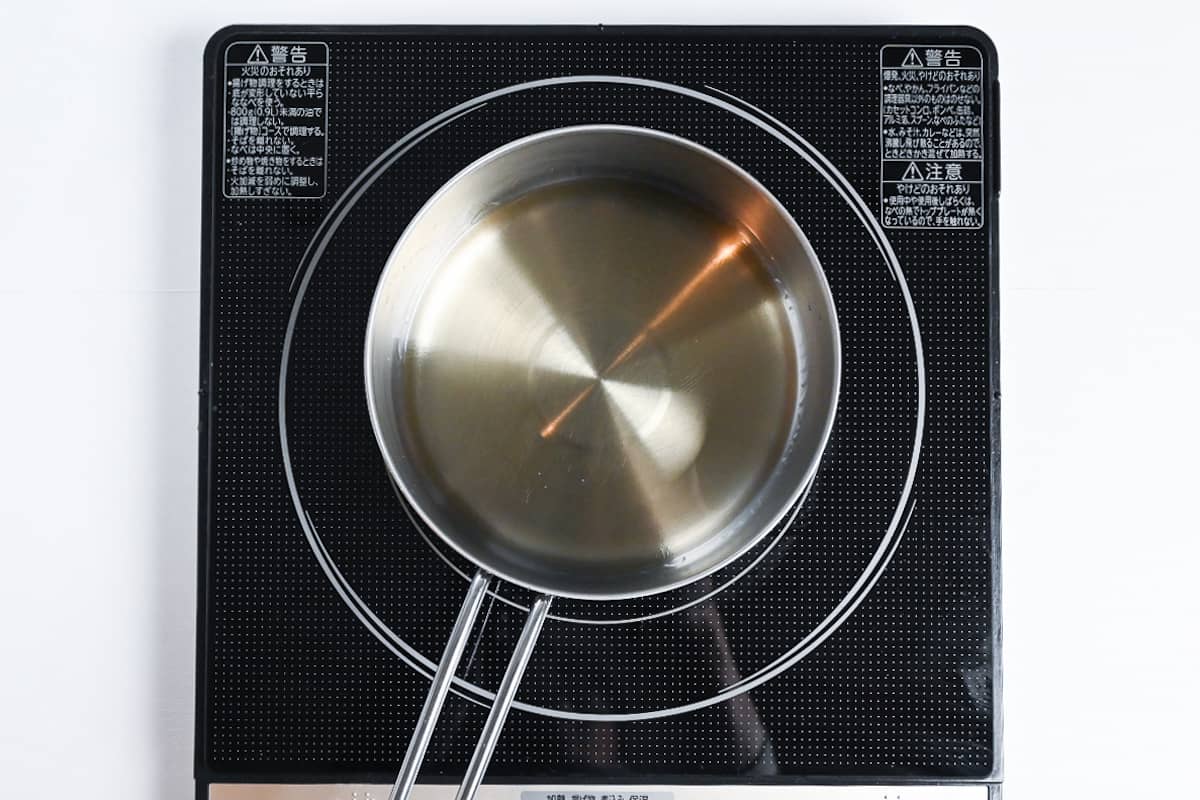
ii. Bring to a boil, keep it bubbling for 1 minute, then switch off the heat. This gets rid of the alcohol smell in the mirin and sake, a step known in Japanese cooking as nikiri.
iii. Pour in the soy sauce and swirl the saucepan until mixed.
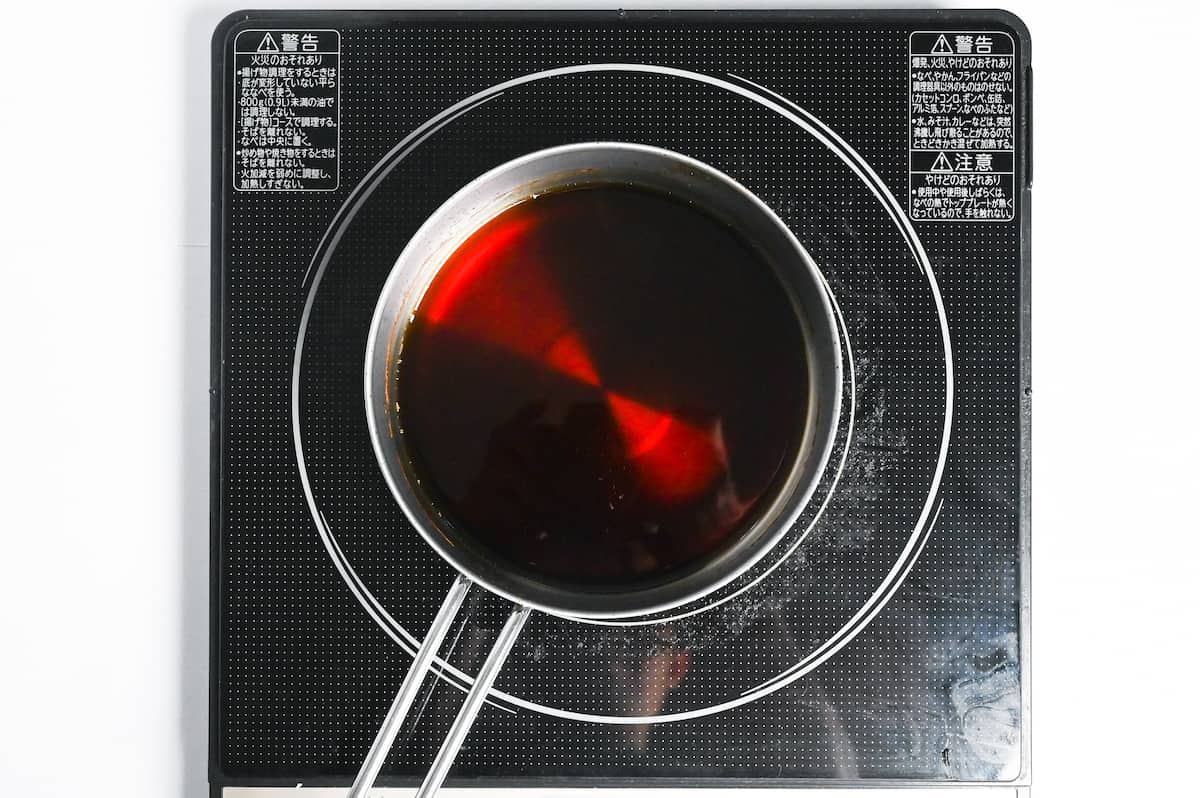
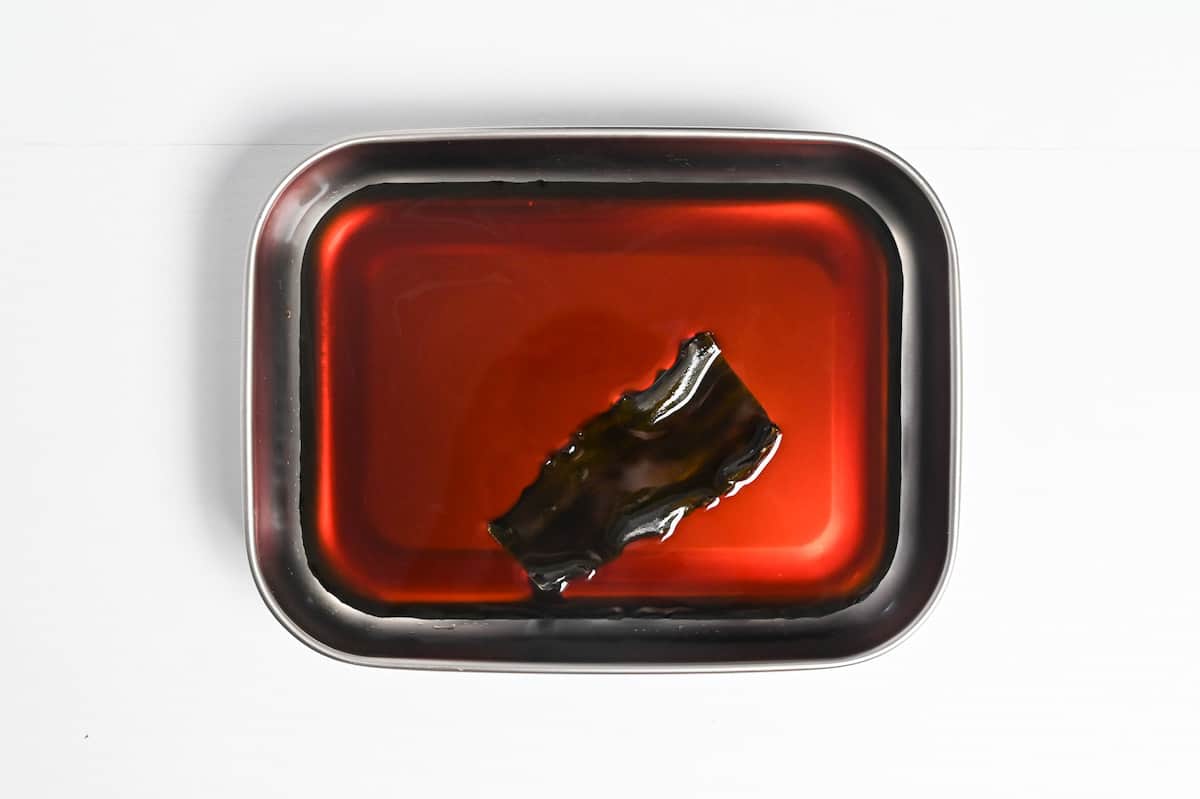
i. Transfer the marinade to a wide container to cool to room temperature.
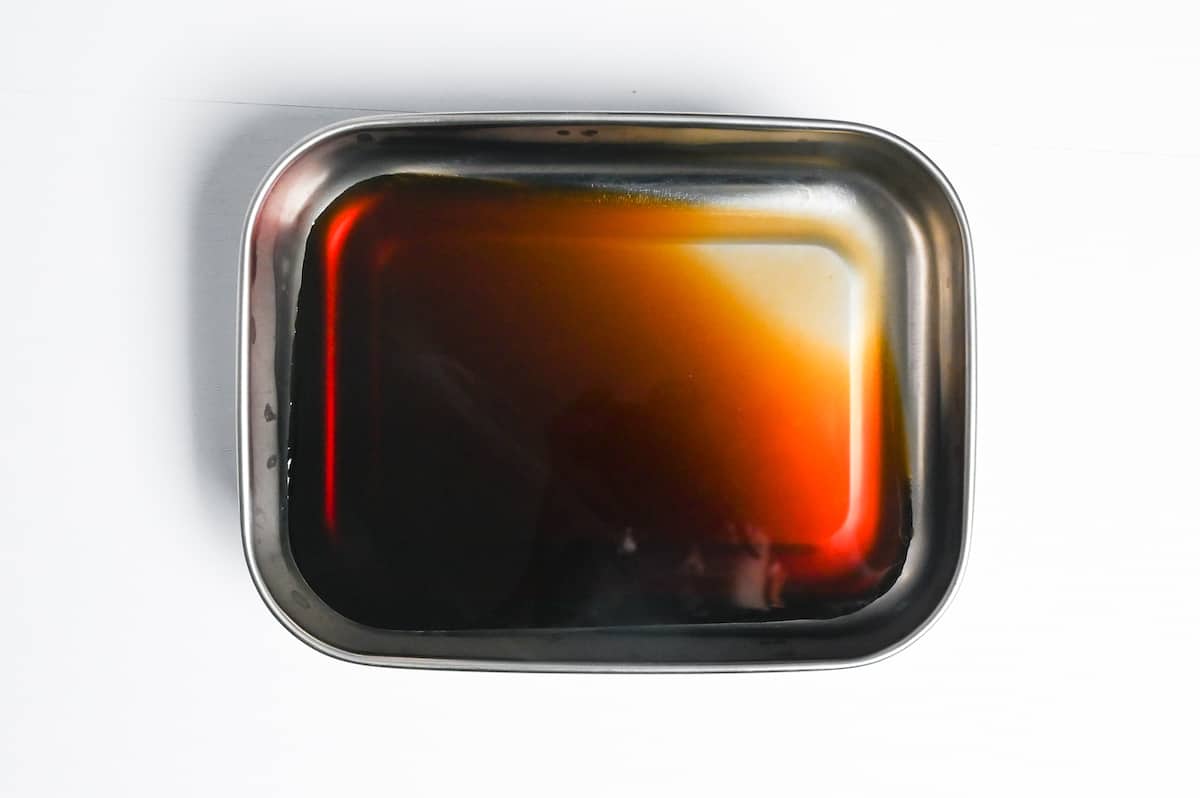
It should no longer feel warm. If you add tuna to warm marinade, the areas it touches turn white and firm.
Tip: To speed up cooling, place the container in a bowl of cold water or ice water.
ii. Use the cooling time to cut the tuna block into sashimi slices or cubes.

i. Submerge the small piece of kombu in the cooled marinade.
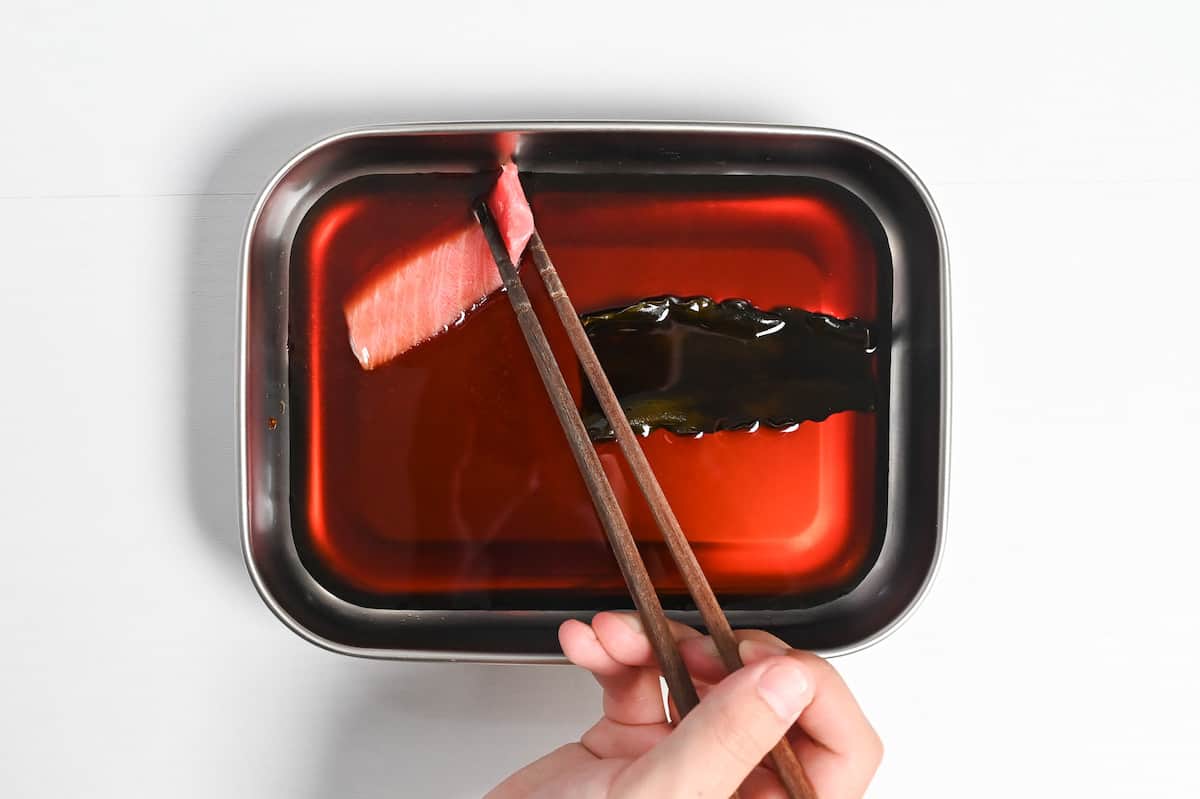
ii. Coat each slice of tuna on both sides by dipping it into the marinade, then arrange the slices in one layer without overlapping.
iii. Press plastic wrap against the tuna, keeping it in direct contact with the fish, and refrigerate for 30 minutes.
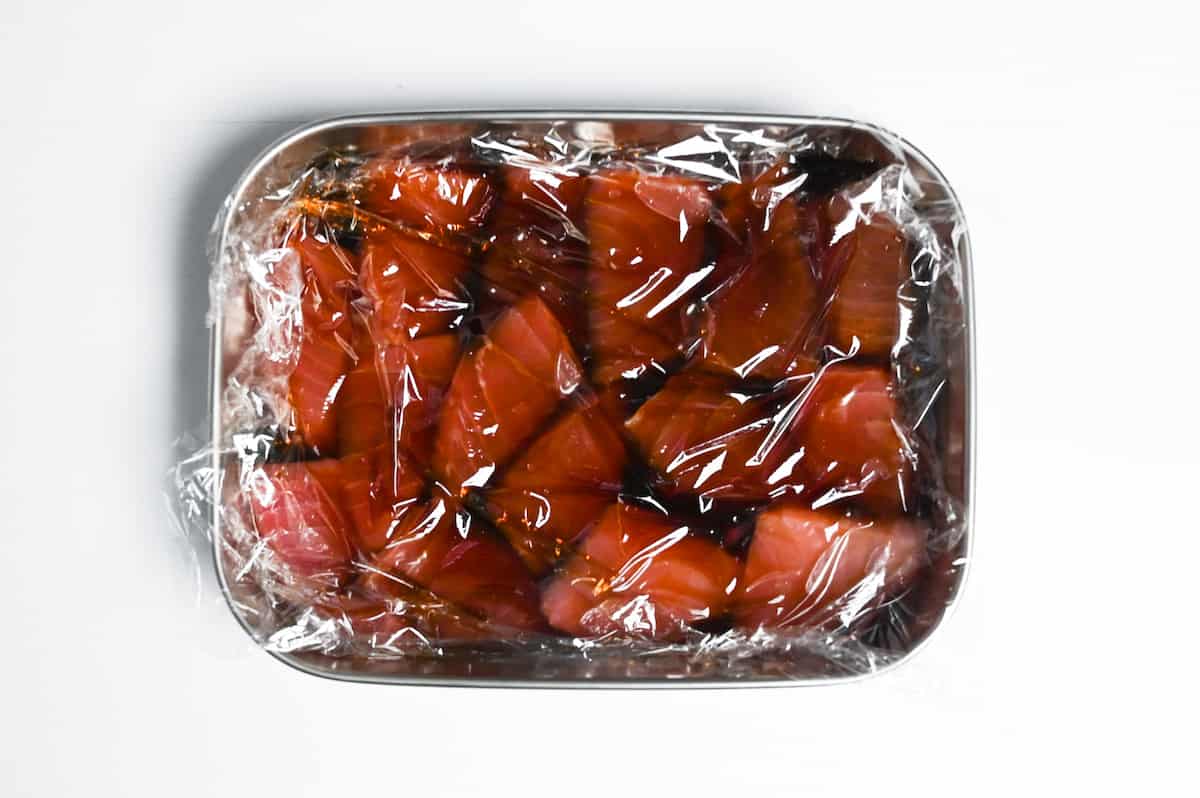
A longer soak is fine if that’s what you prefer. As time passes, the fish darkens and its flavor becomes stronger, which means the salt is more noticeable and the tuna’s own taste less so. Where you stop is up to you.
i. After 30 minutes, remove the kombu from the marinade. Leave it out of the finished bowls.
ii. Divide the rice among bowls. Place the marinated tuna on top of the rice.
iii. Drizzle a little remaining marinade into each bowl.
iv. Finish with white sesame seeds, sliced shiso and wasabi. Add a pasteurized egg yolk if you’d like one.



Tips for the Best Zuke Don
- Marinating cannot make fish safe to eat raw. Parasites in fish survive soy sauce, wasabi and salt. Killing them requires thorough freezing or cooking, and a home freezer might not reach a low enough temperature. If the tuna isn’t labeled for raw eating, a soak in this marinade won’t make it suitable for sashimi.
- Give frozen tuna a slow thaw in ice water. Place the block in a bag and immerse it in ice water for about an hour, until it bends. Pat dry, wrap in paper towels, and refrigerate for another 3 to 5 hours to finish thawing. For a quicker option, use 3% salt water at 40°C/104°F for 2 to 3 minutes, then wrap and refrigerate for about an hour.
- Choose a pasteurized egg for the raw yolk topping. On most US shell-egg cartons, a boxed instruction says to cook eggs until the yolks are firm, which means those eggs aren’t pasteurized. For a raw topping, buy eggs pasteurized in the shell. It’s hard to do reliably at home, so look for them when shopping.
Read the tuna and egg labels at the store, thaw the fish by either method, and your prep before marinating is done.
Storage & Meal Prep
Fridge: Eat the tuna the day you marinate it. Marinating doesn’t extend the package date.
Freezer: I don’t recommend freezing it. Most sashimi tuna was previously frozen, and refreezing releases juices, making it watery.
Meal prep: Chill the marinade the night before or that morning to skip the cooling wait. Add kombu to the cold marinade on the day.
What to Serve With Maguro Zuke Don
Maguro Zuke Troubleshooting
Overlapping slices or loose plastic wrap kept the marinade from reaching every surface. The parts covered by another slice, or left beneath lifted wrap, stayed pale. Separate the slices into a single layer with their pale sides facing down. Press the wrap back against the fish and let it finish marinating for the remaining time.
For your next batch, slice the tuna and use a paper towel to blot away any juices on the surface before marinating. If the block still smells fishy, dip it in boiling water for a few seconds, then immediately into ice water to remove the smell before the soak.

More Japanese Fish Recipes
- Kaisen Donburi Seafood Bowl
- Negitoro Don Minced Tuna Bowl
- Unagi Donburi Eel Rice Bowl
- Salmon Sashimi Don
After this tuna bowl, try more ways with raw, grilled and simmered fish in my Japanese Fish Recipes.
Did You Try This Recipe?
I would love to hear your thoughts!
💬 Leave a review and ⭐️ rating in the comments below. 📷 I also love to see your photos – submit them here!

Maguro Zuke Don (Marinated Tuna Sashimi Bowl)

Ingredients
- 2 portions cooked Japanese short-grain rice about 200 g per bowl
- 3 tbsp mirin
- 3 tbsp sake drinking sake with no added salt
- 3 tbsp Japanese soy sauce (koikuchi shoyu)
- 3 g dried kelp (kombu) any ordinary kind
- 150-200 g sashimi-grade tuna labeled for eating raw, any cut, or other seafood with the same label
- 1 tsp toasted white sesame seeds
- 2 pasteurized egg yolks optional
- perilla leaves (shiso) finely sliced, optional
- wasabi paste
The ingredient brands and tools I trust are in my Japanese pantry guide and my cooking tools guide.
Can’t find certain Japanese ingredients? See my substitution guide here.
Instructions
- Pour 3 tbsp mirin and 3 tbsp sake into a small saucepan and bring to a boil over a medium-high heat. Boil for 1 minute and then turn off.

- Add 3 tbsp Japanese soy sauce (koikuchi shoyu) and swirl around. Transfer to a wide container and allow to cool to room temperature. (You can speed up the process by resting the container of the marinade over a bowl of ice or cold water.)

- Once the marinade is cool to the touch, place 3 g dried kelp (kombu) in it.

- Dip 150-200 g sashimi-grade tuna pieces to coat both sides and then lay them flat in 1 layer without overlapping.
- Cover with the plastic wrap making direct contact with the tuna and marinate in the refrigerator for 30 mins.
- Once 30 mins have passed, lift the kombu out of the marinade. Dish up the warm rice and arrange the marinated tuna pieces on top. Pour ½ tbsp of the leftover marinade over each bowl and garnish with sesame seeds, an egg yolk, shredded perilla leaves and a blob of wasabi (optional).
- Enjoy!

I haven’t tried it yet, but this dish looks delish and your instructions are super helpful! Congratulations on your book btw! I’ve pre-ordered it and am eagerly waiting for it.
Hi Sophia,
Thank you so much for your support! I hope the book brings you lots of joy in the kitchen! 🙂
Yuto