

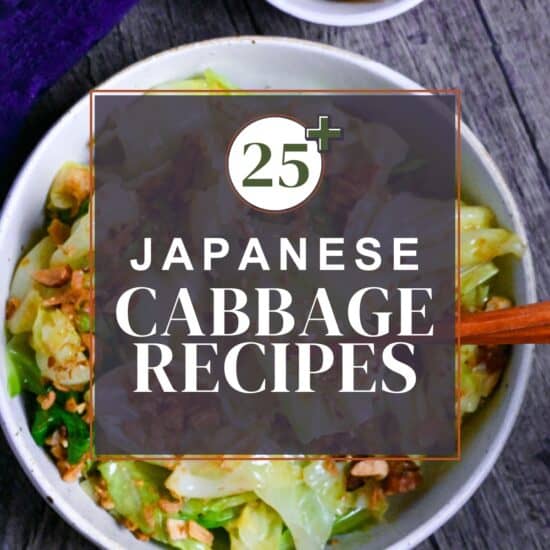

In Japan, cabbage lives in almost every refrigerator, the cheap and always-there vegetable nobody thinks twice about. Yet it quietly plays every role, the body of one dish, the crunch in another, the cooling pile beside a fried cutlet, shifting from supporting act to main event depending only on how you slice it and how you cook it. I find that range is the part people outside Japan rarely get to see, and it is exactly what this collection sets out to show.
1. Addictive Salted Cabbage (Yamitsuki Cabbage)

Featured Comment
I love to cook. Love to. And I’m pretty damn good at it. I made this as part of an 8 course meal and my girlfriend said she thought it was potentially the best thing I’d ever made.
★★★★★
– Mike
If you make one thing from this whole collection, I want it to be this. Yamitsuki means addictive, and that is not a tease. It is the 5 minute, no-cook izakaya snack I reach for when I want something irresistible out of almost nothing, sesame oil and a little bouillon over soft raw leaves.
The trick I will not let you skip is mixing the whole dressing first, then rubbing it in by hand so every bite carries the same nutty, salty hit. Reach for a soft spring variety here, and you keep that fresh crisp snap while the flavor turns into a guilty pleasure you cannot stop eating.
2. Tonpeiyaki (Pork and Cabbage Omelette)

Featured Comment
I am currently in Japan and enjoyed my first tonpeiyaki. I really wanted to recreate this dish once I returned home, so I am pleased to come across this recipe. It looks exactly like the meal I ate today in Tokyo!!
★★★★★
– Angie
Tonpeiyaki is the dish I reach for when I want okonomiyaki energy without the commitment. Crispy thin pork belly and softened cabbage get folded into a tender omelette, then finished with a glossy homemade okonomi sauce. It tastes like a teppanyaki counter, but I make the whole thing in one frying pan.
The texture is everything here, and it lives or dies on one moment. I pull the egg off the heat a beat before it looks done, so it stays soft and folds around the filling instead of turning rubbery. Get that timing right and you have a fluffy, sauce-streaked omelette that eats like a hidden-gem find.

3. Japanese Shredded Cabbage
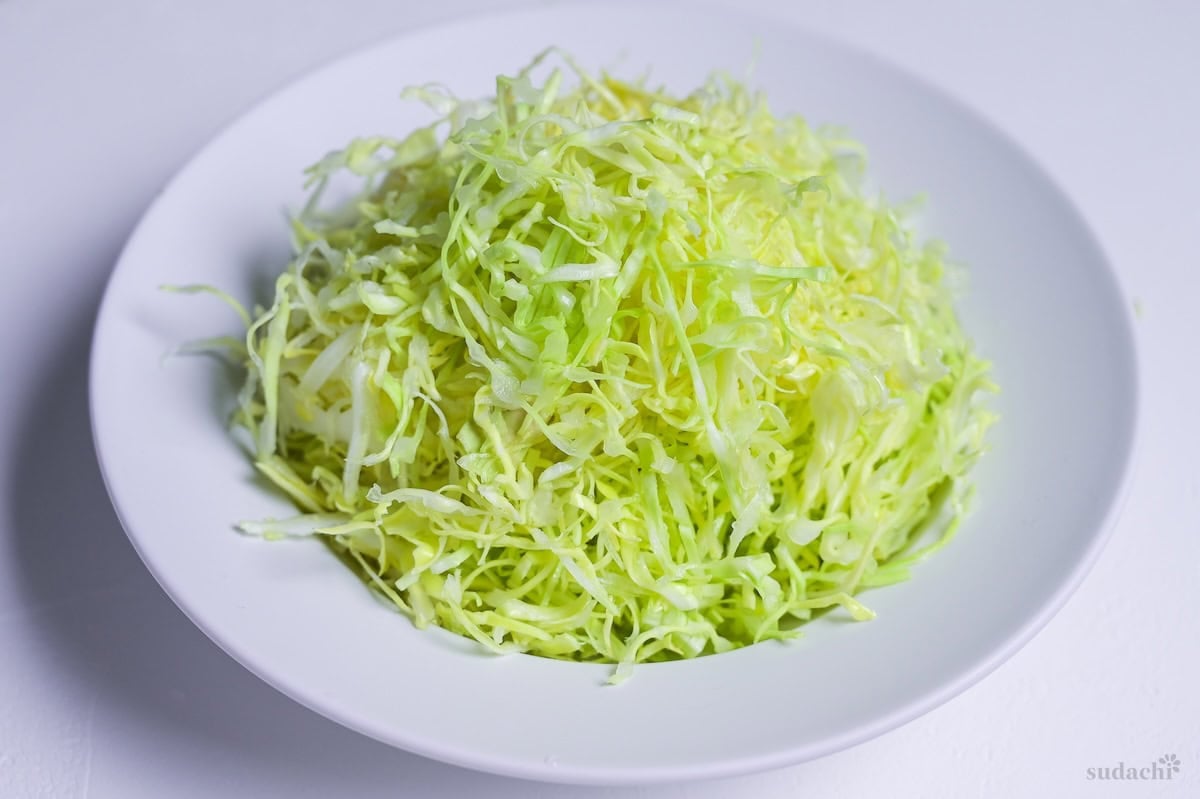
This is the quiet cloud of feathery strands that sits beside tonkatsu and korokke, and I treat it as the side that holds the whole plate together. I want mine to look like angel-hair, not slaw, so I built this guide entirely around the knife rather than any dressing.
If yours keeps coming out chunky and limp, the fix is not a sharper blade but how you stack and roll the leaves before you ever start slicing. Get the air trapped right, draw the knife instead of chopping, and the inner leaves give up a faint, sweet moisture you can actually taste.

4. Japanese Cabbage Rolls (Roru Kyabetsu)
Featured Comment
Just tried this recipe, LOVED IT! The sauce is what makes the difference!!
★★★★★
– Andrea
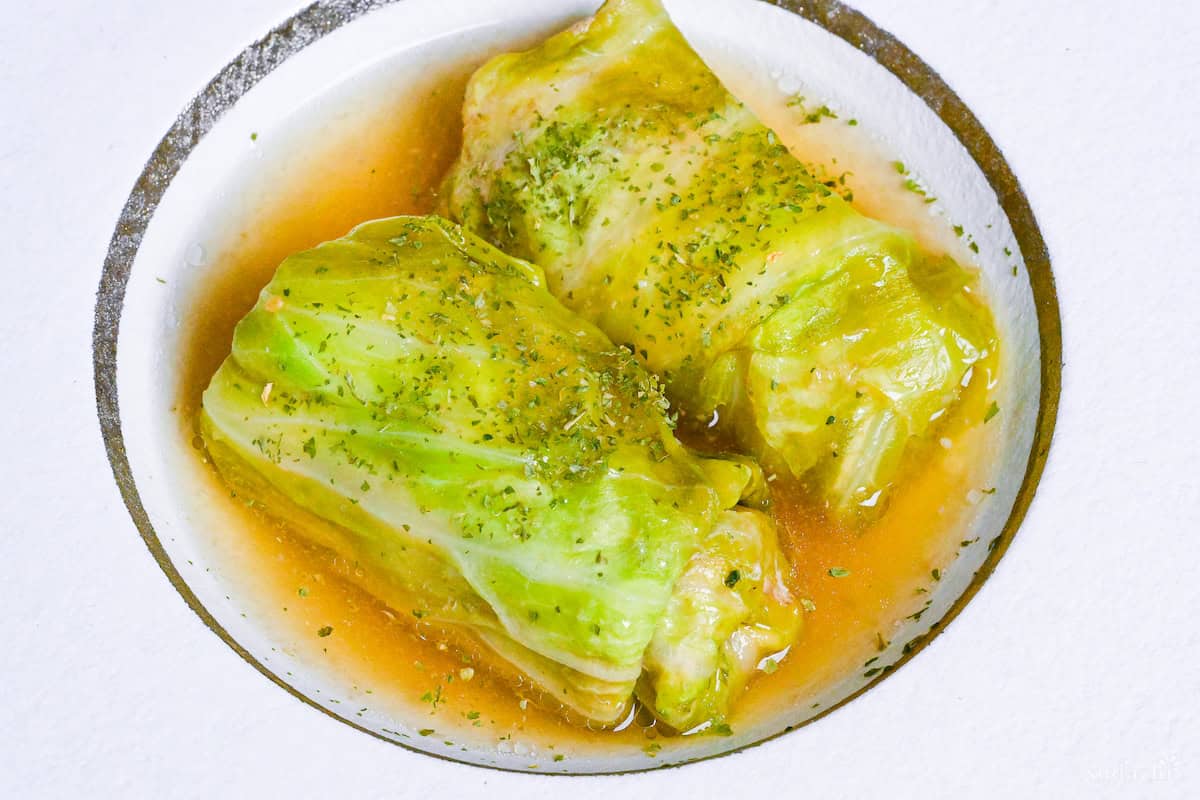
I love what happens when stuffed cabbage, usually a tomato affair, gets handed to a Japanese kitchen. Here the rolls poach in a clear dashi, soy sauce, and mirin broth instead, so each bite tastes less like a heavy casserole and more like a warm, gently sweet bowl of soup.
The pork tucks inside as thin layered slices, no mincing or tying, which keeps the whole thing quietly foolproof. Before you simmer, roll them tight and set the seam down, because a loose bundle drifts open in the broth and surrenders all that ginger-scented juice.
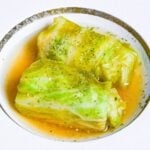
5. Shiodare Cabbage (Salt Sauce Cabbage Salad)

This is the version I reach for when I want crunch without that raw, green bite. I tear the leaves instead of slicing them, then rub them with salt and let them sit until water pools in the bottom of the bowl. Squeeze that out and the texture turns crisp and clean, never watery.
The trick I love most is that the salt sauce gets cooked and thickened with a little starch, so it goes glossy and clings to every torn edge instead of sliding off. Honey and lemon sneak in, and you toss it warm, not hot, so the flavor sinks in. That is why this one earns its endless reputation.

6. Mugen Cabbage (Infinite Cabbage Salad)

Featured Comment
I made this already 2-3 times. I loooooove it. Even without the furikake it is amazing.
★★★★★
– icedmelon
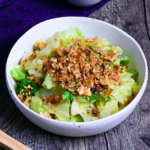
I steam the leaves until they go tender and silky, then toss them by hand in a spicy sesame, chili oil, and oyster sauce glaze so every shred gets coated. The name means endless, and that is exactly how it eats. Soft, savory, something you never want to end.
My trick is a homemade crunchy furikake scattered on top, crispy bacon, katsuobushi, crushed roasted almonds, fried onions, and sesame. Eat it warm, while those bits still snap against the soft base, and you find out why one bowl never stays one bowl.
7. Yakisoba (Japanese Stir-Fried Noodles)

Featured Comment
I made this for Christmas eve dinner and the kids and my wife loved it! My wife usually uses the mix that comes in the yakisoba package so this was the first time we made it from scratch. It tasted great and had a dark, smoky look from the sauce.
★★★★★
– Charles
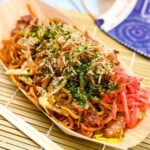
I shared this Yakisoba in December 2020 thinking it was already perfect, the kind of teppan noodle plate I would happily eat at any Japanese festival. Then a chance discovery in January 2025 made me rewrite it, and I am convinced the dish is now at least twice as good as my original.
The whole upgrade comes down to one quiet pantry ingredient I now stir into a from-scratch sauce, and no, the finished noodles taste nothing of curry. I am not naming it here. I will only say I fry the boiled noodles separately until the edges crisp before the cabbage goes in at the very end.
8. Osaka-Style Okonomiyaki

Featured Comment
Just as good as restaurants in Japan!! I am japanese-American it’s nice to have recipes in English that brings authentic taste from the motherland. My grandma never wrote down recipes so this brings nice memories.
★★★★★
– Rin
Most home cooks in Japan reach for a bag of premix flour, but I build mine from plain pantry flour and a homemade okonomi sauce. Premix always tastes like premix, and the plain-flour route is the whole reason this comes together anywhere in the world. Cabbage carries it, cut small but rough.
Here is the move that decides everything. Never press down with the spatula. Keep that trapped steam and you get a light, juicy interior under a crisp pork-fat edge. I fold the cabbage in raw, commit to one decisive flip, and let it ride.

9. Buta Yasai Itame (Pork and Vegetable Stir-Fry)

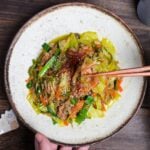
I reach for this stir-fry almost every week, usually when the fridge is crowded with odd ends I need gone before the next shop. Pork goes in first to render its fat and brown, then the vegetables follow in waves so each one keeps its own bite.
The cabbage lands late, just long enough to brighten at the edges while the ribs stay crunchy. What keeps the whole pan glossy instead of swimming is one rule I treat as gospel. Moisture is the enemy. Ready to empty yours too?
10. Pork Gyoza (Japanese Dumplings)

Featured Comment
These were so so delicious, the crispy bottom was just perfect! Really easy recipe to follow. The homemade wrappers are a complete game changer as well, so much better than the pre-made ones! Will be making these again and again!
★★★★★
– Harri
As a Japanese person, gyoza have been part of my life for as long as I can remember, and I have a feeling you love them too. I have never met anyone who turns one down. The filling I keep coming back to is meaty pork with finely chopped cabbage folded in for sweetness and a gentle crunch.
My one non-negotiable for the juiciest bite is a spoonful of lard worked into the pork, plus a splash of warm water so each dumpling stays succulent. I salt the cabbage, let it rest, then squeeze it bone-dry, which keeps the filling tight and the bottoms shatteringly crisp. That is ramen-shop gyoza, made in your own kitchen.

11. Hakata Motsunabe (Offal Hot Pot)

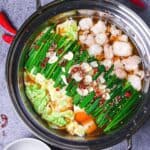
I know motsu can sound intimidating, but this Hakata hot pot is where I send anyone curious about offal for the first time. Beef small intestine sits in a homemade garlic-chili soy broth, and a quick 10-second blanch cleans it so well that even hesitant eaters keep going back for more.
A whole mountain of roughly cut green cabbage goes on top and wilts down into the pot, and here is the part I love. The water it releases seasons the broth, so I adjust the soy depending on how much I pile in.
12. Beef Gyoza with Spicy Dipping Sauce
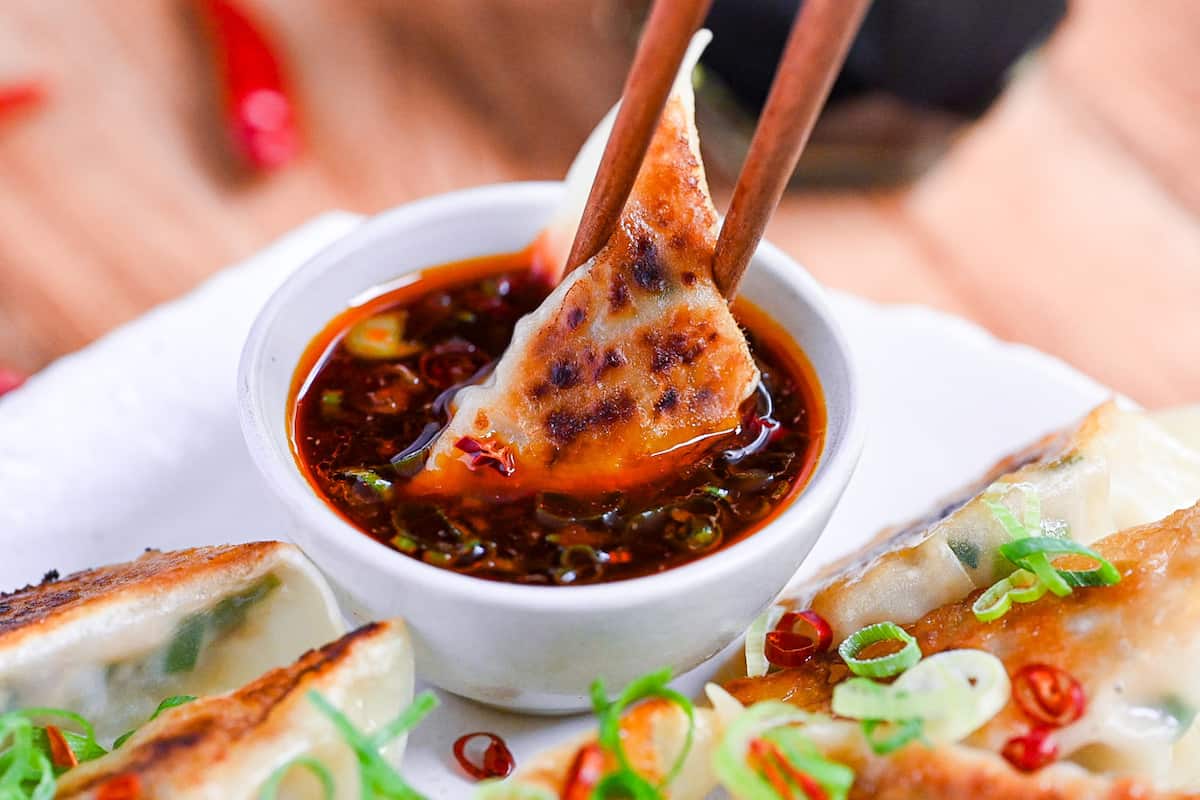
I will admit it. I never thought beef and gyoza belonged together, and I almost gave up on the idea. So instead of forcing beef into a pork-shaped recipe, I tore up the seasoning and started over, building a warm, spice-driven profile that actually latches onto beef’s deeper, iron-rich flavor.
The diced cabbage tucked inside keeps every bite juicy without turning the wrappers soggy, which is half the battle. But the part I keep coming back to is the dipping sauce. I took the usual soy and rice vinegar and pushed them somewhere bolder and spicier, and it changed how I think about gyoza entirely.

13. Keichan Yaki (Miso Marinated Chicken Stir-Fry)

Featured Comment
Perfect for the winter and tastes so good with simple ingredients! Will make again.
★★★★★
– Gen
My home prefecture is Aichi, which sits right beside Gifu, the place that gave the world Keichan. That proximity meant this regional miso chicken was a hidden gem I knew about for years before I ever cooked my own.
I built my version around an awase miso marinade, and the order matters more than you would think. The cabbage hits the hot pan first so it softens, then the chicken steam-fries on top and soaks up all of it. That is the part that empties a rice bowl faster than you can refill it.

14. Omusoba (Yakisoba Omelette)
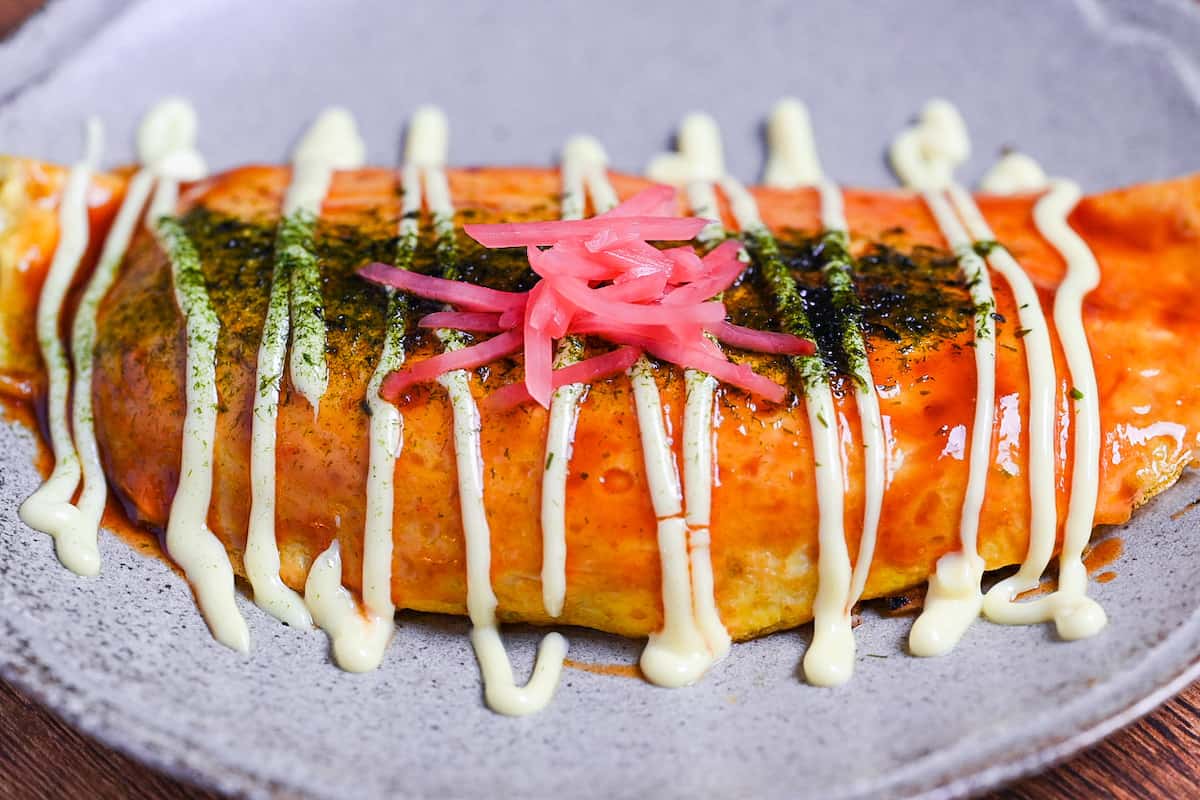
Omusoba is yakisoba tucked inside a thin omelette, the way omurice cradles its rice. I built my version by merging my omurice and yakisoba recipes, but the first attempt missed for me, so I went back and reworked it until the bundle finally tasted like one dish instead of two stitched together.
The fix was a swap. I traded pork belly for minced meat and leaned on okonomiyaki sauce plus mayonnaise instead of ketchup, chasing real Osaka flavor. I also keep the sauce on the noodles only, so the egg and meat hold their own taste rather than drowning under one sweet glaze.

15. Chicken Yaki Udon

My chicken yaki udon runs on a butter-shoyu base, the same pairing Japan splashes on everything from steak to grilled corn. Boneless thighs are my go-to, dusted in flour and seared hard over high heat so they color instead of steam. The cabbage goes in at the vegetable stage, tossed only until it just starts to wilt.
Then I do the thing that sounds like a wrong turn. A splash of balsamic vinegar off the heat. I know how that lands in a Japanese noodle dish. It is not a mistake. That last hit of acid lifts the whole pan, and you will want to taste why before you decide I have lost my mind.

16. Hiroshima-Style Okonomiyaki

Featured Comment
Great dish! It turned out great and it was very close to the dish we had in Hiroshima. We love it!
★★★★★
– Doris
This is the stacked version of okonomiyaki, not the mixed one. I build it in layers on a home frying pan, a thin crepe, the vegetable base, beansprouts, pork, a tangle of yakisoba noodles I crisp at the edges, then an egg crepe and a sweet sauce on top. I add the binding batter before the pork.
The cabbage gets shredded into long fine strips so it settles into one stable layer that holds everything above it. As for the big flip everyone dreads, I have a workaround that skips the wrist gymnastics entirely, and if it lands slightly off, no one will be the wiser.
17. Monjayaki

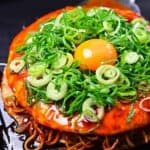
Here is the only griddle dish where I build a wall out of cabbage, a full 300 grams of it, roughly chopped and cooked down first, then mounded into a ring on the hot surface. That ring is a dam, and the thin batter goes in the middle.
I poke a hole, the batter floods out, and only then do I mix and spread it thin. After that I stop stirring, because overworking it kills the crispy bottom that makes this dish what it is. Gooey on top, crackling underneath, that contrast is the whole point.
18. Jingisukan (Hokkaido Lamb BBQ)
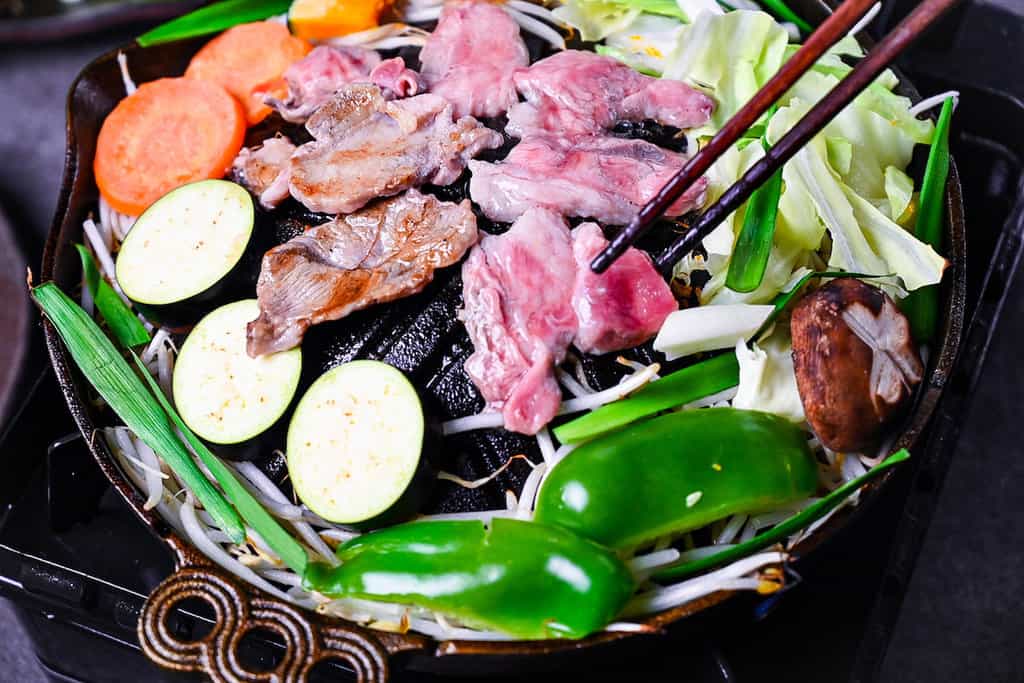
Jingisukan is lamb seared screaming-hot on a domed iron pan, the rendered fat sliding down into a trough where quick vegetables wait. I developed this one on a traditional dome-shaped cast iron grill, then worked out how to get the same intense sear on a flat pan most kitchens already own.
I grill the lamb bare and dip it after, which keeps the crust cleaner and deeper. But the real star here is not the meat at all. It is the tare I build from scratch with apple, pineapple, carrot and onion, cool fruity brightness landing against hot smoky lamb.
19. Sobameshi (Yakisoba Fried Rice)

Sobameshi is one most people outside Japan have never met, but it was a regular at our family table when I was a kid. Picture yakisoba noodles and fried rice cooked together in one pan, all of it carrying that deep, savory Worcestershire-style sauce I grew up loving.
Here is where it gets good. I use day-old cold rice so the grains stay fluffy, then let the noodles crisp against the hot pan for a little snap instead of a soggy flop. There is also a secret spice move I lean on for a smoky, slightly spicy kick that keeps people guessing.

20. Nagasaki Champon

Featured Comment
I’m usually not a big fan of ramen since I like more veggies, but this one is perfect! I love how loaded it is with vegetables and how filling it feels. Super easy too!
★★★★★
– Grace
Champon is the bowl I reach for when I want one pot to carry pork, seafood, and a tumble of vegetables at once. I cook the noodles on their own so the broth never turns starchy, and I lean on thick noodles because they hold up to all that weight. Lard is my go-to for the richness underneath it all.
The part I guard most is the broth itself, pale and creamy from milk, which means heat is everything. Let it climb past a certain point and the whole thing curdles on you. The cabbage and beansprouts go in late, still snapping, so every spoonful stays soupy and bright instead of soft.
21. Chicken Mizutaki (Hakata Hot Pot)
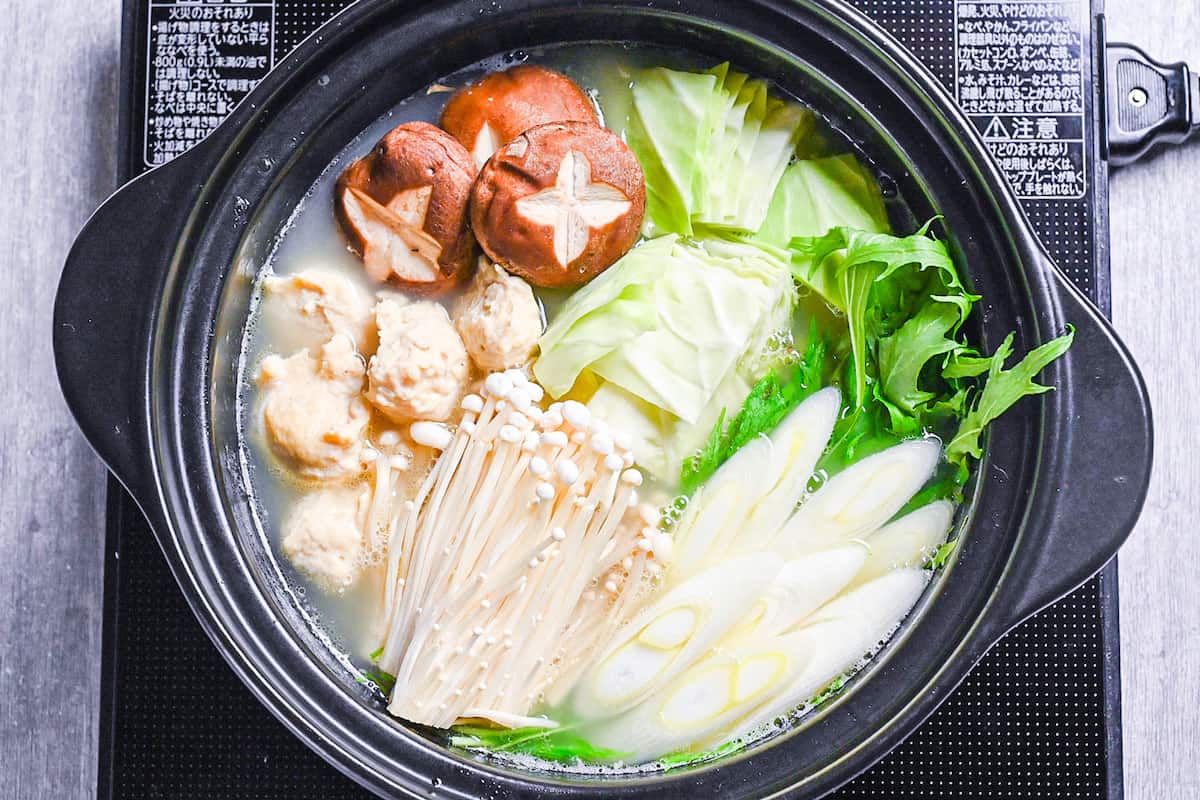
Mizutaki is Hakata’s chicken hot pot, where chicken simmers on the bone into a rich, creamy chicken-and-kombu broth you finish with ponzu. What pulls me back is how little the pot itself is seasoned. The flavor is yours to build at the table, so every ingredient has nowhere to hide.
There is an order to eating this, and it surprised me the first time. You drink the precious broth first, then chicken in ponzu, then meatballs, then the vegetables, the roughly cut cabbage among them. What you do with the broth at the very end is the part I cannot stop thinking about.
22. Sara Udon (Crispy Noodles)

Sara udon means “plate udon,” and it is crispy noodles buried under a thick, glossy savory sauce. I wanted you to be able to make it anywhere, so instead of hunting down special noodles, I worked out a trick using plain ramen. Boil them a touch shy, toss in oil, then pan-fry both sides until they shatter.
That crackle is the whole point, because the potato-starch ankake pools over the top with pork, green cabbage, and shiitake, and the soaking liquid from those mushrooms becomes the dashi. Spoon the same sauce over rice instead, and you have a second dish hiding inside this one.

23. Chicken Gyoza with Umeboshi and Shiso

I wanted a gyoza that felt lighter and cleaner than the heavy pork version, so I went for chicken. To keep it juicy instead of pasty, I mix ground chicken with hand-chopped boneless thigh, which holds little pockets of moisture and gives the filling a springy bite rather than a dense one.
The lead pairing is what makes me reach for these over any other gyoza I have folded. Salty, sour umeboshi and the peppery green snap of shiso land together in one bite, tart and herbaceous at once, and a splash of ponzu pulls the whole thing tighter. One taste and the heavy pork kind starts to feel like a memory.

24. Shrimp Yaki Udon
Featured Comment
Delicious! I made it deep into winter while it was snowing here because I needed a bit of summer today. It brightened our dark day.
★★★★★
– Marian
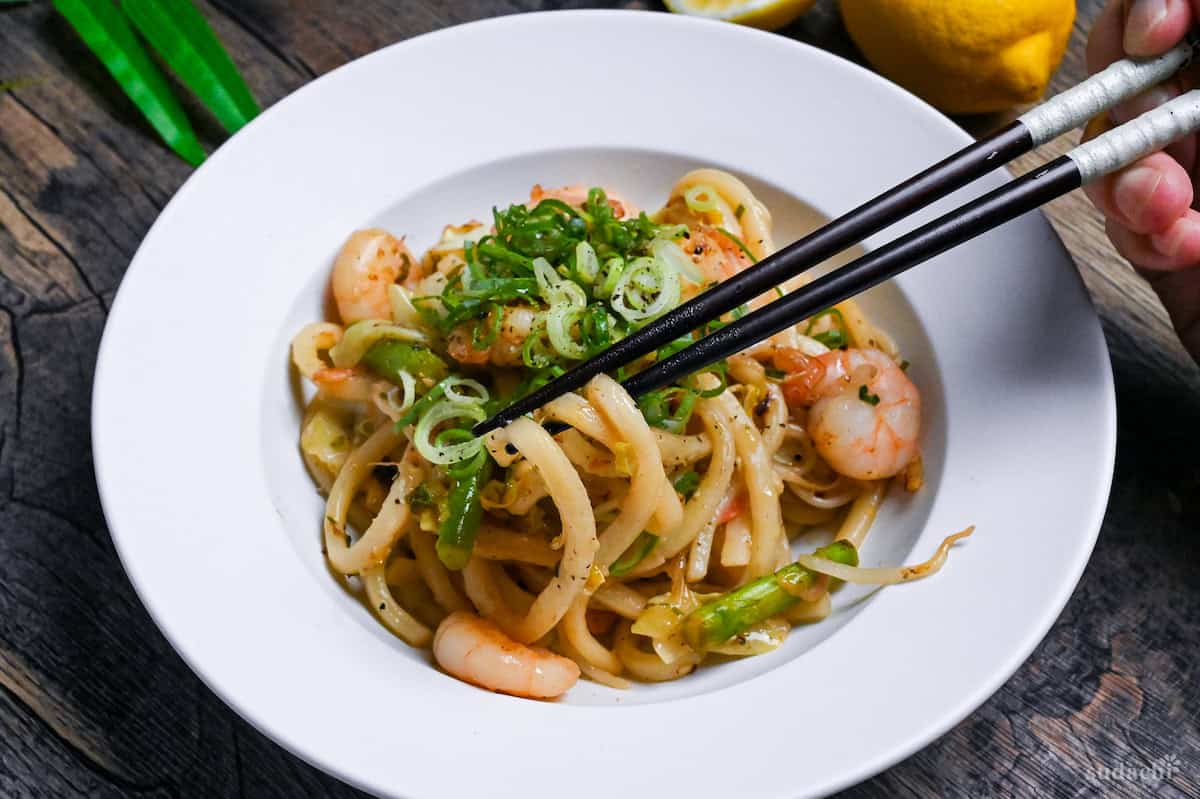
I have made spicy yaki udon and chicken yaki udon before, but this one came out brighter than both. Instead of the usual dark Worcestershire-style sauce, I trade it for a salt and lemon one, both the juice and the zest, so the noodles stay pale and summery.
The lemon does the obvious lift, but the quiet trick is the dried baby shrimp toasted in the oil first. They throw off a briny, savory depth that fresh shrimp alone cannot reach, then bean sprouts and a little cabbage go in mid-cook for that bouncy, fresh snap.

25. Harumaki (Japanese Spring Rolls)
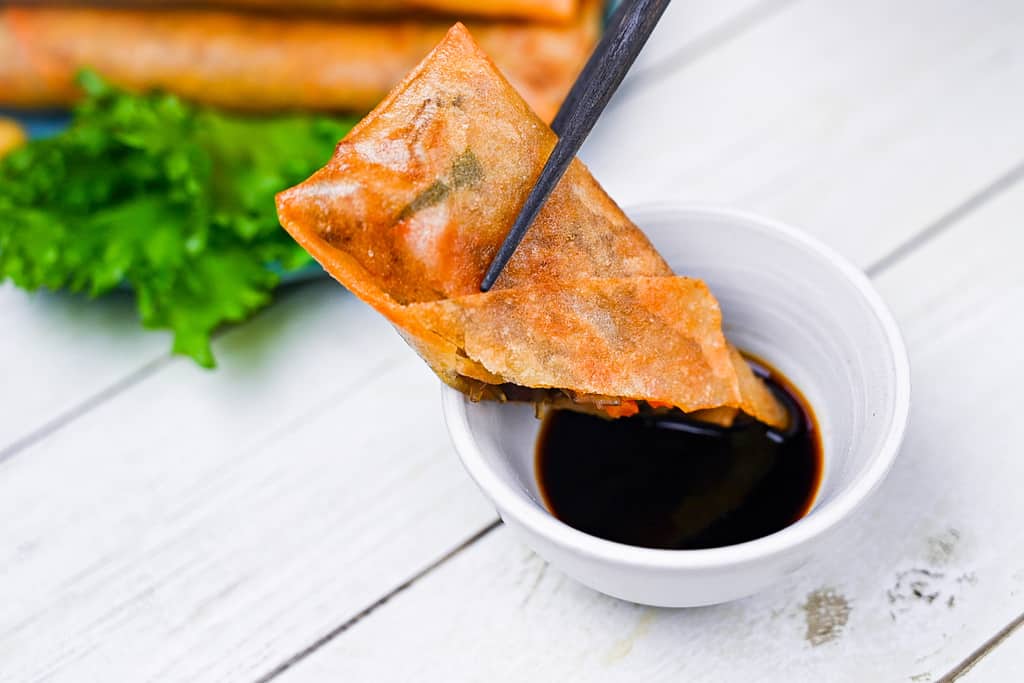
I have a confession that explains every soggy wrapper I ever fried. For years I tossed raw cabbage straight into the main pan, and it wept water everywhere, leaking right through the shells. So now I steam it on its own first, with sake and a little chicken bouillon, before it ever meets the filling.
That separate pan is the whole game. It lets me dial in exactly how much moisture stays inside, so the shell shatters instead of sagging. I also pull my rolls a shade paler than feels right, and I promise you that one nervous habit is the difference between crisp and burst.

26. Shio Yakisoba with Lemon and Seafood
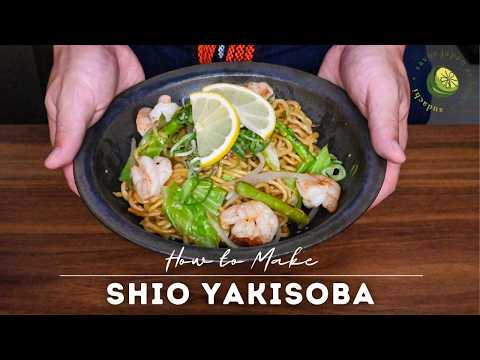
I went looking for a yakisoba that did not lean on the usual dark, Worcestershire-style sauce, and this is the one I kept coming back to. It is salt and lemon instead, zest and juice, so the flavor lands tangy and bright with a citrus lift rather than heavy and brown. The shrimp and vegetables stay clean and loud.
The part I am still a little smug about is how the cabbage cooks. I do not stir it in. I stack it raw as the middle layer, bean sprouts underneath steaming up, noodles domed over the top like a lid, so it goes tender without turning soggy. Read on for exactly how that stack works.
27. Tanmen
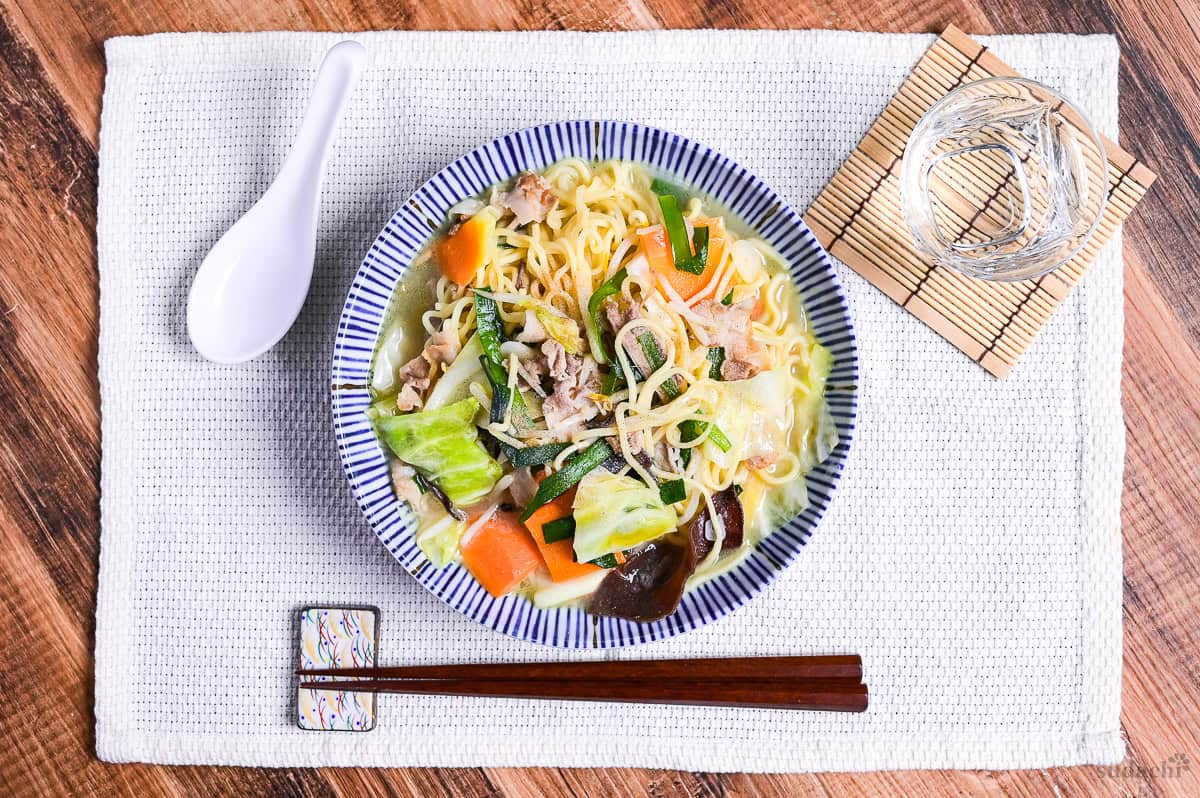
The heart of Tanmen is a tall pile of vegetables, and cabbage is what I build it around. It goes in rough-chopped along the grain, bringing a gentle sweetness as it browns in the hot pan. Napa works too, though I like the extra sweetness plain cabbage gives the bowl.
The trick is to pull everything the second it turns glossy, while it still has snap, then let the hot soup finish it. Cook the vegetables a moment too long and they slump and weep water into the broth. Treated right, they stay bright and crisp under the noodles.
28. Negishio Pasta
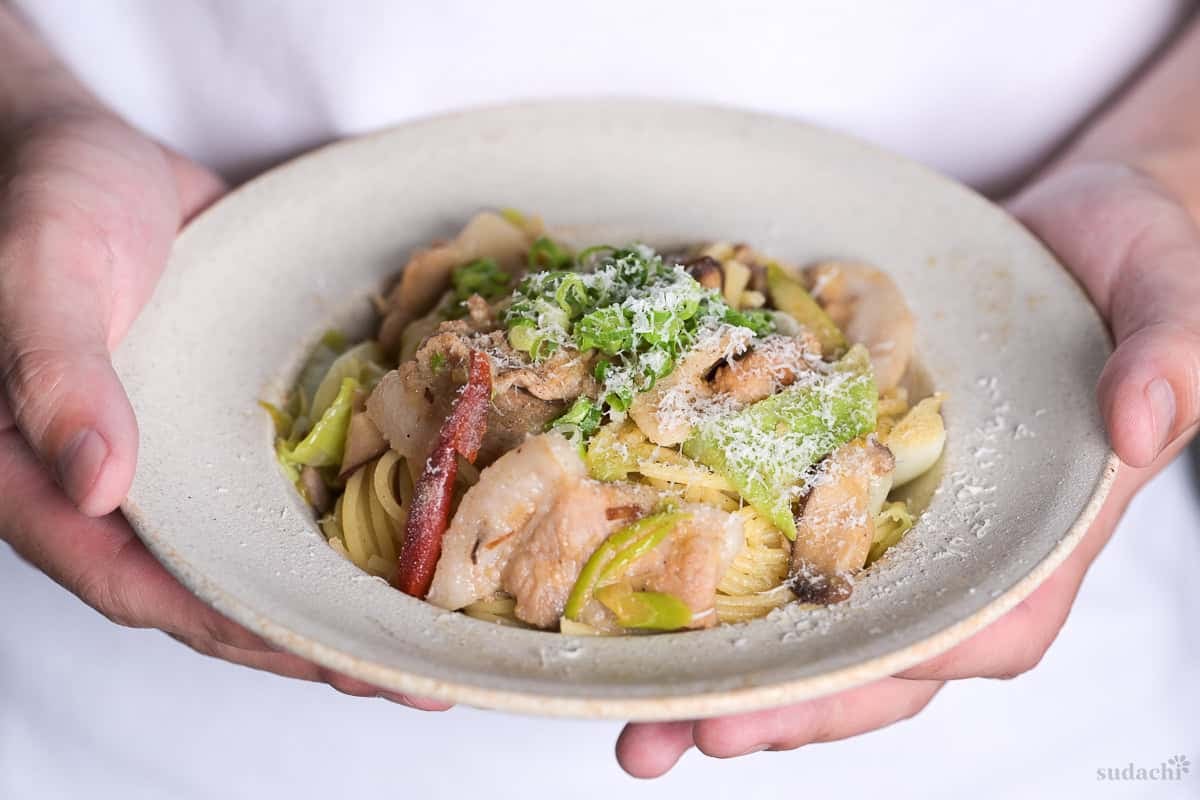
Cabbage does quiet work in this Negishio Pasta, adding body and a fresh crunch between the pork and the noodles. I add it late and pull it fast, keeping some snap in it. The moment it starts to wilt, the asparagus goes in for just under a minute.
The one thing I watch is water. Cabbage holds a lot, and cooked a beat too long it seeps into the pan. A watery pan cannot pull into a glossy sauce, so I keep it lively and barely cooked.

Leave a rating and a comment