



Japanese homes keep setting out the same lunch plate. Yakisoba is stir-fried in sauce, then wrapped in a thin sheet of egg. That plate is omusoba. A bag of yakisoba noodles and a few eggs already decide what is for lunch.
Push a spoon in and the soft egg falls open over noodles glossy with sauce. First comes the sweet and savory yakisoba sauce with the gentle sweetness of the egg. Then the toasty aroma of the pan-fried noodles follows right behind.

Omusoba
Recipe Snapshot
- What is it? Omusoba is sauce-seasoned yakisoba folded inside a thin egg sheet, Japan’s noodle take on omurice. The soba in its name means yakisoba, in other words Chinese-style noodles, rather than buckwheat.
- Flavor profile: First comes sweet-savory sauce melded with the egg’s gentle sweetness. Then, from under the soft egg, the pre-fried noodles bring a toasty edge and a good chew.
- Why this recipe works: Noodles fried alone first never go soggy, and sauce clings. Ground meat over pork belly binds filling and noodles into easy, egg-wrapped bites. I settled both while reworking the recipe.
- How to make it: Mix 2 sauces in bowls. Fry the noodles, then toss them with meat and vegetables. A thin egg from a small pan wraps each portion. Everyday pans, no special tools.
- What to expect: About 25 minutes start to finish. The one catch is getting the noodles onto the egg. Do it while the top still looks wet and shiny, and it folds cleanly.
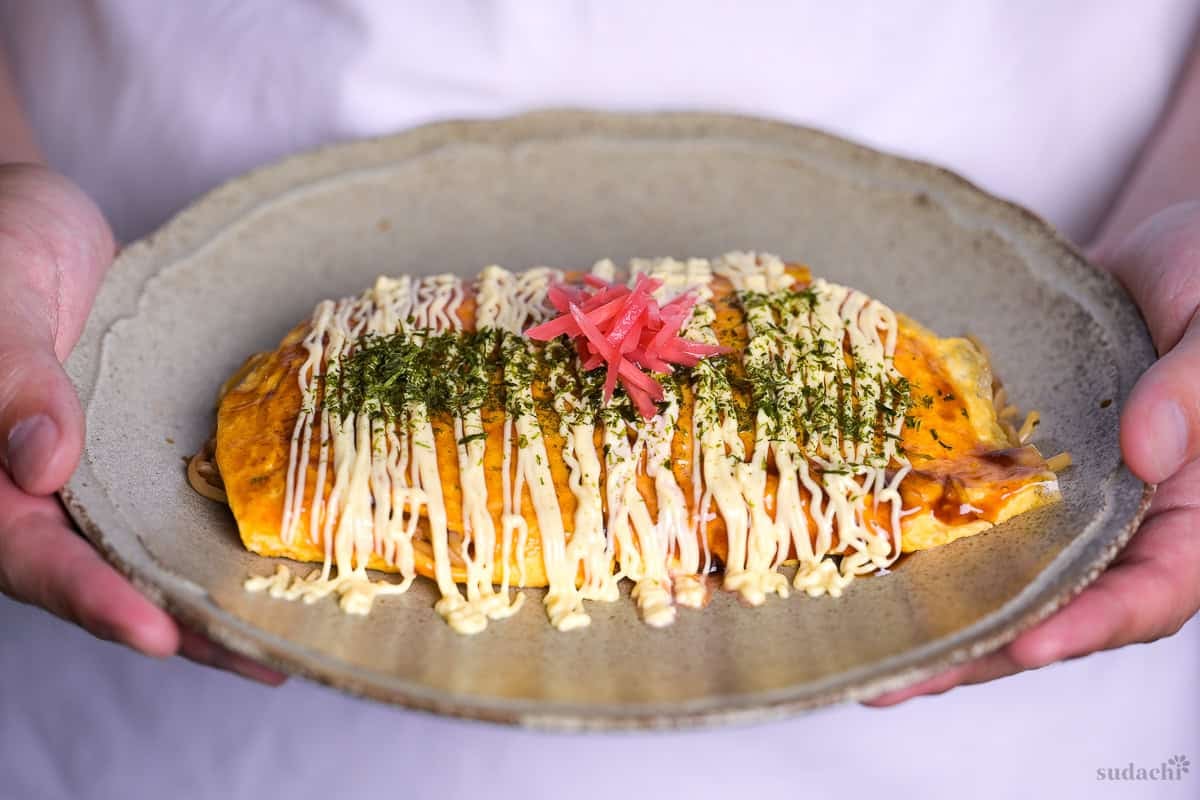
What Is Omusoba?
Omusoba is a Japanese dish of yakisoba stir-fried in sauce and wrapped in a thin omelette. Think of it as the noodle version of omurice, with yakisoba where the ketchup rice would be. It is a keeper for anyone who is not that into ketchup rice. People make it for lunch at home, and it also shows up as a light meal at okonomiyaki shops, food courts and kissaten coffee shops.
The finish is a brown sauce like okonomiyaki sauce, mayonnaise and aonori (green seaweed flakes). Some homes use ketchup instead, a habit borrowed from omurice.
Nobody knows who first made omusoba, or when. The name is built the same way as omurice. It joins omu from omelette to soba from yakisoba. 2 stories name a shop as the start. One is an okonomiyaki shop in Imazato, Osaka, which still serves the same plate under the name soba roll. Customers and writers have said again and again that this is where it began. That is reputation, though, with no dated record behind it. The other is a shop in Asakusa, Tokyo, which calls its own omumaki the original. Both are word of mouth, and no one can say which came first.
In Japan, soba on its own usually means buckwheat noodles and this is how it’s translated into English too. On the menu of a shop that serves sauce-fried noodles, though, soba, sobameshi and soba roll all mean yakisoba. The name most likely goes back to Chinese-style wheat noodles being called chuka soba, and traditional shops still call shoyu ramen chuka soba today.
Yakisoba also has relatives that are easy to confuse with it. Sobameshi fries yakisoba with rice, modanyaki layers it onto okonomiyaki batter, and yakisoba pan tucks it into a bread roll. None of them is omusoba, and Yamaguchi’s kawara soba and Okinawa soba are separate dishes too.
The quick version in many Japanese homes is a 3-serving pack of yakisoba noodles seasoned with the powdered sauce tucked inside. Here I mix both sauces by hand in a bowl, the one that coats the noodles and the okonomiyaki sauce that goes on top. In Japan the packet is the easy route, and I know it is not so easy to find outside Japan. Mixing your own lets you adjust the sweetness, salt and spice to your own taste, and you never have to buy a pricey yakisoba kit. If you live where bottled yakisoba sauce and okonomiyaki sauce are easy to find, those are completely fine. In that case, skip the sauce-mixing step.
Omu Yakisoba Ingredients
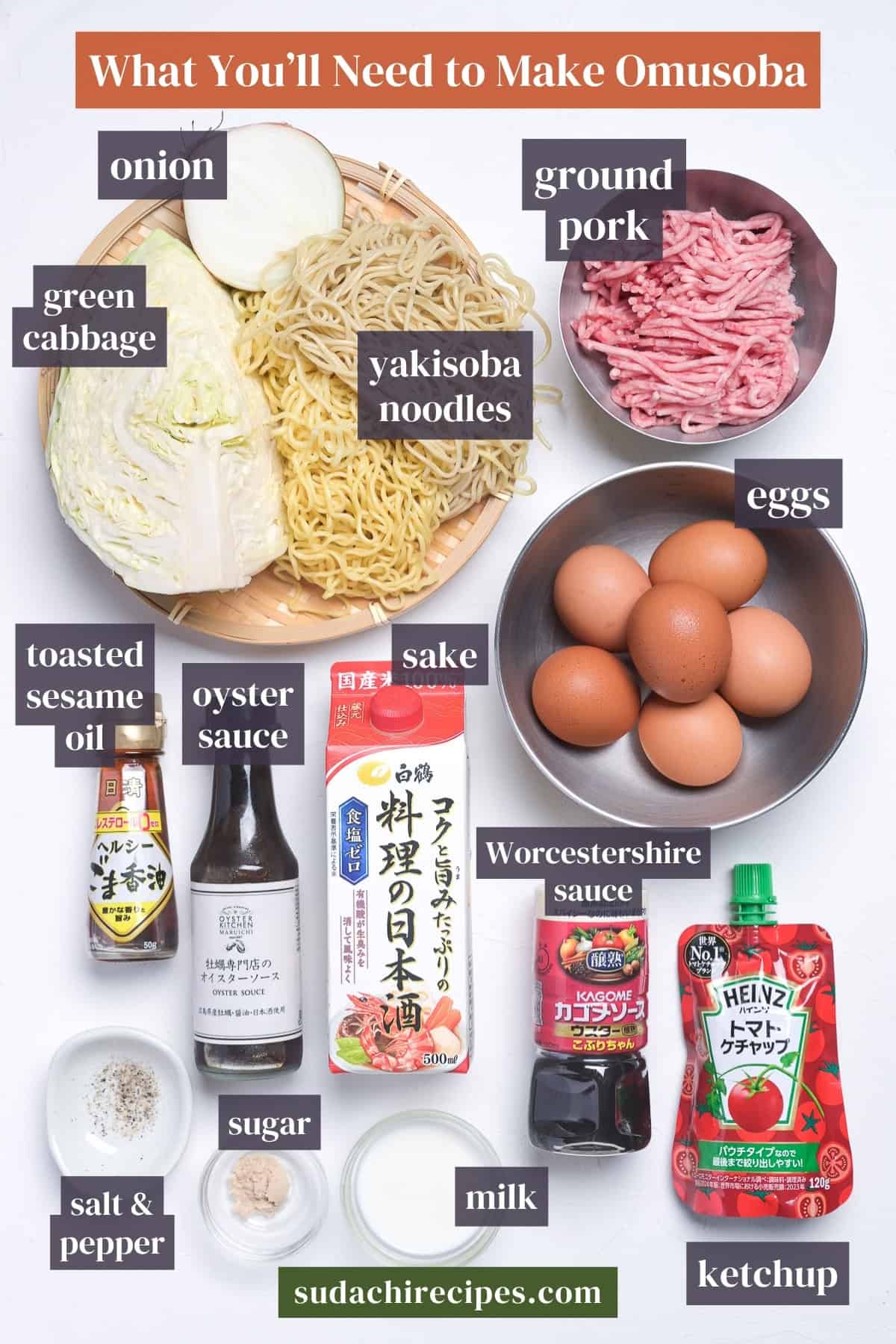
- Yakisoba noodles: These are yellow Chinese-style noodles made with alkaline water, sold already steamed and coated in oil. So you skip the boiling and the rinsing. Take them out of the bag and put them straight into the pan to fry. Outside Japan, you will usually find them in the refrigerated noodle section of an Asian or Korean grocer. If you have the time, homemade ramen noodles are another way to go. For swaps when you cannot find them, see Substitutions.
- Ground pork: Thinly sliced pork belly is the usual yakisoba meat, but I went with ground meat. It breaks into small bits that mix into the noodles, so every bite stays easy to eat, even wrapped in egg. Pork is my default, and any ground meat you have on hand works.
- Japanese Worcestershire sauce: The heart of yakisoba flavor, in both sauces here. A Japanese recipe that says Worcestershire usually means the Japanese style, built on fruit and vegetables like apple, tomato and onion, sweeter and rounder than British Lea & Perrins. Bull-Dog is the classic, and I keep Kagome. Lea & Perrins works too. Once cooked in, the gap is small, so relax.
Substitutions, Variations, and How to Customize
Here is how to swap what you do not have on hand, and how to change up the fillings and the flavor.
Substitutions:
- Yakisoba noodles → Dried ramen noodles (not instant): My next pick when fresh noodles are out of reach. Skip the instant kind and look for plain dried ramen, and in the US, Hakubaku is a good one. After boiling, handle them just like fresh noodles.
- Yakisoba noodles → Spaghetti boiled with baking soda: My third pick. Boil spaghetti in water with baking soda in it and it picks up a chew close to Chinese-style noodles. Rinse it well afterward to wash off the bitterness and the slippery coating the baking soda leaves.
- Homemade yakisoba sauce → Store-bought yakisoba sauce: With a bottle of yakisoba sauce, you can skip mixing the sauce.
- Homemade yakisoba sauce → The powdered sauce packet: The packet of powder that comes with yakisoba noodles works too. Dissolve it in a splash of sake first, pour it over the noodles, and stir-fry until the liquid is gone.
- Homemade okonomiyaki sauce → Store-bought okonomiyaki sauce: Store-bought is fine for the topping sauce too. Tonkatsu sauce will do in a pinch, but okonomiyaki sauce suits a yakisoba plate better.
- Japanese Worcestershire sauce → Lea & Perrins: Lea & Perrins works fine. To pull it toward the Japanese style, add a pinch of sugar or a little ketchup, unsweetened applesauce or grated apple. Any one of them takes the sharp edge off.
- Ground pork → Other ground meat: Ground chicken, ground beef, whatever ground meat you have will do.
- Sake → Dry white wine or dry sherry: Out of sake? Either of these steps in. If you would rather cook without alcohol, water is fine.
- Japanese mayonnaise → Regular mayonnaise: If you can find Kewpie, buy it, because the difference is worth paying for. Otherwise, stir a little rice vinegar, sugar and dashi granules into regular mayonnaise to get close.
- Aonori → Crushed nori or aosa: Crumble toasted nori into fine bits, or use aosa, another dried green seaweed.
- Red pickled ginger and mayonnaise → Skip them: Leave out one or both and it is still omusoba.
Substitutions that I don’t recommend:
- Buckwheat soba instead of yakisoba noodles: They break easily, the buckwheat flavor takes over, and the thick sauce slides off. I know I’m repeating myself, the soba in yakisoba does not mean buckwheat noodles.
- Rice noodles instead of yakisoba noodles: They turn out soft and sweet.
- Just ketchup or just soy sauce instead of the sauce: Either one misses the fruit and vinegar that sit at the base of the sauce.
Variations:
- Thinly sliced pork belly: Go with the classic yakisoba meat if you like.
- Chicken thigh, thinly sliced beef, shrimp or firm tofu: All of these stir-fry well and take the sauce. With a leaner one, add a little more oil.
- More vegetables: Carrots, bean sprouts, green bell pepper and mushrooms all fit. Just be careful with the watery ones, pile in too many and the noodles go soggy.
How to Customize:
- A pinch of curry powder: Stir a pinch into the yakisoba sauce for the noodles. It will not taste like curry, but it adds depth and a faint heat. This one runs in the family, carried over from my yakisoba recipe.
- Mustard on the egg: Spread Japanese mustard (karashi) over the egg. Some okonomiyaki shops in Osaka serve it that way.
- Katsuobushi: Scatter these dried bonito flakes on at the end, and the heat of the plate sets them dancing.
- Shichimi togarashi: Shake on this Japanese chili spice blend. In Tokyo’s Asakusa, a shop that serves the dish as omumaki finishes it with its own sauce and shichimi.
How to Make My Yakisoba Omelette
Before you start (Mise en place):
- Stir the yakisoba sauce ingredients for the noodles together in a small bowl.
- In a separate small bowl, mix the ingredients for the okonomiyaki sauce that goes on top.
- Thinly slice the onion and roughly cut the cabbage.

The yakisoba sauce is thin and pourable, the okonomiyaki sauce is thicker and glossy so it’s easy to tell them apart. If you’re not sure, leave a spoon in the okonomiyaki sauce so you don’t forget which one is which.

i. Heat a wok or frying pan over medium-high and add the oil.
ii. Once the oil is hot, add the yakisoba noodles straight from the bag and fry until a little crispy, then move them to a plate for now.

Yakisoba noodles are already steamed and wear a film of moisture and oil. Give them the hot pan to themselves before anything else goes in, and that moisture cooks off while the oil crisps them a little. When the sauce goes on later, the noodles stay dry enough to grab it instead of going soggy.
i. In the same pan, cook the ground pork with a sprinkle of salt and pepper until browned and cooked through.

ii. Add the onion and cabbage and stir-fry until they are as soft as you like and no liquid is left in the pan.

iii. Push the meat and vegetables to one side and return the noodles to the open space. Pour the yakisoba sauce over the noodles only and toss until evenly coated.

Keeping the sauce off the meat and vegetables lets each one taste like itself.
iv. Toss everything together briefly, then turn off the heat.
v. Cut the noodles short with kitchen scissors.

Short noodles are easier to eat in one bite with the egg.
i. Heat a small frying pan over medium, add the oil and spread it thin with kitchen paper.
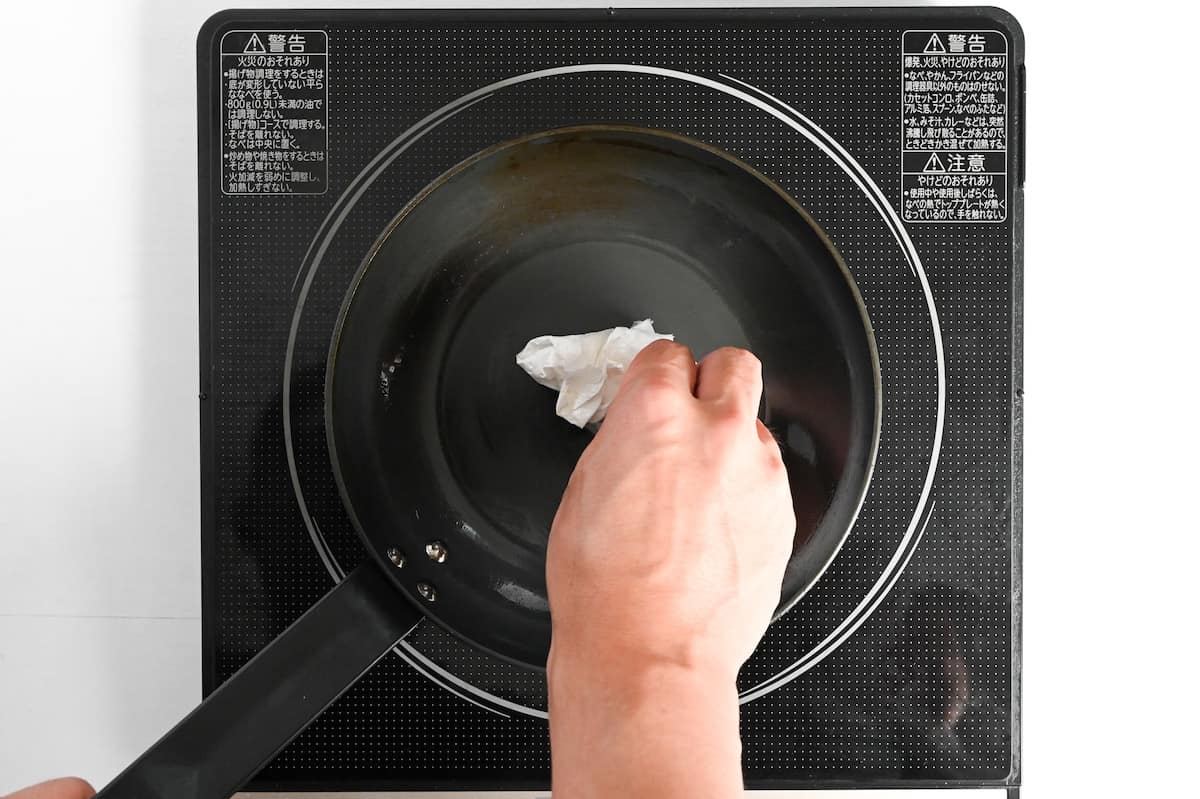
Oil spread thin and even gives the egg a smooth surface.
ii. While it heats, whisk the eggs, milk and olive oil, then strain through a sieve.
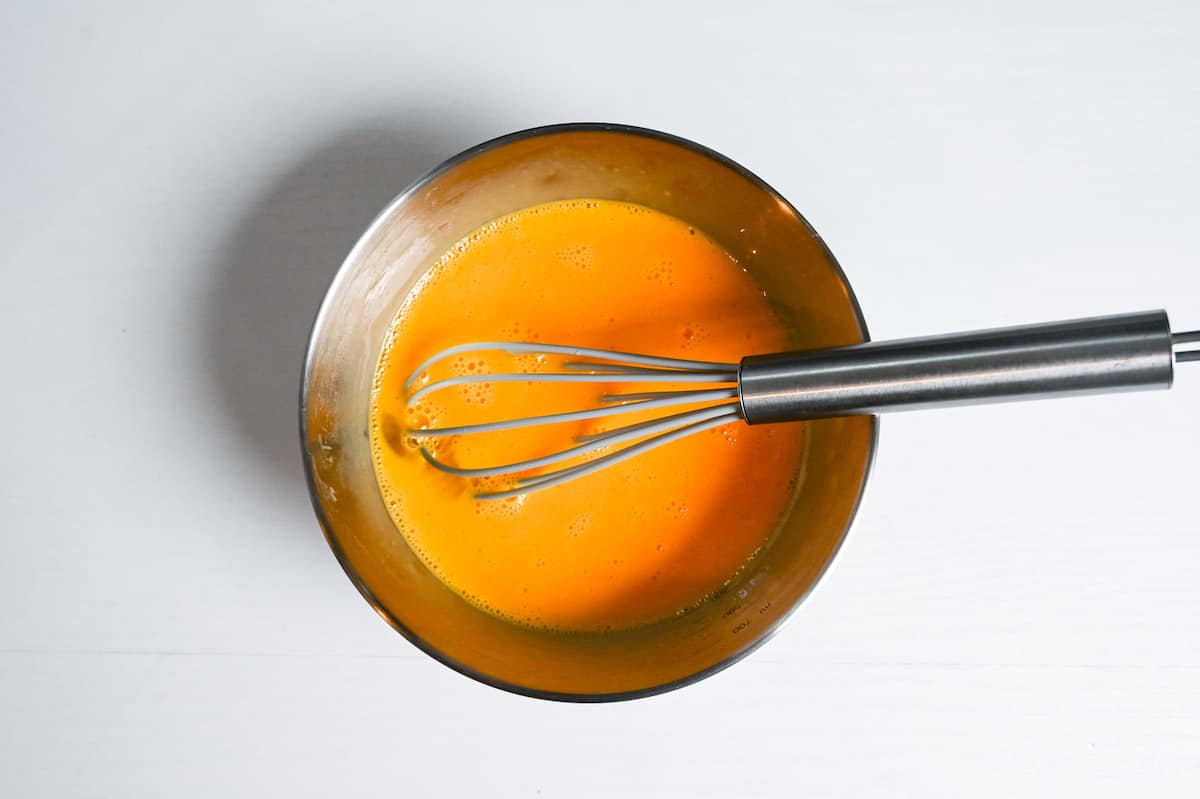
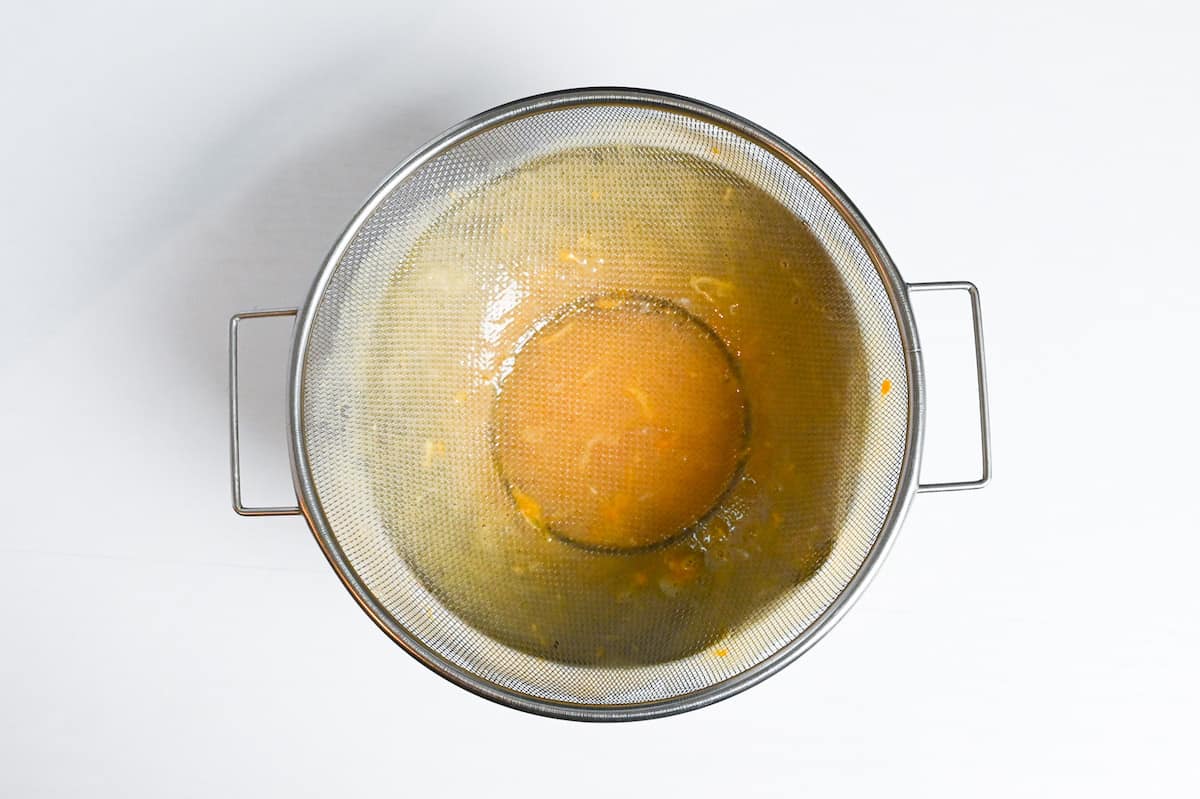
Straining leaves you with a smooth egg mixture and no lumps.
iii. When the pan is hot, pour in 1 portion of egg (about 2 eggs’ worth, a third of the mixture) and tilt to spread it.
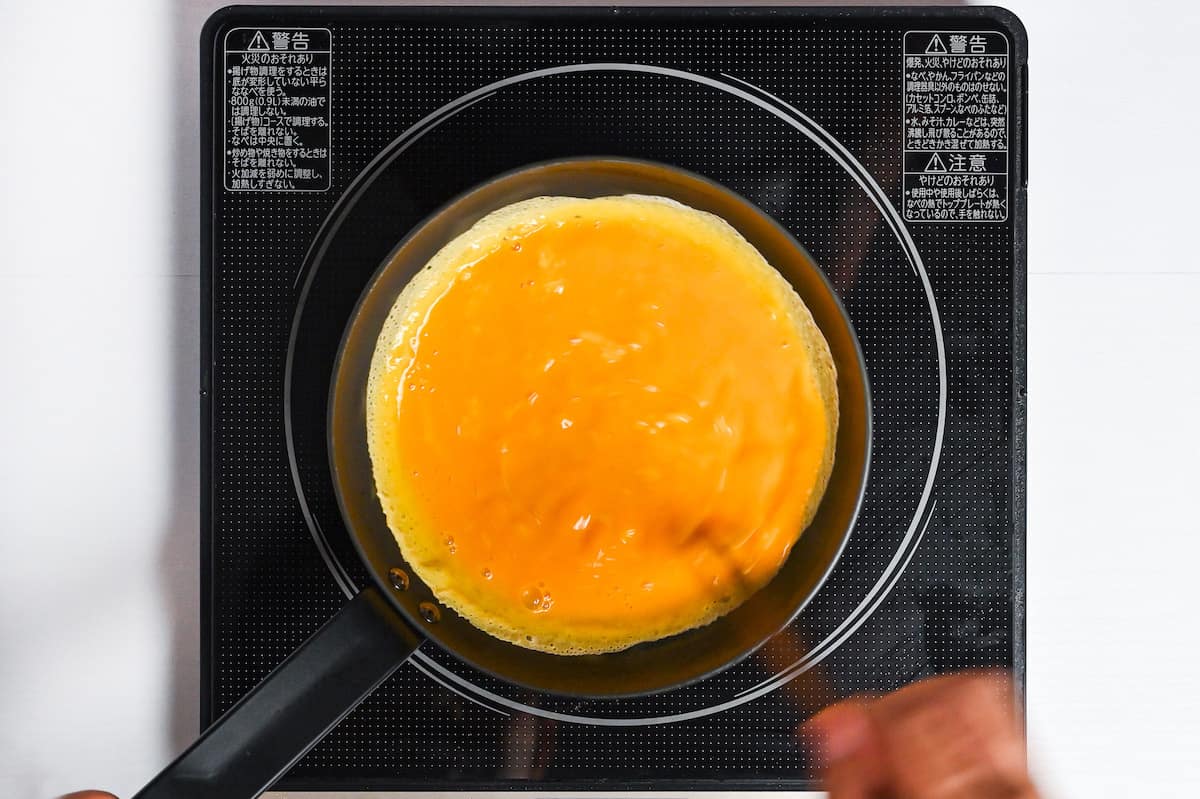
Egg poured too thick or too thin tears easily.
iv. Stir constantly until it starts to set, then stop and cook until the bottom sets and the top is still wet.
v. Tilt the pan now and then to run the egg up the sides.
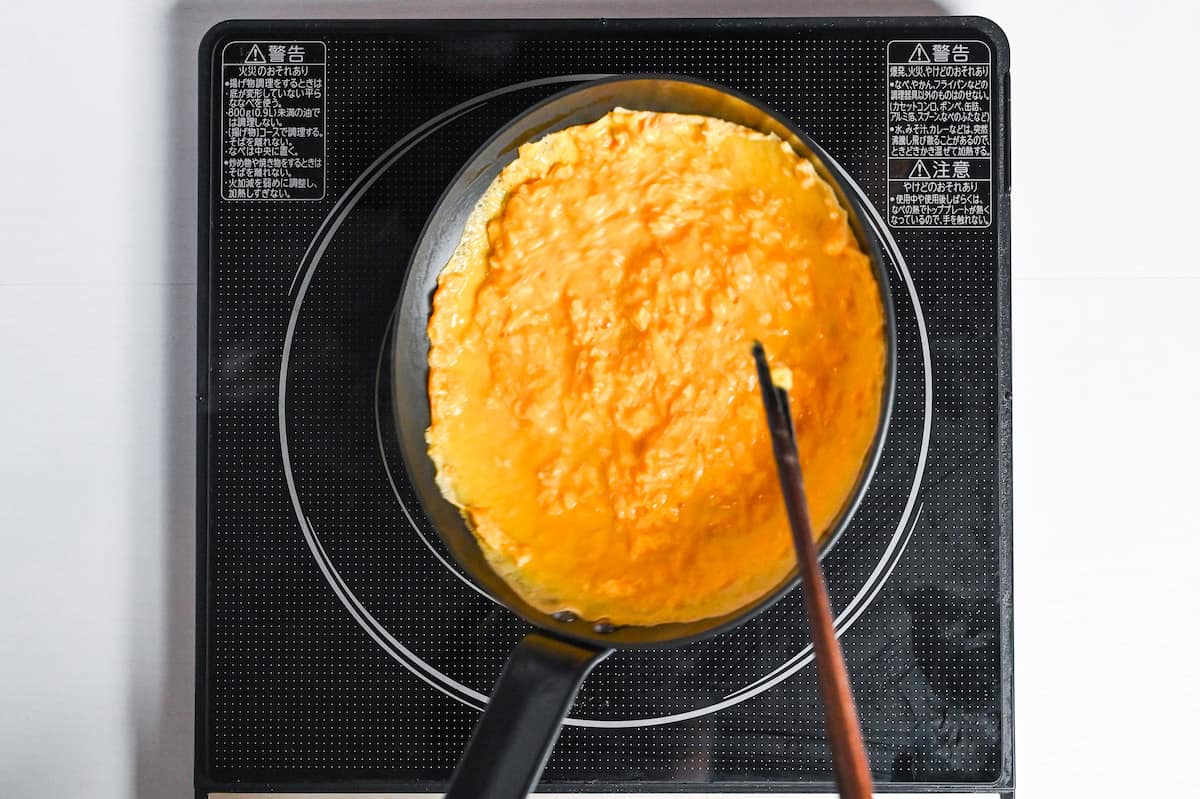
Egg that reaches the edges is easier to fold later.
vi. While the top is still wet and shiny, lay 1 portion of yakisoba over half the egg.

The cue is a top that still looks wet and shiny. The bottom has set, but there is still loose egg sitting on top. In that window the egg stays soft enough to wrap around the noodles. Cook it until the surface dries and it will likely crack as you fold.
i. Loosen the edge of the egg from the pan with a spatula and fold it in half over the noodles.

ii. Slide the spatula under the omelette to check it is not stuck, then flip it or slide it onto a plate.
iii. Pour over the okonomiyaki sauce, pipe on thin lines of mayonnaise, and scatter aonori and red pickled ginger (benishoga). Any toppings you like work too.

iv. Repeat with the rest of the egg and yakisoba, lightly oiling the pan before each one.

If you follow the default recipe, it will yield 3 servings.

Tips for the Best Omusoba
- Do not overcook the egg. Let it dry all the way to the top and the sheet has no give left, so it cracks right where you fold it.
- Leave no liquid in the yakisoba. After the sauce goes on, stop as soon as the noodles turn glossy and the sauce no longer pools at the bottom of the pan.
- Eat it as soon as it is wrapped. Serve each plate the moment it is made.
On this plate the yakisoba can hang around for a few minutes, but the egg goes straight from the pan to the table.
Storage & Meal Prep
Fridge: Best fresh. Cool, then seal. Yakisoba alone keeps 2 days. Cook the omelettes fresh.
Freezer: Yakisoba only, one flat portion per bag, air out, about 2 weeks.
Meal prep: Make yakisoba ahead, make the omelette at mealtime. For bento, cook the egg through, cool both, then pack. Sauces can be mixed and refrigerated in sealed containers for 3-4 days.
Reheating: A pan is best, a microwave works. Add sauce and mayonnaise after.
What to Serve With Omu Yakisoba
- Simple Tofu Miso Soup
- Japanese Shredded Cabbage
- Quick Takuan (Yellow Daikon Pickles)
- Cucumber Sunomono (Japanese Cucumber Salad)
Omusoba Troubleshooting
If the noodles look damp and glossy and a puddle of liquid sits in the pan, the sauce went in before the vegetables had given up their water. The trouble is water, and there is already enough sauce. Add no more. Spread the noodles across the pan, fry them uncovered until the steam stops, and only then wrap them in the egg.
If the egg runs out from under the noodles the moment they land, the bottom has not set yet. A wet top only means it is ready once the underside has firmed up. If the egg is still liquid all the way down, you are too early. Leave the noodles where they are, give it a little longer over medium heat, and fold once the egg slides as one sheet when you tilt the pan.
If the egg splits where you fold it, either it cooked until the top was dry or it carried too many noodles. Patch the split in the same pan with a little of the remaining egg mixture. If the tear is too big to patch, give up on wrapping and lay the egg over a plate of yakisoba instead.

More Japanese Lunch Recipes
Once you have wrapped yakisoba in egg, try my other midday plates, from a ramen with no broth at all to Okinawa’s taco rice, all gathered in Japanese Lunch Ideas.
Did You Try This Recipe?
I would love to hear your thoughts!
💬 Leave a review and ⭐️ rating in the comments below. 📷 I also love to see your photos – submit them here!

Omusoba (Yakisoba Omelette)

Ingredients
Homemade Yakisoba Sauce
- 1 tbsp oyster sauce or plant-based alternative
- 1 tbsp Worcestershire sauce
- 1 tsp tomato ketchup
- ½ tbsp sake
- ½ tsp sugar
- 1 pinch ground black pepper
- 1 tsp toasted sesame oil
Okonomiyaki Sauce (for topping)
- 1 tbsp Worcestershire sauce
- 1 tbsp oyster sauce
- 2 tbsp tomato ketchup
- 1 tbsp honey
- 1 tsp Japanese soy sauce (koikuchi shoyu)
Yakisoba
- 1 tbsp cooking oil
- 200 g yakisoba noodles (pre-steamed)
- 100 g ground pork or your choice of ground meat
- salt and pepper
- 30 g onion thinly sliced
- 30 g green cabbage roughly cut
Omelette
- 6 eggs
- 2 tbsp milk
- 1 tsp olive oil
- 1 tsp cooking oil
- Japanese mayonnaise
- aonori (dried green seaweed powder)
- red pickled ginger (benishoga)
The ingredient brands and tools I trust are in my Japanese pantry guide and my cooking tools guide.
Can’t find certain Japanese ingredients? See my substitution guide here.
Instructions
Homemade sauces (skip if using store-bought)
- Take a bowl and add 1 tbsp oyster sauce, 1 tbsp Worcestershire sauce, 1 tsp tomato ketchup, ½ tbsp sake, ½ tsp sugar, 1 pinch ground black pepper and 1 tsp toasted sesame oil. Whisk until well combined, this is the yakisoba sauce.

- In a smaller separate bowl, mix 1 tbsp Worcestershire sauce, 1 tbsp oyster sauce, 2 tbsp tomato ketchup, 1 tbsp honey and 1 tsp Japanese soy sauce (koikuchi shoyu). This is the okonomi sauce for the topping, so set aside for later.
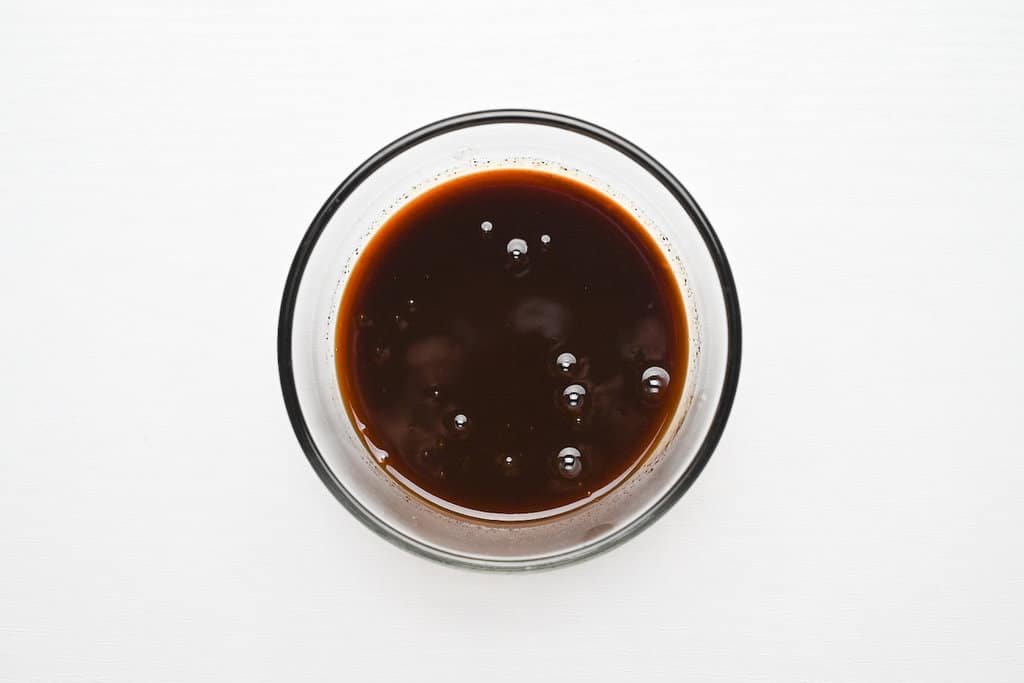
Yakisoba
- Heat a wok on medium-high and add 1 tbsp cooking oil. Once hot, add 200 g yakisoba noodles (pre-steamed), fry until slightly crispy and then transfer to a plate.

- In the same wok, add 100 g ground pork with a sprinkle of salt and pepper and fry until browned.
- Add 30 g onion and 30 g green cabbage and stir fry until softened to your liking.
- Push the meat and vegetables to one side and add the noodles to the empty space. Drizzle the homemade yakisoba sauce from earlier over the noodles only, and mix until evenly covered.
- Stir fry everything together for 1-2 minutes and then remove from the heat.
- Use kitchen scissors to cut the noodles (this will make it easier to eat with the omelette).

Omelette
- Preheat a 20cm non-stick pan on medium and add 1 tsp cooking oil. Spread it around with kitchen paper to ensure an even finish.
- While you wait for it to heat up, whisk 6 eggs, 2 tbsp milk and 1 tsp olive oil in a bowl until combined, then pour through a sieve to ensure it's smooth.
- Once the pan is hot, pour 1 portion (2 eggs worth) of the mixture into the pan and tilt to spread it evenly. Whisk continuously until it starts to set, then stop whisking and cook until half-done.
- Tilt the pan occasionally to push the egg mixture up the edges, this will make it easier to fold.
- Once half-cooked, place one portion of the yakisoba noodles over one half of the omelette.
- Carefully peel the opposite edge of the omelette away from the pan using the spatula and fold it over the noodles.
- Push the spatula underneath the omelette to make sure it's not stuck, then flip or slide it onto a plate. Top with your homemade okonomiyaki sauce and a drizzle of Japanese mayonnaise, then sprinkle with aonori (dried green seaweed powder), red pickled ginger (benishoga) or your toppings of choice.
- Repeat with the rest of the omelette mixture and yakisoba, making sure to lightly grease the pan between each omelette. Enjoy!


Guten Tag Yuto.
Wenn man Yakisoba übrig hat lässt es sich so sehr gut wiederverwenden.
Vielen Dank für dein Rezept. Sehr lecker.
Macht immer wieder Spaß nachzukochen.
Alles gute.
Mit freundlichen Grüßen Kathleen.
Guten Morgen, Kathleen
Ja, das ist eine gute Alternative für übrig gebliebene Yakisoba! Ihr Foto sieht wie immer toll aus!
Vielen Dank für die Unterstützung! Das weiß ich wirklich zu schätzen.
Ich freue mich auf mehr in der Zukunft!
Mit freundlichen Grüßen
Yuto
Your miso soup is unbeatable.
Hi Manuela,
Thank you so much!
Yuto