



Featured Comment
I tried this recipe several times and it’s really yummy. Easy to make. Such a masterpiece!
★★★★★
– Wendy
You want to make chicken onigiri, but one question stops you cold. How do you get the chicken into the rice?
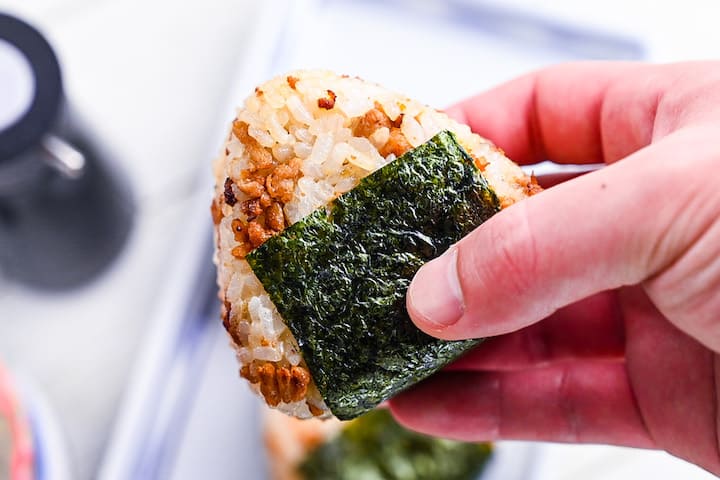
You don’t have to tuck it in the middle. Make soboro, sweet and savory ground chicken crumbles, then stir it all into the rice. Every bite brings the salty-sweet chicken together with the rice’s own sweetness. A quick press in a mold takes care of the shaping. For onigiri with chicken, this is the one!

Chicken Soboro Onigiri
Recipe Snapshot
- What is it? Chicken soboro onigiri are Japanese rice balls made with sweet and savory ground chicken stirred throughout. They’re the chicken onigiri I think of first, and Japanese convenience stores sell plenty.
- Flavor profile: The loose chicken crumbles give you an initial hit of salty-sweet soy sauce and sugar. The rice follows with sweetness and umami that round out the bite.
- Why this recipe works: Stirring the chicken throughout keeps you from getting a salty mouthful followed by plain rice. Rice mixed with chicken is hard to shape by hand, so a mold does it.
- How to make it: In a hot pan, brown ground chicken, then cook with soy sauce, mirin, sugar, and sake until dry. Stir into rice, divide, mold, and wrap with nori. Just one pan.
- What to expect: With the rice already cooked, allow about 20 minutes from start to finish. The key thing to watch is the chicken. All the liquid needs to evaporate before you take it off the heat.
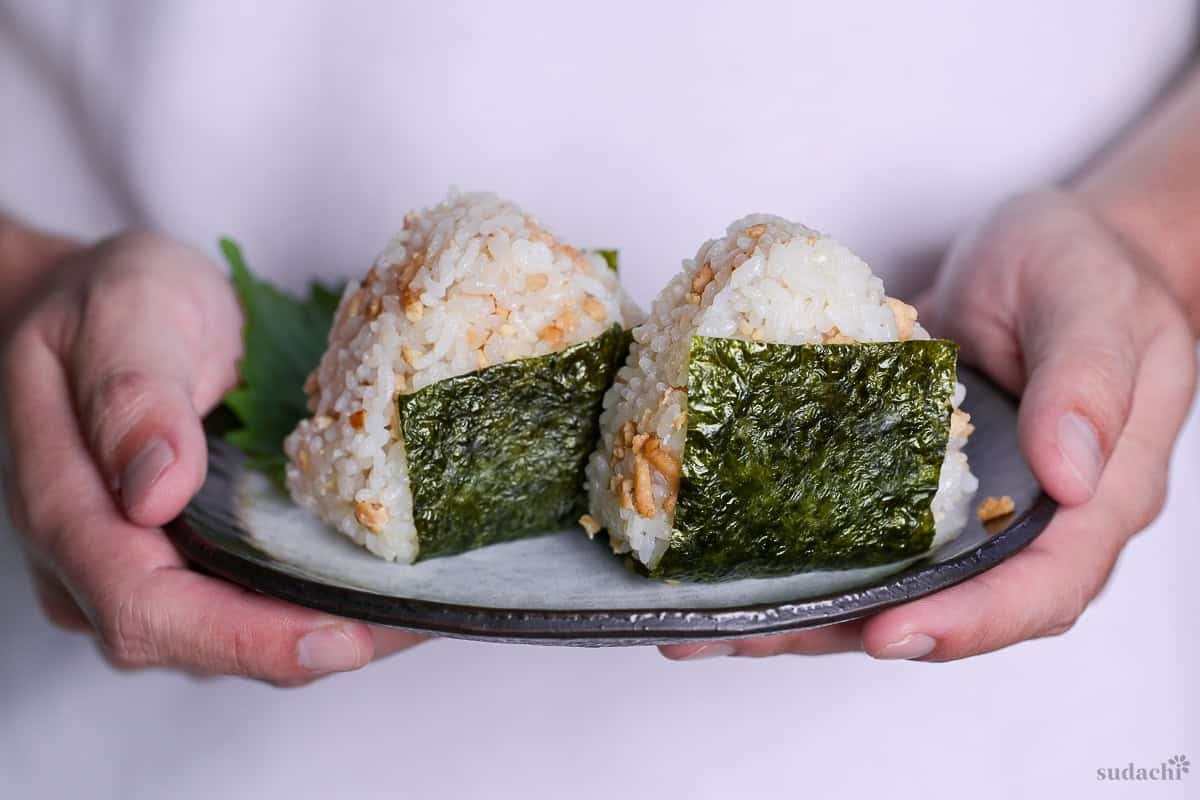
What Is Chicken Onigiri?
Chicken soboro onigiri (鶏そぼろおにぎり) is a Japanese rice ball made by cooking ground chicken with soy sauce, sugar, and mirin until it forms sweet and savory crumbles, then mixing them into the rice before shaping. The chicken makes a lovely partner for the rice’s umami and mild sweetness.
It’s simple food you can pick up and eat with your hands.
Soboro consists of small, loose crumbs of seasoned ground meat or fish, stirred and broken apart in a pan until all the liquid evaporates. Chicken, beef, fish, and shrimp can all be used, and there’s even an egg version called egg soboro. Compared with denbu, a sweet, fluffy floss made from flaked fish, soboro has a slightly coarser texture. For this recipe, the crumbs come from stirring ground chicken as it cooks.
The middle isn’t the only place for an onigiri filling. You can stir it throughout the rice before shaping, too. In Japan, this is called mazekomi onigiri (混ぜ込みおにぎり), or mixed-in onigiri. You will see chicken soboro onigiri made more than one way. Japanese recipes include versions with the crumbles mixed through the rice as well as ones with soboro on top of an already shaped rice ball. Here, I mix it in.
Many Japanese recipes for chicken soboro put the chicken and seasonings together in a cold pot, then turn on the heat. My method starts with a hot frying pan. I brown the chicken in oil before adding any seasoning. Letting the pan heat up properly first is what browns the meat. I also use less chicken than some other mixed-in onigiri recipes do for the same amount of rice. I want the sweet and savory chicken to complement the rice, and the rice to still taste like rice.
Ground Chicken Onigiri Ingredients
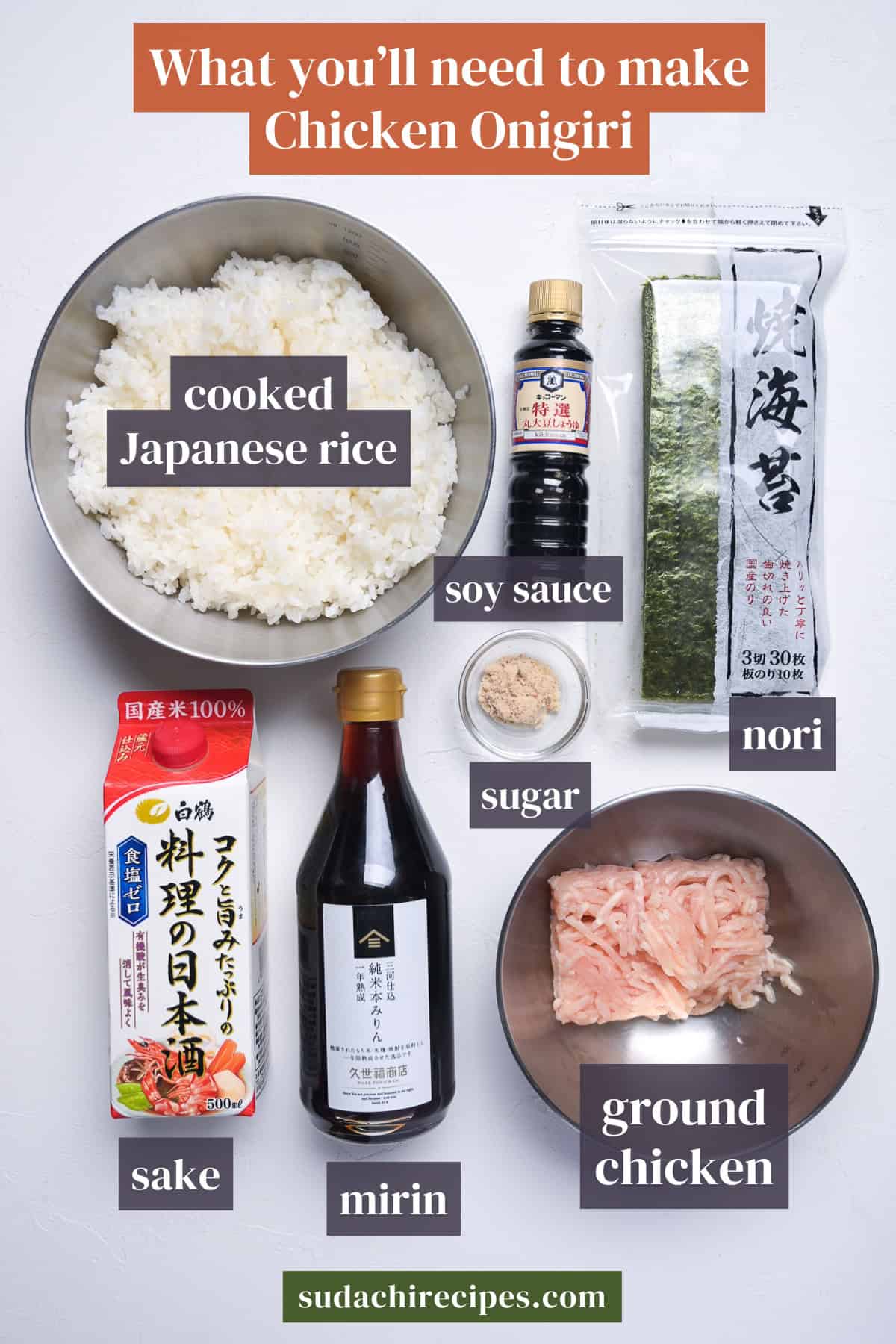
- Ground chicken: The chicken becomes soboro, carrying the sweet and savory flavors throughout the rice. Ground thigh makes a richer version, while ground breast tastes lighter. Either cut works, as does a mix of both.
- Cooked Japanese short-grain rice: Onigiri rely on the stickiness of this rice to hold together. Rice with less stickiness won’t retain its molded shape. Some Japanese cooks living abroad find Tamanishiki the most consistent of the short-grain options sold in the US. Tamaki Gold and Kagayaki also have a good reputation.
- Nori (roasted seaweed sheets): Choose roasted sheets intended for sushi, labeled “sushi nori” in the US. A full sheet measures about 21 x 19 cm and gives you 6 strips, enough for one strip around each onigiri.
Substitution Ideas
If an ingredient is hard to find, these alternatives can help.
Substitutions:
- Ground chicken → Ground turkey: Turkey is the simplest alternative, and you make the soboro exactly the same way. Expect a different flavor, though, and possibly a slightly drier result.
- Japanese short-grain rice → Korean or Chinese short-grain rice: Like Japanese rice, both belong to the japonica type. Choose Korean rice when you can. Its flavor and texture are very similar to Japanese rice, whereas Chinese short-grain rice is more variable depending on the variety and milling. Some Japanese cooks abroad say Korean rice is hardly different when they run out of Japanese rice, and they rate Taiwanese rice highly too.
- Soy sauce → Chinese light soy sauce: Although lighter in color and a little saltier, Chinese light soy sauce is a close match for Japanese soy sauce.
- Sake → Dry white wine or dry sherry: Dilute the white wine before adding it, using 4 parts wine and 1 part water. Avoid sweet white wines.
- Ground chicken → Ground pork: An equal amount of pork makes a very good sweet and savory soboro onigiri, even though the flavor differs.
Substitutions that I don’t recommend:
- Chinese dark soy sauce instead of soy sauce: Its thickness and sweetness are both too much here.
- Sugar alone instead of mirin: Sugar provides sweetness but leaves out mirin’s depth and shine.
- Sake alone instead of mirin: Sake falls far short of the sweetness needed.
- Jasmine, basmati, or other long-grain rice instead of short-grain rice: None of these will ever work for onigiri. Don’t use them.
Missing something else from the Japanese pantry? My Japanese ingredient substitutes guide has you covered.
How to Make My Chicken Soboro Onigiri
If you prefer to watch the process in action, check out my YouTube video of this chicken onigiri recipe!

Before you start (Mise en place):
- Have the rice cooked.
- Slice a full nori sheet into 6 strips.
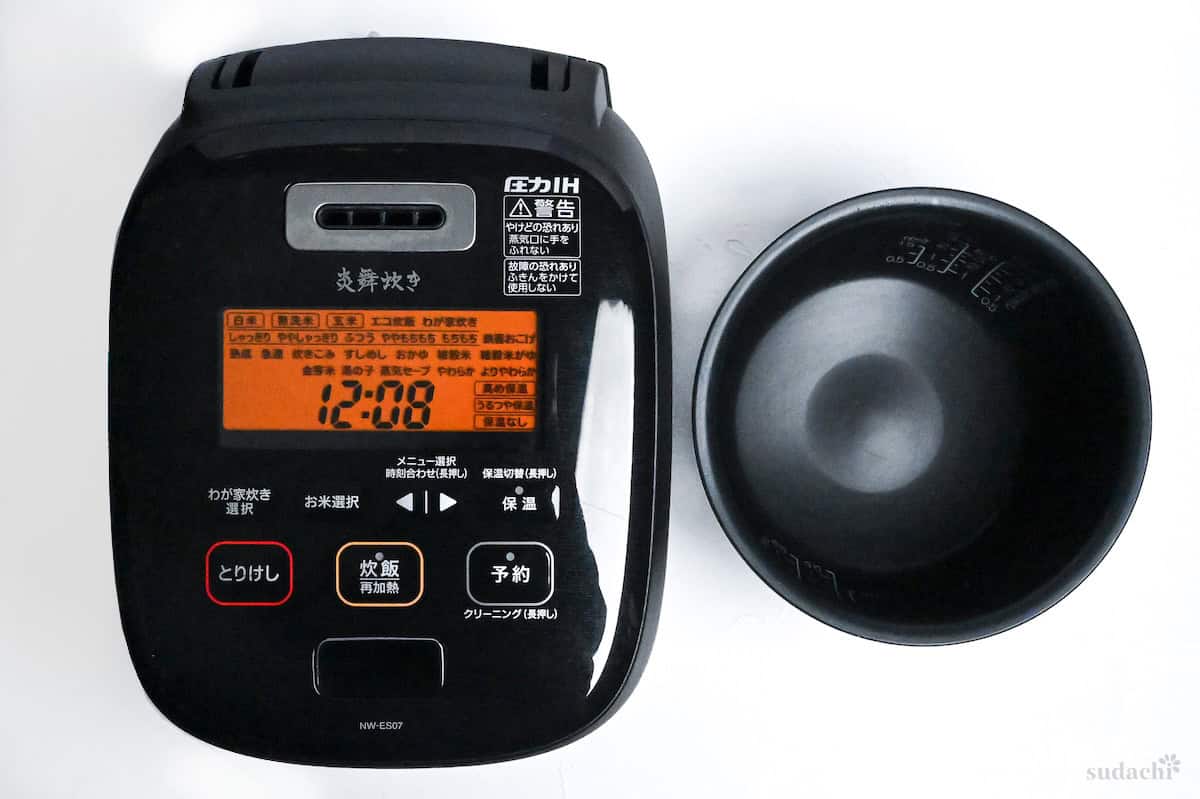
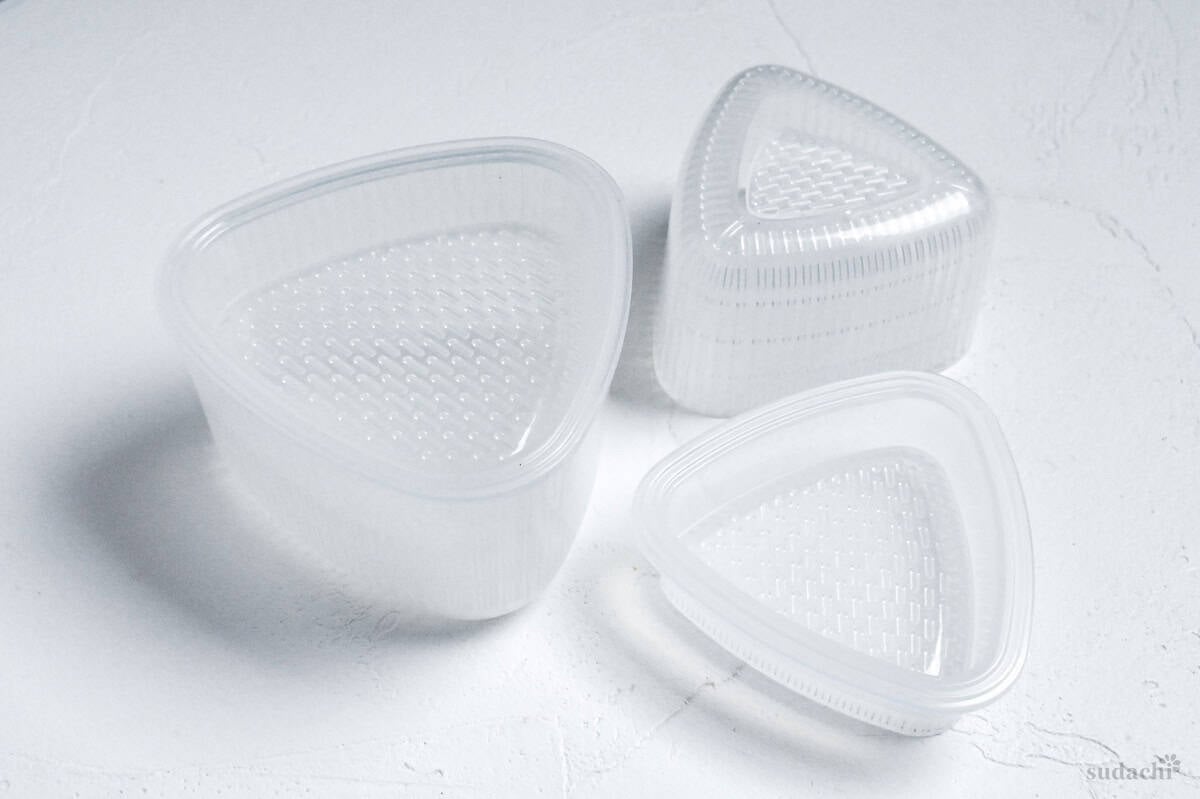
To develop this recipe, I used a Zojirushi rice cooker and a plastic onigiri mold.
i. Set a frying pan over medium-high heat and let it get properly hot before adding the cooking oil and ground chicken.

ii. As the chicken cooks, break it apart. Continue until it’s no longer pink and the meat has browned in places.
iii. Stir in the soy sauce, mirin, sugar, and sake, then cook down the mixture. Keep stirring as the small amount of liquid boils off.

iv. Remove the pan from the heat once no liquid remains.
i. Add the cooked rice and soboro to a large bowl. Stir thoroughly to distribute the chicken evenly.

ii. Separate the mixture into 6 equal portions. An even mix and equal portions before shaping keep the finished onigiri consistent in both flavor and size.

i. Fill an onigiri mold with 1 portion of rice, press to shape it, and release the rice ball. Repeat with the remaining portions.

I find rice mixed with chicken difficult to shape by hand, so I use a mold. A cheap plastic onigiri mold is all I use.
Note: For shaping onigiri by hand, salt your hands lightly first.
ii. Wrap one strip of nori around each rice ball.

iii. Serve straight away.
If you follow the default recipe, it will yield 6 servings.

Tips for the Best Chicken Rice Balls
- Cook off every drop of soboro liquid before mixing. Leftover liquid seeps into the rice, dulling the flavor and making the onigiri soft and prone to falling apart.
- Don’t leave cooked rice on keep-warm for long. A lengthy wait dries the surface of the grains, so they stick together less. Mix the cooked rice with the chicken soon after it’s ready.
- Use a gentle press when filling the mold. Rice mixed with chicken is more fragile than plain rice, which can make a firm press seem like a good idea. Too much pressure crushes the grains, though, so press just firmly enough for the rice to hold its shape.
Fill the mold gently with dry soboro and rice that hasn’t dried out, and you get an onigiri that won’t fall apart in your hand.
Storage & Meal Prep
Fridge: Avoid it, as the rice hardens.
Freezer: Wrap each warm onigiri in plastic without nori. Once cool, transfer to a freezer bag. Store for about 1 month, best within 2 weeks.
Meal prep: Refrigerate cooled, sealed soboro for 2 to 3 days. Mix and shape the day you eat.
Reheating: Microwave from frozen and add fresh nori just before eating. Counter thawing dries the rice and thaws it unevenly.
What to Serve With Soboro Onigiri
- Silken Tofu Miso Soup
- Dashimaki Tamago (Japanese Rolled Omelette)
- Easy Takuan (Pickled Daikon)
- Spinach Ohitashi
Chicken Onigiri Troubleshooting
Ground chicken sets into clumps if it browns for too long without being broken apart. While it’s still in the pan, gather 4 or 5 long cooking chopsticks into a bundle, push down on the clumps to split them, and stir the meat into crumbs. For the next batch, begin breaking up the chicken as soon as it goes into the pan and continue throughout browning.
After you add the seasonings, lingering liquid means either the heat is too low or it needs longer to cook down. Raise the heat and keep stirring until the pan is free of liquid, then take it off the heat.
Once wrapped around rice, nori absorbs moisture and softens while it waits to be eaten. Keep that crisp texture by adding a fresh strip just before you take a bite.
More Japanese Rice Recipes
- Salmon Onigiri
- Takikomi Gohan with Chicken
- Pork-Wrapped Nikumaki Onigiri
- Yaki Onigiri (Grilled Rice Balls)
Now that you’ve mixed soboro all through the rice, try a ball with the filling tucked inside or one that hits the grill, both waiting in my Japanese rice recipes.
Did You Try This Recipe?
I would love to hear your thoughts!
💬 Leave a review and ⭐️ rating in the comments below. 📷 I also love to see your photos – submit them here!

Chicken Soboro Onigiri (Japanese Ground Chicken Rice Ball)
Ingredients
- 600 g cooked Japanese short-grain rice about 100-120 g per rice ball
- 1 tsp cooking oil
- 100 g ground chicken thigh, breast, or a mix, or ground turkey
- 1 tbsp Japanese soy sauce (koikuchi shoyu)
- ½ tbsp mirin
- 1 tsp sugar
- 1 tsp sake
- 6 strips roasted seaweed for sushi (nori) a full sheet cut into 6
The ingredient brands and tools I trust are in my Japanese pantry guide and my cooking tools guide.
Can’t find certain Japanese ingredients? See my substitution guide here.
Instructions
- Heat up a frying pan on a medium high heat. Once hot, add 1 tsp cooking oil and 100 g ground chicken and fry, breaking it up, until browned.

- Add 1 tbsp Japanese soy sauce (koikuchi shoyu), ½ tbsp mirin, 1 tsp sugar and 1 tsp sake to the pan and fry everything together. When the liquid has cooked away completely, remove from the heat.
- Add 600 g cooked Japanese short-grain rice and the seasoned chicken to a large bowl and mix thoroughly. Once evenly distributed, I recommend dividing into equal portions to ensure all the onigiri are the same size.
- Shape the rice in an onigiri mold. If shaping by hand, see my article how to shape the perfect rice ball.
- Once your onigiri are shaped, wrap them with nori. Eat them straight away.
- Enjoy!

So so good, I made these for my lunch today and I was not disappointed at all.
Thank you! Glad you enjoyed them 🙂
I had to do some substitutions because I don’t use alcohol even in my cooking, and despite that this was very good and definitely something I will do again. Thank you for sharing the recipe.
Hi Kyameron,
Thank you for trying the recipe, glad you enjoyed it!
Would you mind sharing your substitutions? It would be useful for other readers who don’t use alcohol in their cooking.
Thank you again!
Well thought out and description of recipe. Thanks for the perfect recipe layout on this site.
Thank you very much for your kind words!
I’m very new to cooking meat (vegetarian for years) and this was my first ever time cooking raw chicken!! Super delicious meal and super easy substitutes for those who need gluten free diet:)
Hi Eliot,
Thank you for the comment! I’m so happy you liked the recipe! 🙂
Yuto
Just made this today and this is so easy to make and also very tasty.
Hi Wendy,
Thank you for making this recipe! I’m happy to hear you enjoyed it! 🙂
Yuto
I tried this recipe several times and it’s really yummy. Easy to make. Such a masterpiece!
Hi Wendy,
That means so much, thank you for making it more than once! I’m really happy it’s been such a hit for you. 🙂
Yuto
These are so delicious!!! Highly recommend!!!
Thank you so much, Leo! 🙂