Unagi Kabayaki (Japanese Grilled Freshwater Eel)
Ingredients
For the tare:
- 3 tbsp turbinado sugar coarse light-brown zarame
- 1 tsp dark brown sugar muscovado or similar
- 5 tbsp sake
- 5 tbsp mirin
- 5 tbsp Japanese soy sauce (koikuchi shoyu)
For the eel:
- 300 g filleted freshwater eels buy gutted and boned, conger eel or catfish can stand in
- 2 tbsp sake
Instructions
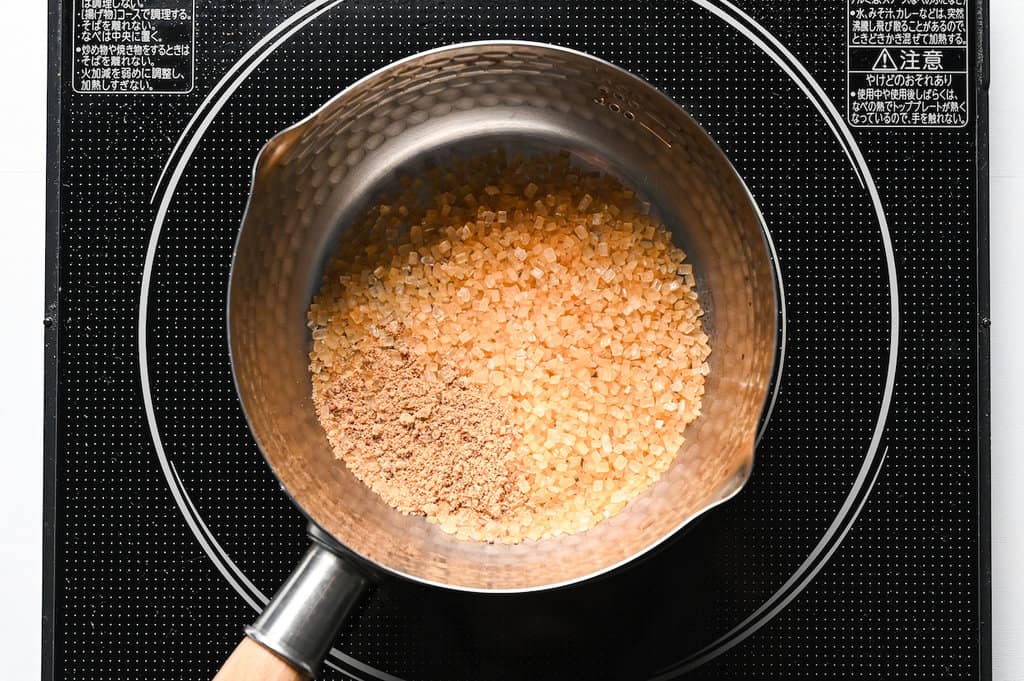
- Add 3 tbsp turbinado sugar and 1 tsp dark brown sugar to a small cold saucepan. Heat over medium-low. When the sugar starts to melt, pour in 5 tbsp sake and 5 tbsp mirin. Bring to a boil and let it bubble for 1-2 minutes, stirring occasionally.
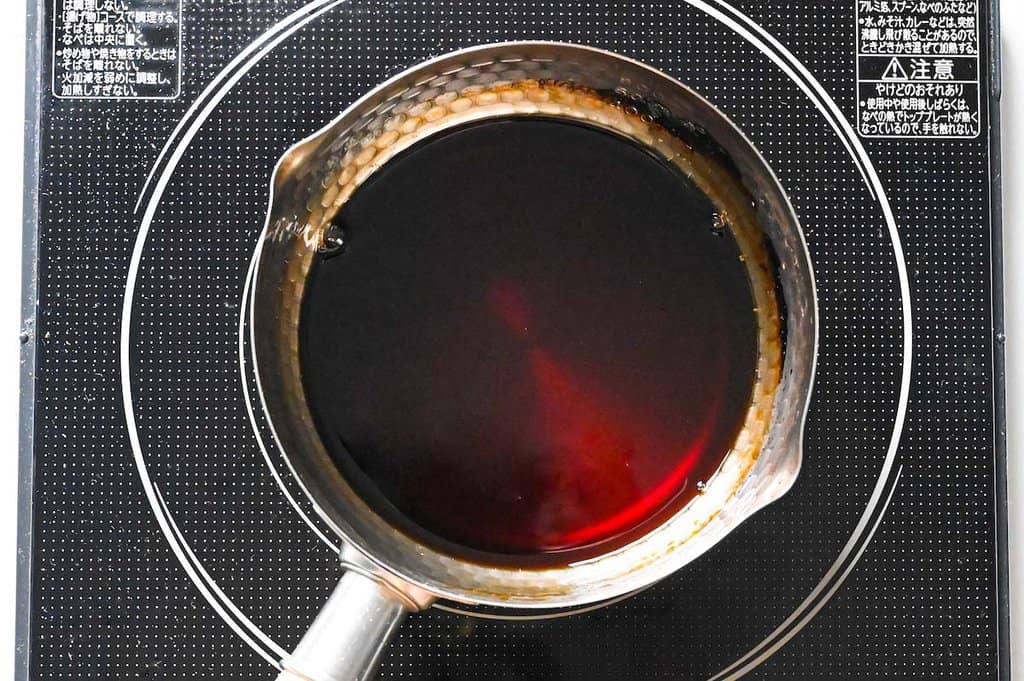
- Reduce the heat to a simmer and add 5 tbsp Japanese soy sauce (koikuchi shoyu). Stir occasionally to prevent burning and simmer until thickened to a thin syrup-like consistency, about 10 minutes.
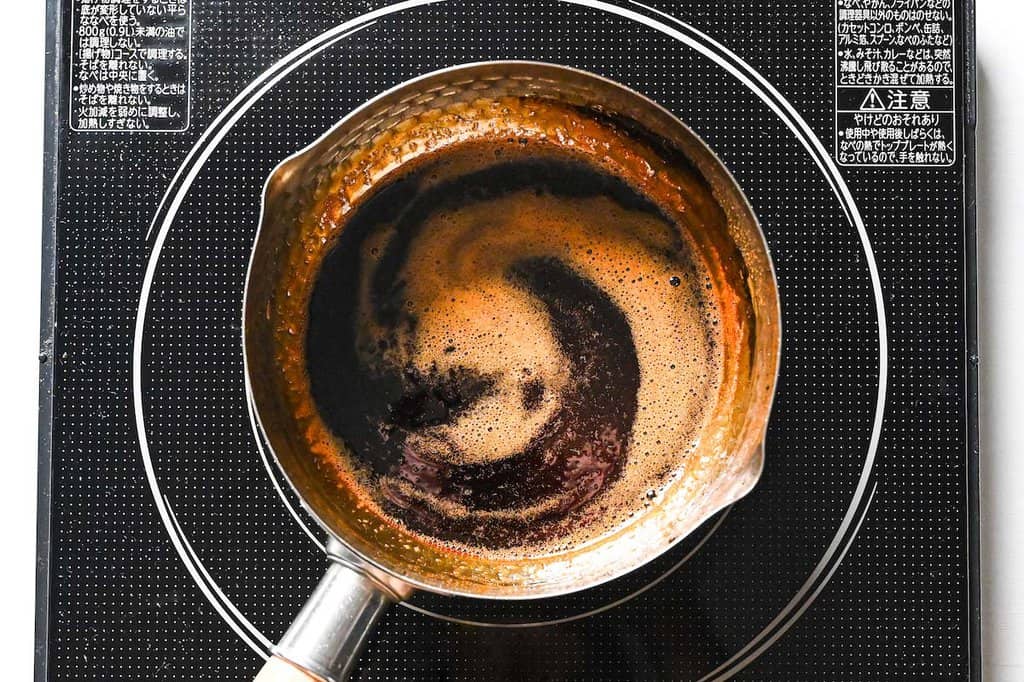
- Scoop out any foam on top, and remove the pan from the heat. Leave to cool while you prepare the eel. The sauce will thicken more as it cools.
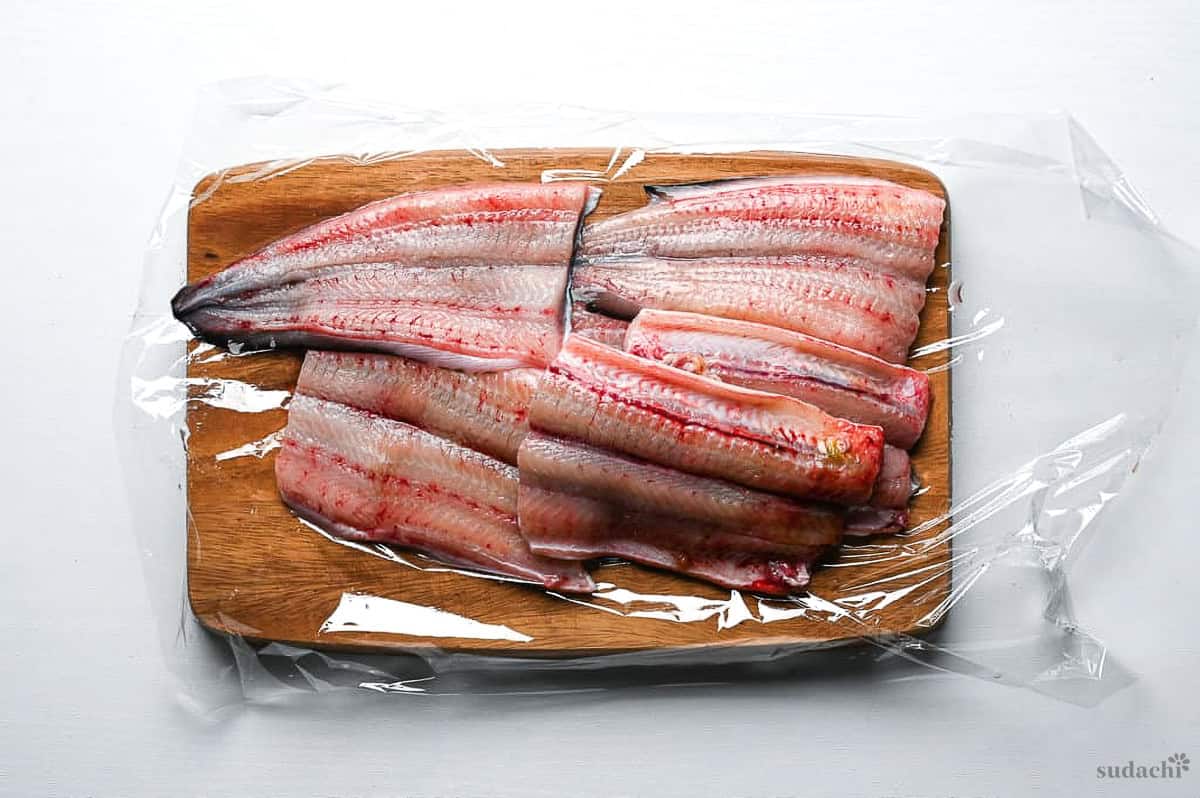
- Wash 300 g filleted freshwater eels under cold running water, and then pat dry with kitchen paper. Cover a cutting board with plastic wrap, and place the eel flesh-side up on the board. Press the a sharp knife on the area you want to cut, then carefully push the eel fillet back and forth while pressing the knife down. Cut in half or thirds.
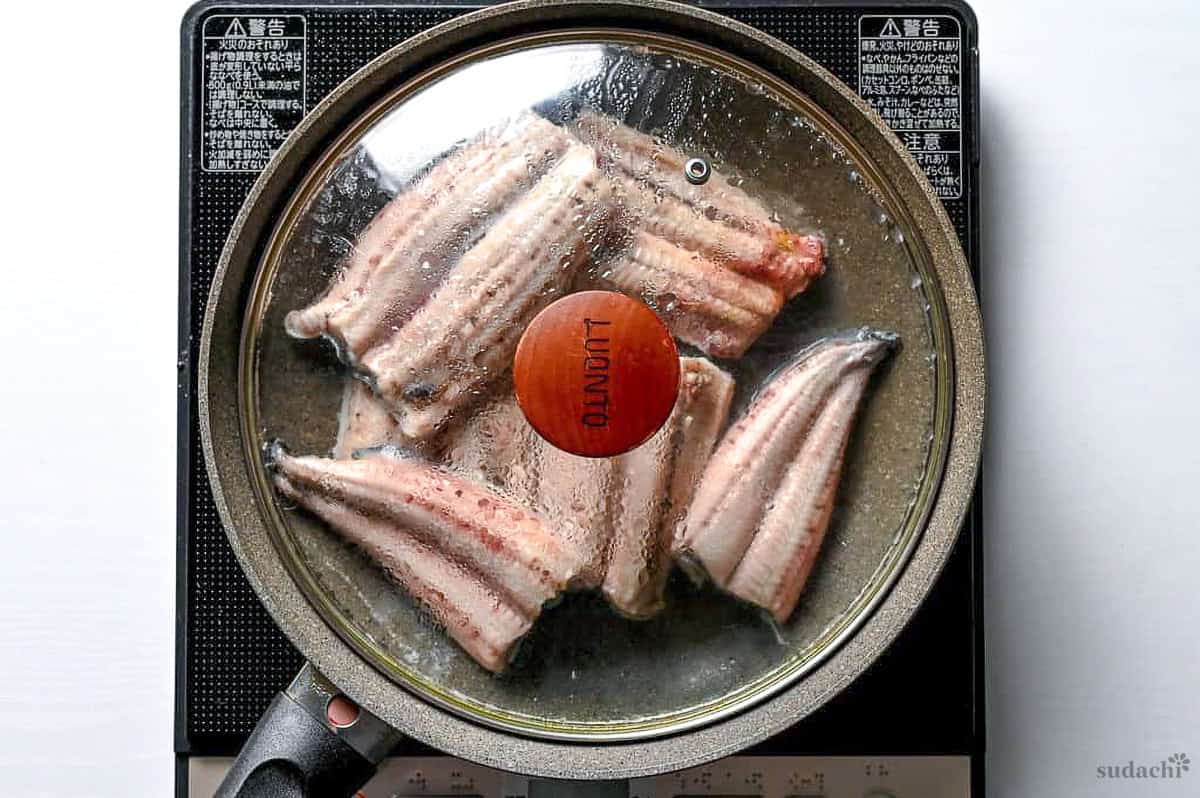
- Arrange the eel skin-side down in a large frying pan with a lid. Pour 2 tbsp sake around the pan, then cover with the lid and heat over medium-low. When it starts to steam, set a timer for 3 minutes and start to preheat your grill/broiler on medium-high.
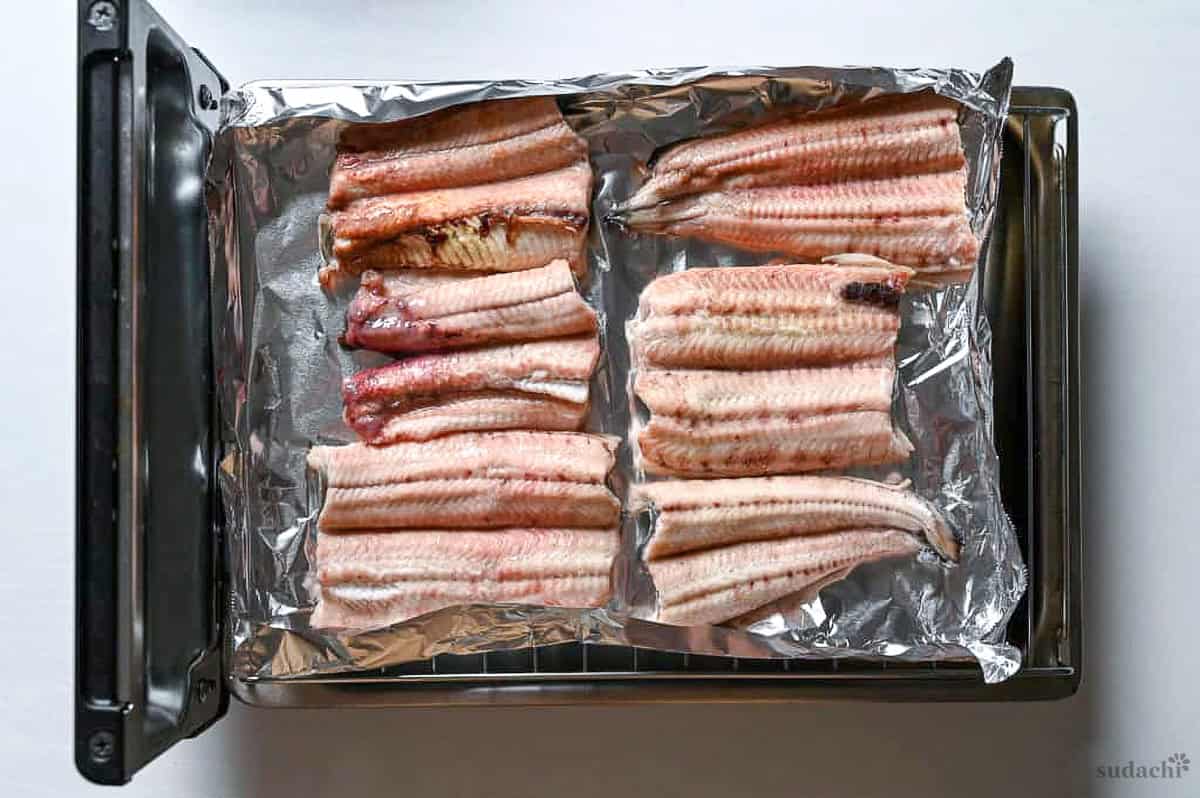
- Cover a wire rack with foil and place it on top of a baking tray. Once the eel has finished steaming, arrange it on the foil in a single layer with the flesh-side facing towards the heat source. Slide it under the grill for 6 minutes.
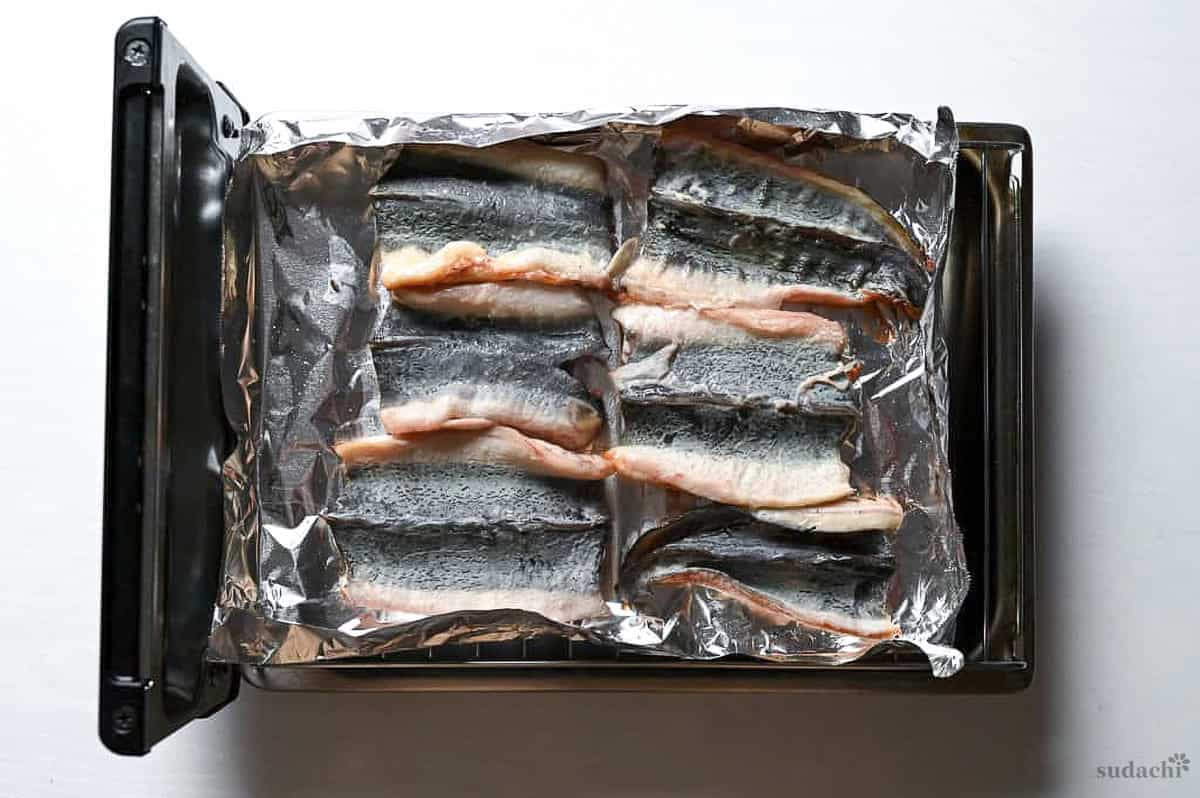
- Slide the tray out, flip the eel fillets over and push back under the grill. Grill the skin side for 5 minutes or until lightly charred.
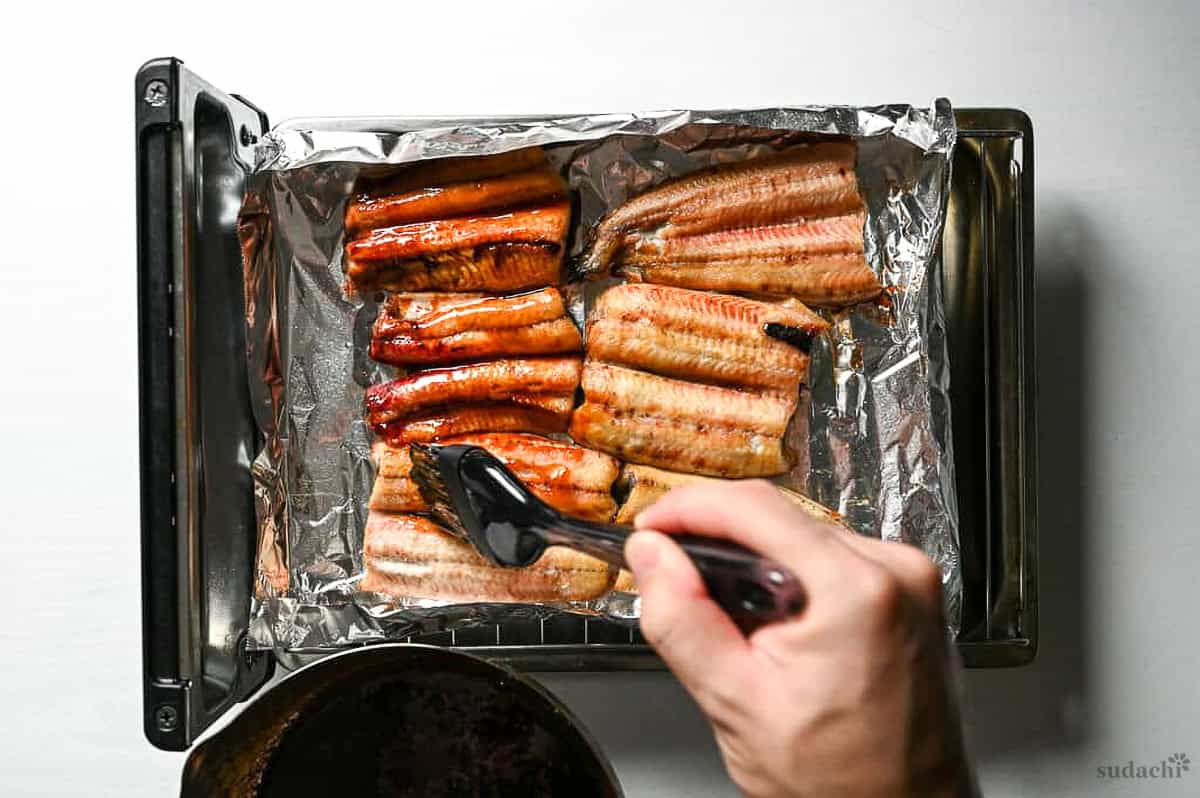
- Pull the eel out again, and brush the skin with a thin even layer of the sauce. Slide it under the grill for about 30 seconds (be careful not to let it burn), then flip the fillets, brush the flesh side with sauce and return to the grill again.
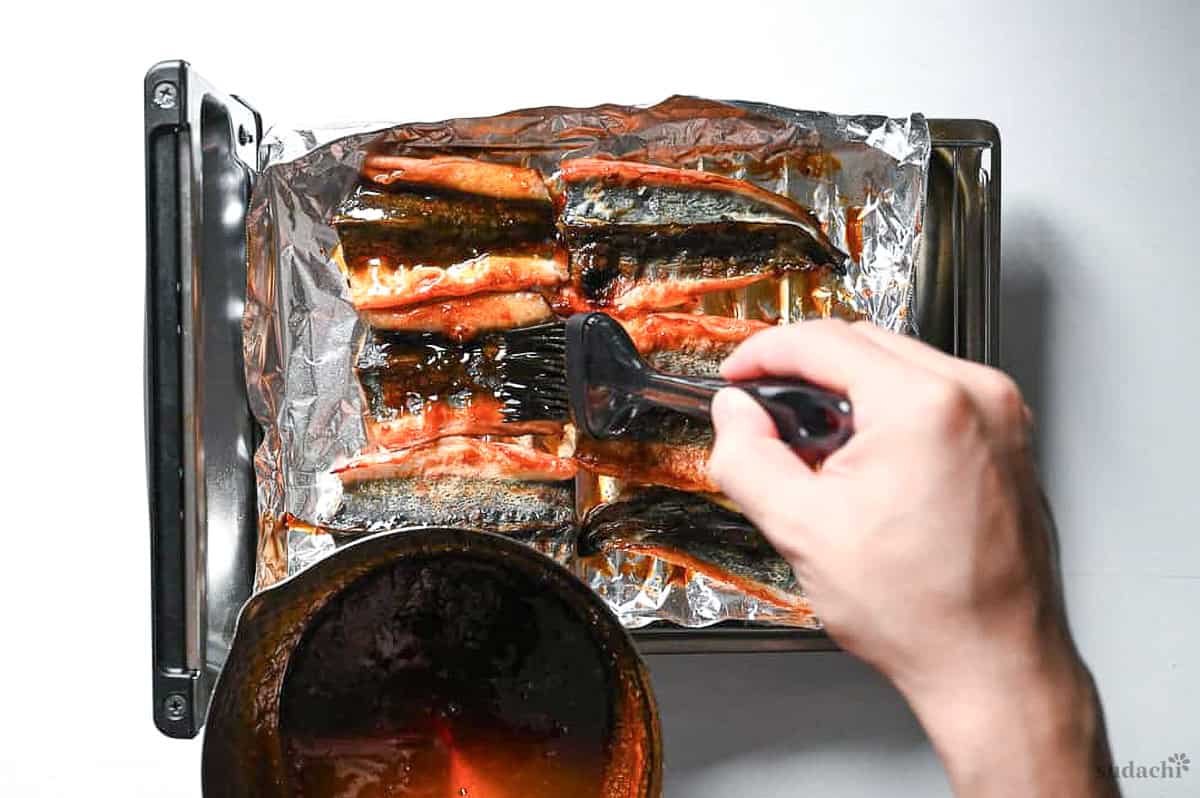
- Flip and repeat until the skin and flesh sides have been brushed with sauce and grilled three times each (6 times in total).
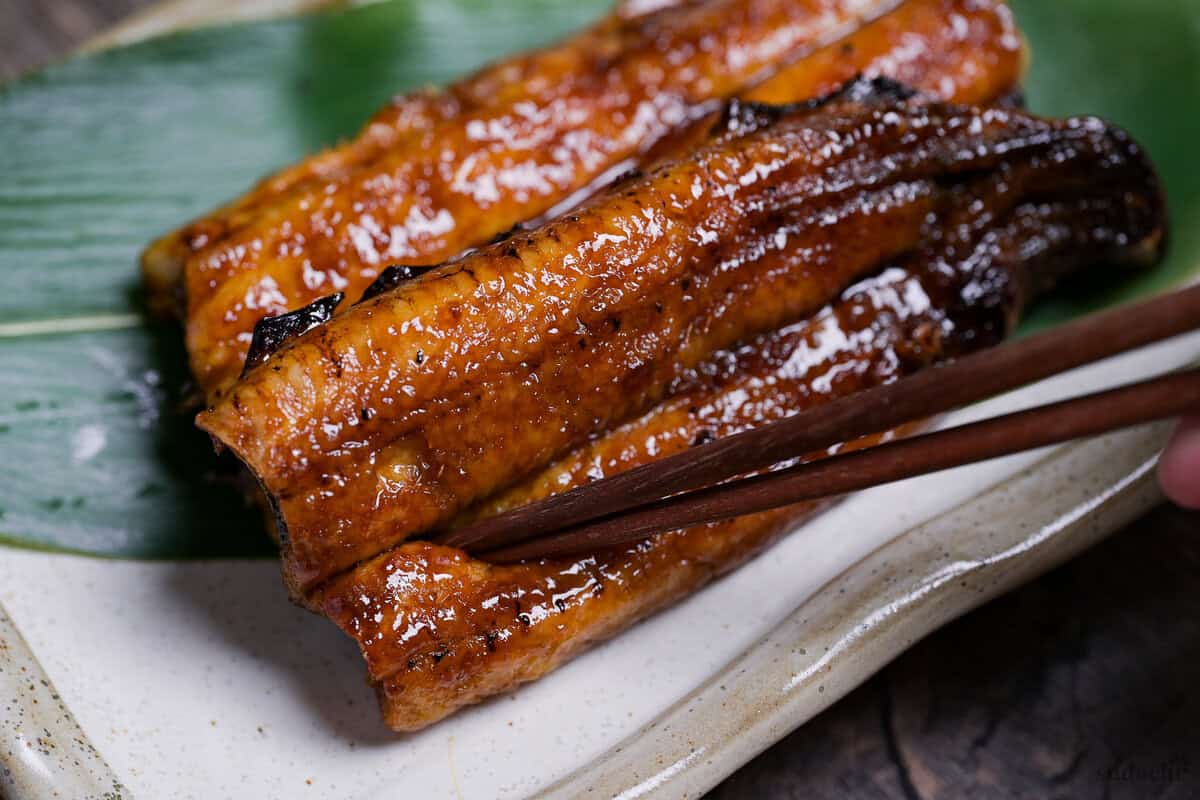
- Serve with rice, clear soup and pickles for a traditional Japanese meal. Enjoy!
Notes
Keep the sake-steam quiet: Under the lid you want soft gentle steam, not a hard sizzle. Too much heat firms the skin before the steam softens the collagen, and you lose the fluffy middle.
Cool the tare before you brush: Warm off the stove the tare is thin and runs straight off the eel into the pan. Cooled it thickens and grips, so each coat stays where you put it.
Brush 3 thin coats, never 1 thick coat: A single heavy layer of sugary tare scorches before it sets and turns bitter. Thin layers each caramelize and grip first. Color, then flavor, then shine.
Read the glaze-to-burn line every pass: On every coat, watch the gap between a deep glossy glaze and a scorch. Push too far it chars, pull too early the skin goes flabby.
Full Recipe QR Code↑↑