



Featured Comment
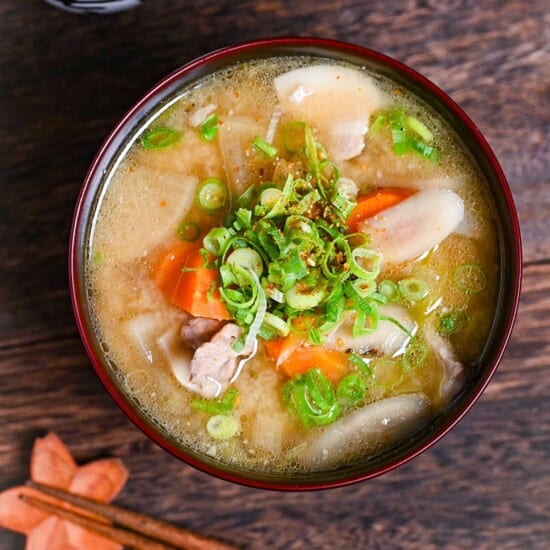
Wholesome and excellent. A recipe that works with great variation in the ingredients. The butter is a welcome addition that adds a thickness and depth to the pork.
★★★★★
– Jason
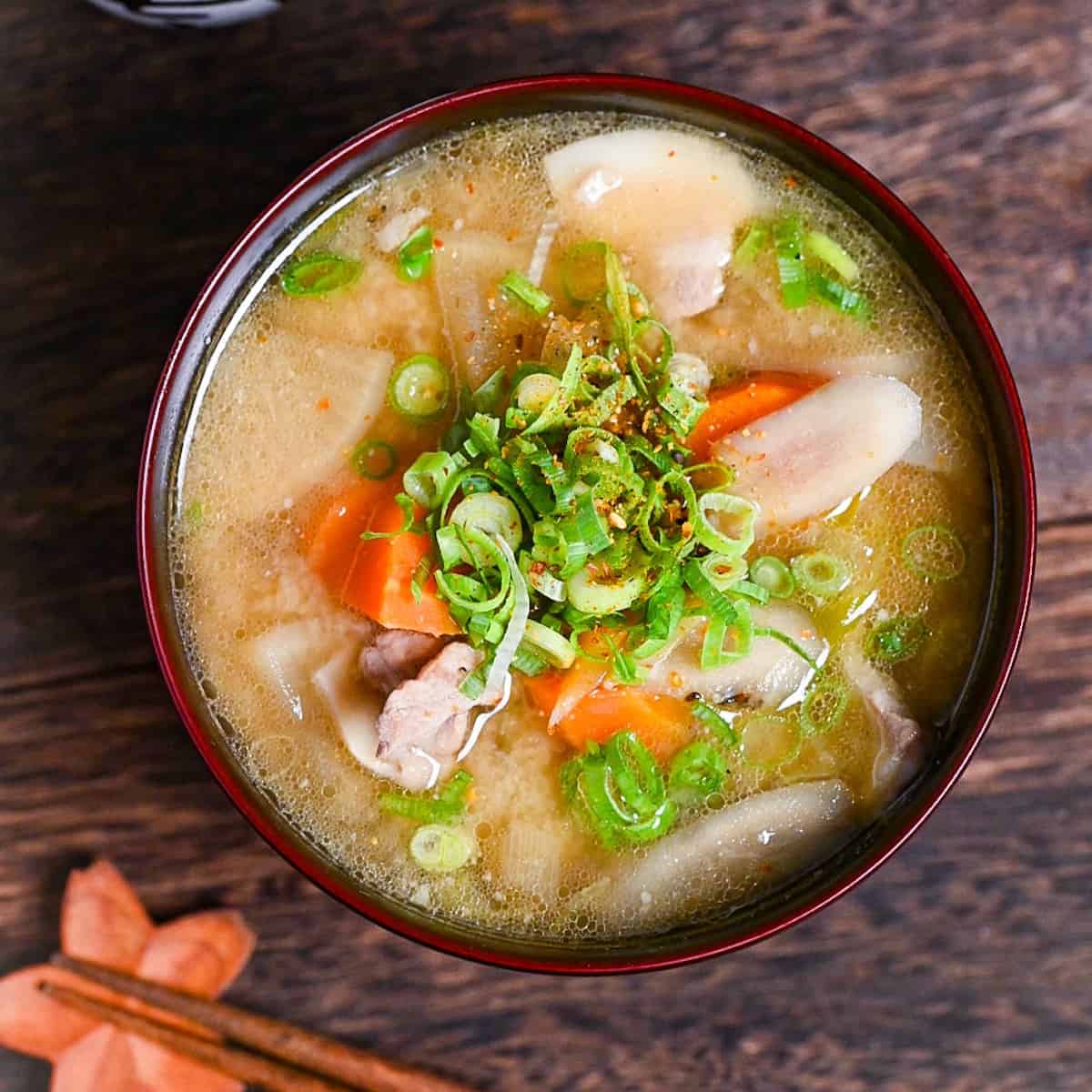
Every household in Japan makes tonjiru differently, and all of them think theirs is best. My version is rich, bold, and built to draw out every drop of umami from the pork and miso.
One sip on a cold winter day, and I promise this is the soup that empties the pot before anyone gets seconds. This is everything I know about making it.
Tonjiru
Recipe Snapshot
- What is it? A Japanese miso soup built with pork belly and root vegetables. Unlike regular miso soup, tonjiru is hearty enough to serve as a main dish.
- Flavor profile: Rich, porky, and deeply savory. Rendered pork fat amplifies the miso’s fermented umami, while slow-simmered root vegetables contribute natural sweetness.
- Why you’ll love this recipe: Searing the pork first builds layered umami that many tonjiru recipes skip entirely. A butter and ginger finish adds richness and warmth that makes this version stand apart.
- Must-haves: Pork belly, awase miso (blended miso for balanced flavor), a large pot that can go from searing to simmering.
- Skill Level: Easy. The only technique that needs attention is dissolving the miso off-heat to preserve its aroma. Everything else is forgiving.
Summarize & Save this content on:
What is Tonjiru?
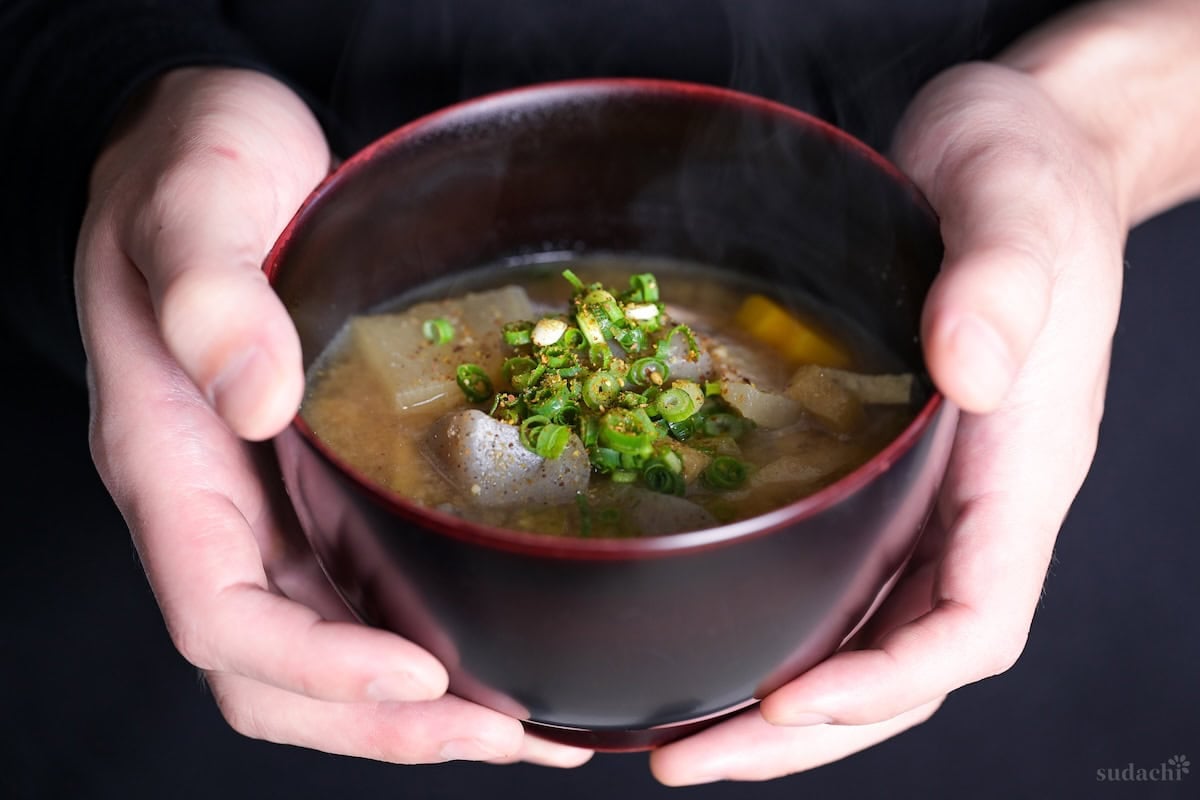
Tonjiru (豚汁) is Japan’s ultimate comfort soup made with pork and root vegetables in a miso-seasoned broth. The name combines ton (豚, pork) and jiru (汁, soup). Some regions call it butajiru, a different reading of the same characters. Unlike regular miso soup, tonjiru is loaded with enough protein and vegetables to work as a main dish rather than a side.
For many Japanese people, the smell of tonjiru simmering is the smell of coming home. It’s one of the most beloved home-cooked dishes in Japan. Every household makes it differently, and you will find it everywhere, from school lunches and izakaya menus to outdoor shrine visits and disaster relief stations.
The popular Netflix series Midnight Diner (深夜食堂) features it as the only official menu item, which tells you something about its cultural weight. If you swap the pork for chicken, the dish becomes torijiru.
Pork Miso Soup Ingredients
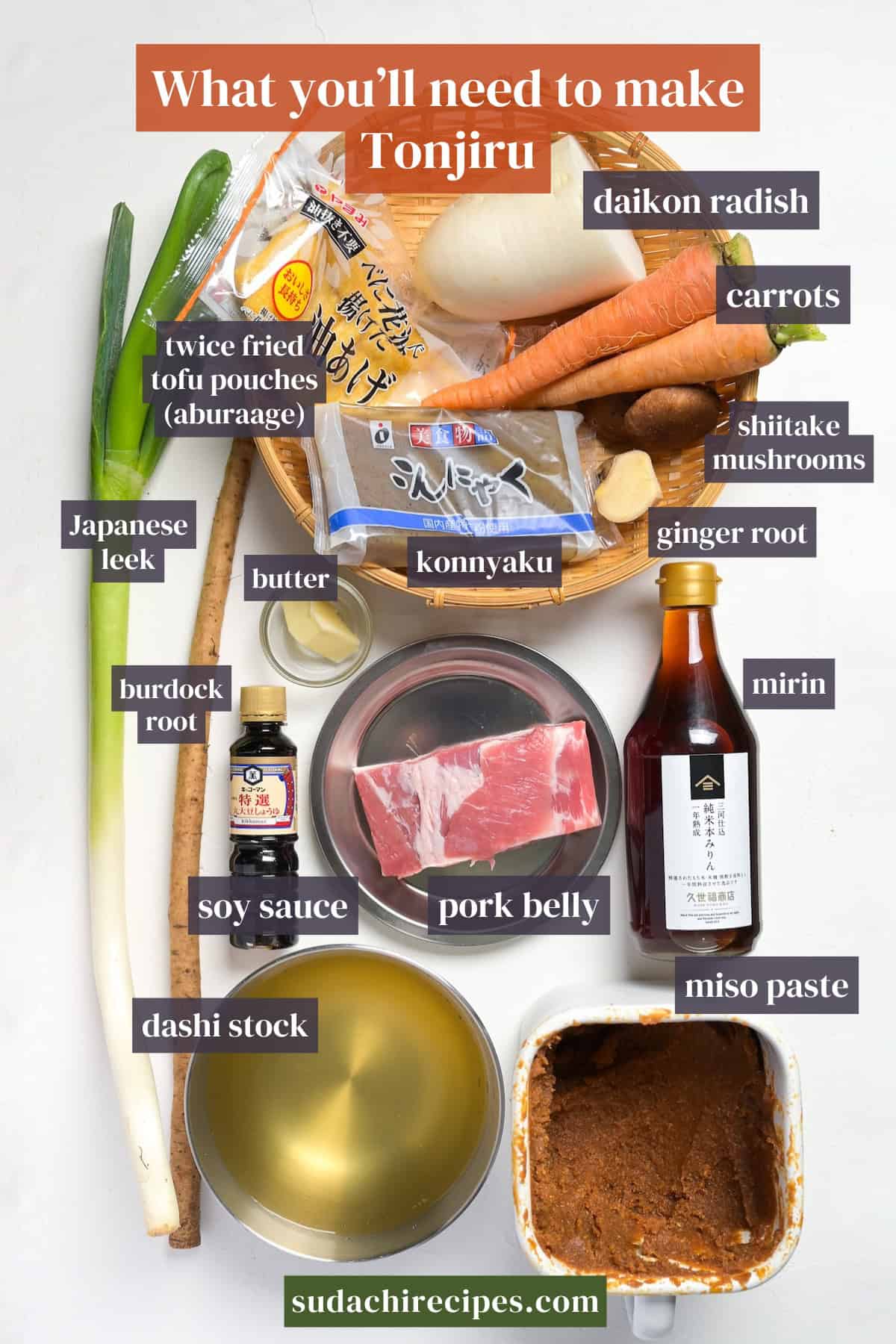
- Pork belly: This is the ingredient that makes tonjiru what it is. Pork belly’s fat renders out during searing, becoming the base that carries flavor through the entire soup. Leaner cuts will give you a thinner, less satisfying result. Buy it as a block and slice it yourself to control thickness, or look for pre-sliced pork belly at Japanese or Korean grocery stores. Samgyeopsal-cut pork works well too.
- Dashi stock: The broth base that carries everything together. My go-to method is homemade dashi packets, one batch on a Sunday, enough for weeks, and the flavor is the real thing. If you’d rather skip that step, high-quality store-bought dashi packets are a solid choice too. For the absolute best dashi, make awase dashi from scratch with katsuobushi and kombu. Instant granules will technically work, but I treat them as a last resort, not a go-to.
- Miso paste: The type of miso you use will shape the entire character of your tonjiru. Awase miso (合わせ味噌), a blend of white and red, gives you the most balanced flavor and is what I use in this recipe. White miso (白味噌) is milder and sweeter, red miso (赤味噌) is deeper and saltier. There is no wrong answer here, just different personalities.
Substitutions, Variations & Customization
Substitutions:
- Pork belly → Pork shoulder (Boston butt) is the most accessible alternative. It has roughly half the fat of belly, so the rendering step will produce less drippings and the broth will be lighter. Still satisfying, just a different character. Slice it thin yourself or ask your butcher to cut it to about 2-3mm.
- Gobo (burdock root) → Parsnip is the closest texture match at a regular Western supermarket. Expect noticeably more sweetness and none of gobo’s earthy bitterness, but it holds up well in the soup. Cut about 1.5x thicker than you would gobo, since parsnip softens faster.
- Konnyaku → Shirataki noodles are the closest swap, since they are made from the same konjac plant. Or simply leave konnyaku out.
- Aburaage (fried tofu pouch) → Cut firm tofu into 1cm slabs and pan-fry until golden on both sides. It won’t have the same spongy, broth-soaking quality, but it adds substance. Or just skip it.
- Daikon → White turnip works in a pinch, though it’s sweeter and softer. Korean radish (mu) is a closer match if you can find it at an Asian grocery store.
- Negi (Japanese green onion) → Regular leek is the closest match. Add it a few minutes earlier than you would negi, since leek takes longer to soften, and use slightly less since it’s bulkier. Scallions are too thin for cooking in the soup but work fine as a topping.
Have trouble finding Japanese ingredients? Check out my ultimate guide to Japanese ingredient substitutes.
Variations:
- Chicken version (torijiru): Replace the pork with chicken thigh and you get torijiru, a lighter but equally comforting soup. Thigh works better than breast because the fat keeps the broth rich.
- Miso type → Any single miso works if you can’t find awase (blended). White miso makes the soup milder and sweeter. Red miso pushes it deeper and saltier.
How to Customize:
- Spicier: Add more shichimi togarashi at the table, or stir in a drizzle of rayu (Japanese chili oil) right before serving.
- Extra vegetables: Satoimo (Japanese taro), kabocha, or potato all work beautifully in tonjiru. Add them with the other root vegetables during the simmering step.
- Cheesy tonjiru: Sounds unusual, but dropping a slice of processed cheese (any mild melting cheese) into a hot bowl of tonjiru is a popular Japanese home hack (especially for leftovers to change it up). It melts into the broth and adds a creamy, savory layer.
How to Make My Tonjiru Soup
If you prefer to watch the process in action, check out my video of this tonjiru recipe!
Before you start (Mise en place):
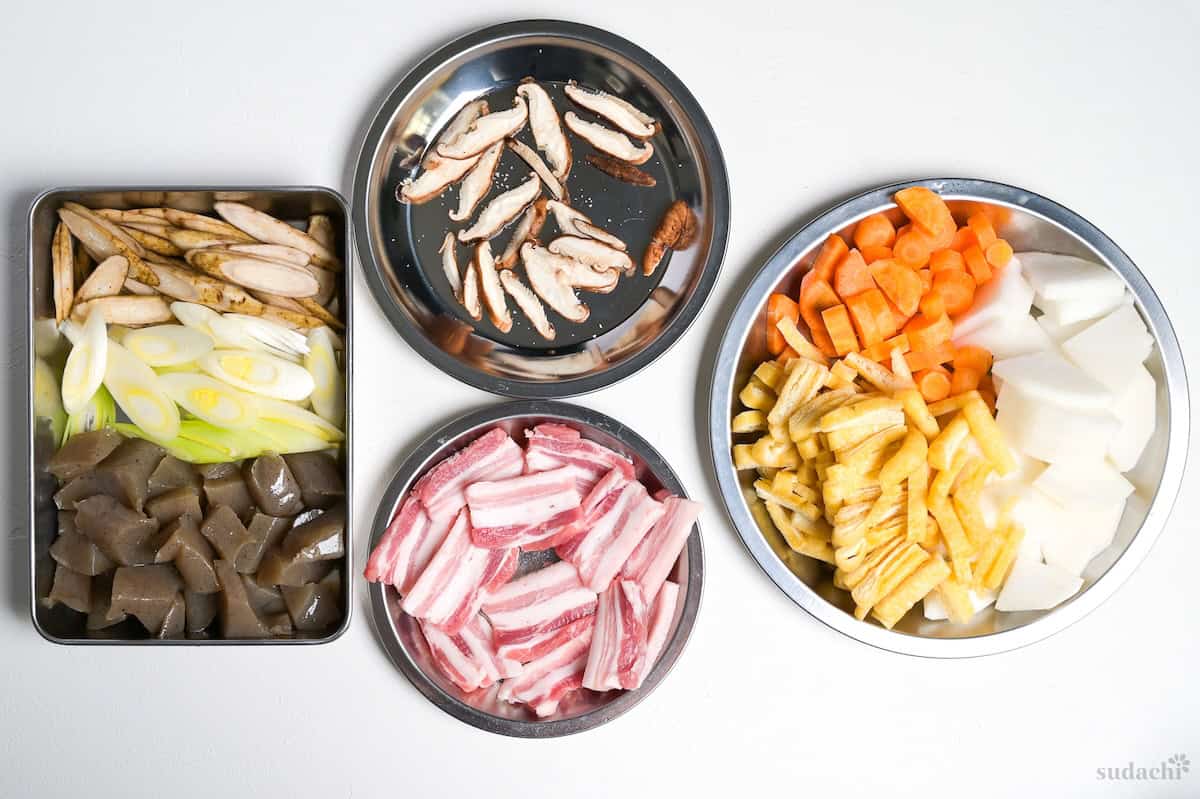
- Slice the pork belly thin, about 2-5mm. Cold pork straight from the fridge is much easier to cut cleanly. Pat each slice dry with paper towels, then sprinkle lightly with salt on both sides.
- Slice the shiitake mushrooms and sprinkle them with a pinch of salt to draw out moisture and concentrate their flavor.
- Cut the aburaage into thin strips. If you prefer, pour boiling water over the aburaage first to wash off excess surface oil.
- Cut the daikon and carrot into half-moon (or round if skinny) slices about 1.5cm thick.
- Slice the gobo and negi on the diagonal.
- Tear the konnyaku into bite-sized pieces using a spoon.
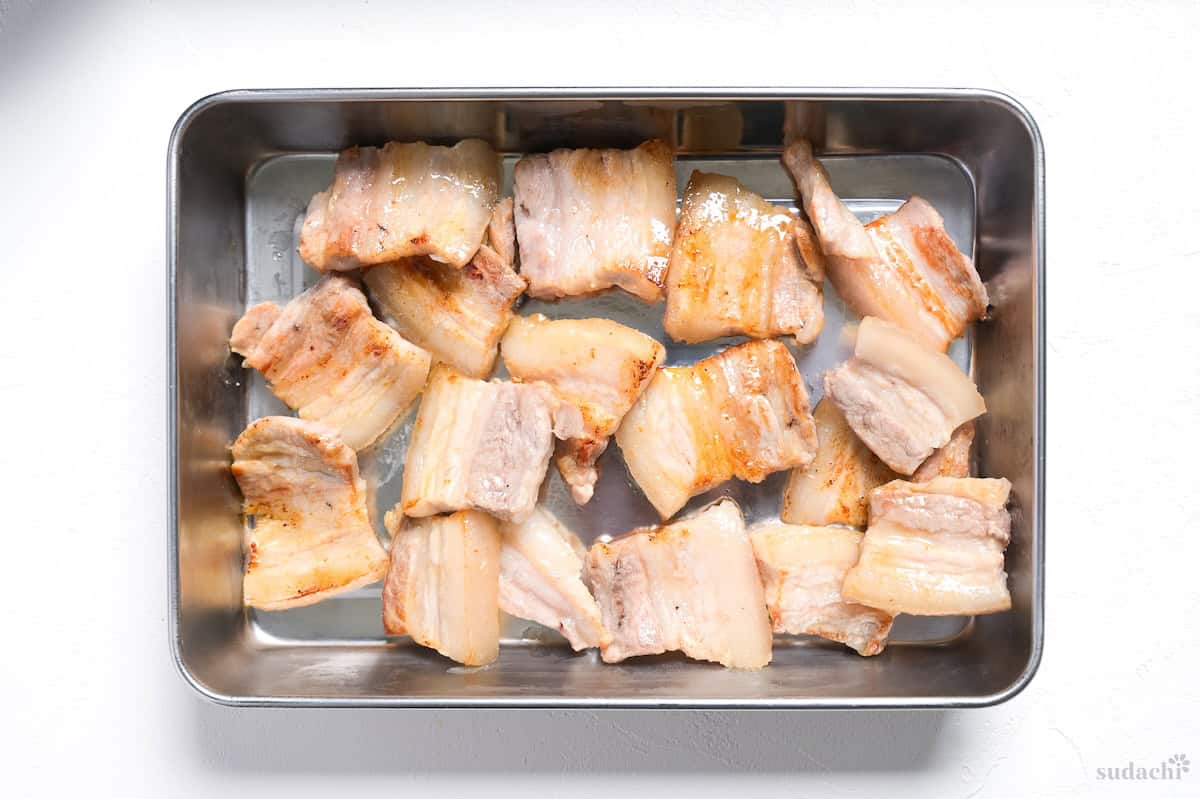
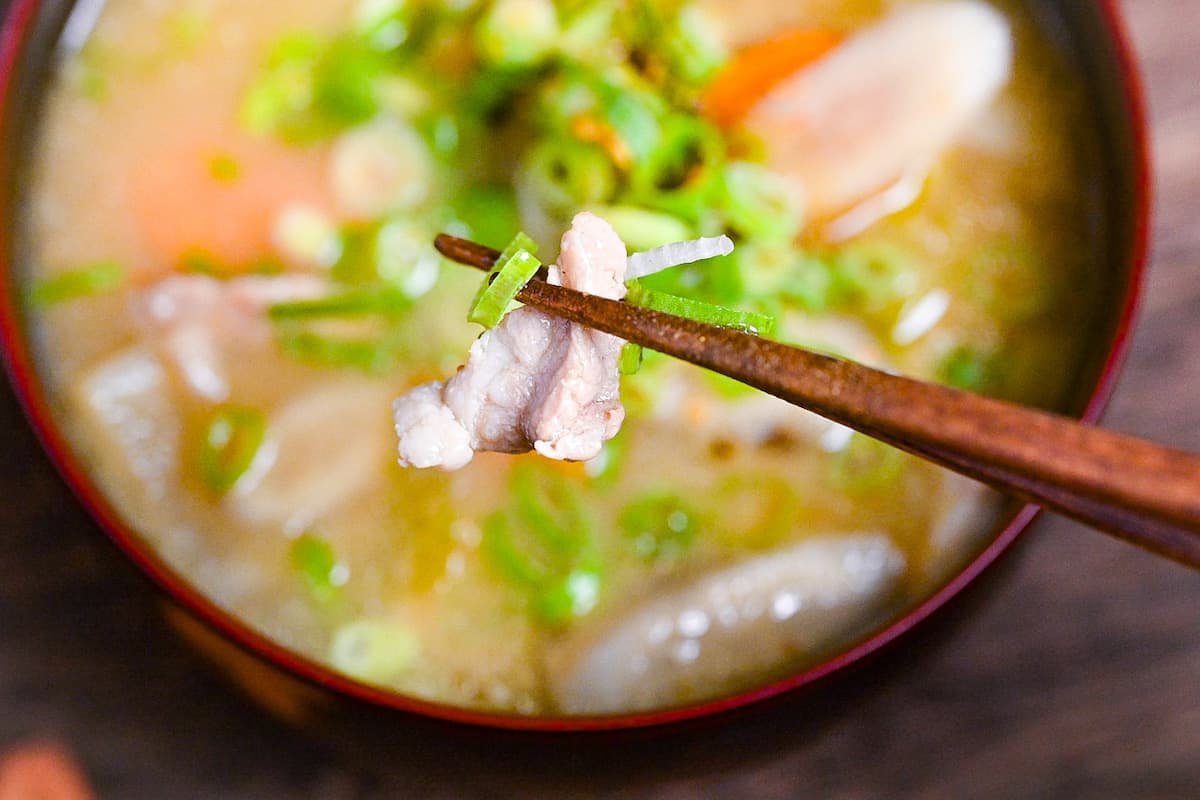
i. Heat a large pot over medium heat. Lay the pork belly slices in a single layer and let them sear undisturbed for 30 seconds to 1 minute per side, until both sides are well browned and the fat has started to render out. Work in batches if your pot is small.
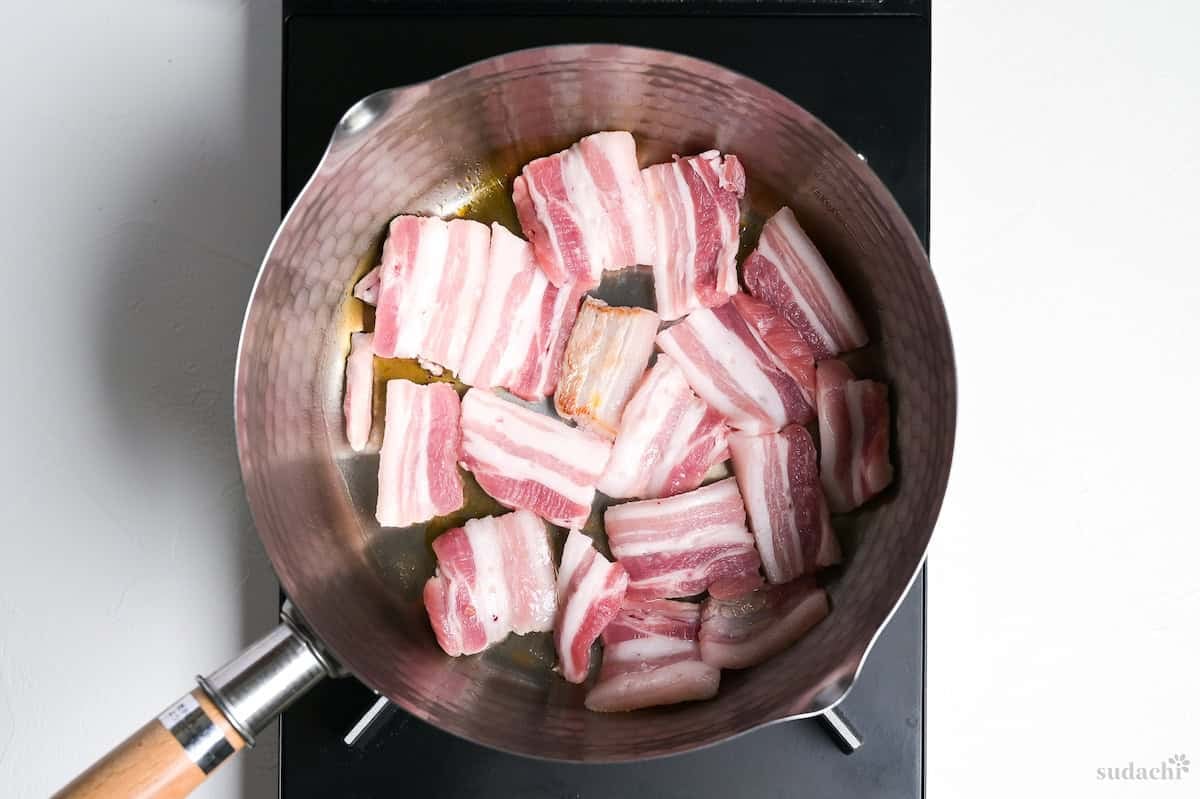
Searing first does two things: it triggers Maillard reaction compounds on the meat surface, building toasty, savory depth, and it renders the fat out, creating the cooking medium for every vegetable that follows. This one step is the biggest reason this version is a little different.
ii. Remove the pork and set it aside.
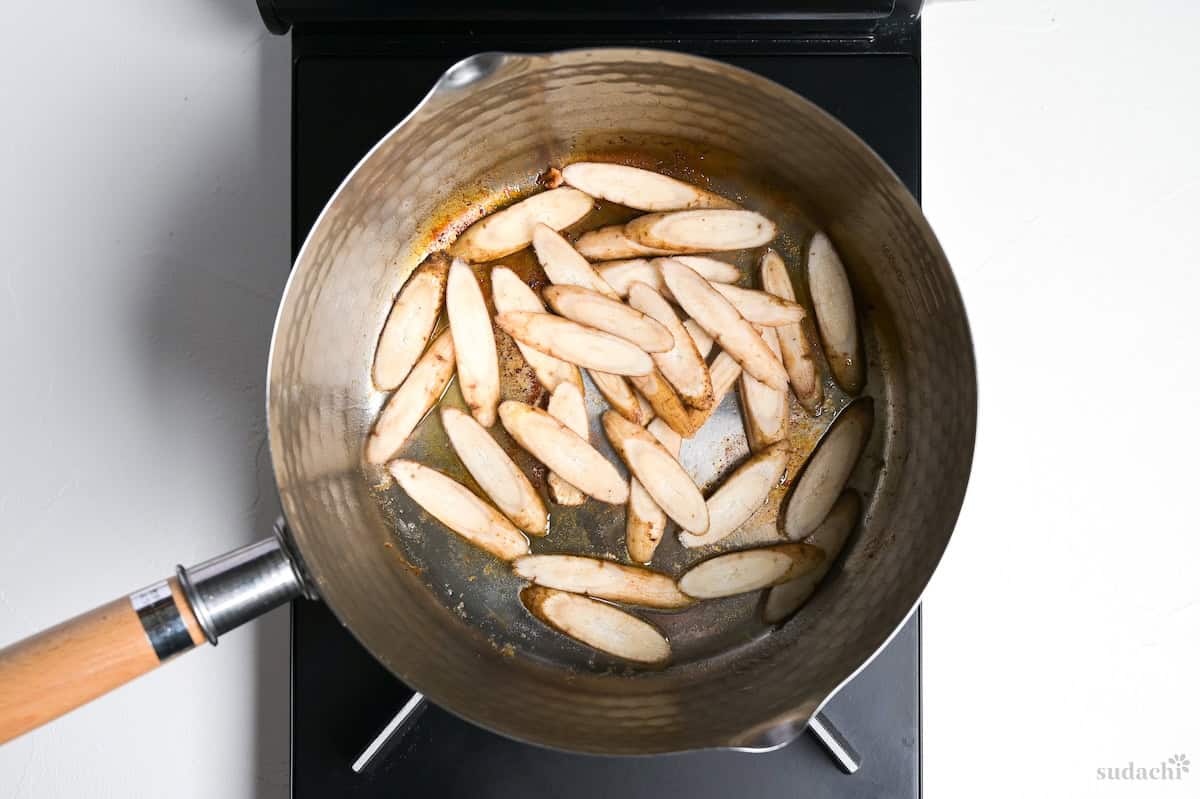
iii. Add the gobo to the rendered fat and stir-fry for about a minute. Gobo goes in first because its dense, fibrous structure needs the most time in the hot fat to release its earthy fragrance.
iv. Add the carrot and daikon and stir-fry for 2 minutes.
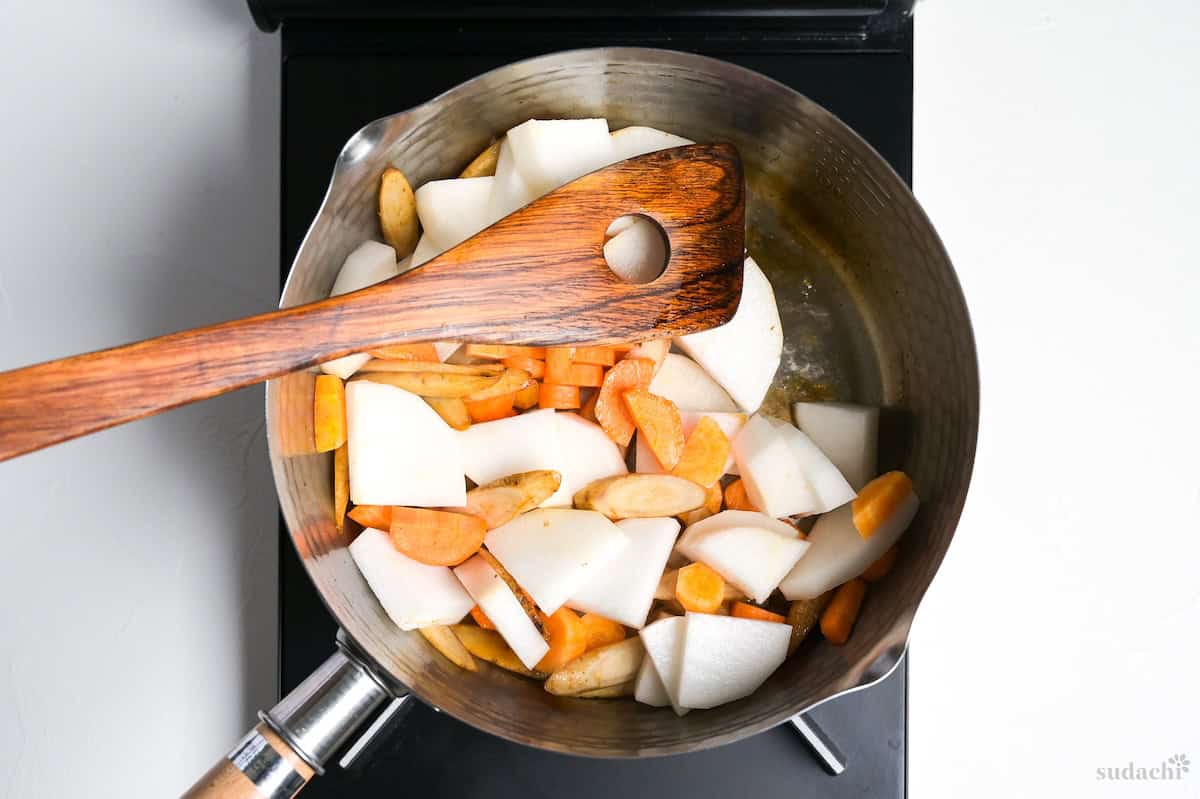
v. Then add the shiitake, konnyaku, and aburaage, and keep cooking until every piece is lightly coated in the rendered fat.
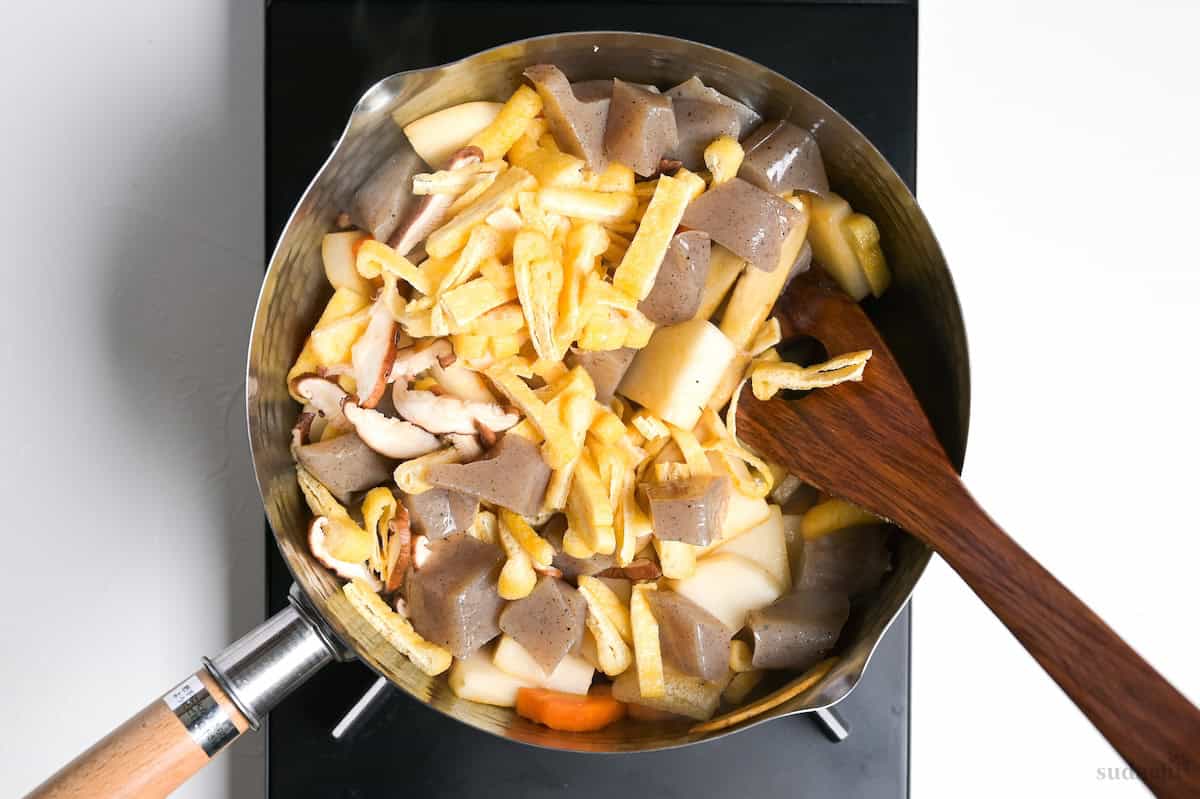
Adding vegetables in stages rather than all at once ensures each ingredient gets direct contact with the rendered pork fat. By the time the shiitake and konnyaku join, the fat is already carrying the earthy, toasty notes of everything before them.
i. Pour in the dashi stock and give everything a gentle stir.
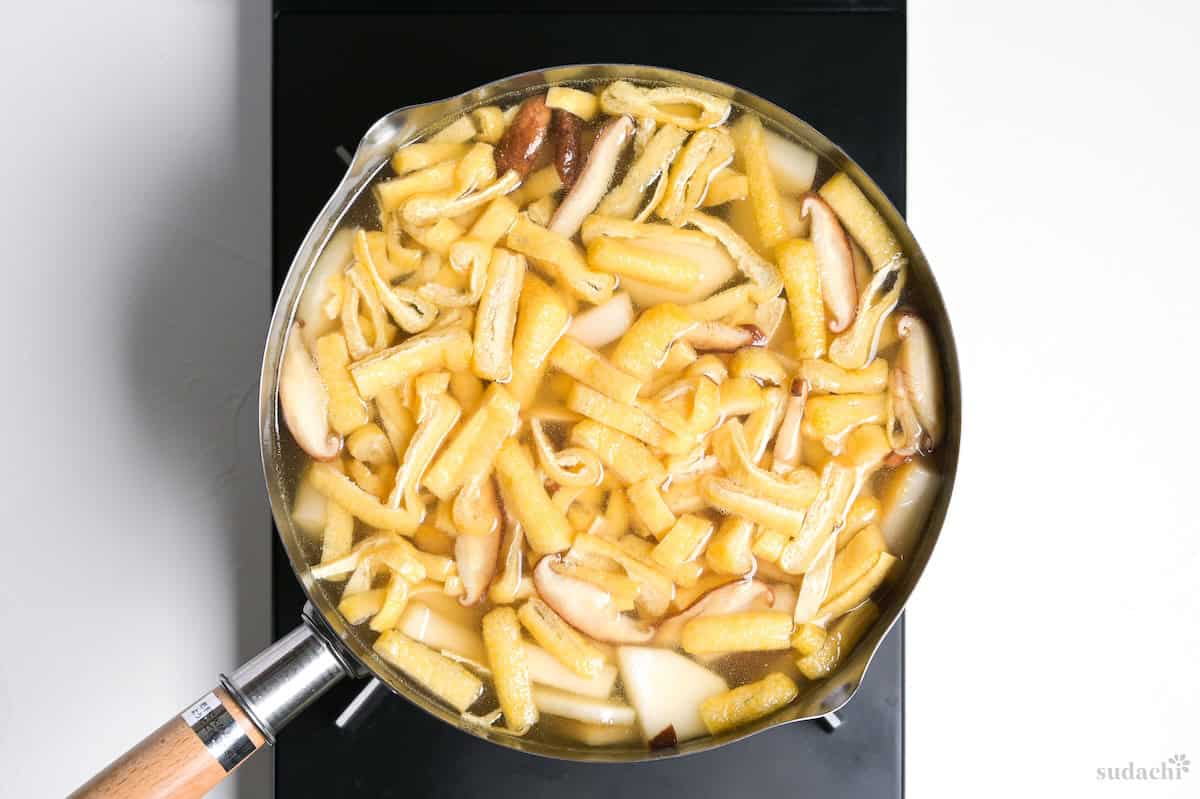
ii. Add the soy sauce and mirin. These two work together to build a savory-sweet backbone beneath the miso that comes later.
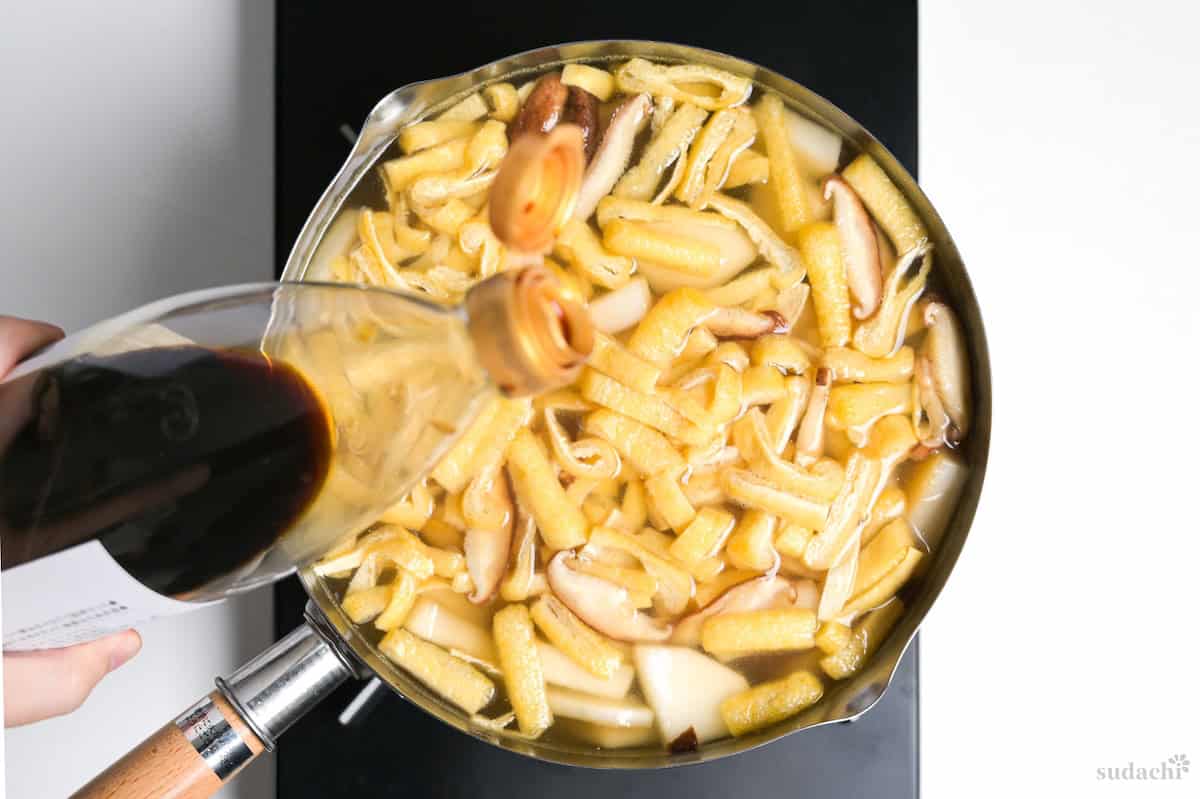
iii. Bring the pot to a gentle simmer, not a rolling boil. You want small bubbles rising lazily from the bottom, around 90-95°C (194-203°F). Let it simmer for about 10 minutes, until the daikon is just tender enough to pierce with a chopstick but still has some bite.
A rolling boil can break vegetables apart, clouds the broth, and destroys delicate flavors. Gentle heat keeps the vegetables intact and the broth clear, while letting root vegetable starches slowly gelatinize for a naturally sweet, silky body.
iii. Add the negi and return the seared pork to the pot. Simmer for another 5 minutes.
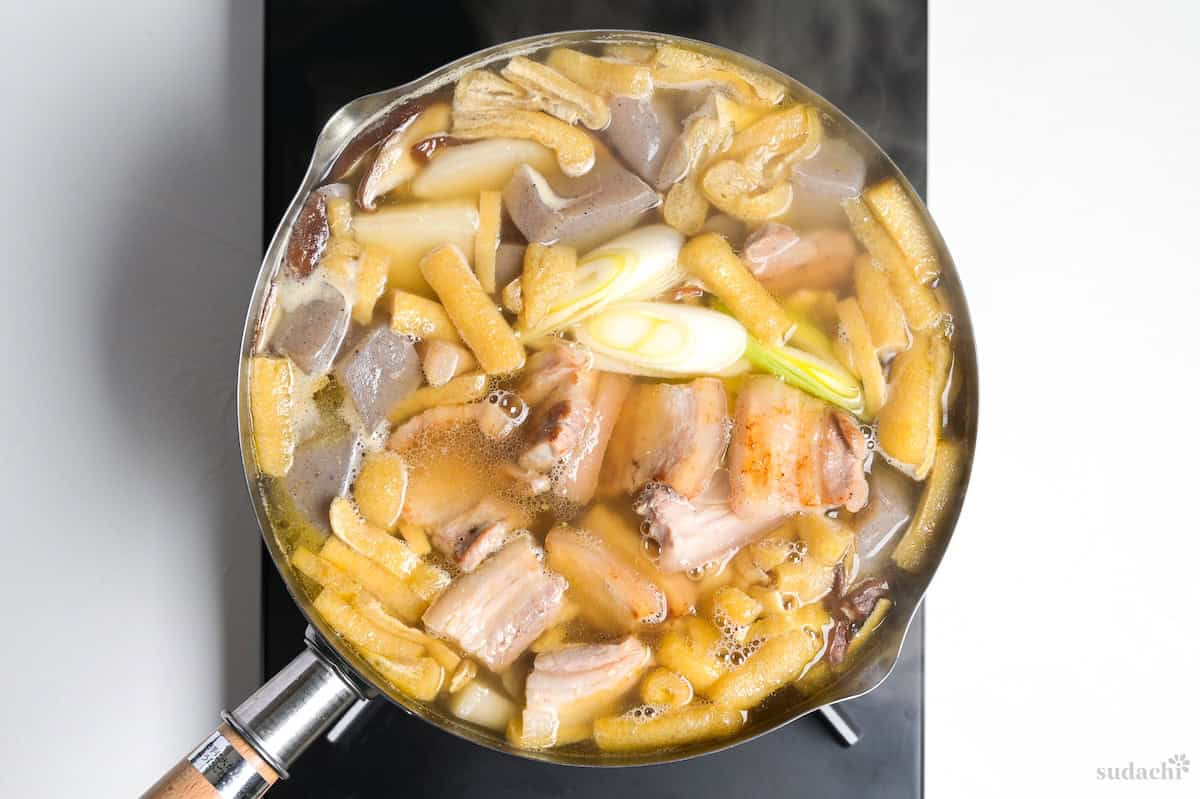
At this thickness, the pork slices will cook through completely during the simmering time. The negi goes in last because it only needs a few minutes to soften, and overcooking kills its fresh brightness.
i. Turn off the heat completely. Place the miso in a miso strainer, a small sieve, or even a ladle, and submerge it in the hot broth. Use chopsticks or a spoon to dissolve the miso through the mesh into the soup. Stir gently until fully incorporated.
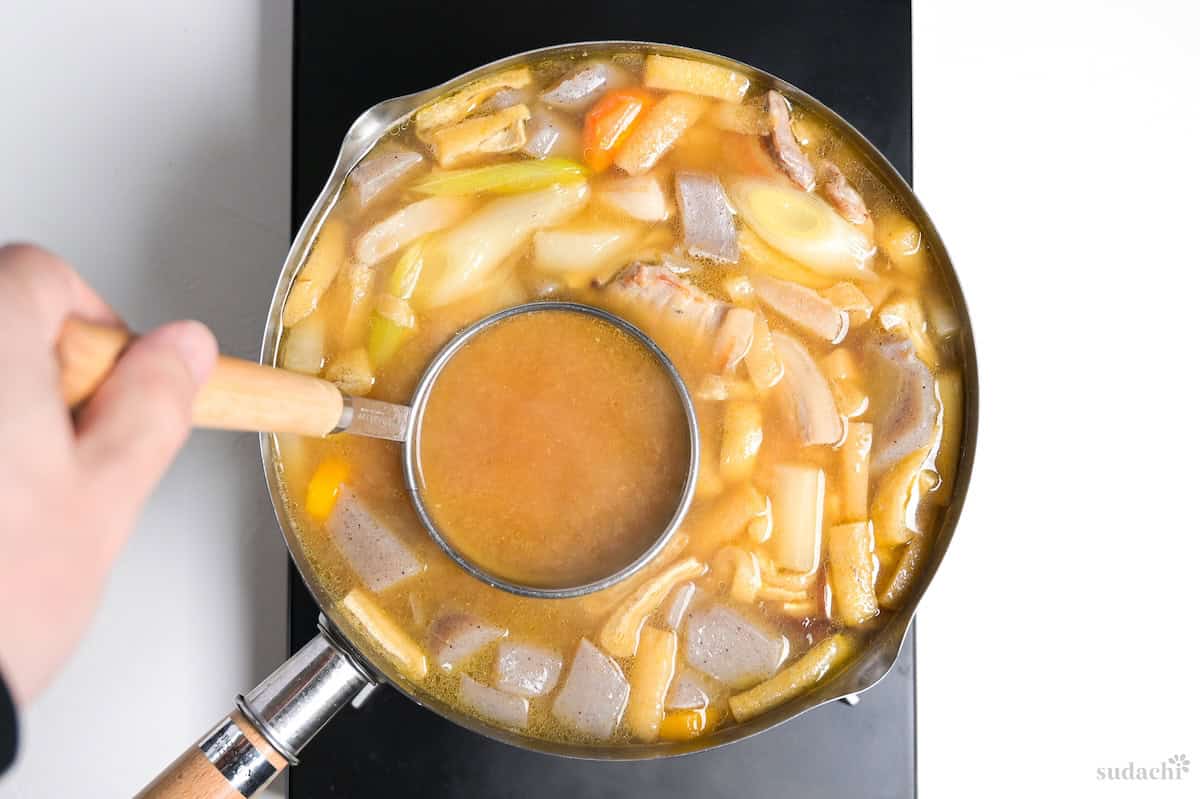
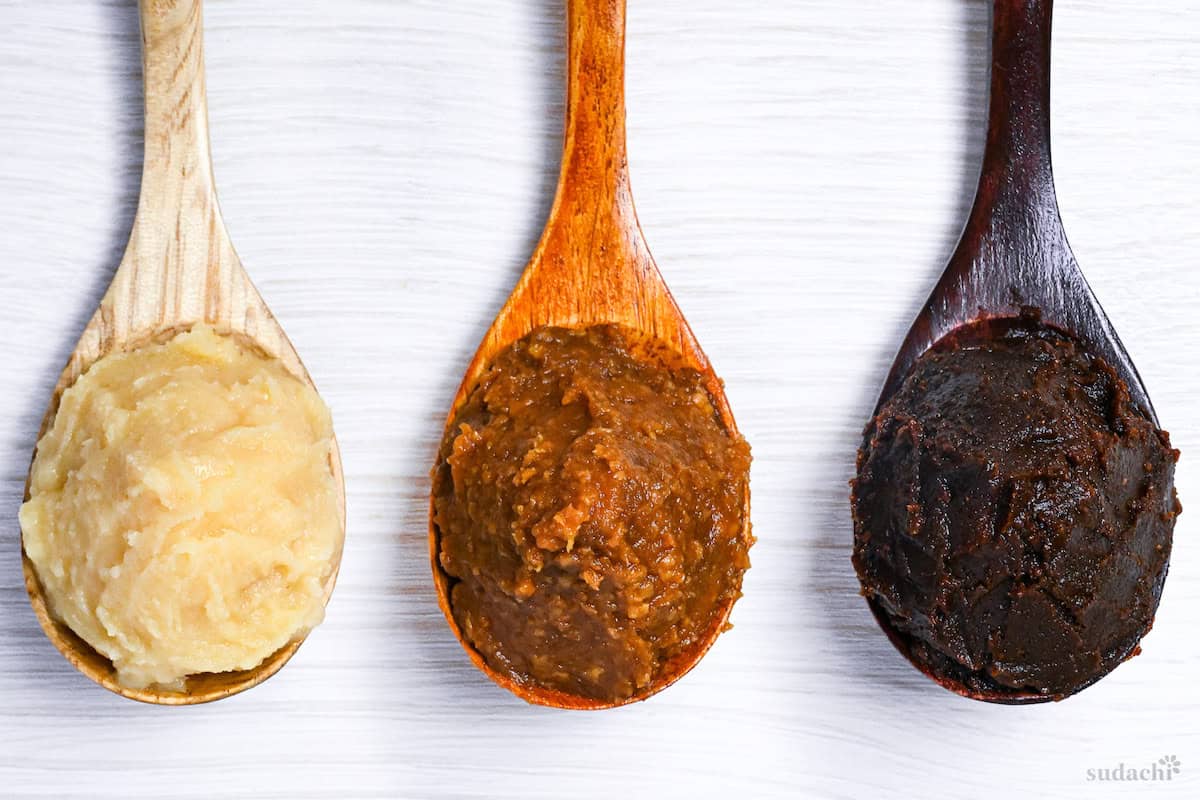
I use awase miso (a blend of red and white, sometimes labeled “yellow” or “blended” outside Japan), but you can use whatever miso you prefer. The key thing to know is that salt content varies dramatically between types and brands, so always taste as you add. Start with less than you think you need, then adjust. There is no universal measurement for miso.
ii. Taste the broth and add more miso if needed.
i. Stir in the grated fresh ginger and butter until the butter melts and disappears into the broth.
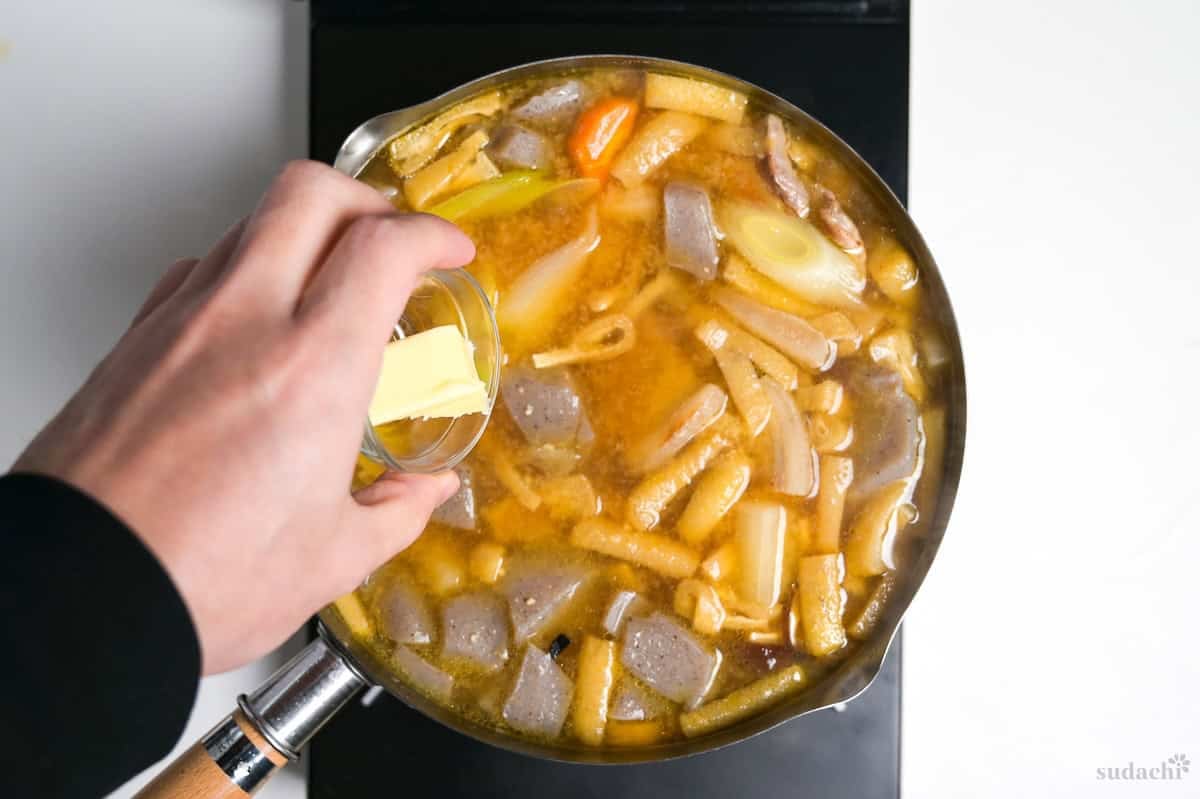
The traditional version is already delicious. But when I added butter, the broth gained a silky body that rounded out all the sharp edges. The ginger keeps it from becoming heavy. Together they turn a great soup into something you will not stop thinking about.
ii. Ladle into bowls and top with chopped green onion and shichimi togarashi if you like a little kick.

Essential Tips & Tricks
- Cut all root vegetables to roughly the same thickness so they cook at the same rate. Uneven pieces mean mushy daikon alongside crunchy carrot, and there is no fixing that once it happens.
- Add miso in stages, not all at once. Stir in about half, taste, then gradually add more until the broth is seasoned to your liking.
- When reheating, warm gently and never let it reach a full boil. If the aroma has faded, stir in a small spoonful of fresh miso right before serving to bring it back to life.
- The best tonjiru comes from people who don’t rush it. Low heat, patience with the miso, and the confidence to let the pot do the work.
With these simple tips in mind, you’re set for success every time you make tonjiru.
Storage & Meal Prep
Fridge: Store in an airtight container for up to 3-4 days. The pork fat will solidify on the surface as it cools. Just stir it back in when you reheat.
Freezer: Not recommended. A lot of the ingredients in this soup don’t freeze well.
Reheating: Warm gently over medium-low heat until hot but not boiling. If the aroma has faded, stir in a small spoonful of fresh miso right before serving to bring it back.
Meal prep: Make the full batch on the weekend and portion into containers. When serving during the week, reheat gently and add fresh chopped green onion on top. This is one of the best meal-prep soups in Japanese cooking because it actually improves with a day or two in the fridge.
What to Serve With This Recipe
Butajiru FAQ
They look similar but are fundamentally different. Tonjiru uses pork and is seasoned with miso. Kenchinjiru is a Buddhist vegetarian soup with no meat, seasoned with soy sauce and salt instead of miso.
Yes. Tonjiru and butajiru are the same dish. The difference is purely in how you read the kanji 豚汁. Some regions say tonjiru, others say butajiru. There is no difference in the recipe.
You can, but not really recommended. The pork and vegetables release enough umami on their own during simmering to produce a flavorful broth. Adding dashi makes it noticeably richer, but if you are short on time, water alone will still give you a relatively satisfying bowl.
More Japanese Pork Recipes
- Shogayaki (Ginger Pork)
- Tokachi Butadon (Pork Rice Bowl)
- Tonteki (Pork Steak)
- Buta no Kakuni (Braised Pork Belly)
Looking for more? Check out my complete collection of Japanese pork recipes.
Did You Try This Recipe?
I would love to hear your thoughts!
💬 Leave a review and ⭐️ rating in the comments below. 📷 I also love to see your photos – submit them here!
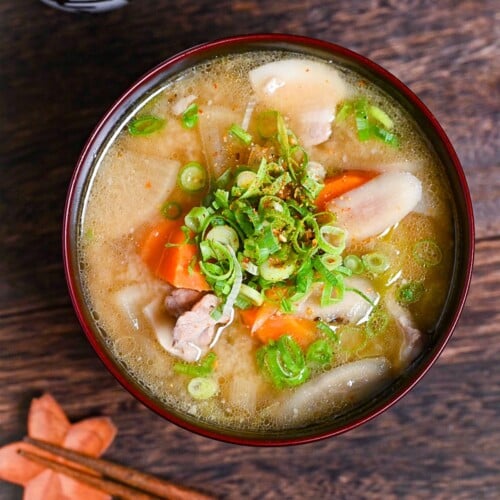
Tonjiru (Butajiru) Japanese Pork Miso Soup

Ingredients
- 200 g slab skinless pork belly or thinly sliced pork belly, or pork shoulder
- 75 g burdock root (gobo) scraped, sliced on the diagonal
- 300 g daikon radish peeled, cut into 1.5cm half-moons
- 150 g carrot peeled, cut into 1.5cm half-moons
- 50 g fresh shiitake mushrooms stems removed, sliced
- 400 g konjac (konnyaku) torn into bite-sized pieces with a spoon
- 60 g fried tofu pouch (aburaage) sliced into strips
- 50 g Japanese leek (naganegi) sliced on the diagonal
Seasonings
- 1500 ml dashi stock homemade, homemade dashi packets, or store-bought dashi packets recommended
- ½ tbsp Japanese soy sauce (koikuchi shoyu)
- ½ tbsp mirin
- 6-7 tbsp yellow miso paste (awase) adjust to taste
- ½ tbsp grated ginger root or ginger paste
- ½ tbsp unsalted butter
Toppings (optional)
- finely chopped green onions to taste
- Japanese chili powder (shichimi togarashi) to taste
My recommended brands of ingredients and seasonings can be found in my Japanese pantry guide.
Can’t find certain Japanese ingredients? See my substitution guide here.
Instructions
- Warm a large, deep pot over medium heat and arrange 200 g slab skinless pork belly (sliced) in a single layer. Sear on each side for 30 seconds to one minute, or until browned and the fat is starting to render out.

- Transfer the seared pork to a plate for now, and add 75 g burdock root (gobo) to the pot. Fry for about one minute in the rendered pork fat.
- Add 300 g daikon radish and 150 g carrot, and stir fry for 2 minutes.
- Add 50 g fresh shiitake mushrooms, 400 g konjac (konnyaku), and 60 g fried tofu pouch (aburaage). Continue to stir fry until all ingredients are lightly coated in rendered pork fat.
- Pour 1500 ml dashi stock into the pot along with ½ tbsp Japanese soy sauce (koikuchi shoyu) and ½ tbsp mirin, and give it a gentle stir. Bring to a simmer, and let it gently bubble for 10 minutes or under the daikon is softened with a little bite.
- Return the seared pork to the pot and add 50 g Japanese leek (naganegi). Simmer for 5 more minutes.
- Turn off the heat and measure out 6-7 tbsp yellow miso paste (awase). Add half of the miso to a miso strainer and whisk until it has dispersed into the soup. Stir gently, taste test, and continue to add the miso using the same method until it tastes good to you.
- Stir in ½ tbsp grated ginger root and ½ tbsp unsalted butter.
- Divide into serving bowls and top with finely chopped green onions and Japanese chili powder (shichimi togarashi). Enjoy!


Wholesome and excellent. A recipe that works with great variation in the ingredients. The butter is a welcome addition that adds a thickness and depth to the pork,
Hi Jason,
Thank you for making this and sharing such thoughtful feedback. I’m so glad the recipe worked well for you, and that you enjoyed my butter twist! 🙂
Yuto
Delicious!
I feel like a few of my proportions of veggies were off. I followed the recipe in grams and I felt there was too much daikon and not enough gobo. It was delicious and I ended up just adding more gobo the next day. Thank you for your detailed videos on YouTube.
Hi Ami,
Glad you enjoyed it! Tweaking the ratios to suit your own taste is totally the way to go. Appreciate you watching the videos too, that means a lot! 🙂
Yuto