



You bite into the rice and hit miso right in the middle. I sauté garlic and Japanese leek, then simmer the miso down sweet and savory. It has real punch.
Only a little goes in. It is cooked down so thick that this small amount is all the whole rice ball needs. The rice never gets pushed aside. It stays the star.

Garlic miso rice balls
Recipe Snapshot
- What is it? This garlic miso onigiri is a Japanese rice ball with a sweet and salty garlic miso filling, wrapped in nori and left ungrilled.
- Flavor profile: Cooked-down miso hits first, deep and rich, followed by the sweetness of mirin. The salted outside and warm rice cushion it, with toasty garlic and leek in the background.
- Why this recipe works: Awase miso sits between white and red, so the paste never tips too sweet or too salty. A small filling lets the rice’s own sweetness last to the final bite.
- How to make it: Fry garlic and leek in a small pan, add sake, mirin and miso, and stir as it cooks down into a paste. Then mold or hand-shape the rice around it.
- What to expect: If your rice is already cooked, the whole thing takes about 15 minutes from start to finish. Super easy.

What Are Garlic Miso Rice Balls?
Garlic miso onigiri hides cooked garlic miso in the center of a salted rice ball. All it takes is cooked rice and one small pot. The filling is a kind of okazu miso, the kind you spoon onto white rice.
In Japan, miso onigiri usually means miso spread on the outside, or that same rice ball grilled, but I made this one with the miso hidden in the center, wrapped in nori and never grilled.
Okazu miso is miso cooked with vegetables, aromatics, meat or fish until it works as a side for rice on its own, a different thing from the miso you stir into soup. Garlic miso sits in that group, next to naganegi miso, meat miso and yuzu miso. The flavor is strong, so a little is enough on white rice. In short, it does the same job as umeboshi or pickles, something to eat with plain rice. People also dip cucumber in it, or set it out as a snack with sake. Some make it at home and some buy it in a jar. The miso from this recipe works the same ways.
This onigiri began with garlic, miso and a touch of sweetness. Garlic miso is made in many ways. Some households fry it and cook it down, and some mix it raw. This one was going into onigiri, though, so I kept the method to a few simple steps.
Miso Onigiri Ingredients
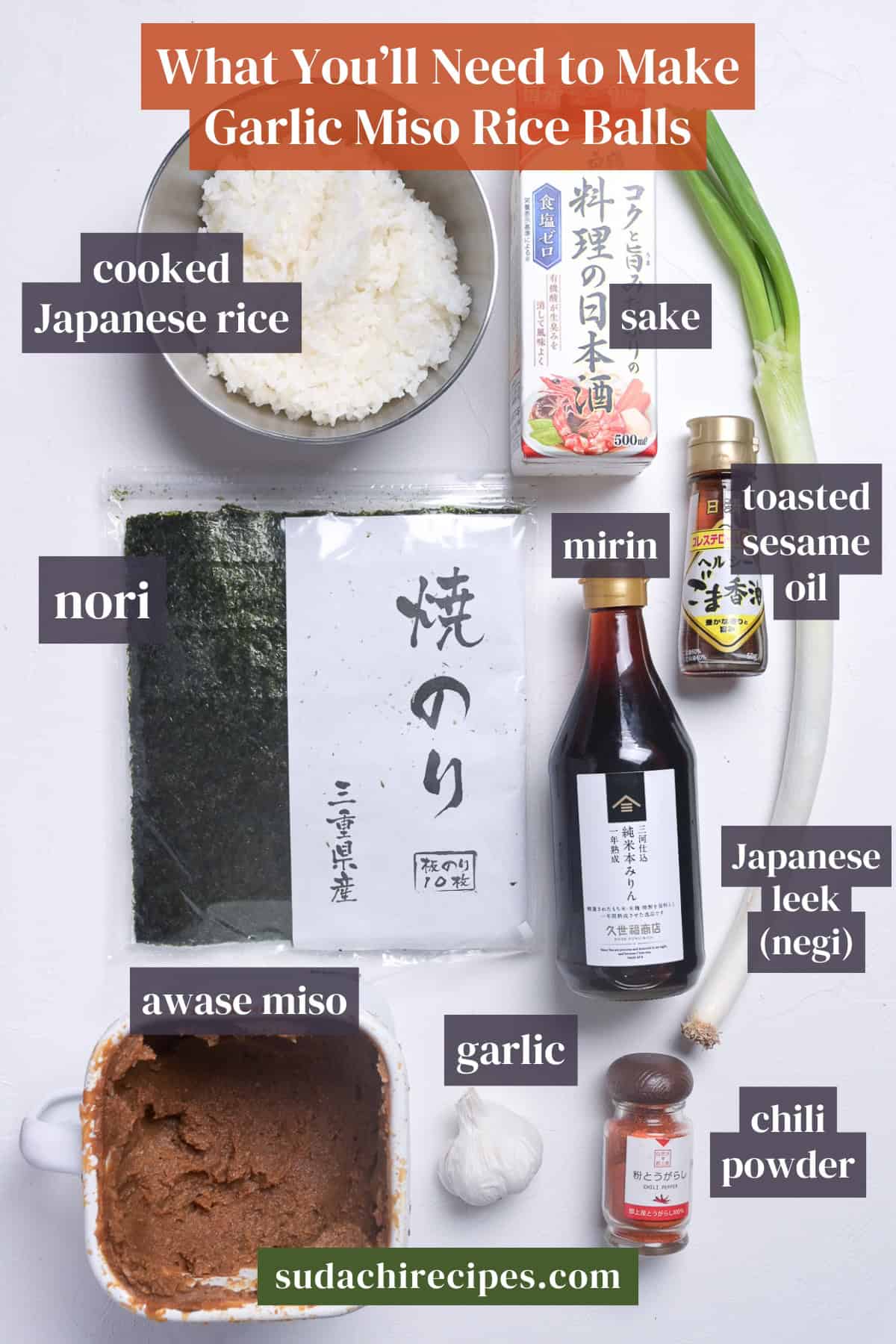
- Awase miso: This is the backbone of the paste. White miso is too sweet for it and red miso is too salty, so I use awase (blended) miso, which sits right between them. At the store, though, do not pick a tub just because it says awase. That word on the label does not promise a middle-of-the-road taste. The safe choice is Hikari Miso Additive-Free.
- Garlic: Use fresh garlic and chop it. Fried in sesame oil, it loses its raw edge and the oil picks up its aroma. In this paste it never takes center stage. Its aroma sits in the background, right behind the miso.
- Japanese leek (naganegi): I live in Japan, so I use the thick Japanese leek. It is a cousin of the thin green onion, but they are grown and cooked differently. Chopped and fried, it loses its bite and turns sweet. Go have a look for it at a Japanese or Asian grocery store.
Substitution Ideas
- Japanese leek → Leek: The closest swap when you cannot find Japanese leek. Leeks are thicker and sweeter, so use about 80% of the amount. Peel away the tough outer leaves and chop only the tender inside.
- Japanese leek → Onion: In a dish where you chop and fry the white part of the leek, an onion works too. The paste comes out sweeter and wetter, so it takes a little longer to cook down.
- Awase miso → A blend of white and red miso: If you have both white and red miso on hand, mix your own. Taste as you go and find the middle ground, neither too sweet nor too salty.
- Toasted sesame oil → Neutral oil: No sesame oil? Vegetable oil or any other neutral oil will still fry the paste. Sesame oil also gives the paste its aroma, though, so you lose some of that toasty note.
- Cayenne pepper → Ichimi togarashi or Korean chili powder: Any chili powder works here, or you can leave it out if you need to. Ichimi togarashi is the Japanese one.
- Japanese short-grain rice → Korean rice: When you cannot find Japanese rice, Korean rice is the closest thing. Its texture and flavor are very much like Japanese rice.
Substitutions that I don’t recommend:
- Thin green onions instead of Japanese leek: Thin green onions cannot stand in for thick Japanese leek. Even fried, they never give the paste the same sweetness and body.
- Soybean miso (hatcho miso) instead of awase miso: It lacks the sweetness of rice koji, and it tastes intensely savory and bitter. It does not suit a paste you cook down to sweet and salty.
- Jasmine or other long-grain rice instead of Japanese short-grain rice: The grains will not stick together, so you cannot shape them into onigiri. Avoid it at all costs!
Still hunting for a Japanese ingredient? Try my guide to Japanese ingredient substitutes.
How to Make My Garlic Miso Onigiri
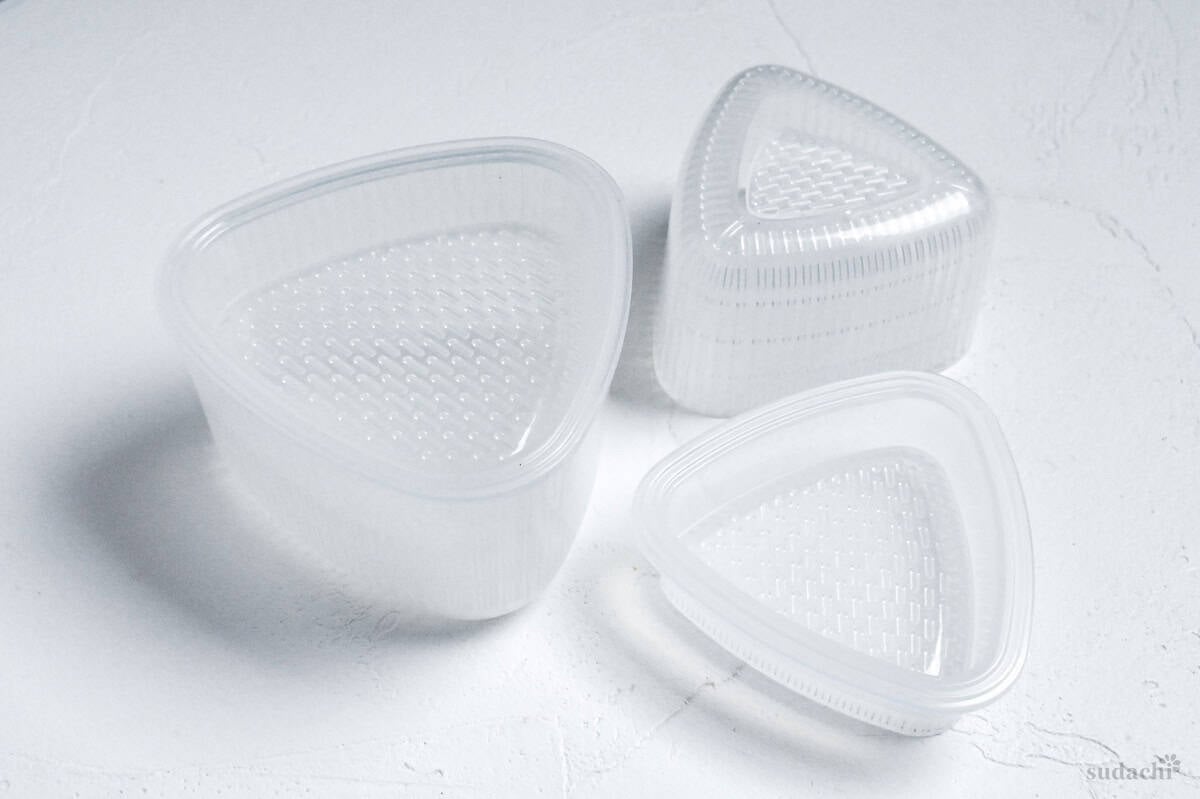
To develop this recipe, I used a rice ball mold.
i. Heat a small frying pan over medium heat and add the sesame oil. Add the chopped Japanese leek and garlic and fry until fragrant.

Take the garlic only as far as pale gold. Once it burns, the paste turns bitter.
ii. Add the sake and mirin and mix well.

iii. Add the cayenne pepper and the miso and keep stirring as the mixture cooks down.

Every brand of miso has its own saltiness, so there is no set amount. In one study of store-bought miso, the salty red types held about 2.8 times the salt of the sweet white ones. Add it a little at a time and taste as you go. If it is already getting salty, stop there.
iv. Drag your spatula across the bottom of the pan. When the line stays open for a few seconds, take the pan off the heat.
The paste goes right in the middle of the rice, so it has to be firm. Too loose, and it is hard to tuck in, its moisture seeps into the rice, and the onigiri turns soggy.
i. Divide the warm cooked rice into portions, one per rice ball.
ii. If you are using a mold, sprinkle it with salt, add half a portion of rice, and press a small well into the center with your finger.

iii. If you are shaping by hand, wet your hands with cold water and rub them with salt. Spread a portion of rice flat on your palm and press a small well into the center.
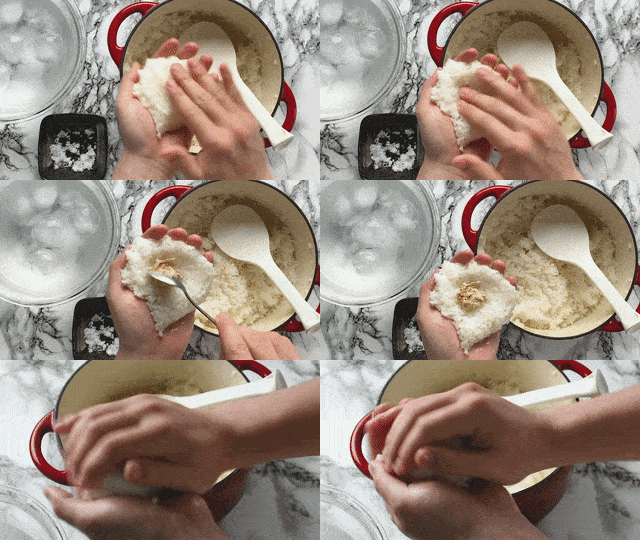
iv. Spoon about ½ tablespoon of paste into the well. A little is all it takes. Too much, and the salt wins out, the miso dominates, and the rice ends up playing second fiddle.
i. With a mold, cover the paste with the rest of the rice, sprinkle on a little salt, and press the lid down firmly to set the shape.

ii. If shaping by hand, fold the rice over the paste and press it into a triangle with your lightly wet palms.

Seal the rice all the way around so none of the paste peeks out.
iii. Wrap with nori and eat right away.
If you follow the default recipe, it will yield 4 rice balls.

Tips for the Best Garlic Miso Rice Balls
- Wait for the spatula line before you pull the pan. The miso can look like it has come together while it is still saucy, and that is too early. Run your spatula through the bottom of the pan. When the track stays open for a few seconds, take it off the heat. Paste that goes in loose leaks its water into the rice once the ball is shaped.
- Scrape the sides of the pan while you stir. The koji in miso scorches easily, and whatever clings to the edge of the pan burns first. Keep stirring, and sweep the spatula around the sides to pull that miso back into the middle. Once the paste has burned and turned bitter, more cooking will never bring it back.
- Bury the paste in rice, top and bottom. The first bite should be salted rice. Keep the bottom of the well thick, set the paste in, then close the top over with more rice. Wherever the rice wall runs thin, the miso bleeds through.
Split one open, and a small spot of glossy miso sitting right in the center tells you that ball came out right.
Storage & Meal Prep
Fridge: Don’t refrigerate onigiri, since long chilling dries rice hard. Room temperature won’t do either. Carrying them a few hours? Cool and wrap them, then add an ice pack.
Freezer: Freeze each wrapped ball without nori for 2-3 weeks. The dry paste won’t wet thawing rice.
Meal prep: Paste keeps about 10 days chilled in a clean jar.
Reheating: Microwave them frozen and wrapped until warm inside, then add nori.
What to Serve With Miso Rice Balls
- Dashimaki Tamago (Japanese Rolled Omelette)
- Crispy Chicken Karaage
- Homemade Takuan (Pickled Daikon)
- Japanese Clear Soup (Osuimono)
Garlic Miso Onigiri Troubleshooting
The rice wall is thin, there is too much paste, the top was never capped with rice, or the paste is still loose. The way it shows through tells you which. A single dark smudge at one thin spot means a missing cap or a thin wall, while a wet ring around the paste means it went in too loose. Patch the spot with a little more rice and shape that ball again, and next time leave the bottom of the well thick and go easy on the paste.
The paste still had liquid in it when it went into the rice. That moisture travels out of a loose paste and into the grains around it. Eat the balls you have already shaped soon, just as they are. Put the rest of the paste back in the pan and cook it down, stirring, until a spatula line stays open for a few seconds, then fill the next one.
Either the garlic went past pale gold or miso scorched on the sides of the pan. Black or dark brown bits of garlic give it away, and so does a smell of burnt sugar where you expected toasty sesame oil. That bitterness stays no matter how long you cook it, so start a fresh batch. This time, pull the garlic at pale gold, and once the miso is in, keep scraping the sides as it cooks down.

More Japanese Rice Ball Recipes
- Simmered Kombu Onigiri
- Ground Chicken Rice Balls
- Bonito Flake Onigiri (Okaka Onigiri)
- Salted Salmon Onigiri
Now that you have the knack of wrapping rice around a dab of bold filling, pick the next one from my Onigiri Filling Ideas.
Did You Try This Recipe?
I would love to hear your thoughts!
💬 Leave a review and ⭐️ rating in the comments below. 📷 I also love to see your photos – submit them here!

Garlic Miso Onigiri (Rice Balls with Sweet Miso Filling)

Ingredients
- 1 tbsp sesame oil
- 1 tbsp Japanese leek (naganegi) finely diced
- 3 cloves garlic finely diced
- 1 tbsp sake
- 1 tbsp mirin
- ¼ tsp cayenne pepper
- 2 tbsp yellow miso paste (awase)
- 440 g cooked Japanese short-grain rice approx 1/3 rice cooker cup per rice ball before cooking
- salt
- 4 strips roasted seaweed for sushi (nori)
The ingredient brands and tools I trust are in my Japanese pantry guide and my cooking tools guide.
Can’t find certain Japanese ingredients? See my substitution guide here.
Instructions
- Heat a small pan over medium/medium-low and pour in 1 tbsp sesame oil. Add 1 tbsp Japanese leek (naganegi) and 3 cloves garlic (finely diced) and fry until fragrant. Be careful not to let them burn.

- Add 1 tbsp sake and 1 tbsp mirin to the pan and mix well. Let it bubble for 1 minute.
- Add ¼ tsp cayenne pepper and 2 tbsp yellow miso paste (awase) while mixing continuously. Once thickened, remove from the heat.
- Divide 440 g cooked Japanese short-grain rice into equal portions of approximately 110g per rice ball. Sprinkle a rice ball mold with a few pinches of salt and then add half of a portion of rice, Press a dent into the middle and add about 1/2 tbsp of the miso mixture.
- Add the other half of the rice, sprinkle the top with a pinch of salt and press the lid down to finish shaping. Alternatively, shape by hand making sure to wet your hands before handling the rice to prevent sticking and sprinkle your palms with salt to season the outside. (See in post for more detailed instructions on hand-shaping.)
- Wrap with nori and enjoy!

Leave a rating and a comment