

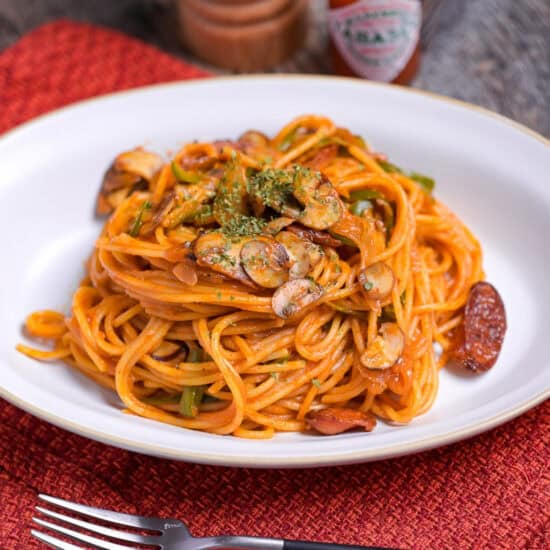


I push the ingredients to one side of the frying pan and drop ketchup into the empty space. It bubbles. The sharp vinegar smell turns into toasty sweetness, and the bright red deepens into something darker and richer.
If you pictured sweet noodles just tossed with ketchup, this is a little different. Ketchup cooked down clings to the noodles, and a little raw ketchup stirred in once the heat is off brings back the tang and aroma. It never tips over into kids’ food. This is red spaghetti I’d serve to anyone.
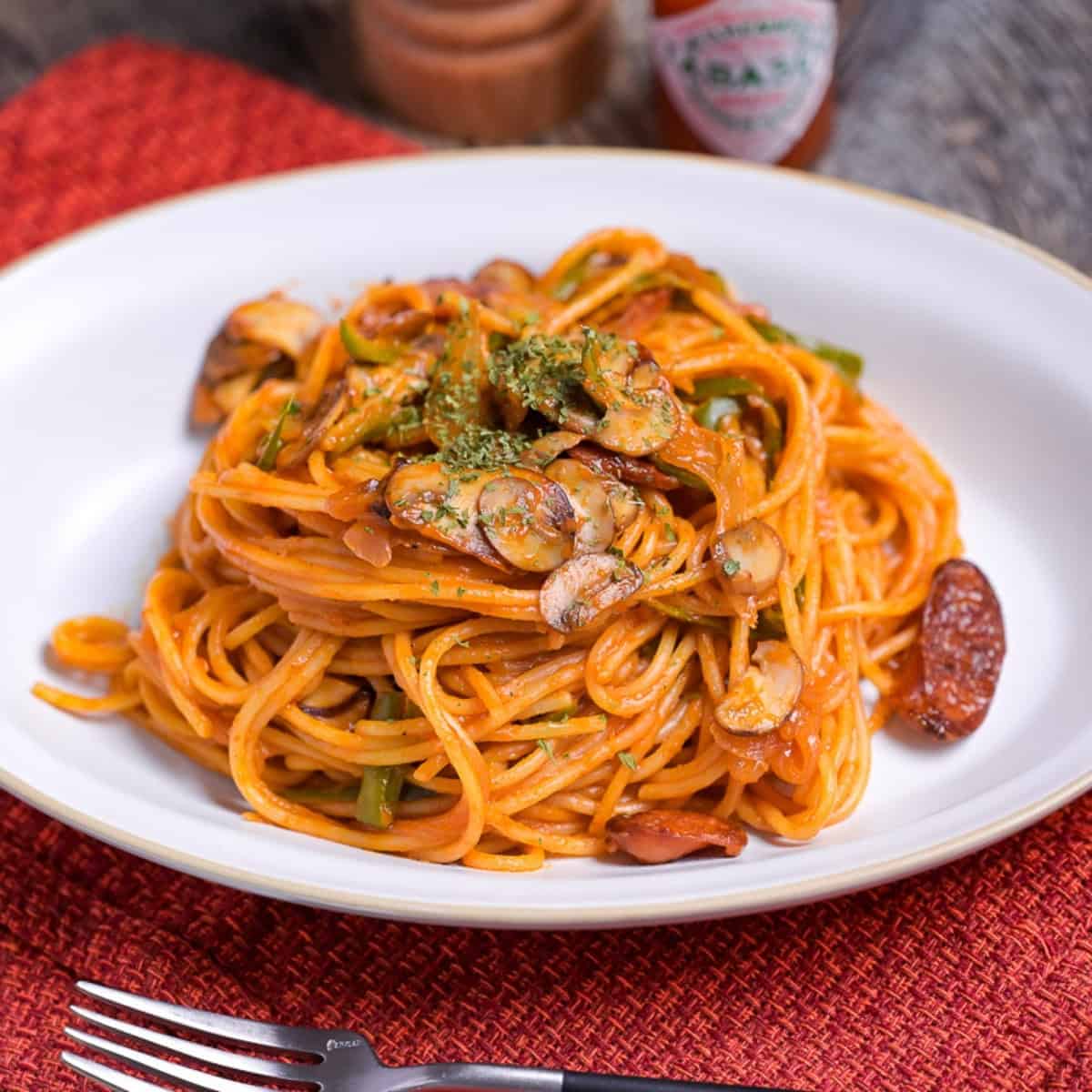
Spaghetti napolitan
Recipe Snapshot
- What is it? Napolitan is yoshoku (Japanese-style Western food), spaghetti stir-fried with onion, green pepper, and ham, bacon, or sausage, seasoned with ketchup. A coffee-shop and home-kitchen classic for decades.
- Flavor profile: First comes the deep, toasty sweetness of cooked-down ketchup, balanced with the bright tang of raw ketchup, then a mellow butter-and-Parmesan finish. Worcestershire, soy sauce, and pepper give it backbone.
- Why this recipe works: My 2 moves. Ketchup twice, cooked to a paste, then raw off the heat. Sweet, but never merely sweet. And a hot pasta-water toss glues sauce to noodles.
- How to make it: Boil spaghetti a little past package time. Meanwhile, fry the fillings, push them aside, and cook the ketchup down in the open space. Toss with pasta water, and finish off the heat.
- What to expect: This dish takes about 30 minutes. The part to watch is the 90 seconds or so of cooking the ketchup down alone. Keep stirring until the spatula leaves a track.
What Is Spaghetti Napolitan?
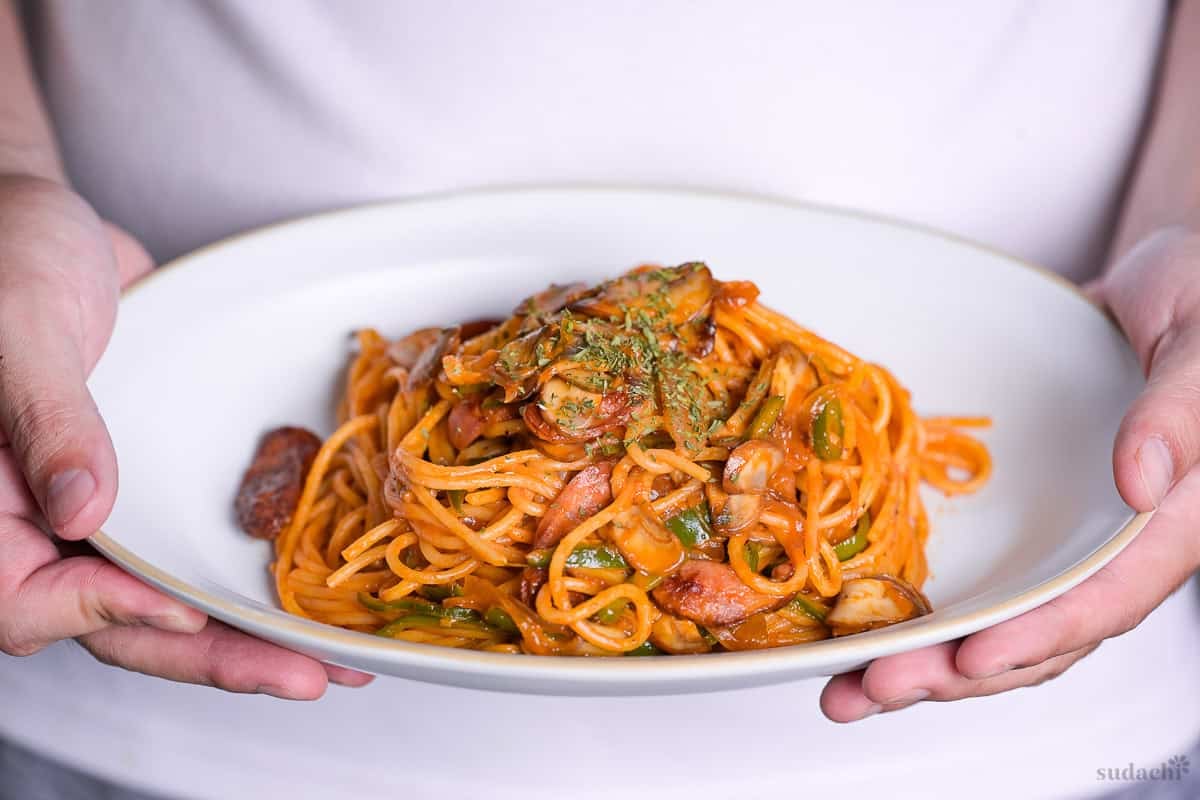
Spaghetti Napolitan (スパゲッティナポリタン) is Japanese-born yoshoku spaghetti, stir-fried with ketchup until it turns red. Onion and green pepper go in, along with processed meat such as ham, bacon, and sausage. It has been a staple ever since, in Showa-era (1926-1989) kissaten (Japanese café/diner) and at home, loved by kids and grown-ups alike.
Despite the name, it has nothing to do with Naples or Italy. I didn’t choose the name, so don’t shoot the messenger!
Napolitan comes in 2 styles. One is a tomato-sauce version born in a hotel. The other is a ketchup version that spread through kissaten. The name comes from napolitaine, the French cuisine term for Naples-style spaghetti. Before the war, Hotel New Grand in Yokohama already had the name on its menu. After the war, while the GHQ had the hotel under requisition, American soldiers ate boiled spaghetti tossed with salt, pepper, and tomato ketchup. In the 1950s, once the requisition ended, the hotel’s second executive chef, Shigetada Irie, turned that into a hotel dish. The sauce uses fresh tomatoes, canned tomatoes, and tomato paste, with no ketchup. The hotel still serves it that way. Center Grill, which opened in 1946 in Noge, also in Yokohama, spread the version stir-fried with ketchup. That shop also credits Hotel New Grand as the original. The most recognized version now is predominantly the ketchup one.
Yoshoku is the general term for Western cooking remade to match Japanese ingredients and Japanese taste. The name is Western, but what’s on the plate tastes of the Japanese kitchen. That makes Napolitan a yoshoku plate. For example, the French croquette became korokke, Hamburg steak became hambagu, and gratin, baked over rice, became doria.
Outside Japan, the closest thing to a kissaten is a diner. Coffee is the star, though, and the food stays light. Kissaten are a big part of why Napolitan became a staple.
Napolitan Pasta Ingredients
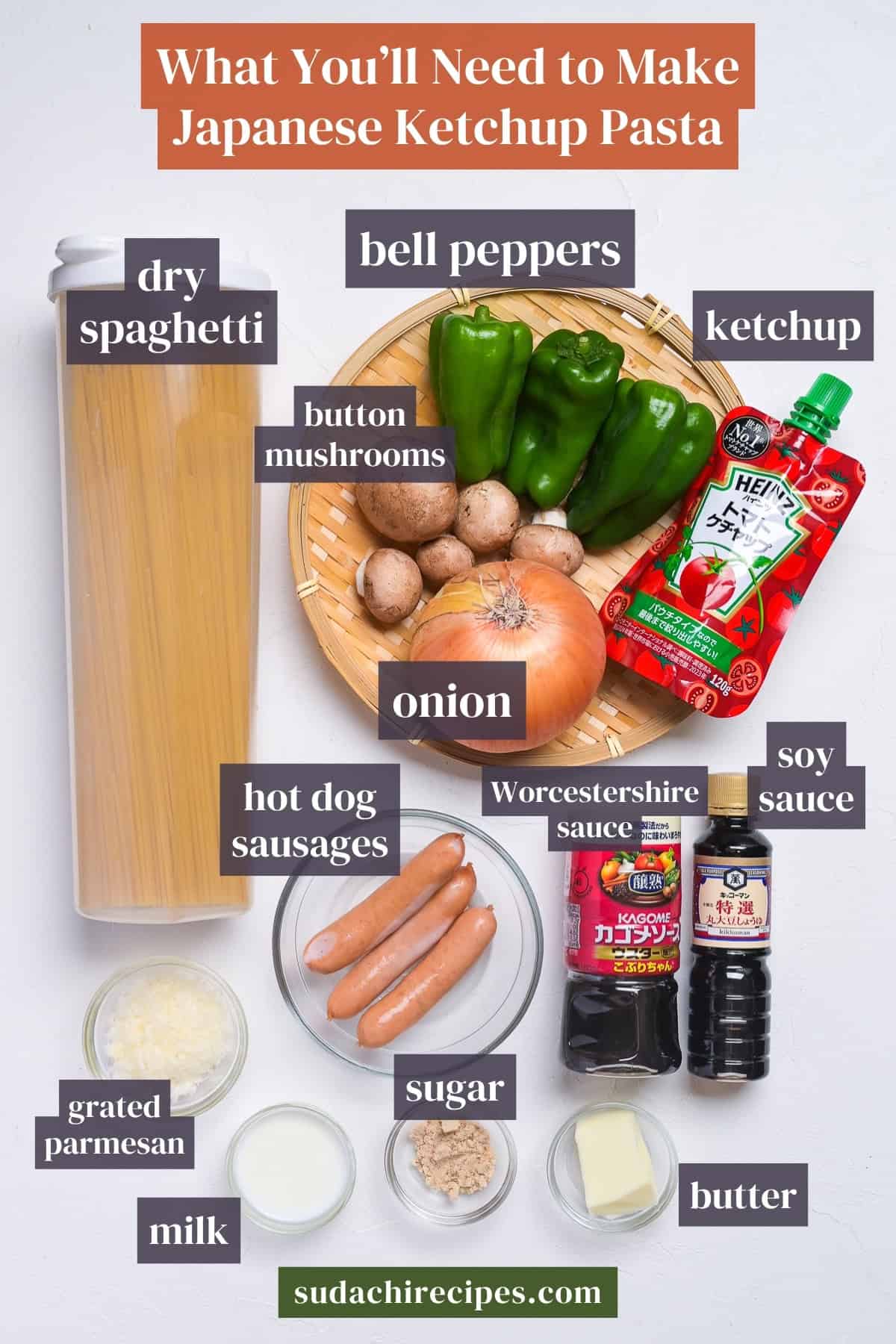
- Tomato ketchup: In this dish, ketchup is the sauce itself, the whole body of it, and far more than a condiment added at the end. I make mine with Heinz. Any regular tomato ketchup works, so the bottle already in your fridge will do.
- Spaghetti: The base that soaks up the sauce and holds on to it. Regular dried spaghetti in the most common thickness works fine. Go one size thicker and you get closer to the coffee-shop texture, soft all the way to the center.
- Hot dog sausages: I used the slim sausages Japan calls wieners. Those can be hard to find outside Japan, so the recipe calls for the closest everyday match, hot dog sausages. Their job is fat and salt, a savory base under the ketchup’s sweetness.
Substitutions & How to Customize
Here is how to swap what you do not have on hand, and how to nudge your Napolitan toward the way you like it.
Substitutions:
- Hot dog sausages → Bacon: Its fat and smoky aroma give the plate more punch.
- Hot dog sausages → Ham: Reach for ham when you want a lighter plate. That is the only change, and it is still Napolitan.
- Green bell pepper → Red or yellow bell pepper: Cook it for about the same time. The bitterness disappears, the pepper cooks up sweet, and the plate changes color.
- Button mushrooms → Frozen mixed mushrooms: Add them straight from the freezer, no thawing. As with fresh ones, keep stir-frying until the water they release has cooked off before you move on.
- Button mushrooms → Canned sliced mushrooms: The old-school choice, used for decades in Japanese coffee shops and home kitchens. Drain them well before they go into the pan.
- Japanese Worcestershire sauce → Lea & Perrins: The easiest one to find. Worcestershire is my secret ingredient here, there to add aroma under the sweetness. Lea & Perrins still makes a proper Napolitan, just a little tangier.
- Olive oil → Neutral cooking oil: Whatever oil you have on hand is fine. Its job in this dish is to carry the heat that cooks the ketchup down.
Substitutions that I don’t recommend:
- Canned tomatoes or tomato puree instead of ketchup: Swap out all of the ketchup and the flavor drifts toward the hotel tomato-sauce version or a plain tomato pasta. This recipe is not intended to use that.
- Tomato paste alone instead of ketchup: It is missing the vinegar and spice aroma of ketchup, so you end up with a different dish.
- Udon, somen, or yakisoba noodles instead of spaghetti: Each of these makes a different, Napolitan-style dish.
How to Customize:
- Garlic: Warm garlic in the olive oil until fragrant, before the sausages and vegetables go in. It is a common move at yoshoku restaurants.
- Sunny-side-up eggs: Top the plate with a fried egg, break the yolk, and toss it through the noodles. It softens the ketchup’s acidity even more.
How to Make My Japanese Napolitan Spaghetti
Before you start (Mise en place):
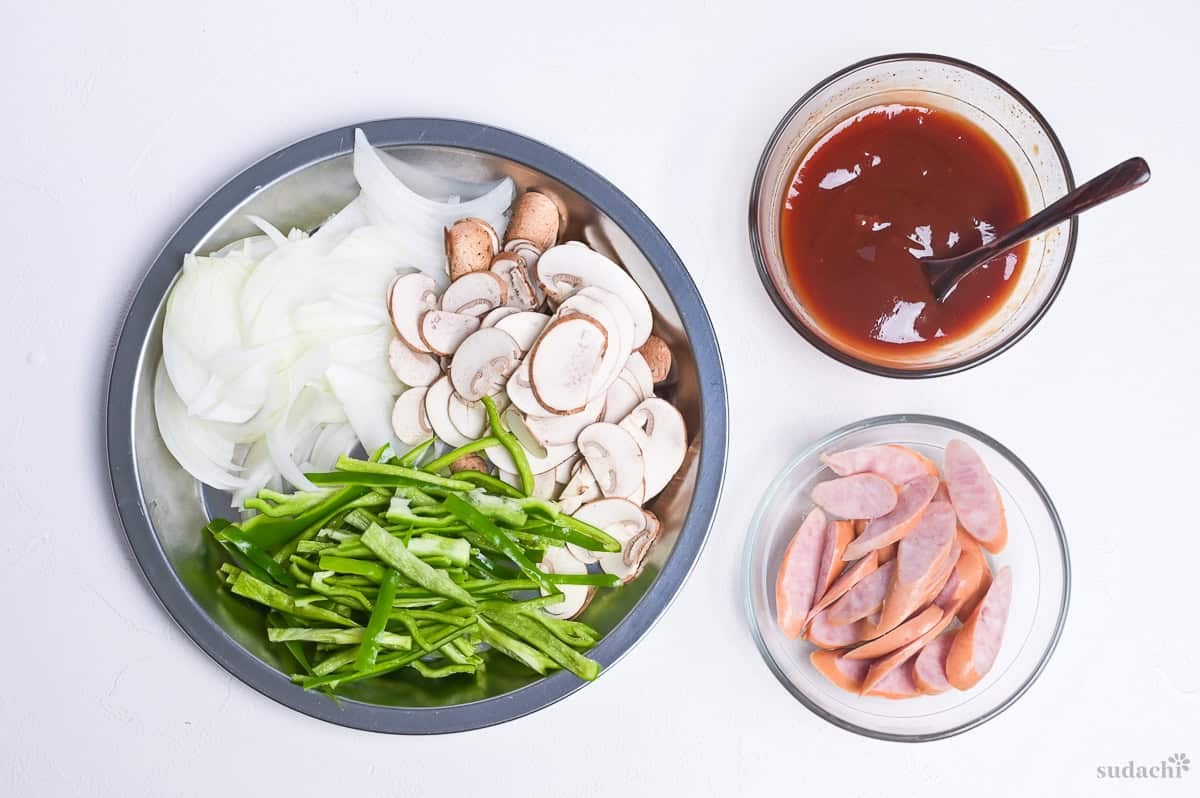
- Slice the hot dog sausages on the diagonal, 1.5 cm thick.
- Slice the onion along the grain, 3 to 5 mm thick.
- Cut the green bell pepper along the grain into 5 mm strips.
- Wipe the button mushrooms with a damp cloth, trim off the stem ends, and slice them 3 to 4 mm thick.
- Measure the ketchup into 2 lots. Put the ketchup for the pan and the sugar together in one small dish, and the Worcestershire sauce and standard Japanese soy sauce in another. Keep the finishing ketchup separate.
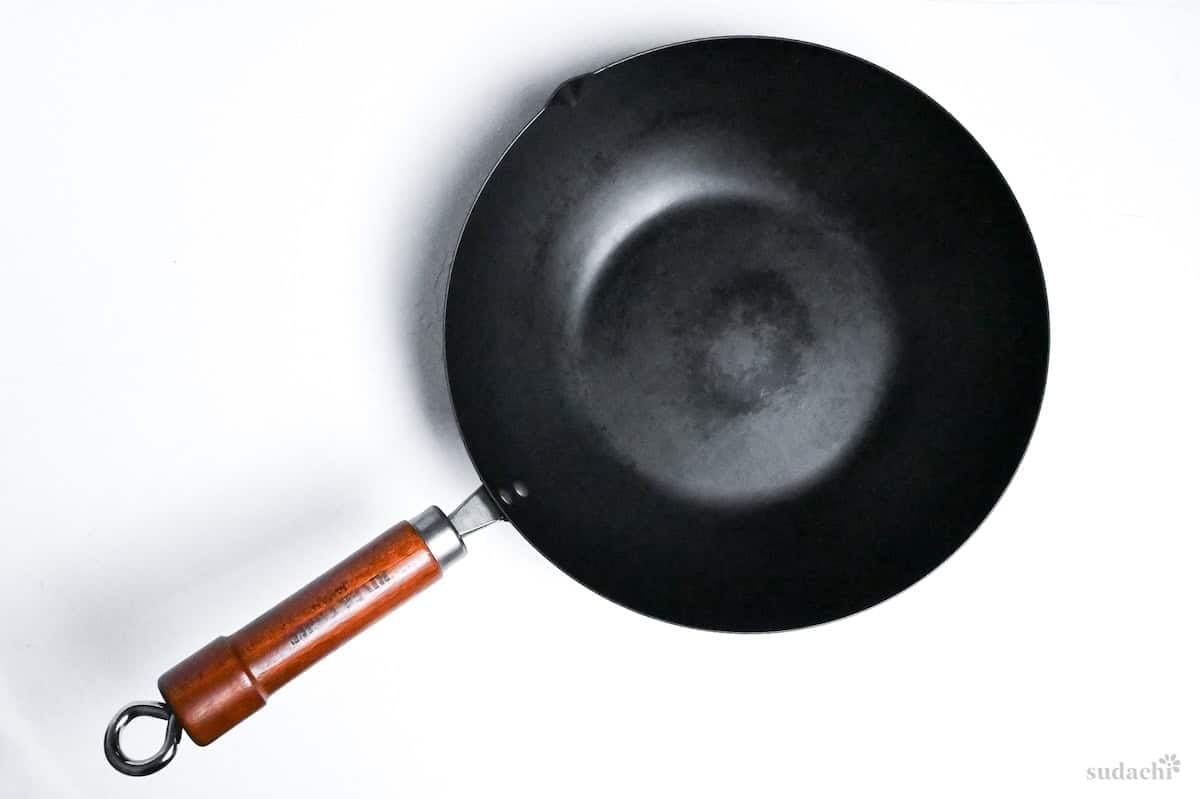
To develop this recipe, I used a 30 cm carbon steel wok.
i. Bring a big pot of water to a boil and add salt.
ii. Add the spaghetti and loosen it with chopsticks for the first 30 seconds. Once it is loose, move straight on to the frying pan while the pasta cooks.

iii. Boil it 1 to 2 minutes longer than the package says.
Bite a strand. It is done when there is no hard bit left in the center and the noodle still holds together under its own weight.
Napolitan is not meant to be al dente. The time on the package is written for al dente, with a little firmness left at the center. What you want here is a plump, chewy noodle that has soaked up water right to its core. So boil a little past that time, and let your bite make the call.
i. While the noodles boil, heat a frying pan over medium, add the olive oil, and cook the sausages. Watch the pan instead of the clock, and stop once the cut sides have color and fat has gathered in the pan.
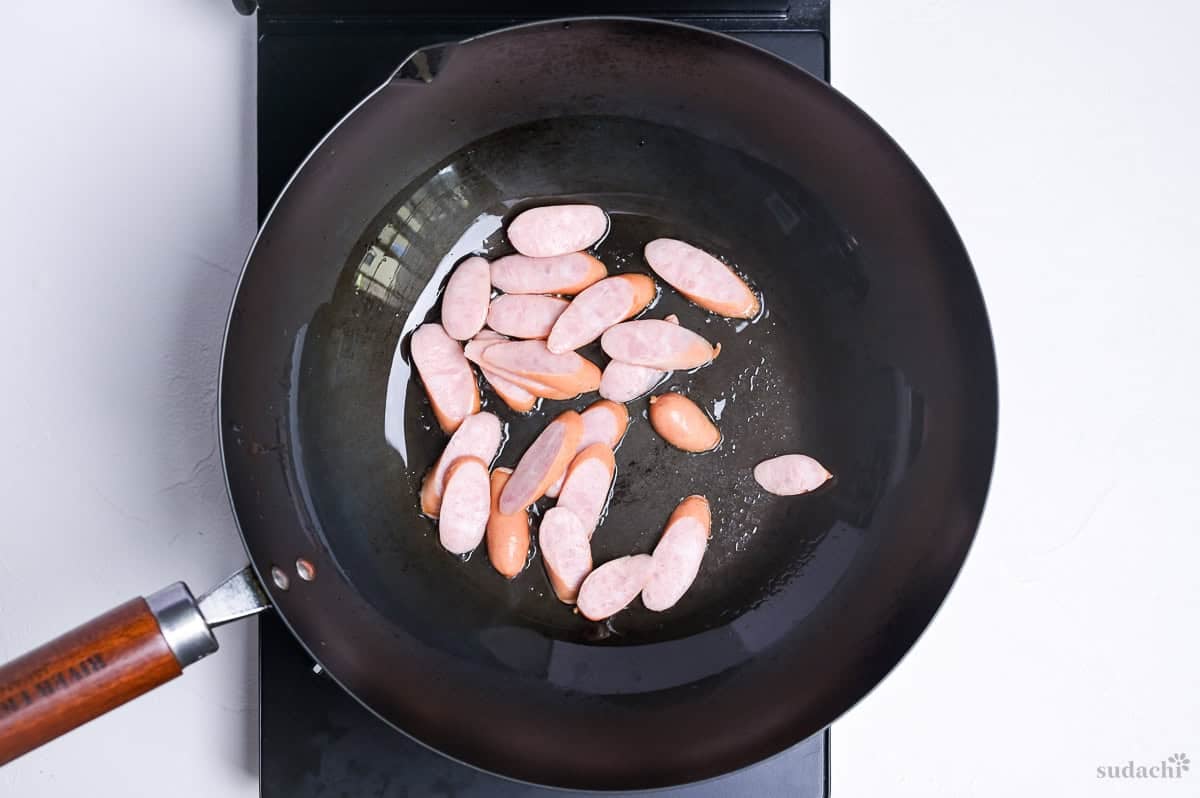
Hot dog sausages earn their savory depth through that browning.
ii. Add the onion and a little salt, and stir-fry until soft and translucent.
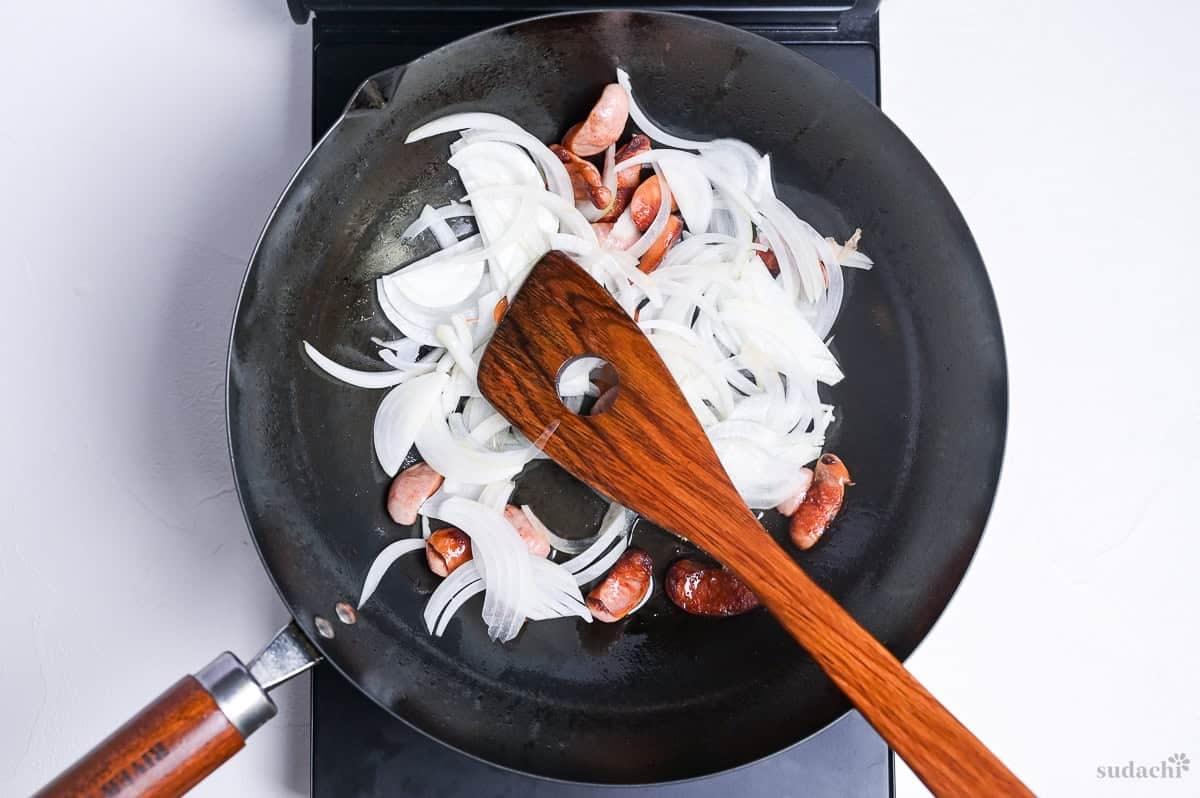
iii. Add the mushrooms and a little salt, and stir-fry for 1 to 2 minutes, until the water they release cooks off.
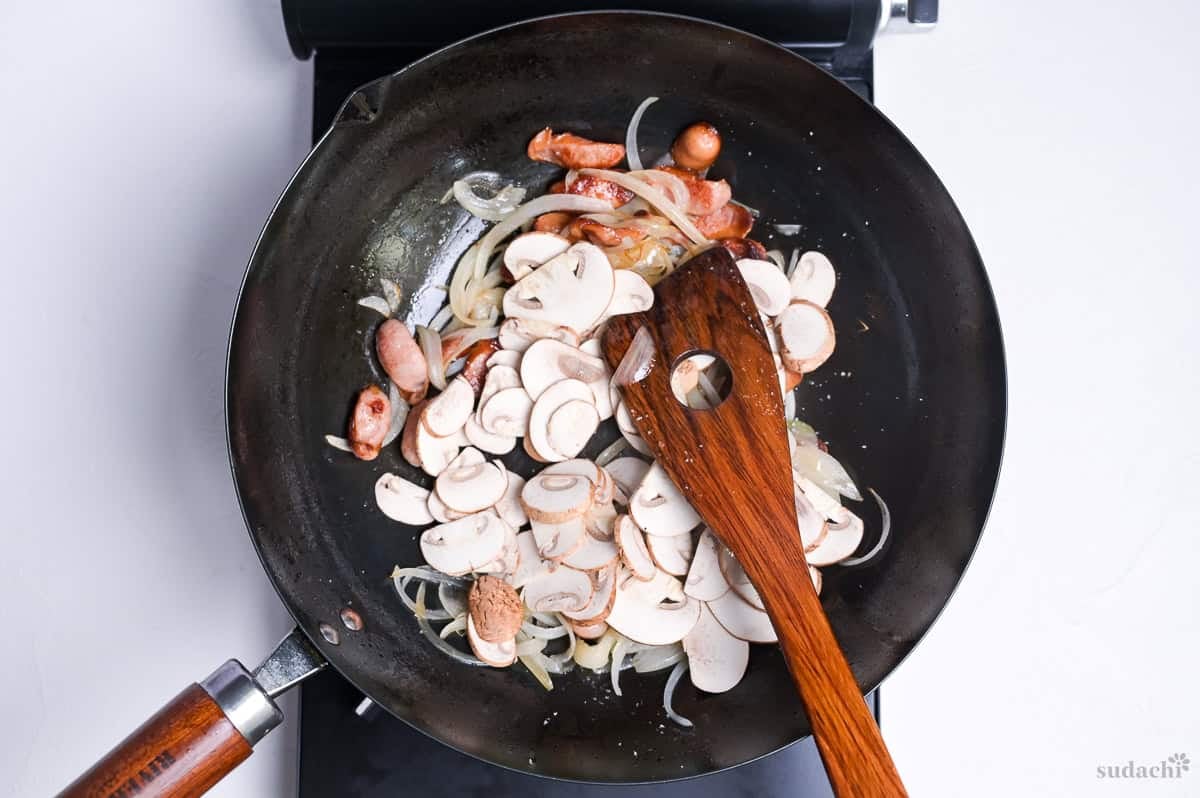
iv. Add the green bell pepper and stir-fry for just 30 to 60 seconds.
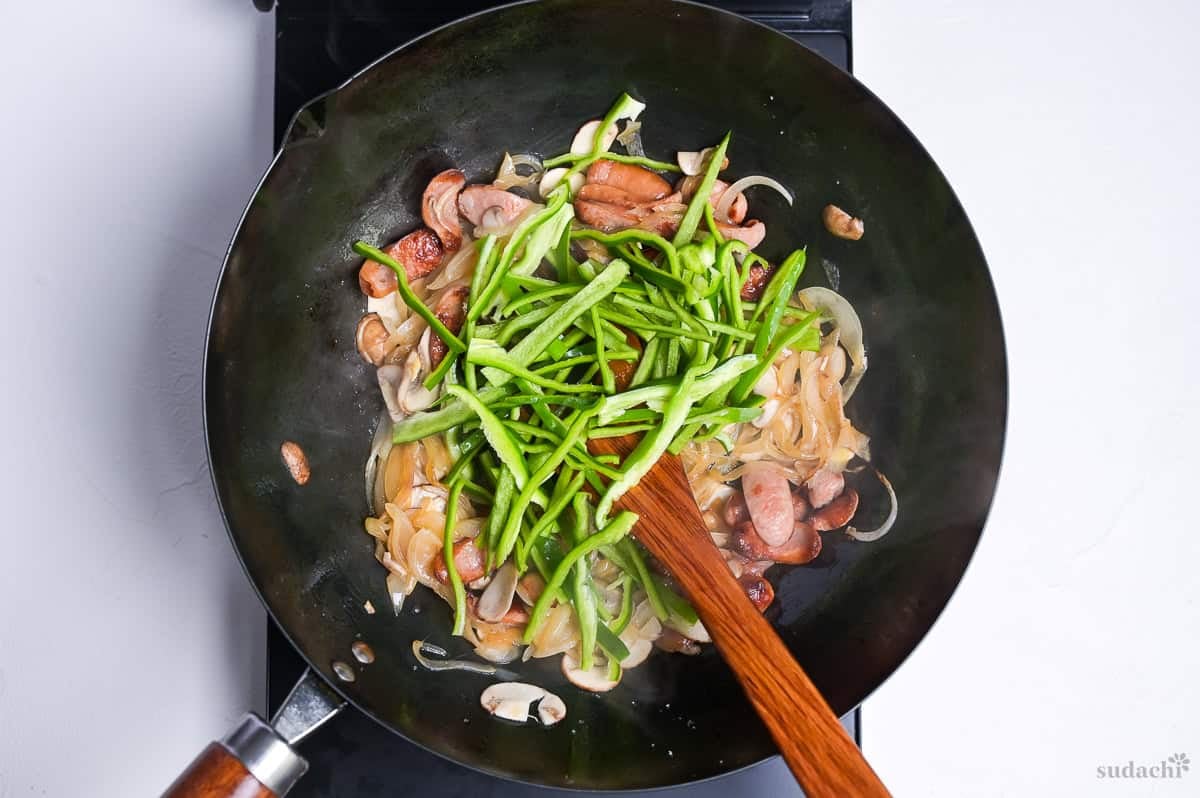
Too much heat and the pepper loses its aroma and its color goes dull. That is why it goes in last, and only briefly.
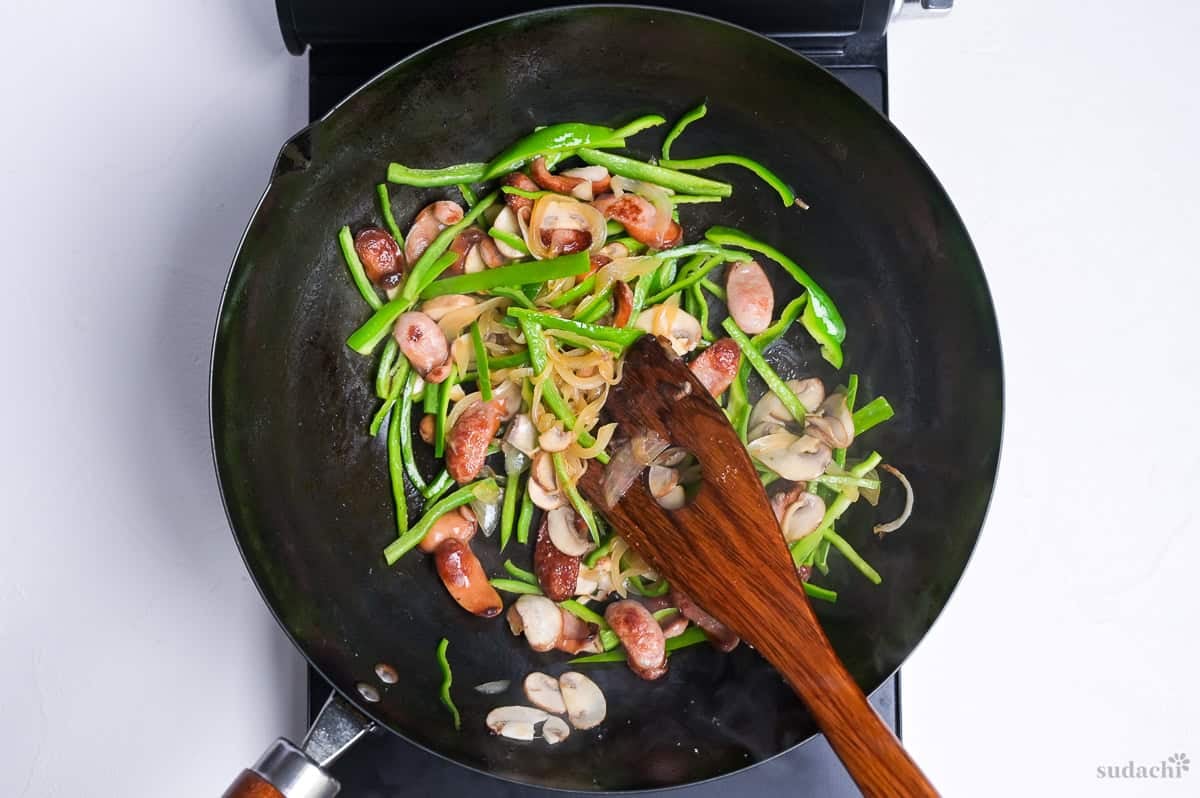
i. Push everything to one side of the pan and pour the ketchup/Worcestershire sauce/soy sauce mixture into the empty space.
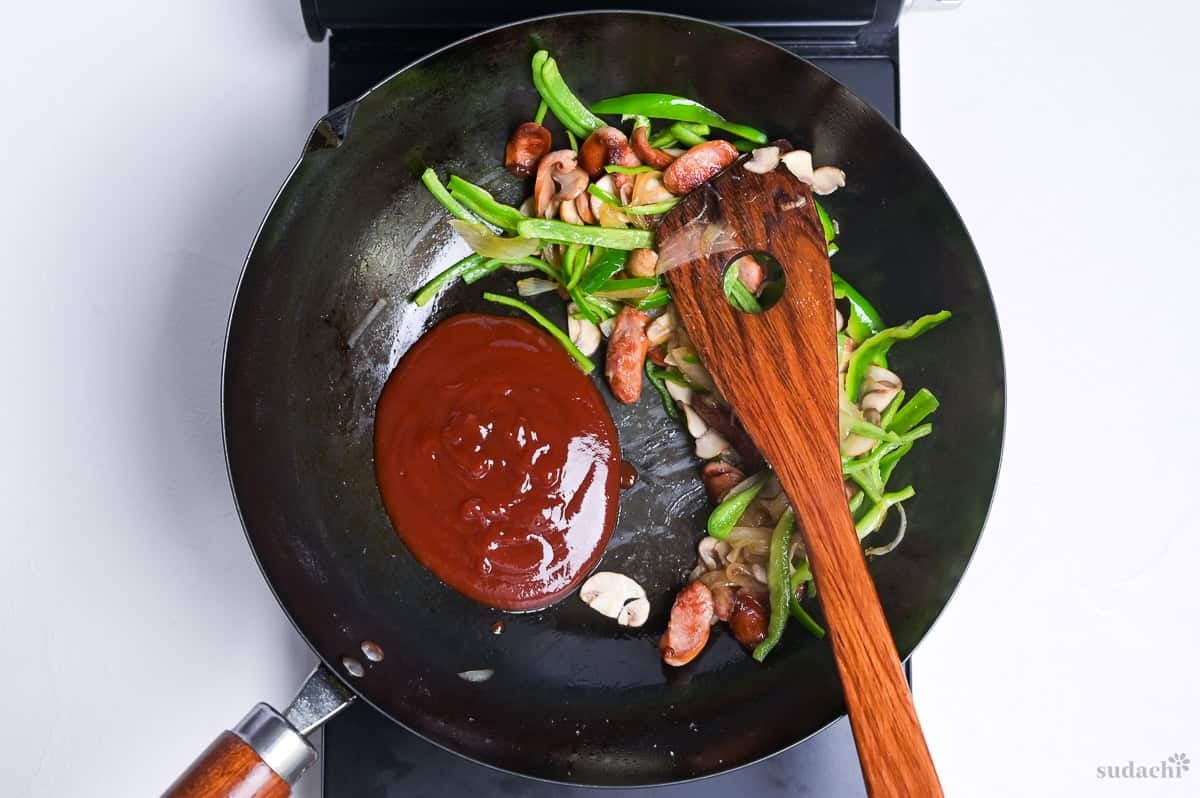
ii. Keep the heat at medium and cook for 60 to 90 seconds, spreading and stirring with a spatula the whole time.
Move on when it bubbles away and turns into a paste thick enough to hold a trail when you drag the spatula through it. By then the sharp vinegar smell has given way to a toasty sweetness, and the color has darkened from bright red to a deep brick.
iii. Mix everything together until the ingredients are evenly coated, then turn off the heat and set the pan aside.
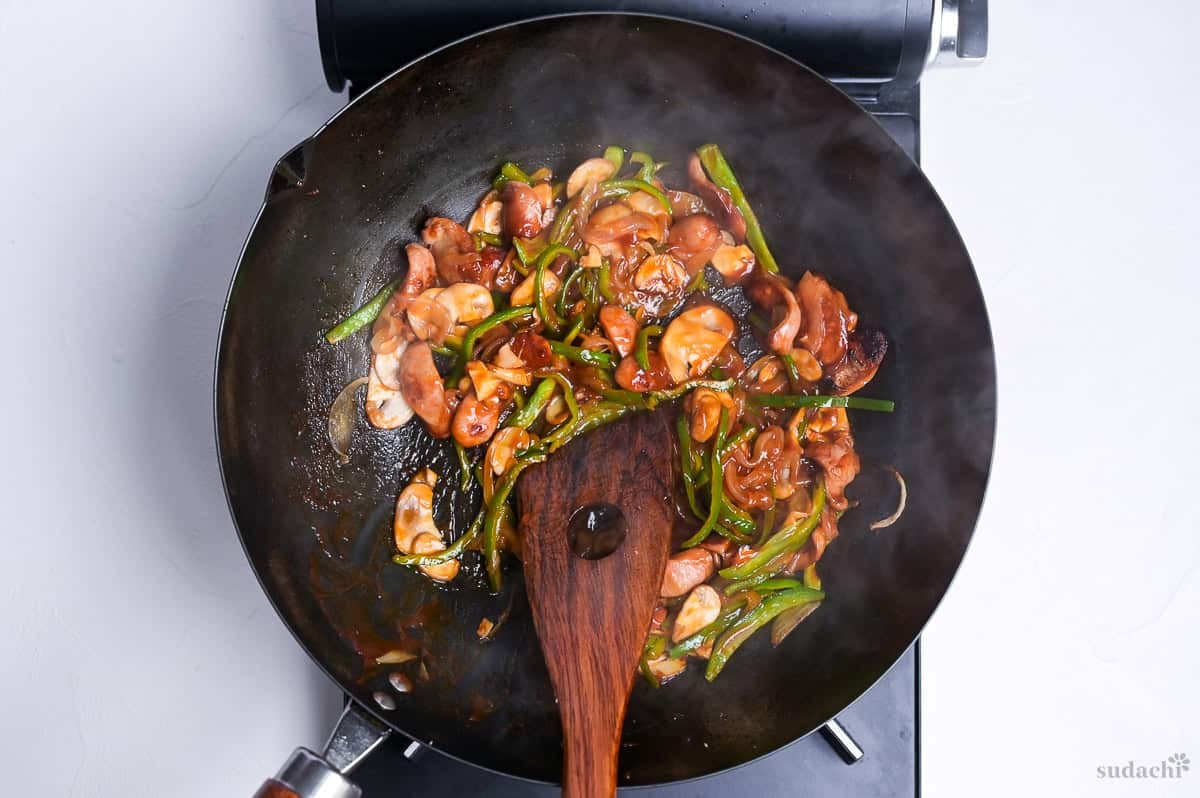
i. About 1 minute before the noodles are done, put the frying pan with the sauce back on low heat to warm it.
Noodles dropped into a cold pan cool everything down, and the sauce will not come together around them.
ii. Scoop a little extra pasta water into a cup, then drain the noodles loosely. Skip the hard shake in the colander.
iii. Turn the heat up to medium and add part of the reserved pasta water. Add the noodles and toss fast for 30 to 60 seconds, heat kept up.
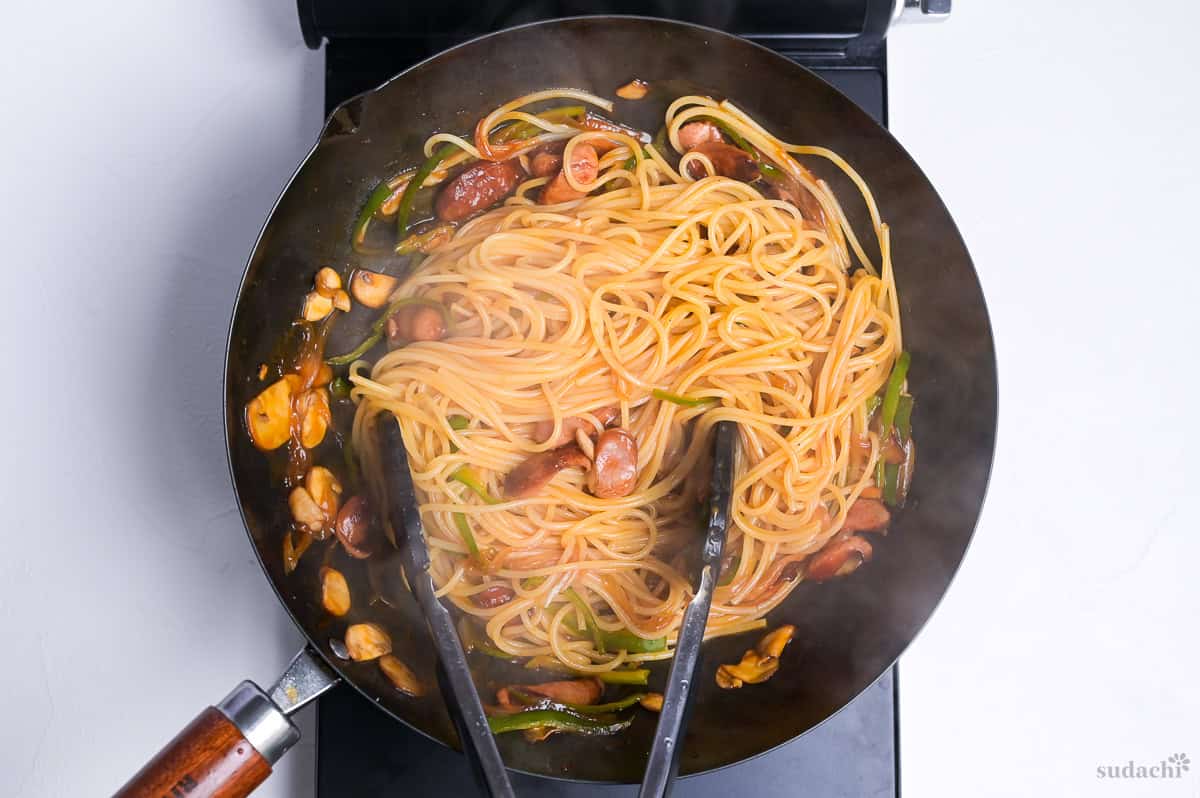
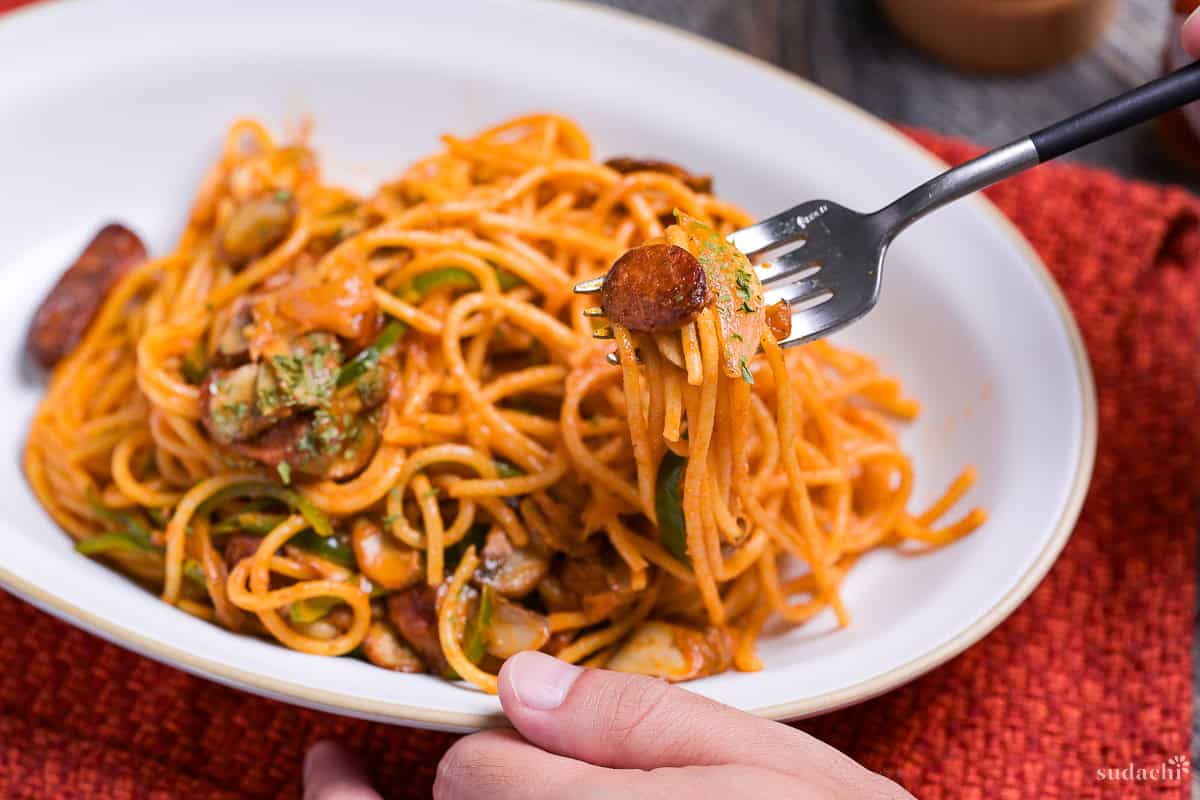
You are there when the sauce clings to the noodles instead of running to the bottom of the pan, everything turns glossy, and no oil floats on top.
Tip: If oil starts to float, add a splash of pasta water and toss again quickly.
The starch in the pasta water pulls the oil and water of the sauce together into one. The hotter the pan and the harder you toss, the better it holds. Stir lazily over low heat and the oil tends to stay floating on top. Keep it at medium, keep tossing fast, and the sauce coats every single strand.
i. Turn off the heat and stir in the butter, the grated Parmesan, and the black pepper, in that order.
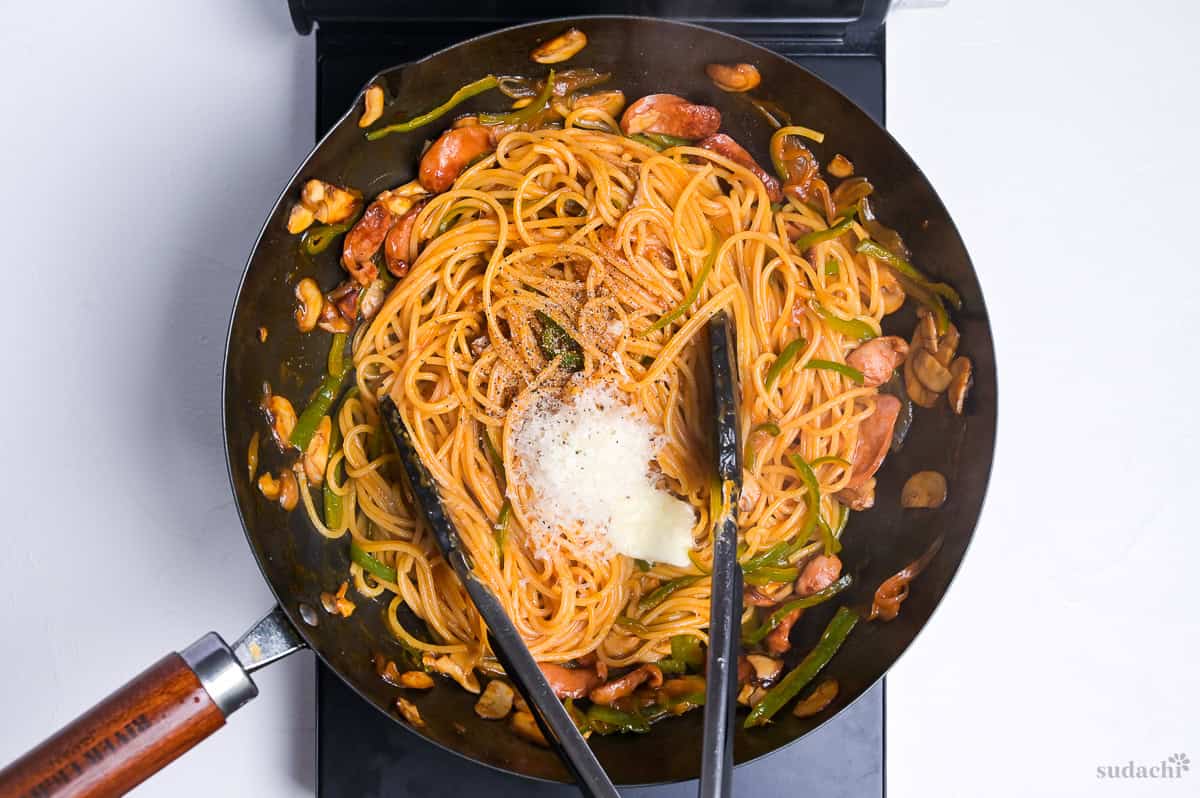
All 3 go in with the heat off.
ii. Taste, and adjust with salt if it needs it. Ketchup brands vary in saltiness, and the pasta water also brings salt in, so season by taste instead of by measurement.
iii. Stir in the finishing ketchup until evenly distributed.
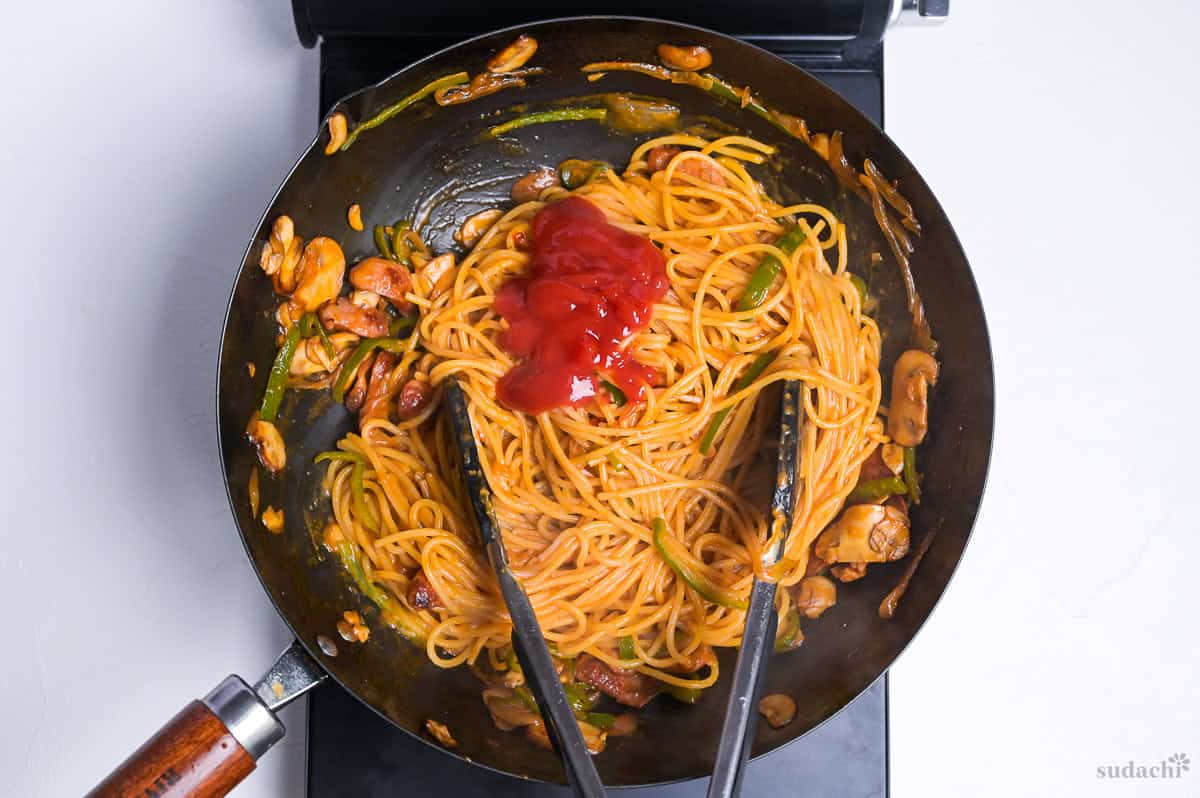
Raw ketchup that has never seen the heat, added last, puts one last bright, tangy layer over the deeply cooked sauce. Cook it on the heat and the whole point of this move is gone.
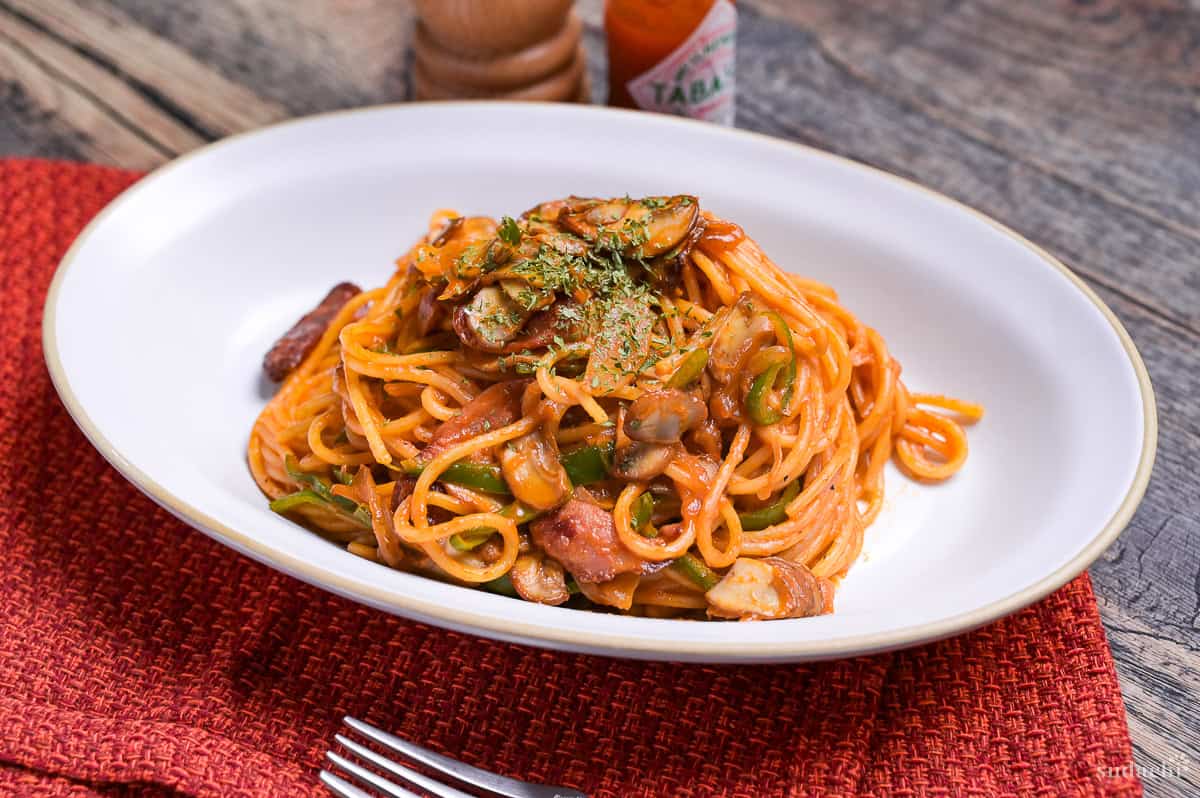
i. Pile the noodles onto the warm plates, twisting them with tongs as you go to build height.
ii. Scatter just a few pieces of the sausage and vegetables on top.
iii. Sprinkle with grated Parmesan and dried parsley.
iv. Serve with grated Parmesan and Tabasco on the table, so everyone can add their own. Enjoy!

Tips for the Best Spaghetti Napolitan
- Split the ketchup into 2 lots, and add the second with the heat off. Cook every last spoonful down in the pan and the fresh tang you wanted at the end is gone. Stir that last lot in over a live flame and the result is the same. You are back to plain fried ketchup.
- Use medium heat when you cook the ketchup down. Rush it over a strong flame and the ketchup scorches and turns bitter. Hold the pan at medium and stir without a break.
- Avoid adding too much ketchup. The finishing lot you measured is already part of the recipe. Pour in more than that and the extra liquid thins the sauce. Fix the seasoning with salt and pepper instead.
The flavor comes from how hot the pan is and when each lot of ketchup goes in, so a heavier pour won’t get you there.
Storage & Meal Prep
Fridge: Cool and seal. 2 days. Don’t leave it out.
Freezer: Single portions, air out, 3 weeks. Ketchup stains plastic. Use glass, or line it with wrap.
Meal prep: Not recommended. Starch firms fastest in the fridge, so freeze.
Reheating: Loosen in a pan over medium with a little water, even from frozen. Or microwave small portions briefly and stir. Off the heat, a little raw ketchup restores tang and aroma.
What to Serve With Napolitan
- Creamy Japanese Potato Salad
- Shredded Cabbage Salad
- Homemade Corn Potage (Japanese Corn Soup)
- Ebi Furai (Panko Fried Shrimp)
Spaghetti Napolitan Troubleshooting
When sauce runs to the bottom of the plate and the oil splits off and floats, the sauce and the pasta water never came together. Either the toss happened over low heat, or the noodles landed in a cold pan. Turn the heat up to medium, add a little of the reserved pasta water, and toss fast without letting up. Stop when the sauce grips every strand and the whole pan has a sheen.
Either the heat ran too high or the stirring paused. Ketchup has sugar in it, so it burns easily. Scrape out the blackened bits with your spatula, add just enough fresh ketchup to replace what came out, and cook it down again over medium, stirring the whole time.
Either the noodles went in while the sauce was still wet, or extra ketchup went in to lift the flavor. Both thin the sauce and dull the taste. As long as the oil stays mixed in, add neither pasta water nor ketchup. Toss quickly over medium to drive off the extra water, then season with salt and pepper.
More Japanese Pasta Recipes
- Japanese Meat Sauce Spaghetti
- Nagoya Ankake Spaghetti
- Butter Shoyu Mushroom Pasta
- Mentaiko Spaghetti (Cod Roe Pasta)
Once you can turn ketchup into a sauce, find more Japanese spaghetti built on soy sauce, butter, or mentaiko in Japanese Spaghetti Dishes.
Did You Try This Recipe?
I would love to hear your thoughts!
💬 Leave a review and ⭐️ rating in the comments below. 📷 I also love to see your photos – submit them here!
Napolitan Pasta (Japanese Spaghetti with Ketchup)

Ingredients
Fillings
- 3 hot dog sausages sliced diagonally 1.5 cm thick, or bacon
- 100 g onion sliced 3-5 mm thick along the grain
- 75 g green bell pepper cut into 5 mm strips along the grain
- 50 g button mushroom sliced 3-4 mm
Sauce
- 1 tbsp olive oil
- 4 tbsp tomato ketchup for cooking down
- ½ tsp sugar
- ½ tbsp Worcestershire sauce Japanese-style, or Lea & Perrins
- ½ tsp Japanese soy sauce koikuchi shoyu
- 2 pinches salt for seasoning the fillings
To Finish
- 3 tbsp reserved pasta water
- 1 tbsp milk or reserved pasta water
- 1 tbsp butter
- 2 tbsp tomato ketchup for finishing
- 2 tbsp grated parmesan cheese
- ¼ tsp ground black pepper freshly ground, coarse
- dried parsley as needed
- Tabasco sauce optional, to taste
The ingredient brands and tools I trust are in my Japanese pantry guide and my cooking tools guide.
Can’t find certain Japanese ingredients? See my substitution guide here.
Instructions
- Pour 2000 ml water into a large pot and bring to a rolling boil. Add 1 tbsp salt and 200 g dry spaghetti. Loosen the strands with chopsticks for the first 30 seconds, then boil for the package time plus 1-2 minutes.

- While the spaghetti boils, heat 1 tbsp olive oil in a frying pan over medium heat. Lay in 3 hot dog sausages (sliced) and cook for 2-3 minutes, until the cut sides are browned and fat seeps out.

- Add 100 g onion and a pinch of salt. Stir-fry for a few minutes, until soft and translucent.
- Add 50 g button mushroom and the second pinch of salt, and stir-fry for 1-2 minutes, until the water they release is gone. Add 75 g green bell pepper and stir-fry for 30-60 seconds.
- In a small bowl, mix 4 tbsp tomato ketchup, ½ tsp sugar, ½ tbsp Worcestershire sauce and ½ tsp Japanese soy sauce. Push the fillings to the edge of the pan and pour the mixture into the open space. Over medium heat, spread it out and pull it back together with a spatula for 60-90 seconds without stopping.
- Toss everything together until evenly coated and turn off the heat.
- When the spaghetti has 1 minute left, return the pan to low heat. Reserve about 100 ml pasta water in a cup, then tip the spaghetti into a colander and drain it lightly, with no hard shaking.Increase the frying pan's heat to medium and add 3 tbsp reserved pasta water, 1 tbsp milk (or an extra tbsp pasta water) and the spaghetti. Toss fast over the heat until the sauce clings to the noodles and shines instead of pooling.
- Turn off the heat. Stir in 1 tbsp butter, 2 tbsp grated parmesan cheese and ¼ tsp ground black pepper, one after another in that order. Taste, and add salt if it needs more.
- Add 2 tbsp tomato ketchup off the heat and mix until evenly distributed.
- Twist the spaghetti with tongs and pile it high on each plate. Sprinkle with extra grated parmesan cheese, dried parsley and Tabasco sauce on the table. Enjoy!


So delicious! Ever better than the one I had in Japan!
Thank you so much, Jude!