

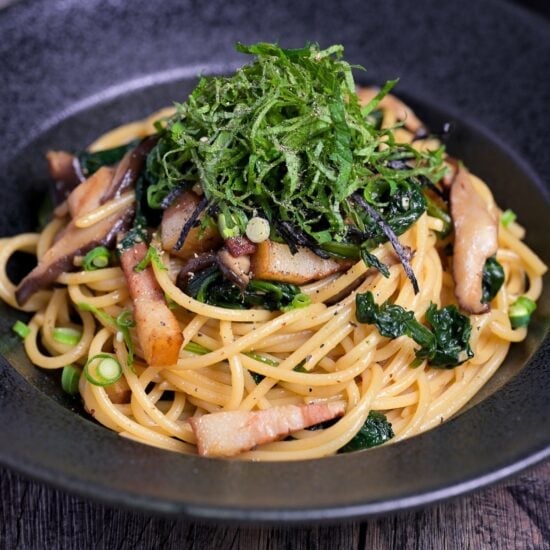


Featured Comment
So easy and delicious! I happened to come across this recipe while looking for something quick to make for dinner, and luckily I had all the ingredients on hand. It turned out great and was perfect for a fast, tasty meal!
★★★★★
– Emily
Butter. Soy sauce. Spaghetti. You’ve had all three for years. The reason you haven’t combined them isn’t a missing ingredient. It’s a missing technique.
This wafu pasta shows you exactly what that technique is. One bowl in, and you will wonder how these three pantry staples were hiding this much flavor the entire time.
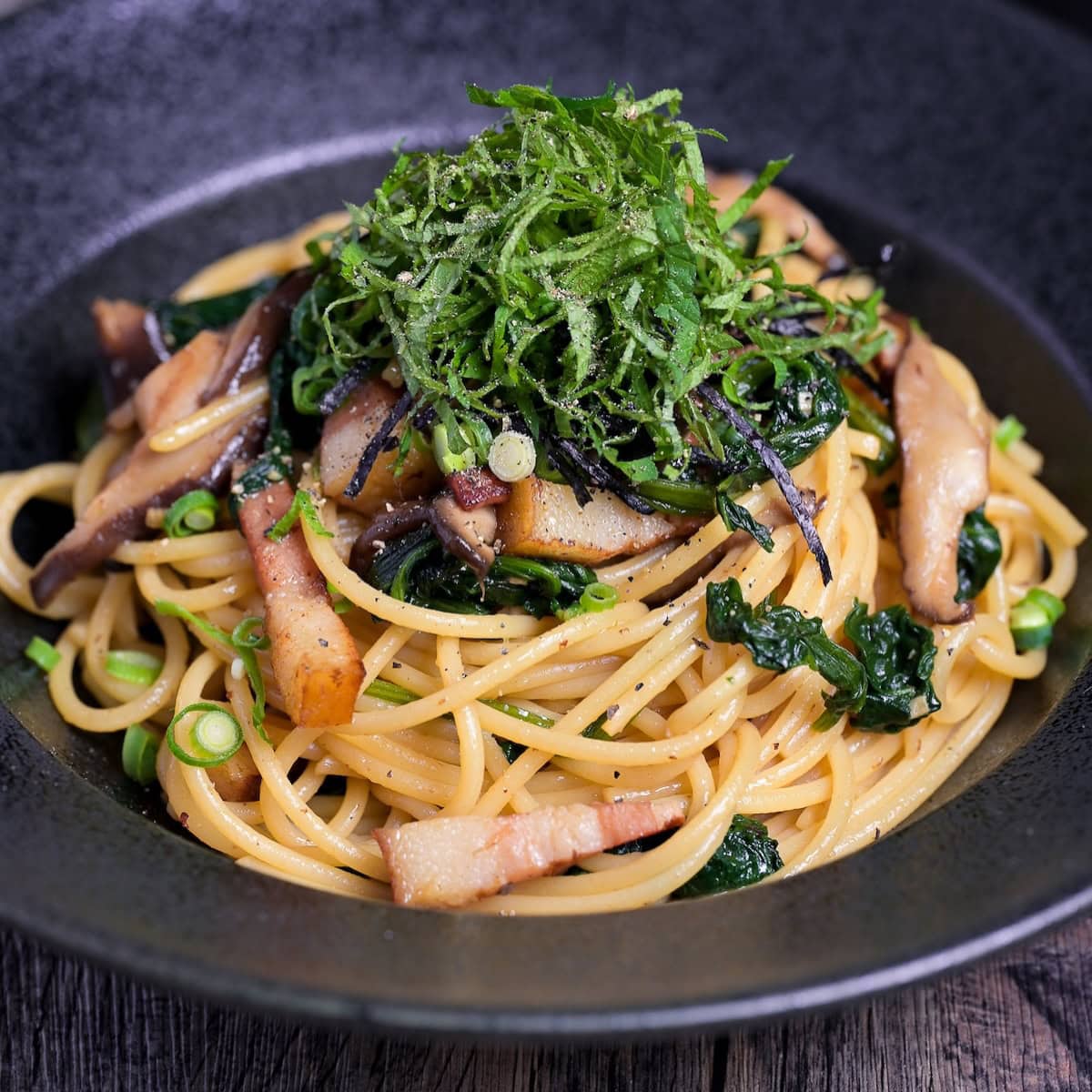
Butter Shoyu Wafu Pasta
Recipe Snapshot
- What is it? Japanese-style pasta seasoned with soy sauce, butter, and dashi-adjacent ingredients. Butter shoyu pasta is one of Japan’s “big three” home-cooked wafu pastas.
- Flavor profile: Soy sauce and butter create kokumi, a mouthfulness that goes beyond basic umami. Two-stage shoyu addition builds layered caramel aroma through Maillard browning at the pan surface.
- Why you’ll love this recipe: The entire sauce comes together in the time it takes to boil pasta. If you’ve been rotating through the same four pasta sauces, this opens a completely new flavor axis with ingredients already in your kitchen.
- Must-haves: Japanese soy sauce, unsalted butter, and starchy pasta water for emulsification.
- Skill level: Easy. One pan, no special equipment.
Summarize & Save this content on:
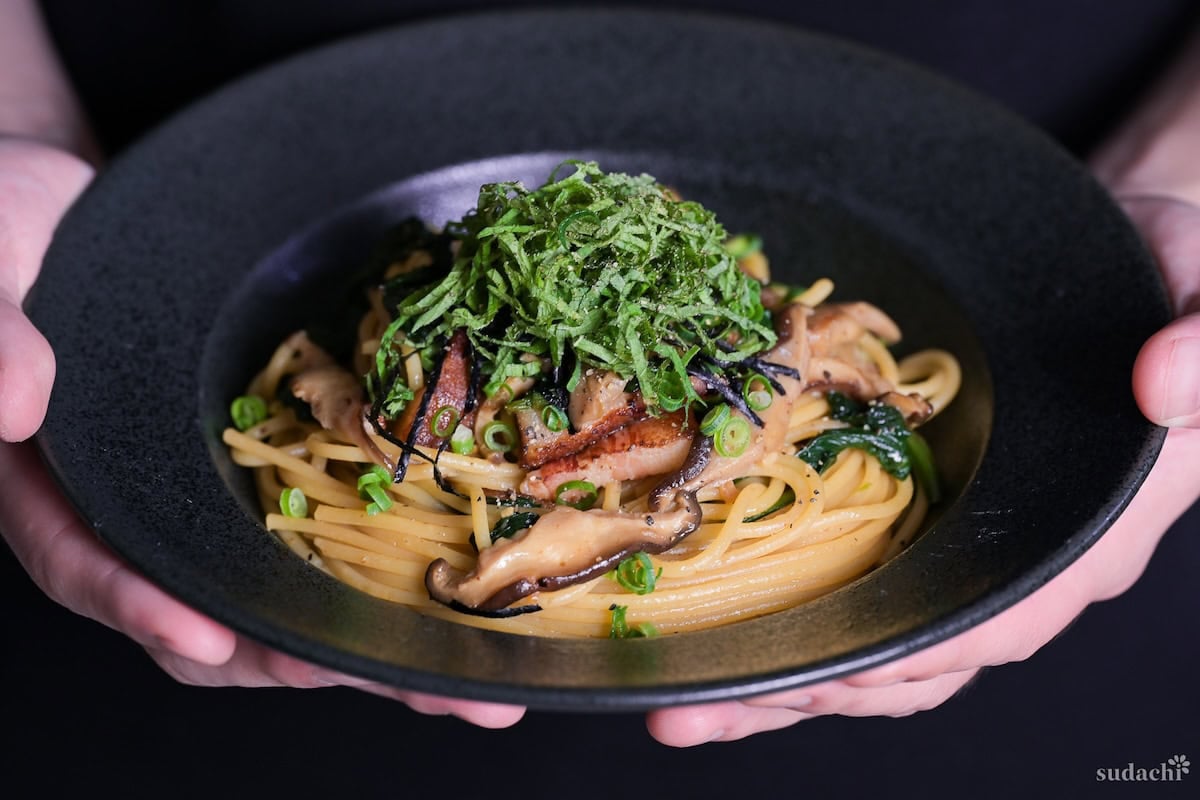
What is Wafu Pasta?
Wafu (和風) means “Japanese-style,” and wafu pasta is exactly that: Japanese food that uses spaghetti as its base instead of rice. Think soy sauce, dashi, mirin, and bonito flakes where you’d normally expect tomato sauce or olive oil. It’s not Italian food with a Japanese twist. It’s a category of Japanese cooking built on pasta.
The genre traces back to Kabe-no-Ana (壁の穴), a tiny Tokyo restaurant founded in 1953 that started tossing spaghetti with Japanese ingredients instead of Western sauces. That experiment launched an entire category. Today, the 3 most iconic home-cooked wafu pastas in Japan are butter shoyu, tarako (cod roe), and mentaiko (spicy cod roe).
Butter shoyu pasta is the simplest of the 3, built on the combination of butter and soy sauce that Japanese like me call the “golden combo.” It sits in the same weeknight comfort zone as spaghetti meat sauce and other yoshoku classics, but with a lighter, cleaner finish.
Butter Shoyu Pasta Ingredients
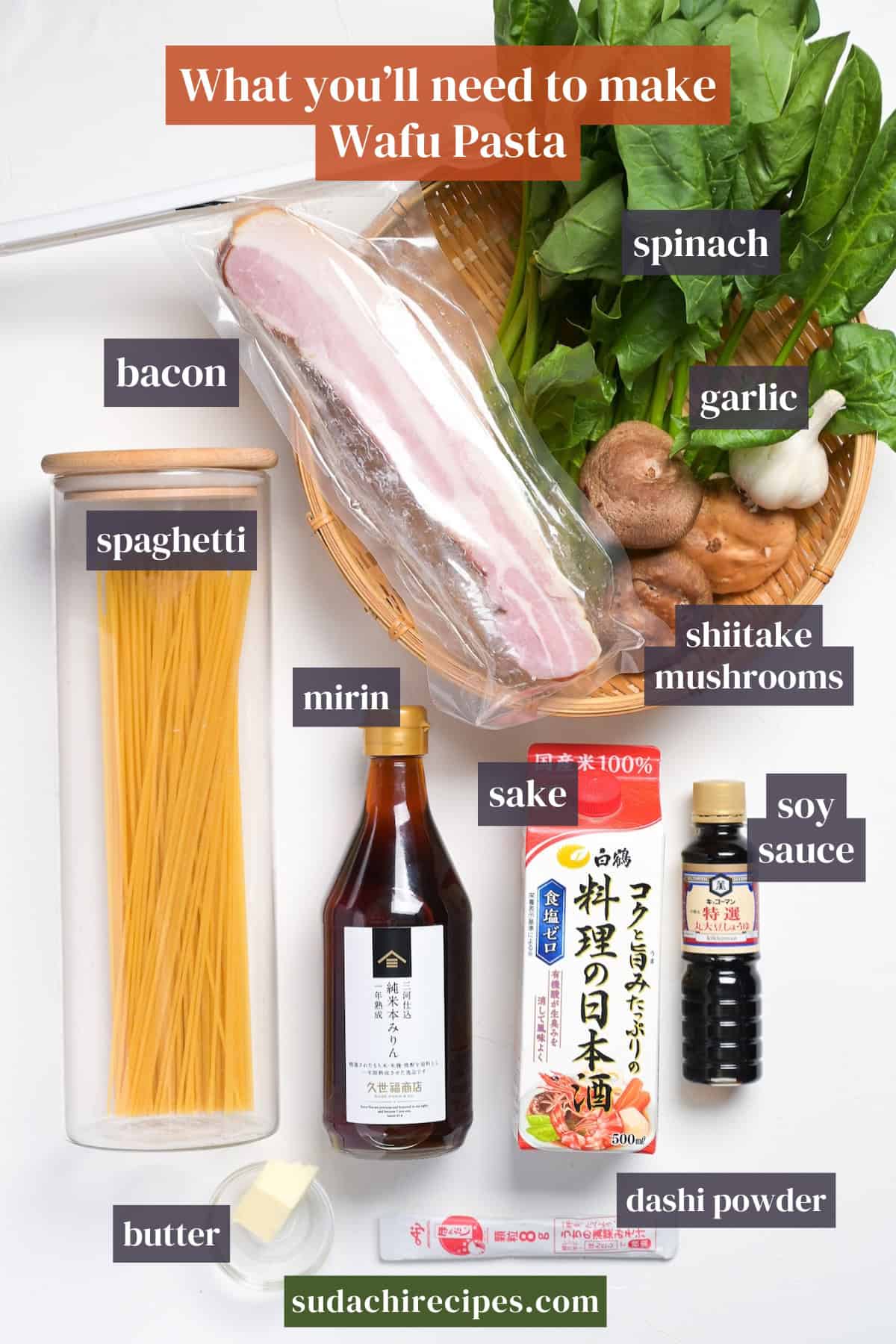
- Spinach: I use Japanese oriental spinach (the kind with pointed leaves and pink-tinted stems), but any fresh spinach works here. It wilts into the hot pasta in seconds, adding a mild, mineral bitterness that cuts through the rich butter-shoyu sauce and gives you that vivid green contrast on the plate. Grab whatever looks freshest at your store and you’re good.
- Bacon: You want something with a decent amount of fat on it, not the lean kind. The rendered bacon fat becomes part of the cooking medium for your garlic and mushrooms, layering smoky richness into the dish before the butter even hits the pan. If the bacon is too lean, you lose that whole foundation.
- Shiitake mushrooms: These don’t have to be shiitake. Cremini, oyster, maitake, whatever your local store has will work beautifully here. The mushrooms bring an earthy depth and a chewy texture that makes this pasta feel like a complete meal, and their natural glutamic acid pairs with the soy sauce to amplify the umami across the whole dish.
Substitutions, Variations & How to Customize
Substitutions:
- Spaghetti (1.7-1.8mm) → Any long pasta in the 1.4-2.0mm range works here. Linguine and fettuccine both grab more sauce per strand. Bucatini adds a fun chew. Thinner angel hair cooks faster but breaks more easily during tossing, so be gentle.
- Sake → Dry white wine/sherry works well here.
- Dashi powder → Chicken bouillon powder or mushroom bouillon powder. Either one fills the background savory role that dashi plays in this recipe.
- Spinach → Baby spinach is the easiest swap, though you may need a bit more since the leaves are smaller. Kale (stems removed, roughly chopped) adds a sturdier bite. Bok choy or Swiss chard both work, but chop the stems small and add them a minute before the leaves so everything finishes at the same time.
- Shiitake mushrooms → Cremini, oyster, maitake, king oyster, or a mix of whatever looks good at your store. Each brings a slightly different texture and umami level, but they all work fine in this sauce.
- Bacon → Pancetta works as a direct swap.
- Shiso (garnish) → Korean perilla leaves are the closest match. Fresh basil combined with a few torn spearmint leaves approximates shiso’s herbal-citrus character.
- Nori (garnish) → If you can’t find nori, just skip it.
Have trouble finding Japanese ingredients? Check out my ultimate guide to Japanese ingredient substitutes!
Variations:
- Gluten-free: Use your preferred gluten-free pasta and swap the soy sauce for tamari (check the label for wheat). One thing to know: rice-based GF pasta releases less starch into the cooking water, which makes emulsification harder.
- Chicken version: Boneless chicken thigh, sliced thin and seared until golden, is a natural fit.
- Tofu version: Firm tofu (momen-dofu), pressed, cubed, and pan-fried until golden on all sides. The crispy exterior absorbs the sauce like a sponge. Check out my teriyaki tofu recipe for how to prepare.
How to Customize:
- Spicy: Add chili flakes to the garlic oil step, or drizzle chili oil (rayu) over the finished plate.
- More umami: A small grating of Parmesan right before serving is not Japanese, but it works. The glutamic acid in Parmesan stacks with the soy sauce for an absurd umami hit.
- Extra garlic: Double the garlic. This dish loves it.
- Mushroom-forward: Use 3-4 types of mushrooms (shiitake, maitake, shimeji, enoki) and make them the star. Enoki added at the very end stays crisp and adds textural contrast to the tender sauteed mushrooms.
How to Make My Butter Shoyu Spaghetti
If you prefer to watch the process in action, check out my video of this butter shoyu pasta recipe!
Before you start (Mise en place):
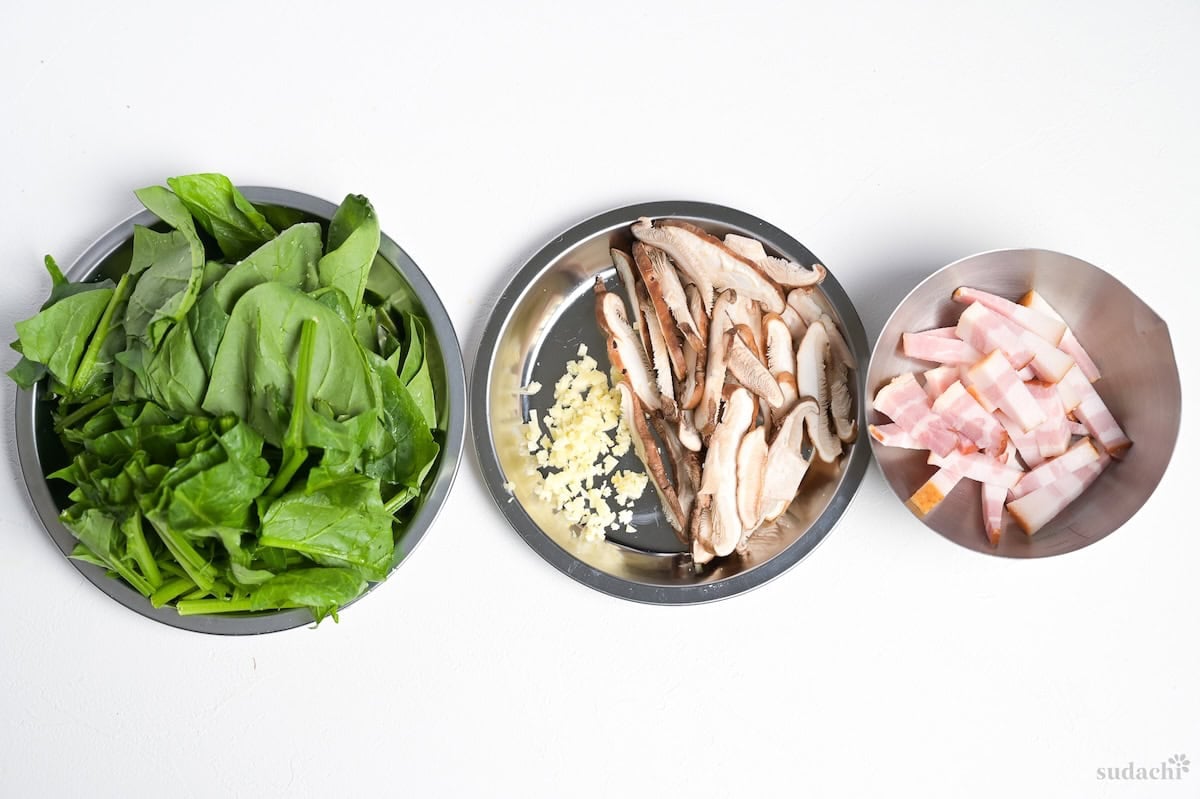
- Wash the spinach, shake off the excess water, and dry it with a clean towel or salad spinner. Cut the leaves into bite-sized pieces and set them near the stove.
- Slice the bacon into short strips, about the width of your pinky finger.
- Finely dice the garlic and keep it separate from the other ingredients.
- Slice the shiitake mushrooms and give them a light sprinkle of salt.
- Measure out the sake, mirin, dashi powder, and both portions of soy sauce.
Everything moves fast once the pasta goes into the skillet, so treat this step like a pit stop: every tool and ingredient staged and ready.
i. Bring a large pot of water to a rolling boil and add the salt. Drop in the spaghetti and stir well for the first 30 to 60 seconds to prevent the strands from fusing together. Cook until 1 minute short of the package directions, checking a strand by biting into it.
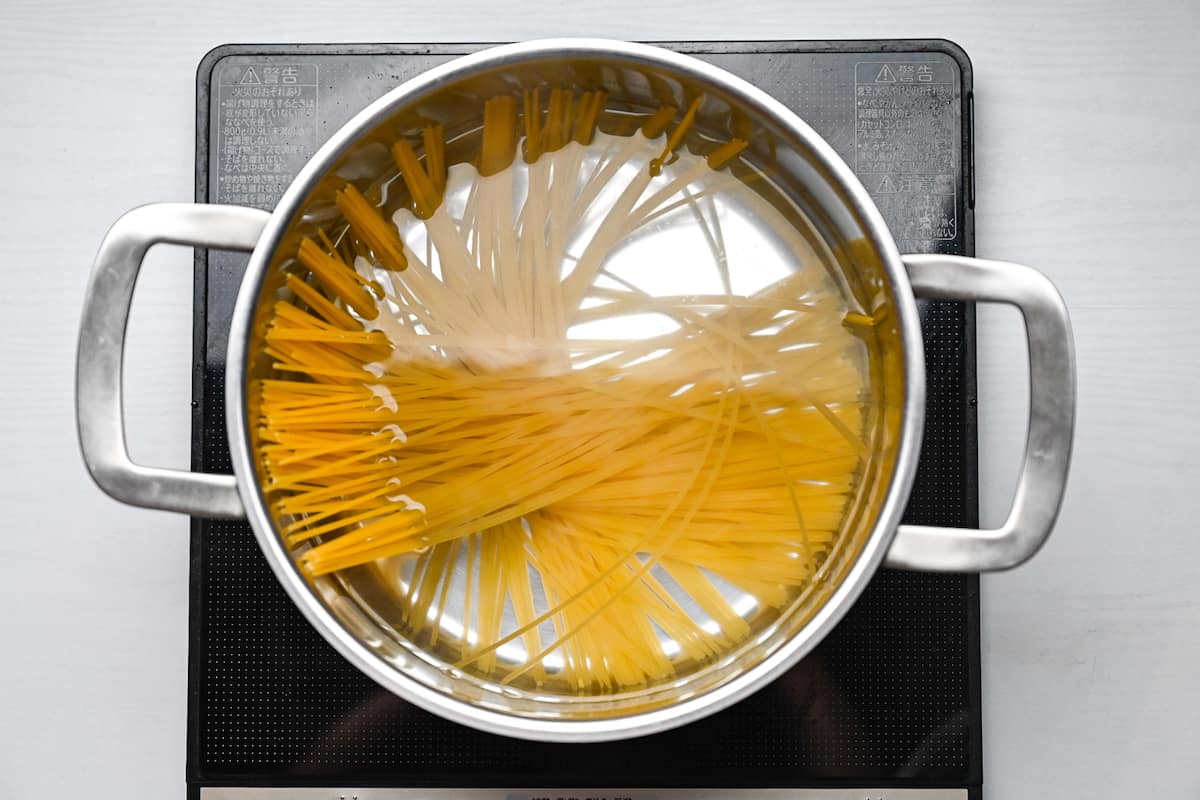
That last minute of cooking happens in the skillet with the toppings and sauce. The slightly underdone pasta absorbs the seasoned liquid as it finishes, so the flavor works its way into the starch matrix rather than just sitting on the surface.
ii. Before you drain, scoop out a generous amount of the starchy cooking water with a ladle or measuring cup and set it aside. This cloudy, starch-rich liquid is the secret weapon for building the sauce later. You can always add more, but you can never get it back once it goes down the drain.
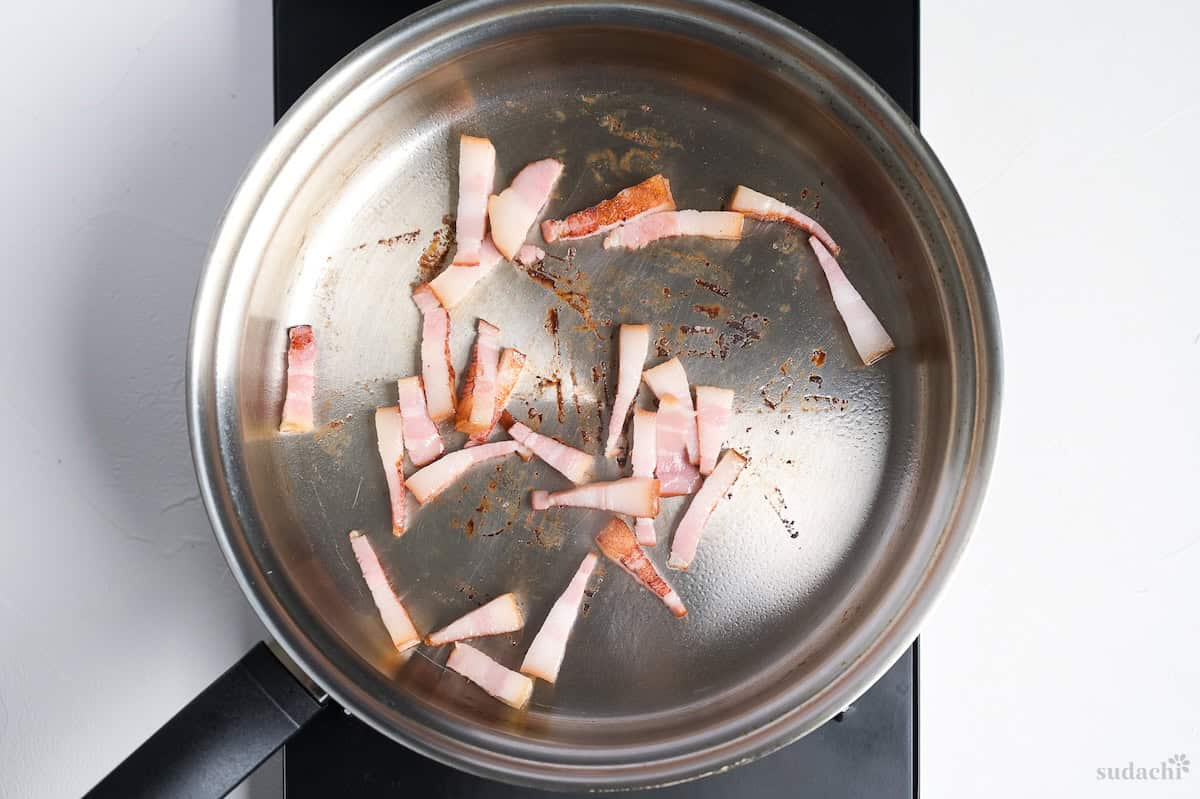
i. While your spaghetti is cooking, heat a wide skillet over medium-low heat and lay in the bacon strips. If your bacon is on the leaner side, add a small splash of neutral oil to get things started. Let the fat render slowly until the edges pick up color and the pan has a thin layer of golden, fragrant drippings.
ii. Add the mushrooms and garlic to the bacon fat and spread them into a single layer. Resist the urge to stir. Let them sit mostly undisturbed for 2 to 3 minutes until the moisture evaporates and the edges develop a light golden color.
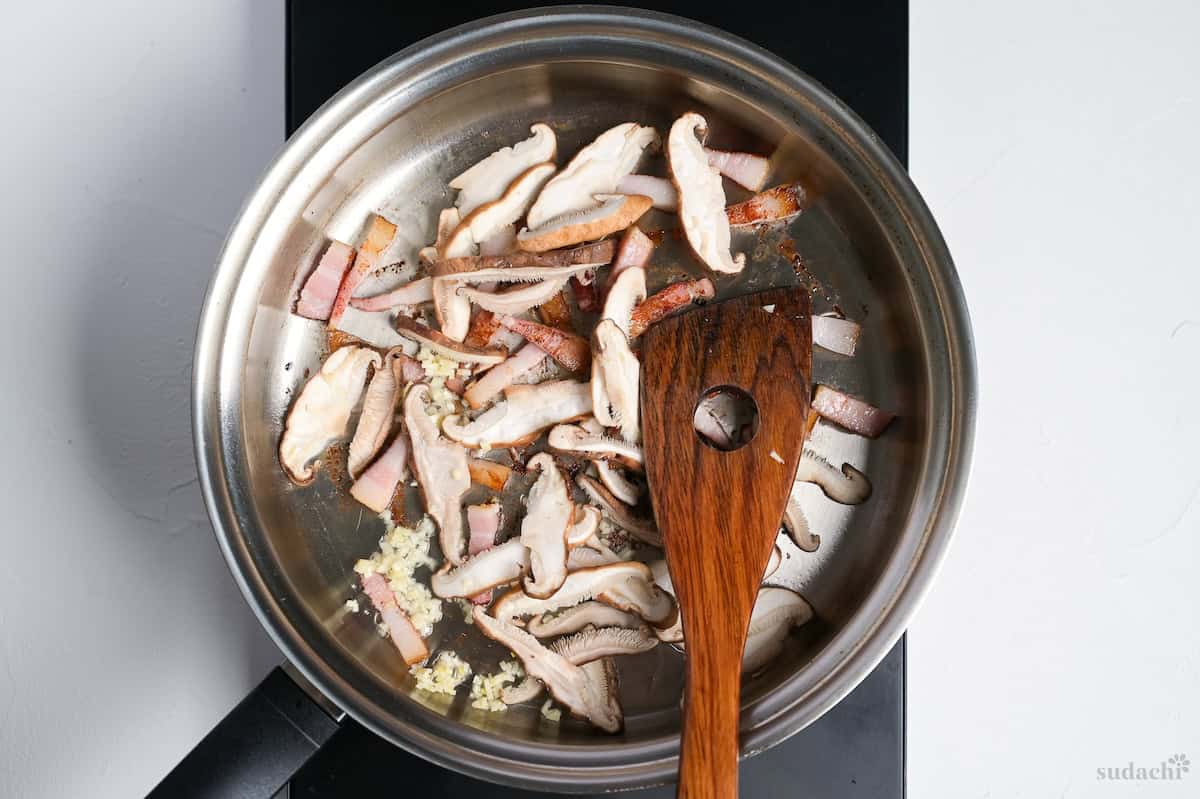
You will hear the sizzle shift from a wet, spattering sound to a quieter, steadier crackle. That shift is your cue that the water is gone and real browning has started.
iii. Pour in the sake and add a pinch of instant dashi powder. The liquid will hit the hot pan and sizzle sharply, lifting all those caramelized bits (the fond) off the surface and folding them back into the sauce. This is free flavor that would otherwise stay stuck to the pan. Let the alcohol cook off for about 10 seconds.
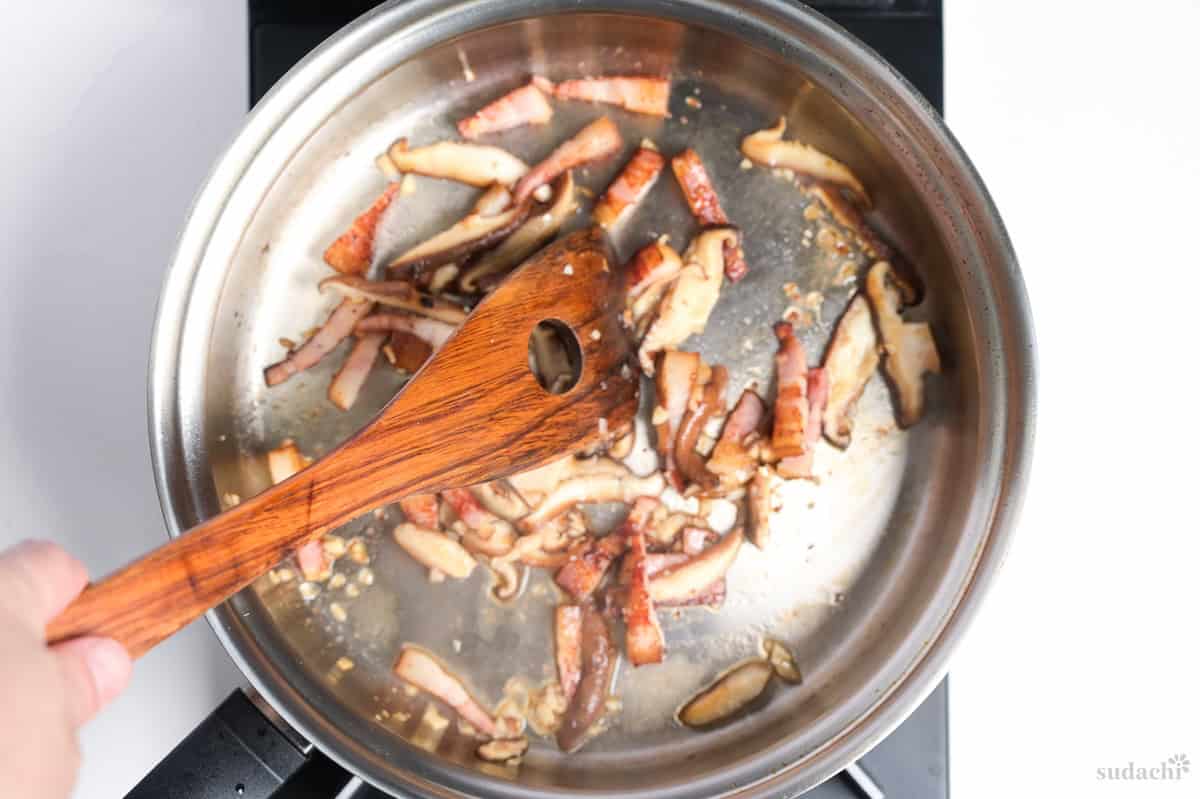
iv. Toss in the spinach and stir just until the leaves begin to wilt, about 15 to 20 seconds. They will shrink dramatically.
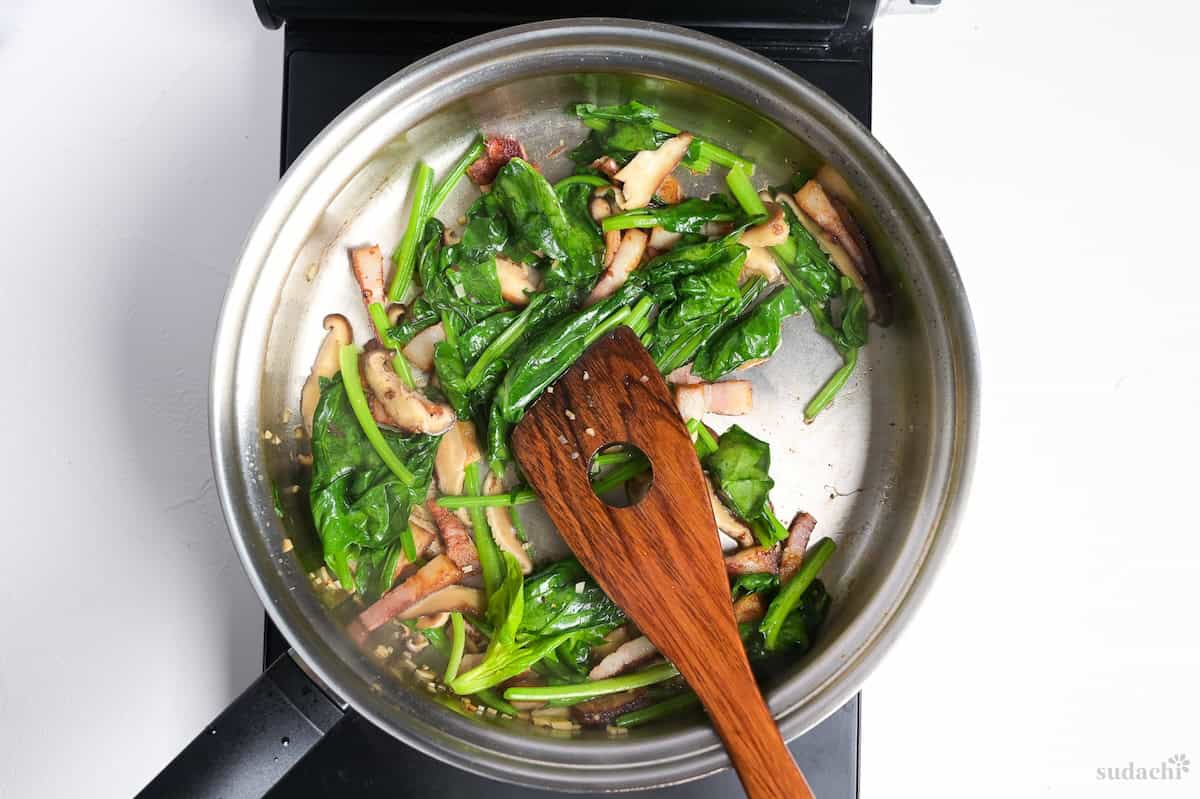
v. Now add the mirin to an empty spot on the pan surface and let it sit for about 10 seconds before folding it into the mixture.
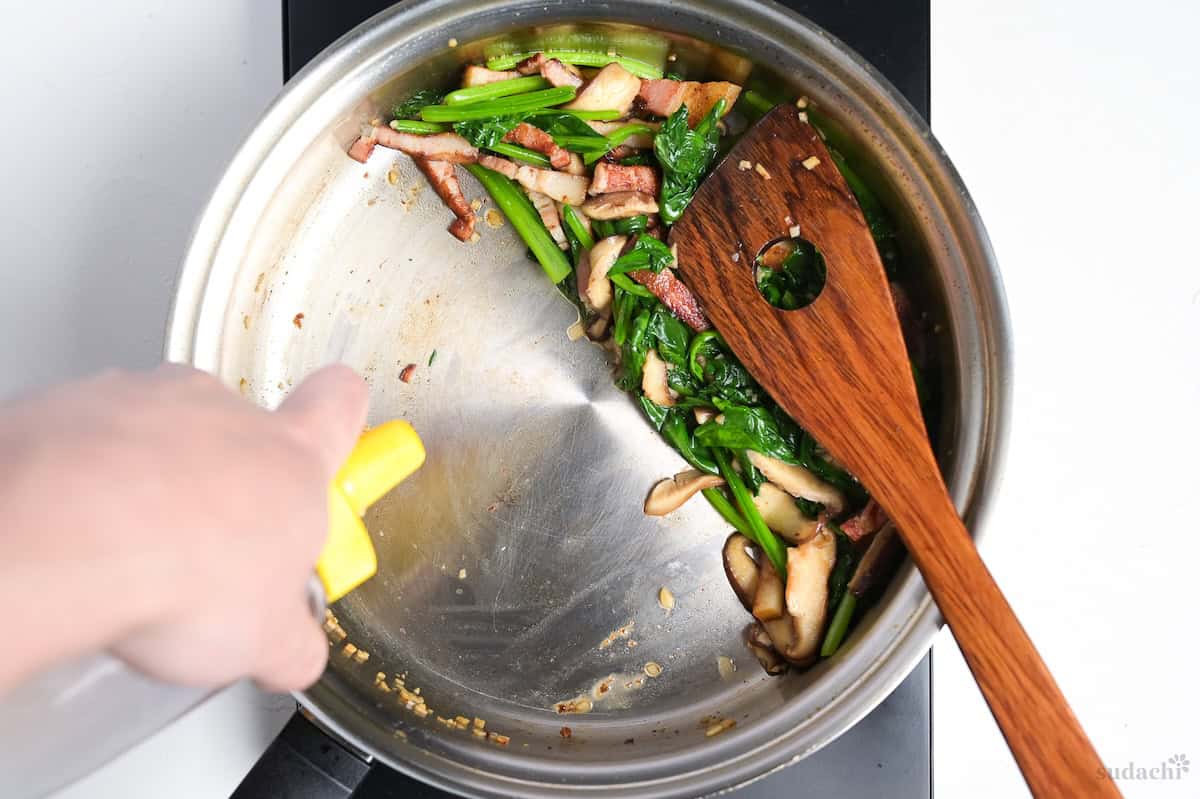
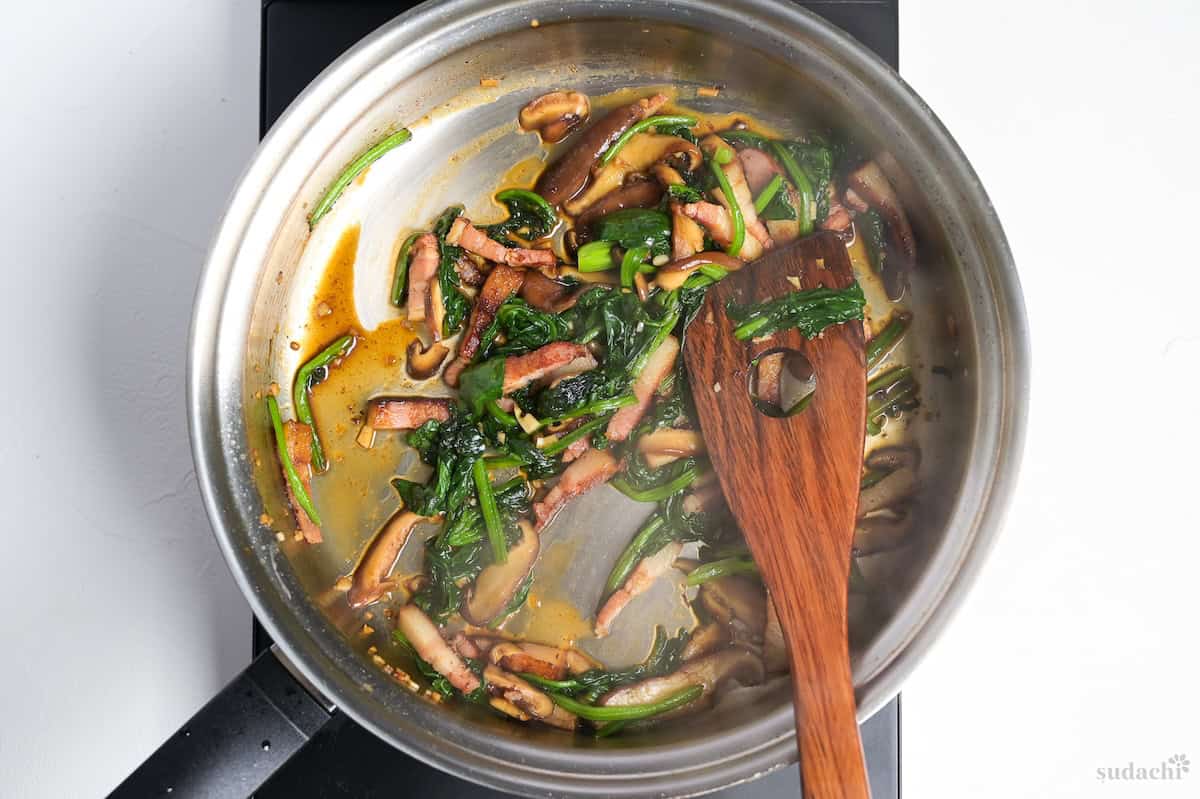
vi. Do the same with the first addition of soy sauce: pour it onto the exposed hot surface of the pan, not directly onto the food.
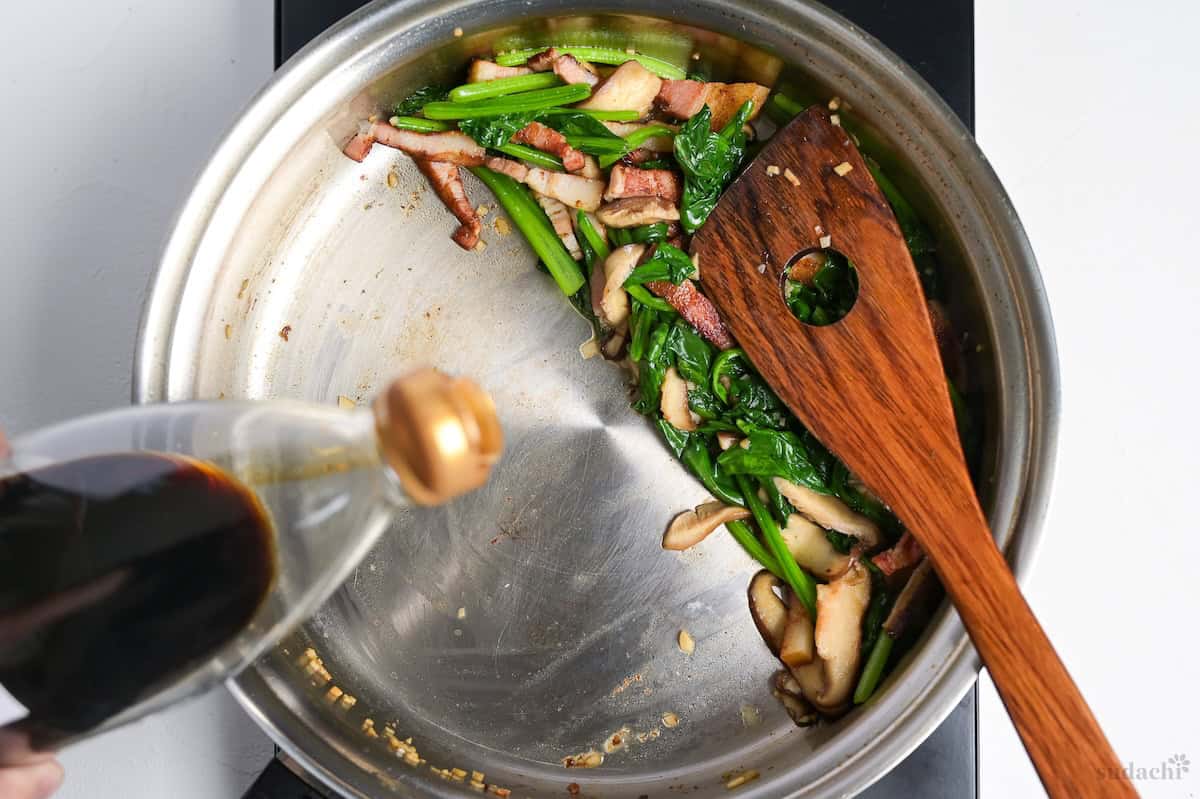
This is the single biggest flavor move in the recipe. When soy sauce hits the scorching metal surface of the pan, its amino acids and sugars undergo rapid Maillard reactions, producing a burst of roughly 300 volatile aromatic compounds: pyrazines, furanones, and methylbutanals that create a deeply toasted, almost smoky fragrance. If you pour it directly onto the wet food, the temperature is too low for those reactions to happen.
vii. Stir everything together over medium-low heat for 10 to 15 seconds to distribute the soy sauce evenly. If the toppings are done well before the pasta, add splashes of the reserved pasta water to keep things from drying out or sticking.
i. Using tongs, transfer the pasta directly from the pot into the skillet. Transferring with tongs rather than draining through a colander keeps the strands wet with starchy water. If you do use a colander, don’t shake it completely dry.
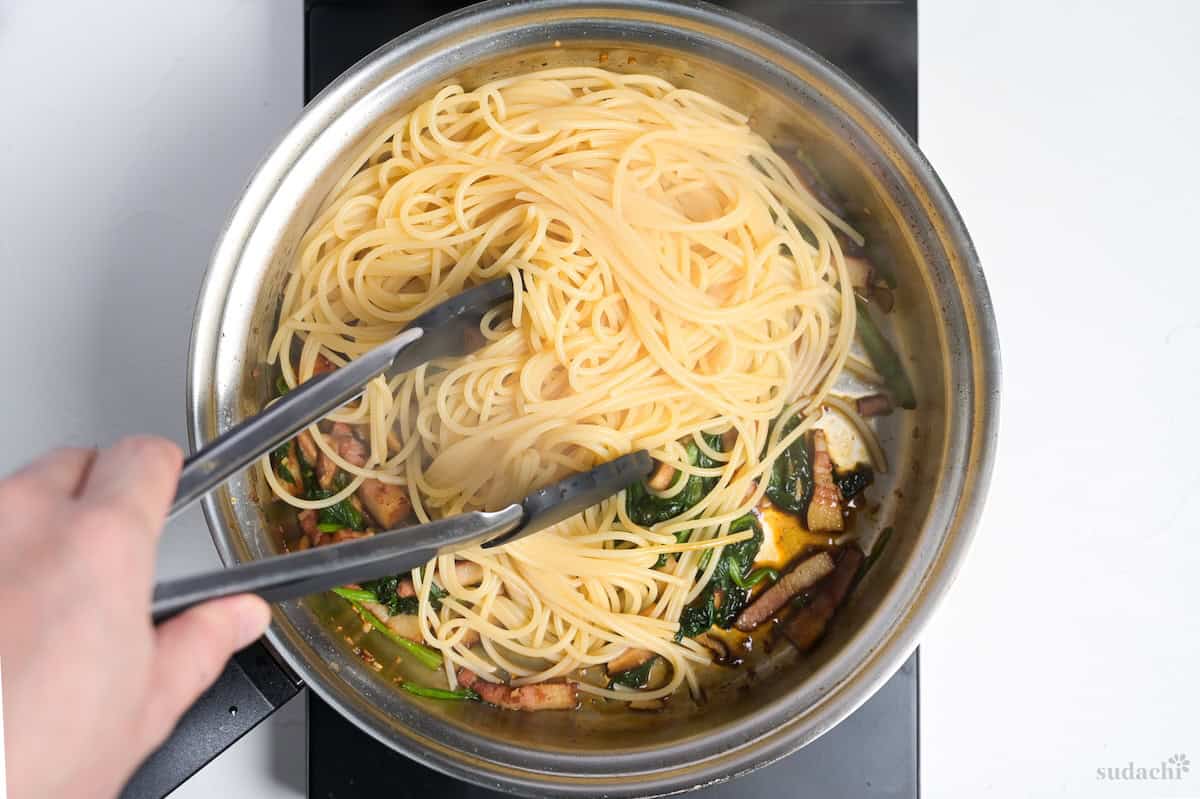
ii. Add a splash of the reserved pasta water and toss everything together vigorously for 20 to 30 seconds. Move the pasta through the toppings with real energy here.
iii. Turn off the heat. Add the butter and the second addition of soy sauce. This is the other half of the two-stage shoyu technique: the first addition got caramelized on the pan surface for deep, roasted aroma, and this second addition goes in off-heat to preserve the raw fermented complexity of the soy sauce.
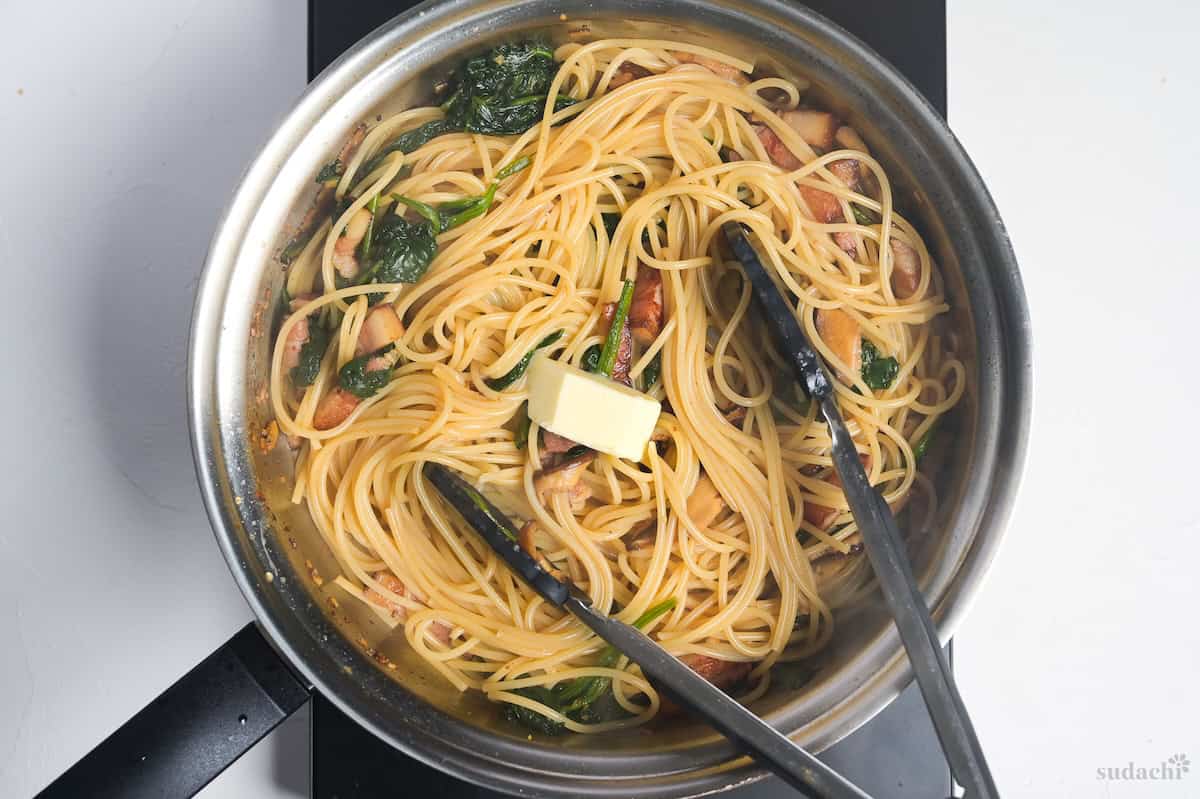
iv. Toss well, adding more pasta water a small splash at a time if needed, until the sauce is glossy and coats the noodles evenly. The finished sauce should look like it has been polished. No pools of water, no slicks of oil, just a smooth, emulsified sheen from end to end.
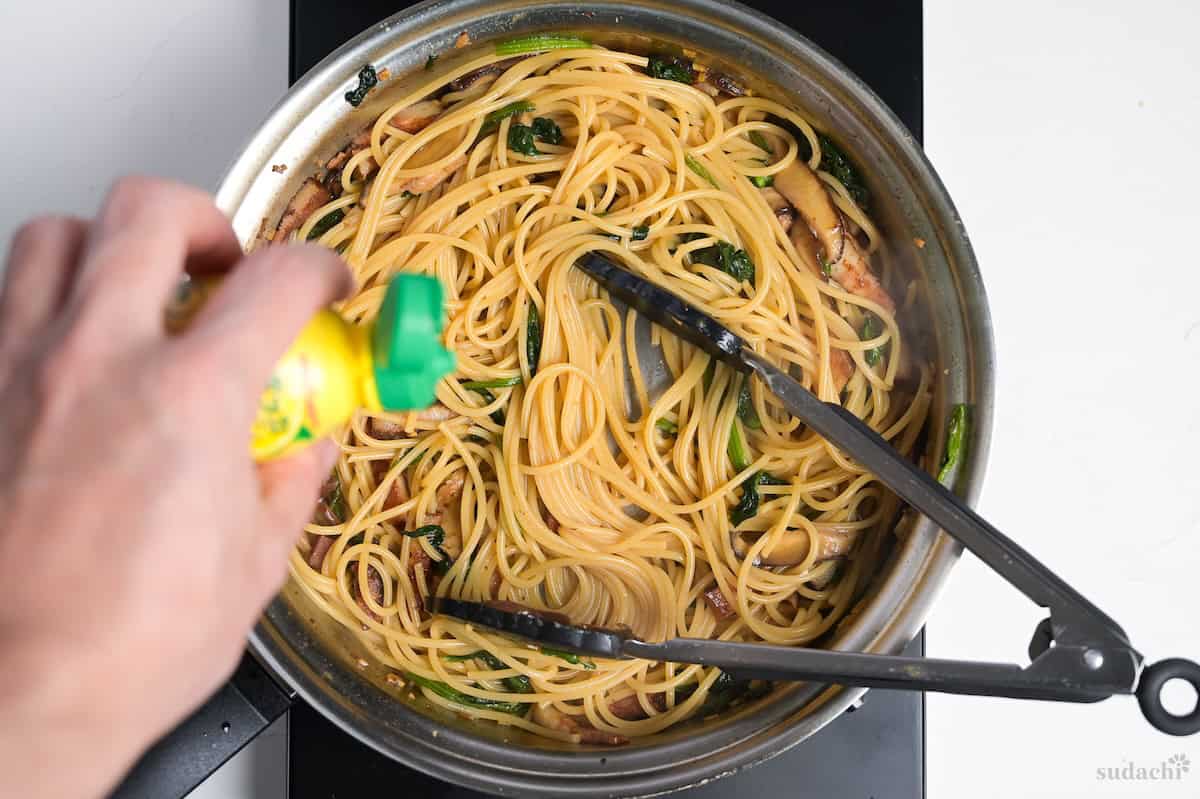
i. Squeeze a few drops of lemon juice over the pasta and give it one final toss. The acid lifts the entire dish, cutting through the richness of the butter and the saltiness of the soy sauce with a bright, clean note that keeps each bite feeling fresh instead of heavy.
ii. Plate it up immediately. Finish with chopped green onions, shredded nori, and fresh shiso leaves. Add black pepper to taste. Together they turn a rich, one-dimensional bowl into something with real dimension.
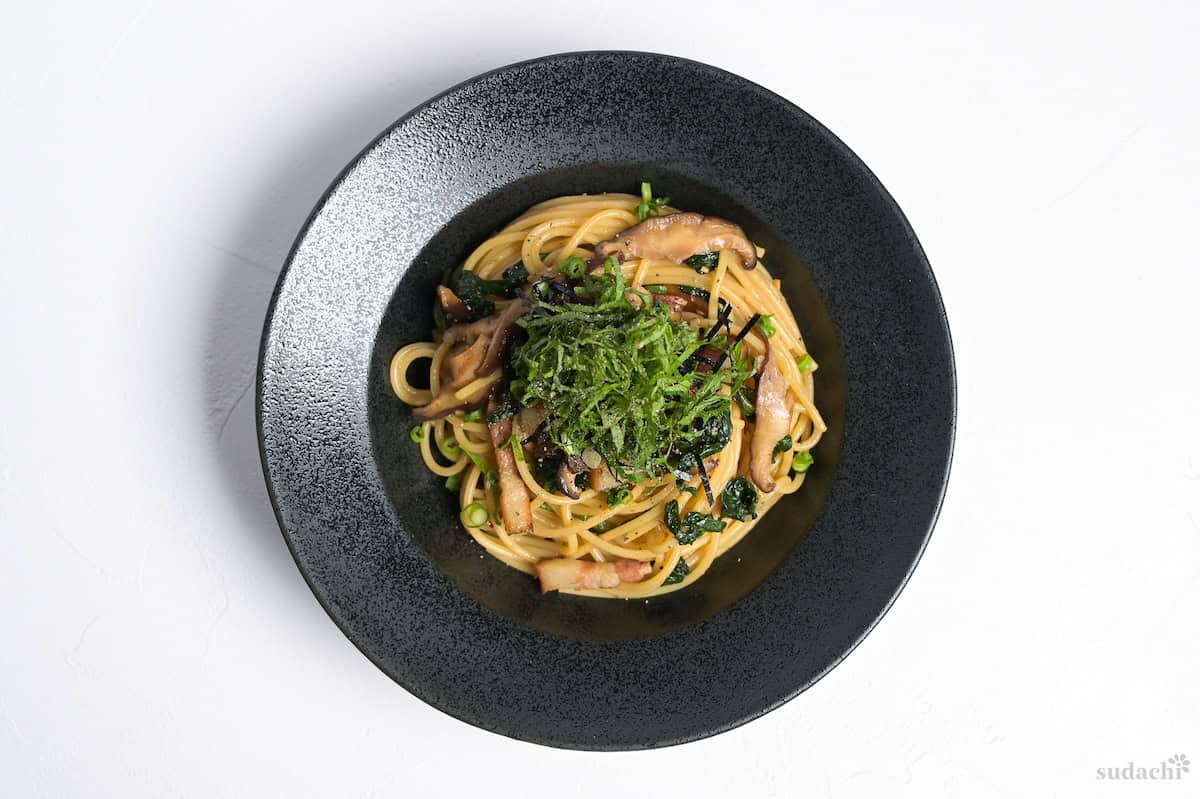
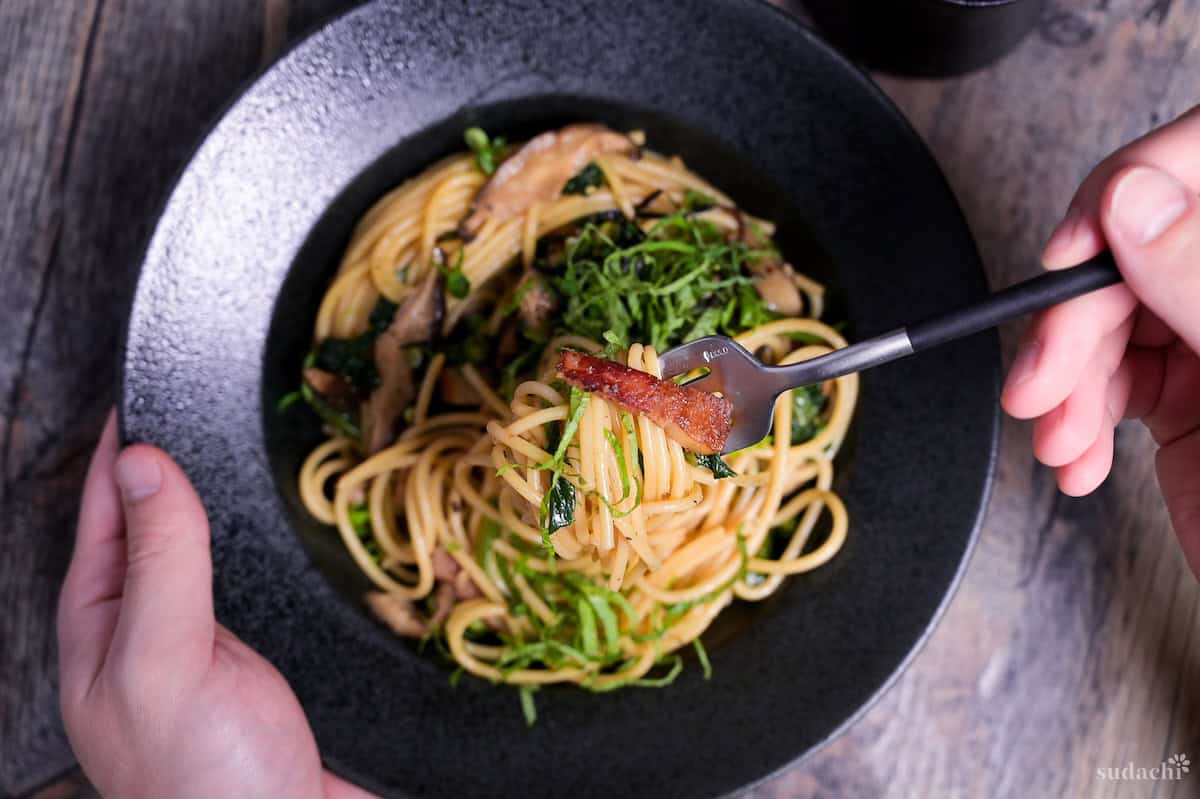
The butter-shoyu emulsion starts to break as it cools below 60°C (140°F), and the pasta keeps absorbing moisture, softening past al dente. You have about a 3 to 5 minute window between “perfect” and “overcooked and greasy.” Have plates and diners ready before you finish cooking.

Essential Tips & Tricks
- Reserve more pasta water than you think you need. The starchy cooking water is your emulsifier, your sauce thinner, and your emergency rescue tool all in one. If the emulsion breaks or the sauce tightens as it cools, a splash of this cloudy liquid brings everything back together. Run out of it and there is no substitute.
- Leave the mushrooms alone in the pan. Every time you stir, you drop the surface temperature and restart the moisture evaporation cycle.
- Add the soy sauce in two stages, not all at once. The first addition goes onto the scorching pan surface early, where heat transforms it into deep, roasted, caramelized aroma. The second addition goes in off-heat at the very end, preserving the bright, sharp, fermented top notes that high heat would destroy.
With these simple tips in mind, you’re set for success every time you make this wafu pasta.
Storage Guide
Fridge: Store leftovers in an airtight container for up to 2 days. The butter-shoyu emulsion separates as it cools and the pasta absorbs moisture, so expect a denser texture and clumpier sauce compared to fresh.
Freezer: Not recommended.
Reheat: Sprinkle a small splash of water over the pasta and reheat in a skillet over medium heat, tossing constantly until the sauce re-emulsifies and the strands loosen.
What to Serve With This Recipe
Wafu Pasta FAQ
You can, but not recommended. The dish will taste noticeably different. Butter contributes diacetyl, the compound responsible for that rich, creamy aroma, and its milk solids participate in the emulsion that coats each strand. Margarine lacks both of these. If butter is not an option, use the best quality margarine you can find, but know that the sauce will be thinner and less aromatic.
You can, but fresh garlic is always better here. Tube garlic is preserved in citric acid, which dulls the sharp, pungent bite that fresh garlic develops when its cells are ruptured and allicin forms. In a dish this simple, every ingredient is exposed, and the difference between fresh and jarred is obvious.
Udon works well. Its thick, chewy texture holds the butter-shoyu sauce nicely, and butter-shoyu udon is a recognized dish in Japan (often stir-fried yaki-udon style). Soba is trickier. Buckwheat noodles are more fragile, and the delicate, earthy flavor of soba can get buried under rich butter. If you really want to try soba, reduce the butter and lean into the soy sauce and a squeeze of citrus to keep it balanced.
More Japanese Noodle Recipes
If you loved this wafu pasta, browse my full Japanese noodle recipe collection for even more ideas!
Did You Try This Recipe?
I would love to hear your thoughts!
💬 Leave a review and ⭐️ rating in the comments below. 📷 I also love to see your photos – submit them here!
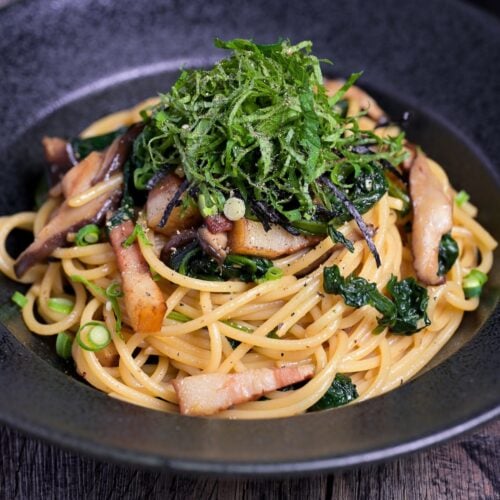
Wafu Butter Shoyu Pasta (Japanese Style Spaghetti)

Ingredients
Main Ingredients
- 100 g Oriental spinach cut into bitesize pieces, or whole leaves of baby spinach
- 4 fresh shiitake mushrooms about 100 g, sliced ¼-inch thick
- 50 g bacon with visible fat, cut into short strips
- 1 garlic clove finely diced
Sauce and Seasoning
- cooking oil only if bacon is lean
- 1 tbsp sake or dry sherry/wine
- ⅛ tsp dashi granules
- 1 tbsp Japanese soy sauce (koikuchi shoyu) divided (2 tsp for the first stage, 1 tsp for the second stage)
- ½ tbsp mirin
- 4 tbsp pasta water reserved from cooking
- 1 tbsp unsalted butter at room temperature
Garnish
- lemon juice a few drops
- kizami nori (shredded nori) optional
- chopped green onions to taste
- shiso leaves optional, sliced thin
- ground black pepper to taste
The ingredient brands and tools I trust are in my Japanese pantry guide and my cooking tools guide.
Can’t find certain Japanese ingredients? See my substitution guide here.
Instructions
- Fill a pot with 1600 ml water and bring to a rolling boil. Add 1 tbsp salt, give it a stir and then drop in 180 g dry spaghetti. Boil for 1 minute less than the packaging states.

- While you wait, heat a large skillet over medium-low. Add 50 g bacon in a single layer and fry gently to render the fat. If using leaner bacon, add a splash of cooking oil.

- Once the bacon is lightly browned and the fat has rendered out, add 4 fresh shiitake mushrooms and 1 garlic clove. Fry undisturbed for 2-3 minutes, or until the garlic is fragrant and golden.
- Pour 1 tbsp sake into the pan along with ⅛ tsp dashi granules. Scrape the bottom of the pan to lift the caramelized bits off of the surface, and mix it into the other ingredients.
- Add 100 g Oriental spinach and stir for 15-20 seconds until wilted. Then, push everything to one side and pour ½ tbsp mirin into the empty space. Let it bubble for 10 seconds, then mix it with the rest of the ingredients.
- Push everything to one side once more. Measure out 1 tbsp Japanese soy sauce (koikuchi shoyu), then add two-thirds of it directly to the pan. Let it sizzle for 10 seconds and stir everything together, then reduce the heat to the lowest setting. If the pan seems too dry, add a splash of pasta cooking water to prevent sticking.
- Reserve 4 tbsp pasta water, then use tongs to lift the al dente spaghetti out of the pot and into the pan. Add the reserved pasta water a little at a time and mix thoroughly until it reaches your desired consistency (slightly glossy), you might not use all of it.
- Turn off the heat, and stir in 1 tbsp unsalted butter and the rest of the soy sauce until evenly distributed.
- Squeeze a few drops of lemon juice over the pasta and mix once more.
- Divide into serving bowls and top with kizami nori (shredded nori), chopped green onions, shredded shiso leaves, and ground black pepper to taste. Enjoy!

Hallo Yuto
Ausgezeichnetes Rezept. Bin total begeistert.*Daumen Hoch*
Ich habe Veganen Bacon genommen, passt super dazu.
Die Spaghetti waren bei mir flache Udonnudeln.
Da hatte ich noch so viele. ^^’
Vielen Dank und alles gute.
Gruß Kathleen.
Hallo Kathleen,
nochmals vielen Dank für Ihr Feedback und Ihr Foto! Ich freue mich immer darauf, Ihr Ergebnis zu sehen!
Ich bin gespannt, mehr zu sehen!
Mit freundlichen Grüßen,
Yuto
So easy and delicious! I happened to come across this recipe while looking for something quick to make for dinner, and luckily I had all the ingredients on hand. It turned out great and was perfect for a fast, tasty meal!
Hi Emily,
Thank you for trying my recipe! So glad it worked out! Nothing better than finding a recipe that fits perfectly into what you already have at home. Happy it hit the spot! 🙂
Yuto