



Featured Comment
I have made this twice now. It feels so nourishing. I am not an experienced cook, and even I could do it!
★★★★★
– Sharon
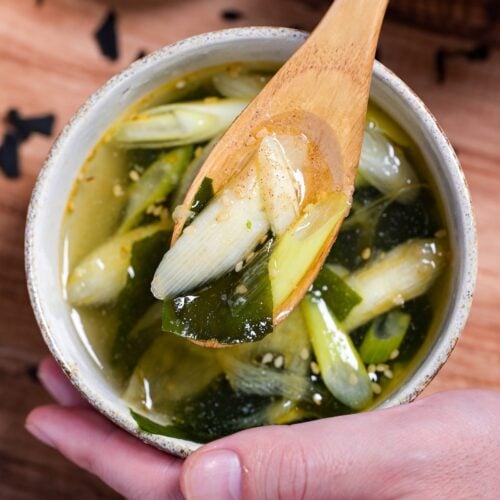
This wakame soup is times faster than miso soup or egg drop soup. You’ll enjoy huge umami in minutes, perfect for your post-work dinner soup recipes routine.
No dashi stock needed! We create a “yakiniku-style” base using pantry condiments. One small trick unlocks those aromatics and delivers restaurant-level fragrance.
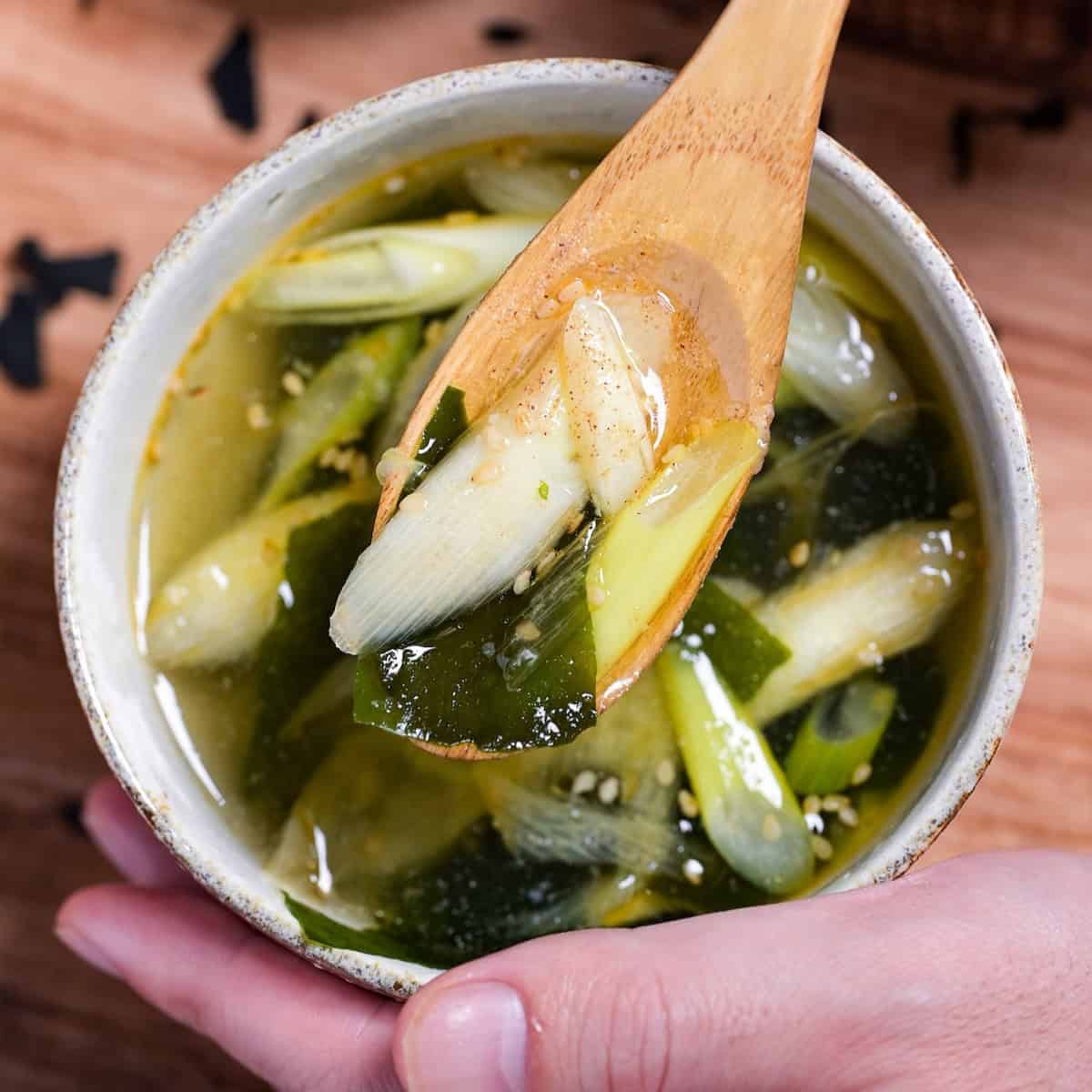
Wakame Soup
Recipe Snapshot
- What is it? Yakiniku-restaurant-style umami-rich wakame soup (seaweed soup).
- Flavor profile: Umami-forward and lightly toasty.
- Why you’ll love this recipe: 5-minute, pantry-friendly comfort with “endless-sipping” broth from double umami layering technique.
- Must-haves: Quality dried wakame, toasted sesame oil, fresh garlic/ginger for oil-blooming.
- Skill Level: So easy it feels like cheating.
Summarize & Save this content on:
What is Yakiniku Restaurant-Style Wakame Soup?
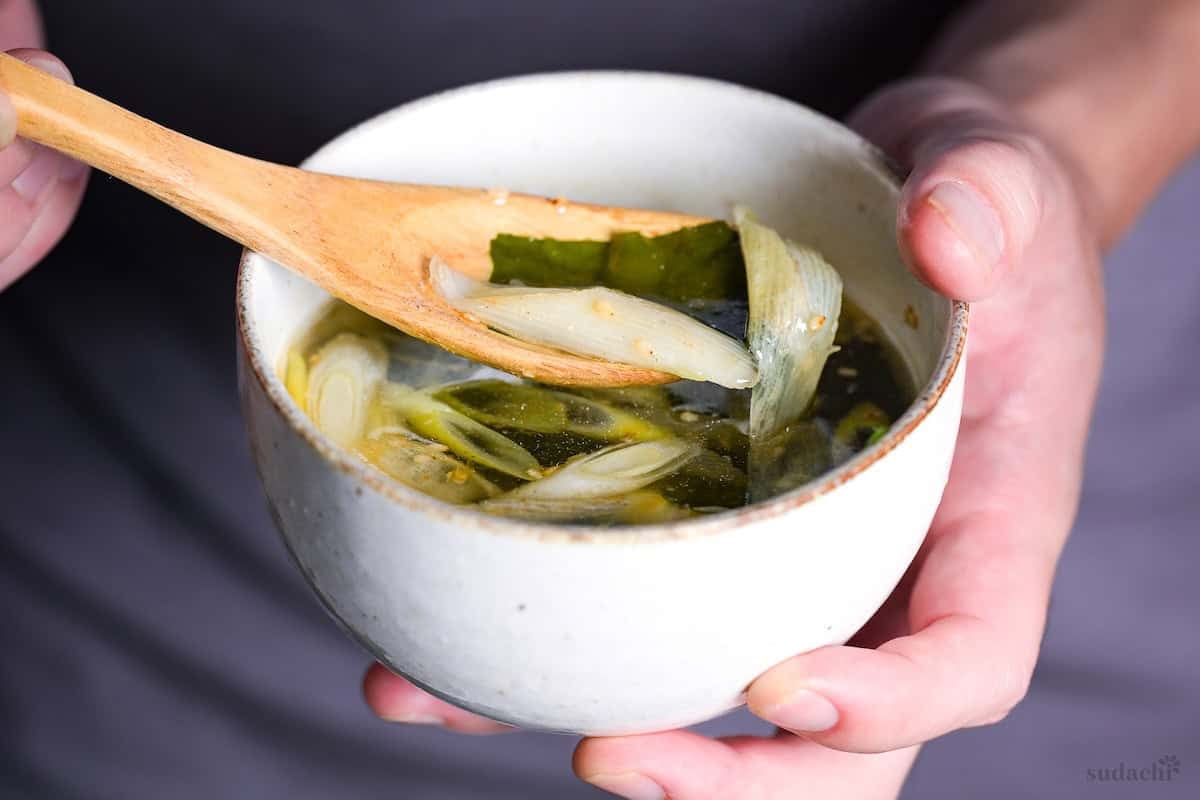
“Yakiniku restaurant-style wakame soup” is a light, clear soup served as a standard side at many yakiniku (grilled meat) restaurants. It’s typically made by dissolving an umami-rich stock (often chicken or beef-style bouillon) into hot water, then briefly heating rehydrated wakame and finishing with seasonings.
While it was originally inspired by the Korean Miyeok-guk (yakiniku itself was also inspired by Korean cuisine), this version is significantly lighter and faster to prepare, focusing on a refreshing palate-cleansing effect between bites of rich, grilled meat.
Wakame Soup Ingredients
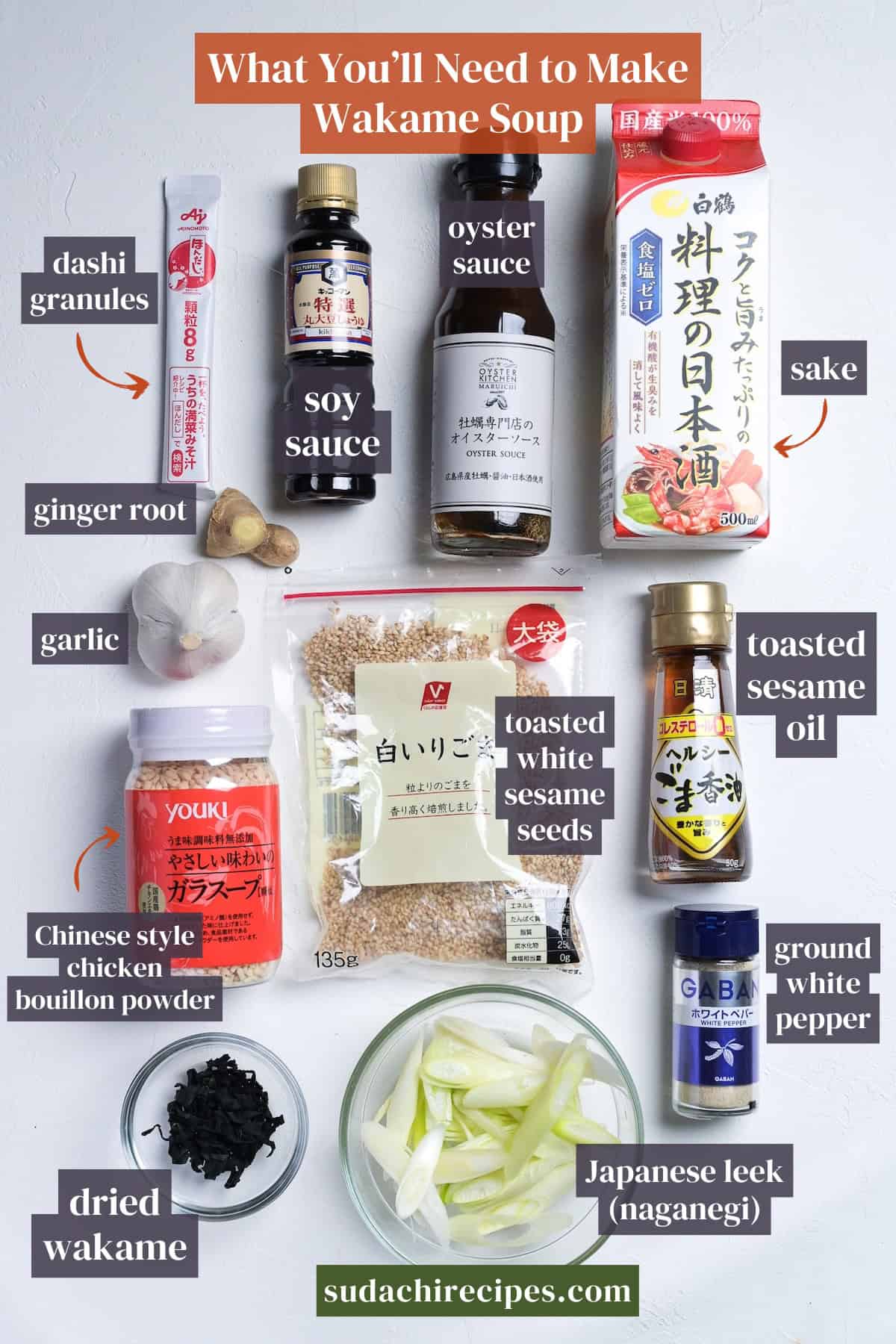
- Dried Wakame (Seaweed): Dried wakame is a pantry-stable, dehydrated seaweed that serves as the nourishing heart of this wakame soup. It expands nearly tenfold when hydrated, providing a silky yet snappy texture that perfectly absorbs the savory broth.
- Garlic: Fresh garlic is a fundamental aromatic that adds an unmistakable savory “punch” to the base of your broth. Sautéing it gently in oil releases lipid-soluble compounds that build the deep, restaurant-style umami backbone.
- Sesame oil: This is what gives you that “how is this so good?” aroma when you lift the spoon. You’ll use it twice: a tiny drizzle at the beginning to bloom the garlic and ginger, then another small drizzle at the very end (off heat) to create that toasted, nutty fragrance that hits you first.
Variation Ideas
- For a spicy kick: Drizzle of chili oil (rayu) instead of toasted sesame oil at the end.
- For brightness and tang: A few drops to 1 teaspoon of rice vinegar (or any mild vinegar) added to your finished bowl cuts through the richness and makes the soup feel lighter.
- For a heartier, Korean-inspired version: Stir a spoonful of kimchi into your bowl along with its juice for tangy, funky, spicy depth.
Have trouble finding Japanese ingredients? Check out my ultimate guide to Japanese ingredient substitutes!
How to Make My Wakame Soup
To develop this wakame soup recipe, I used a 16cm yukihira pot.
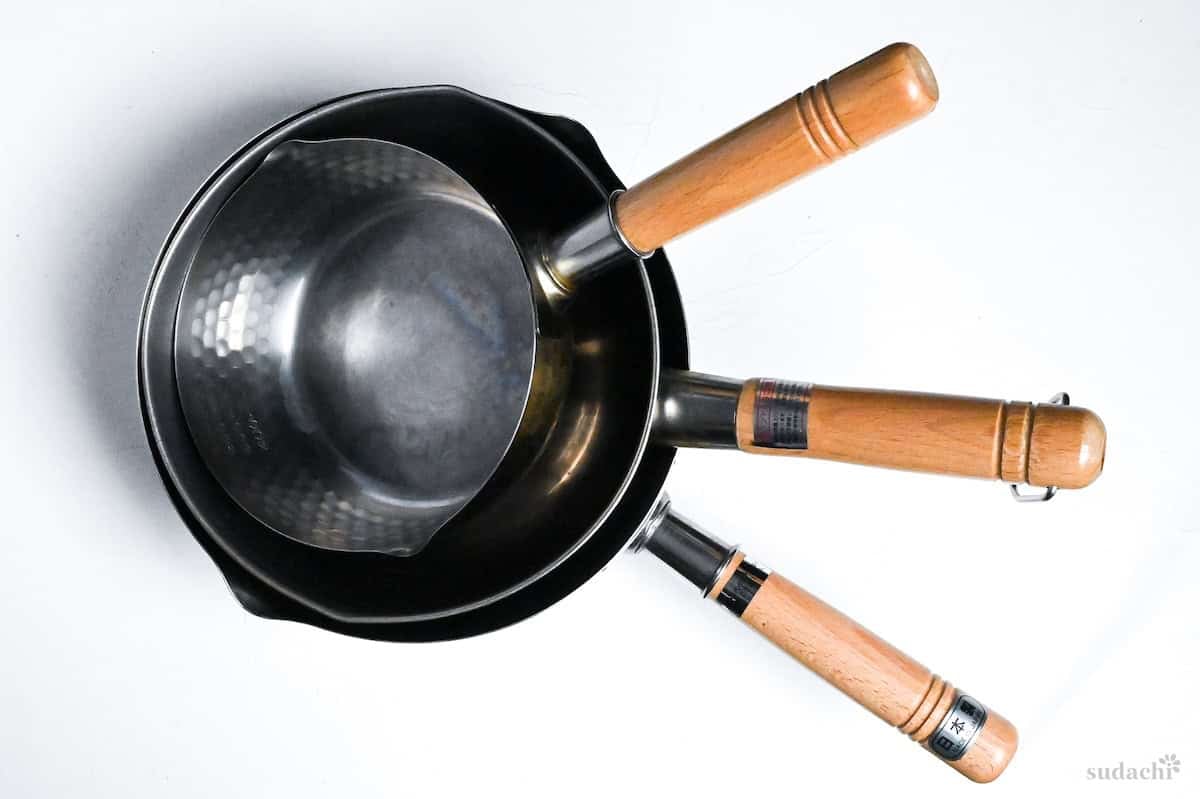
Select a small to medium saucepan, ideally 16-18cm (6 to 7 inches) wide. This recipe uses just 500ml of water, so a narrower pot helps the liquid heat evenly and prevents rapid evaporation.
i. Drizzle sesame oil into the cold pot, add grated garlic and ginger, and set over low heat to bloom the aromatics.

Starting aromatics in cold oil and gradually raising the temperature lets oil-soluble flavor compounds (like allicin from garlic and gingerol from ginger) infuse evenly without shocking the ingredients. Hot oil + cold garlic = instant burning on the outside while the inside stays raw.
ii. When you hear a gentle sizzle, stir 30-45 seconds until it smells fragrant and stays pale. Avoid browning and if the color starts to change, add the water right away.
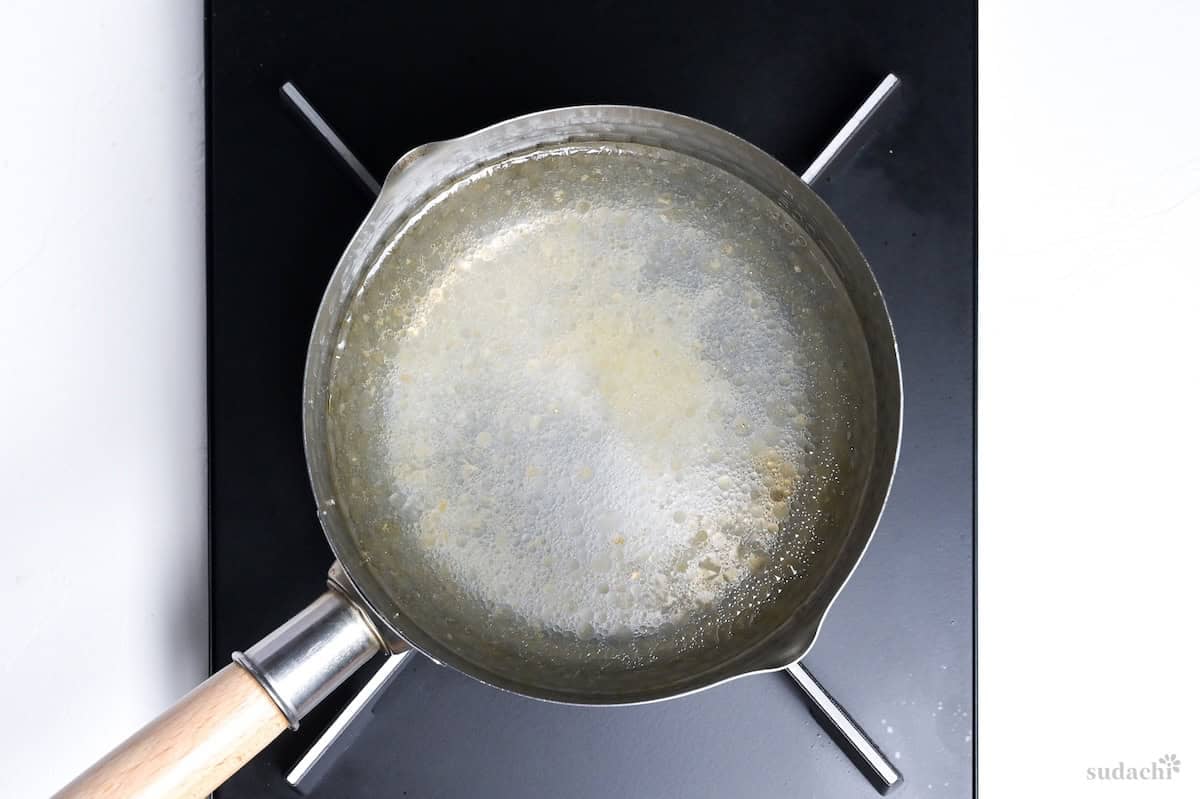
i. Once the water is added, bring it to a boil, then lower to a simmer. Stir in Asian chicken bouillon powder, dashi granules, oyster sauce, soy sauce, and sake, mixing until everything has dissolved.
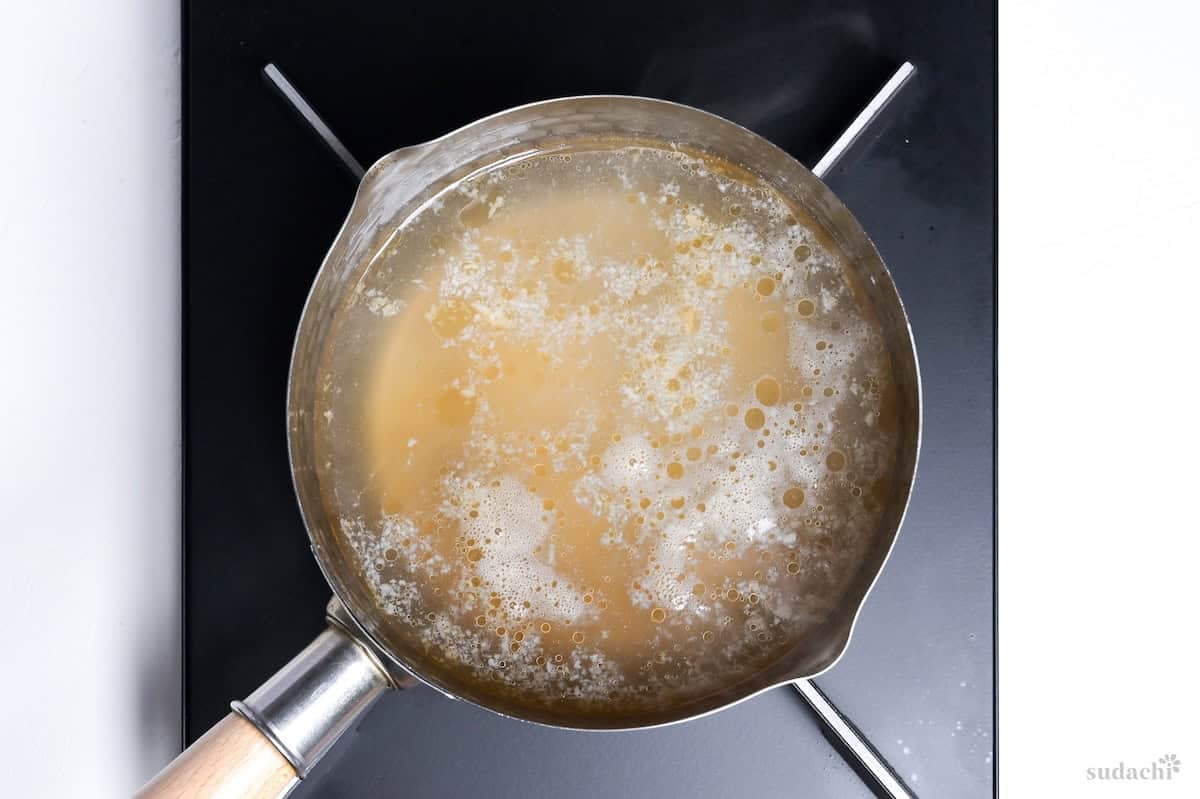
Chicken bouillon powder varies by brand. My brand is 1 tsp per 200 ml, so if yours is more concentrated (e.g., 1 tsp per 300 ml), use less to avoid oversalting, and if it’s less concentrated, use a little more (and adjust to taste).
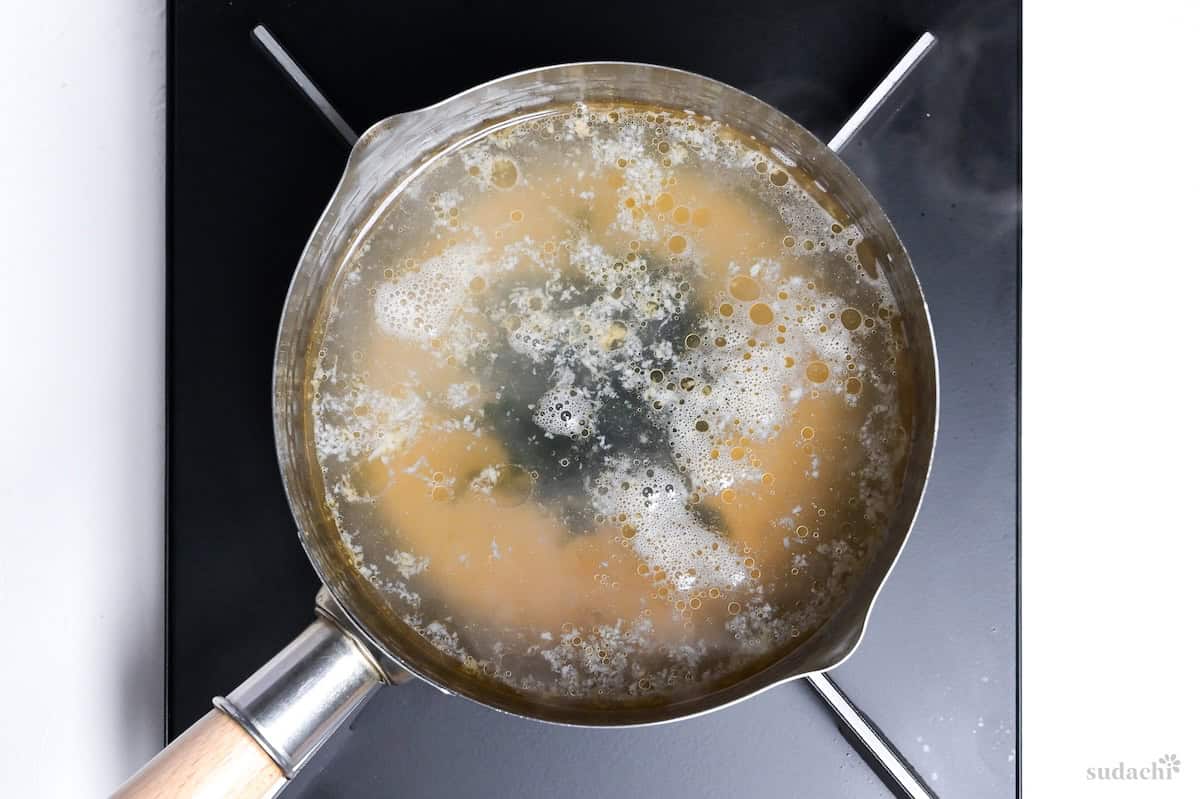
ii. Sprinkle in the dried wakame and gently stir as it expands and unravels.
This soup uses umami synergy. The principle that combining different umami sources (glutamates + nucleotides) creates a flavor far greater than the sum of its parts. Chicken bouillon provides inosinate (a nucleotide), Japanese dashi adds glutamate from kombu and more inosinate from bonito flakes, and wakame itself contains glutamate. When these compounds hit your taste receptors together, they amplify each other exponentially.
i. Add the sliced naganegi (Japanese leek) and heat 30 seconds at a quiet simmer so it stays bright.
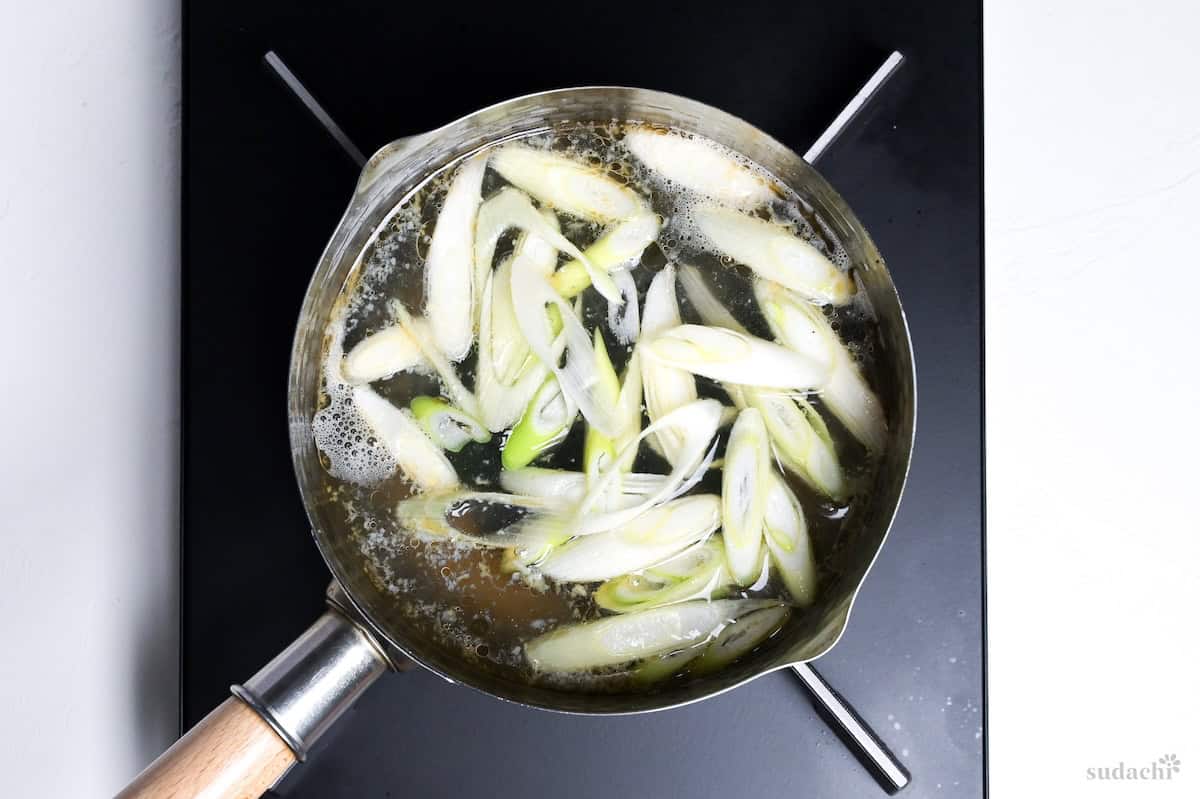
ii. Turn off the heat. Let the soup sit for 20 seconds so it’s not scalding, then taste it carefully with a spoon.
Bouillon and dashi granules brands varied a lot in saltiness, so this quick taste here is required to prevent an over-salty batch. If it’s too salty, add water, if it’s bland, add a pinch of salt.
i. With the heat still off, drizzle in toasted sesame oil, and swirl for a glossy, nutty aroma.

ii. Add white sesame seeds, crushing them between your fingers, and finish with a pinch of white pepper before serving.
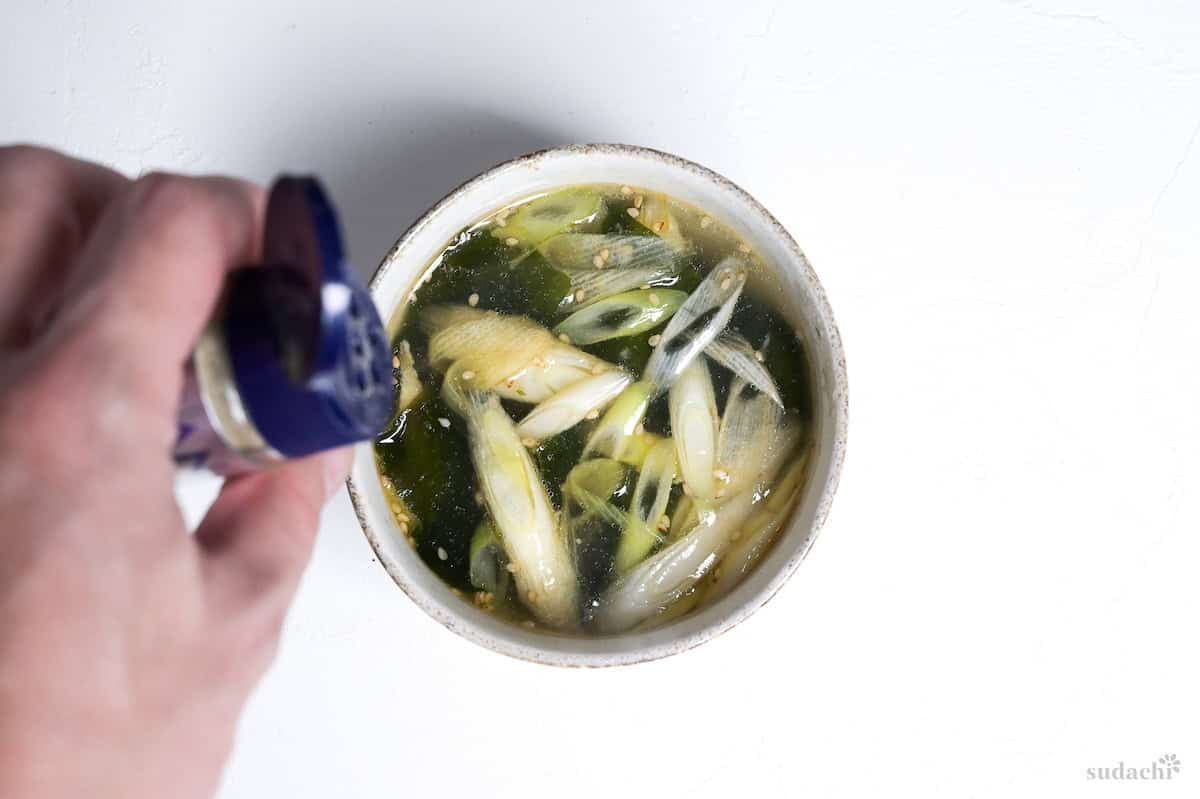
If you follow the default recipe, it will yields 4 side soup servings.

Essential Tips & Tricks
- Bloom the grated garlic + ginger in oil from cold over low heat for 30-45 seconds so the aroma infuses the whole wakame soup.
- Measure dried wakame (3 g for 500 ml) because it expands dramatically and is meant to be a supporting “ribbon” texture.
- Dissolve the stock granules + sauces completely before moving on so the umami layer is even in every sip.
- Taste-test right after warming the leek and adjust in tiny increments because bouillon/dashi brands vary in salt.
- Turn off the heat before the final sesame oil + white pepper so the finish stays fragrant and glossy.
With these simple tips in mind, you’re set for success every time you make wakame soup.
Storage & Meal Prep
Fridge: Store in an airtight container (or the lidded pot) for 2-3 days. The wakame will keep softening and the sesame-oil aroma will fade, so it won’t taste as “fresh” as day one.
Freezer: Not recommended.
Meal Prep: It only takes 3 minutes so it doesn’t need any meal preps.
Reheating: Warm gently over low heat without boiling.
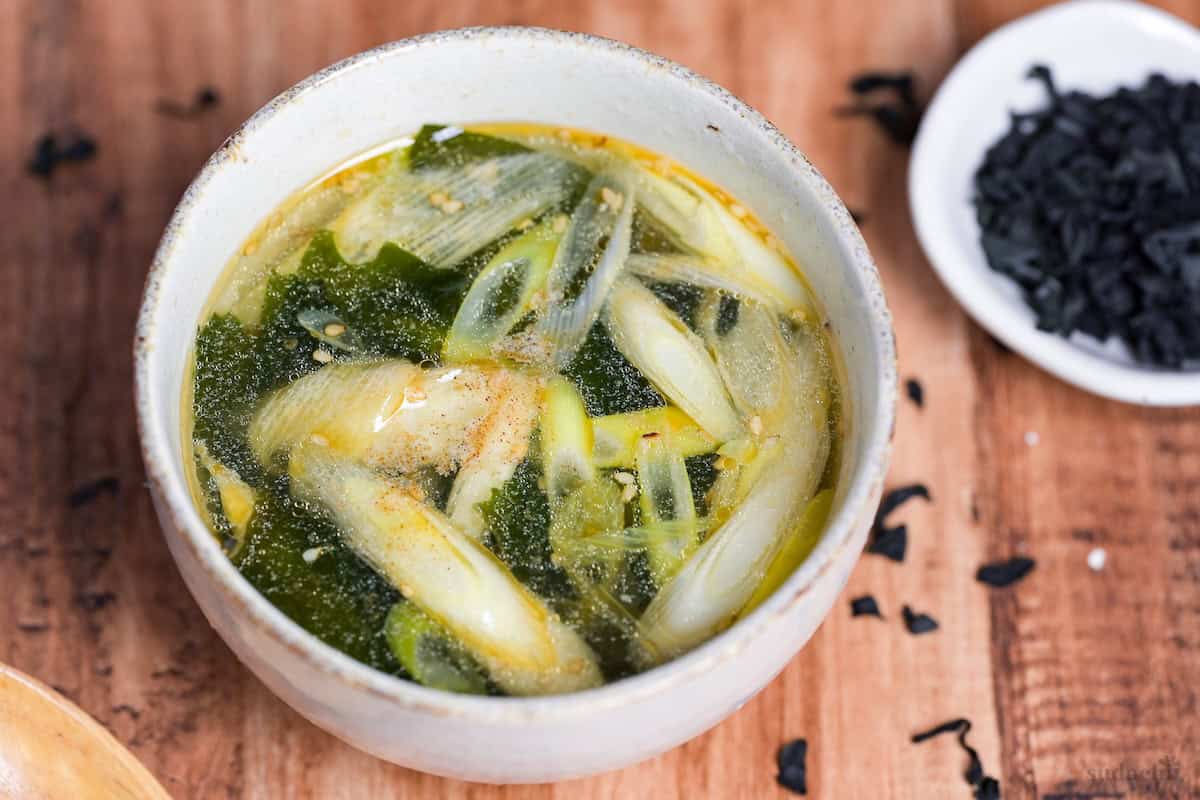
What to Serve With This Recipe
- Yakiniku Don (Yakiniku style beef bowl)
- Cold Tofu (Hiyayakko)
- Japanese Grilled Salmon
- Pork Shogayaki (Ginger Pork)
Wakame Soup FAQ
For quick wakame soup like this, you can add dried cut wakame straight into the hot broth and let it rehydrate in a minute or two. The key is portion control. Wakame expands a lot, so start small and add more only if needed. If you prefer extra springy texture, do a quick soak and drain first, then add right at the end.
That usually comes from too much heat, too long on the stove, or aggressive stirring after wakame hydrates-prolonged hot holding breaks down the texture and increases that slippery mouthfeel. Keep the soup at a gentle simmer (not a rolling boil) and stop heating soon after wakame opens.
You can, but you will lose the most important flavor layer of the yakiniku style. Sautéing “blooms” the fat-soluble compounds in the garlic and ginger.
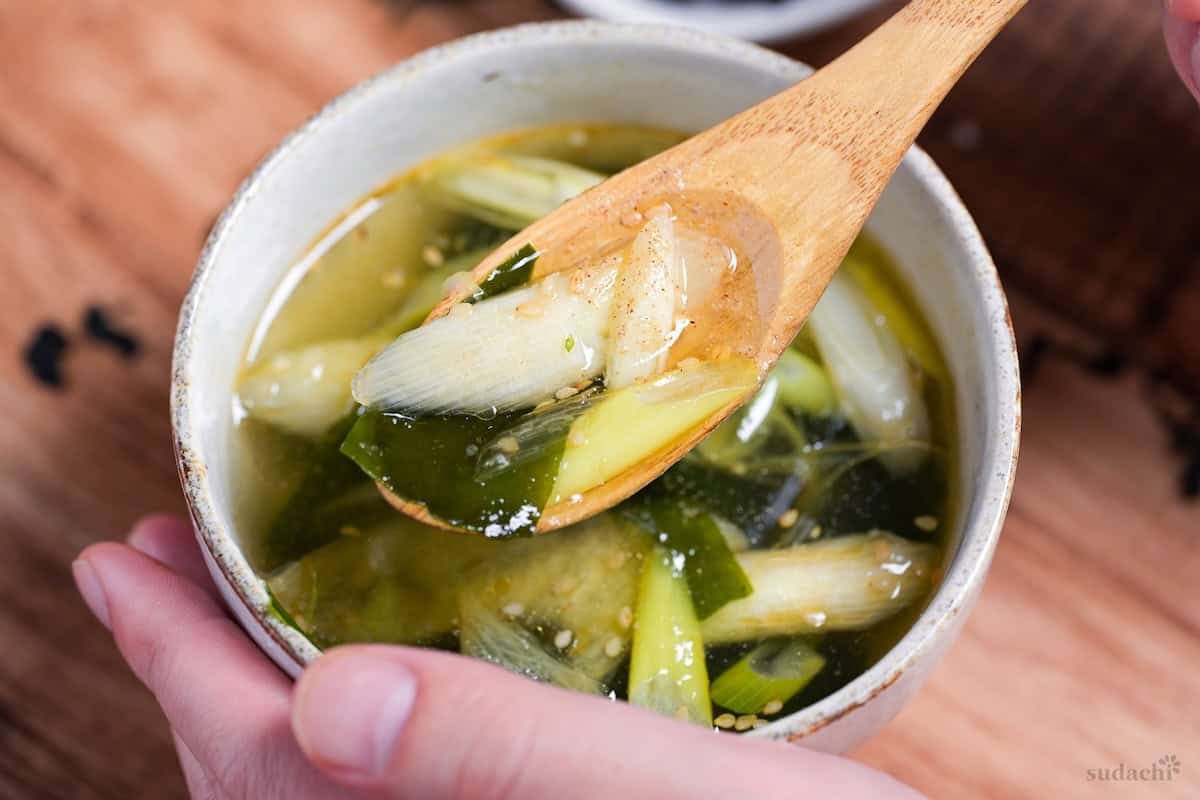
More Japanese Soup Recipes
- Kenchin Jiru (Traditional Japanese Vegetable Soup)
- Chicken Zosui
- Easy Okayu
- Corn Potage
Hungry for more? Explore my udon recipe collection to find your next favorite dishes!
Did You Try This Recipe?
I would love to hear your thoughts!
💬 Leave a review and ⭐️ rating in the comments below. 📷 I also love to see your photos – submit them here!
Wakame Soup (Yakiniku Restaurant Style)
Ingredients
- ½ tsp toasted sesame oil
- 1 clove grated garlic
- ¼ tsp grated ginger root
- 500 ml water
- 1 tsp sake
- ½ tbsp Chinese-style chicken bouillon powder
- ¼ tsp dashi granules
- ⅛ tsp oyster sauce
- ¼ tsp Japanese soy sauce (koikuchi shoyu)
- 3 g dried wakame seaweed approx. 3g = 1 tbsp
- 30 g Japanese leek (naganegi) white part, diagonally sliced
- 1 tsp toasted sesame oil to finish
- toasted white sesame seeds
- ground white pepper to taste
My recommended brands of ingredients and seasonings can be found in my Japanese pantry guide.
Can’t find certain Japanese ingredients? See my substitution guide here.
Instructions
- Pour ½ tsp toasted sesame oil into a cold pan and add 1 clove grated garlic and ¼ tsp grated ginger root. Heat on low to bloom the aromatics, when it starts to sizzle, mix for 30-45 seconds.

- Add 500 ml water, and bring to a boil. Lower to a simmer and add 1 tsp sake, ½ tbsp Chinese-style chicken bouillon powder, ¼ tsp dashi granules, ⅛ tsp oyster sauce and ¼ tsp Japanese soy sauce (koikuchi shoyu). Mix until the granules have dissolved.
- Add 3 g dried wakame seaweed and mix until it expands. Add 30 g Japanese leek (naganegi) and simmer for about 30 seconds, then turn off the heat.
- Taste test, if it's too salty you can dilute it with water. If it's too bland, season with a pinch of salt. Then drizzle with 1 tsp toasted sesame oil.
- Divide into serving bowls and top with some toasted white sesame seeds and ground white pepper to taste. Enjoy!

I have made this twice now. It feels so nourishing. I am not an experienced cook, and even I could do it! I also got the Yukihira pot recommended in your “Cooking Tools” list. It is so nice to pour the broth. Thank you for the recipe and recommendations.
Hi Sharon,
I’m really happy you gave it a try, twice! That’s amazing. Hearing that it felt nourishing and doable makes my day! And I love that you’re enjoying the Yukihira pot too! 🙂
Yuto