

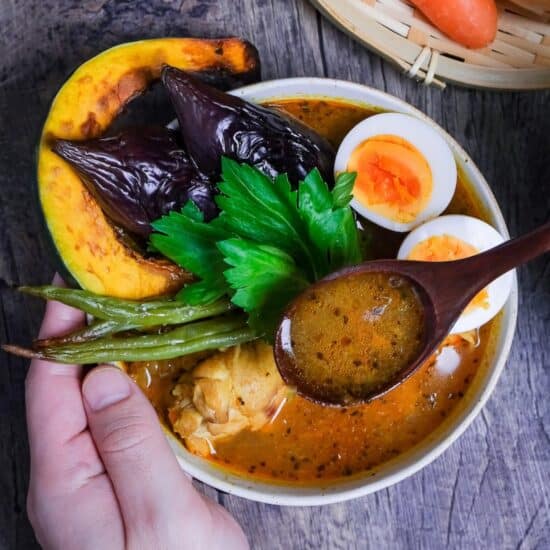


What if curry drank like a clean, sippable broth? If you love soups, you’ll inhale toasted spice and dashi steam, in a way you can’t get with Japanese curry rice or dry curry.
My recipe stacks 5 distinct umami sources into a single spoonful. The final secret? An unexpected duo of ingredients that bring subtle depth that will have everyone guessing.
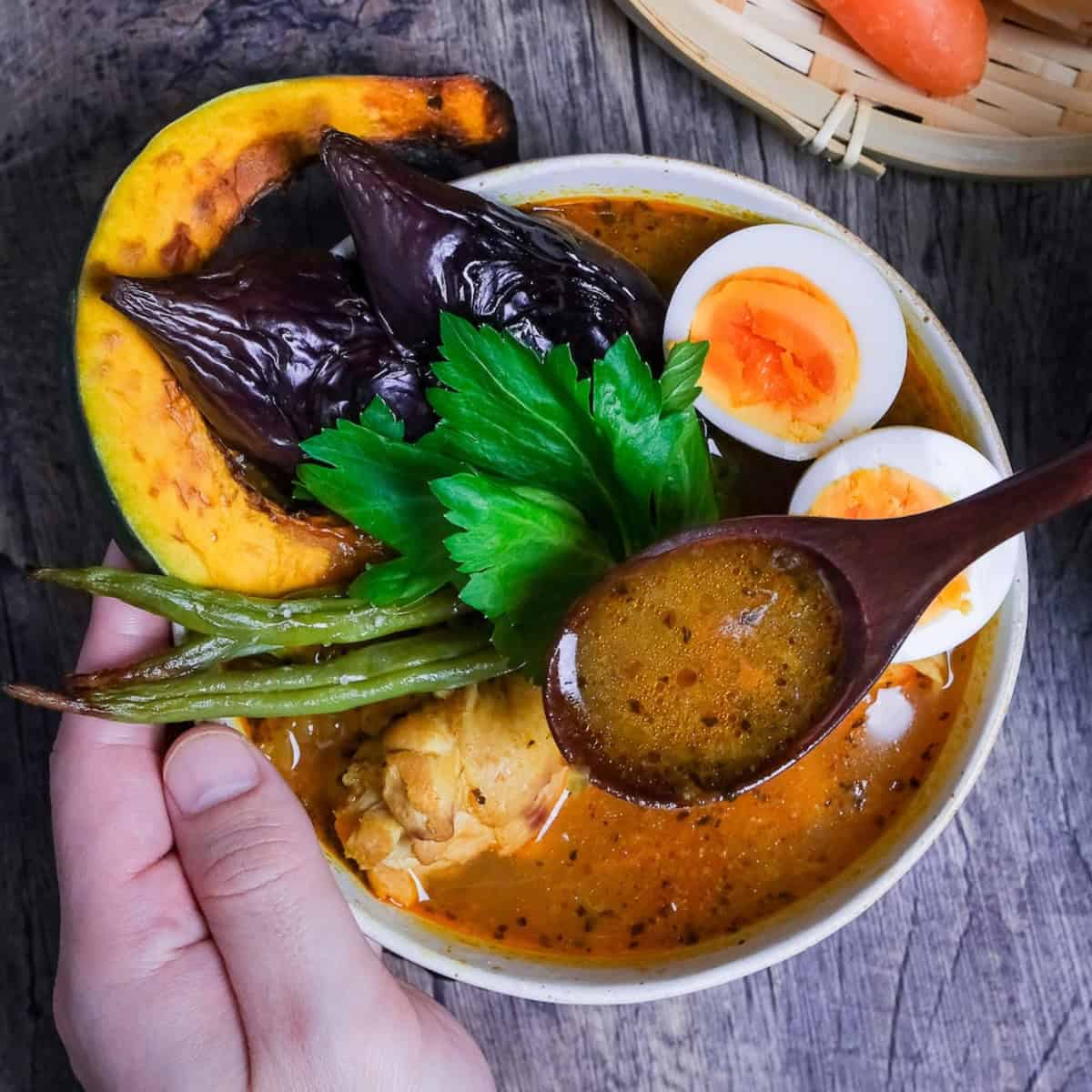
Sapporo Soup Curry
Recipe Snapshot
- What is it? Sapporo-style soup curry with a dashi-enriched broth, big vegetable toppings, and two-bowl plating (curry and rice served separately).
- Flavor profile: Broth-forward with layered umami (dashi-meat-tomato synergy), warm spice aromatics from bloomed curry powder, and a clean finish without heaviness.
- Why you’ll love this recipe: Technique-forward but low-risk! Soffritto-style base builds aromatic depth, oven-roasting replaces deep-frying, and a dependable dashi foundation minimizes ingredient waste.
- Must-haves: Dashi stock (kombu + katsuobushi), Japanese (or any) curry powder, aromatics (garlic + ginger).
- Skill Level: Medium! Mostly timing and heat control (no deep-frying, no roux thickening).
Summarize & Save this content on:
What is Sapporo Soup Curry?
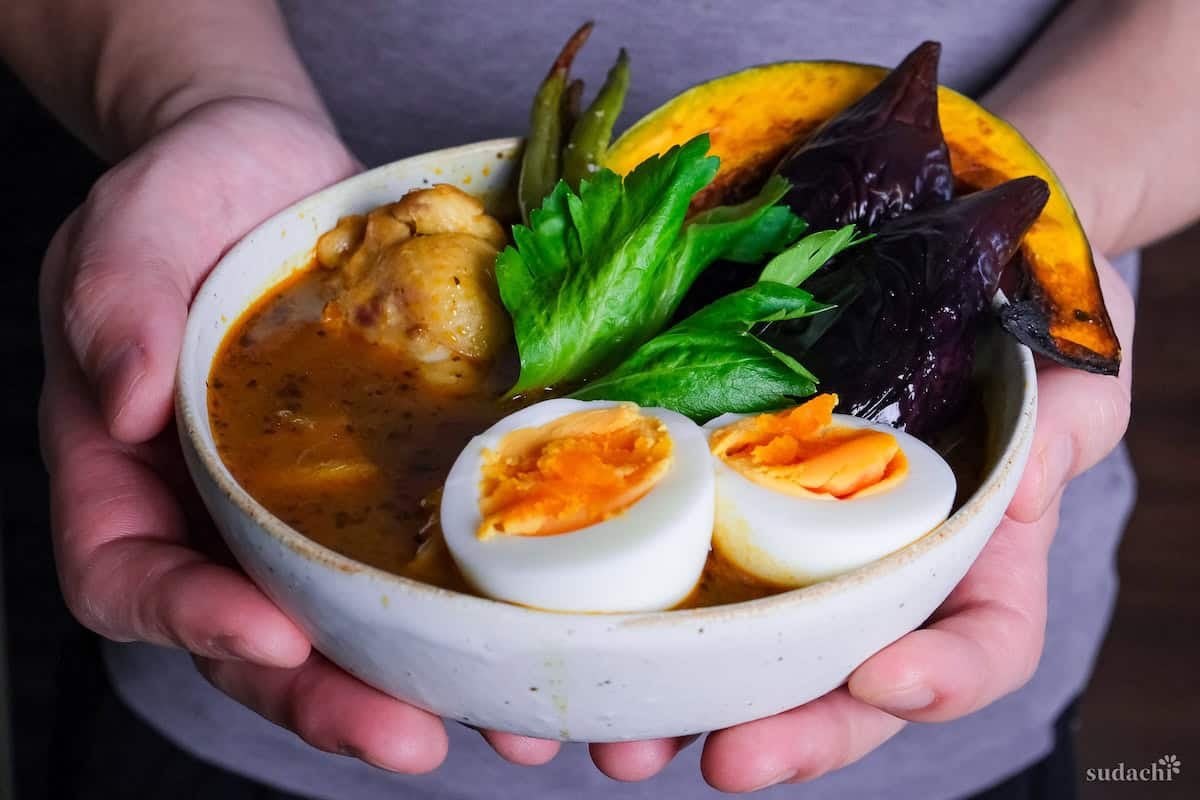
Sapporo soup curry (札幌スープカレー) is a brothy Japanese curry variation where spiced soup and rice are served separately, with large-cut vegetables and bone-in chicken arranged directly in the bowl. Unlike traditional thick roux-based Japanese curry, soup curry has a thin, clear consistency achieved by extracting curry spices into a rich stock. The toppings are cooked separately (often flash-fried, but I roast for convenience) and added at serving, keeping their textures distinct from the aromatic broth.
According to this study on how Sapporo soup curry became a regional brand, soup curry was born in the 1970s, and the number of specialty shops surged through the 2000s, leading it to become firmly established as a local specialty in Sapporo. Furthermore, as this paper notes, it has now secured an independent position as a distinct Japanese curry variation, and together with jingisukan, is recognized nationwide as a local Hokkaido specialty.
Soup Curry Ingredients
What You’ll Need for Soup Curry Base
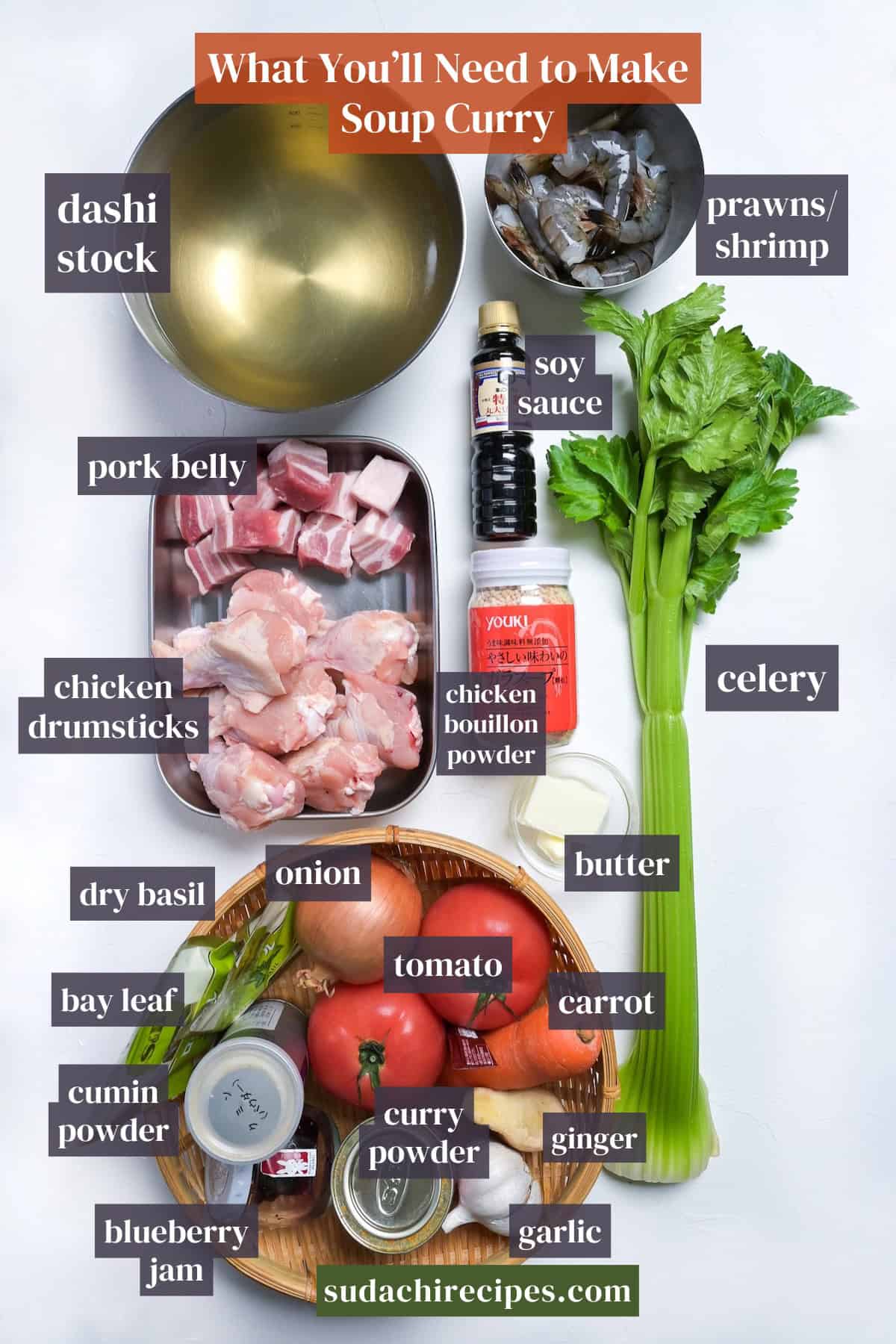
- Bone-in chicken (drumsticks, skin-on thighs, or a leg): The classic protein for Sapporo-style soup curry. Think “main topping + built-in broth booster.”
- Curry Powder: Japanese curry powder (like S&B’s iconic red “oriental curry powder” can) delivers that milder and slightly sweeter profile than regular blends.
- Awase dashi: It is a Japanese stock made from kombu kelp and katsuobushi (bonito flakes), and it’s the quiet “Japanese soul” behind a great soup curry. You can make it from scratch or use dashi packet. Instant dashi granules are okay, but it adds quite a bit of salt and other flavor, so if you use it, reduce a little bit of salt somewhere else.
Soup Curry Topping Options
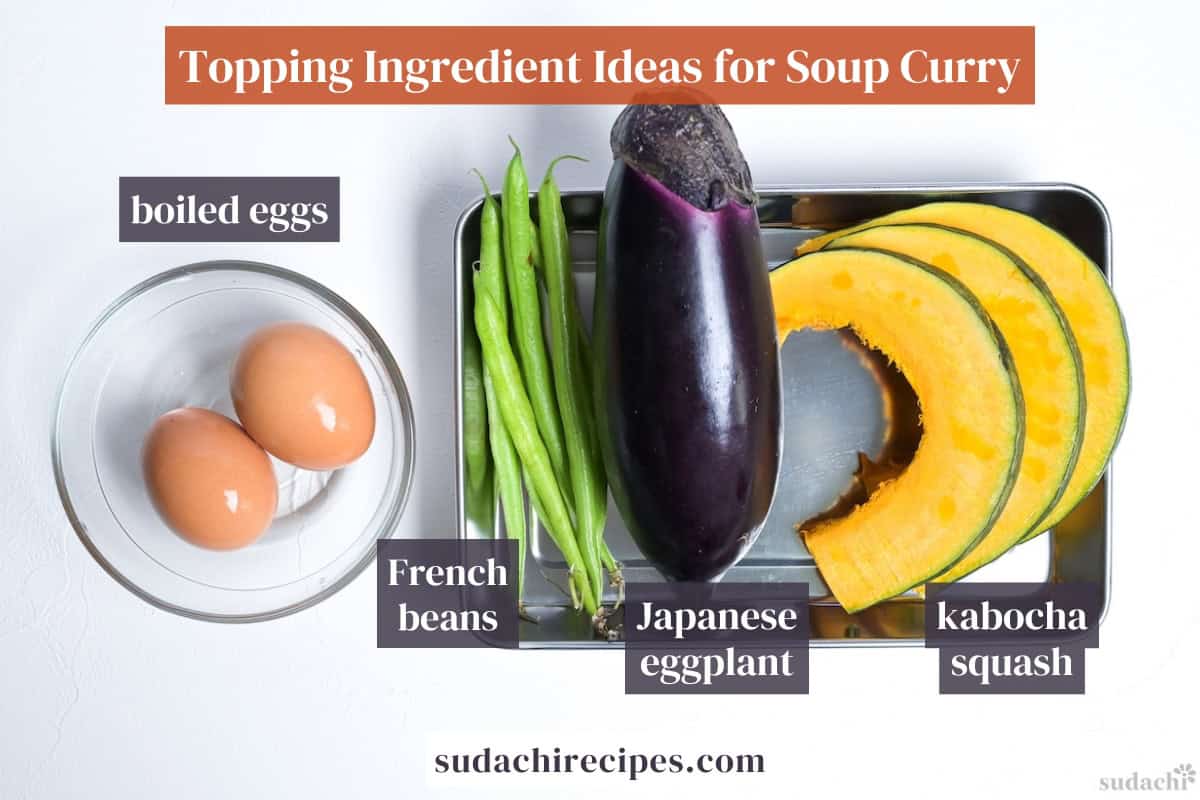
One of the hallmarks of soup curry is its generous tumble of chunky vegetables. Traditionally, Sapporo shops flash-fry (su-age) their vegetables, similar to the technique used in subuta. But let’s be honest, deep-frying at home just for vegetable toppings feels like a lot.
That’s why this recipe takes a more Western-friendly approach: oven roasting. A hot oven (or air fryer) achieves that similar caramelized sweetness and beautiful color with far less fuss.
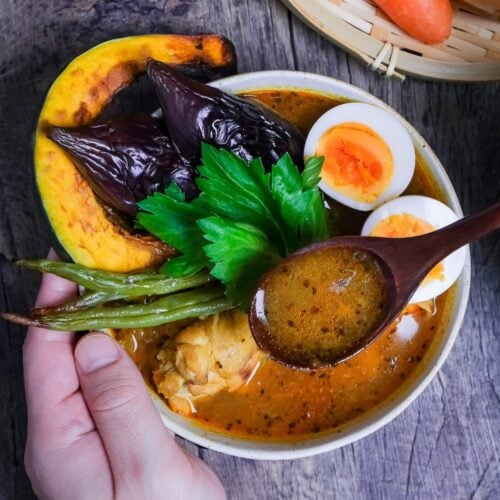
Beyond what’s shown in the photo, here are other vegetables commonly found in Hokkaido-style soup curry:
- Bell peppers (or piman in Japan)
- Lotus root (renkon)
- Carrots
- Okra
- Broccoli
- Onsen tamago
Feel free to mix and match based on what looks good at the store or what you have on hand. And if roasting feels like one step too many, vegetables like broccoli and carrots are equally delicious simply steamed.
Substitution Ideas
- Dashi (stock base): Use an unsalted chicken stock (or veal stock/fond de veau) instead. It’ll taste a bit less “Japanese” and more rounded/meaty. If your stock is already salted, reduce the added salt.
- Japanese curry powder mix: If you can’t find S&B or House-style Japanese curry powder, a regular curry powder blend works just fine. The spice profile may lean a little spicier, but it still makes a satisfying soup curry.
- Japanese short-grain rice: If you want a closer “Japanese rice” feel, go with any medium-grain rice like Calrose you can get locally. In the worst case, basmati rice is a totally-okay swap for this recipe.
- Pork belly: Spare ribs are a tested, delicious alternative that become meltingly tender after simmering. I’ve made it this way and highly recommend it. Pork shoulder chunks also work.
- Chicken drumsticks: Swap in other bone-in chicken like wings or bone-in thighs. The flavor stays on track, but meatier pieces may need a bit longer.
Have trouble finding Japanese ingredients? Check out my ultimate guide to Japanese ingredient substitutes!
How to Make My Hokkaido Soup Curry
If you prefer to watch the process in action, check out my video of this soup curry recipe!
Before you start (Mise en place):
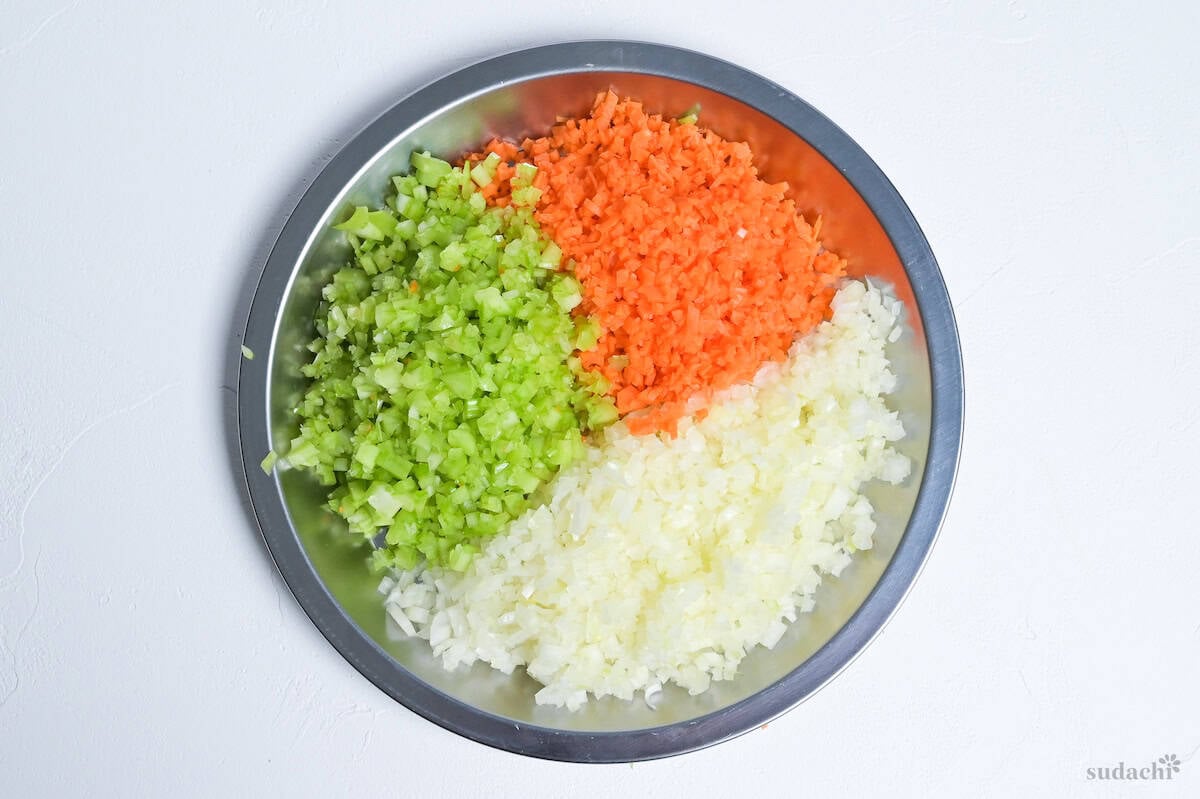
i. Finely dice the aromatics: Cut onion, celery, and carrot into 2-3 mm pieces. A food processor works if you pulse carefully, never purée.
ii. Prepare your dashi stock: Have dashi ready before cooking begins. Homemade or dashi packet are recommended.

To develop this soup curry recipe, I used a 24cm non-stick pan for the soup base.

And 27cm stainless deep pot for the soup itself (ideally something deeper is better). An enameled Dutch oven would work perfectly.

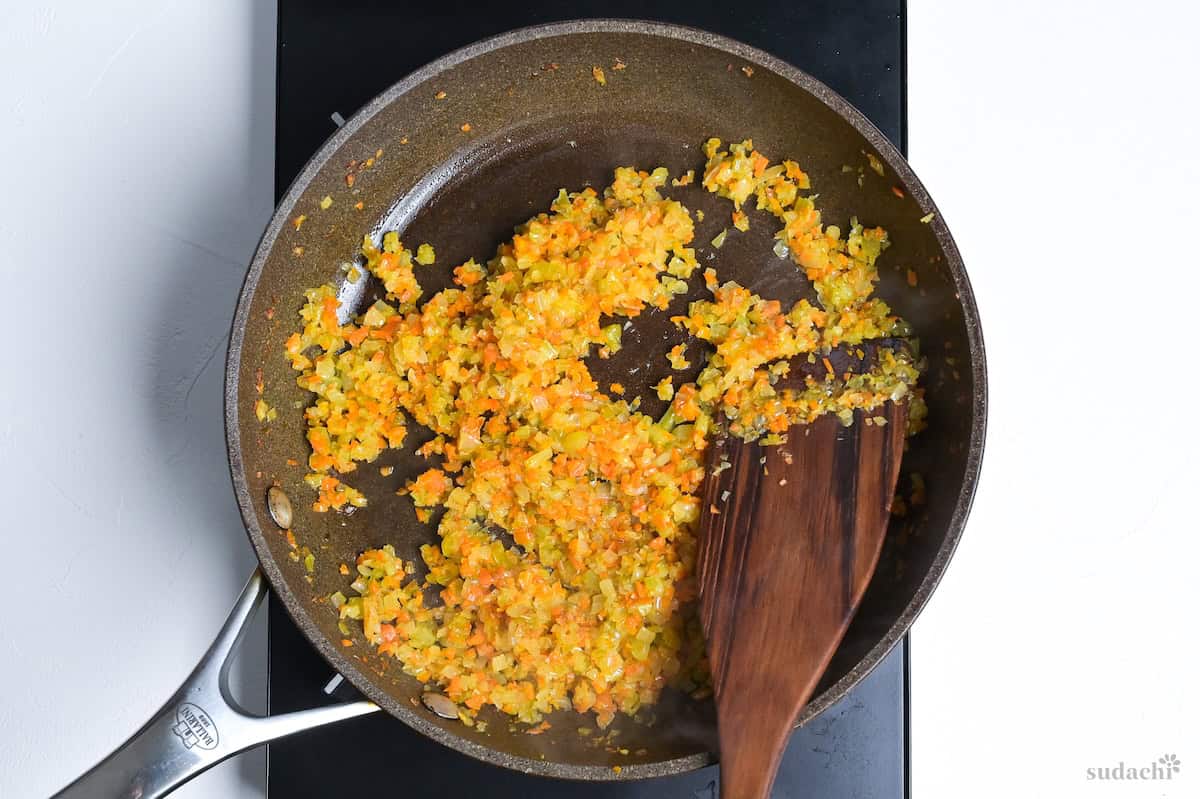
i. Slide butter and olive oil into a cold pan, then set it over low to low-medium heat. Once the fats melt together, add your finely diced onion, celery, and carrot.
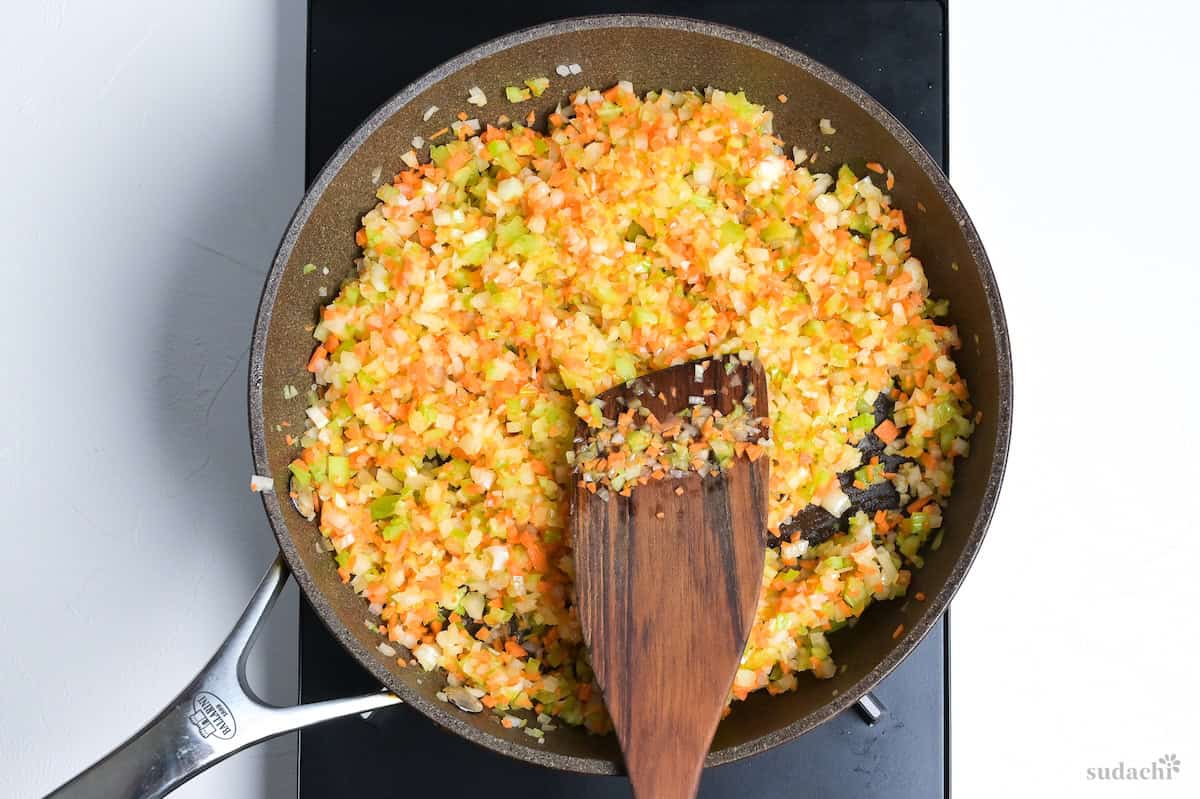
ii. Give everything a gentle stir, cover with a lid, and let the mixture sweat for 30 minutes, stirring every few minutes to prevent any browning.
Not exactly, 30 minutes is a benchmark. It works shorter or longer depending on your pace. Here’s my real advice: let the soffritto cook while you knock out all the prep in the next section. Finished your prep in 22 minutes? Take it off the heat. Still dicing at 35 minutes? The soffritto will wait. Match the cooking time to your workflow, not the other way around for this recipe.
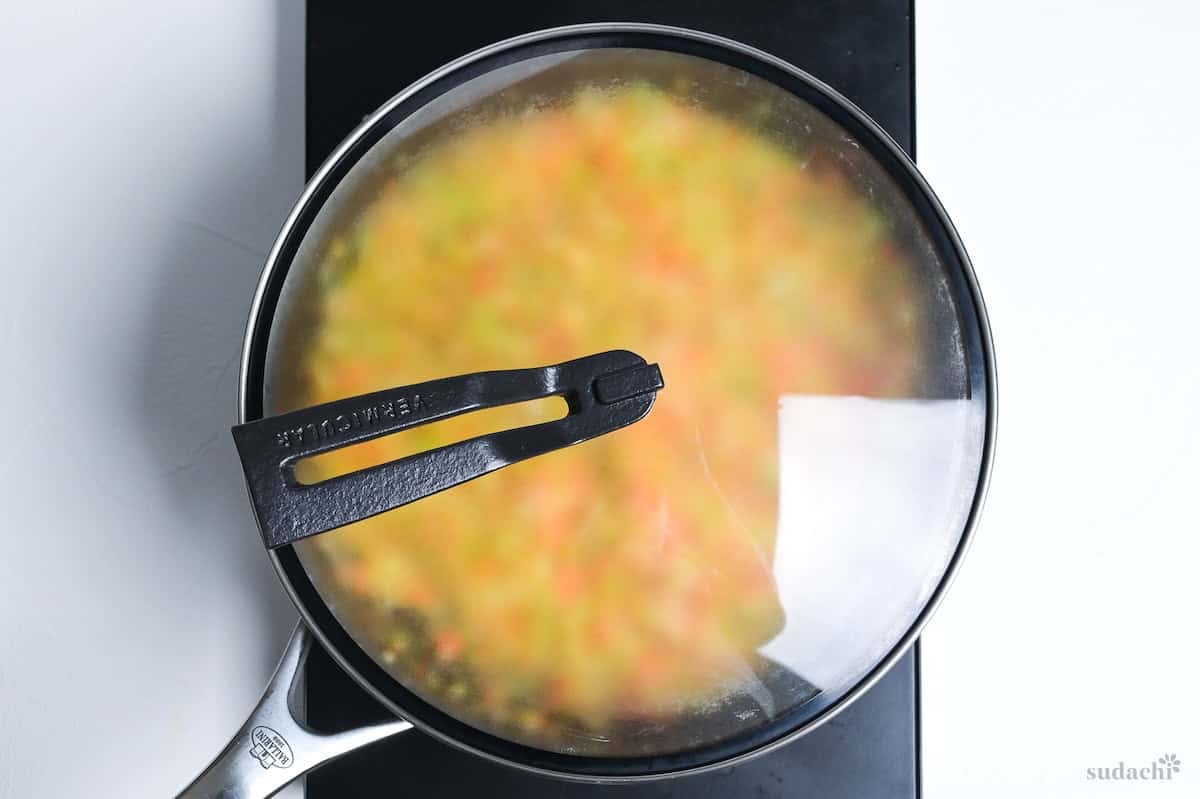
Your goal is soft, translucent, and sweet-smelling vegetables with zero caramelization. If you spot color developing, your heat is too high.
When I started developing this recipe, I thought: if I’m building a tomato-forward soup, why not borrow from Italian technique? Soffritto (the slow-cooked aromatic trinity) creates a silky, sweet undertone that supports spices without competing with them. After testing both quick-sautéed and properly sweated versions, the difference was dramatic. If you already keep soffritto in your freezer from an Italian cooking, feel free to skip this step and use about 150 g of that instead.
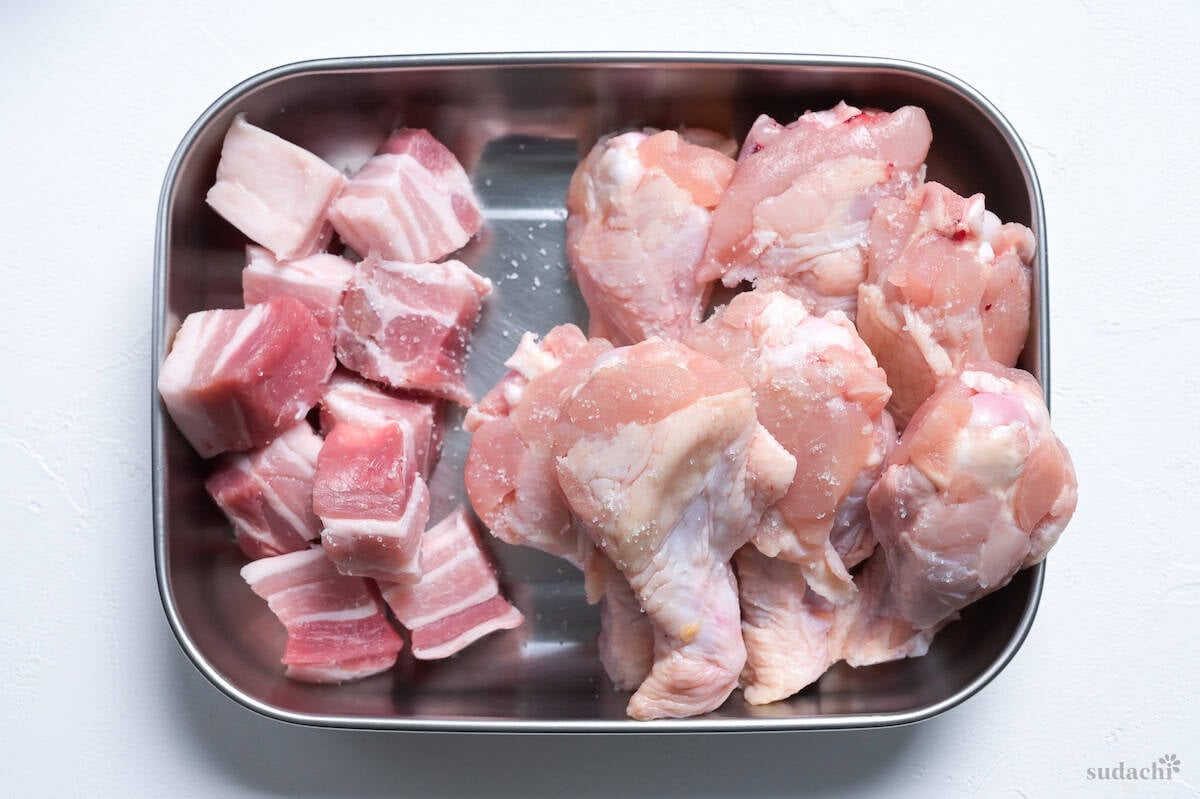
i. That 30-minute soffritto window is prime time to get everything else ready. Start by seasoning the chicken drumettes and pork belly chunks with salt.
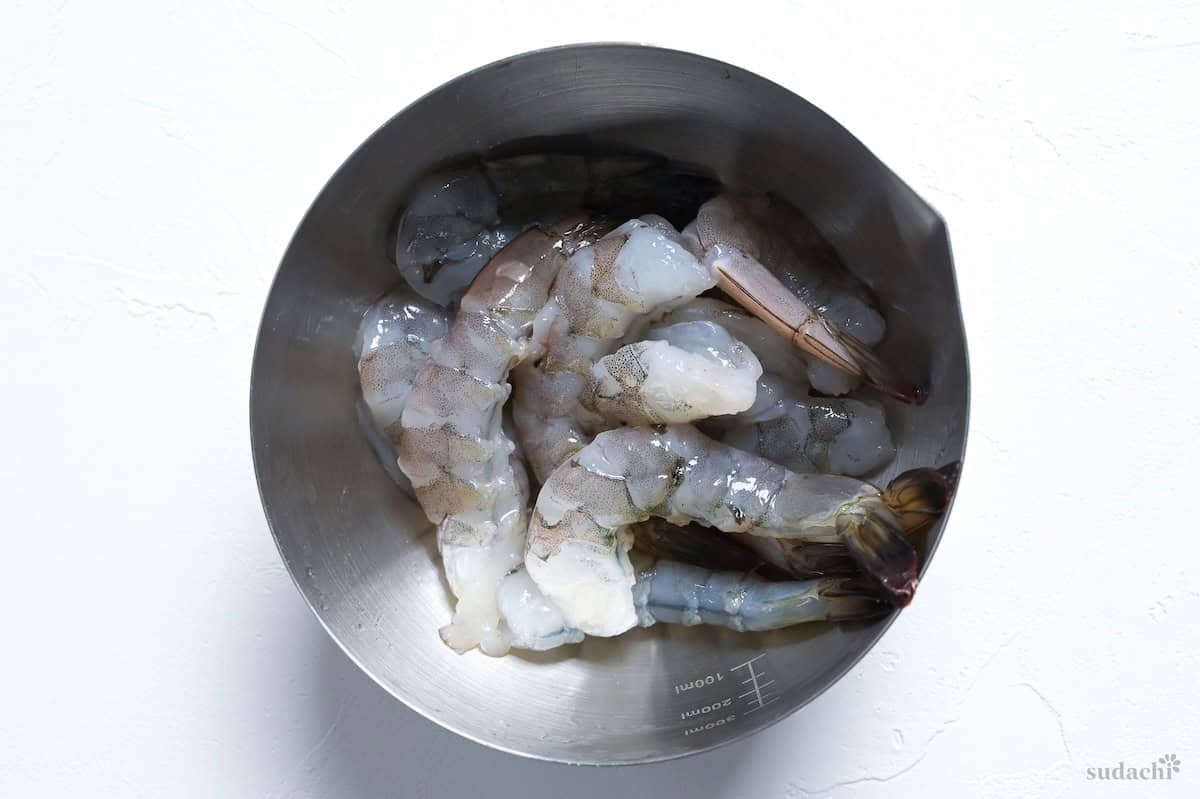
ii. If using shell-on shrimp, peel them, devein by running a shallow cut along the back and removing the dark vein, then rinse and pat dry.
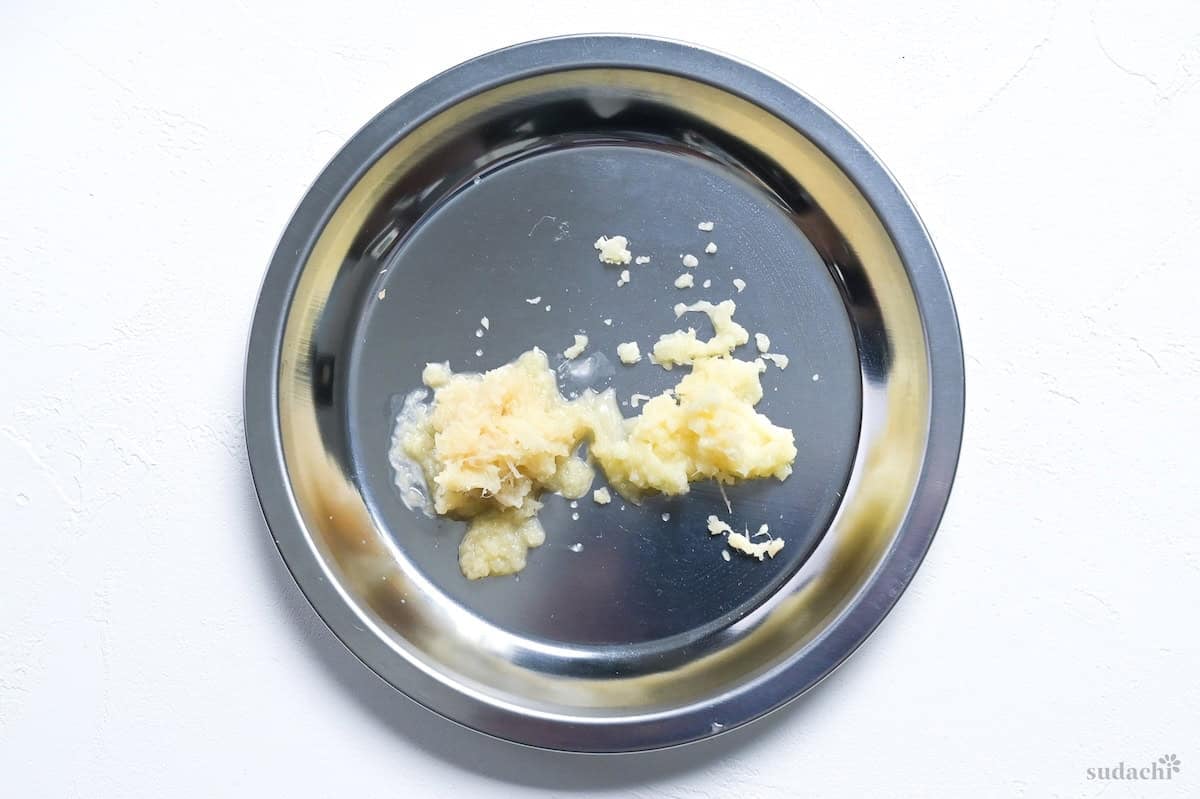
iii. Grate your garlic and ginger now so they’re ready the moment you need them.
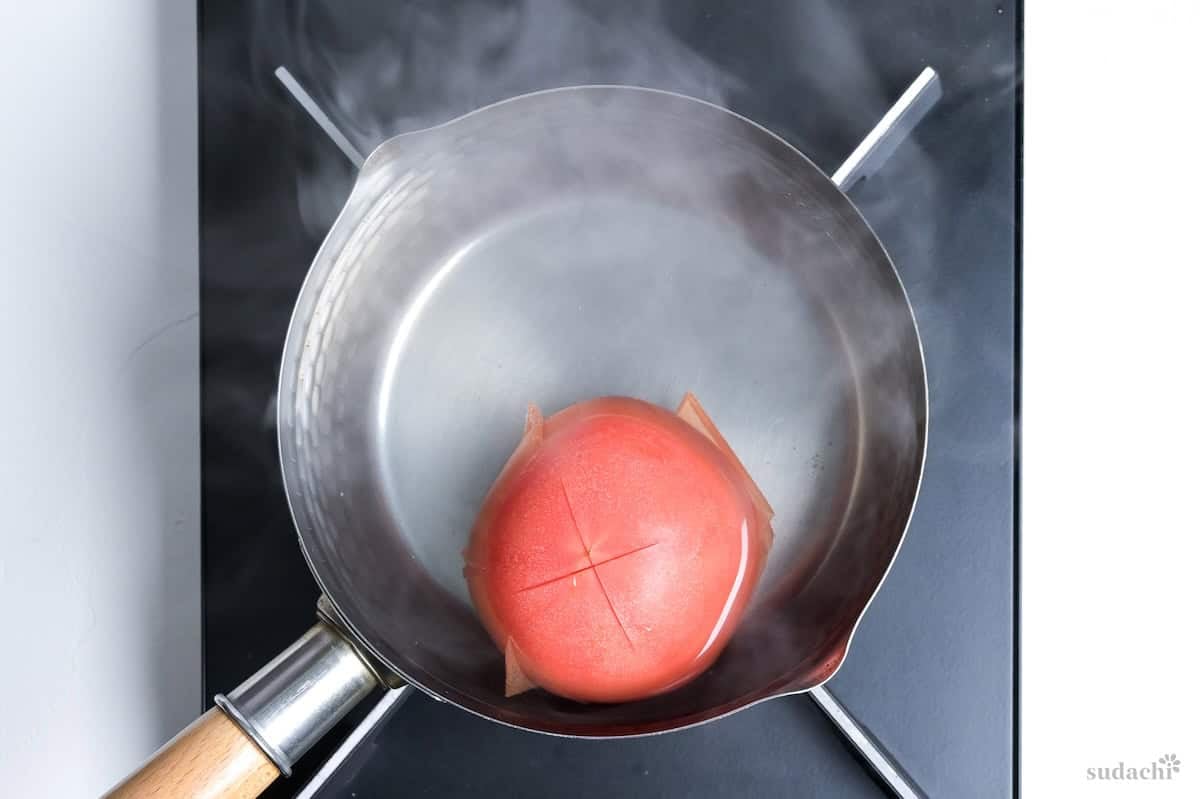
iv. Blanch and Peel the Tomatoes Remove the stem end from each tomato and score a shallow X on the bottom. Lower them into boiling water for 10-30 seconds. Ripe tomatoes need less time, firmer ones a bit more.
v. Transfer immediately to ice water to halt cooking.
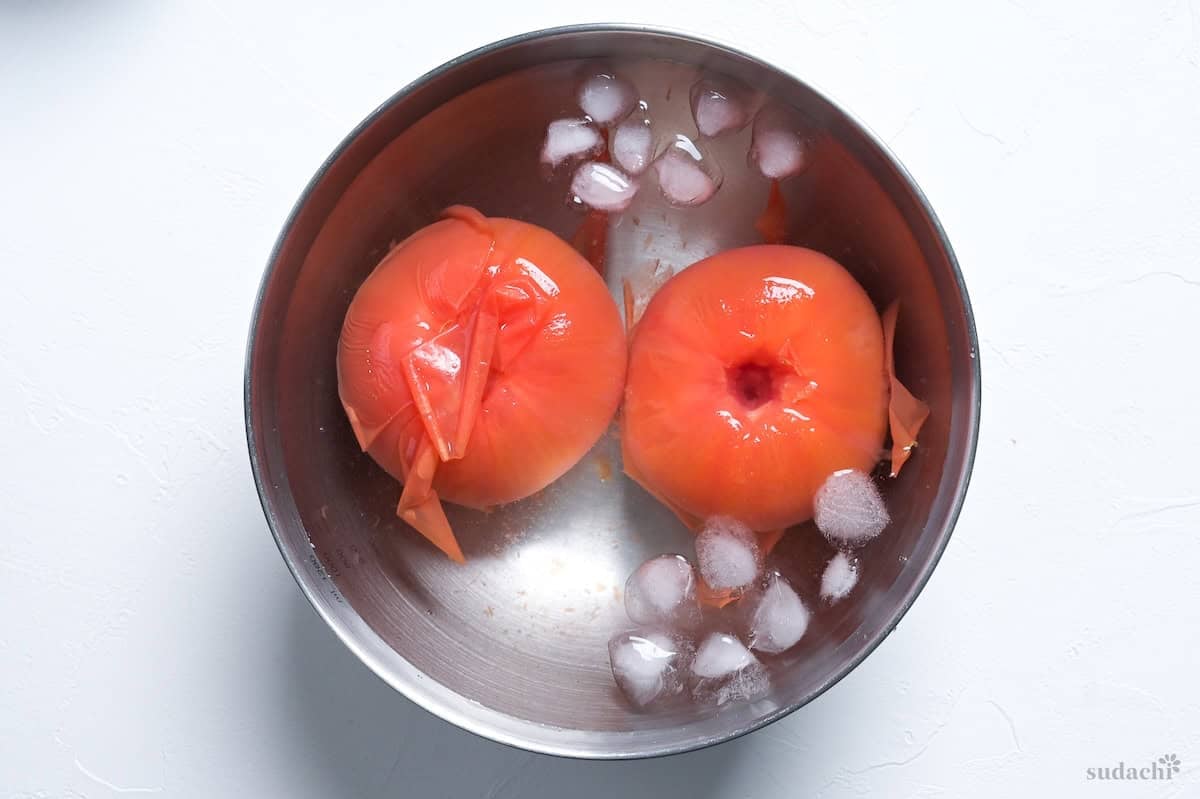
vi. Then slip the skins off with your fingers.
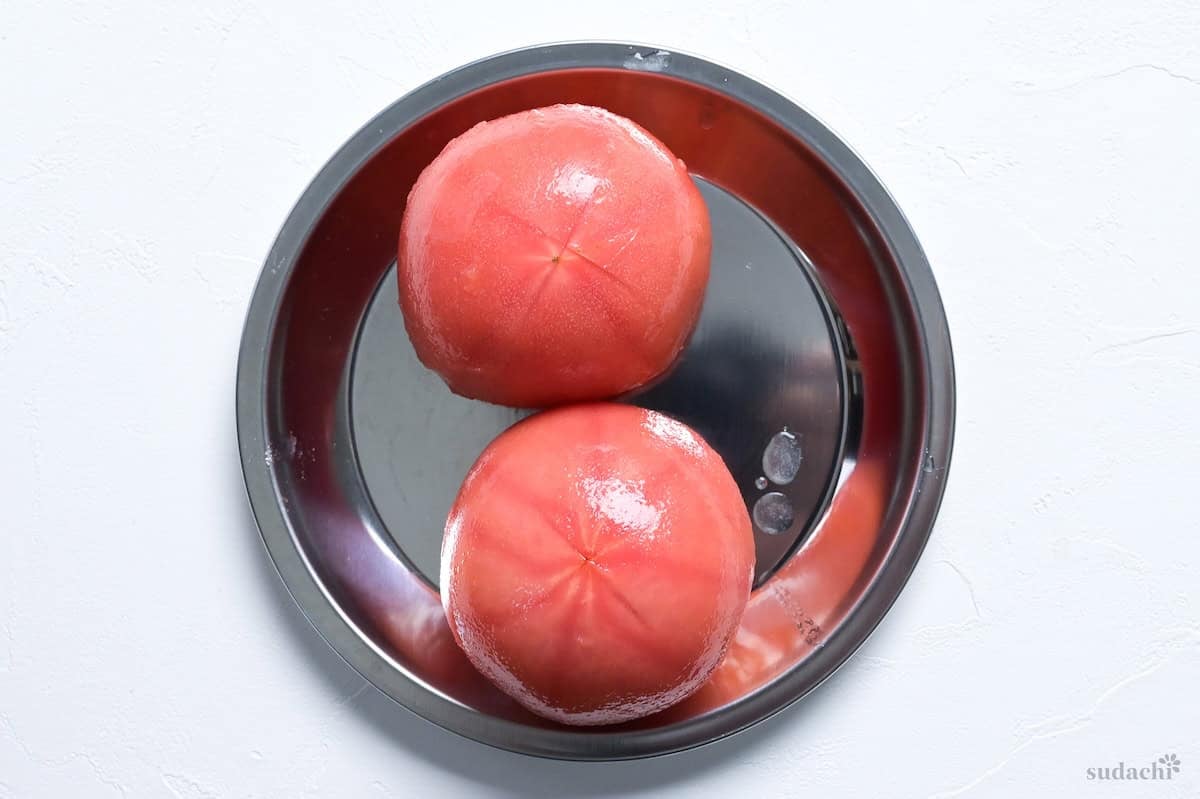
vii. Once peeled, cut the tomatoes into rough chunks and set aside.
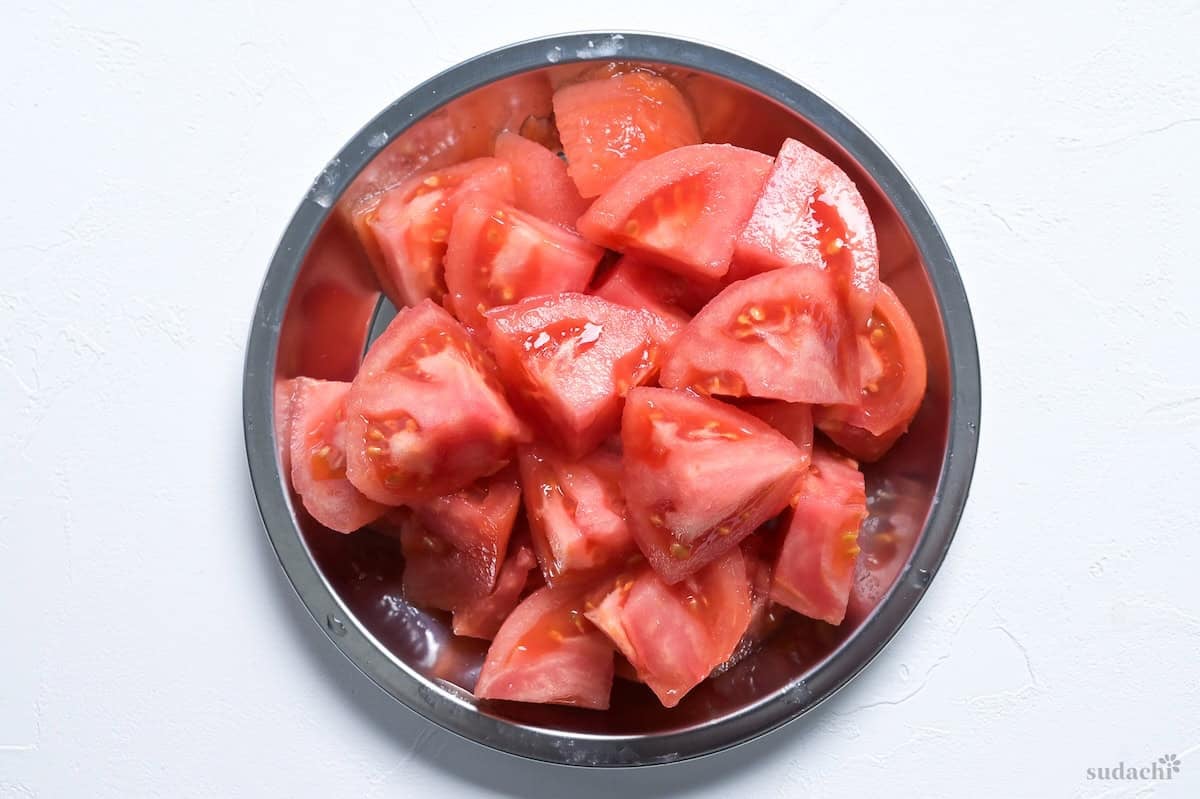
In my testing, unpeeled tomatoes left messy skin curls floating in the broth, while peeled tomatoes produced a noticeably cleaner, more refined texture. However, peeling does sacrifice some nutrients concentrated in the skin. It’s a trade-off: texture versus nutrition. so this step is entirely optional.
viii. Quarter the eggplants lengthwise and slice the kabocha squash into 5 mm half-moons. Trim the green beans but leave them whole.

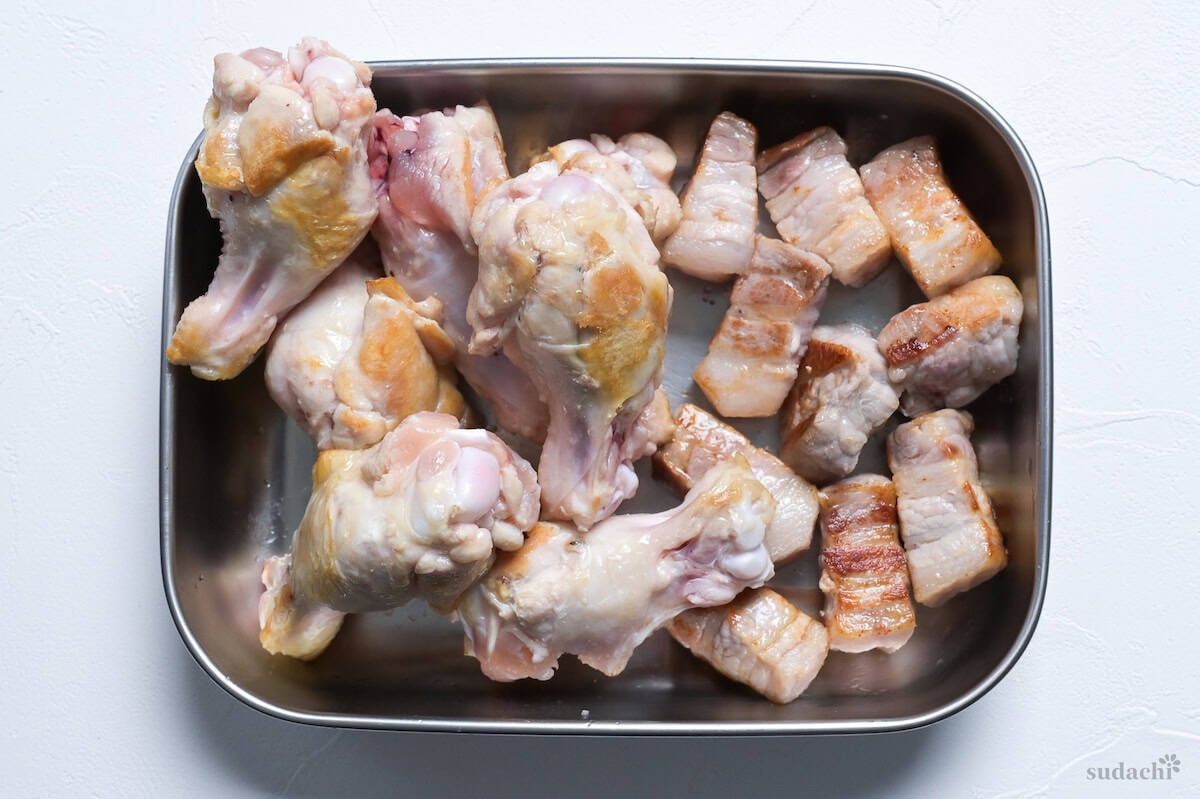
i. Heat a thin film of neutral oil in your large pot over medium-high heat until it shimmers but doesn’t smoke. Add the salted chicken drumettes and pork belly slices in a single layer.
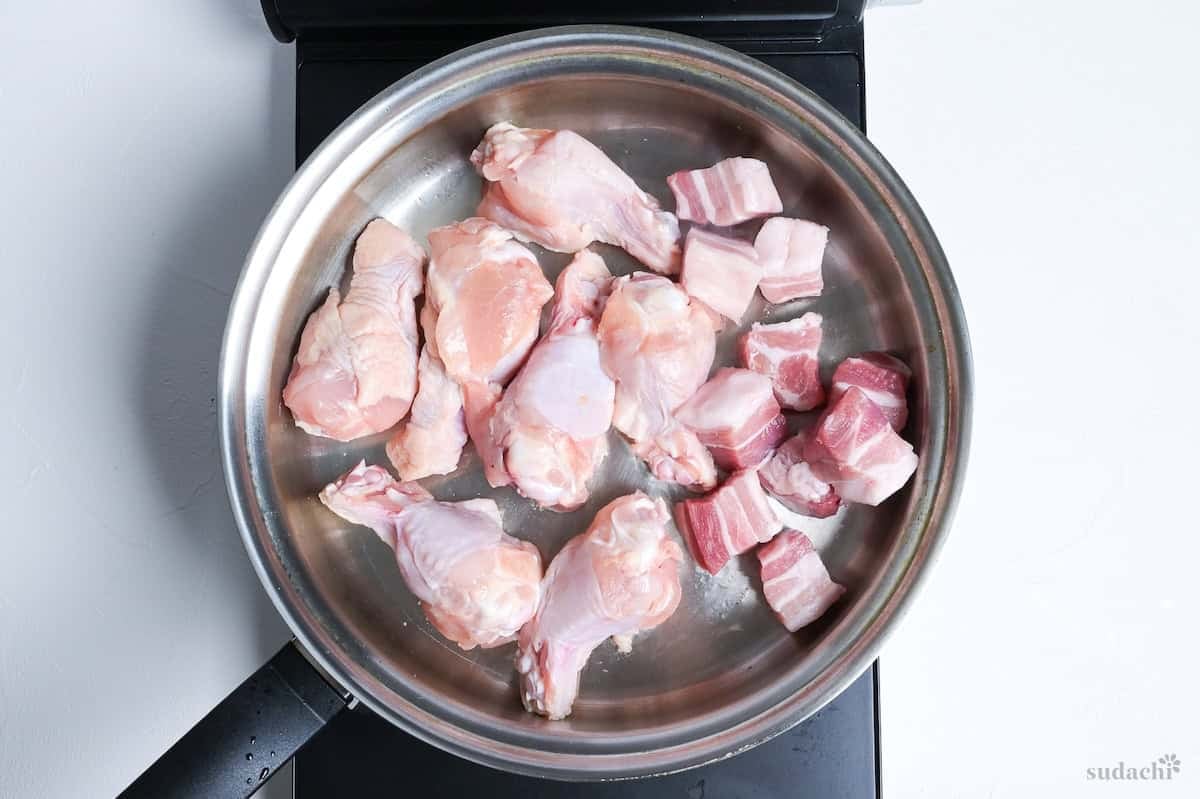
ii. Let them sizzle undisturbed for 2-3 minutes until a golden-brown crust forms on the bottom, then flip and repeat on the remaining sides. You’re not cooking them through, just building a flavor-packed Maillard crust that will infuse the broth later.
iii. Once evenly browned, transfer the meat to a plate and cover loosely to keep warm.
i. By now, your soffritto base should be finished.
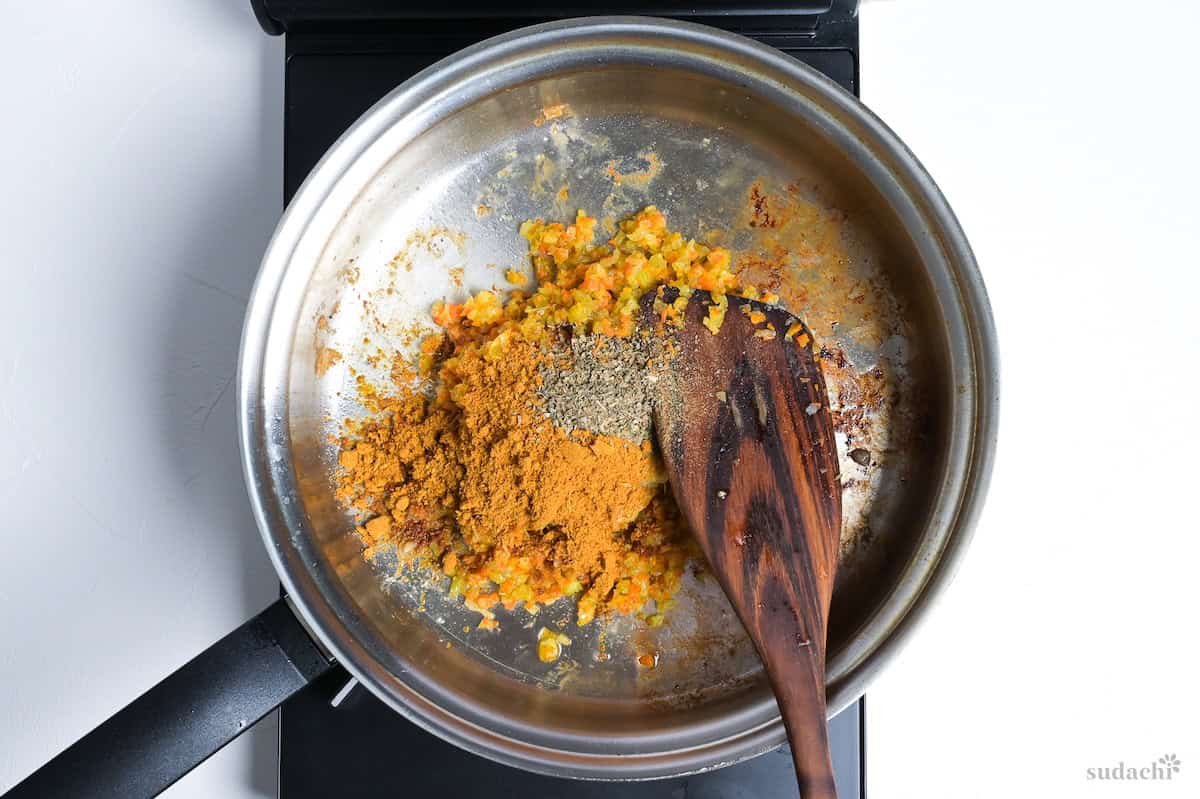
ii. Add your finished soffritto to the same pot you used for searing (no need to wash, those browned bits are flavor gold). Stir in the grated garlic, grated ginger, curry powder, ground cumin, and dried basil.
iii. Cook over medium heat, stirring constantly, until the raw edge disappears and the mixture smells deeply aromatic, about 60-90 seconds.
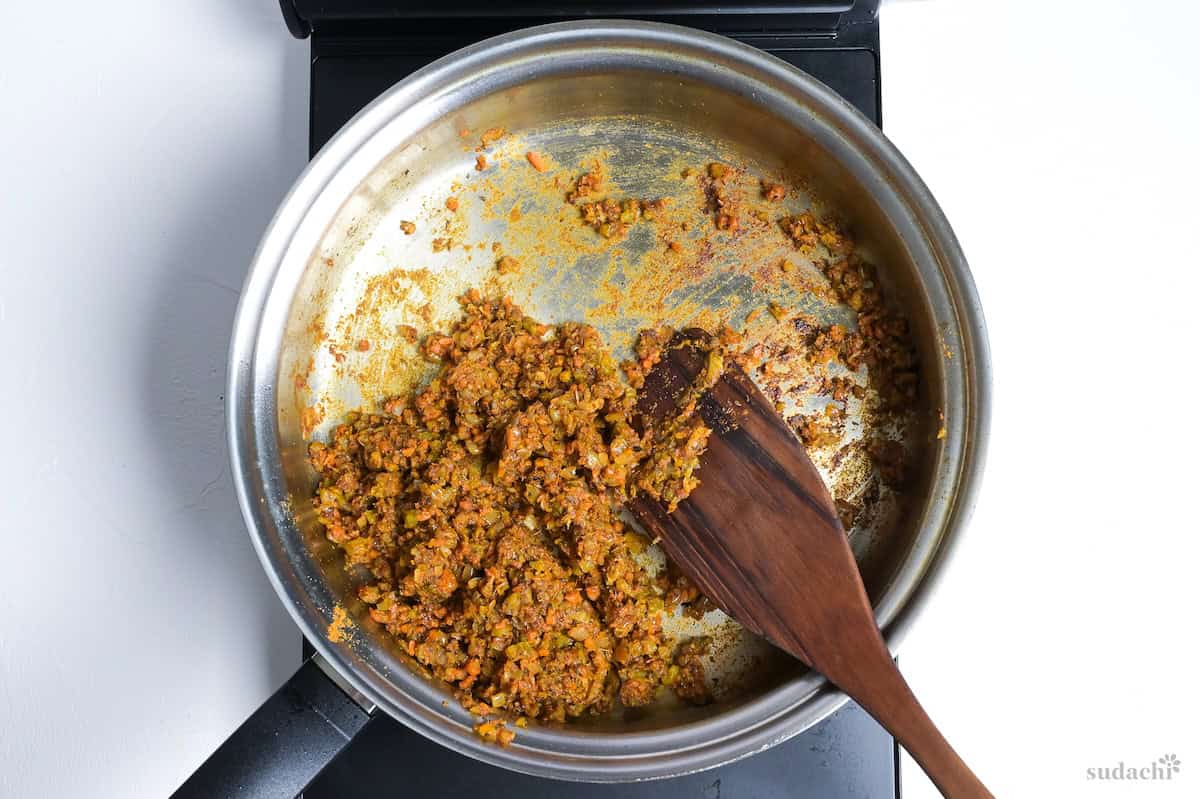
Ground spices can scorch within seconds if your heat is too high. If you see any darkening or catch a whiff of something acrid, immediately add a splash of stock to cool the pan. A burnt spice base will carry bitterness through the entire dish, and there’s no fixing it.
iv. Add the peeled tomato chunks and salt to the spice paste and stir to combine. Use your spatula to crush the tomatoes against the side of the pot as they soften, breaking them into a rough pulp.
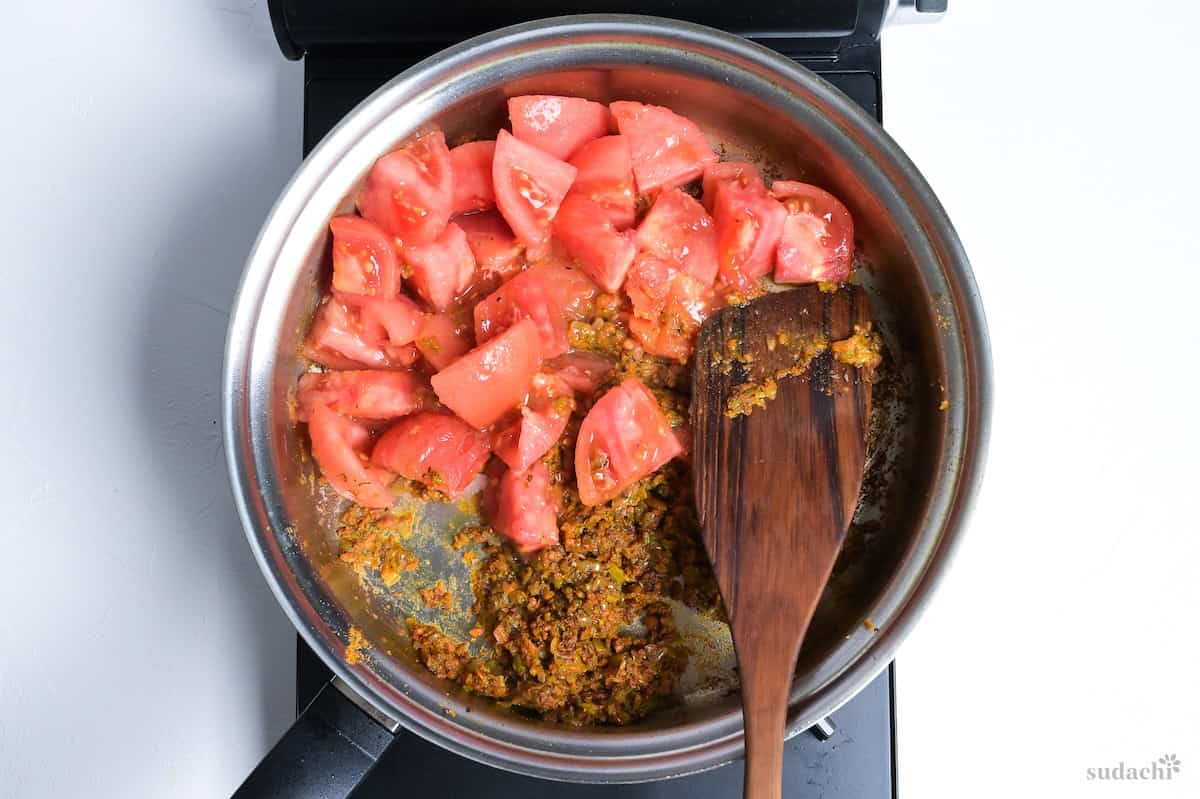
v. Continue cooking over medium heat until the mixture reduces to a thick, paste-like consistency, about 8-10 minutes. You’ll know it’s ready when you can drag your spatula across the bottom and see the pan for a moment before the paste flows back together.
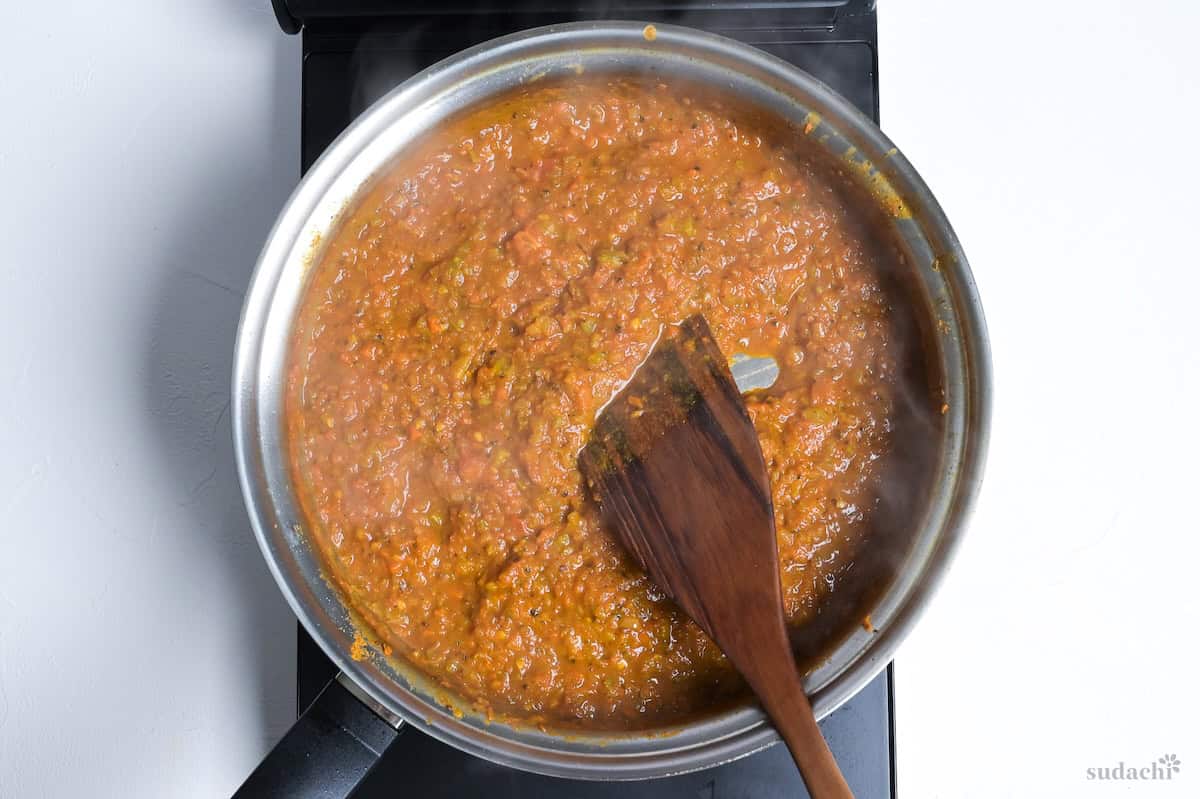
Chicken bouillon powder varies by brand. My brand is 1 tsp per 200 ml, so check the label and if yours is more concentrated (e.g., 1 tsp per 300 ml or 1 cup), use touch less to avoid oversalting, and if it’s less concentrated, use a little more (and adjust to taste).
i. Pour in your dashi stock and scrape up any browned bits clinging to the pot bottom, that fond is concentrated flavor waiting to dissolve. Stir in the Chinese-style chicken bouillon powder and soy sauce, then bring everything to a gentle boil.
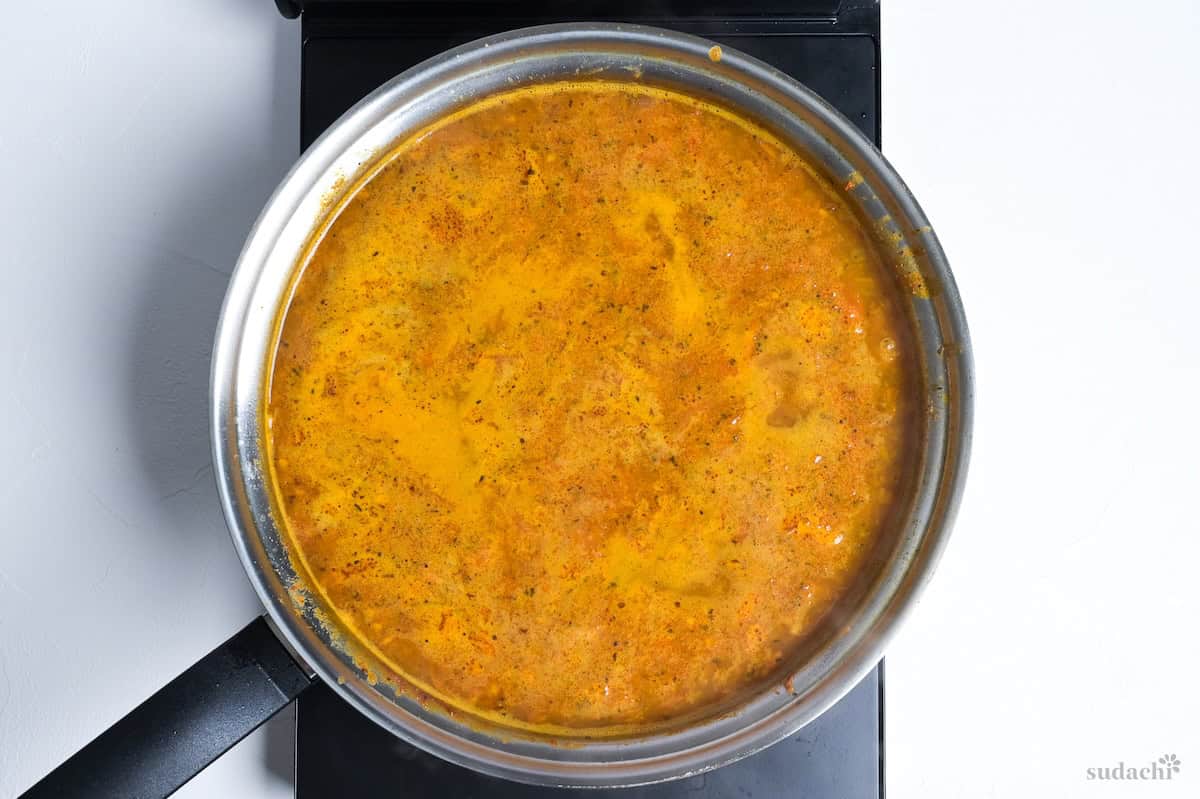
ii. While the broth simmers, preheat your oven to 220°C (425°F). Arrange the prepared eggplant, kabocha, and green beans on a sheet pan in a single layer. Brush lightly with oil and sprinkle with a pinch of salt. Roast for 15 minutes, or until the edges caramelize and the vegetables are tender when pierced with a knife.
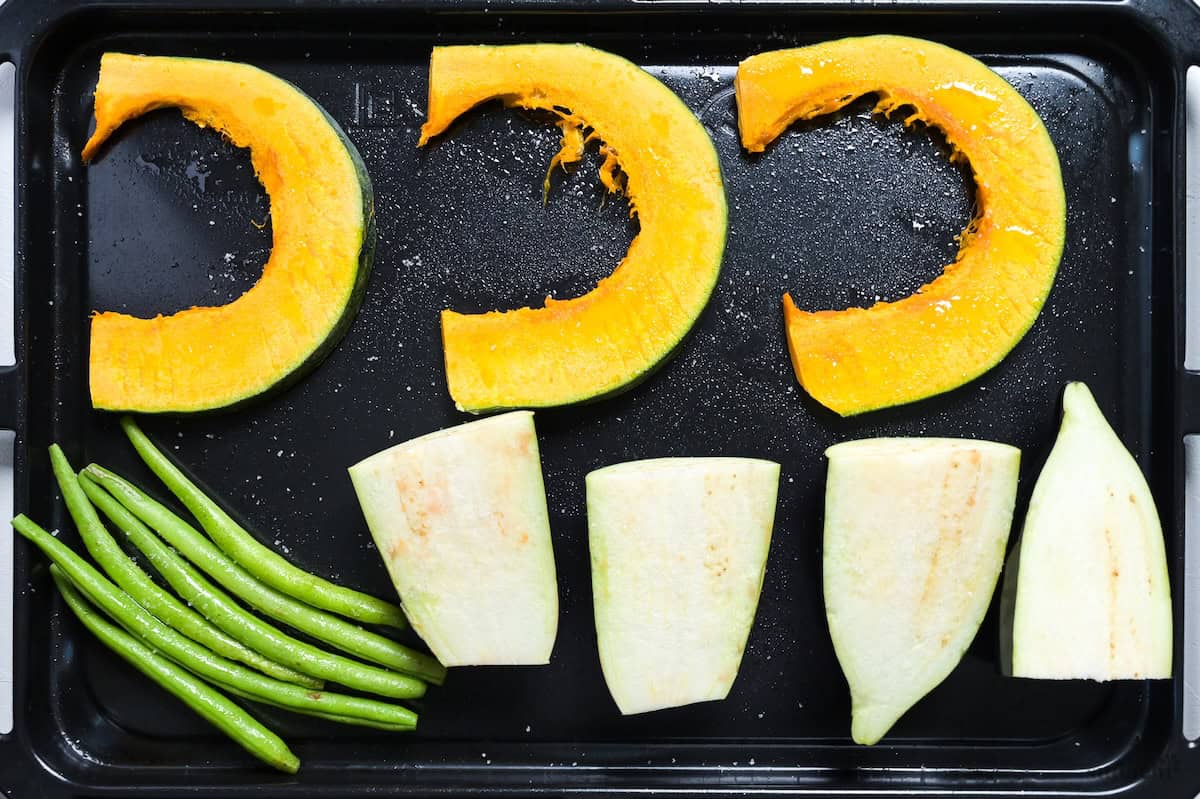
Authentic Sapporo soup curry shops typically deep-fry their vegetable toppings, but we don’t want to heat a pot of oil just for this step at home. I tested oven-roasting as an alternative and found it delivers similar caramelization with far less mess. An air fryer works beautifully here too.
i. Once bubbling, reduce the heat to maintain a lazy simmer (you want occasional bubbles breaking the surface, not a rolling boil).
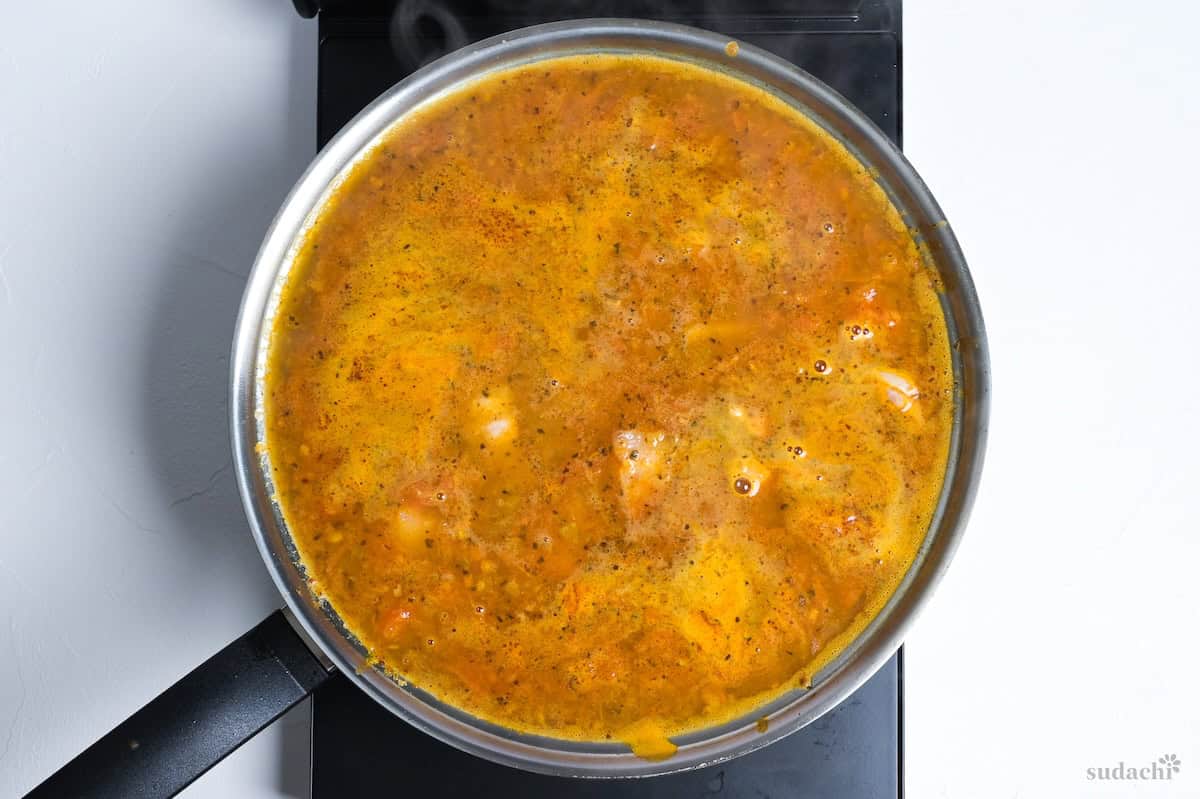
ii. Return the seared chicken drumettes and pork belly to the pot, nestling them into the broth. Tuck in a bay leaf, then cover and simmer gently for 20 minutes.
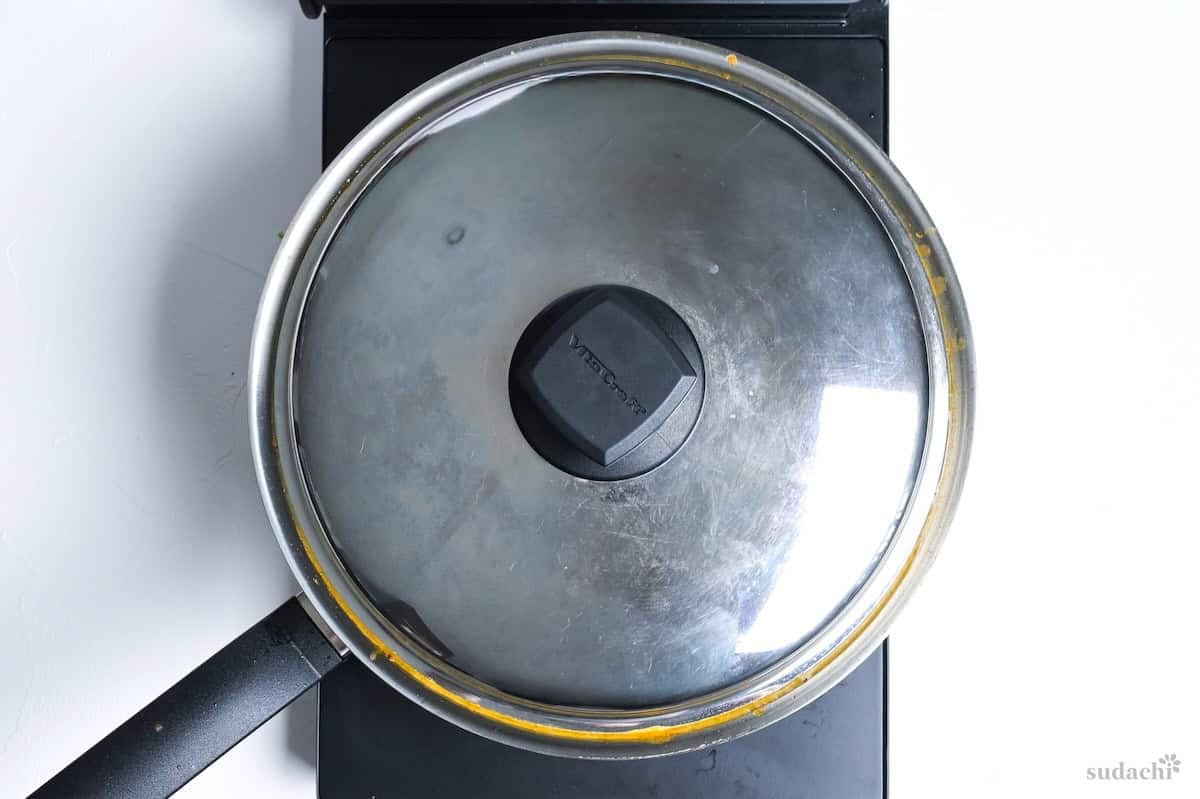
iii. When 2 minutes remain on your timer, add the prepared shrimp to the pot and replace the lid. Shrimp cook incredibly fast. Overcooking turns them rubbery, so resist the urge to peek repeatedly.
If you feel like it’s under-seasoned, you can either continue cooking without lid on to reduce or add soy sauce for more saltiness and depth to your liking.
i. Remove the pot from the heat entirely before stirring in the instant coffee, blueberry jam, and garam masala. These are my own “hidden flavors” to add complexity without announcing themselves. The coffee deepens the roasted notes, the jam provides a subtle fruity sweetness that balances spice heat, and the garam masala refreshes the aromatic top notes.
ii. Ladle the curry broth into deep bowls, then arrange the chicken and pork belly so they’re partially submerged but still visible. Nestle the roasted vegetables around the proteins. Add a halved soft-boiled egg, a few celery leaves for freshness, and any other garnishes you like.
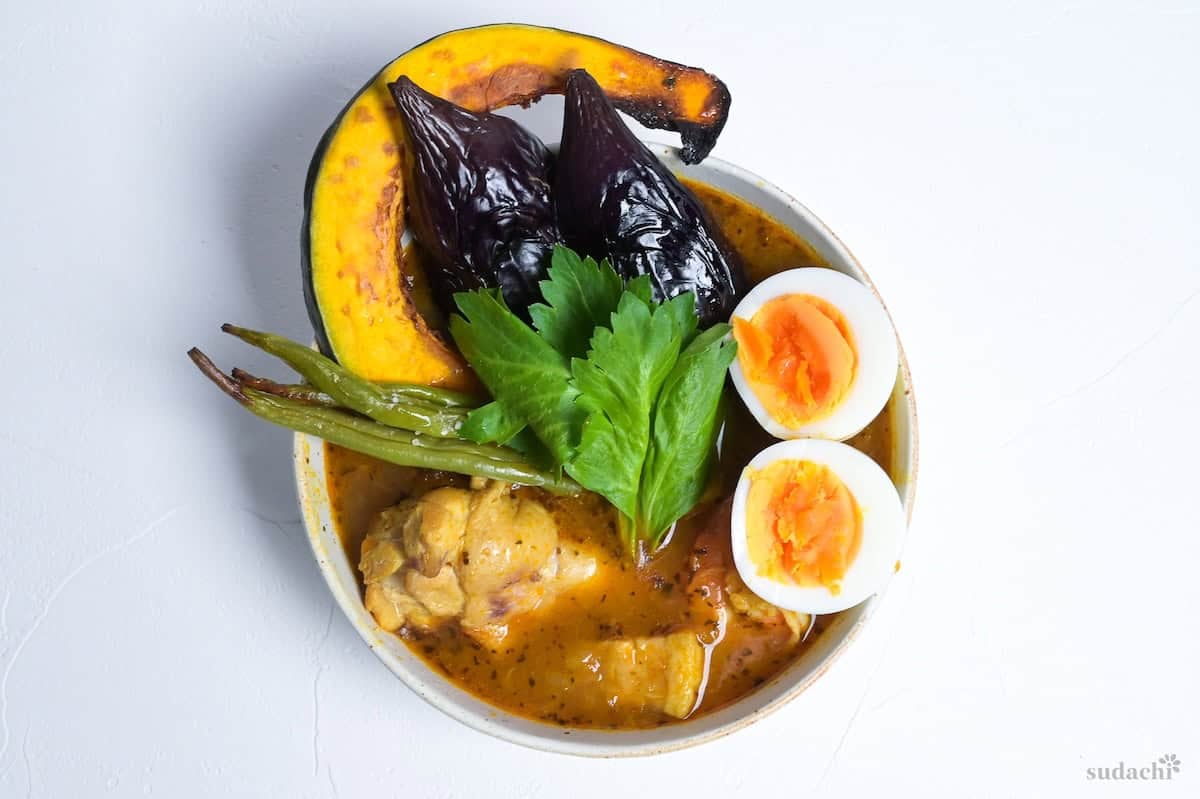
iii. Serve immediately alongside steamed Japanese short-grain rice.
Like most curries or soups, soup curry tastes even better the next day after the flavors have had time to meld. Store the broth and proteins together in the refrigerator (without the roasted vegetables). Reheat gently and add fresh roasted or fried vegetables at serving time if you like.
My favorite leftover hack: pour hot reheated curry over fresh steamed rice, top with melty shredded cheese, and stir everything together. Enjoy the “zosui” style soup curry!

Essential Tips & Tricks
- Sweat the soffritto low and slow (covered, stirred often) to drive moisture evaporation and build sweetness.
- Bloom curry powder/spices in the soffritto fat until intensely fragrant, then immediately add tomatoes to stop the heat.
- Deglaze the pot bottom with warm dashi and scrape up every browned bit for restaurant-style roast notes.
- Reduce the tomato-spice mixture to a thick paste before adding dashi.
- Maintain a lazy simmer, not a rolling boil, once the broth is assembled.
With these simple tips in mind, you’re set for success every time you make sapporo soup curry.
Storage & Meal Prep
Fridge: Store the broth and proteins together in an airtight container for up to 3 days, keeping roasted vegetables in a separate container to prevent sogginess. Expect a solid fat cap to form on top, this will melt back down when reheated.
Freezer: The broth with meat freezes well for up to 2 months in airtight containers or freezer bags. Do not freeze roasted vegetables.
Meal Prep: The soffritto base, spice paste, and broth can all be made 1-2 days ahead (flavors actually improve overnight), but roast vegetables right before serving time.
Reheating: Warm the broth in a pot over medium heat, stirring occasionally, until it reaches a gentle boil.
What to Serve With This Recipe
FAQ
First, check that you actually built flavor in the base: proper soffritto sweating, spice blooming, and deglazing are the “depth levers.” Then adjust in this order: add a little soy sauce for salt/umami, and/or reduce briefly to concentrate (evaporation), tasting as you go so you don’t overshoot. If it’s still flat, it often needs more aroma (a tiny pinch of fresh spice at the end), not just more salt.
To thicken while staying “soup curry,” use reduction (lid off, gentle simmer) so flavor concentrates and viscosity increases slightly without flour. The target texture is ladleable and lightly coating, not spoon-standing.
Soup curry’s signature is big, intact vegetables, so choose ones that hold shape (kabocha, eggplant, green beans, carrots) and cook them separately when you want browned edges and contrast. Delicate greens or small-cut vegetables tend to go mushy and can cloud the broth if simmered too long.
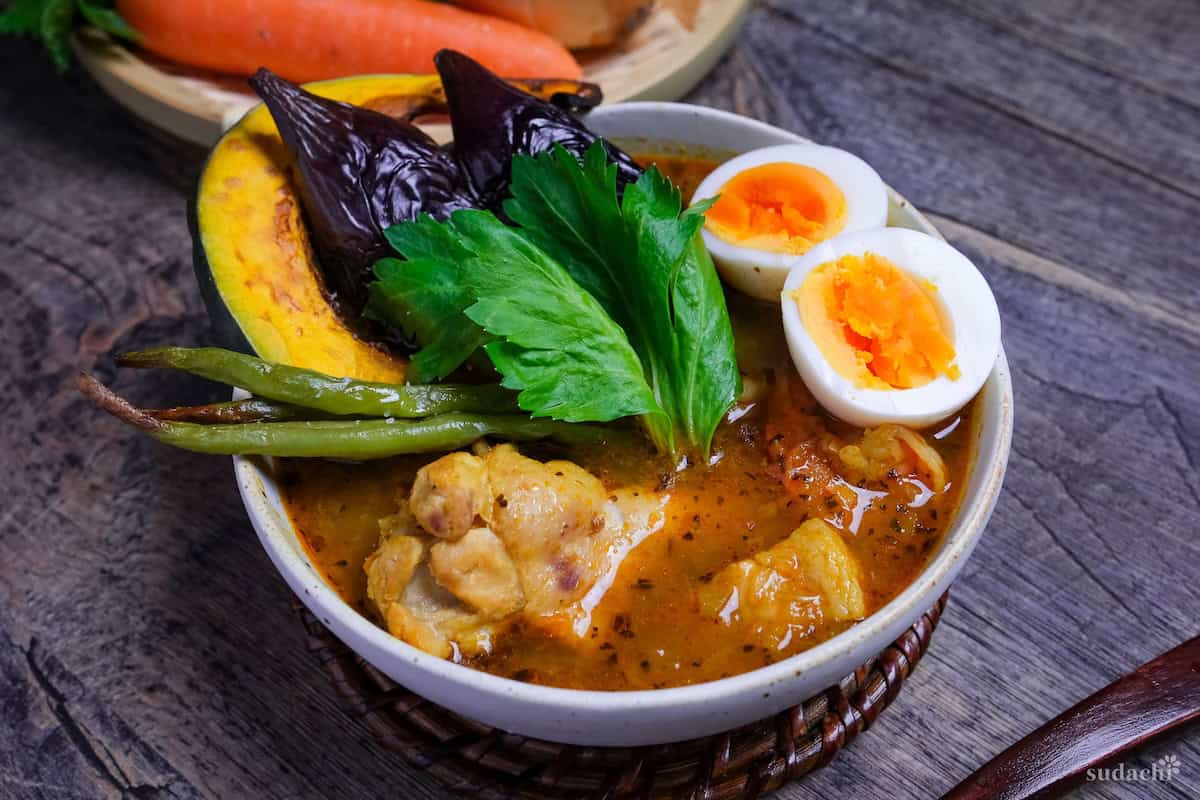
More Japanese Soup Recipes
Hungry for more? Explore my Japanese soup recipe collection to find your next favorite dishes!
Did You Try This Recipe?
I would love to hear your thoughts!
💬 Leave a review and ⭐️ rating in the comments below. 📷 I also love to see your photos – submit them here!
Soup Curry (Hokkaido-Sapporo Style)
Ingredients
Soffritto
- 15 g unsalted butter
- 1 tbsp olive oil
- 200 g onion finely minced
- 100 g celery finely minced
- 100 g carrot finely minced
Proteins
- 1 tbsp cooking oil neutral
- 6 chicken drumsticks
- 150 g slab skinless pork belly cut into chunks, or spare ribs
- ½ tsp salt for seasoning proteins
- 10 shrimp peeled, deveined
Spices/Aromatics
- 1 tbsp grated garlic or garlic paste
- 1 tbsp grated ginger root or ginger paste
- 3 tbsp Japanese style curry powder or regular curry powder mix
- ½ tbsp dried basil
- ½ tsp ground cumin
Broth & Seasonings
- 2 tomatoes medium-large, ripe
- ½ tsp salt for tomatoes
- 1000 ml dashi stock homemade or packet, reduce salt if using instant granules
- ½ tbsp Chinese-style chicken bouillon powder
- 1 tsp Japanese soy sauce (koikuchi shoyu)
- 1 bay leaf
- ¼ tsp instant coffee powder or finely grated dark chocolate
- 1 tsp blueberry jam or apple jam
- ½ tsp garam masala
Optional topping ideas
- eggplants
- kabocha squash
- green beans
- boiled eggs
- celery leaves
My recommended brands of ingredients and seasonings can be found in my Japanese pantry guide.
Can’t find certain Japanese ingredients? See my substitution guide here.
Instructions
- Add 15 g unsalted butter and 1 tbsp olive oil to a large pan. Heat on low/medium-low and once the butter has melted, add 200 g onion, 100 g celery, and 100 g carrot, and mix well to make a soffritto base.

- Cover with a lid and gently cook for 30 minutes, mixing occasionally to prevent browning. Use this time to prepare your other ingredients.
- Bring a small pot of water to a rolling boil. Remove the stems of 2 tomatoes and score the bottoms with a cross. Blanch for 10-30 seconds, then transfer to ice water and peel off the skin. Cut into bitesize pieces and set aside for later.
- Heat a large pot on medium high with 1 tbsp cooking oil. Sprinkle 6 chicken drumsticks and 150 g slab skinless pork belly with ½ tsp salt, then arrange them in the pot in a single layer.
- Sear for 2-3 minutes or until golden. Flip and repeat until seared all over, then transfer to a heatproof container.
- Once your soffrito is ready, transfer it to the pot you used to sear the chicken and pork. Add 1 tbsp grated garlic, 1 tbsp grated ginger root, 3 tbsp Japanese style curry powder, ½ tbsp dried basil, ½ tsp ground cumin, and mix well. Set the heat to medium and cook for 60-90 seconds to bloom the spices.
- Add the cut tomatoes to the pot along with ½ tsp salt. Mix with a spatula while crushing the tomatoes, and cook for about 8-10 minutes or until it reduces to a paste-like consistency.
- Pour 1000 ml dashi stock into the pot, then add ½ tbsp Chinese-style chicken bouillon powder and 1 tsp Japanese soy sauce (koikuchi shoyu). Bring to a gentle boil then reduce to a simmer. Preheat your oven to 220 °C (428 °F).
- Place the seared chicken drumettes and pork belly in the pot, along with 1 bay leaf. Cover with a lid and simmer for 20 minutes. Add 10 shrimp in the last few minutes.
- Arrange sliced eggplants, kabocha squash and while green beans spaced apart in a single layer on a baking tray. Brush with a thin layer of oil and sprinkle with salt. When the oven is preheated, roast the vegetables on the middle shelf for 15 minutes or until lightly caramelized and fork tender.
- After the shrimp are cooked through, take the pot off the heat and stir in ¼ tsp instant coffee powder, 1 tsp blueberry jam, and ½ tsp garam masala. Divide the soup into serving bowls with the chicken and pork still visible. Arrange the roasted vegetables on top and garnish with boiled eggs and celery leaves. Enjoy!

Leave a rating and a comment