



Featured Comment
Just made these today, everyone loved it (including my kids who are also picky eaters)! Thanks for another great recipe, Yuto!
– @fatp0tato914 (from YouTube)
My wife declared this the best recipe I made all year, in December. My extremely picky eater son? He begged for seconds, then got unreasonably upset when I told him they’re all gone.
Think weeknight dinner or party-appetizer: you’ll watch the sauce thicken to a lacquered coat. It’s a standout in my teriyaki recipes, even high enough to rival my teriyaki chicken!
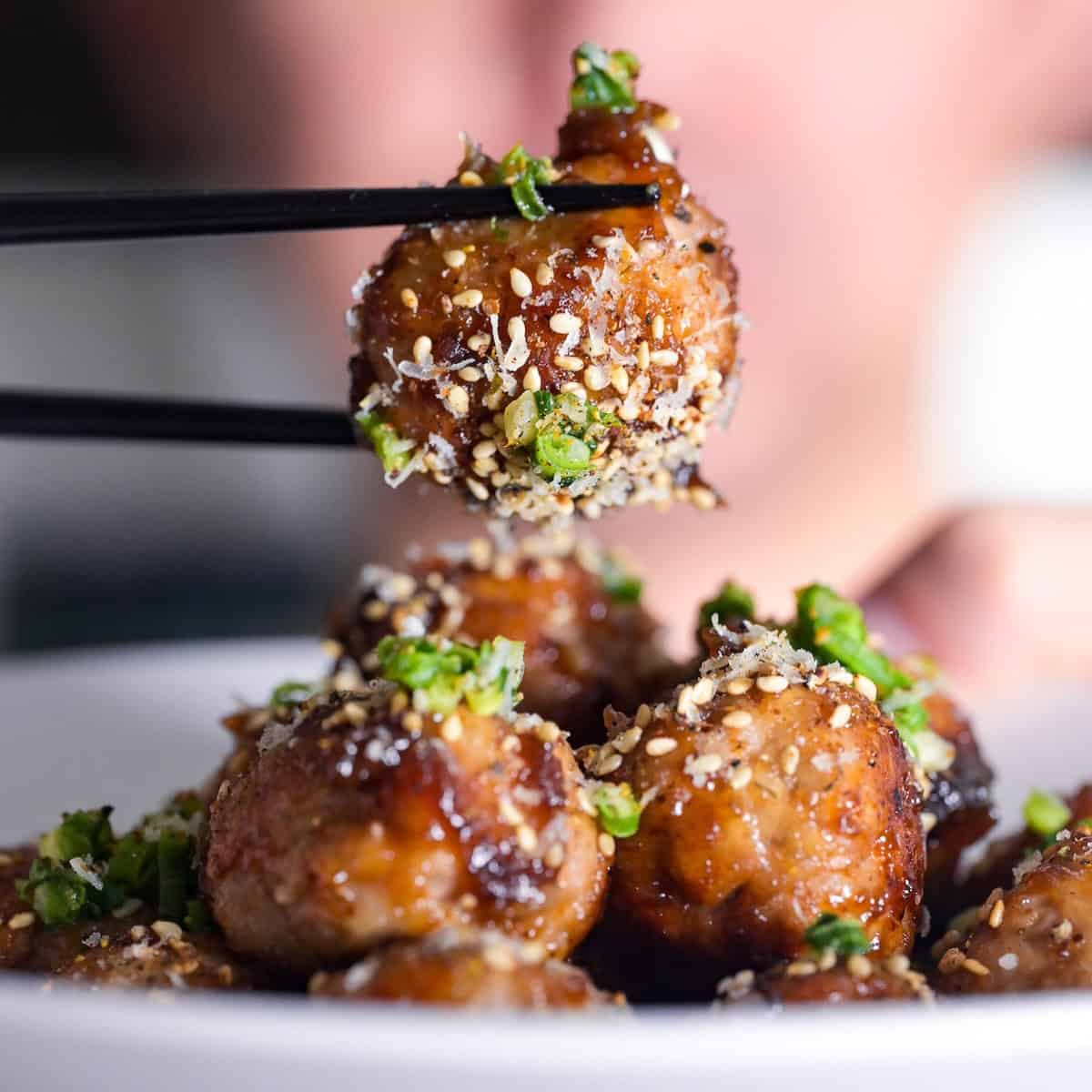
Teriyaki meatballs
Recipe Snapshot
- What is it? Irresistibly glossy teriyaki meatballs with a ginger-garlic punch. The kind you can’t stop reaching for at a party (or straight from the pan).
- Flavor profile: Sweet-salty-umami balance with ginger-garlic aromatic lift.
- Why you’ll love this recipe: Crowd-pleasing, endlessly snackable teriyaki meatballs that taste familiar yet fresh. Reliable texture and a sticky glossy finish that won’t flop.
- Must-haves: Ground pork/chicken, soy sauce + mirin + sake, grated ginger & garlic.
- Skill Level: Medium (shape → pan-sear → deglaze → reduce → toss)
Summarize & Save this content on:
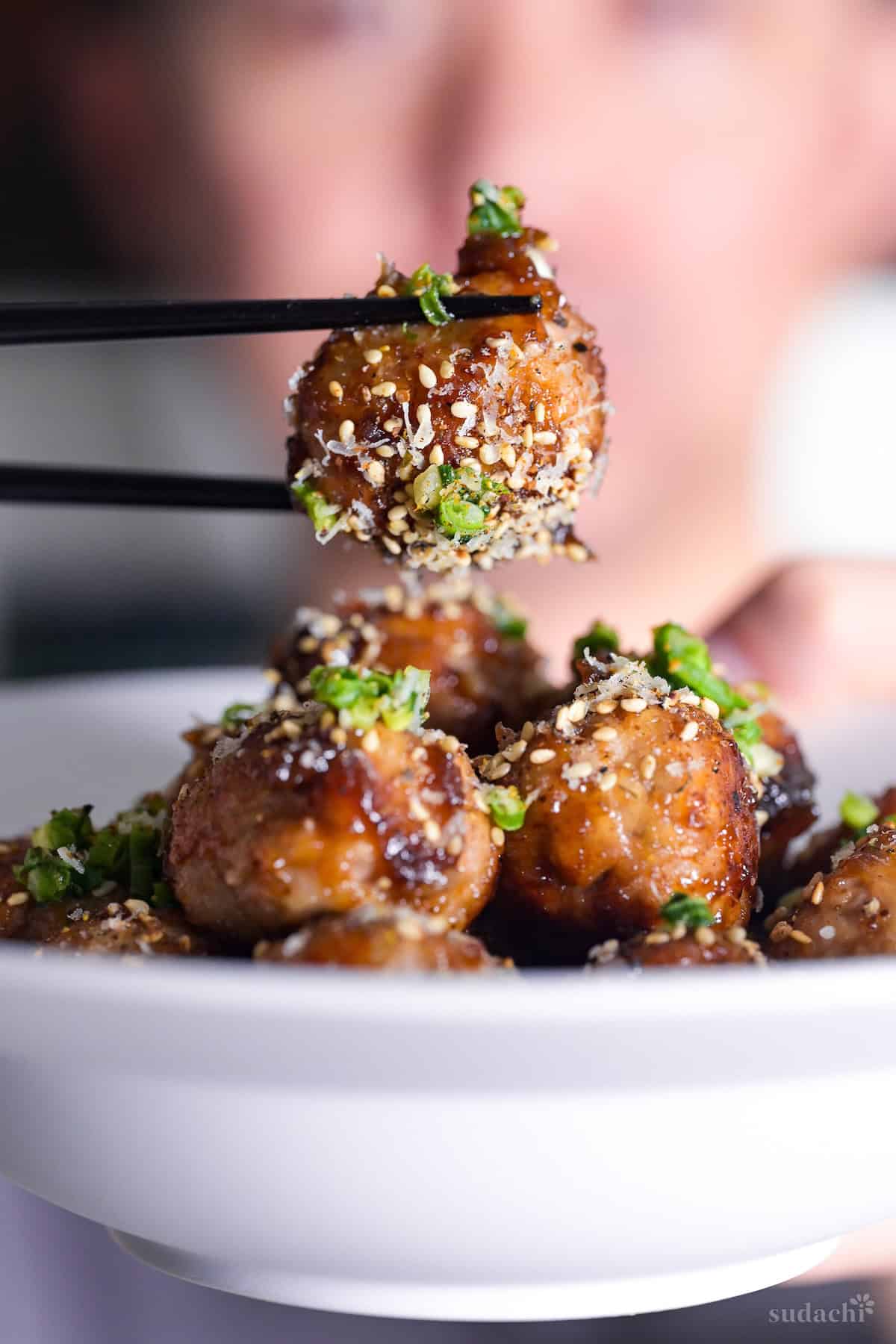
What are Teriyaki Meatballs
Teriyaki meatballs (照り焼きミートボール) are Japanese-style nikudango (meatballs), where seasoned ground meat is shaped into spheres, cooked, and then coated in a sweet and savory tare (glaze) made primarily from soy sauce, mirin, sake and sugar. It’s known as a staple of home cooking and bento lunch boxes.
In Japanese cuisine, a soy-based sauce sweetened with sugar (often with mirin) is reduced and caramelized over heat so it clings to the meatballs and creates the signature “teri” (shine). It’s similar to tsukune (yakitori-style chicken meatballs glazed with tare) but teriyaki meatballs are typically cooked off-skewer and finished by simmering and reducing the sauce until it coats.
My recipe is designed to be yamitsuki, or “can’t-stop-reaching,” making it an ideal companion for steamed white rice.
Teriyaki Meatballs Ingredients
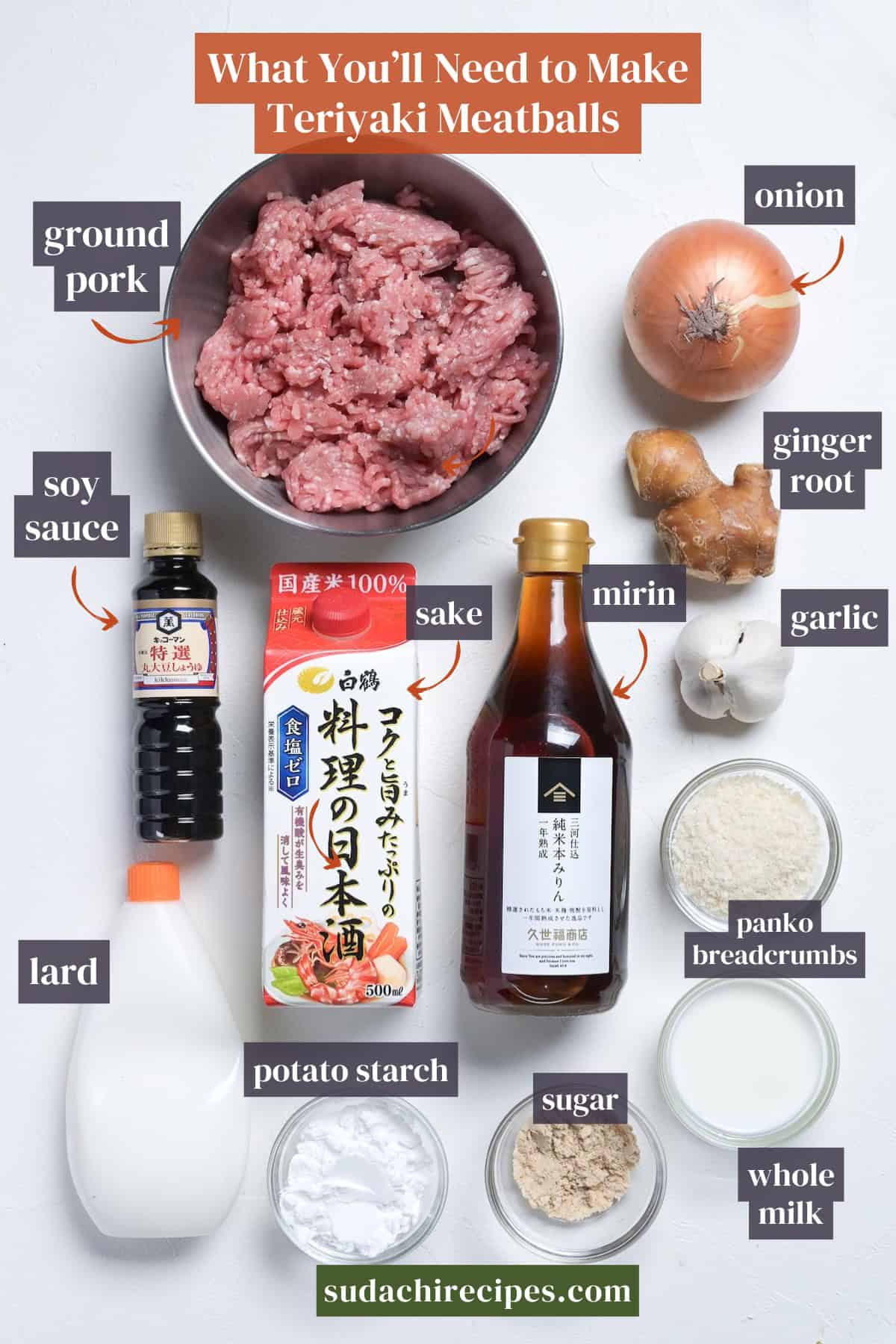
- Ground Pork: This is your foundation for texture. Pork provides the essential fat content needed for a bouncy, juicy meatball. Choose meat with visible white fat marbling (around 20% fat content) or add lard to the mixture.
- Potato Starch or Cornstarch: You’ll coat the shaped meatballs in potato starch before pan-frying. It’s your “no-crack insurance!” A light coat creates a thin skin that helps the meatballs hold together, and it also helps the pan juices and teriyaki sauce turn into a glossy glaze that clings instead of sliding off.
- Milk: The liquid that hydrates your panko into a quick panade (a soft bread paste that blends into the meat). That extra hydration keeps the centers plush and juicy without making the mixture watery, and it subtly softens any porky aroma so the soy-ginger glaze tastes clean and bold.
Substitution Ideas
- Ground chicken thigh is the best lighter alternative, offering a mild flavor and softer texture that pairs perfectly with the teriyaki glaze. If you use 100% beef, expect a much firmer, denser meatball that requires extra care during shaping to prevent it from falling apart. I’ve even used 50/50 pork/beef and I can confirm it was not as good as 100% pork.
- Regular breadcrumbs are a good substitute for panko breadcrumbs. Crumbled bread can be used in a pinch too!
- Cornstarch or tapioca starch are reliable 1-1 swaps that provide the same binding power and create a perfectly glossy, thickened finish for your sauce.
- Teriyaki glaze swaps: For sake, use dry sherry (closest match) or white wine. Water in a pinch. For mirin, try dry sherry or white wine plus a pinch of sugar, or use cola, which creates an unexpectedly great sweet-savory glaze (proven in my mock teriyaki chicken recipe).
Have trouble finding Japanese ingredients? Check out my ultimate guide to Japanese ingredient substitutes!
How to Make My Teriyaki Meatballs
If you prefer to watch the process in action, check out my video of this teriyaki meatball recipe!
Before you start (Mise en place):
- Combine your breadcrumbs and milk to create a panade, allowing the starch to hydrate.
- Mince the onions finely.
- Grate the ginger and garlic.
- Whisk together the soy sauce, sake, mirin, and sugar in a small bowl until the sugar mostly dissolves for a smooth sauce reduction later.
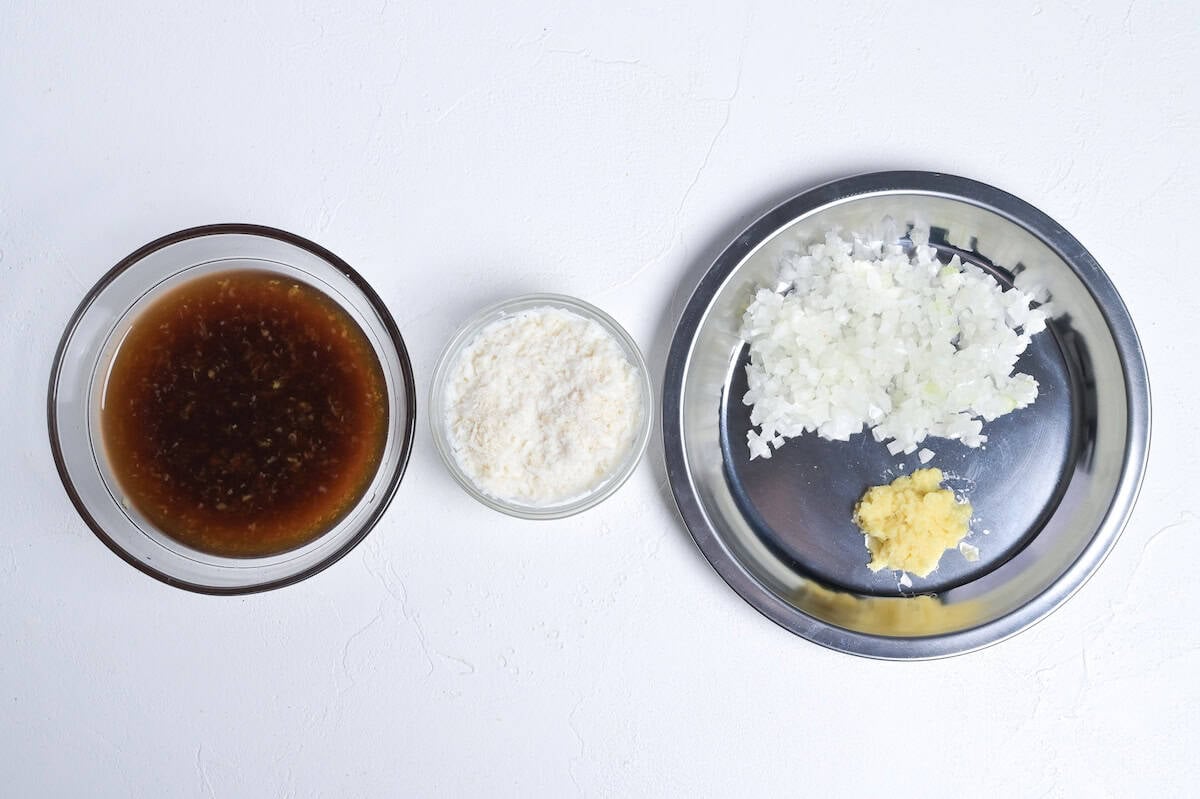
To develop this teriyaki meatballs recipe, I used a 27cm stainless pan for a better deglazing quality, but any thick pan works beautifully here.
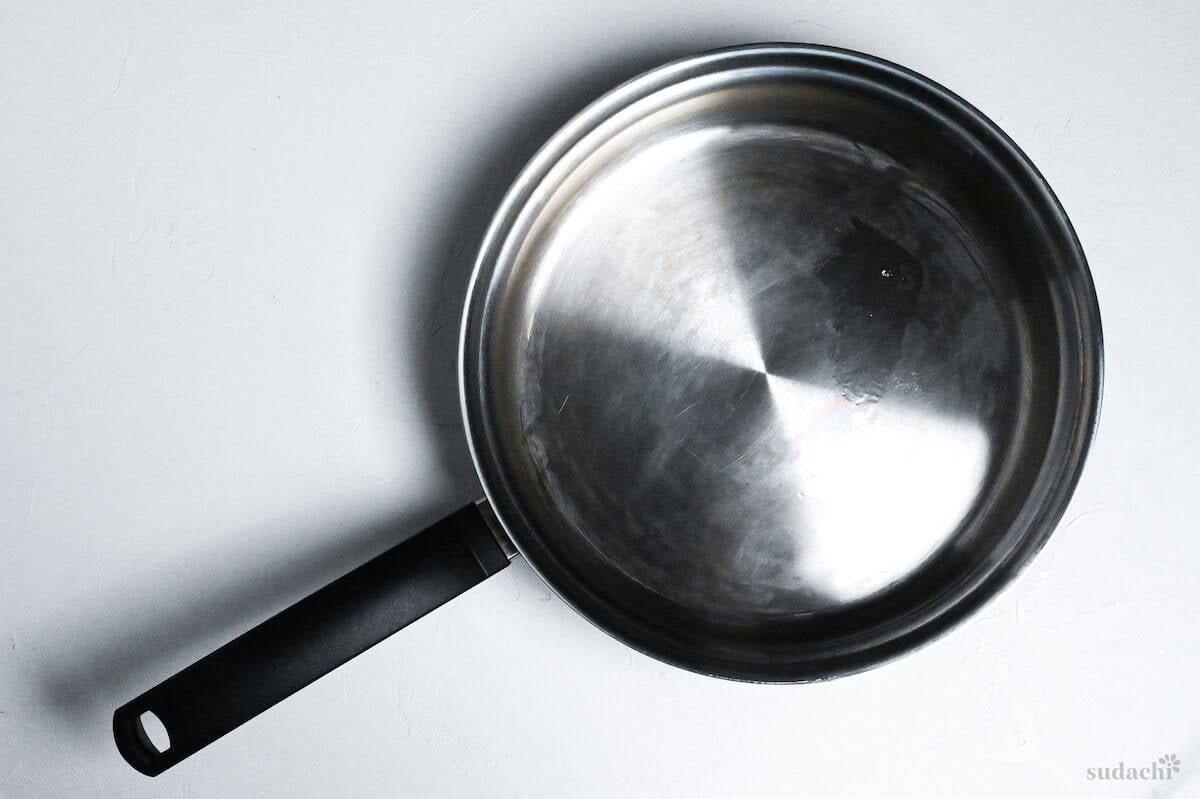
If you’re new to stainless, though, don’t stress at all! A nonstick skillet removes the guesswork and still delivers golden results without the potential sticking nightmare.
i. Grab your ground pork and add just the salt, nothing else yet.
ii. Work the salt into the meat with your hands, squeezing and folding until the mixture turns sticky and clings to your fingers like tacky glue.
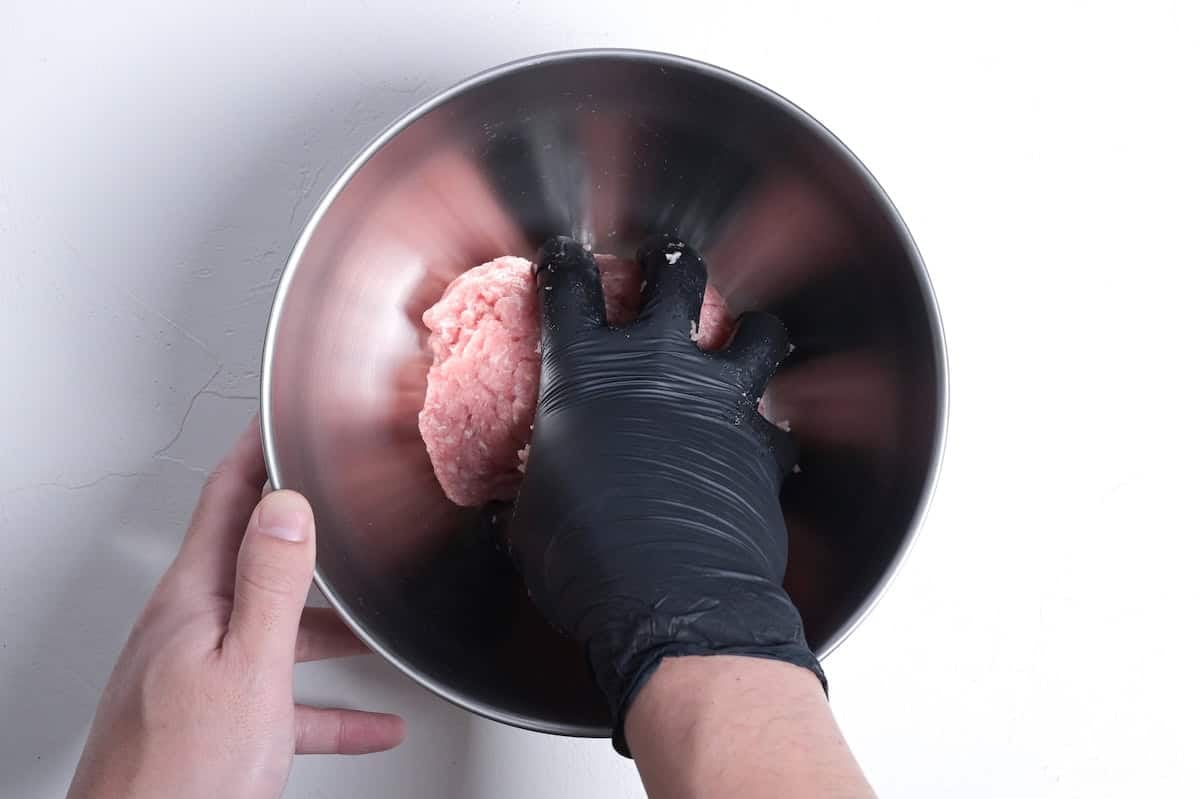
You’re coaxing out myosin, a protein that acts like edible Velcro to bind everything together. Keep the meat very cold while you do this as room-temperature meat lets the fat melt, and melted fat can’t hold moisture.
iii. Once you feel that unmistakable tackiness (it’ll resist your fingers when you pull away), stop immediately. You’ve hit the sweet spot.
i. Once your meat mixture has that sticky, web-like texture, nestle in your soaked panko-and-milk panade. Fold it through gently. Think of tucking a blanket around the meat rather than beating it into submission.
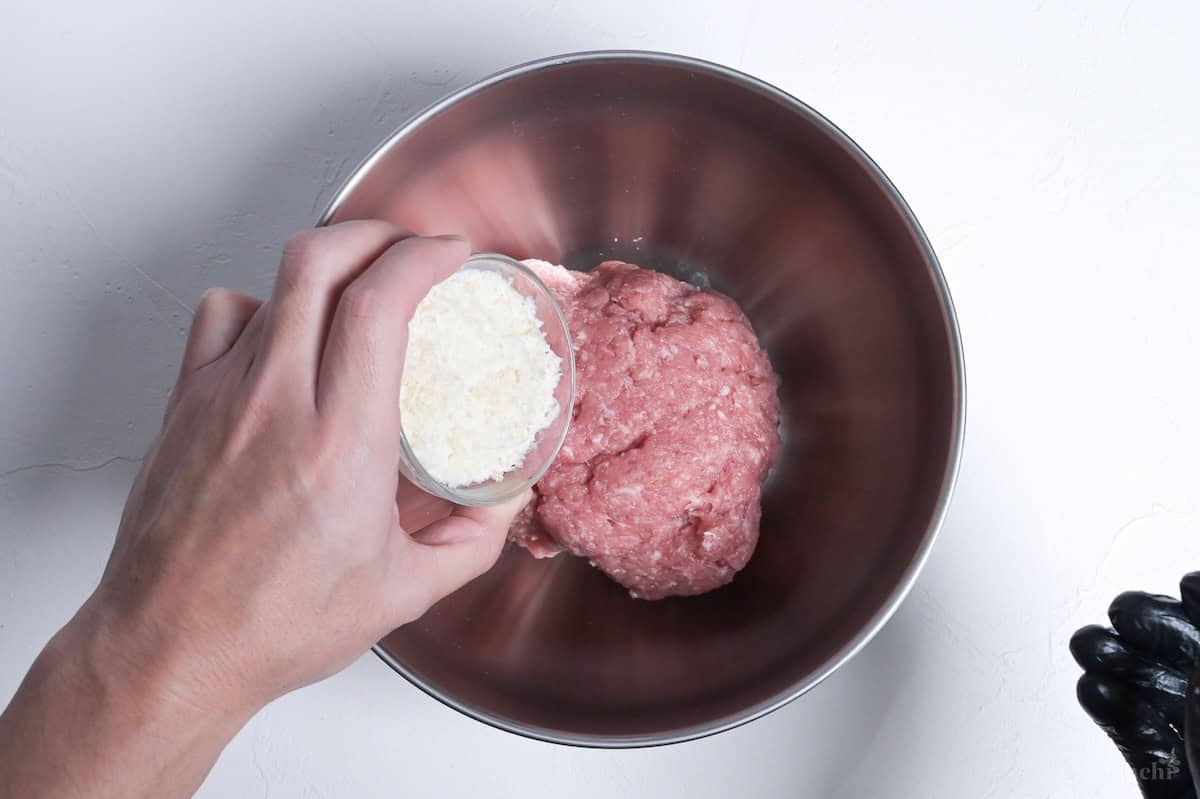
The panade’s job is to trap moisture like a sponge, so when heat squeezes the meat proteins, the released juices get absorbed instead of pooling in your pan.
ii. You’ll see the mixture lighten in color and feel it turn softer and more yielding under your hands. That’s your cue that the panade is fully integrated.
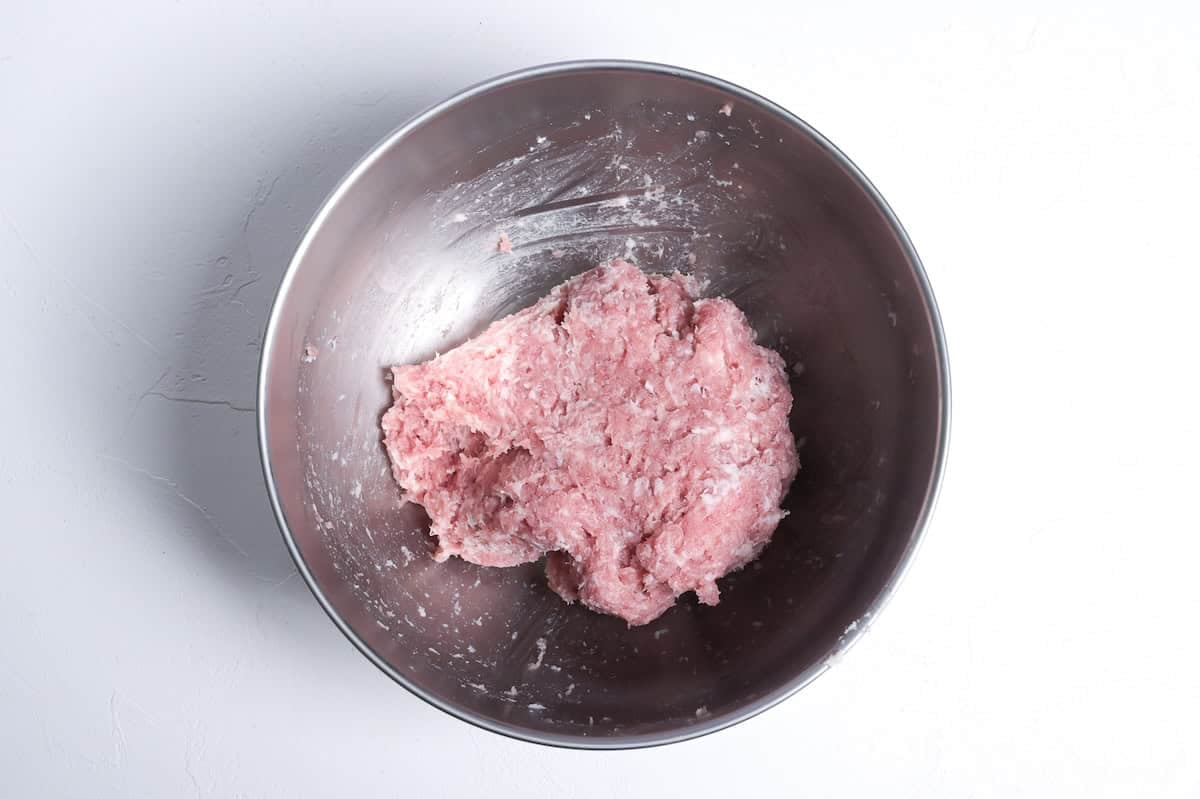
iii. Now sprinkle in your black pepper, minced onion, grated ginger, and lard.
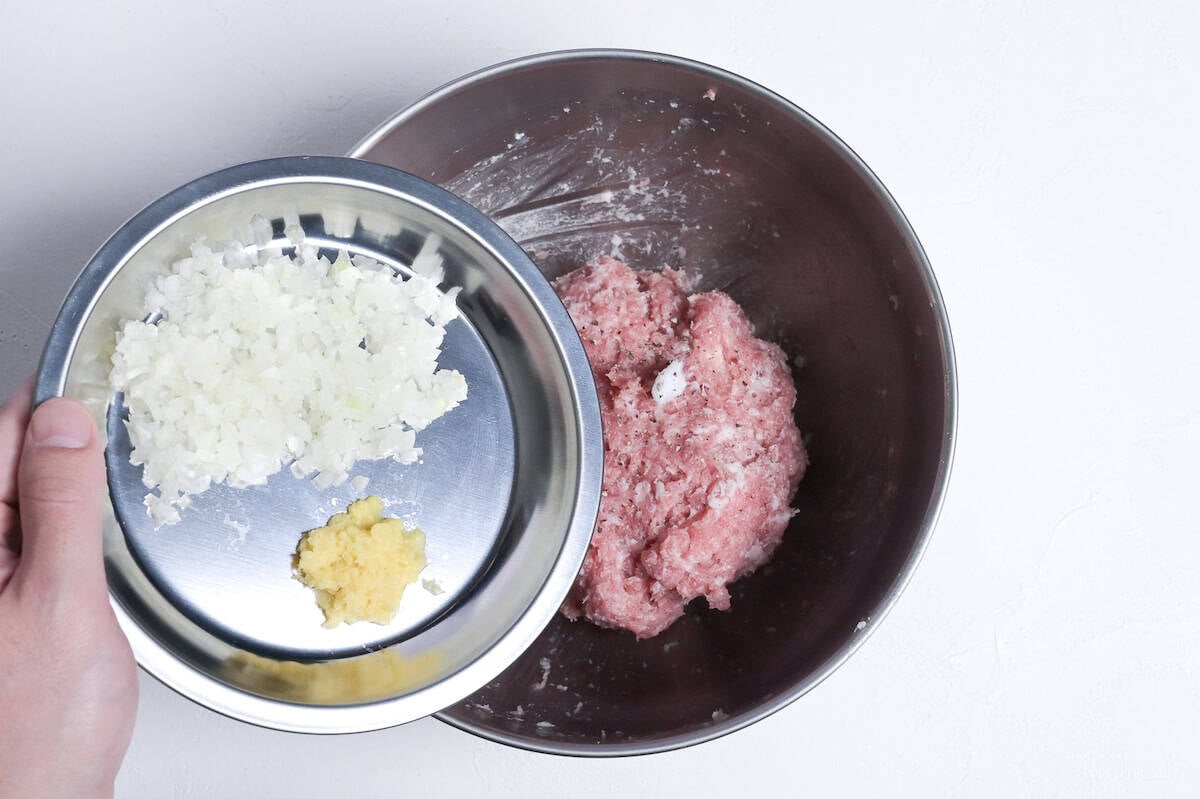
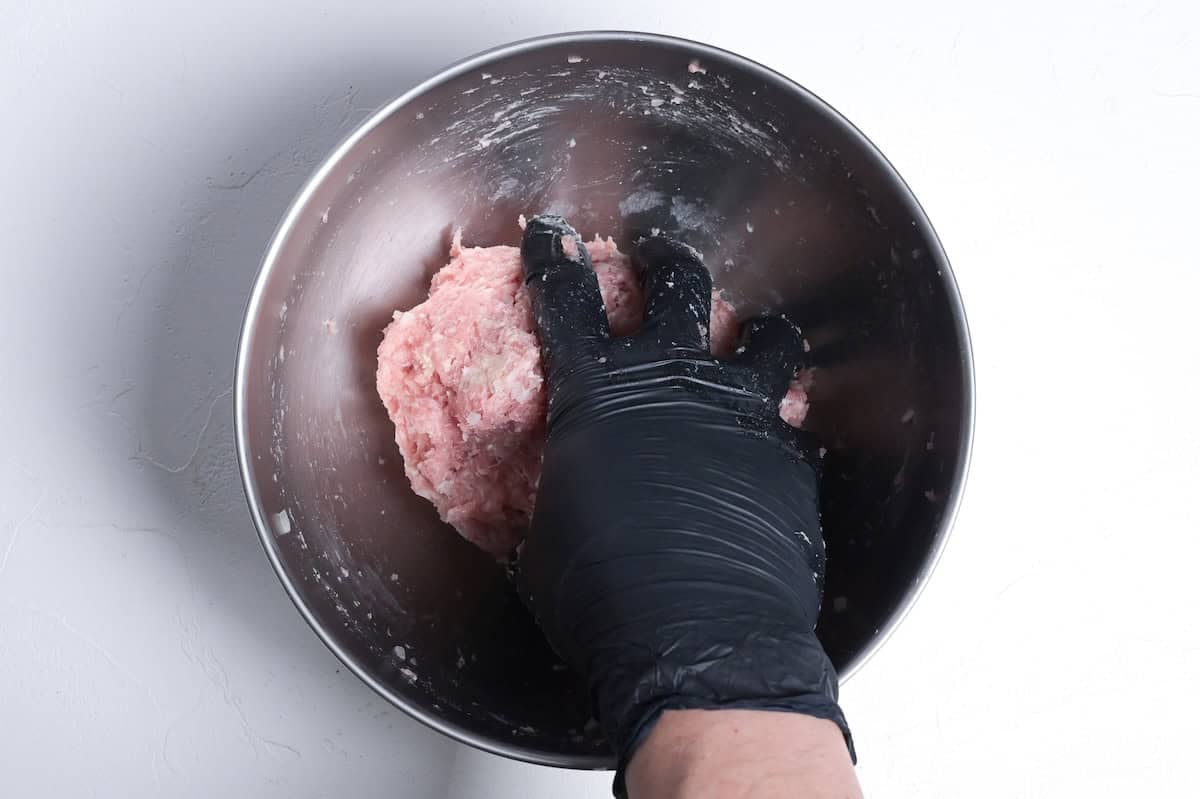
iv. Mix just until everything’s evenly distributed, using a folding motion instead of aggressive stirring. You’ve already built that crucial protein network in the salt step, so overworking it now will crush the delicate structure and leave you with dense, rubbery balls.
v. Cover your bowl with plastic wrap or a lid and slide it into the fridge for a solid 30 minutes.
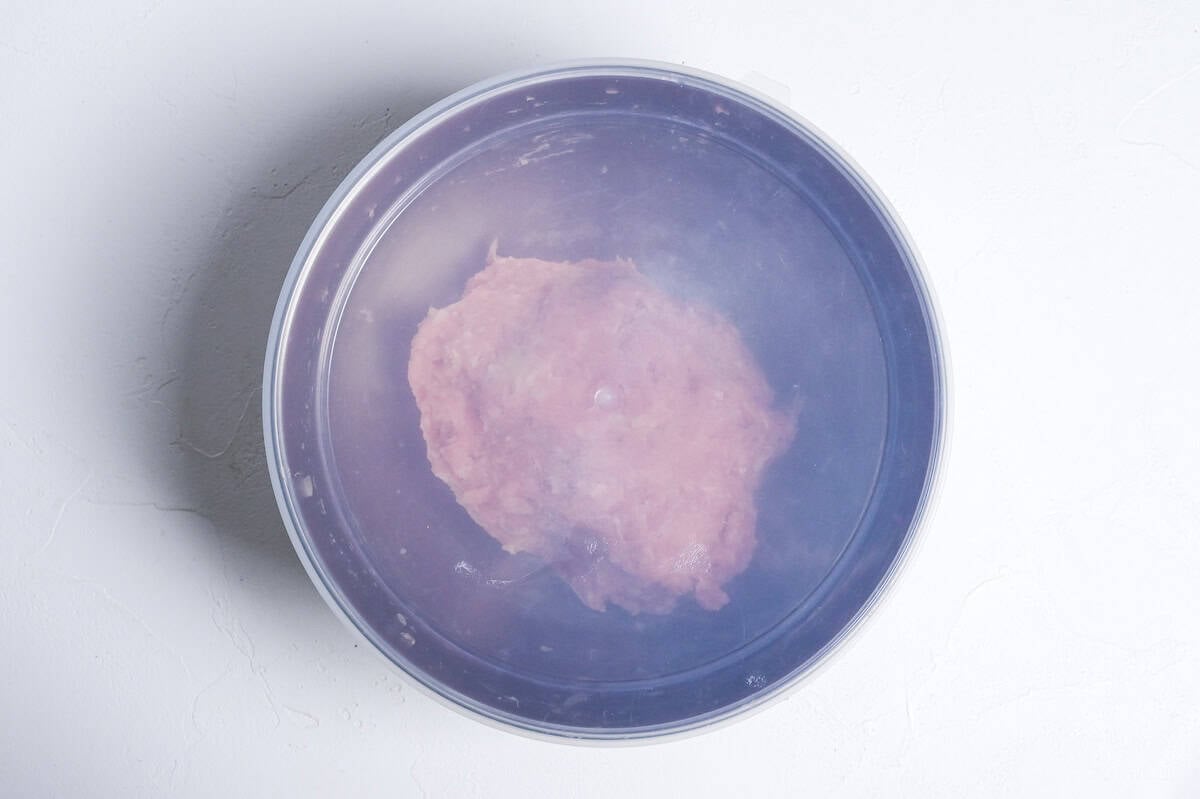
It’s not required but highly recommended. As the mixture cools, the fat firms back up, the proteins relax, and everything binds into a cohesive mass that’s far easier to shape. Skipping this step can mean floppy, sticky meat that clings to your hands and refuses to hold a round shape in the pan.
i. Rub or spray a thin film of neutral oil across your palms. This invisible barrier keeps the tacky meat from gluing itself to your skin.
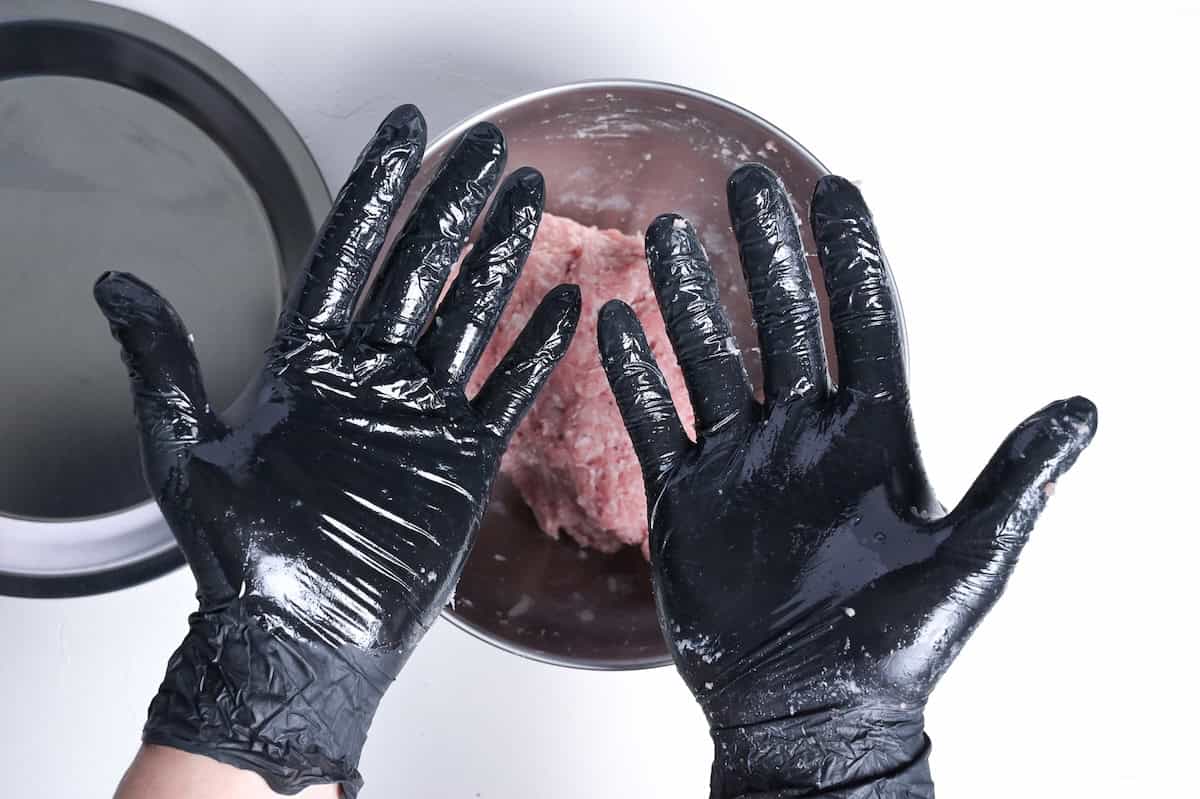
ii. Scoop out portions about the size of a ping-pong ball (roughly 3-4cm diameter) and roll them between your palms with gentle, even pressure.
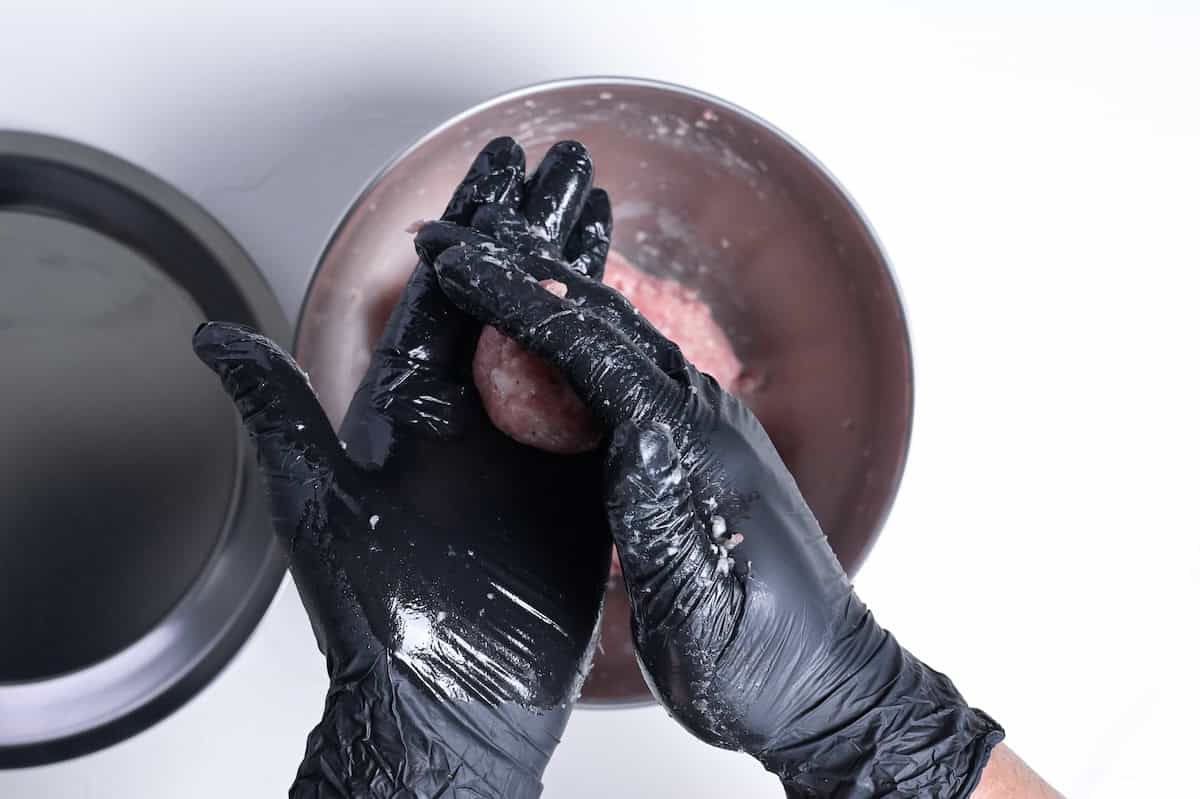
iii. You want smooth, crack-free spheres. Any crevices become weak points that’ll split open when the interior heats up and expands.
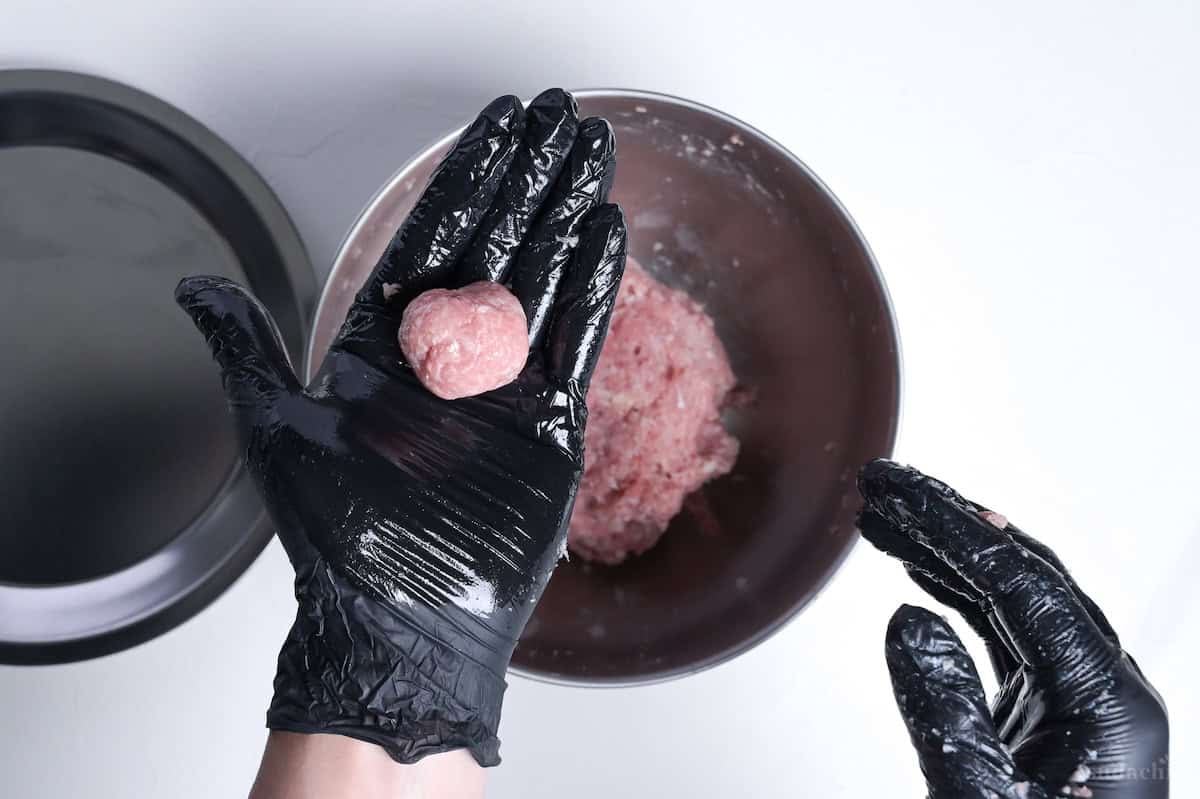
iv. Aim for about 12-15 balls total.
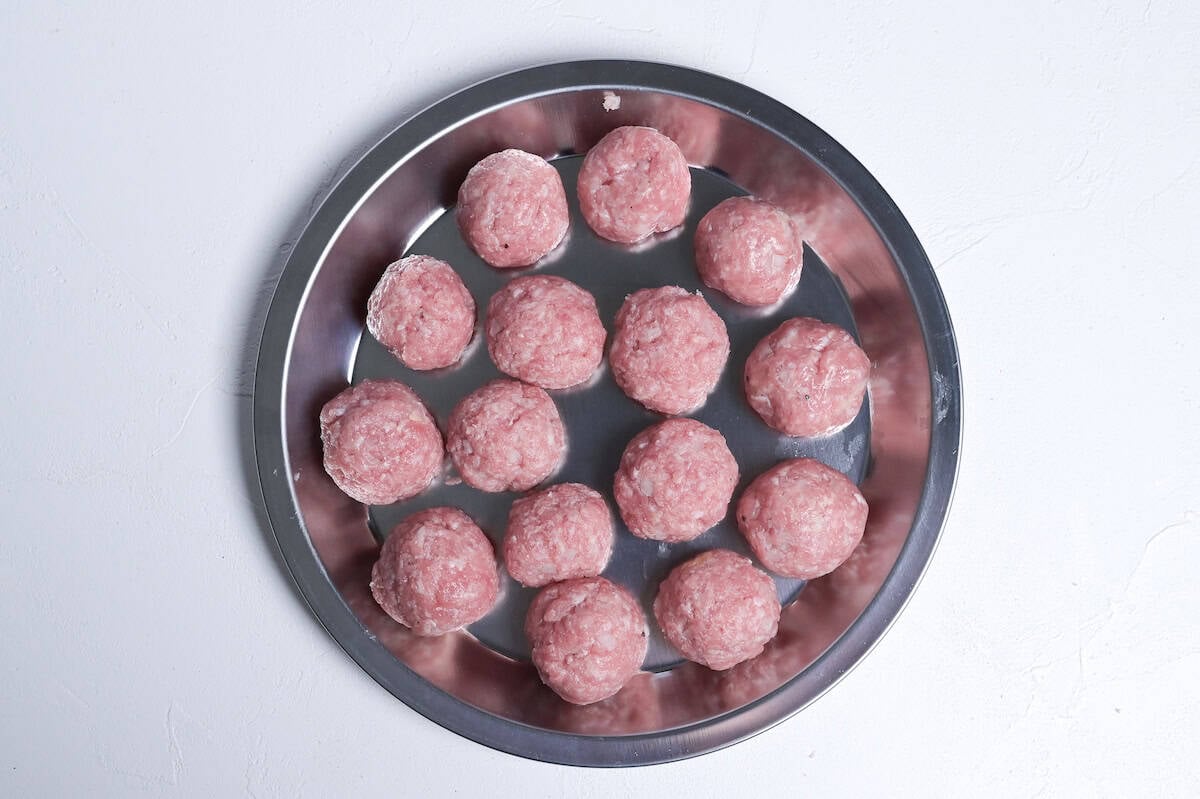
v. Spread potato starch on a plate and roll each meatball through it, coating the surface in a thin, matte layer.
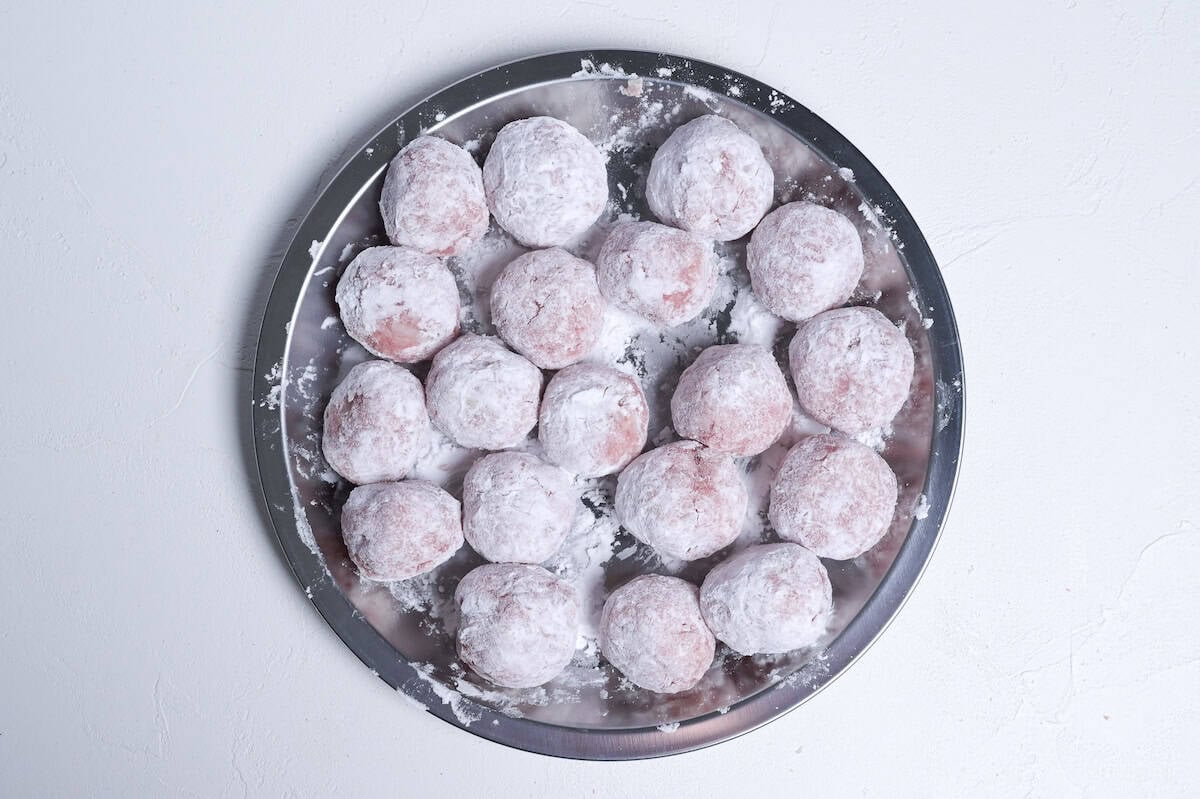
This layer facilitates starch gelatinization, which creates a protective barrier that seals in juices and provides a “grippy” surface for the glaze. Make sure there’s no thick clumps remain, as excess starch can turn gummy in the pan.
i. Drizzle cooking oil into your preheated skillet over medium heat.
ii. Nestle them in with a little breathing room.
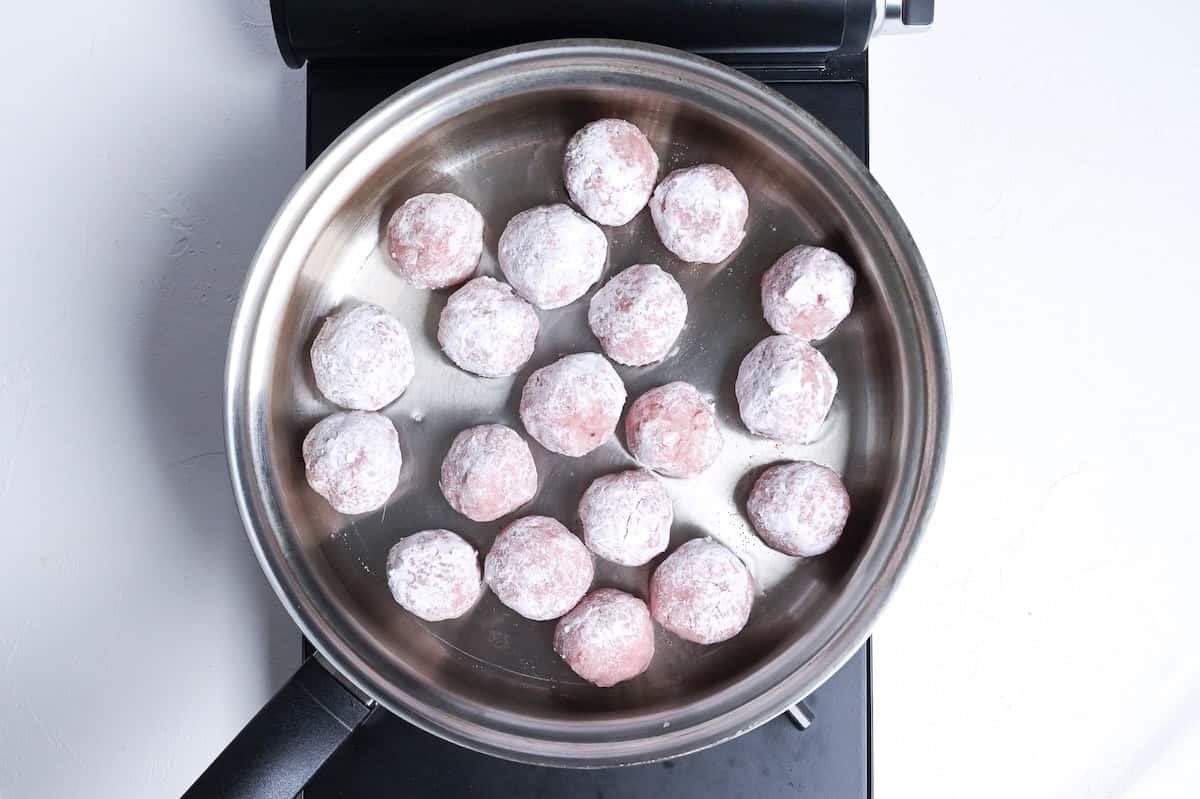
iii. Let them sit undisturbed for about 90 seconds per side. Rotate each ball every minute or so using tongs or chopsticks, working toward an all-over golden-brown tan that takes 6 to 8 minutes total.
The potato starch coating will puff and crisp, forming a thin shell you can actually hear crackle when you nudge it. Resist the urge to crank the heat, patience here rewards you with even cooking and no burnt spots.
If a meatball refuses to release when you try to turn it, stop. It’s not ready. The starch needs to fully crisp and contract before it’ll let go cleanly. Forcing it will rip off that beautiful crust you worked for and leave sad, bald patches.
i. Lift the meatballs out of the pan and set them aside on a plate. Grab a wad of paper towels and gently blot up any excess oil pooling in the pan, but leave every bit of the browned, stuck-on bits (the fond) exactly where they are.
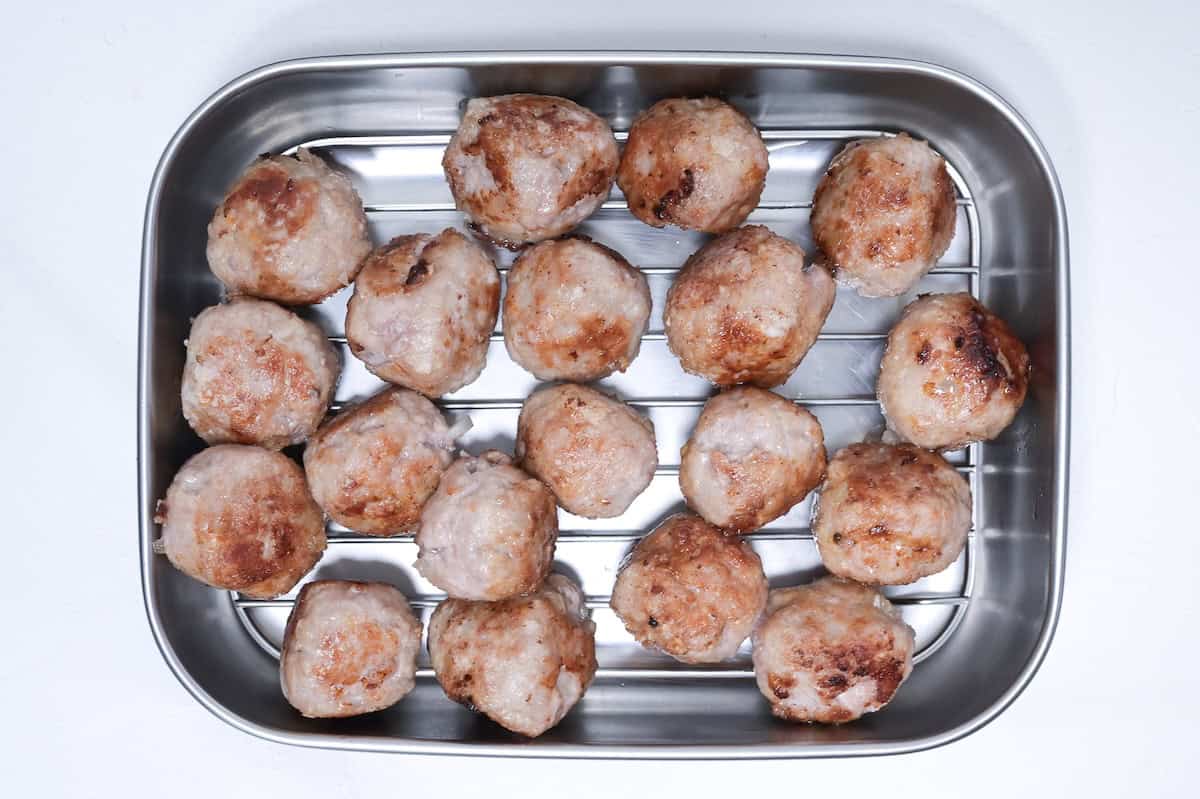
Those caramelized crumbs clinging to the pan surface are pure concentrated flavor, umami bombs of meat sugars and proteins that have undergone the Maillard reaction. Wiping them away would be like throwing away gold.
ii. Pour your pre-mixed teriyaki sauce directly into the hot pan and crank the heat to medium. The liquid will hit the surface with an aggressive hiss, instantly loosening all those browned treasures you protected.
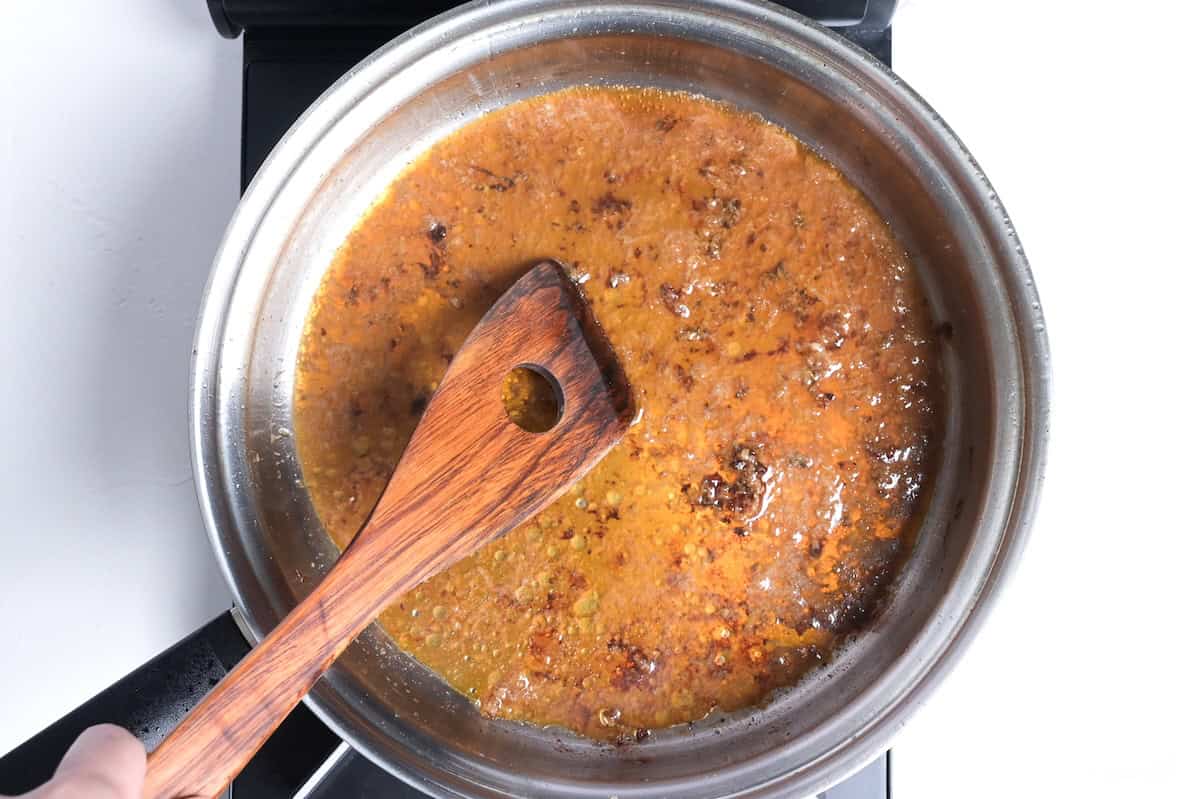
iii. Grab a wooden spoon or spatula and scrape the pan bottom, watching as the fond dissolves and turns the sauce from clear amber to a deeper, richer brown.
iv. Let it bubble enthusiastically for a full minute. You’ll see the bubbles shift from small and frantic to larger and slower as the sauce thickens.
You’re basically evaporating water, concentrating sugars, and coaxing out that signature glossy, clingy texture that defines Japanese teriyaki.
Here’s your visual checkpoint: drag your spoon across the pan bottom. If the sauce flows back instantly and covers the trail, keep cooking. When it hesitates for a second or two before slowly oozing back together, like molten caramel, you’ve hit the target viscosity.
i. Return your rested meatballs to the pan and reduce the heat to medium-low. Use a gentle tossing motion to roll each ball through the glaze until every millimeter of surface glistens.
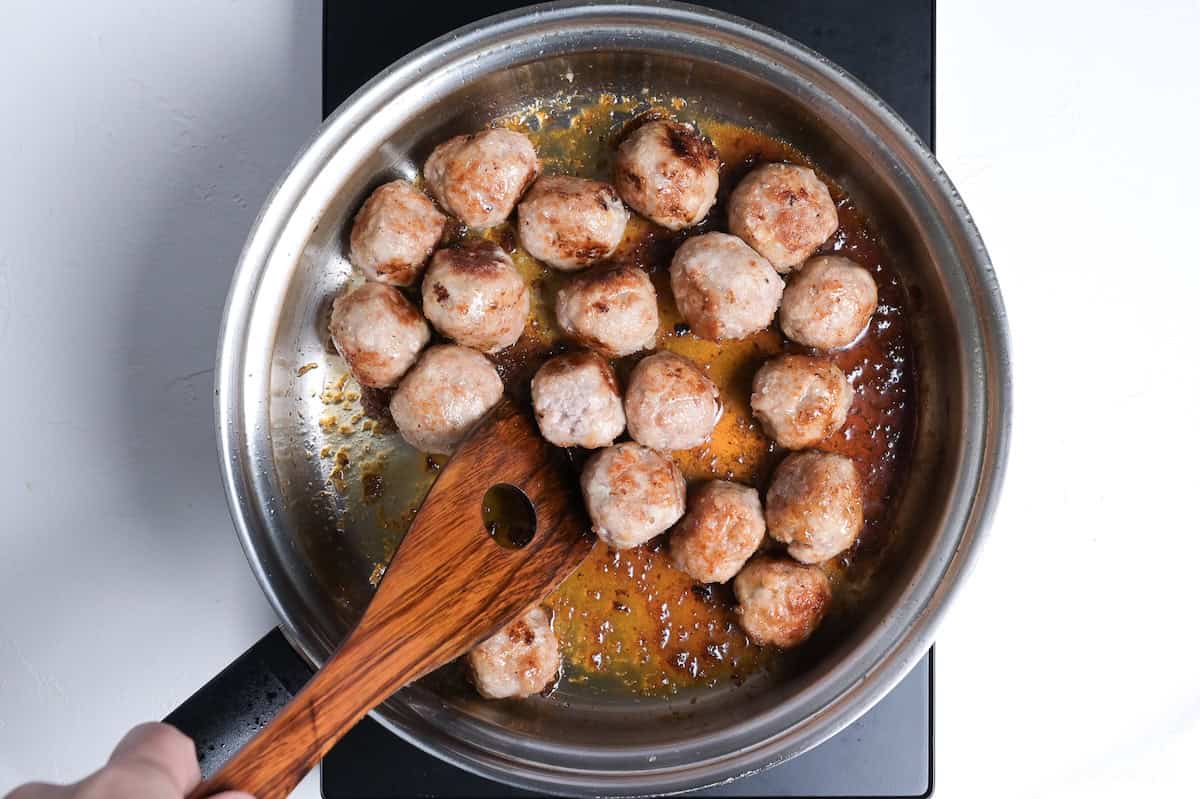
ii. After about 30 seconds of continuous, gentle movement, you’ll see the meatballs transform into glossy, lacquered orbs that catch the light like polished wood.
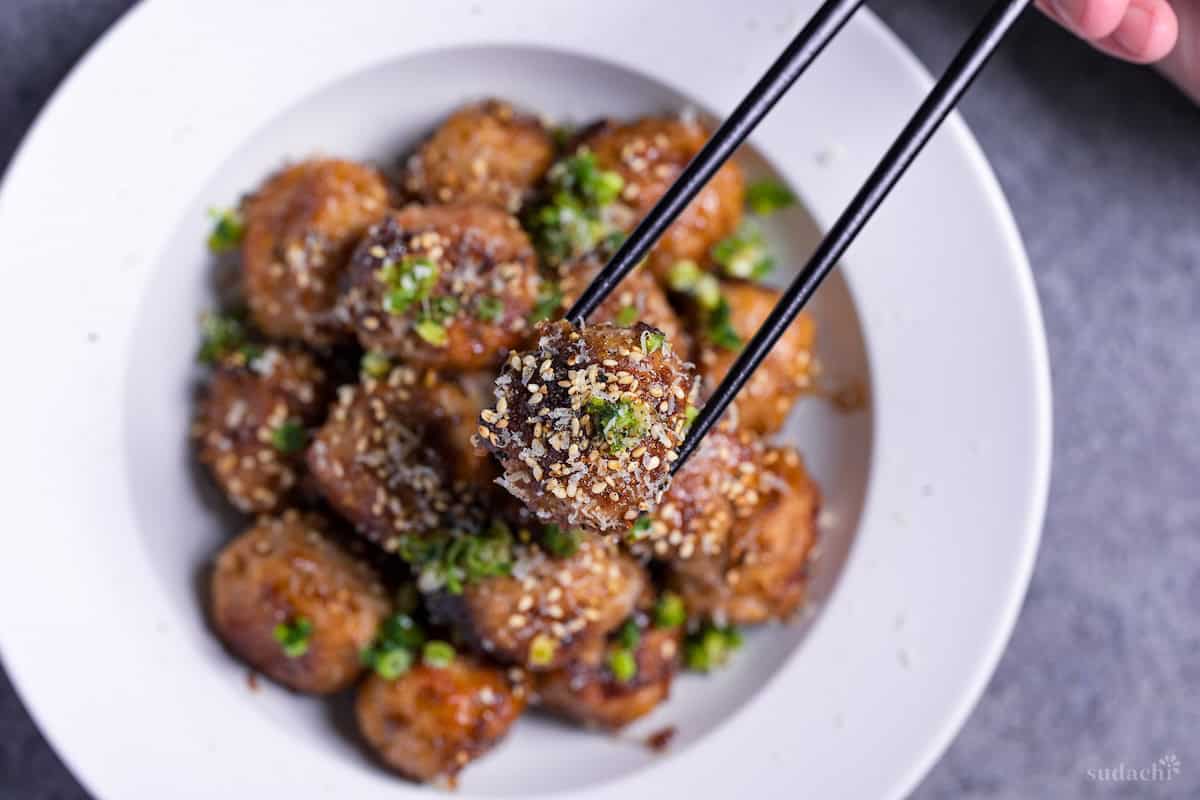
iii. Kill the heat and shower the meatballs with toasted white sesame seeds, chopped green onions, and if you’re feeling bold, a light dusting of grated hard cheese (like Parmesan, Pecorino, Grana Padano).
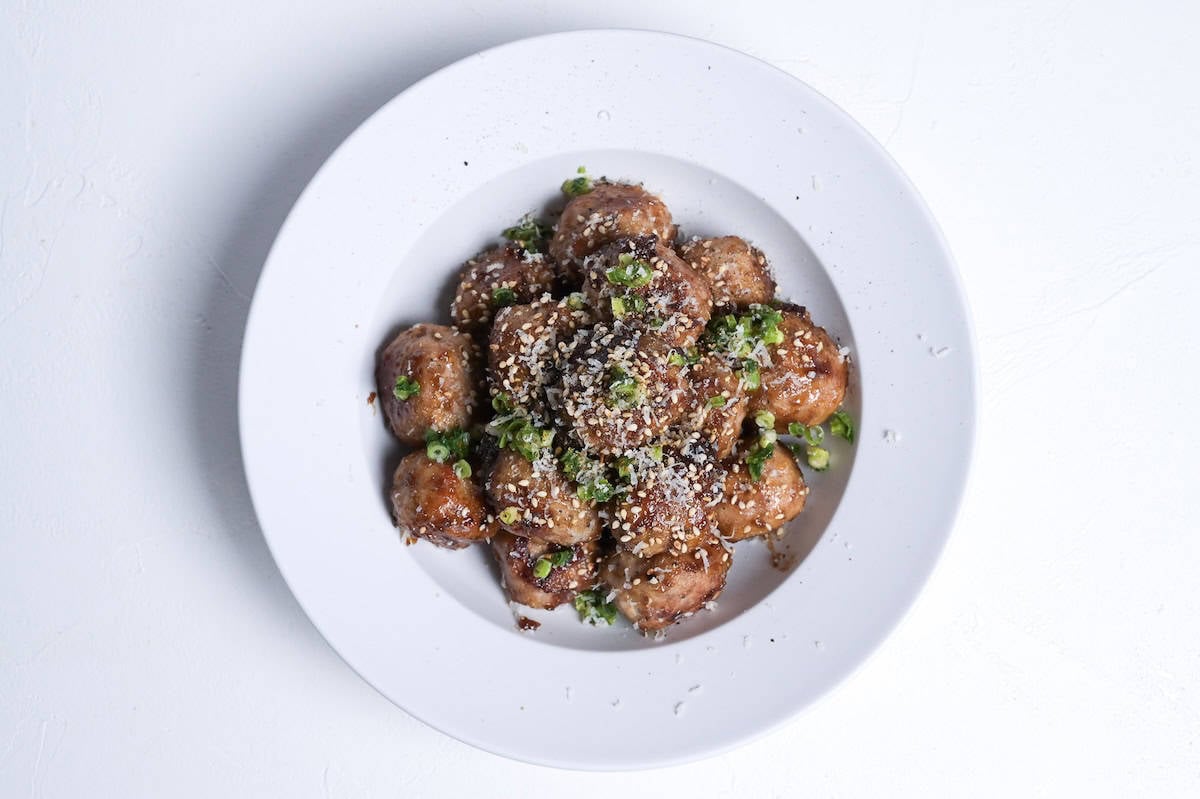
When I first developed this recipe, I had some Grana Padano sitting in my fridge and figured, why not? I grabbed my microplane and gave the finished meatballs a light snow dusting, and wow, wow, wow. The aged cheese didn’t just match the sweet-savory glaze, it elevated it. But honestly? The visual payoff sealed the deal.
It’s not traditional teriyaki per se, and I’m completely okay with that. Sometimes the best discoveries happen when you stop following rules and just trust your instincts. I highly recommend it!
Serving size: If you follow the default recipe, it will yield 2 main servings, or 4 side servings.

Essential Tips & Tricks
- Chill your bowl and mix meat with salt first to trigger myosin activation.
- Fold in your panade and onions gently to make sure overmixing prevention and protect the delicate meat fibers.
- Shape the mixture into uniform 3-4cm balls (ping-pong size), preventing smaller bites from drying out while larger ones remain undercooked.
- Wipe away excess rendered fat before adding liquid to allow for a clean deglaze of the flavorful fond.
- Simmer the sauce until large, slow bubbles appear to effectively reduce the mixture into a thick, glossy glaze.
With these simple tips in mind, you’re set for success every time you make teriyaki meatballs.
Storage & Meal Prep
Fridge: Cool completely, then store in an airtight container with the meatballs tucked under the glaze for 2-3 days. The glaze will thicken and may look slightly pale as fat solidifies and moisture redistributes, but it turns glossy again when reheated.
Freezer: Recommended, freeze fully cooked meatballs for up to 3-4 weeks in a freezer bag or airtight container with the air pressed out to prevent freezer burn.
Meal Prep: Mix the teriyaki sauce, and roll the meatballs, then store in the fridge (not freezer) up to 1 day ahead. Dust with starch right before cooking.
Reheating: Reheat gently in a covered skillet over medium-low heat with a splash of water to loosen the glaze and restore moisture.
What to Serve With This Recipe
- Steamed short-grain rice (the classic teriyaki pairing platform)
- Traditional miso soup
- Japanese cucumber salad
- Dashimaki tamago
Teriyaki Meatballs FAQ
Cracking is often trapped air + weak binding, so mix salt into the cold mince first until it turns tacky (myosin activation), then fold in the rest gently. When shaping, smooth the surface and lightly “toss” the ball between your palms a few times to press out air pockets. If one starts to split in the pan, stop turning it and let the surface set before nudging it back into shape.
Watery sauce often occurs if you forget to wipe away excess rendered fat before deglazing, as the oil creates a slippery barrier that prevents the glaze from adhering. You must reduce the sauce until you see large, slow-popping bubbles, which indicates the water has evaporated and the sugars have concentrated into a sticky coating.
Insert an instant-read thermometer into the center of the largest meatball-you’re looking for 75°C (165°F) or higher, which guarantees any ground meat pathogens are eliminated. If you don’t have a thermometer, pierce one with a toothpick or skewer and press gently. If the juices run clear (not pink or red), you’re safe. The texture should feel firm but springy when you press the surface. If it’s still squishy and soft like raw dough, give it another 2-3 minutes of covered, low-heat cooking to let the center catch up without drying out the exterior.
More Japanese Appetizers
Hungry for more? Explore my Japanese appetizer collection to find your next favorite dishes!
Did You Try This Recipe?
I would love to hear your thoughts!
💬 Leave a review and ⭐️ rating in the comments below. 📷 I also love to see your photos – submit them here!
Teriyaki Meatballs (Niku Dango)

Ingredients
Meatball Mixture
- 3 tbsp panko breadcrumbs or regular breadcrumbs
- 2 tbsp whole milk cold
- ⅛ onion
- ½ tbsp grated ginger root or ginger paste
- 300 g ground pork 20% fat content (increase lard if leaner), or ground chicken thigh
- ¼ tsp salt fine
- 1 pinch ground black pepper or white pepper
- 1 tsp lard omit if your pork mince is already fatty enough
- 2 tbsp potato starch (katakuriko) or cornstarch/tapioca starch
- 2 tbsp cooking oil neutral
Teriyaki Glaze
- 1½ tbsp Japanese soy sauce (koikuchi shoyu)
- 1½ tbsp sake or dry sherry/wine
- 1½ tbsp mirin or cola
- ½ tbsp sugar
- 1 tsp grated ginger root or ginger paste
- 1 tsp grated garlic or garlic paste
Toppings
- toasted white sesame seeds to taste
- finely chopped green onions to taste
- grated hard cheese to taste, Parmesan, Pecorino, Grana Padano
My recommended brands of ingredients and seasonings can be found in my Japanese pantry guide.
Can’t find certain Japanese ingredients? See my substitution guide here.
Instructions
- Pour 3 tbsp panko breadcrumbs and 2 tbsp whole milk into a small bowl, mix well and rest for a few minutes to rehydrate. Finely dice ⅛ onion and prepare ½ tbsp grated ginger root. Mix the teriyaki glaze ingredients (1½ tbsp Japanese soy sauce (koikuchi shoyu), 1½ tbsp sake, 1½ tbsp mirin, ½ tbsp sugar, 1 tsp grated ginger root, 1 tsp grated garlic) together in a bowl and set by the stove for later.

- Add 300 g ground pork and ¼ tsp salt to a bowl, knead together until slightly sticky, and then add the soaked panko and knead until evenly distributed.
- Add the onion and ginger, along with 1 pinch ground black pepper and 1 tsp lard. Knead again until evenly distributed. Cover the bowl and rest in the fridge for 30 minutes.
- Take the bowl from the fridge and apply a thin layer of oil to your hands to prevent sticking. Roll the mixture into ping pong ball sized balls (about 3-4cm or 1.5" diameter).
- Sprinkle 2 tbsp potato starch (katakuriko) over a plate, and roll each meatball in the starch until they have a thin, even coating.
- Preheat a large pan over medium and add 2 tbsp cooking oil. Once hot, arrange the meatballs in a single layer with a little space around each one. Fry undisturbed for about 90 seconds on each side, roll and repeat until golden-brown all over.
- Transfer the meatballs to a wire rack and use kitchen paper to blot away the excess oil out of the pan. Pour the teriyaki sauce into the pan and scrape to remove the fond, and incorporate it into the sauce.
- Continue to cook the sauce until glossy, then add the meatballs back into the pan and roll until evenly coated in the teriyaki sauce.
- Transfer to a serving plate, and garnish with toasted white sesame seeds, finely chopped green onions and grated hard cheese. Enjoy!

This looks delicious but I’m wondering if the lard can be omitted? It can be hard to find where I am.
Hi Victoria,
Thank you for your question. It’s totally fine to leave it out! I recommend choosing a slightly higher-fat ground pork, and you won’t miss the lard at all. 🙂
Yuto
I can’t wait to try these, my Hawaiian husband will love them. I’m making them tonight! Mahalo for the recipe.
Hi Lija,
Really hope you and your husband love them! Thank you for giving the recipe a go!
Yuto