

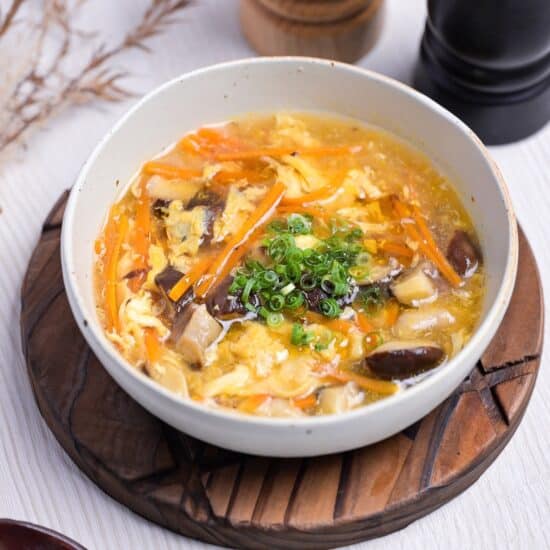


The first time I tried making this soup, I sliced the shiitake with a knife. Somehow the mushroom flavor and texture faded into the background, and I wanted it to take center stage.
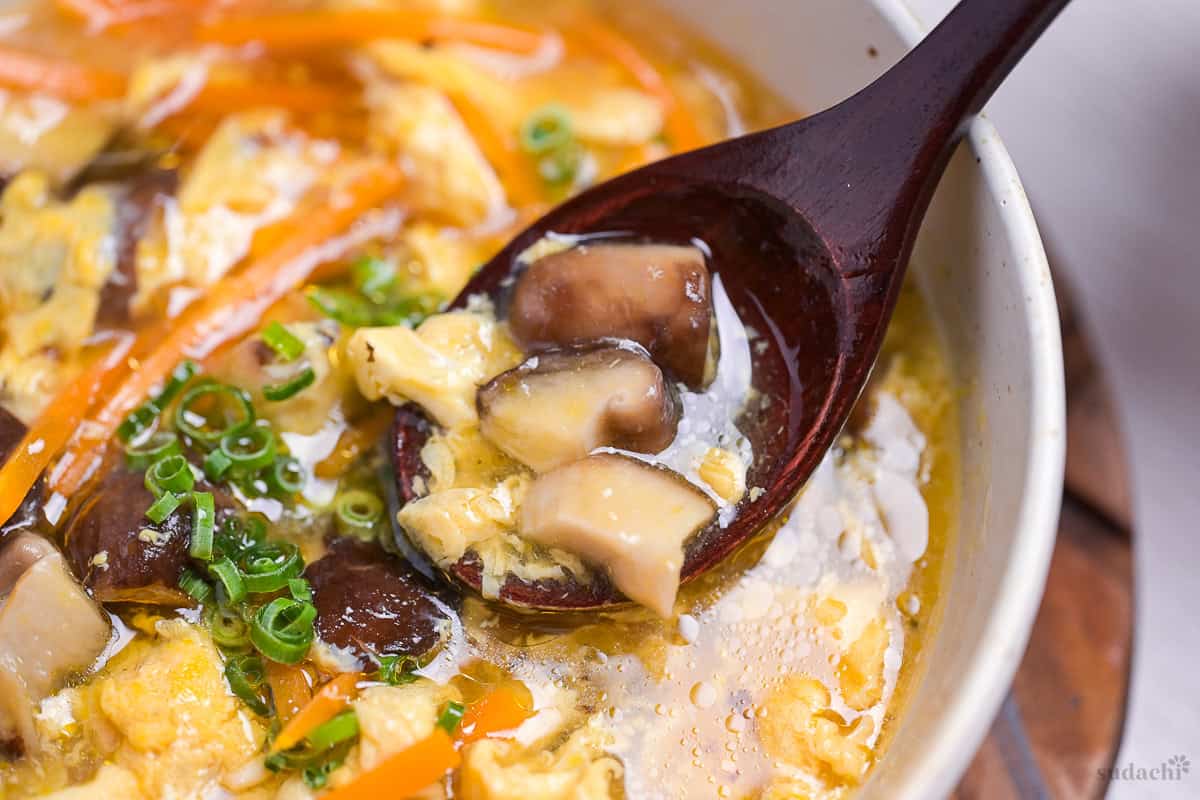
I put the knife down. I tear both caps and stems into large pieces, then sauté them in cooking oil before adding the dashi. Lift the bowl for a sip and you smell shiitake before anything else. Bite down and the mushrooms push back with a meaty chew. That’s the moment my egg soup became shiitake soup.
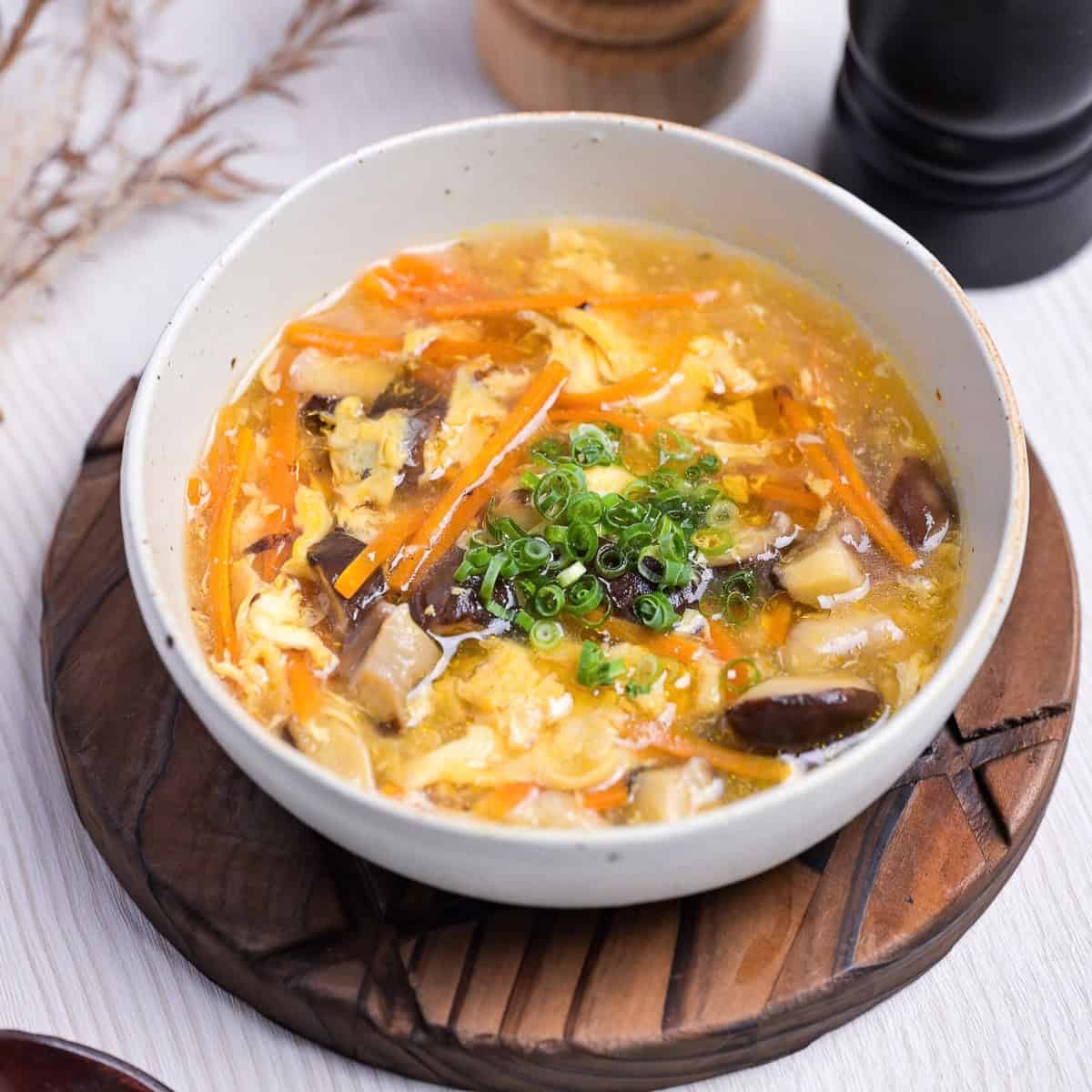
Shiitake mushroom soup
Recipe Snapshot
- What is it? Shiitake mushroom soup is a Japanese home-style soup built around shiitake. Most versions have a loosely Chinese flavor, with soft strands of beaten egg and a glossy broth thickened with potato starch.
- Flavor profile: The steam carries a strong sautéed shiitake aroma. Torn caps are meaty and ooze broth. Dashi and chicken layer Japanese and Chinese flavors. Sesame oil and green onion finish it.
- Why this recipe works: Hand-torn caps and stems stay chewy and stand out from the egg. Sautéing in oil brings out flavor and fragrance. Together, they turned knife-cut egg soup into shiitake soup.
- How to make it: Sauté shiitake and carrot in one small pot. Simmer with dashi and bouillon, add soy sauce, thicken, add egg in 2 batches, and finish with sesame oil and green onion.
- What to expect: Allow about 5 minutes for prep and another 15 for cooking, roughly 20 minutes altogether. Once you turn on the heat, you will need to stay by the pot.
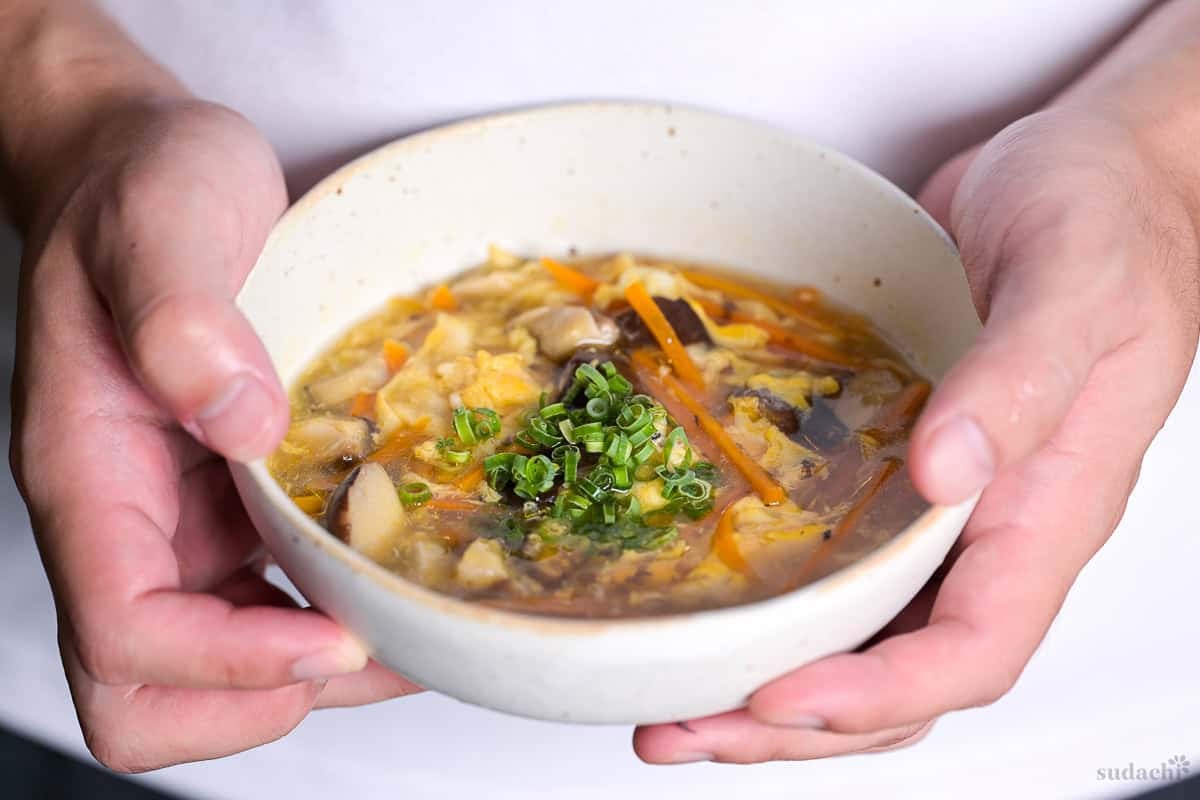
What Is Shiitake Mushroom Soup?
There isn’t one fixed Japanese dish called shiitake mushroom soup. The name covers a range of soups featuring these mushrooms. In Japanese home cooking, the most common approach is Chinese-style, with chicken bouillon powder seasoning a thickened broth and beaten egg poured in to finish.
The result resembles the egg drop soup you may already be familiar with. Here, the mushrooms are the main attraction, with the egg playing a smaller part.
In cooking, it’s easy to get attached to a technique and forget what it’s for. I want this soup to showcase shiitake. Using a knife or tearing by hand is simply a way to get there. Most Japanese shiitake soups call for thinly sliced caps, with only the stems torn, if anything is torn at all. I’m not calling those sliced versions wrong. They just didn’t give me the result I wanted in my kitchen, so I tear both parts into large pieces. Chinese-style shiitake soups generally rely on chicken bouillon powder for seasoning. Mine starts with dashi, with the bouillon added over that base. Blending Japanese and Chinese flavors like this is my own trick, and I do it often. Neither has to dominate, and the bowl gets the umami of both.
Shiitake Soup Ingredients
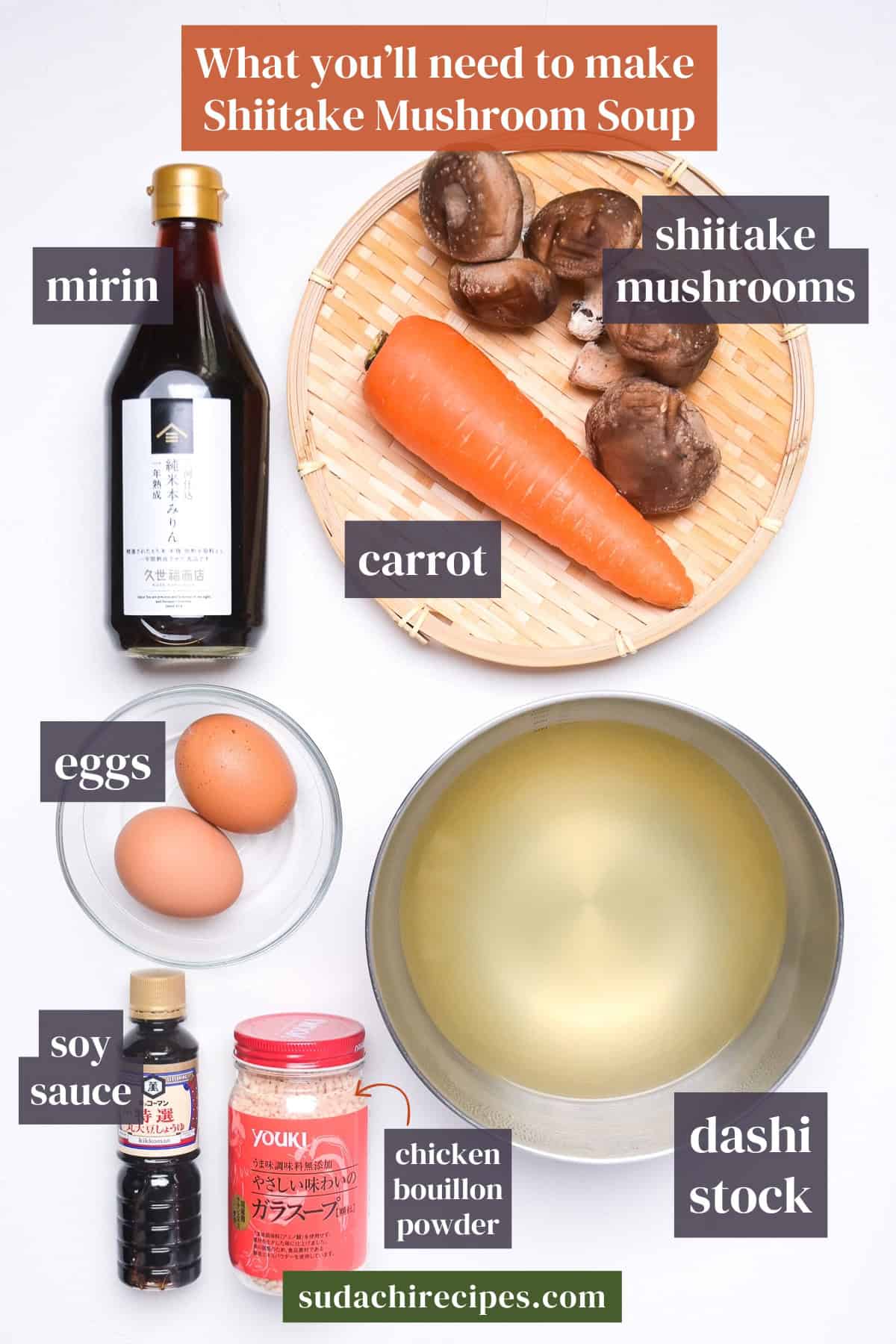
- Fresh shiitake: The star of the bowl, with both caps and stems torn into large pieces by hand. You will be eating the stems, so choose them as carefully as the caps. Look for short, plump stems, thick caps that are still fairly closed, and white gills underneath. More open caps have a stronger aroma. Choose according to whether fragrance or a thick, meaty texture matters more to you.
- Dashi: Nothing beats unsalted awase dashi, made with kombu and bonito flakes. It forms the base of the broth, with just a light layer of chicken bouillon powder over it.
- Chinese-style chicken bouillon powder: This salted soup base supplies the Chinese flavor in the Japanese-Chinese combination. Choose powder or granules rather than solid cubes. I normally use Youki Garasupu. When I lived in England, my choice was Lee Kum Kee chicken bouillon powder. Totole has an enthusiastic following among many Japanese people living abroad who responded to our survey and some of this blog’s readers.
Substitutions, Variations, and How to Customize
However good a recipe might be, I consider it a failure if you can’t cook it at home, so these alternatives cover hard-to-find ingredients as well as a few ways to change things up.
Substitutions:
- Fresh shiitake → maitake (hen of the woods): This is my first choice. Maitake tears easily by hand and holds its texture when cooked. You will have maitake soup, though, without the fragrance of shiitake.
- Fresh shiitake → king oyster mushrooms: These would be my second pick. Tear them lengthwise for a springy, crunchy texture. They have very little aroma, so you lose the shiitake character.
- Fresh shiitake → shimeji (beech mushrooms) or enoki: These come next on my list. Both have a soft texture rather than shiitake’s meaty chew.
- Chinese-style chicken bouillon powder → Wei-Pa or another Chinese-style paste: A spoonable Chinese-style seasoning paste that dissolves in the broth gives the closest result. Products differ in saltiness, so use a little at first and adjust when you taste after adding the soy sauce.
- Chinese-style chicken bouillon powder → Korean beef or clam soup powder: At Korean grocers, some Japanese people living abroad buy these powders and find them closer to Japanese flavors than Western chicken bouillon. Begin with a small amount and taste, since salt levels differ between products.
- Chinese-style chicken bouillon powder → Western chicken or vegetable bouillon: Powder and granules are workable backups. Their herbs and spices give the soup a slightly more Western flavor.
- Potato starch (katakuriko) → cornstarch: Use the same quantity, 2 tsp. Expect a slightly thinner, whiter broth. Some Japanese cooks abroad warn that cornstarch needs to come to a boil before it thickens fully.
- Potato starch (katakuriko) → tapioca starch: You can also use 2 tsp of tapioca starch. It keeps the broth clear, with a slightly springy consistency that tends to set more firmly as it cools.
- Standard Japanese soy sauce → Chinese light soy sauce: In principle, you can use an equal amount. The flavor difference is noticeable in a clear broth, so start with a little less and taste before adding more.
Substitutions that I don’t recommend:
- Dried shiitake instead of fresh shiitake: Treat them as separate ingredients. Rehydrated mushrooms and their soaking liquid produce a different soup, with more pronounced aroma and umami.
- Solid bouillon cubes instead of Chinese-style chicken bouillon powder: The much higher concentration of cubes makes the soup too salty if you use them as you would the powder.
- All-purpose flour instead of potato starch: Flour works very differently and cannot produce the same clear, thickened broth.
- Potato flour instead of potato starch: Made from whole dried potatoes, potato flour is a separate product. It makes this broth cloudy, heavy, and pasty.
- Chinese dark soy sauce instead of standard Japanese soy sauce: Its thickness and sweetness are too much for this soup.
Variations:
- Vegetarian: Use the fresh shiitake as written, but make the dashi with kombu and dried shiitake and choose vegetable bouillon powder instead of chicken. This version still contains egg, so it isn’t vegan.
How to Customize:
- Ginger: Add grated ginger to the pot when the shiitake goes in, or spoon it over the finished bowl.
- White pepper: Finish with a shake for a stronger Chinese-style flavor.
- Wakame seaweed: Rehydrate some wakame and add it if you’d like.
Missing something else from your Japanese pantry? My guide to Japanese ingredient substitutes has more swaps.
How to Make My Shiitake Egg Drop Soup
Before you start (Mise en place):
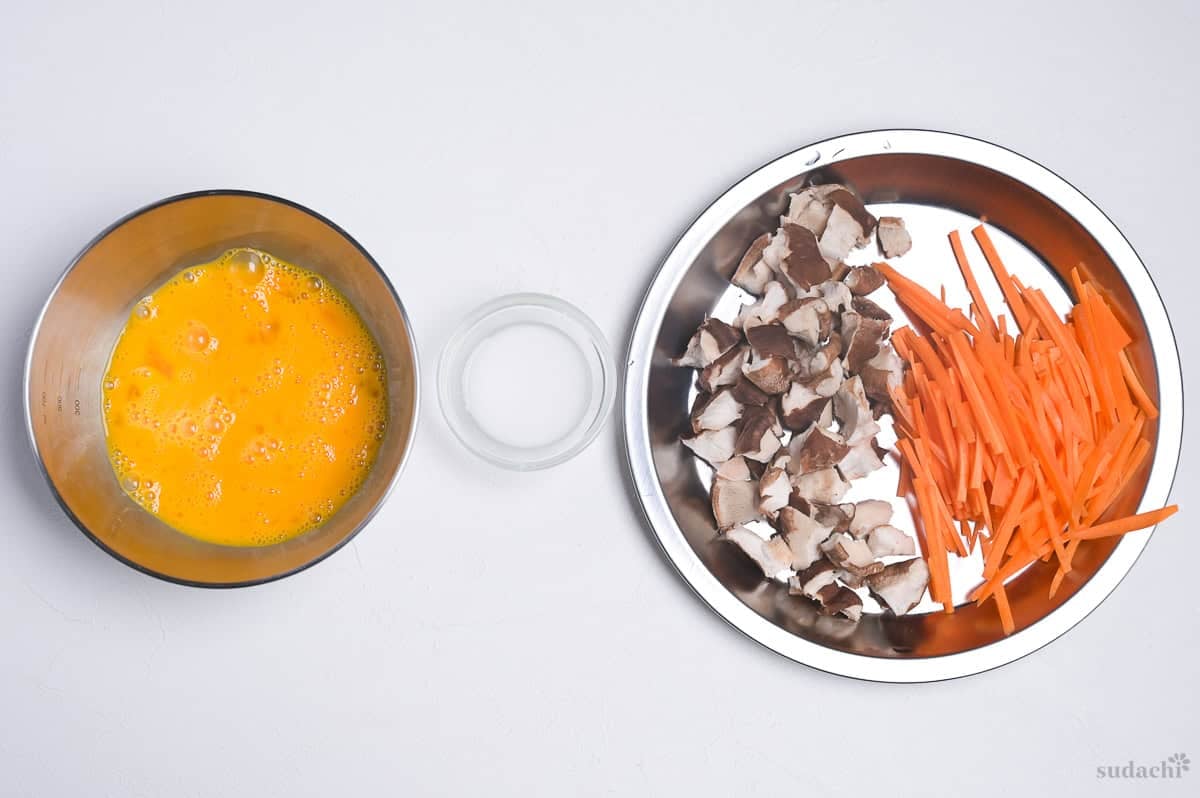
- Take the eggs out of the fridge early, because cold egg cools the broth wherever it lands. Crack and beat them until the yolks and whites are evenly combined.
- Trim away just the shiitake’s ishizuki, the hard end at the base of the stem. Tear each cap into about 4 pieces by hand. Keep the stems and tear them lengthwise as well.
- Slice the carrot into matchsticks 4 to 5 cm long.
- Mix the potato starch and water into a slurry.
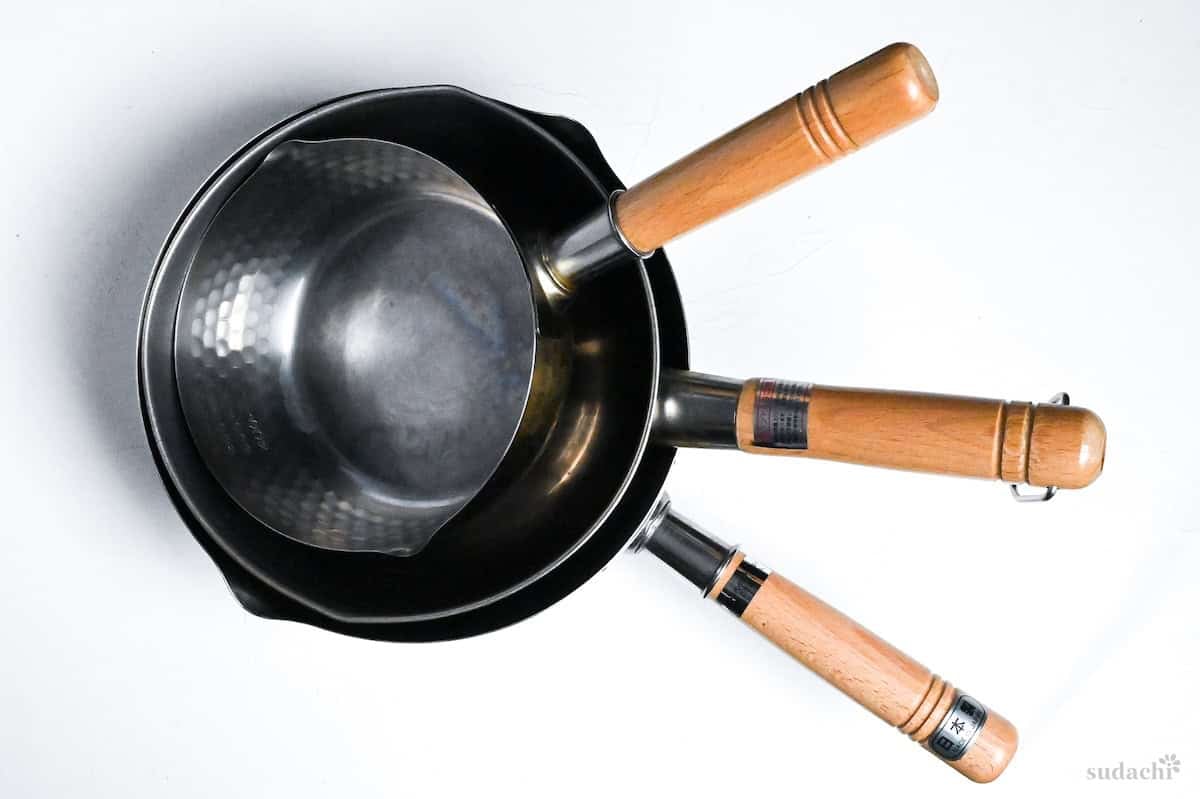
To develop this recipe, I used a 16 cm yukihira pot.
i. Set a small pot over medium heat and heat the oil. Add the shiitake and carrot and sauté for about 1 minute.
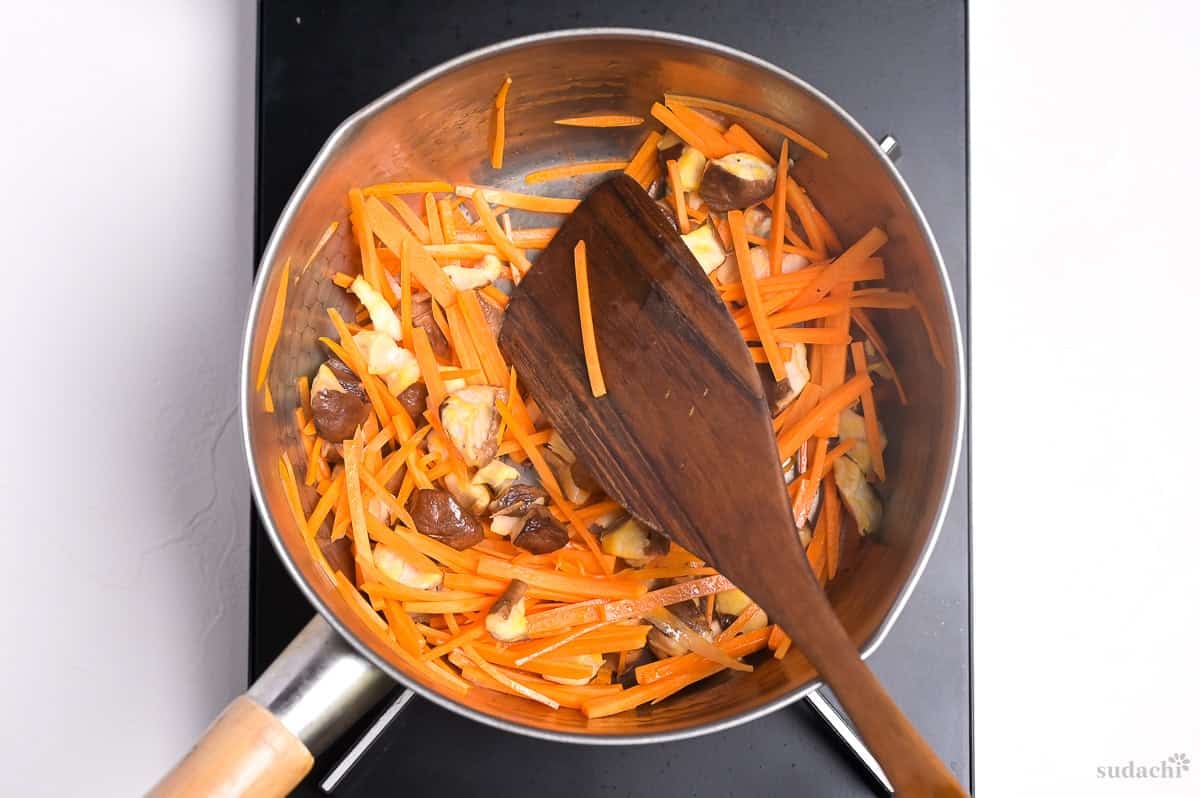
The mushrooms should soften and show a little pale browning around the edges before you continue.
ii. Pour in the dashi, add the chicken bouillon powder and salt, and bring everything to a boil.
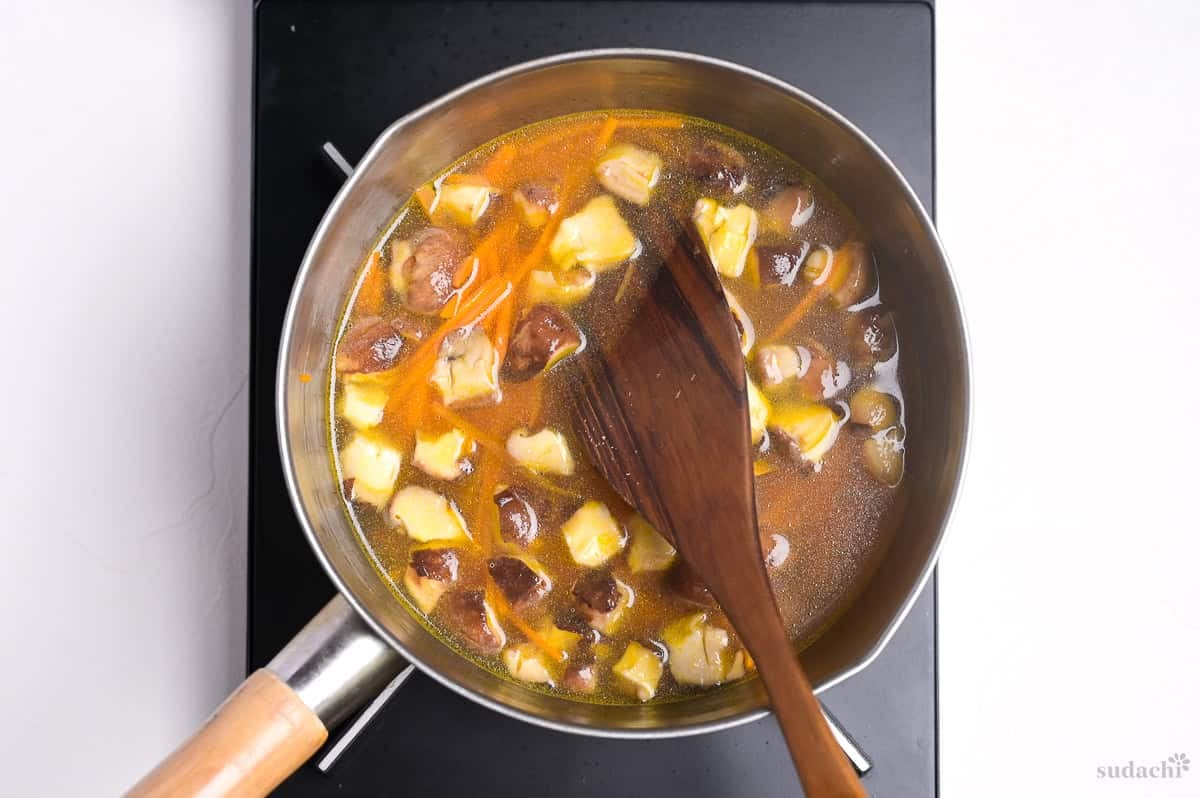
iii. Keep the soup gently bubbling for 1 1/2 to 2 minutes, without letting it reach a rolling boil. Don’t cut the time short. A vigorous boil quickly reduces the liquid in a small pot, changing both the saltiness and the consistency.

At the bottom of a shiitake stem is a dark, hard tip called the ishizuki. This part is too tough to eat, so trim it off and keep the rest. The remaining stem is edible, just like the cap. Tear it along its lengthwise fibers for a clean split and a firm bite.
i. Stir in the soy sauce, taste the broth, and adjust the salt now.
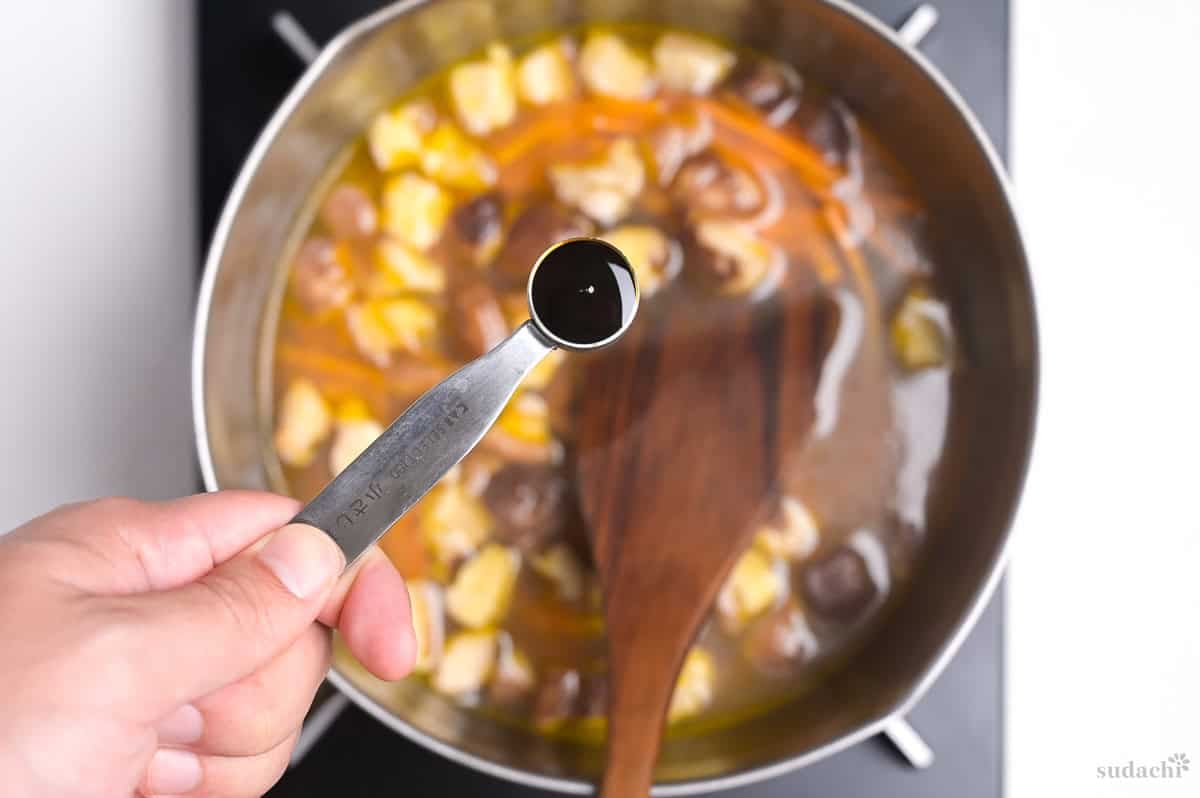
I save the soy sauce until last because continued boiling dulls its aroma. Salt doesn’t evaporate during boiling, so adding the soy sauce later doesn’t alter the soup’s final saltiness.
ii. Turn the heat down and stir the slurry again. Pour it around the pot in a circle, then use a ladle to stir throughout the broth with broad, slow strokes.
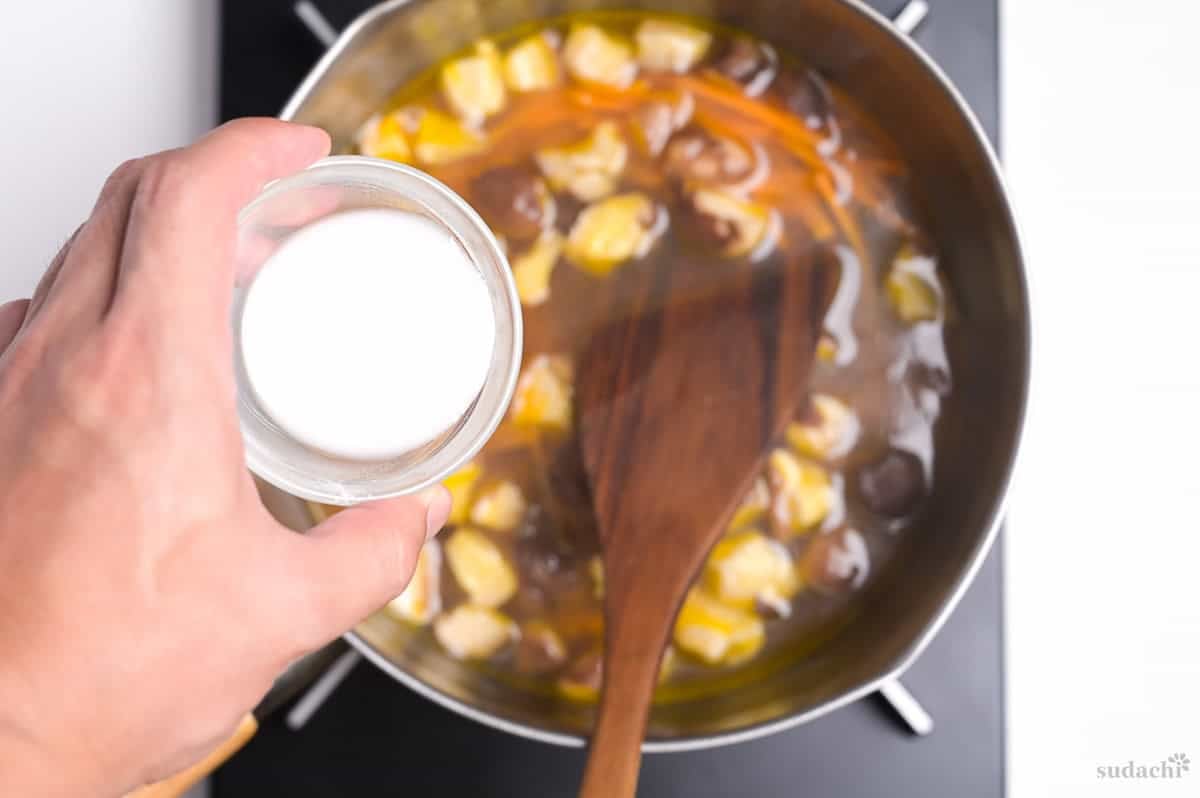
The starch settles to the bottom of the bowl, so remix it immediately before pouring. Adding it all to one spot in rapidly boiling broth creates lumps.
iii. Bring the heat back to medium. When the broth looks clear and glossy, let it bubble gently for a further 30 seconds to 1 minute.
i. Wait for gentle bubbles, then pour in half the beaten egg in a thin stream as you move around the pot.
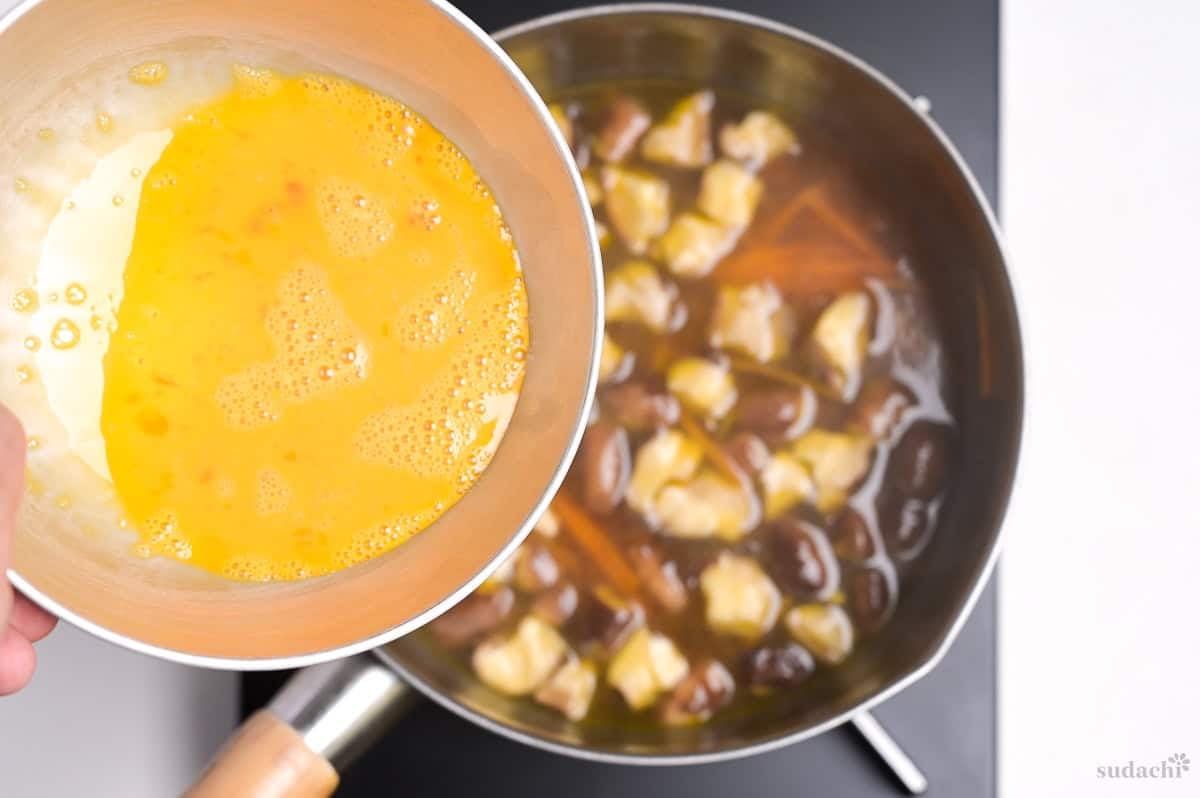
ii. Don’t stir yet. Let a sheet of egg form on top, then turn it over once or twice with broad strokes. Disturbing it before the sheet forms clouds the broth.
iii. Let the soup return to a gentle bubble before pouring in the remaining egg the same way. As soon as this second sheet forms and you’ve turned it over, turn off the heat.
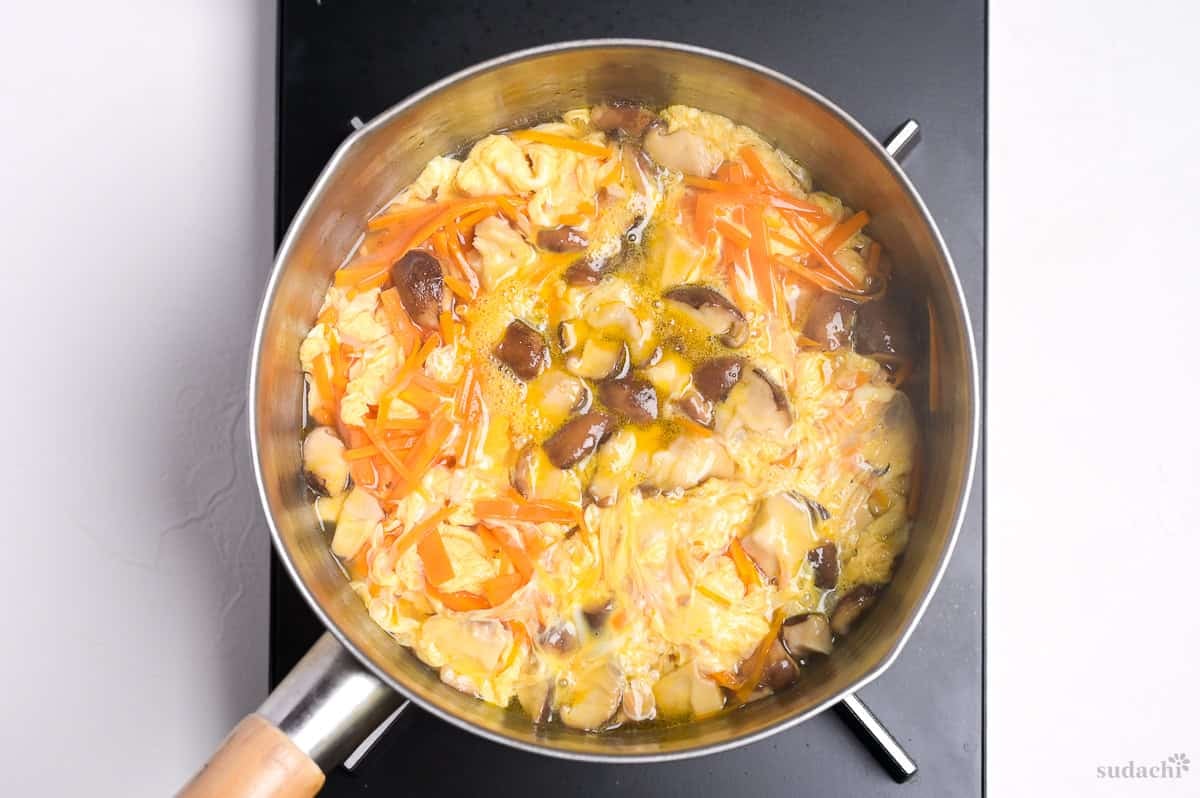
Keep cooking past that point and the egg turns firm. For clean ribbons, this is no place to skip a step.
Adding all the cold egg at once chills the area it hits. Before it can set, it disperses and makes the broth cloudy. Instead, add half and let the broth heat back up before adding the rest. That keeps the landing area from getting too cold, allowing whole sheets of egg to float in the soup.
i. Leave the heat off. Drizzle in the toasted sesame oil, stir once, and ladle into bowls.
ii. Top with the chopped green onions and serve while hot.
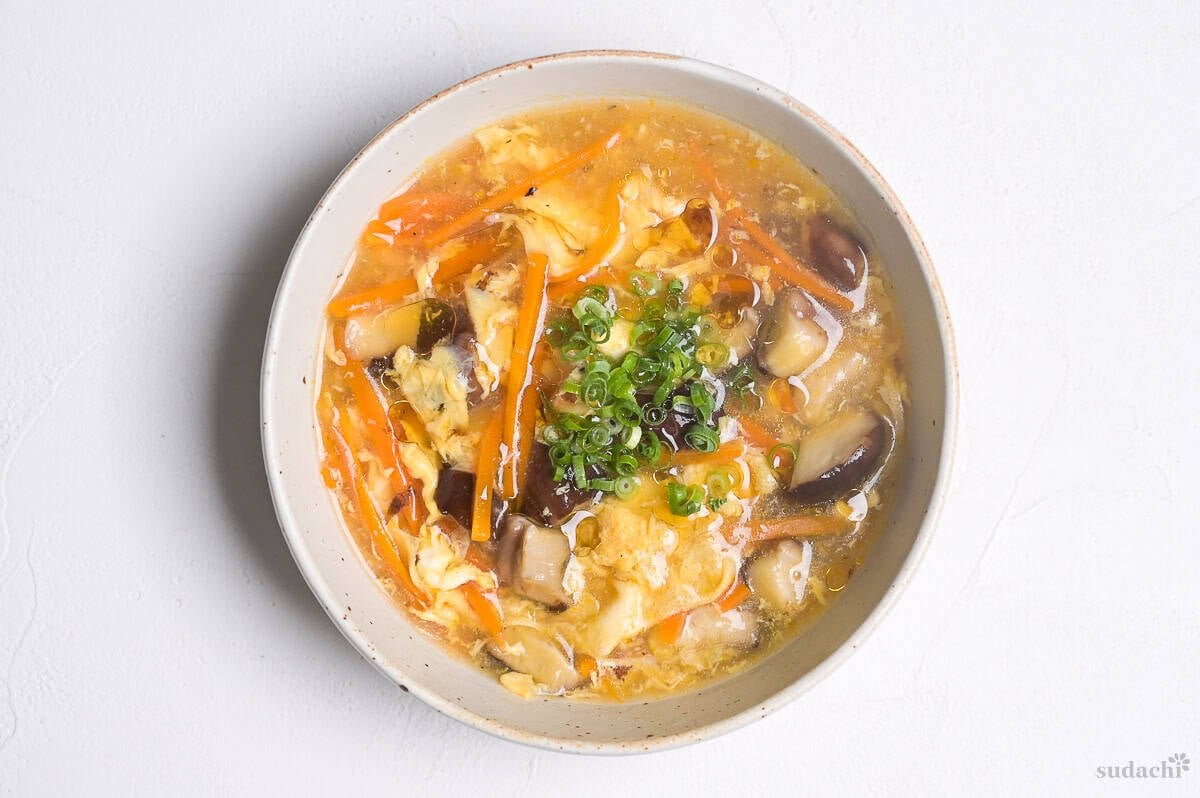
Adding the green onions to the bowls rather than the pot preserves their fresh, raw aroma. Serve promptly, since the potato starch loses thickness as the soup cools.

Tips for the Best Shiitake Mushroom Soup
- Keep the starch for soft egg and clear broth. Thickening helps the beaten egg spread out and set gently without clouding the surrounding broth. You aren’t making a heavy soup here. The aim is to support the egg. Don’t omit the starch or reduce the amount.
- Check the carrot before thickening the soup. If you wait until after adding the egg to finish cooking the carrot, the extra simmering toughens the egg. Before adding soy sauce, lift out a matchstick and check its center. If it’s still firm, continue at the same gentle bubble until it’s tender.
- Pick a dark, toasted sesame oil. You want the amber-to-brown oil pressed from roasted seeds, with a toasted aroma.
Give the egg a thickened broth to settle into and cook the carrot through first, and the torn shiitake and egg ribbons will sit side by side in the bowl without falling apart.
Storage & Meal Prep
Fridge: Cool in a shallow container, then refrigerate, covered, for 1 to 2 days.
Freezer: I don’t recommend it. Freezing and thawing can make a starch-thickened broth separate and turn watery.
Meal prep: Make the dashi ahead and refrigerate it. On serving day, tear the shiitake first.
Reheating: Stir over medium-low heat. Don’t boil hard, which toughens the egg. If thin, add a little slurry off the heat, then return to a gentle bubble.
What to Serve With Shiitake Soup
- Takikomi Gohan (Seasoned Rice with Chicken)
- Salt-Grilled Mackerel (Saba no Shioyaki)
- Crispy Pork Gyoza
- Sunomono Cucumber Salad
Shiitake Mushroom Soup Troubleshooting
This happens when you stir before the egg forms a sheet, add it before the broth is bubbling, or pour cold egg into one spot all at once. If half the egg remains, bring the soup back to a gentle bubble and pour that half in a fine stream, leaving it undisturbed until a sheet forms. If you’ve already added all the egg, serve the cloudy soup hot and use 2 pours next time.
Pouring the egg into one place or continuing to cook after the sheet forms can leave a firm lump. If you still have the second half to add, pour a thin stream around the pot, then turn off the heat as soon as the sheet has formed and you’ve turned it over. Don’t keep cooking the set egg. Ladle the soup into bowls and serve hot.
When soup loses its thickness just after tasting, the likely cause is a spoon that was in your mouth going back into the pot. Saliva contains an enzyme that breaks down starch, and simmering longer won’t fix it. Switch off the heat, mix in a little freshly stirred slurry, and bring the soup back to a gentle bubble. Use a separate spoon to taste.
More Japanese Mushroom Recipes
Shiitake took the lead in this bowl, so choose another mushroom to take center stage next from my Japanese mushroom recipes.
Did You Try This Recipe?
I would love to hear your thoughts!
💬 Leave a review and ⭐️ rating in the comments below. 📷 I also love to see your photos – submit them here!
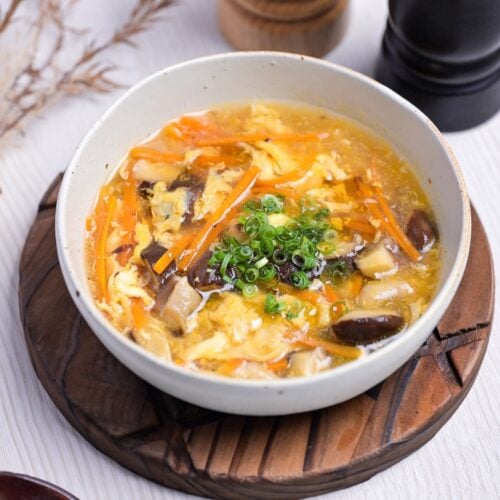
Shiitake Mushroom Soup

Ingredients
Main Ingredients
- 2 eggs
- 5 fresh shiitake mushrooms
- ½ carrot medium, about 30 g
For the Slurry
- 2 tsp potato starch (katakuriko) or cornstarch
- 2 tsp water
For the Soup
- 1 tsp cooking oil
- 500 ml dashi stock
- 1 tsp Chinese-style chicken bouillon powder
- ½ tsp salt
- 1 tsp Japanese soy sauce (koikuchi shoyu)
The ingredient brands and tools I trust are in my Japanese pantry guide and my cooking tools guide.
Can’t find certain Japanese ingredients? See my substitution guide here.
Instructions
- Crack 2 eggs into a bowl and whisk until combined. Mix 2 tsp potato starch (katakuriko) and 2 tsp water in a small separate bowl to make a slurry, set them both by the stove for later.Trim only the hard tip off the stems of 5 fresh shiitake mushrooms, then tear the caps and stems into large pieces. Cut ½ carrot into 5cm (2") matchsticks.

- Heat a pot over medium with 1 tsp cooking oil. Add the shiitake and carrots and sauté for about a minute, or until the shiitake are starting to soften and brown at the edges.
- Pour in 500 ml dashi stock, 1 tsp Chinese-style chicken bouillon powder, and ½ tsp salt. Stir and bring to a boil, then let it bubble gently for 1½ to 2 minutes.
- Stir in 1 tsp Japanese soy sauce (koikuchi shoyu) and taste the broth. Add more salt or soy sauce if needed. Reduce the heat, then mix the slurry again and pour it around the pot. Stir the contents of the pot and bring the heat back up, letting it bubble for 30 seconds to 1 minute.
- Pour the whisked egg into the pot in two to three additions. With each addition, leave the egg to form a sheet on top, then gently stir it into the broth before the next addition.
- Once the last sheet of egg has formed, turn off the heat and divide into serving bowls. Top with a drizzle of toasted sesame oil and a small heap of finely chopped green onions. Enjoy!

Leave a rating and a comment