

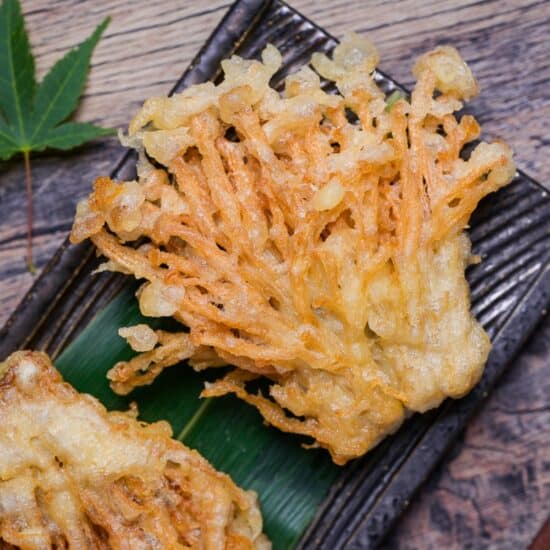


Enoki mushrooms usually sit at the back of my fridge waiting for a supporting role in a hot pot or a soup. They look so thin and fragile that it is easy to forget they are even there.
That same delicate shape turns into a secret weapon the moment it hits hot oil. Give it a thin coat of batter and the whole cluster snaps with a crisp sound and an airy lightness you will not get anywhere else.
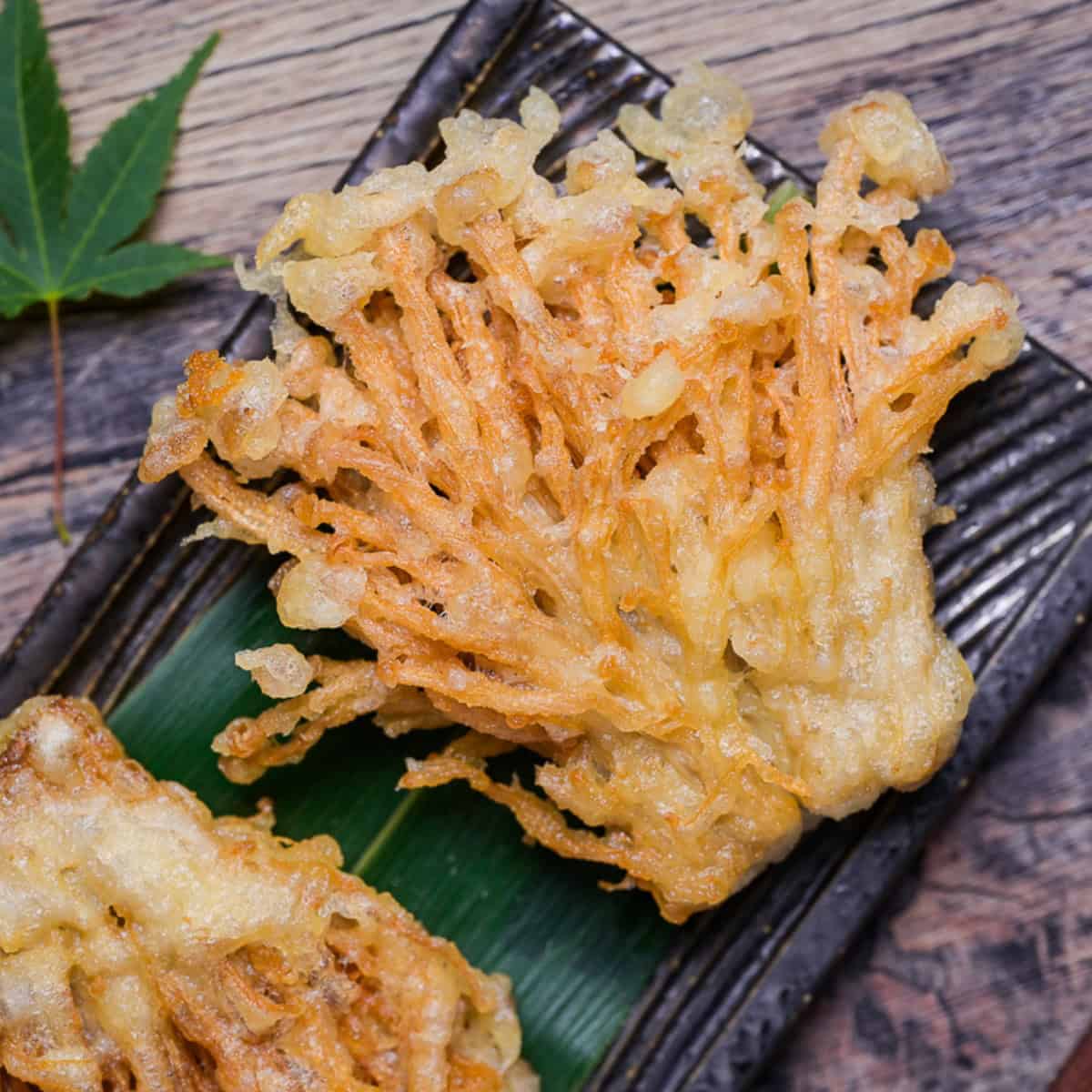
Enoki Tempura
Recipe Snapshot
- What is it? Enoki tempura is a mushroom tempura where frying drives the water out and concentrates the enoki’s sweetness and umami. In Japan it is a cheap, quick snack.
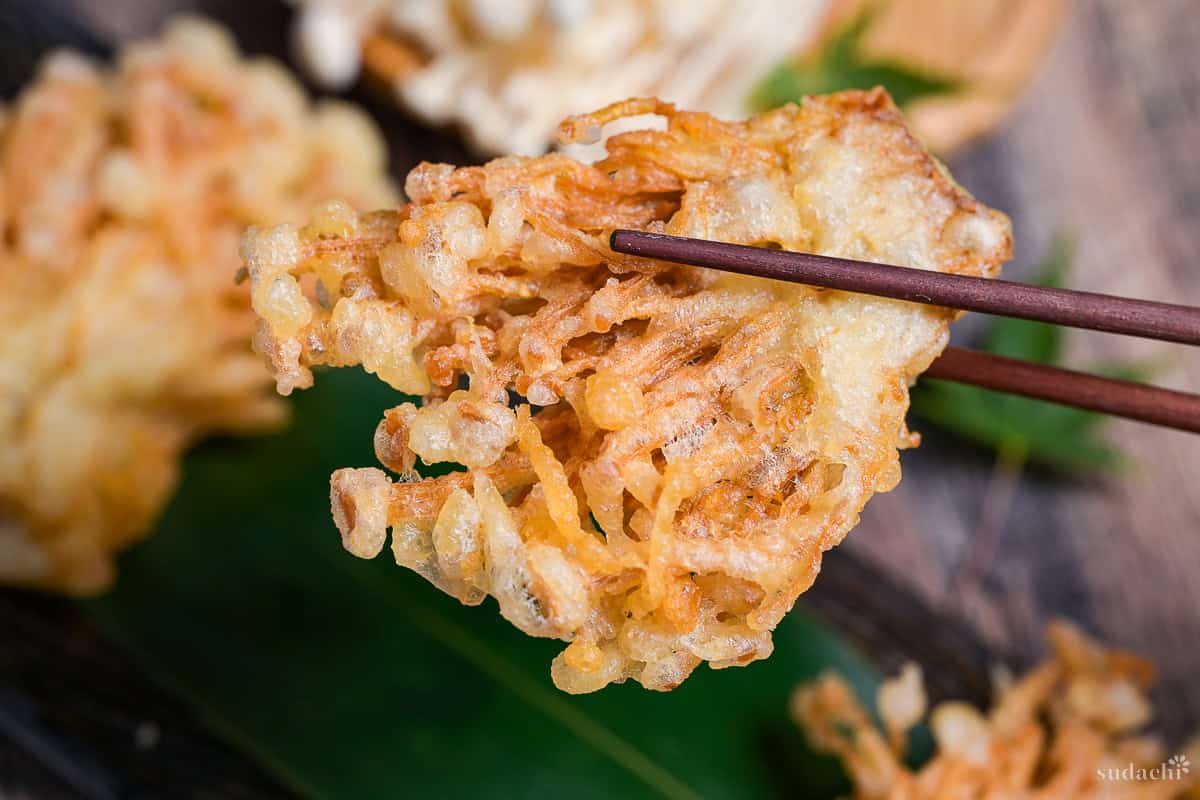
- Flavor profile: The thin coating breaks with a dry sound. The enoki is still hot and sweet, and the bundles open like flowers in the hot oil.
- Why this recipe works: 1 quick pass of batter keeps the gaps open and the bundle light. Tearing by hand from the root end holds it together and roughens them so the flour grips.
- How to make it: Chill the flour and water first. Tear the enoki, dust it with flour, run it through the cold batter into oil at 180°C (356°F), and salt it hot.
- What to expect: 1 bag of enoki serves 2. The flour and water chill 30 minutes. The first time I made this I used too much batter. That is where it trips you.
What Is Enoki Tempura?
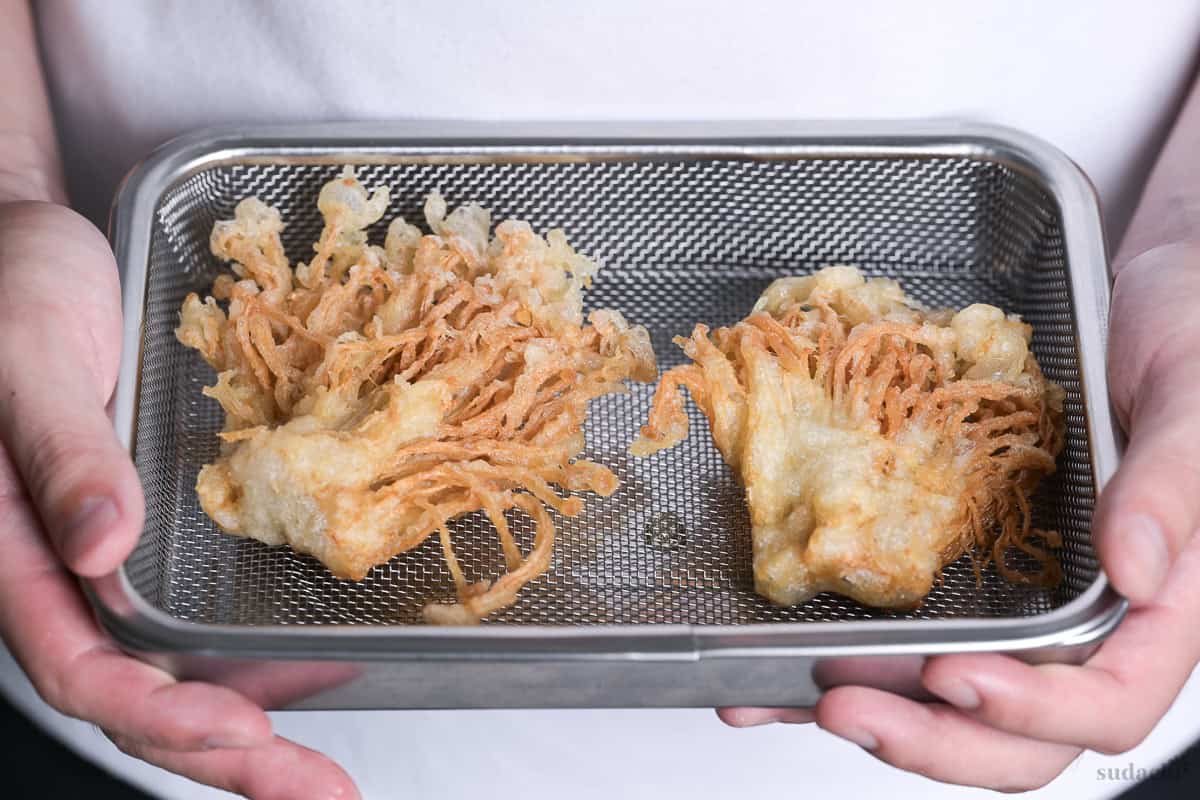
Enoki tempura is a Japanese dish that delivers a unique lightness you cannot get from other ingredients. You simply coat the slender bundles in a thin batter and fry them. Bite in and the clusters all snap at once, and the mushroom’s own delicate sweetness and umami follow right after.
It is quite different from the thick-battered spicy snacks known as fried enoki outside Japan, usually served with chili powder or aioli. This version is eaten with just salt or tempura dipping sauce to let the enoki’s gentle flavor shine.
Enoki Tempura Ingredients
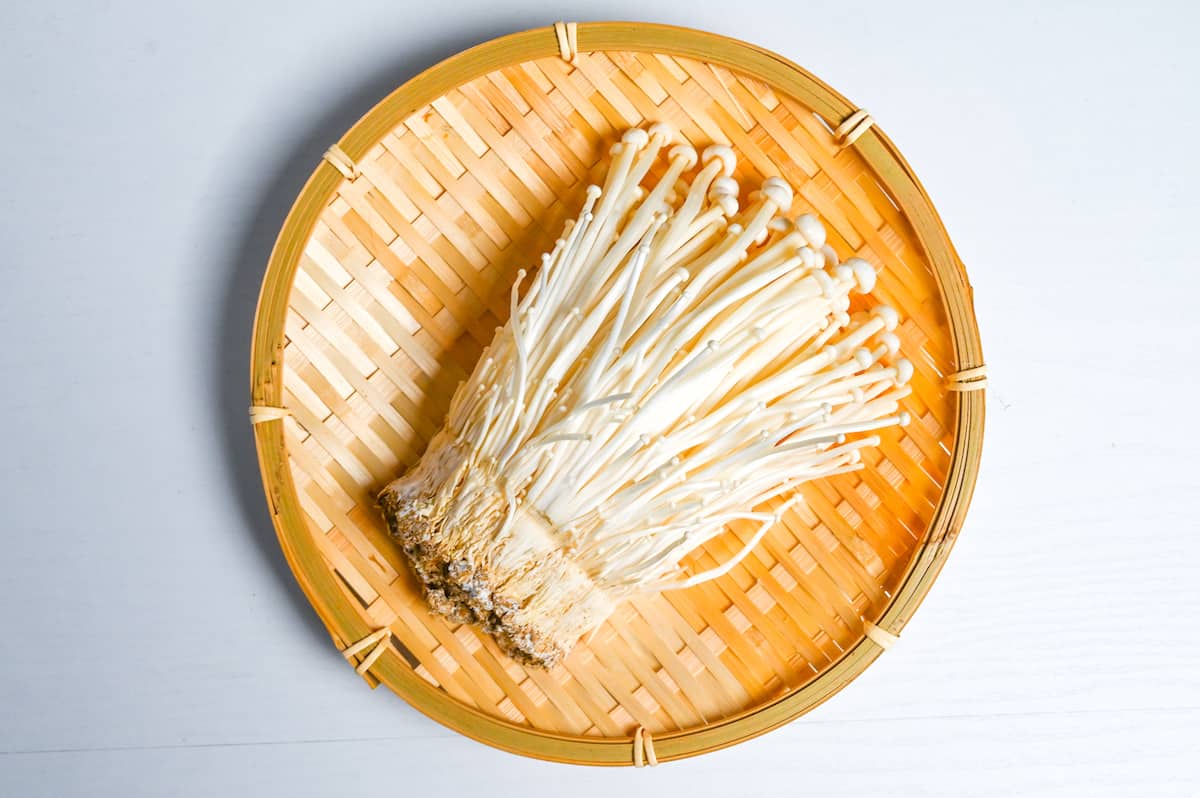
- Enoki mushroom: The thin bundles go into the oil whole and snap all at once when you bite in, and the water they lose in the oil leaves the sweetness and umami stronger than they are raw. Buy them fresh. Frozen enoki floods with water as it thaws and the batter will never take hold. Look on the chilled mushroom shelf at an Asian or Korean grocer, labeled enoki or enoki mushroom.
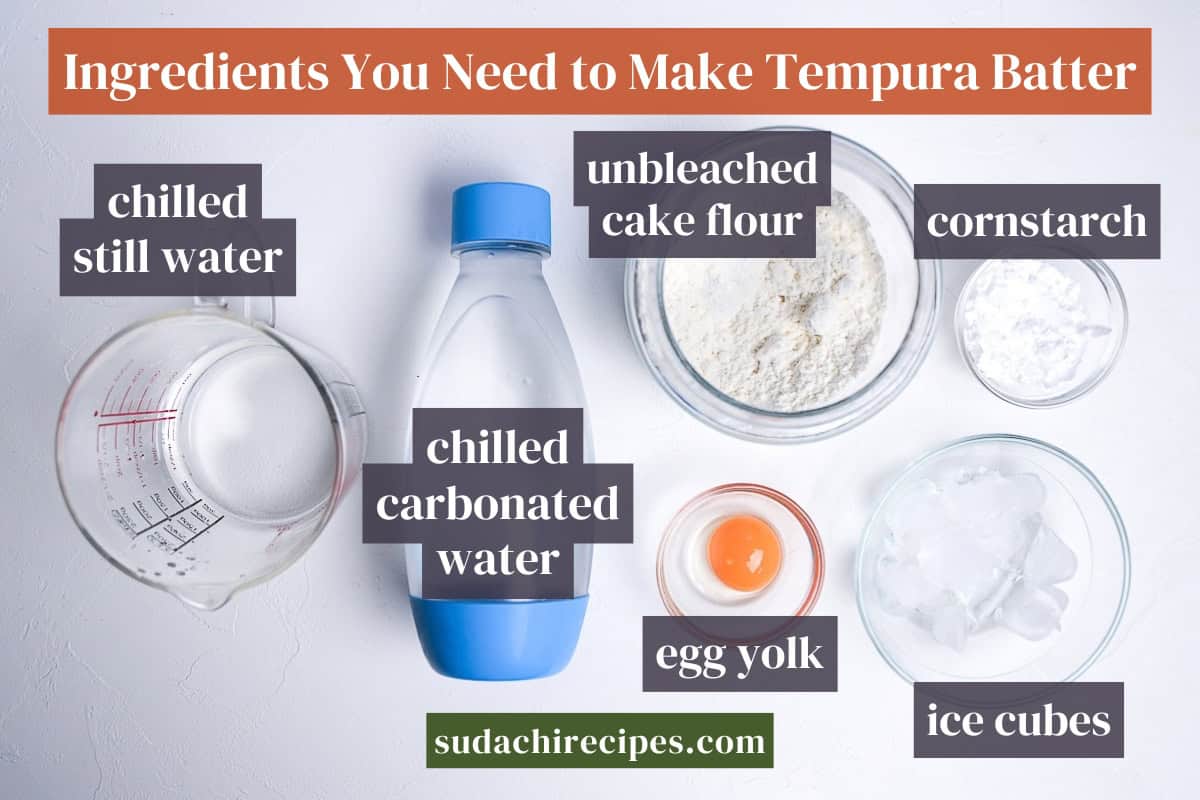
- Unbleached cake flour: On the shelf, look for cake flour. Tempura is light in proportion to how little gluten the coating builds, so take the lowest protein you can find. Bleached flour and self-rising flour are different products, so leave those where they are.
- Cornstarch: Why add cornstarch when there is already cake flour in the bowl? This is no stand-in for the cake flour. It goes in on top of it. Every spoonful of powder in the bowl that cannot build gluten pushes the coating further toward light.
Substitution Ideas
- Cake flour → All-purpose flour (plain flour in the UK and Australia): If this is the only flour in the house, it works. Raise the cornstarch ratio a little to make up for it.
- Carbonated water → The same amount of cold water: Plain cold water in the same amount covers you when there is no carbonated water around. Chill it hard with ice, and keep the mixing every bit as brief.
- Egg yolk → Japanese mayonnaise or egg white: Reach for these in order, ½ tablespoon of Japanese mayonnaise first, then 1 egg white, then a small egg beaten and split in half. The order runs on volume rather than flavor. Each step down that list leaves more batter sitting in the bowl.
- Enoki → Brown enoki: Brown enoki fries well here too. It carries more umami, so the flavor comes through stronger than it does with the white kind. Handle it exactly the same way.
Have trouble finding Japanese ingredients? Check out my ultimate guide to Japanese ingredient substitutes!
How to Make My Enoki Tempura
Before you start (Mise en place):
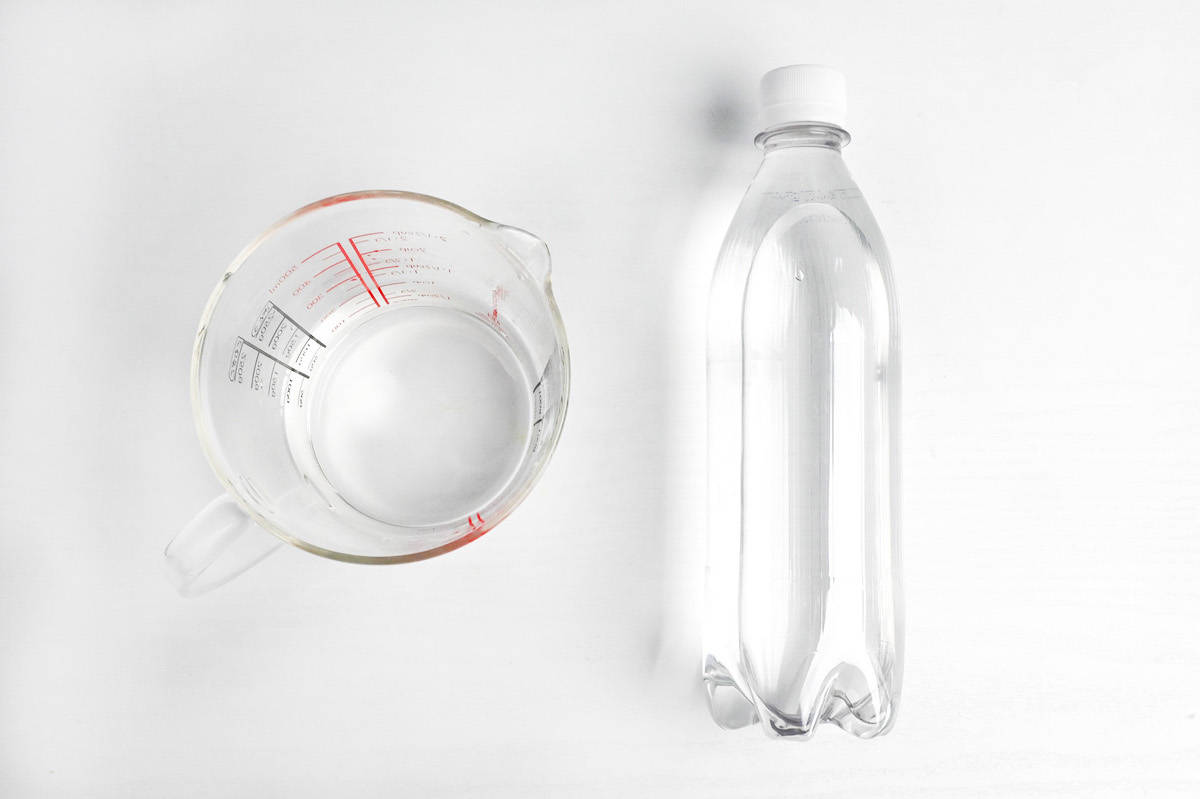
- Chill the water and the carbonated water for the batter in the fridge for 30 minutes. Leave the carbonated water sealed while it chills. Opening it lets the fizz go.
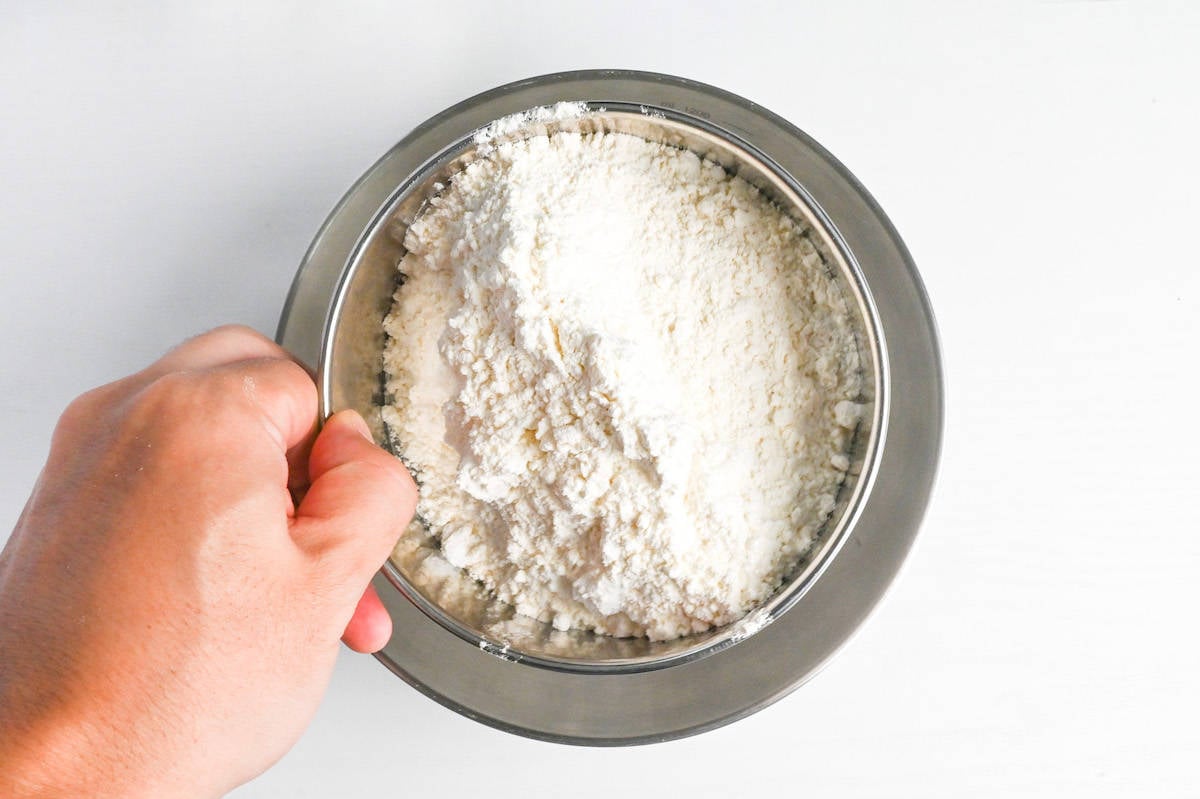
- Sift the cake flour and cornstarch into a bowl together, stir them, and give the whole bowl the same 30 minutes in the fridge or the freezer.
- Set out the finishing salt, and the tentsuyu (tempura dipping sauce) if you are using it, inside that same half hour. Once the frying starts you have no free hand.
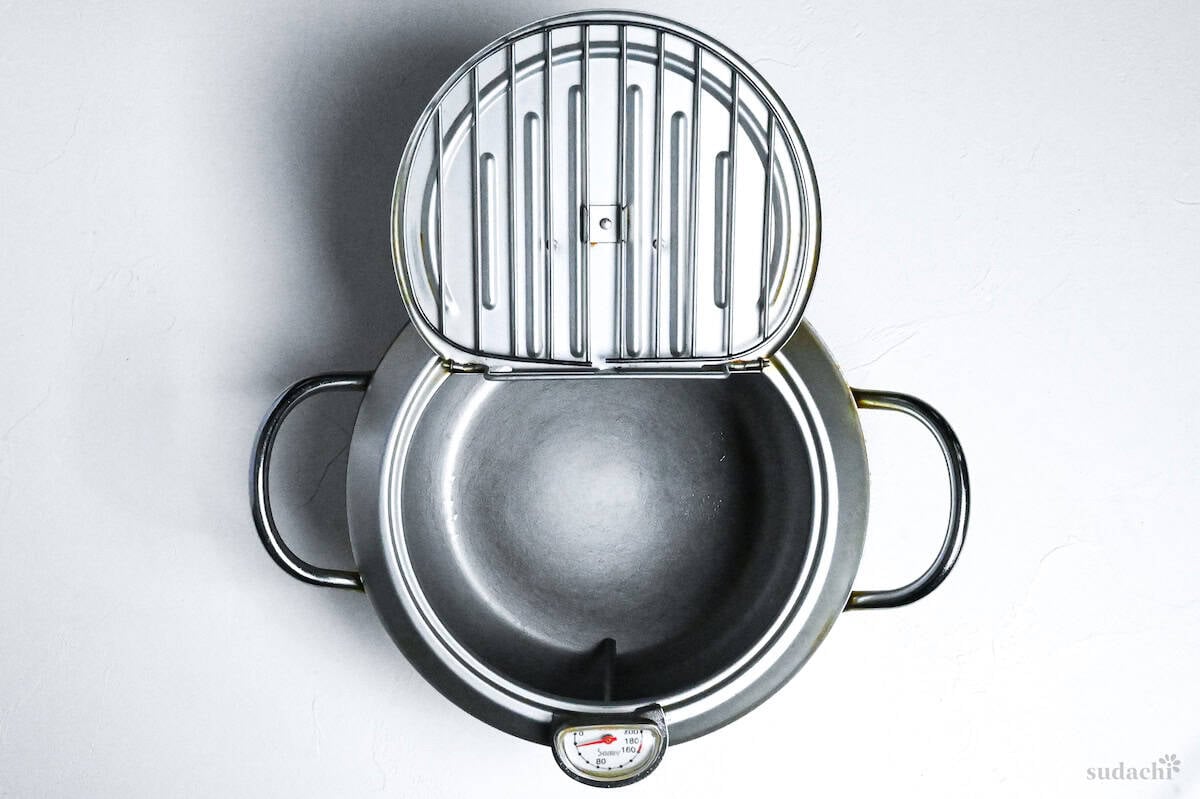
To develop this recipe, I used a tempura pot with a built-in thermometer.
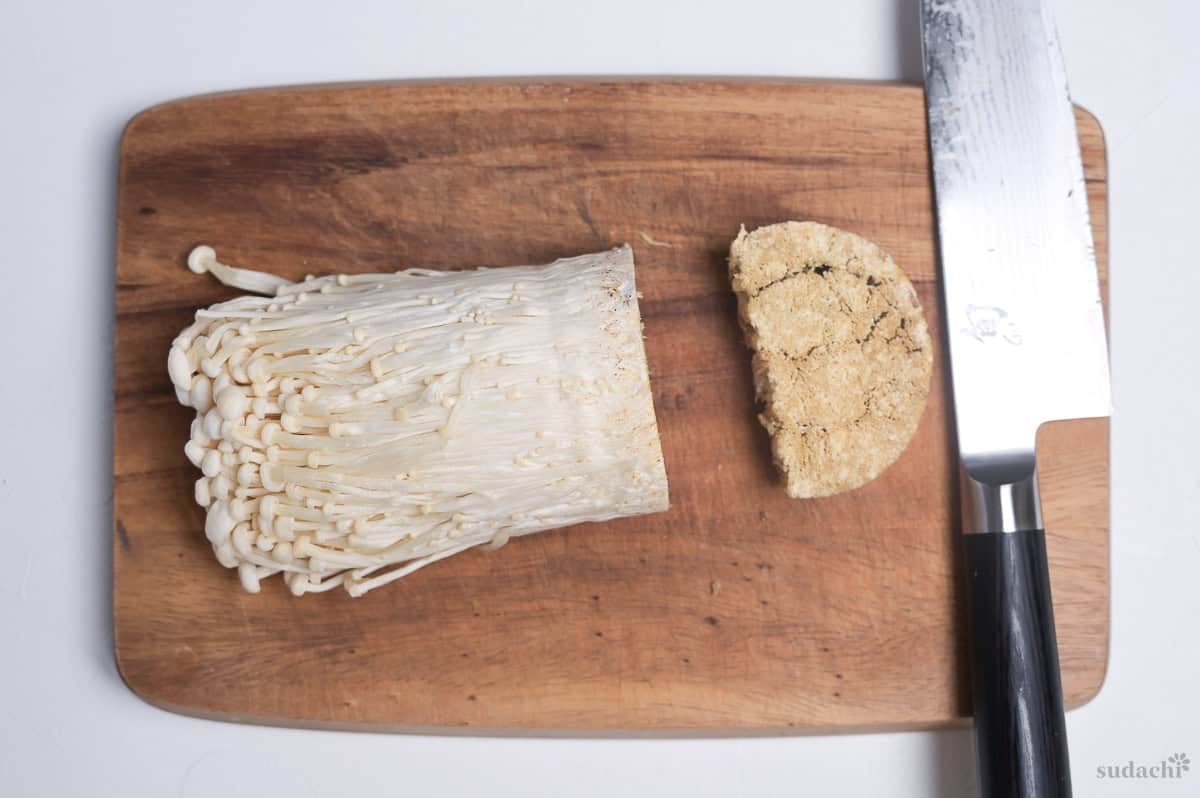
i. Cut off the woody base with 1 horizontal cut just above the browned, hard part. The white above it is edible, and it is the handle that holds the bundle together.
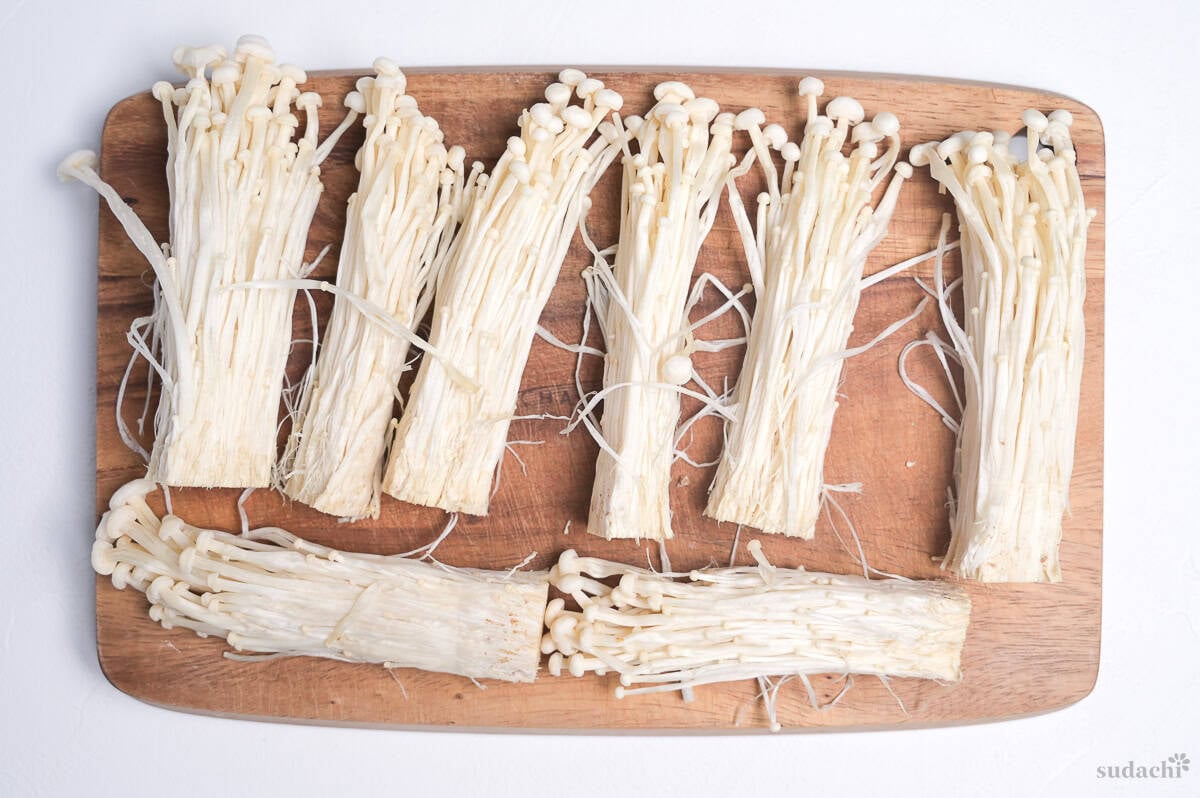
ii. Keeping that base connected, tear the bundle into 8 by hand, working from the base toward the caps. Halve it lengthwise, halve each half, halve again.
iii. Do not wash it. No soaking either. If the bag had droplets inside, blot them with a paper towel.
Tearing follows the fibers, so the torn faces stay smaller than a knife would leave them and less of the juice that carries the umami escapes. Those faces come up fuzzy as well, which gives the dusting flour something to catch on.
i. Coat the bundles in a thin layer of cake flour. A faint whiteness over the whole surface is enough.
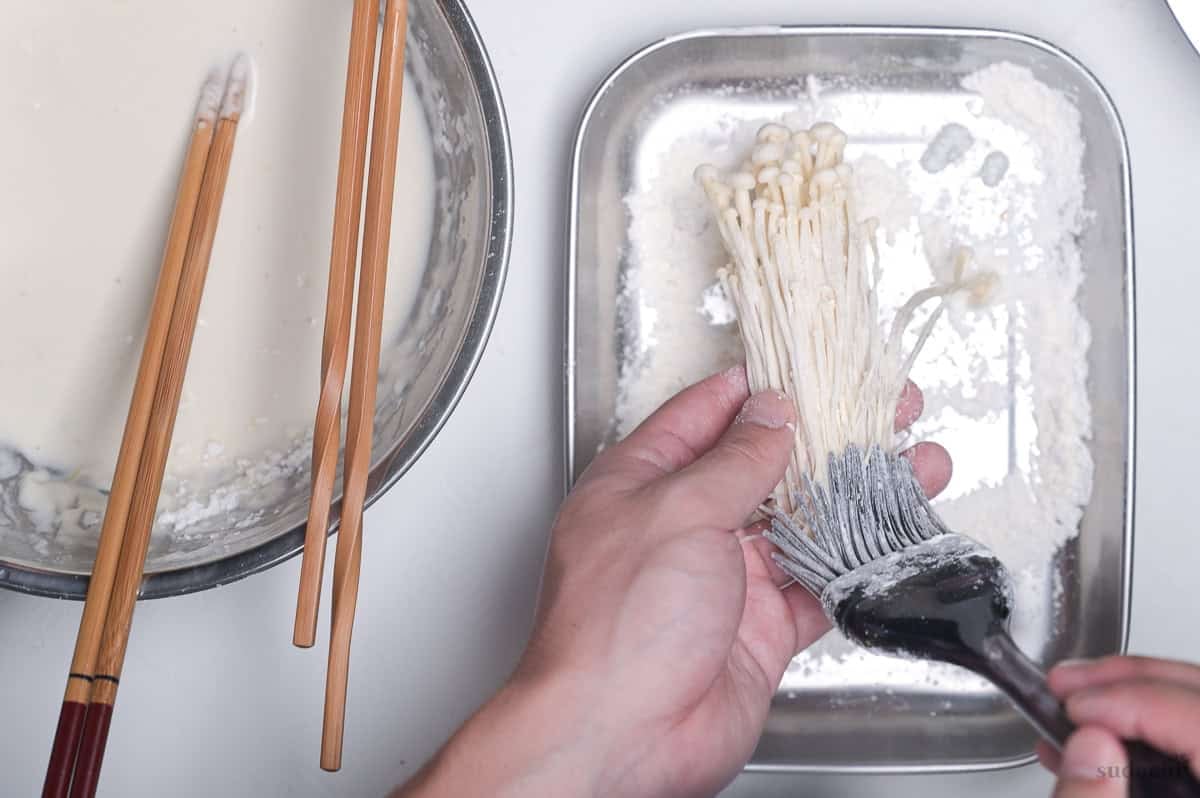
ii. Knock off the loose flour off, a thin even layer ensures the batter sticks.
Uchiko is the dry flour you dust over food before it ever meets the batter. Enoki is slick on the surface and full of water, so batter dropped straight onto it slides off. The dry flour drinks that surface water first and leaves a rough face for the batter to grip. In the oil it takes the heat and sets into a thin film, and that film keeps the water-soluble umami of the enoki from running out into the coating. Flour left on thick becomes a lump rather than a film, and the lump turns into weight.
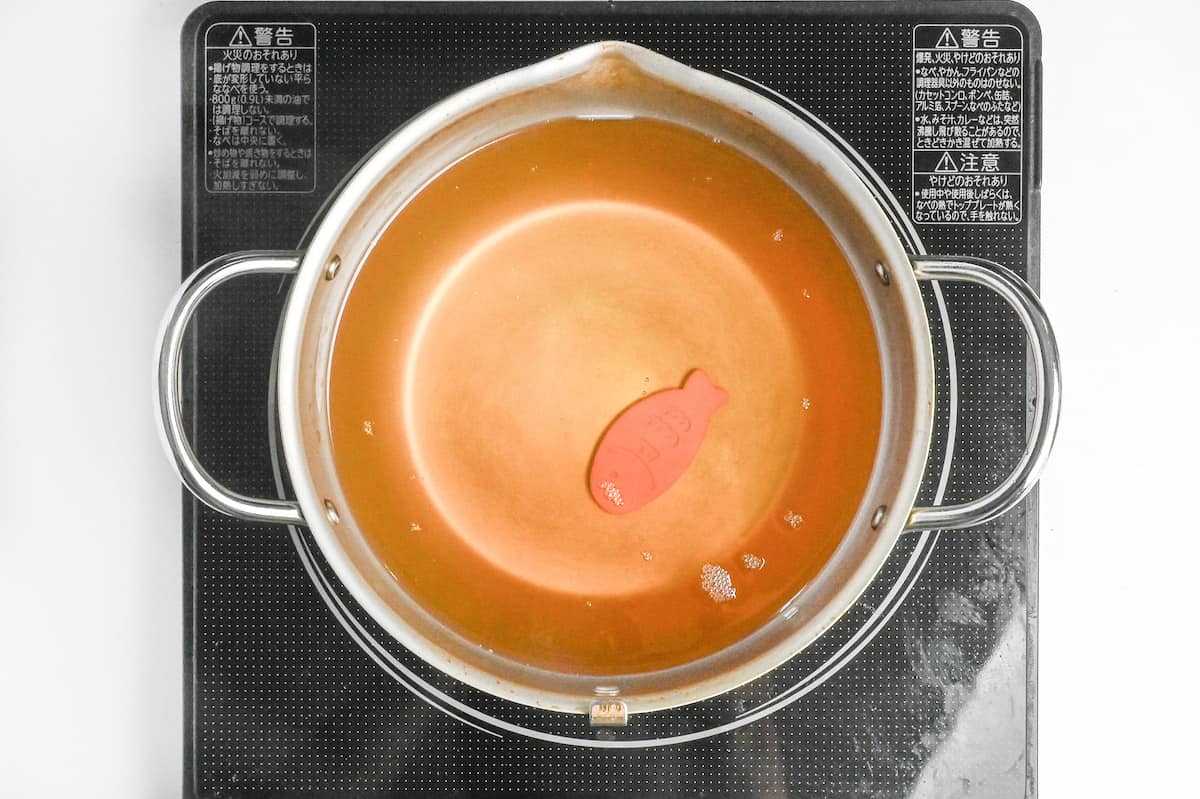
i. Heat the oil to 180°C (356°F). They pull it down on entry, so hold 170°C to 180°C (338°F to 356°F) while you fry.
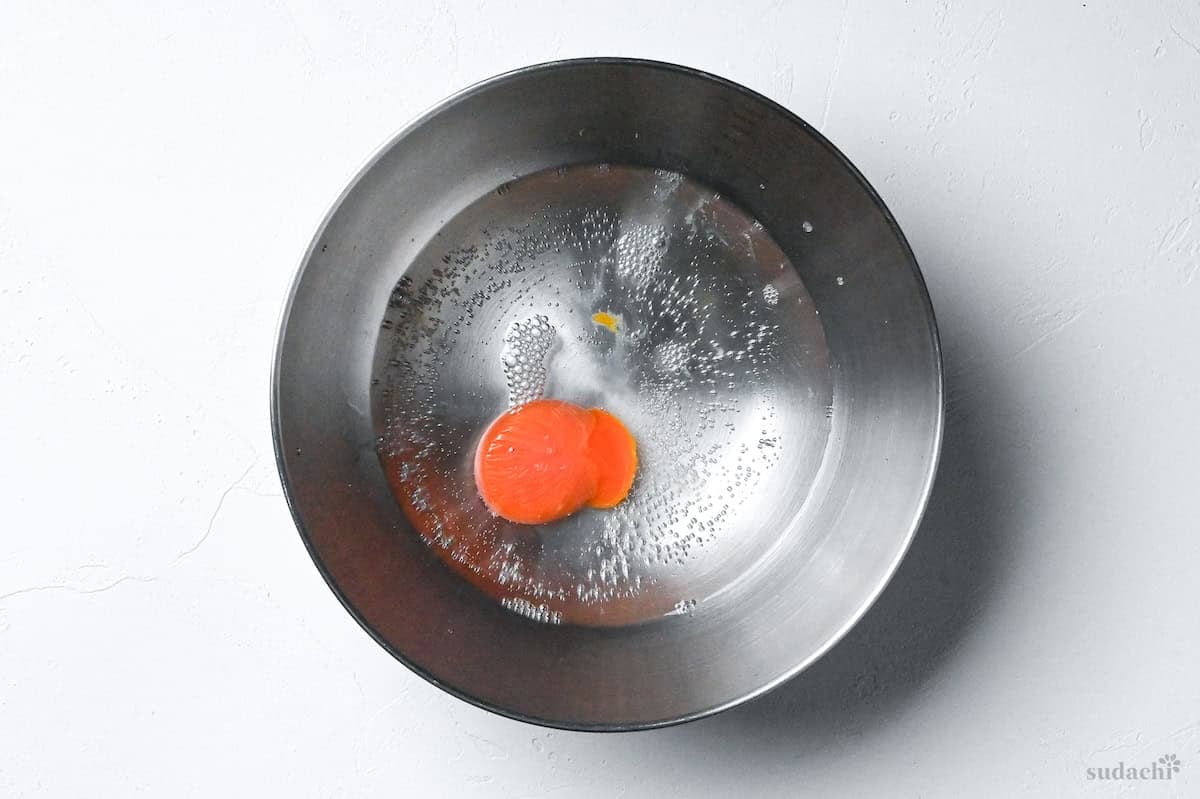
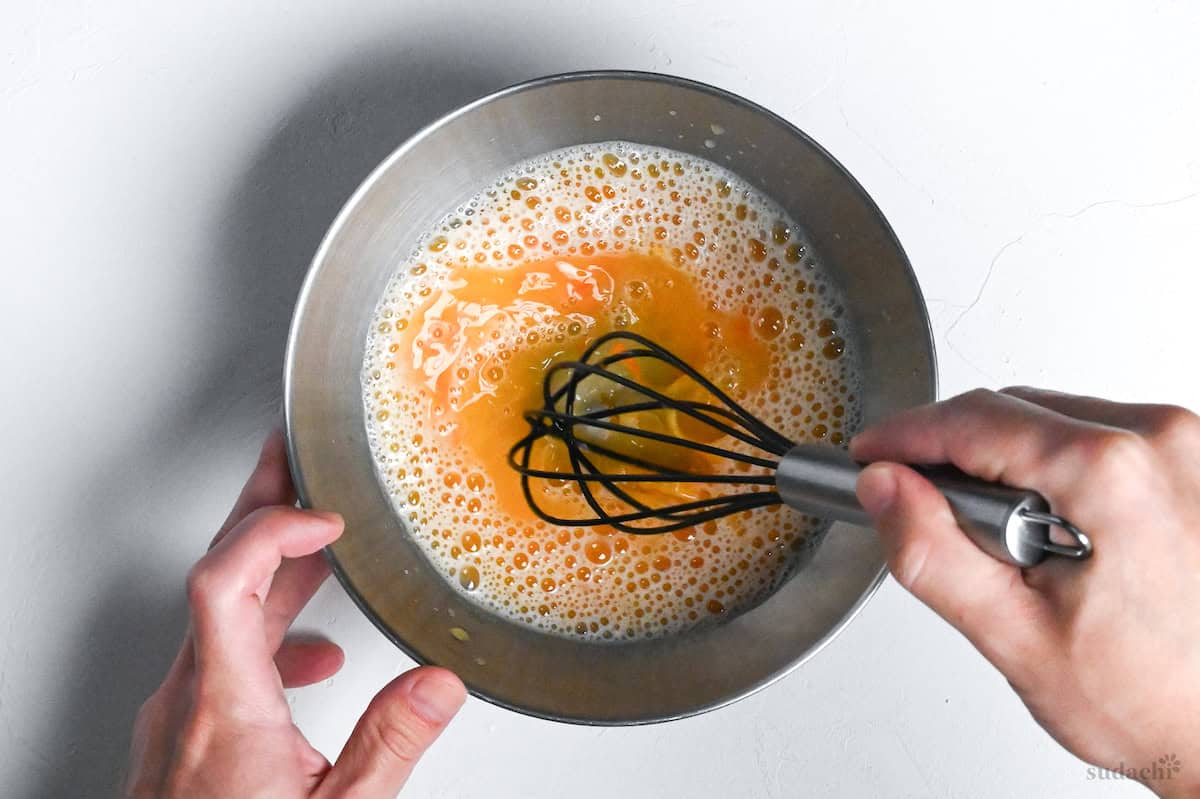
ii. Whisk the egg yolk into a splash of the chilled water, then the rest and the carbonated water.
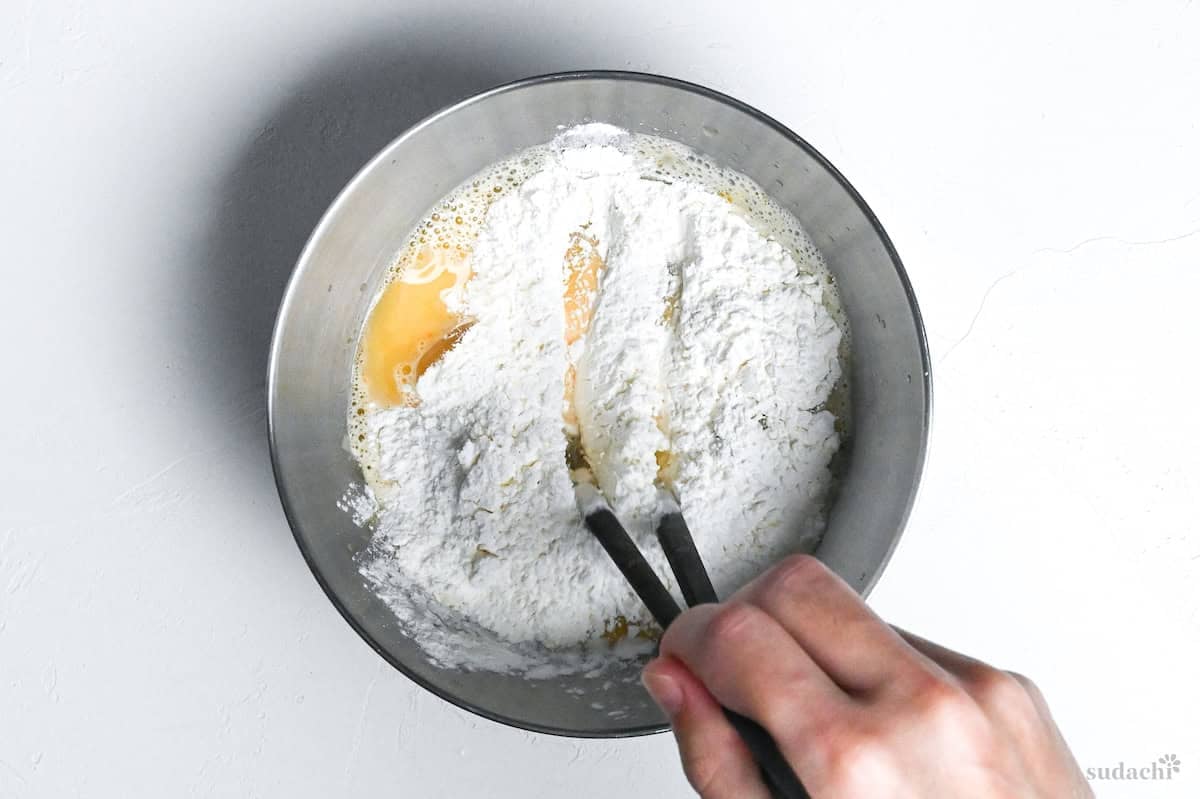
iii. Add the cold flour in thirds and fold with chopsticks, drawing a cross. No whisking. Lumps are fine. Drop in ice if you like.

iv. No thermometer? Drop 1 bead of batter in the oil. Straight to the bottom is too low. Halfway and back up means go. Scattered on top is too hot.
Mix the cold batter only until the dry flour is incorporated, a few lumps are fine. Cold water and brief mixing help limit gluten development, which can otherwise make tempura batter heavier. Fry the batter soon after mixing. The final crispness and oil content also depend on the batter’s starch, thickness, frying conditions, and cooling, so there is no simple one-for-one swap of water for oil.

i. Take 1 bundle, pinch the base and fan the cap end open a little, then run it through the batter. 1 quick pass over the whole thing is all it needs.
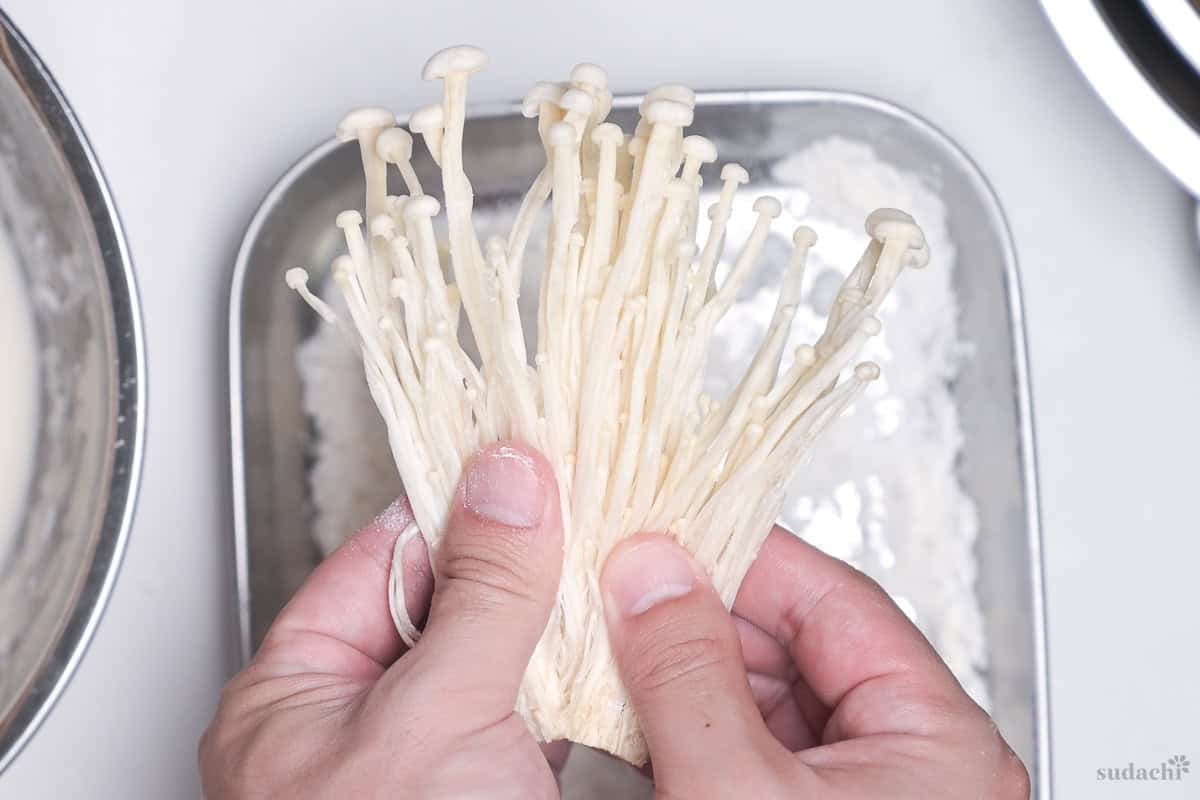
ii. Do not sink it in closed. Batter works into the gaps and sets there as a lump of raw flour.
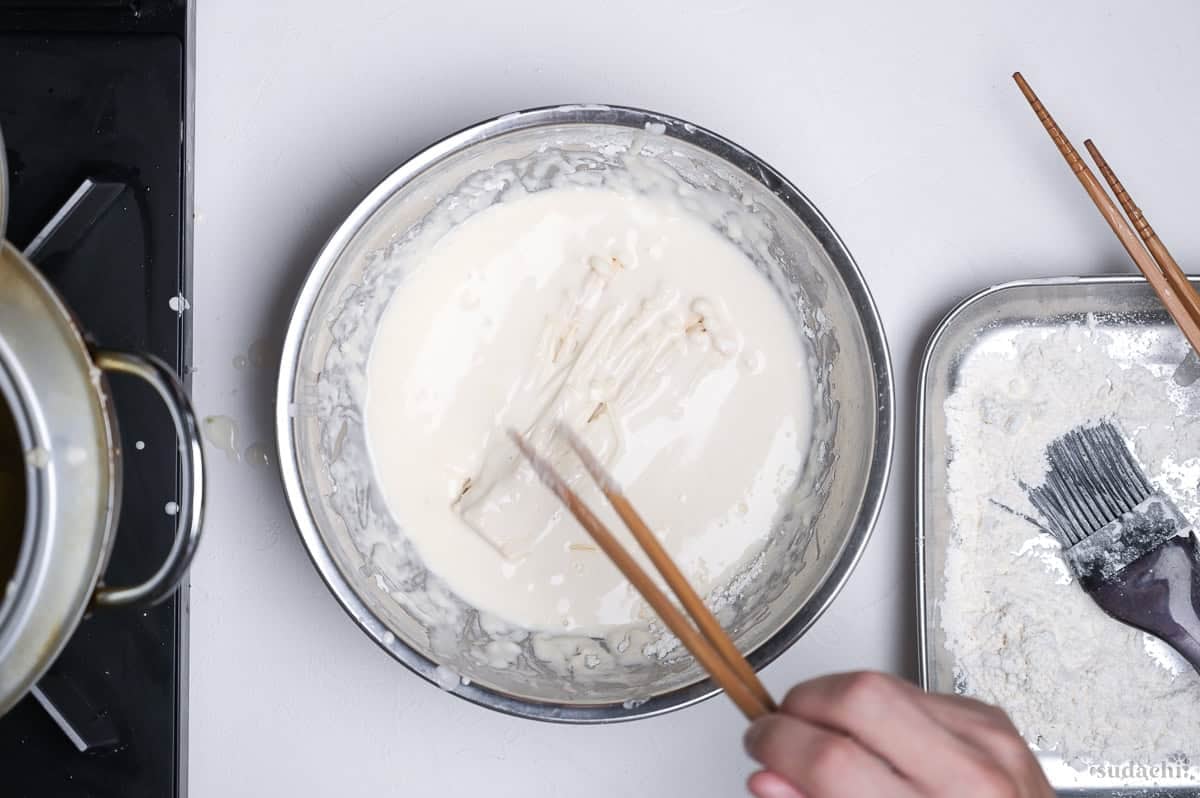
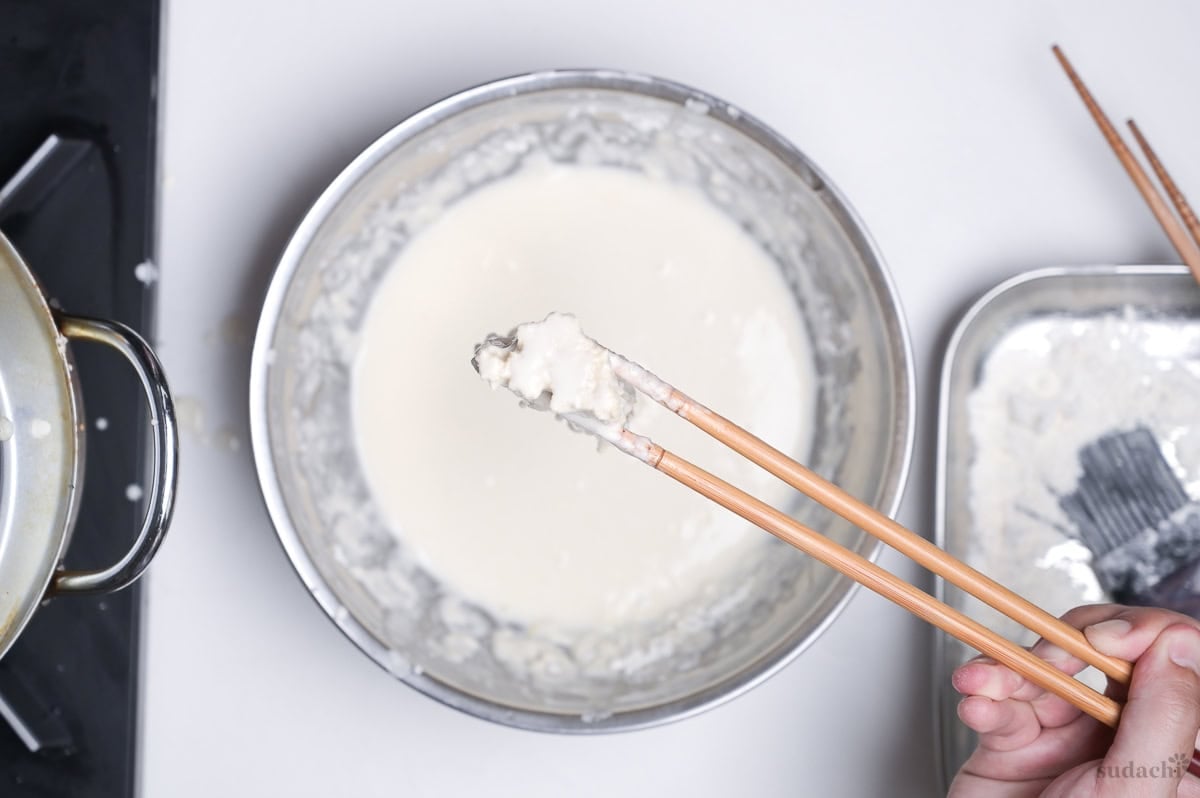
iii. Straight into the oil once it is coated. 2 or 3 bundles at a time. Avoid overcrowding the pot, as they will stick together and lower the oil temperature.
More batter feels like it should fry up better, and it does the opposite. A thick coat fills the gaps in the bundle with a solid mass, so the strands never snap apart, and what you get stays heavy and sticky. One moment in the bowl is plenty.
i. Still holding the base, touch the cap end to the surface of the oil and slide the bundle in flat. Avoid dropping it from straight above, will close the enoki up and can cause oil splashes.
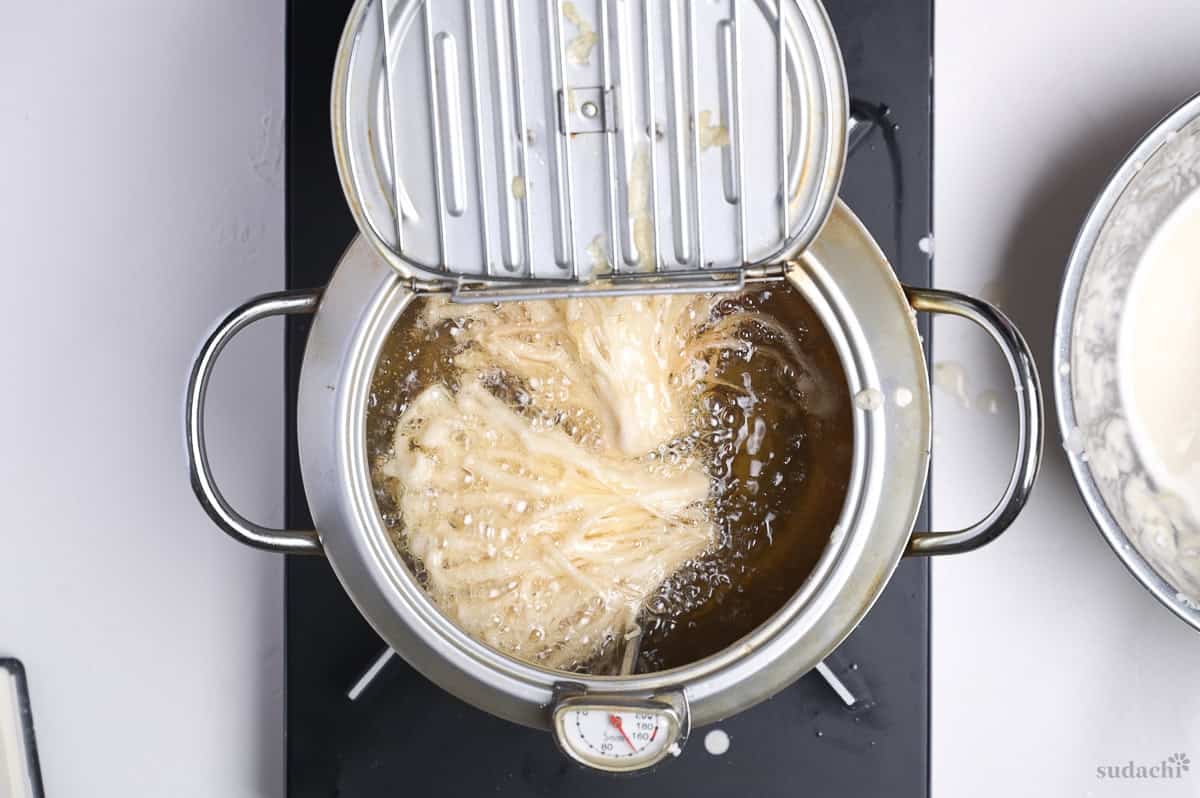
ii. As soon as it is in, push the strands open into a fan with long cooking chopsticks. At 30 to 45 seconds the batter on the underside sets. Turn it, 1 time. Interfering with it too much can strip the batter off.
iii. Total frying time runs 90 seconds to 2 minutes, though it depends on the size of the bundle, so watch the bubbles and listen instead of counting the clock alone. The big bubbles break down small and thin out, and the sound climbs higher and lighter. That is done.
Tempura is deep-fried and steamed at the same time. After it leaves the oil, the heat held in the coating keeps cooking whatever is wrapped inside. Finish it in the pot and it has gone past by the time it reaches the plate.
i. Lift them onto a wire rack and stand them base down, leaning. Leave space so they do not overlap. Keep them off paper towels.
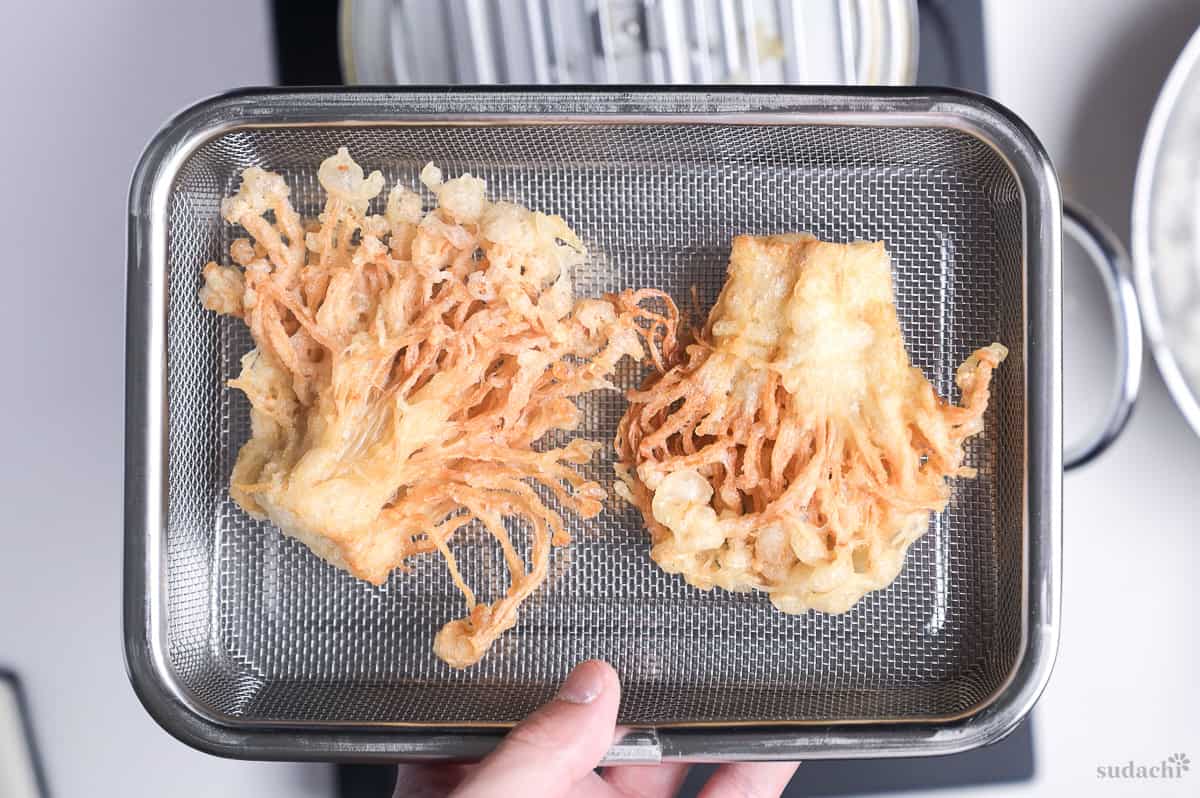
ii. Salt them from up high the moment they land, while they are still hot.
A bundle is shaped like a fan, so standing it up lets the oil run down through the gaps. Lying flat pools it there, and paper towels trap steam underneath. Enoki and batter are both unsalted, so this salt is everything. Crystals land in the oil film while it still moves. Once that film sets, later salt only falls off.

Tips for the Best Enoki Tempura
- Run each bundle through the batter once. Hold it by the base, open the caps out, and take it through in a single sweep on the way to the pot. Lift it and light should still show through the gaps between the strands. Once those gaps fill in, there is too much batter on it.
- Pick an oil with no flavor of its own. A plain neutral oil, canola oil or rice bran oil all fry this the same. Toasted sesame oil is for a splash of aroma stirred into the pot, and a whole potful of it buries the enoki under its own smell.
- Use a pot wide enough that the bundles never cover the oil. In a narrow one, 2 bundles fill the surface and the temperature stops climbing back between batches.
All 3 of these are settled before a single strand touches the oil.
Storage & Meal Prep
Fridge: 2 days. Cool fully on the rack, then box them.
Freezer: Better here. Freeze flat once cool, for up to 1 month.
Meal prep: Prep the enoki and chill the batter ingredients ahead of time. Never mix the batter in advance, it needs to be mixed right before it’s used.
Reheating: Straight from frozen, air fryer 180°C (356°F) for 5 minutes. Otherwise toaster oven 200°C (392°F) for 2 minutes. Avoid microwaving.
What to Serve With Enoki Tempura
- Simple Kake Udon (Udon Noodle Soup)
- Everyday Miso Soup
- Perfect Japanese Short-Grain Rice
- Spinach Ohitashi (Japanese Spinach Salad)
Enoki Mushroom Tempura Troubleshooting
The oil ran cool through that batch. Enoki carries a lot of water, and the more bundles that go in at once, the harder the temperature falls. Below 170°C (338°F) the oil moves into the coating before the water has finished leaving. Bring the pot back to 180°C (356°F) before the next batch and hold it to 2 or 3 bundles. The ones already fried will shed a little of what they took on if you stand them up on a rack.
The bundle was too thick. Water hides between the strands and inside the packed root cluster, so a thick bundle never dries through to the middle. The outside colors first, which is how it can look finished while the inside is still wet. Tear the bundles you have left in half again before they go through the batter. When you are unsure, go thinner.
It came out of the oil too early. The batter is still doughy in there, so it eats heavy and oily and never turns crisp. Lifting a bundle a moment before it looks right works only after the big bubbles have broken down small and the sound has climbed higher and lighter. Pull it ahead of that and you have an underfried bundle. The ones you pulled can go back into the oil until the bubbles and the sound finish changing.
More Japanese Mushroom Recipes
- Crispy Pan-Fried Enoki Rice Bowl
- Mixed Mushroom Donburi
- Enoki and Cheese Snack
- Wasabi-Ae Salad with Bok Choy
If 1 bag turns into this in hot oil, see what else it can do across my Japanese Mushroom Recipes.
Did You Try This Recipe?
I would love to hear your thoughts!
💬 Leave a review and ⭐️ rating in the comments below. 📷 I also love to see your photos – submit them here!
Enoki Mushroom Tempura

Ingredients
Enoki
- 200 g enoki mushrooms buy them fresh
- cooking oil as needed, 3 to 4 cm deep, in a pot around 24 cm wide
Batter
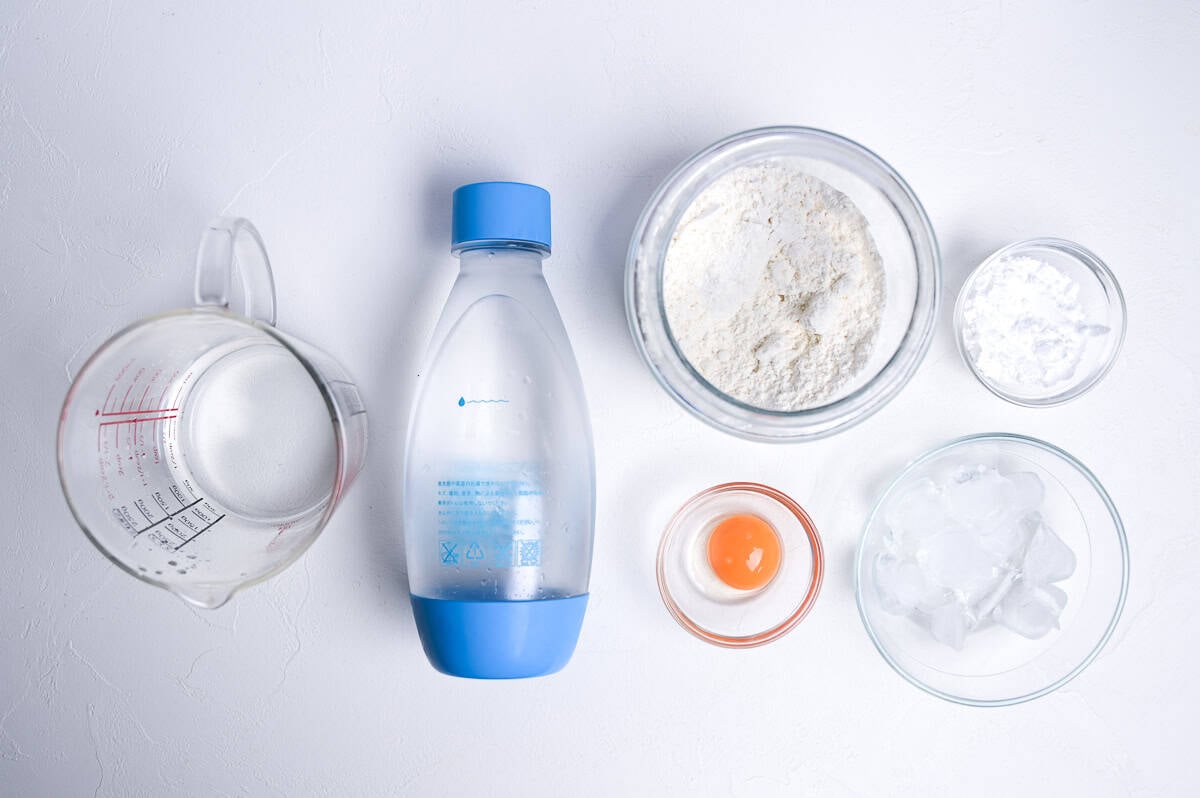
- 75 ml water chilled
- 50 ml carbonated water chilled
- 15 g cornstarch
- 75 g unbleached cake flour or pastry flour, low-protein, around 7-8%
- 1 egg yolk ½ tbsp Japanese mayonnaise for 1 egg yolk also works
- 2 ice cubes optional
- 2 tbsp unbleached cake flour for dusting
To Finish
- salt
- tempura dipping sauce (tentsuyu) as needed, optional
The ingredient brands and tools I trust are in my Japanese pantry guide and my cooking tools guide.
Can’t find certain Japanese ingredients? See my substitution guide here.
Instructions
- Chill your batter ingredients at least 30 minutes before you start the recipe. 75 ml water and 50 ml carbonated water in the fridge, 15 g cornstarch and 75 g unbleached cake flour in the freezer.

- Heat your cooking oil for deep frying to 180 °C (356 °F). While you wait, cut the hard base off of the 200 g enoki mushrooms, but leave some of the white base attached so they don't fall apart.
- Tear the enoki into small bundles by hand. Half and half again until you have 8 bundles in total, and pat them thoroughly dry with kitchen paper.
- When the oil is almost ready, pour the water and carbonated water into a mixing bowl and add 1 egg yolk. Whisk until combined.

- Add the chilled flour and starch one-third at a time, draw crosses with chopsticks to incorporate it and stop mixing as soon as there is no more dry flour (it's okay to have lumps). Add 2 ice cubes if your cooking environment is warm.
- Place 2 tbsp unbleached cake flour in a container and use a pastry brush to dust it over the enoki bunches.
- Once the oil is preheated, take a bunch of enoki, pinch the base and fan the caps open.

- Briefly dip it into the batter, then place it straight into the oil. Fry 2-3 at a time, don't overcrowd the pot.
- Fry for about 90 seconds to 2 minutes, flipping halfway through (45-60 seconds per side).
- Transfer them to a wire rack and prop the rack up on one side so the base is on the lower side. Sprinkle with salt from a height for even coverage.
- Serve immediately and enjoy!

Leave a rating and a comment