

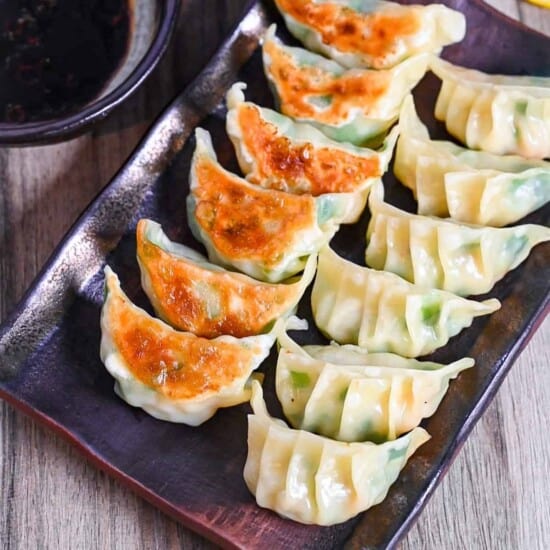


Featured Comment
Thank you for this wonderful recipe! I used your gyoza wrapper recipe and also the shrimp filling…was a beautiful treat for a small dinner party appetizer! The panfrying and then steaming turned out perfectly browned bottoms and soft tops!
★★★★★
radhaks
You know what pork gyoza is missing? That snap. The kind of clean, bouncy bite that only shrimp gives you, paired with a freshness that hits completely different.
This is my Japanese-style gyoza recipe built entirely around seafood. Same crispy pan-fried bottom, same chewy pleated wrapper, but lighter, brighter, and impossible to stop eating. If you love classic pork gyoza, this is the version you didn’t know you needed.
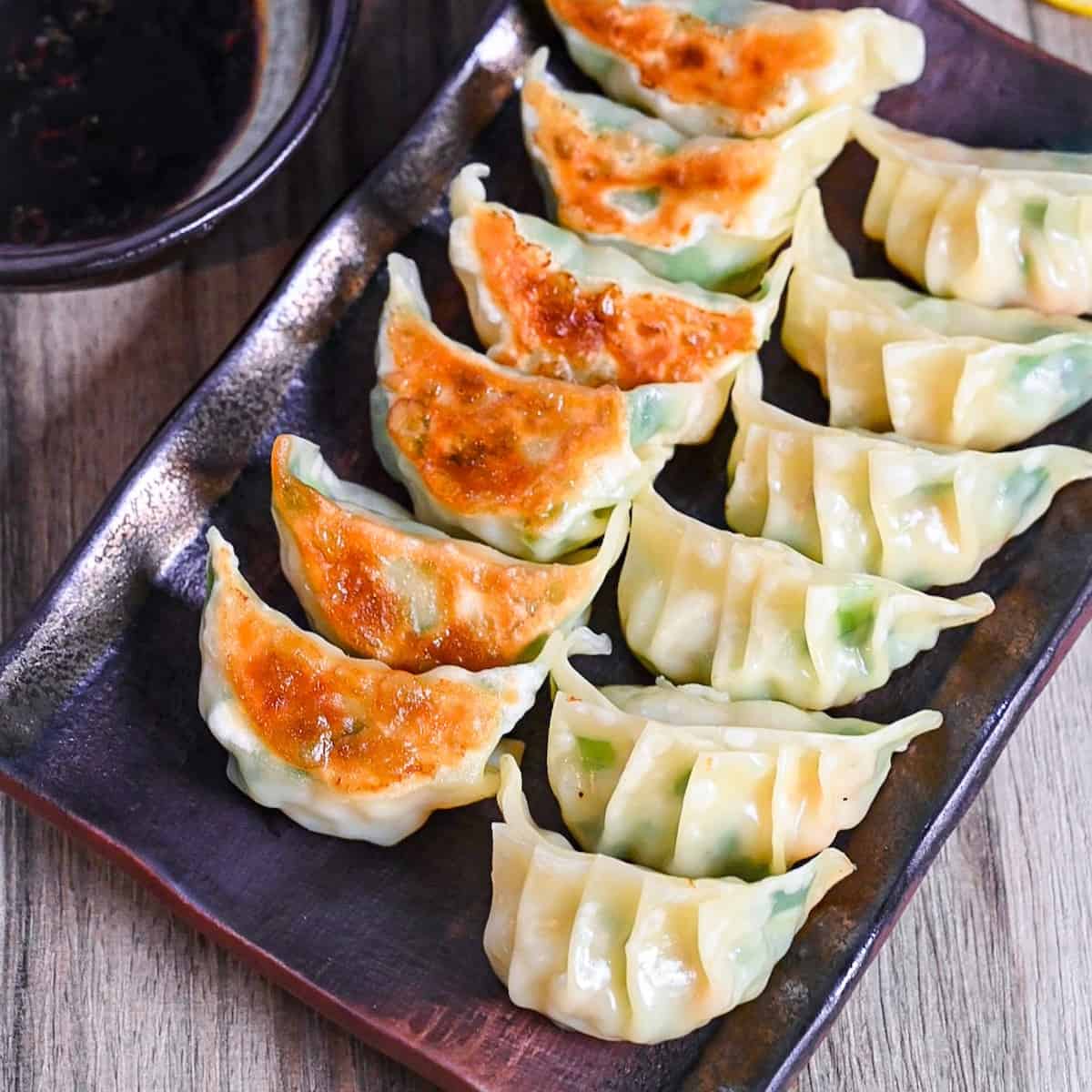
Shrimp Gyoza
Recipe Snapshot
- What is it? A Japanese-style pan-fried dumpling filled with roughly chopped shrimp, seasoned with garlic, ginger and soy, then seared, steamed, and crisped to a golden base.
- Flavor profile: Shrimp-sweet, ginger-bright, with a ponzu dipping sauce that leans citrusy and light.
- Why you will love this recipe: The filling snaps back when you bite through it, and the whole thing tastes cleaner and more refreshing than pork gyoza. If you have never made gyoza before, the wrapping is easier than it looks, and these freeze beautifully so you can save them for a rainy day.
- Must-haves: Raw shrimp (any variety, shell-on or peeled), store-bought or homemade gyoza wrappers, a frying pan with a tight-fitting lid.
- Skill Level: Medium. The shrimp prep and wrapping take a bit of practice, but the cooking itself is straightforward once you get the three-step method down (fry, steam, crisp).

What is Shrimp Gyoza?
Gyoza (餃子) are Japanese pan-fried dumplings, thin wheat wrappers filled with seasoned meat or seafood, seared on one side, then steamed and crisped in a single pan. The name traces back to the Chinese jiaozi, but the Japanese version took its own path: thinner skins, bolder garlic, and a firm preference for pan-frying over boiling. Shrimp gyoza swaps out the usual pork filling for minced shrimp, giving you a snappier texture and a lighter, more refreshing bite.
In Japan, gyoza sits in the chuka (Japanese-Chinese) tradition alongside dishes like ramen and shumai. It is as comfortable on an izakaya menu with a cold drink as it is at a weeknight dinner table with rice and miso soup. The pan-fried style, yaki-gyoza, is by far the most popular, prized for the contrast between its crispy golden base and soft, steamed top.
I have made plenty of gyoza variations over the years, from chicken gyoza and beef gyoza to age gyoza (deep-fried). But shrimp hits completely different. The filling is cleaner, the flavor is brighter, and paired with a ponzu-based dipping sauce instead of the classic soy-vinegar mix, it feels like a whole new category.
Prawn Potstickers Ingredients
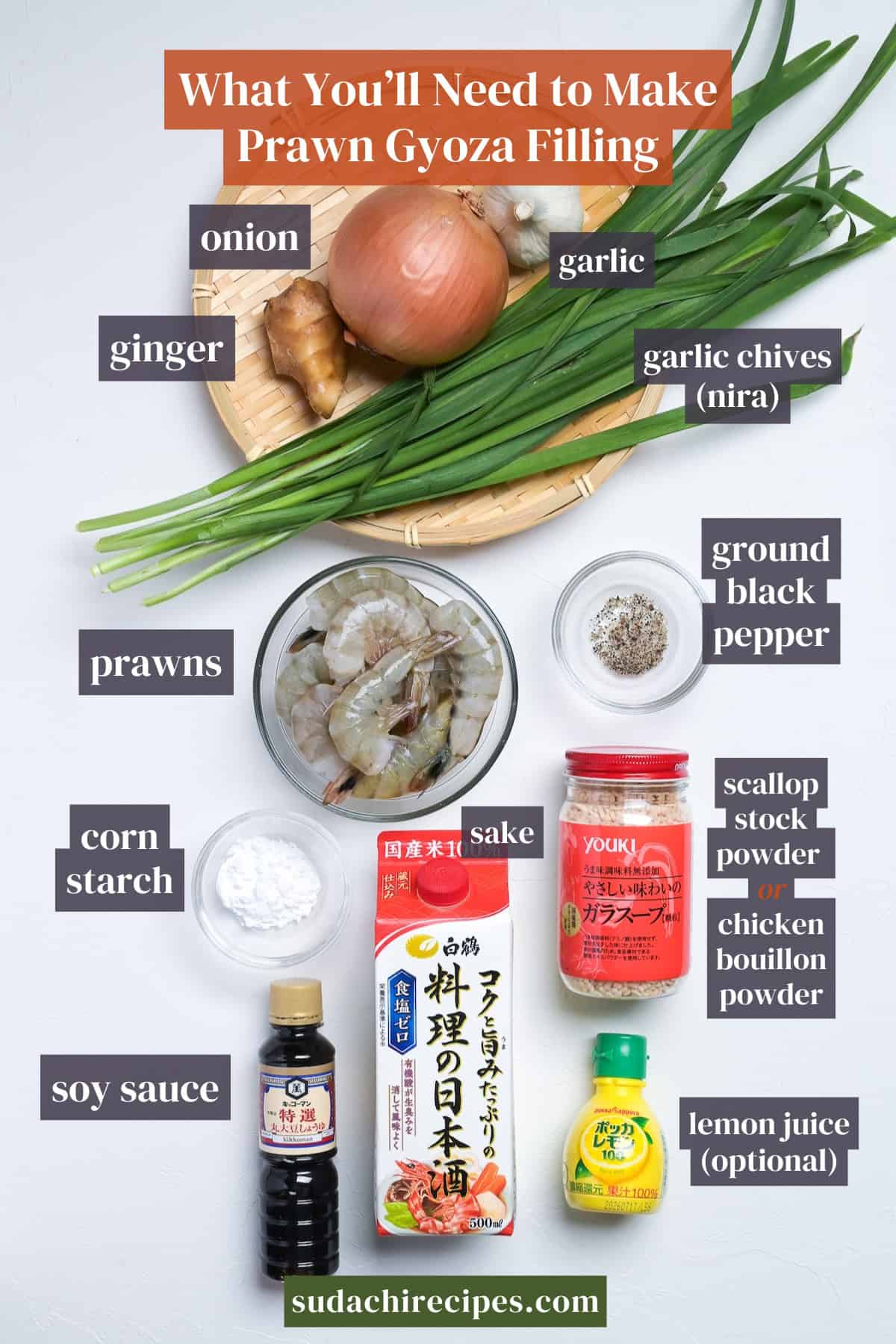
- Shrimp: Any kind works since you are chopping it up anyway. I used raw vannamei shrimp here, but black tiger gives you an even snappier bite if you can find it. The important thing is to start with raw, uncooked shrimp. Deshell, devein and wash them thoroughly before chopping.
- Gyoza wrappers: Store-bought wrappers from Asian grocery stores are the easiest option. Look for the larger size (around 8.5-9.5 cm) if available, they are much easier to fold. If you want to make your own, check out my homemade gyoza wrapper recipe.
- Ponzu sauce: I chose ponzu as the backbone of the dipping sauce because its citrusy tang pairs naturally with shrimp. It is what gives this gyoza its refreshing, seafood-forward identity. Store-bought works fine, or you can try my homemade ponzu sauce recipe.
Substitutions /Variations
- Shrimp → Squid works if you chop it finely. The texture shifts from snappy to chewy, but it still holds together well in the filling.
- Shrimp → Scallops give you a sweeter, more delicate filling. Roughly chop them so you keep some texture, they break down faster than shrimp during mixing.
- Garlic chives (nira) → Green onions (scallions) or regular chives are the easiest swap. Add a small clove of minced garlic to make up for the garlicky edge that nira provides.
- Scallop stock powder → Chicken or vegetable bouillon powder will still give you umami depth. The seafood-specific flavor fades a little, but the overall filling will still taste well-seasoned.
- Ponzu sauce → Soy sauce + fresh lemon or lime juice mixed in a roughly 2:1 ratio captures the same citrusy-savory balance. It will not have the same depth as real ponzu, but it gets the job done.
- Sake → Dry white wine or dry sherry in the same amount. Both provide a similar sweet-acidic background that helps tenderize the shrimp and carry the seasoning through the filling.
- Chili oil (rayu) → Chili flakes or a few drops of sriracha stirred into the dipping sauce. The heat profile changes slightly, but either will add the warmth you are looking for.
Have trouble finding Japanese ingredients? Check out my ultimate guide to Japanese ingredient substitutes!
How to Make My Shrimp Gyoza
If you prefer to watch the process in action, check out my YouTube video of this pan-fried shrimp gyoza recipe!

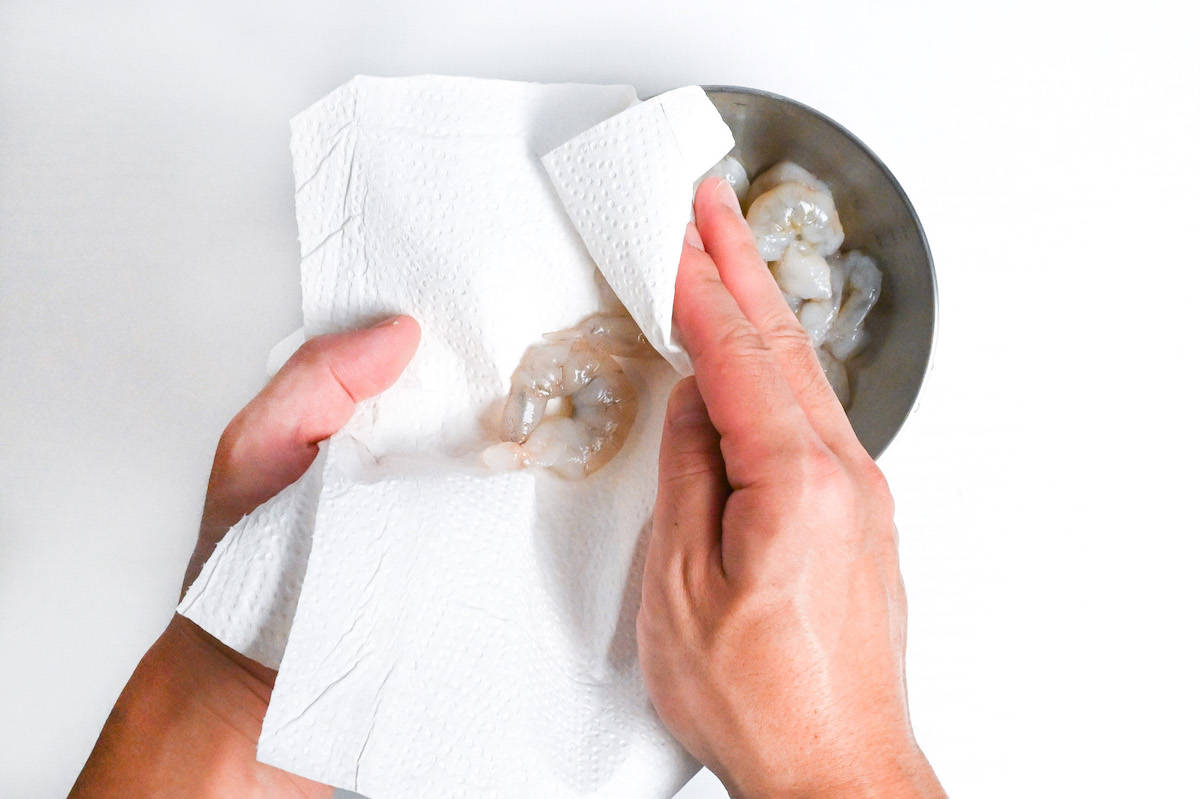
i. Start by prepping your shrimp: peel, devein, and rinse them under cold water, then pat thoroughly dry with paper towels.
ii. Lay them on your cutting board and chop with a heavy knife, rocking back and forth until you get a rough paste with visible chunks still scattered throughout.
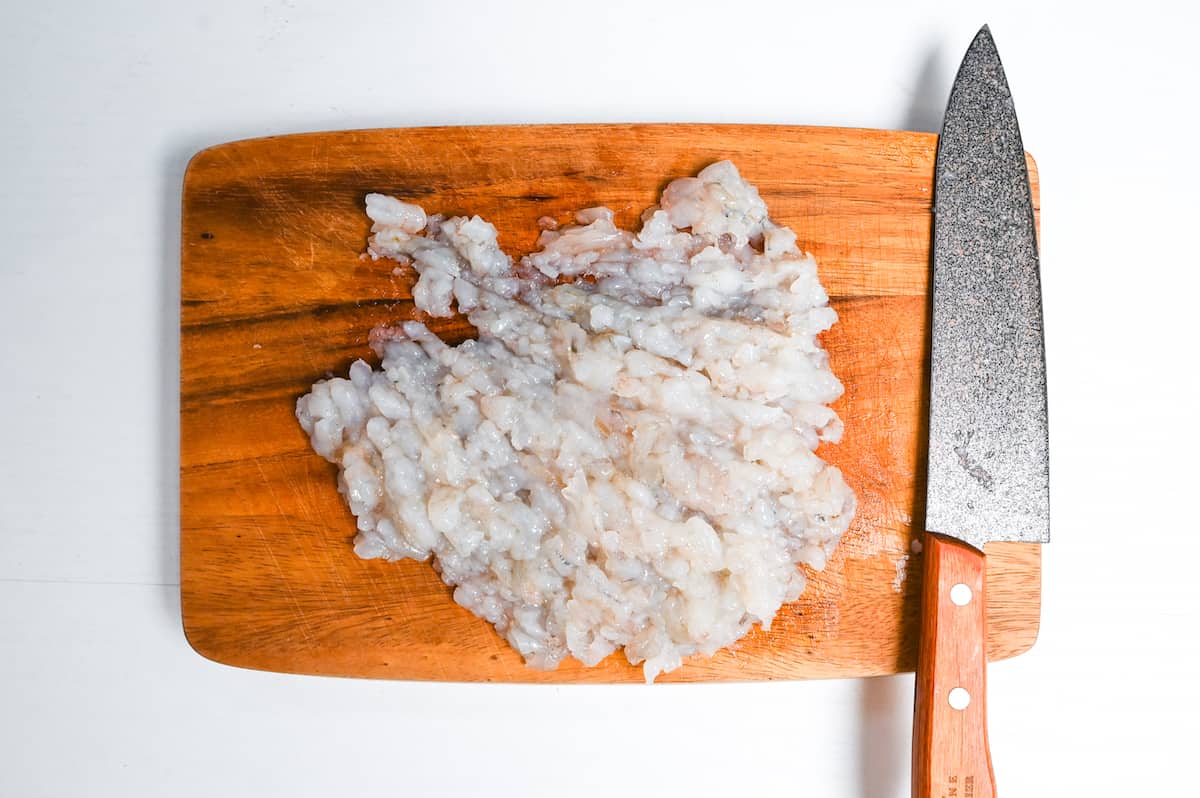
This takes about 2 minutes of active chopping, and the uneven texture is exactly what you are aiming for.
I ran this test myself, and the difference was clear. The food processor turns shrimp into a uniform paste that cooks into a dense, almost rubbery interior. Knife-chopping gives you two textures at once: a fine paste that binds everything together, and small chunks that stay firm and snappy when cooked. That contrast is what makes this such a great gyoza filling.
iii. Transfer to a mixing bowl and you are ready to build the filling.
i. Add your seasonings directly to the bowl with the chopped shrimp and mix everything together with a fork or chopsticks, stirring in one direction until the filling pulls together into a cohesive, slightly sticky mass.
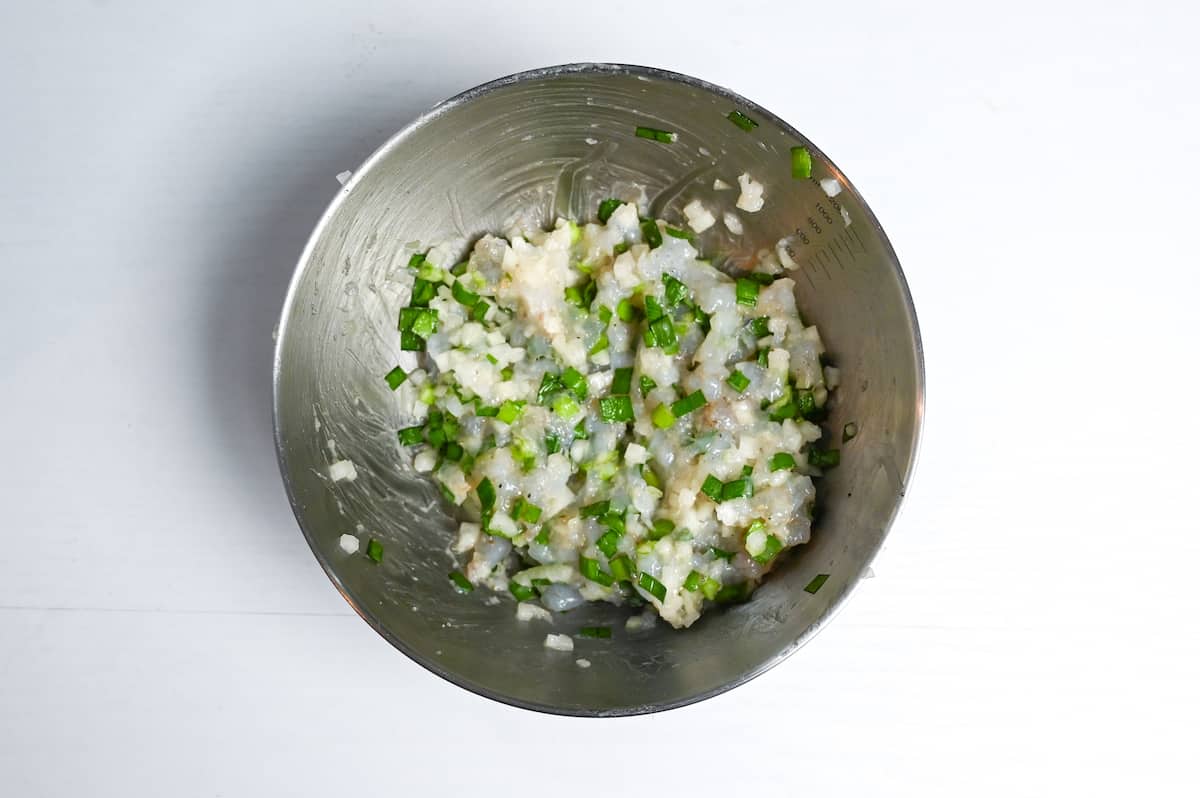
The mixture should hold its shape when you scoop a spoonful, which tells you it is ready.
ii. Cover and refrigerate for at least 10 minutes while you set up your wrapping station.
The cornstarch in this filling is not just a filler. It wraps around the shrimp and locks in moisture during cooking, which keeps the filling tender and bouncy rather than tight and chewy. It also helps the filling hold together cleanly when you fold each wrapper. Do not skip it.
i. Lay a gyoza wrapper flat in your palm and spoon about 1 tablespoon of filling into the center, spreading it slightly with the back of the spoon but keeping a clear border around the edge.
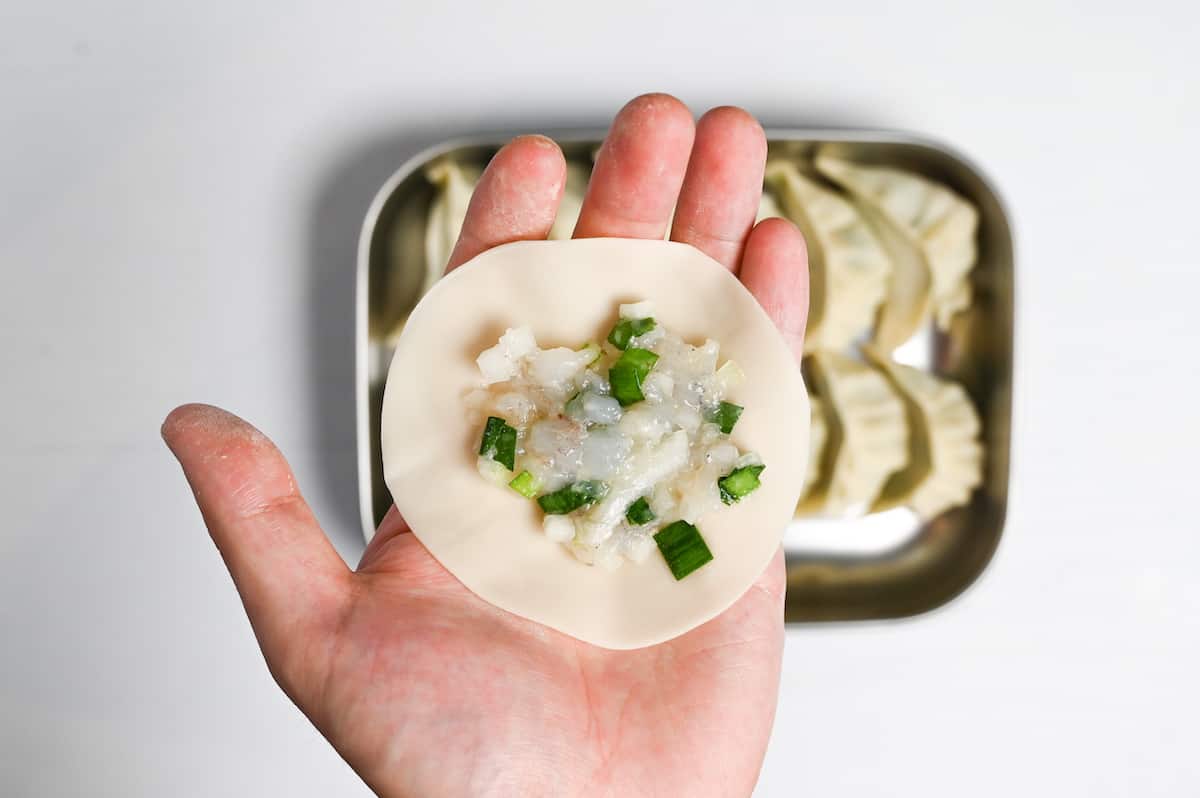
ii. Dip your fingertip in water and run it along the entire top half of the wrapper edge. This wet border is what creates the seal, so make sure you cover the full arc.
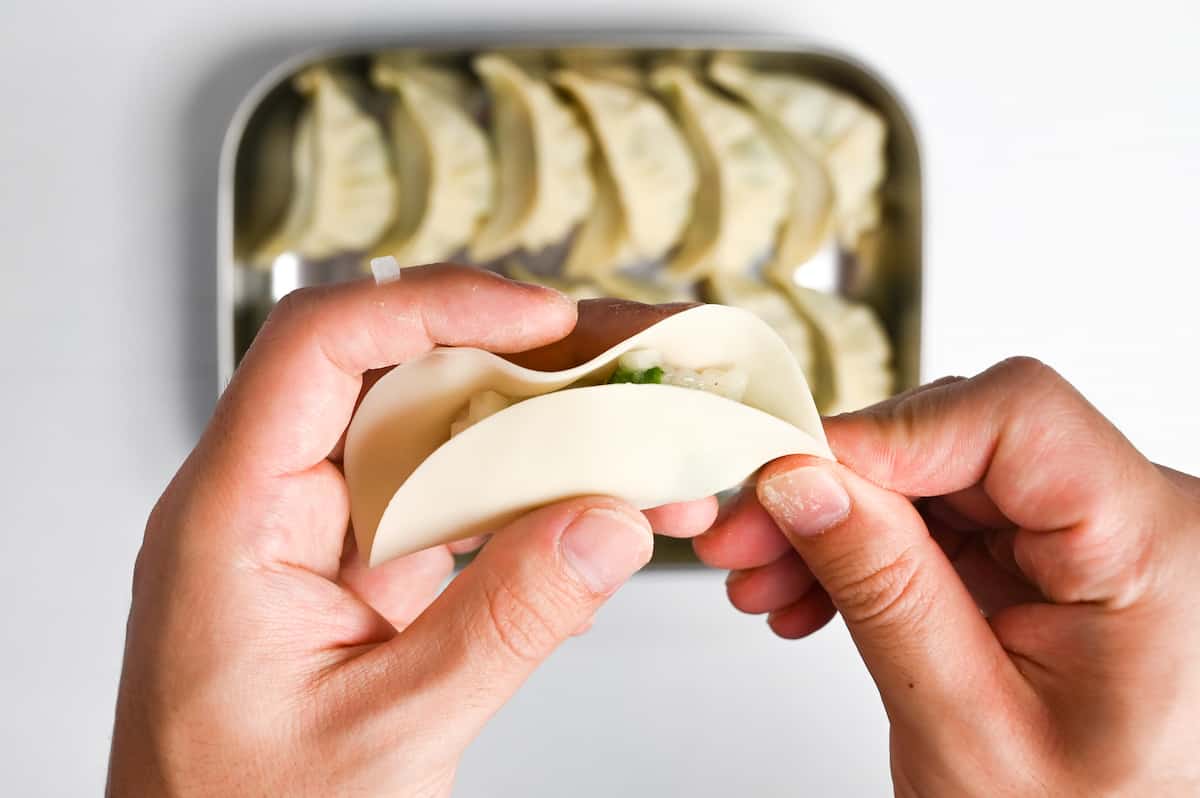
iii. Fold the wrapper in half over the filling to meet the wet edge, then press the center point to anchor it. Working from that center point outward, pinch and pleat the front layer of dough toward the back in small folds, pressing firmly after each one to seal. Aim for 4-5 pleats on each side of center, which keeps the shape stable and gives you an even crimp all the way across.
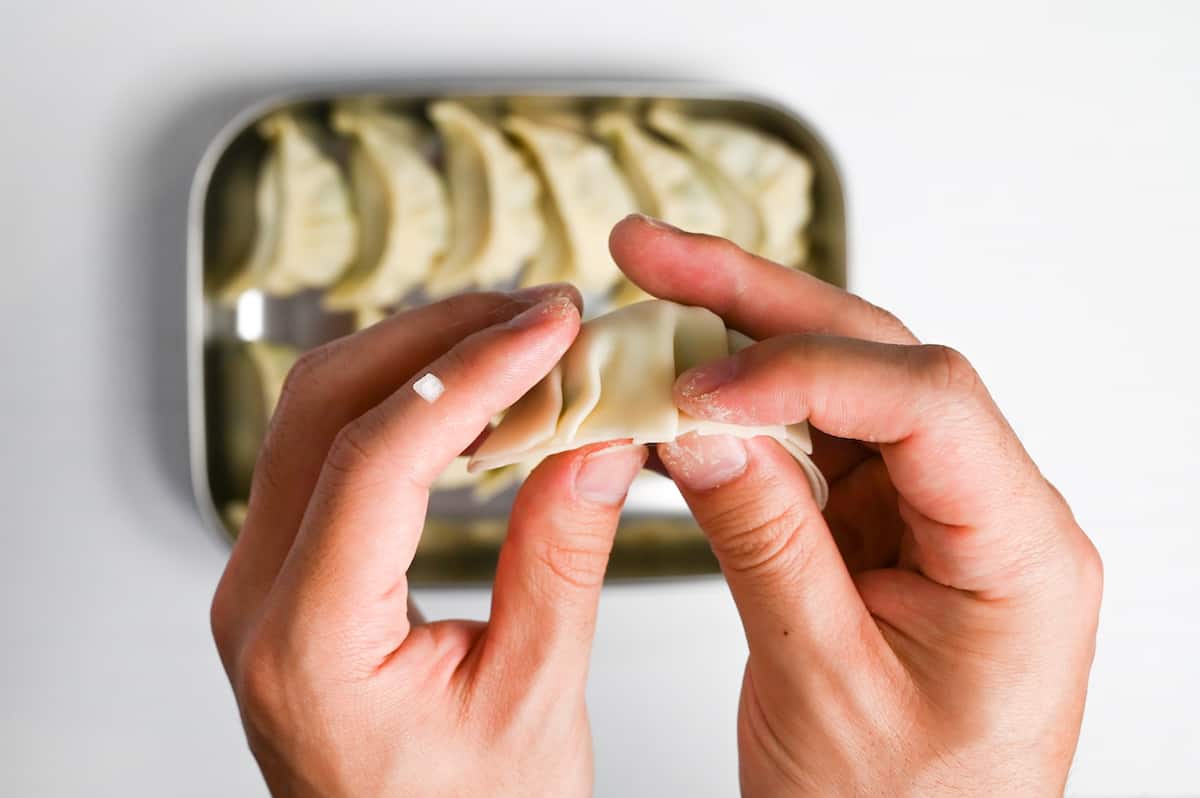
Here is what might help: anchor the center first, then work in one direction before switching. 4-5 pleats is the right number for beginners because it is forgiving if they are uneven. The water seal does more structural work than the pleats anyway, so press each fold firmly and you will be fine.
i. Heat a wide skillet over medium heat, add a thin layer of oil, and arrange the gyoza flat-side down in a single layer without letting them touch.
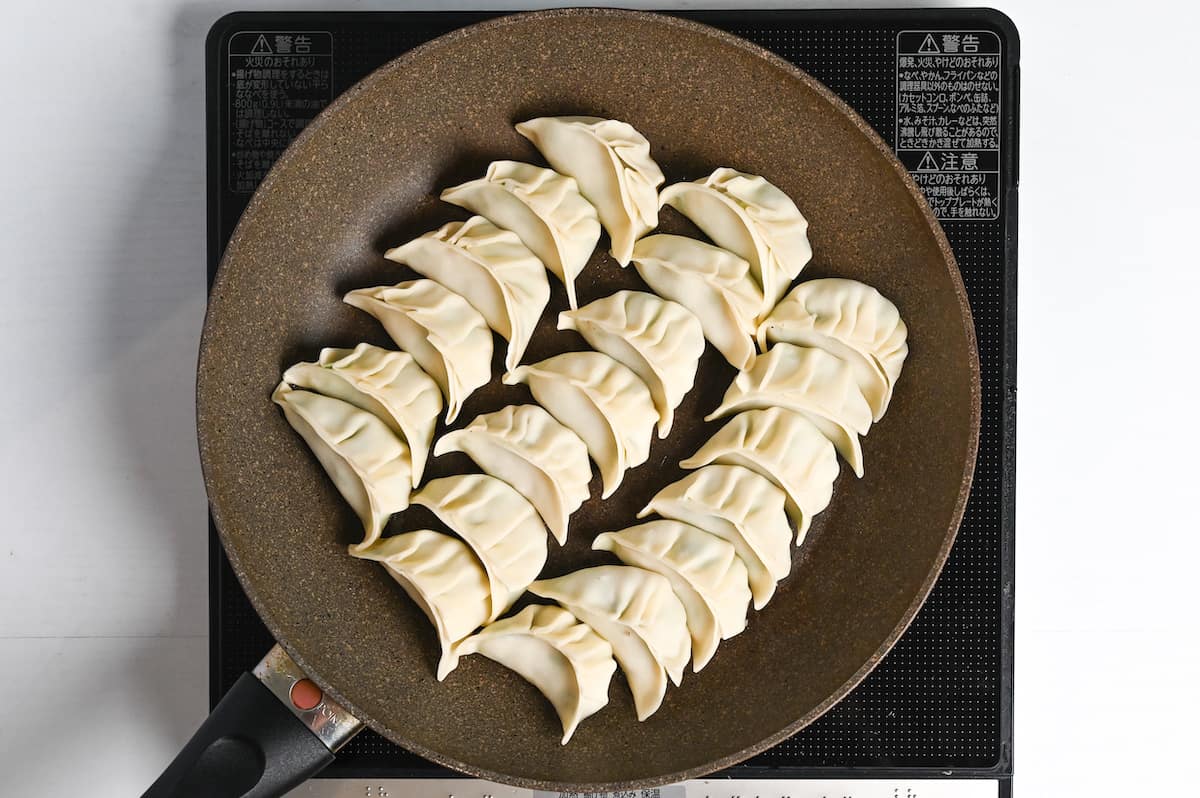
ii. Let them fry undisturbed for 3 to 5 minutes until the bottoms turn a deep, even golden brown. Resist the urge to nudge or lift them early. That direct contact with the hot pan is building the crust, and you want it fully set before you introduce any steam.
The sear at this stage is not just about color. When the pan surface is hot enough to trigger the Maillard reaction, this step develops the savory, slightly caramelized flavor in the wrapper. That flavor cannot happen once liquid enters the pan, so give the crust its full time before moving to the next step.
i. Pour enough boiling water into the pan to come about one-third of the way up the gyoza, then immediately cover with a tight lid. Let them steam over medium heat for 3 to 4 minutes.
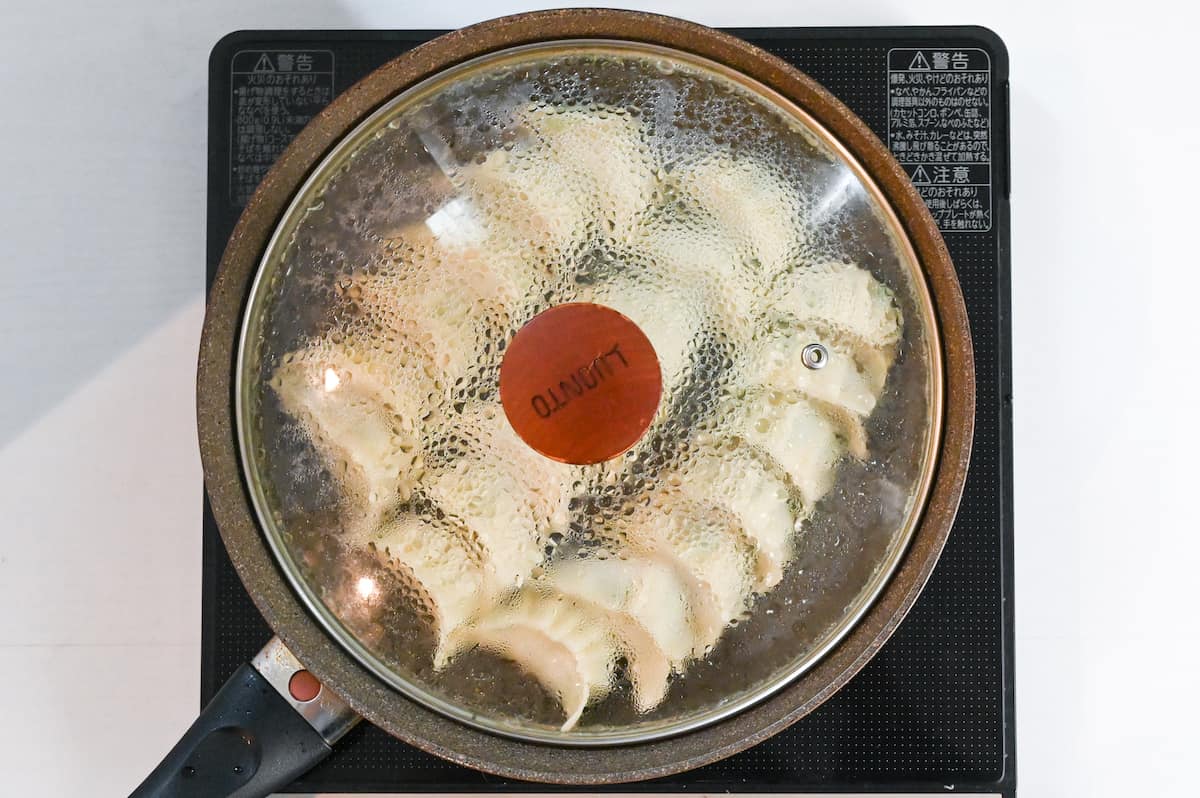
ii. Shrimp cooks fast, so keep the time short. When the wrapper looks translucent and only a thin ring of liquid remains in the pan, remove the lid and let the remaining water cook off completely. The bottoms will re-crisp in about 1 minute as the pan dries out.
This was the most useful thing I learned testing gyoza recipes. Cold or even warm water drops the pan temperature dramatically, which stalls the cooking and produces a gummy wrapper. Boiling water keeps the temperature high enough to gelatinize the starch in the wrapper properly, giving you that translucent, slightly chewy texture that is characteristic of well-made gyoza. Fill your kettle before you start frying so it is ready to pour the moment the crust is set.
i. Combine ponzu, soy sauce, toasted sesame oil, and chili oil in a small bowl and stir together.
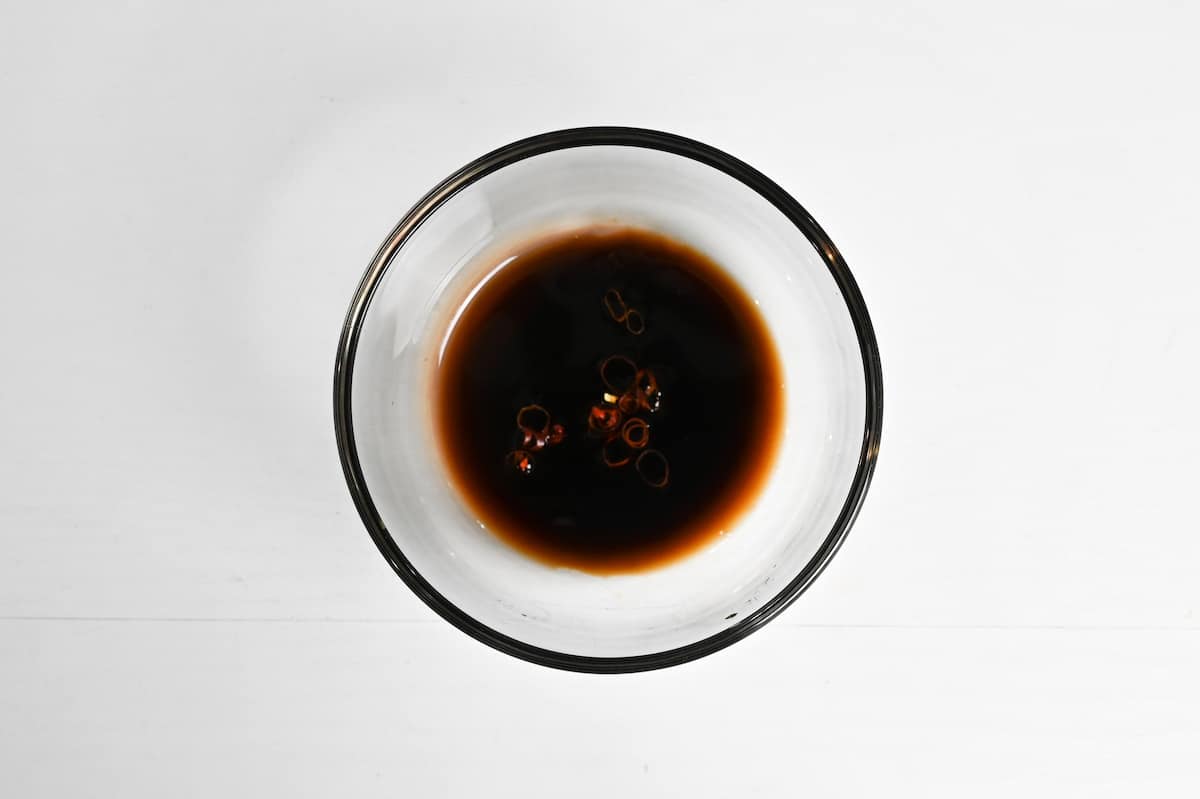
This sauce takes about 90 seconds and you can make it while the gyoza are steaming.
i. Slide a thin spatula under the gyoza and transfer them crispy-side up onto a serving plate, or invert the pan directly over a plate if you want a dramatic presentation with the golden bases facing up.
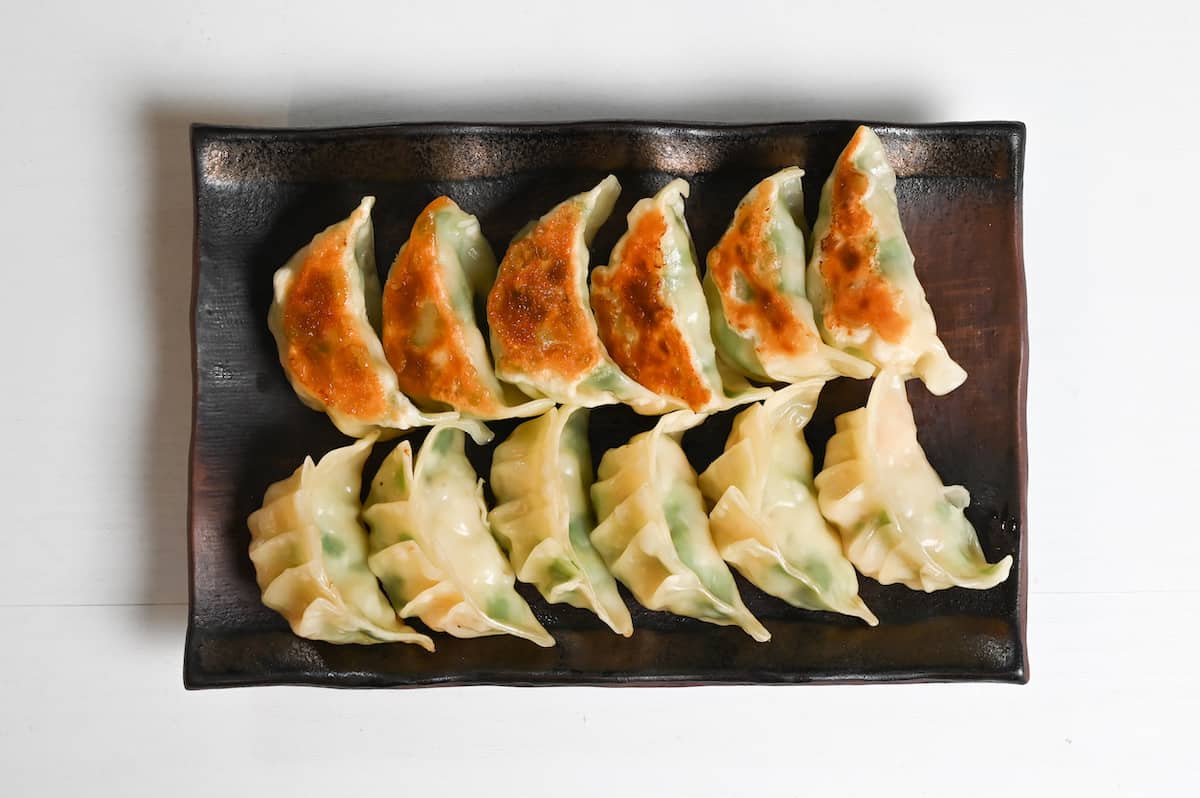
ii. Squeeze fresh lemon juice over the top right before serving. Set the dipping sauce alongside and eat them while they are hot.
If you follow the default recipe, it will yield 2-3 main servings, or 4-5 side servings.

Essential Tips & Tricks
- Use fresh, raw shrimp and chop them by hand with a knife. A food processor creates a uniform paste that turns dense and rubbery when cooked.
- Always use boiling water for the steam phase, not cold or room temperature. Cold water drops the pan temperature, which stalls the cook and makes the wrapper gummy instead of translucent and chewy.
- Do not move or lift the gyoza during the initial fry. The crust needs 3 to 5 minutes of uninterrupted contact with the hot pan to develop a proper Maillard sear.
- Wrap and cook the gyoza promptly, or freeze them immediately. Assembled gyoza left in the fridge for more than an hour will absorb moisture from the filling into the wrapper, making them soggy and prone to tearing in the pan.
With these simple tips in mind, you’re set for success every time you make shrimp gyoza.
Storage & Meal Prep
Once you make these, you will want to have a batch ready at all times. Good news: they store and freeze beautifully.
Fridge: Store cooked gyoza in an airtight container for up to 2 to 3 days. The crispy base will soften, but the filling holds up well.
Freezer: Freeze uncooked, assembled gyoza on a parchment-lined tray dusted with starch until solid (at least 12 hours), then transfer to a freezer bag. They keep for up to 1 month. Cook them straight from frozen, do not thaw first, or the filling will leak and the wrappers will tear.
Meal Prep: Make the filling and dipping sauce up to 1 day ahead and store them separately in the fridge. Wrap the gyoza the day you plan to cook them, or wrap and freeze immediately. Do not refrigerate assembled, uncooked gyoza for more than 1 hour, the filling moisture will soak through the wrappers. Always freeze them instead.
Reheating: Place leftover gyoza on a lightly oiled skillet over medium heat for 2 to 3 minutes to re-crisp the base, then add a splash of water, cover, and steam for 1 minute to warm the filling through.
What to Serve With This Recipe
Pan-Fried Shrimp Dumplings FAQ
You can, but the texture will not be as good. Pre-cooked shrimp has already undergone protein denaturation, so cooking it again inside the gyoza makes the filling dry and chewy.
Yes. A simple half-moon fold (seal the edges with a fork press) works fine. The pleats are traditional and help the gyoza stand upright in the pan, but they are not required for a good seal or flavor.
Three possible causes: not enough oil, pan temperature too low, or you moved them too soon. Use a generous layer of oil, make sure the pan is properly hot before adding the gyoza, and wait until the base is fully golden before touching them. A properly seared gyoza releases itself from the pan naturally.

More Japanese Appetizers
And if you want even more ideas, check out my full collection of Japanese appetizers!
Did You Try This Recipe?
I would love to hear your thoughts!
💬 Leave a review and ⭐️ rating in the comments below. 📷 I also love to see your photos – submit them here!
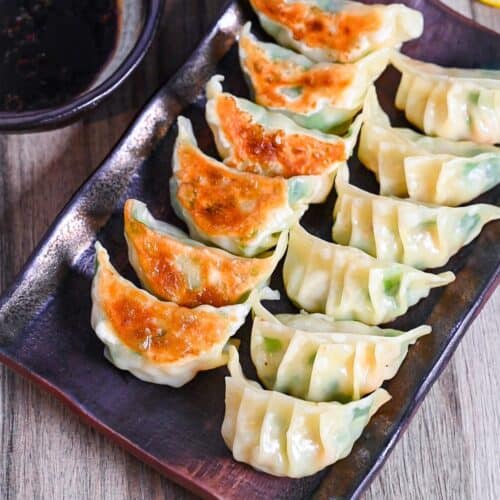
Pan-Fried Shrimp Gyoza Dumplings (Prawn Potstickers)

Ingredients
- 200 g shrimp raw, deshelled and deveined
- ⅛ tsp ground black pepper or white pepper
- 1 tsp Japanese soy sauce (koikuchi shoyu)
- 1 tbsp sake
- 3 cloves grated garlic or garlic paste
- 1 tsp grated ginger root or ginger paste
- 1 tsp scallop stock powder or chicken/vegetable bouillon powder
- ½ tbsp cornstarch
- 30 g garlic chive(s) finely chopped
- 50 g onion finely diced
- 20+ gyoza wrappers
- 1 tbsp cooking oil neutral
- 150 ml freshly boiled water
- lemon juice to drizzle, optional
Sauce
- 1 tbsp ponzu sauce
- 1 tsp Japanese soy sauce (koikuchi shoyu)
- ½ tsp toasted sesame oil
- ¼ tsp chili oil (rayu) optional
- dried red chili pepper finely chopped, or chili flakes, optional
The ingredient brands and tools I trust are in my Japanese pantry guide and my cooking tools guide.
Can’t find certain Japanese ingredients? See my substitution guide here.
Instructions
- Roughly chop 200 g shrimp with a knife until it's pasty with small chunks for texture.

- Scrape the chopped shrimp into a mixing bowl and add ⅛ tsp ground black pepper, 1 tsp Japanese soy sauce (koikuchi shoyu), 1 tbsp sake, 3 cloves grated garlic, 1 tsp grated ginger root, 1 tsp scallop stock powder, ½ tbsp cornstarch, 30 g garlic chive(s) and 50 g onion. Mix until all the ingredients are evenly distributed.
- Hold a gyoza wrapper in you palm and add 1 tbsp of the filling. Spread it evenly over the wrapper leaving a finger-width border around the edge.
- Dip your finger in water and spread it across the border. Fold the wrapper in half without letting the sides touch yet, then pinch one corner to start the pleat.
- Fold and press to make the pleats until the gyoza is sealed. Aim for 4-5 pleats. Place on a lightly floured plate and repeat until all of the filling and wrappers are used up.
- Heat a frying pan over medium and add 1 tbsp cooking oil. Once hot, place the gyoza in the pan with the flat side making full contact with the base of the pan, and fry until underneath is golden and crispy (approx 3-5 minutes).
- Once browned, pour 150 ml freshly boiled water around the pan while avoiding the tops of the gyoza, and cover with a lid. Cook until the liquid is almost gone.
- While you wait, mix 1 tbsp ponzu sauce, 1 tsp Japanese soy sauce (koikuchi shoyu), ½ tsp toasted sesame oil and ¼ tsp chili oil (rayu) in a small bowl. If you like a spicy kick, you can add some chopped dried red chili pepper.

- Remove the pan's lid and continue to cook until the liquid is completely gone, then take the pan off of the heat.
- Flip the gyoza onto a serving plate, drizzle with lemon juice and enjoy with your homemade dipping sauce!
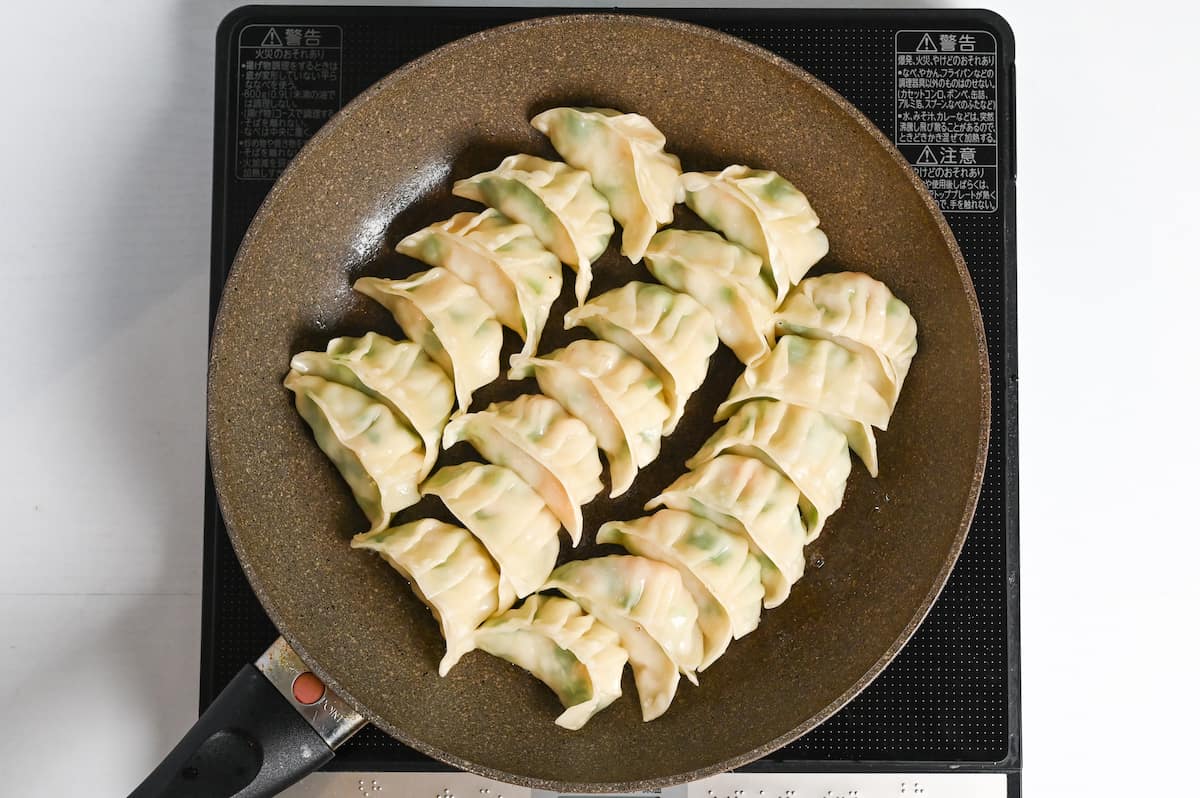

Thank you for this wonderful recipe! I used your gyoza wrapper recipe and also the shrimp filling…was a beautiful treat for a small dinner party appetizer! I found it quite hard to shape the gyoza though…and the pleats didn’t come out too nicely…but I think that will just take some practice – so I will make these more often!!!
The panfrying and then steaming turned out perfectly browned bottoms and soft tops! Pic is of the gyoza before cooking.
Hi radhaks,
Thank you for your comment! I’m really happy you tried both the filling and the wrappers! The pleats can definitely be a challenge, especially with homemade dough, but it gets easier the more you do it for sure! Your photo looks great — thanks for sharing your delicious work!
Yuto
Hi Yuto, I’m excited to try your homemade wraps and prawn gyoza recipes for a dinner party tomorrow, but can I make the filled gyozas beforehand and store them in the fridge for a day, uncooked ?
Hi Dorinela,
Thank you for your question! Freezing is actually the better option in this case.
Unfortunately, there are some risks with refrigerating uncooked gyoza and prawn filling. The moisture from the prawn filling can seep into the wrappers, making them soggy, fragile, and prone to tearing. Also, homemade wrappers are more delicate than store-bought ones and absorb moisture more quickly, which can also cause the gyoza to stick to each other or to the container.
Freezing works much more reliably, even if it’s just overnight. Arrange the filled, uncooked gyoza in a single layer on a tray lined with parchment paper and freeze them until solid. Once frozen, transfer them to an airtight container or freezer bag if needed. When you’re ready to cook, you can cook them straight from frozen, just add a few extra minutes to the cooking time.
Alternatively, if freezing isn’t ideal for you, a good alternative is to prepare the filling only today and refrigerate it, then make the wrappers and assemble the gyoza tomorrow before cooking. This way, you’ll get the best texture and flavor, as the crispy base and tender wrapper really shine when freshly assembled.
I hope this helps!
Yuto
Thank you very much for the prompt reply, I was actually concerned about the prawn mixture seeping into the wrappers and making them soggy, so I think I’d better take your advice and freeze the filled gyozas until tomorrow, because I prefer making them tonight to save time for other preparations tomorrow.
Hi Dorinela,
I’m glad that helped! Hope your dinner party goes great! 👍
Yuto
Thank you for the tips and the wonderful recipe ! I made your prawn gyoza recipe with the homemade wrappers (using water from boiling beets for the pink ones) and they turned out delicious! I will definitely make this again, the guests loved it !
Hi Dorinela,
Thank you so much for the kind follow-up and for sharing your photo! They look fantastic, and I love the idea of using beet water for the wrappers. Really happy to hear the dinner party was a success! 🙂
Yuto
I made dinner for my sister’s family and they requested gyoza so i tried out this recipe and they turned out great. Everyone loved them.
Hi Emily,
Thank you so much for making them for the family! It means a lot that you shared my recipes with them, and I’m really glad everyone enjoyed it together! 🙂
Yuto