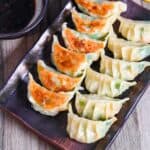
Pan-Fried Shrimp Gyoza Dumplings (Prawn Potstickers)
Ingredients
- 200 g shrimp raw, deshelled and deveined
- ⅛ tsp ground black pepper or white pepper
- 1 tsp Japanese soy sauce (koikuchi shoyu)
- 1 tbsp sake
- 3 cloves grated garlic or garlic paste
- 1 tsp grated ginger root or ginger paste
- 1 tsp scallop stock powder or chicken/vegetable bouillon powder
- ½ tbsp cornstarch
- 30 g garlic chive(s) finely chopped
- 50 g onion finely diced
- 20+ gyoza wrappers
- 1 tbsp cooking oil neutral
- 150 ml freshly boiled water
- lemon juice to drizzle, optional
Sauce
- 1 tbsp ponzu sauce
- 1 tsp Japanese soy sauce (koikuchi shoyu)
- ½ tsp toasted sesame oil
- ¼ tsp chili oil (rayu) optional
- dried red chili pepper finely chopped, or chili flakes, optional
Instructions
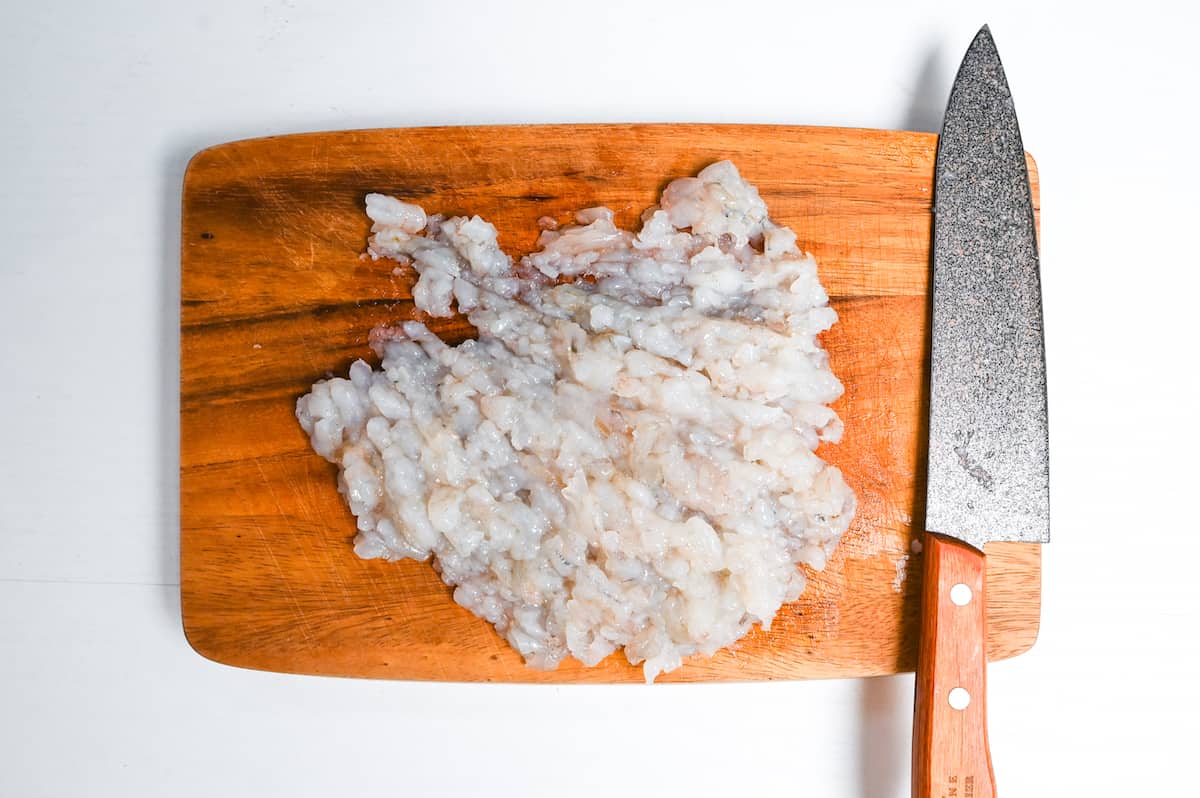
- Roughly chop 200 g shrimp with a knife until it's pasty with small chunks for texture.
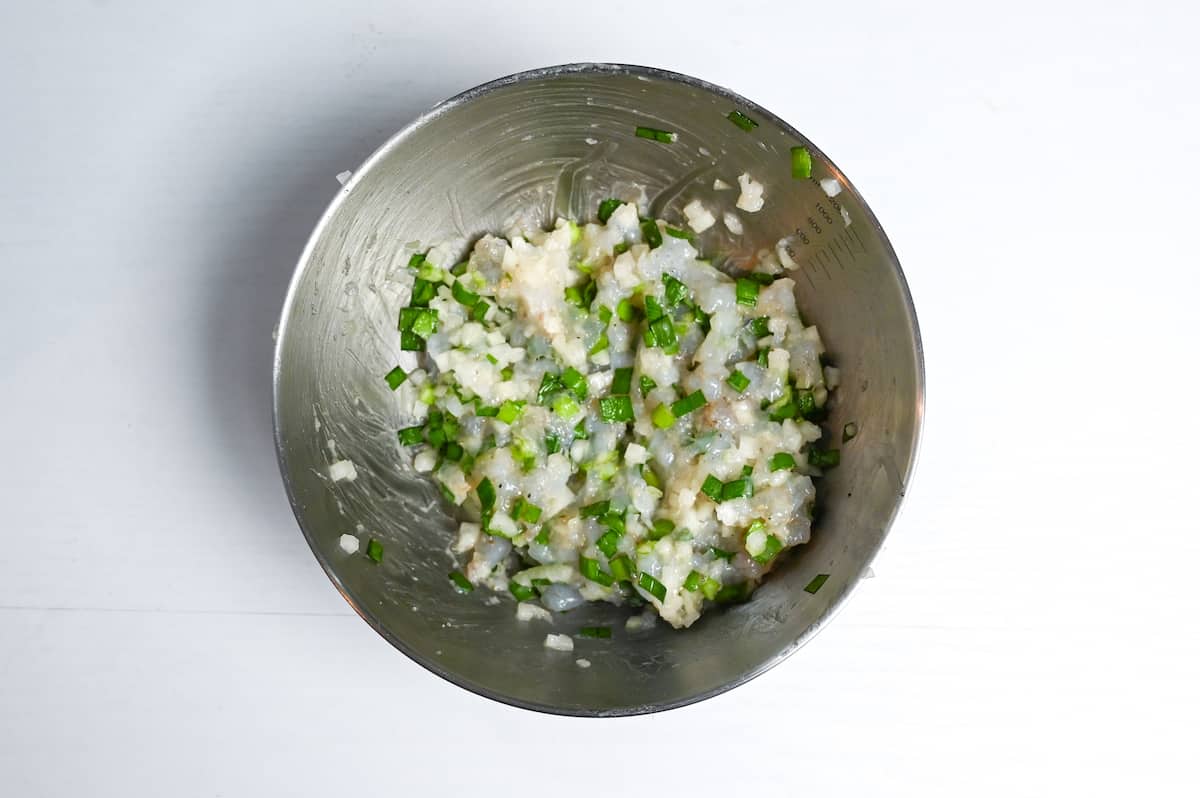
- Scrape the chopped shrimp into a mixing bowl and add ⅛ tsp ground black pepper, 1 tsp Japanese soy sauce (koikuchi shoyu), 1 tbsp sake, 3 cloves grated garlic, 1 tsp grated ginger root, 1 tsp scallop stock powder, ½ tbsp cornstarch, 30 g garlic chive(s) and 50 g onion. Mix until all the ingredients are evenly distributed.
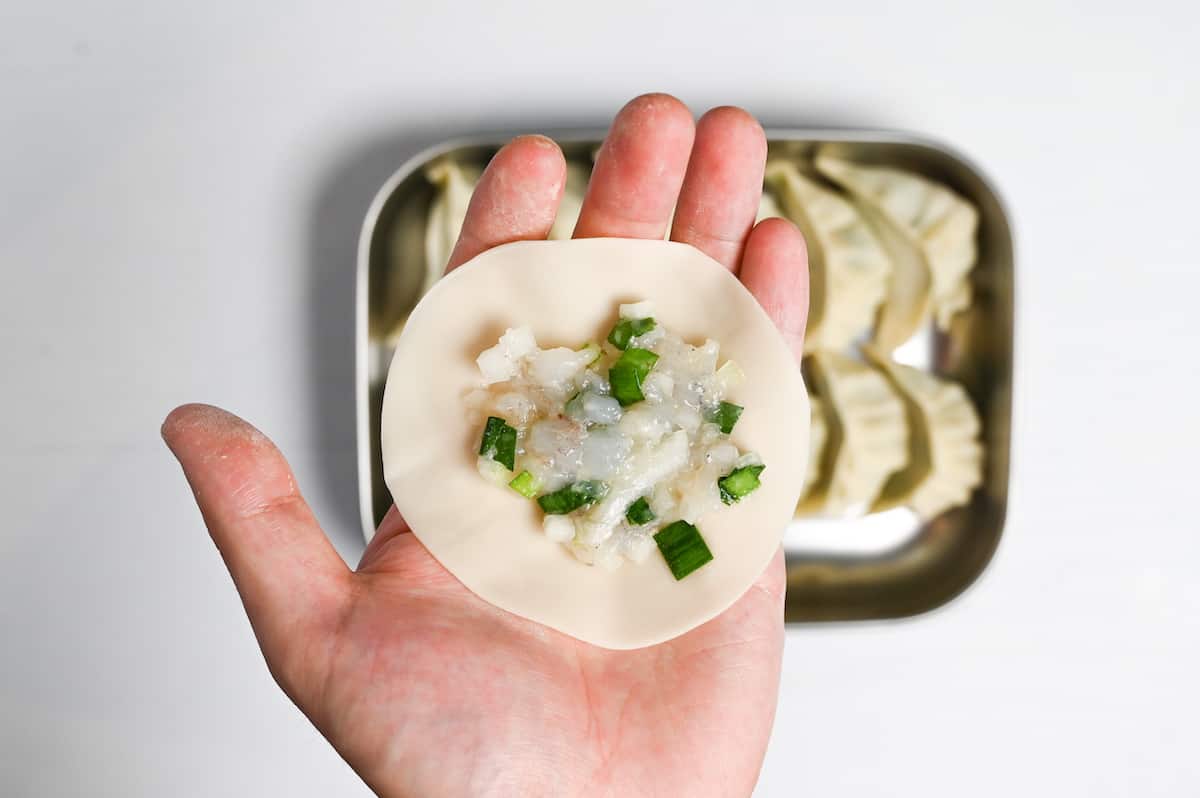
- Hold a gyoza wrapper in you palm and add 1 tbsp of the filling. Spread it evenly over the wrapper leaving a finger-width border around the edge.
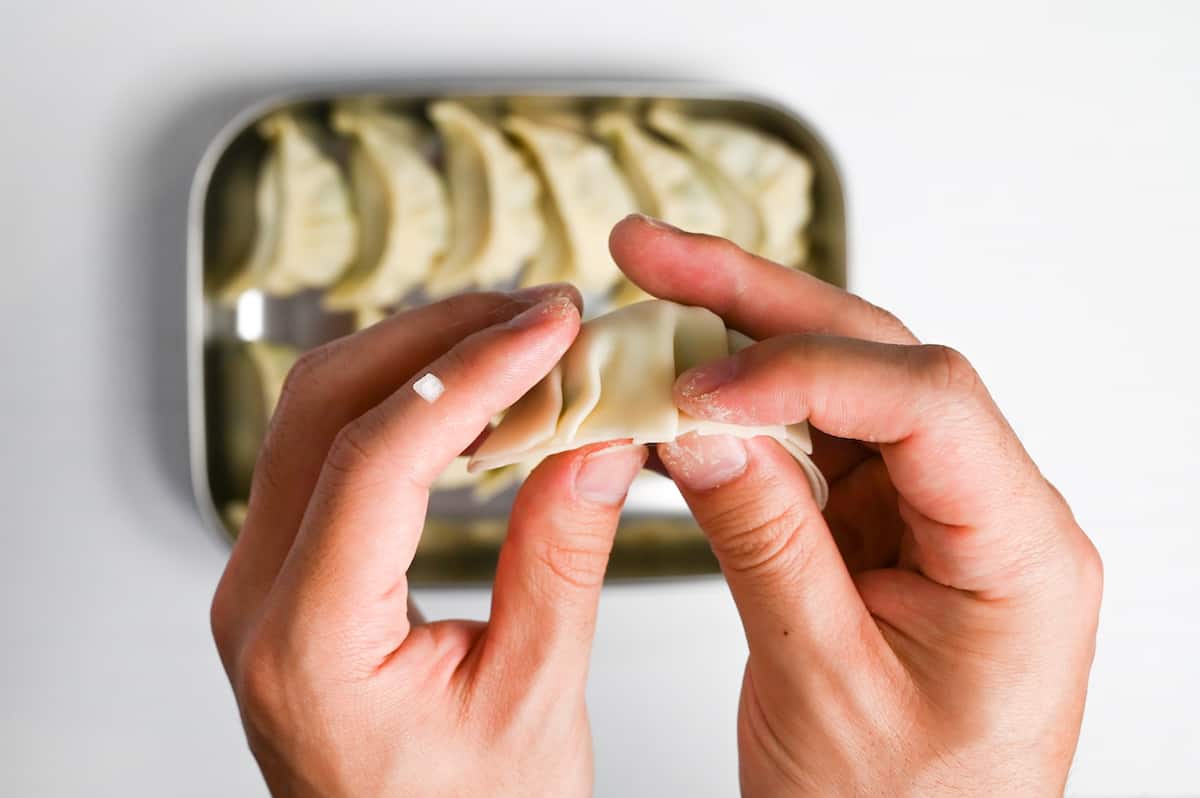
- Dip your finger in water and spread it across the border. Fold the wrapper in half without letting the sides touch yet, then pinch one corner to start the pleat.
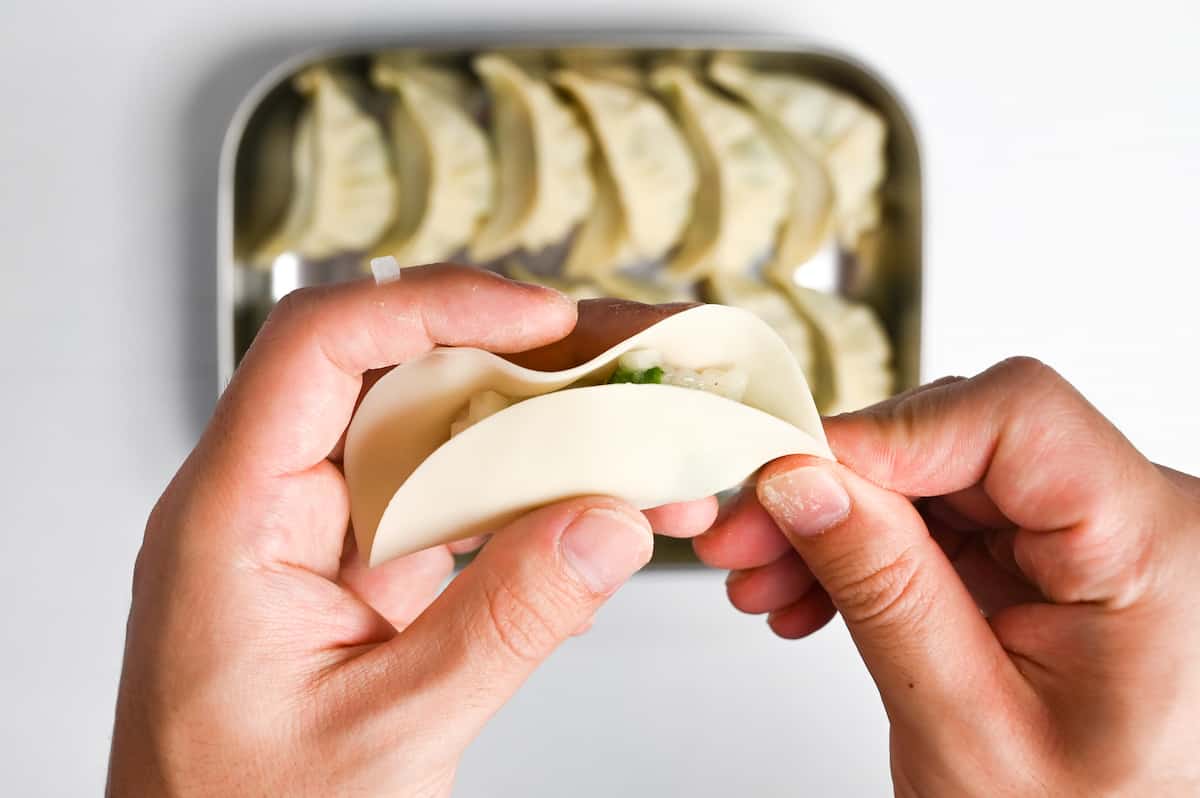
- Fold and press to make the pleats until the gyoza is sealed. Aim for 4-5 pleats. Place on a lightly floured plate and repeat until all of the filling and wrappers are used up.
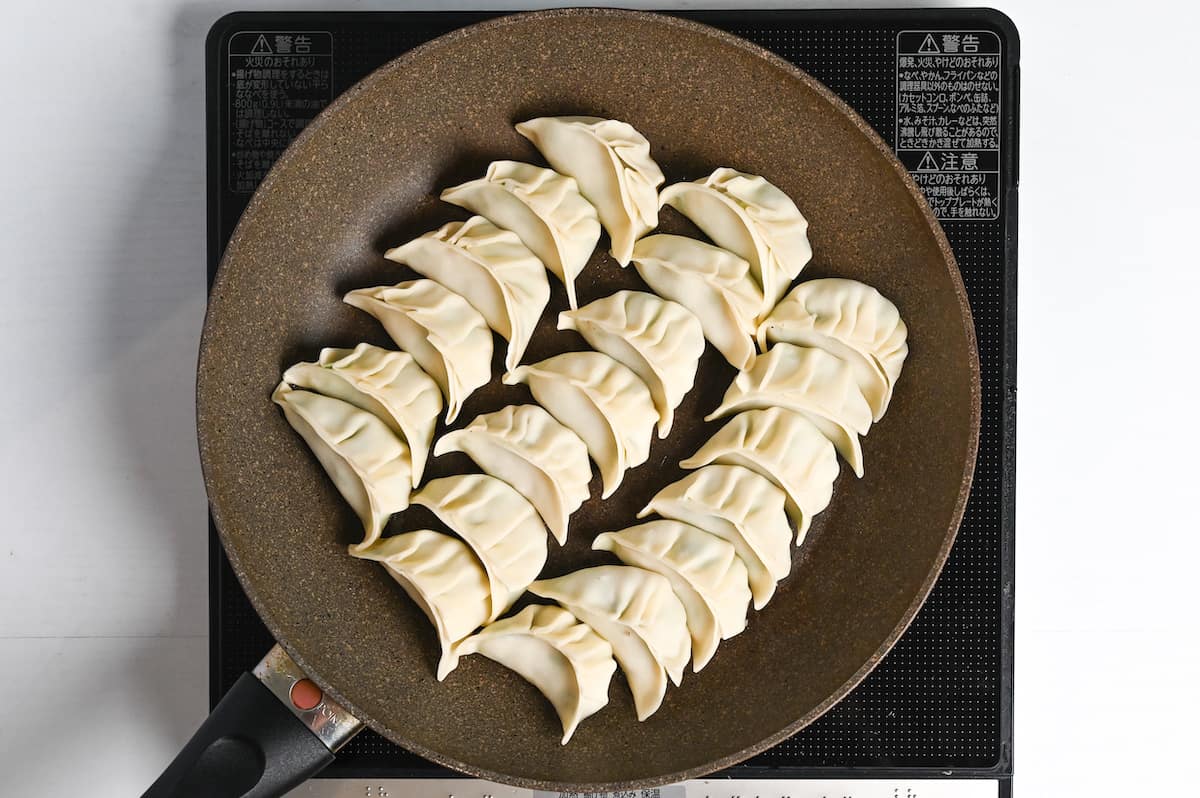
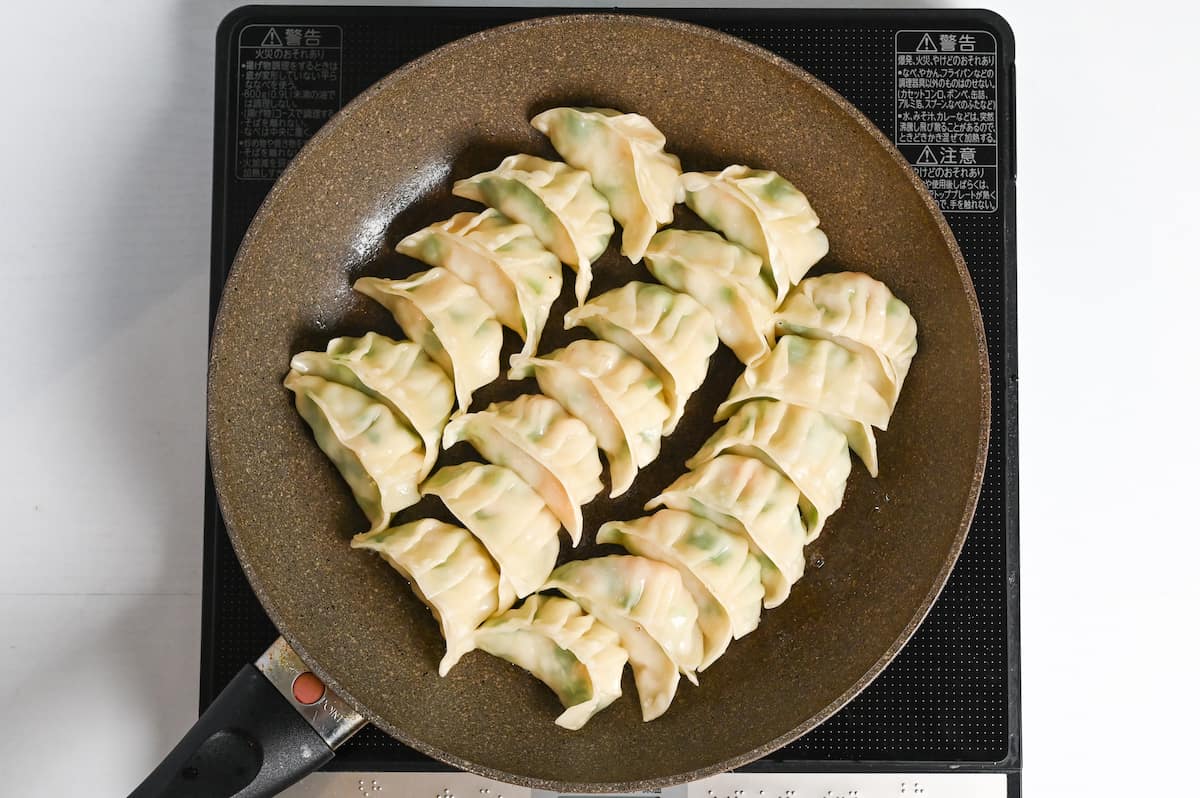
- Heat a frying pan over medium and add 1 tbsp cooking oil. Once hot, place the gyoza in the pan with the flat side making full contact with the base of the pan, and fry until underneath is golden and crispy (approx 3-5 minutes).
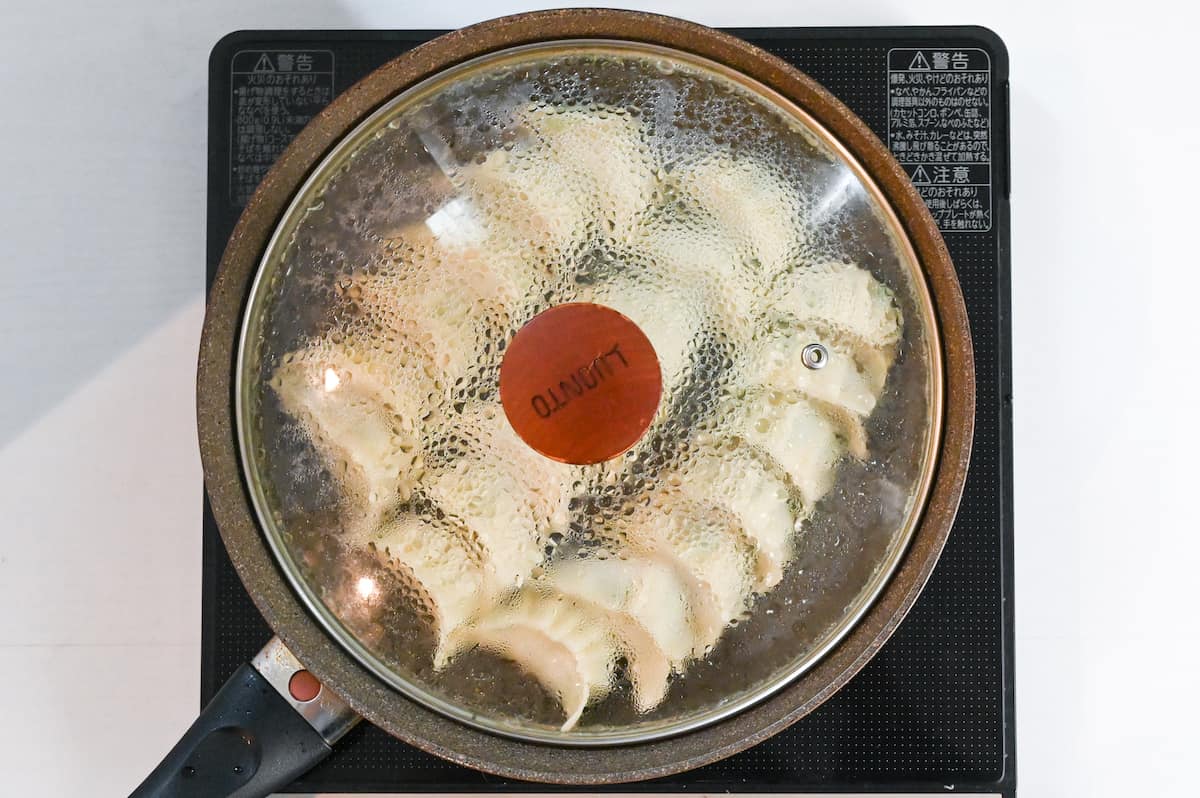
- Once browned, pour 150 ml freshly boiled water around the pan while avoiding the tops of the gyoza, and cover with a lid. Cook until the liquid is almost gone.
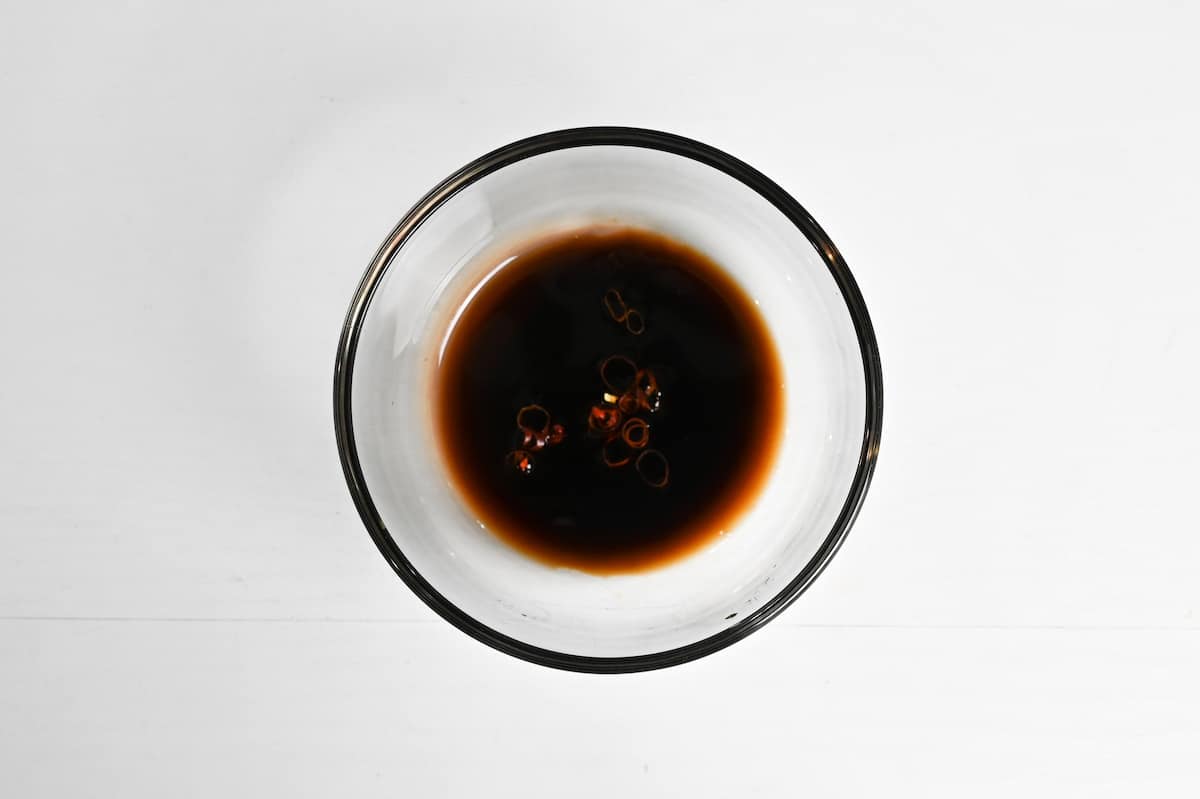
- While you wait, mix 1 tbsp ponzu sauce, 1 tsp Japanese soy sauce (koikuchi shoyu), ½ tsp toasted sesame oil and ¼ tsp chili oil (rayu) in a small bowl. If you like a spicy kick, you can add some chopped dried red chili pepper.
- Remove the pan's lid and continue to cook until the liquid is completely gone, then take the pan off of the heat.
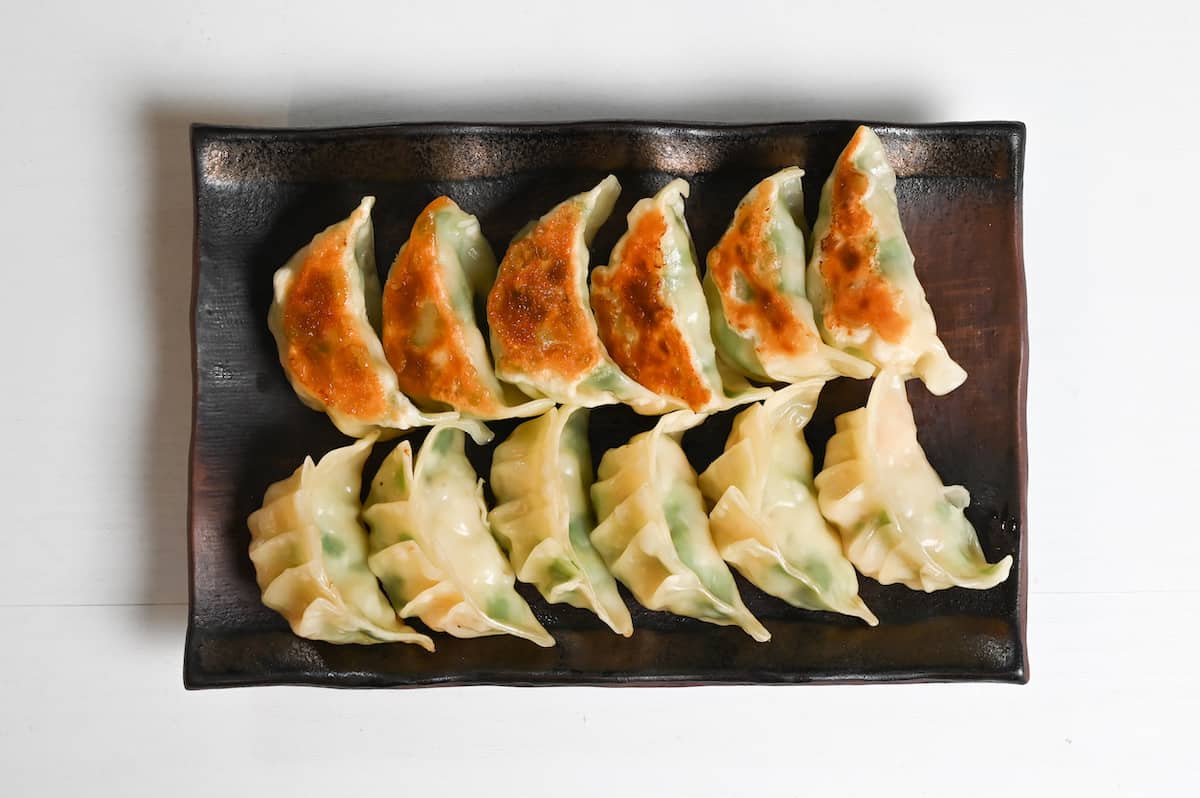
- Flip the gyoza onto a serving plate, drizzle with lemon juice and enjoy with your homemade dipping sauce!
Notes
Raw shrimp is recommended. Pre-cooked shrimp has already gone through protein denaturation. Cooking it again inside the gyoza produces a dry, chewy filling with none of the snap you are aiming for.
Chop by Hand: A food processor turns shrimp into a uniform paste that cooks dense and rubbery. Use a knife and chop until you have a rough mix of fine paste and visible 3-5mm chunks. The uneven texture is what gives the filling its bounce.
Wrap Promptly or Freeze Immediately: Assembled gyoza left in the fridge for more than 1 hour will absorb moisture from the filling into the wrapper, making them soggy and prone to tearing. Either cook right away or lay them on a cornstarch-dusted tray and freeze solid before bagging.
Have your hot water ready when you start frying for efficiency and to prevent burning.
Avoid pouring hot water directly onto the gyoza (which can make them soggy). Instead, pour it around the pan and cover with a lid for even steaming.
Full Recipe QR Code↑↑