

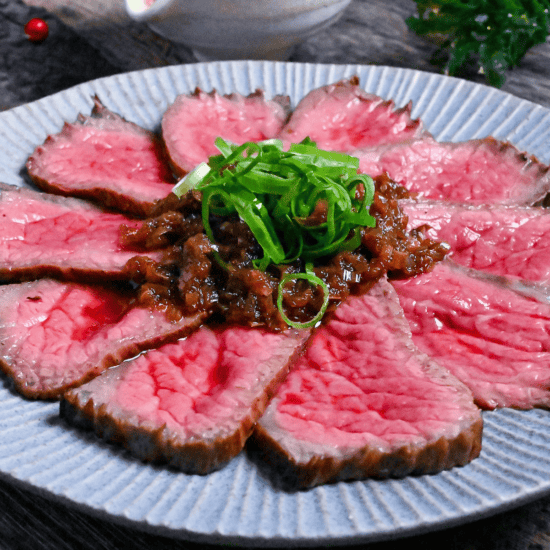


Featured Comment
It took me a while to make it since we experienced a shortage of Daikon here during the last few weeks and I didn’t want to skip it. It was worth the wait: it turned out great, absolutely tender and flavourful.
★★★★★
– Peti
What if Japanese-style roast beef, glossy with soy and dashi, took just about 30 minutes of hands-on time and still felt worthy of a Japanese-inspired Christmas dinner?
This modern yoshoku favorite sears on the stovetop, then bathes in soy sauce, dashi and mirin, no special gear! Here’s how you can make it tonight.

Japanese Roast Beef
Recipe Snapshot
- What is it? Tender Japanese-style stovetop roast beef (“wafu roast beef”) made in a single frying pan, seared, briefly simmered in soy-dashi-sake-mirin, then marinated and sliced thin.
- Flavor profile: Umami-rich, Soy-sweet, Gently aromatic
- Why you’ll love this recipe: It’s restaurant-level Japanese roast beef that feels truly authentic but fits an apartment kitchen. Minimal gear, mostly hands-off, and impressive enough to serve for family and friends.
- Must-haves: A good beef roasting joint, soy sauce, dashi stock
- Skill Level: Easy
Summarize & Save this content on:
What is Japanese-Style Roast Beef?
So, what makes Japanese-style “roast” beef unique? It’s all about the Japanese home cooking traditions. Since most Japanese households don’t have conventional ovens, this version is prepared entirely on the stovetop, no roasting required!
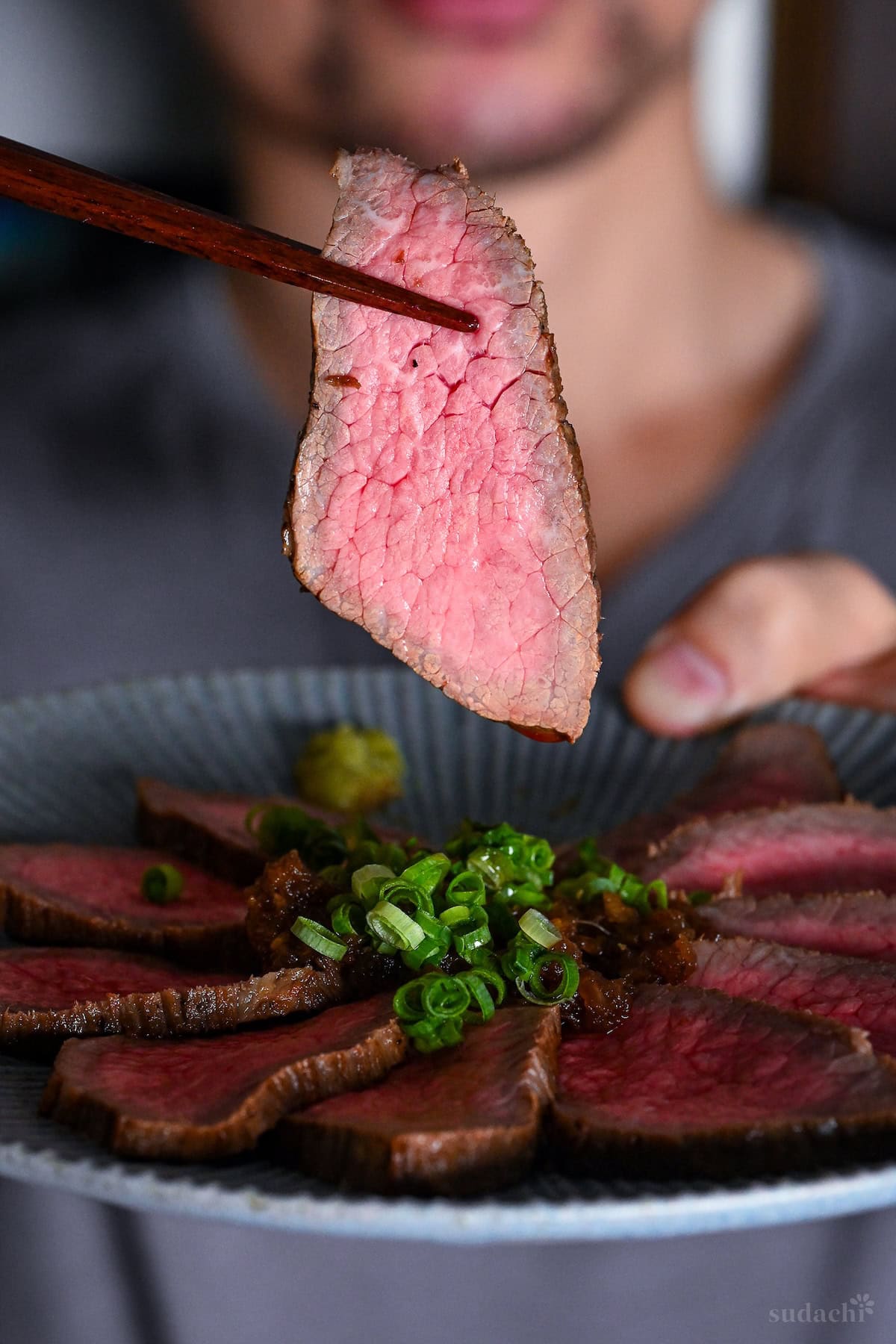
Another thing that sets it apart is that it’s usually served cold, and the meat is thinly sliced and comes with a tasty soy sauce-based dressing and a bit of wasabi for that signature Japanese touch. When my wife tasted this dish, she said it reminded her of sashimi. I can see where she gets the idea. It’s served rare, goes great with wasabi (and rice), and it’s tender and addictive!
Lately, this dish has become pretty popular as a topping for rice. It’s called “roast beef don,” which is basically a donburi style rice bowl with sliced roast beef on top. The recipe I’m sharing today is perfectly suited for this trendy way too!
Japanese Roast Beef Ingredients
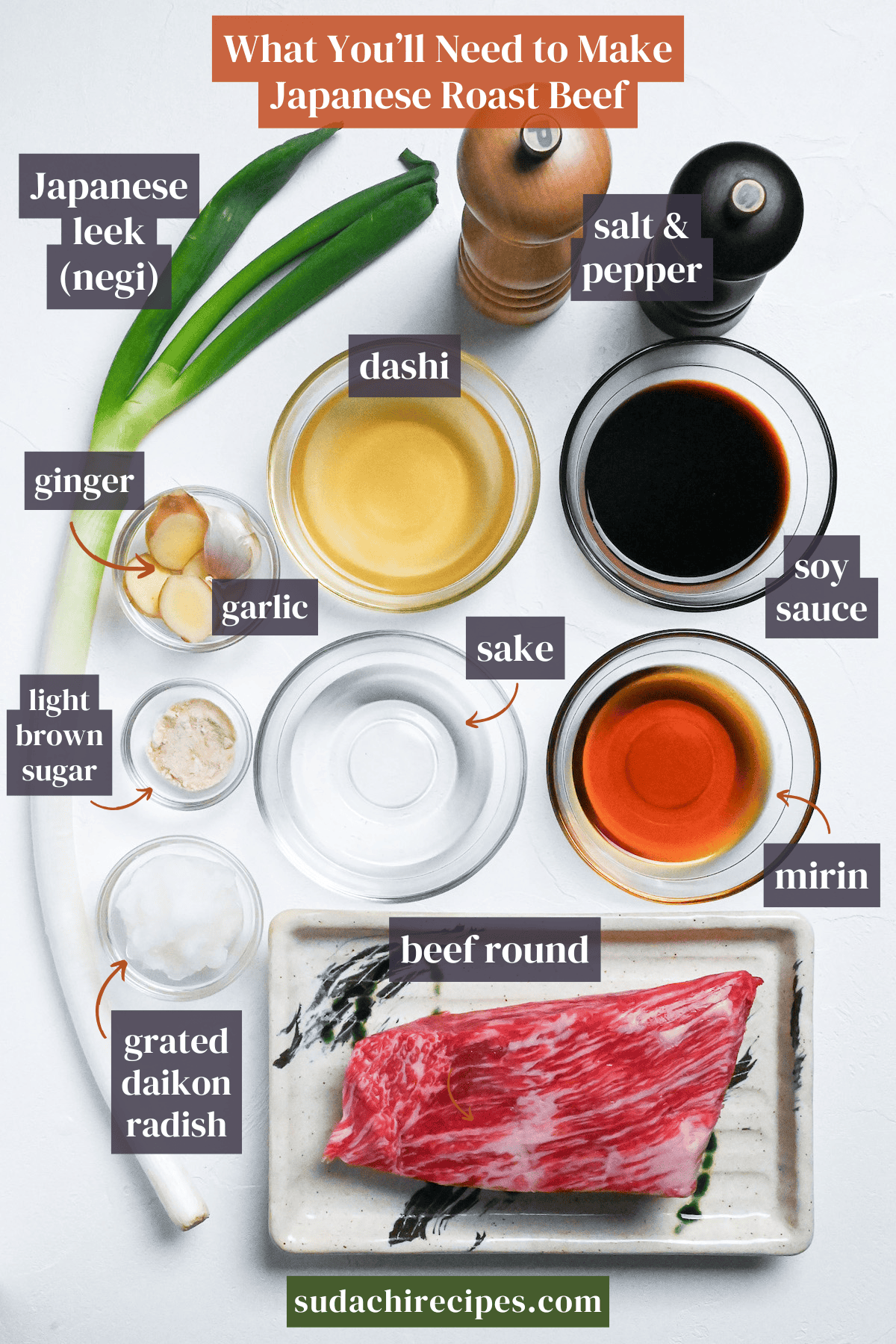
- Beef Roasting Joint: A beef roasting joint, such as top round, is a lean, log-shaped cut of beef that’s perfect for slicing into thin, even pieces. You can pick up a suitable roast at any regular grocery store or splurge on a Japanese-style roast from an Asian market butcher if you like.
- Aromatics: Japanese long leek (naganegi) or regular leek, plus fresh garlic and ginger, form the classic aromatic trio that quietly perfumes the meat and sauce.
- Broth Base: The broth base is a very Japanese mix of dashi (light kombu-bonito stock), Japanese soy sauce, mirin, sake , and a touch of light brown sugar. Together they create the umami-dense braising liquid and marinade that stains the beef a beautiful mahogany, seasons it all the way through, and doubles as the silky sauce that makes this Japanese roast beef taste restaurant-level with almost no extra work.
How to Make My Japanese Roast Beef
If you prefer to watch the process in action, check out my YouTube video of this Japanese roast beef recipe!

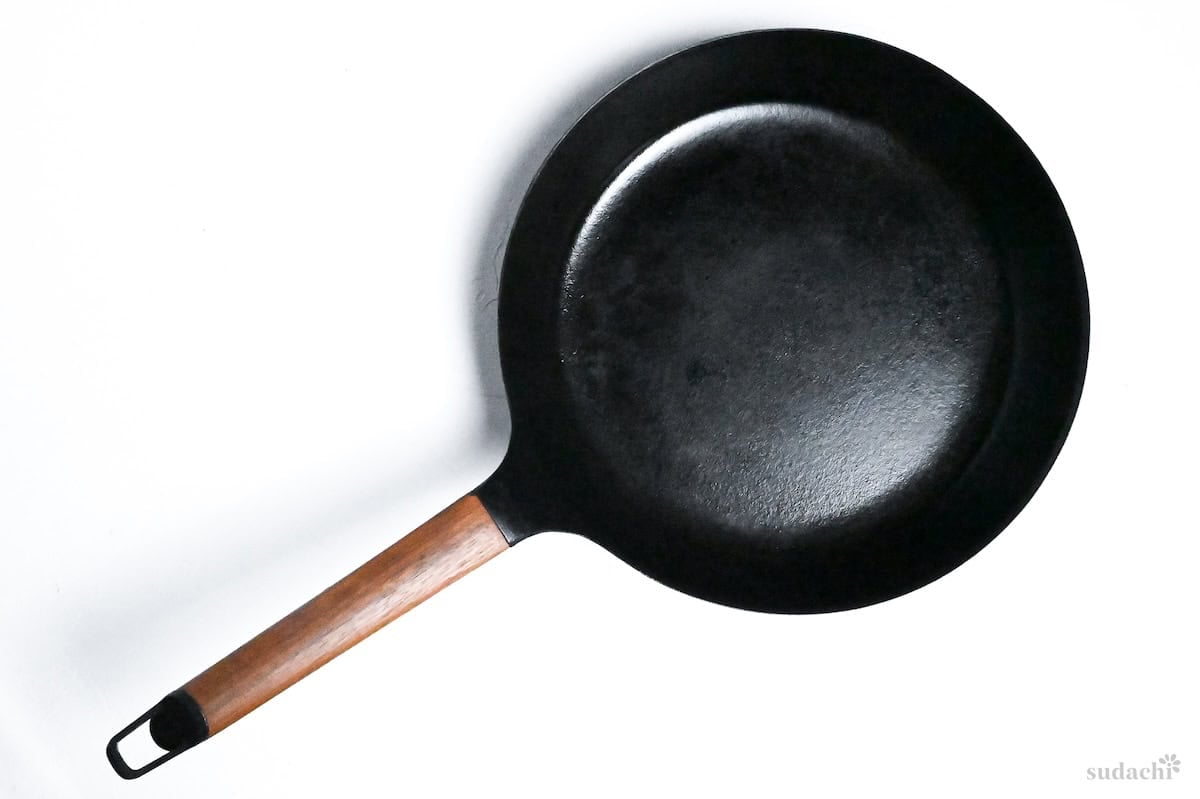
For developing this recipe, I chose a 26 cm cast iron pan (Vermicular).
i. Use a fork to poke some holes in the beef block’s surface.
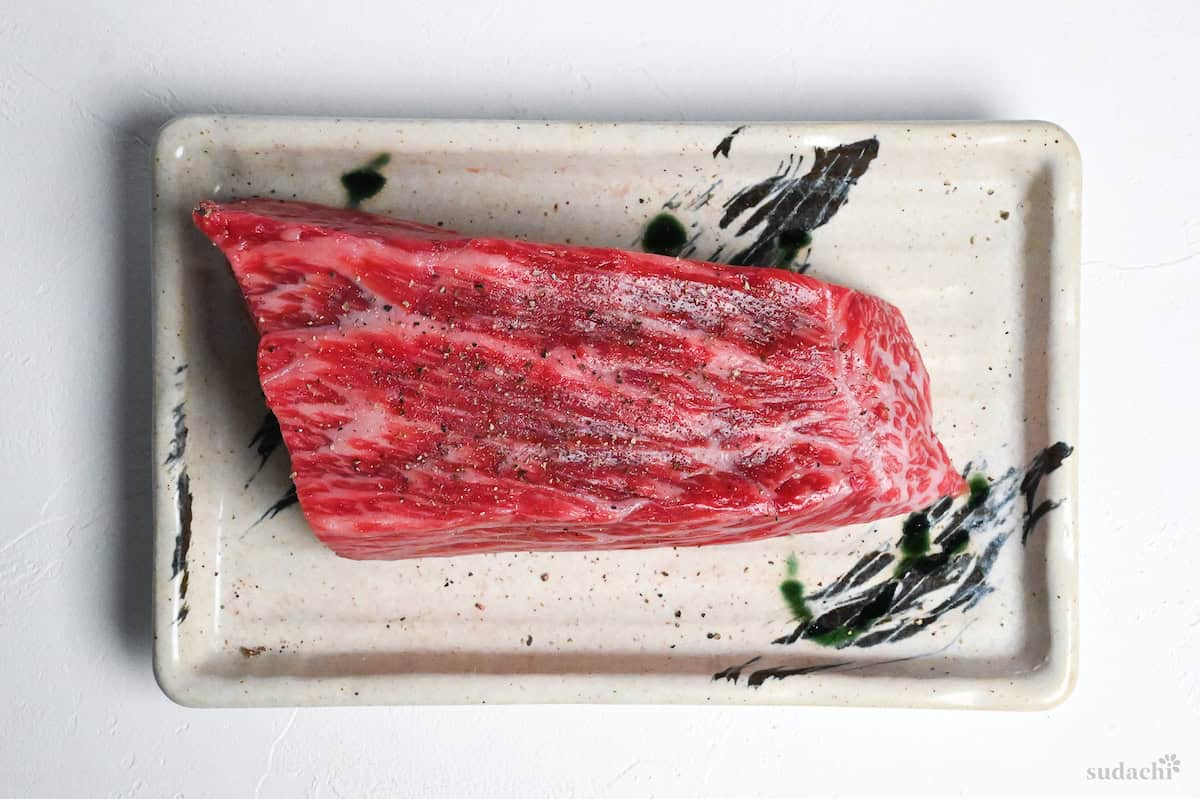
ii. Sprinkle on the salt and pepper, then let it rest until it reaches room temperature (approx 30 minutes, shorter in summer).
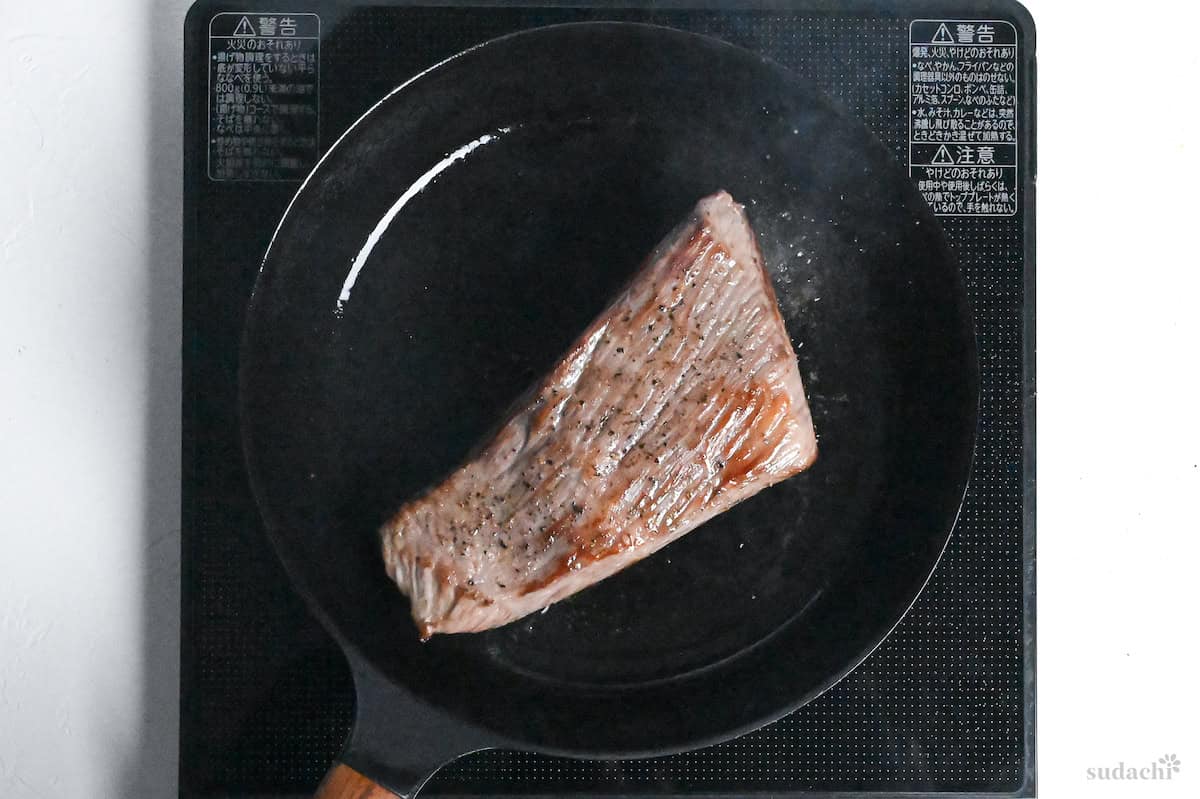
i. Heat a little bit of oil in a frying pan over medium heat. Sear the beef on all sides until it’s nicely browned and has a tasty crust.

i. Throw all the broth ingredients (dashi, soy sauce, sake, sugar mirin) and the aromatics (garlic, ginger, leek) into the pan.
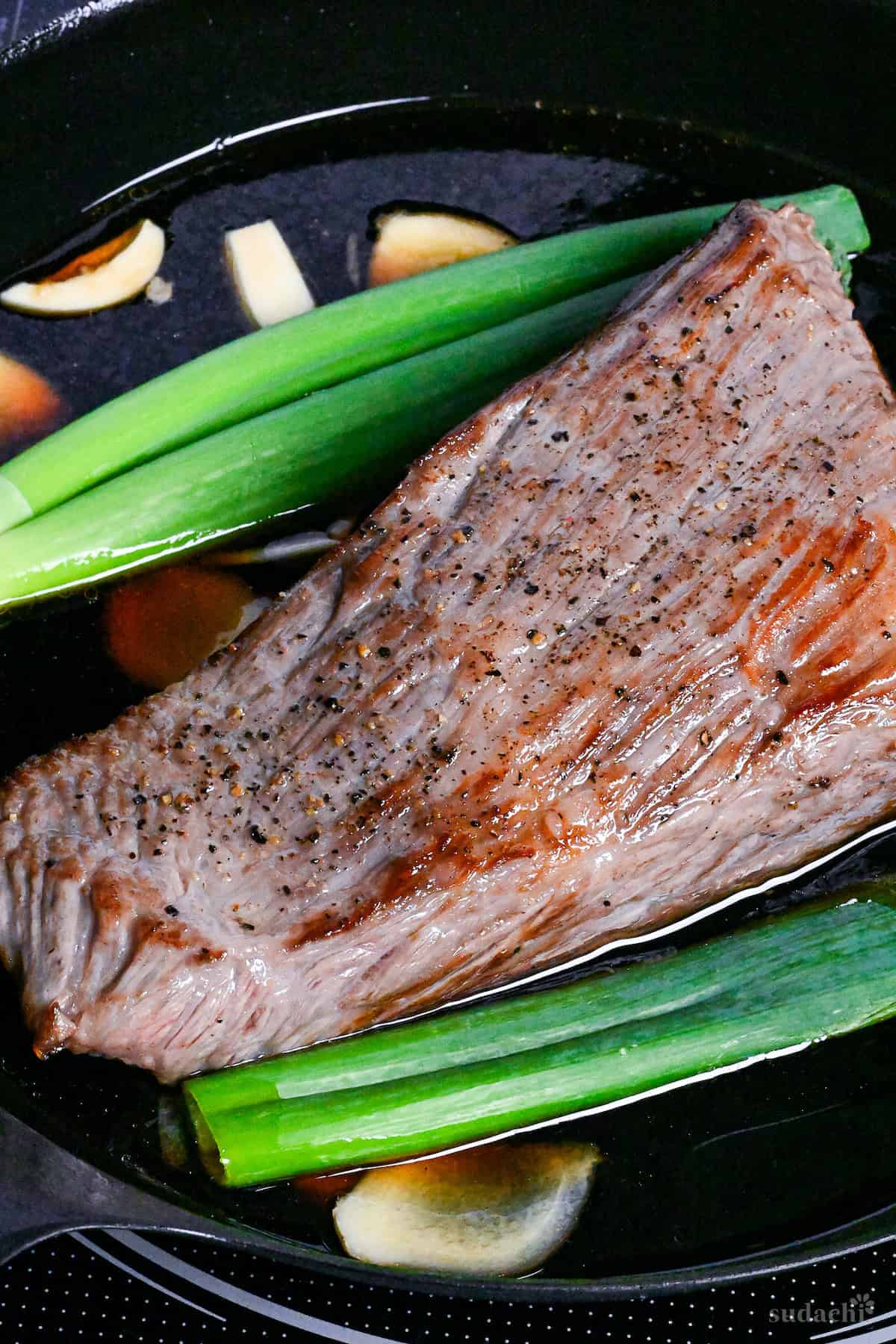
ii. Bring the mixture to a boil, then turn the heat down low and cover.
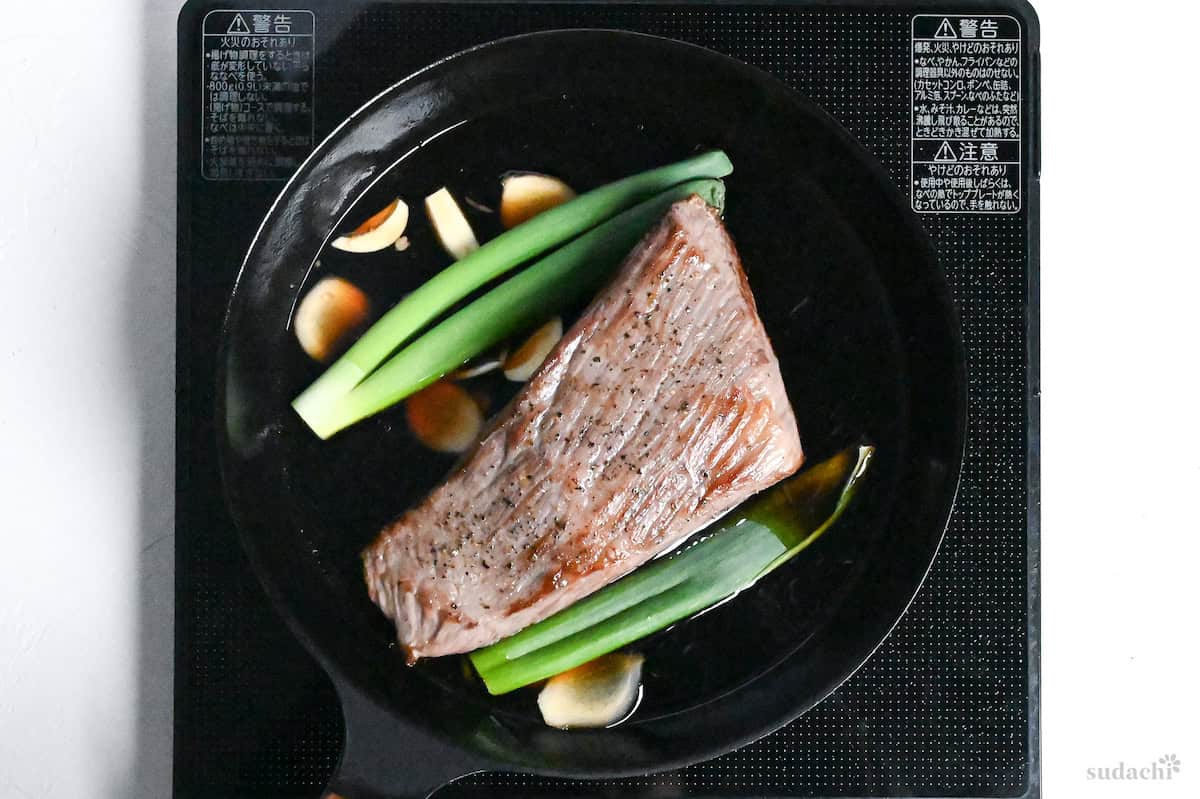
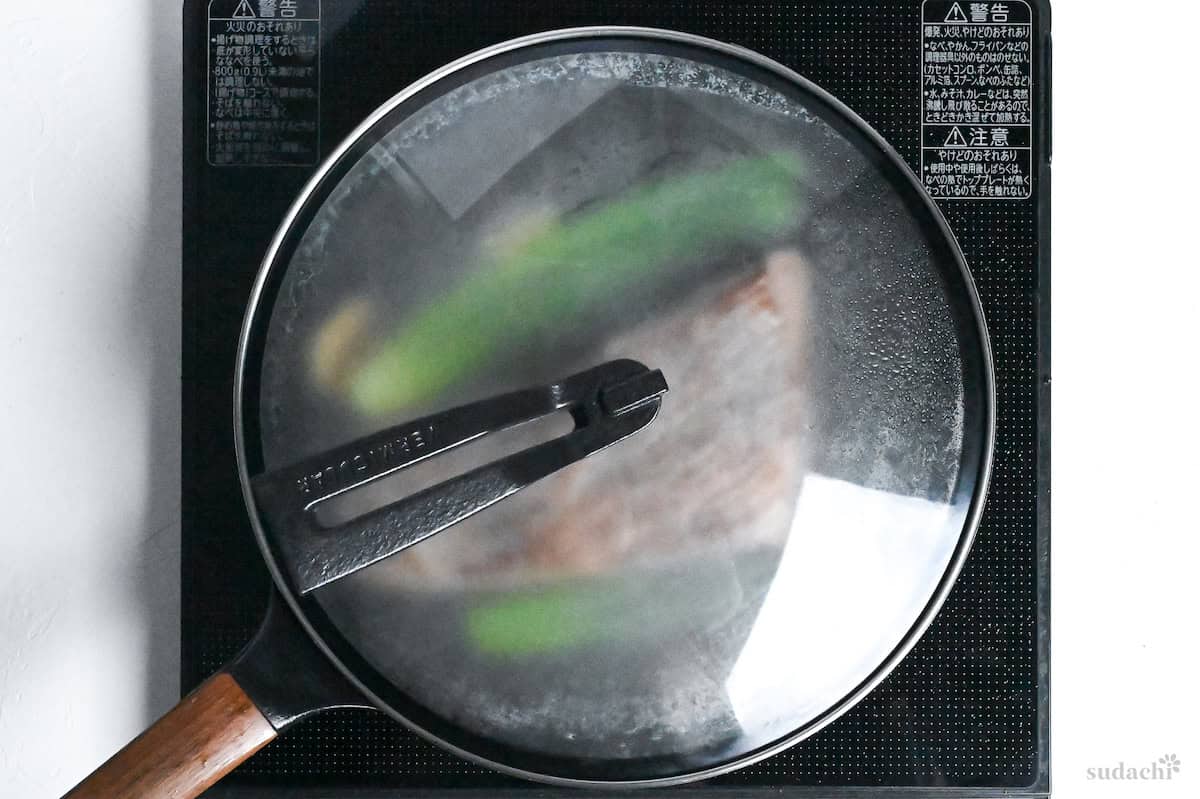
iii. Let it simmer for 10 minutes, and make sure to flip the meat halfway through, at the 5-minute mark.
As I said before, a lot of Japanese households don’t have ovens. And there’s actually a Japanese dish called kamorōsu, and this cooking method is similar to how it’s made.
There’s also a similar dish called “beef tataki” (lightly seared beef), but tataki isn’t simmered like this.
i. Take the meat out of the pan and wrap it up tightly in foil.
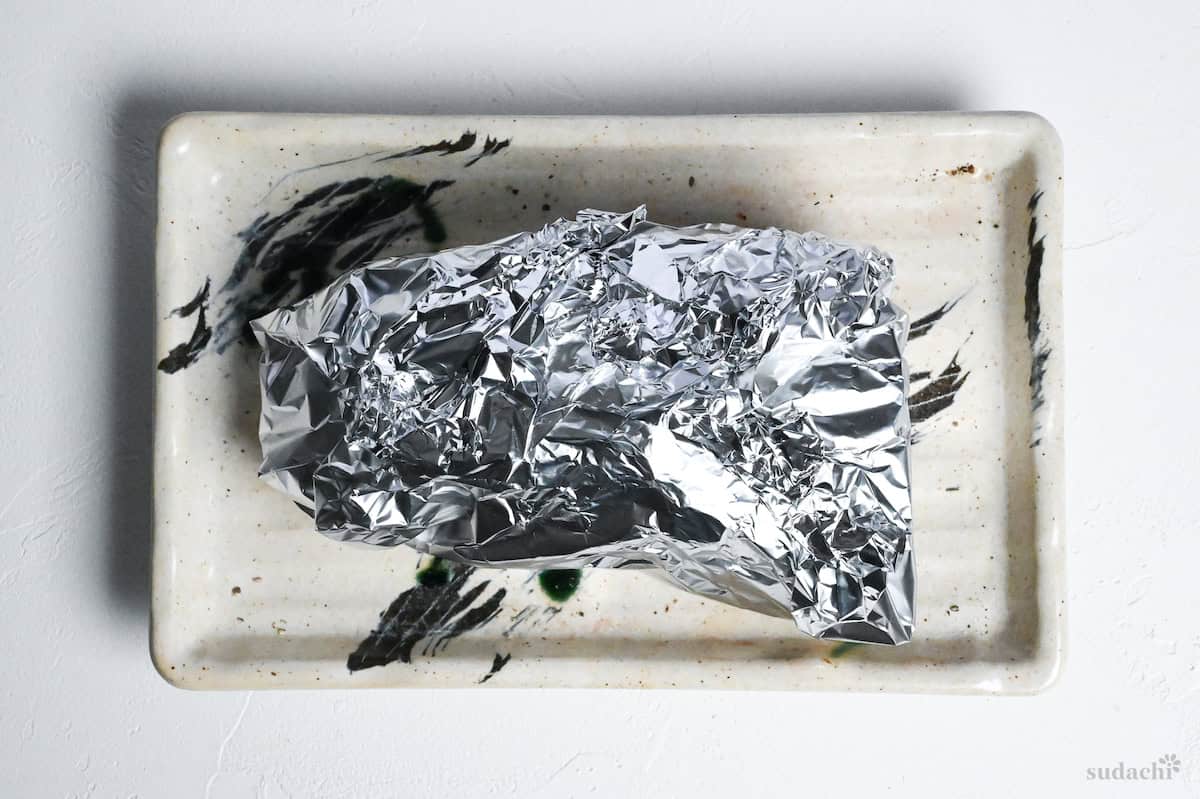
ii. Let it cool completely at room temperature.
i. When it’s cool, put the meat in a big sealable bag and add the strained cooking broth (remove the aromatics).
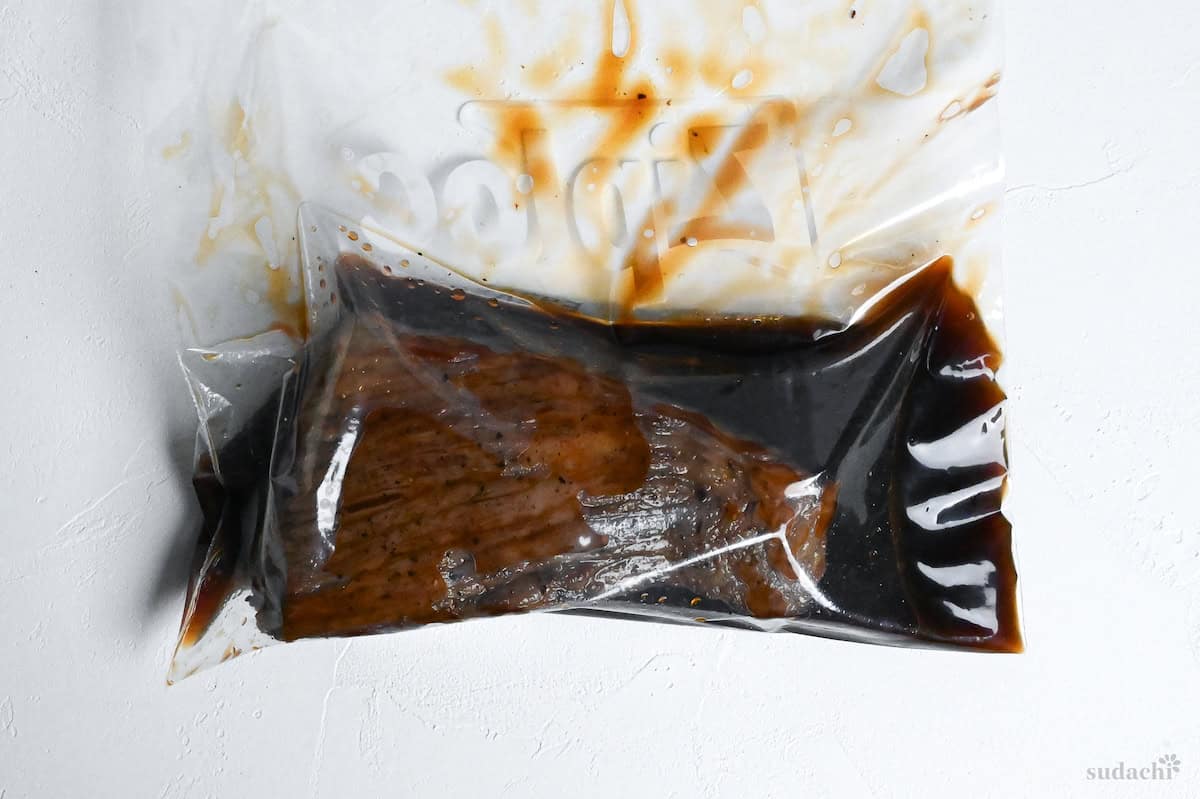
ii. Refrigerate for at least 6 hours, preferably overnight, so the flavors can fully develop and penetrate the meat.
i. The next day, take the meat out of the bag and pour the leftover marinade into a pan. Add finely diced white parts of the leeks, and bring it to a boil over high heat. Cook for 2-3 minutes, stirring occasionally, until the sauce begins to reduce and thicken naturally.
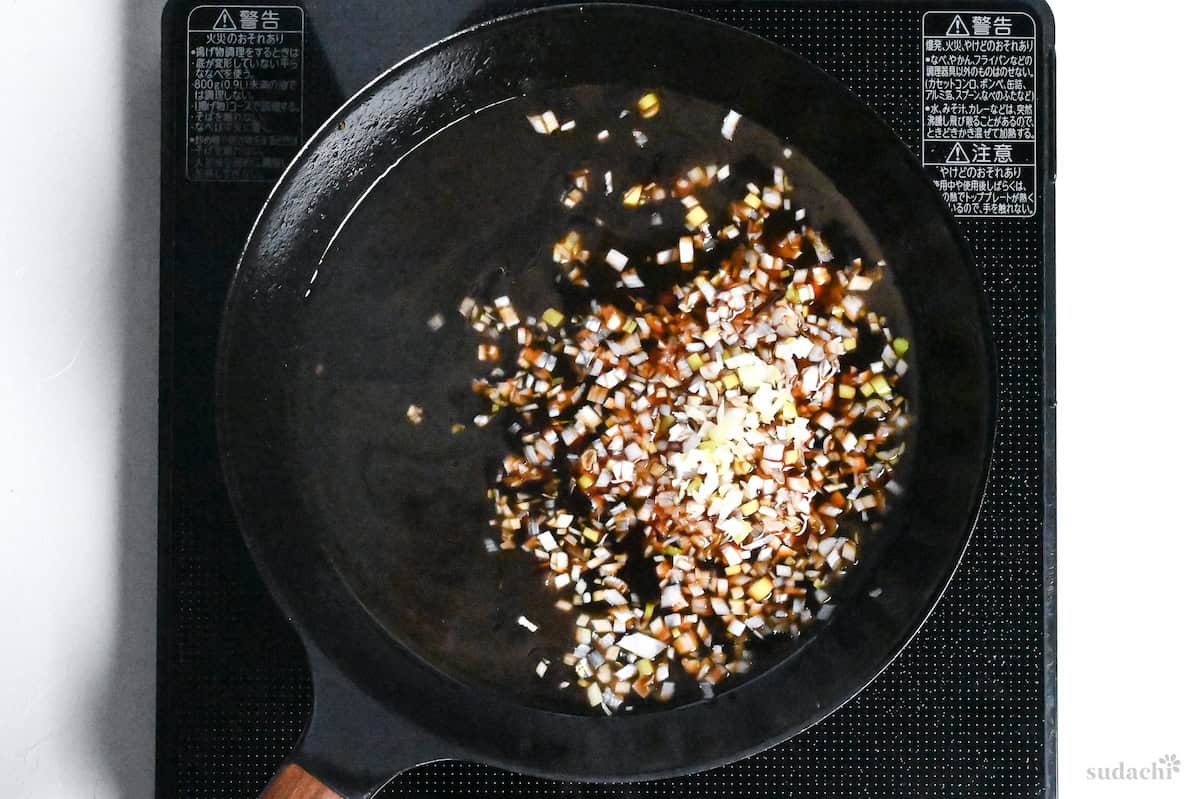
ii. Take it off the heat and mix in the freshly grated daikon.
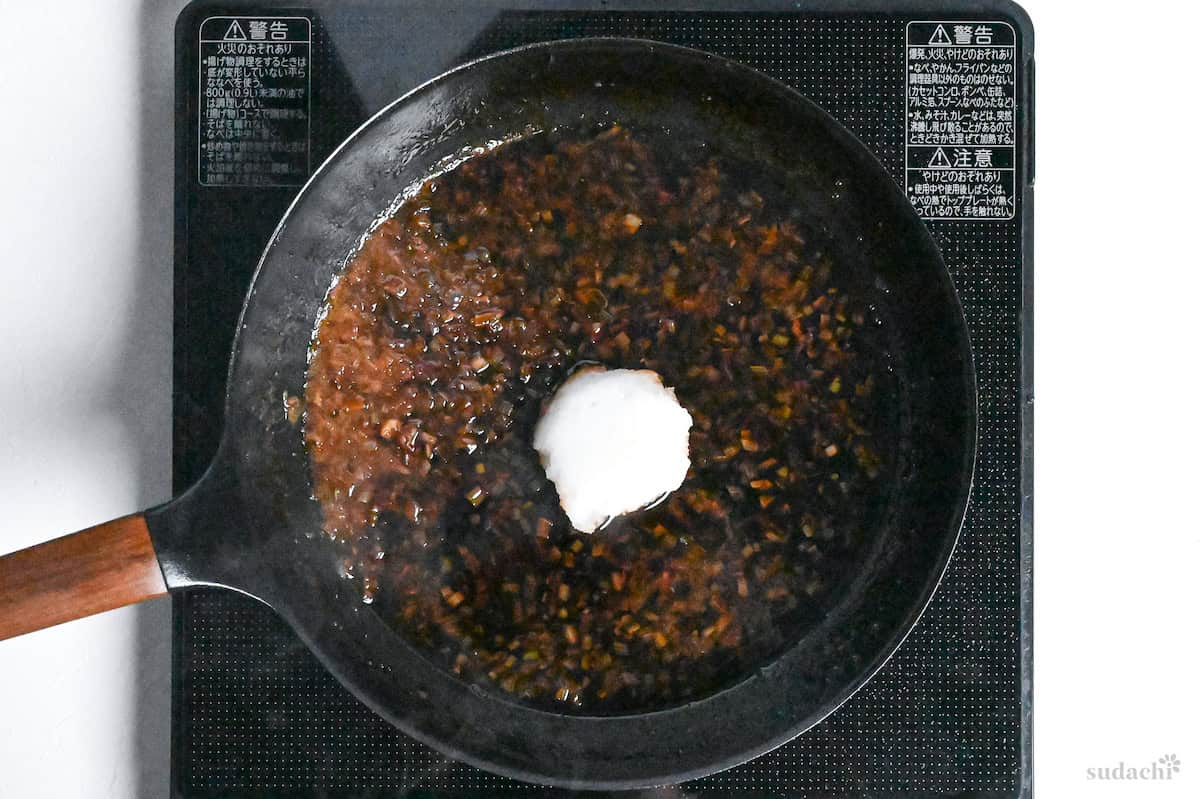
iii. This sauce can be served either warm or cold, depending on your preference.

i. Slice the beef into thin, even pieces.
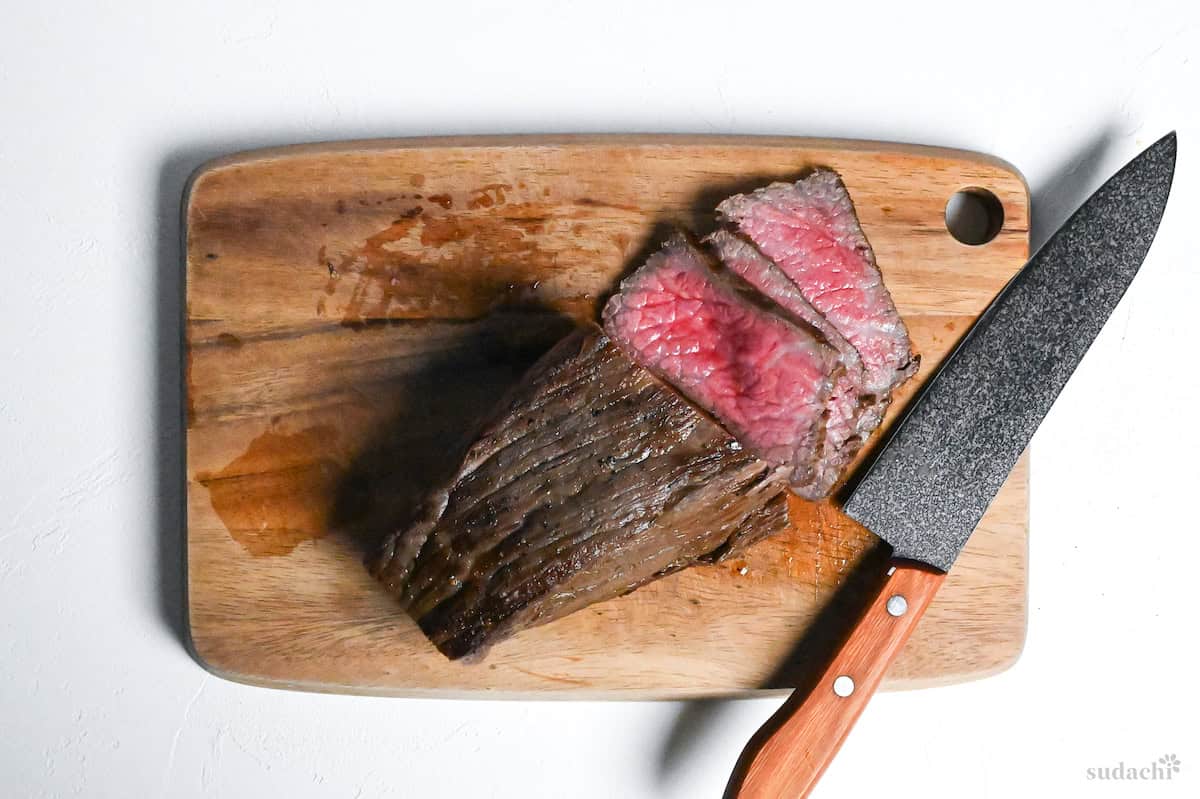
ii. Arrange the slices with the sauce and garnish with chopped green onions.
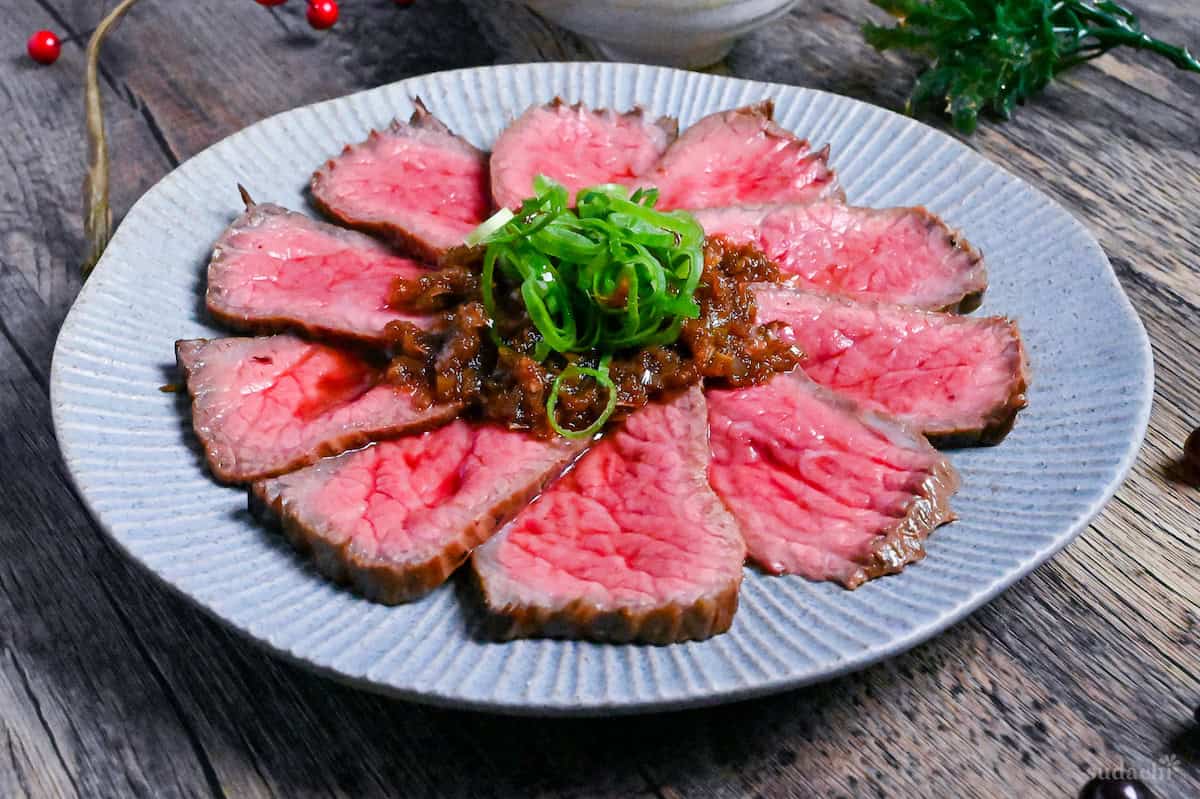
iii. For a modern presentation, serve it over steamed white rice.

Essential Tips & Tricks
- Let the beef come fully to room temperature after salting before you sear so the heat moves evenly from edge to center.
- Sear the surface quickly in a hot pan just until a thin brown crust forms on all sides to build deep umami.
- Keep the soy-dashi braising liquid at a gentle simmer for the short 10-minute cook instead of a strong boil so the center stays tender and rare.
- Reduce the leftover marinade with the finely diced white leek just until it lightly coats the back of a spoon, then turn off the heat before stirring in the grated daikon.
- Slice the fully chilled beef very thinly against the grain with a sharp knife and arrange the pieces before spooning over the sauce.
With these simple tips in mind, you’re set for success every time you make Japanese roast beef.
Storage & Meal Prep
Fridge: Store the sliced beef in an airtight container in the fridge for up to 3 days. Keep the sauce separately.
Freezer: Freezing is possible but not ideal. The texture will be drier and less silky after thawing.
Meal Prep: This recipe is naturally make-ahead friendly. You can cook the beef and leave it chilling in its marinade for 1-2 days, then slice just before serving for maximum color contrast and clean edges.
Reheating: Japanese roast beef is best served chilled or at cool room temperature.
What to Serve With This Recipe
- Traditional miso soup
- Spinach ohitashi
- Hiyayakko (chilled tofu with toppings)
- Simmered kabocha squash
Japanese Roast Beef FAQ
A lean, log-shaped roasting cut like top round or eye of round works best because it sears evenly and slices into neat, thin pieces after resting. Wagyu is a luxury upgrade, not a requirement. The soy-dashi marinade adds plenty of umami, so good-quality standard beef still tastes special. Focus on choosing a piece that’s evenly shaped and not too thin, so it cooks and simmers evenly without drying out.
A heavy stainless or cast-iron pan on gas or induction will give the most reliable, even sear, but a good nonstick skillet also works if you preheat it well and don’t overcrowd the pan.
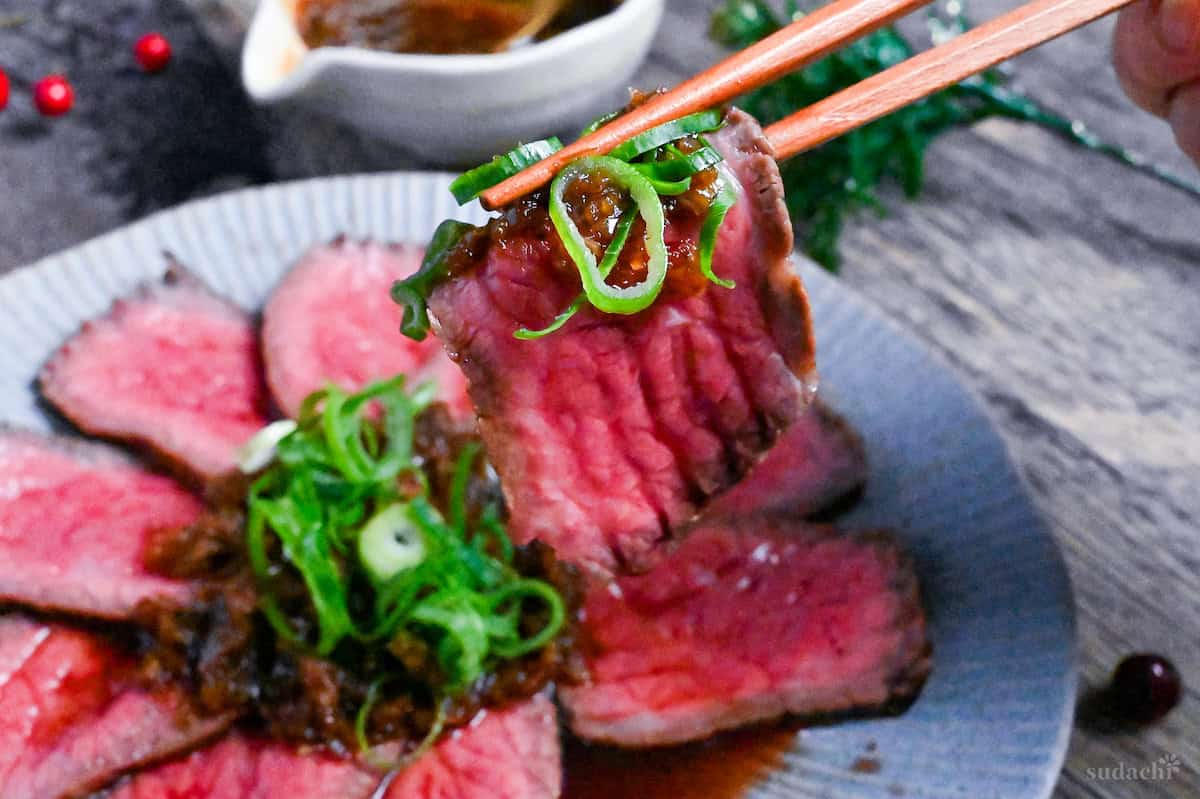
Aim for very thin slices, about deli-style, cutting firmly against the grain so the meat fibers are shortened and each bite feels tender. Make sure the beef is well chilled before you slice.
More Japanese Beef Recipes
Hungry for more? Explore my Japanese beef recipe collection to find your next favorite dishes!
Did You Try This Recipe?
I would love to hear your thoughts!
💬 Leave a review and ⭐️ rating in the comments below. 📷 I also love to see your photos – submit them here!
Wafu Roast Beef (Japanese Style Roast Beef with Homemade Sauce)

Ingredients
- 450 g beef roasting joint top round or similar roasting cut
- ½ tbsp cooking oil
- 2 cloves garlic roughly chopped
- 3 slices ginger root sliced
- 1 Japanese leek (naganegi) or regular leek, green part for simmering, white part finely diced for the sauce
- 120 ml dashi stock
- 4 tbsp Japanese soy sauce (koikuchi shoyu)
- 4 tbsp sake
- 1 tsp light brown sugar
- 4 tbsp mirin
- 4 tbsp grated daikon radish (daikon oroshi) for best results, grate with a Japanese-style "oroshi" grater
- finely chopped green onions to garnish
- wasabi optional
The ingredient brands and tools I trust are in my Japanese pantry guide and my cooking tools guide.
Can’t find certain Japanese ingredients? See my substitution guide here.
Instructions
- Take 450 g beef roasting joint and stab it all over with a fork. Sprinkle it with salt and pepper all over, and rest to room temperature (approx 30 minutes, less in summer).

- Heat a frying pan on medium with ½ tbsp cooking oil. Once hot, place the beef in the pan and sear on each side until lightly browned and a thin crust has formed.
- Add 2 cloves garlic, 3 slices ginger root, 1 Japanese leek (naganegi) (green part, save the white part for later), 120 ml dashi stock, 4 tbsp Japanese soy sauce (koikuchi shoyu), 4 tbsp sake, 1 tsp light brown sugar, and 4 tbsp mirin to the pan. Bring the mixture to a boil.
- Once boiling, lower the heat to simmer and cover with a lid. Simmer for 10 minutes, turning the meat over halfway through.
- Remove the beef from the pan and wrap it tightly with foil. Leave the beef and marinade to cool to room temperature.
- Once cooled, unwrap the beef and discard the foil. Remove the garlic, ginger and leek from the sauce and discard. Place the beef in a sealable bag and pour in the sauce. Marinate in the refrigerator for at least 6 hours, preferably overnight.
- Take the meat out of the bag and pour the leftover marinade into a pan. Finely dice the leftover white part of the leek, and add it to the sauce. Bring to a boil and let it bubble for 2-3 minutes or until slightly reduced and thickened.
- Turn off the heat and add 4 tbsp grated daikon radish (daikon oroshi). Mix well and serve hot or cold according to your preference.
- Cut the beef into thin slices, a similar thickness to deli meats if you can.
- Arrange the slices on serving plates and top with the sauce, a sprinkle of finely chopped green onions and a small blob of wasabi. Enjoy!
Video

It took me a while to make it since we experienced a shortage of Daikon here during the last few weeks and I didn’t want to skip it. It was worth the wait: it turned out great, absolutely tender and flavourful. I wouldn’t upload a picture since the slices were a bit Picasso-esque. But apart from that, it was restaurant quality.
Hi Peti,
Thank you so much for trying! It means a lot that you went the extra mile to make this recipe as it is and I’m honoured to hear that it was restaurant quality! And honestly, the Picasso comment made my day. I’m sure it looked delicious though! 🙂
Yuto