



Wagashi is the family of traditional Japanese sweets, the kind built on rice, sweet beans, and a subtle sweetness rather than rich butter and bold chocolate, and this page is my growing collection of them. You can start anywhere on this page, in any season, because wagashi belongs to the whole year and not only to its festivals.
1. Ichigo Daifuku (Strawberry Mochi)

Featured Comment
It’s simple yet delectable dessert, love it so much. I’ve been making this daifuku many times now, and each time it will be ‘vanished’ swiftly.
★★★★★
– Elvira
A whole strawberry sits at the center here, wrapped first in sweet anko and then in soft, stretchy mochi, so every bite moves from tart to sweet to chewy all at once. What I am after is balance, the sharp brightness of the fruit holding its own against the sugar so neither the anko nor the mochi takes over.
Good strawberries show up in most seasons, so this is not a sweet you have to wait on a festival to make. Pick a berry that still tastes a little tart, and it holds its own against the anko and mochi instead of getting lost under the sugar.

2. Warabi Mochi

Featured Comment
I think it still turned out wonderful. Just such a great texture, and nice simple flavours.
★★★★★
– Cathrine
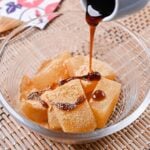
Warabi mochi is not really mochi at all. There is no rice in it, just starch whisked with water and sugar until it sets into a cool, wobbling jelly that I like to chill and dust with kinako. It is the kind of sweet I want when the afternoon turns sticky and hot.
Traditional warabiko can be hard to track down, so I tested potato starch and tapioca too, then wrote down exactly how each one behaved. What caught me off guard was how the ranking flipped overnight, the version I liked best on day 1 was not the one I wanted on day 2.
3. Shiratama Dango

Featured Comment
The recipe is easy to follow. It reminds me of our Filipino dessert.
★★★★★
– sonia
With just water and shiratamako, these little rice dumplings turn tender and springy, with a gentle sweetness that comes from the rice itself rather than any sugar. In Japan, we say the dough should have the softness of an earlobe, and once you feel it, you will know exactly what to aim for.
2 small things decide how these turn out, whether you use shiratamako or mochiko, and the tiny dent you press into the middle of each ball. Get those 2 right and they hold their gentle spring, waiting in anmitsu or floating on warm zenzai.

4. Tofu Hanami Dango
Featured Comment
I’ve been making these dangos since I first discovered the recipe in 2021 and it’s my go-to recipe! the texture is perfect and they’re so tasty
– rose_shimmerling
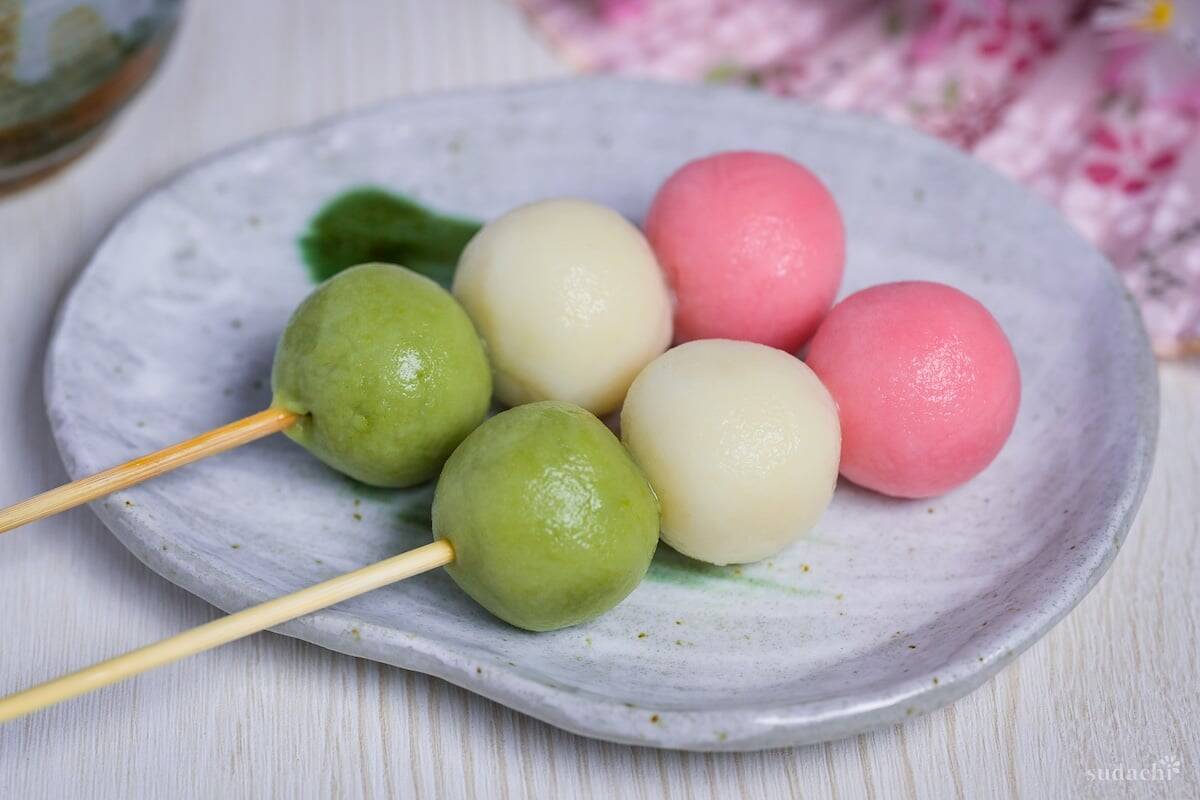
I love a recipe that turns something delicate into something playful, and my silken tofu take on hanami dango does exactly that. The little dumplings come out chewy and lightly sweet, and shaping and coloring them is genuinely fun, even with kids at the counter.
If you have ever spotted those pink, white, and green skewers and wondered what they stand for, this is where it clicks. Each color carries its own quiet meaning, and once you know what the 3 of them are saying, a plate of hanami dango turns into something you read as much as eat.

5. Tofu Mitarashi Dango
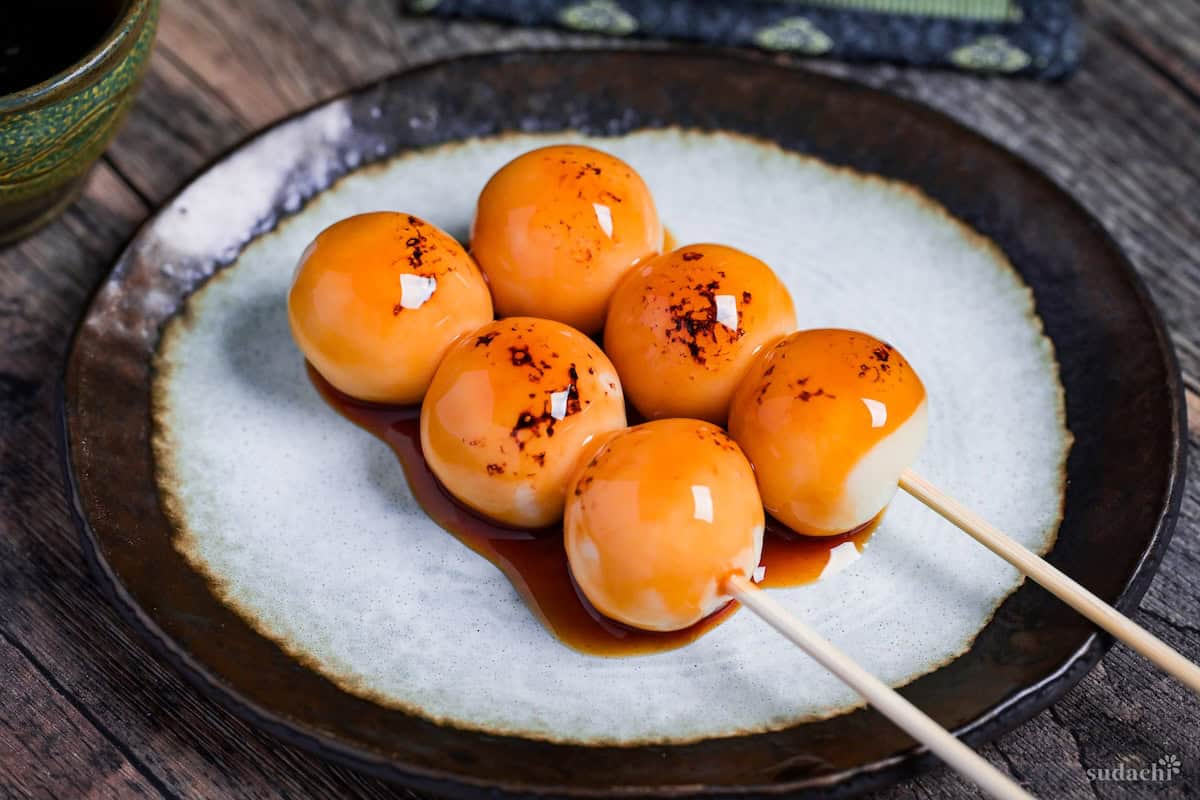
Mitarashi is all about the glaze, a glossy sweet-savory syrup you brush over the skewered dango until they shine. The dumplings themselves stay soft and chewy well after they cool, since I work tofu into the dough, and the whole thing tastes far more involved than it is.
The name traces back to a shrine in Kyoto, where 5 dango on a single skewer stand in for the parts of the human body. It is the kind of cultural detail that changes how you see the plate in front of you.

6. Tsukimi Dango

Featured Comment
Made these for our first Tsukimi celebration and they were a hit!
★★★★★
– Rhonda
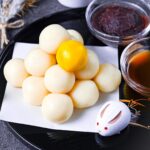
These dango go on the Tsukimi table for the harvest moon, so I leave them unsweetened and let them lean into mitarashi glaze or a spoonful of anko. Mixing silken tofu into the dough instead of plain water keeps them pillowy rather than tight and gummy.
A pinch of turmeric turns half the batch a soft moon yellow without touching the flavor, so the plate glows like the harvest sky it honors.
7. Sakura Mochi (Kansai)

Featured Comment
Made these for the first time last weekend and honestly didn’t expect them to turn out this good!
★★★★★
– Nigella
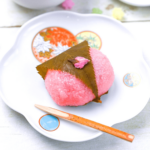
I live in central Japan where the Kansai style is the one you see most, so that pearly, pillowy texture is the version I make first. Both styles are worth trying, but it is the salted cherry leaf against sweet bean paste that tastes like spring itself, that salty, faintly herbal bite playing off the sugar.
If domyoji flour is hard to find, regular glutinous rice gets you remarkably close. And if you want the real spring aroma, I walk you through salting your own cherry leaves from scratch, which sounds fussy but takes only minutes.
8. Kashiwa Mochi
Featured Comment
The combination of the mochi texture and sweet red bean paste is amazing.
★★★★★
– Alexander
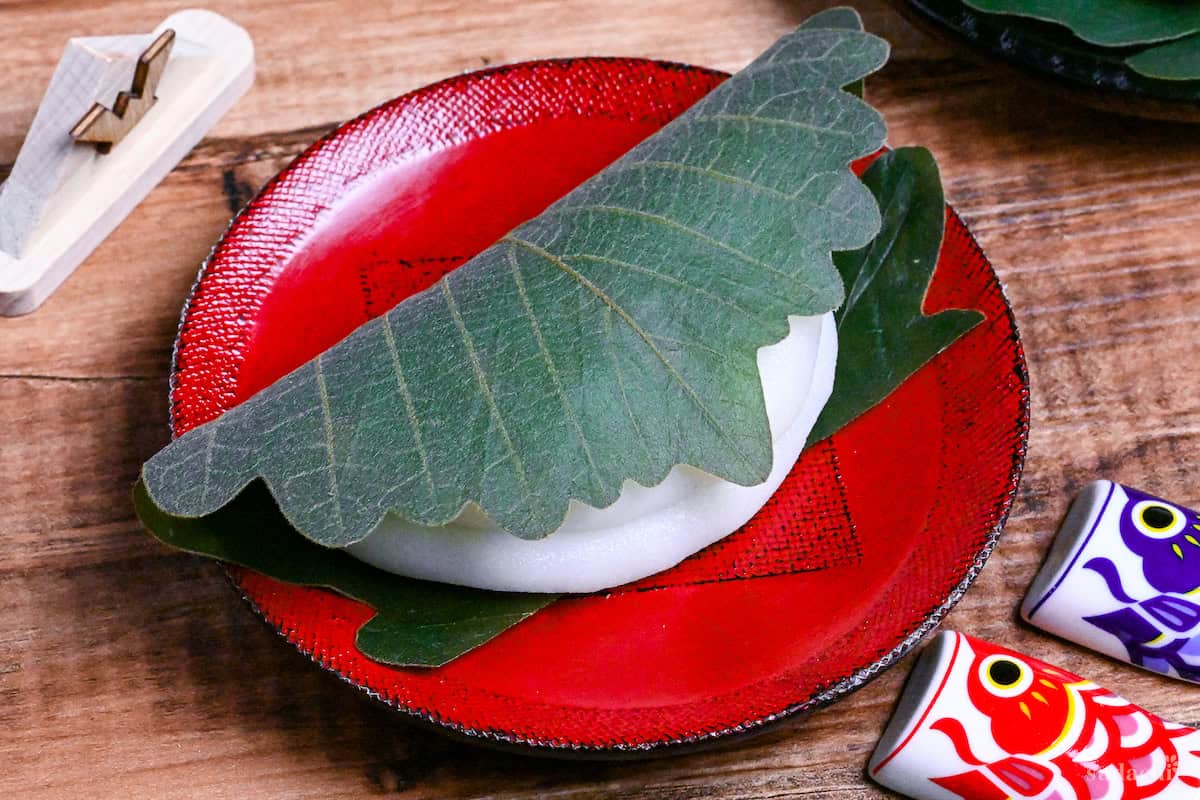
This is the plain white kind, sweet rice dough sweetened just with sugar, wrapped around smooth koshian and finished in an oak leaf you peel back before eating. There is a green version scented with yomogi mugwort too, but the white one is the classic.
Kashiwa mochi belongs to Children’s Day on May 5, and at my parents’ house it sat on the Kodomo no Hi display beside chimaki. The leaf is the part I love explaining, an oak holds its old leaves until the new buds arrive, so it became a wish for the family line to carry on.

9. Ohagi
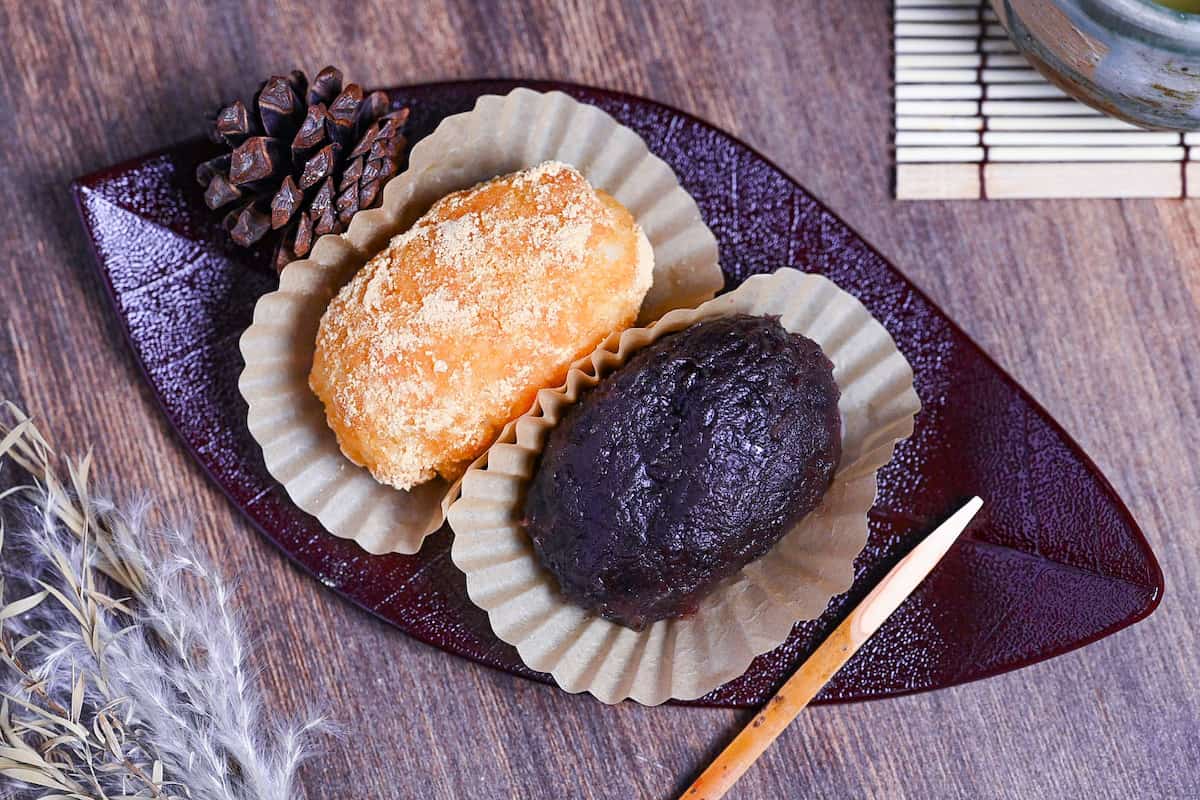
Ohagi starts with sticky mochigome that I cook and crush only halfway, so it holds together while keeping some grain. From there it can go either direction, wrapped in chunky tsubuan or rolled in nutty kinako, which lets a single batch land as sweets with very different faces on the plate.
Swap the chunky tsubuan for smooth koshian and the very same recipe turns into a different sweet, one for spring instead of autumn. That is the fun of ohagi, the name even follows the season, botamochi in spring after the peony and ohagi in fall after the hagi clover.

10. Dorayaki

Featured Comment
Delicious, they taste just like the ones I’d buy in Japan! Such an easy recipe to follow too, these will be a staple in my house from now on!
– Harri
Cook 2 little pancakes, sandwich a layer of sweet red bean between them, and you have dorayaki, the snack I go for no matter the season. If you can manage a pancake, you can manage these, no special skill required.
The batter is the one thing that trips people up. Get it right and it puffs soft and springy, get it wrong and the whole thing turns out dense and flat, so I walk you straight to the moment that makes the difference.

11. Anmitsu

I wanted my Anmitsu to taste authentic without asking you to hunt down anything rare. So I built it around ingredients you can actually find, kept the method quick, and left plenty of room to swap in whatever fruit you love. Canned mandarins, peach, and fresh kiwi all shine here.
The one thing to get right is the kanten you set it with. It behaves nothing like gelatin, so the brand you pick genuinely changes how the whole thing sets, which is why I am fussy about the one I keep on the shelf.

12. Mizu Yokan
Featured Comment
Surprisingly easy for such an elegant dessert!
★★★★★
– Kayleen
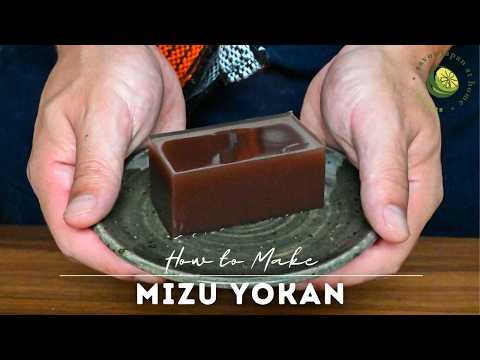
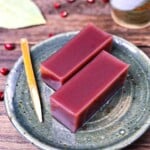
Mizu yokan is the dessert I make when I want something that looks like it came from a tea shop but asks almost nothing of me. It is sweet red bean set with kanten and a good amount of water, chilled until it slips off the spoon. The elegance is real. The effort is not.
The whole thing turns on how much water you set against the kanten, and that ratio is what gives you the soft, barely-there wobble instead of a firm block. Land it and each cube comes out cool and silky, clean on the tongue with nothing heavy about it.
13. Zenzai
Featured Comment
really delicious and nostalgic flavour
– Kaye
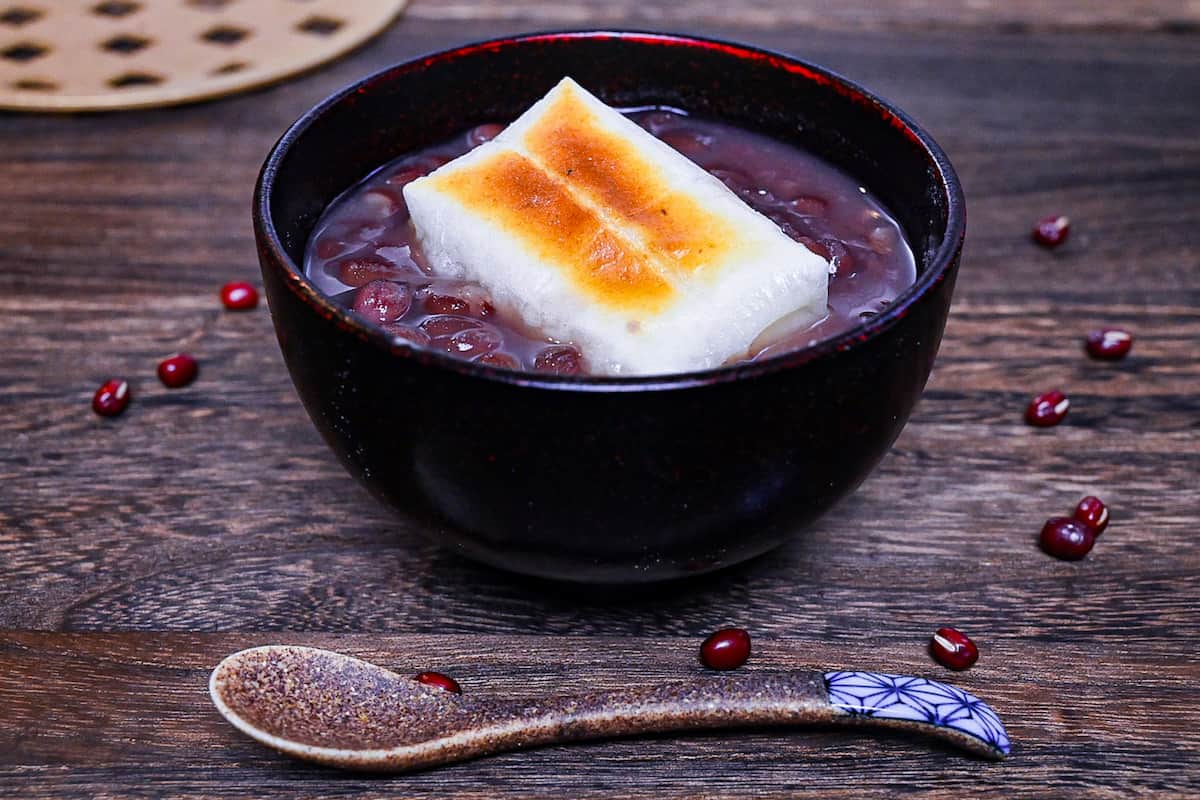
Zenzai is the sweet azuki soup Japan reaches for in the cold months, the beans left whole and tender instead of pureed smooth. I like how forgiving it is. Simmer the beans, sweeten, then float toasted mochi or a few chewy shiratama on top. It warms you from the first spoonful.
What you call this bowl depends on where in Japan you are standing. The line between zenzai and oshiruko slides around as you move from Kansai to Kanto to Kyushu to Hokkaido, and the recipe sorts out exactly who means what.

14. Taiyaki

Featured Comment
I made this today!! By far the best among others which I’ve made!!
– nanami
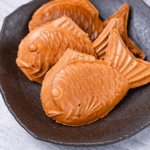
Crisp golden shell, a warm soft filling, cooked right there on the street in a fish-shaped mold, that is taiyaki. The mold is a sea bream, a shape that stands for good luck, so there is a small wish folded into every one.
What sets my version apart is the batter. I use cake flour and a little starch instead of plain flour, and that small swap is the whole secret to a shell that shatters lightly instead of turning bready.
15. Castella

Featured Comment
This is a delicious cake! I won 3rd place in a bake-off at work with this recipe
★★★★★
– Clark
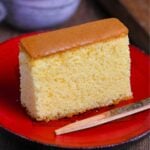
Castella is a Japanese sponge cake that I always go back to because it has a tight, springy, honey-scented crumb that you usually only get from a good bakery. The good news is that there are no rare or fancy ingredients.
The key to achieving the right texture lies in how you handle the batter. If you rush this step, you’ll end up with a dense, heavy cake instead of the light and airy crumb you’re aiming for.
16. Daigaku Imo
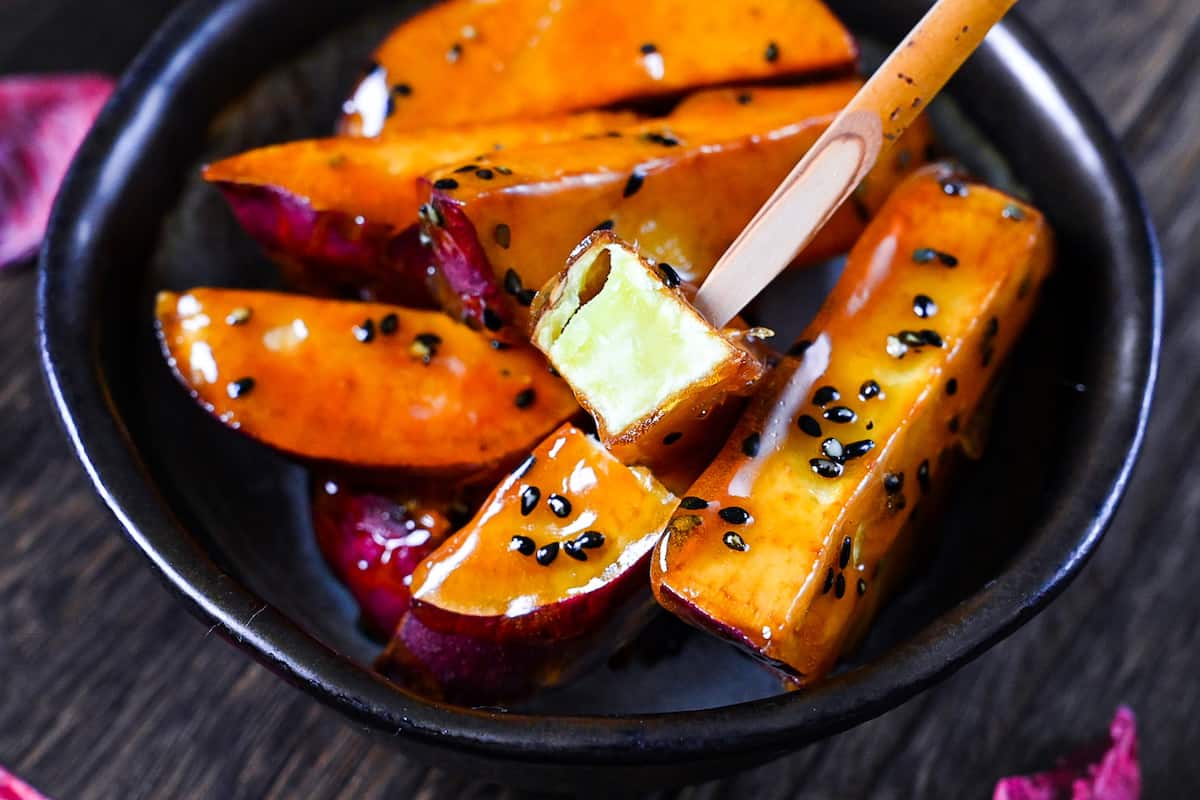
The candy coat is what makes daigaku imo, a hard, glassy shell rather than the soft glaze you might expect. I cut satsumaimo into sticks, fry them from cold oil until fluffy inside, leave the skin on for color and bite, and finish with a shower of black sesame every time, the one detail this snack is never without.
The name means university potato, and the story is half the fun. Most versions trace it to a sweet shop near Tokyo University in the early Showa years, where cheap, filling potatoes caught on with students.

17. Yaki Imo
Featured Comment
Super sweet and perfectly moist. My family loved them!
★★★★★
– Sage
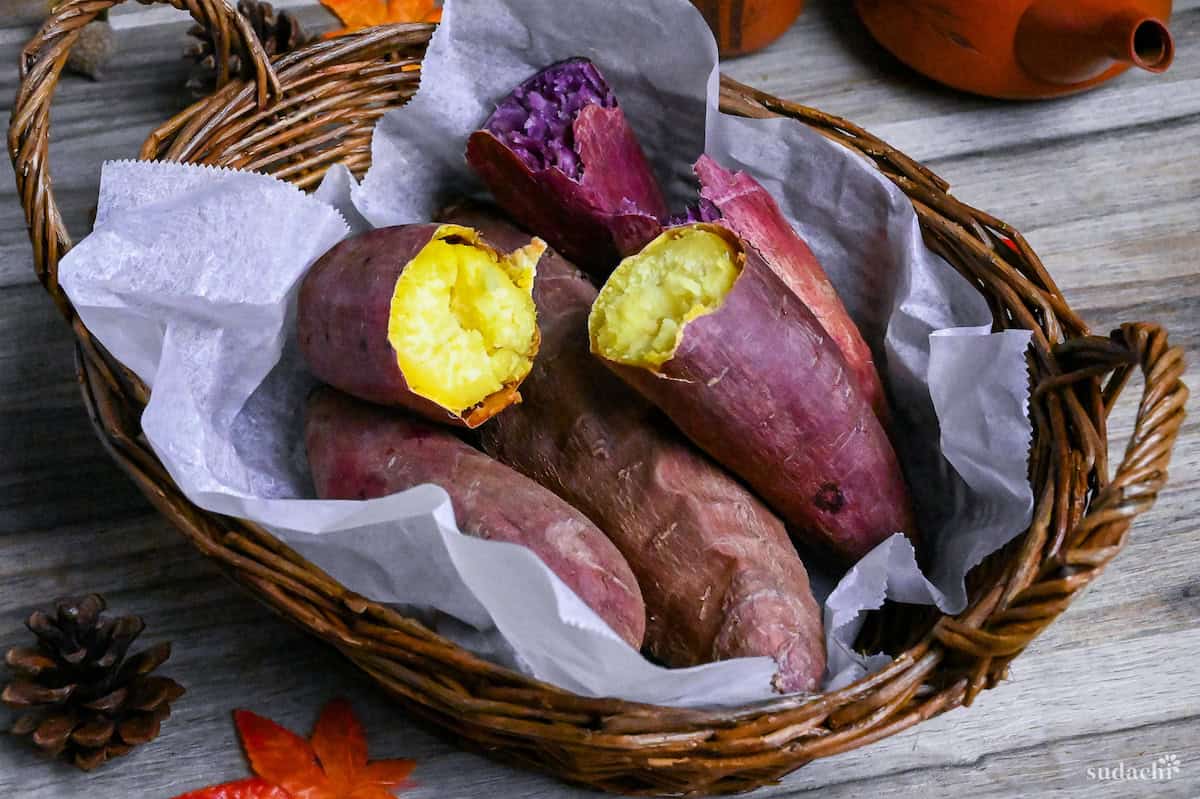
Roasting a sweet potato until it caramelizes into candy is the laziest kind of magic I know. You need nothing but an oven, no sugar, no fussy technique, and about an hour of patience while it turns jammy and deeply sweet inside its own skin.
The potato you pick decides everything. A hoku hoku variety goes fluffy and chestnut-dry, while a shittori variety turns silky and almost custardy, so I walk you through 5 levels of sweetness before you buy a single one.

18. Mushi Pan

Featured Comment
I tried the matcha version today, amazing! Soft, slightly chewy, perfect balance between the taste of matcha and the amount of sugar, and incredibly easy to make!
★★★★★
– Mei
What if a cake needed no eggs, no butter, and no oven? Mushi pan is a light steamed one that eats like a muffin and comes together fast, staying on the gentle side. The look I chase is that split, cracked top from the store versions, and the trick behind it is simply fresh, still-active baking powder.
What keeps me coming back is how open the base is. The same batter takes on whatever I fold in, and matcha or sweet potato each give it a completely different character, which is why I never make it the same way twice.

19. Sata Andagi
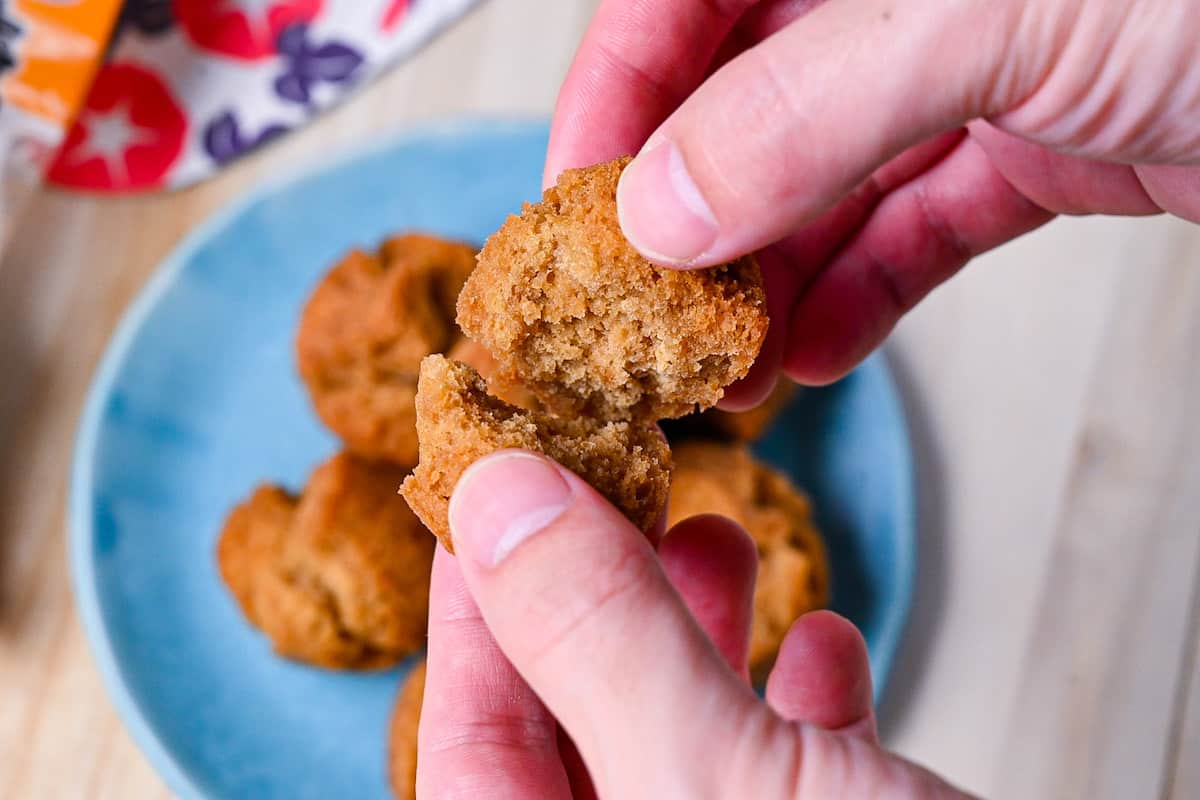
What makes these Okinawan sugar dumplings special is kurozato, the dark island black sugar my grandfather loved so much he used to eat the blocks whole. There is no yeast and no kneading either, so nothing stands between you and frying them. Muscovado stands in nicely if you cannot find kurozato.
As they fry low and slow, the surface splits open into cracks that Okinawans read as a smile, or a blooming flower. Hit the right oil temperature and you get that grin, the crack that makes people smile back before they have even taken a bite.

20. Homemade Kuromitsu
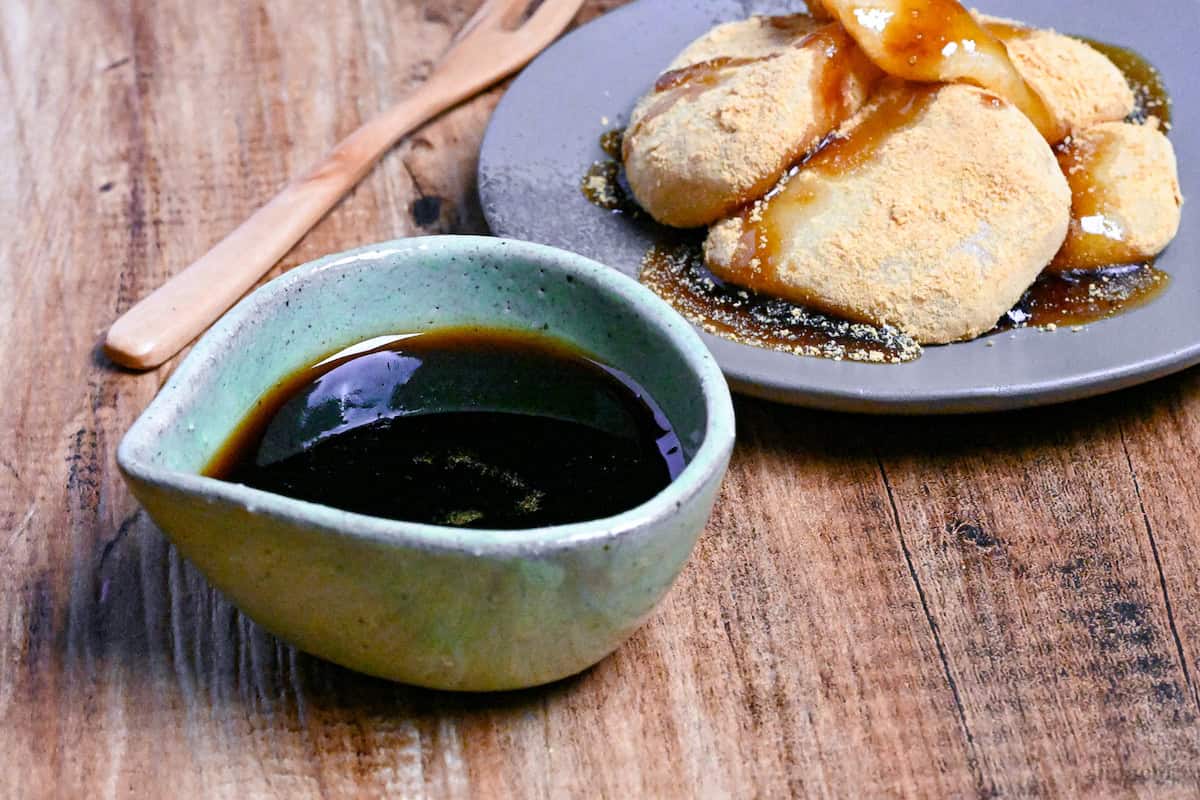
I have stirred together tiny amounts of kuromitsu for other dishes so many times that I finally wanted a proper jar of it. This version makes a bigger batch you can keep in the fridge, and it comes down to just 3 ingredients simmered into a dark, glossy syrup.
Kuromitsu is the dark syrup you drizzle over warabi mochi and anmitsu. Kokuto on its own turns bitter, so I cut it half and half with white sugar, which is what keeps the flavor deep without the harsh edge.

21. Homemade Koshian (Anko)
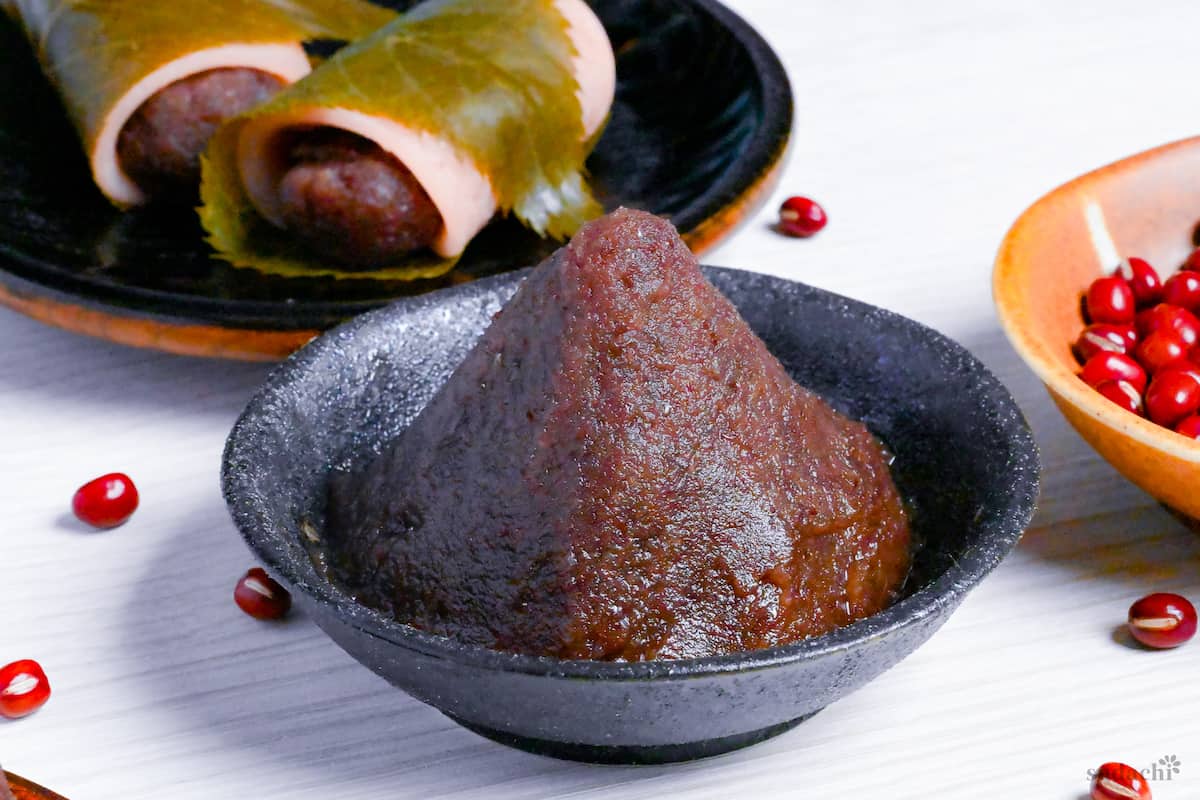
Koshian is the smooth, strained red bean paste hiding inside almost every wagashi you have ever loved. I make it from scratch because the silky version sold in cans never tastes quite like the one I simmer slowly in my own kitchen. Once you taste the difference, the store shelf loses its pull.
Making anko from scratch takes patience, but that is where the reward hides. You control the sugar, so it can land barely sweet or full-on dessert, tuned to your own tongue. And that silky, strained texture is simpler than it sounds, you cook the beans soft and press them through a sieve until the skins fall away.

Leave a rating and a comment