



Featured Comment
Great guide 🙂 I did not realize how easy the sesame sauce is to make! It was my favourite dipping sauce as a kid. So much more economical! Will be making my own for the next gathering.
★★★★★
– Jas
Why is a dish that’s “just swish in hot water” so wildly loved? You hear shabu-shabu in the steam, dip, and feel the table turn instantly warm and social.
This is food and a cultural experience, and you’ll learn the full, real rhythm of Japanese shabu-shabu at home. Don’t miss the “last course” move that completes the night!
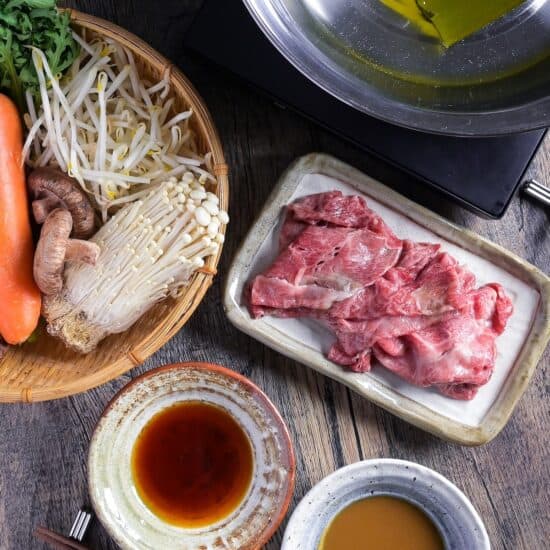
Shabu shabu
Recipe Snapshot
- What is it? A cornerstone of Nabemono (Japanese hot pot) where paper-thin protein is flash-blanched in a clear kombu dashi to preserve texture and delicate flavor.
- Flavor profile: Clean and elegant umami synergy, featuring a savory kelp base balanced by zesty citrus ponzu and rich, nutty sesame dipping sauces.
- Why you’ll love this recipe: A hosting-friendly “assembly line” meal! Minimal pre-cooking, fast table-side fire control, and a built-in end-of-pot finale.
- Must-haves: Paper-thin marbled beef (or pork belly/sashimi-grade yellowtail), prepped fresh vegetables and fungi, and a portable burner for authentic table-side cooking.
- Skill Level: Beginner-friendly tableside cooking, prep is the work!
Summarize & Save this content on:
What is Shabu Shabu?
Shabu shabu (しゃぶしゃぶ) is a Japanese nabemono (hot pot) served in a tableside, communal format. Paper-thin slices of beef (or pork/other proteins) and vegetables are cooked in a light kombu (kelp) dashi by briefly dipping them into the hot broth (often called the swish-poaching technique) so the meat sets in seconds without simmering for long.
Instead of heavily seasoning the pot, shabu shabu follows a tare-based seasoning model, where each bite is often flavored at the end with ponzu (citrusy soy sauce) or gomadare (creamy sesame dipping sauce).
Shabu shabu is similar to sukiyaki, but differs because sukiyaki is cooked in a sweet-savory sauce mixture that seasons the ingredients in the pot, while shabu shabu keeps the broth clean and relies on dipping sauces for flavor.
Shabu Shabu Ingredients
What You’ll Need for ShABU Shabu Sauce
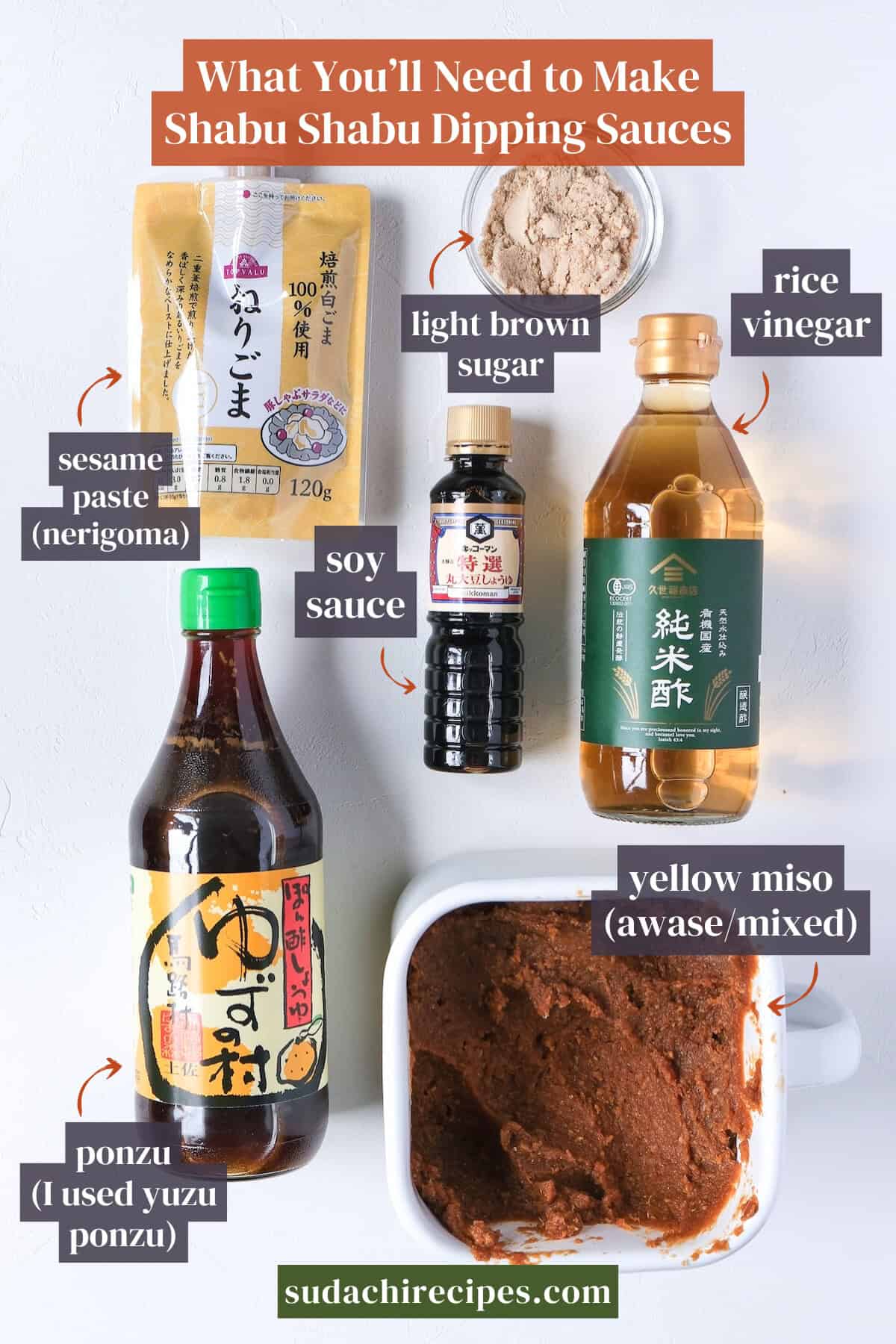
- Sesame paste (nerigoma): This rich, toasted paste gives your dipping sauce that nutty, creamy depth you’d find at a Japanese restaurant. Look for “nerigoma” at Asian grocers, or substitute Chinese sesame paste or tahini. You can also get bottled shabu shabu sesame sauce too.
- Ponzu sauce: Bright and citrusy, ponzu cuts through the richness of beef and adds that clean, tangy finish to each bite. Bottled versions work perfectly or you can make it homemade.
What You’ll Need for ShABU Shabu
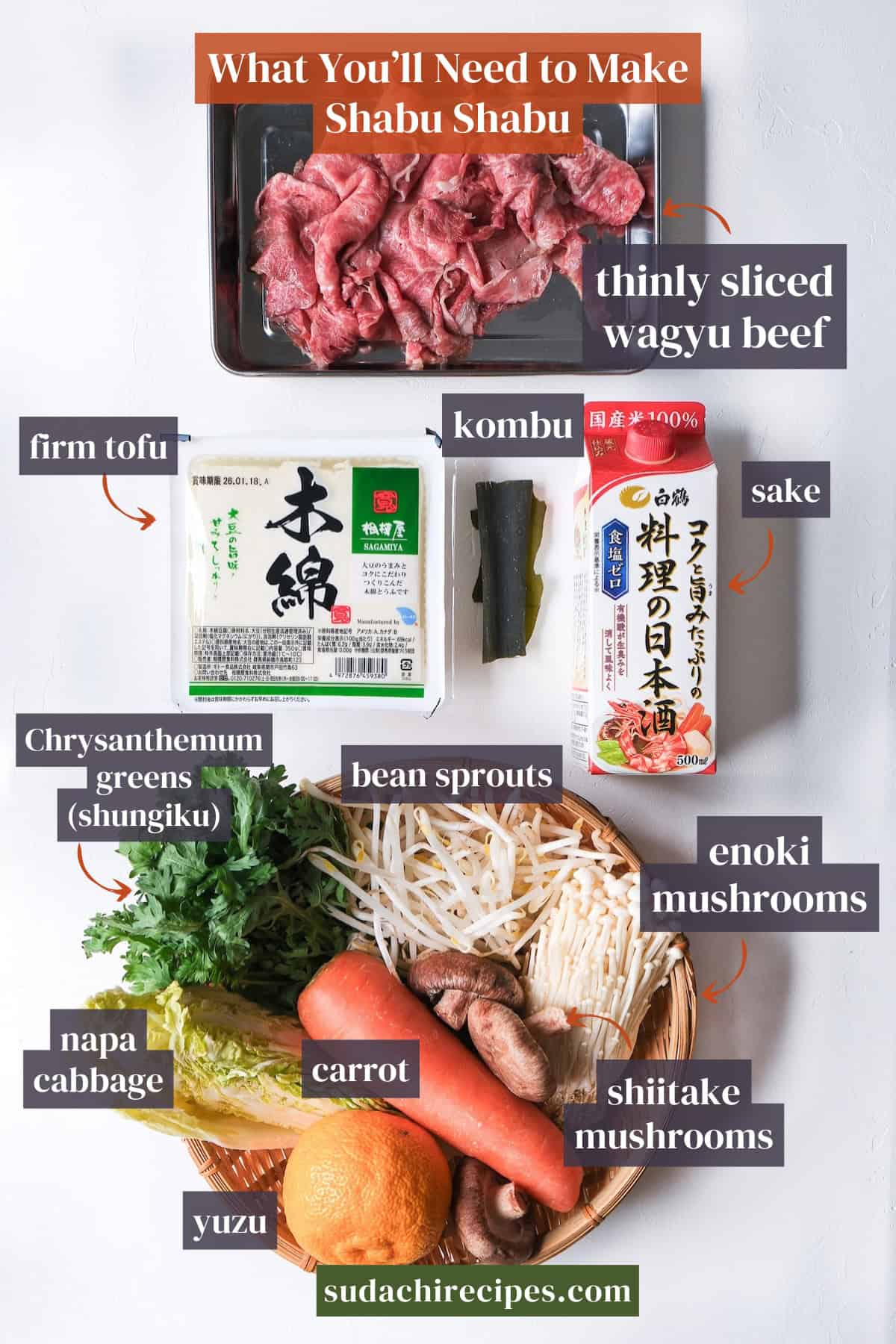
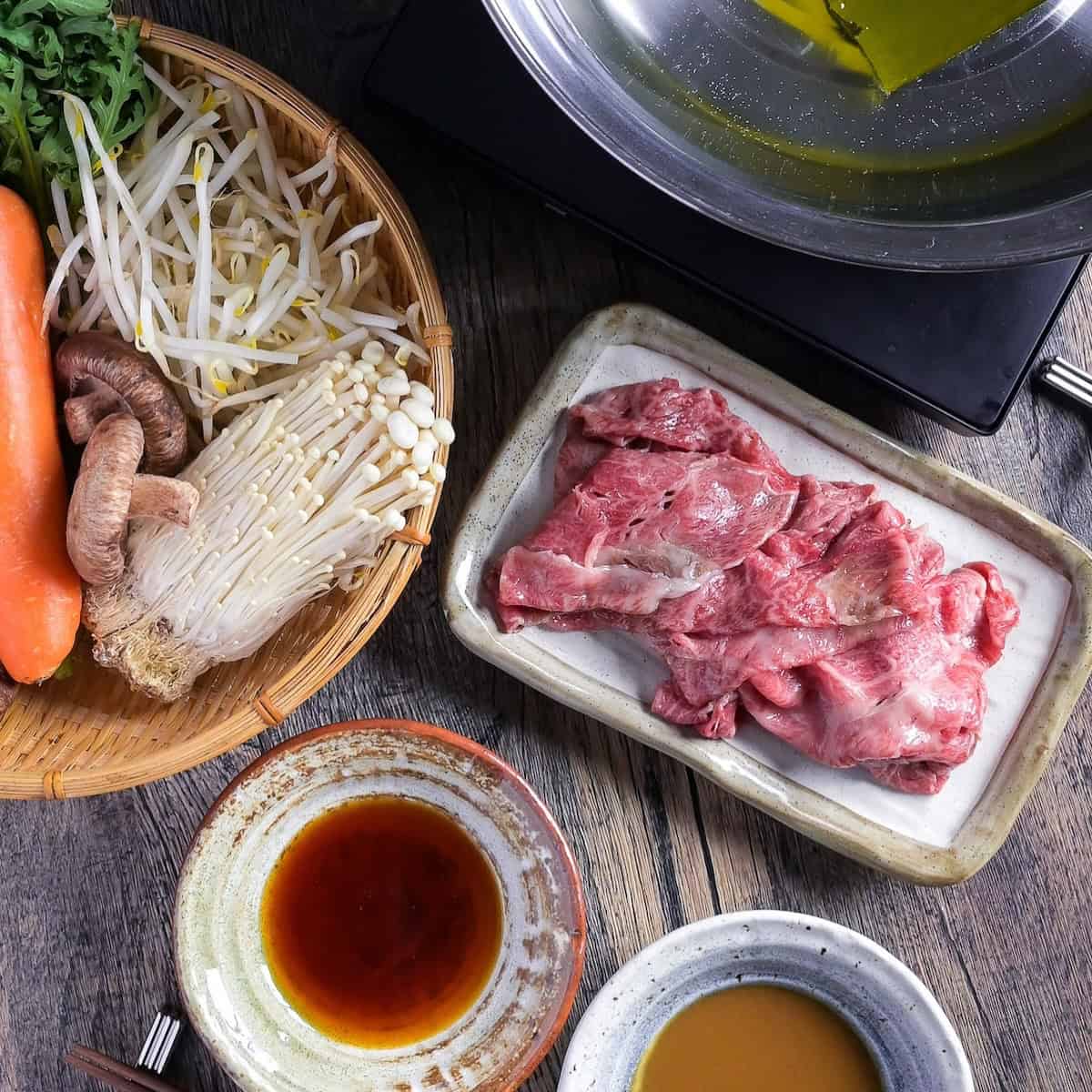
- Paper-thin beef: Shabu shabu beef is beef sliced paper-thin (about 1-2 mm) for hot pot (often chuck eye/ribeye/shoulder, or similar well-marbled cuts). Look for packs labeled “shabu shabu” or “hot pot beef” at Asian/Japanese markets.
What You’ll Need for Finishing course
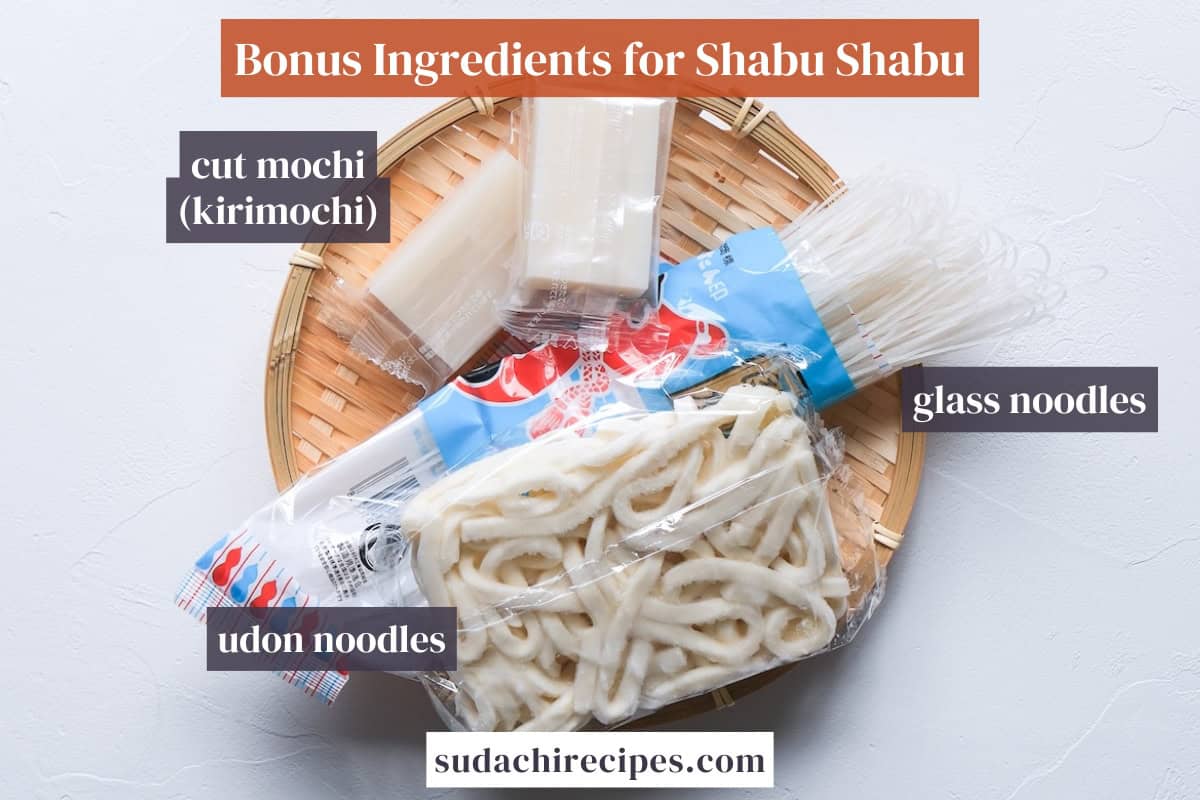
- Bonus ingredients: These are the optional finishing add-ons. You don’t need every item listed and you can even skip entirely.
Alternative Shabu Shabu Ingredient Ideas
Shabu shabu doesn’t have to be a “perfect ingredients only” kind of meal. If your dipping sauces taste great, you can stay flexible with what goes in the pot and it will still feel totally authentic and satisfying.
Beef Substitutes
You might think shabu shabu has to be wagyu, but that’s not entirely true. According to a survey conducted by J Town Net in 2020, beef took the majority of the votes with 56.2% (564 votes), while pork made up 43.8% (440 votes).
Regional variations are quite significant, with famous examples including Kagoshima’s black pork shabu-shabu, Toyama’s yellowtail shabu-shabu, Kyoto’s conger pike shabu-shabu, Hokkaido’s lamb shabu-shabu, and Okinawa’s Agu pork shabu-shabu. In my home prefecture of Aichi, beef is the standard choice for shabu-shabu.
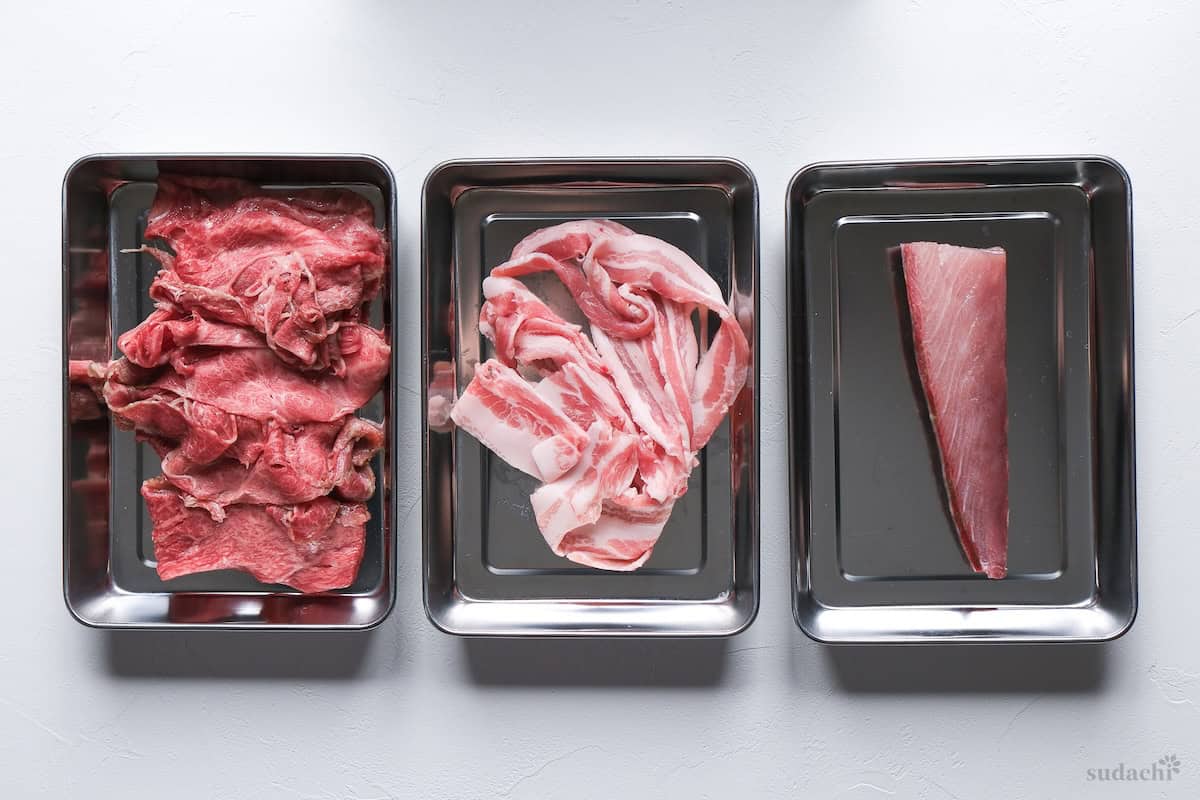
If paper-think beef is hard to source (or you want a lighter hot pot), thinly sliced pork is the closest swap. Pork is a bit milder than beef, but its fat turns sweet and savory in the broth, just make sure pork is cooked through.
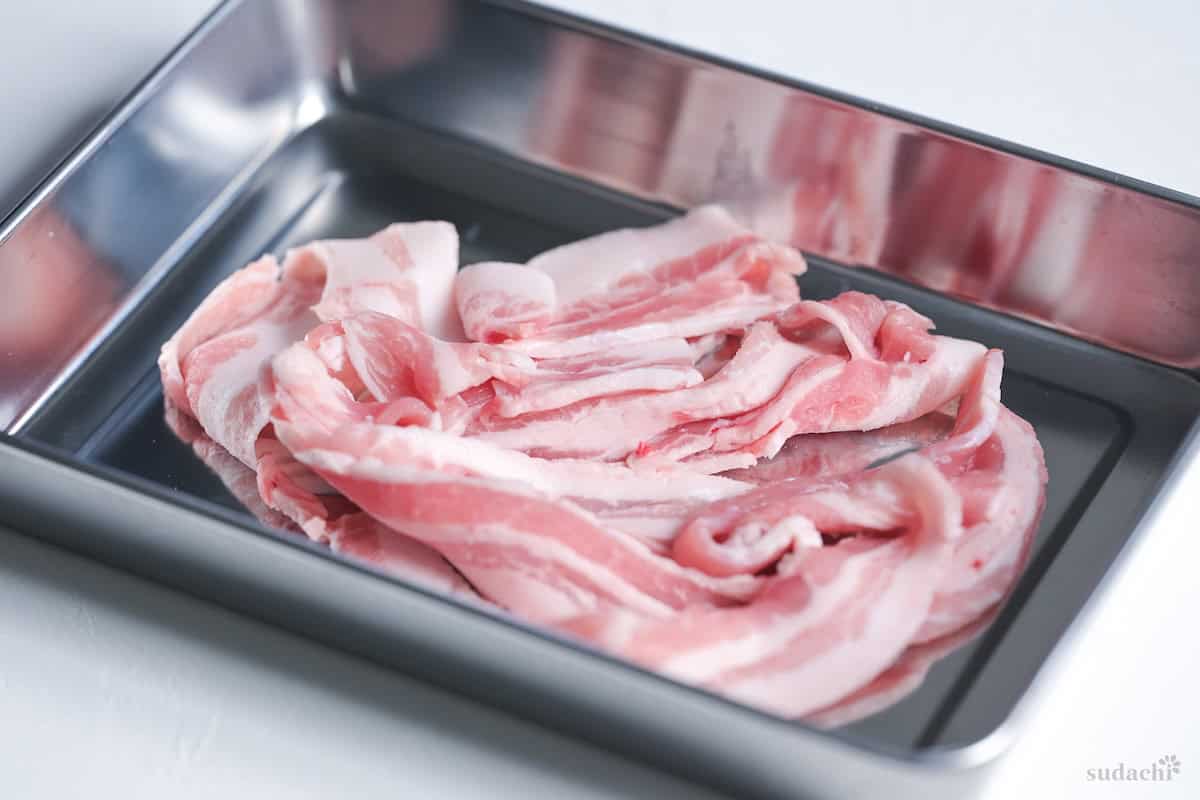
For pork, belly or loin are the easiest “no-stress” choices because it’s tender, mild, and not overly fatty, while pork belly gives you a richer, more luxurious bite.
If you see packages labeled “shabu shabu” or “hot pot” pork (often frozen) at Asian markets, they’re a great shortcut. If your pork tastes a little lean or watery, sesame shabu shabu sauce (goma dare) adds instant depth.
Seafood shabu shabu is also very traditional. Yellowtail (buri) is the classic.
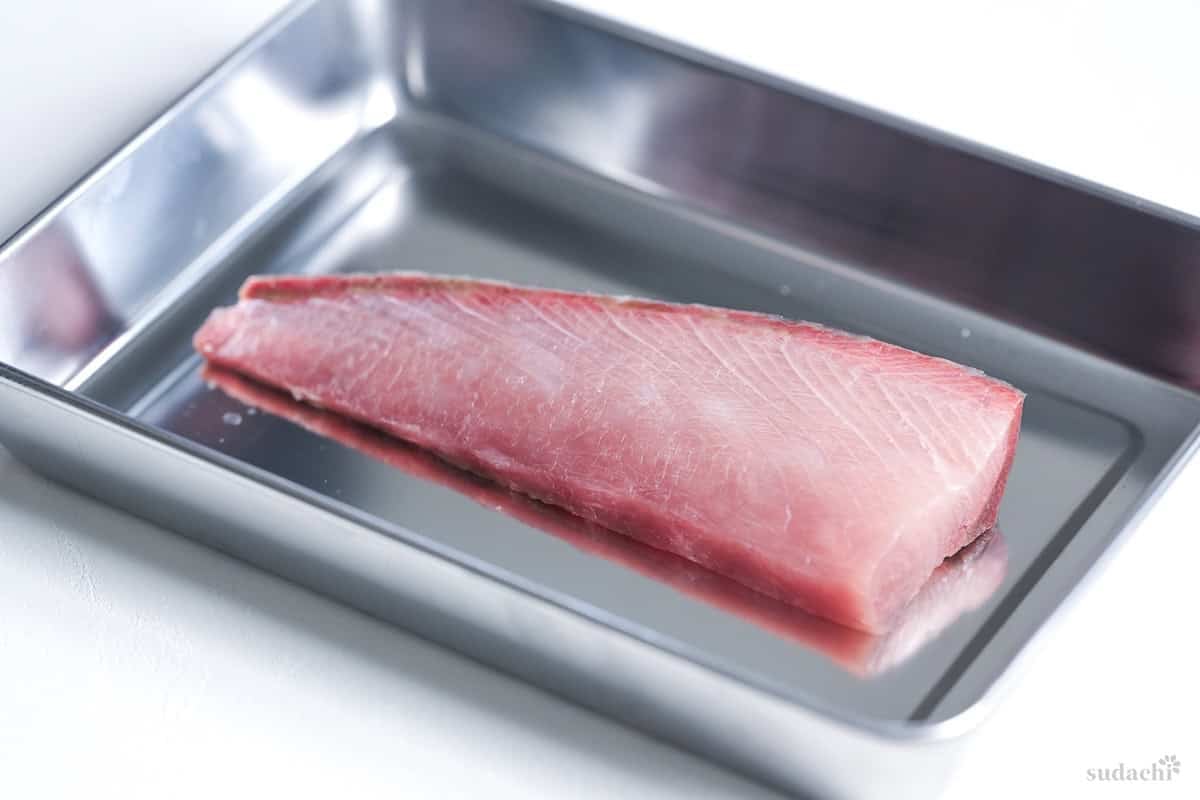
Seafood proteins set fast, so only use sashimi-grade fish/shellfish and swish briefly until just opaque to keep it tender. With seafood, ponzu is usually the best match because its citrusy tang highlights natural sweetness.
Vegetable Substitutes
If you can’t find some of the Japanese staples from my base recipe (shungiku, beansprouts, enoki/shiitake mushrooms, napa cabbage, carrot, and firm tofu), you can still build a great shabu shabu spread with the below:
- Naganegi (Japanese leek) or regular leek
- Mizuna (Japanese mustard greens) or arugula
- Daikon
- Onion
- Radish
- Other mushrooms
- Silken tofu
While I’ve listed the above, you can generally substitute with vegetables available in your local area. As I mentioned earlier, shabu-shabu is a very sauce-forward dish.
The simplest rule for shabu shabu vegetables is “fresh and juicy beats perfect and traditional,” because tired produce can make the broth taste bitter and flat. Choose crisp napa cabbage, fragrant leeks, and plump mushrooms whenever you can, and let your dipping sauces do the heavy lifting for flavor.
Have trouble finding Japanese ingredients? Check out my ultimate guide to Japanese ingredient substitutes!
How to Make and Eat Shabu Shabu at Home
If you prefer to watch the process in action, check out my YouTube video of this shabu shabu recipe!

Mise en place (Prep is everything for shabu shabu!):
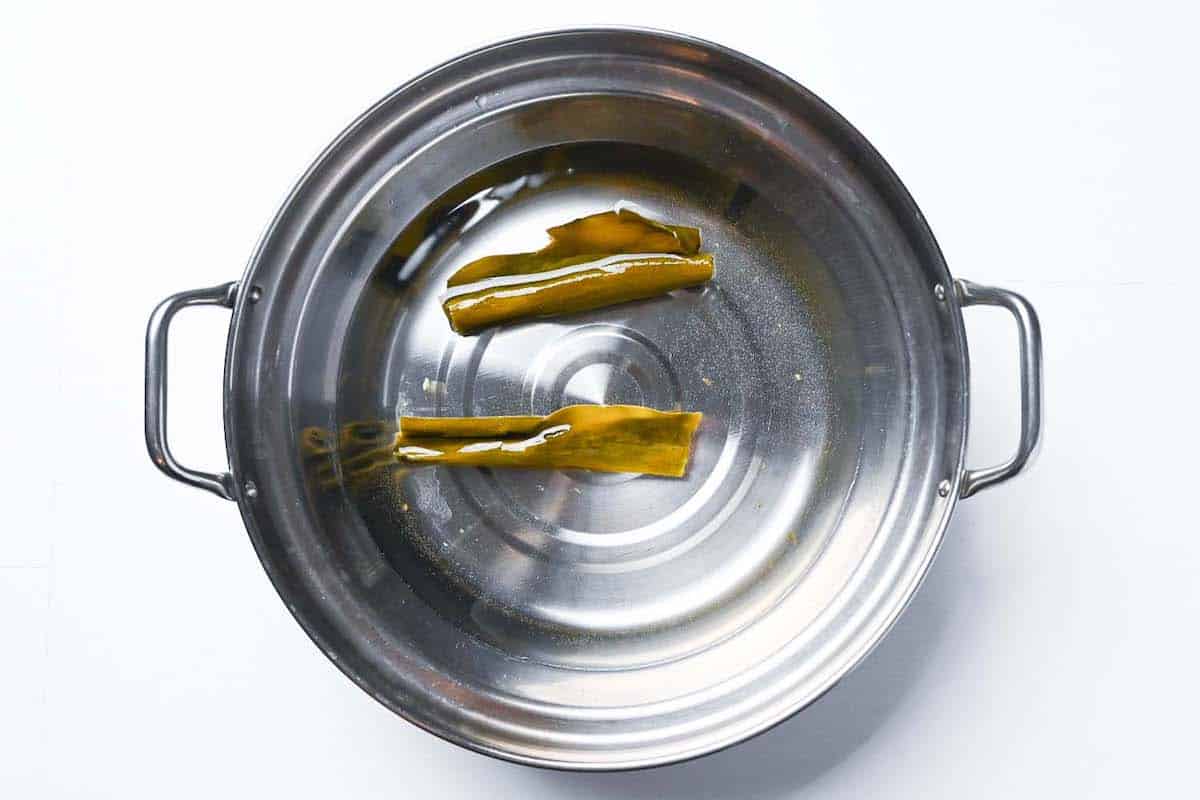
i. Place your dried kombu in the pot with cold water for at least 30 minutes, or overnight for a deeper flavor profile. This cold soak allows for the gentle pre-extraction of glutamates without releasing the bitter, slimy tannins found in the kelp’s cell walls.
ii. Wash and slice the napa cabbage, mushrooms, and tofu into bite-sized pieces, making sure the carrots are sliced thin.
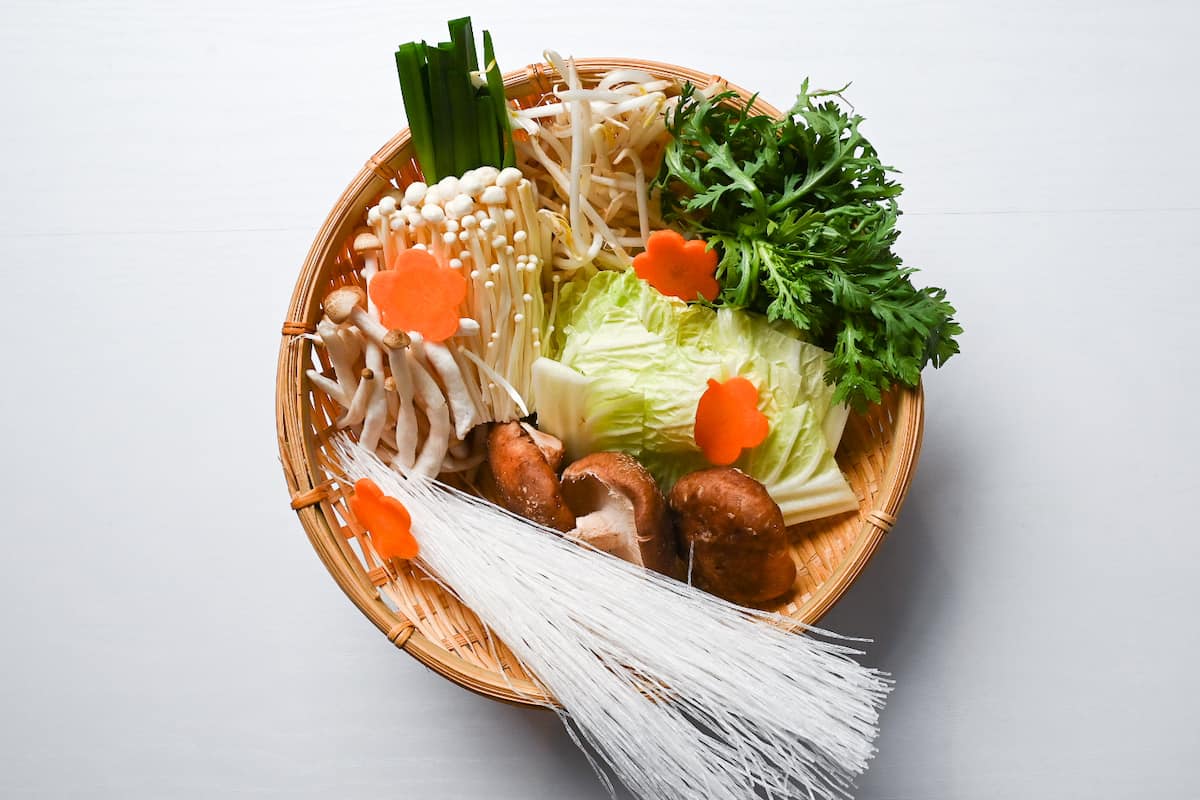
iii. For the glass noodles, ideally choose ones that cook really fast, because the whole point is to swish them through bubbling broth and lift them right back out. Mine were a bit thick, so they need to be par-boiled beforehand.
iv. Toast your kirimochi if you’re using it.
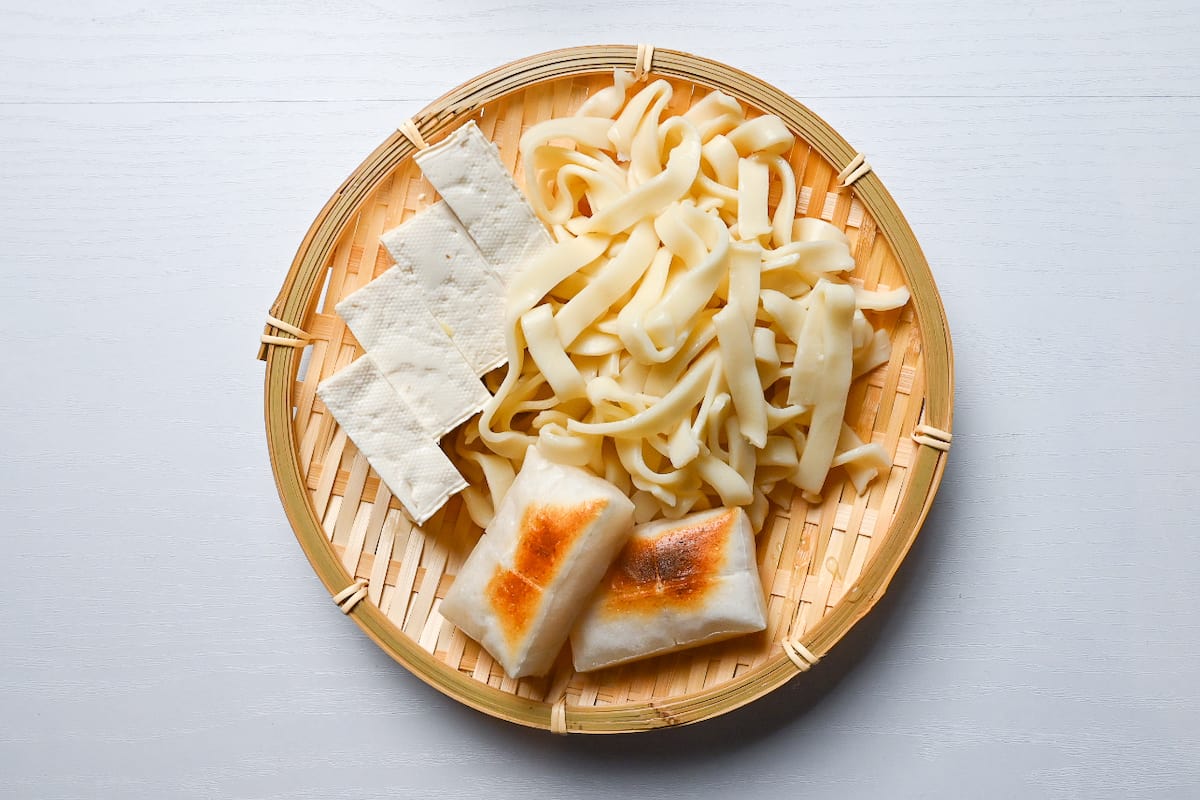
v. And if you’re doing finishing noodles like udon, soba, or kishimen, have them partially cooked ahead of time or simply use the pre-boiled frozen type so they’re ready to warm through at the end.
vi. Take your beef out of the fridge about 20 minutes before cooking.
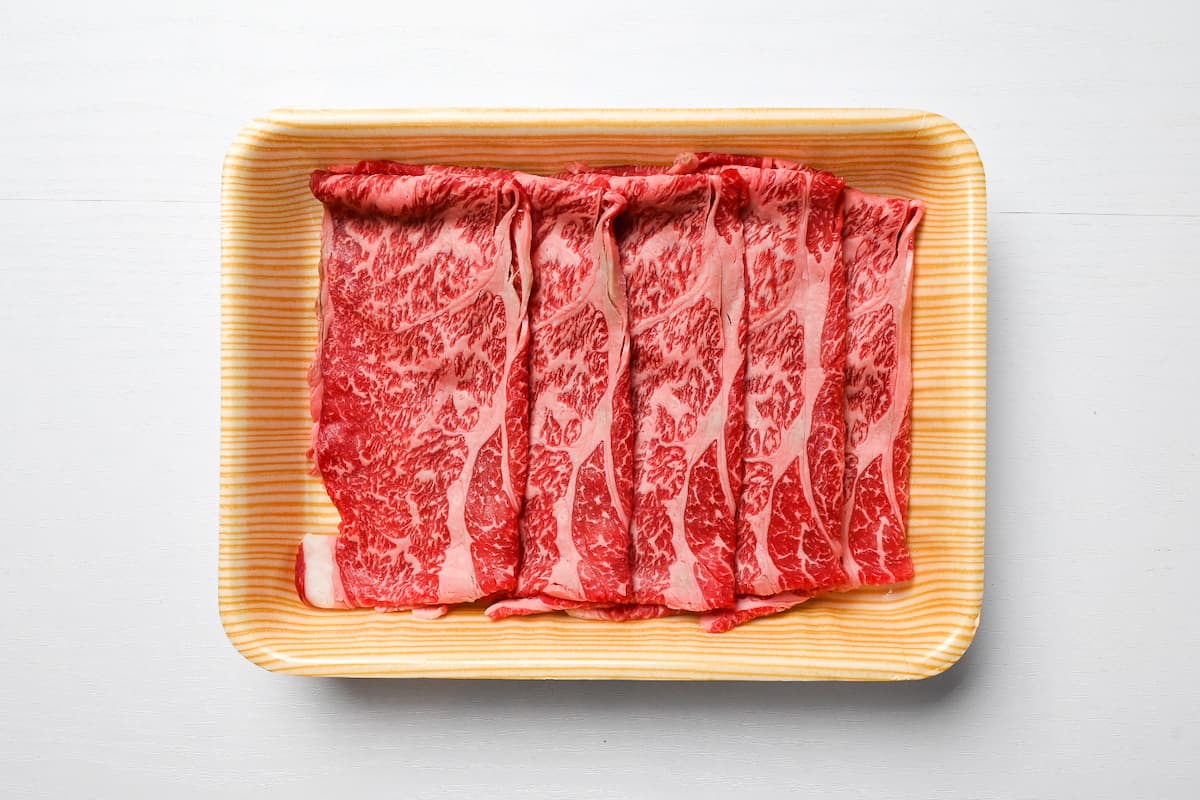
One key reason is cultural preference: as noted in this Japanese research paper, Japanese diners tend to favor marbled meat over lean cuts.
And there’s a practical, delicious reason too. When marbled beef is sliced thin and briefly swished in hot water, its umami and gentle fattiness melt into the broth just enough to add depth without turning it heavy, which is exactly what you want in a Japanese hot pot.
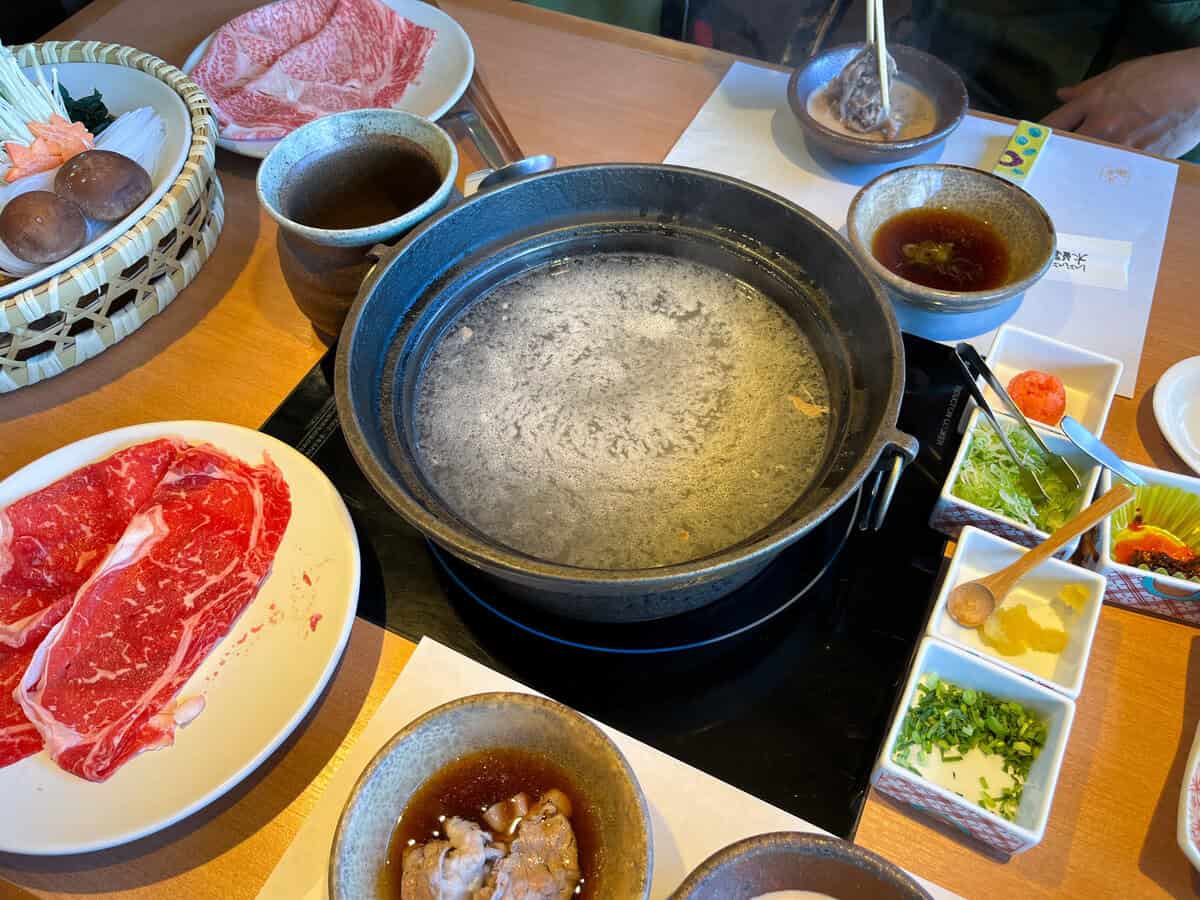
vii. Prepare flavor boosters (optional): Grated garlic, chives, and chili oil (rayu) can be added to the sesame sauce, whereas momiji oroshi (top right) and chopped green onion are usually added to the ponzu. If you can’t find momiji oroshi (grated daikon mixed with chili) you could also substitute for regular grated daikon radish instead.
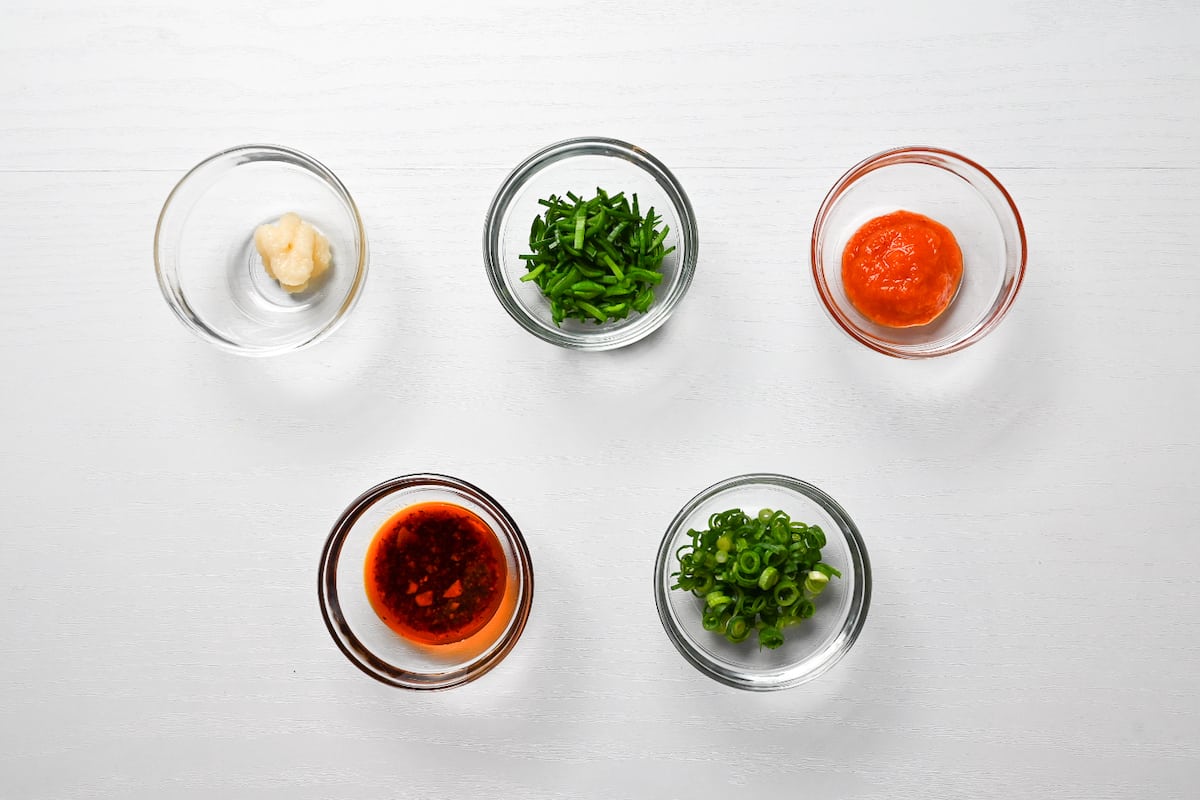
At high-end restaurants, each customer will have their own array of tiny bowls filled with these toppings. However, to avoid washing many dishes at home, it’s fine to divide them into larger communal bowls and allow your guests to help themselves.
Any pot works for shabu shabu. Traditional chimney-style, donabe, stainless, even aluminum, because more surface area helps keep a steady simmer as you add food. Set it on a burner with a pot captain, long raw-meat chopsticks, and a mesh skimmer.
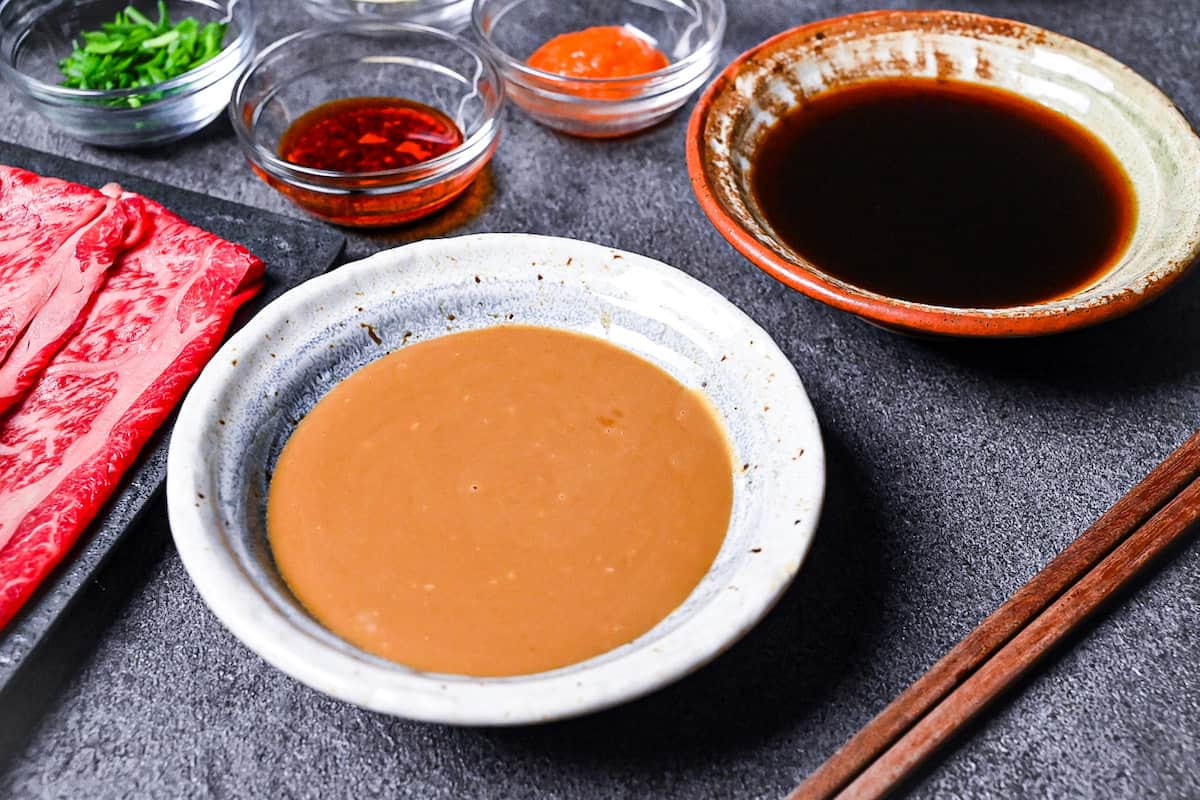
i. Whisk together sesame paste, soy sauce, a touch of miso paste, rice vinegar, and sugar until the mixture flows like thick cream. This nutty, savory goma dare (sesame dipping sauce) clings to every swish of meat and every curl of noodle, amplifying the mild broth with each bite.
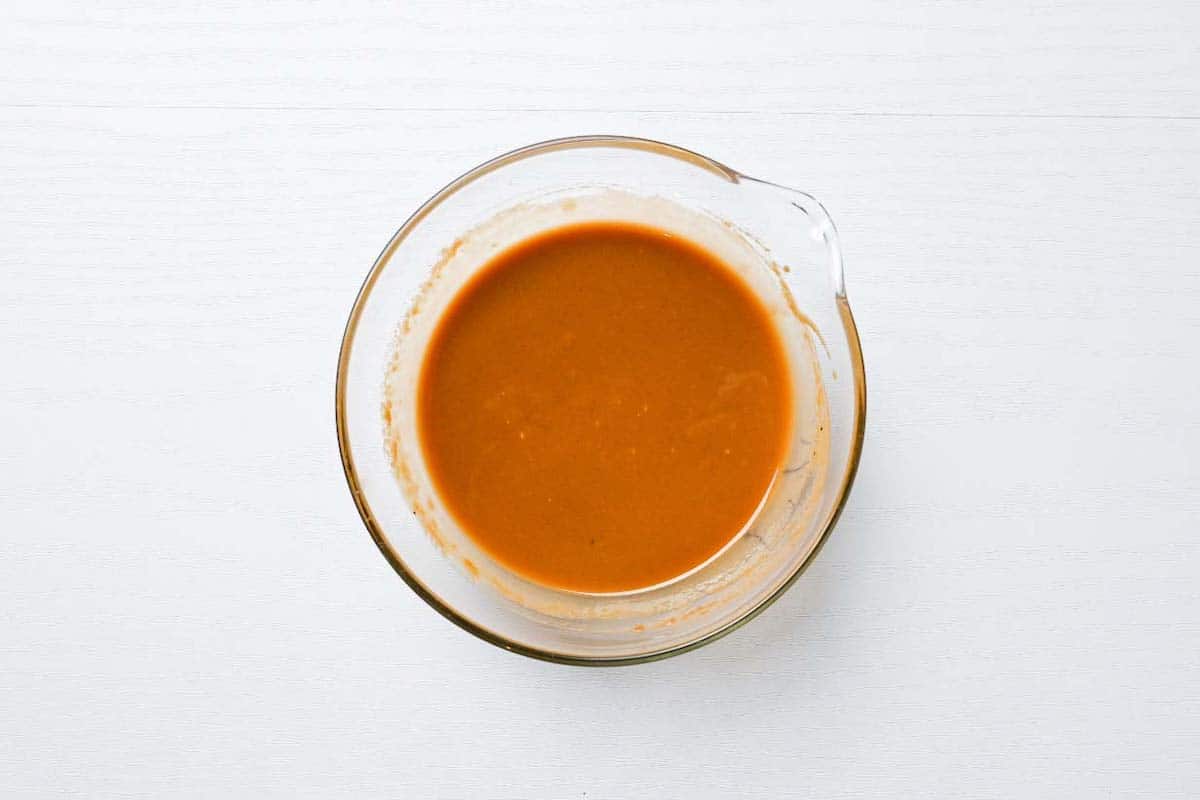
It seems very rich and a lot at this point, but remember, as you dip the meat straight from the pot, it will get watered down over time.
ii. For the citrus counterpart, use a bright ponzu (citrus-soy sauce).
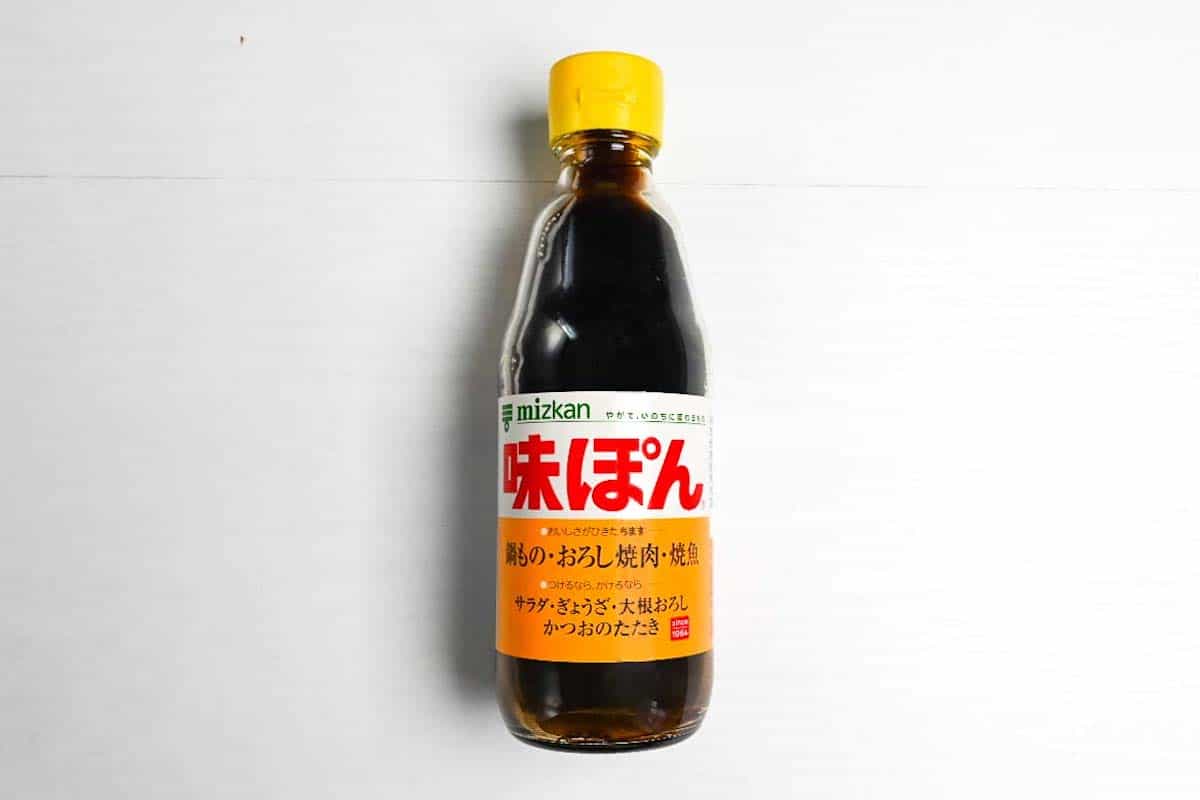
iii. Set out two small bowls per person so everyone can toggle between tangy and creamy without flavor collision.
i. After soaking, add sake and yuzu peel, then heat the kombu dashi to a gentle simmer at 70-80℃ (158-176°F) with small bubbles.
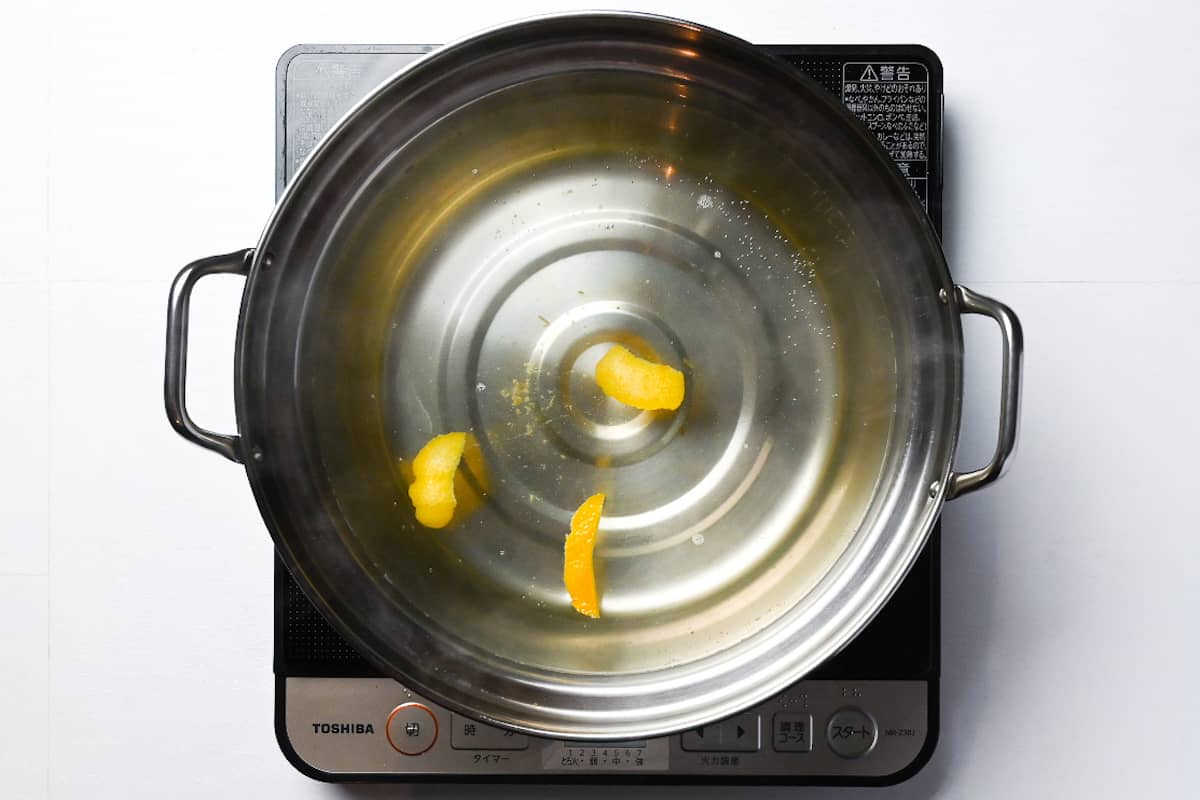
ii. Remove the kombu just before boiling, simmer 2 minutes, then remove the yuzu. If it boils hard, pull it off heat and add water to return to a gentle simmer.
Sake adds subtle aroma and umami depth, and it can help the broth read “rounder” and “elegant” as meat cooks. Omit it if needed and the kombu base will still taste clean.
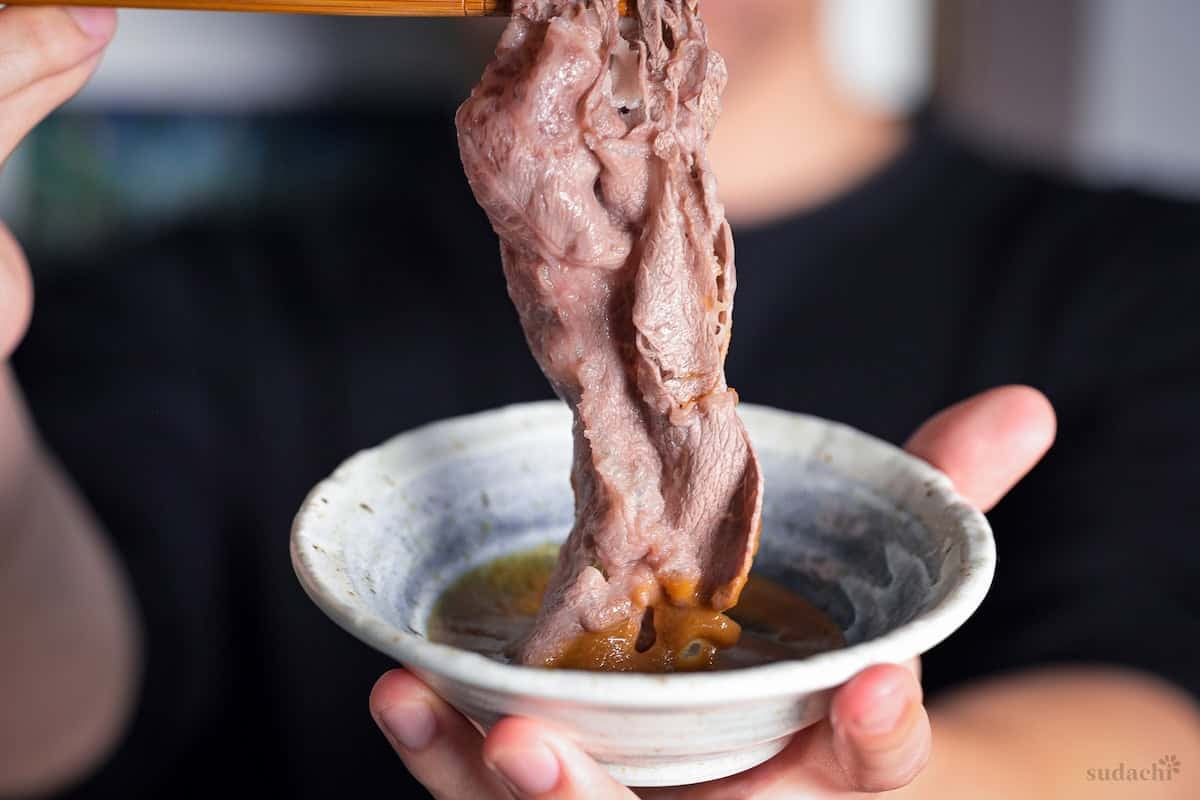
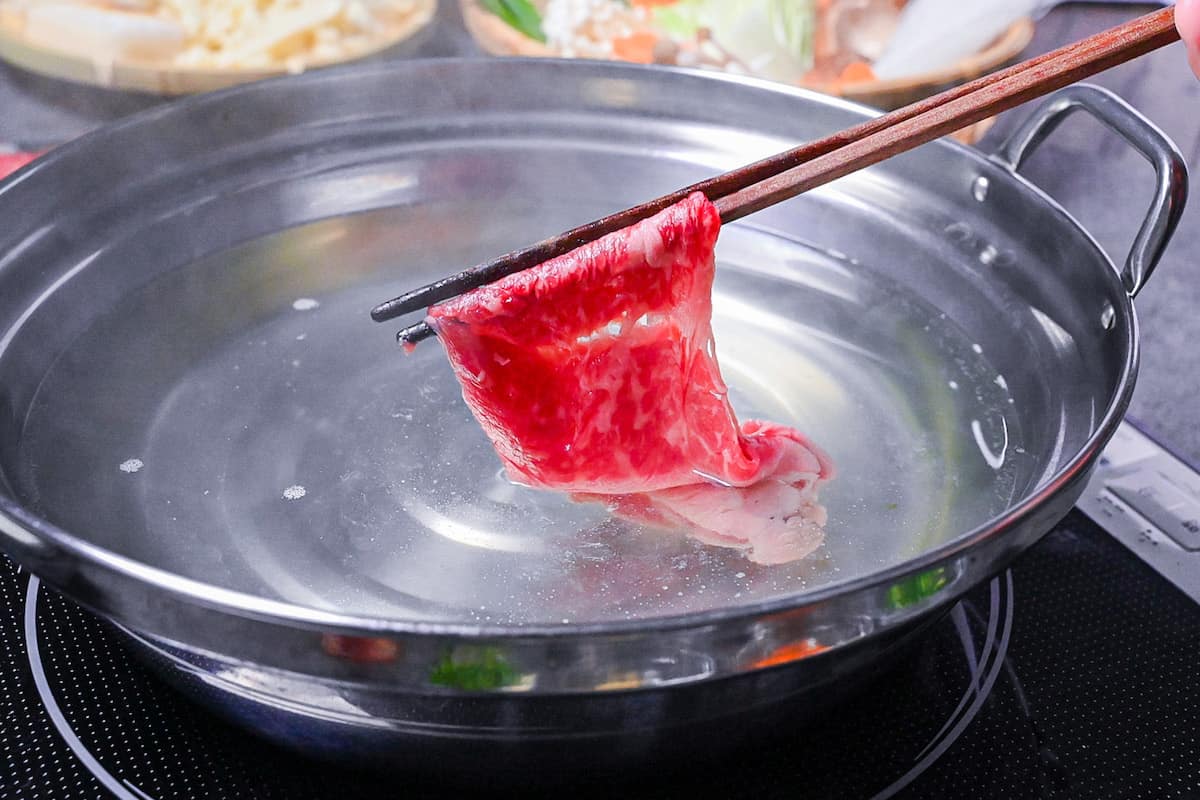
i. Pinch a single slice of beef between your chopsticks and lower it into the gently bubbling broth. Swish it back and forth (two, three passes) until the pink fades to rosy beige but a blush remains at the center.
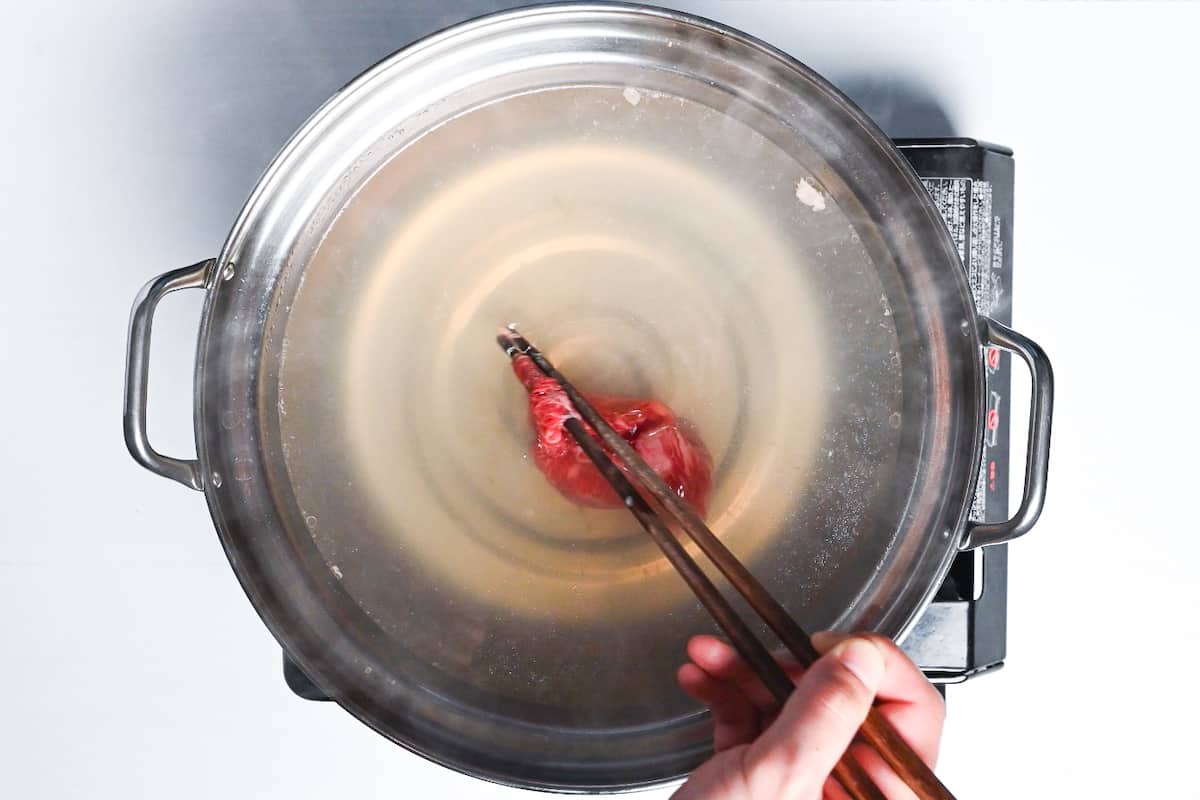
ii. Lift, let excess broth drip for a heartbeat, then glide the slice through your sauce of choice.
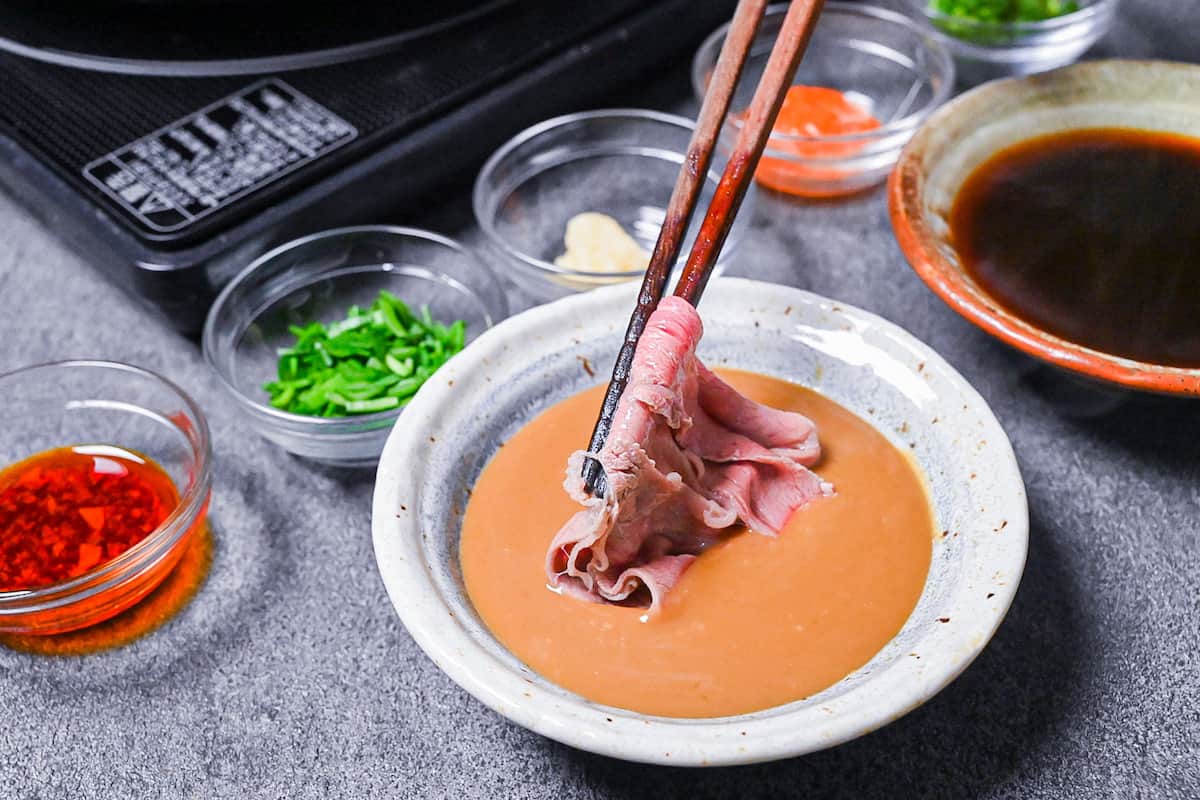
This first bite is pure appreciation: high-quality beef needs nothing but a small heat. You’ll also notice the broth beginning to change from here. Fat melts off, proteins drift into the water, and suddenly that plain kelp stock carries a hint of meaty richness.
Myosin, the muscle protein responsible for tenderness, begins coagulating around 50°C and firms up by 66°C. Push into rolling-boil territory (100°C) and you activate actin, which wrings moisture out like a sponge.
A gentle simmer keeps your meat supple; a violent boil turns it rubbery. If your broth starts bouncing aggressively, dial down the flame or lift the pot briefly off the heat.
i. Add carrots, mushrooms, napa cabbage, and tofu to the pot (sturdy items that need a few minutes of simmering).
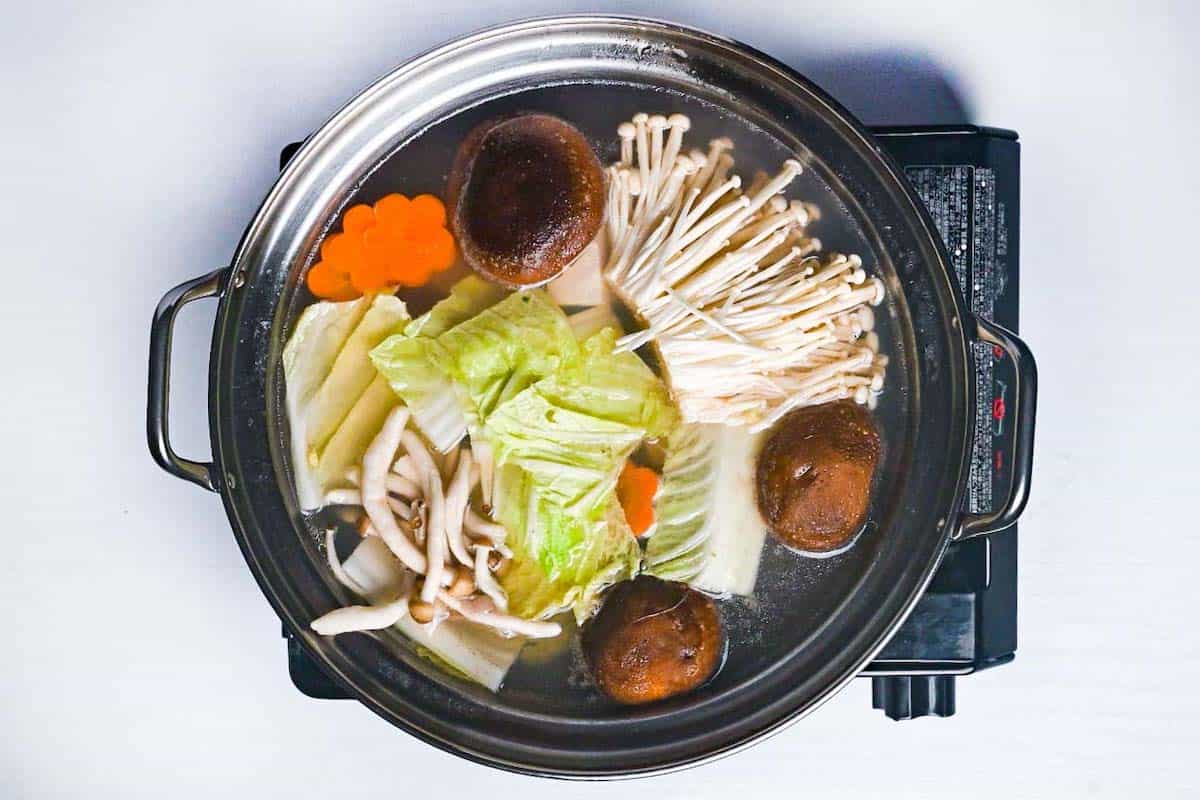
ii. While they soften, continue swishing beef slices. The vegetables absorb meaty richness as you go, and the beef picks up a faint sweetness from the cabbage.
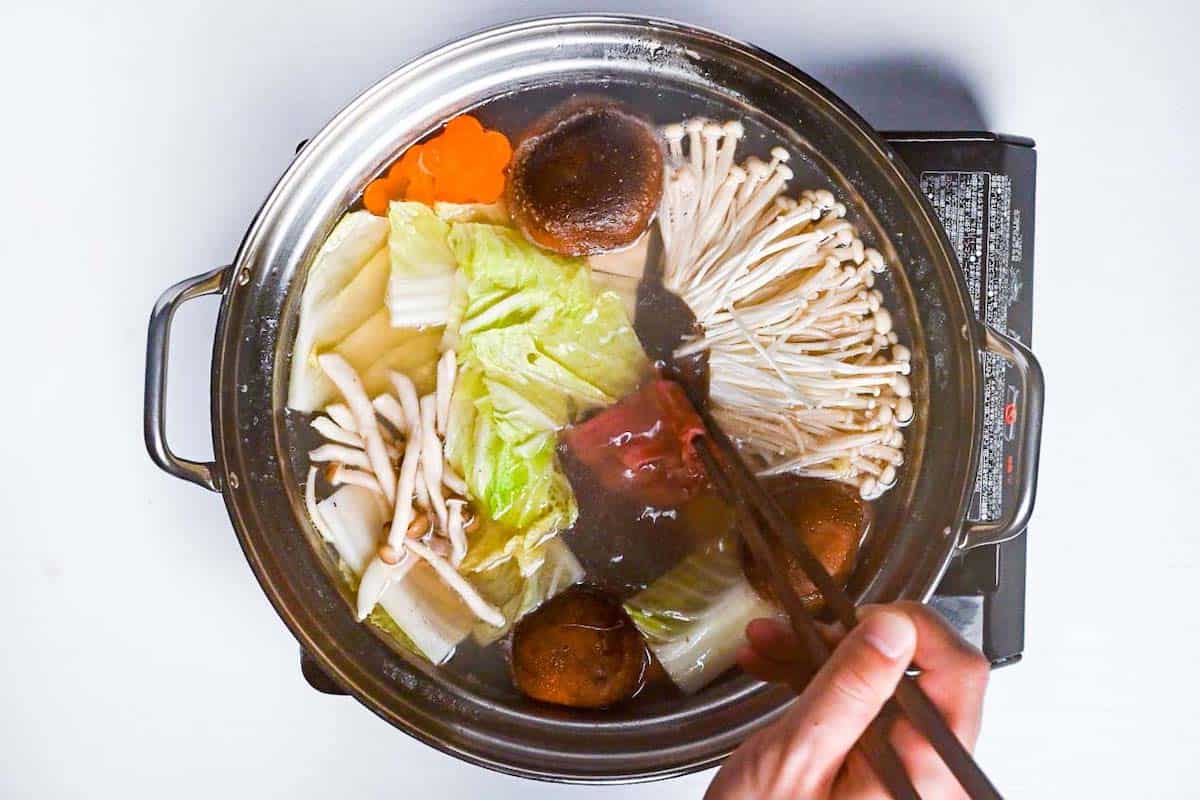
Space it out, or you’ll run out before the vegetables have finished cooking, and then you’ll be sitting there sadly watching everyone else enjoy their beef. Also, do not fight over the meat! If you’ve got friends or family who tend to get a little… competitive around meat, stock up extra before they arrive.
iii. Pull vegetables when they hit crisp-tender. Cabbage should still have a bit of crunch, mushrooms should be springy, tofu silky but not waterlogged.
iv. Once the pot has breathing room, slide in quick-cooking additions: bean sprouts, chives, and delicate chrysanthemum greens, which need only a minute to wilt.
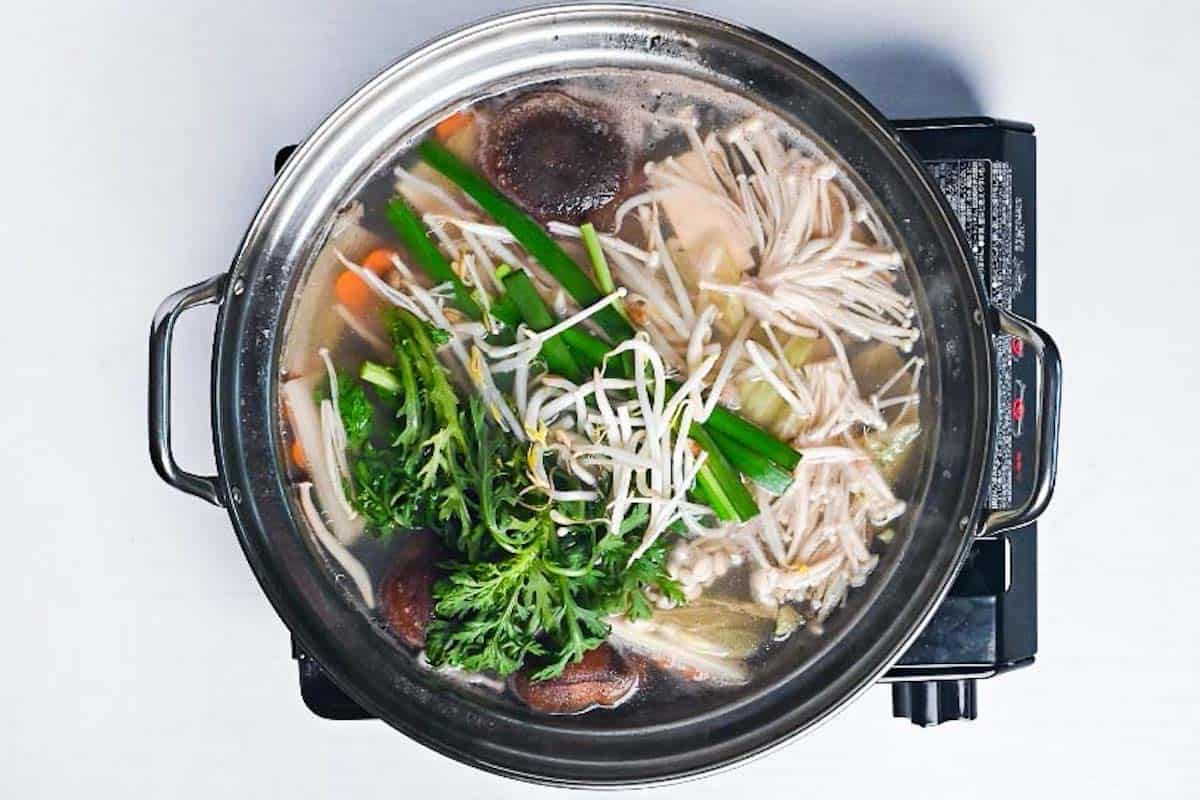
Every dip introduces a few drops of broth into your sauce bowl. Ponzu handles dilution gracefully, just top it off with fresh sauce as you go. Goma dare is less forgiving. Once it thins out too much, the cling-and-coat magic fades. Swap in a fresh bowl midway through rather than tolerating watered-down sesame soup.
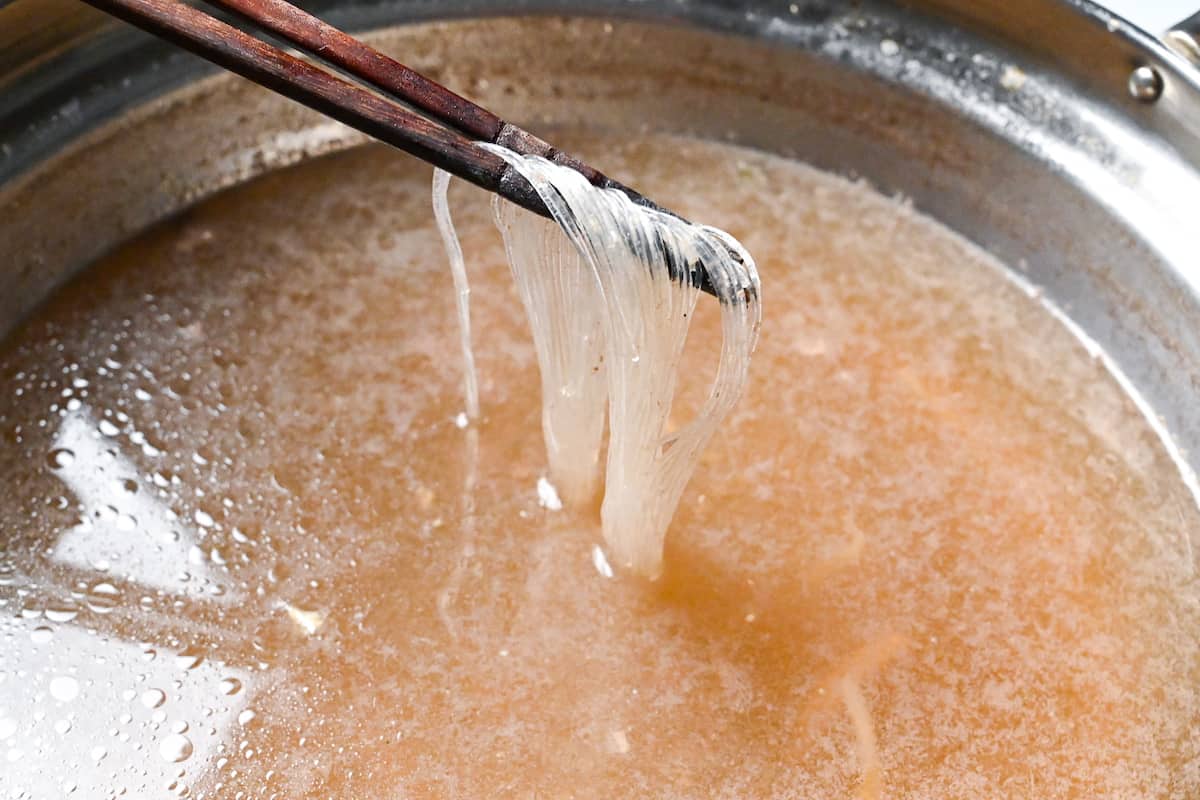
i. Once the vegetables are gone, portion these glass noodles (harusame) to each guest. Grip your bundle firmly and swish it in the broth.
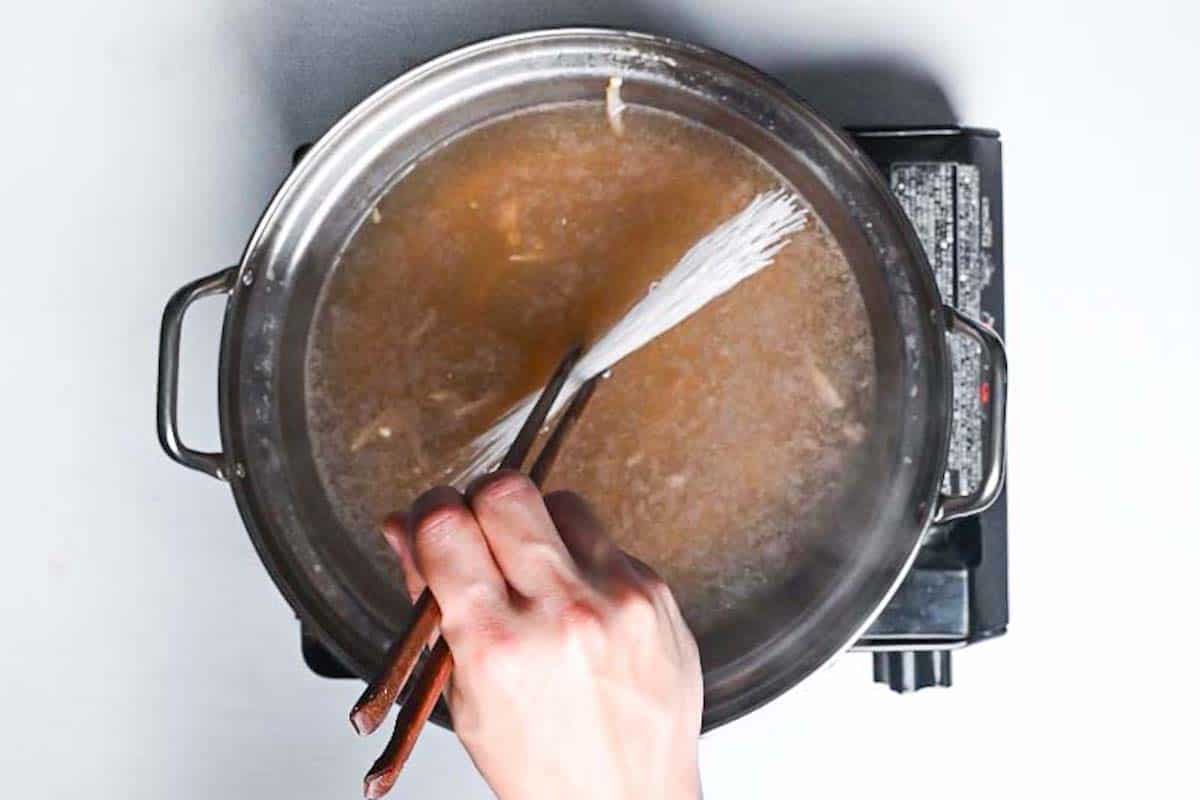
ii. Lift, dip in sauce, slurp, repeat. The noodles’ neutral flavor becomes a vehicle for the now-complex broth and whatever sauce clings to them.
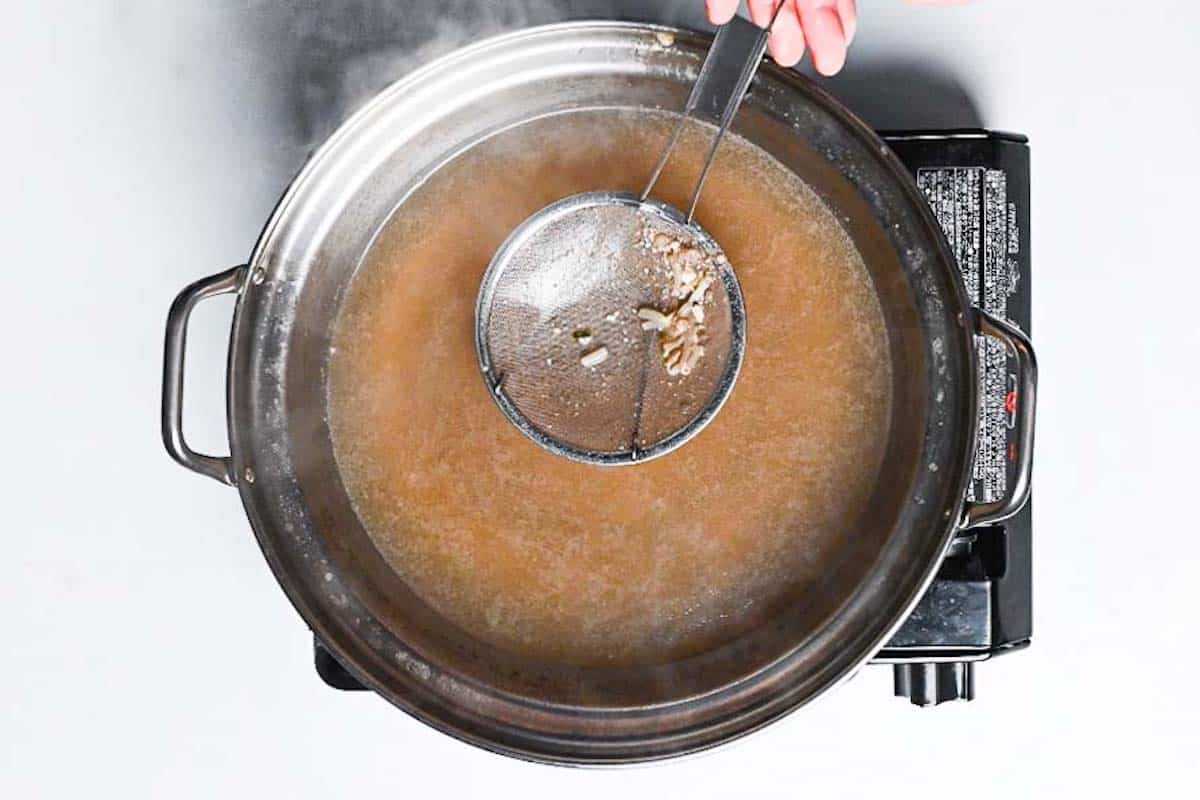
i. Before the finale, skim any stray bits and foam from the broth with a fine-mesh spoon.
ii. Ladle the now-golden stock into serving bowls. Taste it and season generously with salt and pepper (or a dash of soy sauce) until it sings.
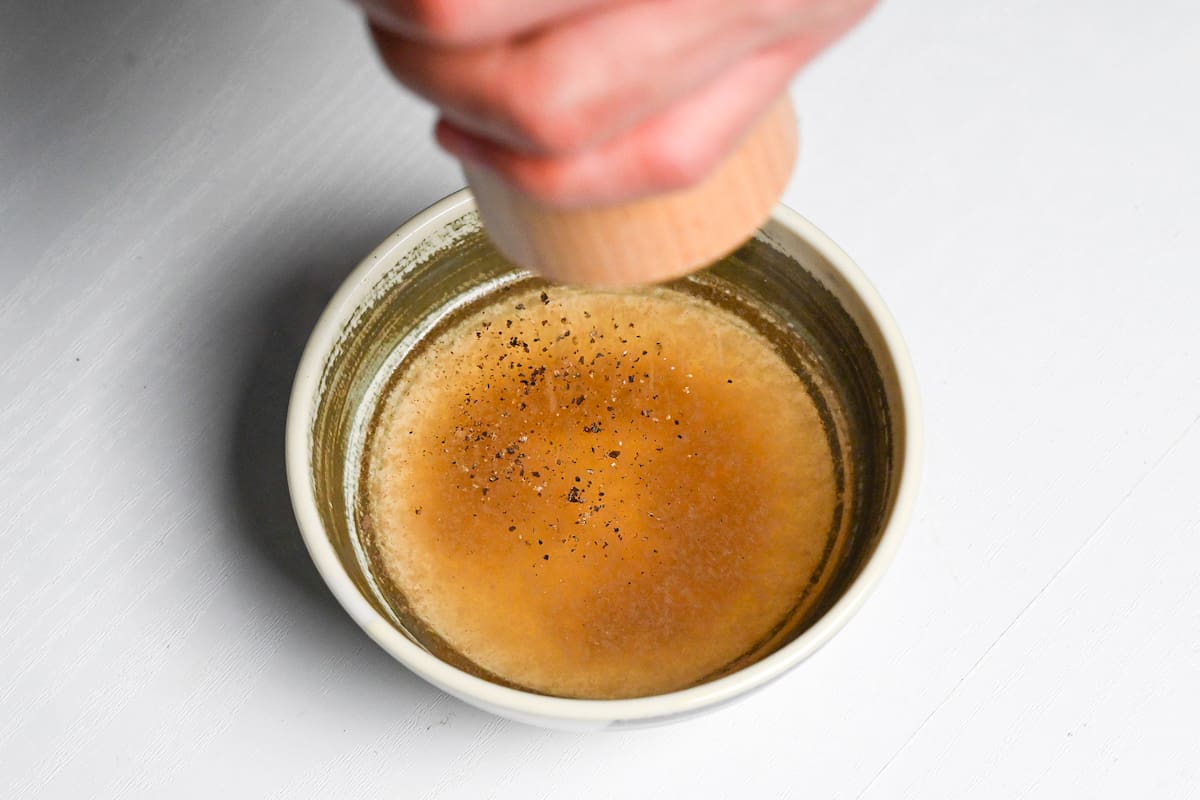
The broth has simmered down and concentrated! What started as almost plain kelp water is now a liquid mosaic of beef fat, vegetable sweetness, and umami.
iii. Add pre-cooked udon (or other noodles) or toasted mochi to the pot to warm them through.
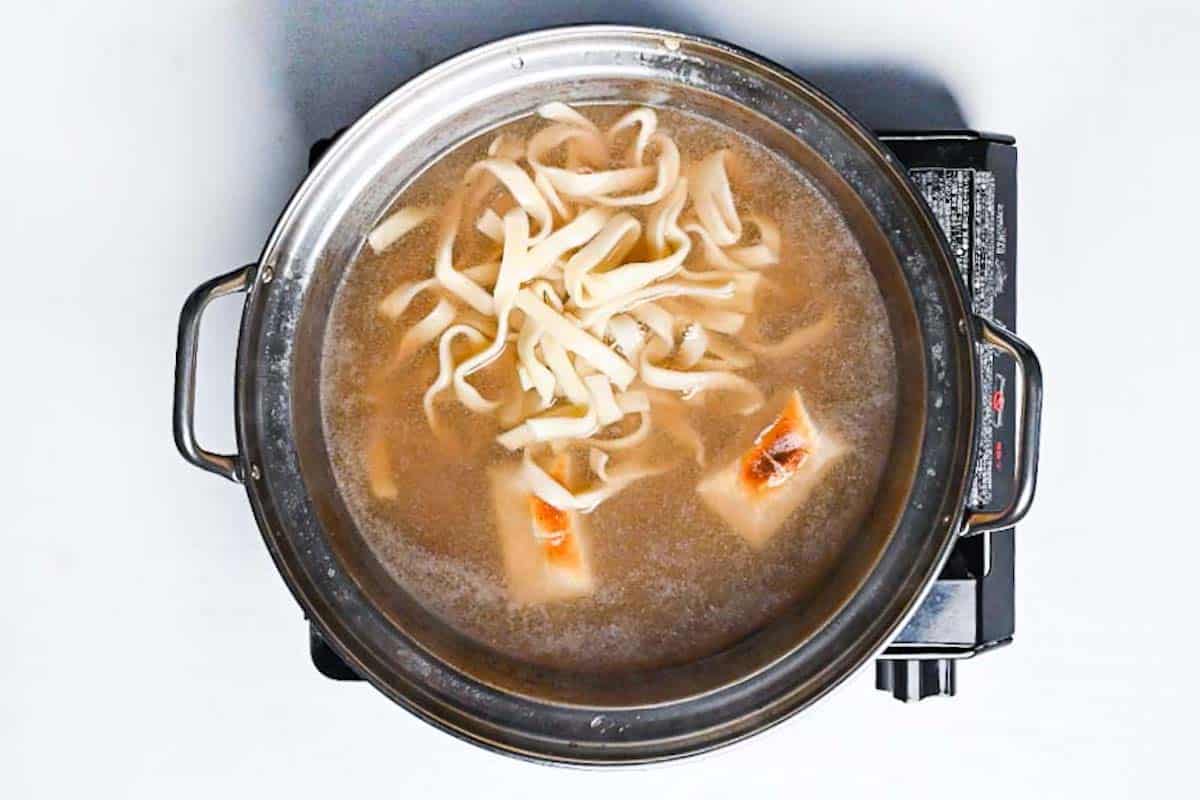
iv. Divide among bowls, scatter chopped green onions on top, and exhale. This final slurp captures everything the meal built toward.
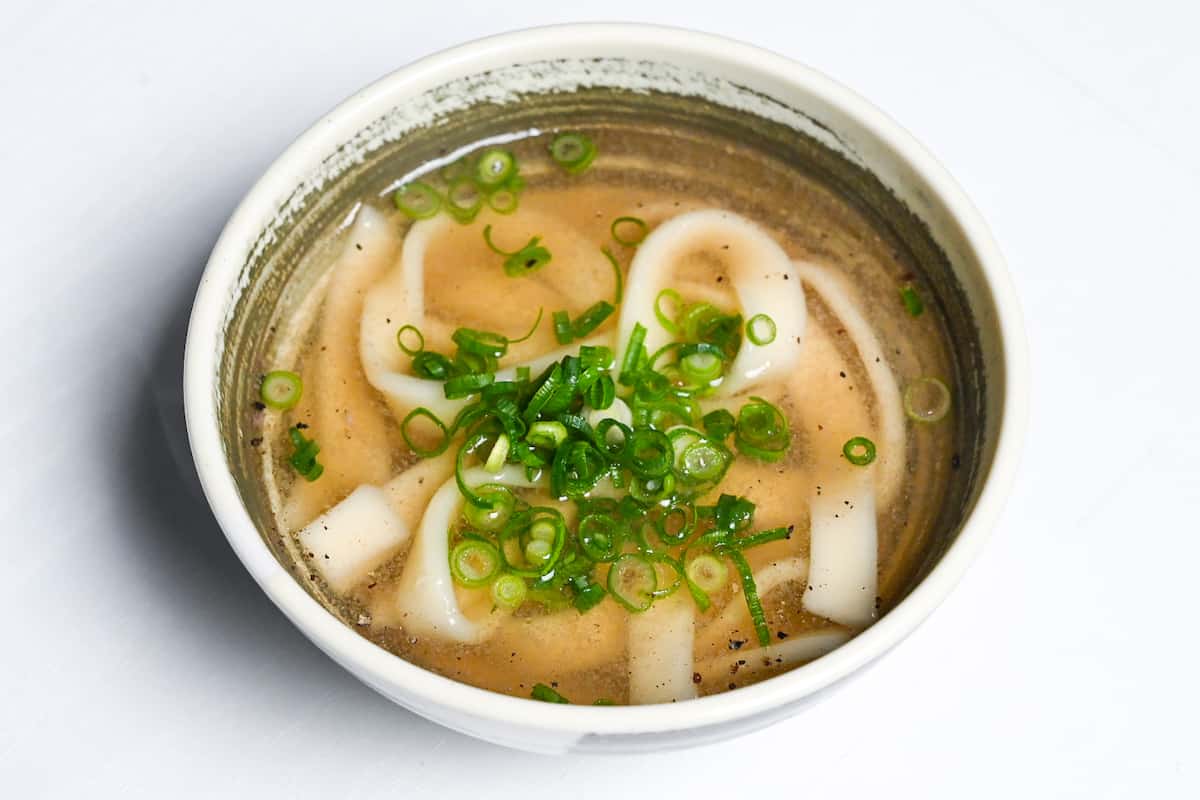
If you follow the default recipe, it will yield 4-5 main servings.

Essential Tips & Tricks
- Maintain the broth between 70℃-80℃ (158°F-176°F) throughout to make sure gentle protein denaturation for maximum tenderness.
- Remove kombu just before boiling so glutamates stay clean and the broth stays clear.
- Swish shabu beef one slice at a time briefly so it heats evenly and enriches the broth with fine fat, otherwise clumped slices drop the temperature and overcook into tough ribbons.
- Sequence ingredients by cook time (carrot/mushrooms/napa first, delicate greens last) so textures land crisp-tender instead of soggy.
- Keep the cooking broth unseasoned and let the dipping sauces do the heavy lifting.
With these simple tips in mind, you’re set for success every time you make shabu shabu.
Shabu Shabu FAQ
Look for “shabu shabu,” “hot pot,” or “sukiyaki” beef that’s deli-thin (about 1-2 mm) so it cooks in seconds by swishing, not simmering. Ribeye/chuck eye/sirloin hot pot slices give great marbling and tenderness. If slices stick together, keep them colder and separate them gently before swishing to avoid clumping and uneven doneness.
You do not need a specialized chimney-style pot; any wide, shallow stainless steel or ceramic pot will work, provided it has enough surface area to prevent the temperature from dropping too sharply when ingredients are added. A portable burner is highly recommended for the hosting ergonomics of a communal meal, as it allows you to maintain a consistent gentle simmer right at the table. If you must cook on the stove, prepare small batches and bring them to the table in a pre-heated bowl to prevent the meat from drying out or getting cold.
Both sauces get diluted because hot food carries broth into the bowl-ponzu handles topping up well, but sesame sauce can lose its cling when the emulsion thins. Whisk sesame sauce again and replace with a fresh bowl if it stops coating. To slow dilution, shake off excess broth before dipping and keep dips in smaller bowls you can refresh easily.
More Japanese Winter Recipes
- Japanese Style Cabbage Rolls
- Oden (Japanese Winter Stew)
- Curry Udon
- Nabeyaki Udon
If you’re looking to stay cozy this season, explore these delicious Japanese winter foods that are perfect for cold nights!
Did You Try This Recipe?
I would love to hear your thoughts!
💬 Leave a review and ⭐️ rating in the comments below. 📷 I also love to see your photos – submit them here!
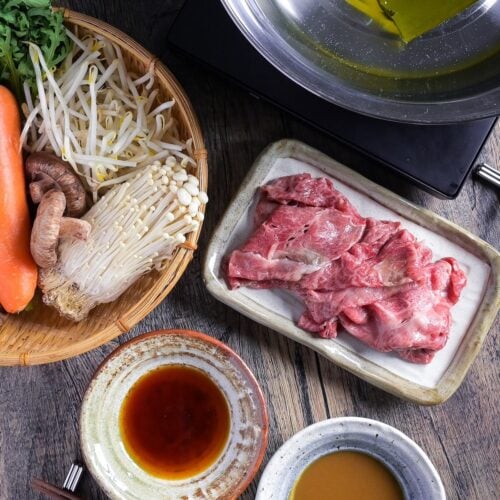
Traditional Shabu Shabu (Broth & Dipping Sauce Guide)

Ingredients
Shabu shabu broth
- 10 g dried kelp (kombu)
- 1 liter water
- 3 tbsp sake
- yuzu peel optional
Shabu shabu ingredients
- 450 g thinly sliced beef paper-thin 1-2 mm, "shabu shabu/hot pot" slices
- 200 g Napa cabbage roughly cut
- 100 g chrysanthemum greens (shungiku) halved
- 50 g carrot peeled and thinly sliced
- 100 g enoki mushrooms roots removed
- 100 g firm tofu cubed
- 4 fresh shiitake mushrooms stems trimmed
- 100 g bean sprouts
- 50 g thin glass noodles (harusame) with short cooking time
- 200 g cooked udon noodles optional
- 4 cut rice cakes (kirimochi) toasted, optional
Ponzu sauce and additions
- ponzu sauce
- finely chopped green onions optional
- grated daikon radish (daikon oroshi) optional
- spicy grated daikon radish (momiji oroshi) optional
Homemade sesame shabu shabu sauce (gomadare)
- 2 tbsp sesame paste (nerigoma) or tahini
- 1 tbsp Japanese soy sauce (koikuchi shoyu)
- 2 tbsp unseasoned rice vinegar (komezu) unseasoned
- ½ tbsp yellow miso paste (awase)
- 2 tbsp sugar
- garlic chive(s) finely chopped, optional
- chili oil (rayu) optional
- grated garlic optional
My recommended brands of ingredients and seasonings can be found in my Japanese pantry guide.
Can’t find certain Japanese ingredients? See my substitution guide here.
Instructions
Preparation
- Soak 10 g dried kelp (kombu) in 1 liter water in a pot for at least 30 minutes or until rehydrated. You can soak it longer if you prefer, some people soak it in the fridge overnight.

- While you wait, prepare the ingredients according to the instructions on the ingredient list. Arrange them on a plate or tray and place them near the stove. Take the beef out of the refrigerator 20 minutes before cooking.
- Make the gomadare (sesame sauce) by mixing 2 tbsp sesame paste (nerigoma), 1 tbsp Japanese soy sauce (koikuchi shoyu), 2 tbsp unseasoned rice vinegar (komezu), ½ tbsp yellow miso paste (awase), and 2 tbsp sugar in a small bowl until smooth. Divide between individual serving bowls.
- In small bowls, prepare garlic chive(s), chili oil (rayu) and grated garlic (to add to the sesame sauce) and finely chopped green onions and grated daikon radish (daikon oroshi) or spicy grated daikon radish (momiji oroshi) (for the ponzu sauce). Lay them out on the table.
- Once the kombu is rehydrated, add 3 tbsp sake and yuzu peel to the broth and place the pot on the stove. Heat until almost boiling, then remove the kombu. Allow the broth to bubble for a few minutes and then remove the yuzu peel before you start to cook.
Cooking and eating
- Course 1: Tasting the BeefEach guest should take one piece of beef and swish it in the broth until cooked to their preferred done-ness (slightly pink is recommended for shabu shabu beef). Once cooked, lift and dip in your choice of sauce.
- Course 2: Vegetables & TofuAdd the carrot, napa cabbage, mushrooms and tofu. Each guest can cook more beef and help themselves while the vegetables and tofu are cooking. Tip: Try to space out cooking the beef so that you can enjoy it throughout the duration of the meal. Be sure to try different ingredients and sauce combinations.
- Once more space becomes available in the pot, add the beansprouts, shungiku and chives. Eat up until there are no more ingredients left in the pot.
- Course 3: Glass/rice noodlesGive each guest a small portion of glass/rice noodles. Swish them in the broth until cooked and enjoy with your choice of dipping sauce.
- Course 4: Finishing noodlesUse a mesh spoon to scoop out any scum or broken ingredients. Divide the broth between individual serving bowls and season generously with salt and pepper to taste. Add cooked udon/kishimen noodles (and mochi) to the leftover broth (top up with water or dashi if needed) and simmer until warmed through. Place them in the individual bowls of seasoned broth and top with chopped green onions. Enjoy!
Video

Great guide 🙂
I did not realize how easy the sesame sauce is to make! It was my favourite dipping sauce as a kid. So much more economical! Will be making my own for the next gathering.
Hi Jas,
Thank you for your wonderful comment! I’m glad that the whole guide was helpful!
Please let me know how it turns out when you make it for your gathering
Yuto