
Traditional Shabu Shabu (Broth & Dipping Sauce Guide)
Ingredients
Shabu shabu broth
- 10 g dried kelp (kombu)
- 1 liter water
- 3 tbsp sake
- yuzu peel optional
Shabu shabu ingredients
- 450 g thinly sliced beef paper-thin 1-2 mm, "shabu shabu/hot pot" slices
- 200 g Napa cabbage roughly cut
- 100 g chrysanthemum greens (shungiku) halved
- 50 g carrot peeled and thinly sliced
- 100 g enoki mushrooms roots removed
- 100 g firm tofu cubed
- 4 fresh shiitake mushrooms stems trimmed
- 100 g bean sprouts
- 50 g thin glass noodles (harusame) with short cooking time
- 200 g cooked udon noodles optional
- 4 cut rice cakes (kirimochi) toasted, optional
Ponzu sauce and additions
- ponzu sauce
- finely chopped green onions optional
- grated daikon radish (daikon oroshi) optional
- spicy grated daikon radish (momiji oroshi) optional
Homemade sesame shabu shabu sauce (gomadare)
- 2 tbsp sesame paste (nerigoma) or tahini
- 1 tbsp Japanese soy sauce (koikuchi shoyu)
- 2 tbsp unseasoned rice vinegar (komezu) unseasoned
- ½ tbsp yellow miso paste (awase)
- 2 tbsp sugar
- garlic chive(s) finely chopped, optional
- chili oil (rayu) optional
- grated garlic optional
Instructions
Preparation
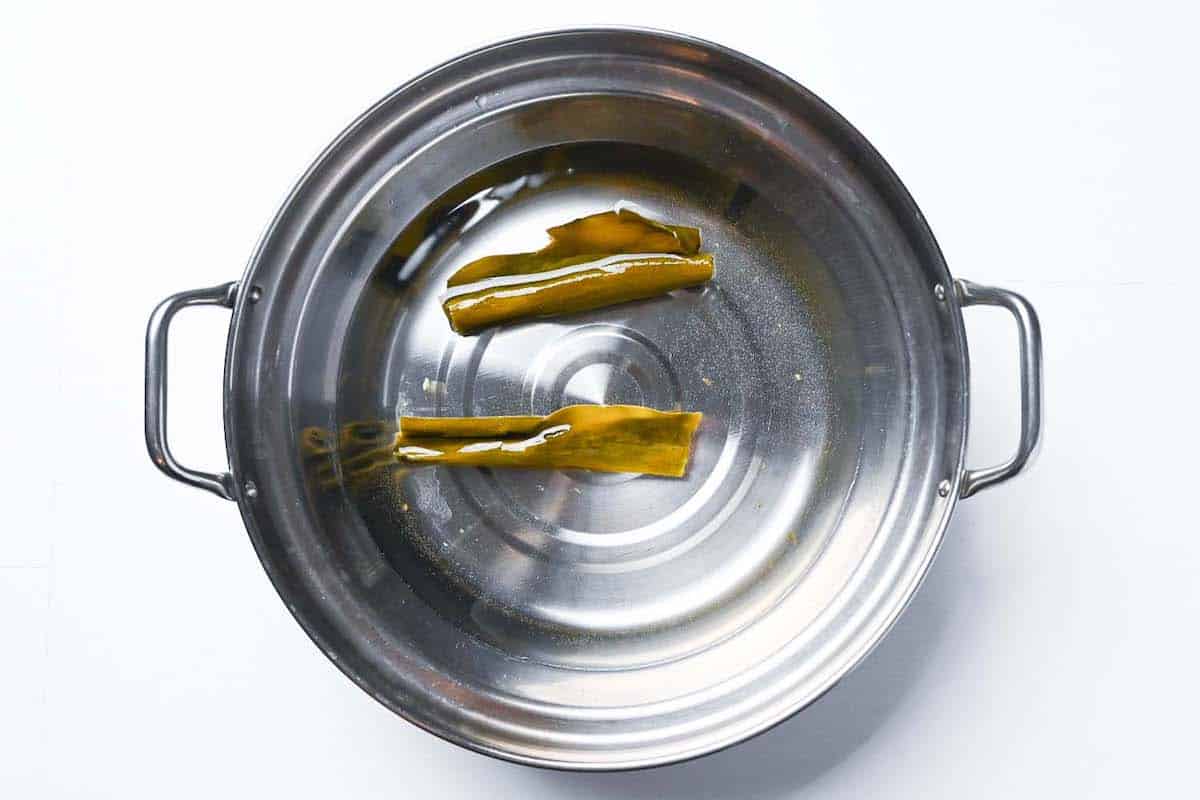
- Soak 10 g dried kelp (kombu) in 1 liter water in a pot for at least 30 minutes or until rehydrated. You can soak it longer if you prefer, some people soak it in the fridge overnight.
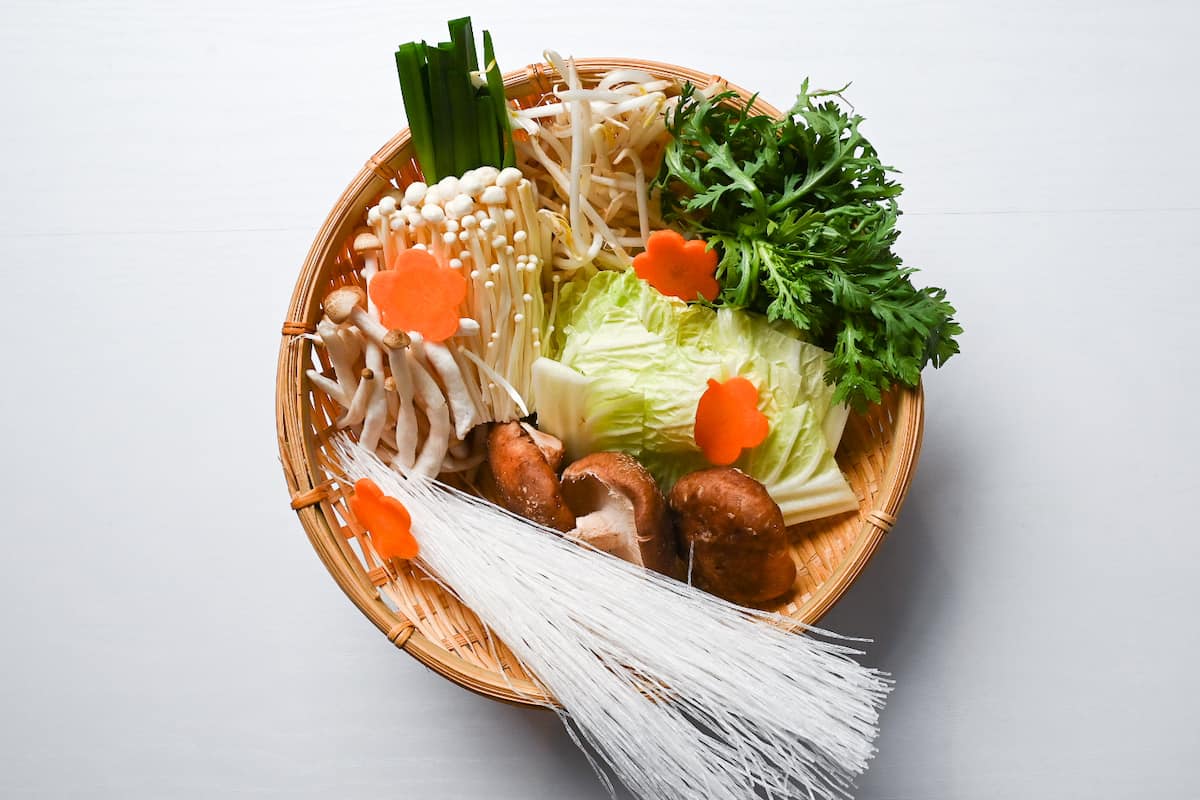
- While you wait, prepare the ingredients according to the instructions on the ingredient list. Arrange them on a plate or tray and place them near the stove. Take the beef out of the refrigerator 20 minutes before cooking.
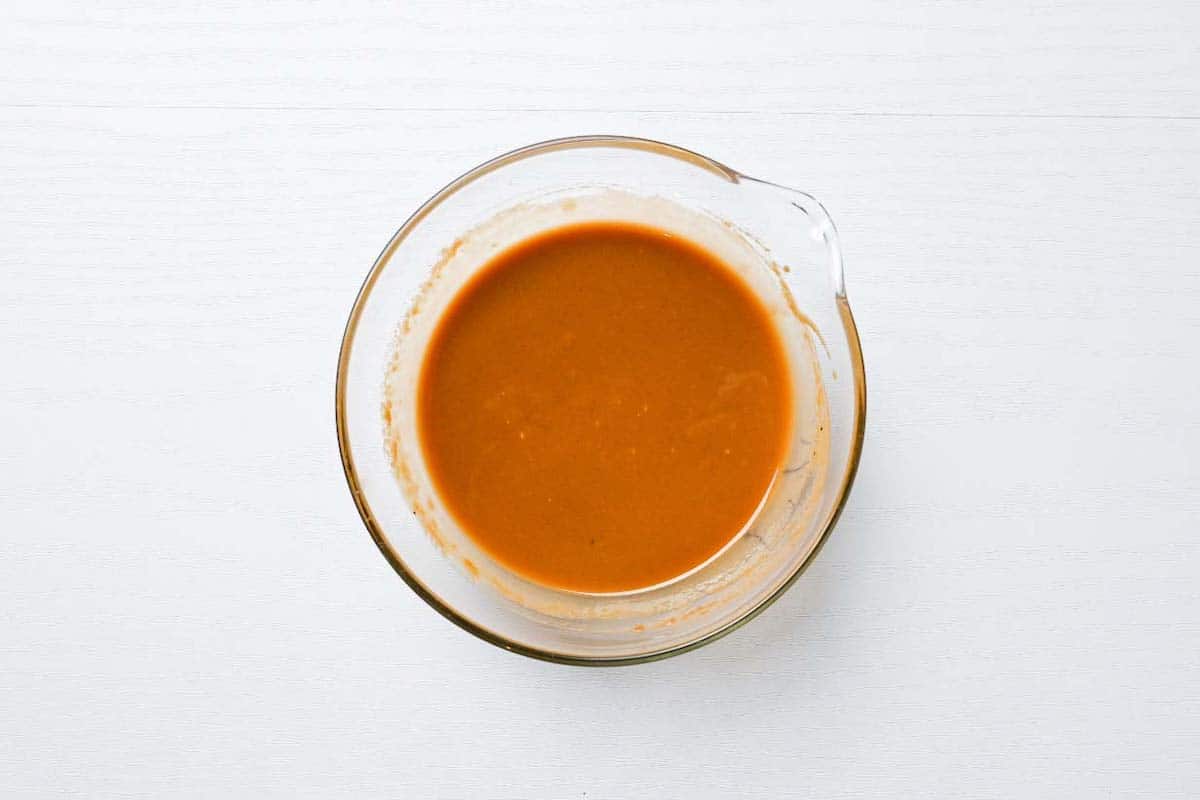
- Make the gomadare (sesame sauce) by mixing 2 tbsp sesame paste (nerigoma), 1 tbsp Japanese soy sauce (koikuchi shoyu), 2 tbsp unseasoned rice vinegar (komezu), ½ tbsp yellow miso paste (awase), and 2 tbsp sugar in a small bowl until smooth. Divide between individual serving bowls.
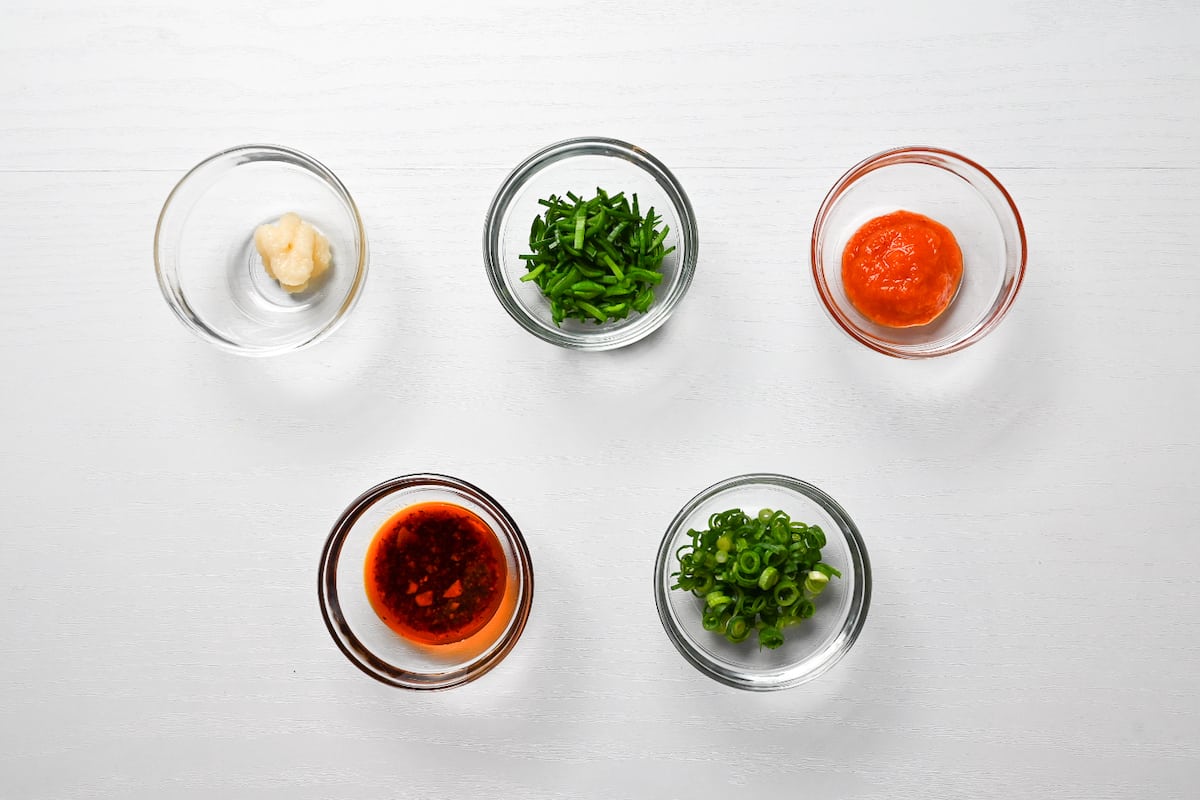
- In small bowls, prepare garlic chive(s), chili oil (rayu) and grated garlic (to add to the sesame sauce) and finely chopped green onions and grated daikon radish (daikon oroshi) or spicy grated daikon radish (momiji oroshi) (for the ponzu sauce). Lay them out on the table.
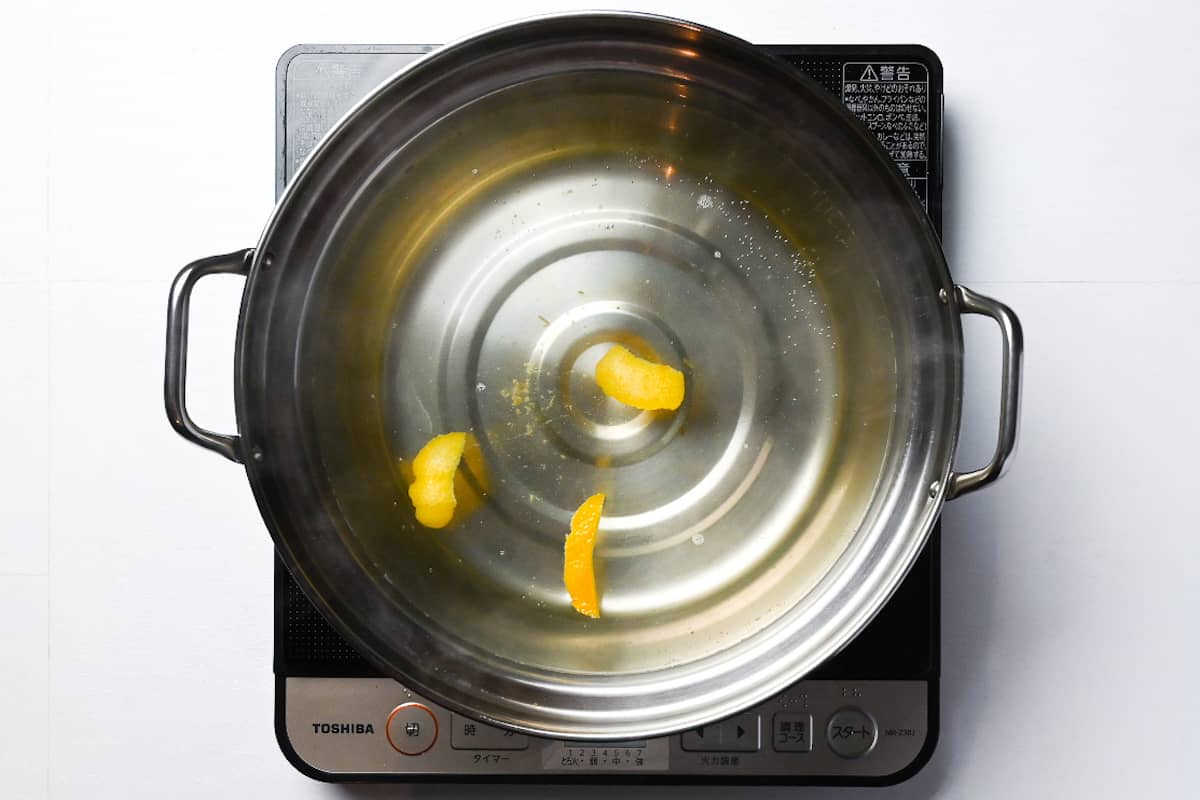
- Once the kombu is rehydrated, add 3 tbsp sake and yuzu peel to the broth and place the pot on the stove. Heat until almost boiling, then remove the kombu. Allow the broth to bubble for a few minutes and then remove the yuzu peel before you start to cook.
Cooking and eating
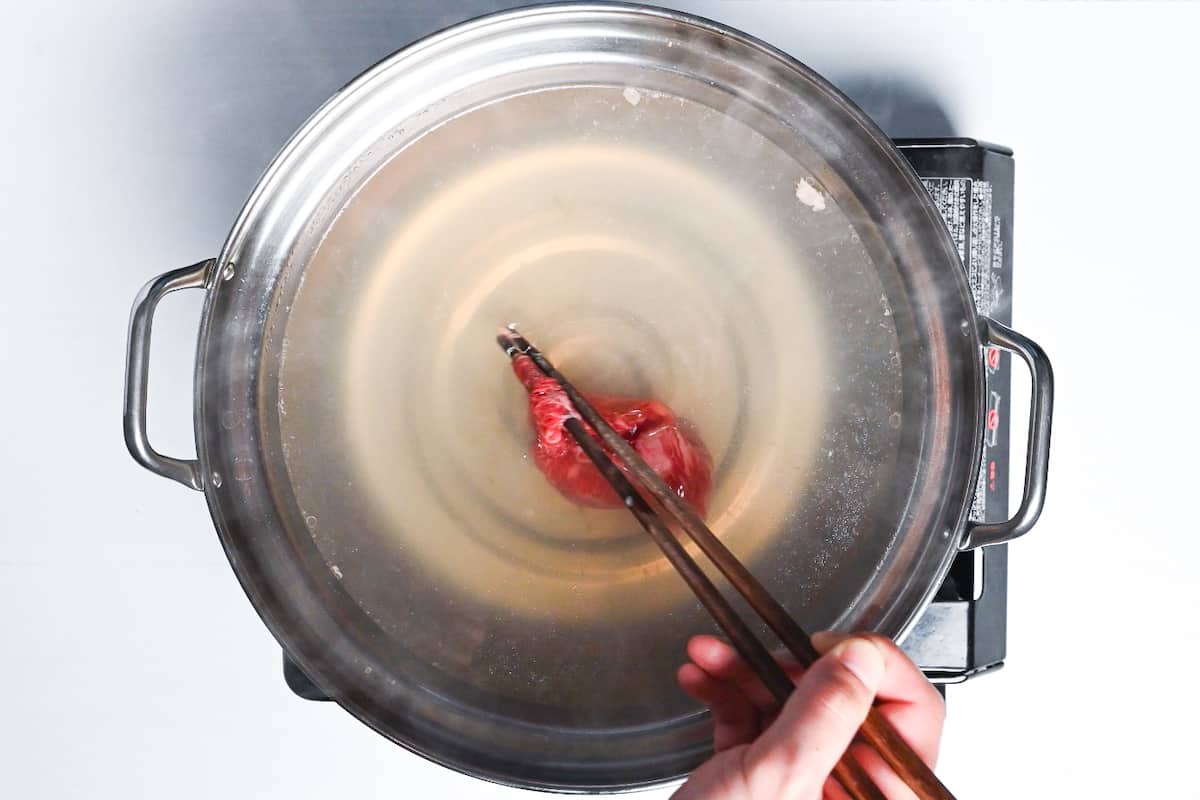
- Course 1: Tasting the BeefEach guest should take one piece of beef and swish it in the broth until cooked to their preferred done-ness (slightly pink is recommended for shabu shabu beef). Once cooked, lift and dip in your choice of sauce.
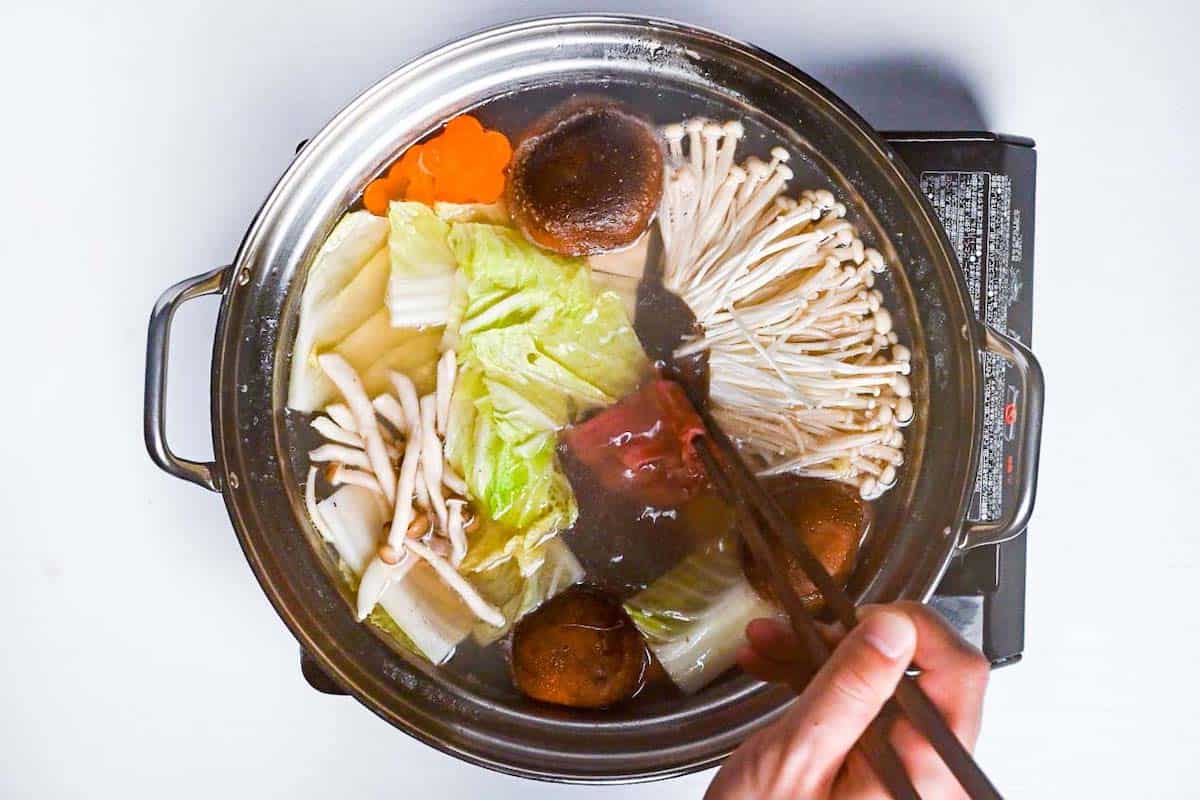
- Course 2: Vegetables & TofuAdd the carrot, napa cabbage, mushrooms and tofu. Each guest can cook more beef and help themselves while the vegetables and tofu are cooking. Tip: Try to space out cooking the beef so that you can enjoy it throughout the duration of the meal. Be sure to try different ingredients and sauce combinations.
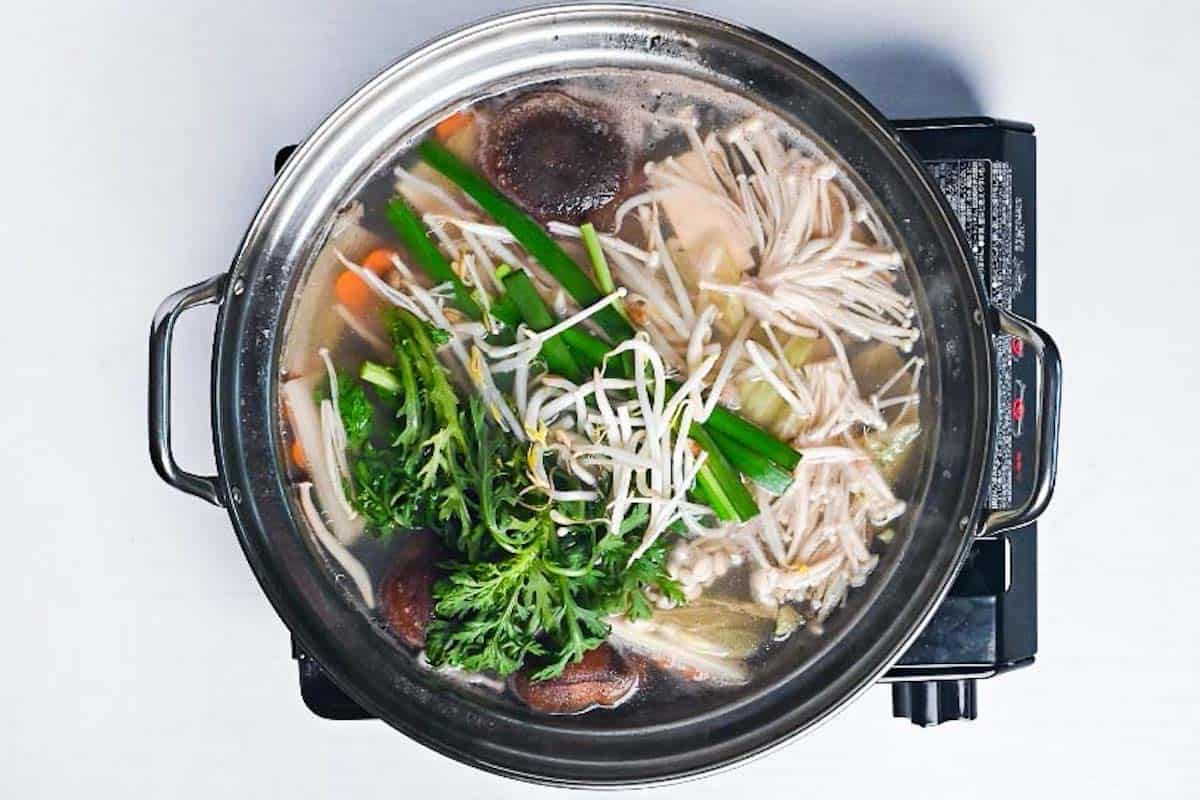
- Once more space becomes available in the pot, add the beansprouts, shungiku and chives. Eat up until there are no more ingredients left in the pot.
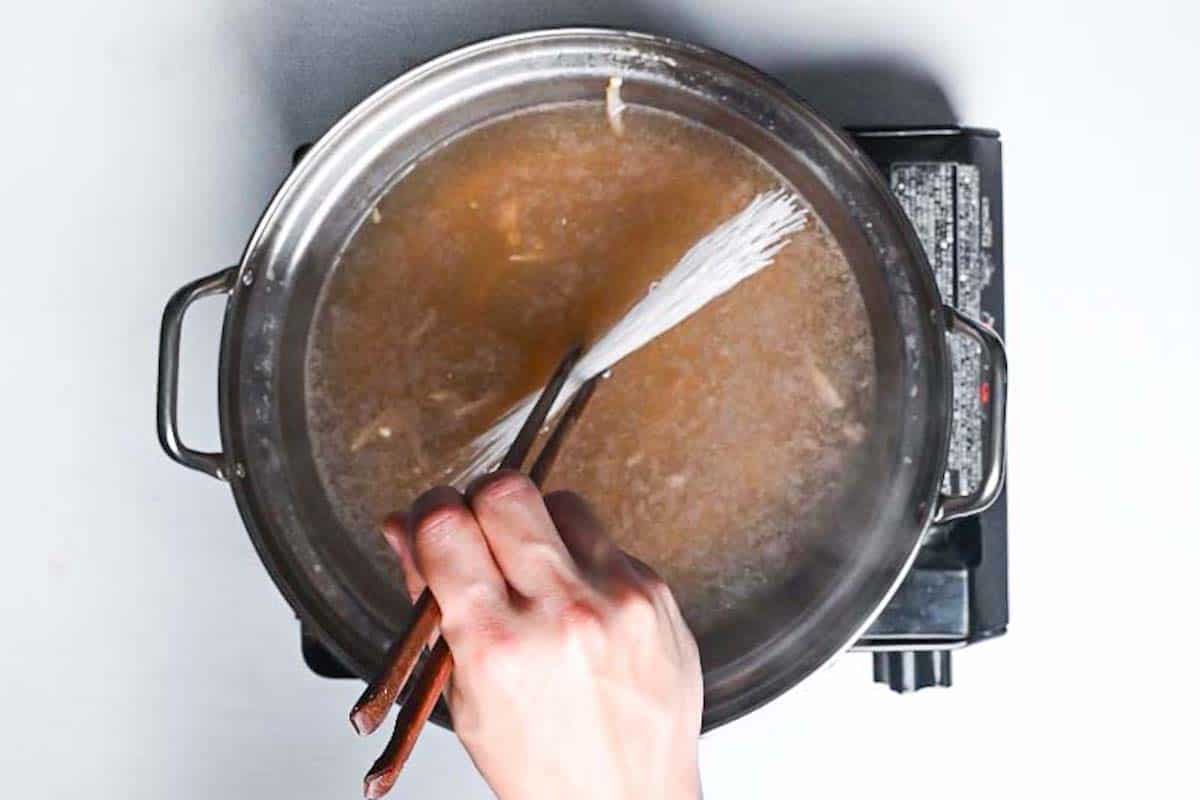
- Course 3: Glass/rice noodlesGive each guest a small portion of glass/rice noodles. Swish them in the broth until cooked and enjoy with your choice of dipping sauce.
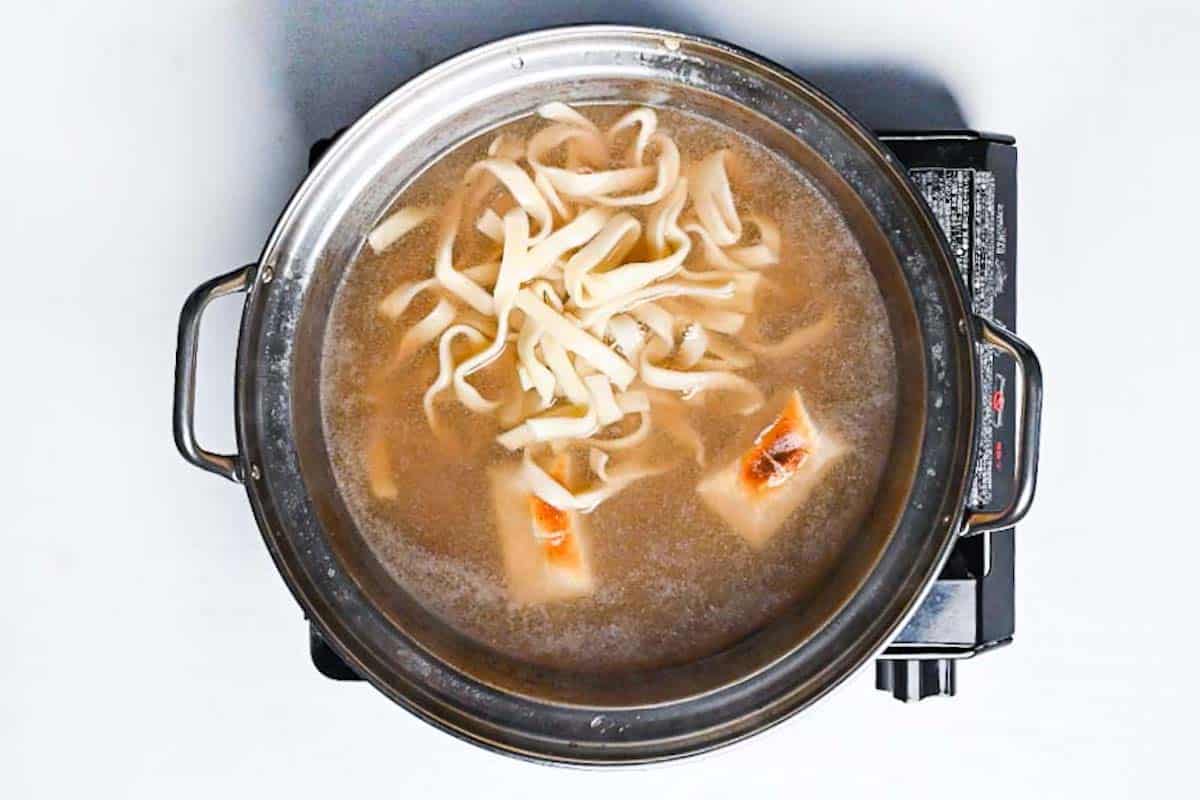
- Course 4: Finishing noodlesUse a mesh spoon to scoop out any scum or broken ingredients. Divide the broth between individual serving bowls and season generously with salt and pepper to taste. Add cooked udon/kishimen noodles (and mochi) to the leftover broth (top up with water or dashi if needed) and simmer until warmed through. Place them in the individual bowls of seasoned broth and top with chopped green onions. Enjoy!
Notes
Shabu shabu is sauce-forward, so "perfect" ingredients aren't required. Great dipping sauces can make a flexible, seasonal spread still feel authentic.
For vegetables, "fresh and juicy beats perfect and traditional," because tired produce can make the broth taste bitter and flat.
If paper-thin beef is hard to source (or you want a lighter hot pot), thinly sliced pork is the closest swap. Just cook pork fully through for safety.
Any pot works (chimney, donabe, stainless, aluminum). Wider surface area helps the broth recover heat faster as ingredients are added.
The tenderness "sweet spot" is 70-80℃ (158-176°F). Gentle heat sets proteins softly, while a rolling boil pushes proteins to firm up and squeeze out moisture. If the broth starts bouncing aggressively, reduce heat or briefly lift the pot off the burner.
Pace the beef through the meal so you don't run out early-shabu shabu is meant to stretch protein across the full table rhythm (and yes, competitive friends may require extra).
Watery dipping sauce is normal. Ponzu can be topped off, but sesame sauce loses its cling when diluted-swap in a fresh bowl mid-meal.
Full Recipe QR Code↑↑