



Featured Comment
I’ve used different recipes in the past, and this one is the winner for me. I really love the addition of yuzu. 🙂
★★★★★
– Lemi
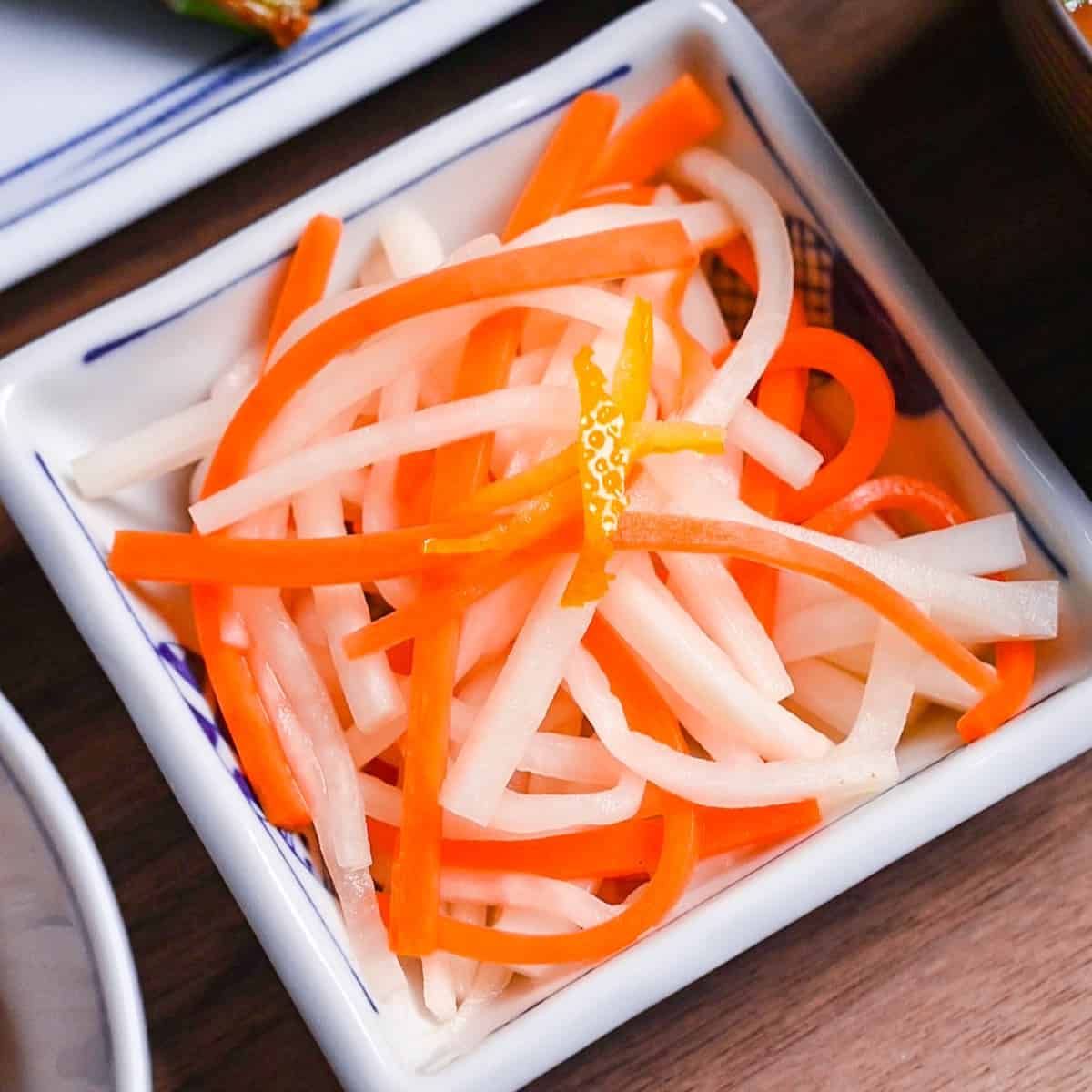
Ever wondered if a simple dish could quietly anchor your entire Japanese New Year’s table? As the crisp scent of daikon meets carrot’s sweetness, this kōhaku namasu brings a bright crunch that balances classics like kuri kinton, chikuzenni, ozoni, and sukiyaki.
Yet this Japanese pickle is so simple and versatile you could make it anytime. Let’s start so you can prepare it ahead with confidence.
Kohaku Namasu
Recipe Snapshot
- What is it? Crisp yuzu-pickled daikon and carrot matchsticks in a sweet-tangy brine, Japan’s traditional red-and-white New Year salad.
- Flavor profile: Crisp, Tangy, Citrusy
- Why you’ll love this recipe: Highlights in 1-2 sentences.
- Must-haves: Daikon radish, Yuzu (or other citrus), Sealable bag
- Skill Level: Easy
- Suitable for Meal Prep? Yes!
Summarize & Save this content on:
What is Kohaku Namasu?
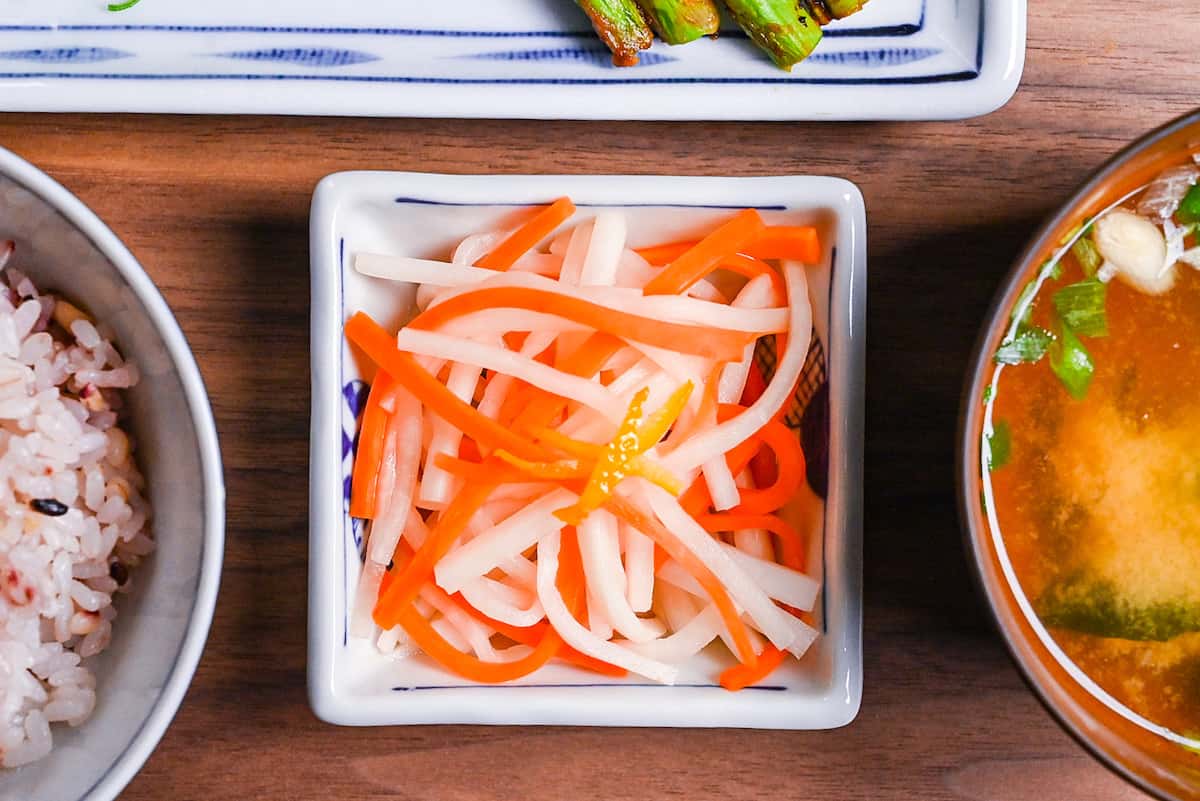
Namasu (なます or 膾) is a Japanese dish in which fish, shellfish, vegetables, etc. are cut into thin strips and mixed with seasonings and vinegar. Kohaku Namasu (紅白なます) is one type of “namasu” made with thinly sliced carrots and daikon radish. The word “kohaku” means “red and white” in Japanese.
Because the colors echo the red-and-white mizuhiki (水引) cords used on celebratory gifts, this dish carries the feeling of good wishes and family unity. It’s one of those small but meaningful touches that make Oshogatsu feel special.
Kohaku Namasu Ingredients
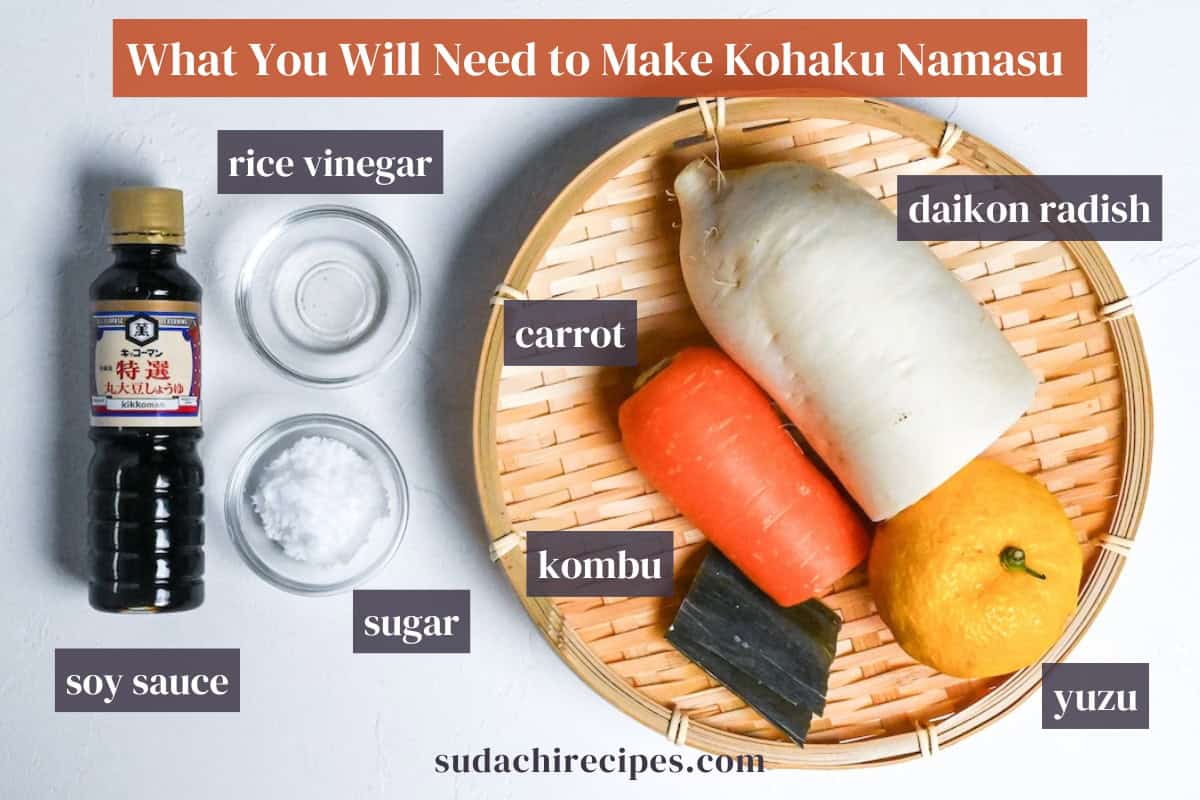
- Yuzu: A tart, intensely aromatic citrus-imagine lemon meeting grapefruit with a delicate floral perfume. That gives these pickles a bright, elegant lift. You can snag bottled yuzu juice year-round at Asian groceries, while fresh yuzu is a short-season find (often October-December) at Japanese markets.
- Kombu (dried kelp): This sea vegetable quietly infuses the brine with clean, savory umami. It’s often stocked in the seaweed/dashi aisle at Asian markets.
- Rice vinegar: Use unseasoned rice vinegar for a gentle, rounded tang that keeps the vegetables crisp and refreshing.
Substitution Ideas
- Yuzu: If you don’t have fresh yuzu on hand, bottled yuzu juice, a half-and-half mix of orange and lemon are great subs. Even using just orange works in a pinch.
- Japanese soy sauce (koikuchi shoyu): A light Chinese soy sauce works okay when you need something with similar saltiness and clarity. Just avoid Chinese dark soy, as it’s thicker, sweeter, and would overwhelm the delicate citrus notes.
- Daikon radish: Any mild white radish (like Korean mu or even large white icicle radishes) can stand in when daikon is hard to find. The taste may lean slightly peppery depending on the variety, but the pickling brine smooths it out.
Have trouble finding Japanese ingredients? Check out my ultimate guide to Japanese ingredient substitutes!
How to Make My Kohaku Namasu
If you prefer to watch the process in action, check out my YouTube video of this kohaku namasu recipe!

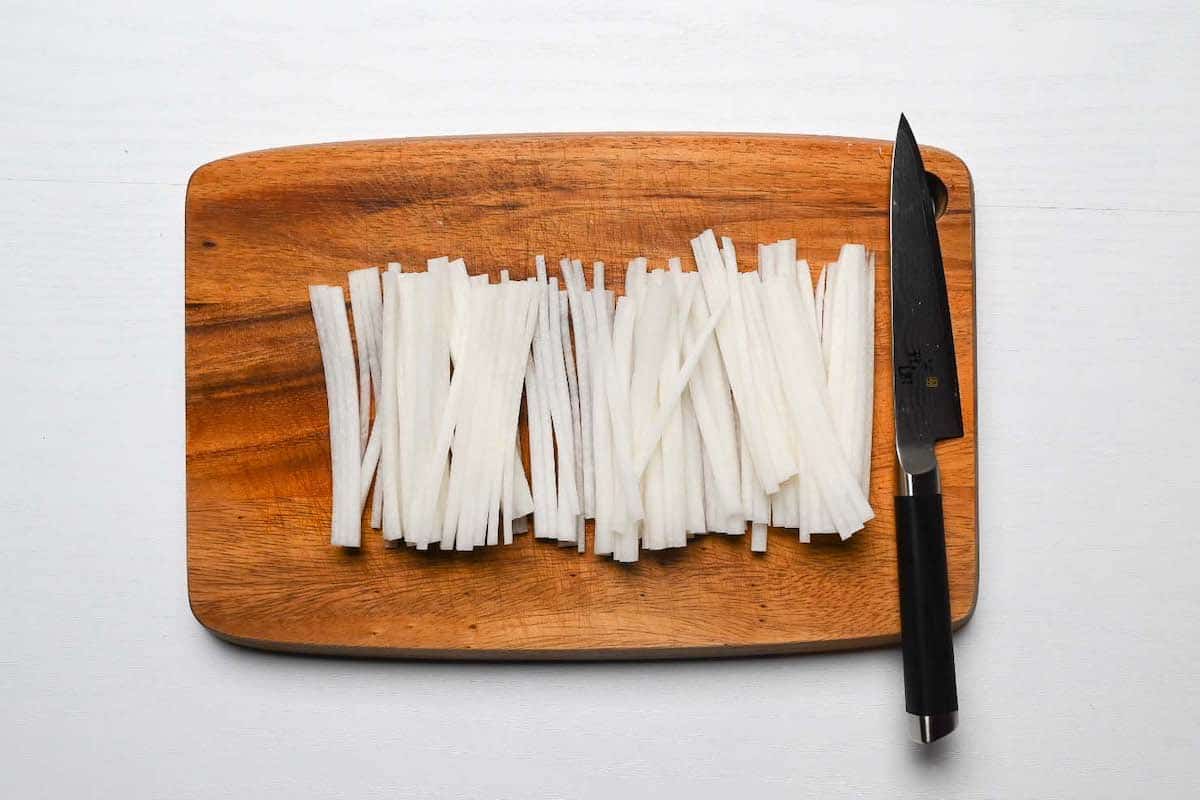
Generally, the daikon and carrot in kohaku namasu are cut into thin “matchsticks” to represent “mizuhiki”. How thin you cut depends on preference, but I personally like slightly thick sticks so that they still have a good crunch. The ratio of daikon to carrot is usually 2:1.
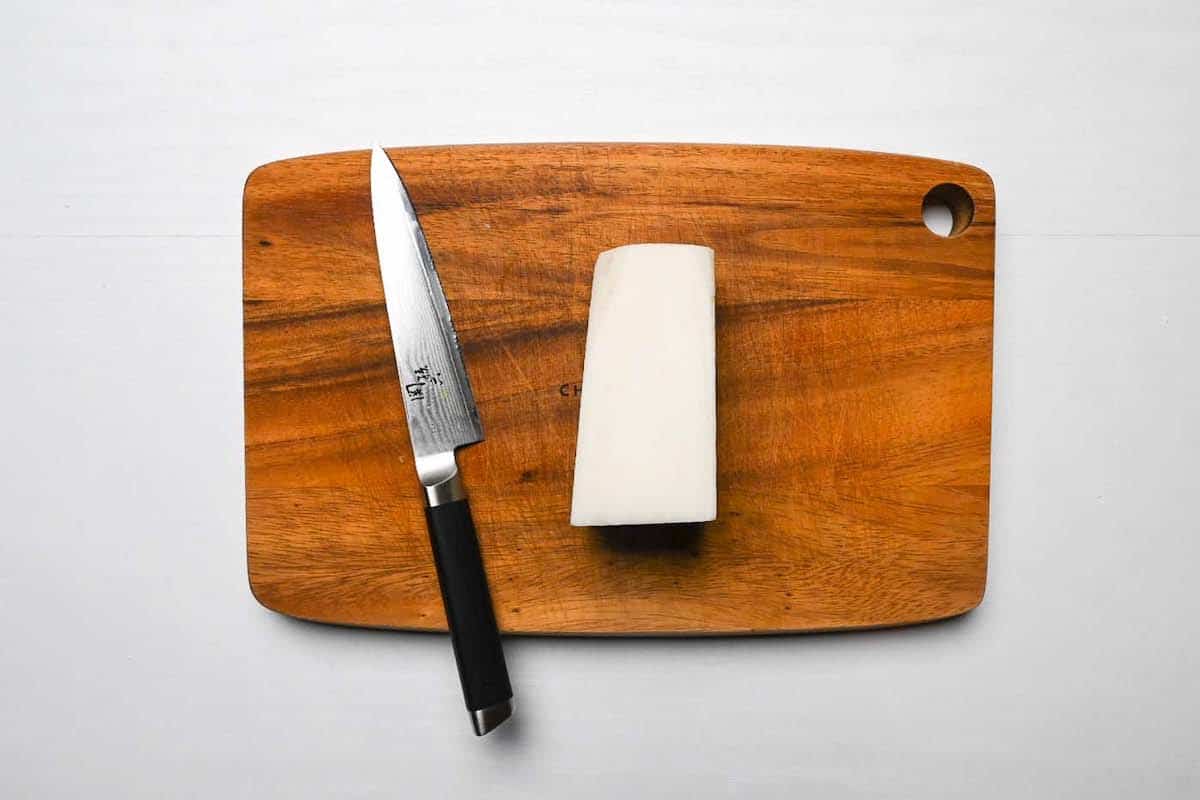
Start by cutting off the round edges to make a block. The picture only shows daikon, but I use the same process for carrot too. You can peel and cut the leftovers, either adding them to the namasu (although the pieces won’t be uniform) or using them in another recipe such as hotpot.
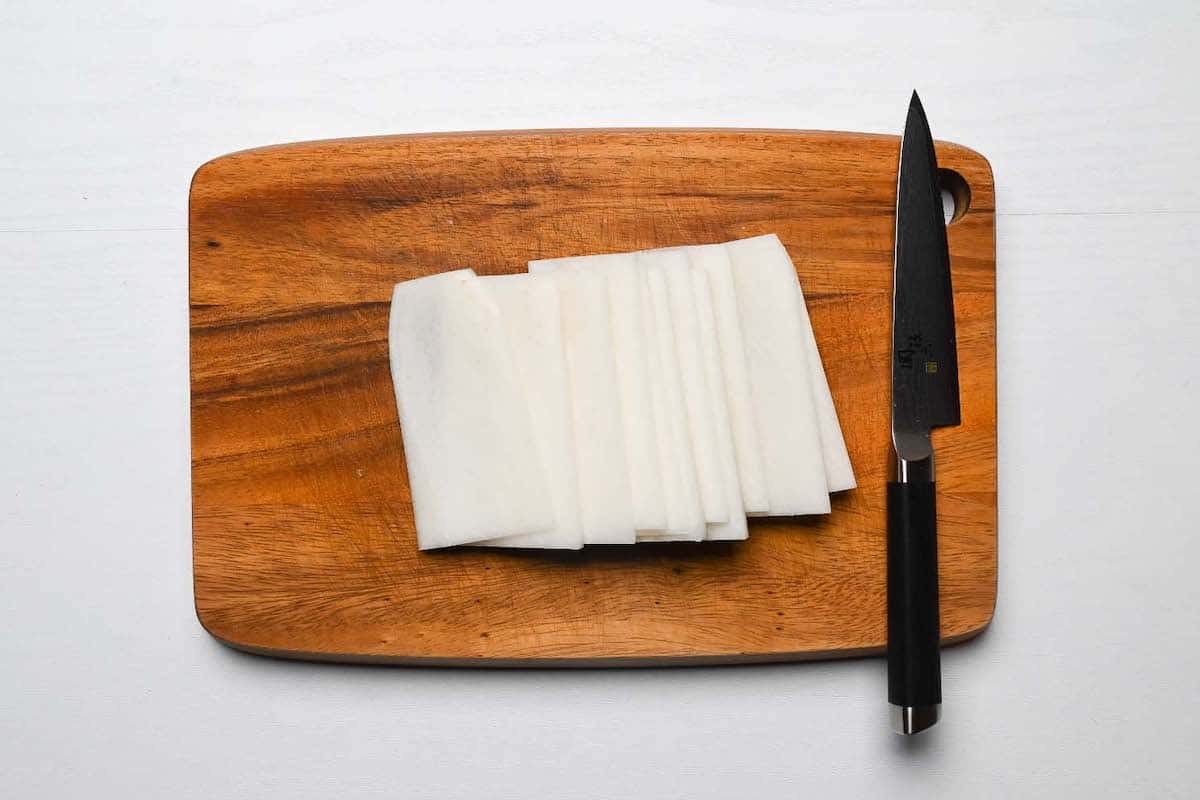
Then cut the block into thin slices.
Finally, cut the slices into matchsticks about 2-3mm thick.
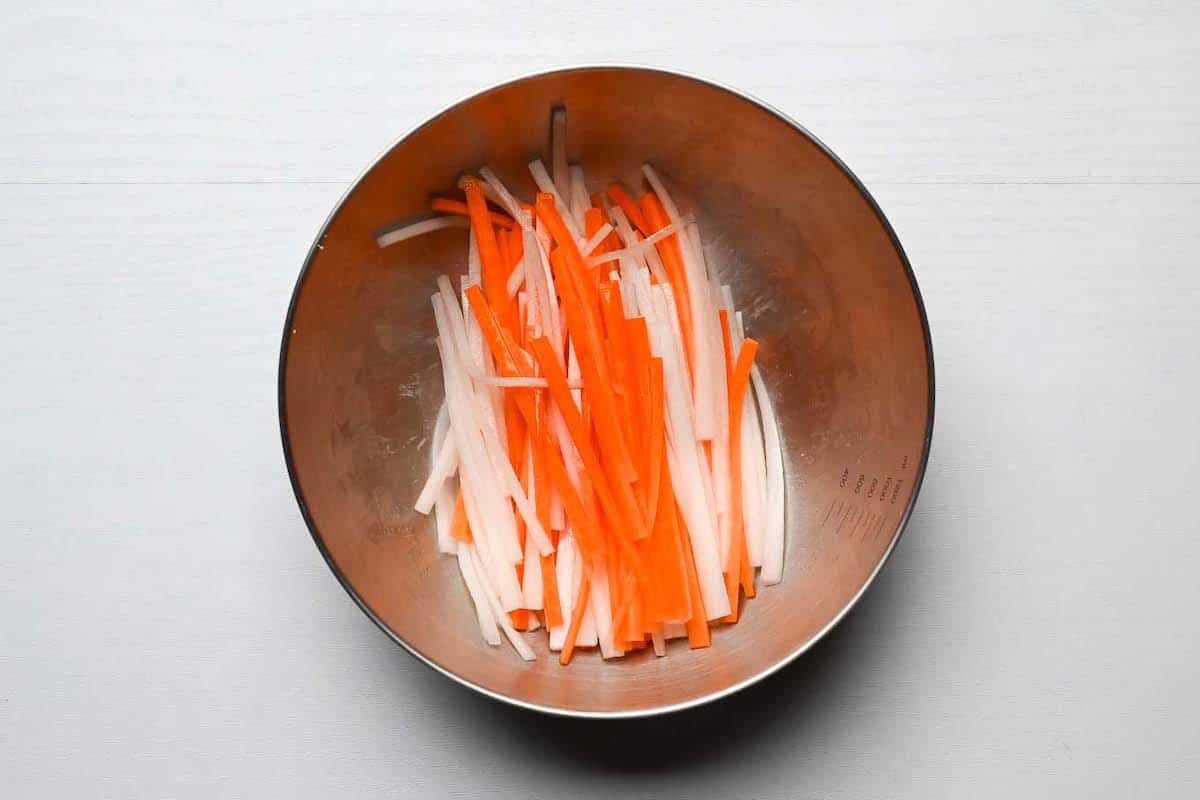
Place the carrot and daikon in a mixing bowl and add salt. Massage the salt into the carrot and daikon, then leave it for 15 minutes. During this time, the salt will extract the excess moisture which will prevent it from watering down the pickling liquid later.
While the carrot and daikon are dehydrating, you can prepare the pickling liquid.
If you’re using fresh yuzu, wash and peel off some of the skin then cut it into thin strips. If you can’t get yuzu, you can grate orange or lemon peel instead.
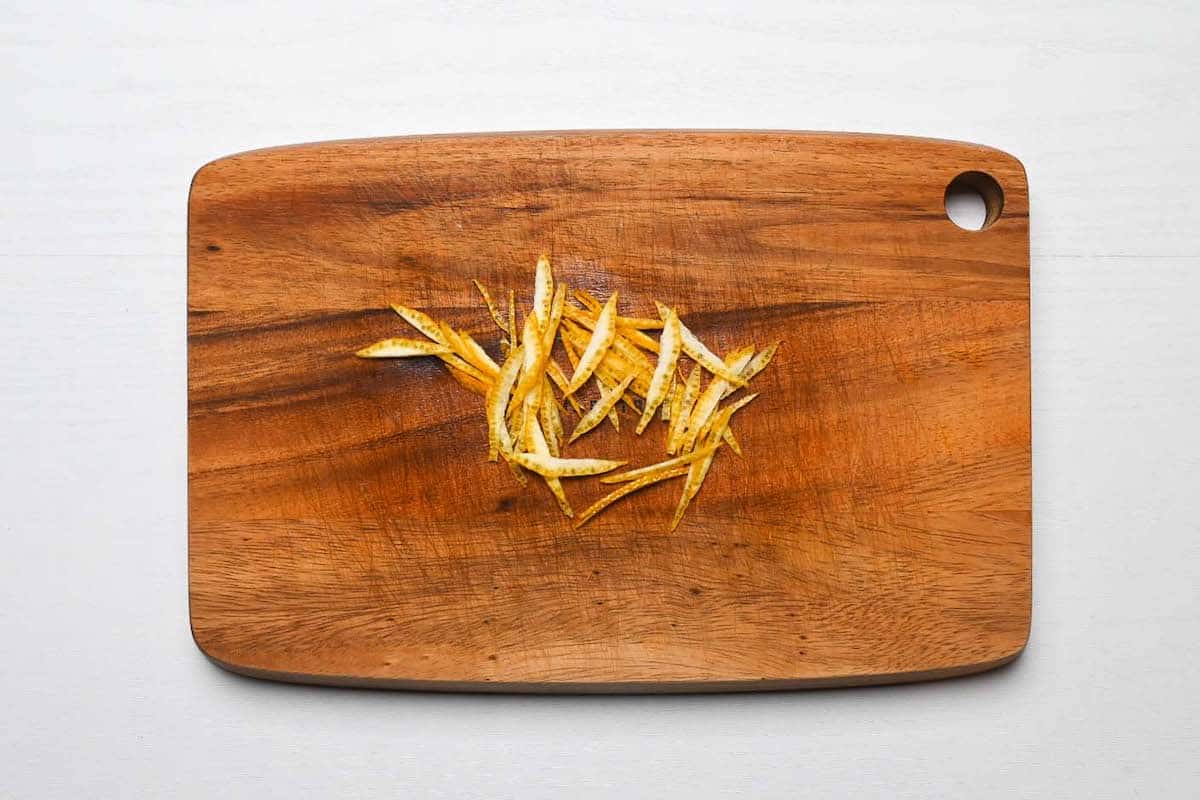
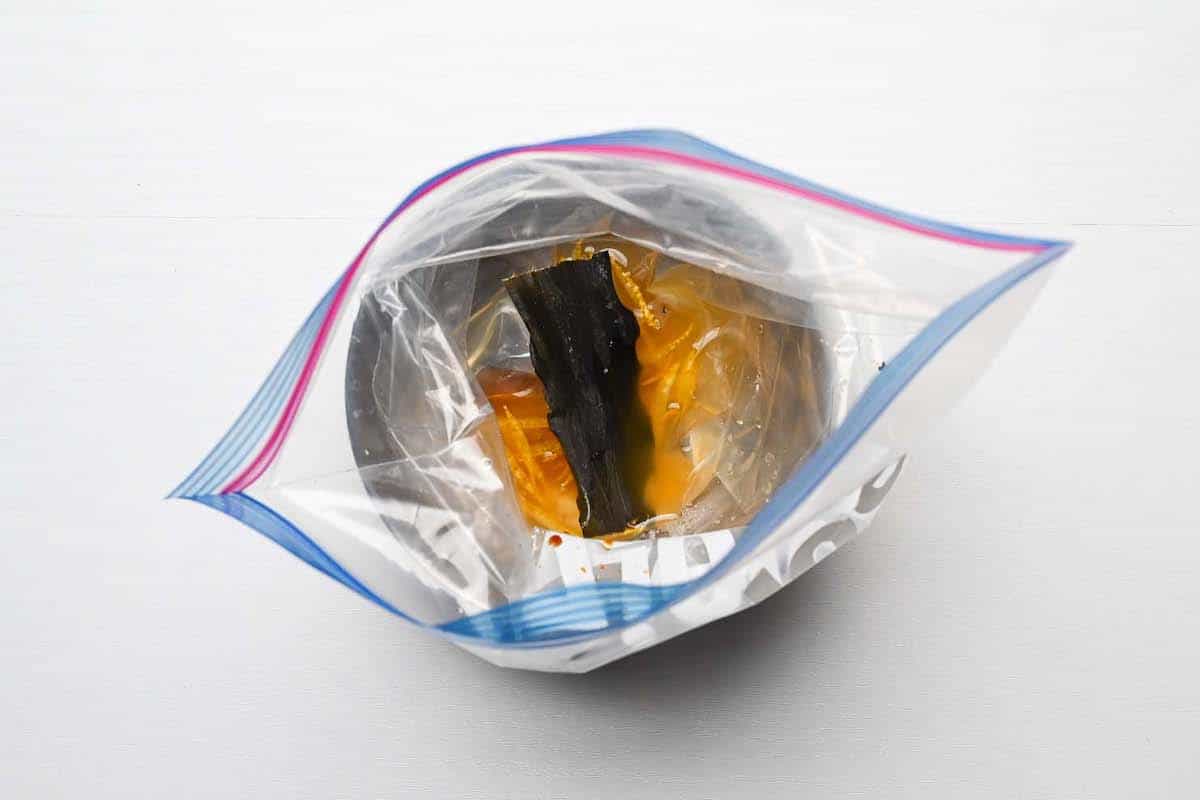
Next, take a sealable bag and add rice vinegar, yuzu juice, water, sugar, salt and soy sauce. Mix them together by scrunching the bag. Once the salt and sugar have dissolved into the mixture, add the yuzu peel and a piece of kombu (dried kelp).
Once 15 minutes have passed, squeeze the carrot and daikon thoroughly and pour away the excess liquid.
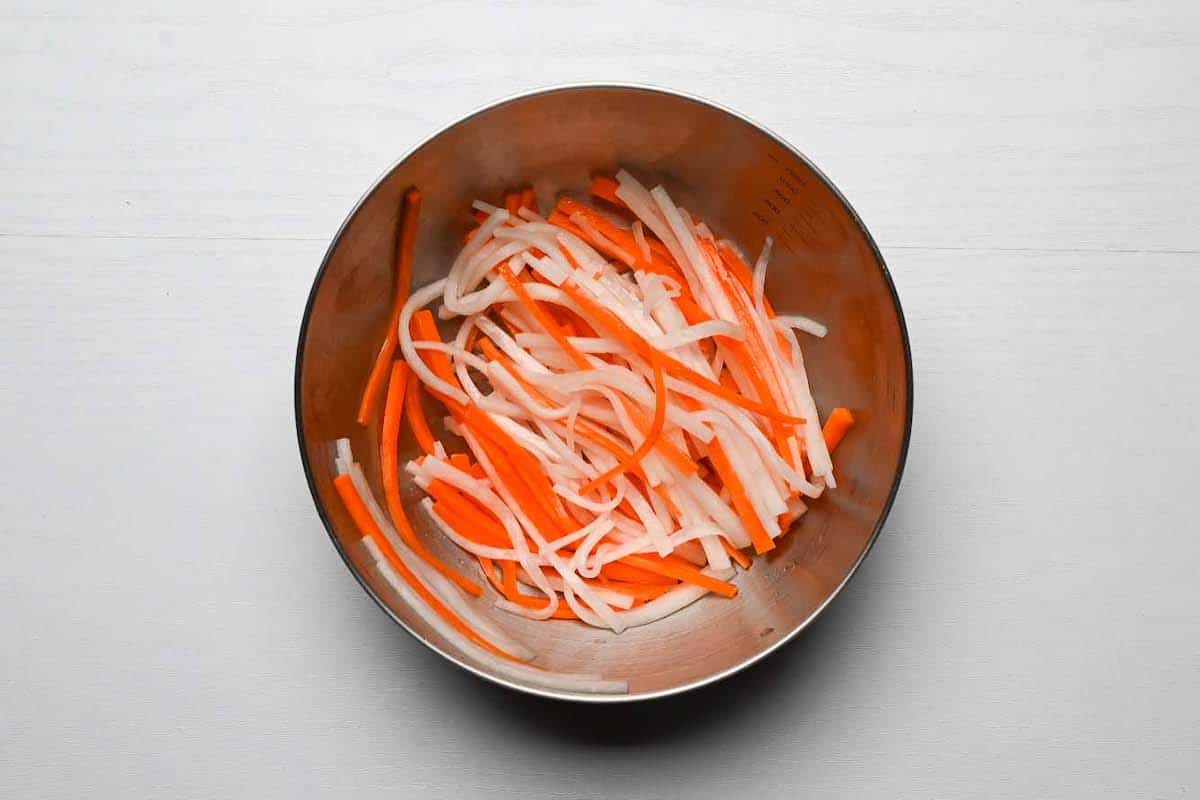
Make sure to remove as much moisture as possible otherwise, your pickling liquid will be watered down! Also, do not wash it after it’s been dehydrated!
Transfer the carrot and daikon strips into the ziplock bag, push the air out and seal it up. Store it in the fridge for at least 12 hours, preferably overnight.
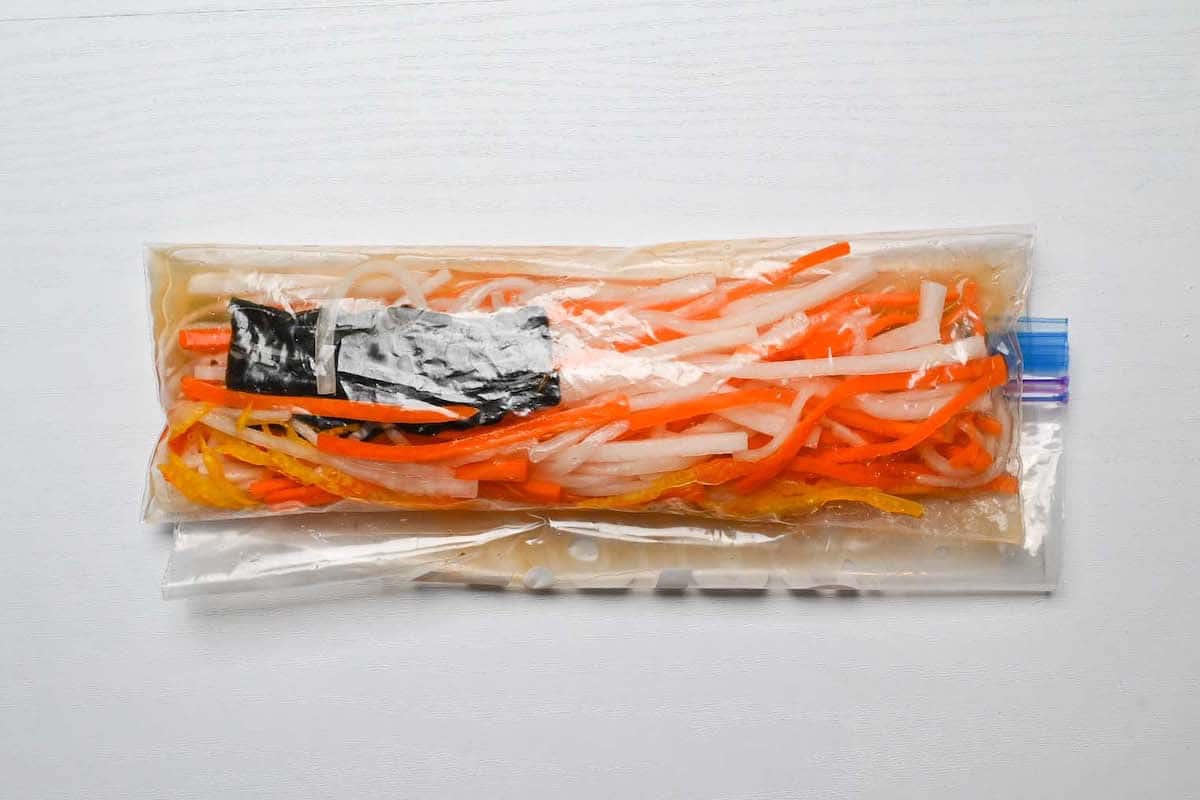
After a night in the fridge, remove the kombu. Leaving it in there can make the liquid slimy, so take it out after 24 hours and either discard or re-use in another recipe such as kombu tsukudani for rice balls.
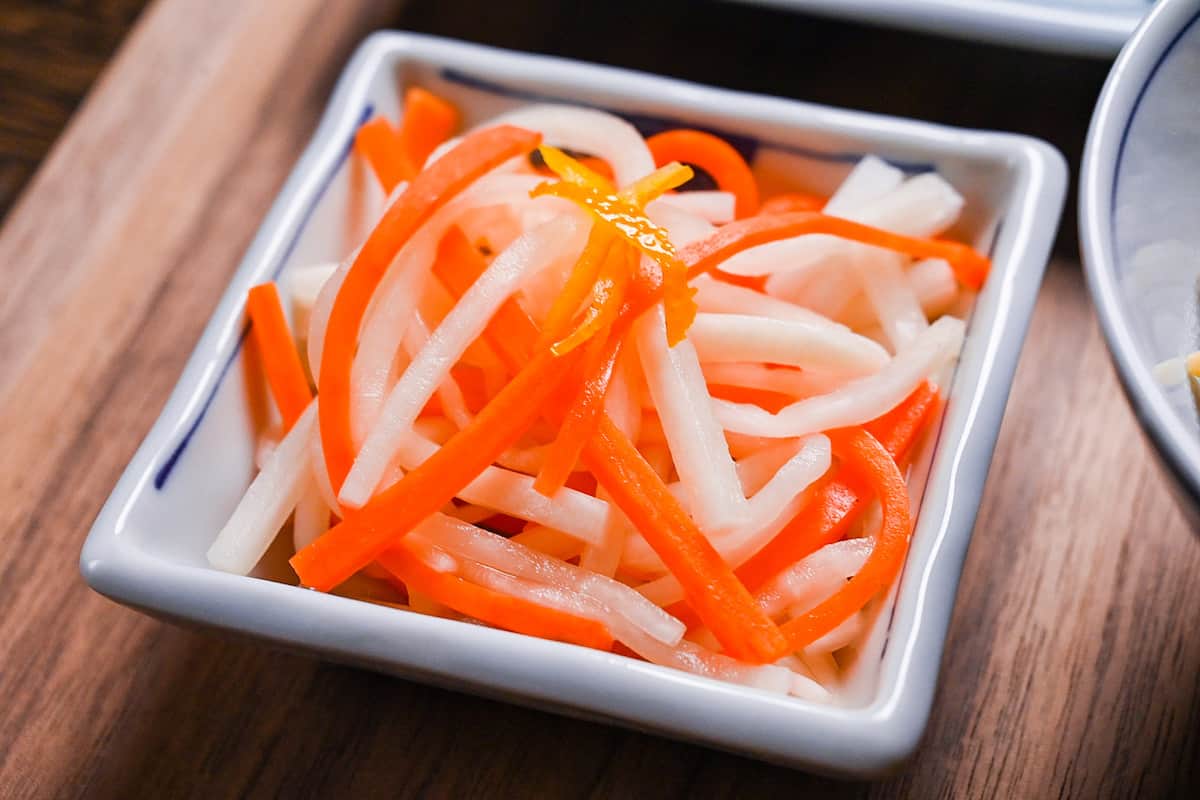
Serve as a side pickle or as part of a Japanese New Year Osechi meal! For an extra wow factor, some people like to scoop out half a yuzu and serve it in the skin. It’s a beautiful way to present kohaku namasu!
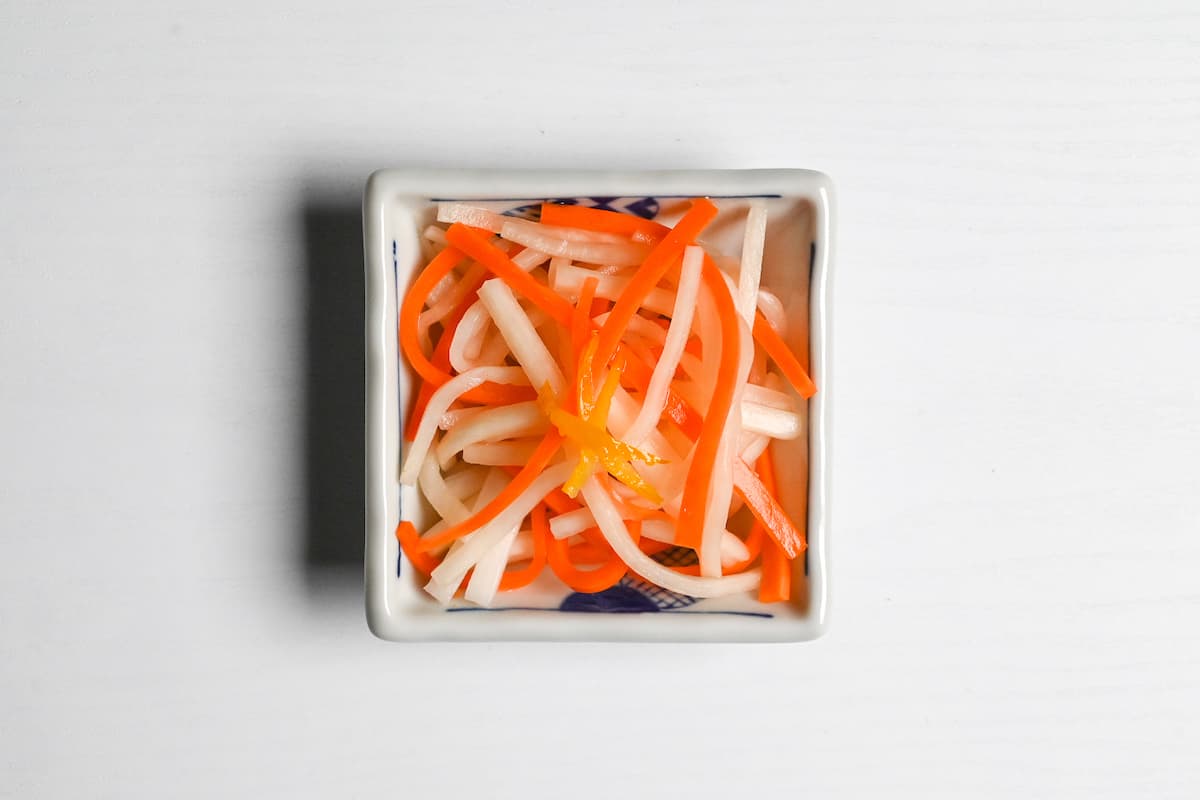
Enjoy!

Essential Tips & Tricks
- Cut the daikon and carrot into even 2-3 mm matchsticks.
- Don’t skip the salting step. It draws out excess moisture so your namasu stays crisp instead of watery.
- After salting, squeeze firmly but don’t rinse.
- Use yuzu peel sparingly and very thin. Thick strips can turn bitter during pickling.
- Keep everything fully submerged in the brine.
With these simple tips in mind, you’re set for success every time you make kohaku namasu.
Storage & Meal Prep
Fridge: Store in an airtight container or sealed bag fully submerged in its pickling liquid for 4-5 days.
Freezer: Not recommended.
Meal Prep: Make the namasu 1-2 days ahead, which actually improves flavor as the seasoning equalizes.
What to Serve With This Recipe
Kohaku Namasu FAQ
Osechi Ryori (おせち料理) are dishes eaten during New Year’s celebrations in Japan, and each element of Osechi has various wishes and meanings. The colors of Kohaku Namasu (red and white) are the symbols of celebration, and are associated with peace and tranquility.
In addition to this, it is said that the daikon and carrot, which have their roots in the ground and grow straight through the soil, are superimposed on the wish for “stability of the house and family business” and “to keep one’s feet on the ground”.
Namasu is said to have originated from China more than 2000 years ago and was made of thin strips of raw meat or fish, such as carp or sea bass. In Japanese, the word “Namasu” originally meant “raw meat”, but in the late Heian period (794-1185) the term was changed to mean fish and vegetables chopped into small pieces and mixed together. From there, the Japanese version of the dish developed, using its own unique ingredients.
Before the Muromachi period (1336-1573), Namasu was made using a condiment called irizake (煎り酒), which was made by adding dried bonito flakes and pickled plums to sake and boiling it down. These days, simple rice vinegar is used, often with the addition of dashi ingredients like kombu (dried kelp) to add umami to the dish. Up until the Edo period (1603-1867), Namasu was consumed as a “main dish” due to it more commonly being made with fish, however, these days, it is often made with vegetables and served as a side dish.
Kohaku Namasu made with daikon and carrot is the most well-known, but there are also regional variations of “Namasu” such as:
Hizu Namasu (氷頭なます): A local dish from cold/north regions, which is made from the cartilage part of the salmon’s snout.
Imo Namasu (いもなます): Namasu made with potatoes from around Iiyama City, Nagano Prefecture.
Mizu Namasu (水なます): Namasu made with fresh horse mackerel and other bluefish.
Nuta Namasu (ぬたなます): A dish of vegetables and seafood dressed with vinegared miso, which is considered as a type of namasu.
Kaki Namasu (柿なます): Kohaku namasu made with daikon radish and carrot with dried persimmon, from Nara Prefecture.
More Japanese Pickle Recipes
- Pickled Cucumber with Chili & Ginger
- Wasabi Pickled Cucumbers
- Sweet Pickled Daikon (Bettarazuke)
- Japanese Pickled Napa Cabbage (Hakusai no Asazuke)
Hungry for more? Explore my Japanese pickles recipes to find your next favorite dishes!
Did You Try This Recipe?
I would love to hear your thoughts!
💬 Leave a review and ⭐️ rating in the comments below. 📷 I also love to see your photos – submit them here!
Kohaku Namasu with Yuzu (Japanese Pickled Daikon and Carrot Salad)

Ingredients
- 200 g daikon radish or Korean mu/other mild white radish
- 100 g carrot
- ½ tsp salt to dehydrate
- 2 tbsp unseasoned rice vinegar (komezu) unseasoned only (not seasoned sushi vinegar)
- 3 tbsp water
- 2 tbsp sugar
- ¼ tsp salt for pickling liquid
- 1 tbsp yuzu juice or orange + lemon mix/orange only
- ¼ tsp Japanese soy sauce (koikuchi shoyu)
- 1 tbsp yuzu peel optional
- 5 g dried kelp (kombu)
The ingredient brands and tools I trust are in my Japanese pantry guide and my cooking tools guide.
Can’t find certain Japanese ingredients? See my substitution guide here.
Instructions
- Cut off the rounded edges of 200 g daikon radish and 100 g carrot to make them into blocks. Thinly slice, then cut into 2-3mm matchsticks.

- Place them in a bowl with ½ tsp salt and mix by hand. Rest for 15 mins to draw out the excess moisture.
- While you wait, add 2 tbsp unseasoned rice vinegar (komezu), 3 tbsp water, 2 tbsp sugar, ¼ tsp salt, 1 tbsp yuzu juice and ¼ tsp Japanese soy sauce (koikuchi shoyu) to a sealable bag and scrunch to mix. Once the sugar and salt has dissolved into the mixture, add 1 tbsp yuzu peel (if using fresh yuzu) and 5 g dried kelp (kombu).
- After 15 mins have passed, thoroughly squeeze the daikon and carrot to remove the excess water. (Do not wash.) Add them to the bag, push the air out and seal. Store in the fridge overnight.
- After 24 hours, remove the kombu from the bag and discard, or use for another recipe like kombu tsukudani. Transfer the carrot and daikon to serving bowls and decorate with yuzu peels, enjoy!

Is there any substitute for yuzu juice as it’s hard to find where I live
Hi Belinda,
Thank you for your question! A good substitute for yuzu juice is a 50/50 mixture of fresh orange juice and lemon juice. This combination mimics yuzu’s unique balance of sweet and tart citrus flavors. You can also add a small splash of lime juice for extra complexity if desired!
Yuto
Hi! Thank you for developing and sharing this recipe. I’ve used different recipes in the past, and this one is the winner for me. I really love the addition of yuzu. 🙂 Thanks so much!
Hi Lemi,
Thank you for such a kind comment! It means a lot to know this one stood out for you. I’m especially glad you enjoyed the yuzu touch! 🙂
Yuto