



Featured Comment
Holy moly this recipe is delicious! I’ve been looking for a beef stew recipe with the complex flavors of beef stew in Japan, and this recipe is it! I was skeptical of the hodgepodge of ingredients, but it really came together!
★★★★★
– Renee
You may think Japanese beef stew means nikujaga, right? We do not call nikujaga “beef stew.” There is a whole separate dish, a yoshoku one, tomato rich and deeply savory, that lives in the same family as curry rice and hayashi rice.
Most people at home in Japan reach for a boxed roux for it, the same way they would for curry. This time I am showing you how to build it from scratch, the real deal. No roux cube, no demi-glace can.
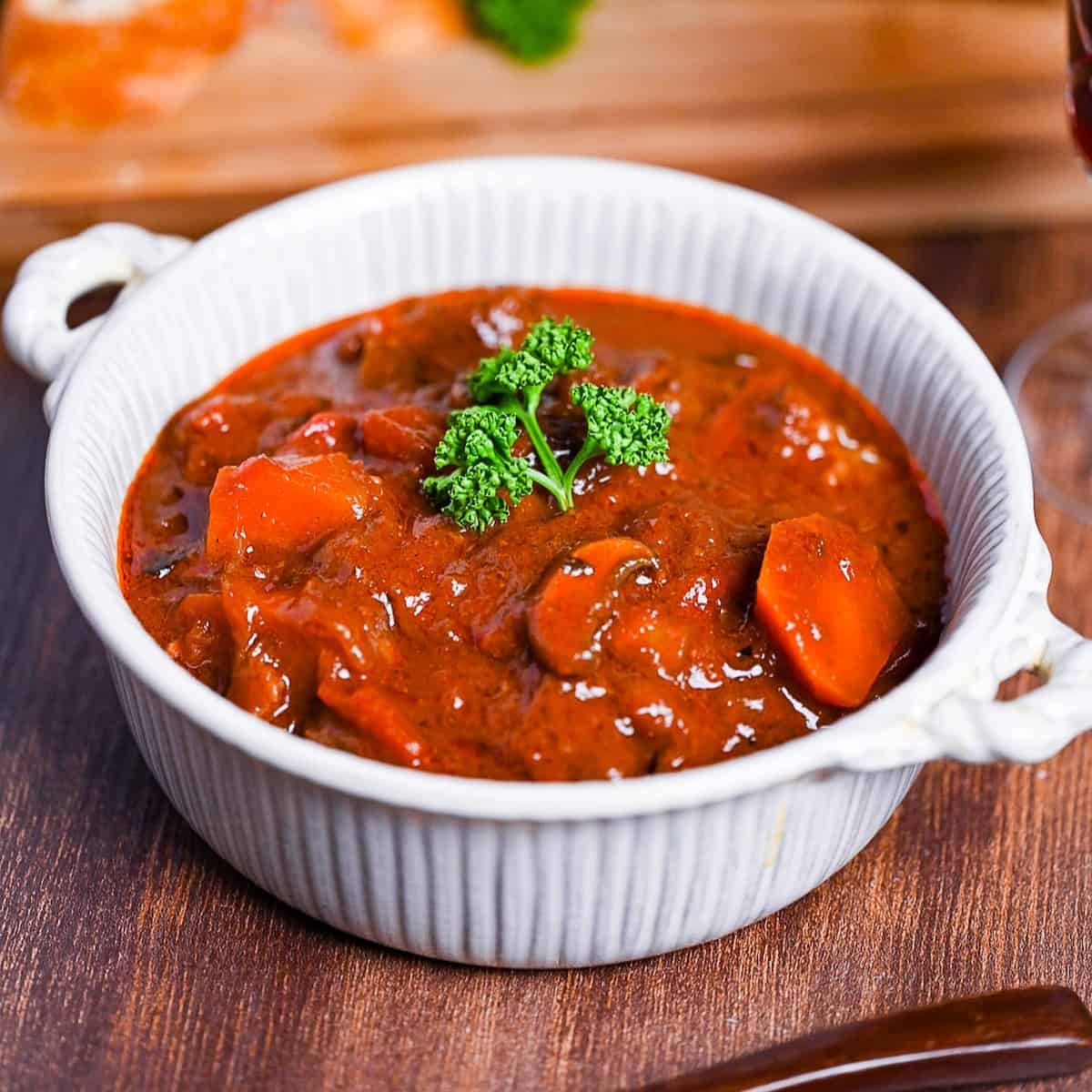
Japanese beef Stew
Recipe Snapshot
- What is it? A yoshoku-style Japanese beef stew, built on red wine, canned tomatoes, and caramelized onions in a heat-rest-heat cycle, then finished with 3 quiet Japanese moves at the end. Not nikujaga. Not curry rice. A dish of its own.
- Flavor profile: Deep and glossy, with tomato brightness folded into a dark wine-driven sauce, a rounded background umami from awase miso, and a quiet bitter flavor from dark chocolate that makes the whole bowl taste rich and mature.
- Why you will love this recipe: It gives you the yoshoku counter version at home, no boxed roux and no demi-glace can, using a 30-minute simmer, one-hour rest, one-hour simmer structure that delivers long-braise body in a single Saturday afternoon.
- Must-haves: Chuck or stew beef with a little connective tissue, a dry medium-bodied red wine, and a full can of chopped tomatoes.
- Skill level: Medium. The work is stovetop-simple, but the recipe rewards a cook willing to stand at the onions for 30 minutes and then walk away from the pot for a full hour before finishing.

What is Japanese Beef Stew?
Japanese beef stew (ビーフシチュー) is a yoshoku dish, Western-style cooking that Japan took in, chewed on for a century, and quietly made its own. Tonkatsu lives in the same family. So does korokke, so does omurice. The broad strokes look European, the details got rewritten by Japanese home kitchens until the food felt local.
For this recipe, I build the brown sauce in the pot from scratch, so no canned demi-glace, no roux cube, and I slip in 3 unusual moves at the end. Awase miso for umami. Dark chocolate for balance. Grated apple for freshness. You will not taste any on its own, which is the whole point.
Japanese Beef Stew Ingredients
What You’ll Need for Japanese beef Stew

- Canned tomatoes: Chopped, one standard can. Do not overthink the brand. I used to build this recipe around a smaller pour and kept coming up short, so I reworked the whole thing to hit cleanly on a full can. Diced is easier to work with than whole peeled here, because you want the tomato to break down into the sauce rather than sit there as a shape.
- Awase miso: Awase means blended. In English it usually gets called yellow miso. For this recipe, whatever tub is already sitting in your fridge is fine, white, red, hatcho, the mystery one you bought for a soup ages ago. This is not a miso-forward dish. The miso is only there for the last layer of background depth. You will not taste miso.
- Dark chocolate: Needs to be 70% or darker.
Raw Ingredients I Used

- Beef: Chuck is the default, and it does the job. If you want to go one level deeper, swap in a little beef tendon alongside the chuck and the sauce gets a body you cannot fake with any other shortcut. Tendon takes a lot longer to soften than chuck does, so you are trading a whole afternoon for that depth. Depth or convenience, that one is up to you.
Substitutions and Variations
Here is the truth about stews. You might not have every single thing on the list, and that is fine. The spine of the dish is beef, tomatoes, red wine, and time, and everything else has a real swap or an adjacent move that lands you in the same neighborhood.
Substitutions:
- Chuck roast → Oxtail, short rib, or beef shank: Chuck is the price-to-performance pick. Oxtail and short rib push the richness up and the budget up at the same time. Beef shank gives you connective-tissue dividends close to what tendon does, without sourcing tendon itself.
- Beef tendon → Skip it: Tendon is the luxury option, not the required one. All-chuck is perfectly honest food. If your week does not have an extra afternoon in it, that’s fine. Your stew will still be great.
- Awase miso → Any miso in your fridge: White, red, hatcho, the mystery one. This is not a miso dish, so you cannot really overthink this one.
- Red wine → Unsweetened grape or cranberry juice: Cranberry pulls harder on the tannin side. Grape goes softer. Skip the juices labeled “cocktail” or “from concentrate with added sugar” (they will turn the sauce cloyingly sweet). It really needs to be unsweetened kinds.
- Dark chocolate → Instant coffee powder: Same theobromine-and-bitterness axis, cleaner to measure. Stir about 1/4 tsp in off the heat just like the chocolate.
- All-purpose flour → Rice flour: For a gluten-free version, swap the coating flour one-to-one with rice flour. It dredges beautifully and browns just as hard.
Have trouble finding Japanese ingredients? Check out my ultimate guide to Japanese ingredient substitutes!
Variations:
- Pressure cooker: If you want this on a Tuesday night instead of a Sunday afternoon, a pressure cooker gets the beef to proper tenderness in about 20 to 30 minutes at high pressure. You lose the “rest in the pot for an hour” magic, but you gain a couple of hours of your life back. Finish with the miso-chocolate-apple move just the same.
- Overnight rest version: Make the whole thing on Saturday. Eat a small bowl for quality control. Park the pot in the fridge. Reheat Sunday night. The day-two version is flat out better than day-one, and it is not subtle.
- Oven braise version: If you are nervous about scorching or you just want to walk away, swap stovetop simmering for a covered pot (has to be oven-safe pot though) in a 150 to 160°C (302 to 320°F) oven. The oven wraps the pot in ambient heat instead of hitting it from below, so the liquid holds that quiet simmer without you babysitting a burner.
How to Make My Japanese Beef Stew
Before you start (Mise en place):
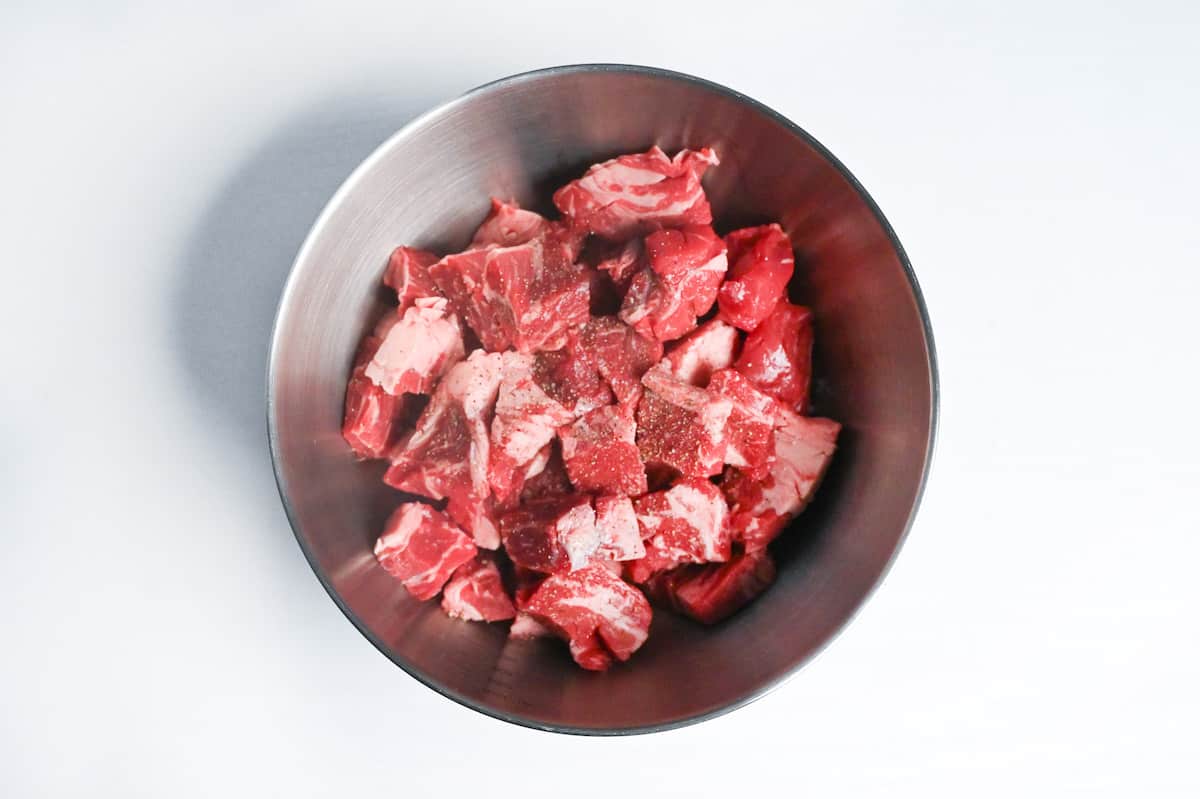
- Cut the stew beef into bite-size chunks, 4 to 5 cm cubes. Drop them into a bowl, season with salt, walk away. Leave it sitting there while you caramelize the onions.
- If you are incorporating tendon, start it in cold water, bring to a boil, simmer a few minutes, drain, rinse hard under running water. Then give it about an hour of pre-simmering in fresh water. Yes, that is extra time. If this sounds like too much work, go 100% chuck and do not look back.
- Pull the central rib out of the bay leaves (optional). The flavor of a bay leaf lives in the leaf itself, not the stiff spine down the middle. Removing the rib opens up the leaf and lets the flavor migrate into the pot faster.

i. Heat a frying pan over medium with a splash of neutral oil. Once it is warm, in go the thinly sliced onions.
Slice the onions as thin as possible, perpendicular to the fibers (vertically, from stem to root). For traditional caramelized onions where you want them to hold their shape, slicing with the grain is often recommended. But for this stew, we want the onions to break down and dissolve into the sauce, so cutting against the fibers helps them release moisture faster and melt away beautifully.
Stir occasionally so they do not scorch, cook about 10 minutes until they are softened and golden. This is not the finish line. This is the softening lap.
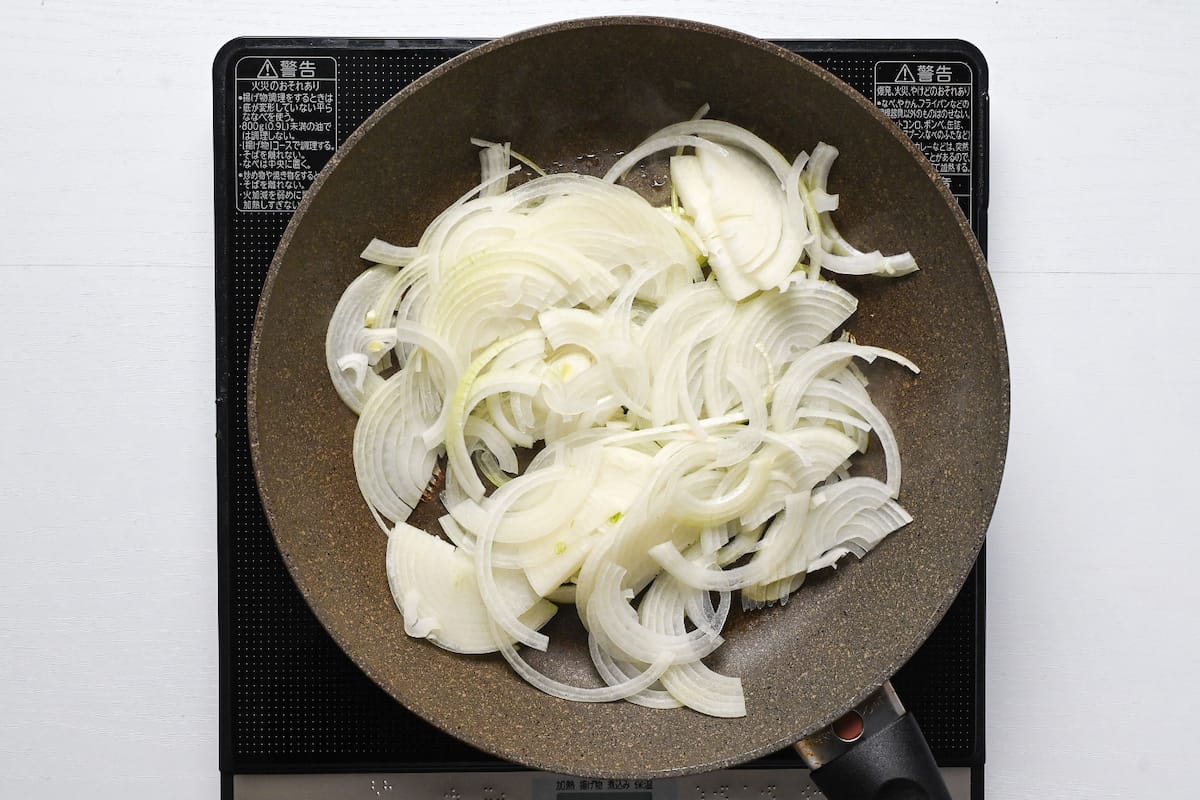
ii. Drop the heat to low, pinch of salt, keep stirring occasionally.
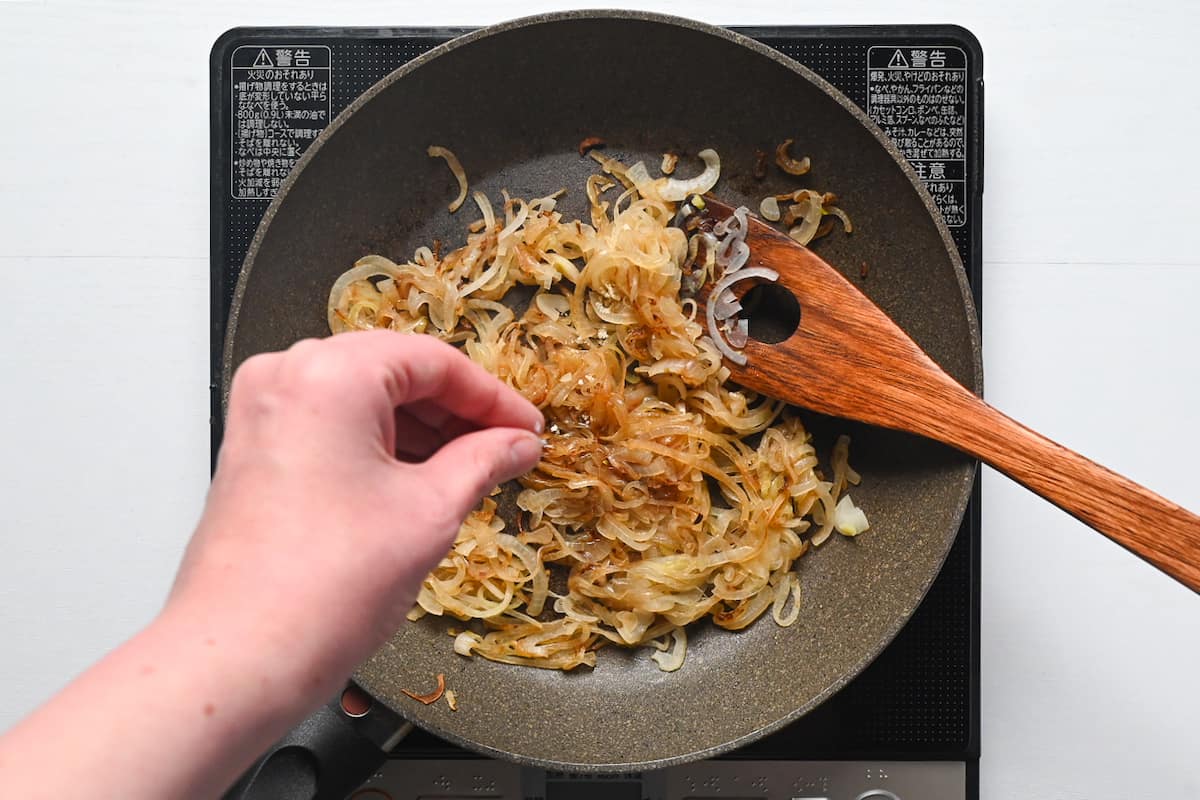
iii. If the pan dries out and the onions seem to be sticking, add a splash of water to deglaze and unstick.
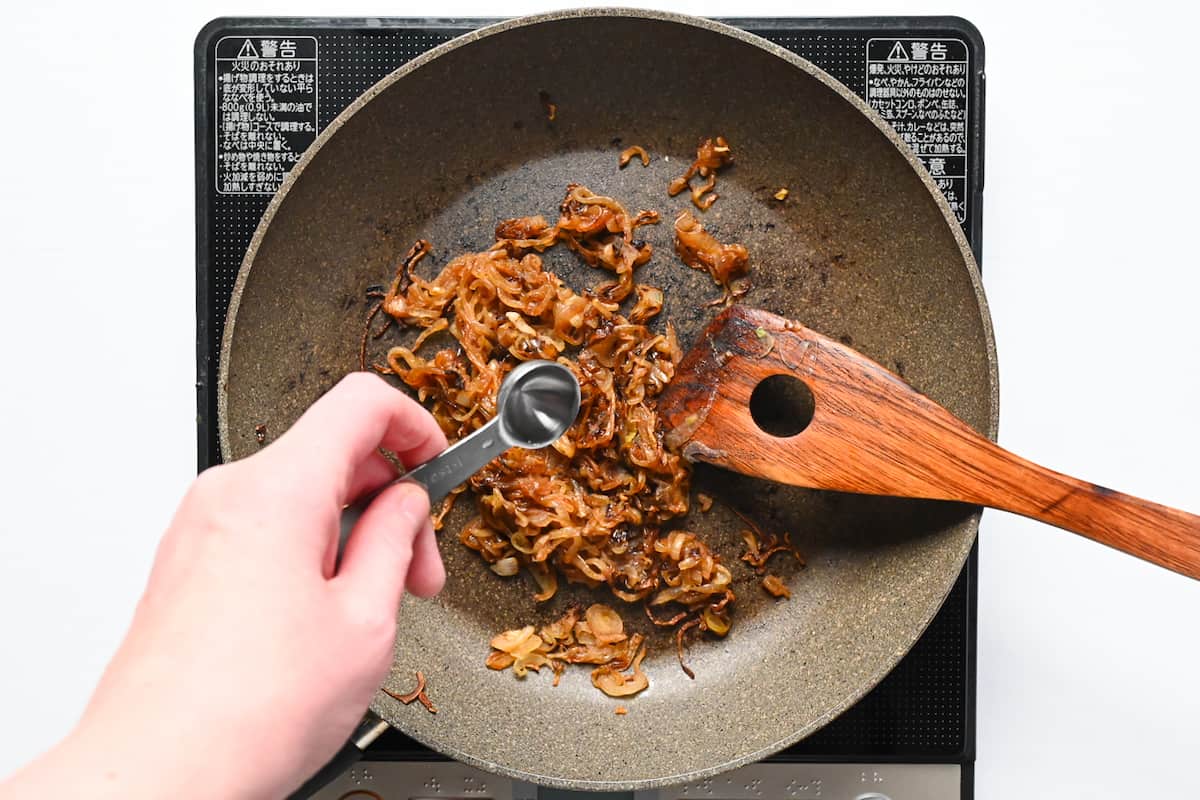
iv. Cook for another 20 to 30 minutes, letting them slide into a deep amber. The moment they hit amber, pull them off the heat.
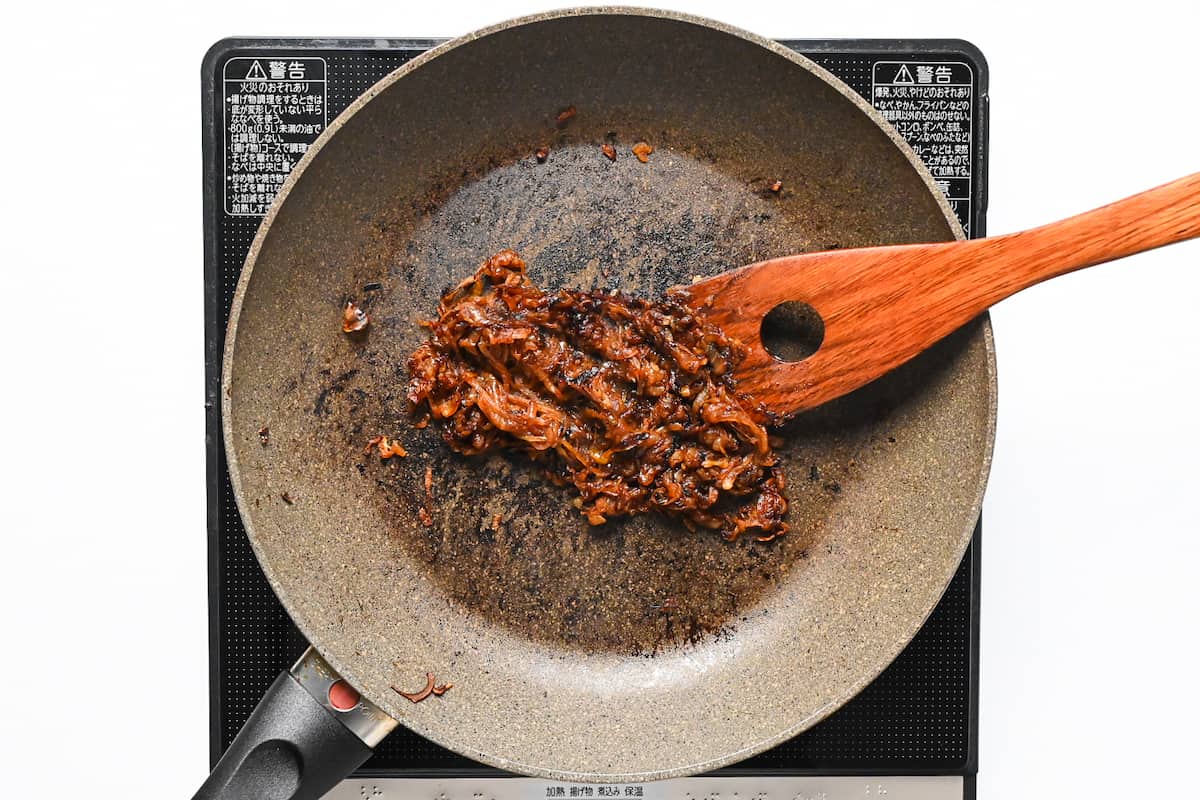
Onion cells hold sugars locked in water (glucose, fructose, the works). As the water evaporates, the sugars concentrate. Above 140°C (284°F), the Maillard reaction and caramelization fire off at the same time, and that is what creates the double structure of sweet plus toasty. The first 10 minutes of soft and golden is water loss. The 20 to 30 minutes after that is chemistry. Completely different stages. This is what a real caramelized onion looks like. Nothing about the flavor you get at 30 minutes can be faked at 10.
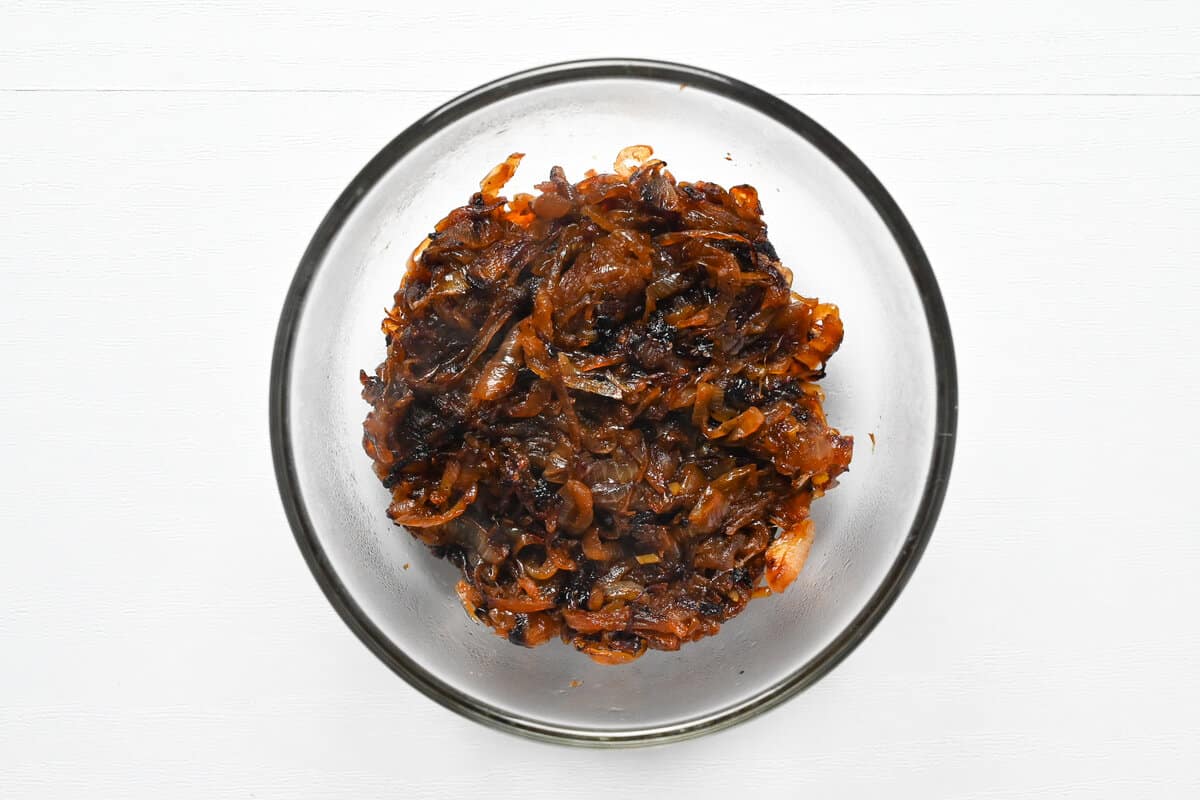
i. Toss the beef with flour until every piece is coated. Shake off the excess in the bowl. You want a thin film, not a crust.

ii. Heat a little oil in a deep frying pan or pot over medium heat. When it shimmers, add the beef and sear it on every side. Real color. Not pale, not gray. Brown.

Depending on your pan size and how much beef you have, work in two or three batches to keep that color on lock. Crowded pans steam. Spaced pans sear. That is the rule.

i. Once the beef is seared, add the caramelized onions, garlic, bay leaves, canned tomatoes, red wine, and water. Stir it all together. Lay the rosemary on top like a scarf, it will perfume the whole pot from above.

ii. Cover, crank the heat to high. The moment it hits a boil, drop the heat to low and simmer for 30 minutes.

Do not let it boil. Hold the liquid at 85 to 90°C (185 to 194°F). At a full 100°C (212°F) boil, the muscle fibers contract so hard they squeeze the moisture right out of the beef, and you end up with dry meat in a dark sauce. The fix is low and quiet.
If your burner runs hot even at its lowest setting, move the pot into a 150 to 160°C (302 to 320°F) oven instead (has to be oven-safe pot), covered. The oven wraps the pot from all sides and holds the liquid at the right temperature on its own, no babysitting.
iii. Turn the burner off. Leave the pot on the stove, lid on, untouched for a full hour. While you wait, go prep the carrots, mushrooms, and the rest of the finishing ingredients. Peel. Chop. Measure. This is not dead time. This is the part that matters most.
When the heat goes off and the temperature drops, the muscle fibers in the beef relax. While it was cooking, those fibers were contracting and squeezing out moisture. As the pot cools, the fibers loosen and start drinking in the surrounding broth the way a dry sponge grabs water.
The 30-minute simmer, 1-hour rest, 1-hour simmer structure is literally a heat, infuse, reheat cycle. If you have the time, cool it down completely one more time after the final hour of simmering and reheat it again. The flavor goes even deeper. The reason day-two stew tastes better than day-one is exactly because it picks up one more cool-and-reheat cycle overnight.
i. After the hour is up, pull out the rosemary and bay leaves and discard them. They’ve finished their work. Add the carrots and mushrooms. Put the pot back over the heat.

ii. As it approaches a gentle simmer, stir in the honey, tomato ketchup, and Worcestershire sauce.
A Japanese brand like Bull-Dog is ideal, but a Western brand like Lea & Perrins works too. Just stir in a tiny bit of sugar, ketchup, or unsweetened applesauce to round off its edge and nudge it toward the Japanese style.
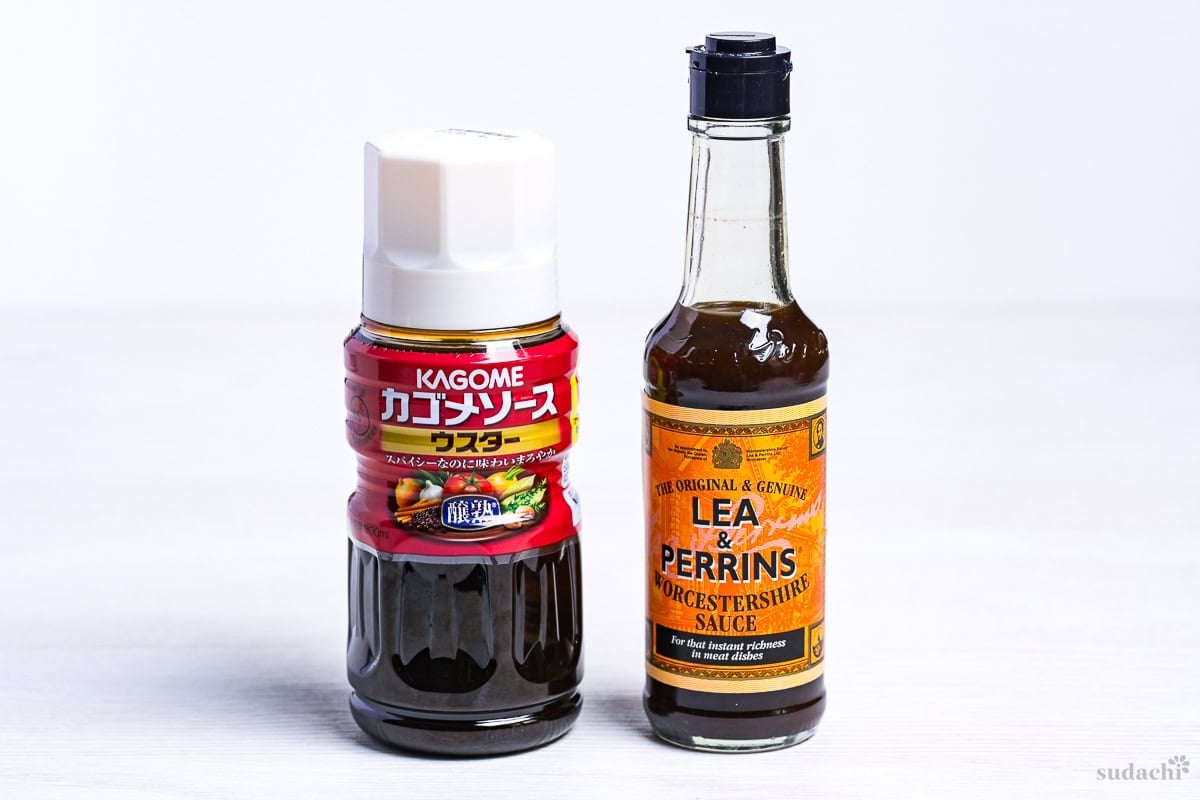
For the full breakdown and my side-by-side cooking tests, see my guide to Japanese Worcestershire sauce.

i. Crack the lid slightly to vent. Drop the heat to low. Simmer for another hour. Every 10 minutes or so, stir the pot so the bottom does not scorch. The sauce will reduce and tighten.

ii. Check the sauce. It should coat the back of a spoon. If it runs off like water, simmer uncovered a few more minutes. If it feels too thick, splash in a little water. Stew forgives.
i. Turn the heat off. Stir in the awase miso, the dark chocolate, a knob of butter, and the grated apple. All at once. All off the heat.

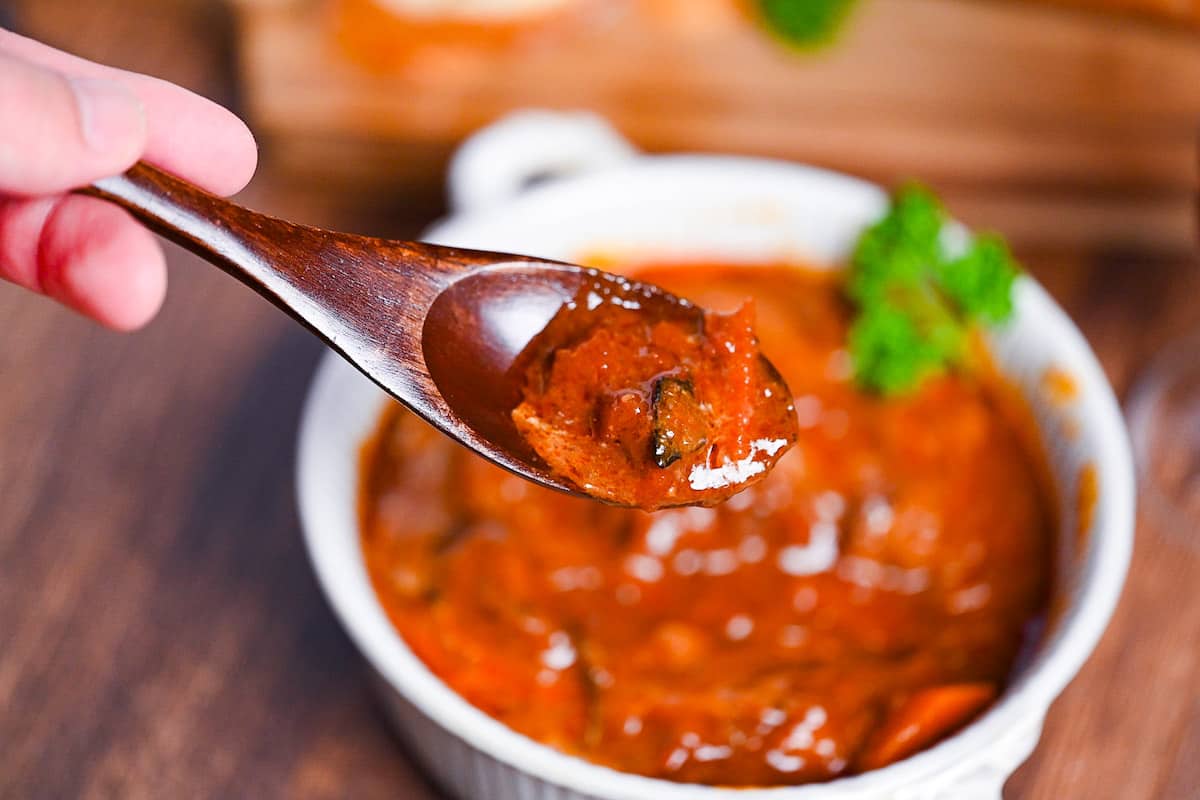
ii. Stir until the chocolate melts and the butter disappears and the miso dissolves into the sauce. The surface will go from matte to glossy. That is the visual cue.

Miso is, at its core, broken-down soy protein (glutamates). The same umami compound that French cooking coaxes out of fond de veau over 24 hours of simmering is what miso has been concentrating through fermentation the whole time it sat in its tub. A single tablespoon of miso is, in spirit, a shortcut for the umami of a three-hour fond. Not literally true, of course, but you know what, it is not a bad way to think about it.
Chocolate works on the same principle as Mexican mole. The polyphenols in cacao bind to fat and soften the astringency, and the light bitterness of theobromine tightens up the overall sweetness of the stew. Bitterness is the accelerator of sweetness. In these small amounts, you do not taste chocolate at all. You taste a mysterious depth.
i. Taste the sauce. Adjust with salt if it needs it. If the stew got over-reduced somewhere along the way and the thickness or salt level is off (too salty, too thick), splash in water to pull it back. Seriously, it is fine. Cooking time shifts with your burner and your pot. The fact that you can just add water to dial it back in is one of the real privileges of stew, right?
iii. Serve with a baguette on the side.
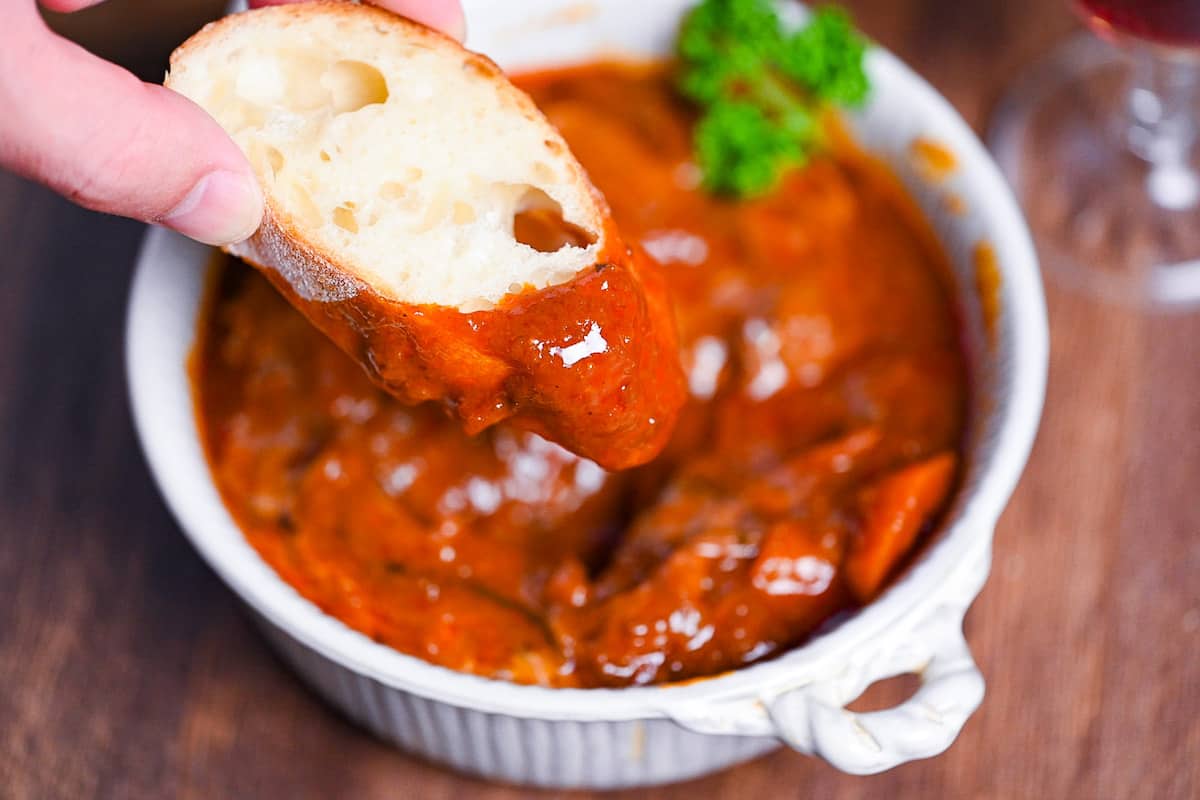
Cut the baguette into 2 cm slices. Brush a thin layer of olive oil on each one. Toast until crisp. Rub the cut side of a raw garlic clove across the hot surface of each slice once, twice, done. You now have even more layered flavor and a textural contrast. One extra step, completely different bite.

Essential Tips & Tricks
- Hold a gentle simmer, not a boil. Beef dries out fast when the liquid hits a rolling 100°C (212°F), the muscle fibers contract and squeeze the moisture straight back into the pot. Keep the surface at a lazy 85 to 90°C (185 to 194°F) where only the occasional bubble breaks through.
- Treat the one-hour rest as the recipe, not a delay. Kill the heat after the first simmer, lid on, and walk away for a full hour.Skip the rest and you will taste it immediately.
- Stir the finishing trio in off the heat, all at once. Awase miso, dark chocolate, and grated apple go into the pot after the burner is off, not while it is still on.
With these simple tips in mind, you’re set for success every time you make Japanese beef stew.
Storage & Meal Prep
Fridge: Let the pot cool on the counter until it is just barely warm to the touch, then transfer it to the fridge, lid on. Once cooled, it keeps 1 to 2 days in the fridge. The overnight rest in the cold is also where the flavor sharpens, which is why the day-two bowl genuinely tastes like a different recipe.
Freezer: Transfer the stew to a freezer-safe container, leave a finger of headspace for expansion, and freeze flat for 2 to 3 weeks at peak quality.
Meal prep: Cook on Saturday, eat on Sunday, and tell your Saturday self thank you. The overnight rest in the fridge is doing real work, the fibers pull more broth in, the sauce goes darker, the finishing moves settle into the whole bowl instead of sitting on top. Day 1 is good. Day 2 is better. Day 3 is still fine, just flag that as the realistic outer edge.
Reheating: Warm the stew gently on a low stovetop with a splash of water or leftover red wine to loosen it, lid on, stirring every couple of minutes so nothing catches on the bottom. If it seems over-thickened, add a bit of water to loosen it.
What to Serve With This Recipe
Beef Stew FAQ
No, and this is the single most common mix-up. Hayashi rice uses thinly sliced beef in a glossy demi-glace sauce ladled over rice, closer in shape to a stroganoff plate. Japanese beef stew uses chunky stew beef, carrots, and mushrooms in a bowl you eat with a spoon, usually with bread on the side. Same yoshoku family, similar flavor profile, different dish entirely.
Either the cut was too lean, or the pot was held at a full rolling boil, or both. Chuck, shank, or a chuck-and-tendon blend (more connective tissue, more collagen, more melt) is the pick. And the liquid should never go above 90°C (194°F) during the braise, keep the surface at a lazy bubble.
No, and the first time you read “dark chocolate in a savory stew” it reads like a typo (it is not). A single square of 70 percent or darker, stirred in off the heat, disappears completely into the sauce and leaves a mysterious low-end depth where before the pot felt like it was hovering. Mexican mole has been running this exact play for centuries.
More Japanese Beef Recipes
- Authentic Sukiyaki
- Easy Gyudon
- Quick Yakiniku Don
- Hambagu (Japanese Hamburger Steak)
Hungry for more? Explore my Japanese beef recipe collection to find your next favorite dishes!
Did You Try This Recipe?
I would love to hear your thoughts!
💬 Leave a review and ⭐️ rating in the comments below. 📷 I also love to see your photos – submit them here!

Japanese Style Beef Stew

Ingredients
Caramelized onion
- 300 g onion thinly sliced perpendicular to the fibers
- 1 tbsp cooking oil
- 1 pinch salt
Beef
- 500 g stewing beef chuck, cut into 4 to 5 cm cubes, optional beef tendon blend (4:1) adds body
- 1 tsp salt
- 2 tbsp all-purpose flour or rice flour for GF
Pan aromatics
- 1 tbsp cooking oil
- 2 cloves garlic finely minced
- 2 dried bay leaves central rib removed
Simmering liquid
- 400 g canned tomato 1 standard can = 400 g, chopped
- 240 ml red wine medium-bodied dry red; or unsweetened grape or cranberry juice
- 240 ml water
- 2 sprigs fresh rosemary
- 150 g carrot peeled, cut into large pieces
- 100 g button mushrooms sliced
Finishers
- 1 tbsp honey
- 2 tbsp tomato ketchup
- 1 tbsp Worcestershire sauce
- 1 tbsp grated apple or apple jam
- 1 tbsp yellow miso paste (awase) or any miso already in your fridge
- 5 g dark chocolate 70 percent or darker
- 1 tbsp unsalted butter
Serving
- fresh parsley optional decoration
- baguette toast as needed, sliced
The ingredient brands and tools I trust are in my Japanese pantry guide and my cooking tools guide.
Can’t find certain Japanese ingredients? See my substitution guide here.
Instructions
- Thinly slice 300 g onion perpendicular to the fibers (stem to root). Heat a pan over medium with 1 tbsp cooking oil. Slide the onions into the pan and fry for about 10 minutes or until golden. Mix occasionally to prevent burning. Reduce the heat to low and sprinkle with 1 pinch salt. Gently cook for another 20-30 minutes or until deep amber. Add a splash of water and mix from time to time if it start to stick.

- While you wait, cut 500 g stewing beef into bitesize pieces and sprinkle with 1 tsp salt. Rest until the onions are done. Check notes if using beef tendons/sinew.

- Heat 1 tbsp cooking oil in a deep pot over medium heat. Dust the beef with 2 tbsp all-purpose flour, then add it to the heated pot in a single layer and sear until browned all over.

- Once browned, add the caramelized onions along with 2 cloves garlic, 2 dried bay leaves, 400 g canned tomato, 240 ml red wine, and 240 ml water. Mix, then place 2 sprigs fresh rosemary on top. Cover with a lid, bring to a boil, then reduce the heat and simmer on low for 30 minutes.
- Turn off the heat and leave to cool for one hour. You can use this time to prepare the other ingredients if you like.
- After the rest period, remove the rosemary and bay leaves. Add 150 g carrot and 100 g button mushrooms, and bring to a simmer over medium heat.
- Once it's gently bubbling, add 1 tbsp honey, 2 tbsp tomato ketchup, and 1 tbsp Worcestershire sauce.
- Place the lid slightly ajar, lower the heat once more, and simmer for 1 hour. Mix occasionally to prevent scorching. The final consistency should be thick, glossy and coats the back of a spoon.
- Turn off the heat and add 1 tbsp grated apple, 1 tbsp yellow miso paste (awase), 5 g dark chocolate, and 1 tbsp unsalted butter. Stir until dissolved into the stew. Taste test, if it needs more flavor add a touch of salt. If it seems too rich, add a splash of water a little at a time.
- Divide into serving bowls, garnish with fresh parsley and serve with toasted baguette slices. Enjoy!

Perfect recipe…I changed from beef to tuna and it works well too! Highly recommended.
Hi Martin,
Thank you for the feedback and sharing your experience!
I’m very happy that you enjoyed the recipe! 🙂
Yuto
Thank you for your inspirations and fantastic recipes…today I made a japanese menue with your cucumber pickles, rice, miso soup and the miso glaced salmon!!! Wonderful!!…by the way if you change the stew to tuna you start with cooking the tuna very short and then make the sauce etc… and nearly at the end 5 minutes before the sauce is ready you place the tuna in the sauce;). It works well.
Hi Martin,
Thank you for making these recipes and sharing a picture! I’m so happy that you liked them all!
Thank you for sharing your tips as well! 🙂
Yuto
It’s just the beginning. Thank ou so much.
This is a great recipe and fun to make!
In case you wanted to fix it, I noticed you wrote “seal the beef” by mistake, when you actually meant to write “sear the beef”!
Hi Andrew,
Thank you for the comment! That’s right, thank you for letting me know! 🙂
I will make an edit.
Yuto
I am looking forward to making this stew tomorrow. Will the tendon be soft enough? Does it need any pre boiling before going into the stew? Thanks.
Hi John,
Thank you for wanting to try my beef stew recipe!
I personally didn’t pre-boil it and the stew’s relatively long, gentle cook (about an hour and a half total) turned my small pieces of tendon soft and pleasantly gelatinous. But if scum surfaces, I recommend skimming off the foam as it rises.
That said, if you’re working with very thick tendon or you’re sensitive to aroma, a 10 minute blanch and rinse before starting can make the broth extra clean!
I hope you will enjoy making this!
Yuto
I made this and used ChatGPT to modify & shorten the cooking time in my instant pot (after carmelizing the onions and searing) the beef, then cooking for 30 mins before adding the vegetables and 6 mins after. Holy moly this recipe is delicious! I’ve been looking for a beef stew recipe with the complex flavors of beef stew in Japan, and this recipe is it! I was skeptical of the hodgepodge of ingredients, but it really came together!
Hi Renee,
This made my day! Converting it to the Instant Pot like that is such a smart move, and I’m happy it delivered on those complex flavors you were hoping for! Thanks so much for trusting the recipe and sharing your experience! 🙂
Yuto
Hi Yuto-san,
Can I substitute red wine with something non alcohol? Also for the grated apple, what can I substitute with?
Thank you.
Hi May,
Happy to help anytime!
For the red wine, the closest non-alcoholic substitute would be non-alcoholic red wine, especially since the recipe uses a relatively large amount. Another good option is beef broth or mushroom broth, but if you use bouillon cubes or powdered bouillon instead of pure stock, keep in mind that these contain added salt, so it’s important to taste as you go and reduce salt in other parts of the recipe. Unsweetened pomegranate juice is also a great alternative, just be sure it contains no added sugar.
For the grated apple, honey can work well in a small amount. Unsweetened applesauce is probably the closest match in both flavor and texture, while grated pear is another excellent substitute with similar natural sweetness and moisture!
I hope it helps! 🙂
Yuto
When you say to slice the onion against the grain, do you mean vertically, from stem to root, or horizontally, around the “equator” of the onion? Thank you.
Hi Jay,
Thank you for your question! Stem to root, vertically! I think I will reword the sentence to make it clearer! 🙂
Yuto
Thank you! I made this recipe, and it is delicious. I used ordinary beef chuck stew beef. It was the tenderest stewed beef I’ve ever had, thanks to your instructions. And the onions were perfect!
Hi Jay,
Really appreciate you coming back to share that! Hearing the beef turned out that tender genuinely makes my day. So glad you enjoyed it! 🙂
Yuto
Here, stews are in season all year round and we could not wait to try this. It was an absolute delight and yes – it is more than reheating friendly. I mean if there actually was anything to be reheated…. Will make this again soon, planning for six huns instead of four!
Hi Peti,
Thank you for trying this recipe! Glad it went down that well. Nothing left to reheat is about the best review a stew can get! 🙂
Yuto