



We all know homemade dashi tastes best. But pulling out kombu and katsuobushi every weeknight? Not happening. And instant dashi granules are not remotely the same thing. High quality dashi packets are great, but they’re pricey.
So I started making my own. One batch on a Sunday, enough packets for weeks. Cold-brew one overnight and the next day, the cleanest stock you’ve ever tasted is waiting in your fridge. I’m not buying store-bought ones anymore.
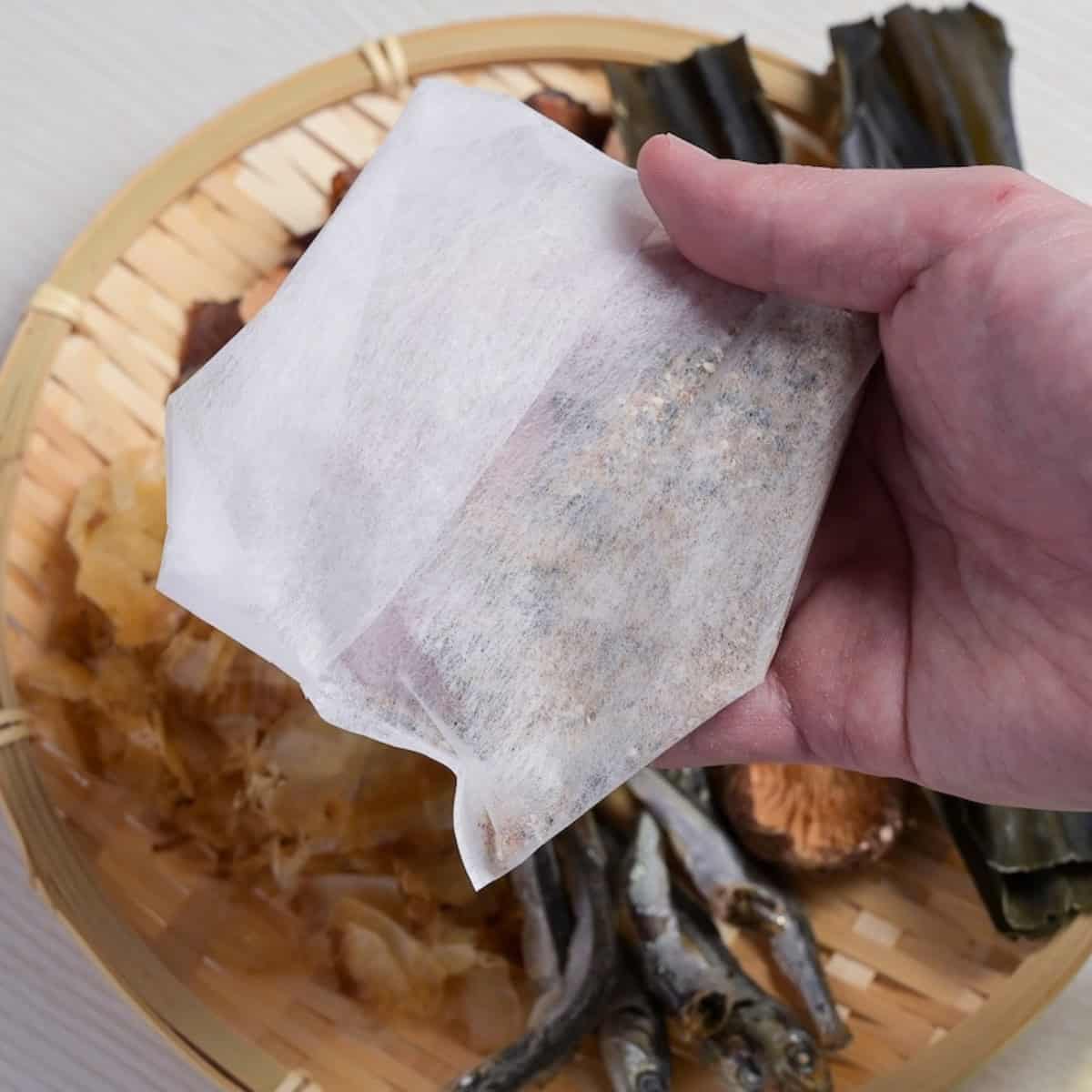
Homemade Dashi Packets
Recipe Snapshot
- What is it? Pre-portioned pouches of ground dried dashi ingredients (kombu, katsuobushi, niboshi, dried shiitake) that you steep in water like a tea bag to produce clean, additive-free Japanese stock.
- Flavor profile: Clean, umami-forward with kombu’s natural sweetness and katsuobushi’s smoky depth. The synergy between glutamic acid and inosinic acid builds a layered richness no instant granule can replicate.
- Why you’ll love this recipe: You choose every ingredient and ratio, make a full batch in 10 minutes, and cold-brew overnight for effortless weeknight dashi. Zero additives, zero daily prep, total control.
- Must-haves: Kombu (dried kelp), katsuobushi (dried bonito flakes), empty tea bags, a small mill or food processor for grinding.
- Skill level: Easy. Measure, grind, fill a tea bag.
- Meal prep: Make packets on a Sunday, freeze for up to 3 months. Cold-brew one the night before and restaurant-grade dashi is waiting in your fridge by morning.
Summarize & Save this content on:
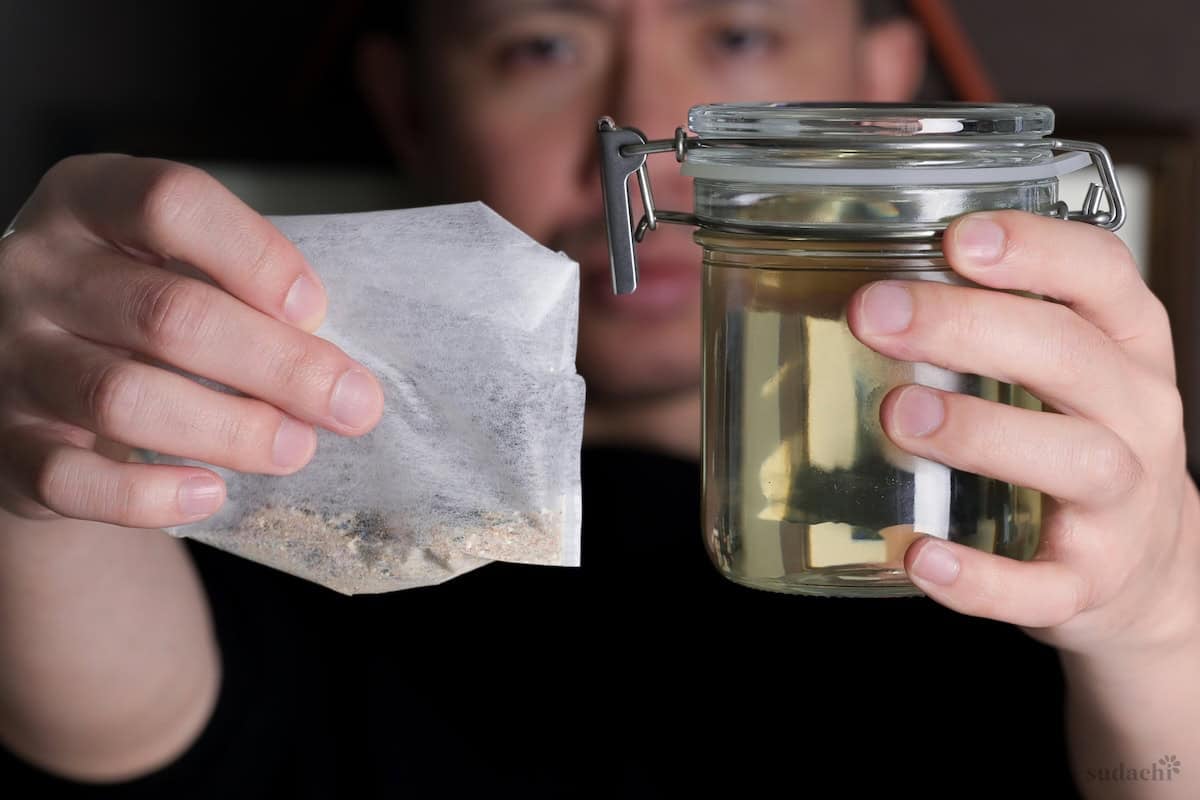
Why Make Your Own Dashi Packets?
There are a few ways to get dashi on the table. Each one has its strengths, but none of them tick every box:
- Dashi from scratch: Nothing beats it for flavor and subtlety. A properly made ichiban dashi has a delicacy that no shortcut can fully replicate. But it takes time, attention, and cleanup every single time. The cost-performance ratio isn’t great either, especially if you’re making small batches on a weeknight.
- Store-bought dashi packets: I’ve recommended these more than any other option, and for good reason. They’re easy. But the higher the quality, the higher the price. And even packets marketed as “additive-free” typically contain more than just raw ingredients. Things like powdered soy sauce or seasoning blends are added to make the resulting dashi taste more like a finished dish. That’s not necessarily a bad thing, but it means you’re not working with pure ingredients the way you would with dashi from scratch or homemade packets.
- Instant dashi granules: The most accessible option outside of Japan, and the quickest way to get something dashi-like into a pot. But they contain the most salt and additives of any option, and the flavor leans junky. I’ll reach for them as a seasoning when I want that punchy, fast-food-ish Japanese flavor on purpose, but I personally don’t use them to prepare a dashi stock.
Homemade dashi packets fill every gap. You choose the ingredients, whether that’s premium rishiri kombu or budget-friendly alternatives. You set the ratio and the grind. For cold-brew, you just drop a packet in water and let the fridge do the work overnight. No daily prep, no additives, no markup.
I won’t claim they produce the same dashi as a carefully made pot from scratch. But they come the closest. The stock is gentle, clean, and lets you taste the actual ingredients.
Homemade Dashi Packet Ingredients
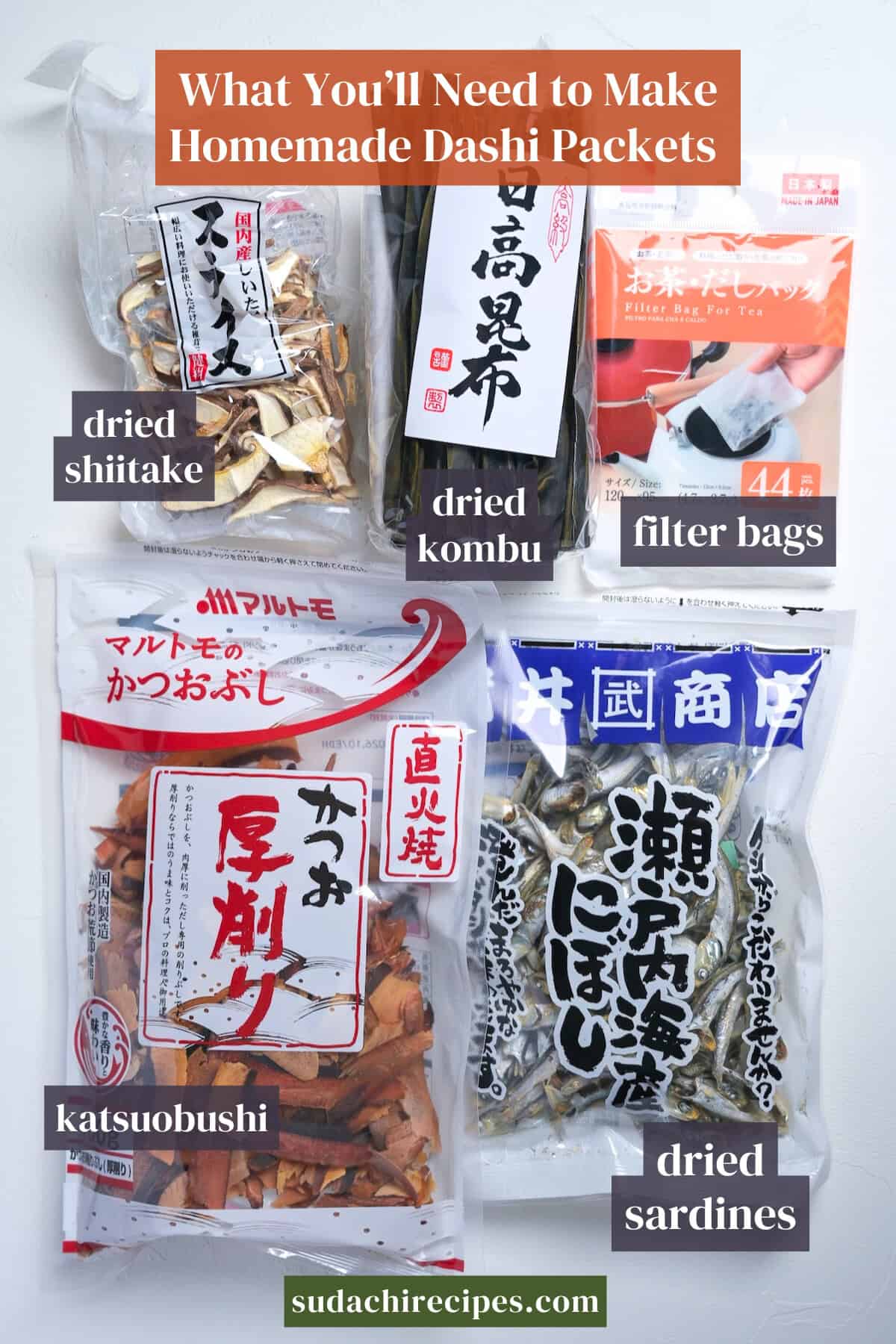
Personally, the best thing about homemade dashi packets is the total control. You choose the ingredients, the quantities, and the ratios. You put in exactly what you want and leave out everything you don’t. Let’s start with the core ingredients.
Kombu (Dried Kelp)
Kombu is a type of seaweed and the umami foundation of any dashi blend. It was Dr. Ikeda’s extraction of glutamic acid from kombu in 1908 that led to the discovery of umami itself, so calling it the backbone of Japanese flavor isn’t an overstatement. Kombu dashi has a clear, light golden color with an elegant sweetness that supports other ingredients without competing.
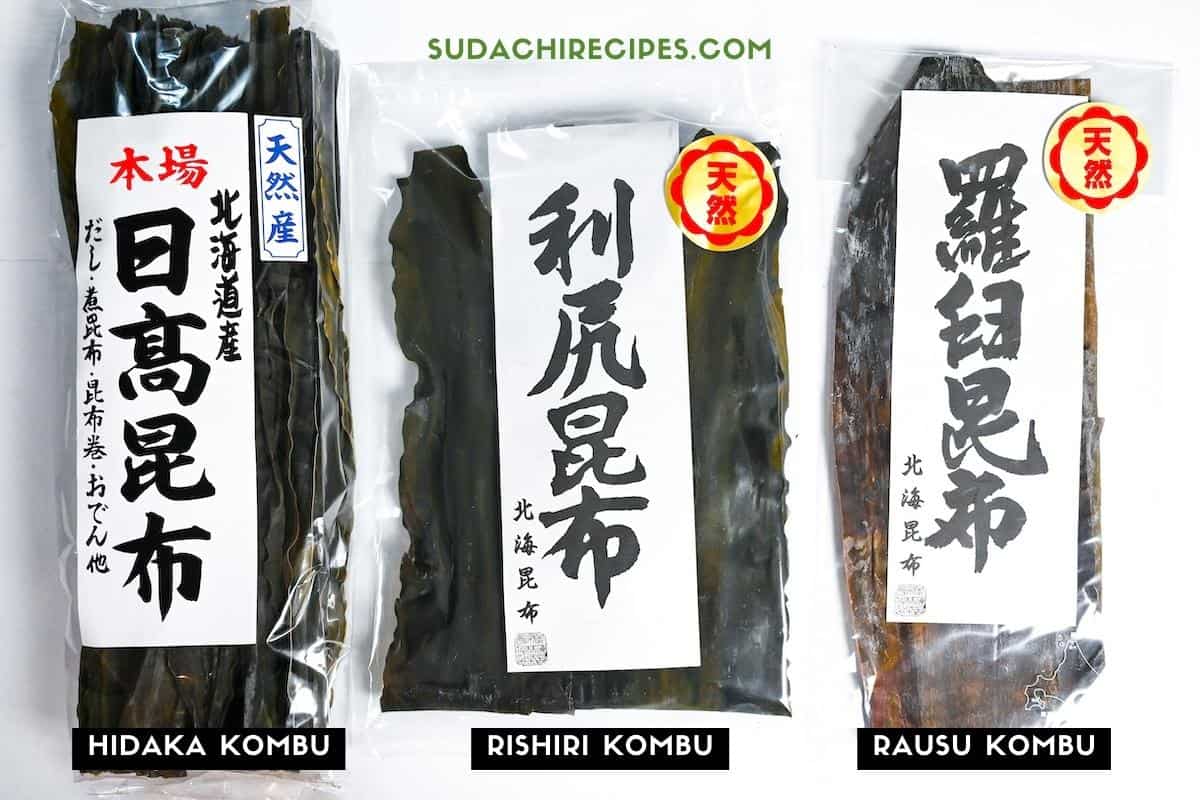
Different types produce different stocks. Ma-kombu and rishiri kombu yield a refined, clear stock suited to delicate soups. Hidaka kombu is more affordable and produces a bolder stock for simmered dishes.
Kombu’s umami dissolves best in soft water. Hard water contains calcium and magnesium that bind with glutamic acid, weakening the stock. If you live in a hard-water area, using filtered or bottled soft water is recommended.
Katsuobushi (Dried Bonito Flakes)
Katsuobushi is made by simmering, smoking, fermenting, and drying skipjack tuna, producing what’s arguably the hardest fermented food in the world. It’s rich in inosinic acid, with a distinctive smoky aroma and concentrated savory depth.
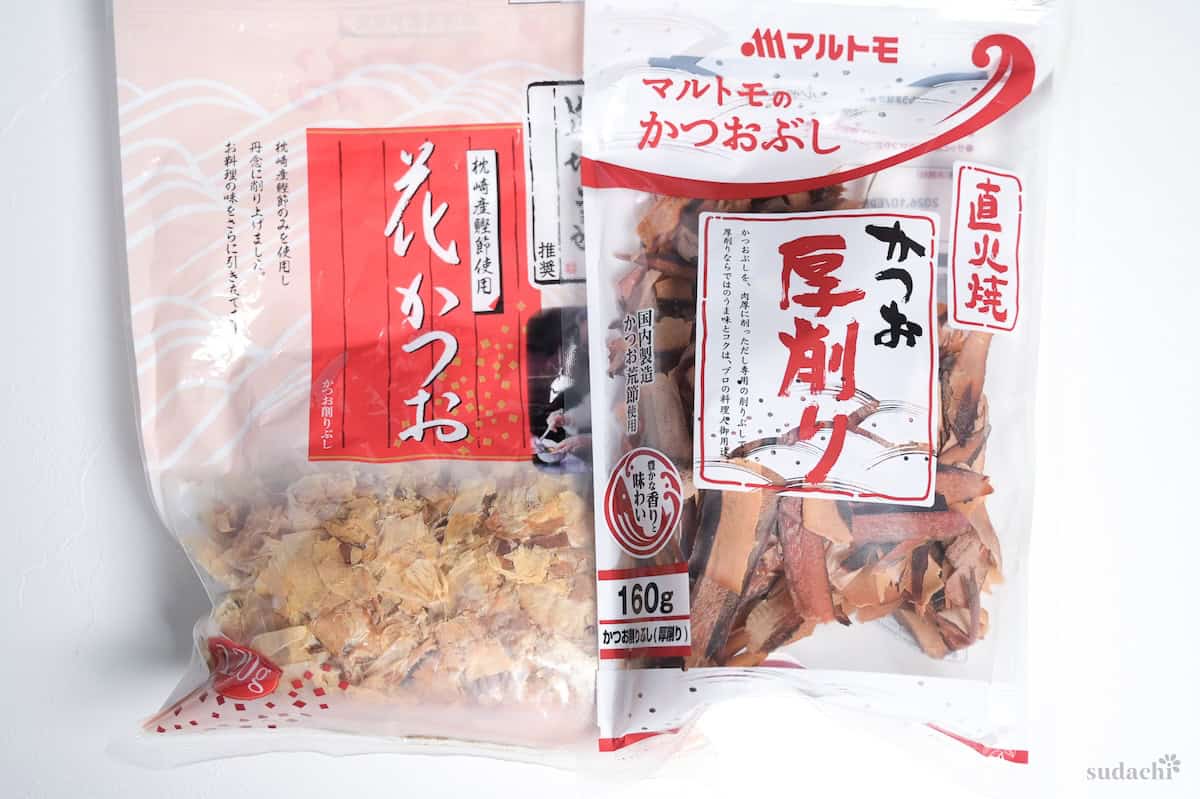
Shaving thickness matters for dashi packets. Thick shavings (atsu-kezuri) take longer to extract but produce a full-bodied stock. Thin shavings extract quickly. For homemade dashi packets, I personally recommend using thick shavings because they’re easier to grind in the blender. You can still use thin shavings, but you will probably need to add them in batches because they take up more space.
Niboshi (Dried Sardines)
Niboshi are small dried fish, typically Japanese anchovies, boiled and dried to concentrate their savory, mineral-rich flavor. Compared to katsuobushi, niboshi carry more fish oil and minerals, giving the stock a bold, briny punch that works especially well in miso soup, rustic simmered dishes, and udon broth.
The key to clean niboshi dashi is preparation. The heads and guts contain bitter compounds, so remove them before use. This extra step makes a noticeable difference in clarity and taste.
Dried Shiitake Mushrooms
Dried shiitake are the only common ingredient rich in guanylic acid, the third major umami compound. Fresh shiitake contain almost none of it, but drying breaks down ribonucleic acid in the cells and generates guanylic acid as a result.
Adding dried shiitake to your blend completes the “umami trio.” Even a small amount of shiitake powder amplifies the stock through synergy with animal-based ingredients. The combination of kombu and dried shiitake is a well-known “golden pair” for plant-based dashi, delivering rich umami without any animal products.

There are whole and sliced varieties of dried shiitake mushrooms. I recommend the sliced variety because they’re easier to put in a grinder.
Other Ingredients and Alternatives
- Ago (dried flying fish): A Nagasaki specialty with a refined, clean sweetness.
- Soda-bushi or saba-bushi (mackerel flakes): Bolder and more full-bodied than katsuobushi, and more affordable.
- Dried scallops: Intensely umami-rich with a refined sweetness. Even a small amount adds remarkable depth.
- Dried shrimp: Sweet, toasty crustacean flavor. Use sparingly, as the aroma can be strong.
- Dried root vegetables (daikon, carrot, gobo): Add natural sweetness and gentle umami. In parts of Kyushu, dried daikon is used alongside shiitake for stock.
- Dried yuzu peel: A small piece adds bright citrus fragrance, ideal for hot pots. Add at the end, as prolonged heat fades the aroma.
- Dried porcini mushrooms: Intense umami similar to dried shiitake, and surprisingly good with soy sauce.
- Vegan option, kombu + dried shiitake: The classic plant-based pairing. Glutamic acid plus guanylic acid gives you genuine umami synergy without any animal products.
Have trouble finding Japanese ingredients? Check out my ultimate guide to Japanese ingredient substitutes!
How to Make Homemade Dashi Packets
- Mini Food processor: You need something to grind dried ingredients. I use a small food processor/mixer.
- Empty tea bags: Use store-bought empty tea bags or non-woven dashi packet bags. Go for fine mesh to keep powder from leaking into your stock.

i. Toast (optional). If your katsuobushi, niboshi, or kombu feel slightly moist, toast them in a dry pan over low heat until the moisture is gone. This intensifies flavor and extends shelf life.
ii. Weigh your kombu.

iii. Pulse in a mill or small food processor until you get coarse chips, not powder. Keeping the kombu coarser slows its extraction rate, which prevents the stock from becoming cloudy or slimy.

iv. Add the katsuobushi, niboshi, and dried shiitake to the processor.
Note: If using thin katsuobushi shavings, you might need to do this in batches since they take up more space. They are also very light so you will also need to shake or scrape down the sides to push the shavings towards the blade (this is why I prefer to use thicker katsuobushi).

v. Pulse into a coarse powder. You can vary the grind by ingredient.

vi. Pour the contents into the container with your flaked kombu, and mix all the ground ingredients together until evenly distributed.

v. Spoon 4 g of the blend into each tea bag and seal. Each 4g bag makes 1 liter of dashi (500ml cold brew, 500ml hot brew). If you want to make more, you can double it and fill each bag with 8g for 2 liters of dashi. (This recipe makes 5x4g bags, or 2.5x8g bags).

8g per packet is designed for 1 liter of water for cold brew.

With the ratio in this recipe, you’ll get roughly 2.5 liters worth of ichiban dashi and 2.5 liters of niban dashi, so 5 liters in total.

The 8 g per liter ratio is a solid baseline, but it’s not set in stone. If you want to stretch your ingredients further, try 7 g per packet for a lighter stock. If you prefer something more concentrated, bump it up to 9 g. Just keep in mind that less means a milder dashi, so adjust your expectations along with the weight.
Experimenting with different ratios and ingredient combinations is half the fun. Try heavier on the niboshi for miso soup, or shiitake-forward for a vegetarian broth. The one rule worth sticking to: whatever blend you come up with, keep the total weight at around 8 g per liter as your starting point. From there, make it yours.
i. Place 1 4g packet in a container with 500ml of cold water (or 1 liter for 8g packet). Refrigerate overnight, or for up to 12 hours.

That’s it. Cold-brewing produces an exceptionally clean, delicate dashi. The low temperature extracts umami gently while leaving behind the compounds that cause bitterness or cloudiness.

This is your ichiban dashi, the purest expression of the ingredients.

Without heat, you avoid extracting the tannins, excess minerals, and alginate that make hot-brewed dashi cloudy or bitter. The trade-off is a slightly lighter body compared to simmered stock, but the clarity and cleanness more than make up for it.
i. After cold-brewing, don’t throw that packet away. Transfer it to a pot with another 500ml of fresh water. Heat over medium-low until the surface just barely trembles, below a boil. Hold it there for 10 minutes to extract every last bit of flavor.

A full rolling boil pulls out harsh, bitter compounds and causes cloudiness. The gentle simmer draws out the remaining umami cleanly. For niban dashi, higher heat is acceptable since you’re squeezing the final extraction from already-spent ingredients, but boiling is still too much.

So if you do two-stage extraction, you can get about 1L worth (though some evaporate for the second extraction) of dashi stock from one 4g packet, or 2L from an 8g packet!

Even after two rounds of extraction, the spent ingredients still have something to give. Empty the packet into a dry pan over medium heat. Stir continuously until the mixture is completely dry and toasty. Add a splash of soy sauce, a drizzle of mirin, and a pinch of sugar. Zero waste, and you’ve just made a simple furikake (rice seasoning).

Make a batch of packets on the weekend and store them. Any packets you won’t use within a few days go into a freezer bag and into the freezer.

The night before you plan to cook, drop a packet into a container of water and refrigerate. By morning, crystal-clear cold-brewed dashi is waiting for you. One thing to keep in mind: aroma gradually fades during frozen storage, so ideally use your packets within 1 to 2 weeks for the best flavor.

Essential Tips & Tricks
- Remove dried sardines’ heads and guts before grinding. This is the single biggest factor in avoiding bitter, fishy dashi. The bile acids and oxidized fats in the head and belly are the main culprits.
- Grind each ingredient to a different texture. Kombu should stay coarse (chip-sized), katsuobushi and niboshi go to a medium-coarse powder, and shiitake can be ground fine.
- Check your water hardness. Hard water contains calcium and magnesium that bind with glutamic acid and lock it away, weakening your dashi no matter how good your ingredients are. If your tap water is hard, using filtered or bottled soft water is recommended.
- Weigh your packets, don’t eyeball them. 8 g per liter is the baseline, but a 2 g difference changes the stock noticeably. Consistent weighing mean consistent dashi every time.
- Store dry packets in the freezer, not the pantry. Dried fish and katsuobushi attract moisture and pantry pests, especially in summer. Sealed in a freezer bag with a desiccant, your packets stay fresh for 2 to 3 months. Aroma fades gradually after that, so don’t stockpile too far ahead.
With these simple tips in mind, you’re set for success every time you make homemade dashi packets.
Storage & Meal Prep
Dry Packets (Unmade Dashi): Store sealed packets in a freezer bag and keep them in the freezer. They will keep for 2 to 3 months but aroma fades gradually after that, so don’t stockpile too far ahead. I personally try and use them up within a few weeks. Avoid the pantry, especially in warmer months. Dried fish and katsuobushi attract moisture and pantry pests quickly.
Cold-Brewed Dashi (Ichiban Dashi): Refrigerate in a sealed container and use within 3 days. This clean dashi has no preservatives, so it spoils faster than you might expect. If it smells sour or looks cloudy in a way it didn’t before, discard it. My best advice is planning your week and only start the cold brew the night before use.
Simmered Dashi (Niban Dashi): Same rules as ichiban dashi. Refrigerate and use within 3 days.
Freezing Broth: Pour cooled dashi into ice cube trays or small freezer-safe containers. Frozen dashi keeps for about 1 month. One thing to keep in mind: frozen dashi loses some aroma over time. It will still have the umami, but the fragrance won’t be as bright as fresh. Use within 2 to 4 weeks for the best results.
What to Make With Your Homemade Dashi
- Kake Udon: A simple hot udon in dashi broth. When the broth is this minimal, the quality of your dashi is everything.
- Chawanmushi: Japanese steamed egg custard. The dashi flavor comes through in every silky bite, so this is where your cold-brewed ichiban dashi really shines.
- Nikujaga: Japan’s ultimate comfort stew. Dashi simmers with potatoes, beef, and onions into something deeply satisfying.
- Dashimaki Tamago: Rolled omelette layered with dashi. The stock keeps the egg incredibly juicy and gives it that unmistakable Japanese flavor.
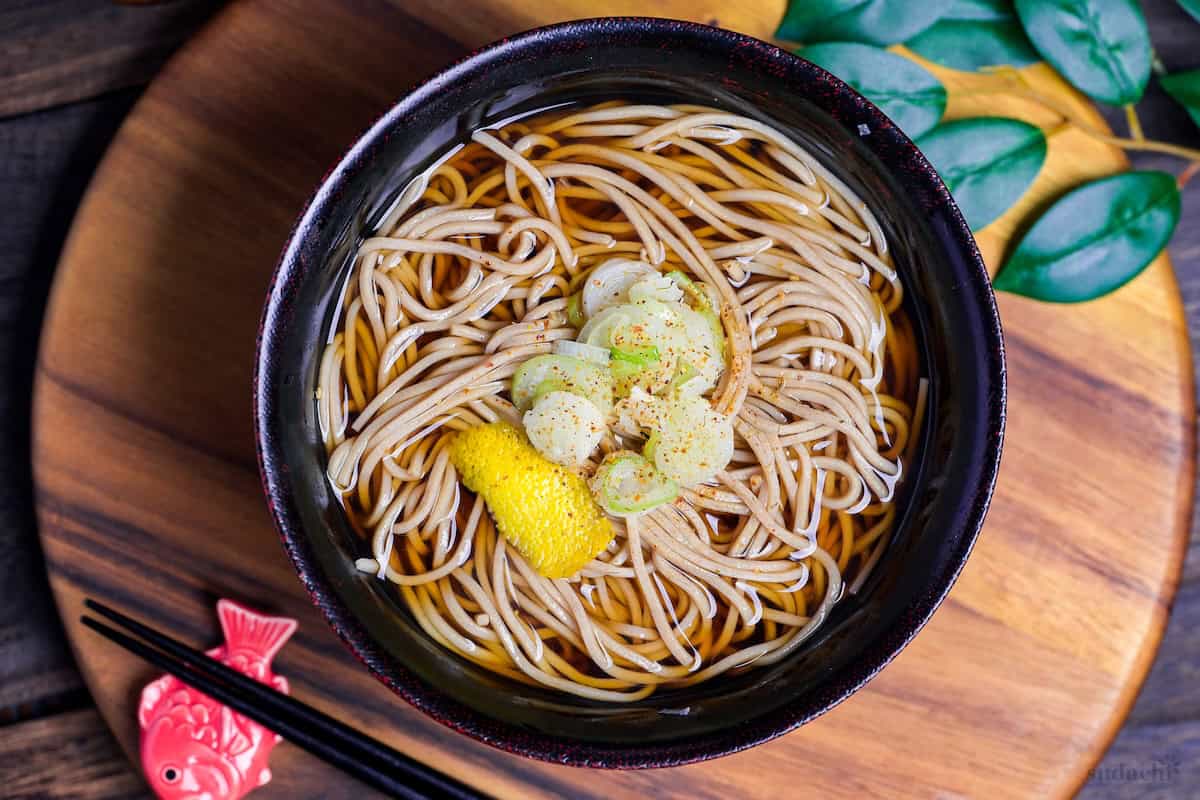
- Kake Soba: Hot soba noodles in a light dashi-soy broth. Simple, fast, and deeply comforting.
Homemade Dashi Packets FAQ
It’s close, but not identical. Scratch-made dashi gives you slightly more control over extraction timing and temperature, which can produce a more delicate stock. That said, cold-brewed homemade packets come remarkably close, and they’re far better than any store-bought option.
The most common cause is niboshi that weren’t properly cleaned. Make sure to remove the heads and guts before grinding. Other causes include over-simmering (boiling extracts bitter compounds from kombu and katsuobushi) or grinding kombu too fine, which releases slimy, astringent compounds too quickly.
You can, but there won’t be much flavor left after ichiban (cold brew) and niban (simmering) extraction. If anything remains, turn the spent ingredients into furikake rather than trying to squeeze out a third round of stock.

Did You Try This Recipe?
I would love to hear your thoughts!
💬 Leave a review and ⭐️ rating in the comments below. 📷 I also love to see your photos – submit them here!

Homemade Dashi Packets (The Best Dashi Powder Substitute)
Ingredients
Dashi Packets
- 5 g dried kelp (kombu)
- 3 g dried sardines (niboshi) heads and guts removed
- 12 g bonito flakes (katsuobushi) thick-cut recommended
- 2 g dried shiitake mushrooms sliced type recommended
Cold-Brew Ichiban Dashi
- 500 ml cold water soft water recommended
- 1 dashi packet 4g packet
Simmered Niban Dashi
- 500 ml water
- 1 dashi packet used, from cold-brew
My recommended brands of ingredients and seasonings can be found in my Japanese pantry guide.
Can’t find certain Japanese ingredients? See my substitution guide here.
Instructions
How to Make Dashi Packets
- Pulse 5 g dried kelp (kombu) in a food processor until it becomes coarse chips (not a powder), then pour it into a container.

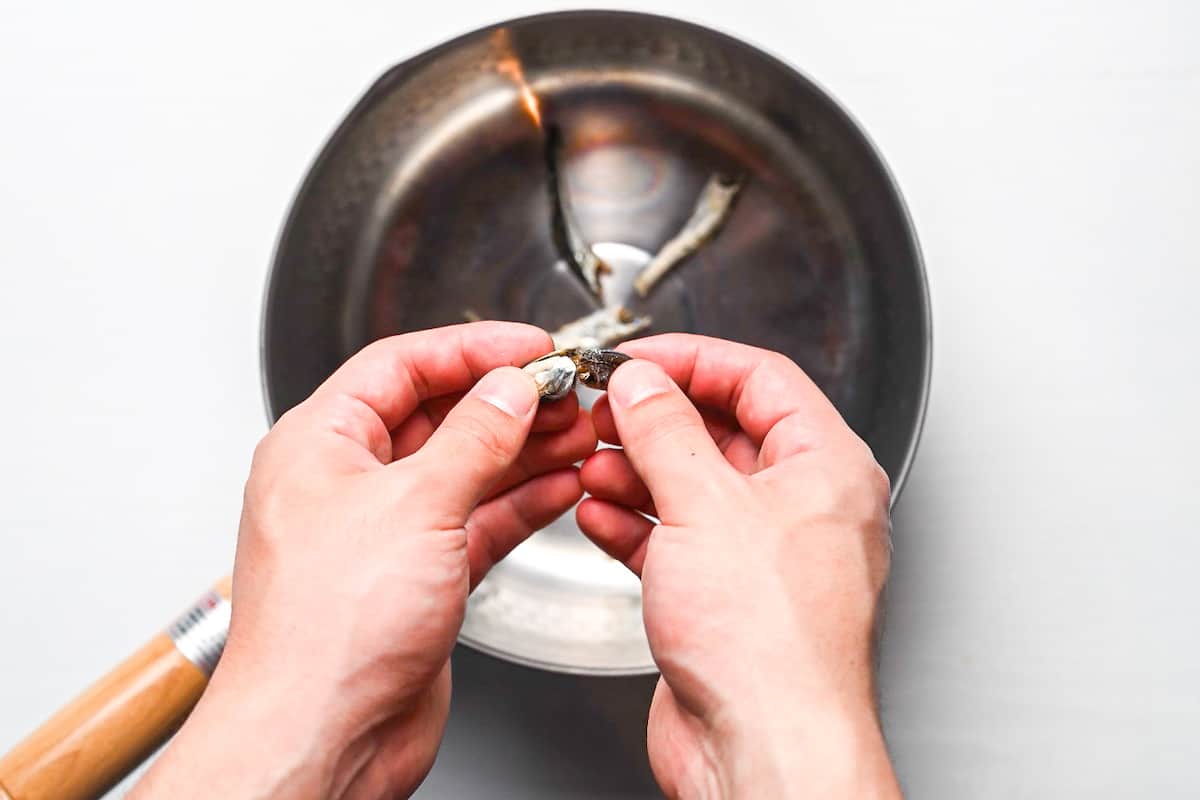
- Break the heads off of 3 g dried sardines (niboshi) and remove the guts, then place them in the food processor.

- Add 12 g bonito flakes (katsuobushi) and 2 g dried shiitake mushrooms to the food processor. If using thinly shaved bonito flakes, you might need to blitz them in batches. Pulse into a coarse powder.
- Pour the contents of the food processor into the container with the kombu chips and mix until evenly distributed.
- Measure into five 4g portions (or two 8g portions + one 4g portion), then pour each portion into a mesh bag.
- Store in a sealed container in the freezer.

Cold Brew Dashi (First Extraction/Ichiban)
- Drop one 1 dashi packet (4g) in 500 ml cold water. Cover and refrigerate overnight (up to 12 hours).
- Remove the dashi packet, gently squeeze, and set it aside for the second extraction. Use the dashi straight away, or store in the fridge for later (up to 3 days).
Hot Brew Dashi (Second Extraction/Niban)
- Once the cold brew is complete, you can reuse the 1 dashi packet to make niban dashi. Place it in a saucepan with a fresh 500 ml water.
- Bring the heat to gentle simmer, then continue to heat over medium-low for about 10 minutes.
- Remove the bag and use the dashi in your favorite Japanese recipe. It can be stored in the fridge for up to 3 days.

Furikake (Optional)
- Pour the contents of the used dashi packet into a dry frying pan. Heat on low and mix continuously until the ingredients are completely dry and toasty. Add a splash of soy sauce, mirin and a pinch of sugar. Mix well and enjoy with rice.

Leave a rating and a comment