




“Let’s combine curry and teriyaki.” That one thought was all I had to go on. I knew from the beginning that I wanted potatoes, but pork hadn’t occurred to me. My first version used chicken. Nope, that wasn’t it.
Eventually I settled on pork for its fat and sweetness. With fragrant curry powder and a glossy, sweet-salty coating, it makes a bowl of white rice disappear fast. I hadn’t expected such a simple idea to turn into a masterpiece like this.

Curry teriyaki pork belly
Recipe Snapshot
- What is it? This curry teriyaki pork belly combines potatoes and pork belly in a curry-scented teriyaki glaze, a dish made for a bowl of white rice.
- Flavor profile: First comes the fragrance of toasted curry powder, followed by the glaze’s sweetness and saltiness. That combination defines the dish.
- Why this recipe works: Separate cooking stages give the potatoes a crisp finish and the pork time to render. Frying curry powder separately from the sauce keeps its aroma prominent.
- How to make it: Use one wok or frying pan, cooking and removing the ingredients in stages. Reduce the glaze, then add the potatoes and butter with the heat off.
- What to expect: Allow about 30 minutes, 10 to prep and 20 to cook. The step that needs the most attention is searing the potatoes golden and crisp over high heat.
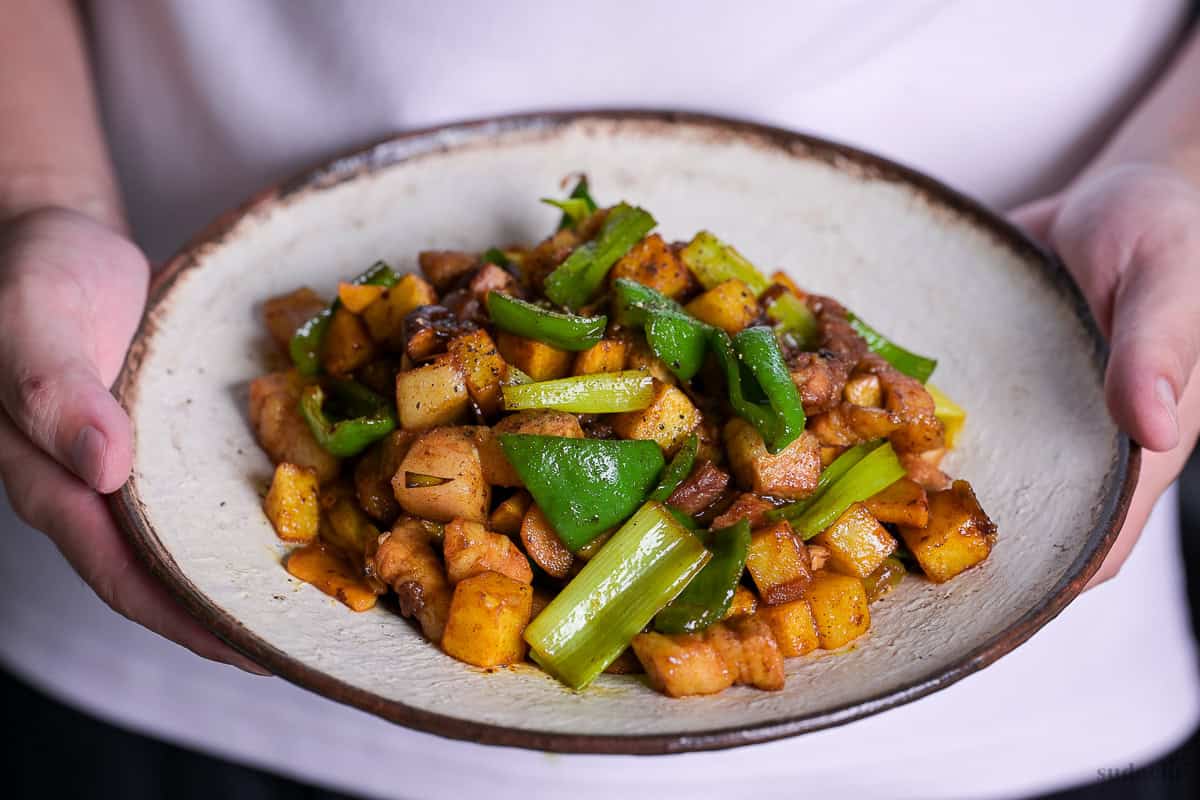
What Is Curry Teriyaki Pork Belly?
Curry teriyaki pork belly is a Japanese teriyaki stir-fry whose curry spice comes through with the first bite. The curry flavor comes from curry powder, and there is no stew involved. Soy sauce and mirin leave a lingering sweet-salty taste on the tongue.
The sauce is made in the pan without anything bottled, then cooked down to a glossy glaze that brings together crisp potatoes, pork belly, and vegetables. By the way, the curry and teriyaki combination is not all that unusual in Japan.
The idea behind a dish shapes how I cook it. Here, I want pieces cut to the same shape, each with the texture that suits it best. That means cooking them in separate stages instead of putting everything in together. Some recipes might parboil or microwave potatoes before frying, but I start with raw potatoes and oil, fry them until crisp, and set them aside until the finish. While some cooks might mix curry powder into the sauce, I give it a space of its own in the pan to toast. Potatoes, though, were never in question. From the moment I thought of combining curry and teriyaki, I couldn’t imagine the dish without them. I can’t give you a reason. It was instinct.
Curry Teriyaki Pork Ingredients
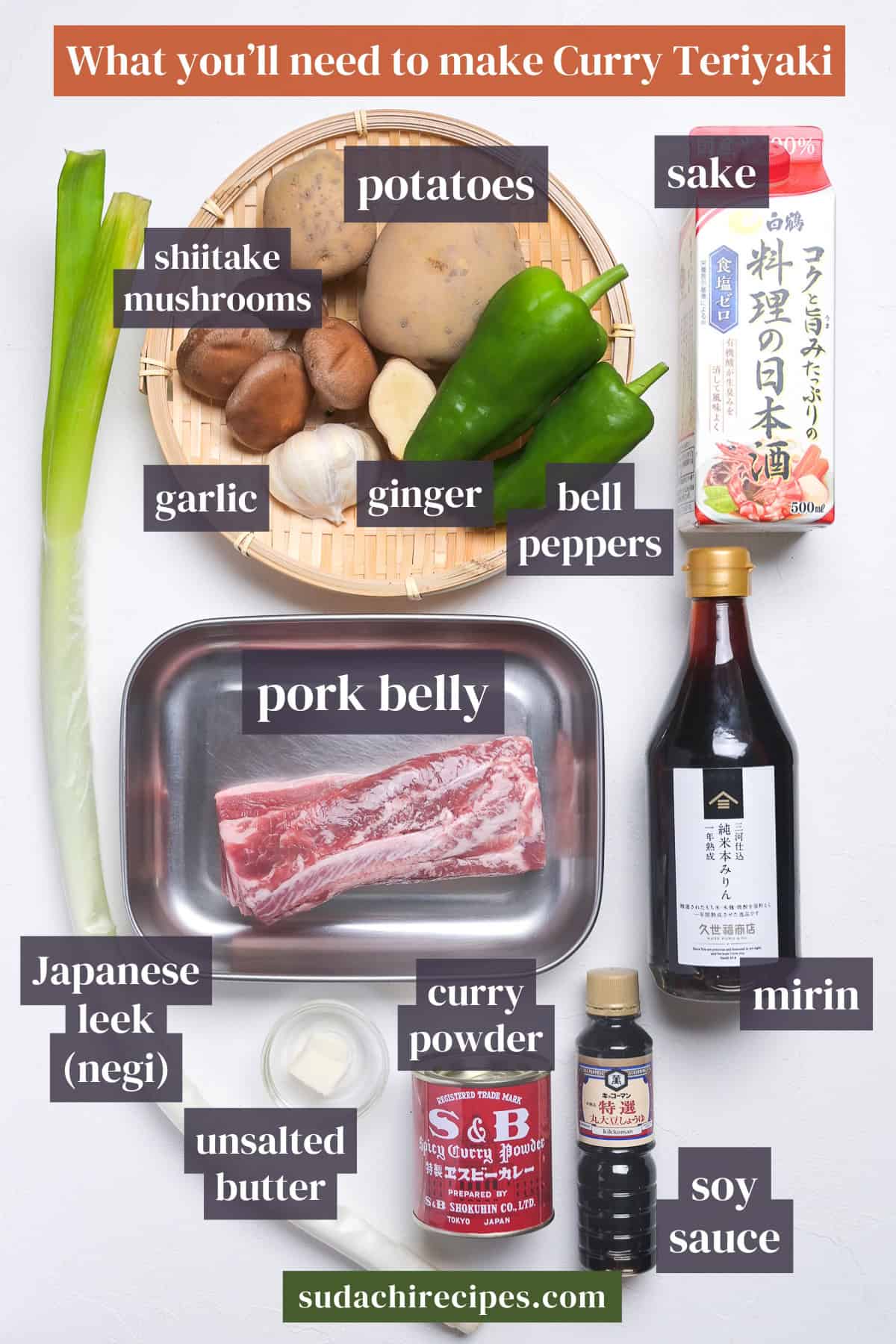
- Pork belly: Choose a slab you can cube yourself. Presliced pork belly won’t give you cubes, and cutting an intact piece evenly lets you match the size of the other ingredients. Buy it skinless if possible. Otherwise, remove the skin before cutting, as leaving it on makes a considerable difference to the texture and the dish as a whole.
- Potatoes: Use whichever variety you already have. They account for more of the dish than any other ingredient, with crisp, fried outsides for the glaze to cling to at the end. Avoid potatoes that are green or sprouting.
- Curry powder: My choice is the red tin of S&B. It gives the dish the aroma you notice from the first bite, and its flavor is mild and balanced. Look for S&B Oriental Curry Powder outside Japan, at Asian grocers, Korean supermarkets, or online. That particular powder is optional, though. Any other curry powder you have will work.
Building up your Japanese pantry? My Japanese pantry guide covers the brands I trust and the ones Japanese people living abroad swear by.
Substitution Ideas
- Pork belly → Pork shoulder: Shoulder is the nearest alternative, used weight for weight. Expect a meatier bite without the belly’s melting fat. Should it release too little fat, pour in a little oil before adding the garlic and ginger.
- Pork belly → Chicken thigh: This would be my next choice, though it gives up some of the sweetness and richness of pork fat. As with shoulder, a little oil makes up for a shortage of fat in the pan.
- Pork belly → Boneless country-style pork ribs: Some Japanese cooks abroad who can’t find belly choose these ribs, which are available at regular supermarkets.
- Japanese leek (naganegi) → Leek: Regular leek is the closest option when Japanese leek isn’t available, but it is thicker and sweeter, so use about 80 percent of the amount, strip away the tough outer layers, and keep just the tender interior. Among the respondents to our survey of Japanese home cooks living abroad, some could find Japanese leek at their local supermarket or an Asian grocer.
- Japanese green peppers (piman) → Green bell pepper: Any green bell pepper works here, even though it is larger and has thicker walls than a Japanese green pepper. Use an equal weight.
- Japanese green peppers → Smaller, thin-walled peppers: An Asian grocer may have thinner-walled peppers, or you can choose shishito peppers. One respondent from my survey said cubanelles were the closest match, while others liked the small bags of mini peppers.
- Fresh shiitake → Cremini mushrooms: Brown cremini mushrooms work well when you can’t get shiitake. They take up the glaze and contribute their own earthy flavor.
- S&B red tin curry powder → British-style or Madras curry powder: Either will taste hotter, with a less pronounced turmeric aroma. Begin with a smaller amount than the recipe card specifies and taste before adding more.
Substitutions that I don’t recommend:
- Bacon instead of pork belly: The pronounced saltiness and smoke upset the balance of flavors here.
- Garam masala instead of curry powder: Garam masala is meant as a finishing spice, so using it as your only spice blend turns this into a different dish.
- Solid Japanese curry roux instead of curry powder: Flour, thickeners, and salt in these blocks alter both the flavor and the consistency of the glaze.
- Bottled teriyaki sauce instead of the sauce mix: Most bottled versions are thin, sweetened soy sauce with added flavorings. They won’t produce the glaze this dish needs.
- Green onions instead of Japanese leek: These are a different vegetable and too slender to cut into the thick sticks needed for searing.
How to Make My Curry Teriyaki Pork Belly
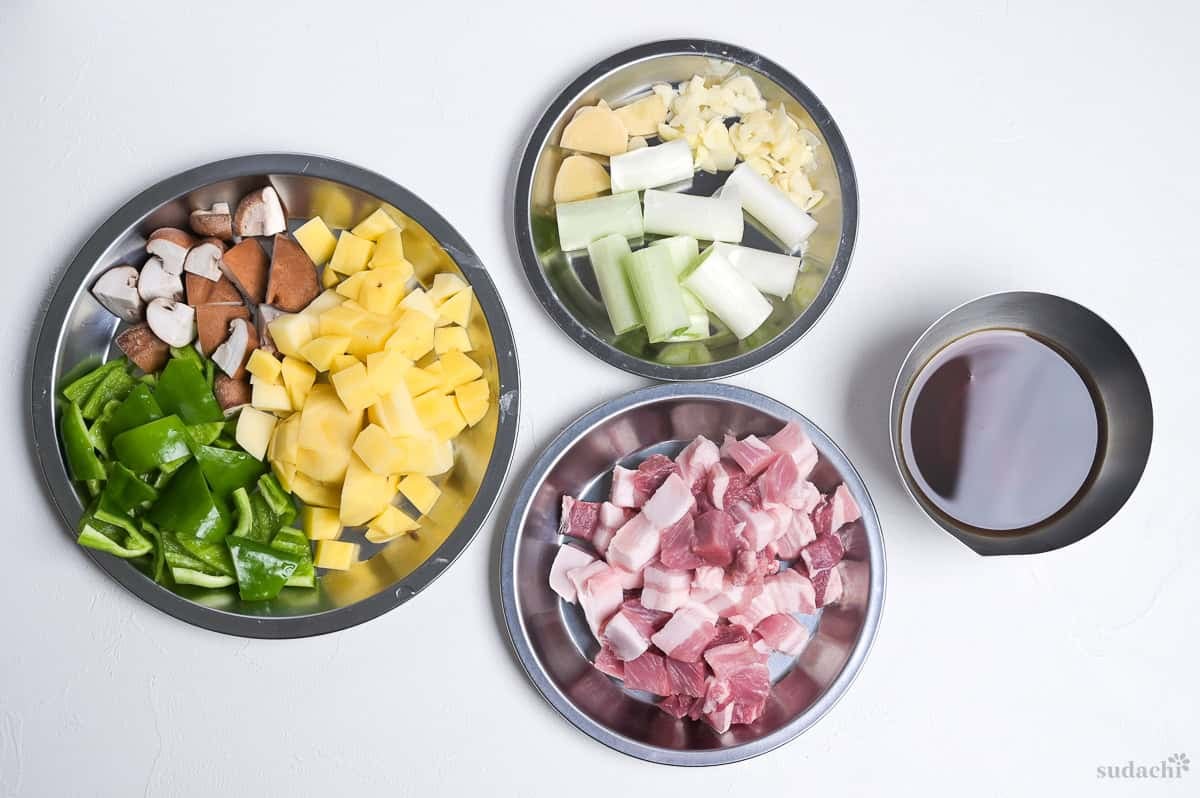
Before you start (Mise en place):
- Dice the potatoes and pork belly into 2 cm cubes.
- Cut each shiitake into quarters lengthwise, then cut the Japanese leek into 5cm sticks.
- Chop the green peppers into chunky, irregular pieces. Thinly slice the garlic and cut the ginger into thin rectangles.
- Combine the soy sauce, mirin, and sake.
- Have a separate plate ready for the ingredients you remove at each stage, and the cooking gets so much easier.
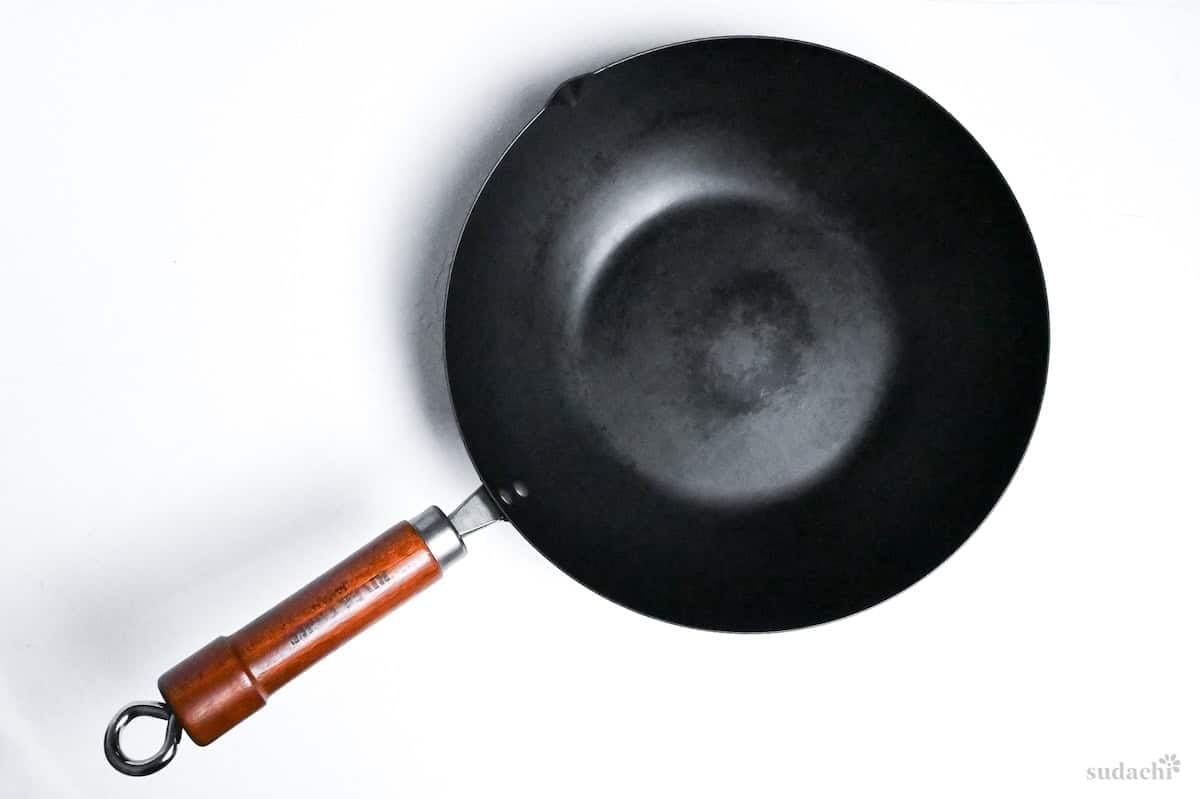
To develop this recipe, I used a 30 cm carbon steel wok.
i. Just before cooking, blot the potatoes dry with paper towels.

A wet surface cannot get hot enough as quickly. This slows the Maillard reaction, the browning process that develops color and toasted flavor.
ii. Set a wok or a frying pan over high heat, heat the oil, and sear the potatoes.
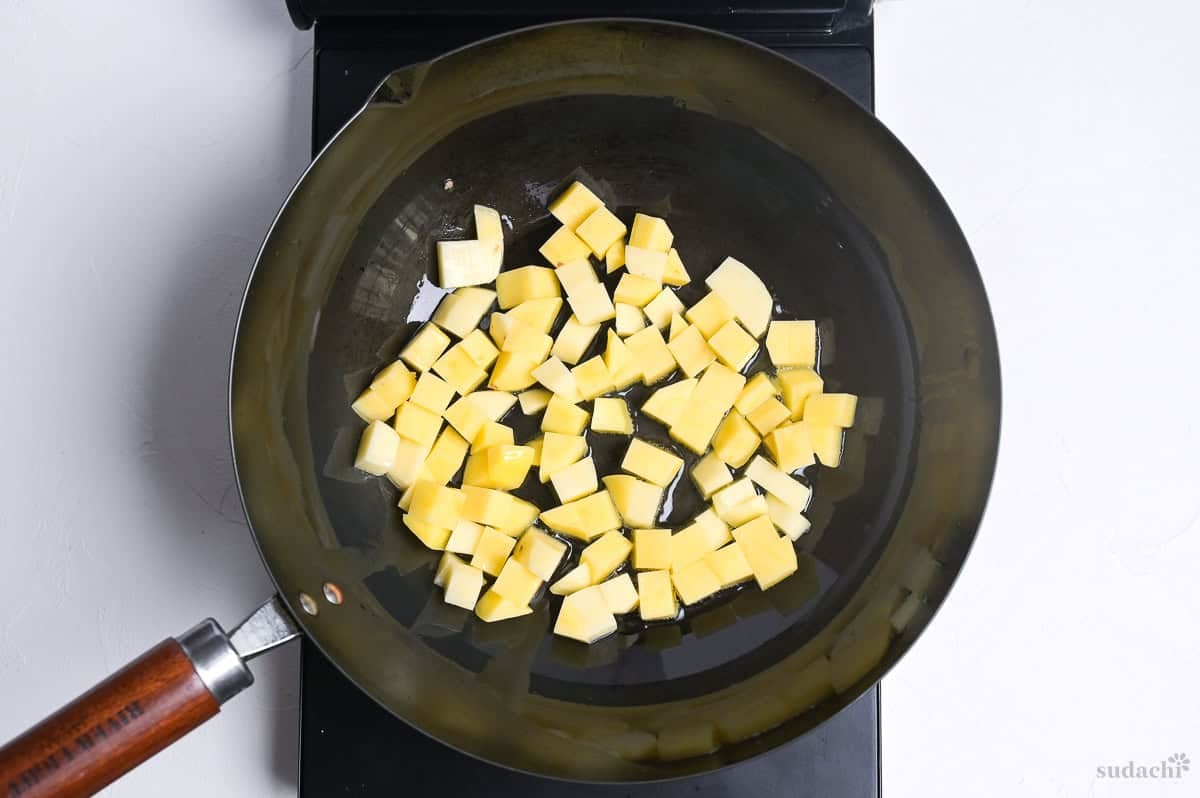
iii. Take them out when their outsides are crisp and lightly golden brown.
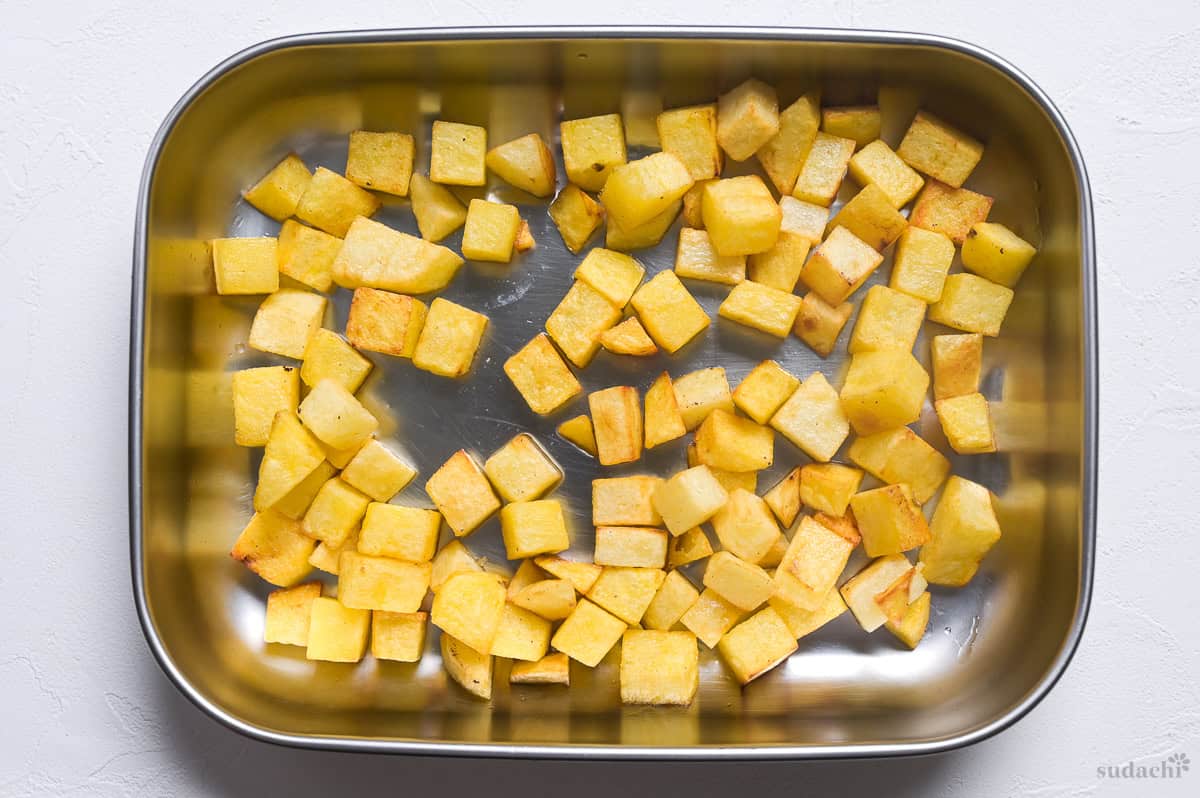
Home burners have relatively modest heat output. Put all the ingredients in together and the heat won’t reach them properly. Working in small batches and removing each one helps the base of the pan stay hot. Potatoes and pork need different cooking times, too, so separate stages let you take each out at the right point.
i. Put the pork belly and Japanese leek in the same pan. Lower the heat to medium and season with a pinch of salt.
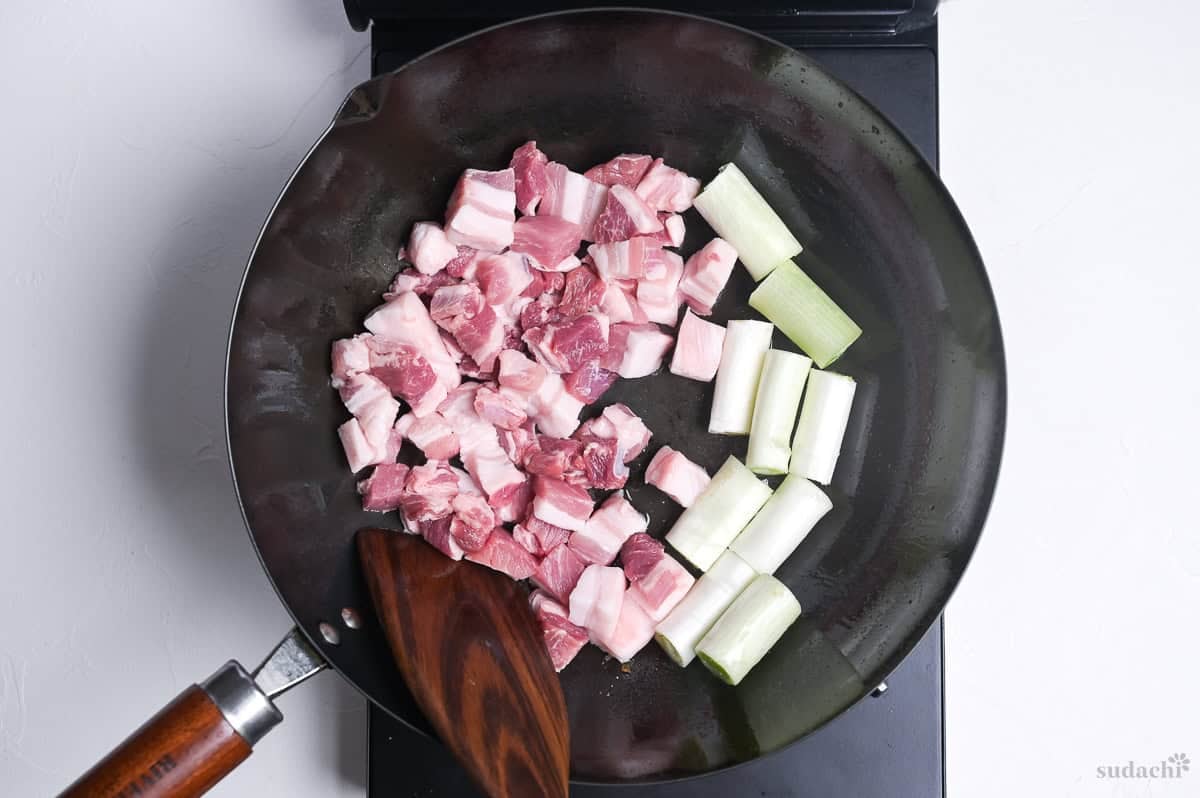
ii. For even browning, I turn the pieces at 30-second intervals. Cook until all the surfaces are crisp and the pork is cooked through.
iii. Transfer the pork and leek to a plate.
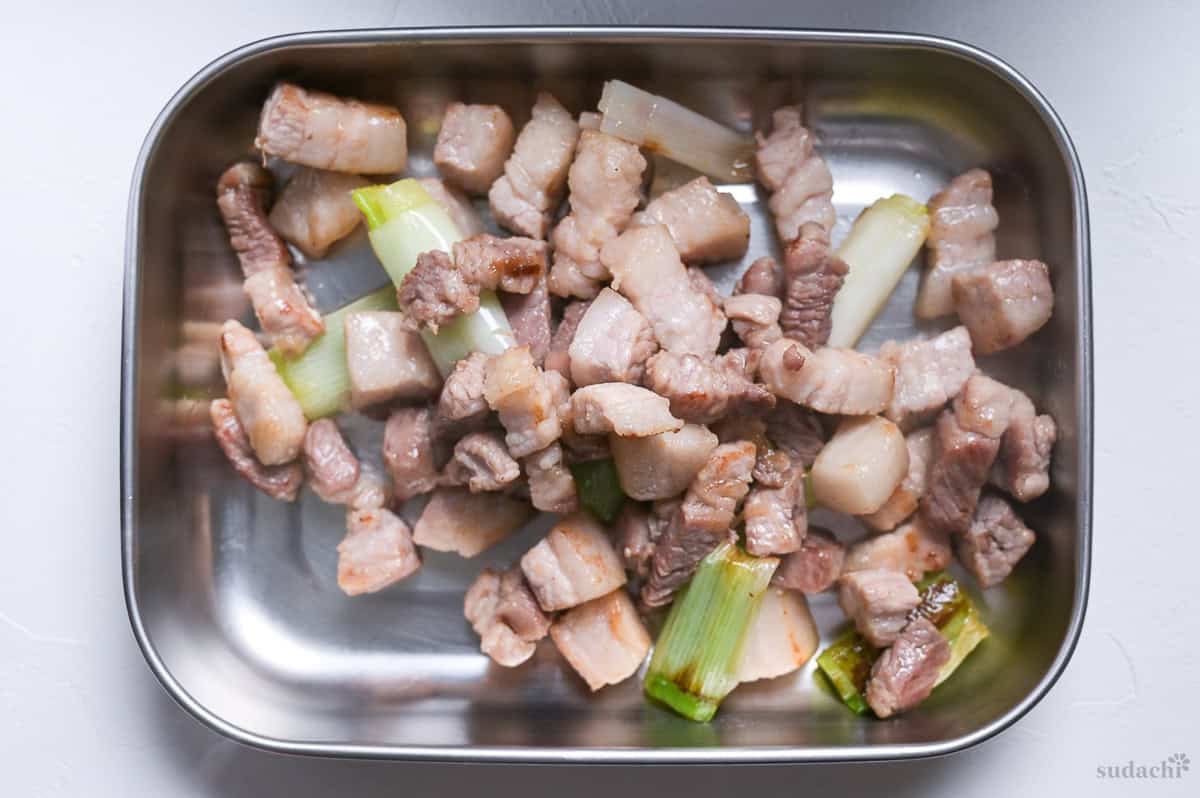
Note: Particularly fatty pork belly may leave a pool of fat in the pan. Wipe out some if that happens.
i. Put the shiitake in the same pan with a pinch of salt and let them brown.
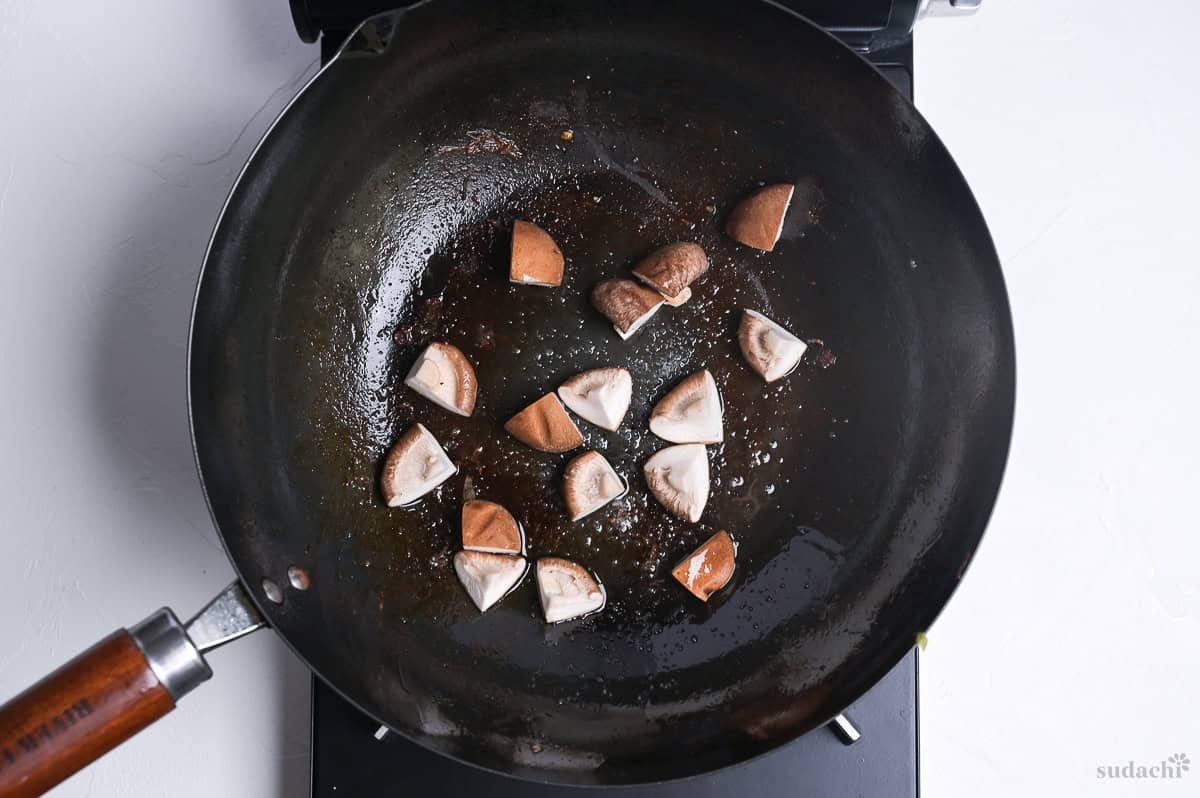
ii. Lower the heat, add the garlic and ginger, and stir-fry until fragrant.
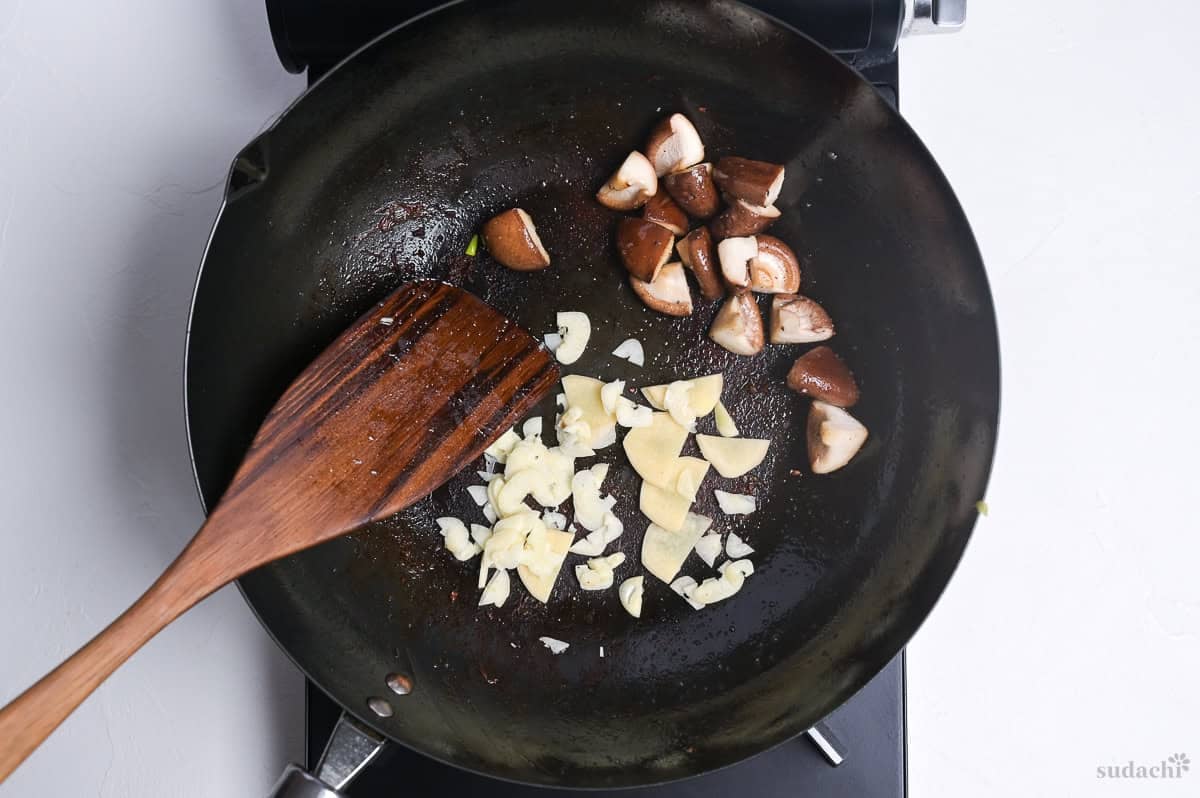
Tip: Add oil at this point if the pork released so little fat that the pan is almost dry.
iii. Keep the heat low. Add the curry powder to a clear area of the pan and stir it for 20 to 30 seconds to prevent burning.
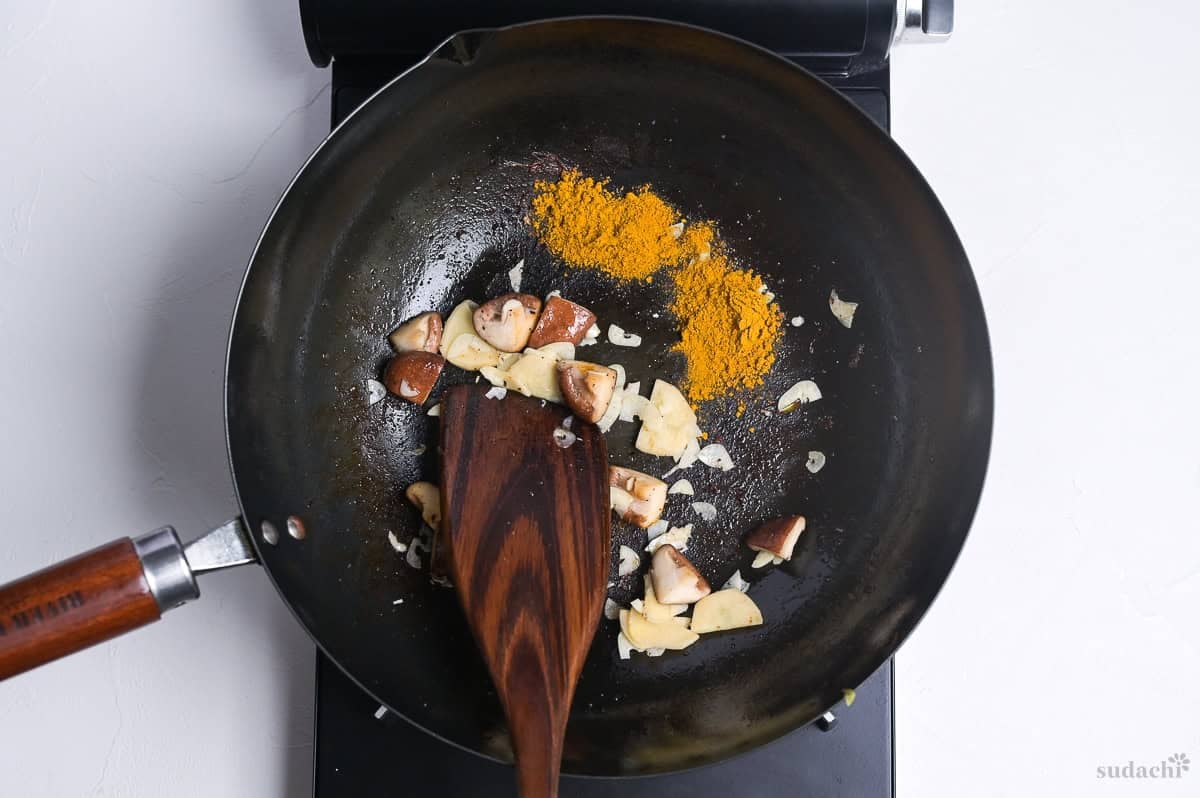
As soon as it smells toasty, move on.
Fat readily takes up the curry powder’s aroma and spreads it throughout the ingredients. Turning up the heat won’t necessarily make it more fragrant. Warming strengthens some aroma compounds but diminishes others. Above all, avoid scorching the powder. Use low heat, stir quickly, and continue to the next step as soon as you can smell the spice.
i. Put the pork and leek back in, add the green peppers, and raise the heat to high.
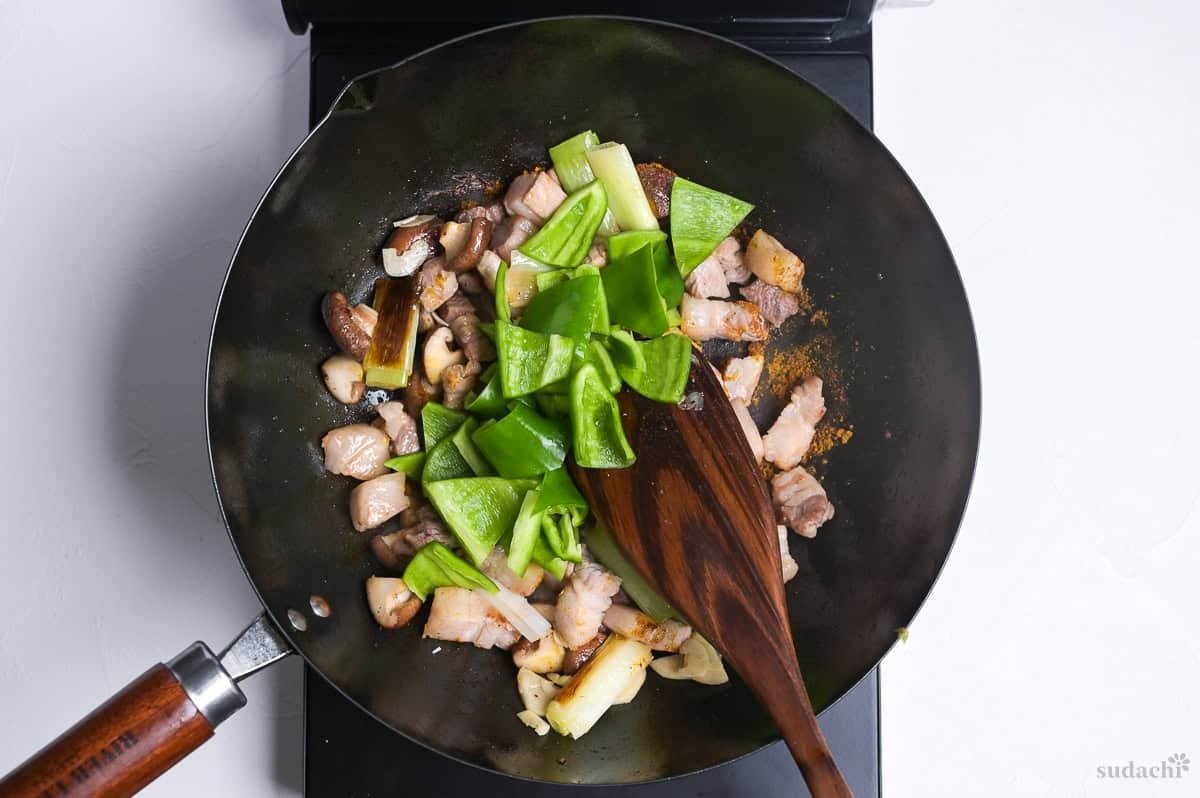
ii. Stir the sauce mixture once more, then add it to the pan.
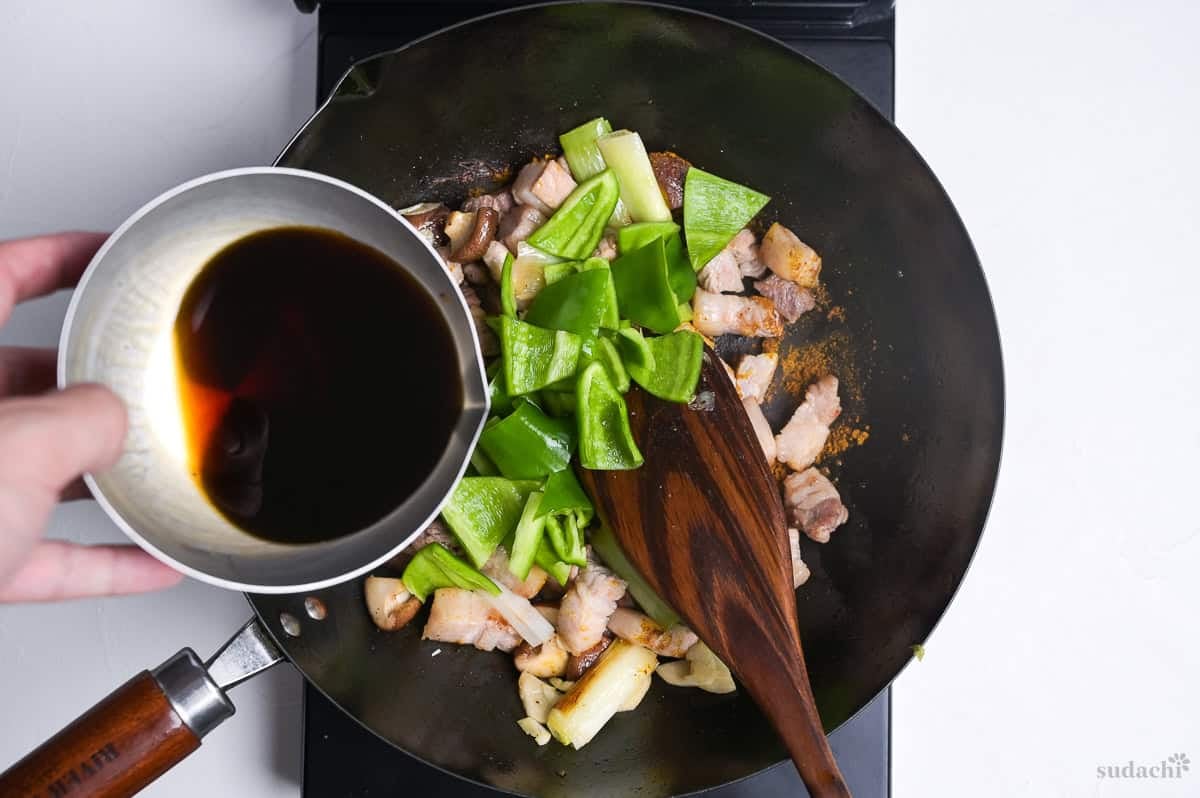
Mirin supplies all the sweetness here, with no sugar added. I wanted to simplify the recipe and take it a little beyond ordinary teriyaki.
iii. Continue cooking, tossing the ingredients in the sauce, until it has the consistency of a thin syrup with large bubbles that burst.
iv. Remove the pan from the heat when the glaze has thickened.
i. Put in the butter and return the potatoes. Swirl the pan to melt the butter into the glaze.
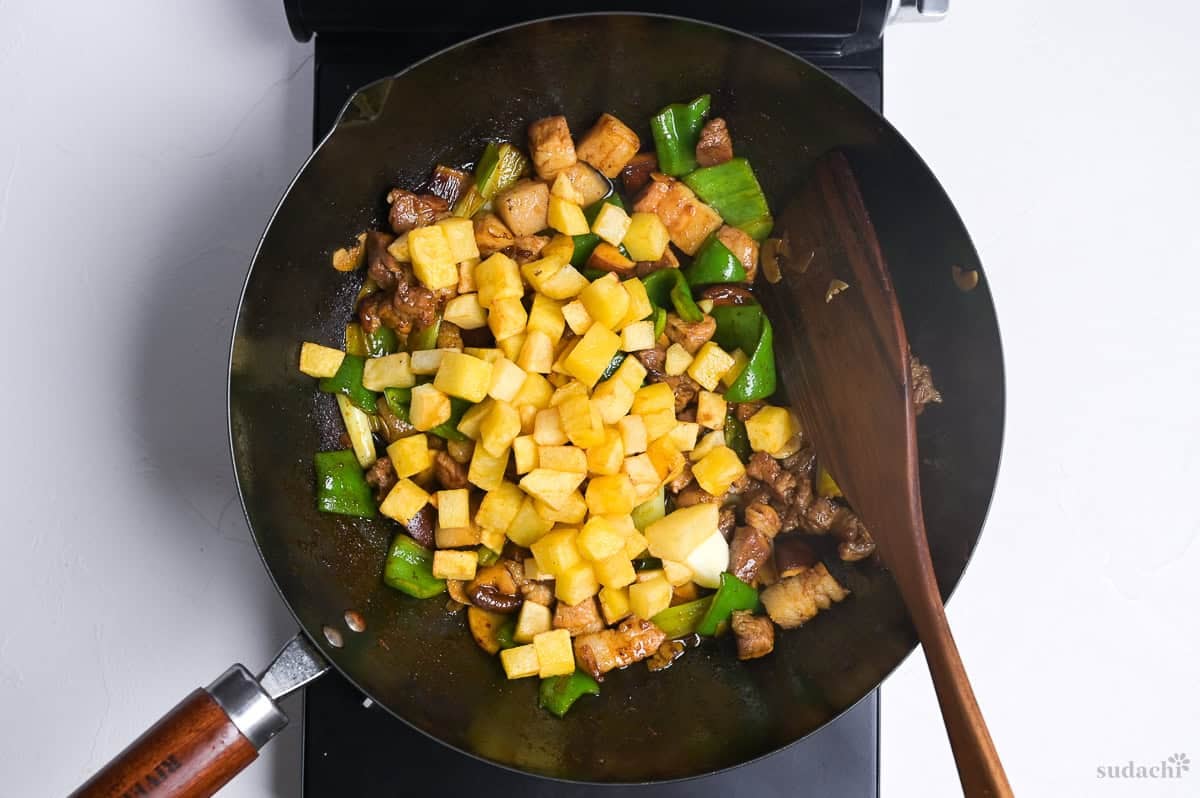
ii. Finish with freshly ground black pepper.
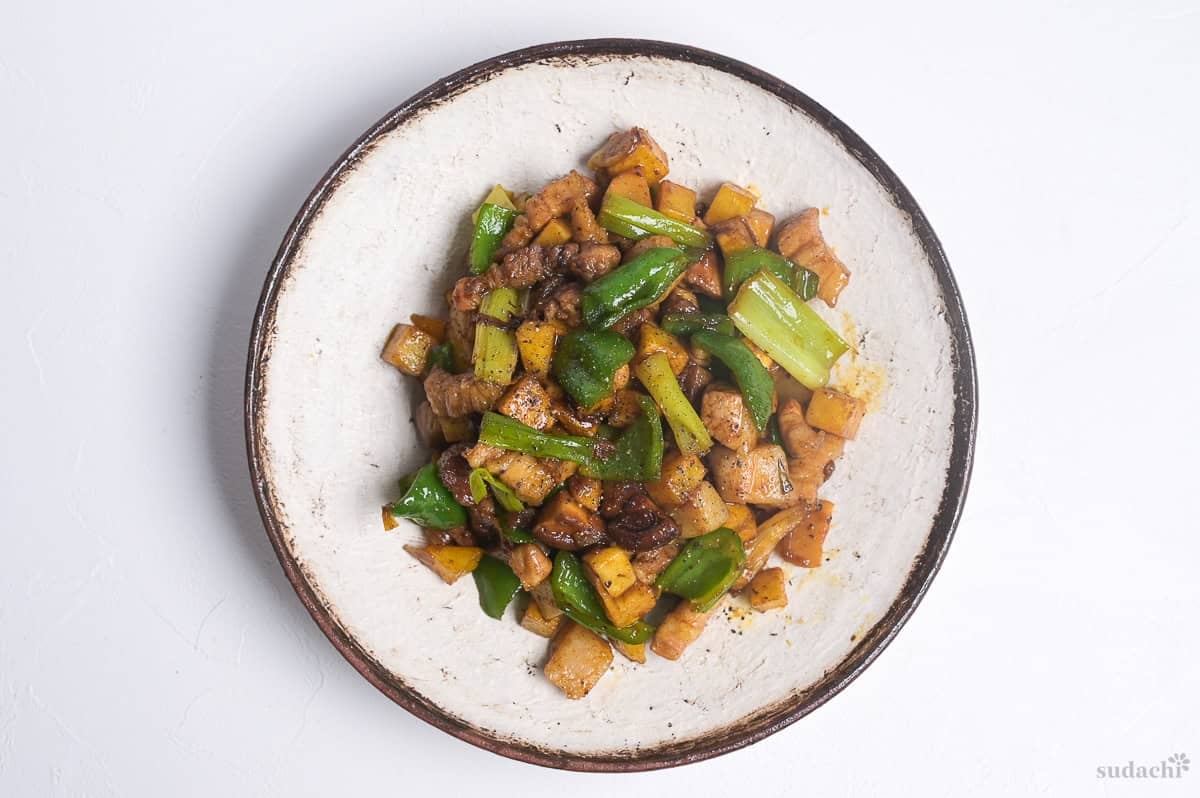
For a dish that depends so much on rice, I believe the rice deserves as much care.

If you follow the default recipe, it will yield 3 servings.

Tips for the Best Curry Teriyaki Pork
- Start by giving the potatoes a crisp exterior. There is nothing wrong with parboiling potatoes, but for this recipe, raw cubes go into the hot pan first and cook over high heat. If you stop while they are still pale, they will soften or crumble as you finish the dish.
- Lower the heat before adding curry powder. Once the powder scorches, there is no way to rescue it, and the dish loses its fragrance. If the pan seems too hot, switch off the heat and briefly set it on a damp kitchen towel. Add the powder, then return the pan to low heat.
- Stop reducing before the glaze gets too thick. Cooling will thicken it further, so take it off the heat while it is slightly runny. To check, draw a spatula along the pan’s base. A trail that stays visible for a moment means it is ready.
- Swirl rather than stir after returning the potatoes. They are fragile once cooked, and a spatula can break them up. A few circular movements of the pan will coat them in butter and glaze.
I promise never to share a recipe just because it seems “good enough,” and I held this potato-first cooking sequence to that same standard.
Storage & Meal Prep
Fridge: Use up within 2 days.
Freezer: Not recommended. Ice damages the potato cells, so they thaw soft and spongy.
Meal prep: Cut everything and mix the sauce the day you cook. Hold cut potatoes in water and pat them dry just before searing.
Reheating: Warm only your portion in a frying pan. Add a splash of water if the glaze is stiff. The potatoes won’t regain their crispness.
What to Serve With Curry Teriyaki Pork Belly
- Cucumber Sunomono (Japanese Cucumber Salad)
- Hakusai no Asazuke (Pickled Napa Cabbage)
- Simmered Kiriboshi Daikon (Dried Daikon Radish)
- Tofu Miso Soup
Curry Teriyaki Pork Troubleshooting
Potatoes pulled from the pan before every side is crisp tend to go soggy or fall apart later. While you are still frying them at the start, keep the heat high and cook until every side has browned. Wait for the underside of each piece to color before turning it, and handle the potatoes as little as possible. If they begin crumbling during the final stage, stop using the spatula and move them by swirling the pan instead.
There is no flour or other thickener in this sauce, so it must cook down to become a glaze. Low heat reduces it only slowly. Bring it back to a vigorous boil over high heat, then remove the pan from the burner when the bubbles become large and the sauce thickens.
Too much time on the heat makes the glaze heavy, so it no longer coats the vegetables and pork. Immediately remove the pan from the burner, pour in a little water, and swirl to thin it out. When it flows like a loose syrup again, add the butter and potatoes as directed.
An especially fatty piece of pork belly can release enough fat to leave a puddle beneath the cubes. Once the pork and leek are out, use paper towels to absorb some of the excess. Leave the remaining fat in the pan. You need it for the shiitake, garlic, and curry powder that follow. If there isn’t enough and the pan becomes dry, add oil and carry on.
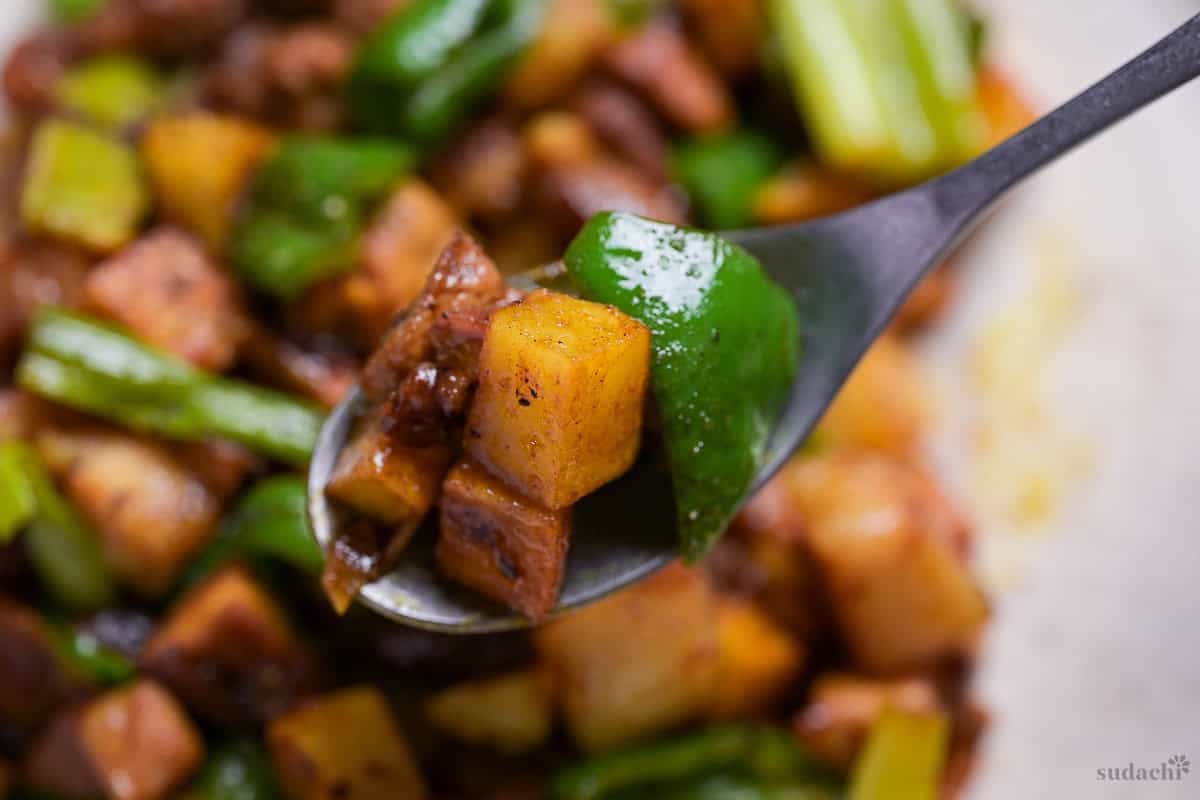
More Japanese Stir Fry Recipes
- Buta Kimchi Stir Fry
- Miso Chicken Keichan Yaki
- Goya Champuru (Okinawan Bitter Melon Stir Fry)
- Ebi Chili Shrimp
I believe the excitement of cooking passes from the person who writes a recipe to the person who cooks it, so once this pan is done, I hope you will find your next plate among these Japanese stir-fry dishes.
Did You Try This Recipe?
I would love to hear your thoughts!
💬 Leave a review and ⭐️ rating in the comments below. 📷 I also love to see your photos – submit them here!

Curry Teriyaki Pork Belly with Crispy Potatoes

Ingredients
Sauce
- 2 tbsp Japanese soy sauce (koikuchi shoyu)
- 3 tbsp mirin
- 1½ tbsp sake
Stir-Fry
- 250 g potato cut into 2 cm cubes
- 2 tbsp cooking oil
- 150 g slab skinless pork belly cut into 2 cm cubes
- ½ stalk Japanese leek (naganegi) cut into 5cm sticks, or regular leek
- 2 pinches salt
- 4 fresh shiitake mushrooms quartered lengthwise
- 2 cloves garlic thinly sliced
- 1 tbsp ginger root cut into thin rectangles
- ½ tbsp Japanese style curry powder the S&B red tin if you have it, sold outside Japan as S&B Oriental Curry Powder
- 100 g green bell pepper cut into chunky, irregular pieces
To Finish
- ½ tbsp unsalted butter
- ground black pepper
The ingredient brands and tools I trust are in my Japanese pantry guide and my cooking tools guide.
Can’t find certain Japanese ingredients? See my substitution guide here.
Instructions
- Mix 2 tbsp Japanese soy sauce (koikuchi shoyu), 3 tbsp mirin and 1½ tbsp sake in a bowl to make a teriyaki sauce, set by the stove for later. Cut the pork and vegetables according to the notes on the ingredients list.

- Take the 250 g potato (cubed) and pat the surface dry all over.
- Heat a pan or wok on high and add 2 tbsp cooking oil. Swirl the pan to distribute and lay the potato cubes down in a single layer. Turn occasionally and fry until lightly golden all over.
- Transfer the crispy cubed potato pieces to a container and place the pan back on the stove.
- Reduce the heat to medium and add 150 g slab skinless pork belly and ½ stalk Japanese leek (naganegi). Sprinkle with a pinch of salt and sear on all sides, turning every 30 seconds.
- Transfer the pork belly and leek to a separate container.
- Return the pan to the heat again, and wipe out any excess fat from the pork if needed (leave a bit for frying). Add 4 fresh shiitake mushrooms, sprinkle with a pinch of salt and fry until lightly browned. Reduce the heat to low, add 2 cloves garlic and 1 tbsp ginger root. Fry until fragrant.
- Push everything in the pan to one side, and add a splash of oil if needed. Add ½ tbsp Japanese style curry powder and stir continuously in the empty space for 20-30 seconds.
- Raise the heat to high. Add the pork and leek back to the pan, along with 100 g green bell pepper. Add the mixed teriyaki sauce from earlier. Toss the ingredients, and cook until glossy and coated with sauce.
- Take the pan off the heat. Add the cubed potatoes back to the pan along with ½ tbsp unsalted butter. Swirl the pan until the butter has melted and everything is coated.
- Finish with a sprinkle of ground black pepper and serve with white rice. Enjoy!

Leave a rating and a comment