

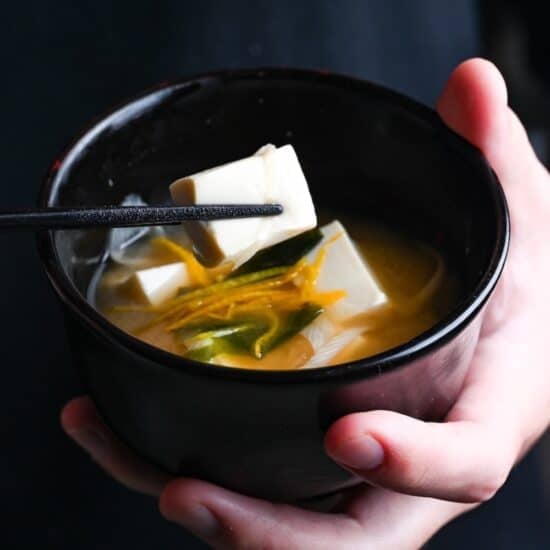


Did you know a comforting Japanese soup can taste both feather-light and deeply savory? While hearty chicken miso soup and salmon miso soup satisfy hunger, true Japanese elegance lives in delicate silken tofu.
This isn’t another miso soup variation chasing complexity. This 15-minute, weeknight-friendly miso soup lets plant-based protein shine through tender cubes of silken tofu.
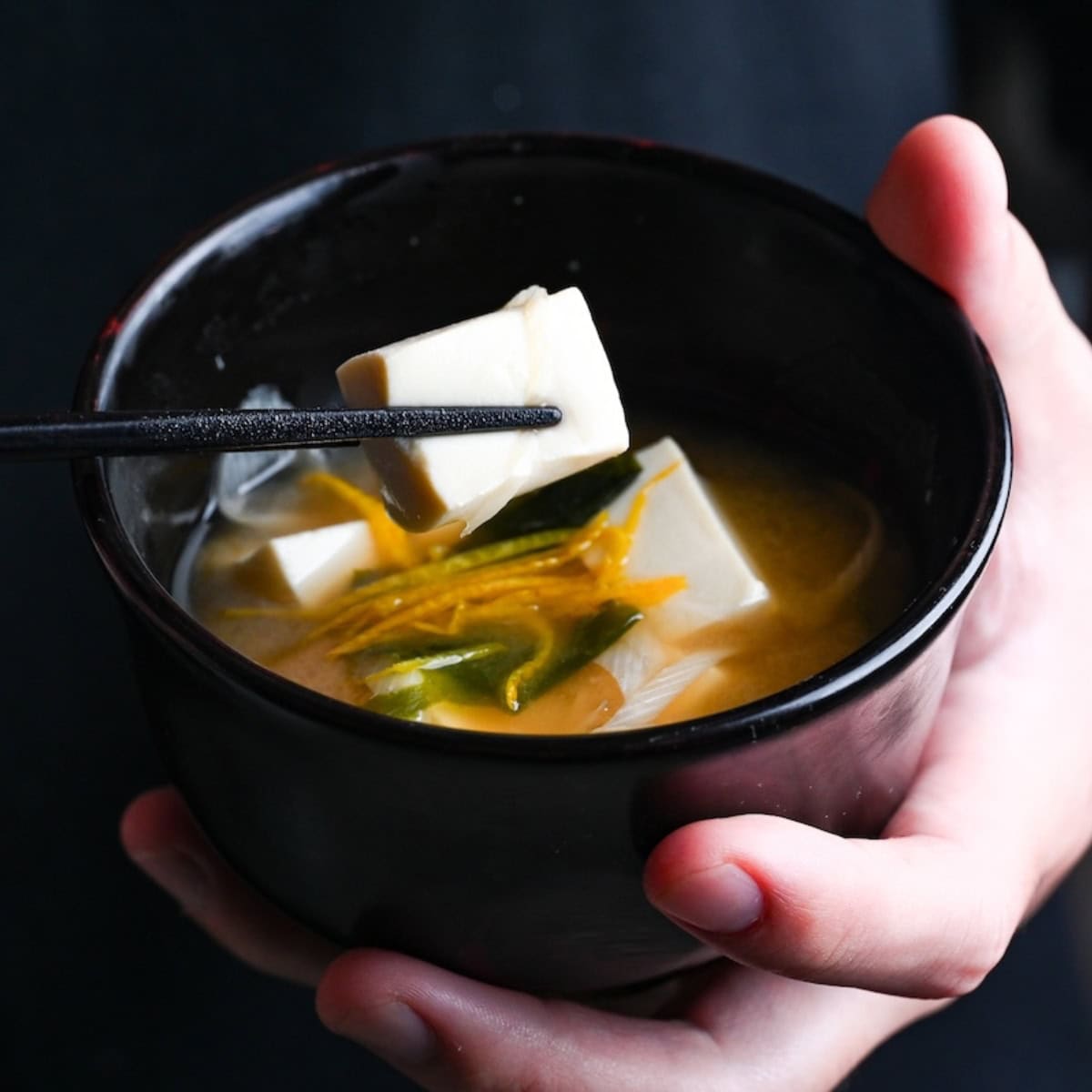
Silken Tofu Miso Soup
Recipe Snapshot
- What is it? A minimalist tofu miso soup, where silken tofu, wakame, and negi float in a clear amber awase-dashi broth finished with yuzu citrus peel.
- Flavor profile: Delicate, clean, and umami-forward: kombu-katsuobushi dashi, sake, and awase miso create depth without heaviness.
- Why you’ll love this recipe: It recreates the refined, Kyoto-style miso soup experience with proper tofu pre-blanching, gentle ladling, and off-heat miso dissolution keep the broth elegant, never murky or overly salty.
- Must-haves: Silken tofu, Awase dashi (or vegan dashi), Ladle
- Skill Level: Easy: Simple weeknight-friendly steps that focus on gentle heat control and tofu handling.
Summarize & Save this content on:
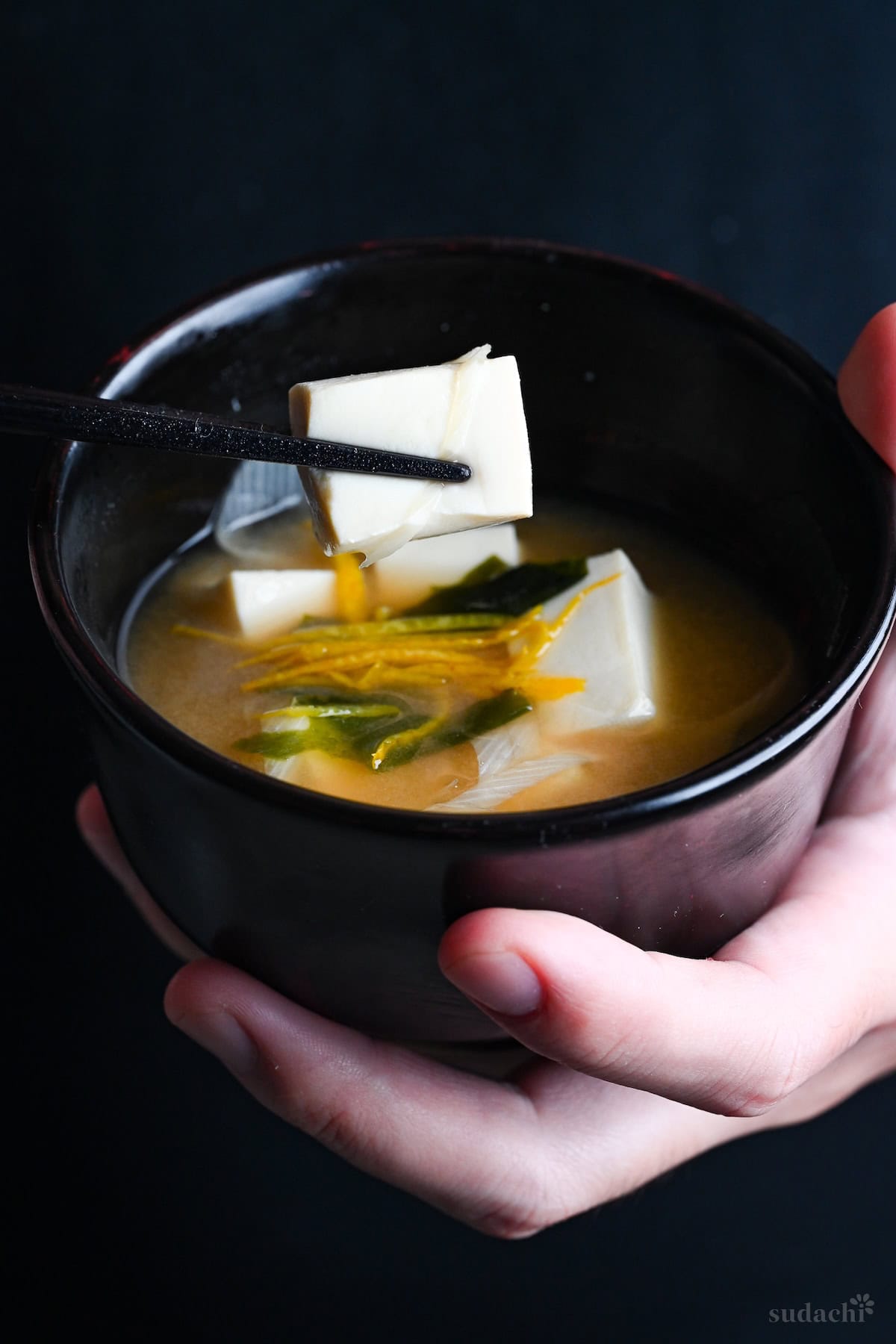
What is Tofu Miso Soup?
Tofu miso soup is a Japanese side-soup made by combining dashi with miso paste, then adding cubes of silken tofu as the main garnish. It belongs to the “shiru-mono” (soup) category of washoku and is built through three simple mechanisms: simmering to draw out umami from the stock ingredients, dispersing fermented miso paste evenly in the hot liquid, and gently heating the tofu so it stays tender without breaking apart.
Compared with pork miso soup (tonjiru), which simmers pork and root vegetables for a hearty, meal-like soup, tofu miso soup is lighter and quicker to prepare, designed to sit comfortably beside rice and other dishes in a typical Japanese everyday meal.
Tofu Miso Soup Ingredients
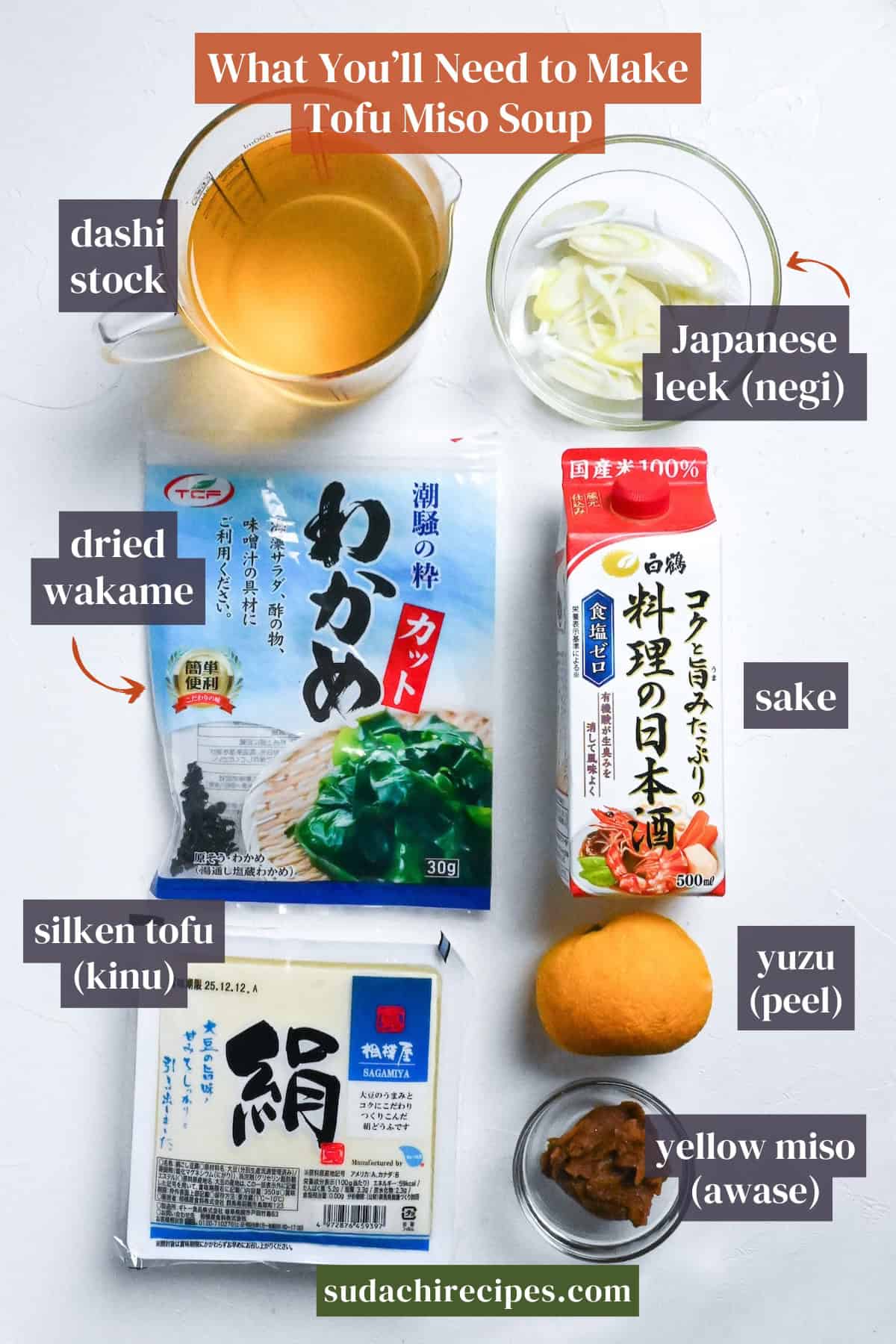
- Silken tofu (kinugoshi tofu): An ultra-soft, high-moisture tofu with a custard-like texture that practically slips off the spoon. In this tofu miso soup it’s the undisputed main character. Look for boxed “silken tofu” in the Asian section of regular grocery stores, or chilled silken/soft tofu at Japanese and Asian market.
- Dashi stock: A clear Japanese stock made from kombu (kelp) and katsuobushi (bonito flakes), light in body but packed with natural umami. You can make it from dried kombu and bonito flakes sold in the Japanese aisle of Asian markets or use quality dashi packets. Dashi granules are not recommended for this clean recipe.
- Miso paste: A fermented soybean paste (often blended with rice koji) that adds savory depth, soft sweetness, and gentle complexity. For this minimalist tofu miso soup, awase (yellow) miso gives a clean, rounded flavor that won’t overwhelm the delicate tofu. Look for tubs of Japanese miso in the Asian section of major grocers or at Japanese/Asian markets.
Substitutions/Variations
- Vegan version: For a fully plant-based tofu miso soup, simply swap the kombu and katsuobushi awase-dashi for a kombu and dried shiitake vegan dashi. The flavor becomes slightly earthier and more mushroom-forward while still staying clean and elegant.
- Silken tofu: If you can’t find silken tofu, firm (momen) tofu is the closest substitute. It holds its shape beautifully and has a slightly denser, more pronounced soy flavor, though you’ll lose some of that cloud-like silkiness.
- Wakame seaweed: If you’re out of wakame, torn sheets of toasted nori or another mild seaweed will give a similar ocean aroma but might lose some of the silky texture that wakame provides.
- Japanese leek (naganegi): When you can’t get Japanese long onion, thinly sliced green onions or western leek (needs longer cooking though) can be a good swap.
- Yuzu peel: Lemon or orange peels can be good subs here.
Have trouble finding Japanese ingredients? Check out my ultimate guide to Japanese ingredient substitutes!
How to Make My Tofu Miso Soup
For developing this recipe, I chose a 16 cm yukihira pot. This classic Japanese saucepan offers excellent heat distribution and that satisfying pour spout that makes dividing the soup into bowls effortless.
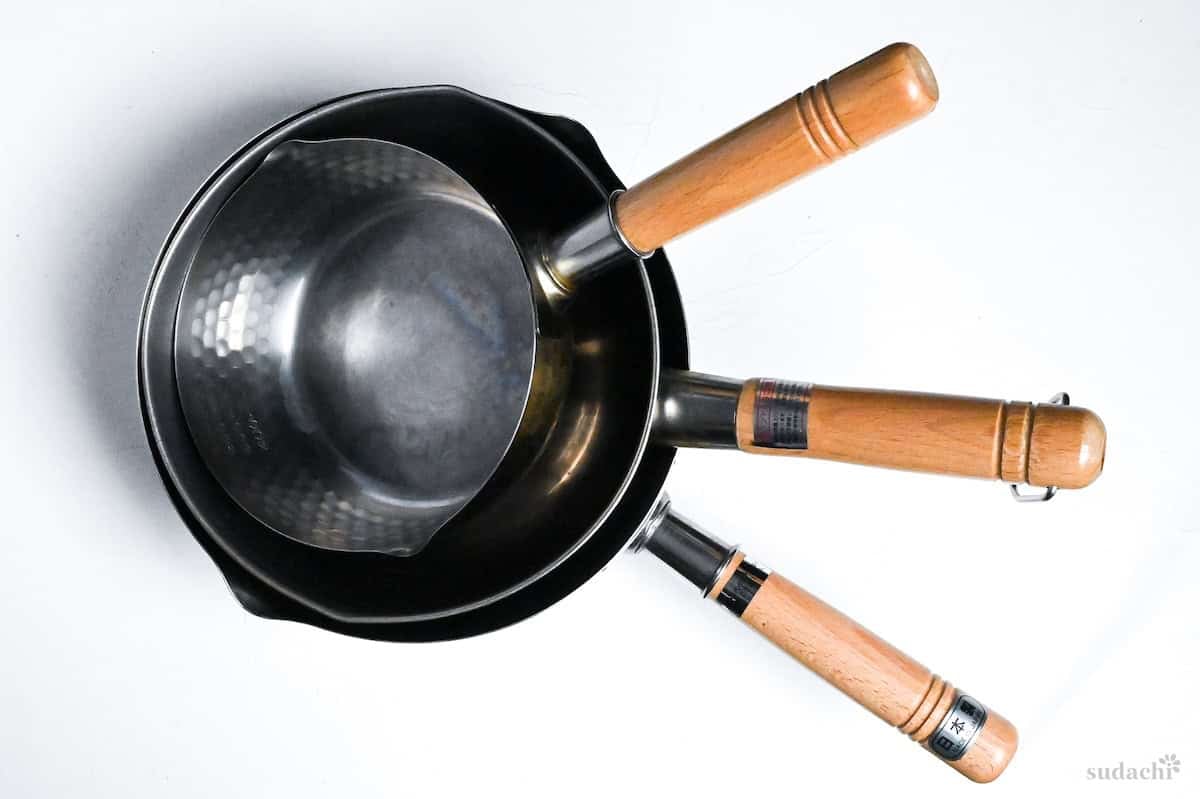
Of course, if you don’t have a yukihira pot, any deep pot will work just fine.
i. Place a pot over medium heat (gas) or low-medium (IH) with 500 ml kombu-katsuobushi dashi and the sliced white Japanese leek (negi).
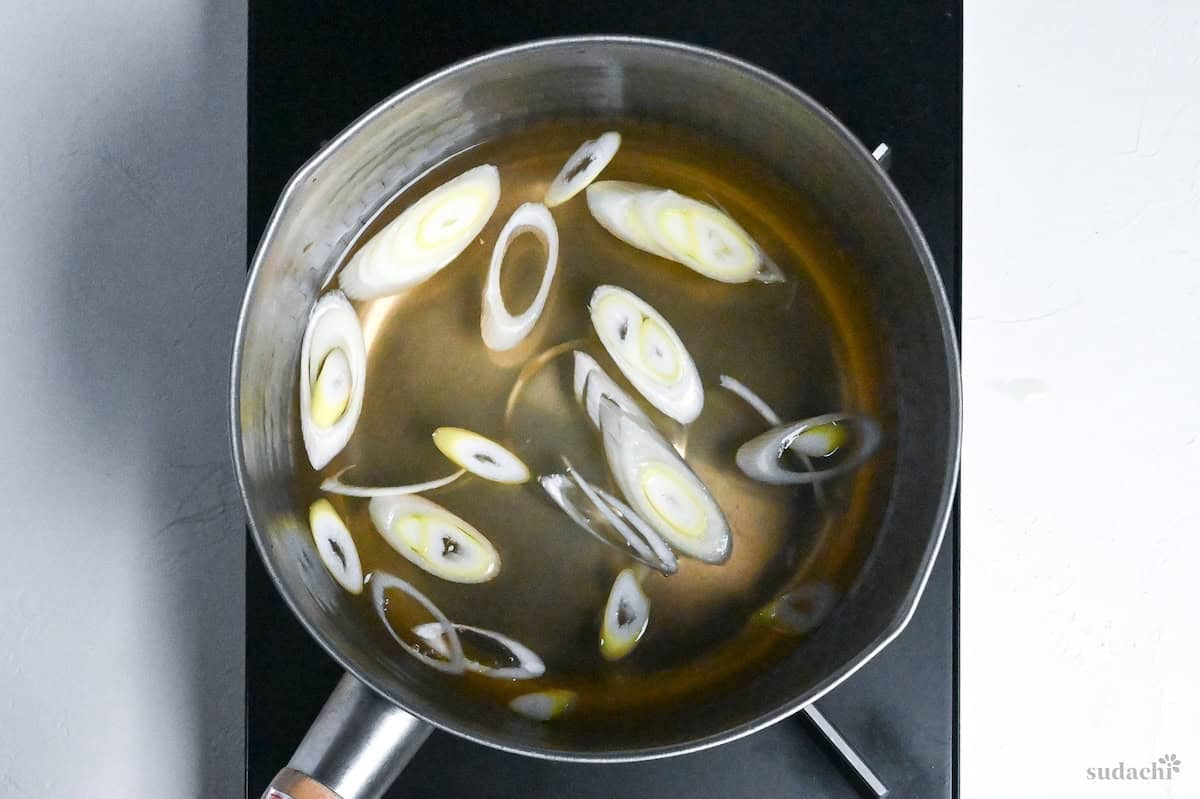
ii. Bring to a gentle simmer, not a boil. This controlled simmer infuses aromatics without excess evaporation. If bubbles race, lower the heat or slide the pot off the hob for 15 seconds.

i. Set the tofu on a rack and pour freshly boiled water over it.
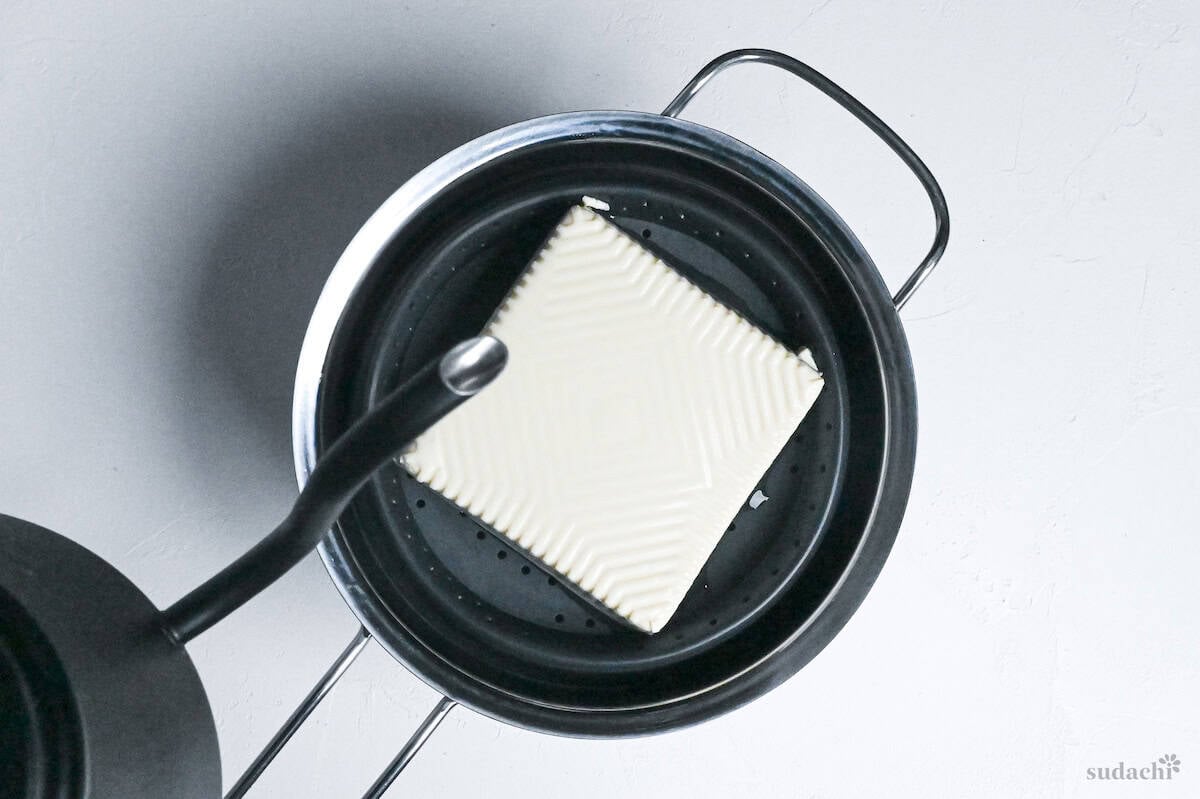
ii. Then pat the surface dry with a paper towel, then slice the tofu into neat 1.5-2 cm cubes. If it crumbles, cut larger and handle only with a ladle.
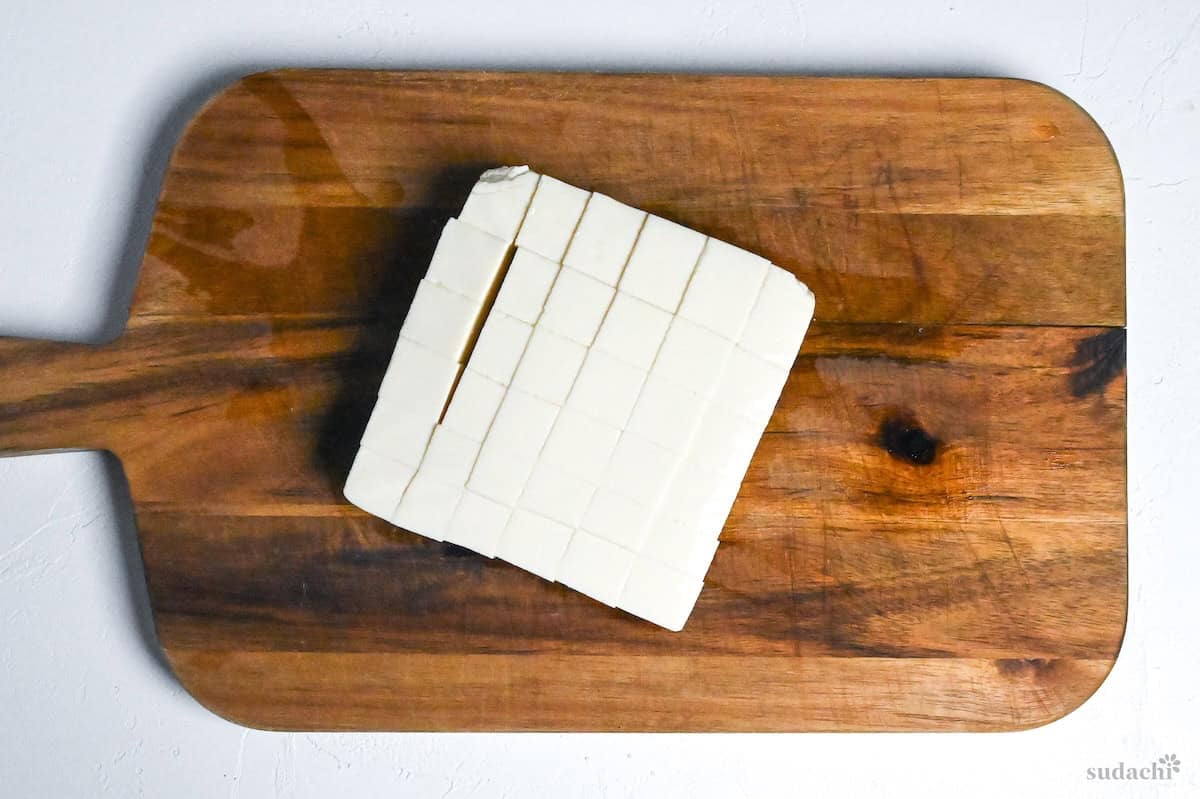
This quick blanch removes plastic-y aroma from the packaging and lightly tightens the surface so the cubes hold. It’s not required, but seeing as we’re aiming for the cleanest flavor, I thought I’d introduce this subtle technique this time.
i. When the dashi shows gentle convection, add sake (drinking sake preferred for cleaner flavor) + cubed tofu and hold at 80-85℃ (176-185°F) for 30-45 seconds. Sake lifts umami and rounds salt. Listen for a soft simmer, not a boil. If it smells sharp, keep at temperature another 20-30 seconds off heat.
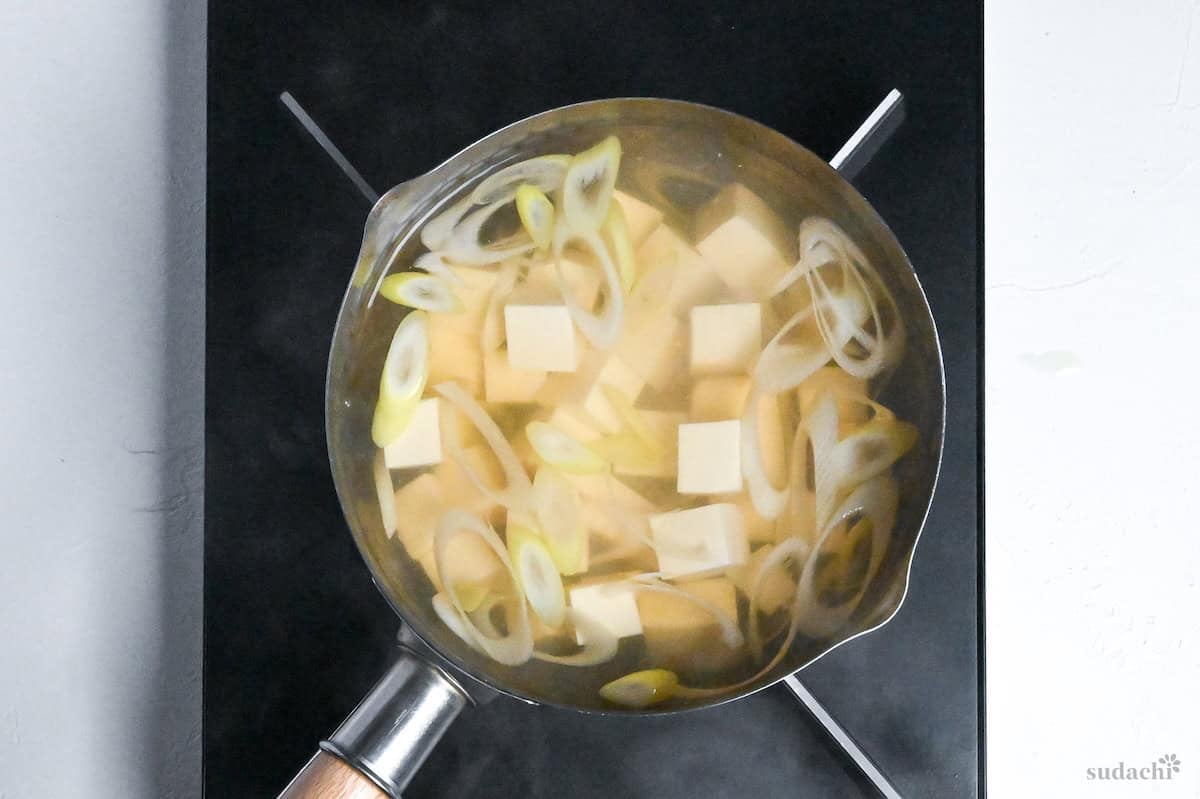
Amino acids and organic acids in sake soften edges for a ryōtei (fancy Japanese restaurants) like finish.
Silken tofu is fragile. If you drop cubes directly into boiling liquid, they can shatter on impact, leaving you with cloudy soup instead of pristine blocks.
The key is gentle lowering: use a large spoon or ladle to cradle a few cubes at a time, then submerge the spoon just beneath the surface and tilt it slowly so the tofu slides off without creating a splash. Alternatively, slide them off the blade of your knife if you’re confident with your knife skills.
i. Turn off the heat. In a ladle with a little hot broth or miso strainer, whisk awase miso into the liquid.
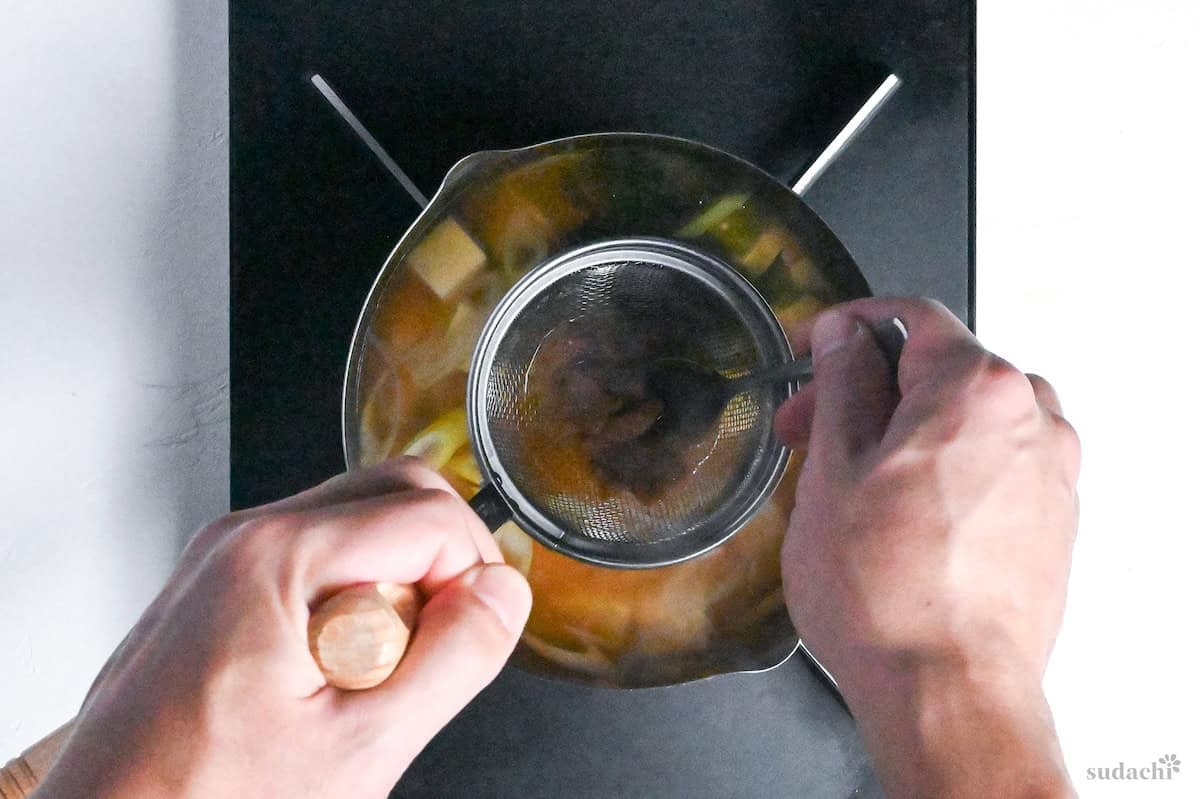
This preserves fragrance and prevents clumps. Taste now-add a little extra miso for body or more dashi to lighten according to taste preference.
Miso’s magic lies in its volatile aromatic compounds, delicate molecules like methyl pyrazines (nutty, maple-like notes), alcohols, and esters that create that distinctive fermented fragrance.
These aromatics are highly heat-sensitive: many vaporize at temperatures well below water’s boiling point (100°C), meaning a rolling boil will literally steam away your miso’s delicate fragrances.
ii. Taste now! Add a little miso for body & flavor or hot dashi/water to lighten.
iii. Sprinkle in dried wakame and let it hydrate 30-45 seconds. You’ll see leaves turn deep, glossy green and float. Over-soaking can cloud the broth.
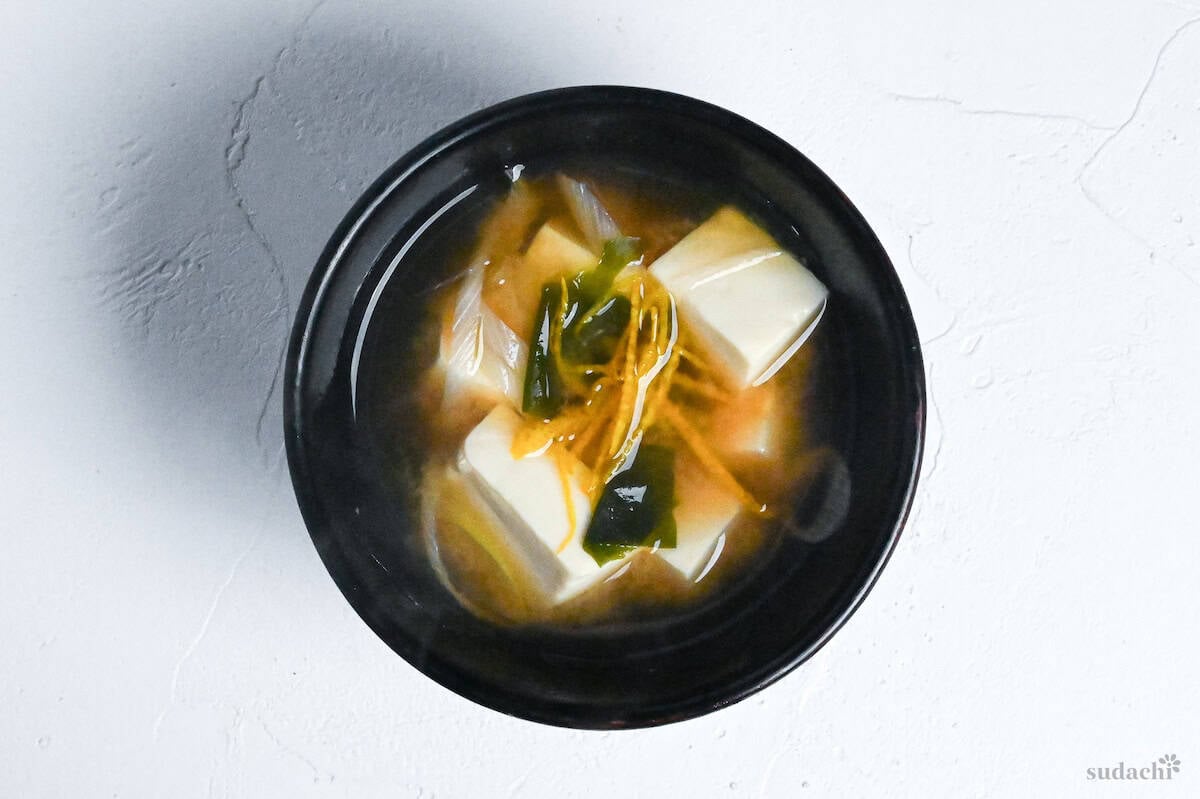
i. To serve, dip the ladle to the pot, lift tofu gently into warmed bowls, then pour broth. Finish with julienned yuzu peel (optional) for a bright citrus/elegant lift. If it cooled, rewarm on the stove top keeping the heat below a simmer.

Essential Tips & Tricks
- Blanch the silken tofu in just-boiled water, then cut into ~2 cm cubes so the surface gently firms and packet aroma disappears.
- Hold the dashi at a quiet simmer (tiny bubbles, no furious boiling) especially after seasoning, to keep the umami layered and the broth clear;.
- Taste the broth right after the miso dissolves and adjust with a touch more miso or hot dashi (water).
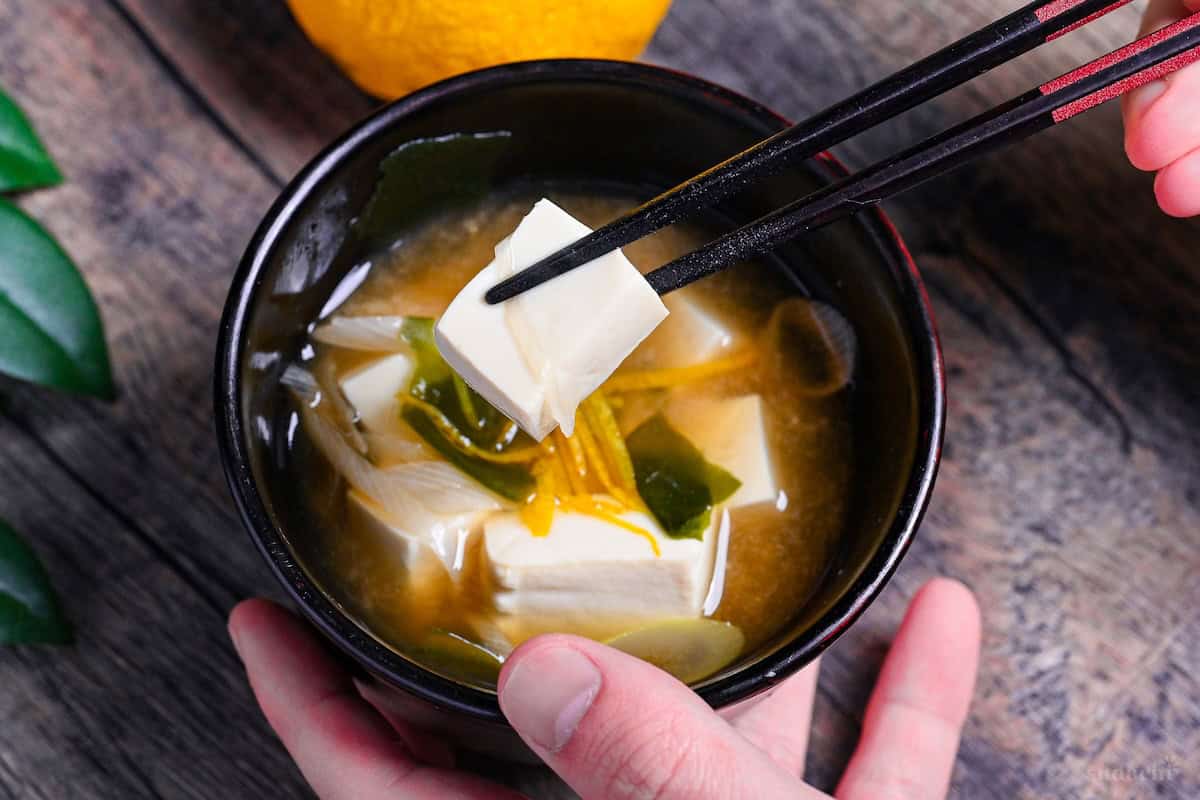
- Scatter dried wakame in at the end and let it bloom for under a minute until deep green and silky, then ladle gently from the bottom to lift tofu and seaweed together. Adding wakame too early or stirring roughly clouds the broth.
With these simple tips in mind, you’re set for success every time you make tofu miso soup.
Storage & Meal Prep
Fridge: Store leftover tofu miso soup in an airtight container in the fridge for up to 1 day for best quality (2 days max for safety), knowing the silken tofu will firm up slightly and the wakame can turn a bit soft from long soaking.
Freezer: Not suitable. Freezing finished tofu miso soup with silken tofu is not recommended because ice crystals destroy the tofu’s silky structure and the wakame becomes mushy.
Meal Prep: For elegant results, meal prep the dashi and pre-measure the miso, then cut the tofu and add miso and wakame right before serving so the tofu stays cloud-soft and the broth tastes freshly bloomed.
Reheating: Reheat gently in a small pot over low heat (gas or IH), stirring once or twice, until the soup is steaming but not boiling, to avoid breaking the silken tofu and blowing off miso aroma.
What to Serve With This Recipe
- Grilled salted salmon (shiozake)
- Japanese cucumber salad
- Nasu dengaku (miso-glazed eggplant)
- Hiyayakko (chilled tofu with toppings)
Tofu Miso Soup FAQ
For a clean, refined bowl, choose awase miso so the tofu’s subtle flavor and the dashi still shine. Red miso will taste bolder and saltier and can easily dominate the tofu, which is nice on a cold night but less “minimalist.” If you own both red and white, mix 50/50 to make your own awase miso.
It can be, but you’ll need to check labels. Choose a miso that’s made from rice and/or soybeans only (no barley or wheat). Simple kombu-katsuobushi or kombu-shiitake dashi is naturally gluten-free, so the main variable is your miso brand.
You can, and it will hold its shape more easily, but the mouthfeel shifts from cloud-soft to chewy and more “blocky,” so the soup feels heartier and less ethereal.
More Japanese Soup Recipes
- Kenchin Jiru (Japanese Vegetable Soup)
- Chicken Zosui (Rice Soup)
- Japanese Clear Soup (Osuimono)
- Vegan Ginger Miso Soup
New to Japanese cooking? Start with these easy Japanese soup recipes that deliver authentic taste without complicated techniques.
Did You Try This Recipe?
I would love to hear your thoughts!
💬 Leave a review and ⭐️ rating in the comments below. 📷 I also love to see your photos – submit them here!

Silken Tofu Miso Soup
Ingredients
- 500 ml dashi stock kombu-katsuobushi (dashi packet acceptable), or vegan dashi
- 30 g Japanese leek (naganegi) white part, cut diagonally
- 150 g silken tofu soft, not firm
- 1 tbsp sake preferably drinking grade (not cooking sake)
- 2 tbsp yellow miso paste (awase)
- 1 tsp dried wakame seaweed
- yuzu peel fresh, or lemon/orange zest
My recommended brands of ingredients and seasonings can be found in my Japanese pantry guide.
Can’t find certain Japanese ingredients? See my substitution guide here.
Instructions
- Pour 500 ml dashi stock into a pot and add 30 g Japanese leek (naganegi). Heat over medium until it reaches a gentle simmer (avoid boiling).

- While you wait, boil some water and set 150 g silken tofu on a heatproof colander. Pour the freshly boiled water over the tofu, and let it drain, then pat the surface dry with kitchen paper.
- Carefully transfer the tofu to a cutting board and slice into 1.5-2cm cubes. If the tofu is particularly delicate, cut the cubes larger.
- Slide the tofu into the pot and add 1 tbsp sake. Heat for 30-45 seconds, then turn off the heat.
- Use a ladle or miso strainer to add 2 tbsp yellow miso paste (awase), whisking until it breaks into tiny pieces and disperses into the broth. If you don't have these tools, spoon a few tablespoons of hot dashi into a heatproof bowl and whisk in the miso until smooth and loose before pouring it into the pot.
- Add 1 tsp dried wakame seaweed to the pot and let it rehydrate for 30-45 seconds. Ladle the soup into serving bowls and top with juelinned yuzu peel for an elegant citrus finish. Enjoy!

Very 👍 good
Thank you, Alvin! 🙂